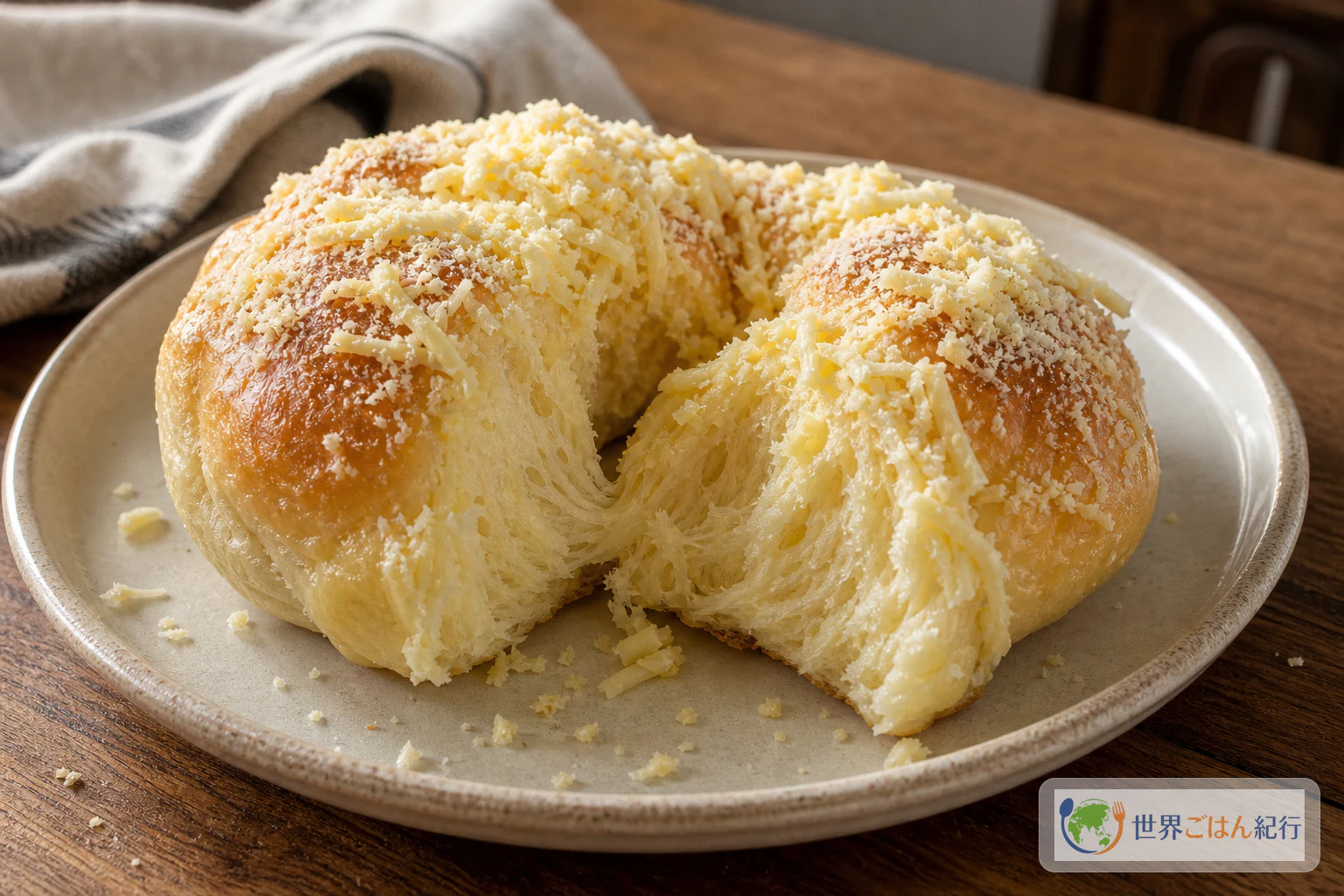
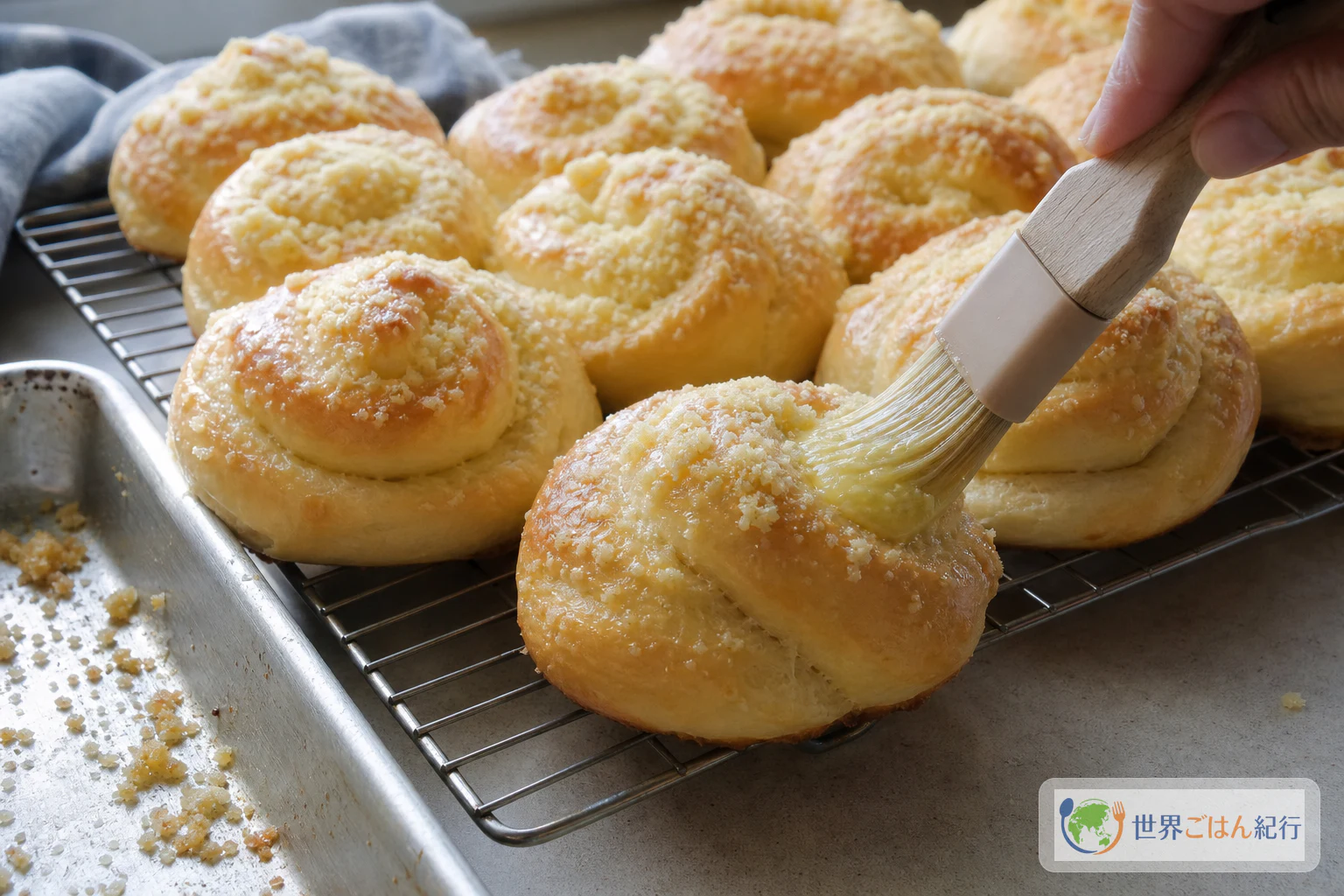
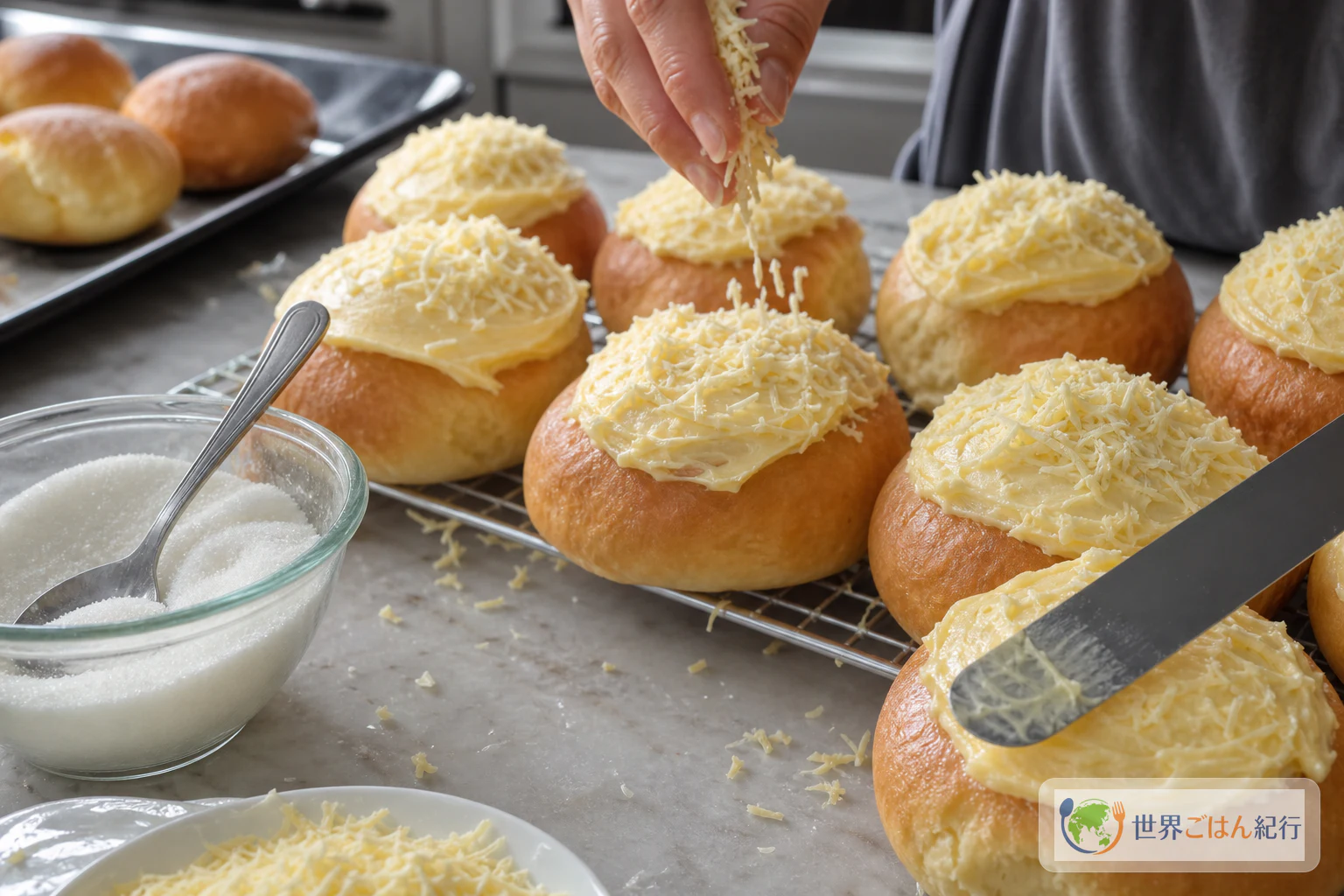
Picture a Filipino bakery. Next to the steaming rice dishes there's a different smell, sweet and yeasty. Round buns sit slightly squashed in a paper box, with white sugar and a fluffy drift of grated cheese on top and butter that sticks to your fingers. Ensaymada isn't a delicate pastry. It's a sweet bread you tear apart by hand at afternoon merienda, rich with butter and sharpened by salty cheese.
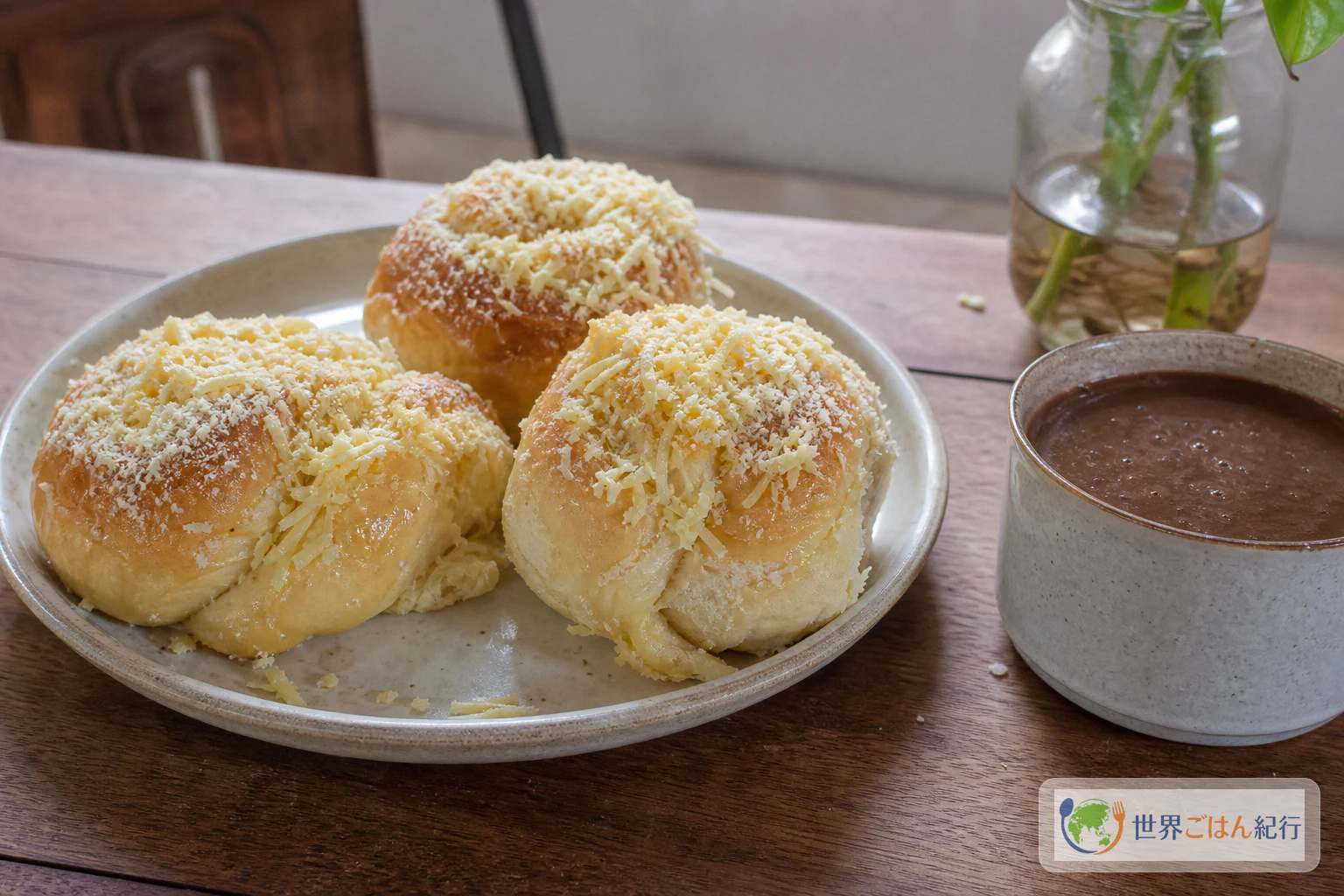
Ensaymada in the Philippines
The name comes from the ensaimada of Mallorca in Spain, but the version eaten in the Philippines has changed a great deal. The Mallorcan bun is built on lard, while the Filipino one puts butter, sugar and cheese up front. Some bakeries top it with buttercream, salted egg or queso de bola (a round, Edam-style cheese). People bring the rich ensaymada of Pampanga and Bulacan home as a gift.
The Mallorcan ensaïmada takes its name from the word for lard. It reached the Philippines during the Spanish colonial period and slowly turned into today's bun, made with butter instead of lard and topped with cheese.
In English and Tagalog it is usually written ensaymada, while the Mallorcan version is written ensaimada or ensaïmada.
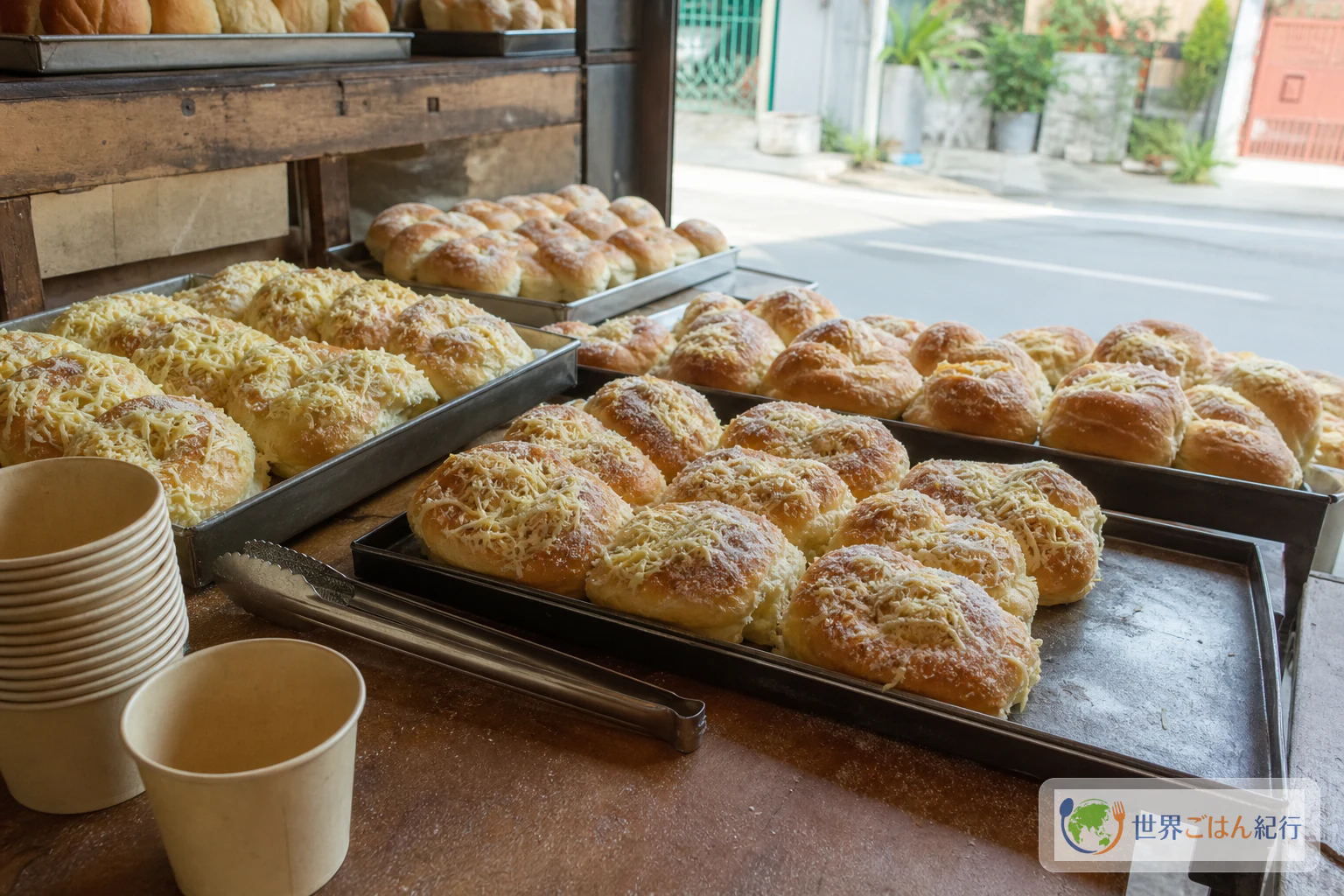
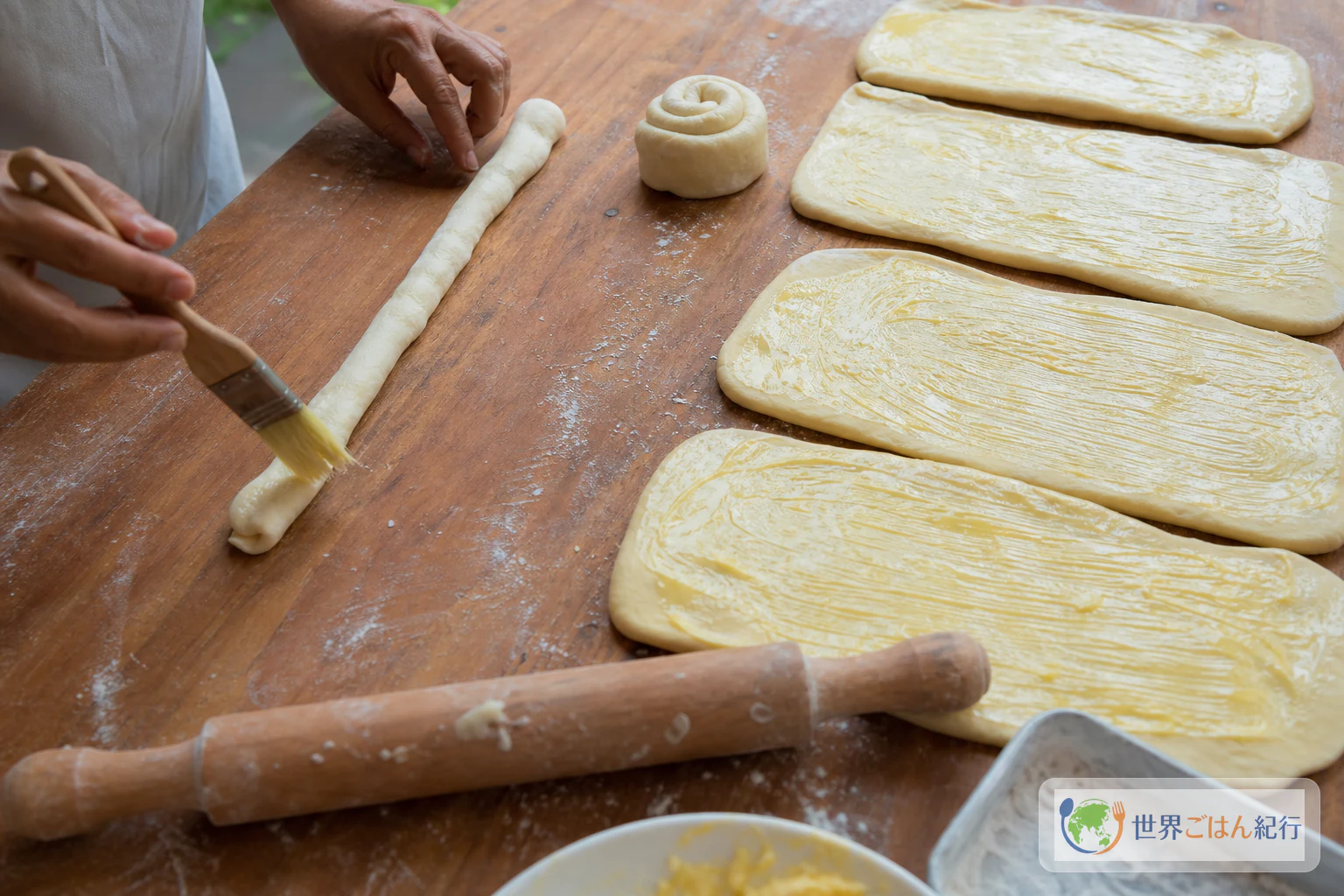
What makes an ensaymada is the order of its layers: soft dough rolled into a thin spiral, butter on the surface, then sugar, then finely grated cheese. Grating the cheese over the top at the end looks far more Filipino than kneading it into the dough.
| What to look at | In the Philippines | In a home kitchen |
|---|---|---|
| Dough | A moist, rich yeast dough | Mostly bread flour; focus on temperature control rather than long kneading |
| Fat | Butter, shortening; each bakery sets its own ratio | Mainly unsalted butter; swap in some shortening for a lighter bun |
| Cheese | Queso de bola, cheddar types, each bakery's grated cheese | Edam, aged Gouda or finely grated cheddar |
| When it's eaten | Merienda, breakfast, gifts, the Christmas season | Afternoon coffee, hot chocolate, a light breakfast |
| Regional differences | Richness and toppings differ across Bulacan, Pampanga and Metro Manila | Start with the basic butter, sugar and cheese version |
If you want to try more Filipino sweets, look at steamed rice cake puto, brown sugar rice cake kutsinta and layered sticky rice sapin-sapin. Ensaymada is a bread, not a rice sweet, but it shares their love of sweet and salty together.
Ingredients (makes 10)
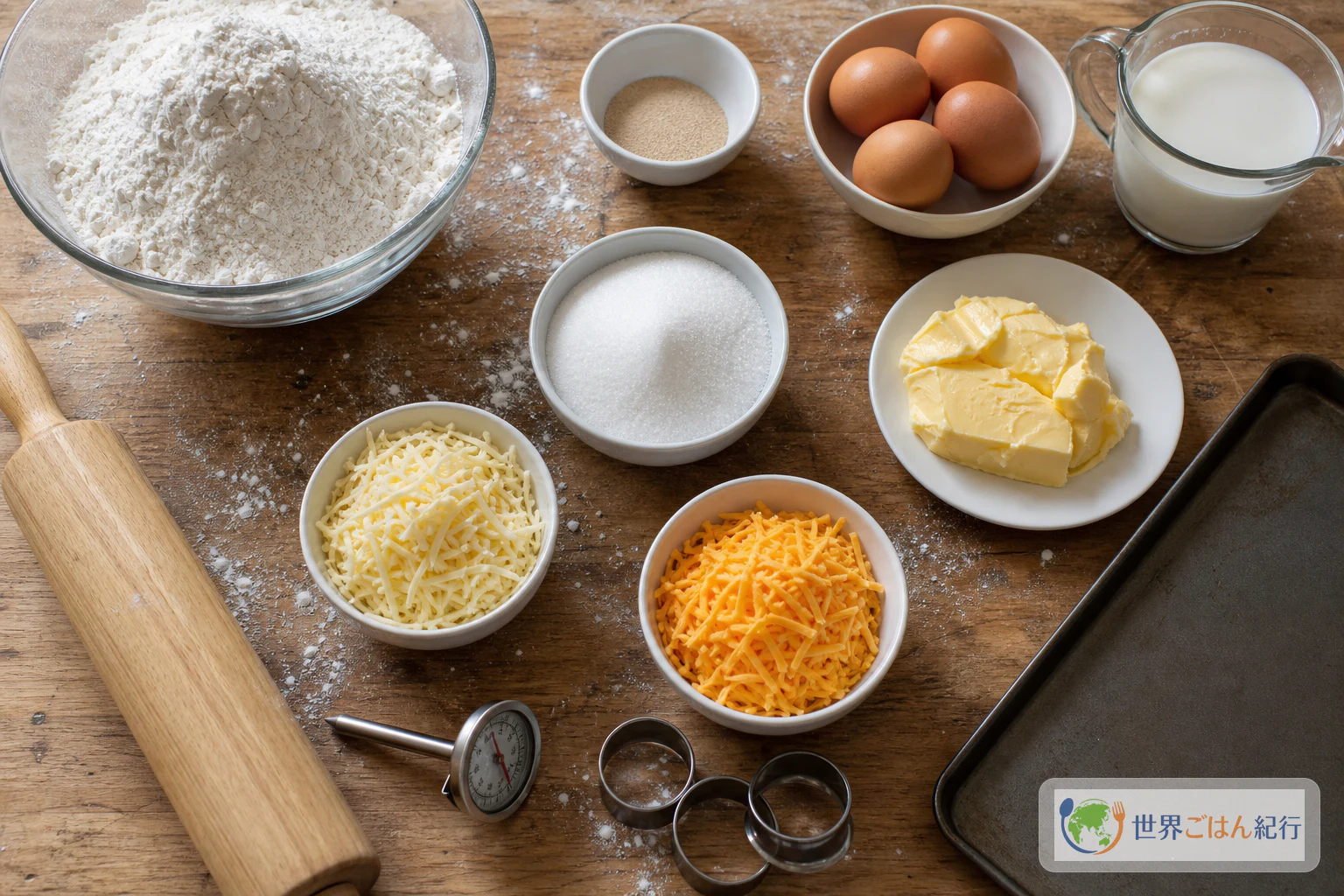
Too much cake flour gives you a bun that melts away in the mouth rather than one that's fluffy. All bread flour, on the other hand, keeps the shape steady but turns a little firm the next day. Use this ratio the first time to learn how soft the dough should feel, then adjust the flours.
Tools worth having: more useful than special cheese
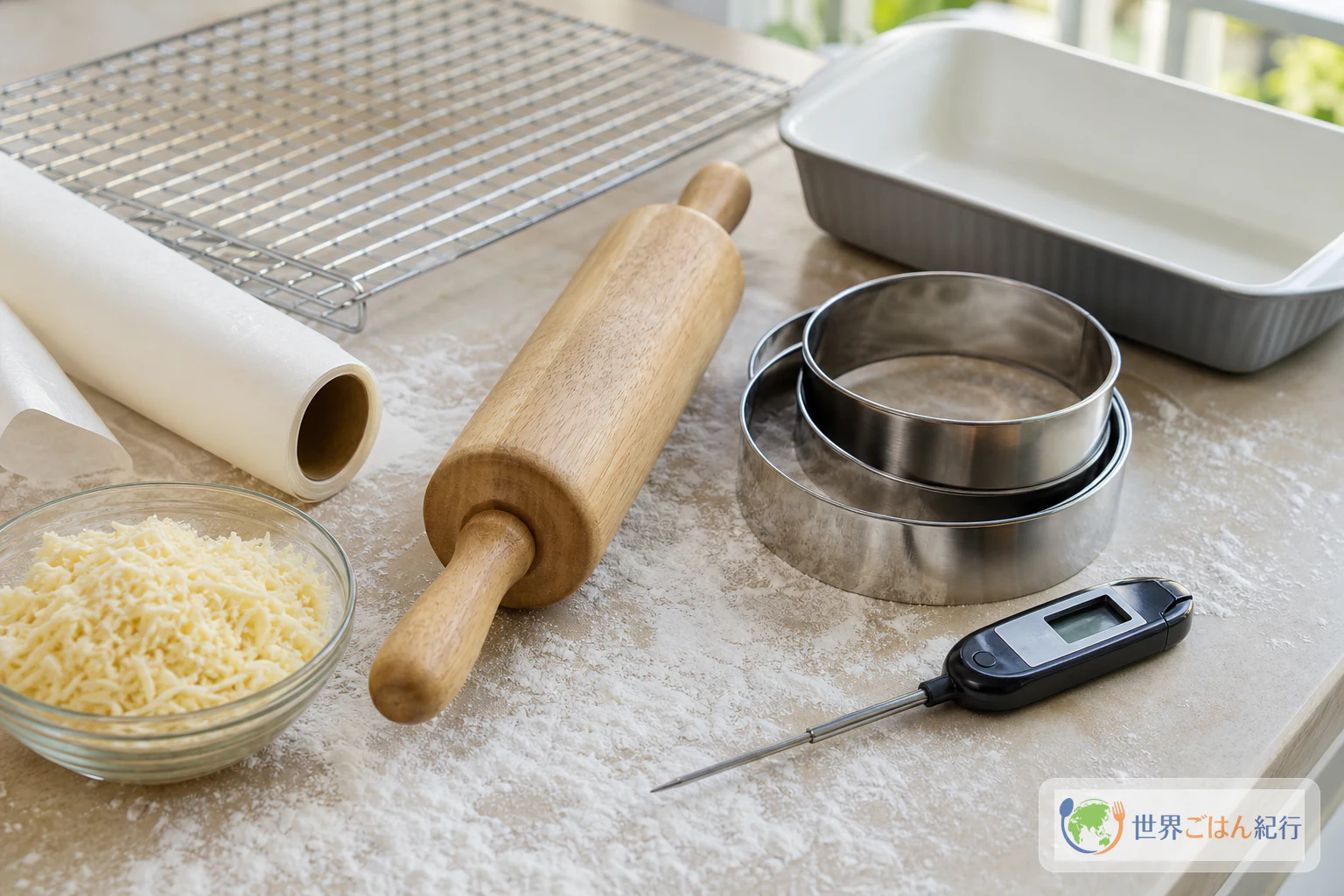
Flour, milk, eggs, butter and cheese are all at the neighborhood supermarket. What's worth adding are tools that make proofing and shaping more consistent, not exotic ingredients. A sweet yeast dough is sensitive to temperature, and if the rolled-in layers are uneven, the buns rise on one side only.
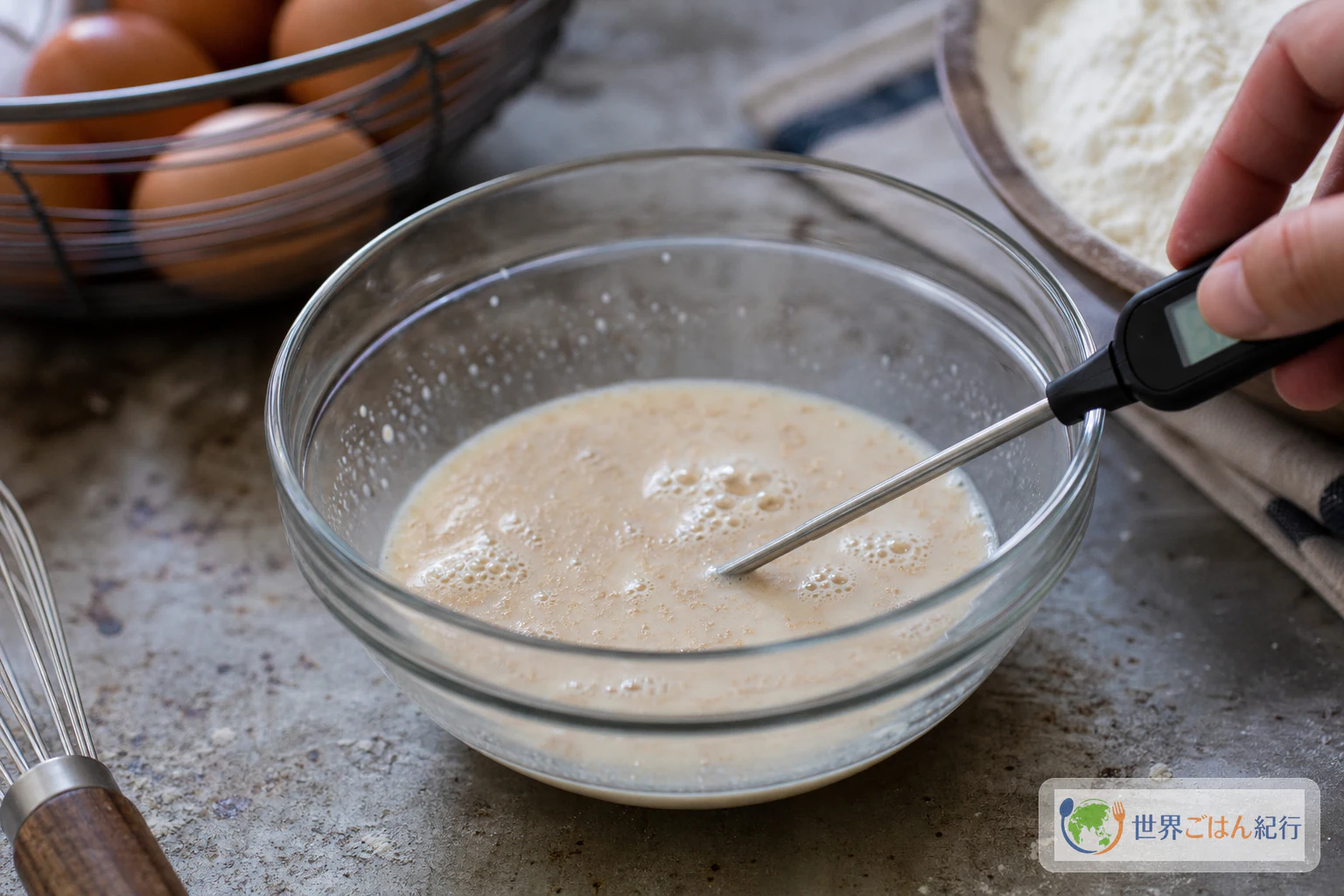
A slim probe thermometer takes much of the worry out of a first batch, whether you're bringing the milk to 35–38°C or checking for 93°C (200°F) or higher in the center of the baked buns. It works for meat too, so it isn't a single-use purchase.
Rolling the dough thin is a short step, but uneven thickness here means the butter collects unevenly between the coils. A rolling pin about 12 inches (30 cm) long makes it easier to keep all 10 pieces the same width, and you'll use it for empanadas and other doughs too.
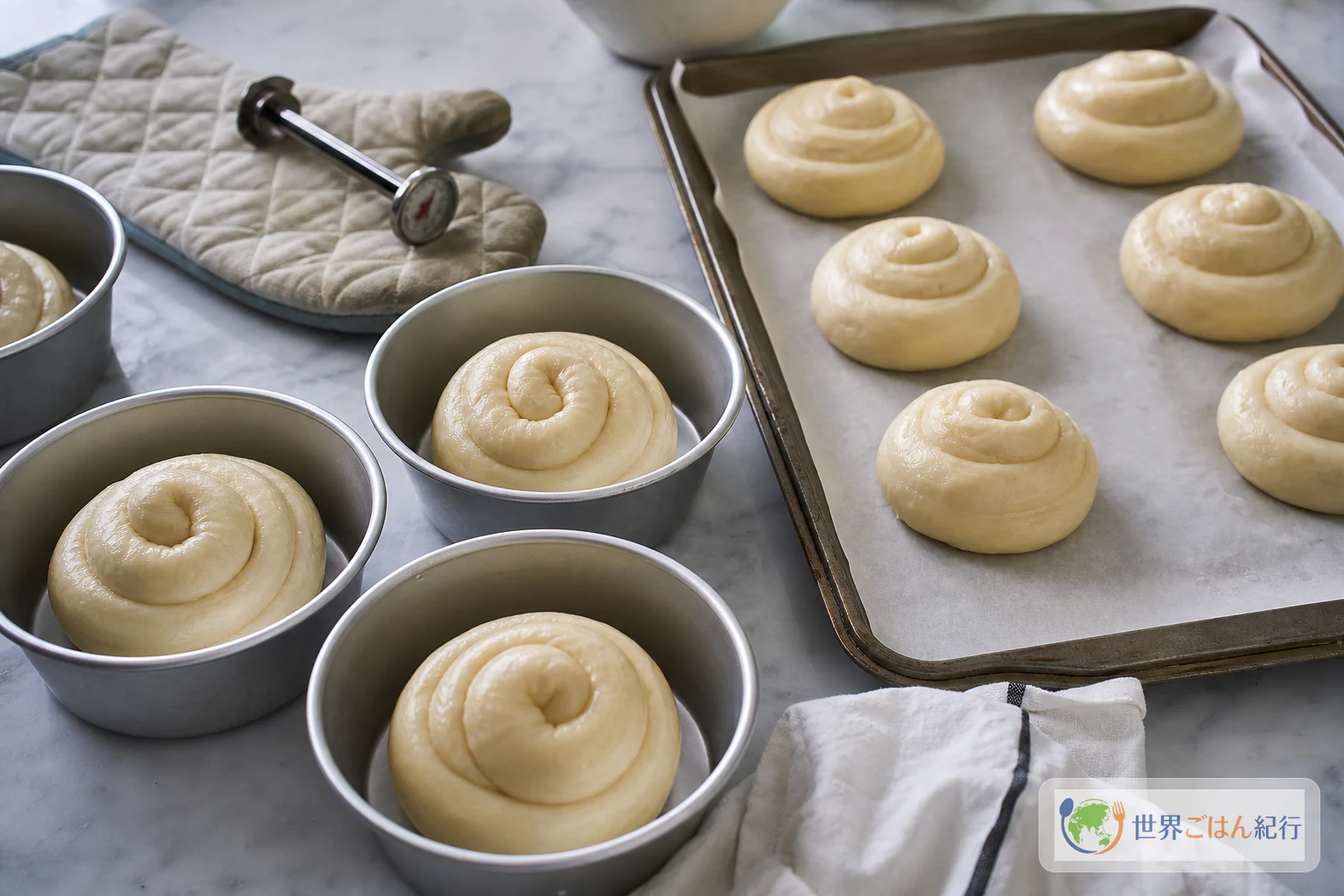
Ring molds aren't essential. But keeping the buns from spreading the first time lets you focus on judging the proof. If you bake without molds, leave at least 4 inches (10 cm) between buns on the sheet pan.
Choosing the cheese and toppings for ensaymada
If you can't find queso de bola, Edam, aged Gouda or cheddar make good substitutes. Pick a cheese you can shave thin with a slicer or fine grater, because even a small amount then gives you the look and the saltiness. Processed cheese works too, but it's hard to grate finely and tends to sit heavily on top.
Some versions are topped with salted egg. Skip it the first time, since it adds a lot to the shopping list. A slightly salty cheese on top gives you the sweet-and-salty contrast on its own.
Instructions
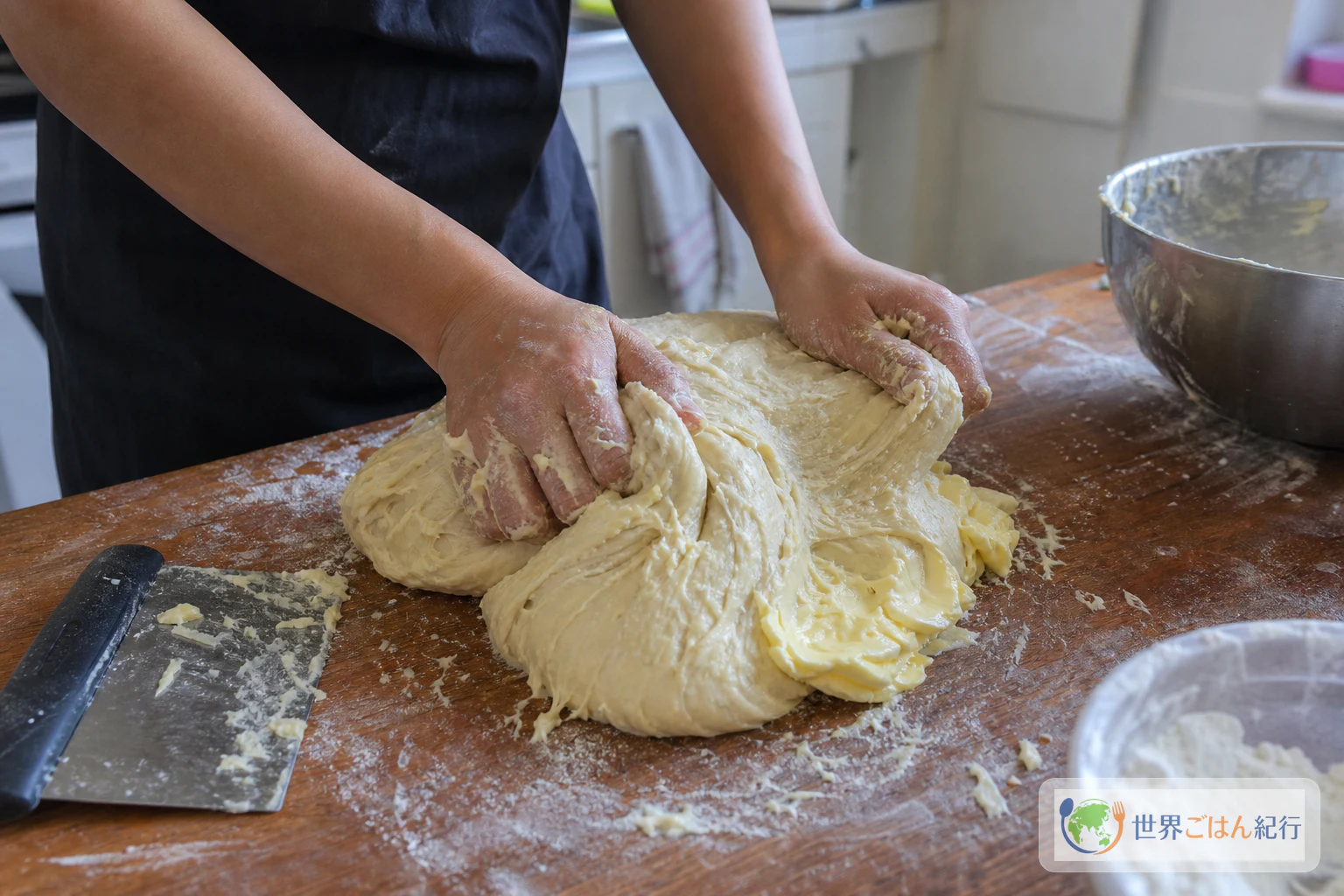
On paper, ensaymada is just kneading a bread dough and rolling it up. But yeast works slowly in a sweet dough, and it stays sticky even after the butter goes in. The crux is shaping the dough with temperature and time instead of more flour.
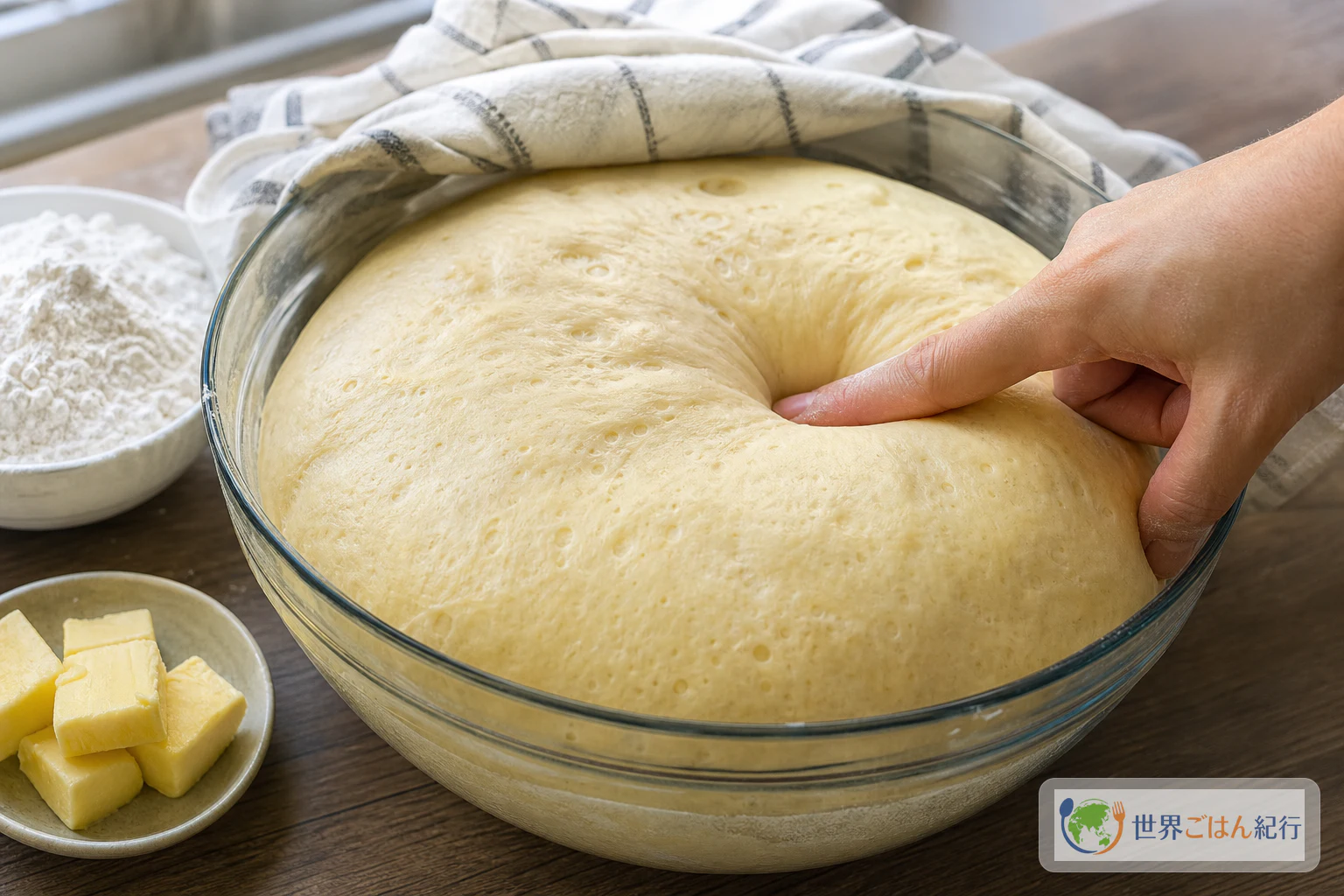
Temperature control matters more than long kneading. Judge the rise by whether the dough has grown noticeably bigger, not by the clock, and add the butter, sugar and cheese only after the buns have cooled.
Ensaymada troubleshooting
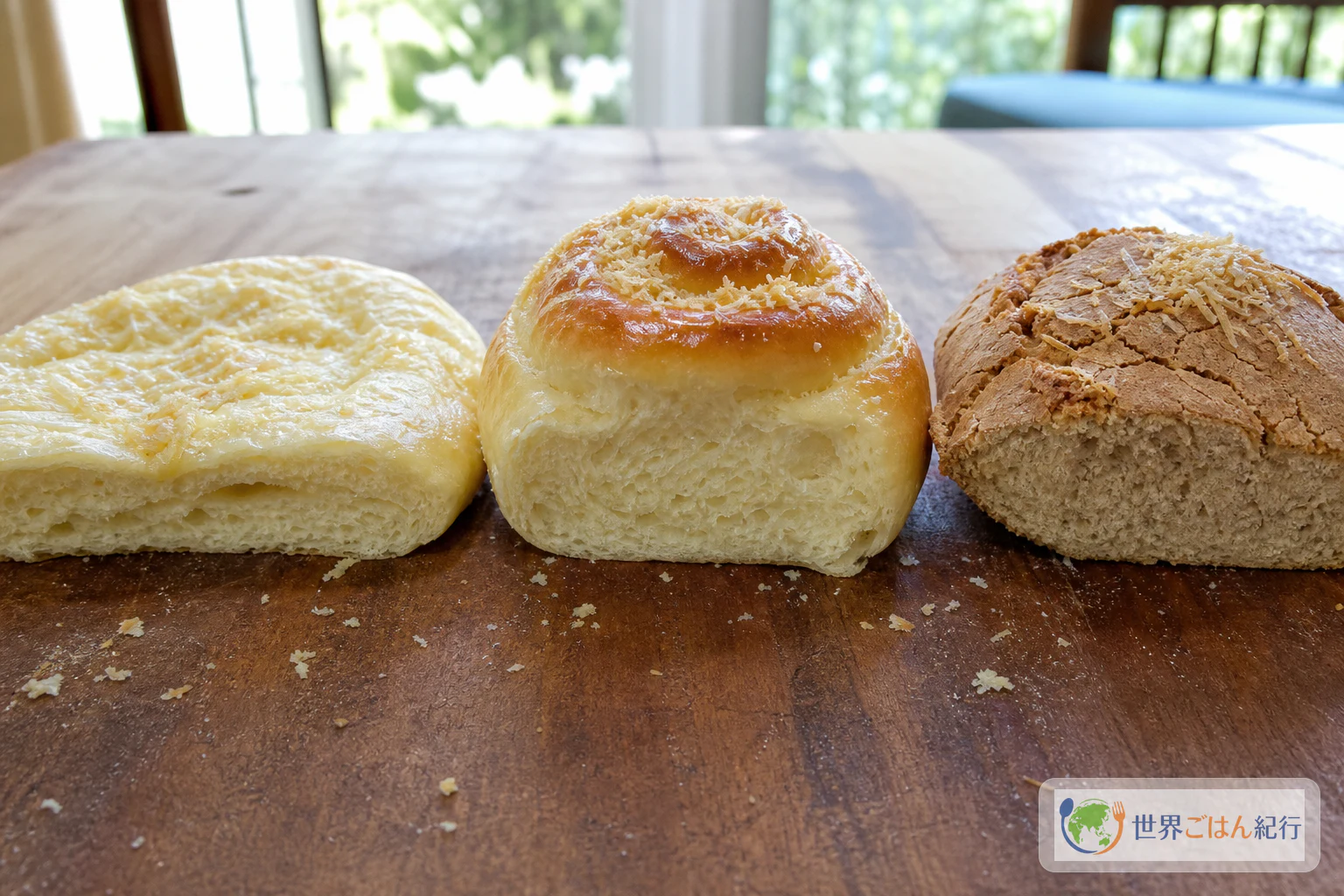
Unusual ingredients aren't the hard part. The dough is soft and full of sugar and butter. If you panic and add flour, the buns turn tough. If you let them proof too long, they spread sideways in the oven and come out hollow instead of fluffy.
The dough is tough
The dough was sticky at the start of kneading, so too much flour went in. Keep dusting flour to 15 g or less in total, and use a bench scraper to gather what sticks to your hands and put it back. If the baked buns are tough, add 2 tsp (10 ml) more milk next time and bake 2 minutes less. If they only turn tough the next day, they dried out in storage.
Flat buns that spread out
Either the second rise ran too long or the coil was too loose. Bake when the dough has grown 1.5 times and a pressed mark springs back slowly. Ring molds or muffin pans make spreading easier to control the first time. Without molds, coil the rope so the center sits slightly higher, and tuck the end firmly underneath.
A heavy center
The buns are underbaked, or the first rise was too short. Surface color isn't enough to go by, so check for 93°C or higher in the center. If your oven browns the tops too fast, bake at 170°C (340°F) for 18 minutes, then raise it to 180°C for the last 2 minutes so the heat reaches the middle.
A cheese flavor that's too strong
A lot of queso de bola or aged cheese pushes the saltiness and aroma forward. Start with no more than 12 g per bun, or use half cheddar and half Edam for a milder taste. Finishing with only grated Parmesan-style powdered cheese makes the aroma dry and flat, so mix in a cheese you can grate into fine shreds.
Serving and storing ensaymada
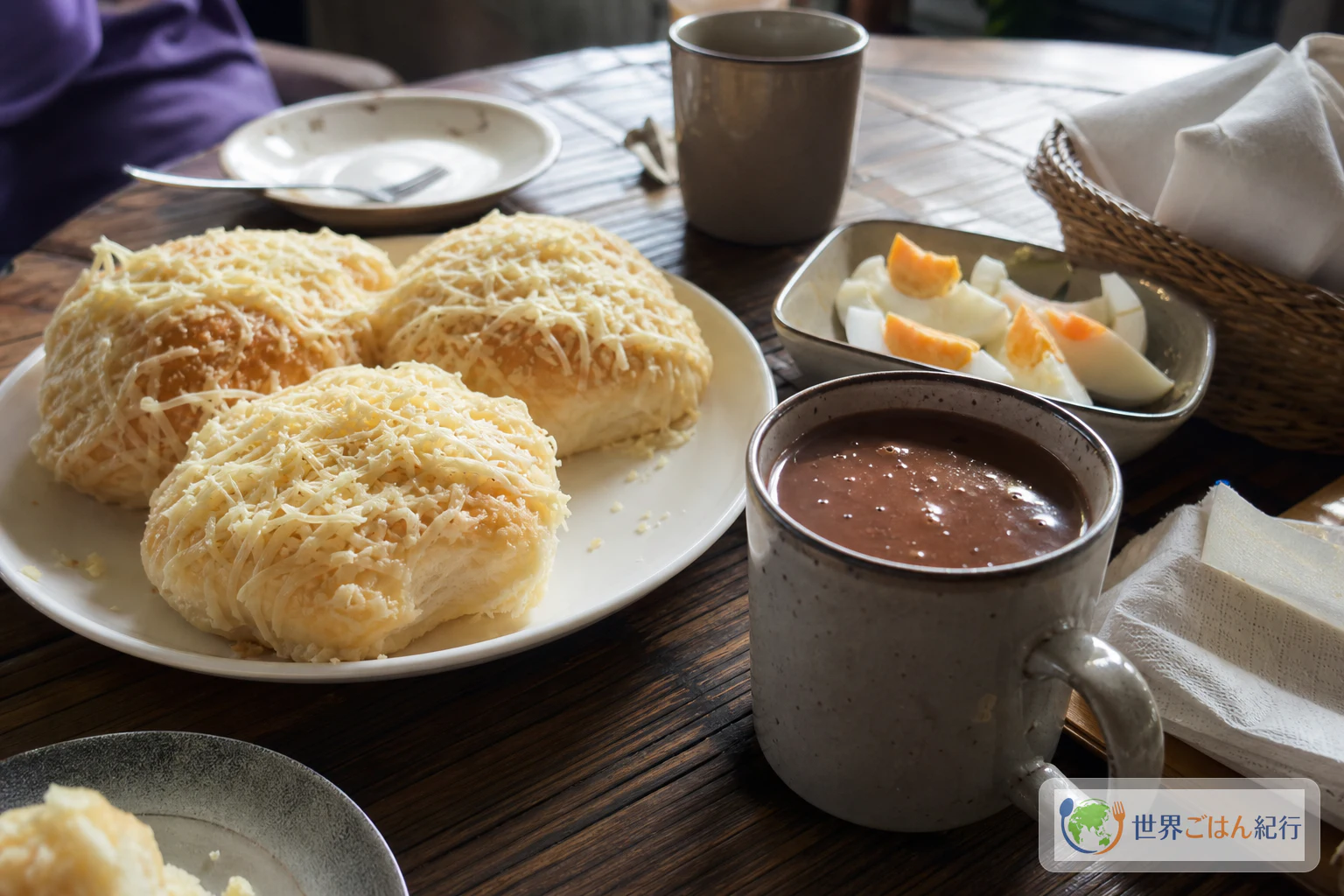
What to serve with ensaymada
Ensaymada works better as an afternoon snack than as dessert after a meal. Between the sugar, butter and cheese, one per person is plenty. Unsweetened coffee, thick hot chocolate and black tea all go well with it. In the Philippines it's often paired with tablea chocolate around Christmas, though a lightly sweetened cocoa sets the mood too.
| Pairing | Direction | How much |
|---|---|---|
| Coffee | Washes down the butter and cheese | 1 cup, unsweetened, per ensaymada |
| Hot chocolate | Leans into a sweet afternoon snack | A small cup with less sugar |
| Salted egg | Strengthens the sweet-salty contrast | Just 1 thin slice per bun |
| Puto, kutsinta | A spread of Filipino sweets | 1 piece of each; keep portions small |
| Arroz caldo | Makes it more of a breakfast | A small bowl of congee and half an ensaymada |
For a whole day of Filipino food, start with a little ginger rice porridge, arroz caldo, in the morning. Have noodles such as pancit canton at lunch and ensaymada in the afternoon. Right after meat dishes like lechon or kare-kare it feels heavy, so add some tart fruit or an unsweetened drink.
Storage and reheating
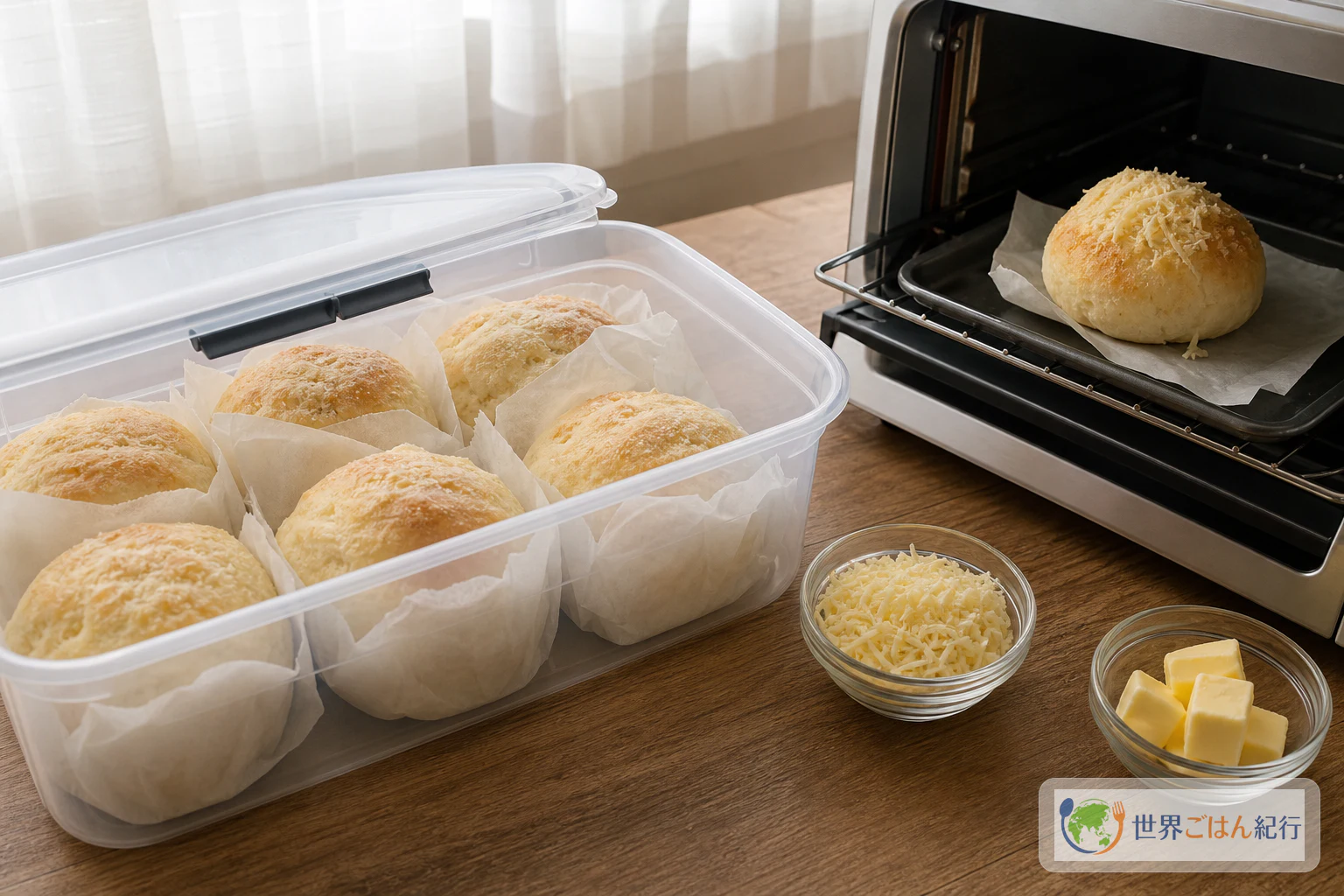
Let unfinished buns cool completely, wrap each one in paper and put them in a storage container. Keep them at room temperature for the same day, in the fridge for 2 days or in the freezer for 2 weeks. Once topped with butter and cheese, keep them in the fridge and eat them by the next day. Don't freeze topped buns, because moisture seeps out as they thaw and leaves the surface soggy.
A toaster oven is the best way to reheat unfinished buns. Cover them with aluminum foil and warm at the equivalent of 160°C (320°F) for 4–5 minutes, then remove the foil for 1 minute to refresh the surface. In a microwave, give them 15–20 seconds at 600 W. Longer heating makes them taste as if the butter has drained out, so they're nicer slightly warm than piping hot.
For finished buns, 10 seconds in the microwave at 600 W is enough to soften the cheese and butter a little. Any longer and the cream runs and the bottoms turn greasy.
FAQ
Can I do the first rise overnight in the fridge?
Yes. Reduce the yeast to 5 g and refrigerate the dough as soon as it's kneaded. Leave it for 8–12 hours, then let it sit at room temperature for 30 minutes the next day before dividing. A cold rise gives a more mellow aroma, but overproofing brings sourness, so plan to use the dough by the next morning.
Do I need shortening to make it light?
You can make it with butter only. To get closer to the lightness of bakery ensaymada, swap 1 oz (30 g) of the 3.25 oz (90 g) dough butter for shortening. For a first batch, all butter gives a clearer aroma and leaves you with fewer leftover ingredients.
Can I bake them without molds?
Yes. Space them at least 4 inches (10 cm) apart on the sheet pan and stop the second rise at 1.5 times their size. They spread more without molds. Tuck the end of the coil underneath and move them onto parchment right after shaping, and they'll hold together well.
They're too sweet. What should I cut?
The sugar in the dough affects how the yeast works and how the buns brown, so cut the topping first. Reduce the powdered sugar from 1.5 oz (45 g) to 1 oz (30 g), then leave out the 20 g granulated sugar. Keep a little cheese, though, because without it all you taste is the sweetness.