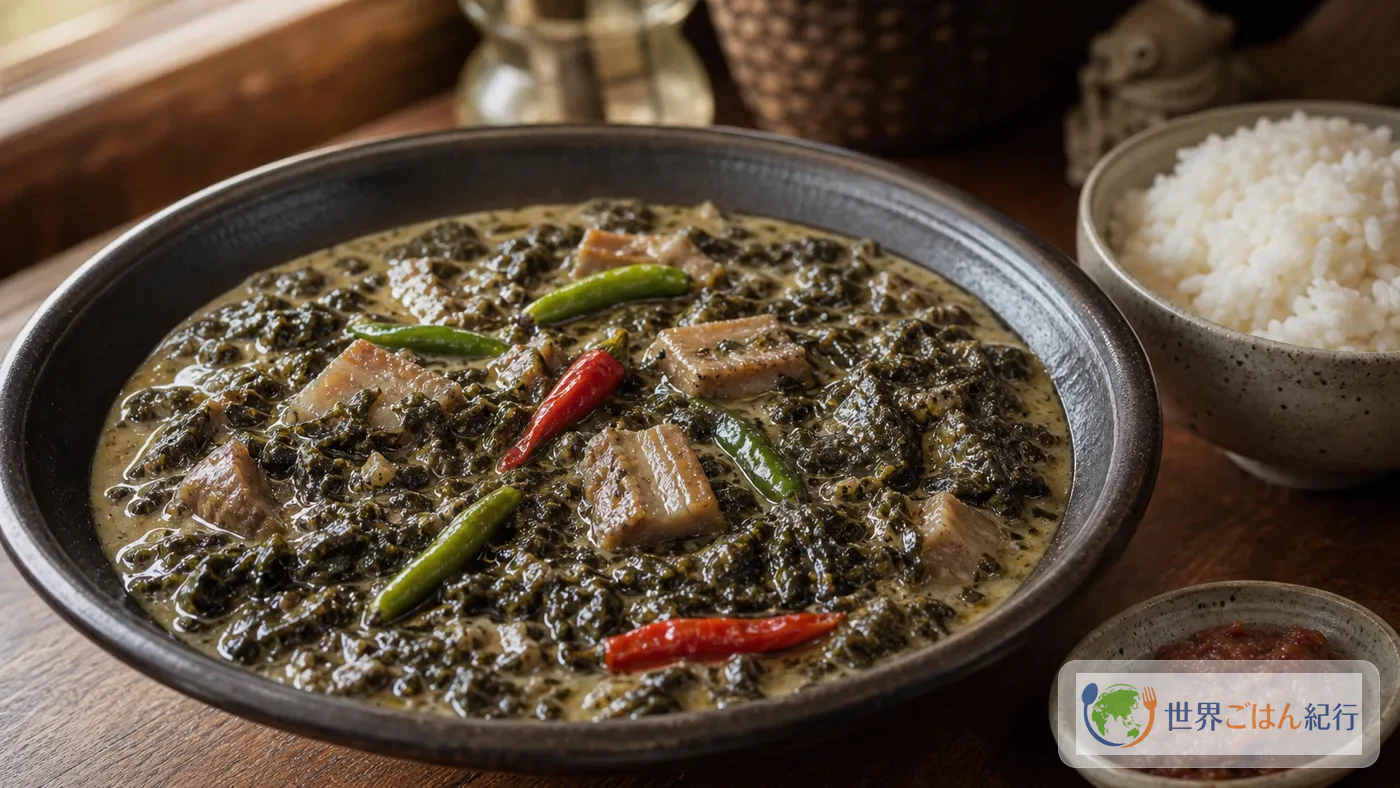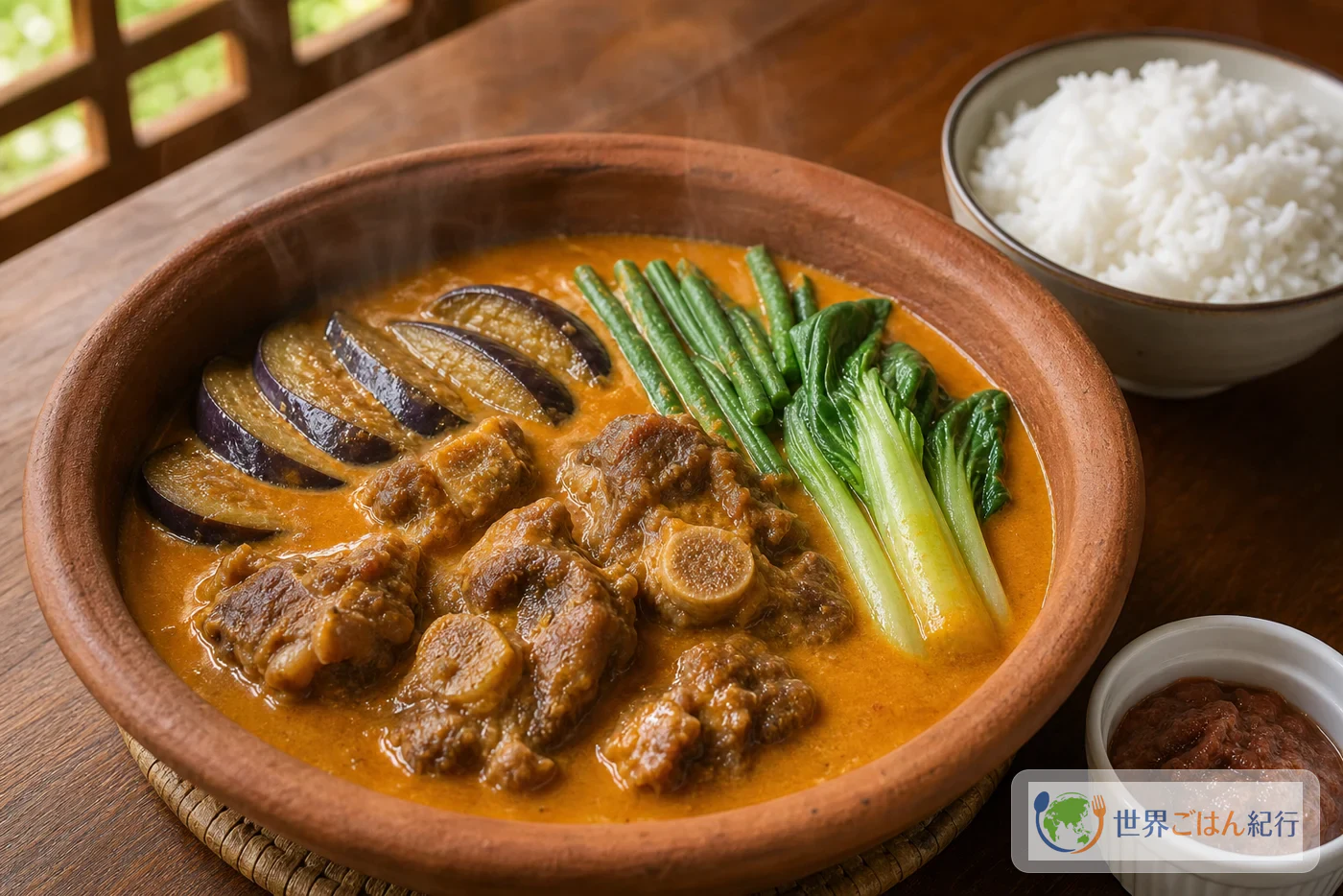
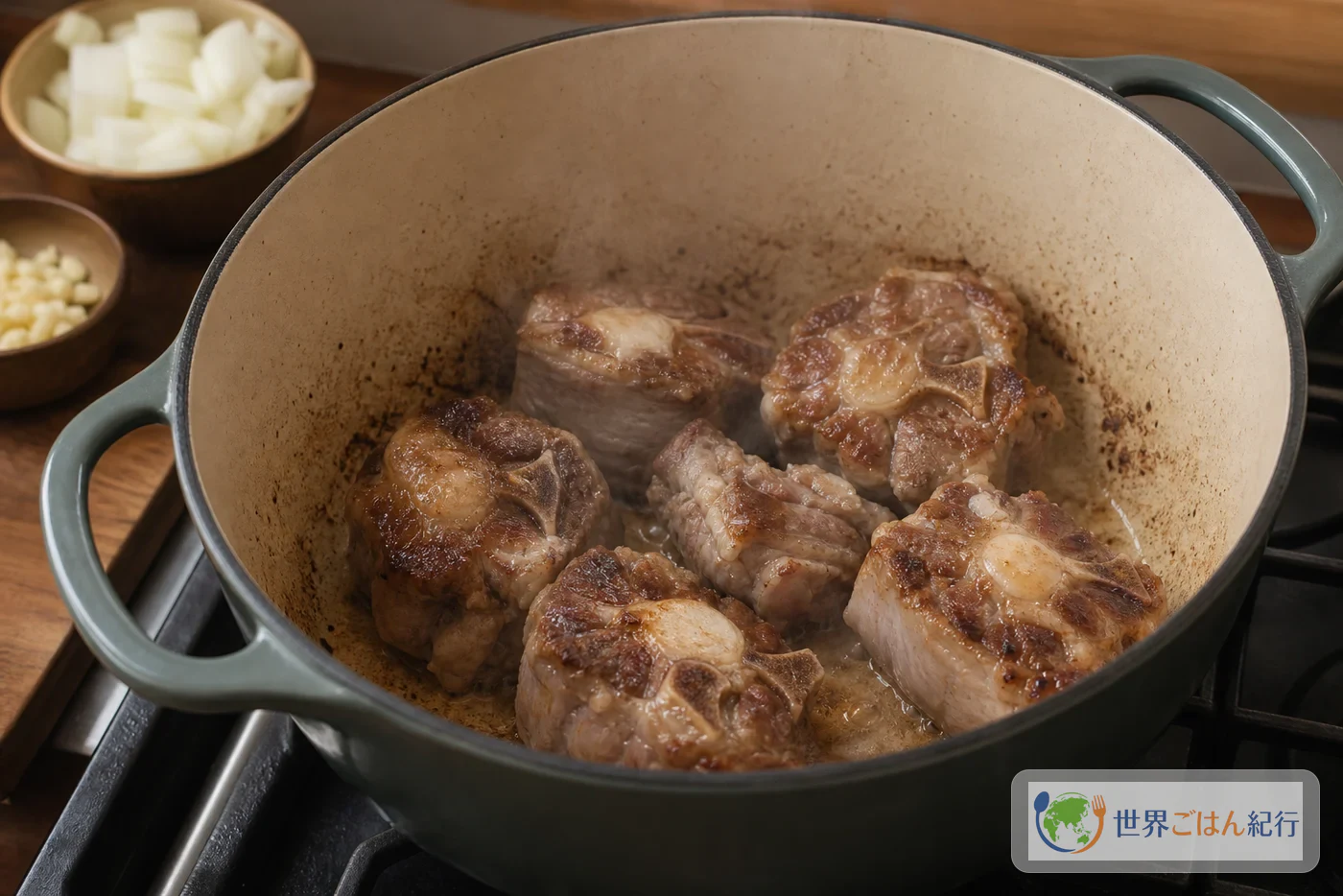
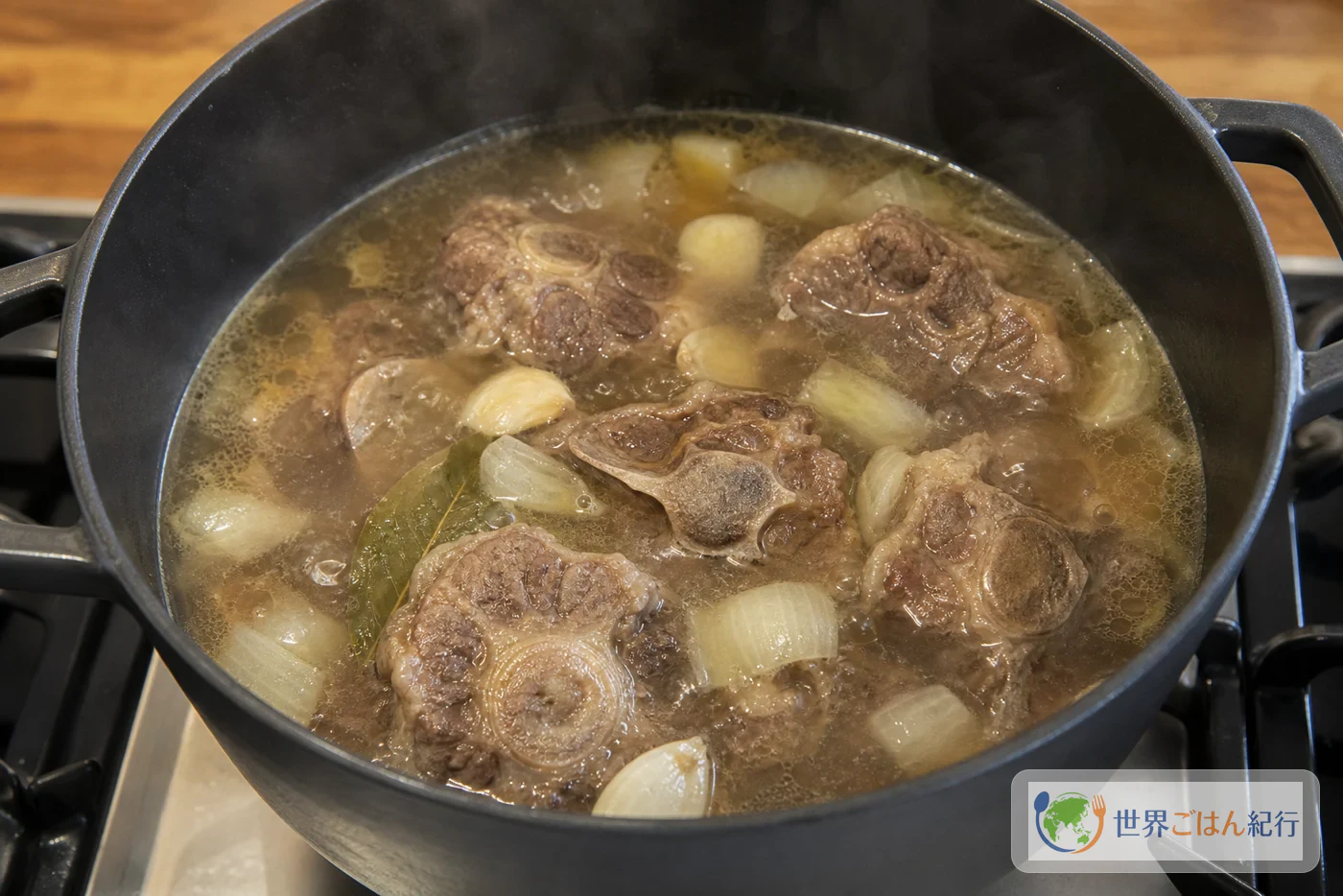
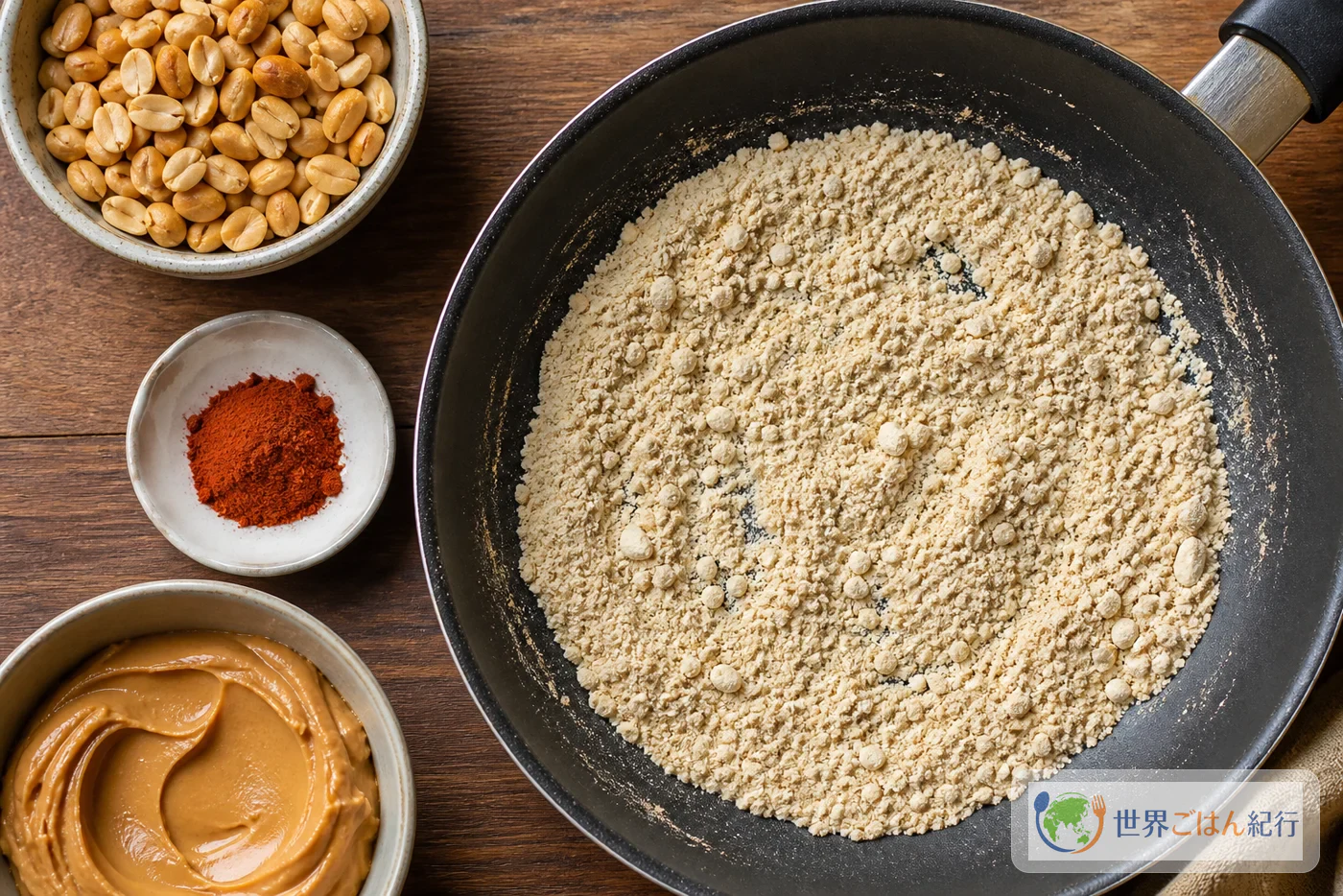
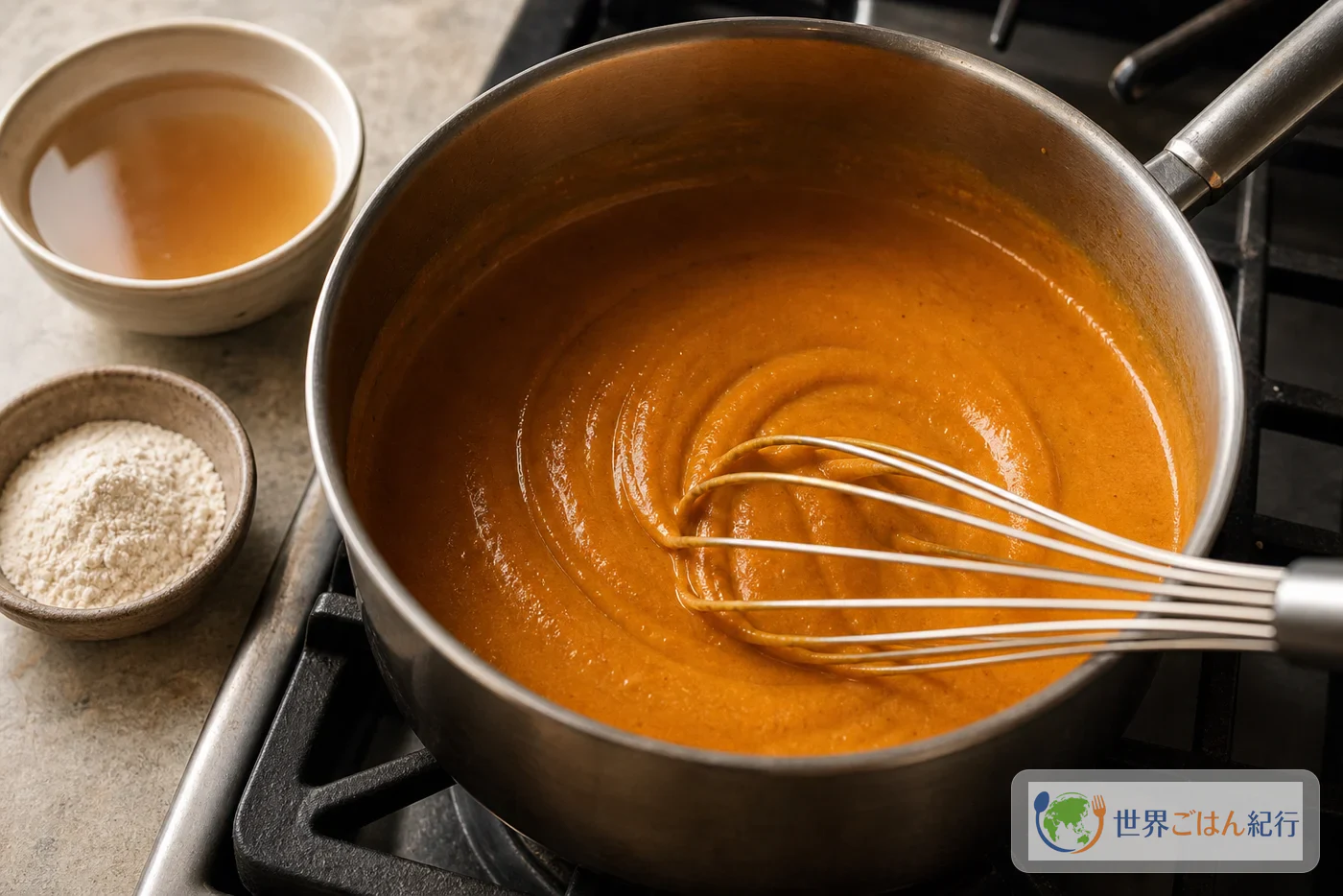
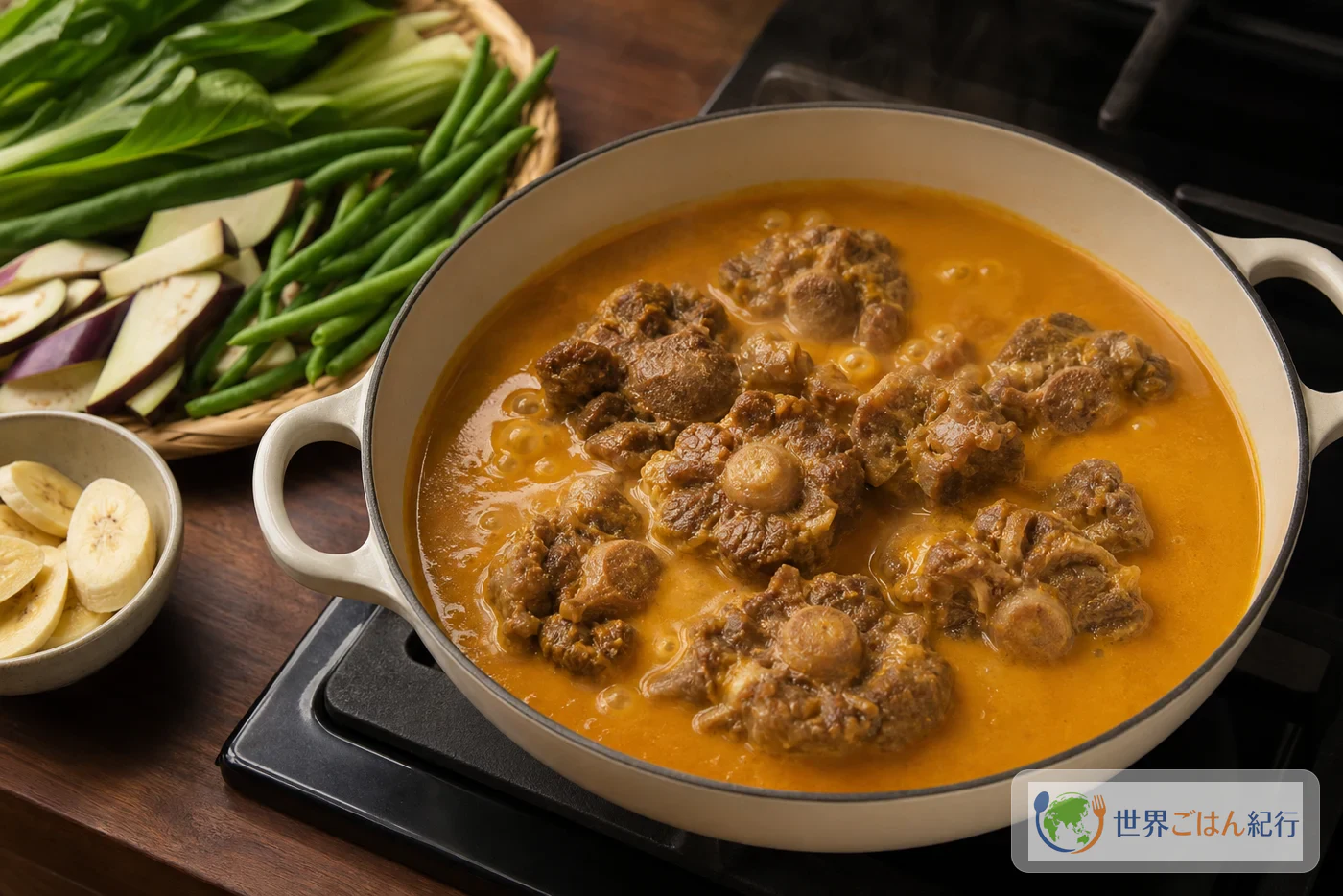
On a kare-kare day, the air in the kitchen changes partway through. For hours the oxtail simmers and the pot barely smells of anything. Then you stir unsweetened peanut butter and toasted rice flour into the annatto-tinted broth, a toasty aroma rushes up all at once, and you know it's time to cook the rice. Kare-kare is a Filipino stew of oxtail, beef shank and sometimes tripe in a peanut sauce. Its depth doesn't come from dairy, as a cream stew's would. It comes from nuts, beef broth and the savoriness of a fermented condiment. The sauce has a deep color but a gentle taste. It isn't spicy and isn't very salty, because the salt arrives later, at the table.
About kare-kare
How kare-kare is eaten
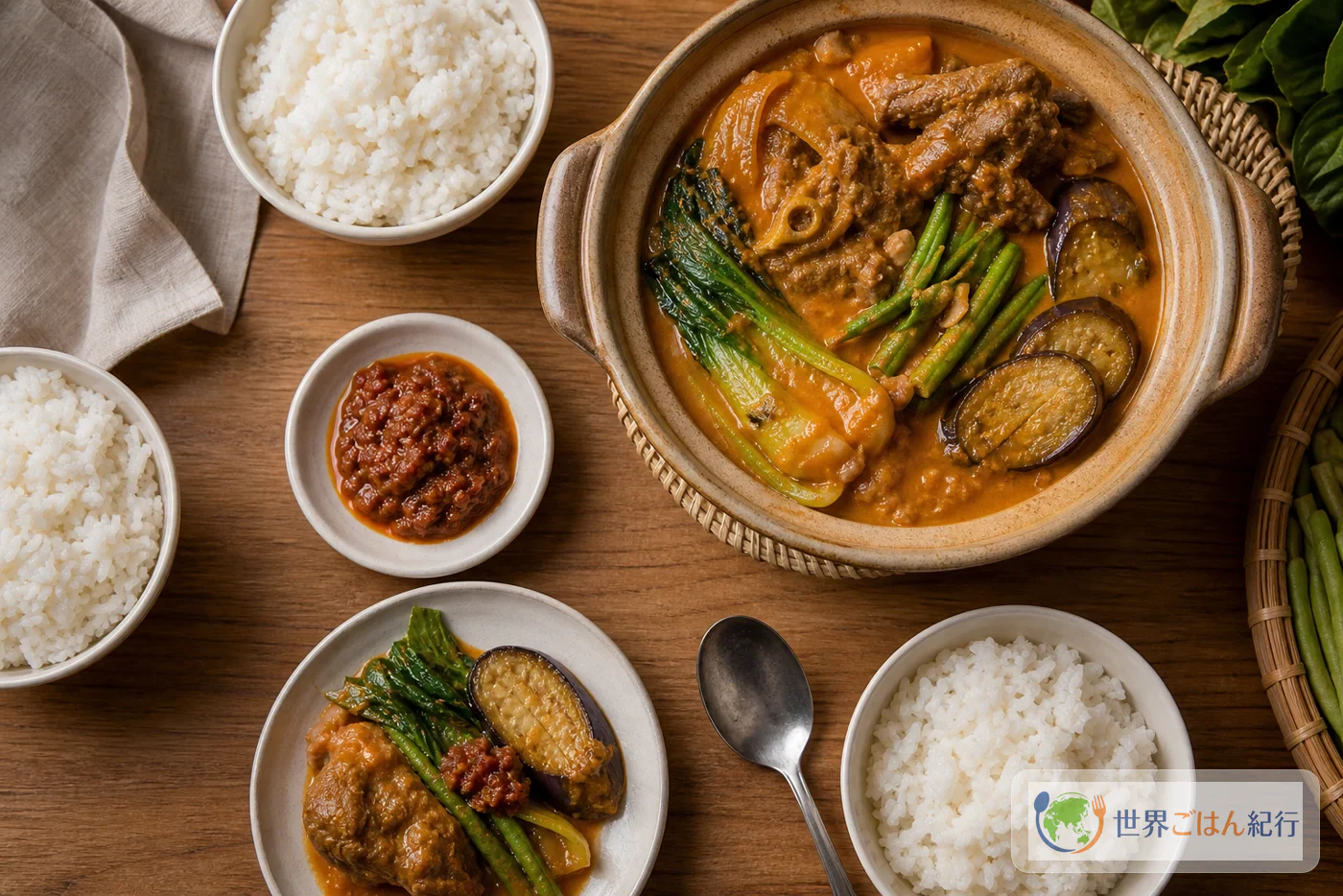
When Filipino families sit down to kare-kare, there is white rice beside it and a small dish of bagoong, a fermented shrimp paste. Each person works a little bagoong into their rice as they eat. That habit of not finishing the dish completely in the pot is what makes kare-kare what it is. You'll see the name spelled two ways in English, kare-kare and kari kari, and both are common.
Among Filipino dishes, kare-kare sits at the opposite end from sour sinigang or adobo, which is braised in soy sauce and vinegar. It doesn't lean sour, spicy or sweet. It's a soft sauce, and you add the salty bagoong yourself.
Kare-kare turns up for special occasions and for ordinary family meals alike. The oxtail needs a long time to get tender, so a weeknight after work is the wrong time to start it from scratch. Simmer it on the weekend and reheat the sauce the next day, or cut the prep time with a pressure cooker.
Where kare-kare comes from
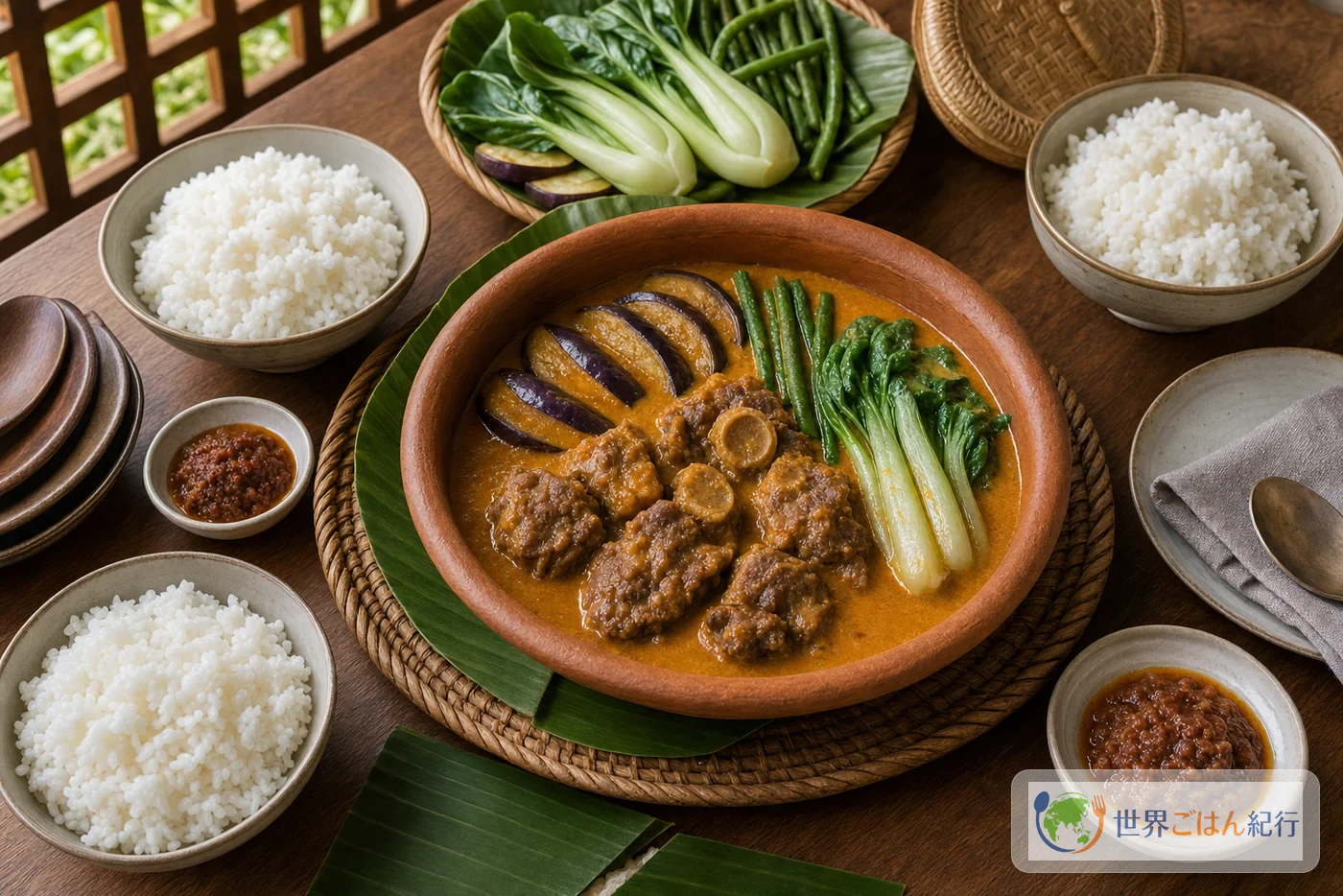
There are three stories about where kare-kare came from. One credits cooks in Pampanga. Another says it began as a curry brought by Indian sepoys during the British occupation of Manila from 1762 to 1764 and was later adapted to local tastes. The third ties it to the kari traditions of the southern Philippines and the wider Malay world. The karihan, small eateries that served kari, are part of the picture as well.
Whatever its beginnings, the dish today is built on oxtail and tripe and an orange-brown sauce of annatto oil, rice flour and peanuts. The vegetables change with region and season.
Ingredients (serves 4): built on oxtail, made practical with beef shank
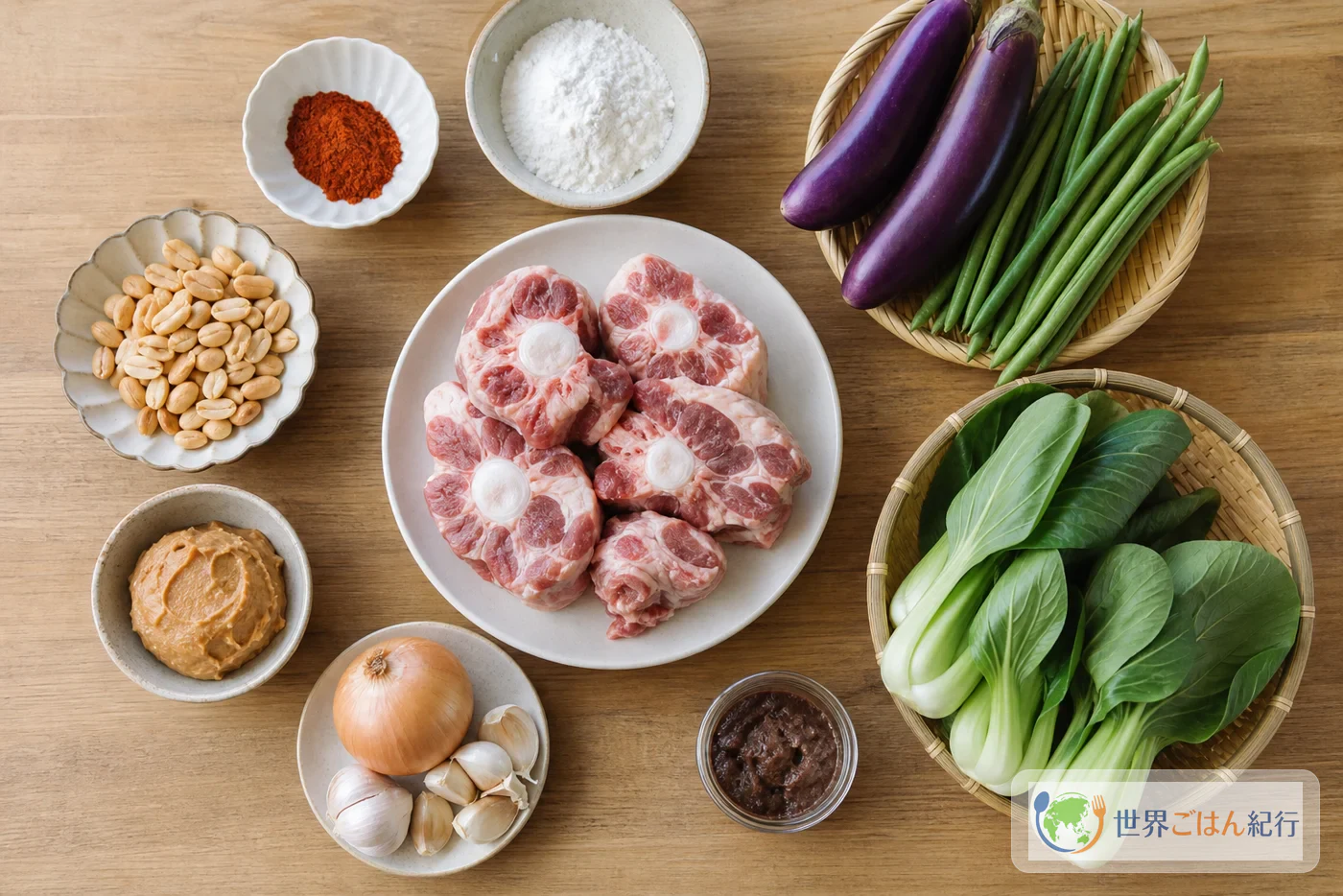
This makes one large platter for 4. Using only oxtail gives a stronger aroma and more gelatinous body, but it raises the bar on price and availability. 1 lb (500 g) oxtail plus 14 oz (400 g) beef shank is an easier mix, and the sauce still gets plenty of savoriness.
Ingredients and equipment for this dish
Oxtail often isn't on the shelf at an ordinary supermarket, so once you pick a cooking day, secure the meat first. Combining it with beef shank keeps the cost down and makes the simmering time more predictable.
Annatto isn't a spice that adds heat; it's the ingredient that gives kare-kare its orange color. Paprika can approximate the color, but if you want the aroma closer to the original, use annatto.
Avoid peanut butter that contains sugar or honey. A sweet product pushes kare-kare toward a dessert-like aroma and throws off the balance with the bagoong.
Bagoong divides opinion, but in kare-kare it's less a part of the sauce than a partner that adds salt right before you eat. A small jar is plenty; look for it at a Filipino or Asian grocery or online.
If you make braises often, a heavy pot or a pressure cooker makes life easier. Even with a pressure cooker, finish the sauce at the end in a separate pot, checking the thickness as you go.
Choosing kare-kare ingredients and substitutes
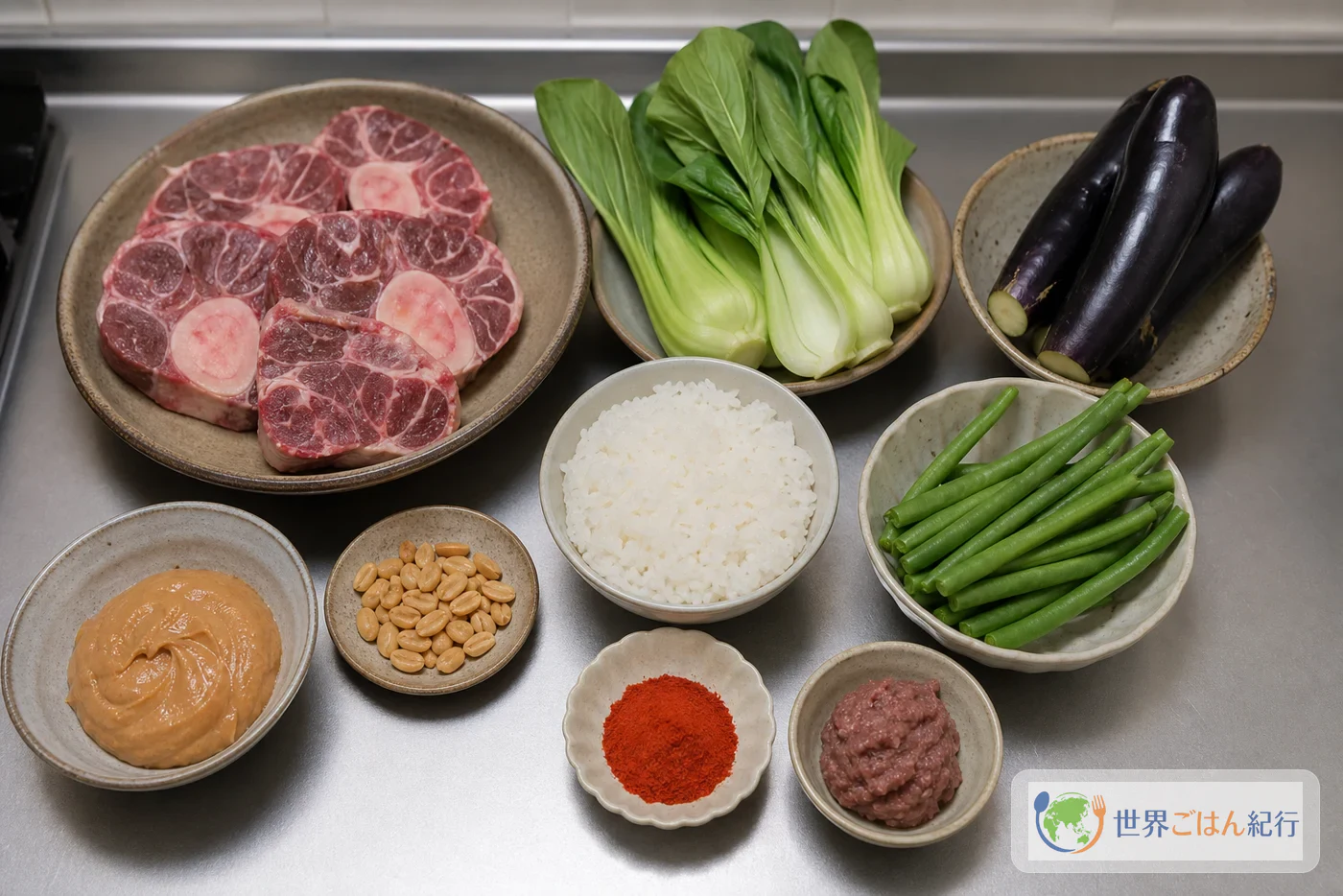
On paper, kare-kare's ingredient list looks hard to shop for. In practice only a few things need protecting: beef broth, peanuts, the orange color and the fermented saltiness added at the table. Get those right and it still works as kare-kare even with regular supermarket ingredients.
| Pillar of kare-kare | Why it matters | Practical solution at home |
|---|---|---|
| Beef broth | The base of the sauce. Water alone tastes flat | Combine oxtail, beef shank and beef tendon |
| Peanuts | The toasty flavor at the heart of the dish | Unsweetened peanut butter and unsalted peanuts |
| Toasted rice | Body and toastiness | Dry-toast rice flour. Otherwise a little joshinko (Japanese rice flour) |
| Annatto | Orange color and a faintly earthy aroma | Annatto powder. Paprika gives the color, but not the aroma |
| Ingredient in question | Closer to the original | Home kitchen choice | Effect of the substitute |
|---|---|---|---|
| Oxtail | Mostly oxtail | Oxtail + beef shank | Shank alone gives less gelatinous body |
| Tripe | Beef tripe, boiled separately | Fine to omit | Lighter texture, but easier for a first try |
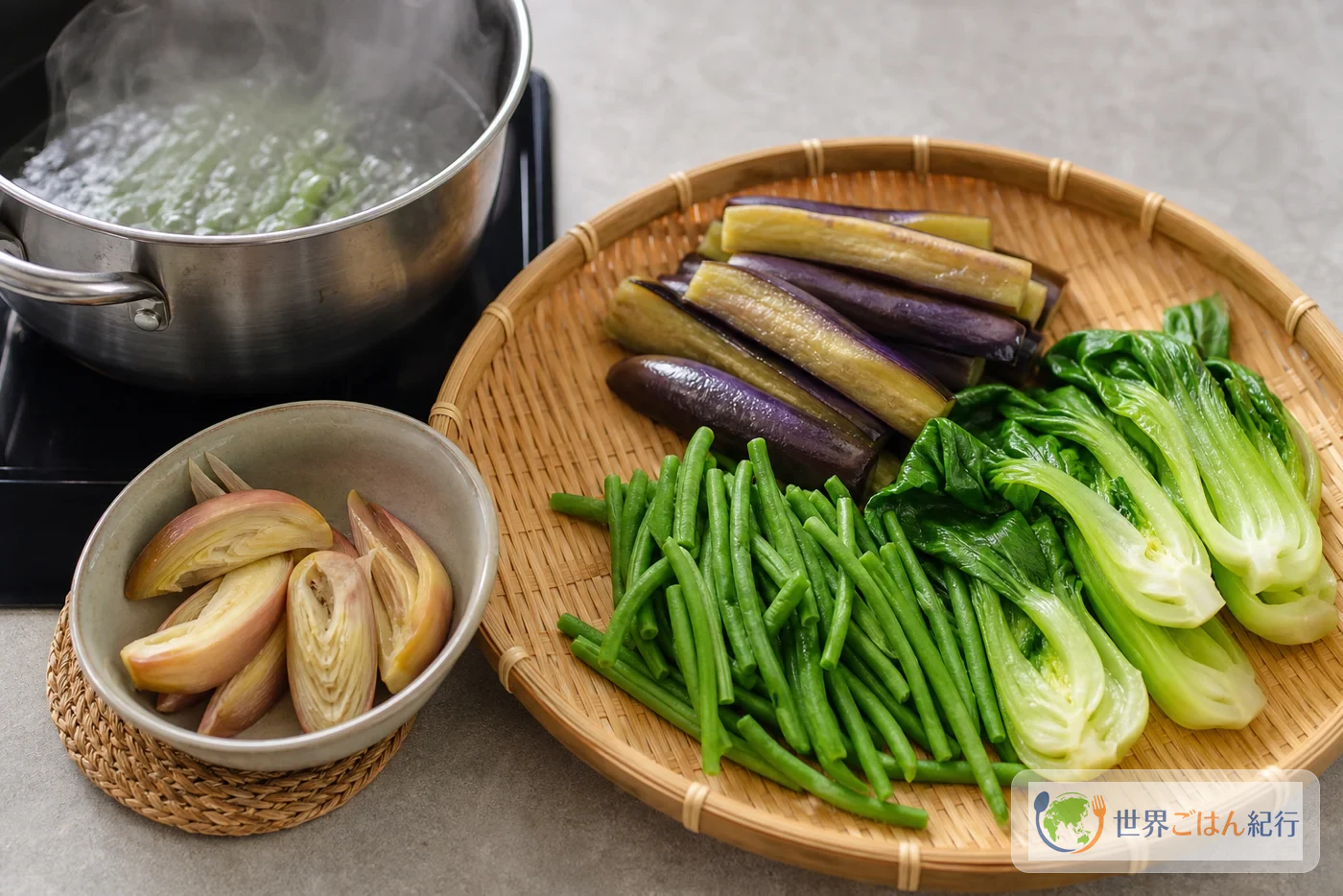
| Pechay | pechay | Bok choy, komatsuna | Komatsuna is more assertive, so cook it briefly |
| Long beans | sitaw | Green beans | Shorter pieces, but a similar texture |
| Banana blossom | puso ng saging | Omit, or use a little bamboo shoot | The bitterness and fibrous texture change |
| Bagoong | ginisang bagoong | Shrimp paste, fish sauce, a little miso | The fermented shrimp aroma can't be fully replaced |
The one swap to avoid is sweetened peanut butter. Spreads meant for toast are high in sugar and fat, and in a savory dish that sweetness pushes to the front. Pick a jar whose label reads little more than "peanuts, salt," and pass on anything sweetened, chocolate, whipped or sold as "peanut cream."
Method: handle the beef broth, rice flour and vegetables separately
If you simply simmer everything in one pot, kare-kare turns heavy. Make the meat tender on its own. Dry-toast the rice flour before dissolving it. Keep the color and bite of the vegetables. Separating these three keeps the peanut sauce rich without becoming tiring to eat.
If you take the peanut sauce all the way in a pressure cooker, it scorches easily and the thickness is hard to adjust. Use the pressure cooker only to make the meat tender, and finish the sauce in a regular pot for fewer failures.
Common kare-kare problems and fixes
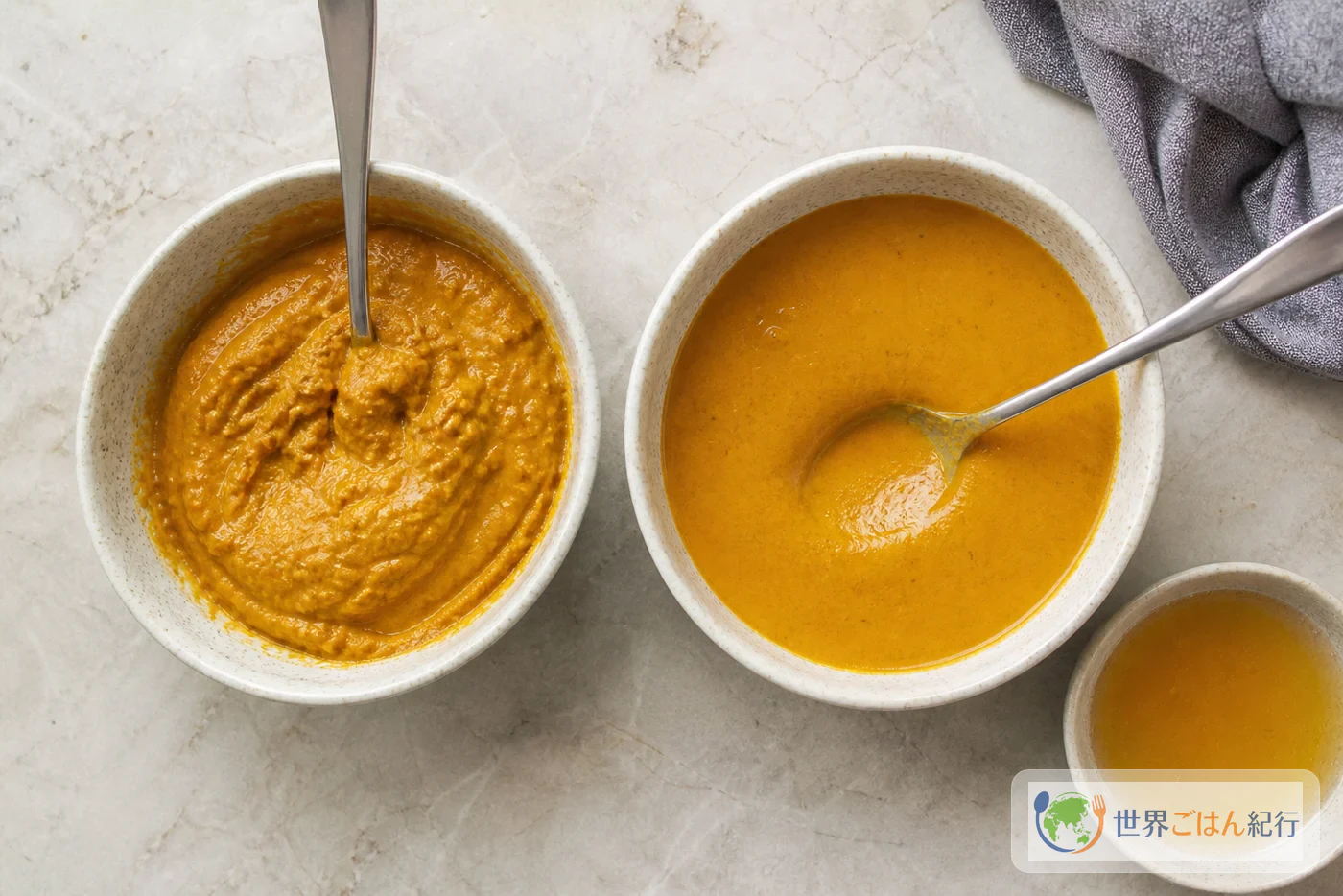
Kare-kare usually goes wrong in thickness more than in seasoning. A loose sauce won't cling to the meat and vegetables. A sauce that's too thick turns pasty from the rice flour and feels heavier with every bite.
| Problem | Cause | Fix |
|---|---|---|
| Gritty sauce | Rice flour added straight in, lumps left | Dissolve the toasted rice flour in broth before adding |
| Too sweet | Sweetened peanut butter | Switch to unsweetened. If already sweet, adjust at the table with fish sauce and bagoong |
| Pale color | Not enough annatto | Dissolve a little annatto powder in broth and add |
| Too heavy | Too much peanut butter, overreduced | Add broth 2 tbsp at a time |
| Mushy vegetables | Simmered too long in the sauce | Blanch the vegetables separately and add them at the end |
| Tough meat | Not simmered long enough | Simmer another 30 minutes, or 10 more minutes in a pressure cooker |
| Bland | Trying to finish everything in the pot | Add bagoong at the table |
Toasting the rice flour brings out its nutty flavor and makes an overly thick sauce less likely. Dry-toasting it and then dissolving it in broth gives a much smoother texture than adding the flour straight to the pot, and it's worth the extra step.
No rice flour on hand? Dry-toast 3 tbsp white rice and grind it in a spice grinder or mortar. You'll get a stronger toasty note than from rice flour. If the grind comes out coarse, sift it through a strainer so the sauce stays smooth.
Even if it tastes bland partway through simmering, don't add a lot of salt at once. The saltiness intensifies as it reduces, and bagoong goes on the side at the end. Light salt in the pot, adjust at the table: that's the safe way to make kare-kare.
Serving and storing kare-kare
Kare-kare at the table
Many Filipino dishes, like pancit canton, are shared from a big platter. Kare-kare goes further: each person sets the seasoning on their own plate. Pour the sauce over rice and start with a dab of bagoong about the size of 2 or 3 grains of rice, so the saltiness doesn't hit you all at once.
If someone at the table doesn't care for bagoong, keep it out of the pot and serve it in a small dish. That makes it easy to share one pot with family members who aren't used to Filipino food. For heat, mix a little chopped chili or lemon into the bagoong. And if you have bagoong left over, pinakbet, with squash, eggplant and okra cooked down in a little liquid, is an easy next dish.
Storage and reheating
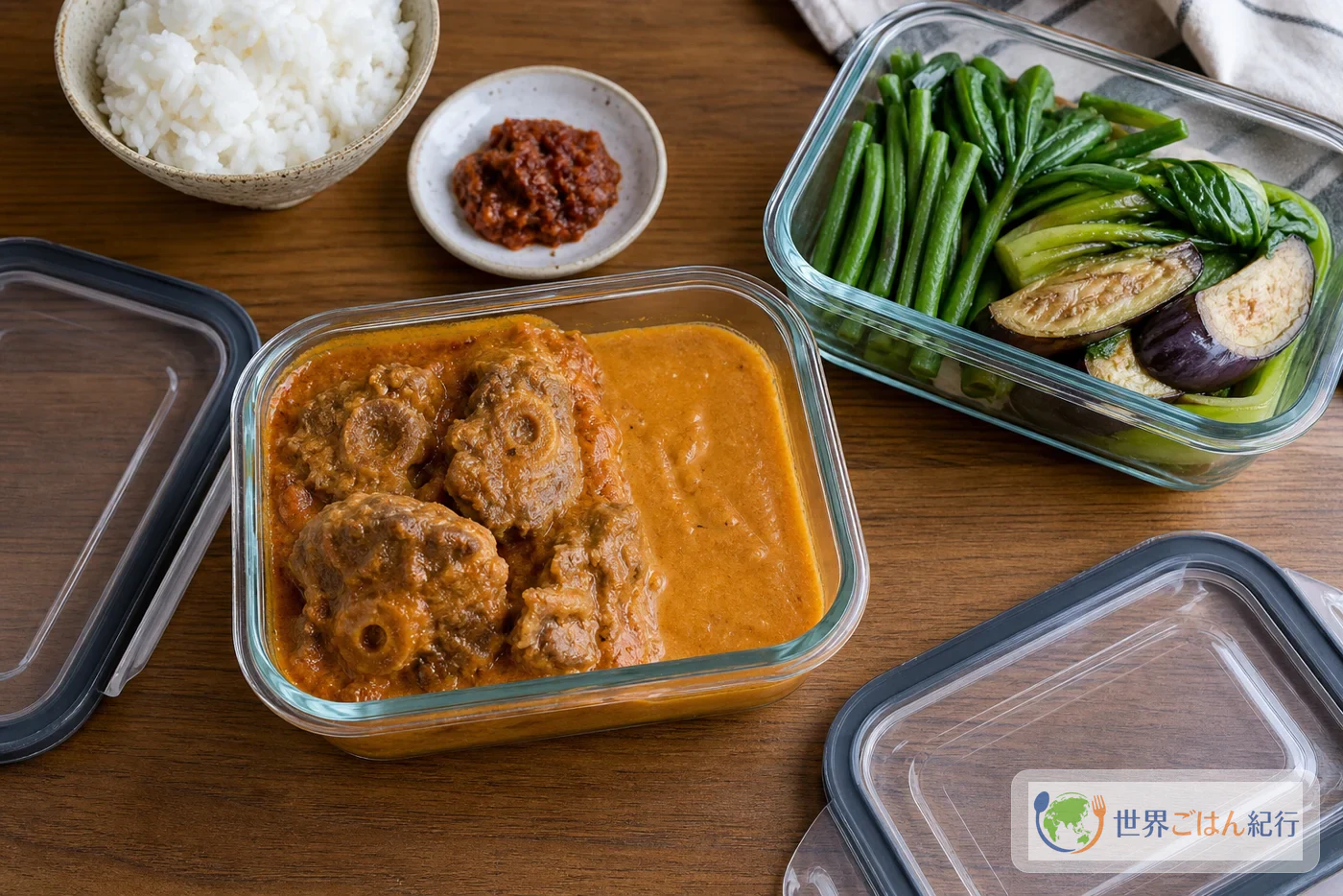
The sauce settles and tastes even better the next day. Vegetables left in it don't hold up, though: the eggplant soaks up too much sauce and the bok choy loses its color. If you're planning on leftovers, store the meat and sauce separately from the vegetables.
Leftovers keep in the refrigerator for 2 to 3 days. Once the stew has cooled slightly, move it into shallow containers and get it into the fridge promptly. It's a rich sauce of beef and peanuts, so don't let it sit at room temperature for long. To freeze, freeze only the meat and sauce, which keep for about 1 month, and blanch fresh vegetables when you serve it again.
Reheat the meat and sauce in a pot over low heat, loosening it with broth or water 2 tbsp at a time. The microwave tends to leave some parts stiff, so use a pot if you can. Add the vegetables at the end, just long enough to warm them.
The easiest next-day meal is kare-kare over firm-cooked white rice with a little bagoong and a squeeze of lemon or another tart citrus. The acidity cuts through the richness of the peanuts. Leftover beef shank is also good shredded and served as a small side next to lumpiang shanghai.
Kare-kare variations and menus
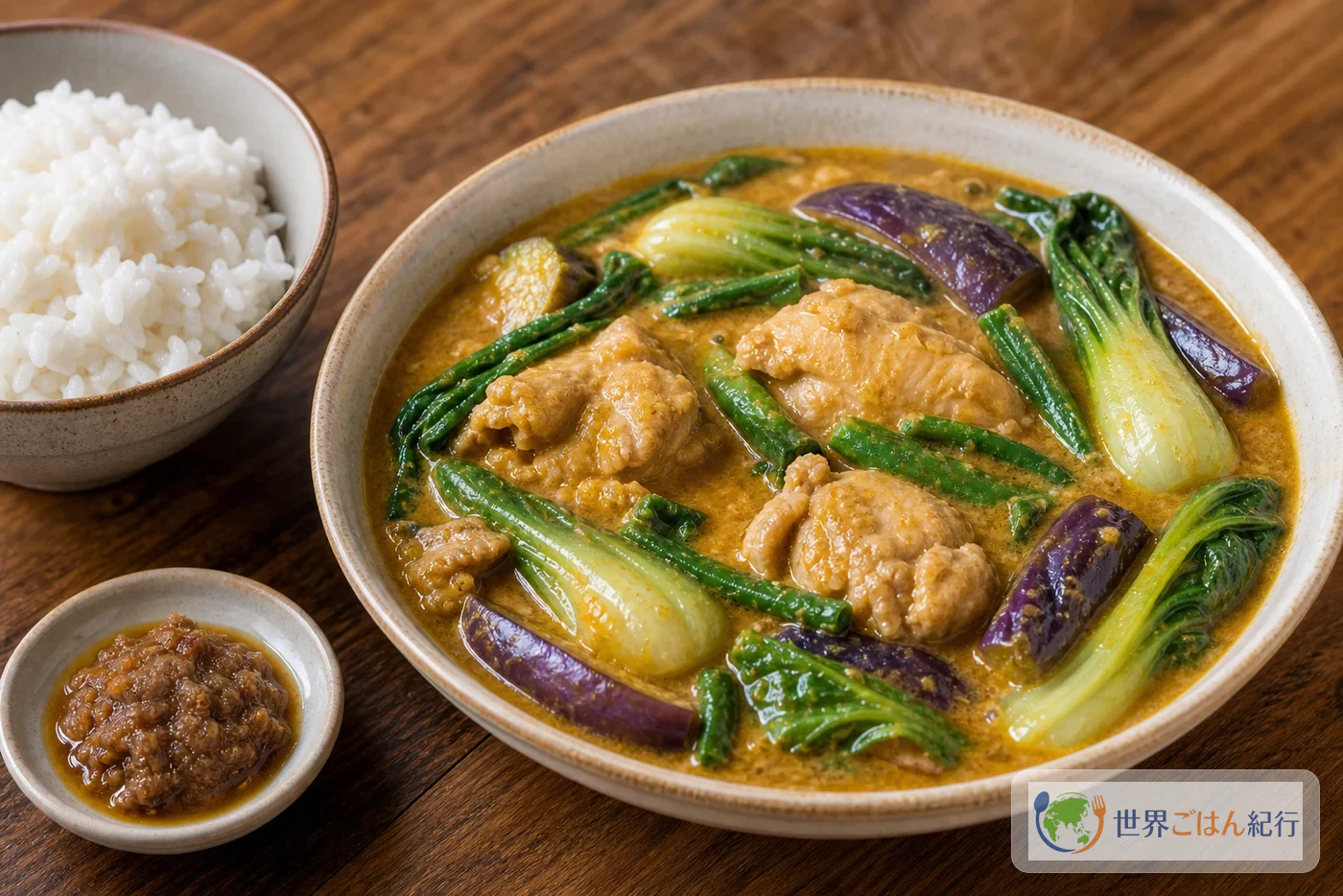
Oxtail kare-kare feels like a feast, but as Filipino home cooking it's flexible about the meat. Chicken, pork trotters, pork shank, seafood and tofu can all carry the peanut sauce.
Chicken thigh kare-kare
Use 1.75 lb (800 g) bone-in chicken thighs instead of oxtail and the simmering time drops to about 30 minutes. You lose the depth of beef broth, so reduce the peanut butter to 2.75 oz (80 g) and use chicken stock for a lighter result. This is the version to make when you want kare-kare on a weeknight.
Budget version with beef shank only
Skip the oxtail and use 2 lb (900 g) beef shank, adding 7 oz (200 g) beef tendon if you want more gelatinous body. You give up the aroma from the oxtail bones, but the meat is easy to cut and easy to eat. This version is perfectly good for a first try.
Tofu and vegetable kare-kare
Press 2 blocks of firm tofu, cut them into thick slices and sear the surfaces before adding them to the sauce. Leave out the fish sauce and bagoong and use 2 tsp miso and kombu dashi for savoriness. It won't taste exactly the same, but it makes a good peanut and vegetable stew. If someone has a peanut allergy, don't make kare-kare; switch to a different dish.
Building a Filipino menu
Kare-kare is mild yet rich, so something sour and something fried balance the table. For soup, a small serving of sinigang. For something fried, a few lumpiang shanghai. For noodles, a platter of pancit canton. On days you crave heat, Bicol express takes the same Filipino table in a different direction.
For dessert, the glutinous rice sweet sapin-sapin is a perfect match. Its coconut and sticky rice gently round off the richness of the peanut sauce.
FAQ
Can I make kare-kare with curry powder?
No. The name sounds like curry, but the flavor is built on peanuts, beef broth, toasted rice and annatto. Curry powder pushes it toward an Indian- or Japanese-style curry and buries kare-kare's gentle nuttiness.
What can I use if I can't find oxtail?
A combination of beef shank, beef chuck and beef tendon works well. Using 1.5 lb (700 g) shank plus 7 oz (200 g) tendon gets you closer to the gelatinous body of oxtail. Pork trotters or pork shank also work, but the aroma changes quite a bit.
Can I eat it without bagoong?
You can, but it won't taste as much like kare-kare. If you don't have a shellfish allergy, start by setting out just 1 tsp and try a tiny bit on your rice. If you can't use it, make up the salt and savoriness with a few drops of fish sauce, a little miso and a little lemon.
Can children or people who don't like spicy food eat it?
Yes. Basic kare-kare isn't spicy. Add heat at the table by mixing chili into the bagoong. For children, keep the salt in the pot light, serve the bagoong in a separate dish and pair the stew with white rice so it's easy to eat.
Sources
Kare-kare has several origin theories, and this article does not settle on any single one. We cross-checked food history, what home recipes have in common, and the handling of rice flour and peanut sauce against several English-language sources.
- Philippine Information Agency. “‘Kari kari’ takes over Filipino cuisine.” 2024. https://pia.gov.ph/regions/kari-kari-takes-over-filipino-cuisine/
- Serious Eats. “Kare-Kare (Filipino Curry) Recipe.” Updated 2025. https://www.seriouseats.com/kare-kare-filipino-curry-5196493
- Kawaling Pinoy. “Kare-Kare.” Updated 2024. https://www.kawalingpinoy.com/kare-kare/
- Panlasang Pinoy. “Kare Kare Recipe.” https://panlasangpinoy.com/kare-kare-recipe/
Kare-kare isn't a dish that surprises you with fiery heat. Beef broth, peanuts, rice flour, annatto, vegetables, bagoong: each plays a slightly different role, and it finally comes together on top of white rice. For your first time, don't hunt too hard for oxtail; try it with some beef shank mixed in. When the sauce starts to turn glossy in the pot, the Filipino platter is suddenly within reach.