Breaking up leftover rice from the fridge, you set out to make plain fried rice, and the kitchen drifts a little toward a street stall in Myanmar. Warm garlic and scallions in oil, add dried shrimp, and the aroma suddenly turns toward the sea. When fish sauce goes in around the edge of the pan, what rises is nothing like soy-sauce fried rice: briny seafood saltiness and the sweet smell of fried onions. This is htamin gyaw (ထမင်းကြော်), the everyday fried rice of Myanmar, light on sweetness and built on seafood and fried onions.
What htamin gyaw is
Htamin means cooked rice, and gyaw roughly means "fry." The dish is made everywhere: at home, in small eateries, as a light breakfast plate, and as the practical way to use up yesterday's rice. The add-ins change from shop to shop and home to home. In Hong Kong, htamin gyaw is a simple fried rice of leftover rice, egg, garlic, soy sauce and pepper, with vegetables such as carrot and peas, plus scallions. Myanmar also has a fried rice mixed with boiled beans (pe byouk).
If mohinga is the steam of a Burmese morning, htamin gyaw is the plate that quickly brings leftover rice back to life. Add beans or fermented flavors, as in lahpet thoke, and you start to see how wide Burmese cooking reaches.

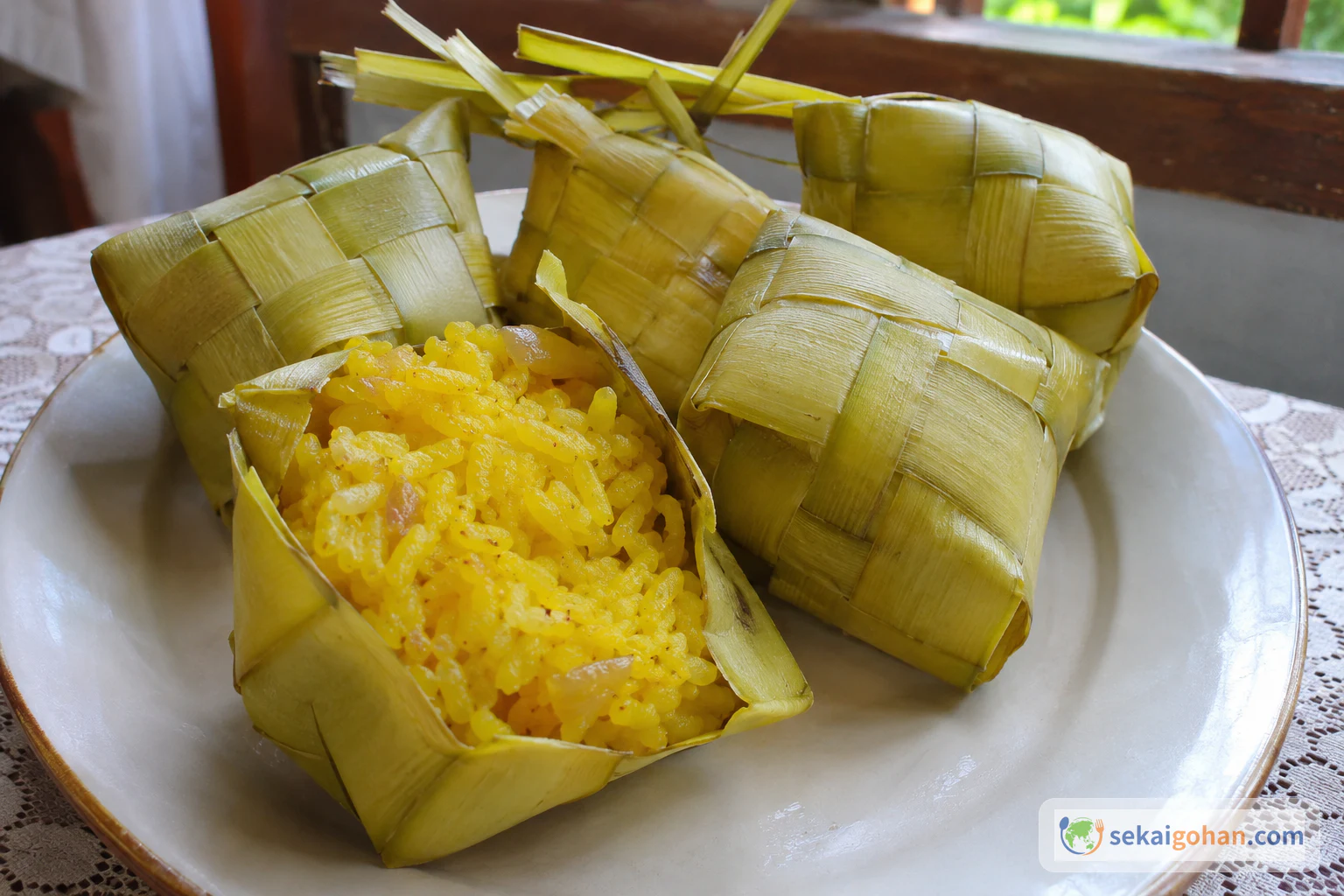
Its closest cousin is the yellow oil rice hsi htamin, a breakfast-style dish made with glutinous rice. Both are htamin, but fried rice and steamed rice end up with very different textures. Next to other Southeast Asian fried rice, it's also quite different from nasi goreng, which uses sweet kecap manis.
In English it's sometimes just called Burmese fried rice. Keeping the Burmese name makes it easier to see it as its own dish, distinct from Indonesian nasi goreng or Thai fried rice.
Ingredients (serves 4)

Use cooled rice, not freshly cooked. If you're using rice from the day before, it should have been refrigerated, not left out at room temperature. If you cook it the same day, spread it on a sheet pan, let it cool down, then chill it in the refrigerator for 20 minutes.
Contains egg, shrimp, fish, soy and wheat. Check the labels on the fish sauce, soy sauce, fried onions and dried shrimp. Don't leave cooked rice at room temperature for long: refrigerate it once it has cooled down, and when you fry it, heat it until it's hot all the way through.
Ingredients that can be confusing to shop for
Rice, eggs, carrots, scallions and cucumbers are everyday groceries. The ones worth a little thought are Southeast Asian fish sauce, fried onions for a consistent toasty finish, and a carbon-steel wok that can dry the grains quickly. Skip special meat or eggs. Getting the aroma and the heat right brings you closer to real htamin gyaw.
Soak the dried shrimp, chop it, and put it in the oil first, and its aroma turns round and mellow. Added dry to a hot pan, it burns easily, so soak it in hot water for 5 minutes before using. The dried-goods shelf at an Asian grocery store is all you need.
Even a small amount of fish sauce pulls the rice's aroma toward Southeast Asia. Made with soy sauce alone, the fried rice is easy to like, but it loses the lingering seafood note that makes it htamin gyaw.
You can make fried onions yourself, but if you're only using a little to finish fried rice, store-bought is convenient. They also go on Indonesian nasi uduk and Egyptian koshari, so a container gets used up easily.
A skillet works, but on days when you're frying a lot of rice, a wok with its wide sides drives off the moisture in the grains more easily. Rather than a nonstick pan, a well-heated carbon-steel or cast-iron pan, tossed quickly, also brings out the fish sauce's aroma.
Choosing rice and seasonings for htamin gyaw
To make Burmese fried rice at home, hold on to three things: cold rice, seafood saltiness, and a sour side dish. Getting those right does more for the dish's character than adding expensive meat.
| Element | How it's done in Myanmar | How to manage it at home |
|---|---|---|
| Light, separate grains | Fry cold rice or long-grain rice | Cool short-grain rice in a shallow container and break up clumps first |
| Seafood saltiness | Fish sauce, shrimp, ngapi-style funk | Use Thai fish sauce, dried shrimp and a little soy sauce |
| Egg | Mixed in, or a fried egg on top | Stir scrambled egg into the rice, and add a fried egg if you like |
| Beans and vegetables | Beans, scallions, onion, cucumber and so on | Peas, carrot and a cucumber pickle keep it light |
| Side dishes | Sour, spicy, fermented condiments | A cucumber-onion pickle, lime and a chili paste in small dishes |
The real challenge in a home kitchen is the rice. In Myanmar the dish is often made with long-grain or fragrant rice that fries up light, and jasmine rice is a good fit if you want that lightness. Moist, sticky short-grain rice clumps almost immediately, but it works if you cook it a little firm, spread it out to cool, fry it briefly over fairly high heat, and add the fish sauce and soy sauce last, around the hot sides of the pan. On days when short-grain is all you have, care in drying out the rice matters more than the type.
Fish sauce and dried shrimp stand in here for ngapi, Myanmar's fermented fish paste. Ngapi adds a deeper fermented-fish aroma, and if you can get it, warm 1/2 tsp in the oil. The smell is strong and it can be hard to find, though, so fish sauce is plenty for a first try.
How to make it
Fried rice is a dish where you cut everything before you turn on the heat. Start chopping the carrot after the burner is on and the aromatic oil will burn. Line up the rice, seasonings, eggs and side dish first so the frying itself goes fast.
Put too much rice in the pan at once and the temperature drops, leaving the rice sticky. If your wok is small, fry it in two batches.
Common htamin gyaw problems and fixes
Most problems fall into a few groups: soggy, too salty, too fishy, or the egg disappears.
| Problem | Cause | Fix |
|---|---|---|
| Sticky rice | Used freshly cooked rice, or fried it too long | Spread it on a sheet pan to cool for 5 minutes, then return it to the pan and fry over medium heat for just 1 minute |
| Too salty | Too much fish sauce and soy sauce together | Dilute with an extra 3.5 oz (100 g) cold rice and 1 beaten egg |
| Sharp fish-sauce smell | Poured it straight onto the rice instead of sizzling it on the pan | Stir-fry over medium-high heat for 30 seconds and serve with 1 tsp lime juice |
| Bitter dried shrimp | Burned it dry over high heat | Next time, soak it first and cook over medium-low heat only until it bubbles |
| The egg disappears | Stirred too long after adding the rice | Set the egg in large curds and toss fewer times at the end |
| Flat, not sweet enough | Fish sauce and soy sauce alone taste harsh | Round it out with 1/2 tsp sugar, fried onions and the pickle |
Frozen peas can go in straight from the freezer. If they're heavily frosted, rinse them briefly and pat dry with paper towels, because ice in the pan makes the aromatic oil spatter and the rice soggy.
Serving and storing htamin gyaw
Side dishes

In Burmese eateries, fried rice sometimes comes with a fried egg, cucumber, onion, and spicy or fermented condiments. At home, put out at least the small sour dish. The fish sauce and oil linger, and the cucumber's juiciness and the vinegar reset your palate.
For a fuller Burmese table, serve mohinga as the soup and lahpet thoke as a small plate, and you have seafood, tea leaves and rice all covered.
Storage and reheating
Fried rice is best fresh. Spread leftovers in a shallow container to cool and move them to the refrigerator soon after; rice dishes become riskier the longer they sit at room temperature, so don't leave them out on the table.
| Storage | How long | Reheating |
|---|---|---|
| Refrigerator | 2 days | 3 minutes in a skillet over medium heat. Add 1 tsp oil and toss |
| Freezer | 2 weeks | Freeze in portions. From frozen, 3 minutes at 600 W, stir, then 1 more minute |
| Packed lunch | Same day | Reheat thoroughly and let cool before packing. Leave out the soft fried egg |
| Pickle | 2 days, refrigerated | Store separately from the rice. Drain before serving |
To reheat a single serving in the microwave, sprinkle 1 tsp water over it, cover loosely, and heat at 600 W for 1 1/2 minutes. Stir once and heat for another 30 seconds. Fried onions added just before serving bring the aroma back, even after a night in the fridge.
FAQ
Can I make it with freshly cooked rice?
You can, but freshly cooked rice straight into the pan turns sticky. Cook the rice with about 2 tbsp less water, spread it on a sheet pan as soon as it's done, and chill it in the refrigerator for 20 minutes. Even in a hurry, just letting the steam escape before frying makes a big difference.
Can I add meat?
Yes. Cut 2.75 oz (80 g) boneless chicken thigh into 0.5 inches (1 cm) cubes, stir-fry over medium heat for 3 minutes after the aromatic oil, and move on to the egg once it's white all the way through. More meat does hide the lightness of the fish sauce and dried shrimp, so a first batch with just egg and peas teaches you the dish's backbone.
What should I add to make it spicy?
If you have a Burmese-style chili paste, serve a little on the side. Otherwise, mix sliced chilies into the pickle or put 1 tsp sambal at the edge of the plate. Letting each person adjust the heat on their own plate works better than mixing it through all the rice.