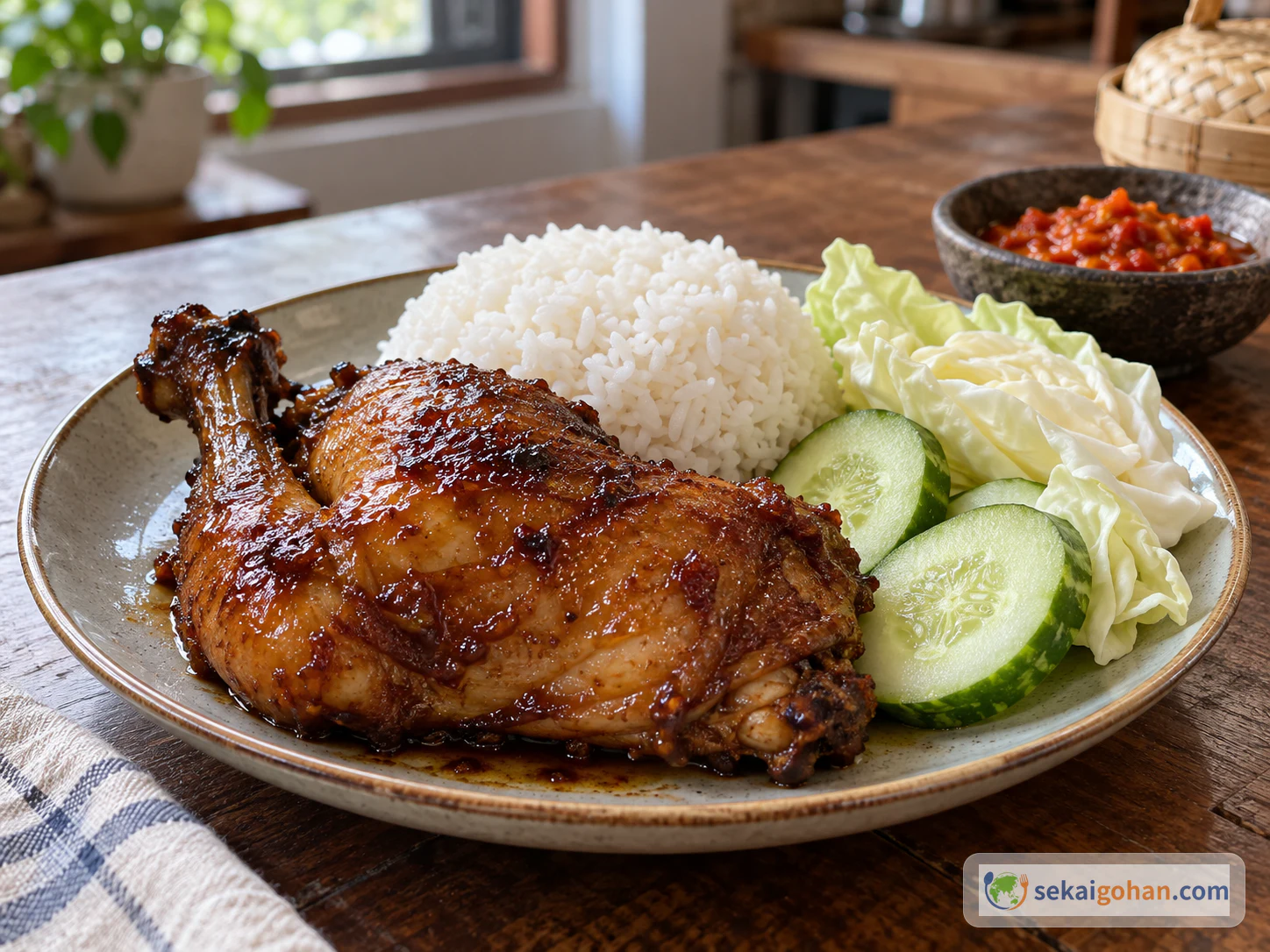
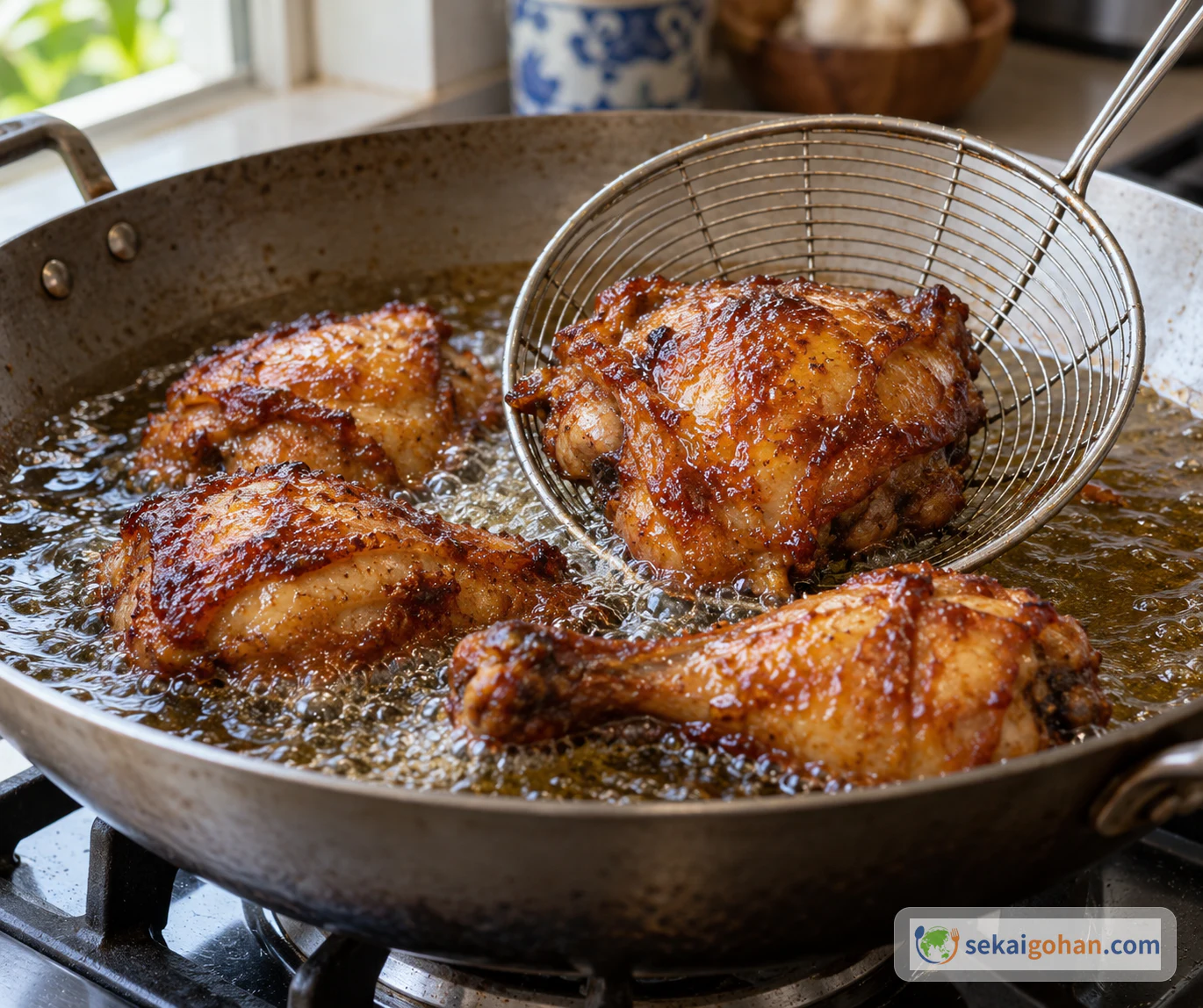
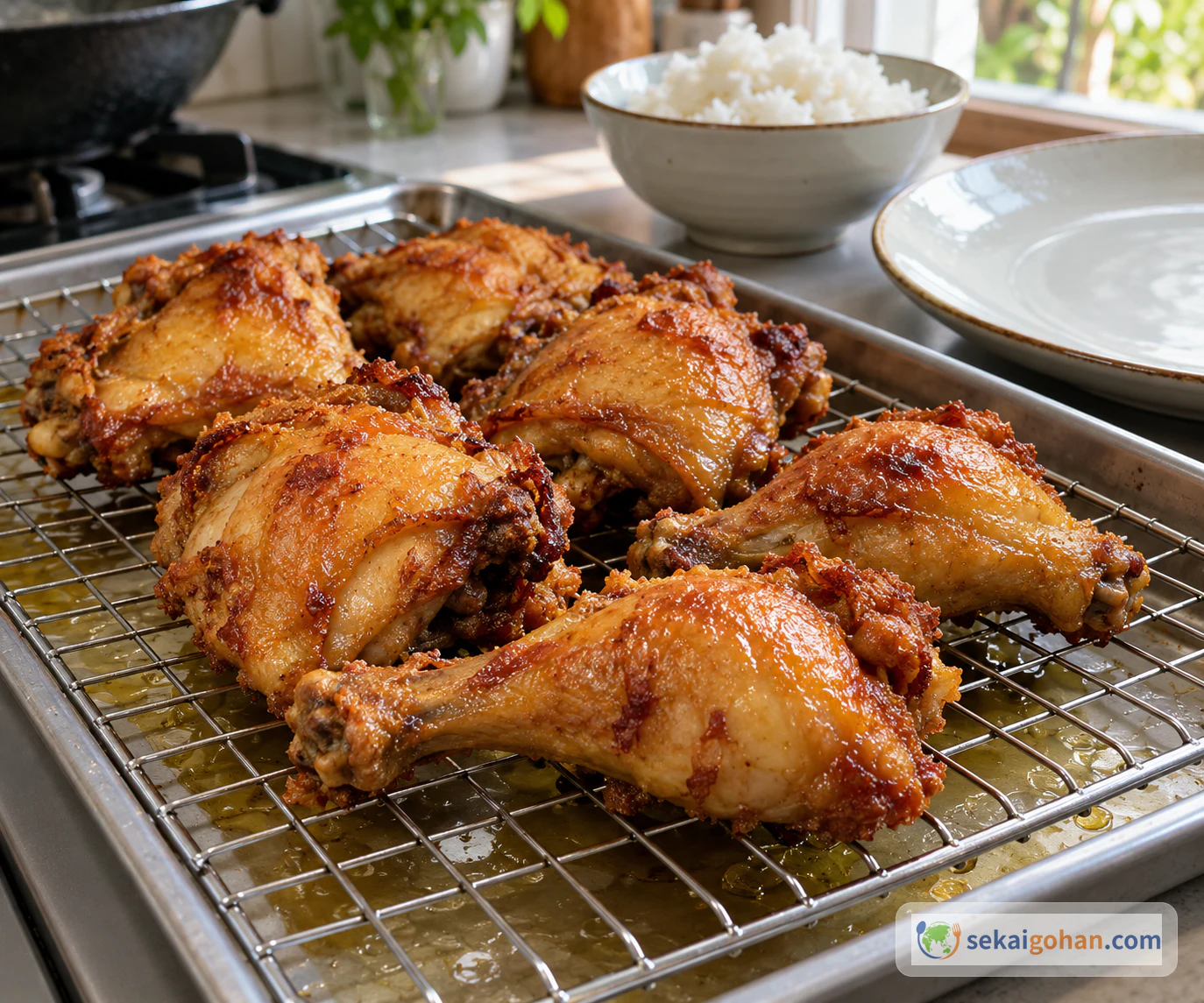
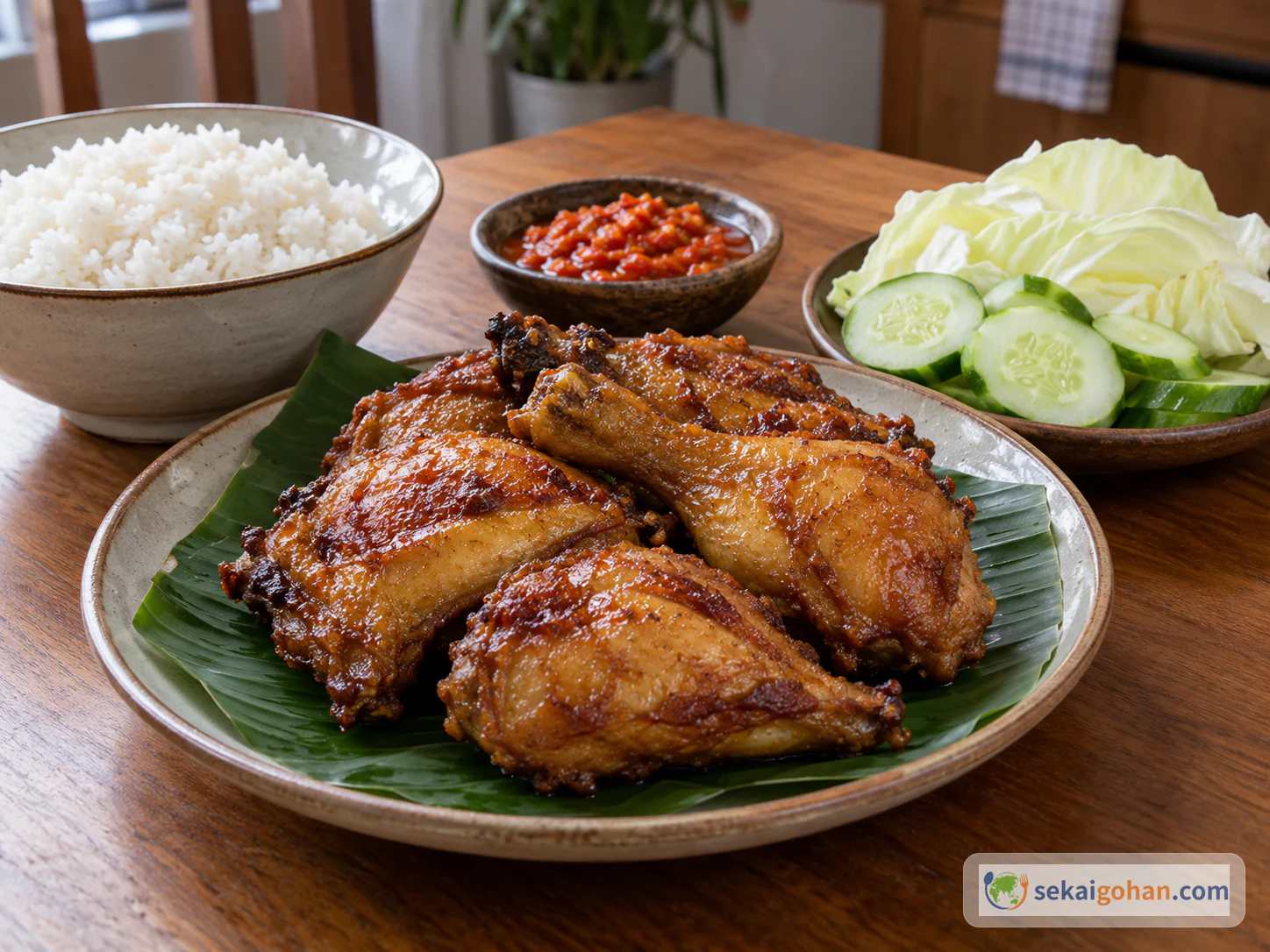
Serve ayam goreng Kalasan with a mound of warm rice, a small dish of sambal and lalapan, the fresh raw vegetables that come with many Indonesian meals. Each piece should have a deep, sweet sheen, and the raw vegetables give you something to crunch between bites. The chicken comes from Kalasan, in Sleman Regency in the Special Region of Yogyakarta, on the island of Java. It's braised in coconut water, palm sugar and sweet soy sauce, then fried quickly until glossy and brown. To see where it sits in the country's cooking, start from our Indonesia page.
About Ayam Goreng Kalasan
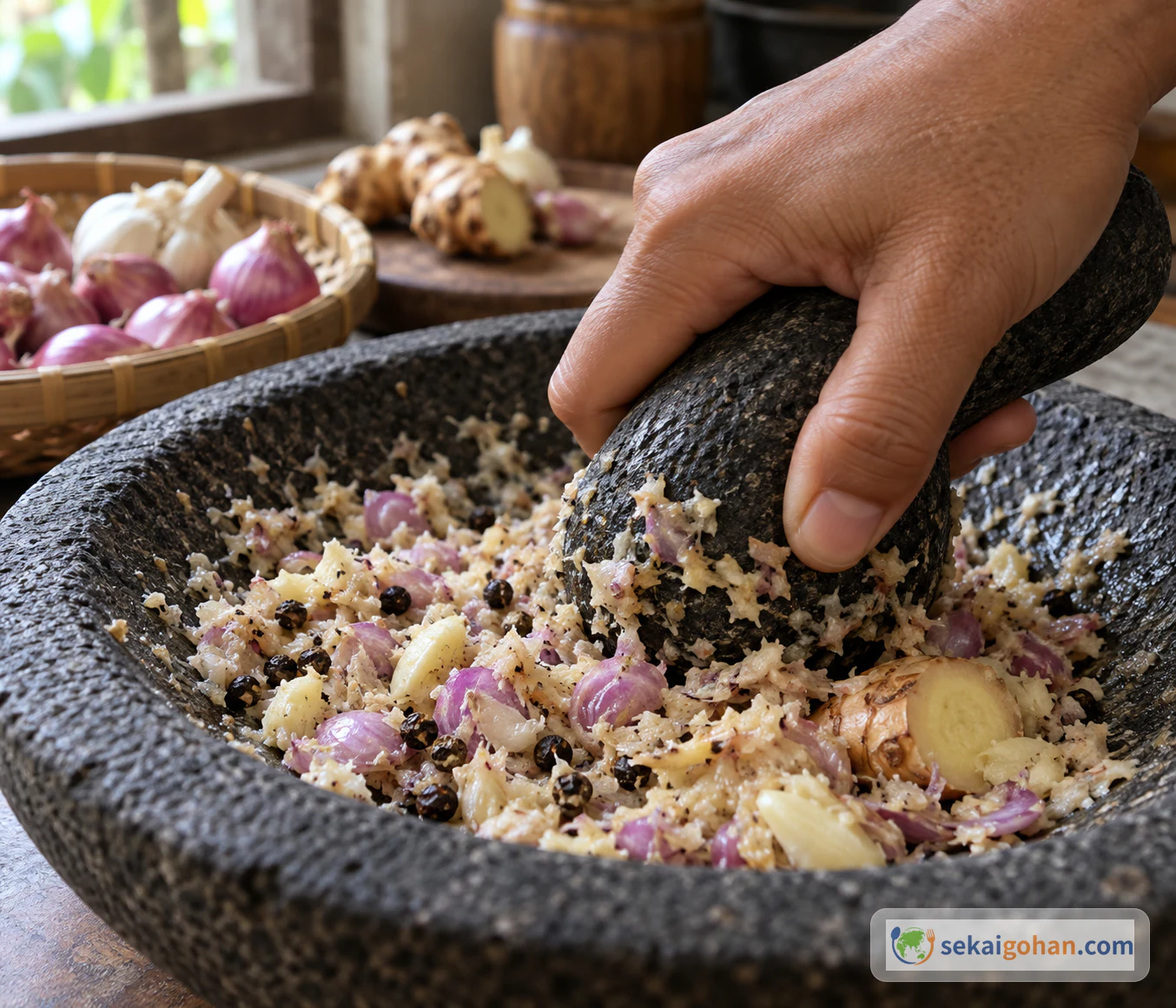
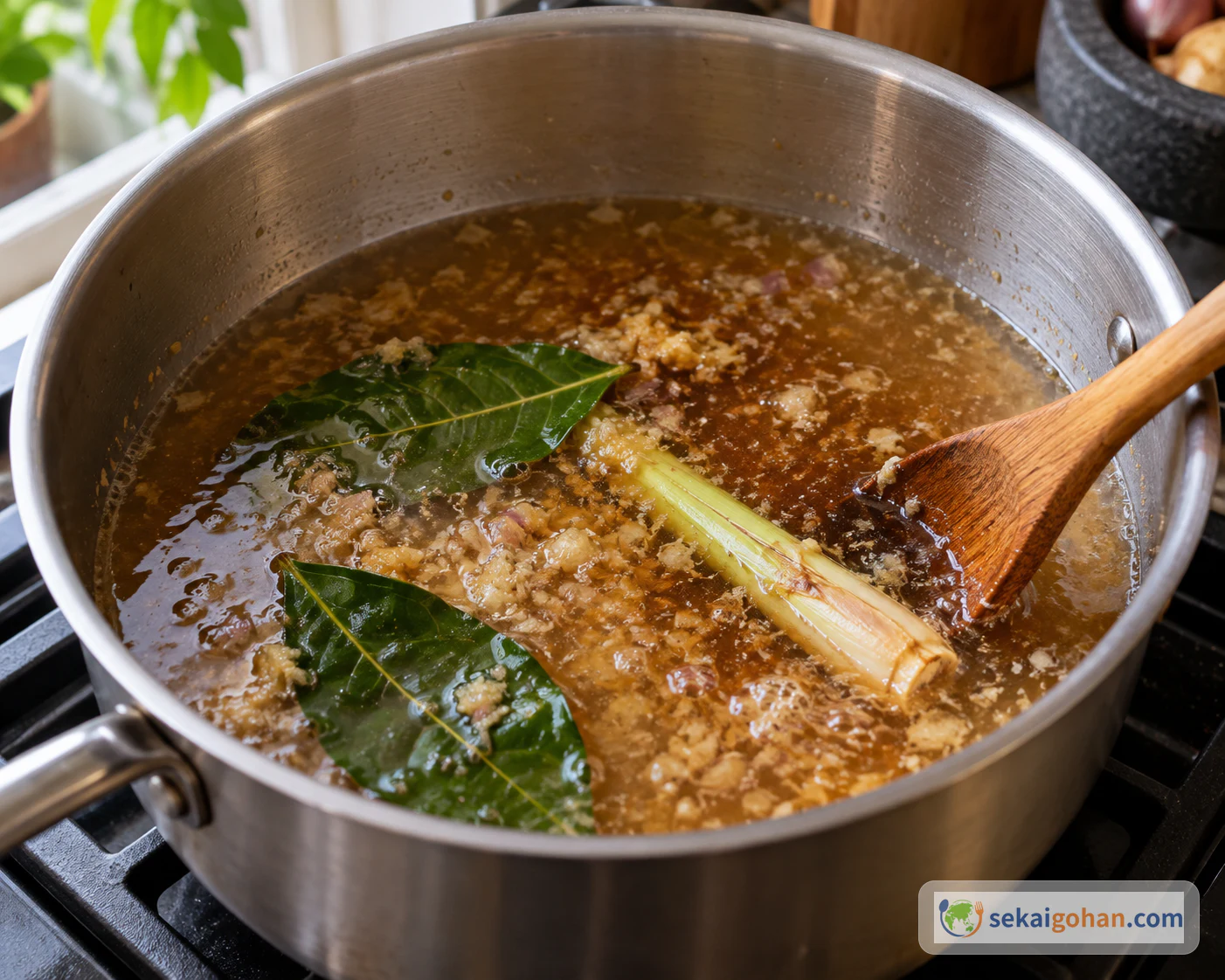
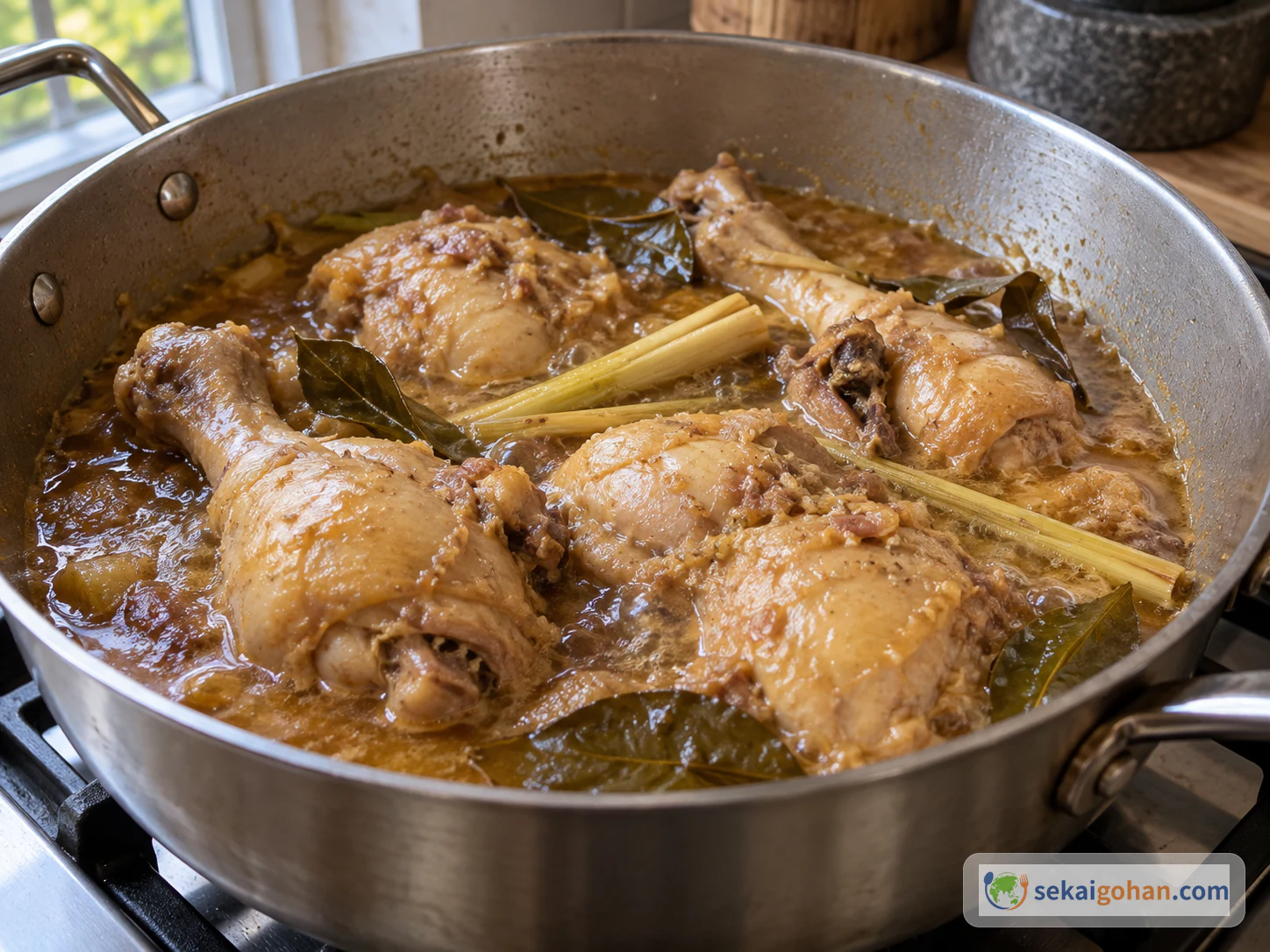
Ayam means chicken and goreng means fried, but the frying is only the last step. Many everyday versions of ayam goreng simmer the chicken in a yellow spice paste (bumbu kuning) before frying. The Kalasan style braises it in coconut water (air kelapa) with palm sugar (gula merah), sweet soy sauce (kecap manis), Indonesian bay leaves (daun salam) and lemongrass, along with a ground paste of shallots, garlic, pepper, galangal and ginger. The chicken goes into the oil only once it's tender and seasoned all the way through, so it comes out sweeter and darker than most fried chicken.
The flavor goes in during the braise. Coconut water, palm sugar and kecap manis soak into the chicken while it simmers, and the oil only browns the surface.
The dish is linked to Candisari Bendan and to a cook remembered as Mbok Berek (Ibu Ronodikromo). Her business opened in 1952, and President Sukarno once came to eat there. In the 1960s, former employees opened their own places nearby, the dish spread across the area, and Bendan became the place to buy it.
In Kalasan, the chicken is often sold as a whole bird to take home. It comes packed with kremes (crisp, lacy fried crumbs), raw vegetables such as cucumber, kemangi (lemon basil) and cabbage, and sambal petis. Local shops braise their chicken mainly with salt and garlic in a long process of four to five hours, and they make their kremes from kanji (tapioca starch) and egg.
Home cooks have their own versions. Many also use coconut water, galangal and daun salam, but in different proportions, so there's no single fixed formula.
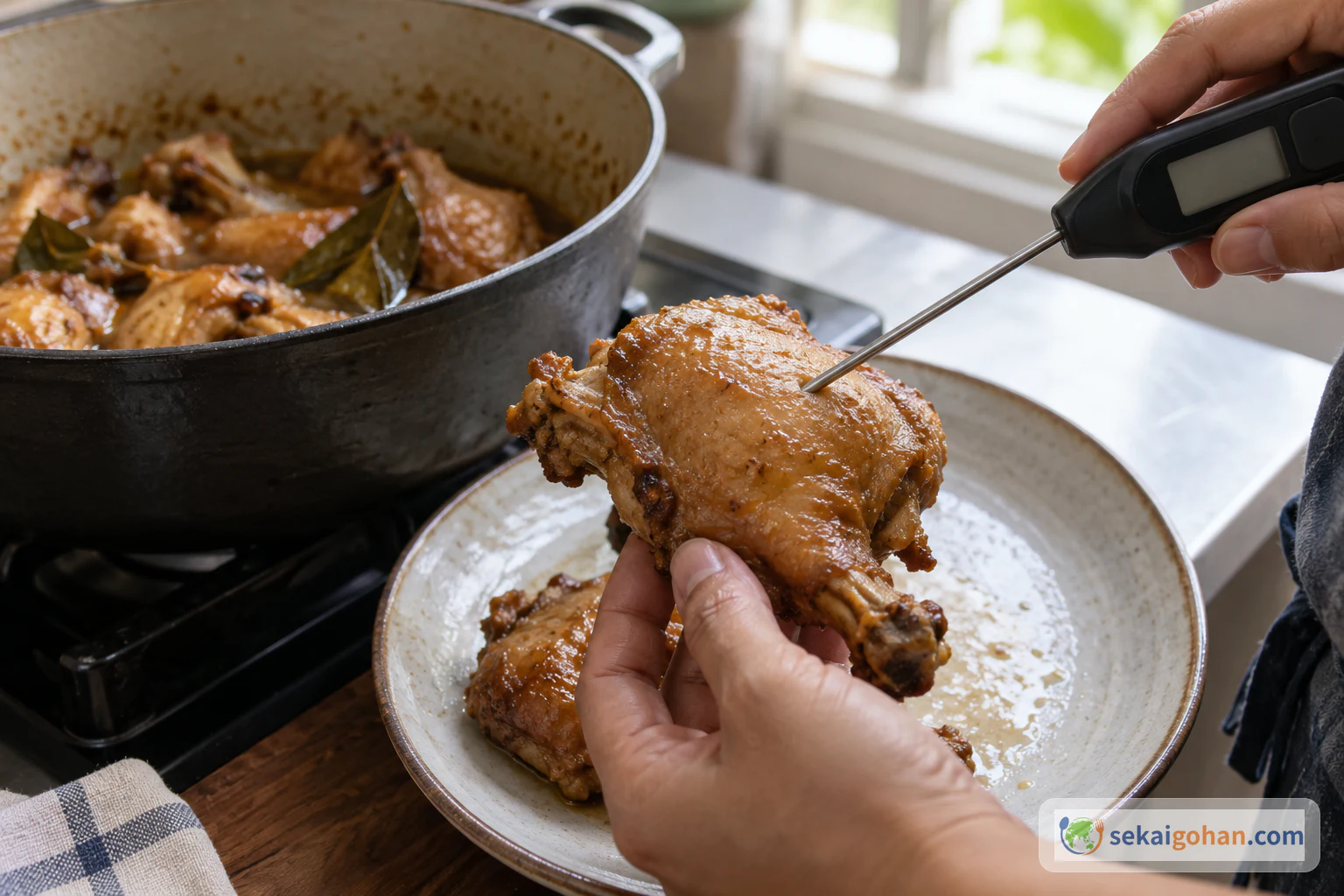
The steps describe what to look for rather than fixed braising or frying times. Judge doneness with a thermometer.
Ingredients: Building the Sweet, Aromatic Braise
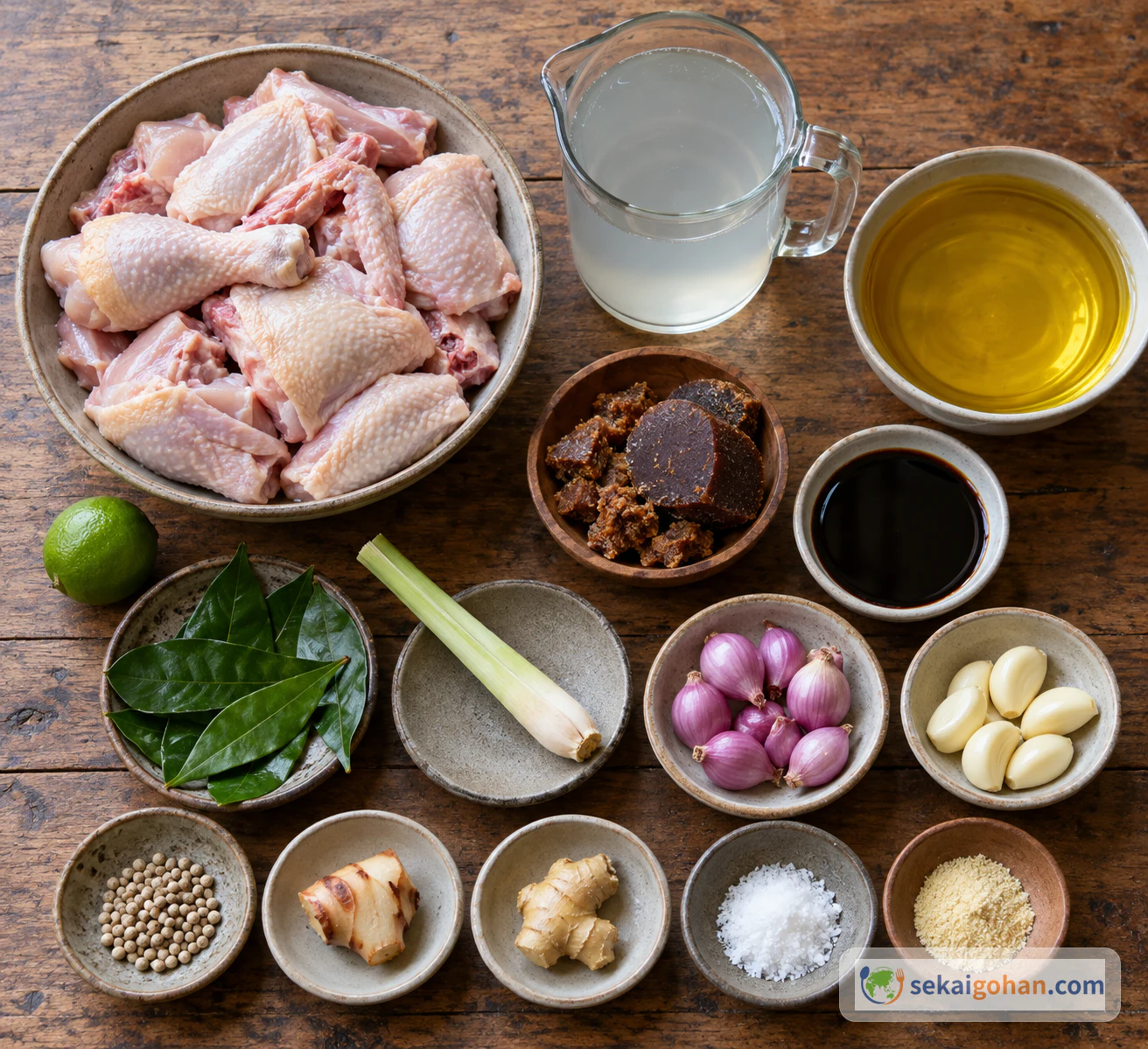
These are the amounts for 2.25 lb (1 kg) of young chicken.
Add all 2 tsp of salt to the braising liquid in step 3 and no salt anywhere else, to avoid salting twice. Taste the braising liquid before adding the chicken; broth powder also contains salt.
Equipment
- Mortar and pestle, or another way to grind the spice paste
- Bowl for preparing the raw chicken
- Saucepan or pot wide enough to braise the chicken
- Instant-read food thermometer
- Pan or pot for frying
- Spider skimmer or slotted spoon (helpful, not essential)
- Wire rack over a tray for draining
- A separate cutting board and tools for raw chicken
Choosing Ingredients and Substitutes
Coconut water, not coconut milk. The braise uses air kelapa, the clear liquid from inside a coconut. Coconut milk (santan) is a different, creamy ingredient and would make a different dish. Look for unsweetened coconut water. If you can't find any, plain water works, but the chicken will be less sweet and lose the coconut aroma.
Kecap manis and palm sugar. These two give the Kalasan style its sweetness, and they're also why the chicken browns so fast in the oil. Kecap manis is a thick, sweet Indonesian soy sauce, and using ordinary soy sauce instead changes the flavor. A dark unrefined sugar can stand in for palm sugar, though the taste will differ. For the broth powder, use kaldu bubuk. Brands vary in ingredients and saltiness, so read the label if you use a different one.
Aromatics. Galangal and ginger each have their own place in the paste, so use both. Use shallots rather than small red onions. Daun salam is the Indonesian bay leaf, which is different from European bay laurel. If you can't get it, leave it out and accept a less fragrant braise.
The chicken. The recipe calls for ayam kampung muda, a young free-range chicken. Ordinary supermarket chicken will taste and cook differently. Whatever bird you use, judge doneness by the internal temperature of the thickest piece, not by weight or time.
Kecap manis can contain soy and wheat. Check the label of the broth powder you use as well. If you change any seasoning, keep track of what you changed.
Method: Braise Until Seasoned Through, Then Fry
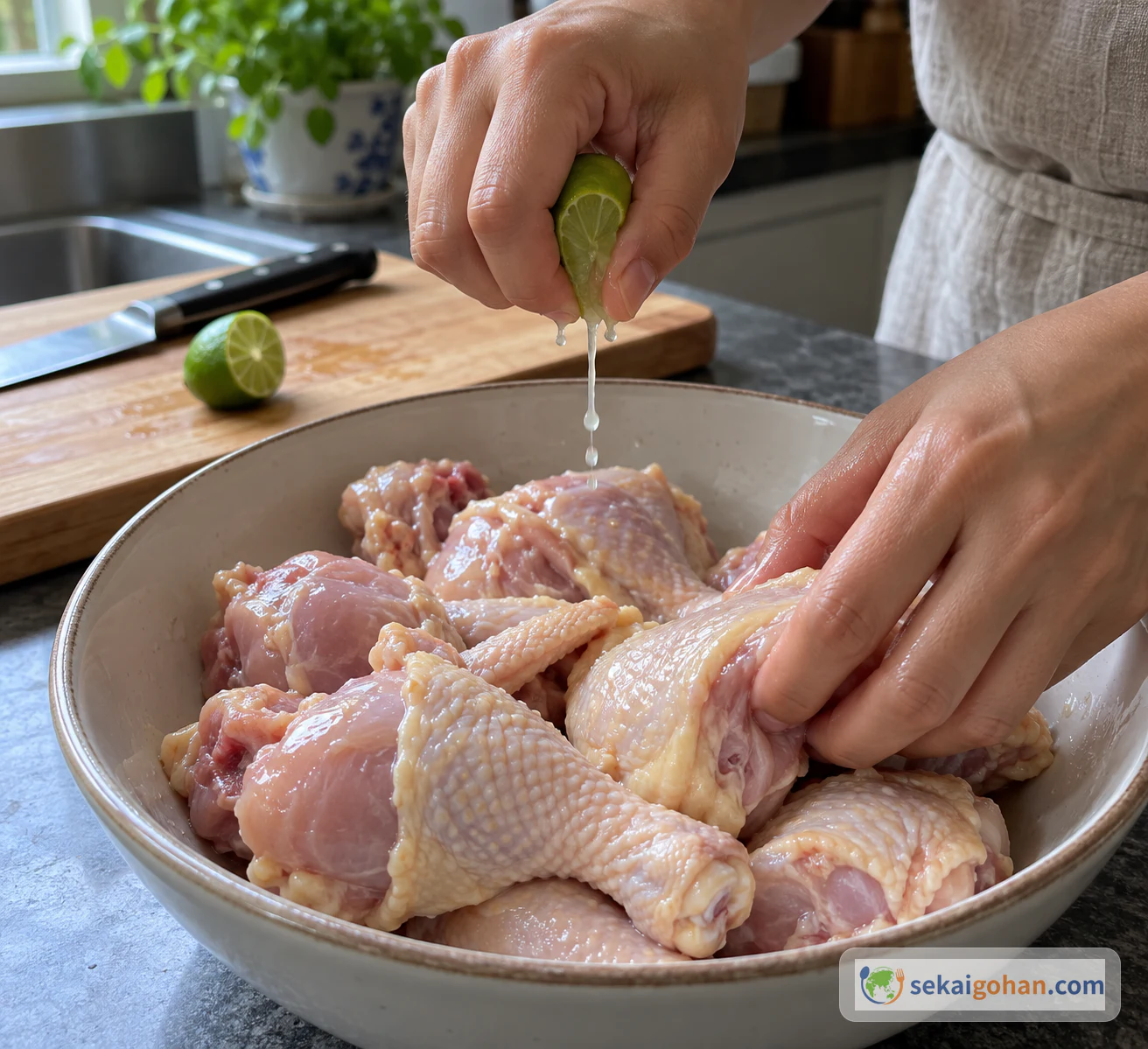
The lime rests for 15 minutes. Steps 4 and 6 are judged by what you see, and step 5 by the thermometer.
Troubleshooting Ayam Goreng Kalasan
The sugary coating darkens long before the inside is done, so color and doneness need separate checks.
| Problem | Likely cause | What to do |
|---|---|---|
| The outside is dark but you are unsure about the inside | Palm sugar and kecap manis brown quickly | Don't go by color. Measure the thickest part; it must reach 74°C (165°F) |
| The braising liquid is almost gone but the chicken is not tender | The liquid reduced faster than the chicken cooked | Add a little water, keep braising, then check the temperature again |
| The chicken has not reached 74°C | Not braised long enough, or the pieces are thick | Keep cooking, adding a little water if the pot is nearly dry, and measure again |
| The surface burns in the oil | Sugar in the coating | Watch closely and lift the pieces out before they get too dark. The meat is already cooked |
| The braise tastes too salty | Salt added twice, or a salty broth powder | Add the 2 tsp of salt only once, in the braising liquid, and check the broth powder label |
| Not sweet or fragrant enough | Water used instead of coconut water, or daun salam left out | Use coconut water and daun salam next time |
Serving and Storing Ayam Goreng Kalasan
To serve it the way Kalasan does, plate the chicken with cucumber, cabbage and some kemangi if you can find it. Kremes is a separate preparation, and the chicken is just as good without it. Put the sambal in its own dish so everyone can choose their heat.
Refrigerate any leftovers soon after cooking, and reheat them until hot all the way through.
Frequently Asked Questions
How do I know the chicken is cooked through?
Put a food thermometer into the thickest part of the thickest piece, away from the bone. It must reach 74°C (165°F). The sugary surface browns long before its color can tell you anything about the inside.
Do I need kremes?
No. Kremes is how the dish is often sold and eaten in Kalasan, but warm rice, sambal and fresh vegetables are enough.
Can I use regular soy sauce instead of kecap manis?
You can, but the flavor will change, since kecap manis is a thick, sweet soy sauce. Check the label either way, because soy sauces can contain soy and wheat.