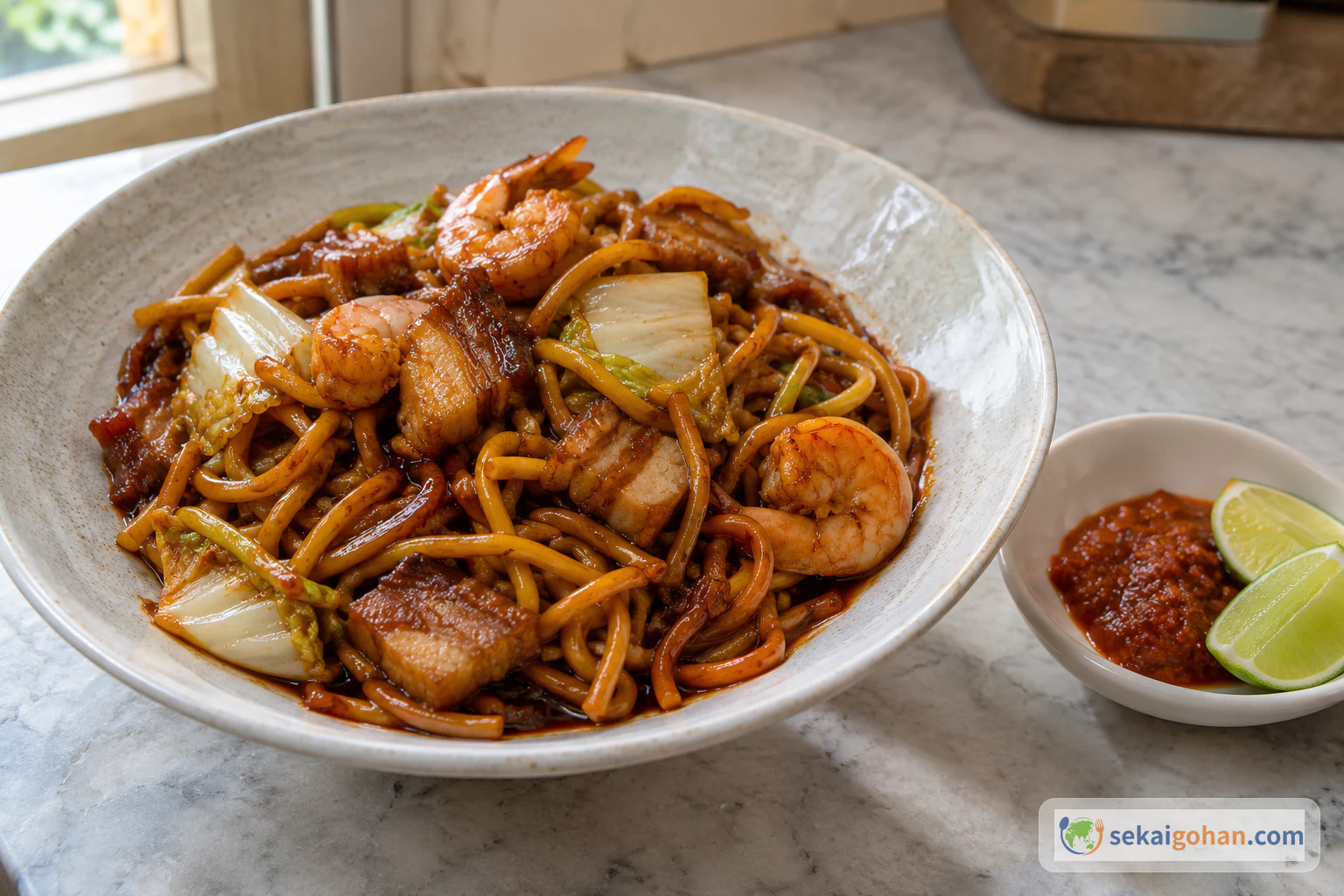
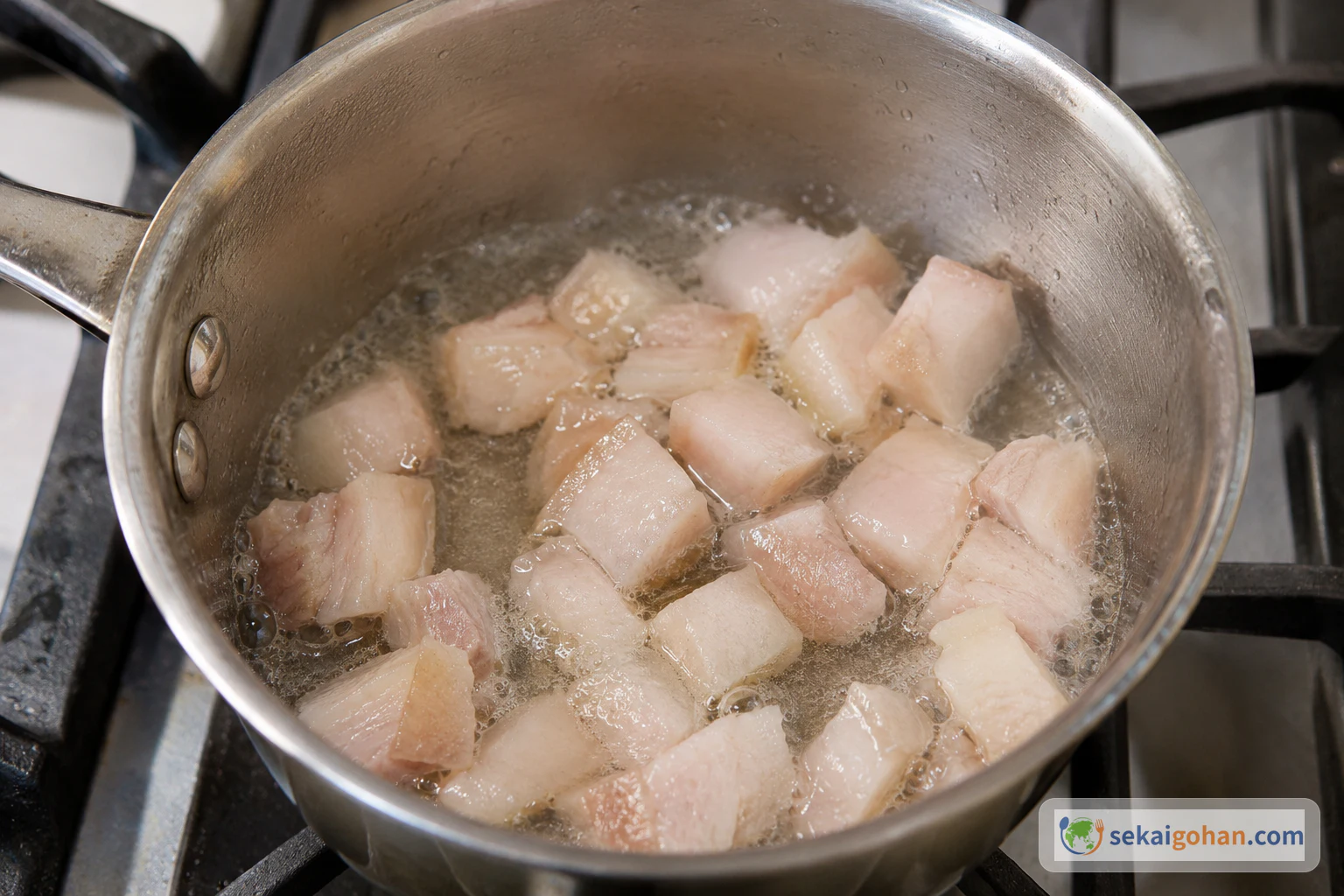
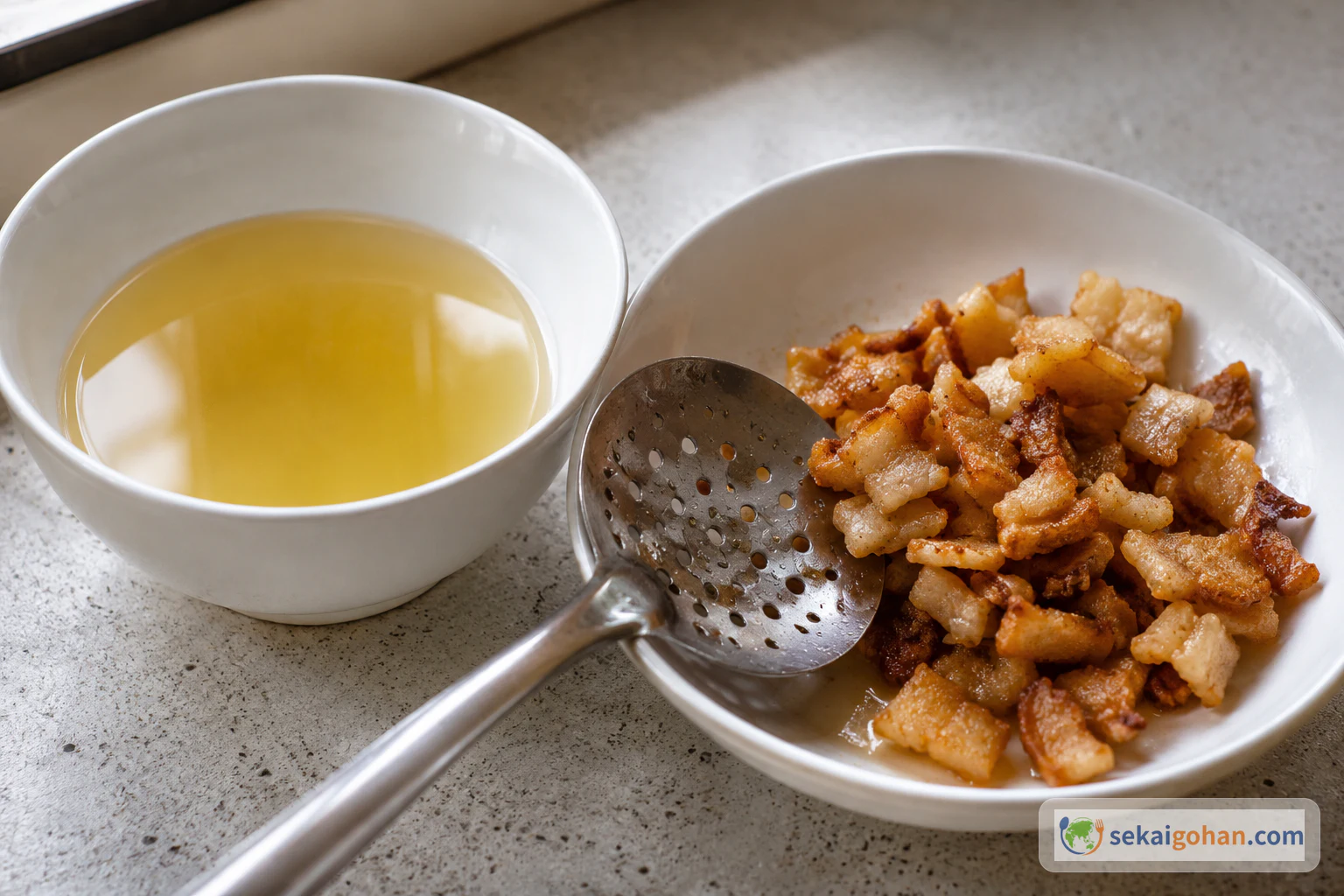
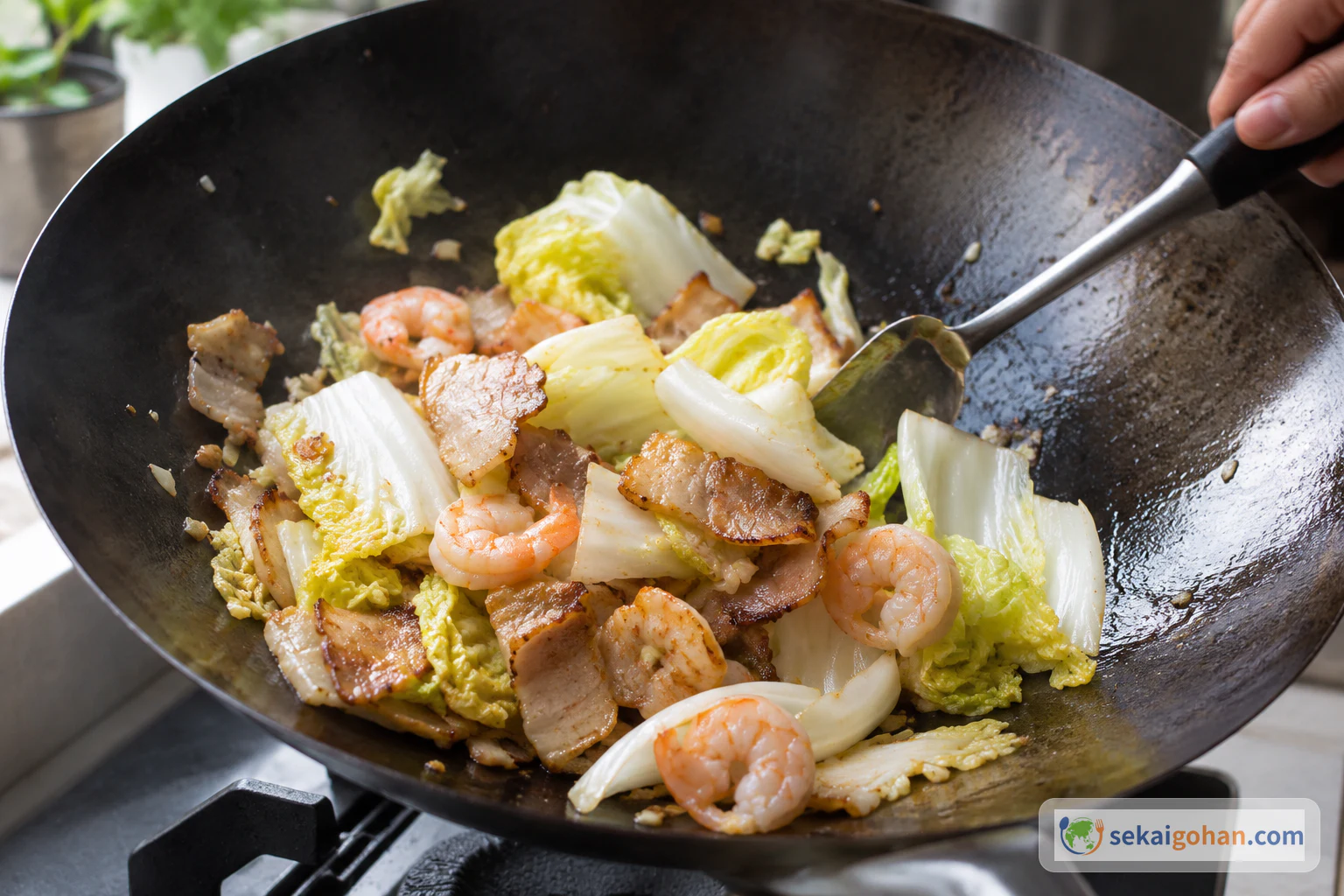
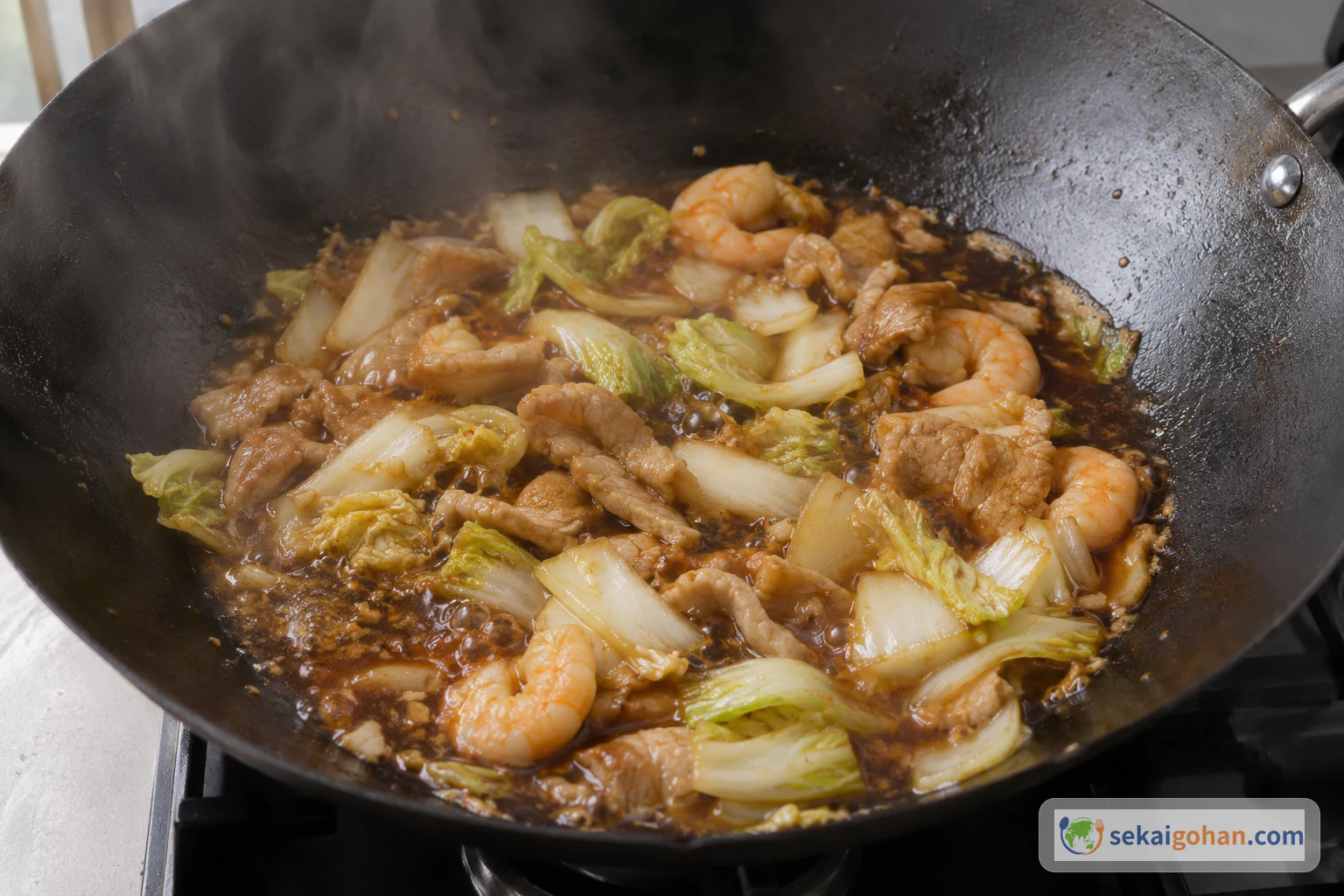
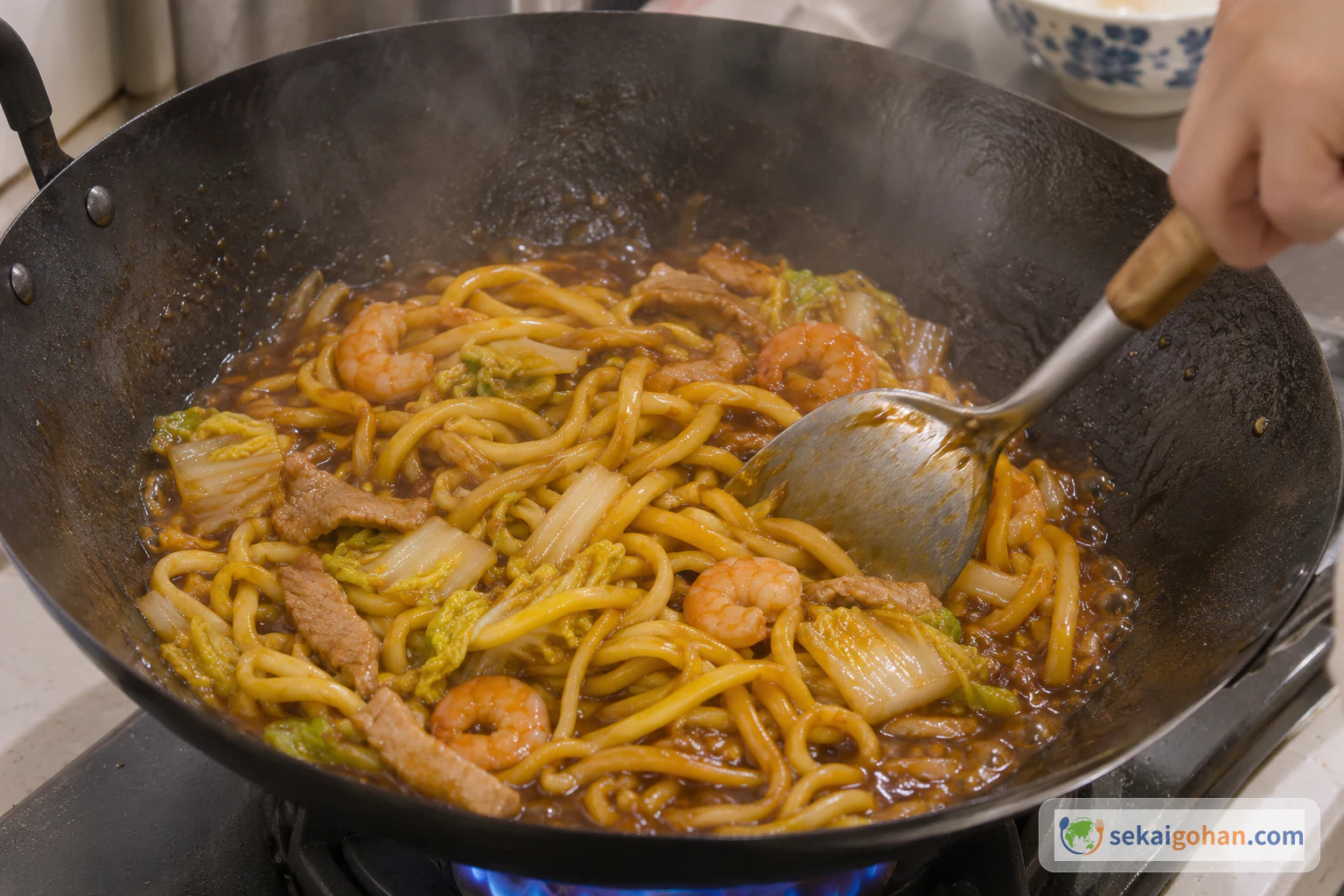
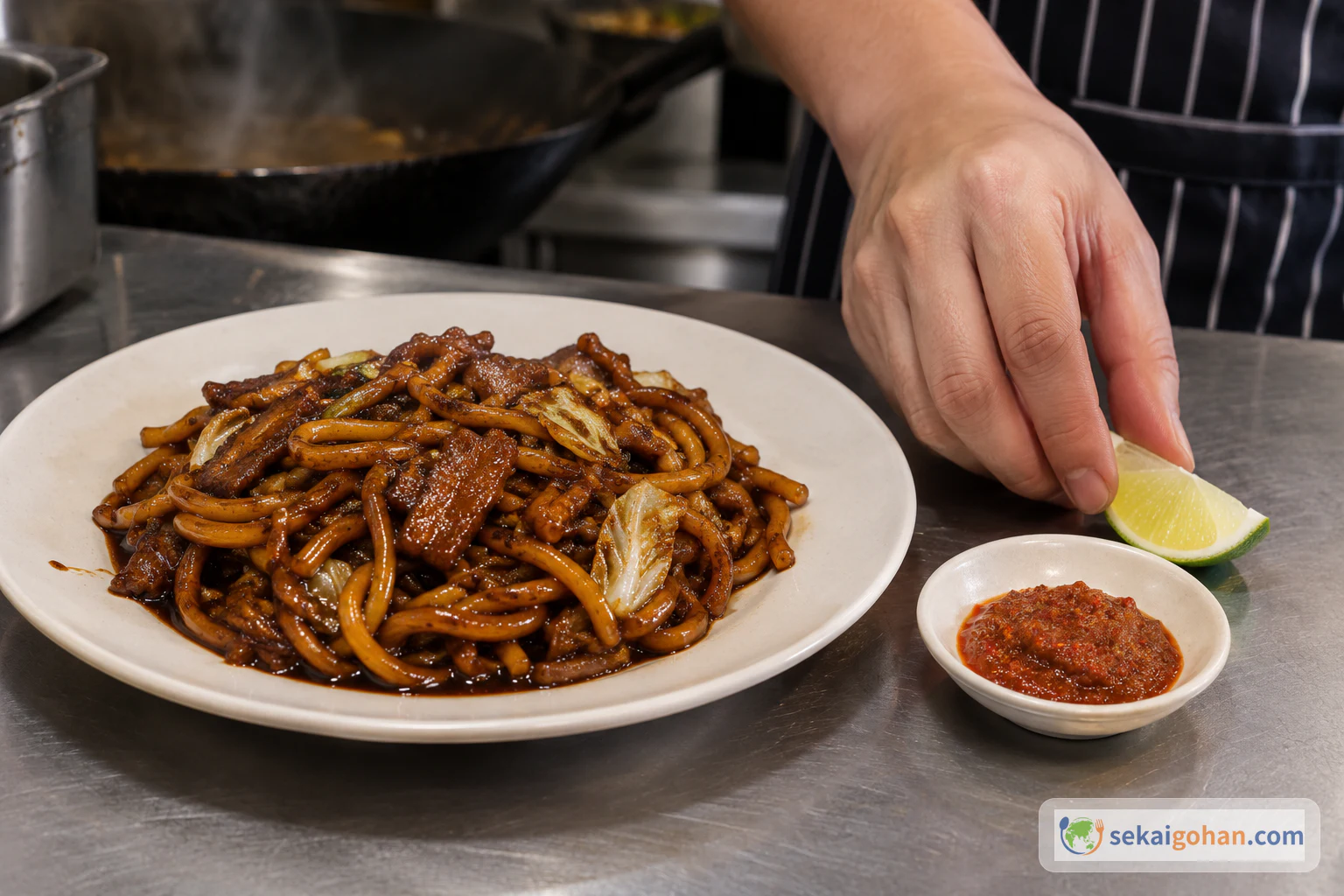
Cubes of pork fatback simmer in a splash of water until the water is gone, the fat has rendered out and the pieces have turned crisp. That lard goes into a hot wok, then pork belly, garlic, prawns and wombok, then a dark sauce of chicken stock, Cheong Chan caramel sauce and soy sauce. Thick yellow Hokkien noodles go in last and braise until they're cooked and glossy with sauce. Serve it with sambal belacan and lime wedges on the side. This is Kuala Lumpur's Hokkien mee, a dark, sweet noodle dish rich with pork fat.
KL Hokkien Mee and Penang Hokkien Mee
In Malaysia, "Hokkien mee" can mean more than one dish, so a search for the name alone may turn up a noodle soup instead. The KL version braises thick yellow noodles in a thick sauce darkened with cooking caramel and enriched with lard. In Penang, the name belongs to a different dish, a prawn noodle soup also called hae mee. Dark Hokkien Mee (Fried Prawn Noodles) is another version, made with flat yellow noodles and dark soy sauce. For more dishes from the same country, see the Malaysia page.
Ingredients (Serves 2–4)
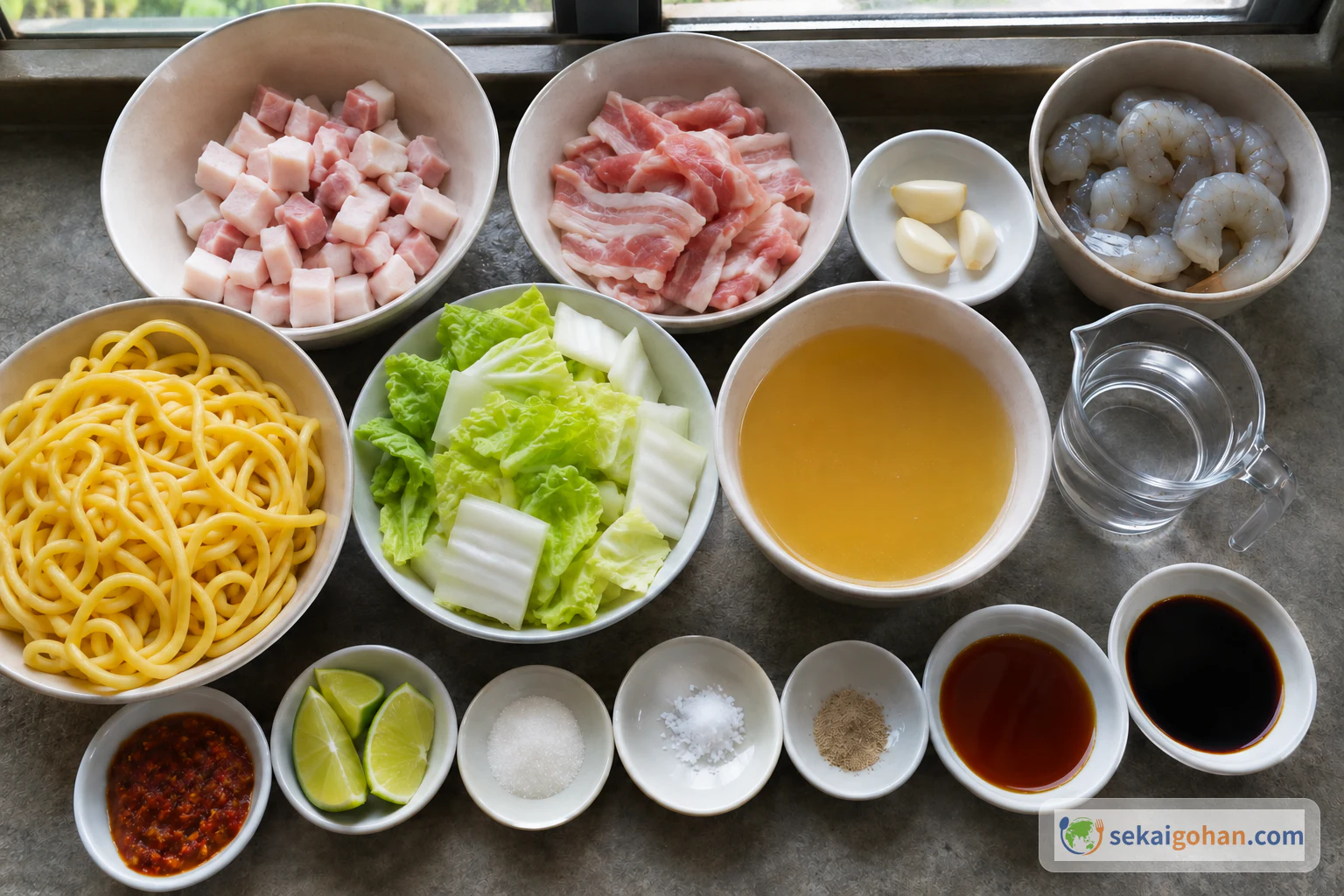
You will also need 125 ml (½ cup) water for rendering the fatback in step 1.
Equipment
- Small saucepan
- Wok
- A bowl for the liquid lard and a plate for the crisp pieces
- Serving plates
Choosing Ingredients for KL Hokkien Mee
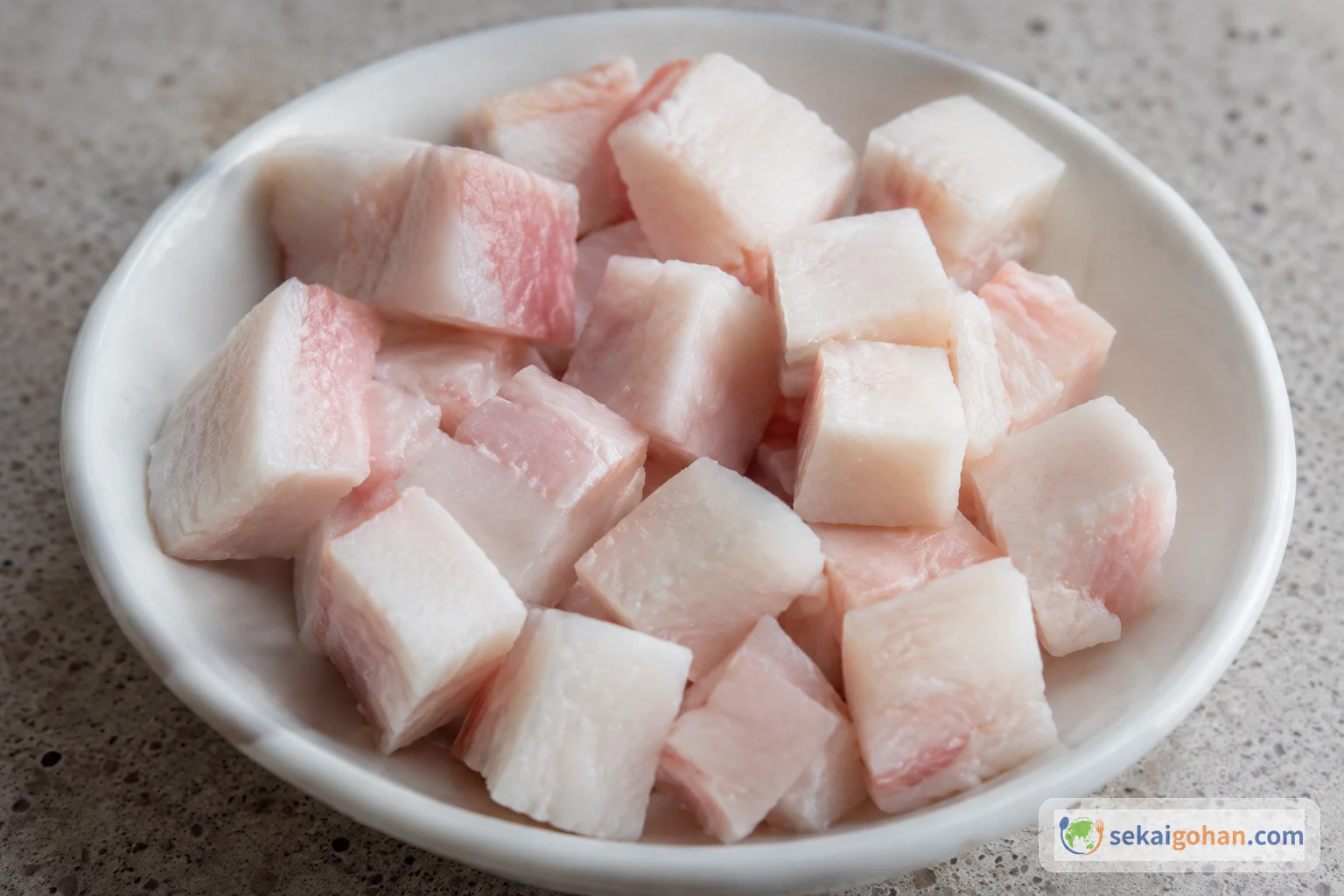
The caramel sauce and the soy sauce are two separate ingredients. Cheong Chan caramel sauce is a cooking caramel. It gives the sauce its dark color, and nothing else can stand in for it, including another kind of soy sauce.
Wombok is napa cabbage. Look for the long, pale-green leaves.
Chicken stock is the default, but bonito or anchovy stock works too. Use the same amount, 1 cup (250 ml).
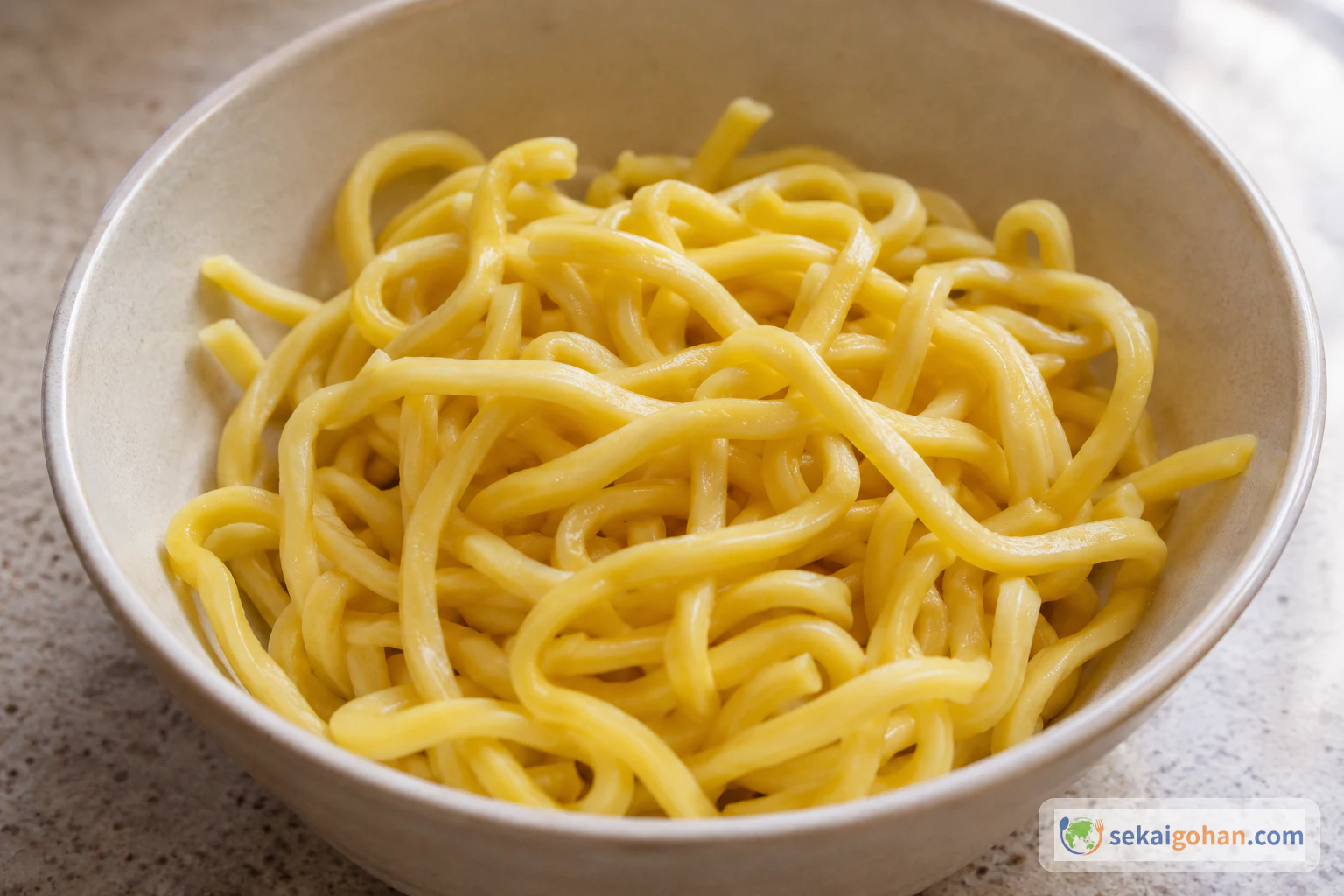
The noodles are thick yellow Hokkien noodles. They go into the wok uncooked and cook right in the sauce.
Method: Render the Fat, Build the Sauce, Braise the Noodles
There are only three steps. Render the fatback first, then cook the pork and aromatics, simmer the sauce and braise the noodles.
Getting Each Stage Right
Judge each stage by sight and taste rather than by the clock. If a stage isn't there yet, give it more time before you move on.
| Stage | What to look for | If it isn't there yet |
|---|---|---|
| Rendering the fatback | The water has evaporated, the fat has rendered out and the pieces are crisp | Keep cooking over medium heat, even past 30 minutes |
| Frying the pork belly | The pork belly is browned before anything else goes in | Keep frying before adding the garlic, prawns and wombok |
| Adding the aromatics | The garlic smells fragrant | Keep tossing a little longer |
| Seasoning the sauce | It tastes very salty before the noodles are added | Adjust with salt and white pepper; the noodles still have to go in |
| Braising the noodles | The noodles are cooked through | Keep braising past the 3–4 minute guide until they are done |
Serving KL Hokkien Mee
Bring the noodles to the table with lime wedges and a dish of sambal belacan. The sambal is optional, so everyone can add as much or as little as they like.
Frequently Asked Questions
Which tablespoon measure should I use?
This recipe uses a 1.5 tbsp (20 ml) Australian tablespoon, so 2 tbsp soy sauce is 2.5 tbsp (40 ml), and about 4 tbsp lard in step 2 is about ¼ cup (80 ml). If your measuring spoons are 1 tbsp (15 ml), measure by millilitres rather than by spoon count.
Can I use Japanese or dark soy sauce instead of the caramel sauce?
No. There is no substitute for the caramel sauce. The soy sauce in the recipe is plain "soy sauce," and no particular light or dark type is called for.
How long does the whole dish take?
The recipe lists 10 minutes preparation and 10 minutes cooking, but rendering the fatback in step 1 takes about 30 minutes on its own. Start that first, and the wok stage goes quickly after it.
Should the noodles be dried, fresh or pre-cooked?
The recipe doesn't specify. Braise the 1 lb (500 g) of thick yellow Hokkien noodles in the sauce for about 3–4 minutes, or until they are cooked through.