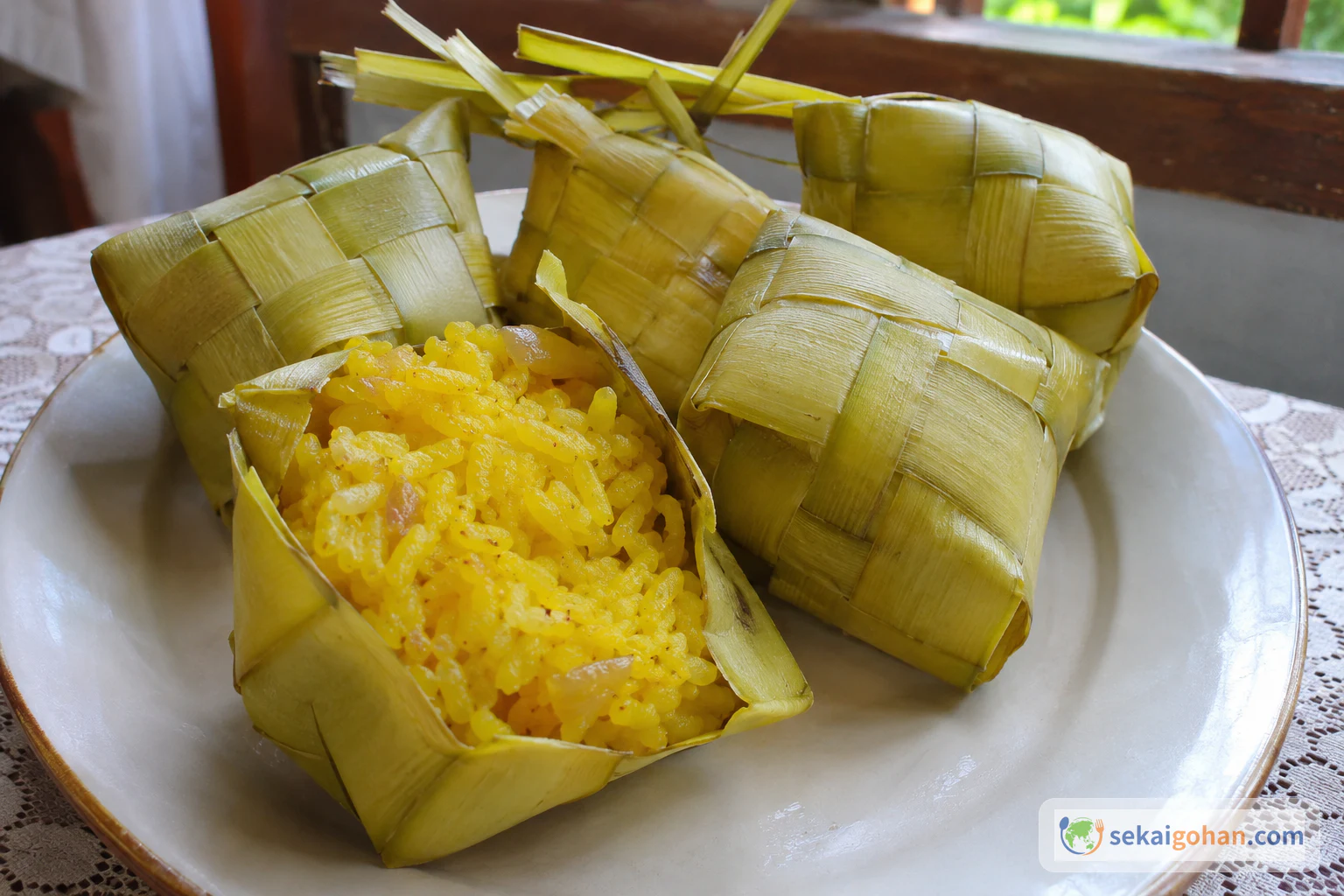
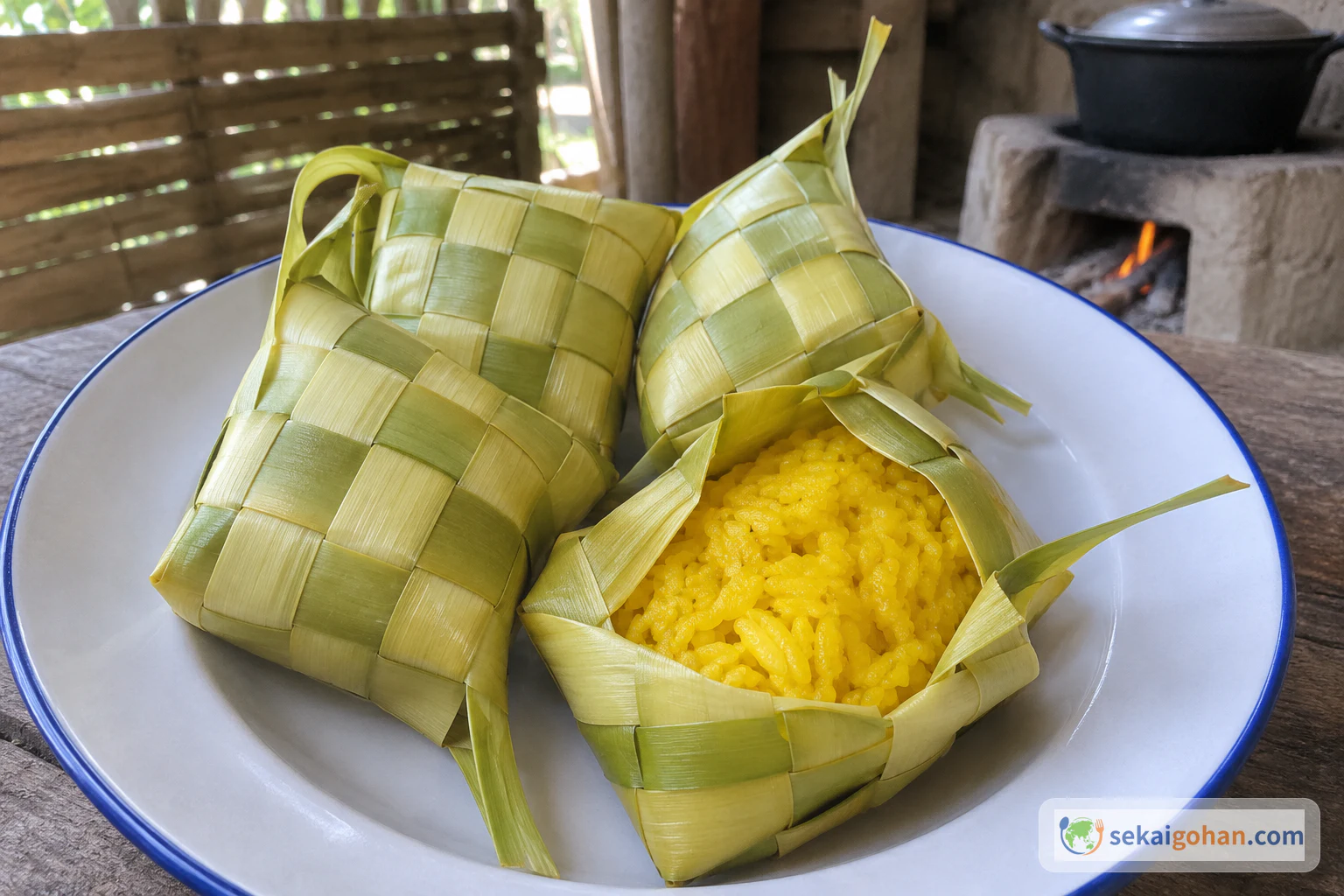
Small baskets woven from narrow strips of young coconut leaf sit in a pot of water. Each holds only about half its volume of raw rice, tinted yellow with fresh turmeric and coconut. Lift them out and open them, and you'll find the rice has swelled to fill the basket and pressed into a compact, golden block. This is katupa, a rice dish from Timor-Leste, and it gets its flavor from fresh coconut, turmeric and a little garlic and onion.
Katupa in Timor-Leste
Katupa is a rice dumpling that often turns up at celebrations. Families in Timor-Leste make it in several ways. The version here is the one a family in the municipality of Viqueque usually makes. The dish travels with Timorese people, too: in 2012, Timorese students at a university in Brazil served katupa at a festive campus event, alongside other dishes from home.
What Sets the Viqueque Version Apart
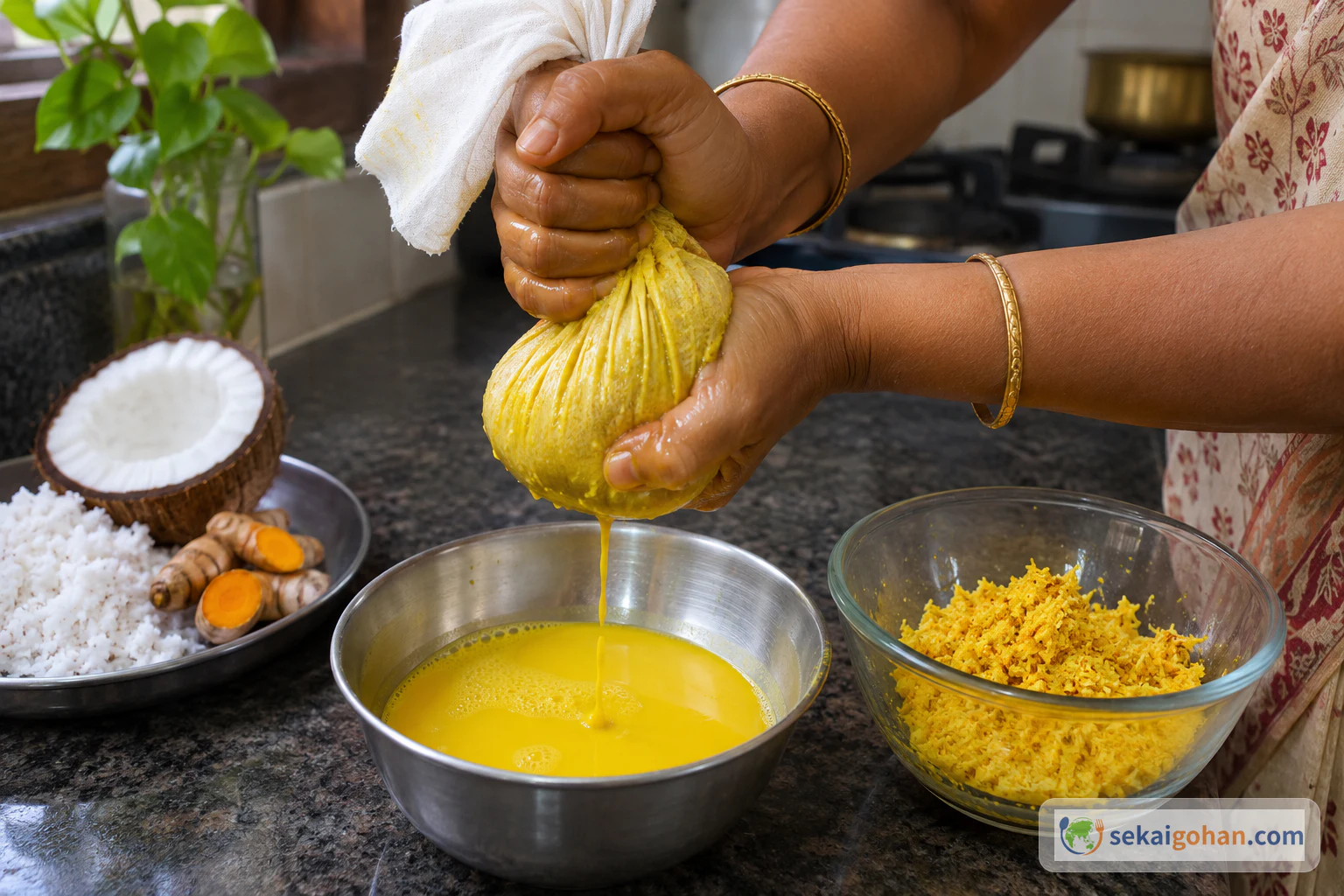
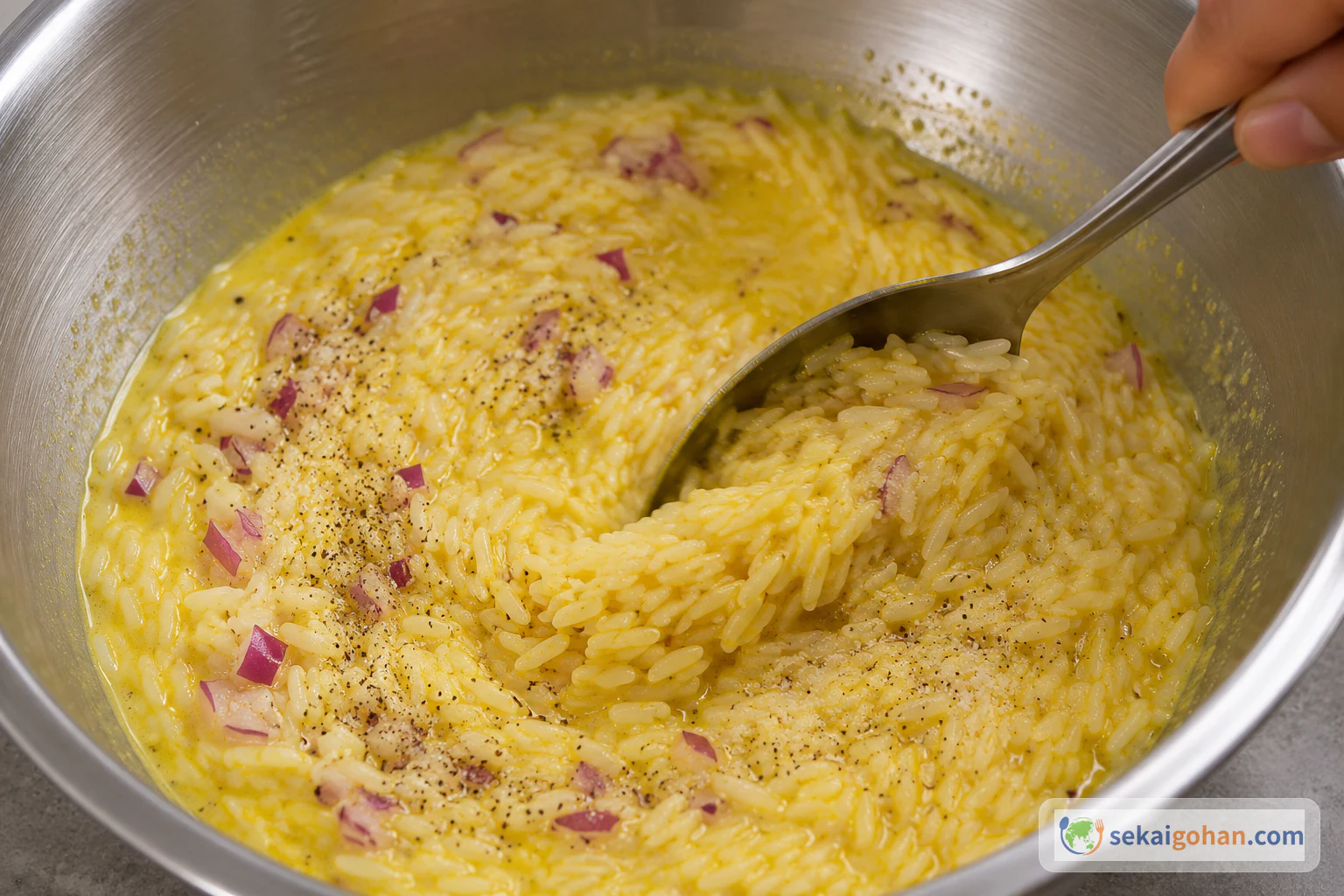
Coconut and turmeric work twice. You grate them together and squeeze them through a cloth, and the yellow liquid seasons and colors the raw rice. The squeezed solids stay in the recipe. They get spread across the bottom of the pot, and the filled pouches sit on top of them before the water goes in.
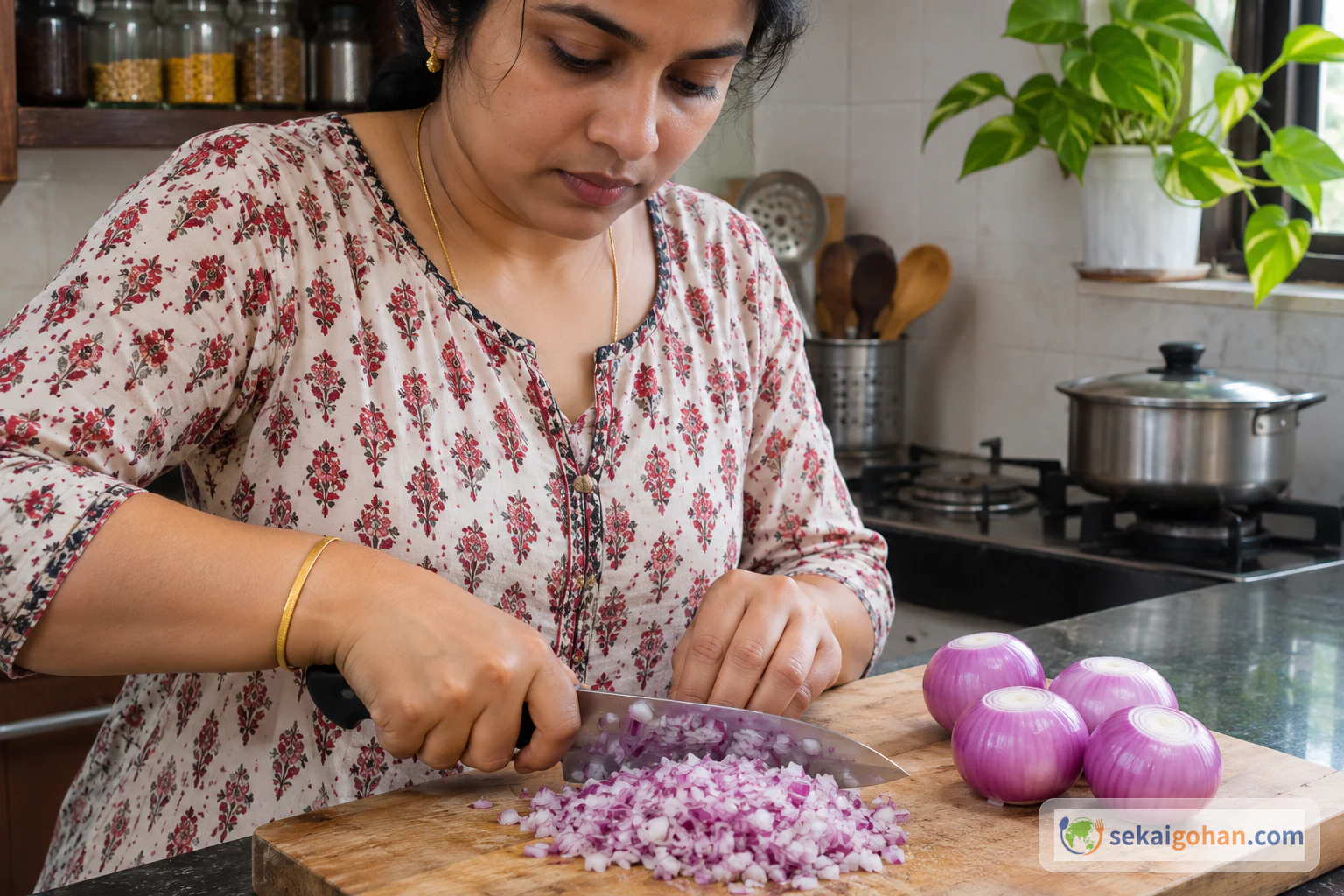
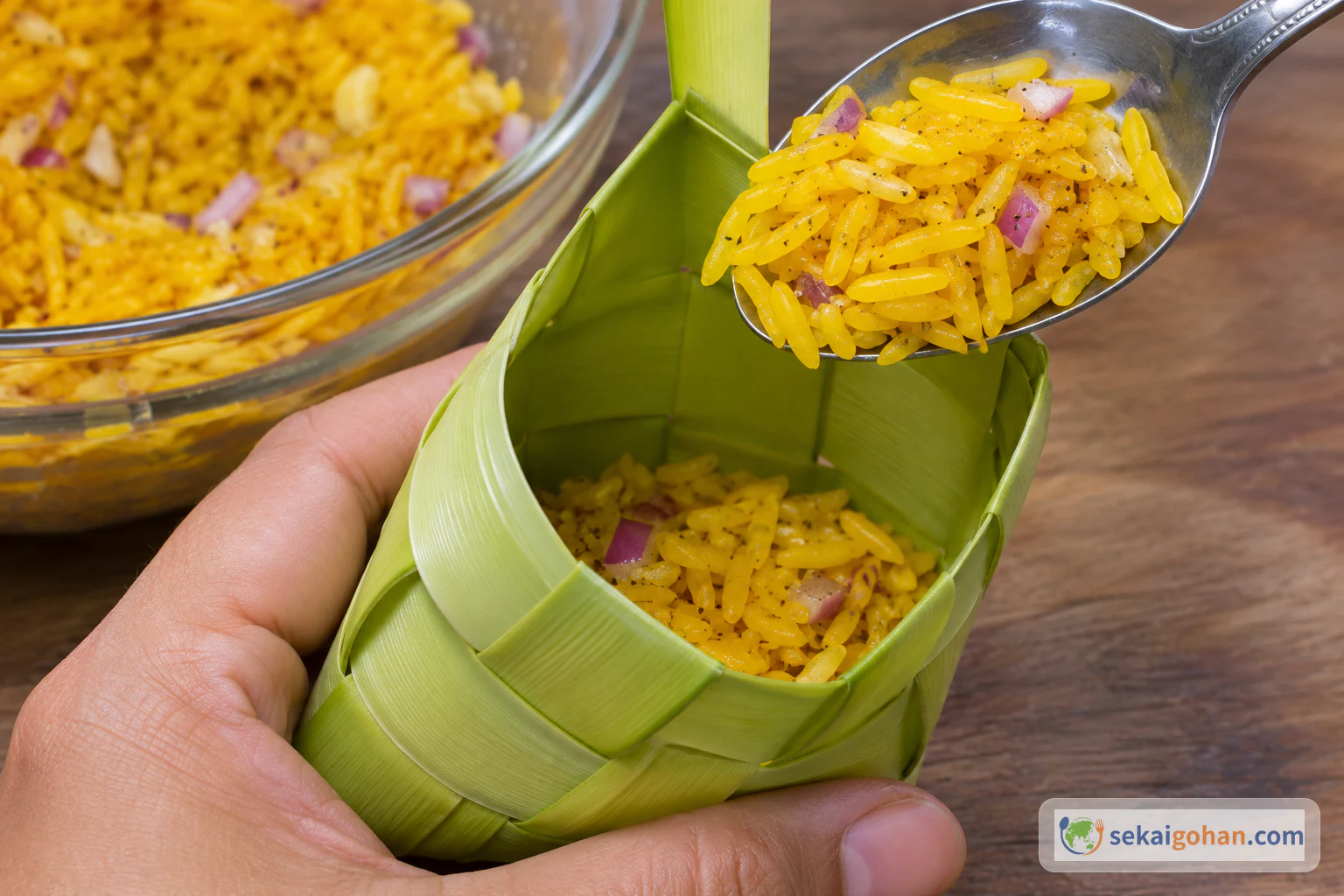
The pouches are only half filled. The raw rice goes into the woven basket with chopped garlic and red onion, salt and pepper. Then the pouch is closed with plenty of room left inside, because the rice needs that space as it swells.
No extra fat or broth. This version uses no coconut milk, oil or stock. All of the flavor comes from the fresh coconut and turmeric, the aromatics and the seasoning.
Ingredients (16 pouches, 4 servings)
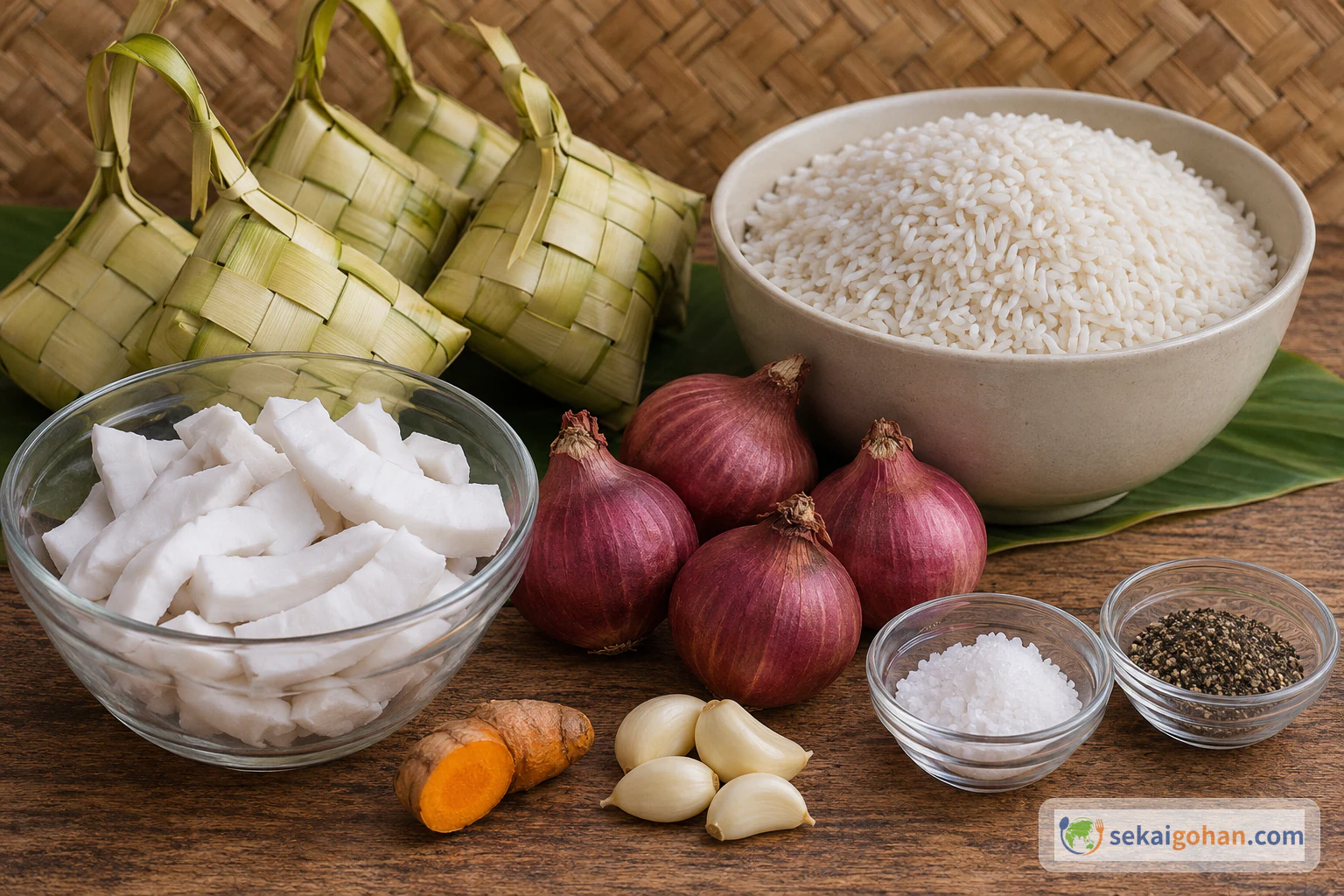
Have the edible flesh of the coconut ready before you start.
Equipment
- 16 empty, already woven Katupa pouches made from young coconut leaves, prepared for food use
- Grater
- Two bowls for the grated coconut and turmeric, plus bowls for the squeezed liquid and solids
- Clean cloth for squeezing
- Cutting board and knife
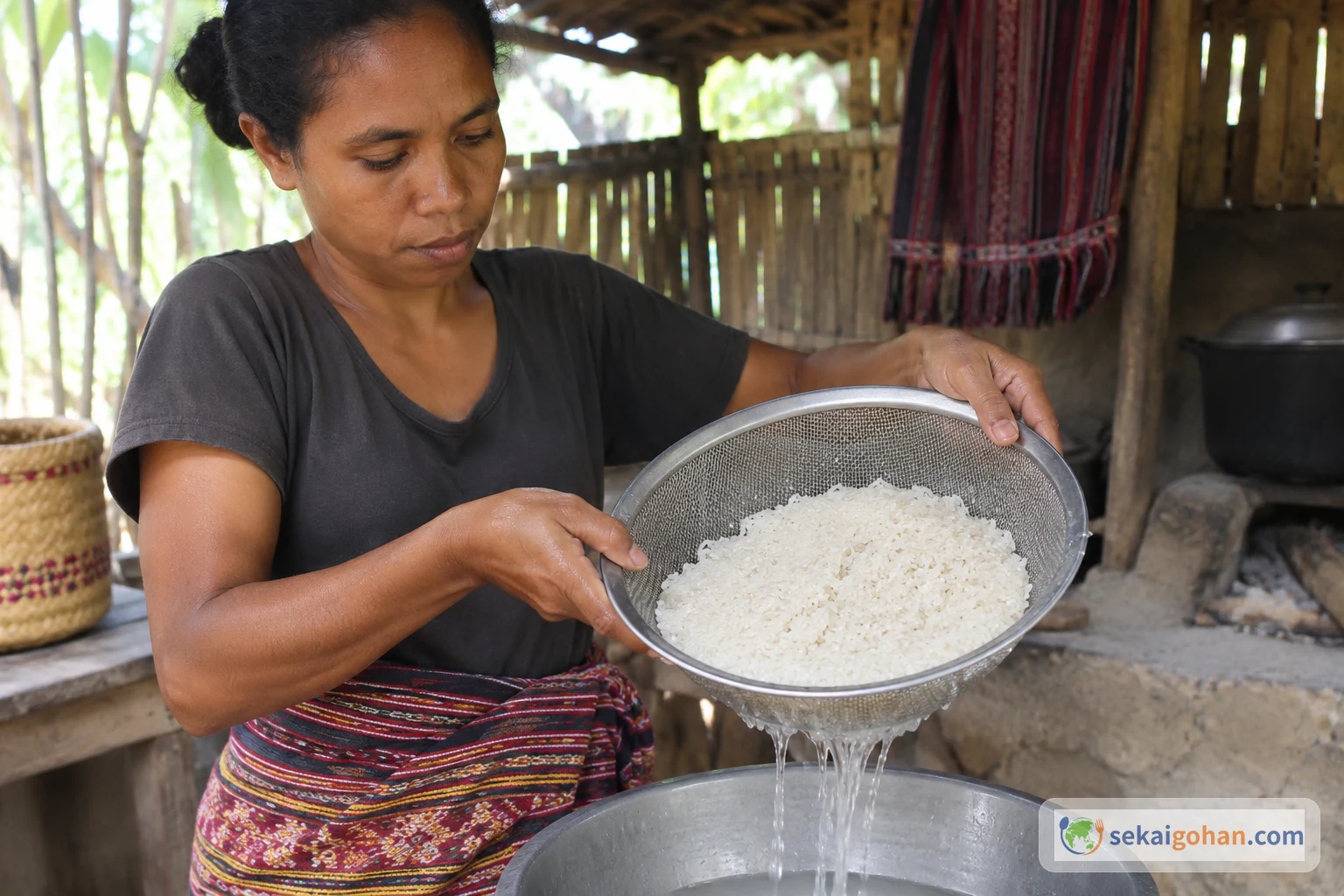
- Shallow bowl for picking over the rice, and a sieve
- Large mixing bowl and spoon
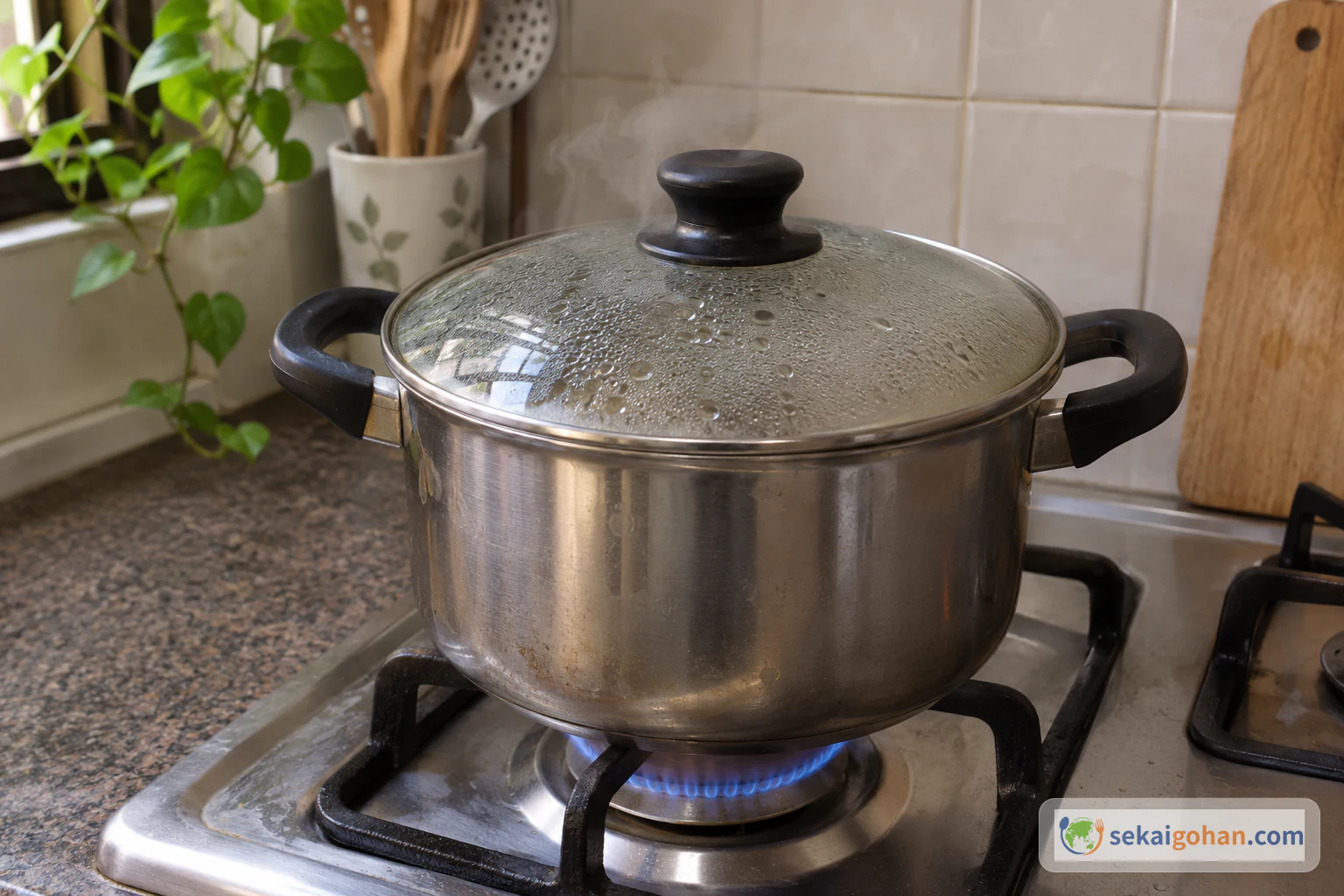
- Large pot with a lid
- Utensil for lifting the pouches out of the pot
- Clean cloth for wiping the pouches
- Shallow flat basket for cooling
Choosing Pouches and Rice for Katupa
Use pouches woven from young coconut leaves and sold or prepared for food use. Check the product's food-contact use and follow the supplier's instructions for preparing the pouches before filling. Do not use leaves from unknown or ornamental plants, waxed paper or cotton bags instead.
The pouches matter most. You need food-use woven coconut-leaf pouches, and they should be bought already woven. A paper bag or a banana-leaf wrapper makes a different dish, so neither works as a substitute. For the rice, measure the 2½ cups with the cup you normally use, and keep the salt and pepper at the listed amounts.
Method: Grate, Season, Rest, Fill and Cook
The steps are split into single actions. Steps 1–4 prepare the rice mixture, step 5 fills the pouches, step 6 cooks them, and step 7 brings them to the table.
Katupa Troubleshooting
| Situation | What to do |
|---|---|
| A pouch is more than half full | Spoon some of the mixture back out until it is about half full before closing |
| A pouch will not stay closed | Tuck the leaf ends in again along the existing weave rather than using string, other leaves, paper or cloth |
| You are unsure when to stop cooking | Keep to the 40–60 minute range over medium heat |
| You are tempted to discard the squeezed solids | Keep them: they go under the pouches in the pot |
| You want to keep some for later | Plan to serve it within the same meal |
Serving Katupa
When the pouches come out of the pot, lay them on a flat basket to cool quickly, then serve them within the same meal. Grilled fish and aimanas, a chili condiment, are a natural match at the table. They're optional, though, and katupa holds its own without them.
Frequently Asked Questions
What size cup and what kind of rice should I use?
Use your usual cup to measure the 2½ cups of rice, and keep the salt and pepper amounts as listed.
Can I wrap the rice in banana leaf or a paper bag instead?
That would be a different preparation, not katupa in a woven pouch. The same goes for leaves from unknown or ornamental plants, waxed paper and cotton bags. Use food-use woven coconut-leaf pouches, and check the supplier's food-contact information and preparation instructions.
Why keep the squeezed coconut and turmeric solids?
The squeezed liquid seasons the rice, and the solids are spread across the bottom of the pot, where the filled pouches sit on top of them while they cook.