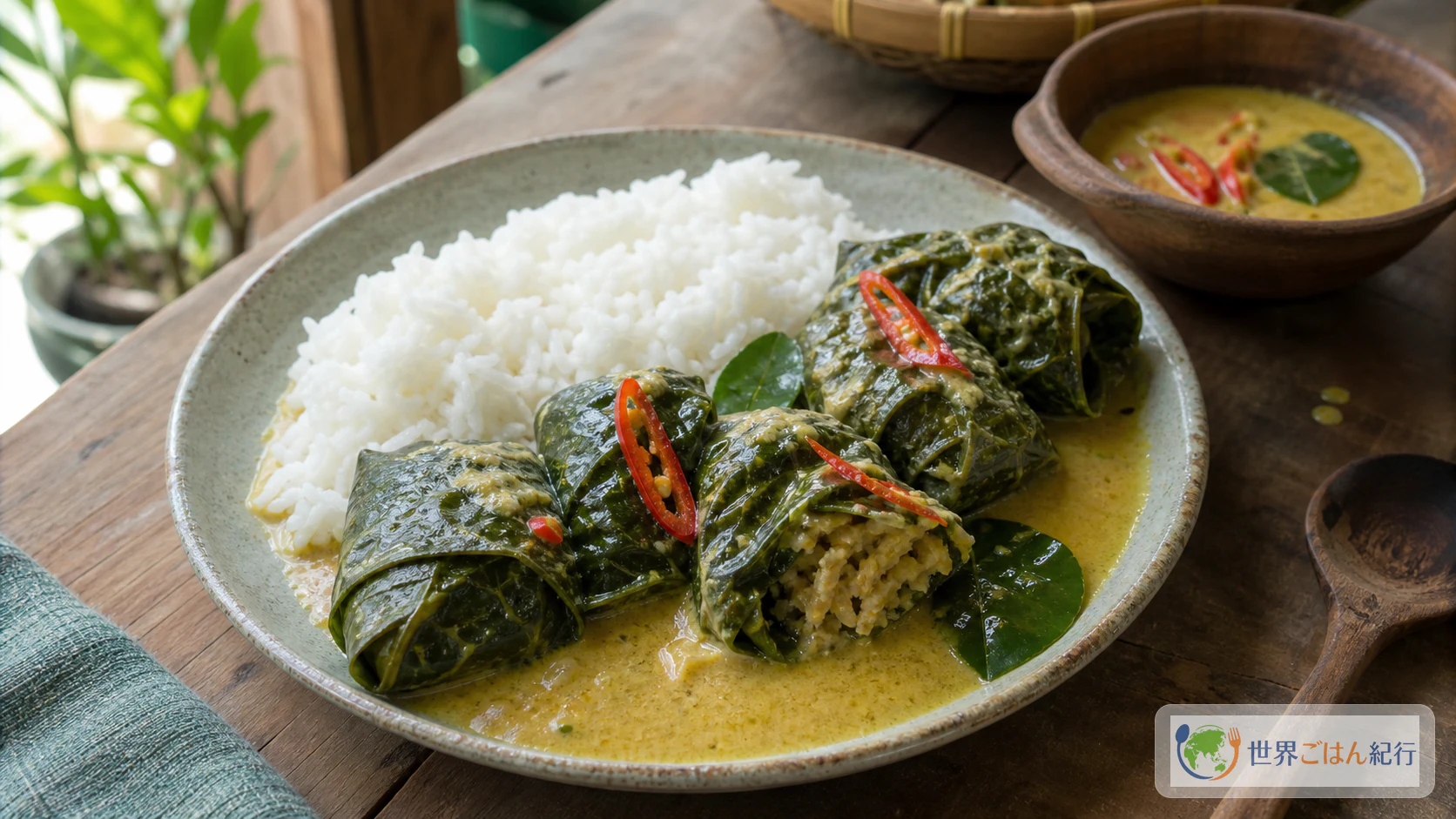
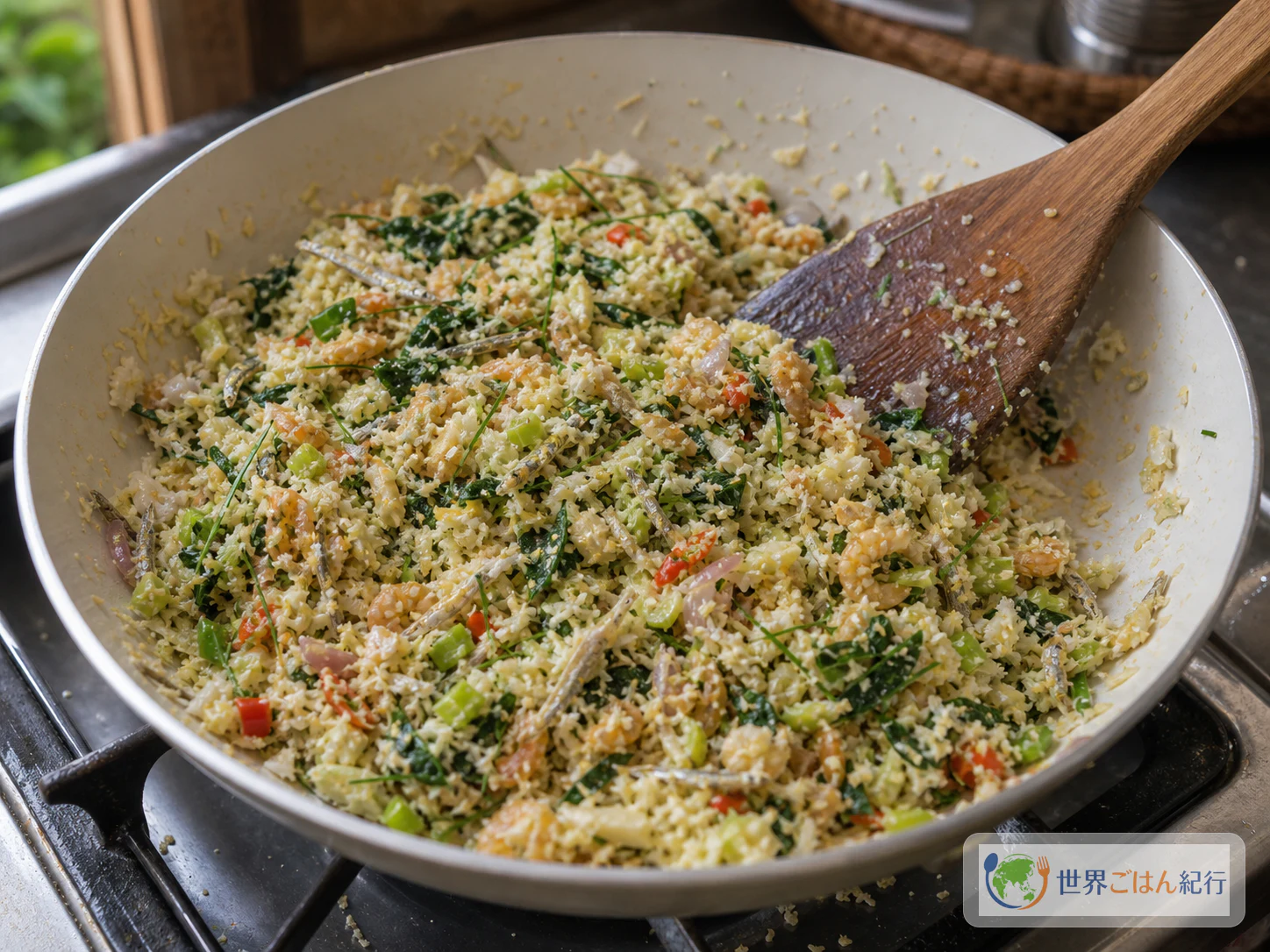
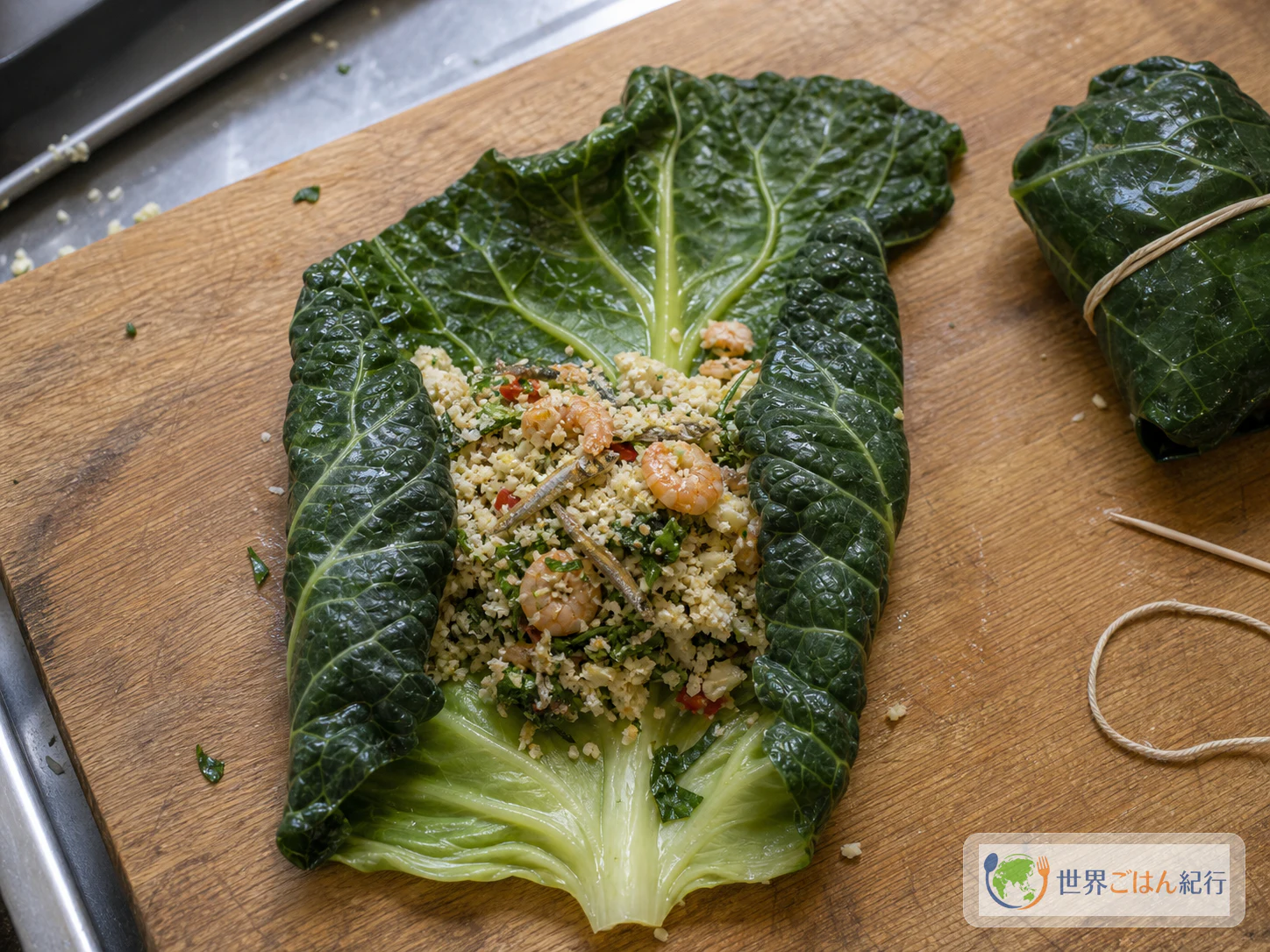
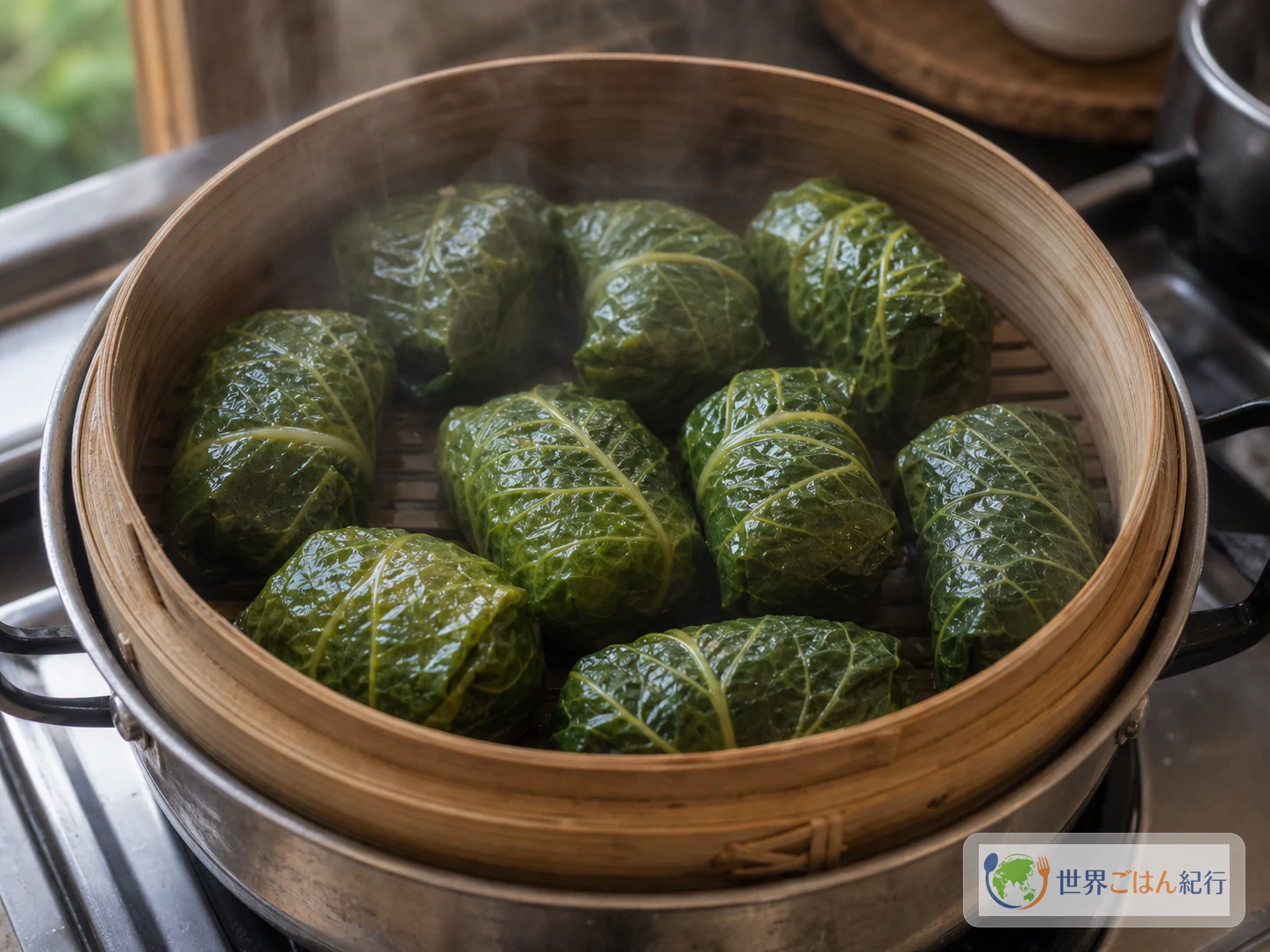
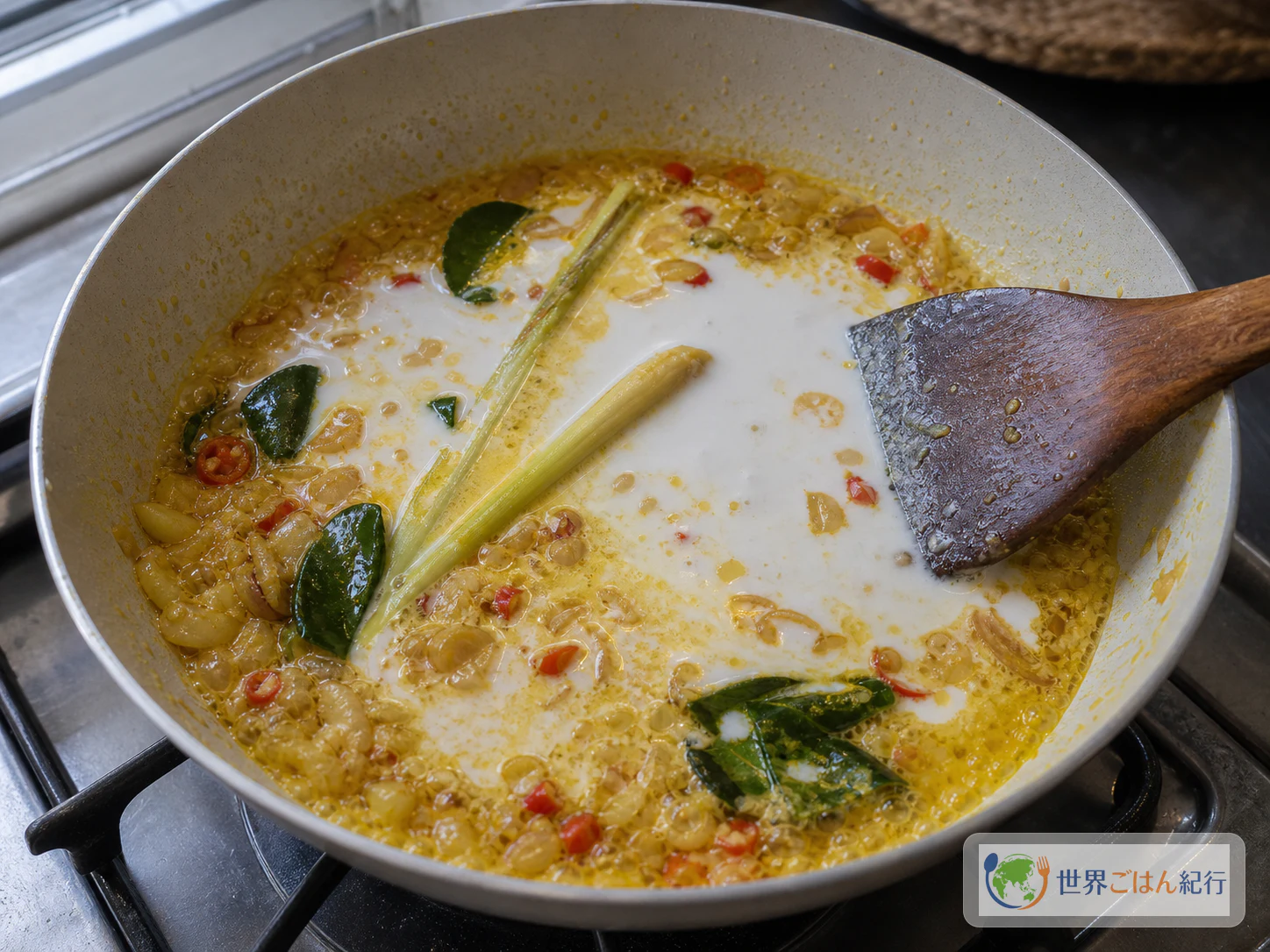
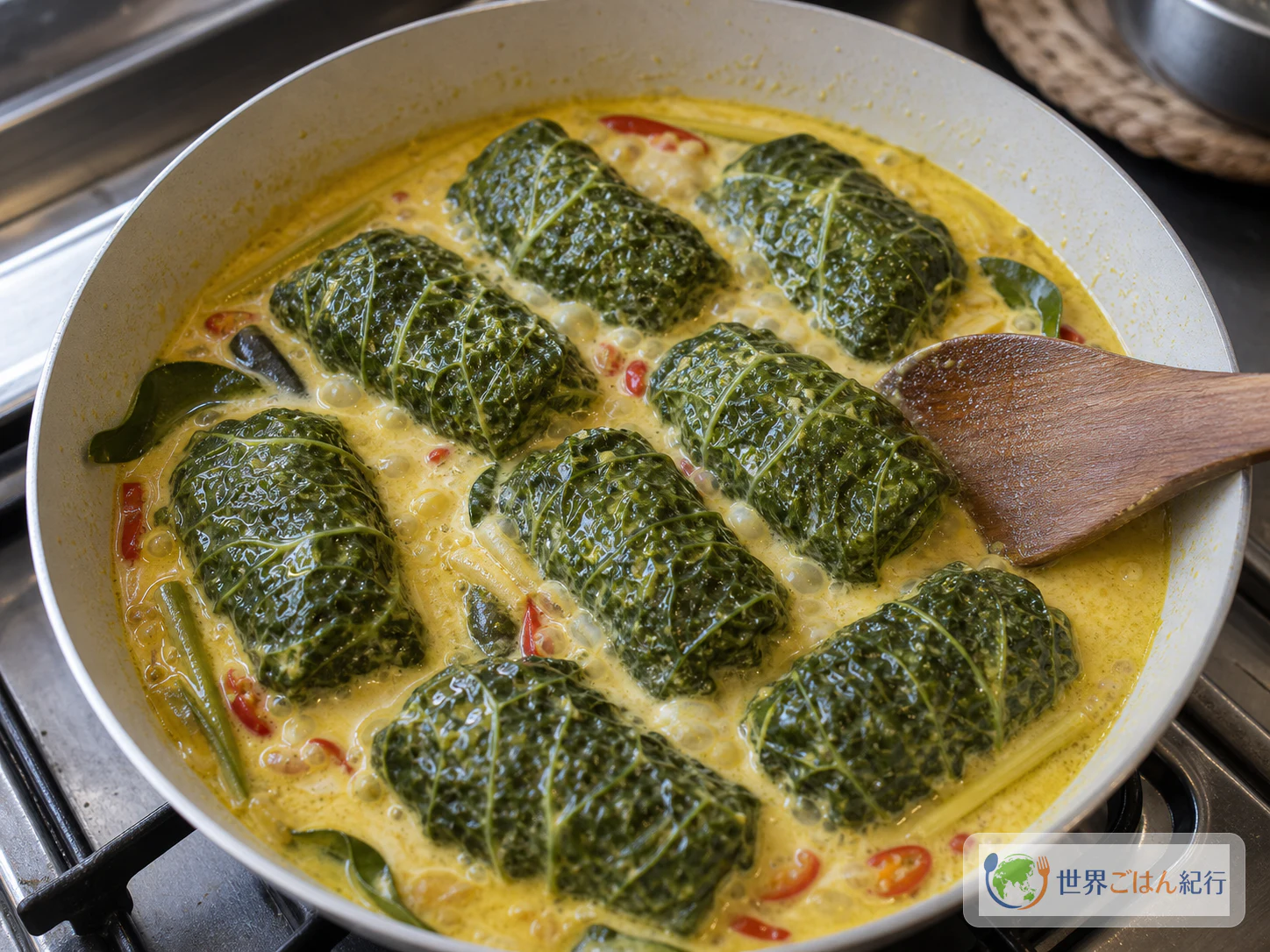
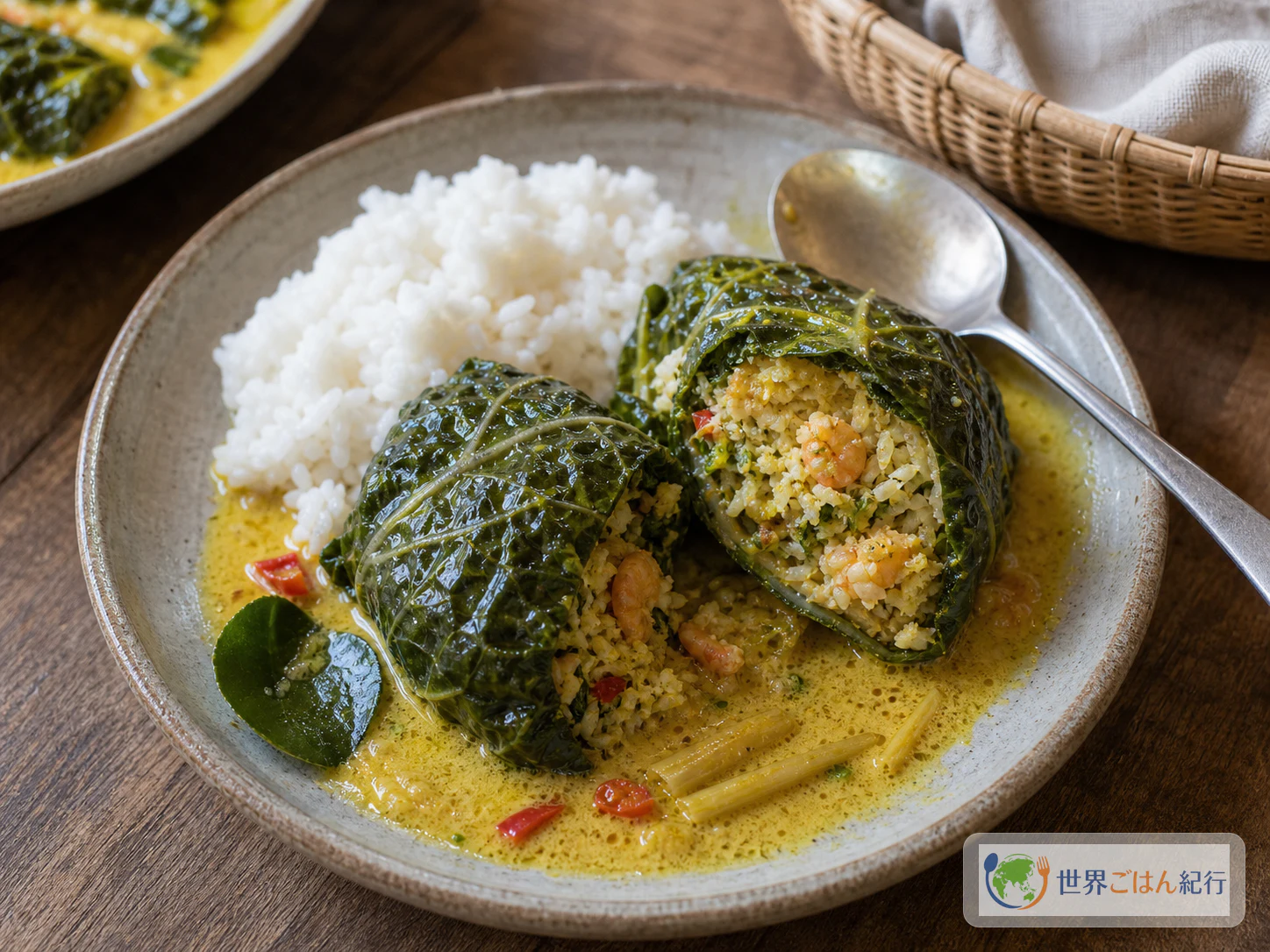
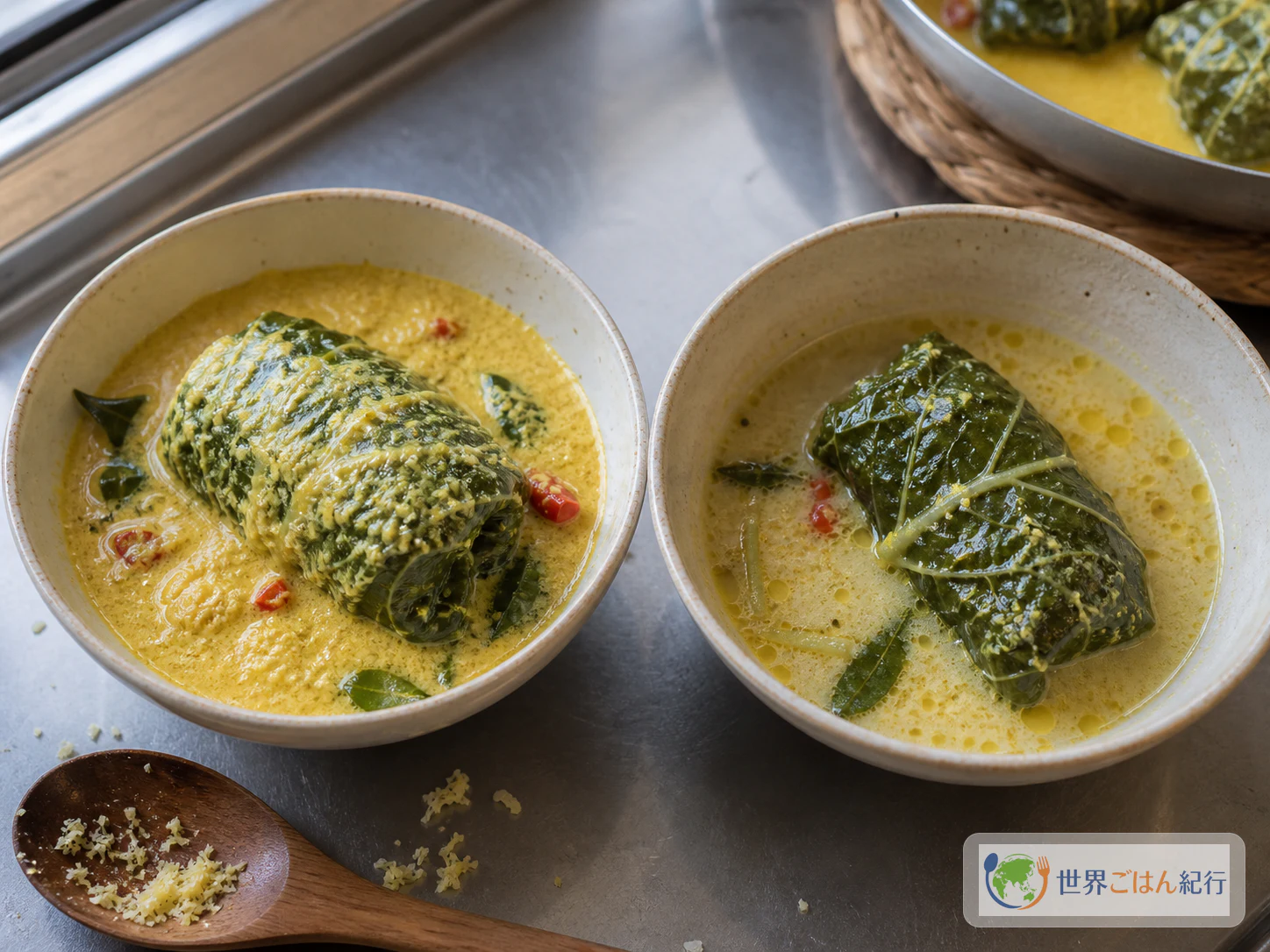
Lift the pot lid and a few dark green parcels peek out between the bubbles of yellowish coconut sauce. Split a leaf with chopsticks and the smell of crumbly coconut, dried shrimp, chili and makrut lime leaf rises up. It looks like a quiet wrapped dish, but the table gets livelier the moment you open it. Buntil comes from Javanese home kitchens: leaves wrapped around grated coconut and small fish, steamed, then simmered in coconut milk. The first bite is the bitterness of the leaf, then the sweetness of coconut, and last the saltiness of dried shrimp and anchovies lingers. It is a side dish made for sending white rice down.
What Buntil Is
A Javanese leaf parcel
Buntil is loved mainly in Java. Cassava leaves (daun singkong) are the usual wrapper, but papaya leaves, taro leaves and other large greens are also used. The filling is grated coconut combined with a bumbu of small fish, dried shrimp, chilies, garlic and shallots. The parcels are wrapped, steamed, then returned to the pot to simmer in a sauce of coconut milk, called santan.
It is a home dish built from what the field or market offers. Rather than relying on plenty of meat, it builds satisfaction by layering leaves, dried goods and coconut, with the umami of fish to carry the rice. Homes differ on the fish: some use small fish like ikan teri, while other versions lean on dried shrimp.
How buntil is eaten
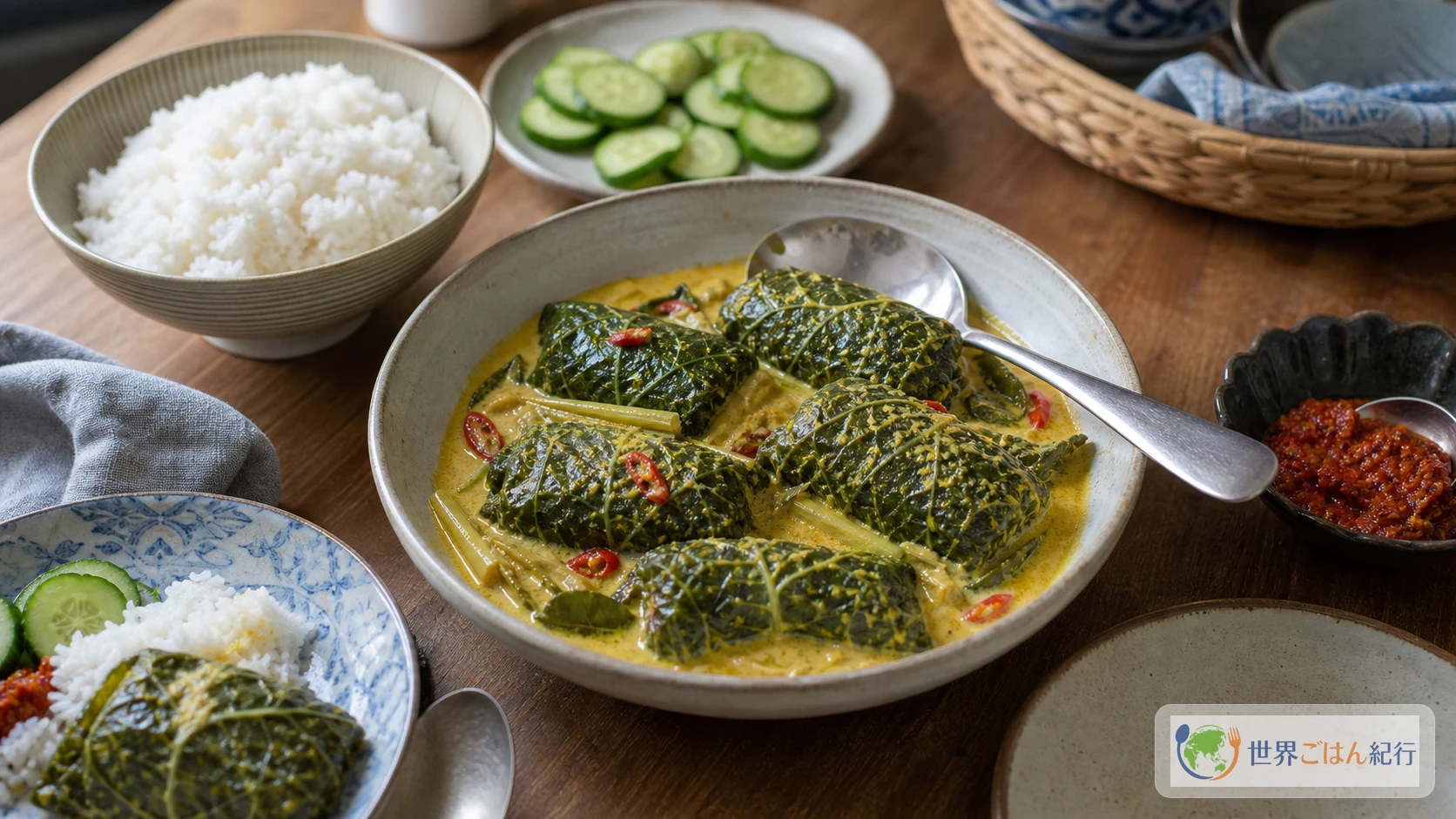
Buntil shows up at home and also at warung, roadside stalls, and the temporary markets before Ramadan. People eat it a little at a time: open a small parcel, spoon sauce over rice, and reset the mouth with sambal or cucumber. A home version doesn't need a crowded plate. Parcel, rice, some heat and a fresh vegetable are enough.
Buntil and other Indonesian dishes
Indonesia has several wrapped dishes, and each plays a different role at the table. Arem-arem is a snack of half-cooked rice in coconut milk wrapped in a leaf, and lemper is a portable snack of sticky rice and shredded chicken. In buntil the leaf itself is eaten. When you open the parcel you taste the green of the leaf along with the filling, so how you handle the leaf shapes the flavor.
| Dish | What is wrapped | Role at the table | Entry point outside Indonesia |
|---|---|---|---|
| Buntil | Leaves, coconut, dried fish | A rich side dish to go with white rice | Wrap in outer cabbage leaves and kale |
| Arem-arem | Half-cooked rice and filling | Wrapped rice for markets and lunch boxes | Parchment paper can make the shape too |
| Lemper | Sticky rice and shredded chicken | One-handed snack | Watch the moisture of the rice and the dryness of the filling |
Buntil is also far from the rich meat dish rendang and from nasi uduk, rice cooked with aroma. You eat it for the bitterness of green leaves and the sweetness of coconut. If East Indonesia's papeda is a pairing of staple and soup, buntil is a rich side dish set next to white rice.
The Indonesian spelling is buntil. Daun singkong means cassava leaves, santan means coconut milk, and bumbu is used for an aromatic paste or seasoning blend.
Ingredients (serves 4)
| Ingredient | Amount | Choosing it |
|---|---|---|
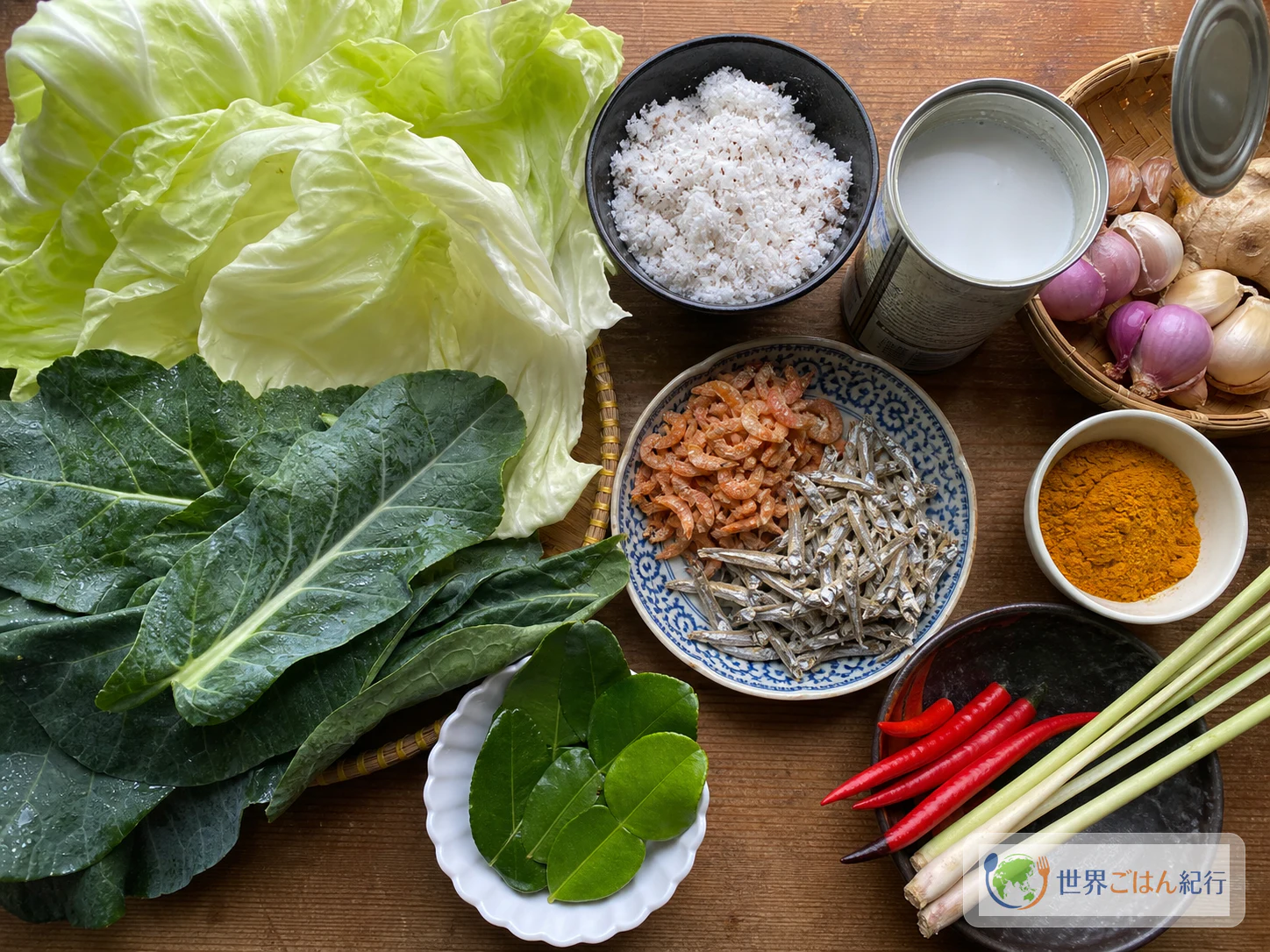
| Outer cabbage leaves | 8 large, about 11.5 oz (320 g) | Outer leaves that don't tear easily. Shave the core thin |
| Kale leaves | 4, about 4 oz (120 g) | Adds a gentle bitterness. If none, use more cabbage |
| Komatsuna (or similar greens) | 4 oz (120 g) | Chopped into the filling. Makes up a little of the local leaf's greenness |
| Grated coconut | 4 oz (120 g) | Unsweetened. If dried, rehydrate with 3 tbsp lukewarm water |
| Dried shrimp | 20 g | Soak in lukewarm water 5 minutes and chop coarsely. The soaking liquid goes into the sauce |
| Dried anchovies (small) | 20 g | Remove heads and guts and chop coarsely. 15 g if very salty |
| Red onion | 2 oz (60 g) | Substitute for shallot. Finely chopped |
| Garlic | 12 g | 2 cloves. Finely chopped |
| Red chili | 1 | Seeding it makes it milder |
| Makrut lime leaves | 2 | Remove the midrib and chop finely. Omit if none |
| Raw cane sugar | 1 tsp | Supplements the coconut's sweetness |
| Salt | 1/3 tsp | Adjust to the saltiness of the dried fish |
Coconut sauce
| Ingredient | Amount | Choosing it |
|---|---|---|
| Canned coconut milk | 1¾ cups (400 ml) | For cooking. Shake the can before using |
| Water | ¾ cup (180 ml) | Include the dried shrimp soaking liquid |
| Red onion | 2.75 oz (80 g) | Thinly sliced |
| Garlic | 10 g | 2 cloves. Grated or finely chopped |
| Ginger | 12 g | Grated |
| Turmeric | 1/2 tsp | Color and an earthy aroma. Don't overdo it |
| Lemongrass | 1 stalk | Bruise the lower 4 inches (10 cm). 1 tsp if dried |
| Makrut lime leaves | 3 | Frozen is fine |
| Red chili | 1 | Cut on the diagonal. Halve it for less heat |
| Neutral oil | 1 1/2 tbsp | For sautéing the aromatics |
| Salt | 1/2 tsp | Adjust at the end |
| Raw cane sugar | 1 tsp | Rounds off the sauce's edges |
This dish uses shrimp, fish and coconut. Store-bought dried shrimp and dried anchovies can contain wheat, soy, shellfish or fish, depending on the manufacturing environment. If you have allergies, check the product's ingredient label, and replace the dried shrimp with 2 tsp dried shiitake powder and a little dried bonito flakes.
Choosing Leaves and Ingredients for Buntil
Leaves
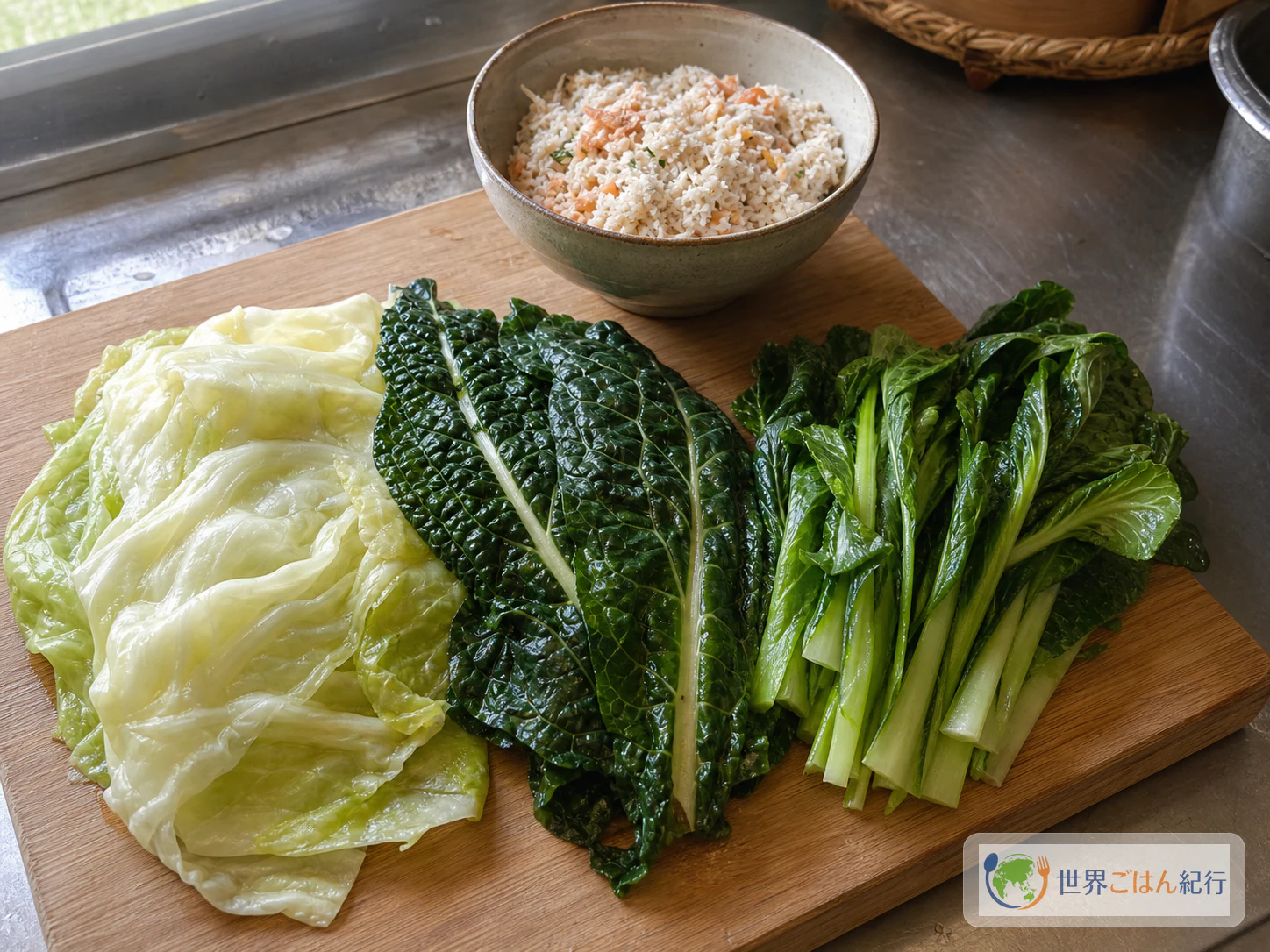
The leaf is the biggest challenge outside Indonesia. Cassava leaves bring a bitterness and greenness that go well with coconut and small fish, but at home it is hard to know whether they were prepared for eating, which variety they are, or how they were handled. Taro leaves raise the same questions. Never use garden or ornamental leaves just to get closer to the local dish.
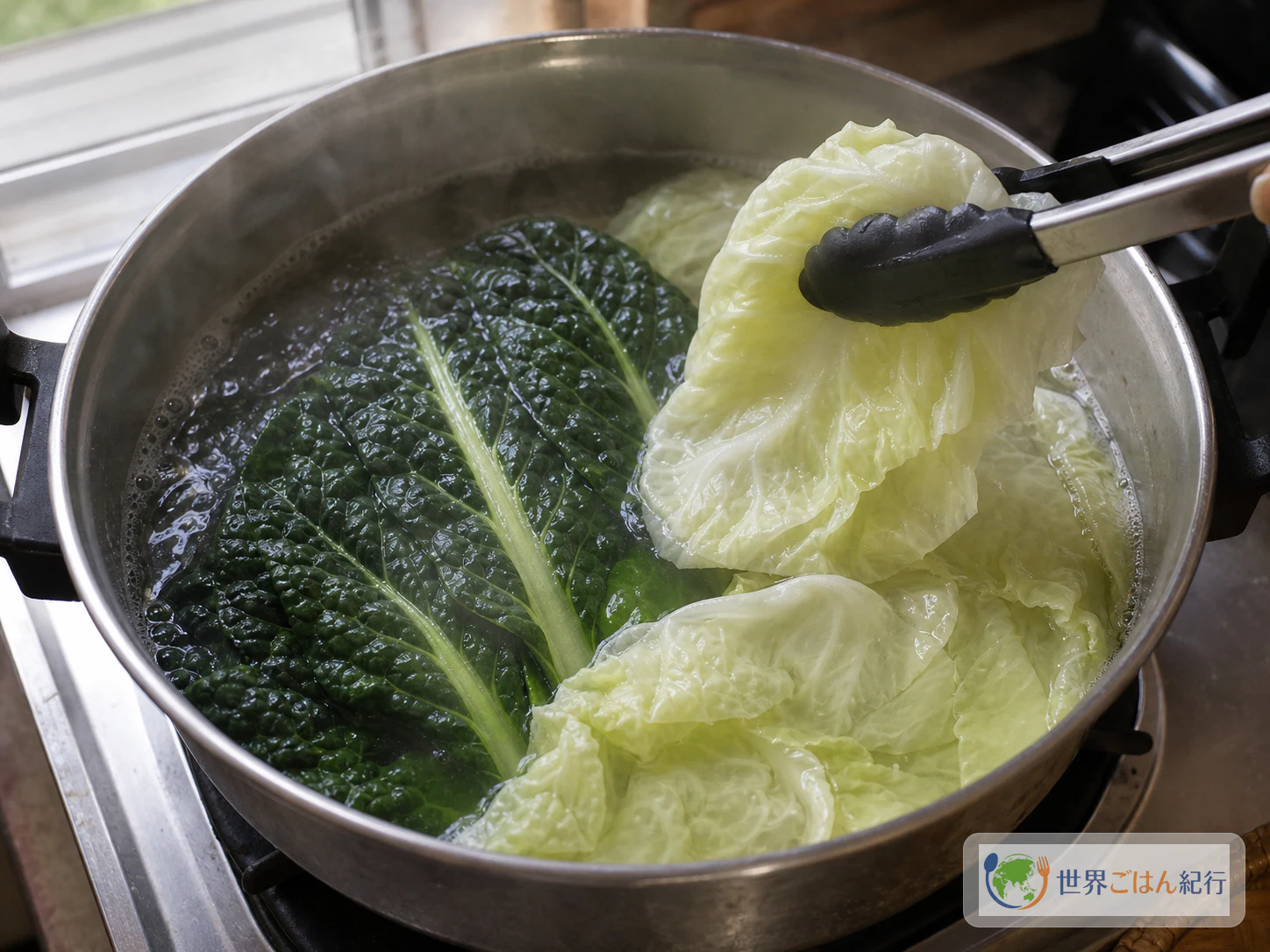
The home version works best when you split the jobs. Outer cabbage leaves are the wrapper: mild in flavor, but supple after blanching, slow to tear, and good at holding a parcel's shape. Kale brings bitterness and greenness, and komatsuna, too small to wrap, gets chopped into the filling. The aroma will differ a little from the local version, but the skeleton stays intact: green leaves, coconut, dried fish, and a coconut sauce.
When choosing, put ease of handling ahead of aroma. The leaf has to be edible, resist tearing and hold together through simmering. Kale cracks if wrapped with thick ribs, so shave them thin with a knife or chop more of it into the filling. Takana (mustard greens) needs desalting first if salt-pickled. Raw takana has a strong aroma, so start with just one leaf.
| Leaf | How to use | Result | Caution |
|---|---|---|---|
| Outer cabbage leaves | Main wrapper | Sweet, doesn't tear easily | Shave the core thin |
| Kale | Layer on the wrapping leaf | Brings bitterness | Cut away thick ribs |
| Komatsuna | Chop into the filling | Adds greenness | Drain well |
| Takana (mustard greens) leaves | Wrap | Strong flavor | If salt-pickled, desalt first |
| Edible cassava leaves | To approach the local version | Strong green aroma | Only if prepared for eating and the cooking method is known |
Coconut milk, makrut lime leaf and dried shrimp
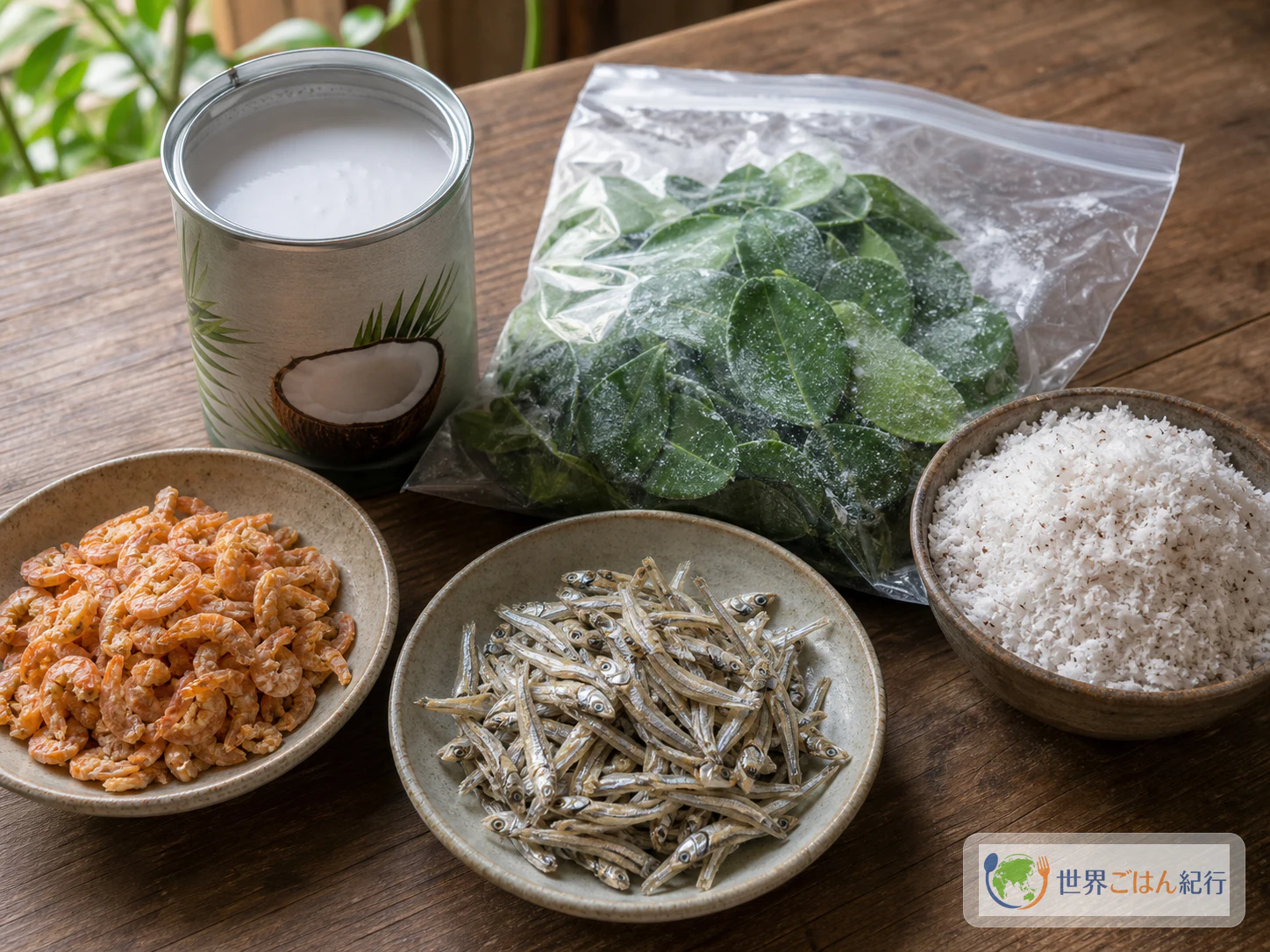
Cabbage, komatsuna, onion and garlic are at any supermarket. Kale, komatsuna and red onion don't need a particular variety, so choose them by freshness. The ingredients worth seeking out are the three that shape buntil's aroma. Coconut milk sets the body of the sauce, makrut lime leaf adds a citrus outline to the green smell of the leaves, and dried shrimp gives the filling depth even in a small amount.
Use canned coconut milk made for cooking. Coconut beverages and sweet dessert products don't suit a savory dish. One 1¾-cup (400 ml) can covers the recipe, so nothing is left over and the sauce thickness stays consistent.
The dish works without makrut lime leaf, but with coconut and dried fish layered together, a little citrus lightens the aftertaste. Dried shrimp keeps the coconut's sweetness from going flat. To get closer to local ikan teri, add small dried anchovies as well. For a table with a shellfish allergy, leave the shrimp out.
None of these go to waste. Coconut milk cans are worth buying in a batch if you also make nasi uduk or arem-arem. Makrut lime leaves go into the yellow soups of soto ayam and papeda, and freeze well, so pick up a frozen pack when you spot one. Dried shrimp is harder to use up, but a little chopped into the sauce of gado-gado or a vegetable stir-fry adds umami.
Method: Soften the Leaves, Wrap, then Simmer
Buntil is made in this order: blanch the leaves so they are easy to wrap, lightly stir-fry the filling, wrap, steam, then simmer in sauce. If you simmer directly in coconut sauce, the parcels come apart easily and the filling does not lose its moisture. Steaming first to set the shape makes the cabbage and kale easier to handle.
Don't aim for a neat square. Gather it like a drawstring pouch and tie loosely with kitchen string. Put torn parcels at the edge of the steamer and treat them as the first to eat after simmering in sauce, so that if they fall apart on the plate it isn't noticeable.
Buntil Problems and Fixes
| Symptom | Cause | Fix |
|---|---|---|
| Leaves tear | Under-blanched, thick core, tied tight | Shave the core thin, blanch until supple. Tie string loosely |
| Parcels come undone | Seam on top, simmered before steaming | Seam side down, steam first |
| Filling is watery | Water on the leaf, over-rehydrated coconut | Press the leaves dry and re-fry the filling over low heat |
| Sauce separates | Boiled over high heat | Keep small bubbles on low heat. If it separates, add 2 tbsp water and stir slowly |
| Flavor is blurry | Too little dried fish, weak salt | Add a little more dried shrimp or a pinch of salt at the end |
| Feels heavy | Coconut is rich, no acidity | Serve with cucumber, sambal, or a little lime |
The most common mistake is tying the leaves too tight in the hope of neat parcels. During steaming the filling swells a little and the leaves soften, so a hard roll splits. Leave a little room and set the seam down.
Keep the sauce thin, too. A thick sauce weighs down the surface of the parcels without reaching inside, which is why ¾ cup (180 ml) water goes in with the 1¾ cups (400 ml) coconut milk before a light reduction over low heat. If you plan to reheat the next day, set aside 2 tbsp more water.
Sauce that has separated and turned white can be saved. Turn off the heat, add 2 tbsp water and stir slowly with a wooden spoon until it comes back together. A little floating oil is no problem, since buntil goes over rice anyway. If the aroma feels heavy, finish with a few drops of lime.
Serving, Making Ahead and Storing Buntil
Serving buntil
At dinner, buntil is the main dish. Coconut milk and dried-goods umami are strong, so creamy soups or fried foods on the same table make it heavy. A clear broth with a little ginger, a thin chicken soup, or a small tomato and cucumber dish with some acidity suits it better. Plain white rice is fine, and on days you want more aroma, a small portion of nasi uduk pulls the table together as an Indonesian meal.
| Table plan | What to serve | Reason |
|---|---|---|
| Weeknight dinner | White rice, cucumber, tomato, a little sambal | Rice catches the sauce, and acidity and heat cut the weight |
| Weekend Indonesian menu | Nasi uduk, hard-boiled egg, cucumber, thin chicken soup | Ties in the coconut aroma and keeps the soup light |
| Table with less heat | White rice, lime, scrambled egg, cucumber | Without chili, acidity and egg still give satisfaction |
| Make-ahead lunch | Rice, 1 buntil, 3 tbsp sauce, a small bowl of greens | Reheated, it won't be too strongly flavored as one plate |
For plating, open each parcel only about 1 inch (2 cm). Cut it fully open and the filling spills while the leaf sinks into the sauce. Show a little of the inside, spoon the sauce beside the rice, and let each person unwrap the rest. For children or anyone who dislikes heat, cut back the chili and serve sambal on the side; keep the ginger and makrut lime leaves in the sauce so the aroma doesn't feel thin.
Making buntil ahead
Buntil has many steps, and starting them all in the evening wrecks the kitchen. The day before, you can blanch the leaves, soak the dried shrimp, stir-fry the filling and chop the aromatics. Stop just before wrapping, though: wrapped parcels left overnight release water and come apart in the steamer. Wrap, steam and simmer on the day.
| What you can do the day before | How to store | Caution on the day |
|---|---|---|
| Blanch the leaves | Press out water and keep in a container without stacking | For leaves that tear easily, pat dry again before wrapping |
| Stir-fry the filling | Cool, seal and refrigerate | If stiff, loosen with 2 tsp lukewarm water |
| Chop the aromatics | Keep garlic, ginger and onion separate in the refrigerator | If they release water, wipe lightly before frying |
| Cut the makrut lime leaves | Put in a small bag so they don't dry | If the aroma is weak, add a little at the end |
For guests, finish wrapping and steaming at midday and simmer in the sauce 30 minutes before eating. Parcels straight from the refrigerator won't warm through in hot sauce, so leave them at room temperature for 10 minutes first, then simmer over low heat. Don't move them around in the pot; spooning sauce over the top keeps them in shape.
Storage and reheating
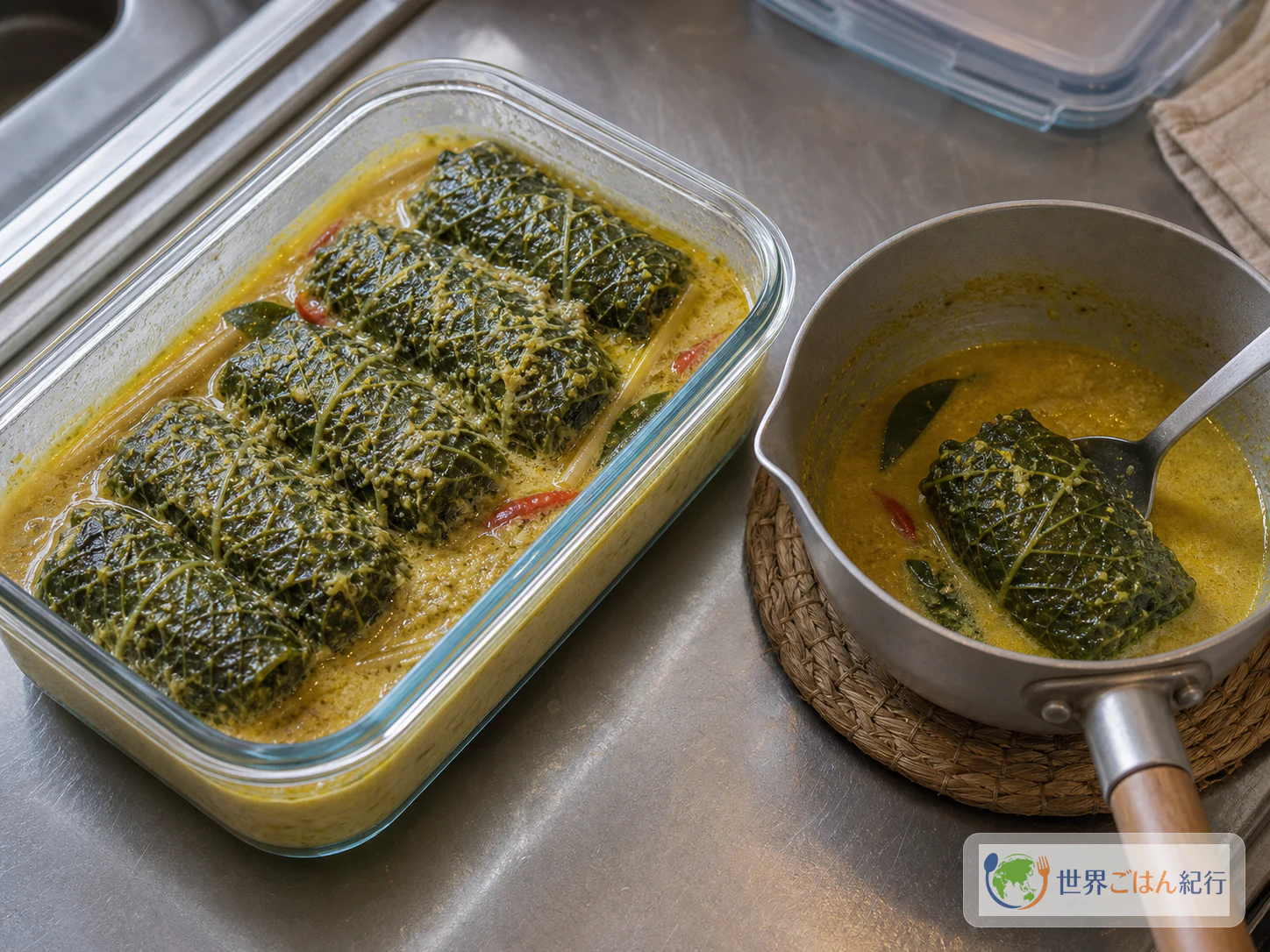
To refrigerate, cool the buntil a little and store it in a container together with the sauce, which keeps the leaves from drying out. Finish within 2 days. Reheat in a pot with 2 to 3 tbsp water over low heat, or in a microwave: put it in a deep bowl, cover loosely with plastic wrap, heat at 600 W for 1 minute 30 seconds, turn the parcels over and heat another 30 seconds. The leaves tear easily, so don't stir hard in between.
Freezing works, though the leaf texture suffers. Wrap each parcel in plastic wrap, put the sauce in a separate small bag and use within 2 weeks. Thaw overnight in the refrigerator; microwaving from frozen heats the leaf and filling unevenly and splits the parcels.
Leftover sauce holds the soaking liquid of fish and shrimp, so simmer it with thinly sliced eggplant, thick fried tofu or komatsuna over low heat for about 5 minutes for a light side dish rather than pouring it over rice the next day. If the coconut feels strong, add a few drops of lime or 1/2 tsp vinegar at the end. Always add back a little water before reheating, because sauce reduced too far turns oily.
FAQ
| Question | Answer |
|---|---|
| Can I use desiccated coconut? | If unsweetened, yes. Rehydrate with 3 tbsp lukewarm water and use it once it holds together lightly when squeezed. |
| Can I leave out the dried shrimp? | You can, but the flavor gets lighter. Add umami from another direction with 2 tsp dried shiitake powder and 5 g dried bonito flakes. |
| Does it go with anything besides white rice? | It goes with scented rice such as nasi uduk. If it's your first time, plain white rice makes the flavor of the sauce easier to read. |
| Can I add meat? | As a home-cooking variation, yes. But what makes buntil buntil is the combination of leaves, coconut, dried fish and coconut sauce. |
| What goes well as another dish on the table? | Small dishes with acidity or heat suit it better than oily fried food. The sambal substitute recipe, or cucumber, tomato and lime on the side, cut the weight. |