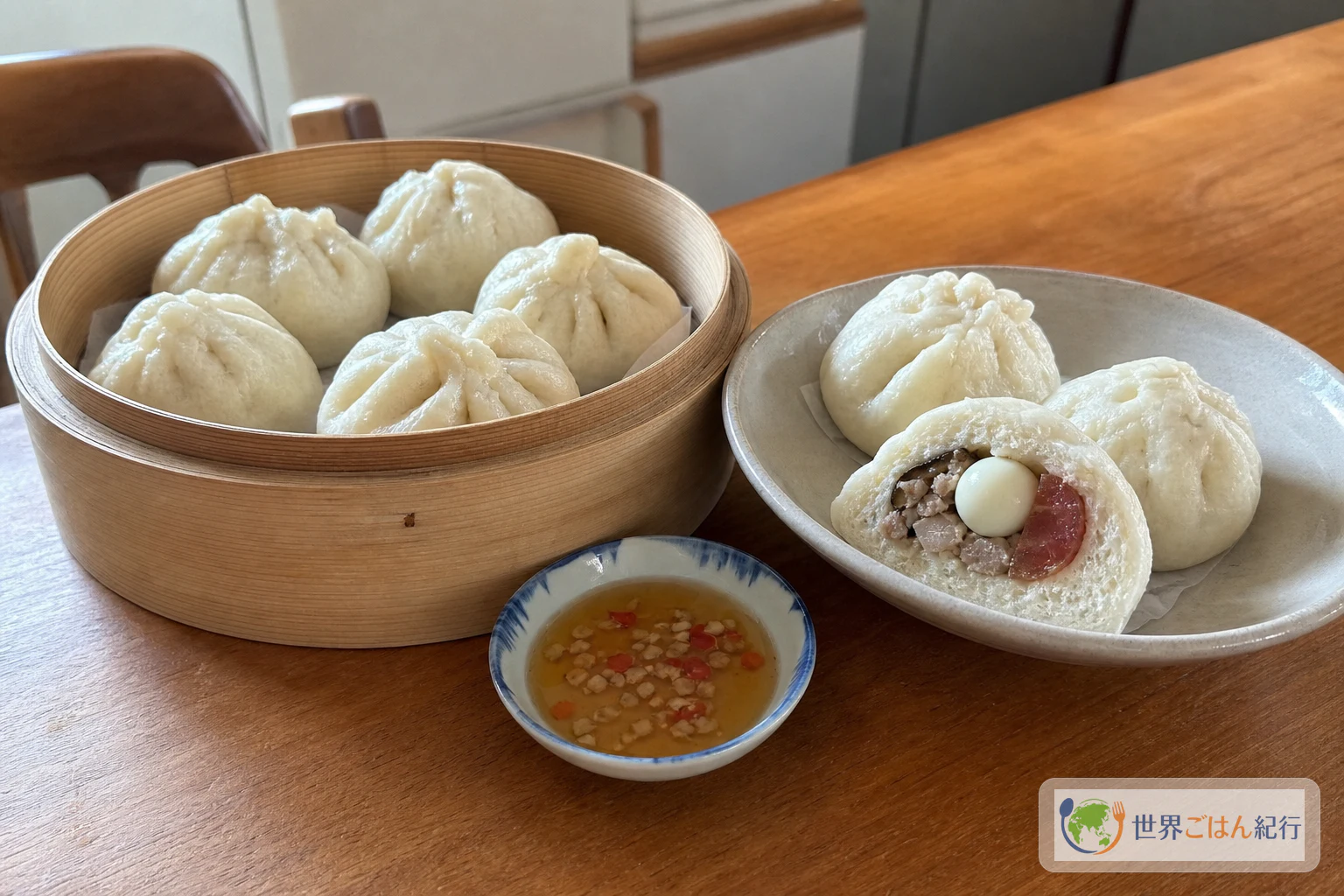
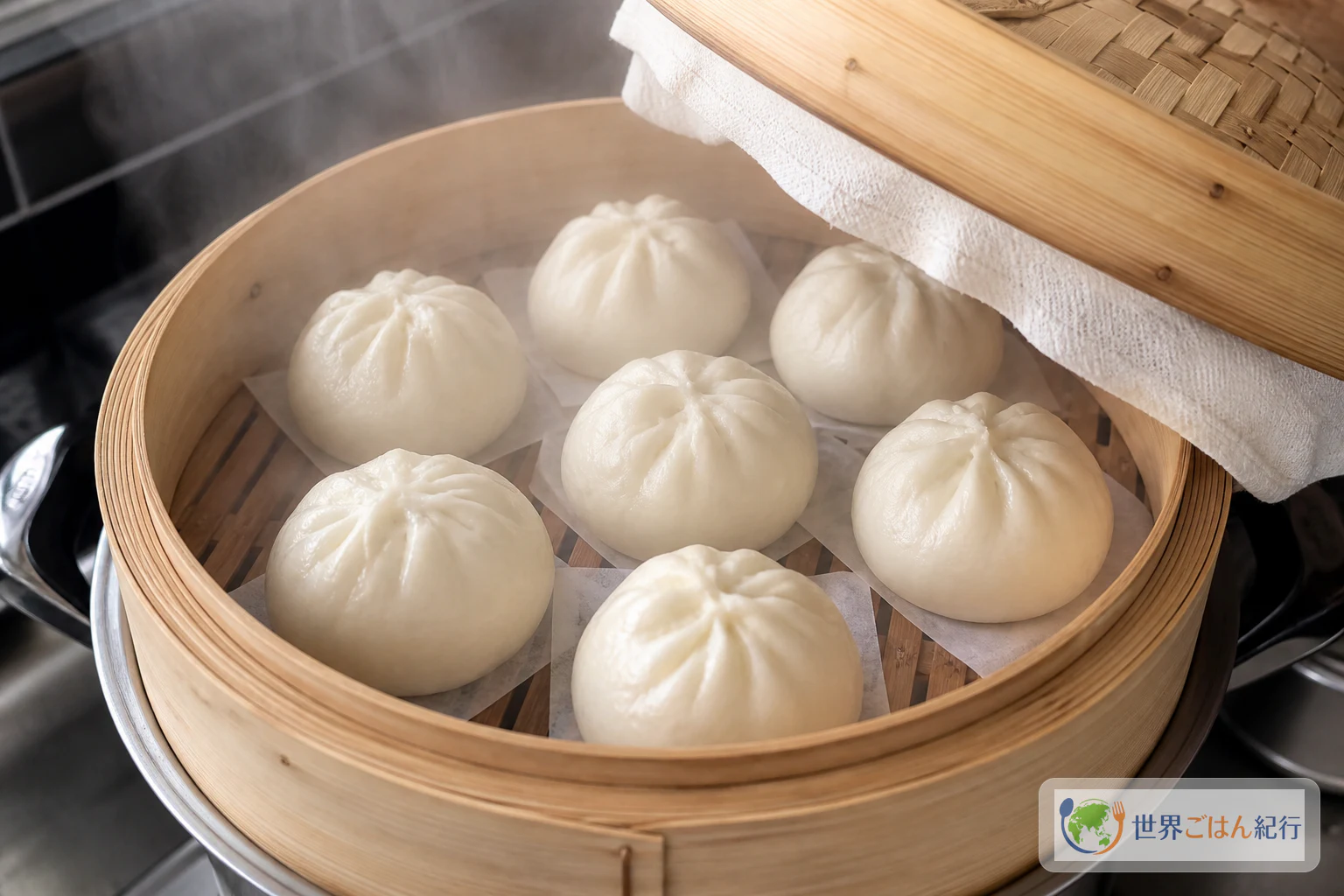
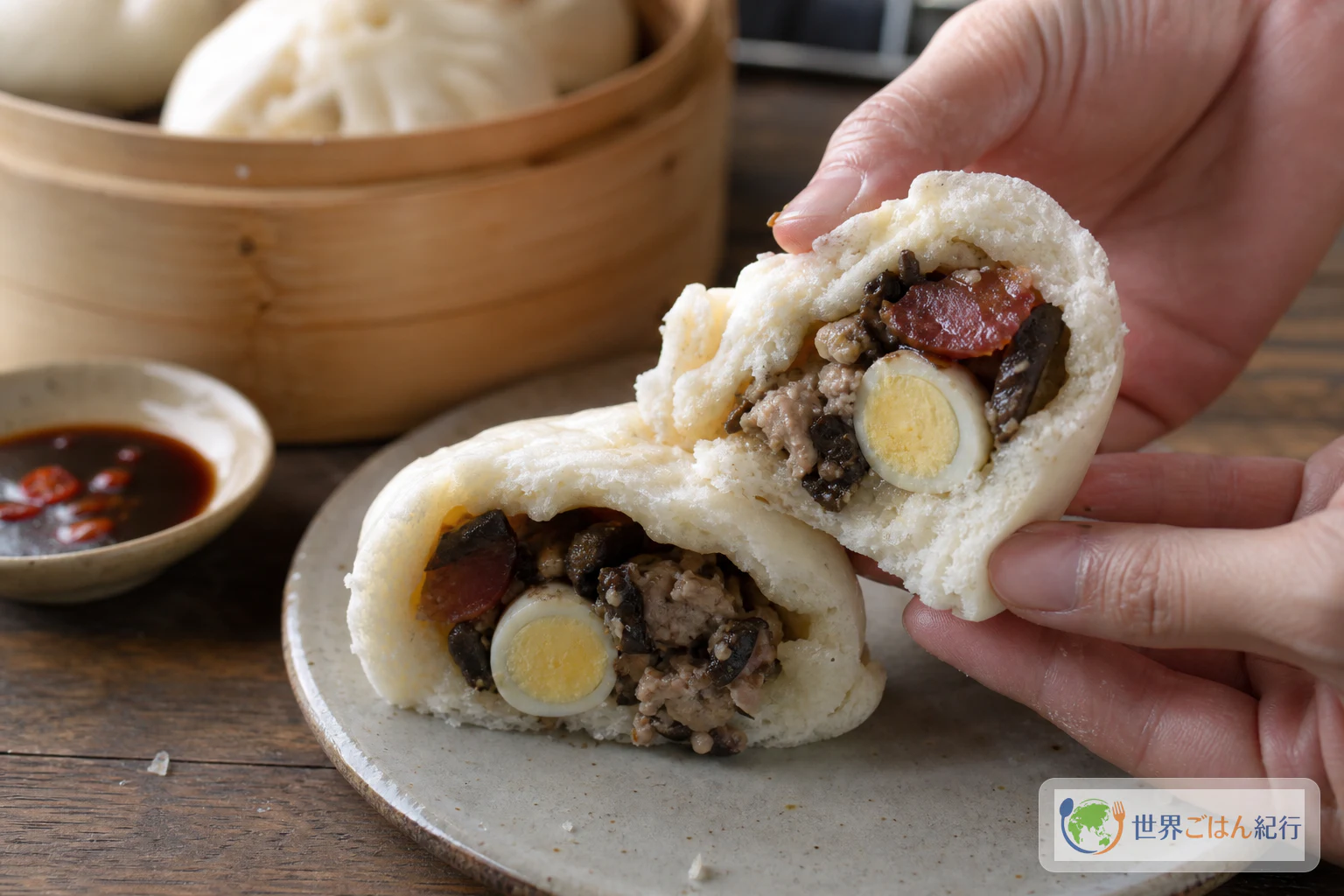
Picture a Vietnamese storefront where white buns come out of a metal warming case or a bamboo steamer. They're hot in the hand, and when you break one open, the aromas of pork, mushroom, egg and sweet Chinese sausage rise with the steam. Bánh bao is Vietnam's take on the Chinese steamed bun: slightly sweet white dough wrapped around a savory pork filling with an egg tucked in the center. It's a dependable choice for breakfast or a midday snack.
Bánh Bao and Its Place in Vietnamese Cooking
Origin and How It Is Eaten
Bánh bao is where Chinese bao culture and Vietnamese ideas about filling meet. In a cuisine known for rice noodles and rice-flour dishes, it stands out for its wheat flour, and it makes a good breakfast that's quite different from pho and bún. It's a warm, portable food, sold at city storefronts and made at home. One bun is filling enough, so it's best in the morning, at midday or as an afternoon snack rather than as a dinner main.
In Vietnamese it is written Bánh bao. Bánh is a word widely used for flour-based and cake-like foods, and bao is connected with the wrapped shape.
The Dough and the Filling
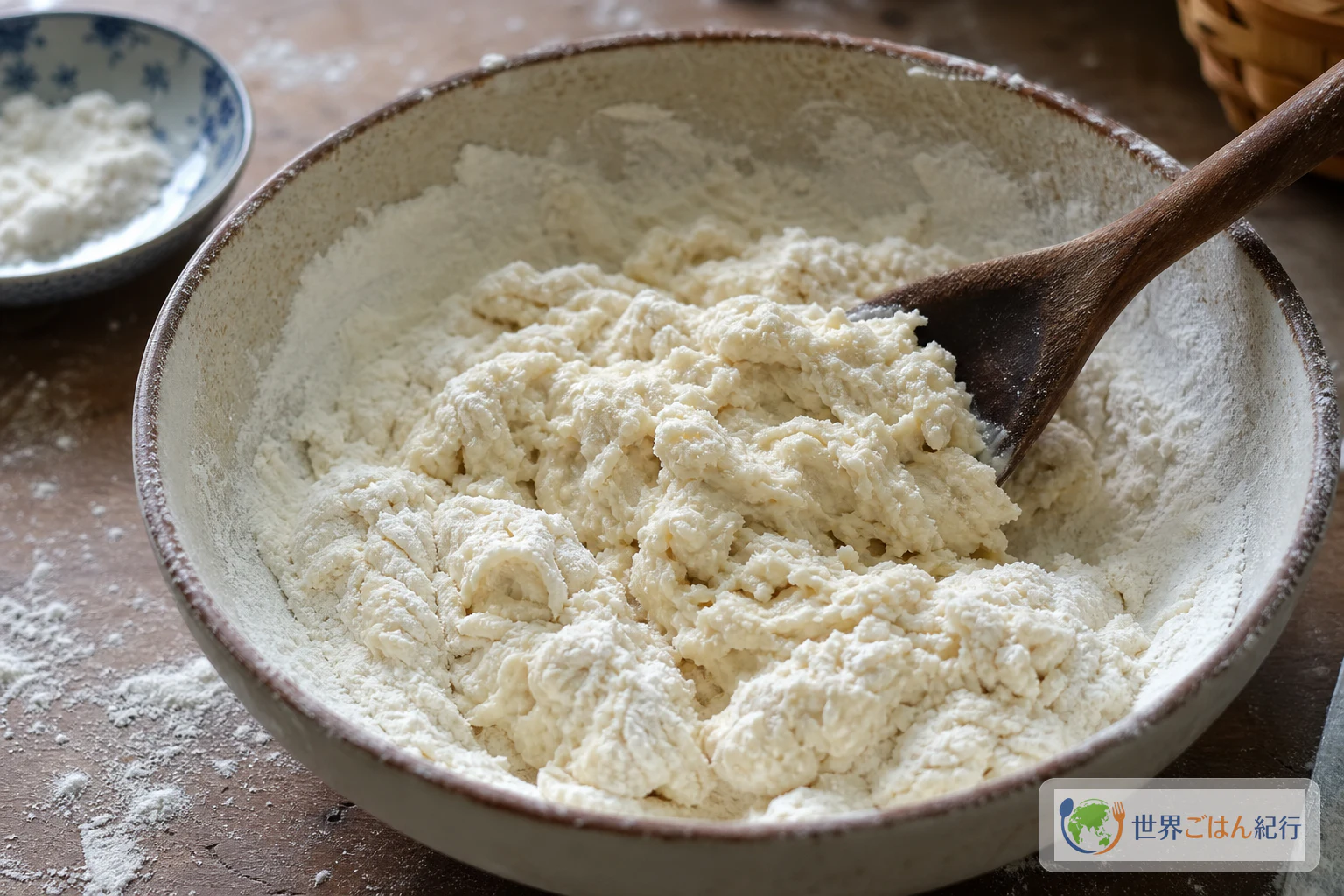
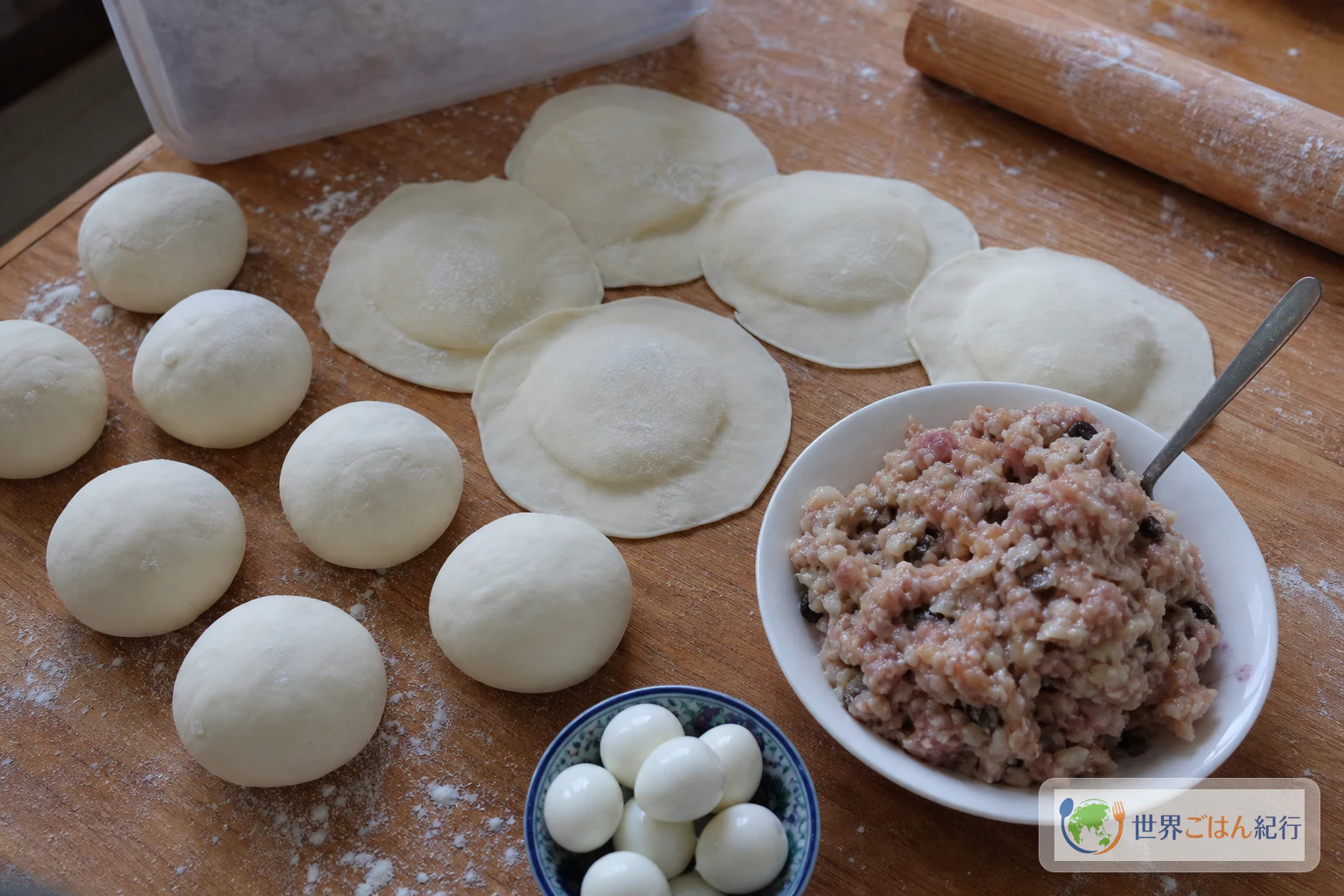
The white skin is made from cake flour, bread flour, sugar, oil, yeast and baking powder, and it's a little sweeter than a fully Chinese bao. Aim for a light dough that splits softly once steamed. At home, a little milk keeps it moist, and ease of eating matters more than perfect whiteness.
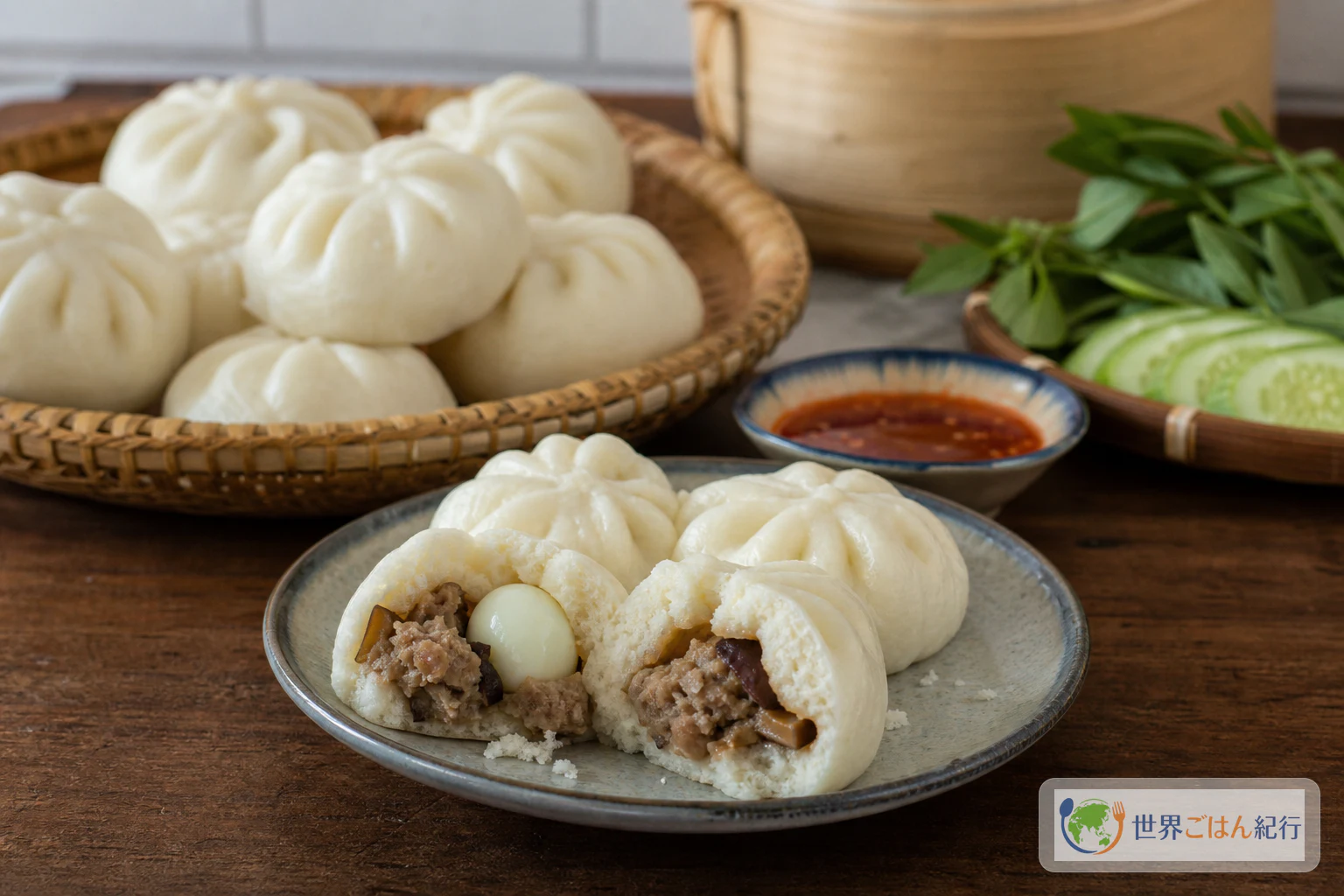
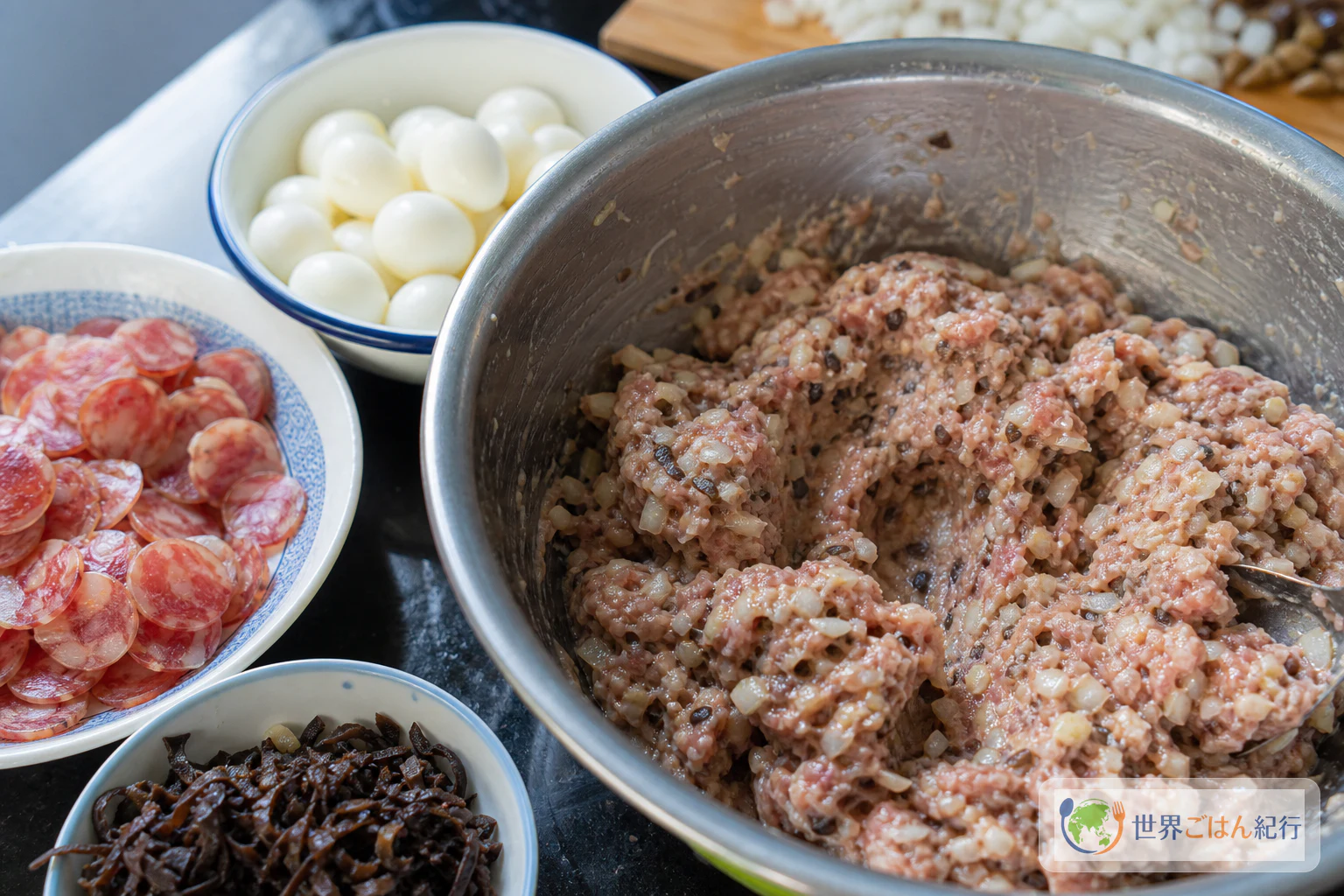
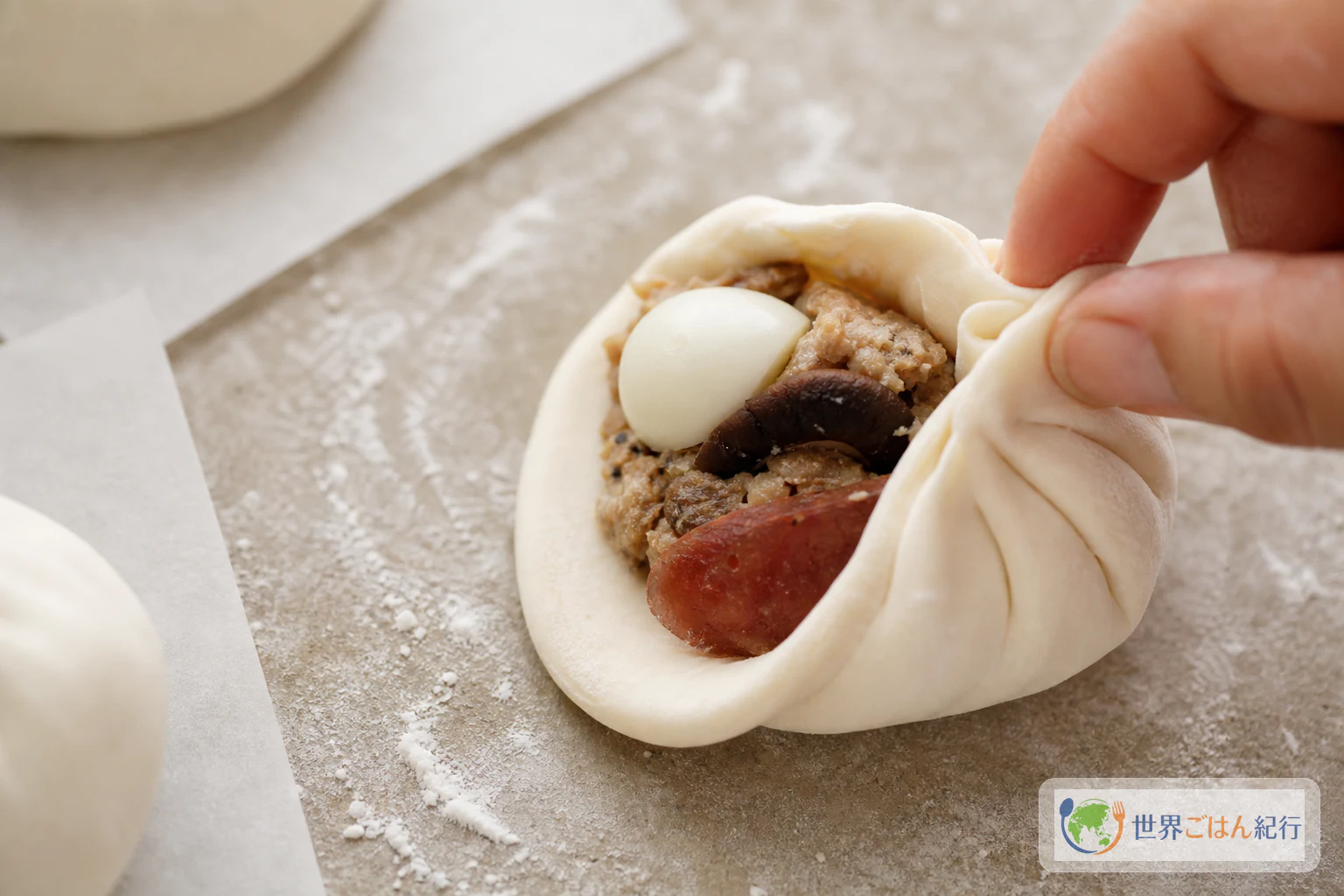
The filling is what makes it Vietnamese. Pork alone would give you a Chinese-style pork bun. Bánh bao adds finely chopped shiitake, wood ear and onion, a seasoning of fish sauce and oyster sauce, and a quail egg in the center, which changes how the bun looks when cut. A small slice of lạp xưởng (Chinese sausage) is enough. Once its sweet fat goes in, the filling smells much more like a Vietnamese street stall.
Bánh Bao and Other Steamed Dishes
Vietnam has plenty of steamed food, but bánh bao goes a different way from bánh bèo, which is rice flour and nuoc cham served in small dishes. cơm lam, sticky rice steam-roasted in bamboo, is a highland dish eaten on different occasions altogether.
Further afield, compare manti from Central Asia. Manti are steamed dumplings with a thin skin and juicy meat. Bánh bao encloses its filling in a thicker, fermented dough, and the two are eaten at different times of day.
Ingredients (Makes 8)
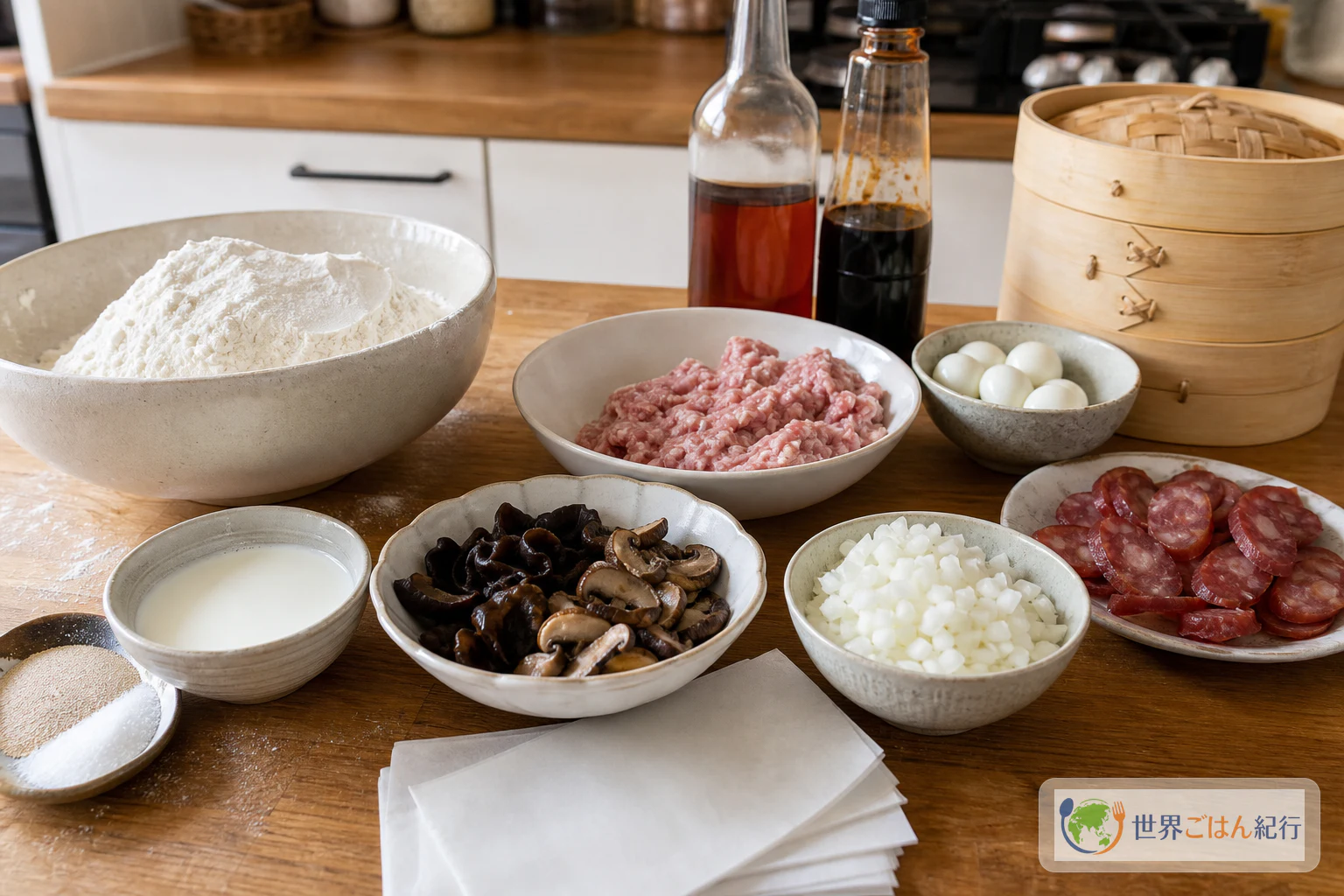
This makes eight bánh bao of 8 cm to 3.5 inches (9 cm) across. Two per person serves 4; as a breakfast or snack it serves 8. Because the filling is chilled before wrapping, allow about two and a half hours from the start of work to eating.
It uses wheat, pork, egg, a fish-based seasoning and an oyster-based seasoning. Oyster sauce and fish sauce differ by product in whether they list wheat, soy, fish or oyster, so check the packaging if you have a food allergy. The ground pork is wrapped raw, so when steamed confirm a core temperature of 167°F (75°C) or higher, or a cut face with no pink and clear juices.
What's Worth Buying Extra
A nearby supermarket has the meat, onion and eggs. Worth seeking out: a bamboo steamer, fish sauce and a probe thermometer. Bánh bao is cooked by steam, not browned in oil, so equipment and fish sauce show directly in the result.
A bamboo steamer keeps water drops from falling on the buns, so the surface stays dry. You can use a metal steamer, but wrap the lid in a cloth to catch the drops.
Fish sauce goes into both the filling and the dipping sauce. The amount is small, but it pulls the pork and mushroom toward Vietnamese flavor. A little fish sauce gives a clearer result than replacing it with light soy sauce alone.
The pork inside is raw, so doneness takes care to judge. A probe thermometer lets you check one bun without cutting it. Confirm 167°F (75°C) or higher.
Choosing Ingredients and Substitutes for Bánh Bao
You can make bánh bao abroad without every authentic ingredient. Focus on a fluffy white dough, a pork filling that isn't too wet and an egg in the center. If you can find lap xuong, use it, because it brings the dish much closer to the original at once.
| What to look at | Vietnamese direction | Practical choice abroad |
|---|---|---|
| Dough | Sweet and white, splitting fluffily | Mix cake flour and bread flour, and prevent dryness with milk and oil |
| Filling | Pork, wood ear, shiitake, egg, lap xuong | Without lap xuong, a little bacon or more dried shiitake |
| Egg | A whole quail egg inside | A hard-boiled hen's egg quartered also works |
| Aroma | Nuoc mam, white pepper, lap xuong | Adjust with fish sauce, oyster sauce and black pepper |
| Steaming | Brief in strong steam, don't suddenly open the lid | Hold medium heat in a bamboo steamer or pot with a rack, then turn off and rest |
If you're shopping to get closer to the local taste, go in this order: steamer, fish sauce, wood ear, then lap xuong. A weak steamer makes the skin watery, and without fish sauce the filling tastes flat. Lap xuong is the final push. If you can't find it, put your effort into controlling the filling's moisture instead.
Lap Xuong and Wood Ear
Without lap xuong, you need to make up its sweet aroma and fat. Cutting 1.5 oz (40 g) bacon into strips and adding 2 g more sugar gets you close. Choose a bacon with mild saltiness, since a strongly smoked one makes the bun taste Western. If you use roast pork (char siu), reduce the ground pork by 1.5 oz (40 g) so the total amount of filling stays the same.
Wood ear is there for texture, so you can leave it out if you dislike it. In that case, add 20 g more rehydrated dried shiitake and reduce the onion by 20 g. More watery vegetables loosen the juices during steaming and leave the bottom wet.
Dairy-Free Dough
To avoid dairy, replace the ¾ cup (170 ml) milk with the same amount of lukewarm water. The dough comes out a little plainer and tends to firm up when cold, so add 1 tsp (5 ml) more rice bran oil. Soy milk works too, but its bean aroma gives you a gentle, home-style bun rather than the white bun of a Vietnamese street stall.
Steaming Without a Bamboo Steamer
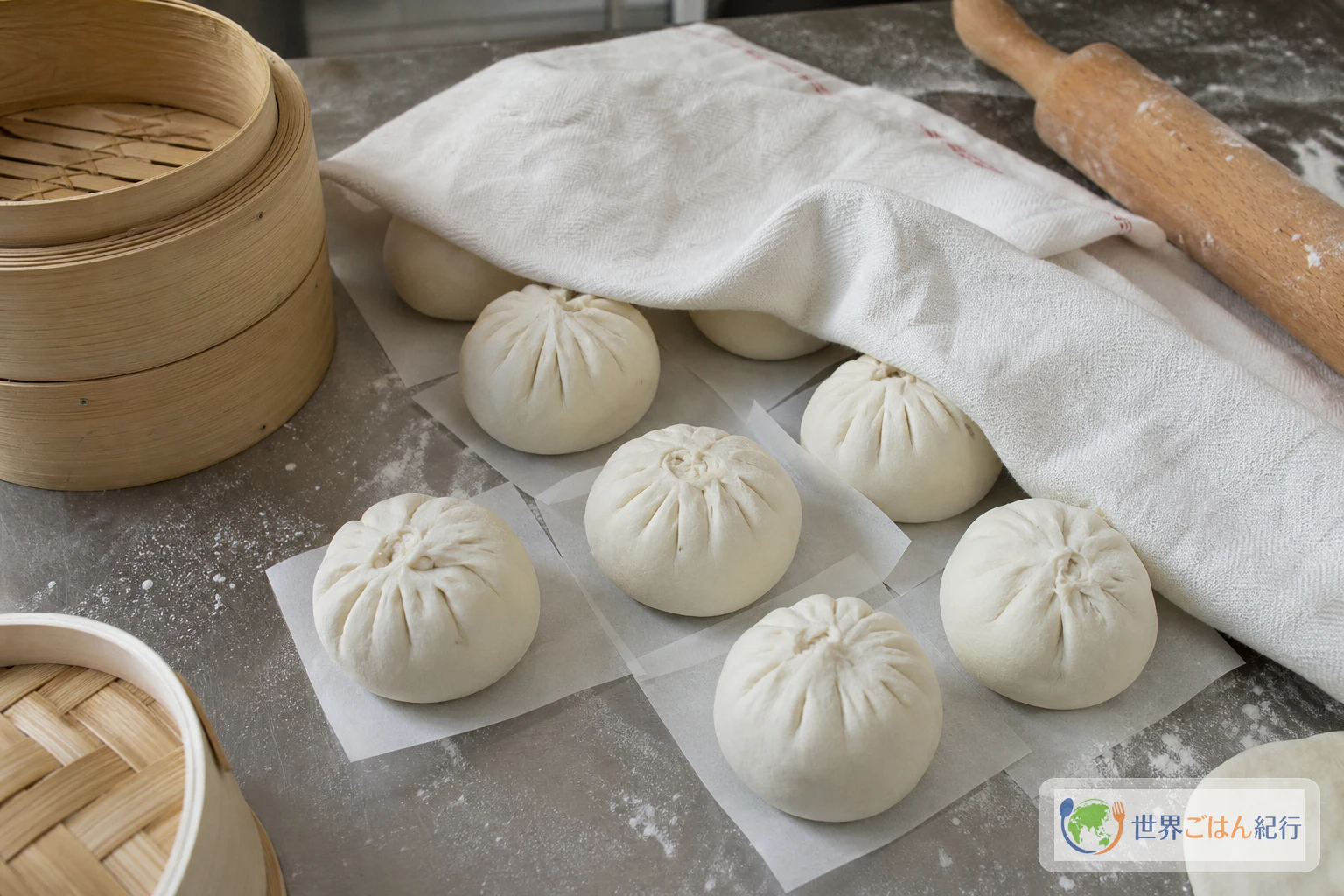
Set a rack in a deep pot and wrap the lid in a cloth, tying the ends up on top so they don't touch the flame. This keeps drips off the skin, which otherwise turns sticky. Space the buns apart, because packed into a small pot, the swelling dough sticks together and tears when you pull it apart. If all 8 won't fit, two batches of 4 will look better.
Method: Let the Dough Rise, Wrap and Steam
Make the dough first, and make the filling while it proofs. The filling is easier to wrap cold, so after mixing the meat put it in the refrigerator. Once steaming starts, don't open the lid repeatedly, and finally turn off the heat and rest it, which is the trick to keeping it from deflating.
Common Bánh Bao Problems and Fixes
On a first batch, getting lap xuong and wood ear perfect matters less than handling the water drops in the steamer and cooking the filling through.
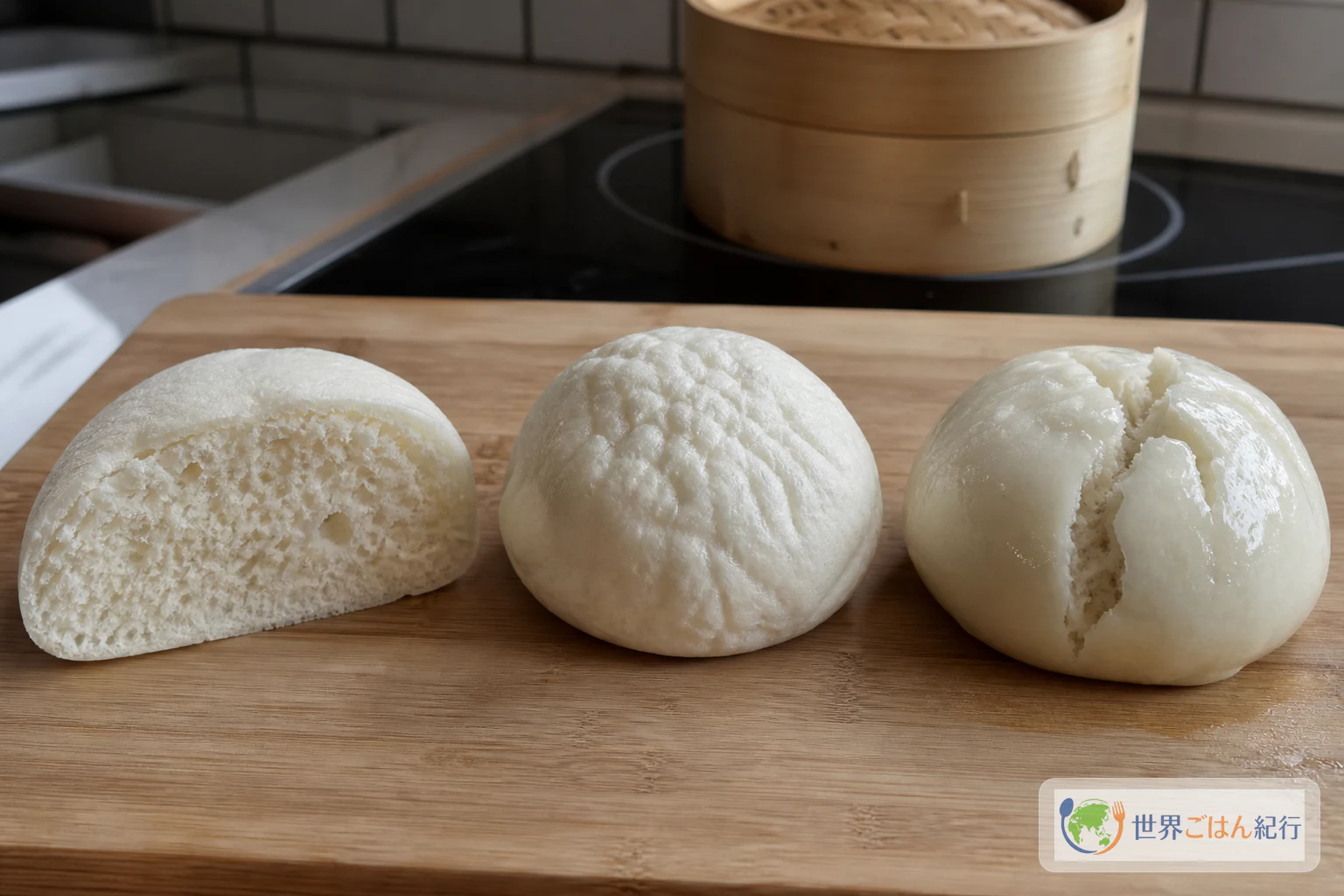
| Symptom | Cause | How to rescue it / next time |
|---|---|---|
| Surface wrinkles | Second proof too long, lid opened fully right after steaming | Turn off the heat and set the lid ajar for 5 minutes. Stop the second proof at about 1.3 times |
| Skin is hard | Under-kneaded, too much dusting flour, steaming time short | Keep dusting flour within 20 g, and steam 5 more minutes over medium |
| Bottom is wet | Water dripped, pot steam weak, filling too wet | Wrap the lid in a cloth and press the water from the onion |
| Filling is pink | Under-steamed, bun too big | Steam 5 to 8 minutes more over medium. Confirm a core temperature of 167°F (75°C) or higher |
| Seam opens | Too much filling, oil on the edge | Use 55 to 60 g filling per bun and pinch with a clean edge |
Serving and Storing Bánh Bao
Serve bánh bao hot, with a nuoc cham-style sauce, cucumber, cilantro and mint to cut the richness. For soup, a lighter one suits breakfast better than a beef stew such as bò kho. For something fried, add chả giò, and for a bread-based pairing, bánh mì fits too. Once your basic buns come out steady, you can add more local character a little at a time: lap xuong in the filling, nuoc mam in the seasoning, a spicy dipping sauce.
To store, let steamed buns cool completely, then wrap them. They keep 2 days refrigerated airtight, or 2 weeks frozen with each one wrapped in plastic wrap. Steam frozen buns without thawing in a bamboo steamer or steamer over medium heat for 12 to 15 minutes. In a microwave, wrap each bun in damp paper towels and heat at 600 W for 1 minute 20 seconds per bun, adding 20 seconds at a time if needed, though steaming keeps the skin fluffier.
Frequently Asked Questions
How do I make the dough white?
Use more cake flour, and avoid dark sugar and whole-grain flour. Adding a little vinegar to the steaming water is another method. At home, though, steady steam and resting the buns so they don't deflate do more for the texture than chasing whiteness.
Can I cook the filling first?
You can, but the meat hardens and holds together less when wrapped. If you wrap the raw mixture, steam until the core reaches 167°F (75°C) or higher and check with a probe thermometer. If any pink remains, steam longer over medium heat.
For freezing, raw or steamed?
Steamed. Frozen raw, the dough over-ferments or releases water as it thaws, and the skin turns rough. Steam, cool, wrap each bun and freeze, then re-steam when you're ready to eat.