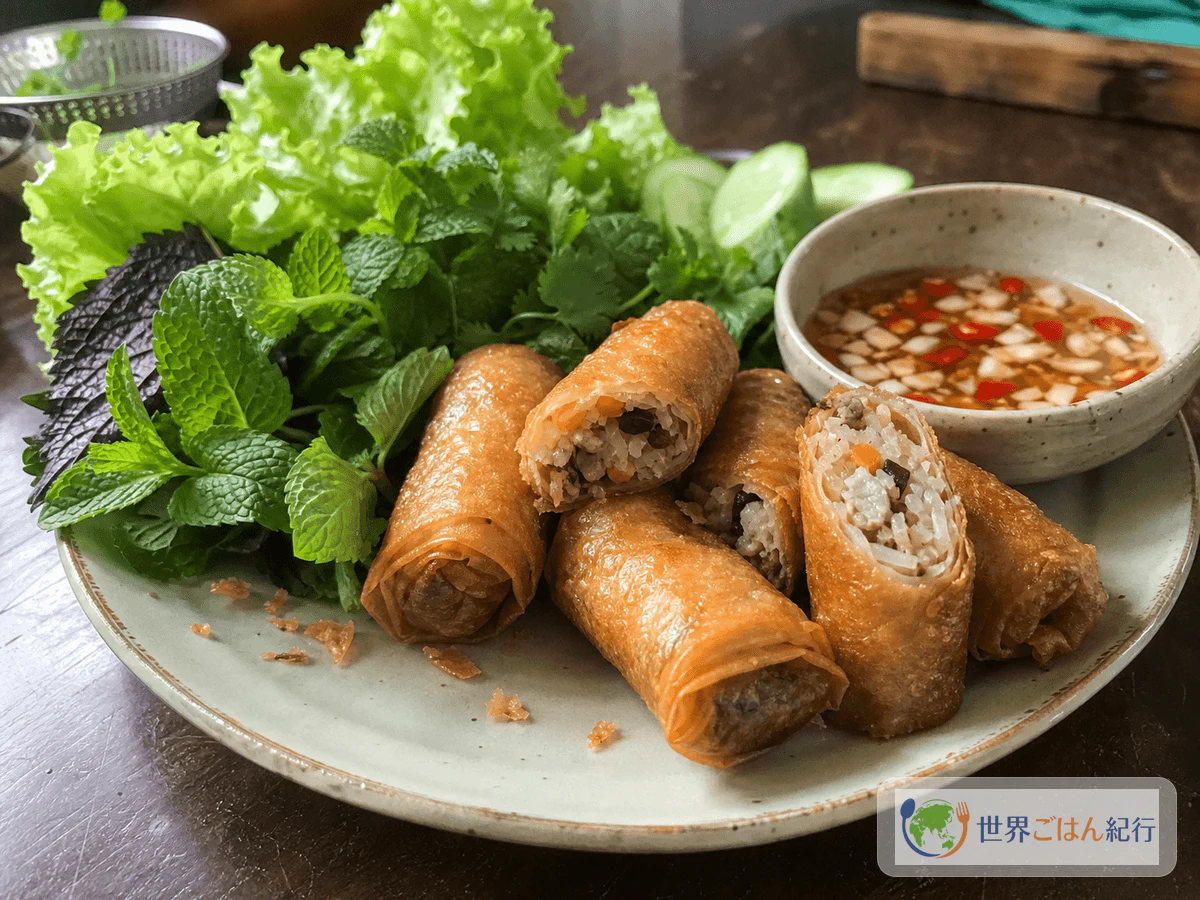
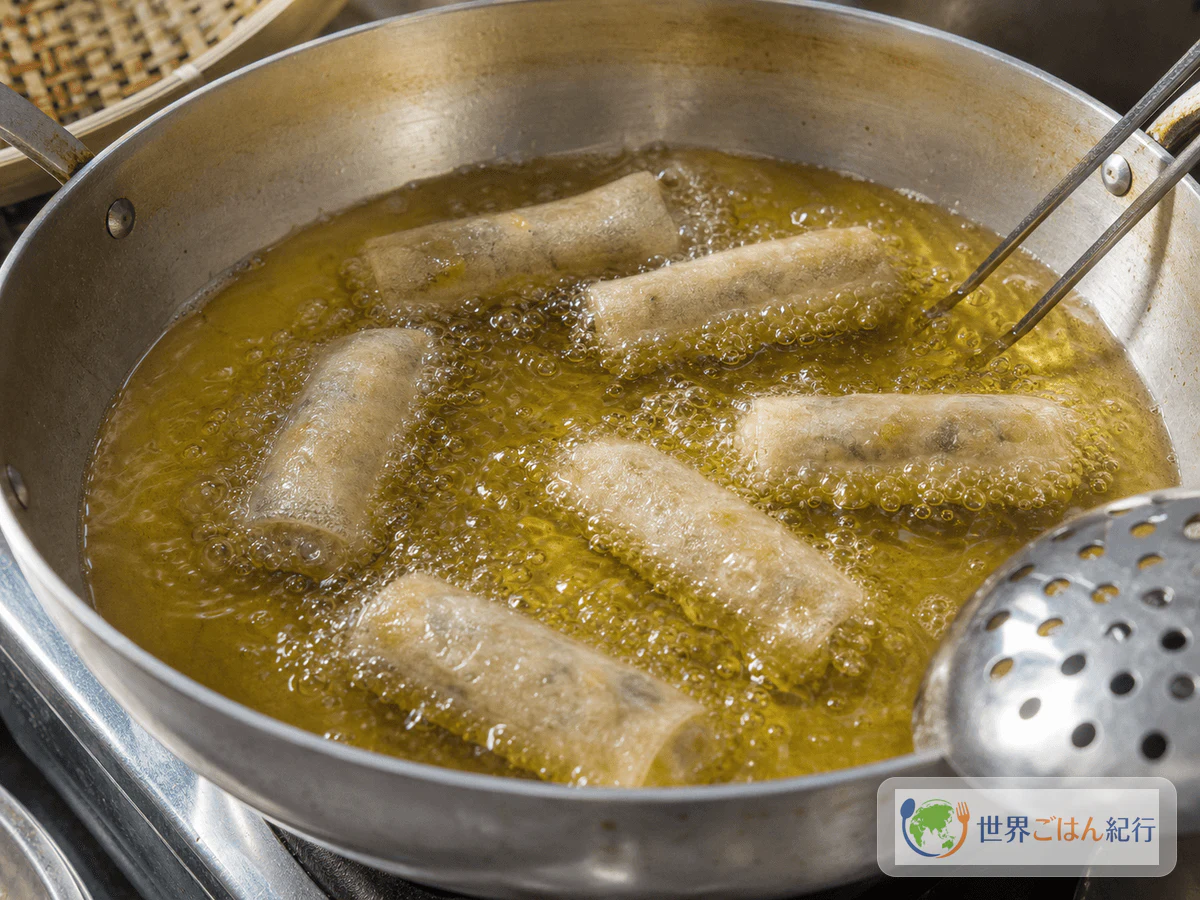
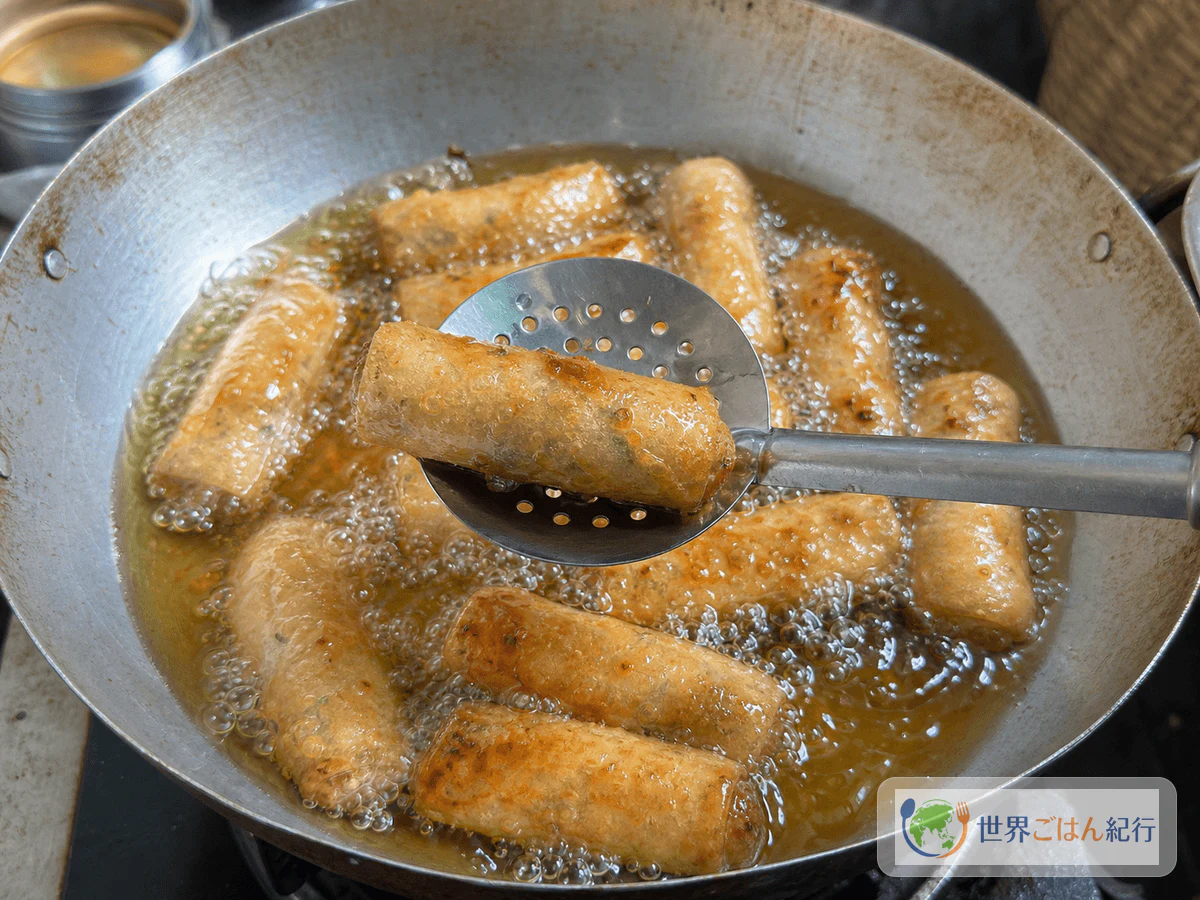
Slip a sheet of rice paper into hot oil and the shaky, translucent wrapper puffs up white, throwing off fine bubbles. Turn it gently with a wooden spatula and small bumps like water droplets rise on the surface before it turns golden. It breaks differently from a wheat spring roll wrapper, thinner and lighter. Cha gio (Chả giò) are the fried spring rolls of southern Vietnam. Wrap them in lettuce, mint, and cilantro, dip them in sweet-and-sour nuoc cham, and even though they're fried, the table never feels heavy.
About Cha Gio
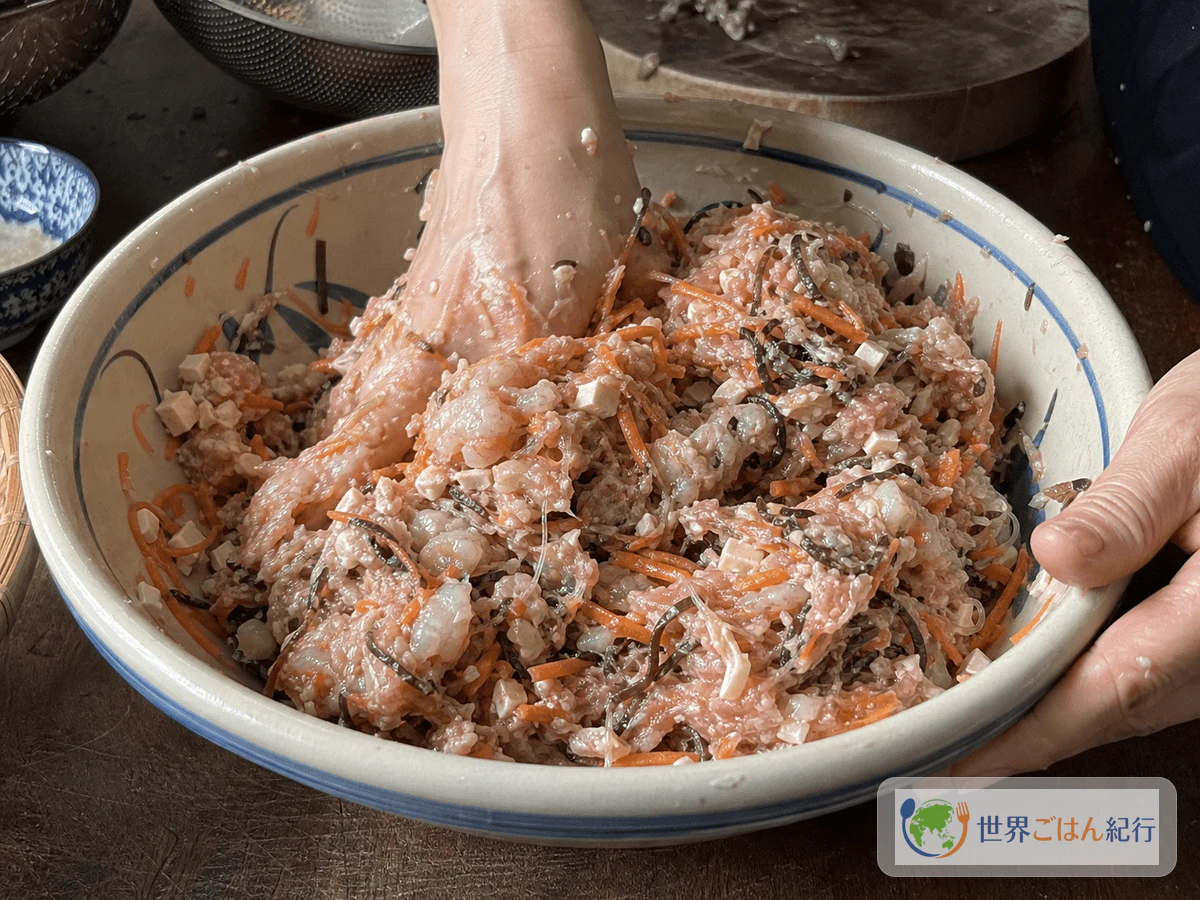
In the south these rolls are commonly called cha gio; in the north they're more often called nem ran (Nem rán), and in English you'll see them as Vietnamese fried spring rolls or imperial rolls. Some recipes wrap them in rice paper. Restaurants abroad sometimes use wheat-based spring roll wrappers because those are easier to handle. Here the wrapper is dried rice paper, and the filling is ground pork, shrimp, glass noodles, wood ear mushrooms, carrot, and lotus root. If you get the oil temperature and the moisture right, they fry up light even in a pot at home.
In Vietnamese it is written Chả giò. English spellings vary, such as "cha gio" and "cha-gio." The northern version, nem ran, is a fried spring roll that appears on the Vietnamese Lunar New Year table.
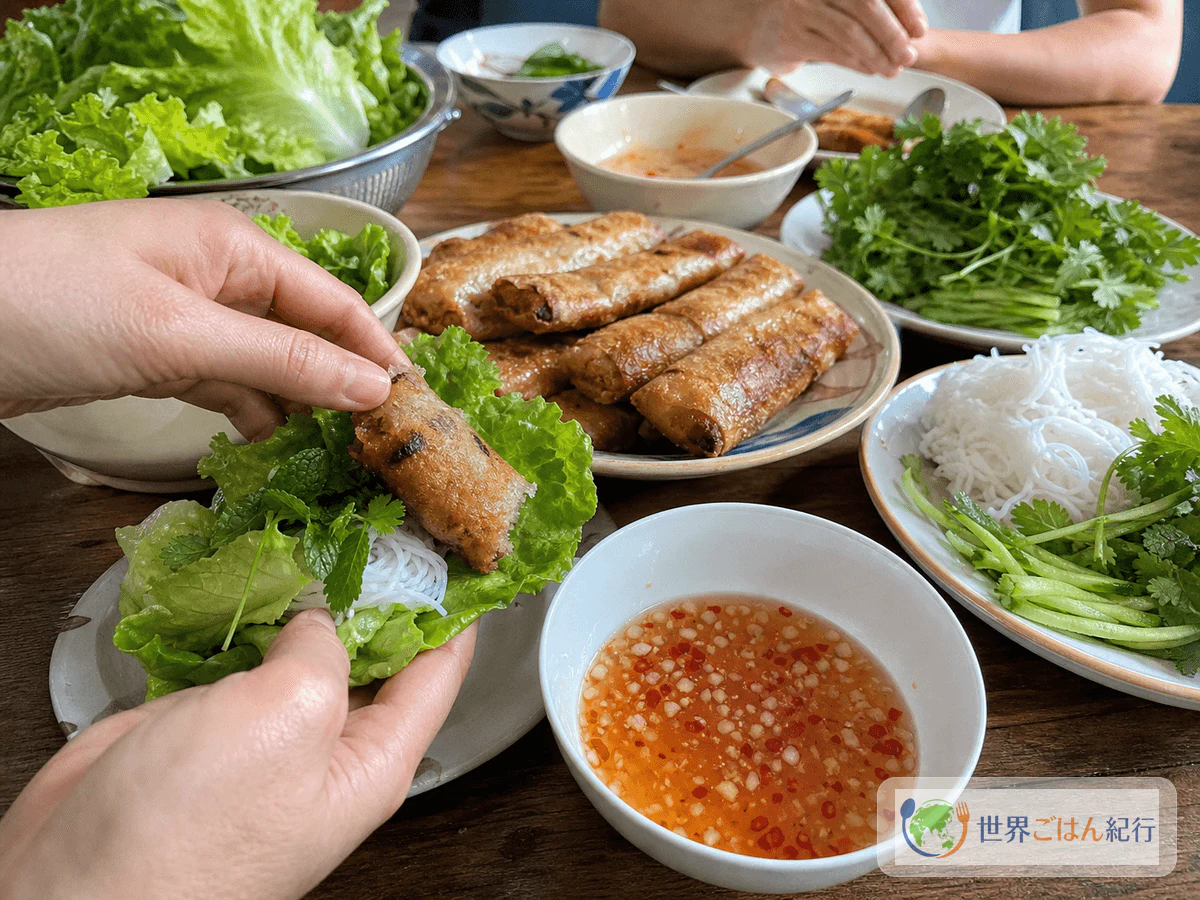
Cha gio is a fried dish that you also wrap yourself. Like banh xeo, you pick up lettuce and herbs at the table and build each bite with your own hands. Vietnamese rolls run the whole range: raw ones, fried ones, rolls wrapped in leaves, and rolls wrapped in noodles.
How Cha Gio Differs from Fresh Rolls and Chinese Spring Rolls
It's easy to go wrong with cha gio by mixing up how the wrappers of other dishes are handled. For fresh rolls (goi cuon), you soften rice paper and roll cooked fillings and herbs in it to eat as they are. Chinese spring rolls use a wheat wrapper, which holds up well in oil. Cha gio falls in between: you lightly moisten dried rice paper, roll a raw meat filling in it, and fry it.
| Point of comparison | Cha gio | Goi cuon | Chinese-style spring roll |
|---|---|---|---|
| Wrapper | Dried rice paper is standard | Dried rice paper | Often a wheat spring roll wrapper |
| Filling | Pork, shrimp, glass noodles, wood ear, root vegetable | Boiled shrimp, pork, rice vermicelli, herbs | Stir-fried vegetables or meat |
| Cooking | Rolled, then fried | Not fried | Rolled, then fried |
| How to eat | Wrapped in lettuce and herbs, dipped in sauce | Straight into the sauce | As is, or with hot mustard and soy sauce |
| Hard part at home | Not adding too much moisture; holding oil temperature | Not tearing the wrapper | Draining the filling |
Ingredients (serves 4): Buy the Wrapper, Filling, and Nuoc Cham Separately
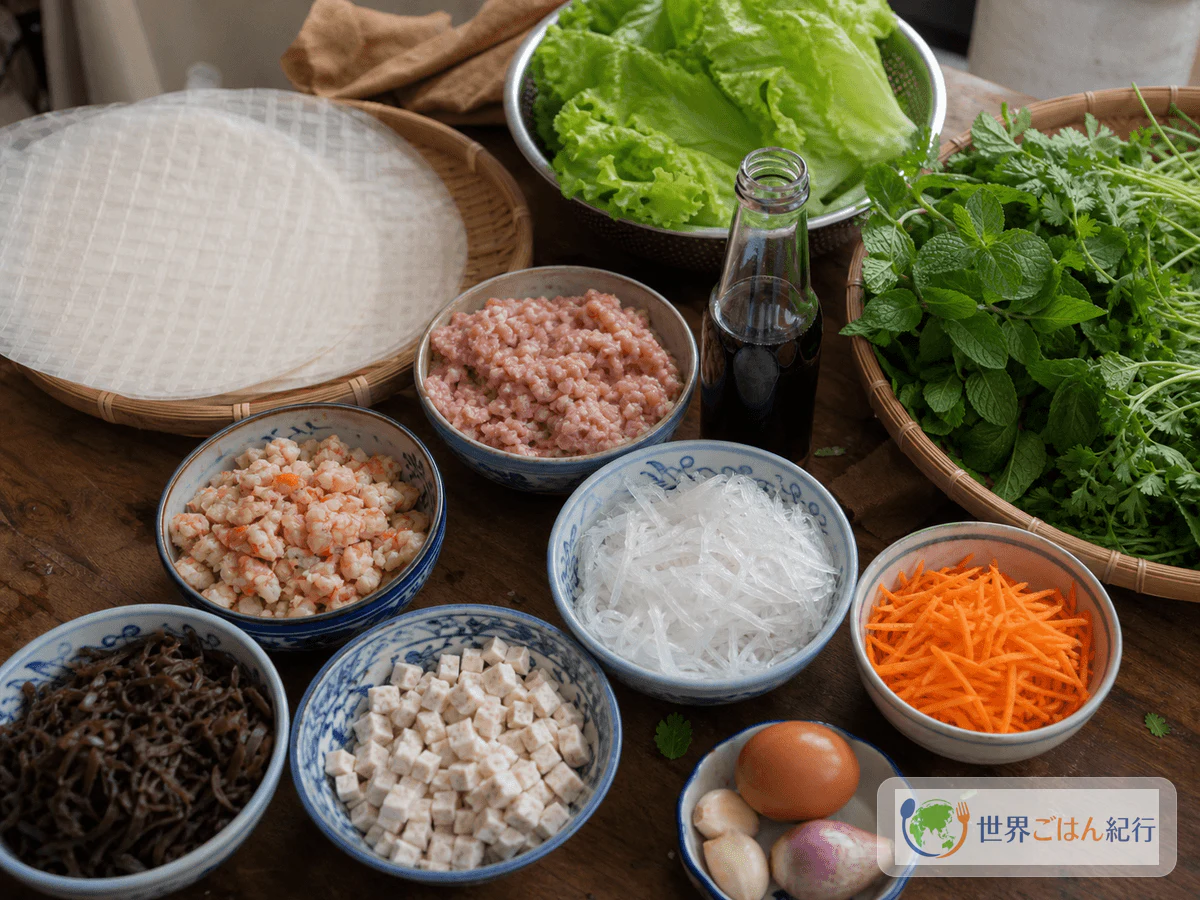
The recipe makes about 24 rolls. That serves 4 as a main dish or 6 as a side. Round rice paper 16 to 18 cm across is easiest to roll; at 8.5 inches (22 cm) or more, the rolls get too long for a home pot. Use dried wood ear that you rehydrate, and choose mung bean glass noodles or thin harusame-type noodles.
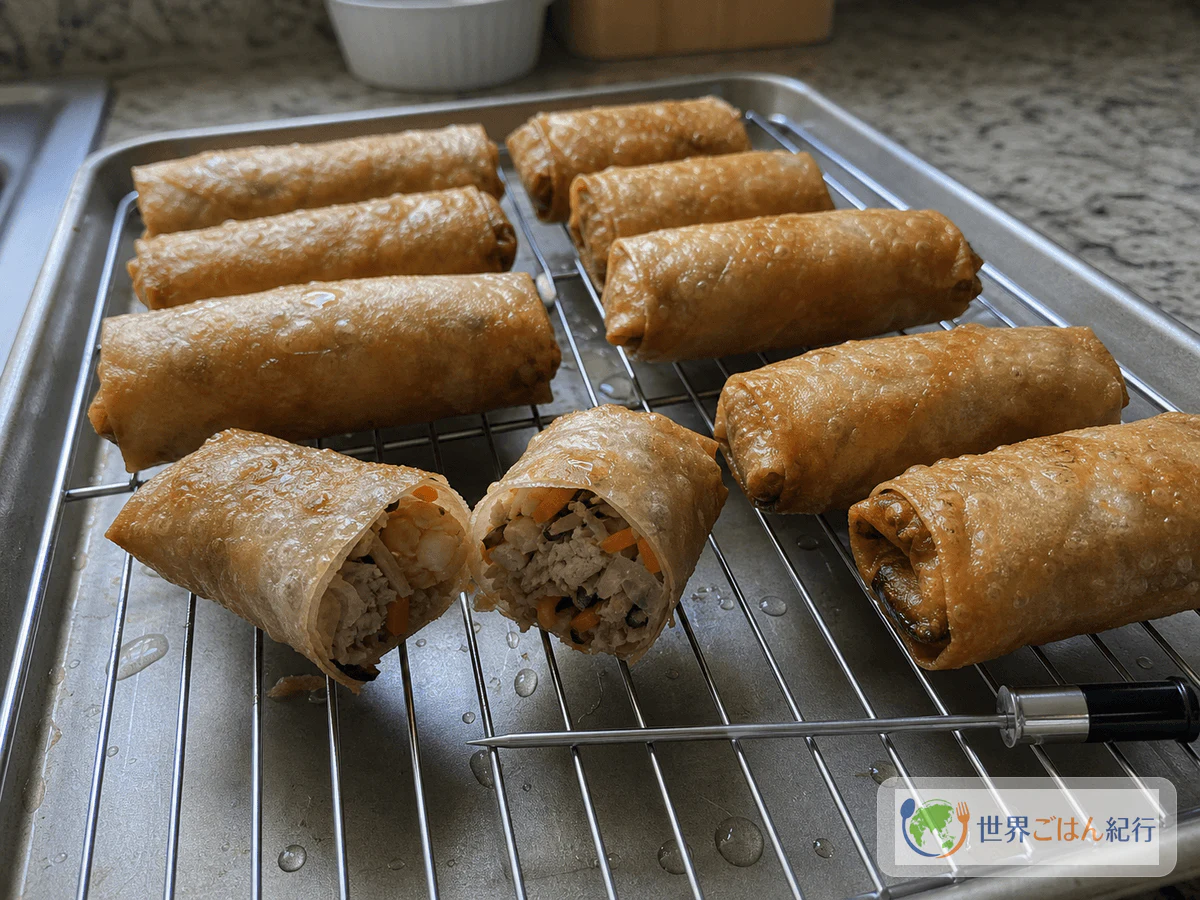
This dish uses pork, shrimp, egg, and fish sauce. If you have a crustacean, egg, or fish-derived seasoning allergy, avoid it. Because this is a ground meat dish, cook it through to the center. Check that the center reaches 75 degrees C.
Shopping for Cha Gio
Good cha gio depends less on pricey meat or vegetables than on three things you can control: the fish sauce aroma, the oil temperature, and the core temperature. If your supermarket doesn't carry rice paper, check an Asian grocery or an import food store for "round rice paper from Vietnam." You'll have fewer failures with it.
A thermometer is worth having, especially the first time. The frying temperature decides whether the rice paper tears and how well the oil drains, and a thermometer saves you from both mistakes: heat so low the rolls soak up oil, or so high that the wrapper burns before the inside cooks.
The ground pork and shrimp are rolled inside, so check at the end that the center is cooked through. Thicker rolls are hard to judge by eye, so use a probe thermometer on those.
Method: Keep Moisture Down and Fry Without Letting the Oil Temperature Drop
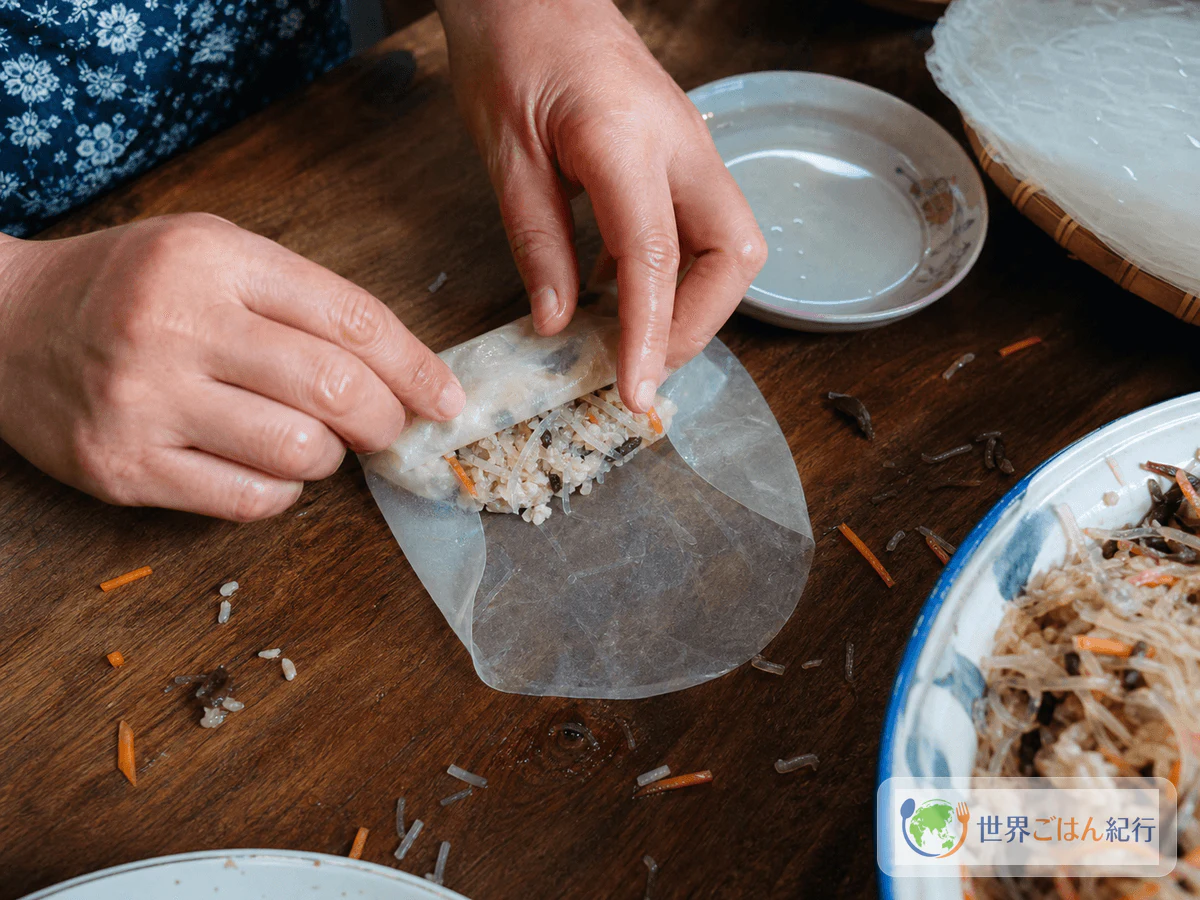
Before you start rolling, decide where the filling, nuoc cham, soaking water, and oil will sit. Once rice paper softens, it does not wait. Moisten one sheet at a time, roll one roll at a time, let them rest, then fry. Follow this order and the wrappers tear less.
Cha Gio Troubleshooting
Getting the Rice Paper Right
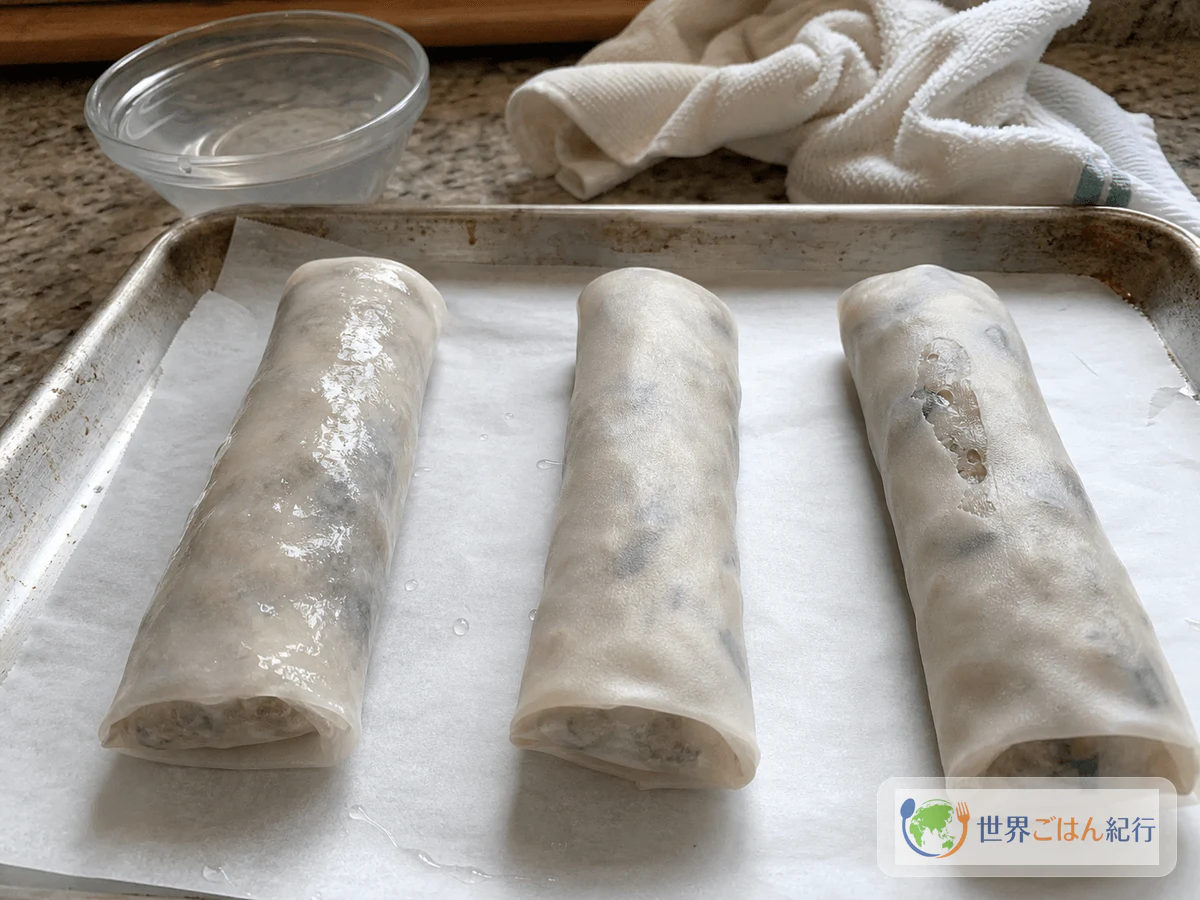
The wrapper causes more trouble with cha gio than the flavor does. Too much water and it tears in the oil; too little and it cracks as you roll. Use the table below to find the fix.
| Condition | Appearance | Cause | Fix |
|---|---|---|---|
| Just right | Translucent; the surface clings lightly | Moistened about 5 seconds and rested 8 minutes | Fry as is at 165–170 degrees C |
| Too wet | Sticks to the counter; stretches when held | Hot water, long soaking, moisture in the filling | Press with dry paper; use lukewarm water next time |
| Too dry | White cracks appear at the folds | Moistened too briefly; dry room | Wet a finger and stroke only the folds |
| Air trapped | A bulge at the end of the roll | Rolled without pressing the filling | Press as far as it will not tear; use a thinner filling next time |
| Too thick | The wrapper overlaps twice; the center is thick | Filling is over 1 oz (30 g) | Go back to 25 g per roll and keep the length at 4 inches (10 cm) |
A double layer of wrapper tears less, but the texture gets heavy. If you want to get a feel for it, double up the first batch. After that, roll with a single thin sheet and fry at the right temperature, which gives you the lightness cha gio should have.
Frying and Flavor
If a wrapper tears and filling spills out, leave it alone in the oil. Wait 30 seconds for the surface to set, then lift it out. Don't try to rescue one that has fallen apart. Strain the oil before the next batch, because filling left in the oil burns and turns everything after it bitter.
| Problem | Common cause | What to fix next |
|---|---|---|
| The wrapper tears | Over-soaked, wet filling, low oil temperature | Lift out at 5 seconds, squeeze the vegetables, add at 165 degrees C or above |
| The wrapper is white and hard | Not moistened enough; rested too briefly | Stroke only the folds with water and rest 8 minutes before frying |
| Greasy | Fried a long time in the 150s | Add a few at a time and wait for the temperature to recover |
| The filling is undercooked | Rolled thick; colored only with the second fry | Take the first fry to 4 minutes and check the core temperature of thick ones |
| Bland | Glass noodles and vegetables absorbed the salt | Fry a little filling to taste and add 1 tsp fish sauce |
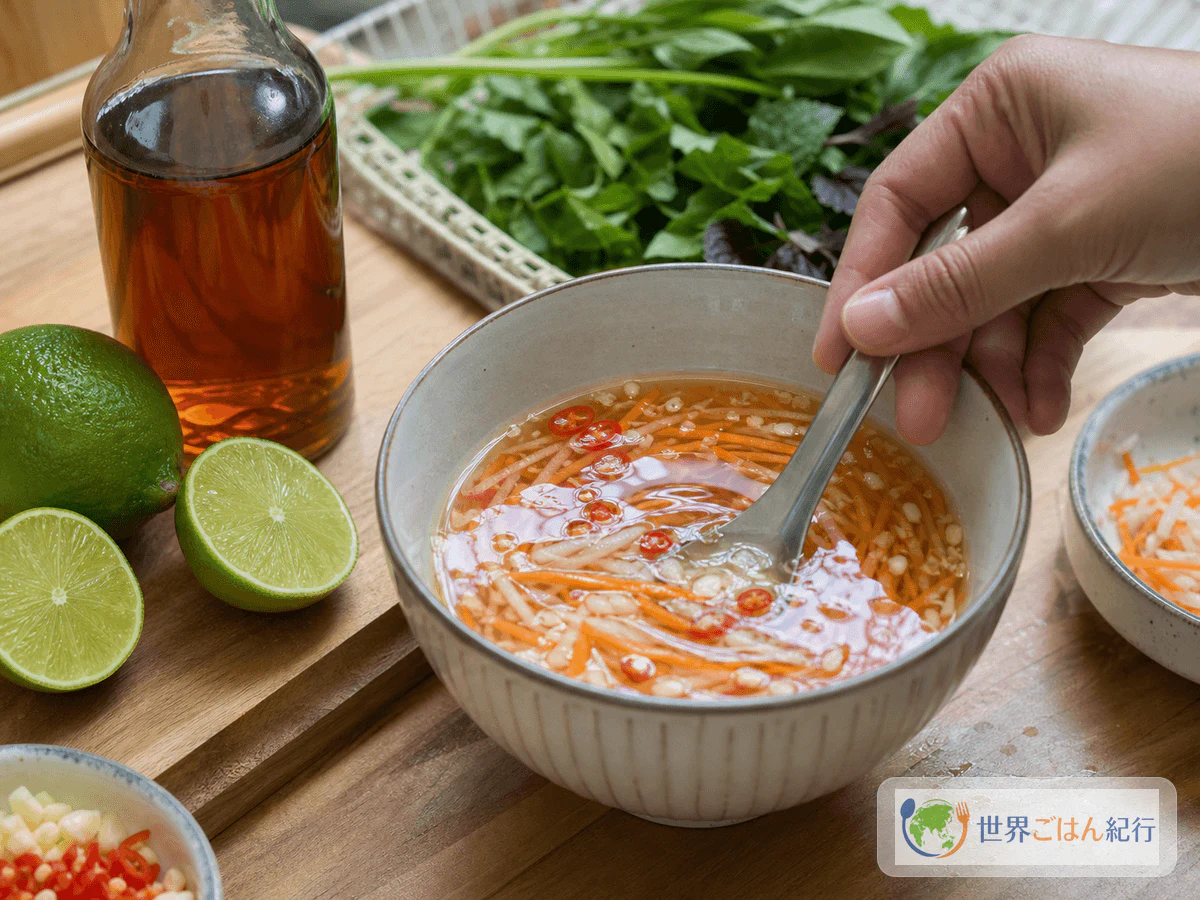
| Nuoc cham is too strong | The fish sauce is too salty | Add 1 tbsp water, 1 tsp sugar, and 1 tsp lime |
To check the seasoning, fry about 1 tsp of filling in a pan before you roll. Never taste it raw. If the cooked filling tastes slightly strong, it's right, because the rice paper, lettuce, and herbs will soften it.
Serving and Storing Cha Gio
Eating Cha Gio the Vietnamese Way
Cha gio looks finished on the plate, but you really finish it in your hand. Take a lettuce leaf, set a roll on it, layer on mint, cilantro, and cucumber, and dip it lightly in nuoc cham. The oil, fish sauce, herbs, and acidity come through one after another in a single bite.
For a noodle bowl, boil thin bun, rinse it in water, and put a small amount in a bowl. Top it with sliced cha gio and spoon over some nuoc cham, and you have something close to the mixed noodles of bun thit nuong. The fried roll takes the place of charcoal-grilled pork, so add extra herbs to lighten it and the bowl comes together.
If you like meat and noodles in a sweet-and-sour sauce, as in bun cha, cha gio fits right in on that table. For more wrap-and-eat meals, try banh xeo, which uses the same lettuce, herbs, and nuoc cham. From the same region, ayam masak merah uses some of the same ingredients and aromas.
Storage and Making Ahead
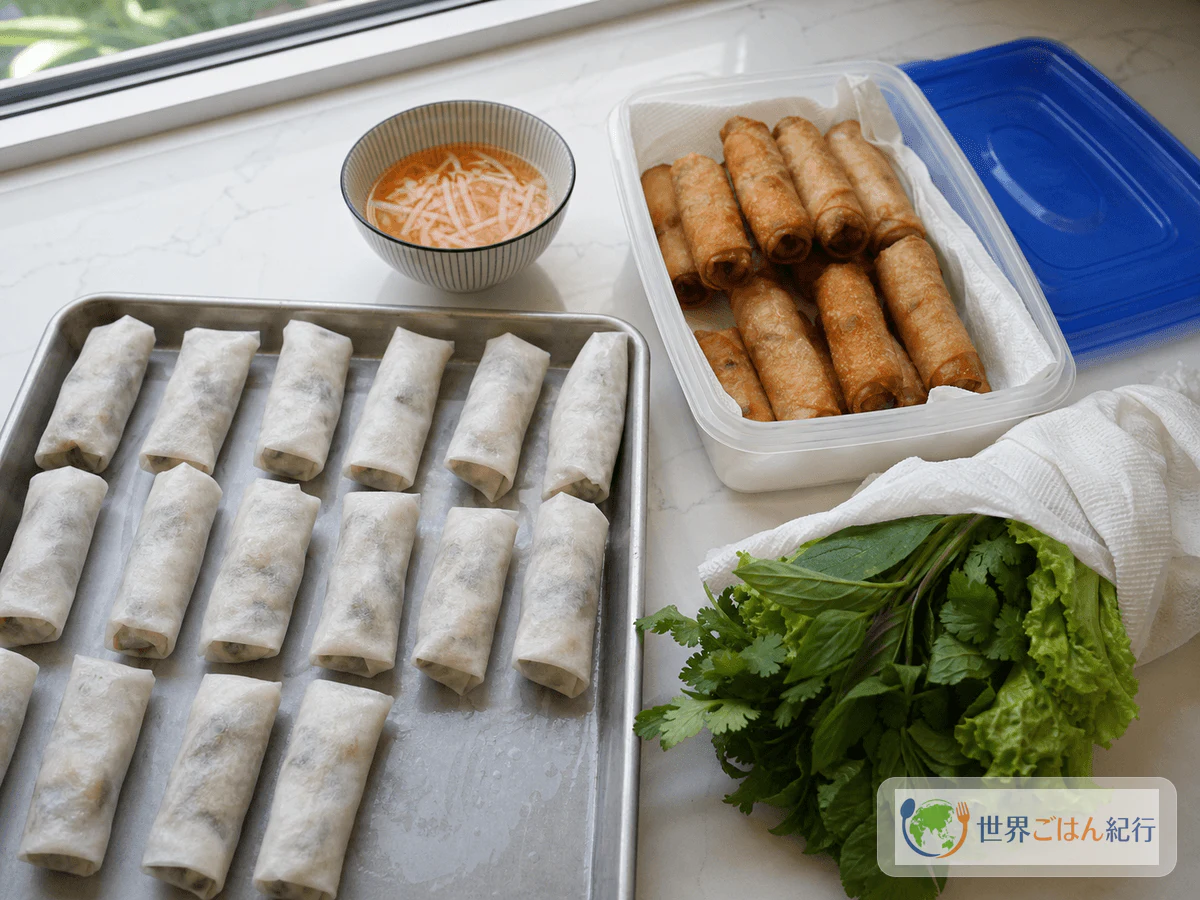
Cha gio are best straight from the oil, and the wrapper loses its lightness as it sits. If you're cooking for guests, do all the rolling ahead and fry just before you eat.
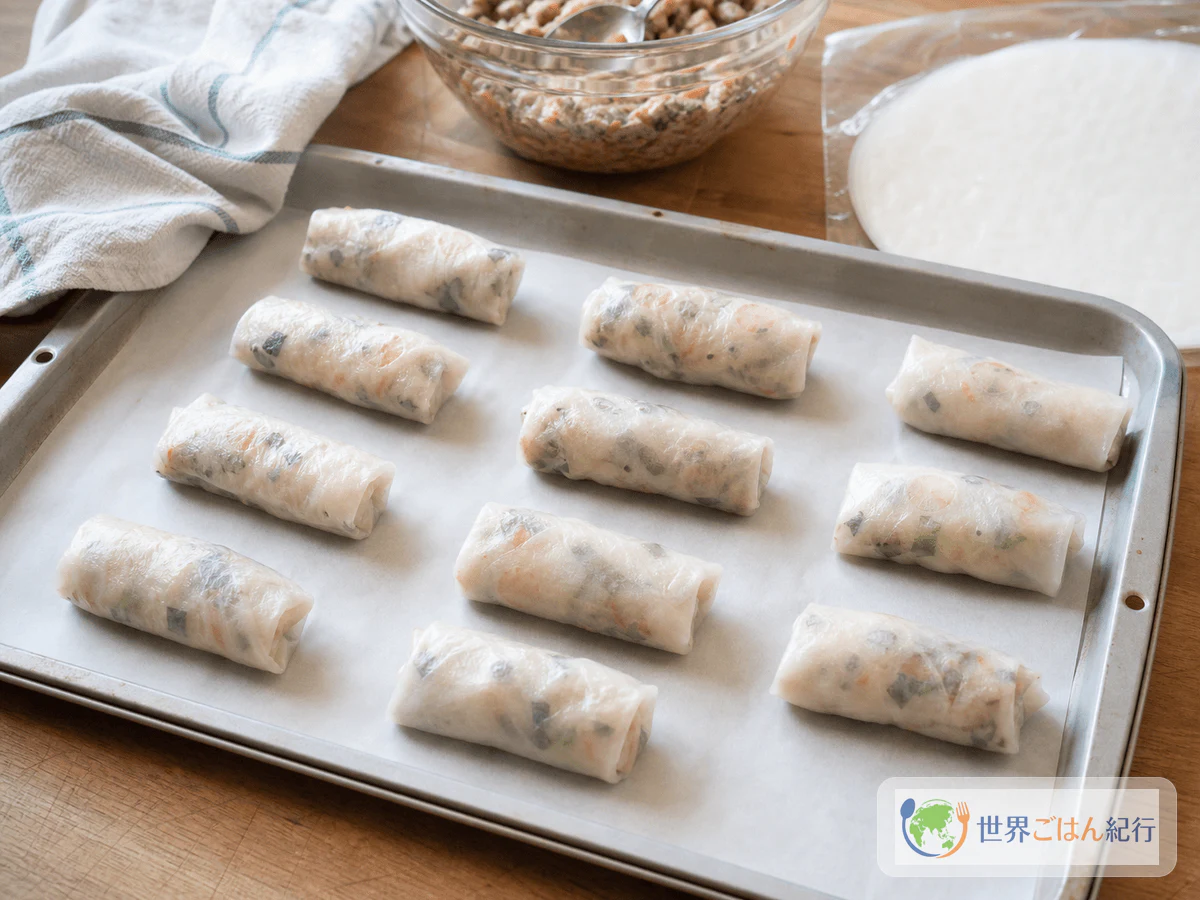
To freeze uncooked rolls, lay them on parchment paper so they don't touch and freeze for 2 hours. Once they're firm, move them to a freezer bag and use them within about 2 weeks. Fry them straight from frozen in 160–165 degrees C oil, giving the first fry 1–2 minutes longer than usual. If you thaw them, the wrapper gets wet and tears easily.
Fried rolls keep in the refrigerator until the next day. To reheat, preheat a toaster oven or oven to 180 degrees C and heat them for 5–7 minutes. A microwave alone makes the wrapper soft, so if you have to use one, give them 20 seconds and then finish them in the toaster oven. Nuoc cham keeps 3 days refrigerated in a clean container. Wash and drain the herbs and lettuce, wrap them in damp paper, and keep them in a separate container.
Frequently Asked Questions
Can I use spring roll wrappers instead of rice paper?
Yes. They tear less, which makes them easier the first time. The texture gets closer to a Chinese-style spring roll, though, and you lose some of the thin crackle and rice aroma that make cha gio what it is. For the real character of the dish, use dried rice paper.
Can I make it without shrimp?
Yes. Increase the ground pork to 1.25 lb (520 g) and the lotus root to 5.5 oz (150 g). Without the shrimp's sweetness, add 1 tsp fish sauce and raise the white pepper to 1/2 tsp to keep the flavor sharp. If someone has a crustacean allergy, also watch for shared cutting boards and knives.
Can I make it in the oven or air fryer instead of frying?
You can get close, but the wrapper's texture changes. In the oven, brush the rolls thinly with oil and bake at 200 degrees C for 12–15 minutes, turning once partway. In an air fryer, cook at 190 degrees C for 10–12 minutes. Either way the wrapper tends to turn hard, so roll them thin and serve them wrapped in lettuce with nuoc cham, which hides the dryness.
Can I substitute store-bought sweet chili sauce for nuoc cham?
It works, but it tastes like a different dish. Sweet chili sauce is very sweet and thick, so the light acidity of fish sauce, lime, and garlic gets lost. Nuoc cham is only fish sauce, sugar, water, and an acid mixed together, so make it first.
Can I roll them the day before and refrigerate them?
After a night in the refrigerator, the wrapper turns dry in some places and sticky in others. A better plan is to make the filling a day ahead, refrigerate it, and roll on the day. If you have to roll ahead, set the rolls apart on parchment paper, press the surface lightly with dry paper, store them in a container, and check the wrapper before frying.
Is there a guide if I do not have an oil thermometer?
Dip a chopstick in the oil. If fine bubbles rise steadily from the tip, the oil is about 165–170 degrees C. Rice paper is sensitive to small temperature changes, so fry a small test batch the first time. If a roll browns hard right away, the oil is too hot; if the bubbles are weak and it sinks to the bottom, it's too cool.