Bakwan Sayur: Indonesian Vegetable Fritters (Bakwan)

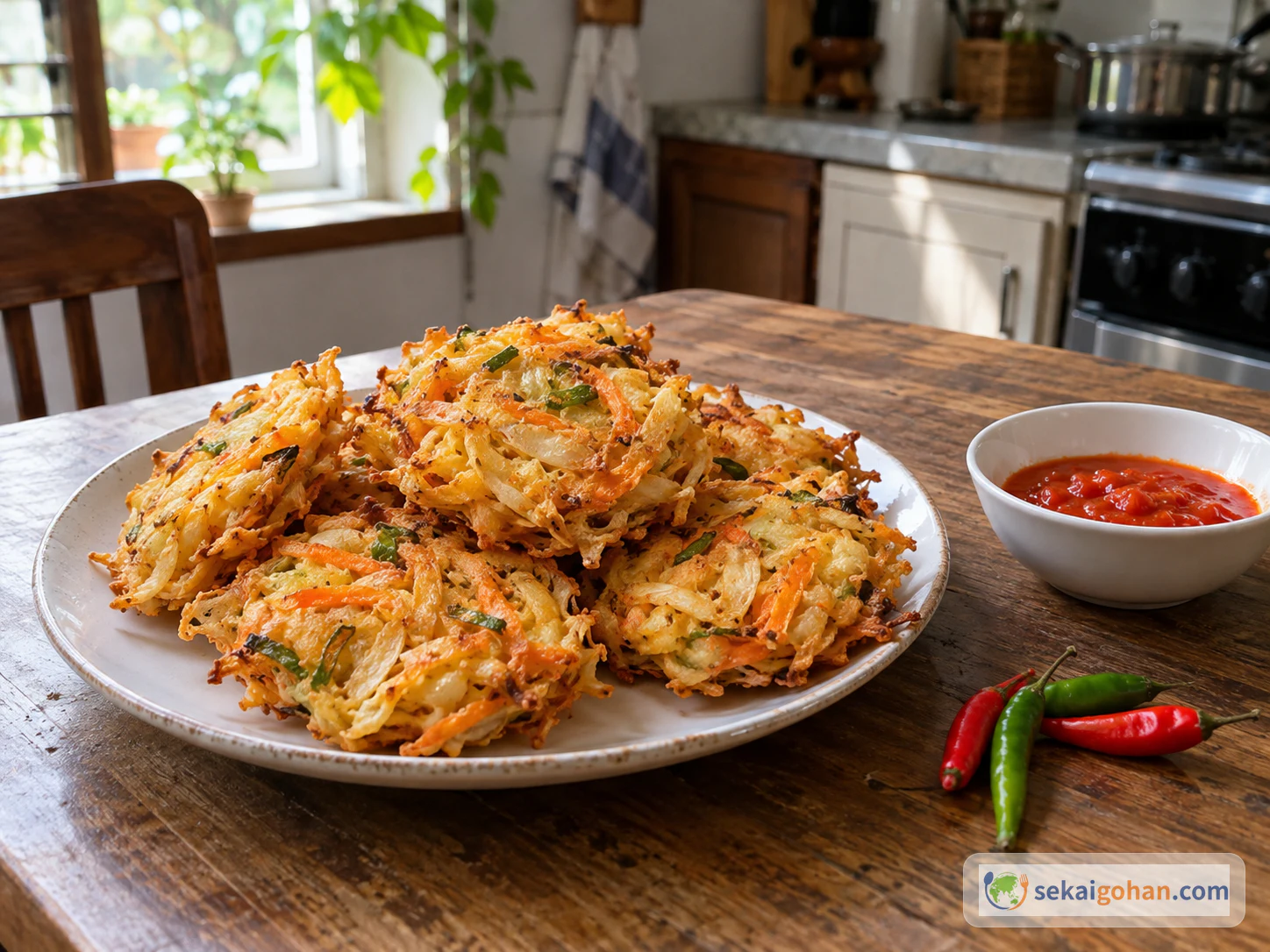
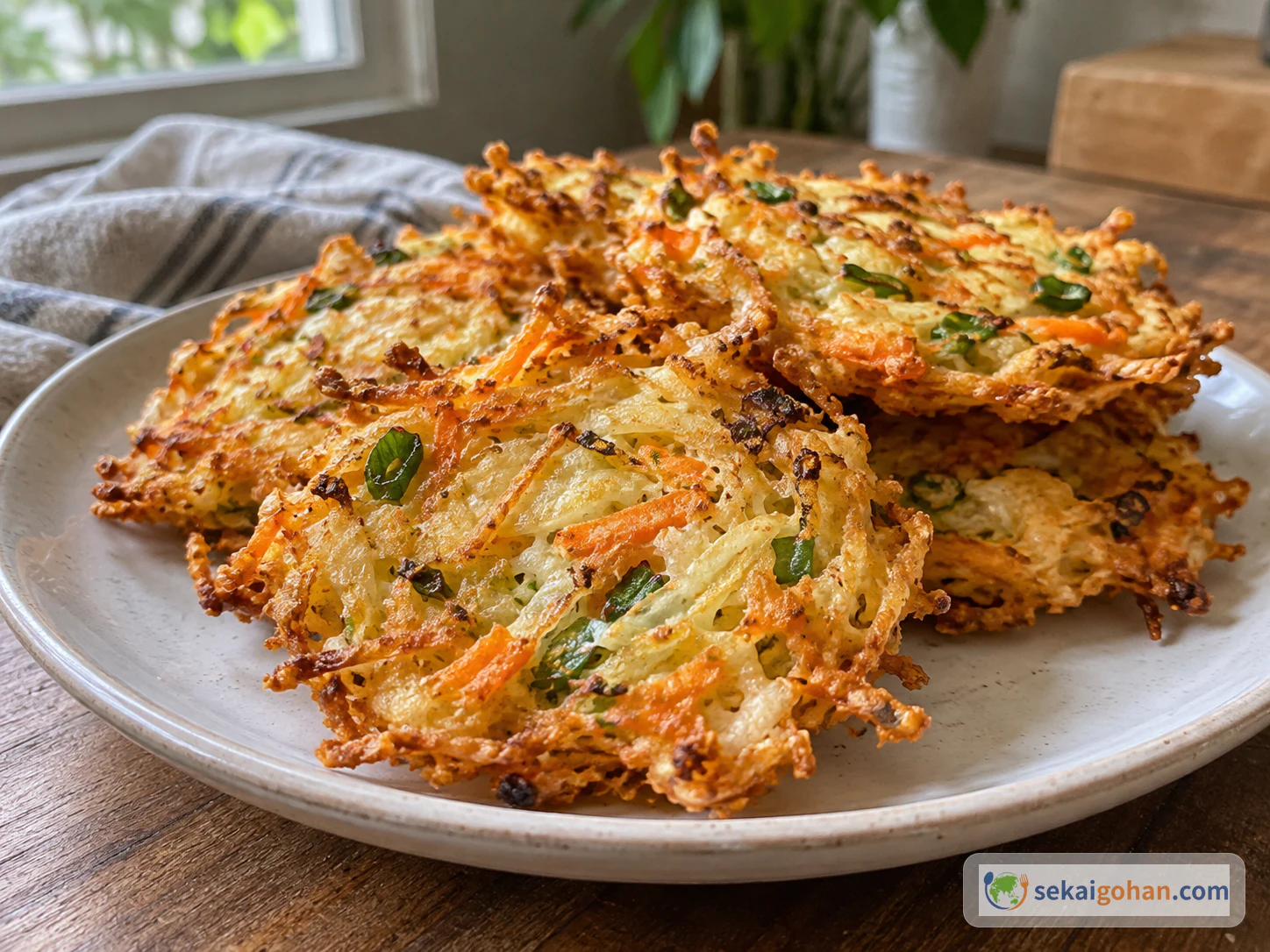
A plate of bakwan sayur fried golden, with thin, spreading edges
Serves
4 servings
Level
Intermediate
Cuisine
Indonesian

How to make bakwan sayur, Indonesian fritters of cabbage, carrot and scallion in a wheat and rice flour batter. Covers mixing the batter, testing the oil with a drop of batter, judging golden, crisp fritters, serving ideas, substitutions, allergens, and how this dish differs from meatball dishes also called bakwan.

Cooking flow

Cooking steps

STEP11 / 4

Prepare the vegetables and garlic

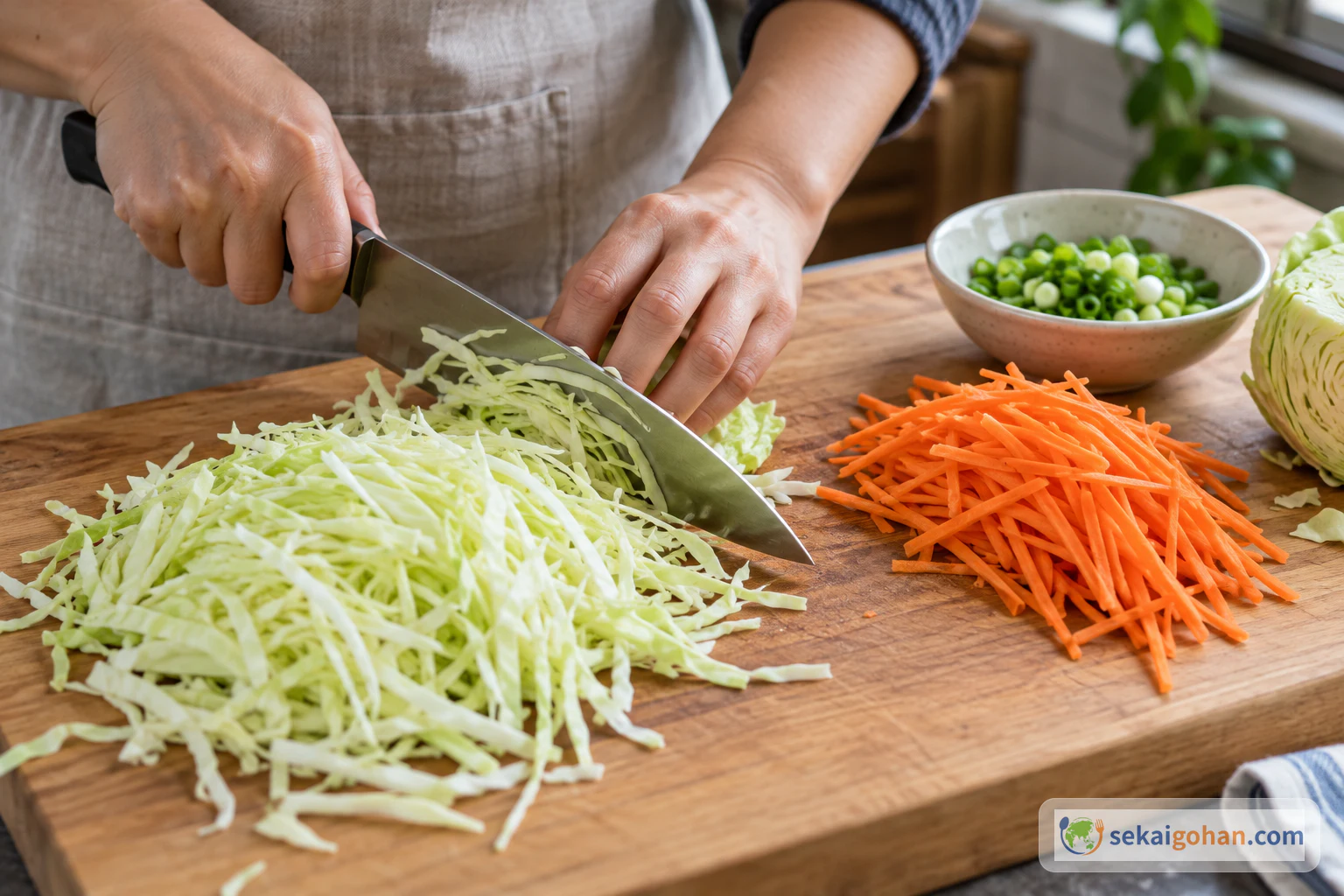
Cabbage and carrot finely shredded and scallions thinly sliced during prep
Cut the vegetables thin and drain off any water

Finely shred the cabbage and carrot, and thinly slice the scallions. Drain off any water, which helps keep the oil from spattering later. Peel and grate the garlic.

STEP22 / 4

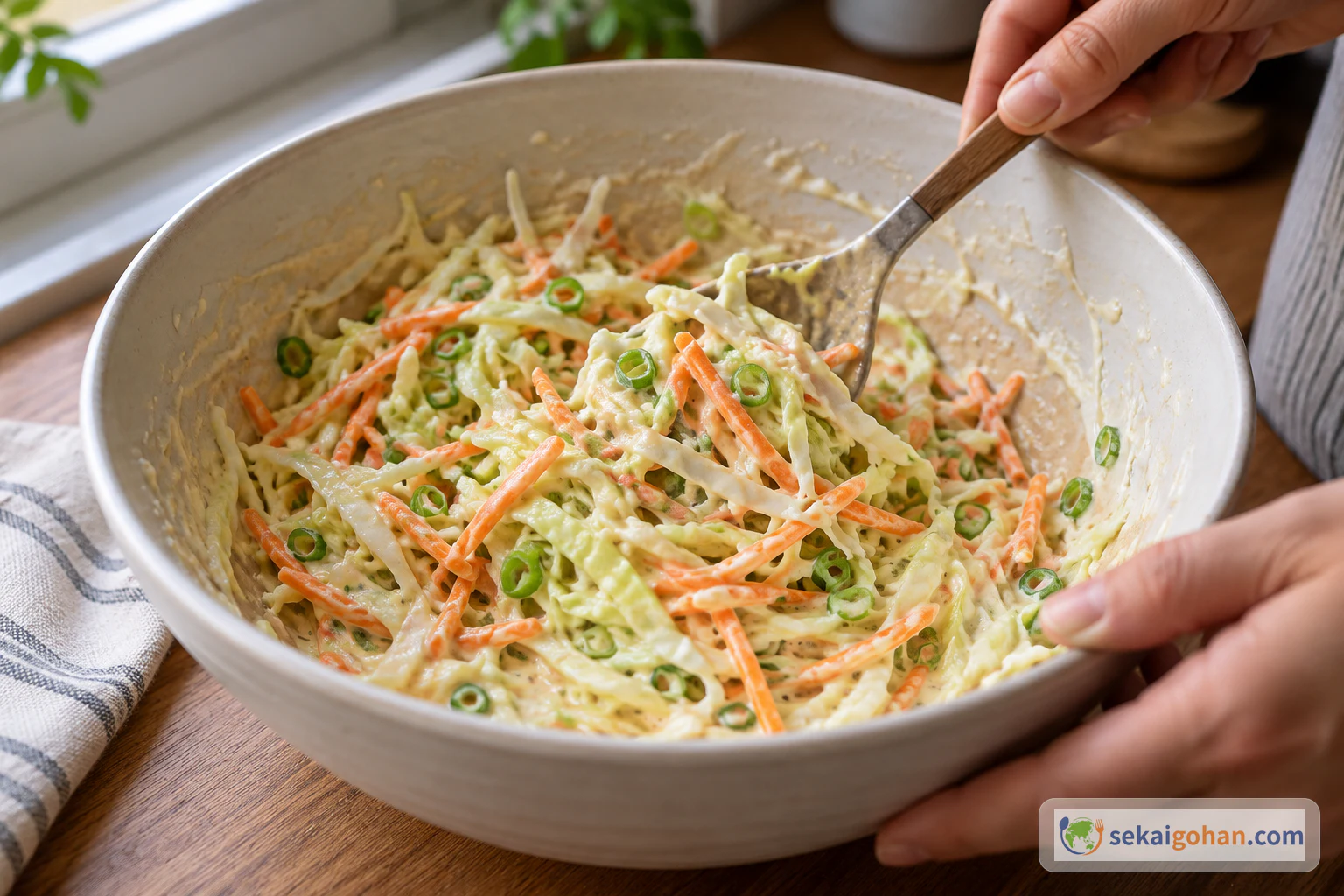
Mix the batter and fold in the vegetables

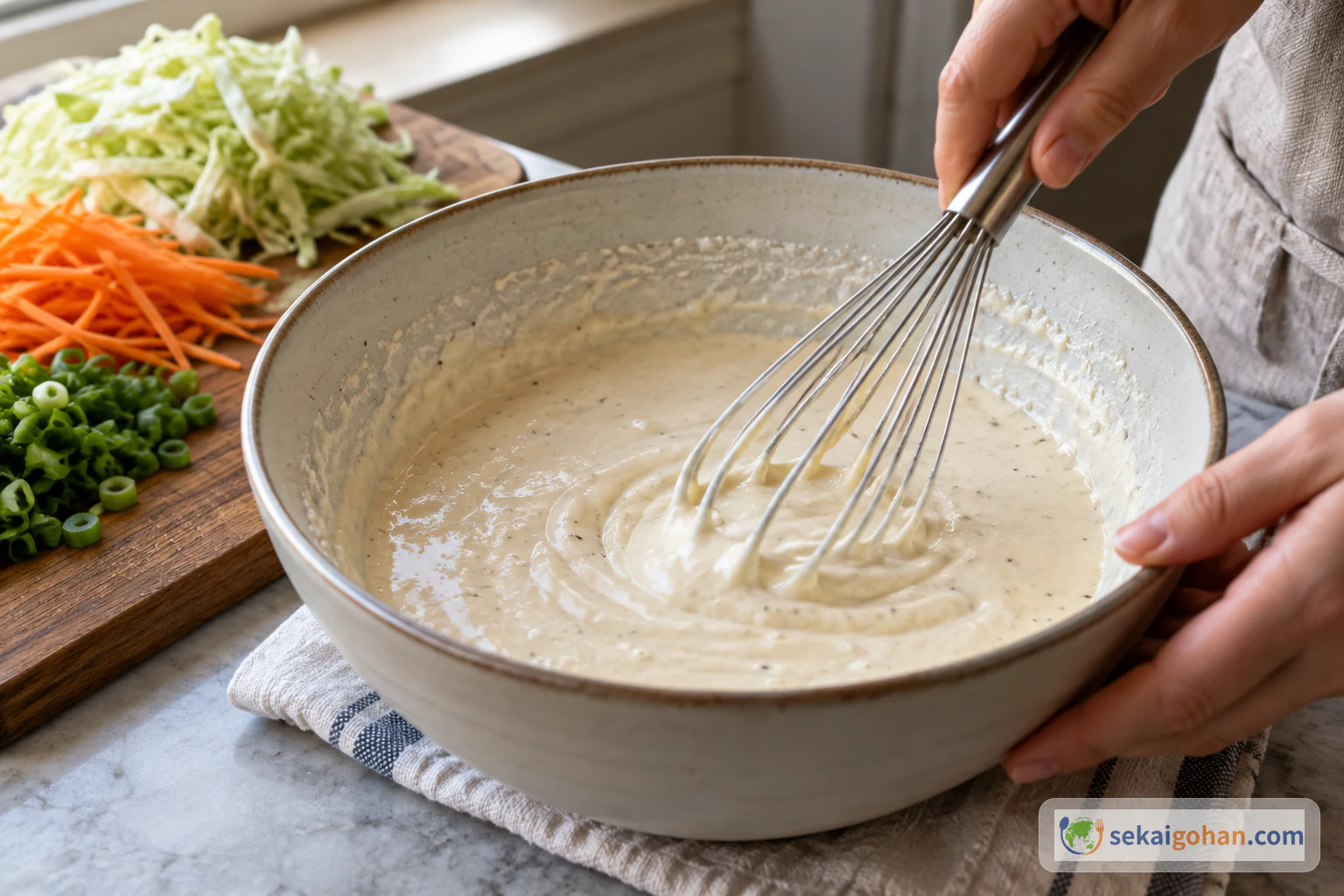
A batter of wheat flour, rice flour, salt, sugar, pepper, water, egg and garlic being whisked
Mix the batter first, with the vegetables waiting outside the bowl

In a bowl, combine the all-purpose flour, rice flour, salt, sugar and pepper. Stir in the water, then the garlic and egg, and mix until the batter comes together.

Add the cabbage, carrot and scallions and fold until everything is coated. The vegetables should stay visible under a thin coating, with no lumps of flour and no water pooling at the bottom of the bowl.

Shredded vegetables being folded into the batter until thinly coated
The vegetables stay visible under a thin coating of batter
STEP33 / 4

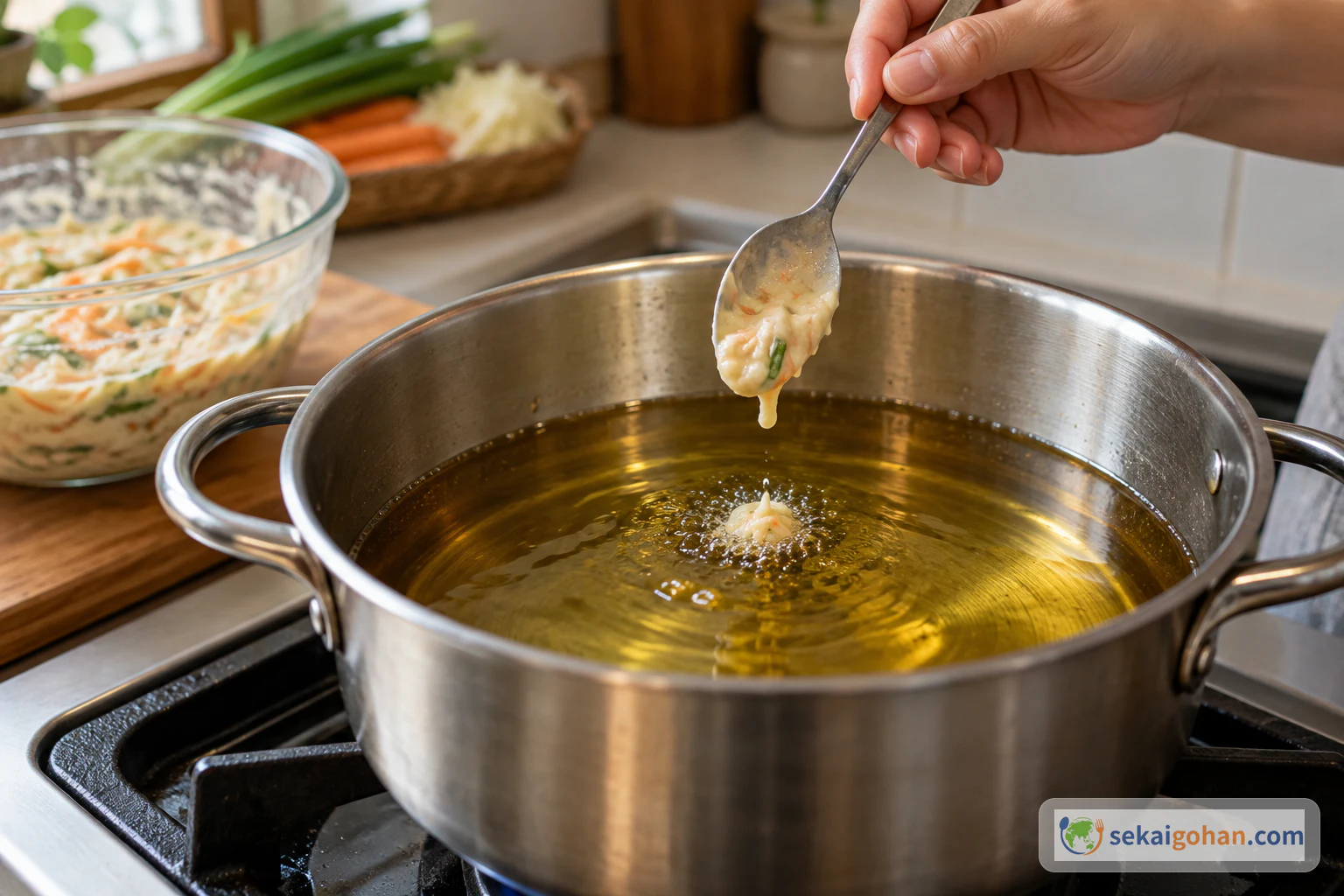
Heat the oil and test it

A small piece of batter dropped into oil to see whether bubbles form right away
Immediate bubbles around a small piece of batter mean the oil is ready

Pour plenty of oil into a deep pot and heat over medium heat. Drop in a tiny piece of batter. If it bubbles right away, the oil is ready.

STEP44 / 4

Fry until golden and crisp on both sides

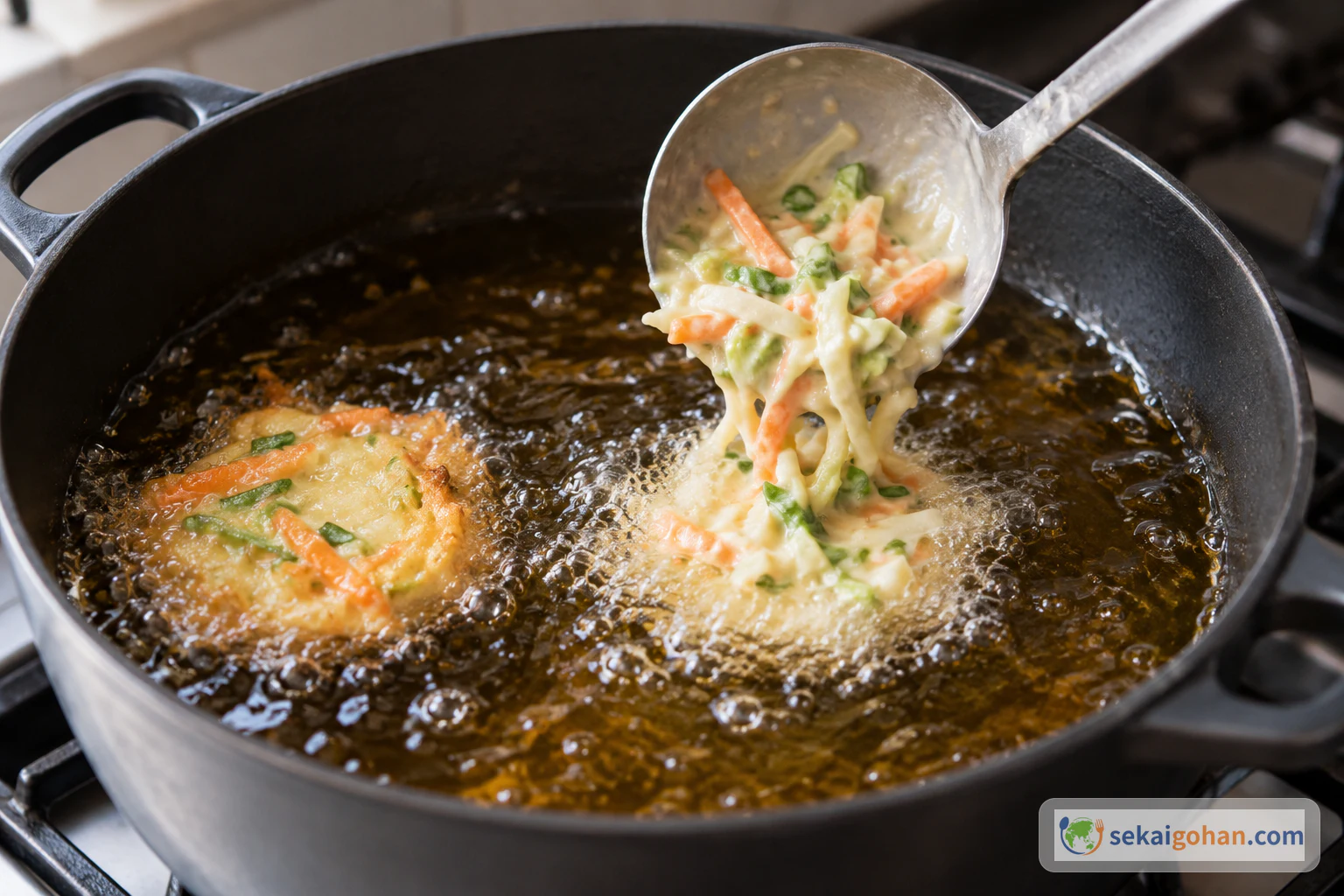
A small ladle lowering vegetable batter into hot oil
Lower each portion in gently and leave room in the pot

Scoop up the batter with a small ladle and gently lower it into the oil. Fry only a few at a time, leaving room in the pot.

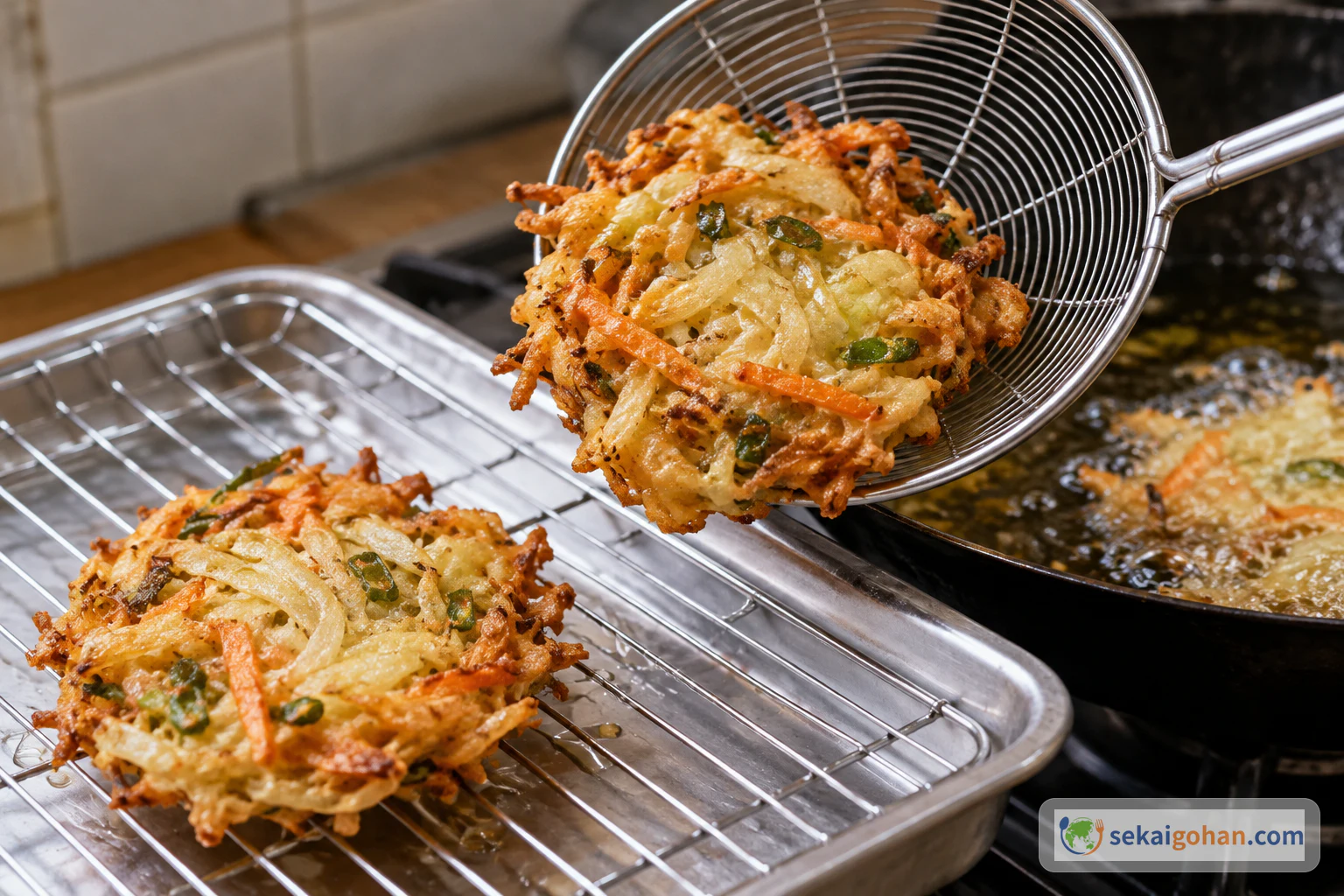
Fry until both sides are crisp and golden brown, with no raw batter left. The egg batter needs to cook through to the center. Lift the fritters onto a wire rack or paper towels to drain, without stacking them, so steam doesn't get trapped.

Fritters fried golden on both sides, lifted onto a wire rack to drain
Drain in a single layer so steam doesn't soften the edges
0 / 0
Ingredients

Ingredients

1 / 1

Ingredients

Ingredient Amount Role
Shredded cabbage ½ cup The main vegetable. Shred finely and drain off any water
Shredded carrot ¼ cup Sweetness and color
Scallions, thinly sliced 2 Aroma
All-purpose flour ½ cup The main body of the batter
Rice flour 2 tablespoons Supports the texture of the batter
Salt ½ teaspoon Seasons the batter
Sugar ½ teaspoon Rounds out the seasoning
Ground pepper ½ teaspoon Aroma
Water ½ cup Brings the batter together
Garlic, peeled and grated 3 cloves Fragrance in the batter
Egg 1 Binds the batter
Oil for deep frying as needed Enough to give good depth in the pot
0 / 0

Picture a small ladle of shredded cabbage, carrot and scallion, lightly coated in batter, sliding into a deep pot of hot oil. Bubbles gather around it, the loose edges begin to set, and the surface slowly turns golden. That's bakwan sayur, the Indonesian vegetable fritter: a light batter of wheat and rice flour holding the vegetables together, fried until both sides are crisp. It's best eaten warm, with fresh chilies or a tomato dip on the side.

About Bakwan Sayur

Bakwan sayur means vegetable bakwan, and it is only one use of the word. The name also covers very different dishes. Bakwan Kawi is a meatball dish from Java, and there are corn and shrimp versions of bakwan too. Bakwan and bakwan Kawi belong with Java's meatball dishes, and nobody has settled the history of the words bakso and bakwan. Where the vegetable fritter came from, and what its name means, isn't clear.

The fritter itself changes a lot from cook to cook. Some versions go by both bakwan and bala-bala and add meat or seafood to the vegetables. Their proportions differ as well: one uses 9 oz (250g) of flour, 1.75 oz (50g) each of carrot and cabbage, and 3.5 oz (100g) of bean sprouts, served with green chilies or peanut sauce.

For more dishes from the same country, see our Indonesia page.

What these fritters should keep

Bind the cabbage, carrot and scallion with just enough batter to hold them together. Then fry until both sides are golden and crisp.

Ingredients (4 Servings)
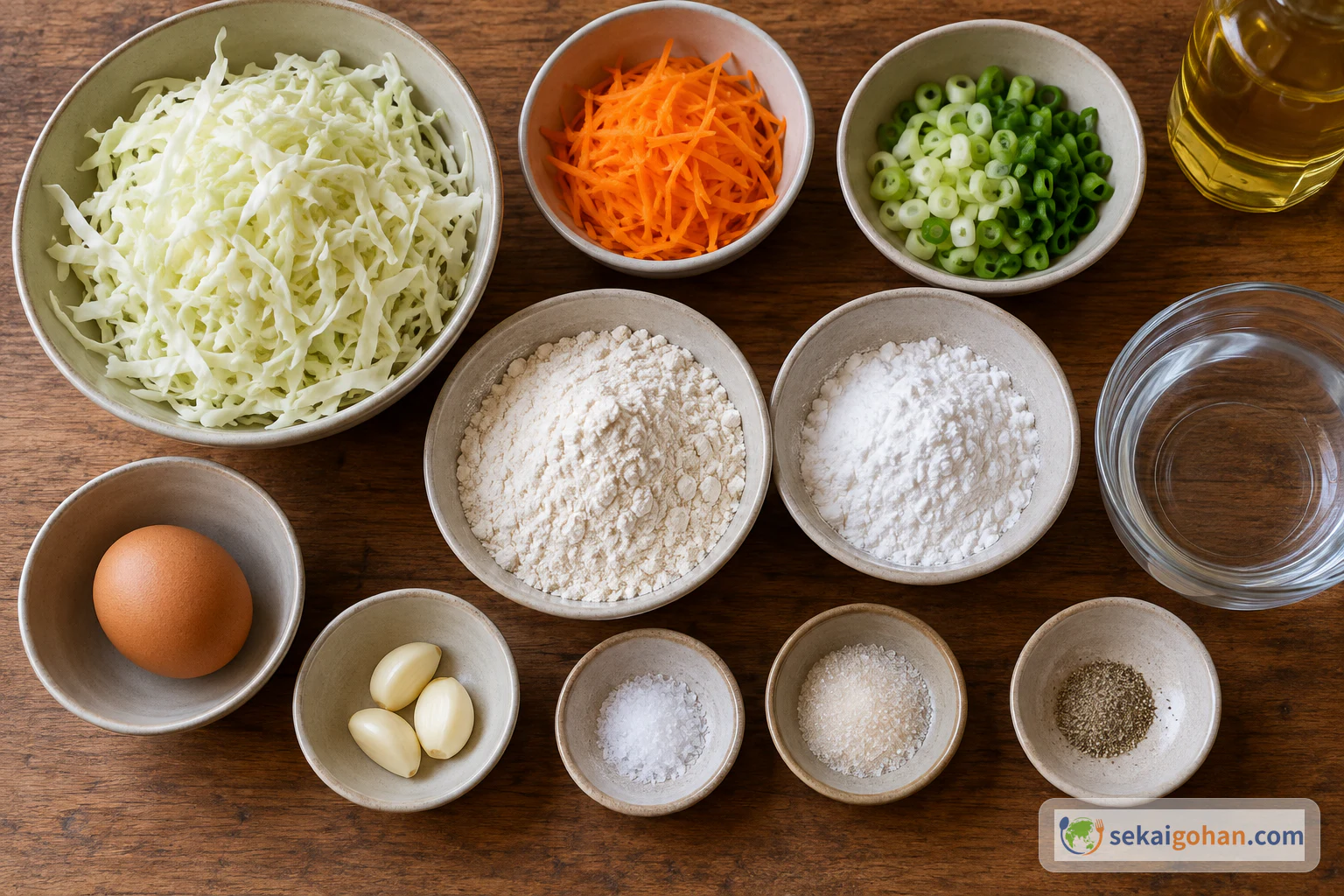
Cabbage, carrot, scallions, wheat flour, rice flour, an egg, garlic and seasonings laid out for bakwan
Keep the two flours separate: each has its own measure
Allergens

This recipe contains wheat and egg. The rice flour does not make it gluten-free, because the batter also contains wheat flour. If you share frying oil with other foods, consider cross-contact as well.

Equipment

  • Knife and cutting board
  • Grater for the garlic
  • Mixing bowl and whisk
  • Spoon for folding in the vegetables
  • Deep pot
  • Small ladle
  • Wire skimmer or slotted spoon
  • Wire rack or paper towels

Choosing Ingredients and Substitutes for Bakwan Sayur

Each swap changes the fritter a little, so it helps to know what you're trading.

  • All-purpose flour: Cake flour or a similar soft flour works, but its protein content is different and so is the texture.
  • Rice flour: Look for plain rice flour. Grain size varies between products, and Japanese joshinko isn't the same thing. Potato starch and cornstarch behave differently, so they can't replace it one for one.
  • Scallions: Other slender green onions work well. The white part of a thick leek-style onion has a different aroma and holds more moisture.
  • Ground pepper: Any type will do, and black pepper is the simplest choice.
  • Egg: Without it, the batter loses its balance.

Method: Batter First, Vegetables Second

Wet the dry ingredients before the vegetables go in, so the flour is evenly mixed by the time the vegetables are coated. For doneness, go by color and crispness, and keep the batches small.

Fixing Common Bakwan Sayur Problems
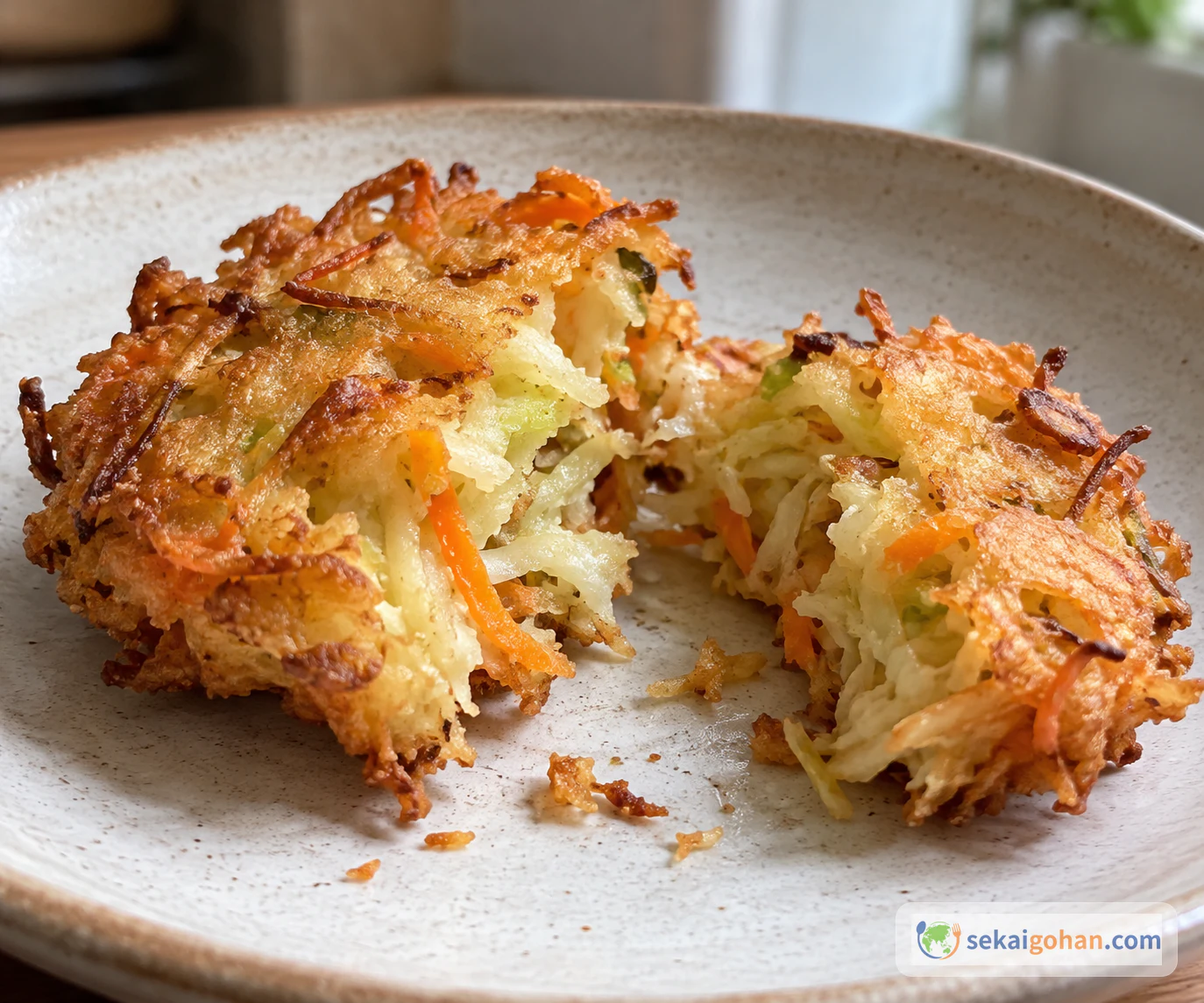
A broken bakwan sayur showing cabbage and carrot inside and thin, crisp edges
Break one open to check for a crisp edge and no raw batter inside

Break the first fritter in half before you fry the rest. The edges should be thin and crisp, and the vegetables inside cooked, with no raw batter.

Problem What to check What to do
The batter runs off the vegetables Water left on the vegetables, or a measuring mistake Check the vegetables and your measures first. If it's still too loose, add a little flour
Thick pieces are raw in the center Portions too large, or batter piled up in the oil Use a smaller ladleful and spread the portions so they don't overlap
The fritters darken too fast or won't color Heat too high or too low Adjust the heat and test again: a small piece of batter should bubble right away
The edges turn soft after frying Fritters stacked while hot Drain them in a single layer on a rack or paper towels

Serving and Variations

Freshly fried bakwan sayur served with fresh chilies and a small bowl of tomato dip kept separate
Chilies and tomato dip are optional and stay off the fritters

Serve the fritters while they're still warm. Keep the extras on the side and out of the batter, so everyone can pick what they like.

  • Fresh chilies: Wash them well under running water and set them on the side, so each person controls the heat.
  • Tomato dip: Ready-made or homemade, served in its own small bowl.
  • Peanut sauce: Make it separately, and let guests know it contains peanuts.
  • Shrimp or meat: Some cooks add these to the fritters.
  • Corn: Bakwan jagung is built around corn. It's really its own dish, with its own recipe.

Frequently Asked Questions

How many fritters does this make?

The recipe serves 4. How many fritters you get depends on the size of your ladle.

How long does it take?

Plan on 20 minutes of prep and 10 minutes of cooking. Frying time changes with your pot and how many fritters you put in at once, so go by color and crispness.

Is it gluten-free?

No. Along with rice flour, the batter has all-purpose flour. It also contains egg, and peanut sauce on the side adds peanuts.

Can I keep leftovers?

The texture is best right out of the oil. Store any leftovers cold and reheat them until piping hot.
Sources

  • Plan USA, "Bakwan Sayur (Vegetable Fritters)." The recipe used in this article: ingredients and amounts, 4 servings, listed prep and cooking times, mixing order, the batter test for the oil, frying cues, and the note on serving chilies or tomato dip. This is a one-page PDF with no listed author or date, and the link points to a staging copy. https://planusa-org-staging.s3.amazonaws.com/public/uploads/2022/01/Indonesia-Bakwan-Sayur-Recipe.pdf
  • Indonesian Chef Association, "Recipe - Bakwan," credited to Junwinanto. Supports the names bakwan and bala-bala, versions with meat or seafood, a different set of proportions, and serving with green chilies or peanut sauce. It is not used for this article's amounts or steps. https://indonesianchefassociation.com/recipe/bakwan
  • Ary Budiyanto, "From Tiao Wan (跳丸) to Bakwan (肉丸) and Bakso (肉酥): The Culinary History of Chaoshan Peranakan Cuisine in Java," Islam Nusantara: Journal for the Study of Islamic History and Culture, 7(1), 2026, pp. 72–94. Used only to separate meatball dishes called bakwan from the vegetable fritter and to note that the paper leaves questions about the history of the words open. https://journal.unusia.ac.id/ISLAMNUSANTARA/article/download/1754/731/6165