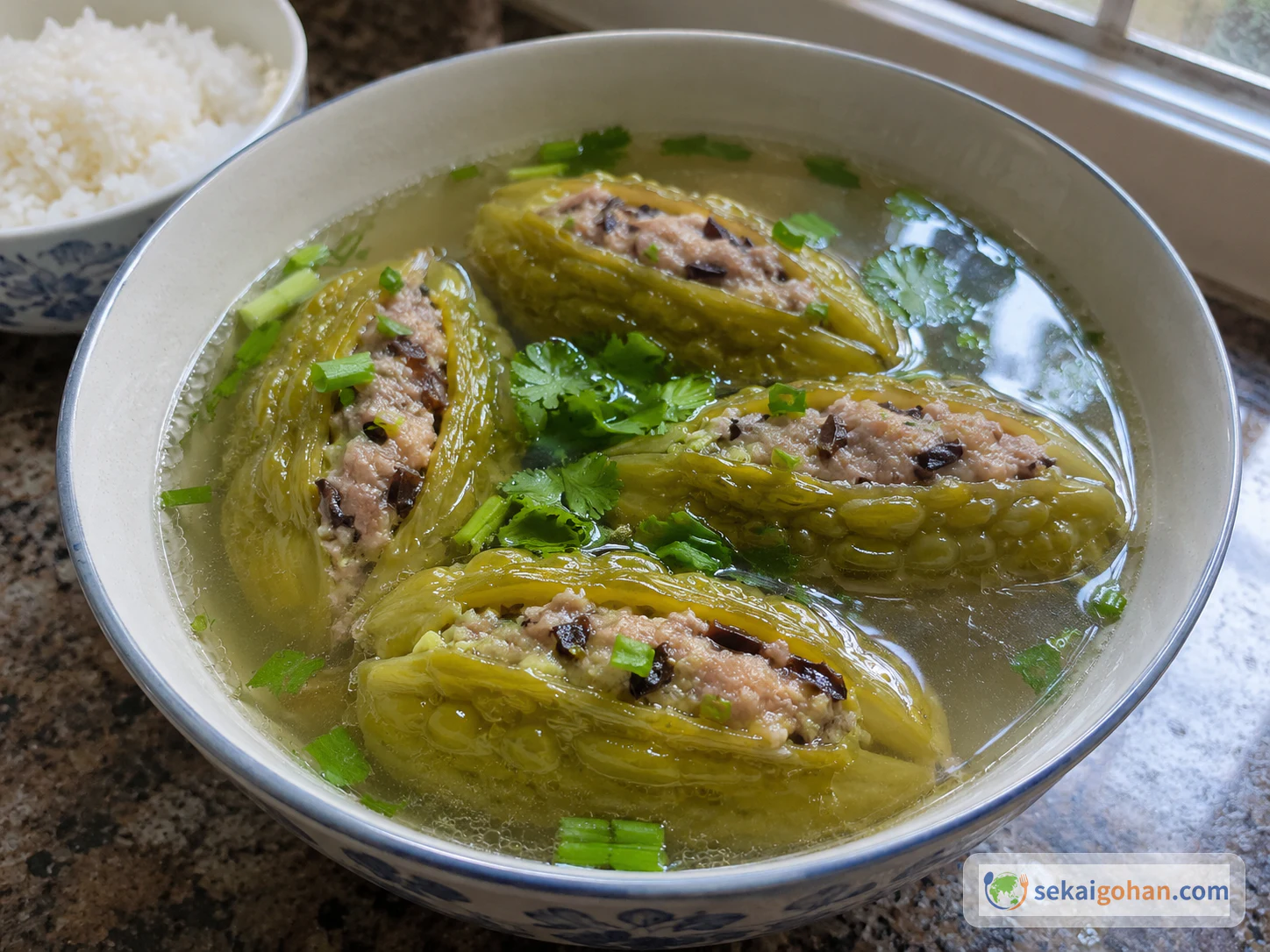
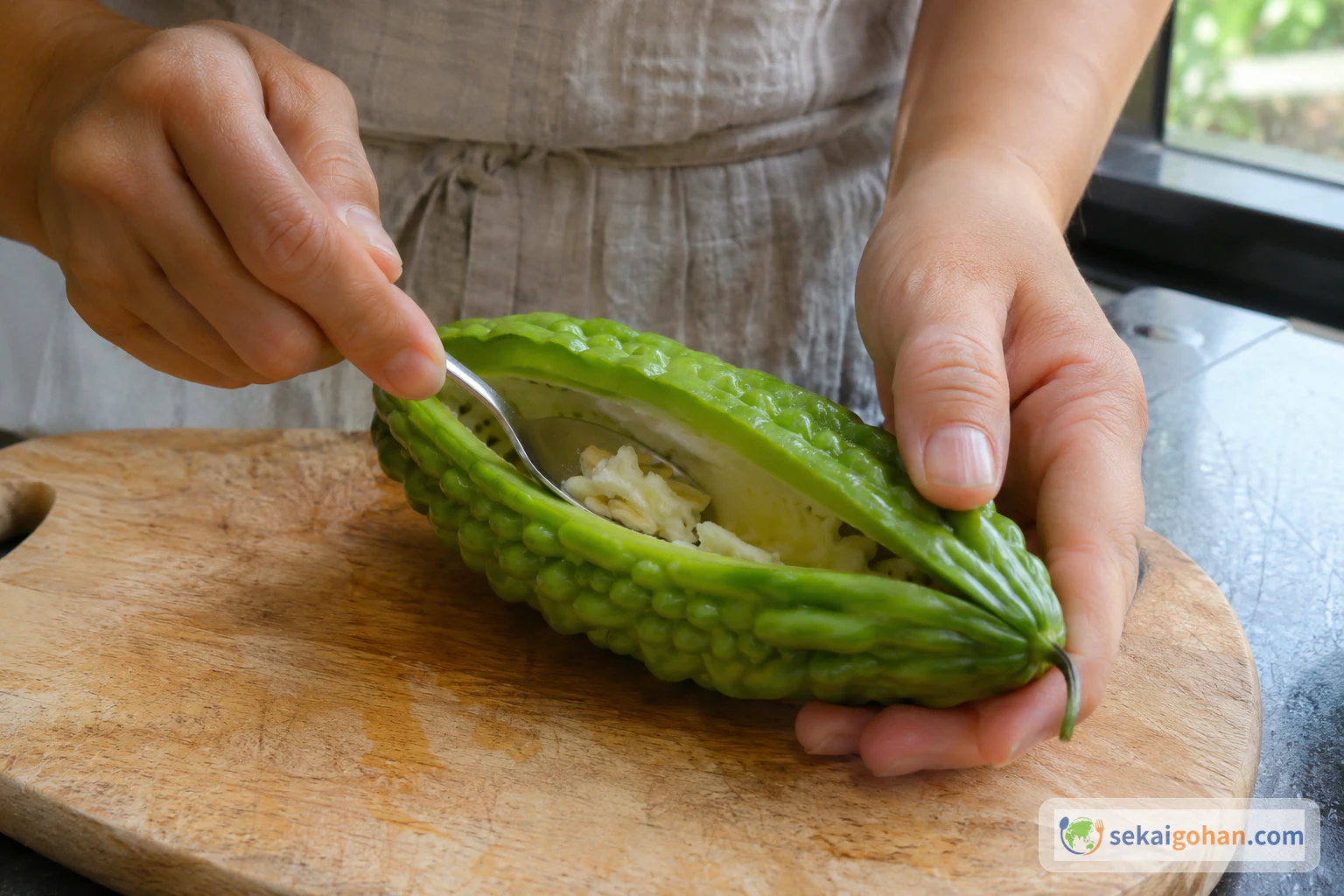
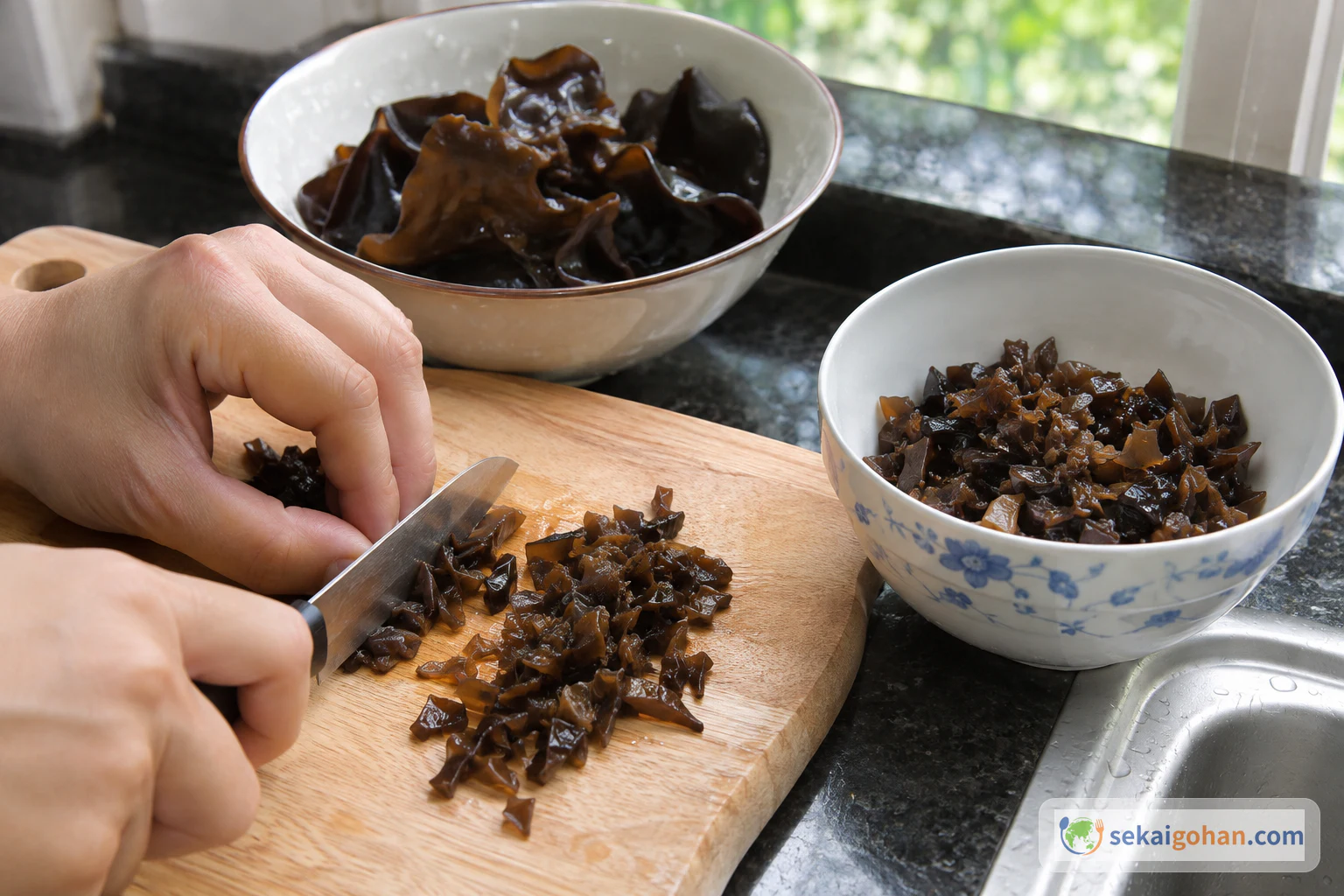
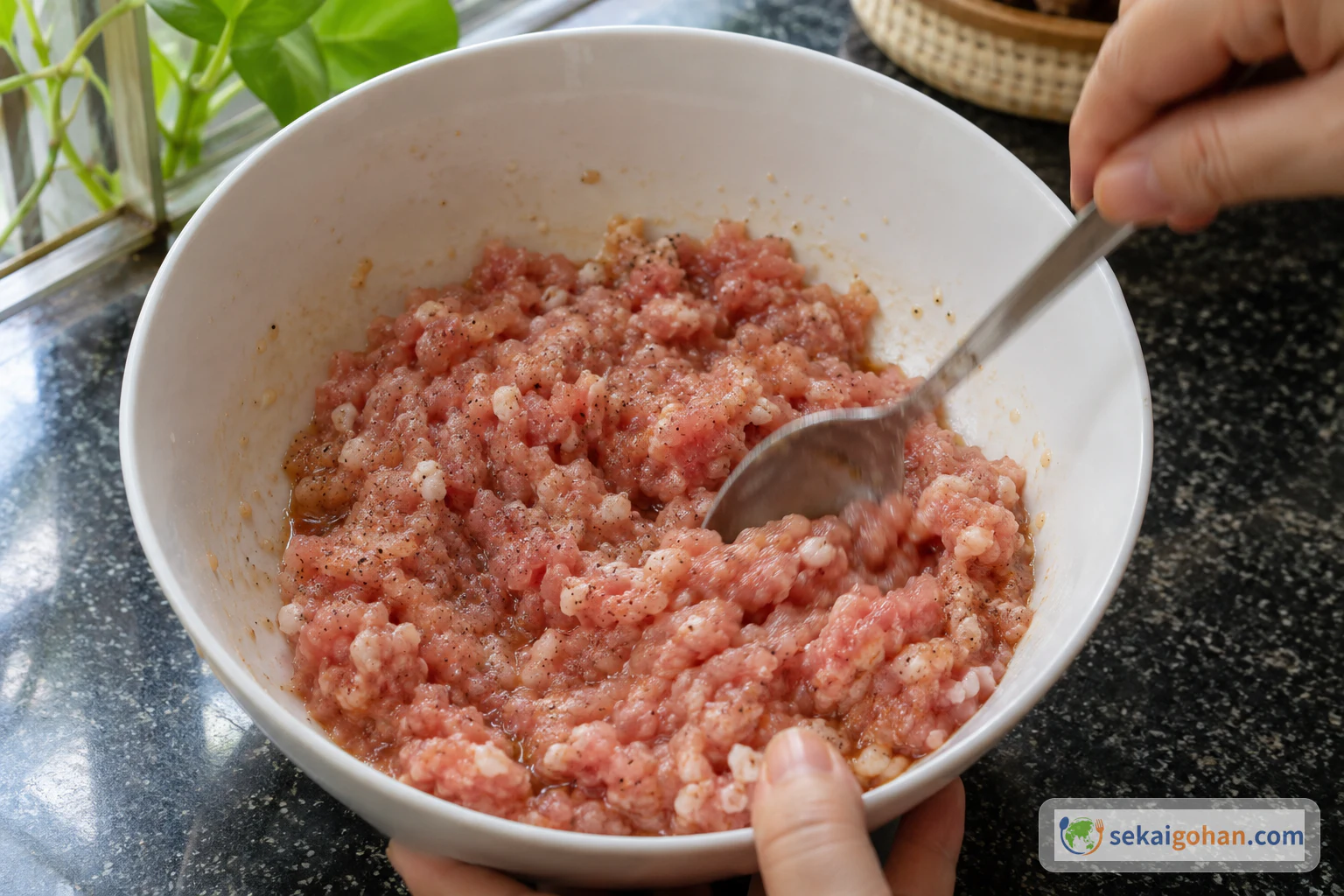
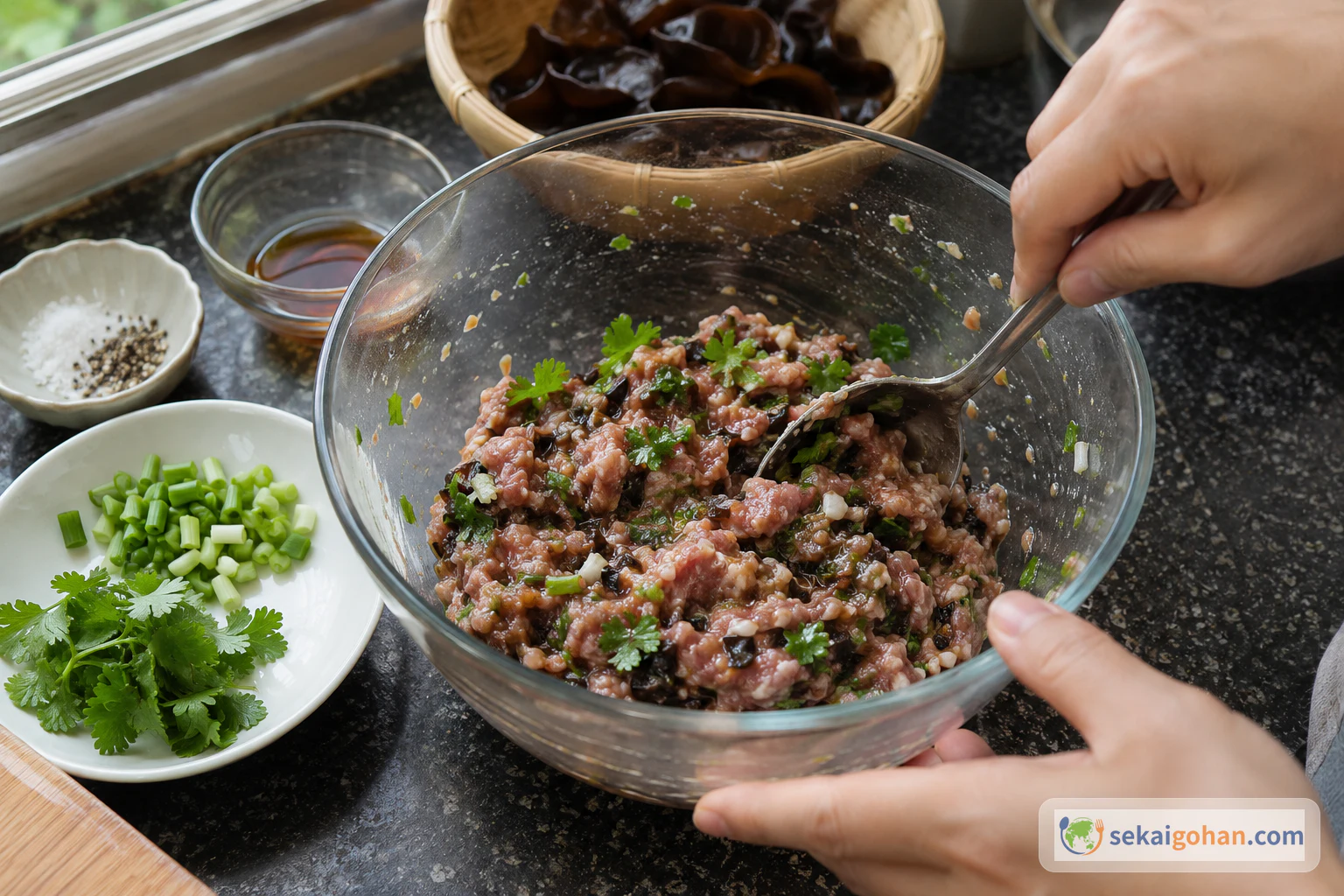
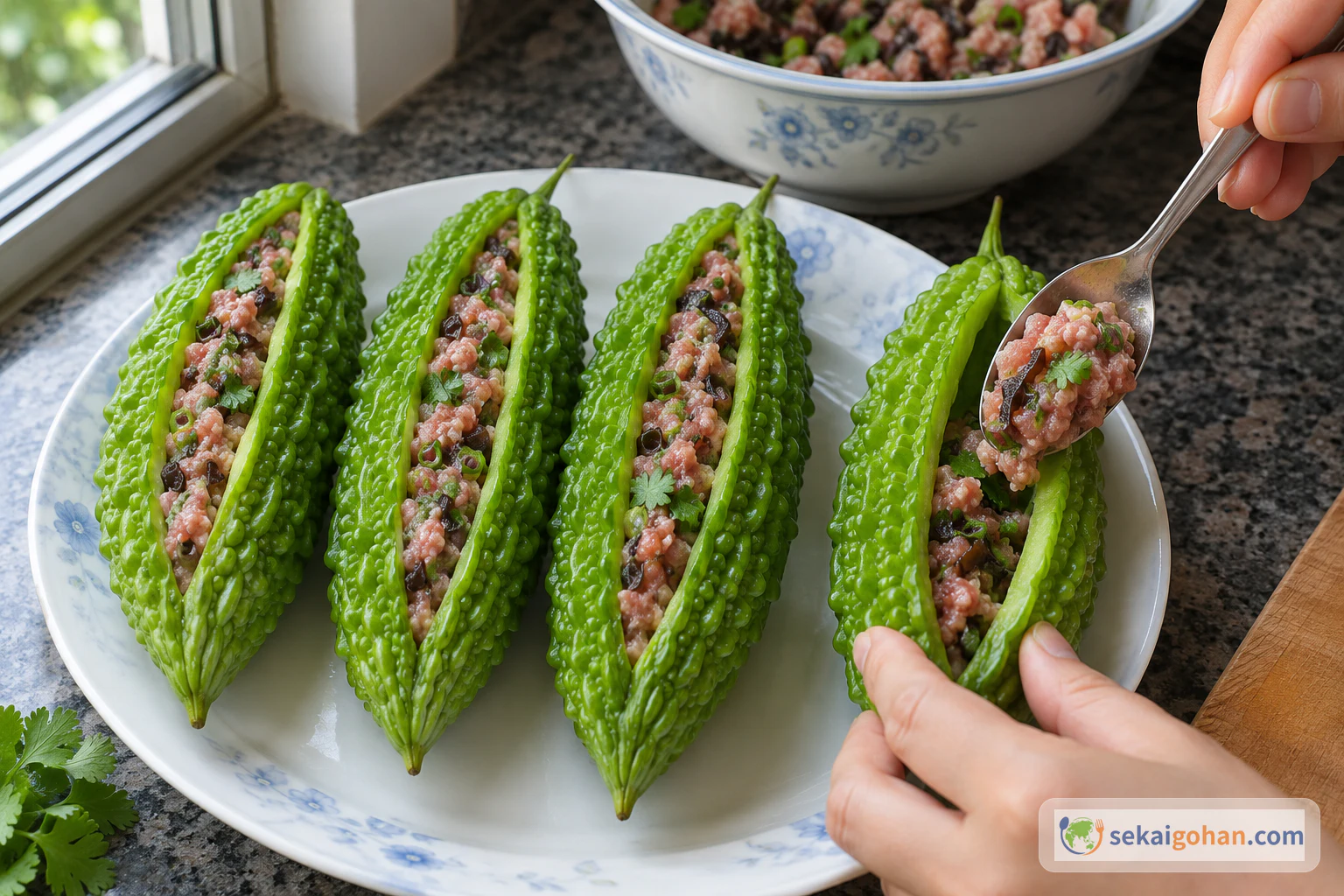
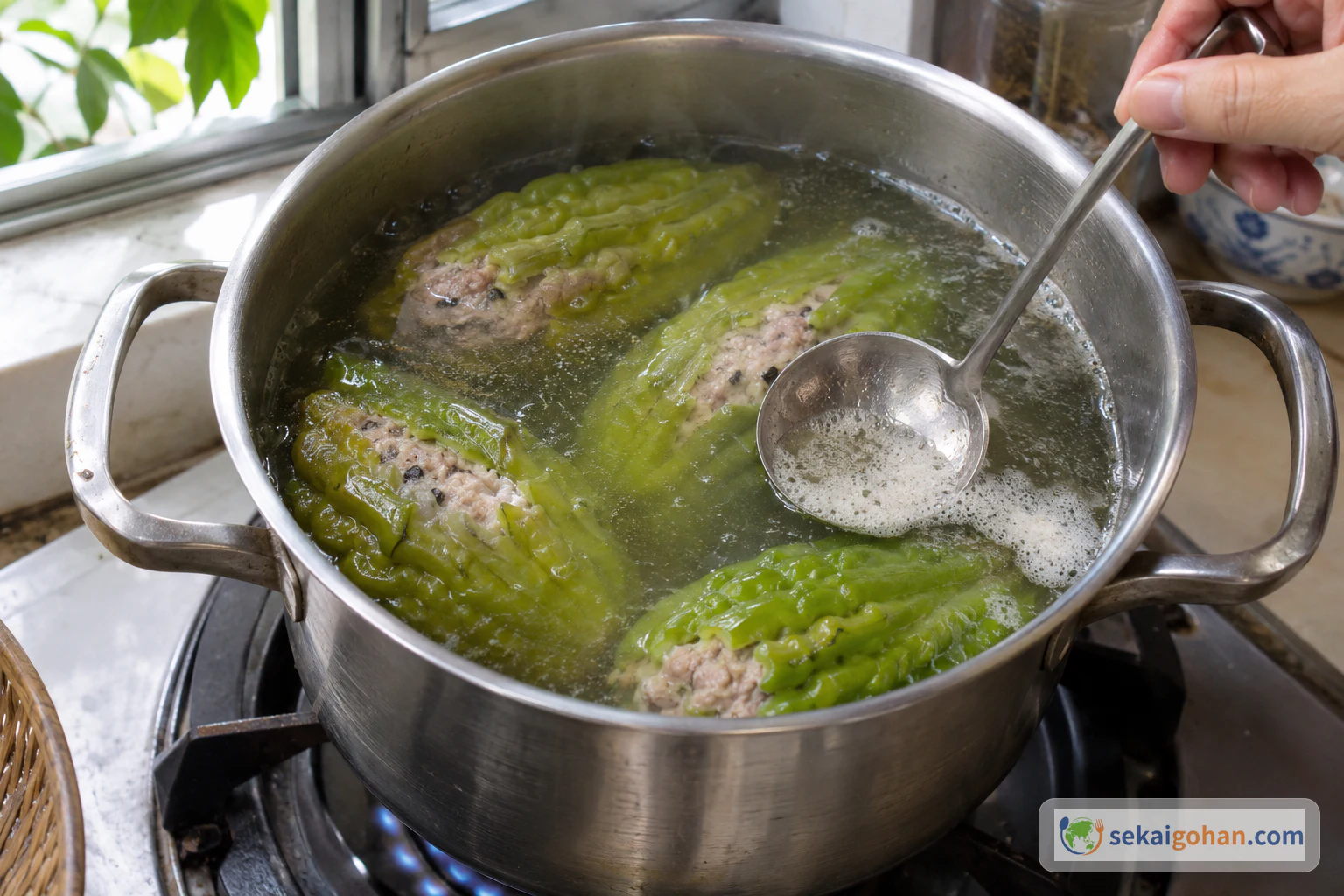
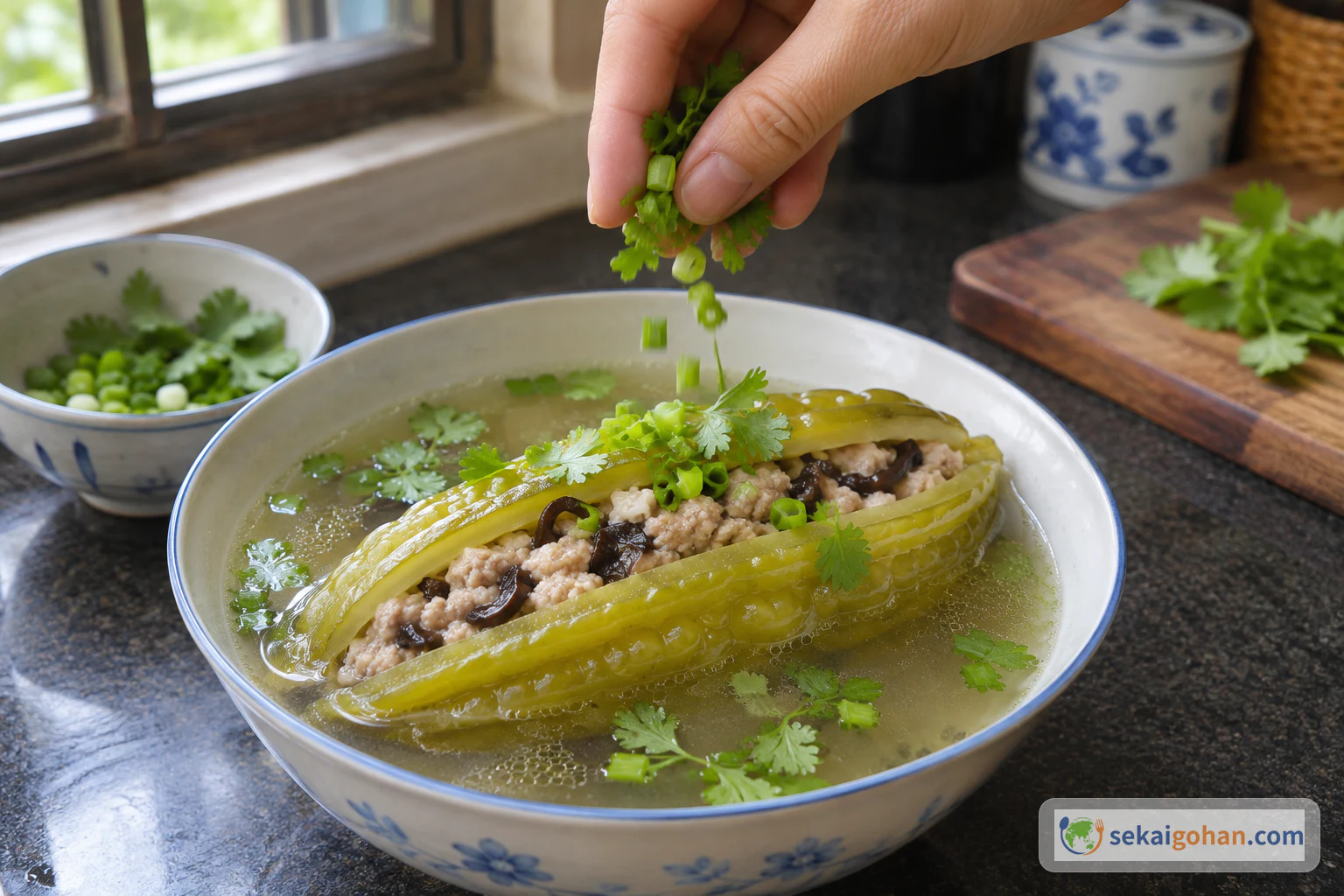
Make a single slit down the length of each bitter melon. Then scoop out the seeds and white pith with a small spoon, keeping the two sides joined. Pack the hollow with finely minced pork mixed with wood ear mushroom, scallion and cilantro, and simmer the gourds uncovered in salted water until they're tender. This is canh khổ qua dồn thịt, often called khổ qua nhồi thịt, a home-style soup from southern Vietnam. The broth comes out clear and lightly salted with a gentle bitterness. The gourds stay green and soft without falling apart, and the filling turns white and firm.
Canh Khổ Qua and the Southern Tết Table
In southern Vietnam, bitter melon is called khổ qua; elsewhere in the country it goes by mướp đắng. In the south, canh khổ qua appears among the Tết (Lunar New Year) offerings and on family tables. People hear a wish in its name: khổ means hardship and qua means to pass, so the old year's hardships go by and a better year can come. Nobody knows exactly when the custom began.
The dish is central to the southern Tết table. Bitter melon, rich pork, crunchy wood ear and clear broth are a combination most families know well, and it's served simply, as a soup alongside steamed rice. For more dishes from across the country, see Vietnamese food on Sekai Gohan.
Ingredients (Serves 4)
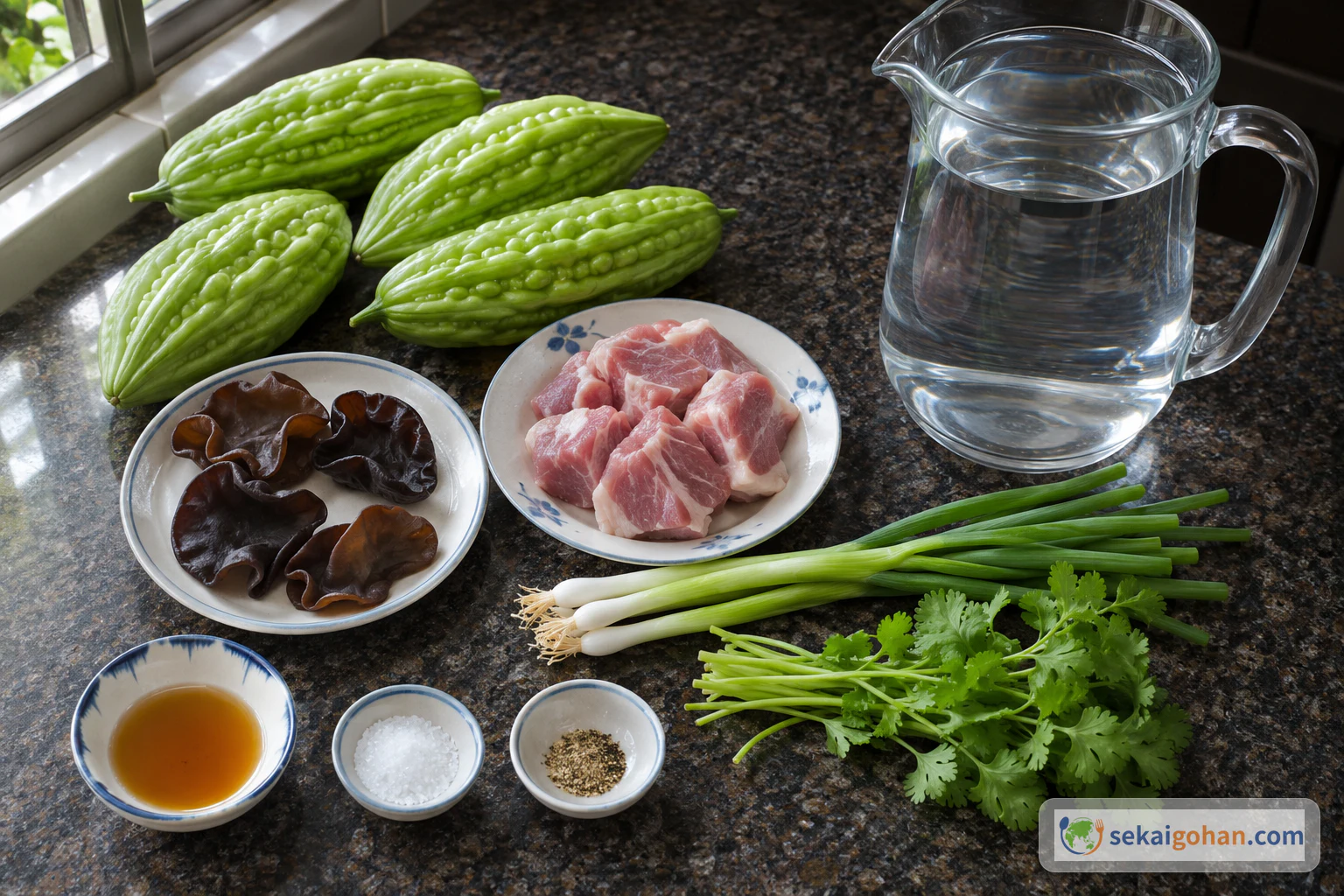
Equipment
- Knife
- Two cutting boards (one for raw pork, one for vegetables)
- Small spoon for seeding the gourds
- Mixing bowls
- Pot large enough for 1.5 quarts (1.5 L) of water and four whole gourds
- Shallow ladle or skimmer
- Instant-read food thermometer
Choosing Ingredients for Canh Khổ Qua
Bitter melon. Pick four medium gourds of about the same size so they cook evenly, keeping in mind that bitterness and thickness vary from one gourd to the next. Any bitter melon from an Asian or Japanese grocer (often labeled goya) works. Stick with bitter melon, though, because its bitterness is the point of the dish.
Pork. Mincing the pork by hand gives a firmer, coarser filling. Store-bought ground pork saves time but changes the texture; if you go that route, use pork only.
Wood ear. Dried wood ear is the easiest to find. Rehydrate it following the package directions.
Fish sauce. Vietnamese nước mắm is the first choice. Thai fish sauce (nam pla) does the same job, but its saltiness and aroma are different, so add it a little at a time.
Cilantro. You can leave it out if you dislike it, though the finished aroma will change.
Seeding method. Instead of slitting the gourds, you can cut off one end and push the seeds out with the handle of a small spoon. That keeps each gourd closed like a tube, while the slit makes stuffing easier.
Common Problems with Canh Khổ Qua
Three separate goals: a clear broth, bitter melons that are soft but still whole, and a pork filling that is fully cooked. The light bitterness is part of the dish, not a flaw to remove.
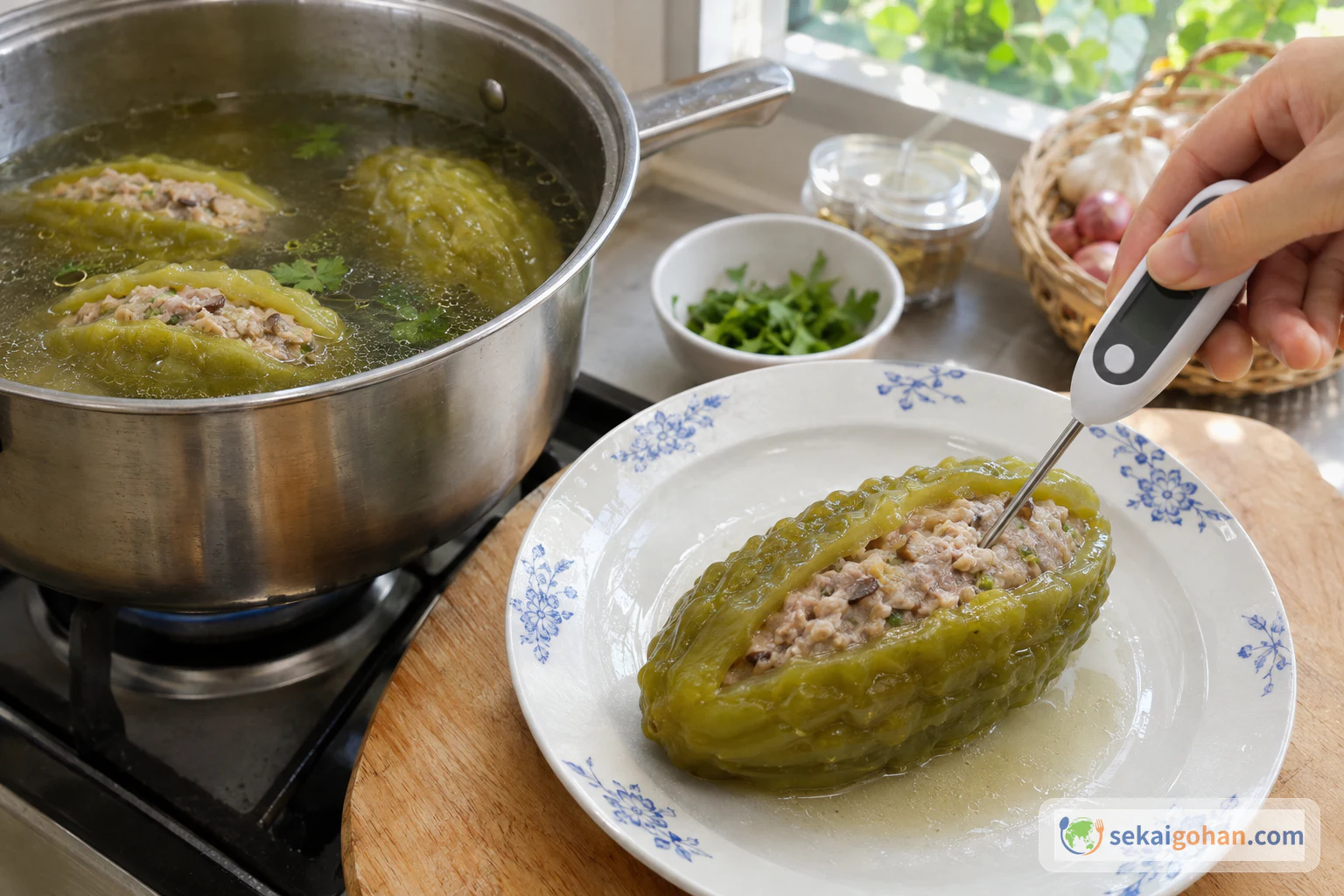
Food safety comes down to a few habits. Marinate the pork in the refrigerator for 30 minutes. Use a food thermometer to confirm that the center of the filling reaches 160°F (71.1°C), because color and texture alone can't tell you the meat is safe.
| What you see | Likely cause | What to do |
|---|---|---|
| The broth turns cloudy | Foam was not skimmed, or the pot boiled hard | Lower to a gentler simmer and keep skimming. Cloudiness says nothing about whether the filling is cooked; check with a thermometer |
| The gourds are falling apart | Cooked too long, or the gourds were small | Next time, check more often and stop when they are soft but whole, judging by feel and shape rather than the clock |
| The filling has not reached 160°F (71.1°C) | It needs more time | Return it to the simmering pot and check again with the thermometer |
| The soup tastes flat | Seasoning was kept light | Once the filling is cooked, add fish sauce or salt to the broth a little at a time |
| It tastes more bitter than expected | Bitterness varies between gourds | The slight bitterness belongs here. Serve with steamed rice |
Other Versions of Canh Khổ Qua
You'll find canh khổ qua cooked in many ways. Some cooks mix a little fish into the pork and season with sugar and stock powder. Others soak the gourds in salt water, blanch them, or tie them closed with scallion. There's also a version where the gourds are cut crosswise and filled with pork, bean-thread vermicelli, wood ear and dried shrimp, and that one simmers for a different length of time.
Frequently Asked Questions
Should I remove the bitterness first?
No. This method leaves the bitterness in because it's part of the dish. Soaking in salt water or blanching gives you a different version of the soup.
How much wood ear is "4 pieces" in grams?
Just use four pieces. Their weight depends on whether they're dried or rehydrated, so a gram amount wouldn't be reliable.
Why not rinse the pork?
Rinsing raw pork splashes bacteria onto the sink and nearby surfaces and can spread contamination. What keeps the dish safe is thorough cooking and clean hands, tools and surfaces.
Can I make it ahead?
Refrigerate leftovers promptly, and check your local food safety guidance for how long they keep.