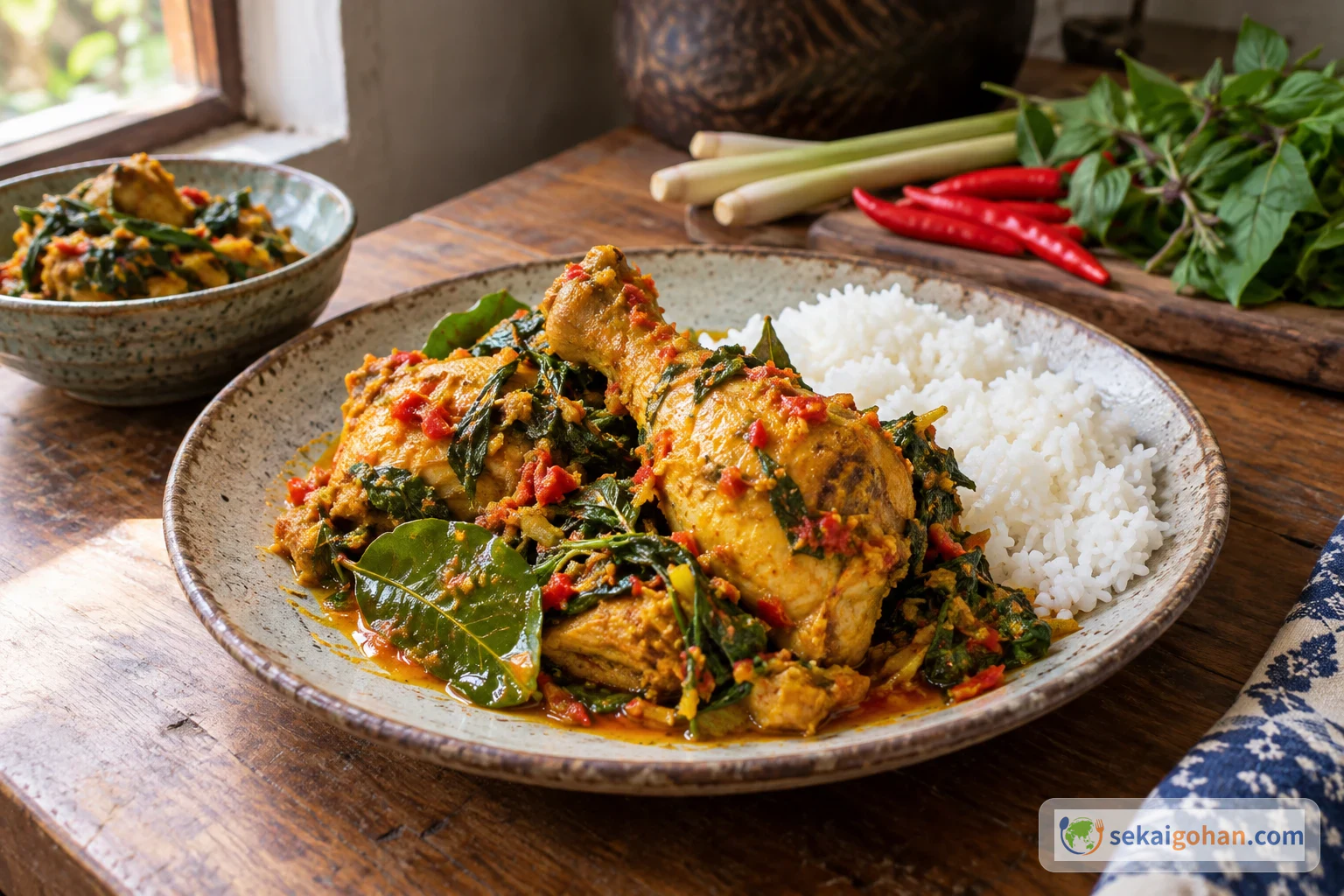
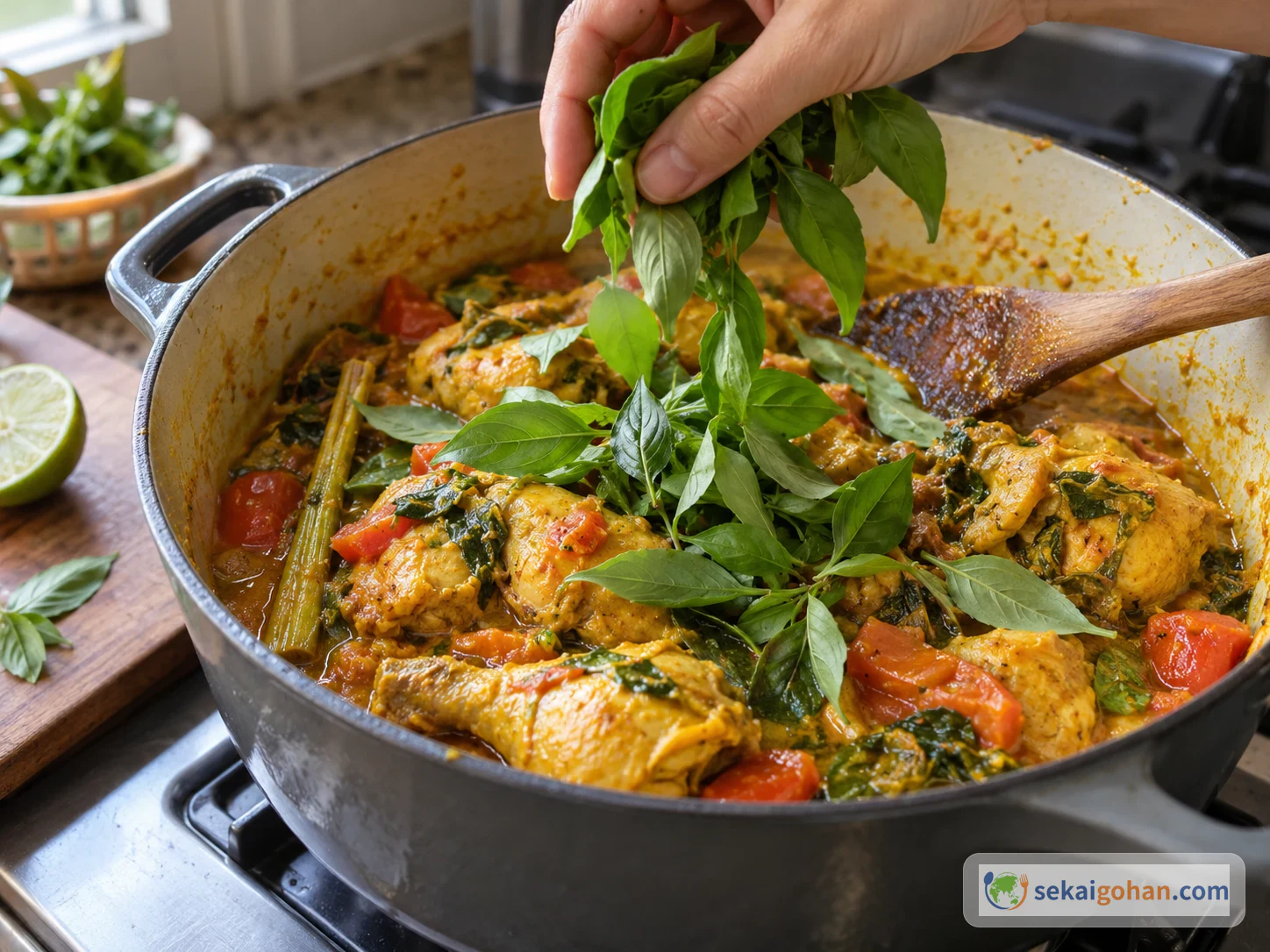
Picture a table in Manado set first with four colors: the red of chilies, the yellow of turmeric, the green of chopped leaves, and a bowl of steaming white rice. Lift the lid of the pot and the scent of makrut lime leaves, lemongrass, and kemangi rises to meet you. The green aroma comes before the sting of chili. Ayam woku is chicken stewed in woku seasoning, a dish loved around Manado in North Sulawesi, Indonesia. Ginger, turmeric, tomato, and leafy herbs stack up on top of the chili heat, so in your mouth the grassy fragrance chases the spice.
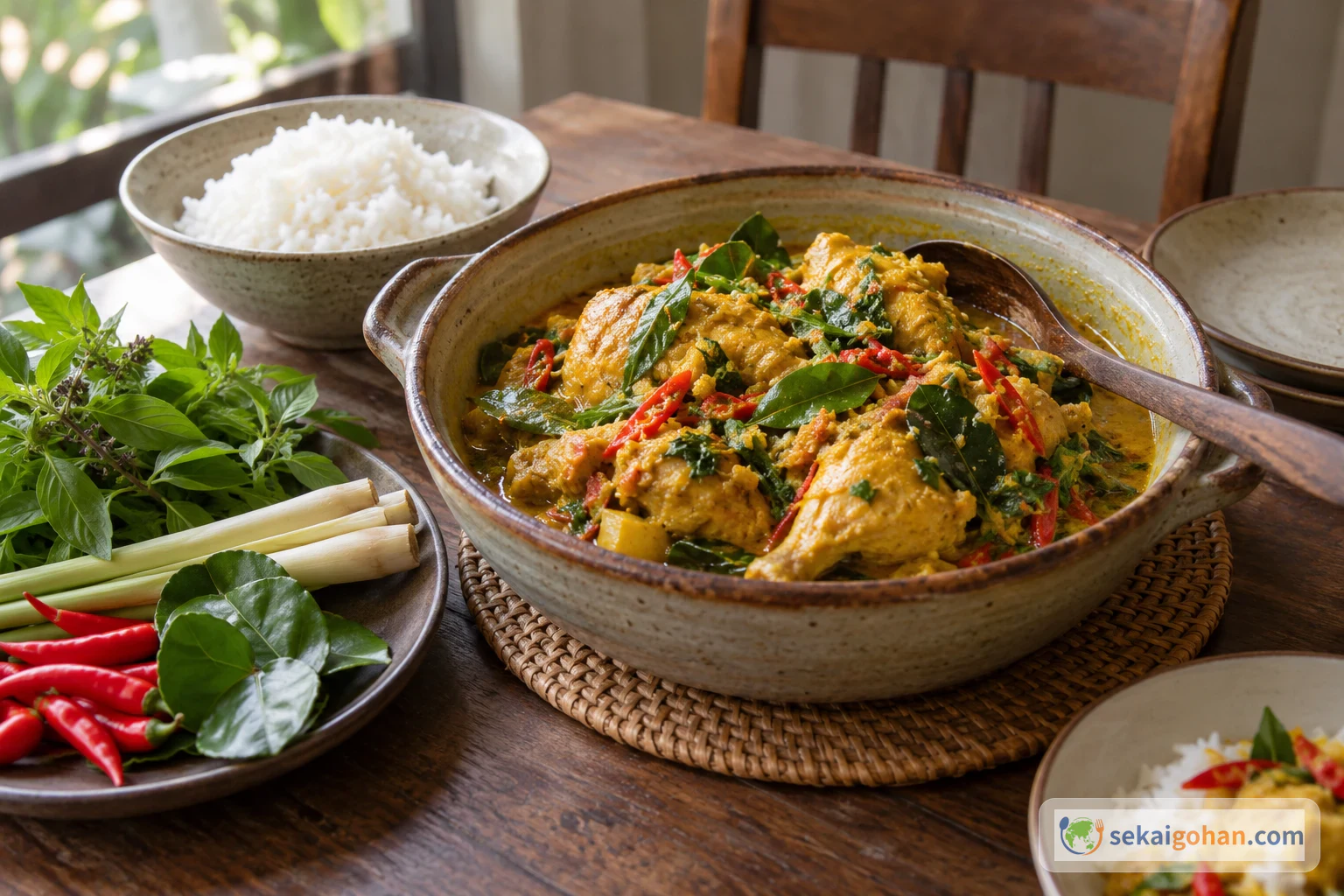
Woku Seasoning and Ayam Woku in North Sulawesi
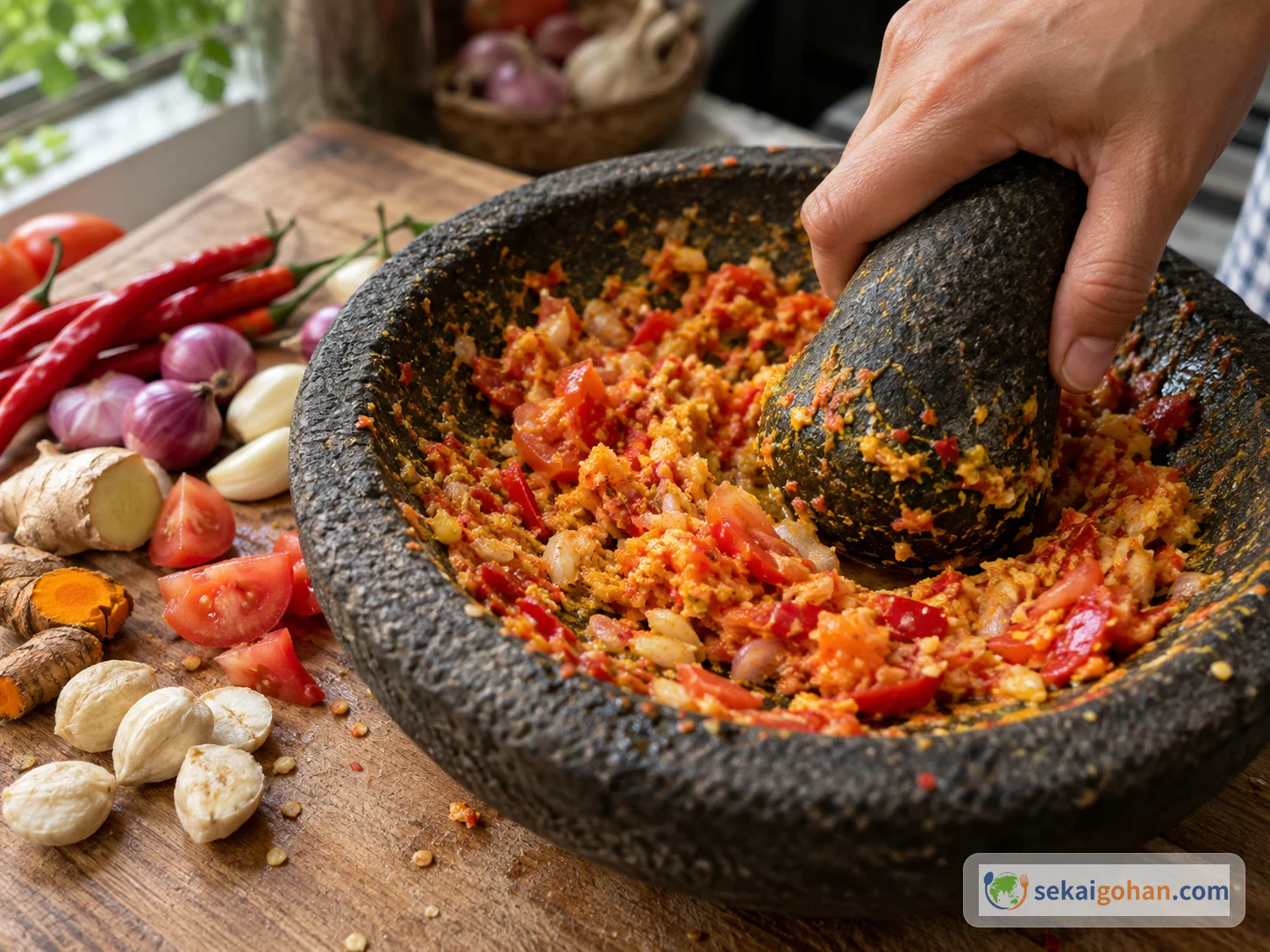
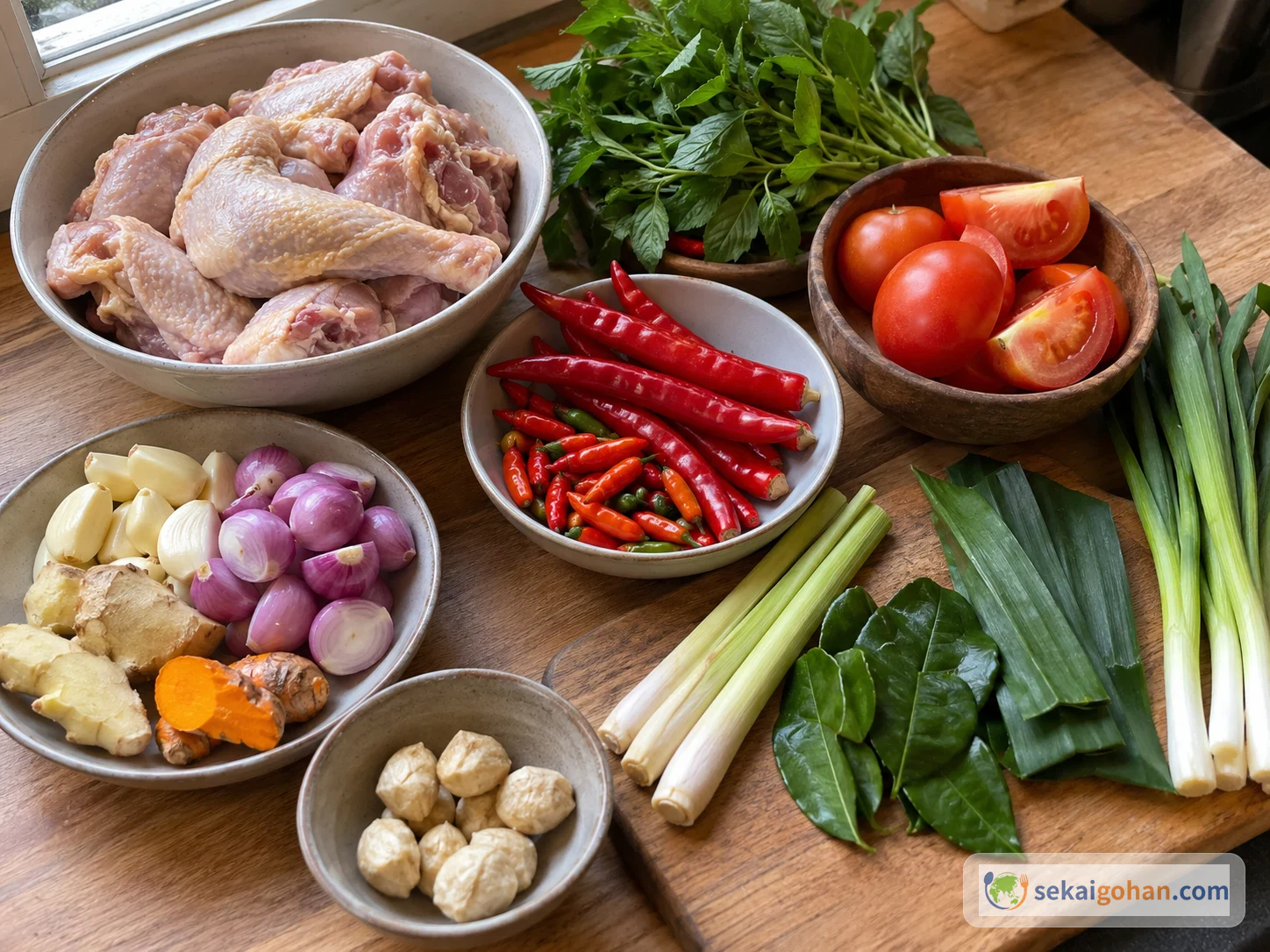
Woku is both the name of a dish and the name of a seasoning, used in North Sulawesi to cook meat and fish as well as chicken. The main aromatics are kemangi, makrut lime leaves, pandan, turmeric, lemongrass, green onion, tomato, chili, ginger, garlic, shallot, and candlenut. Woku is an assembly of aromatics, and the dish is built by letting those herbs take on the heat.
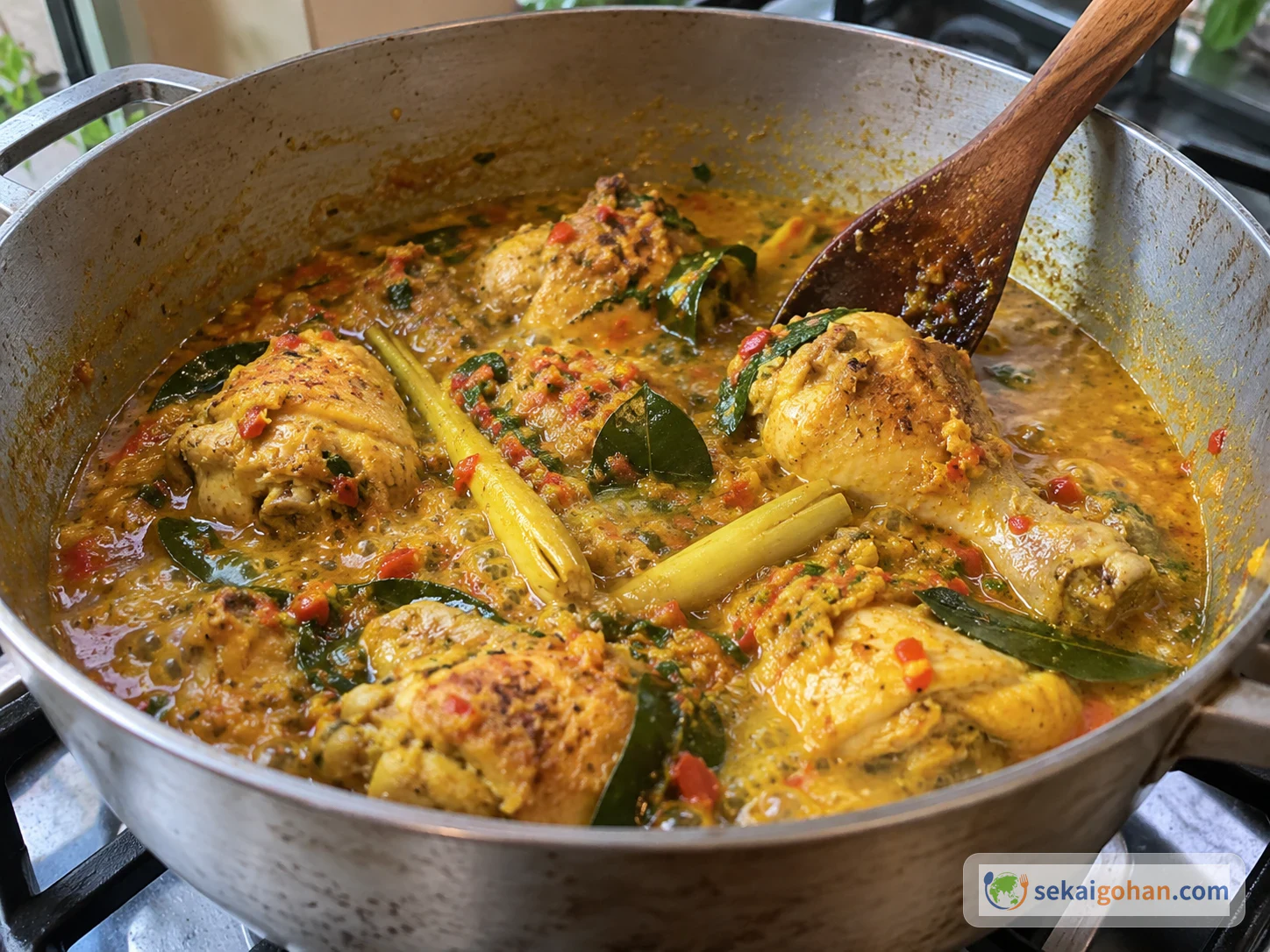
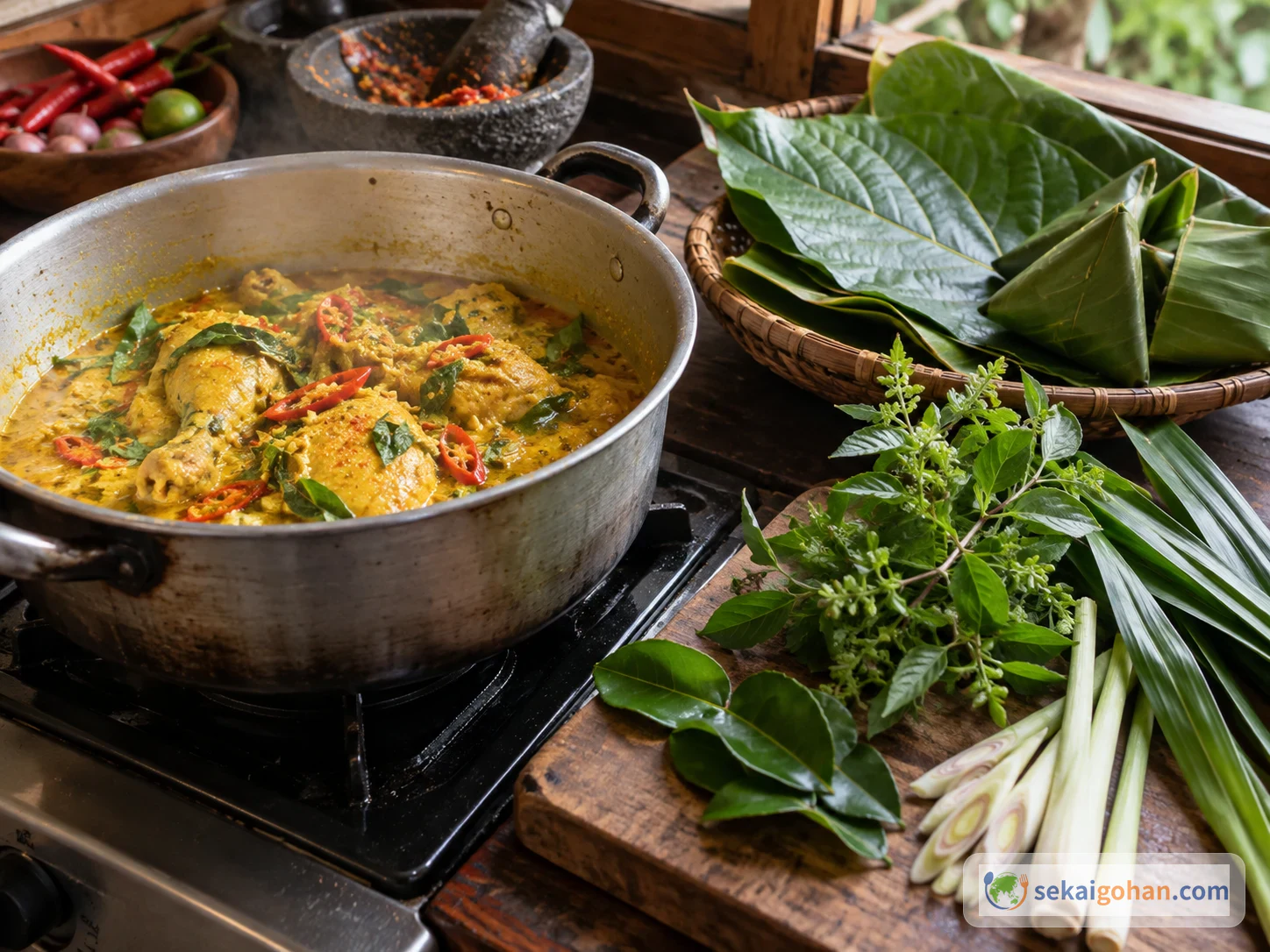
There are two ways to prepare it. Woku belanga is stewed in a belanga, a pot, while woku daun is wrapped in woka leaves and steamed or finished over charcoal. This recipe is woku belanga: the ingredients are easier to find, doneness is easier to check, and the closed pot sends the paste's fragrance into the chicken along with the sauce.
Woka leaves are used to wrap food, and wrapping adds to both the look and the aroma. The pot method still gives you the core of woku's aromatics. Banana leaf does not reproduce woku daun exactly; it changes both the leaf aroma and how heat reaches the food.
Manado has more than one spicy chicken dish, and what sets ayam woku apart from Ayam rica-rica is the role of leaves and herbs. In woku they come right to the front of the flavor.
On a Minahasa table, the dish takes its place among others. Minahasa food is tied to social events, to everyday meals and to feasts, and the combination and standing of rice, protein, and vegetables shift between those occasions. Traditional food keeps changing form in homes and restaurants today, too. Ayam woku isn't required at any particular festival, and not every home makes it; it's one dish on a table centered on rice and a main dish.
Ingredients (serves 4)
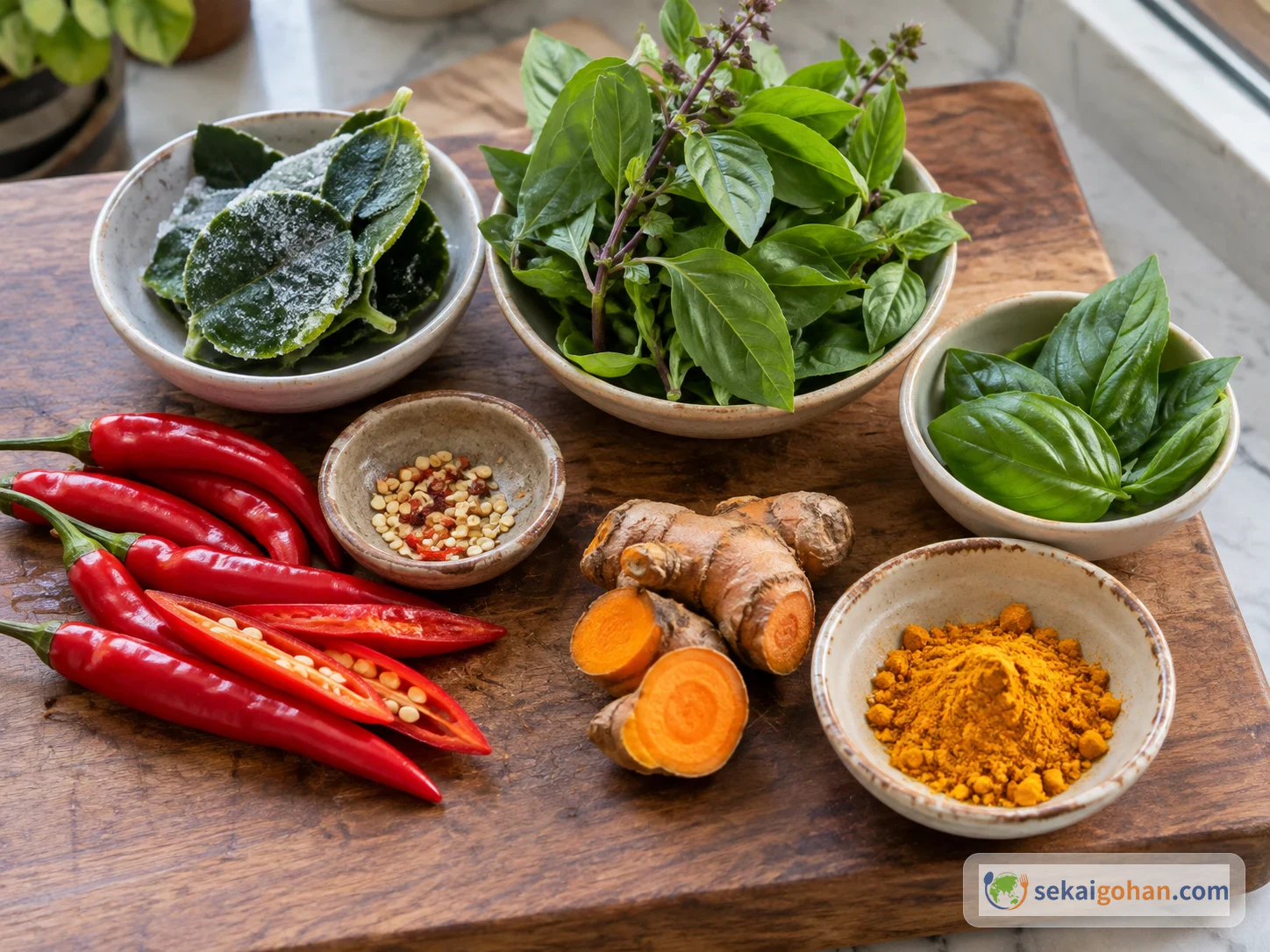
This home version uses 1.75 lb (800 g) of bone-in chicken thighs. Divide the ingredients into three layers of aroma: the aromatic paste, the leaves and herbs, and the finishing acidity. This makes shopping and prep easier to follow. To lower the heat, reduce only the bird's eye chilies and leave the other aromatics alone. For makrut lime leaves and kemangi, check the substitutes column before you buy.
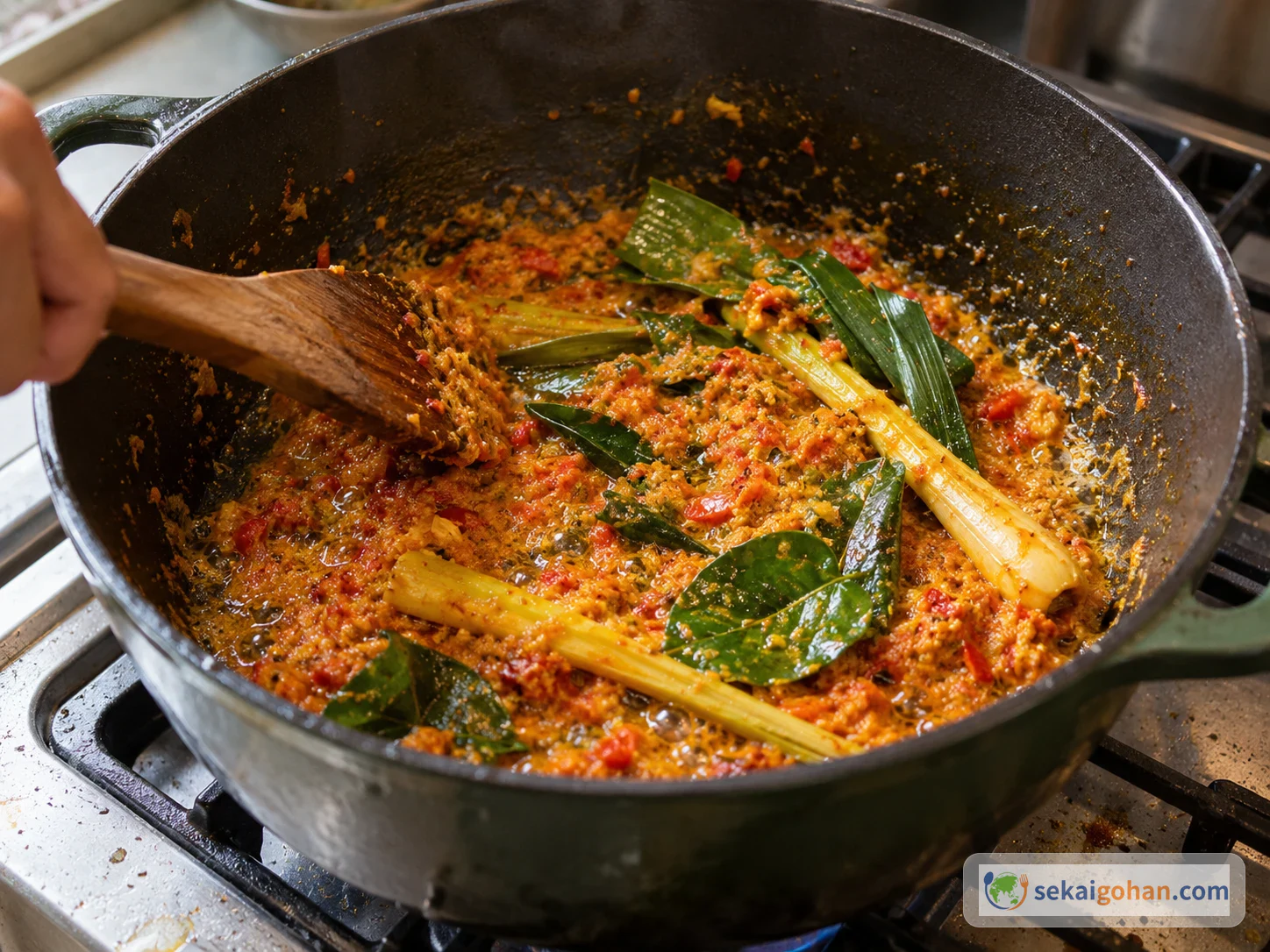
Put frozen makrut lime leaves into the pot still frozen. Thawing releases water and lets the aroma escape, so dropping them straight into the oil and paste keeps the leaf aroma in the pot. Fresh leaves give the brightest citrus aroma. Dried ones are milder. If you don't buy the leaves, the finishing lime juice alone will not give the same aroma.
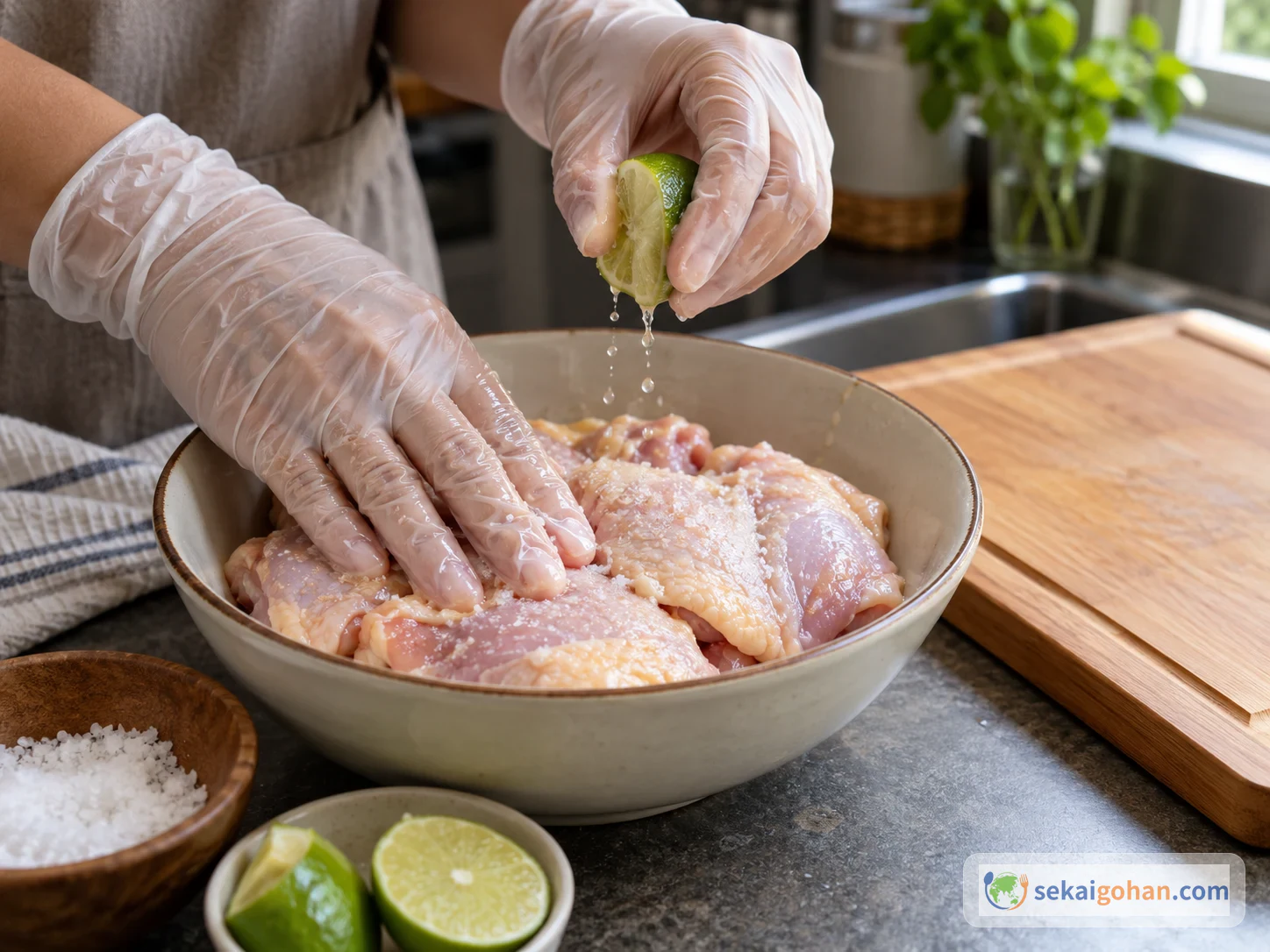
Candlenuts can cause a reaction in people with a tree nut allergy, and anyone affected should not use them. Candlenuts contain oil, so leaving them out changes the richness and mouthfeel of the paste. Plan a different blend if you do. Keep the juices from raw chicken away from vegetables and herbs that are eaten raw. Use separate cutting boards, knives, and bowls, or wash them between uses. Don't touch your eyes or face with hands that have handled chilies. Wear gloves, or wash well with soap.
Choosing Ingredients for Ayam Woku
Kemangi is lemon basil, and its aroma is different from Italian basil's. Look for it at Thai and Vietnamese grocery stores; if you can't find it, use Thai basil. Italian basil is the last resort, and its sweeter aroma will change the green note of the finished dish.
Fresh makrut lime leaves aren't always easy to find, so the ingredient table is written with frozen leaves in mind. They keep their aroma best fresh or frozen. Dried leaves work too: go by the product label and by smell. If you have none at all, a small amount of lime zest is an option, though each choice gives a different aroma.
To tame the heat, change only the chilies and keep the large red chilies, ginger, leaves, and tomato as they are. Cut back on all the aromatics at once and the woku aroma thins out along with the heat. This version has no coconut milk; its backbone is a light sauce of tomato and herbs.
| Ingredient to find | What to choose first | If you can't get it |
|---|---|---|
| Kemangi | Lemon basil, then Thai basil | Italian basil in a small amount, understanding the aroma gap. If left out, the green aroma weakens |
| Makrut lime leaves | Fresh or frozen leaves | For dried, follow the labeled amount. Lime juice alone does not reproduce the leaf aroma |
| Fresh turmeric | Fresh turmeric sliced into rounds | 2 tsp powder makes up the color, but the earthy aroma changes |
| Pandan and turmeric leaf | Fresh leaves | Pandan can be left out. Turmeric leaf is optional, so the aromatic paste works without it |
| Bird's eye chilies | Fresh or frozen | Reduce the amount. Replacing them with only red bell pepper removes the heat and aroma |
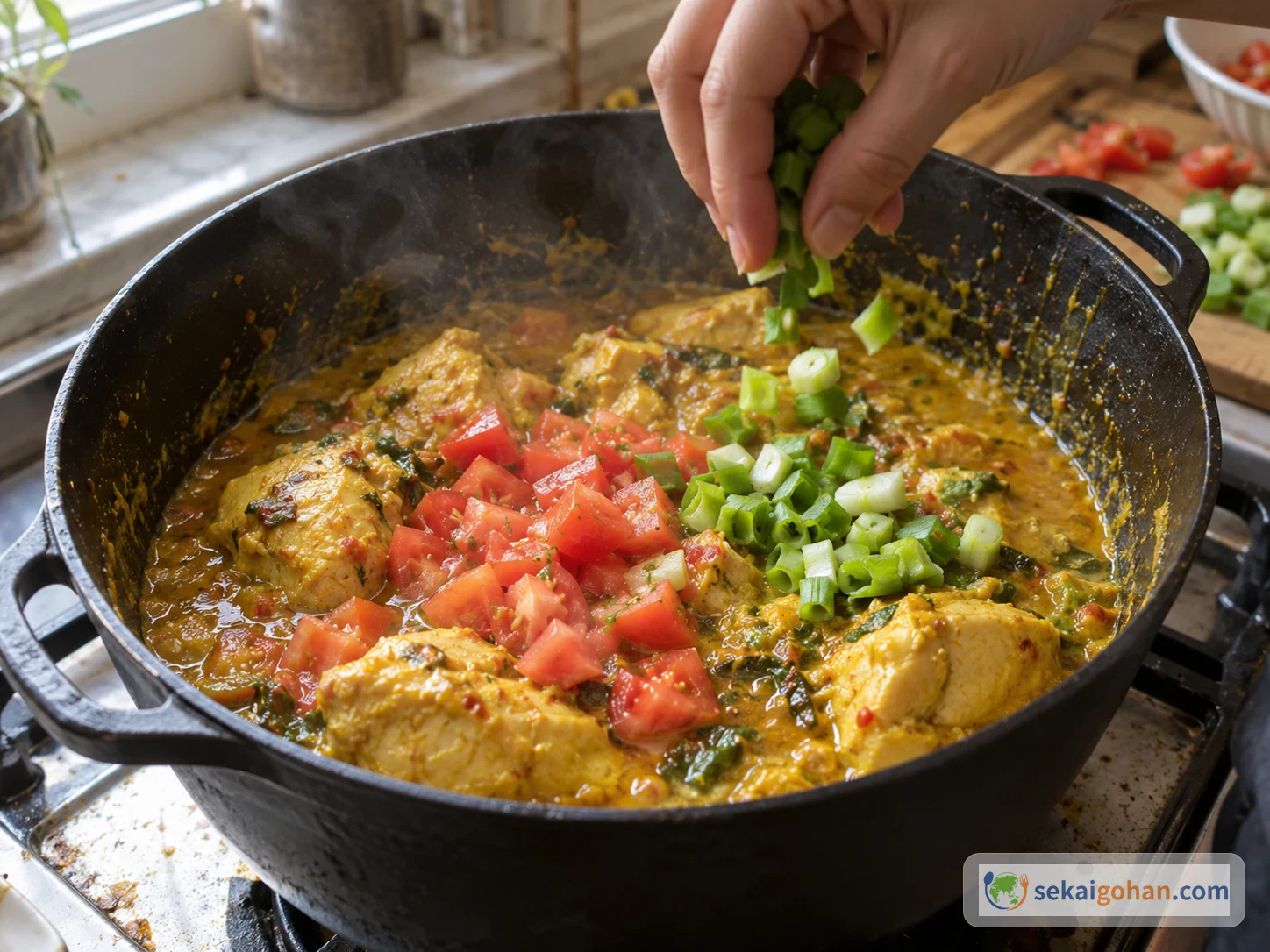
Adding extra lime juice to make up for missing leaves only makes the dish more sour. When you use Thai basil, keep the final heating within 1 minute to preserve its aroma. If you swap powder for fresh turmeric, mix it evenly into the paste so no powdery taste remains.
Method
You need a deep pot or heavy skillet, and a blender or mortar. Fry the aromatic paste thoroughly first, then add the chicken, then the water. Go by color, aroma, thickness, and internal temperature rather than the clock. Fry the paste until the raw smell is gone and oil rises to the surface.
If the paste sticks to the bottom of the pot, add 1 tbsp hot water at a time to scrape it up and return to medium-low heat. If the sauce is thin, remove the lid and reduce it. Don't add salt first; look at aroma and thickness. If you added the kemangi too early and the aroma has gone, a small amount of fresh leaves at the end will bring the green aroma back.
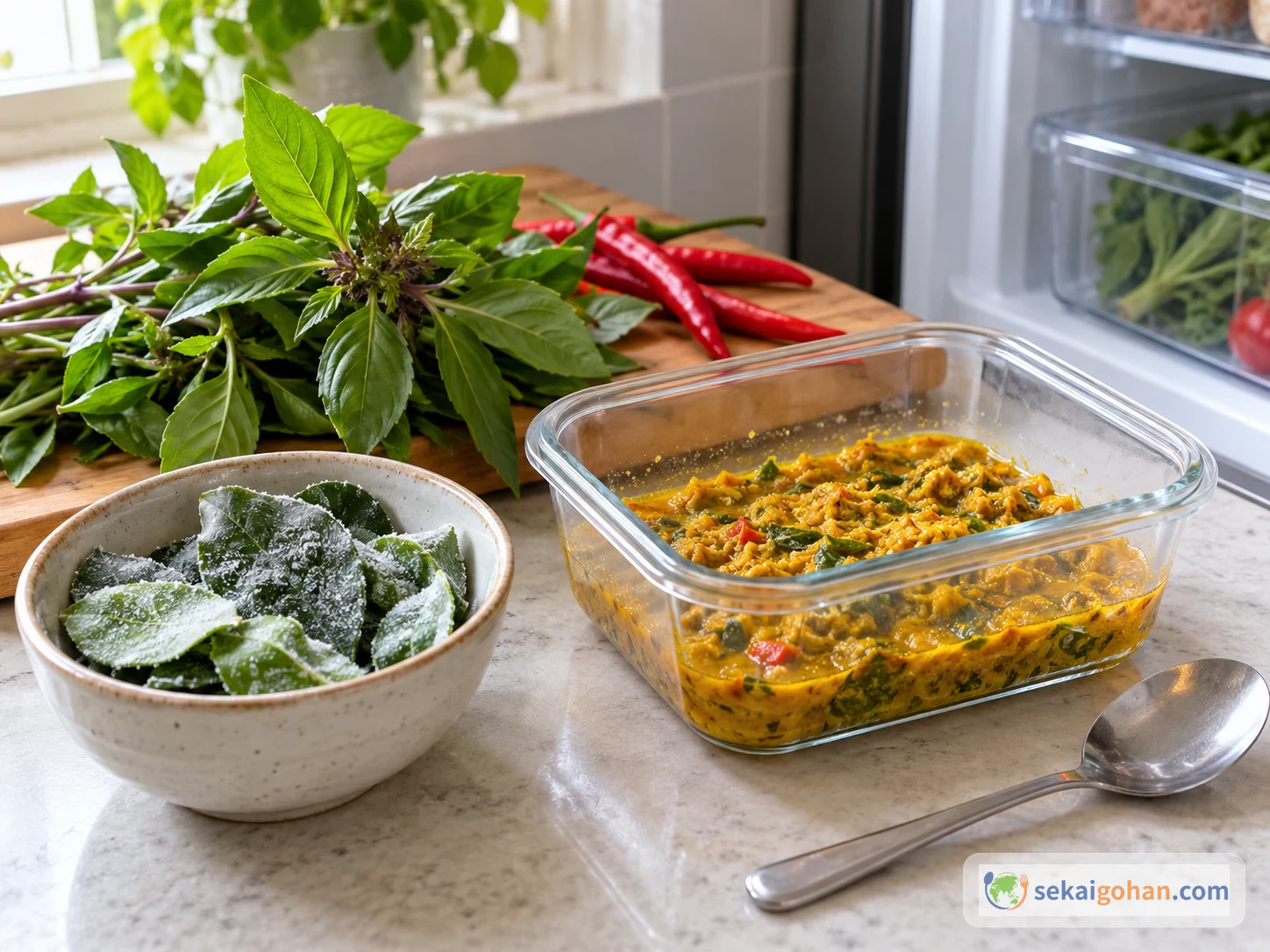
Cook the chicken to 167°F (75°C) or higher at the center for 1 minute or more. Don't use knives, cutting boards, or containers that touched raw meat for cooked rice or herbs unless you have washed them. Divide leftovers into clean shallow containers, cool them quickly, and refrigerate. When eating, reheat thoroughly to the center. Discard anything kept too long or with an off smell or appearance.
Cooking Tips for Ayam Woku
The key moment comes before you reduce the sauce: check the chicken's internal temperature and how far the paste has fried. Whatever leaf you're using, keep the short heating at the very end so the herbs stay bright.
If you swap in white fish or shrimp, don't follow the chicken's simmering time. Stop as soon as they're cooked through to the center. The aromatic structure carries over, but the result is not quite the same as chicken ayam woku.
Serving Ayam Woku
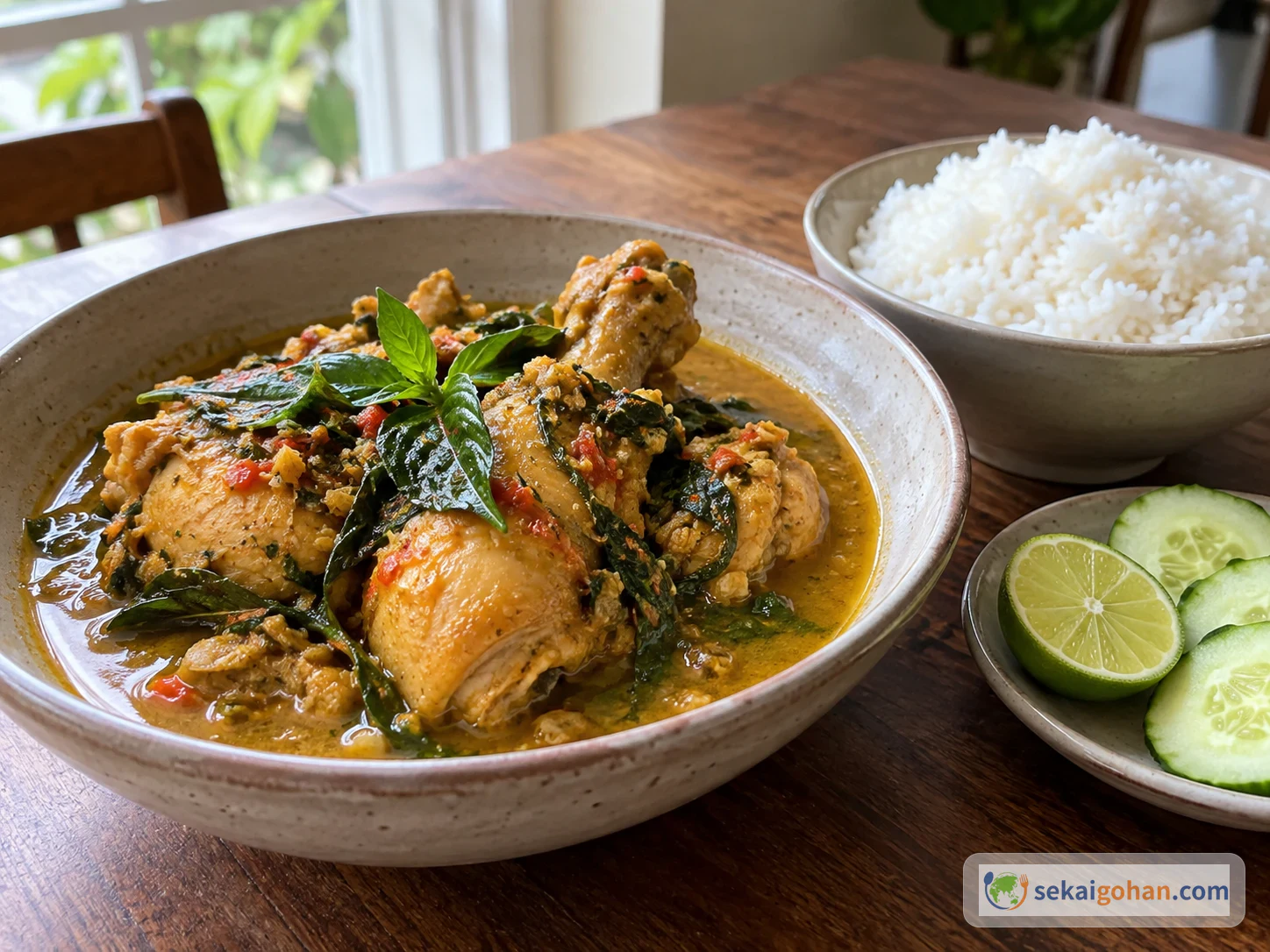
Serve it with plenty of white rice, and spoon up the yellow sauce along with the chicken. Pass the sauce all the way to the rice: it rounds out the heat and carries the herb aroma through every grain. A squeeze of lime and a mild side such as cucumber don't erase the heat, but they give your mouth a rest between bites.
For a side-by-side comparison, try Ayam rica-rica, also from Manado, where chili sauce is the star; cooking the two together shows how differently the heat is built. Ayam betutu, a chicken dish from another region, wraps the aromatics as it cooks, a nice counterpart for comparing wrapped and open cooking.
FAQ
How do I make it less spicy?
Reduce the bird's eye chilies from 4–5 down to 1–2 and leave the other aromatics as they are. Chilies vary from one to the next, even with the seeds removed, so start small and taste as you go.
Can I add coconut milk?
You can, but coconut milk adds fat and sweetness, which turns it into a different home variation. This woku belanga is finished with a light sauce of tomato and herbs.
Is it OK to eat leftovers the next day?
Yes. Divide them into clean shallow containers and refrigerate, without leaving them at room temperature for long. Reheat thoroughly to the center before eating, and discard anything kept too long or with an off smell or appearance.