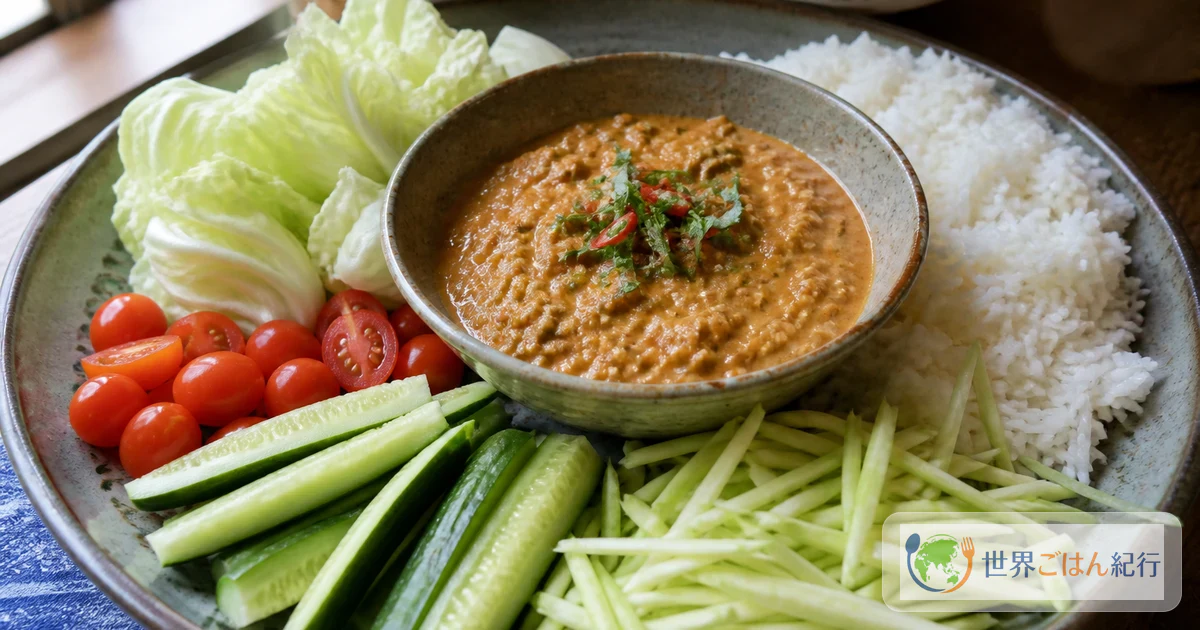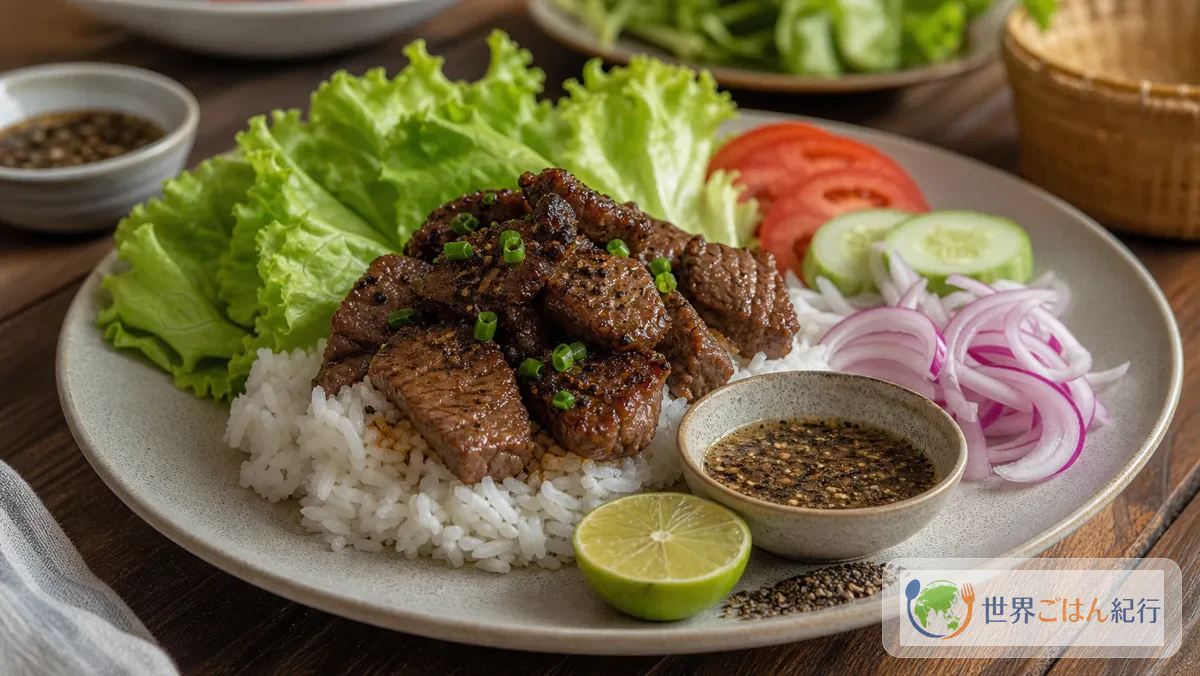
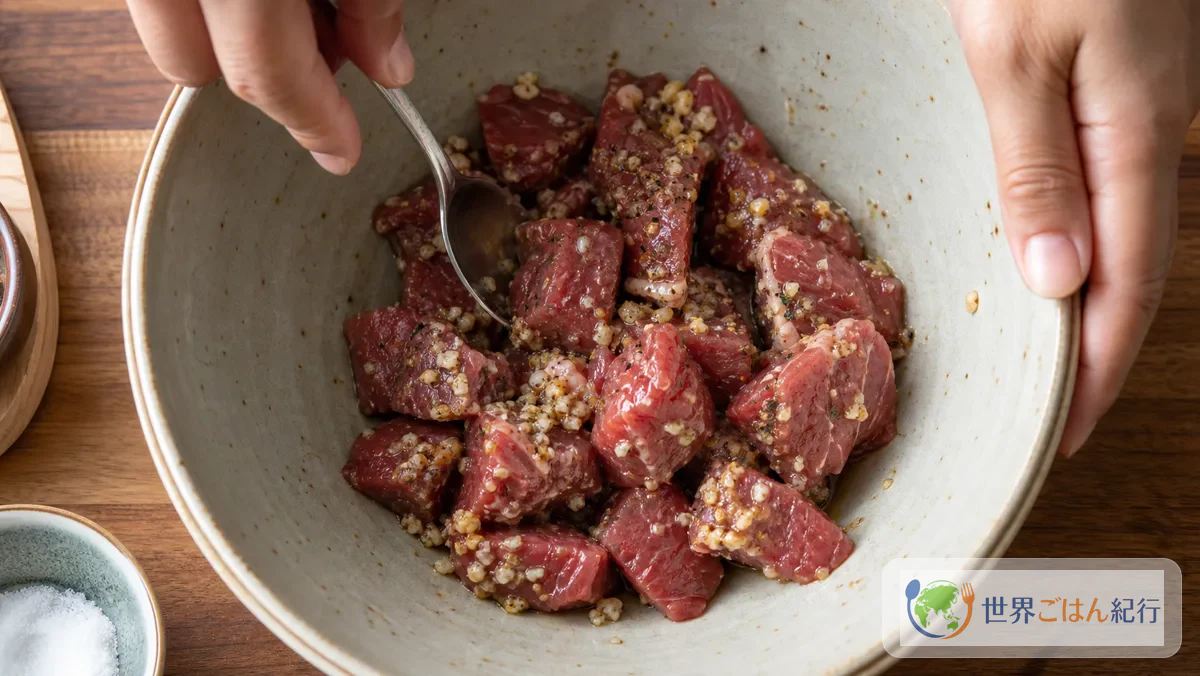
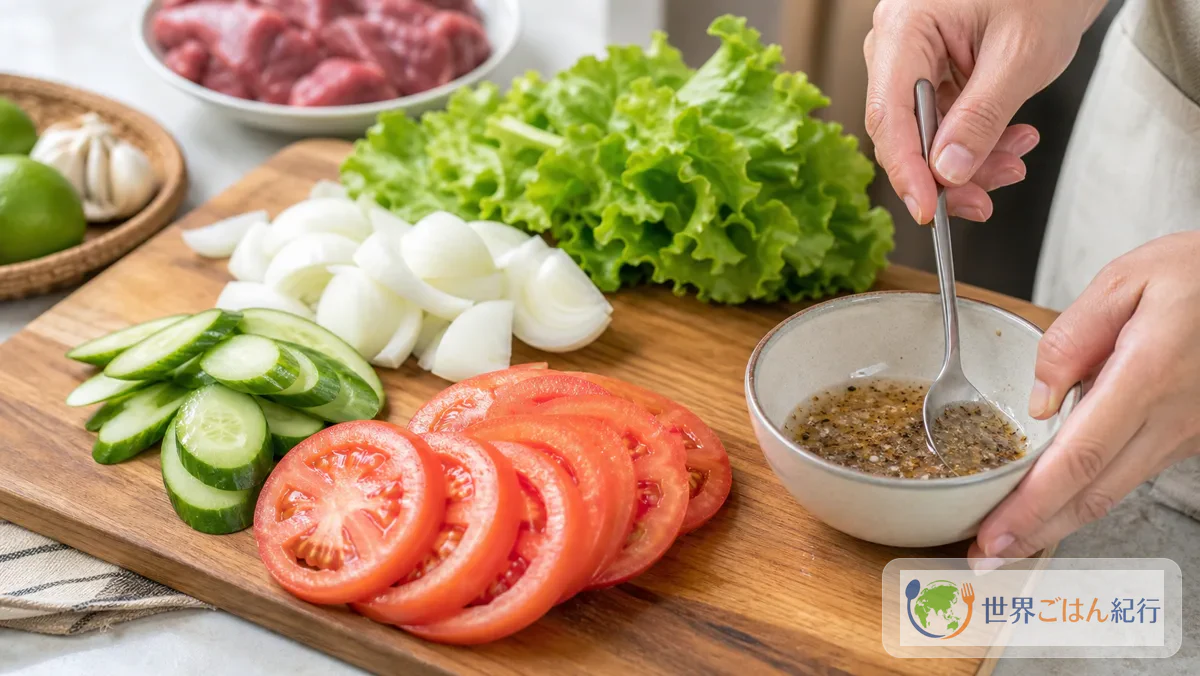
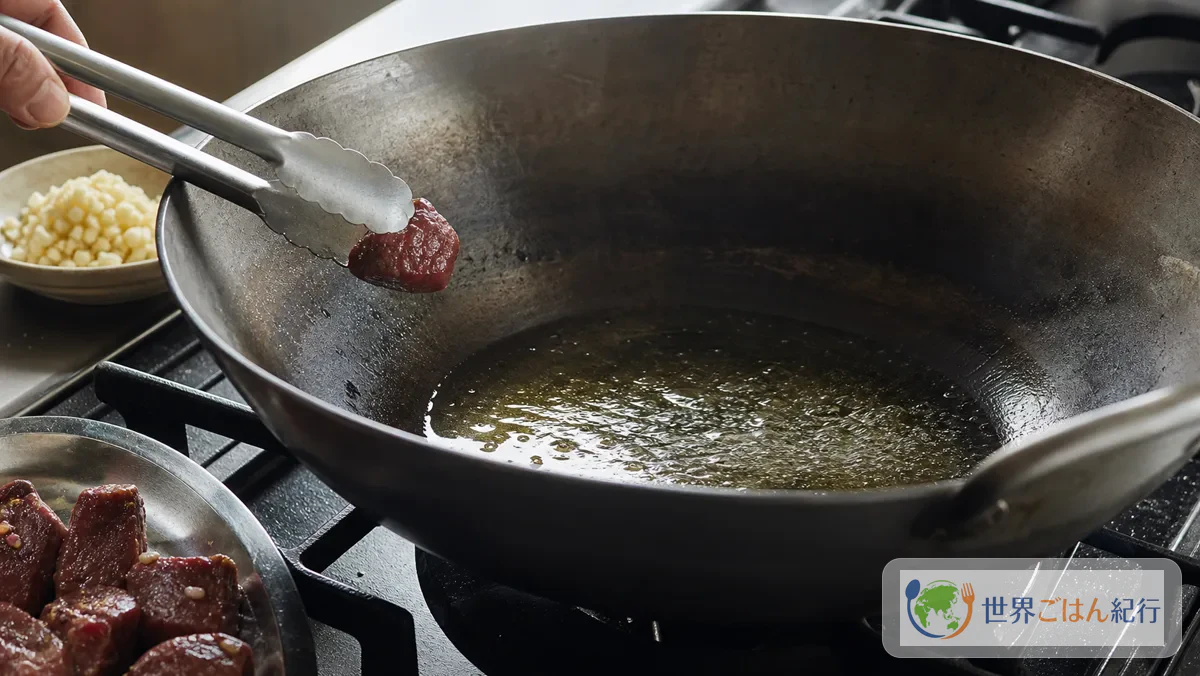
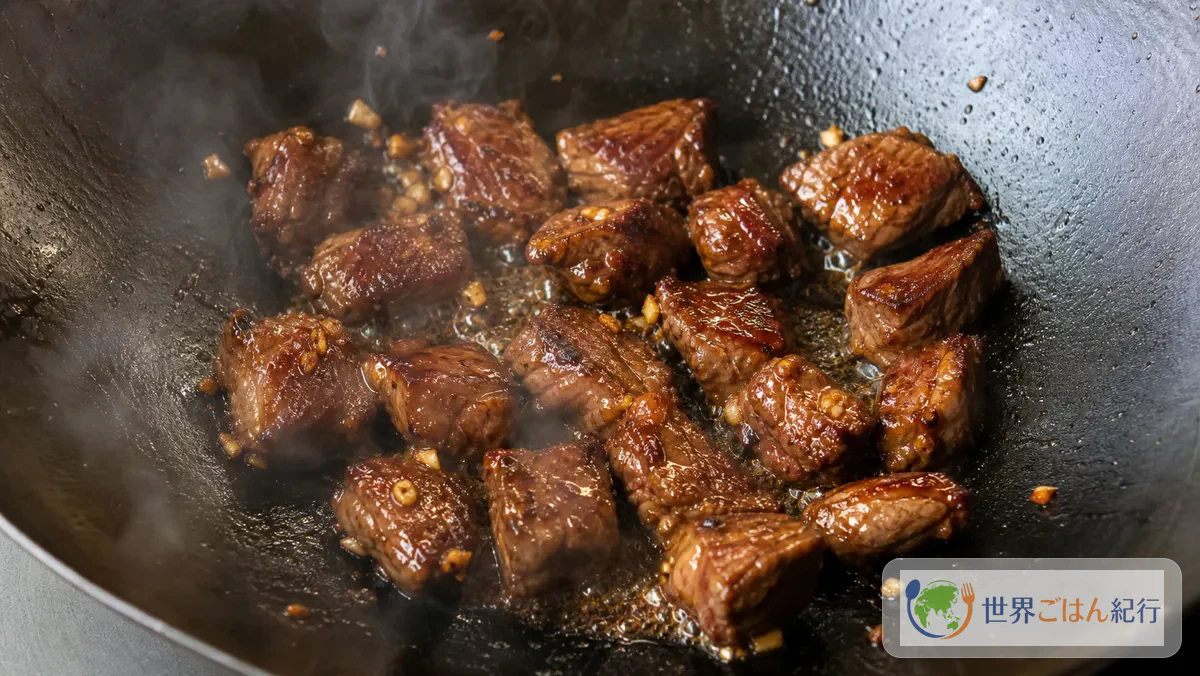
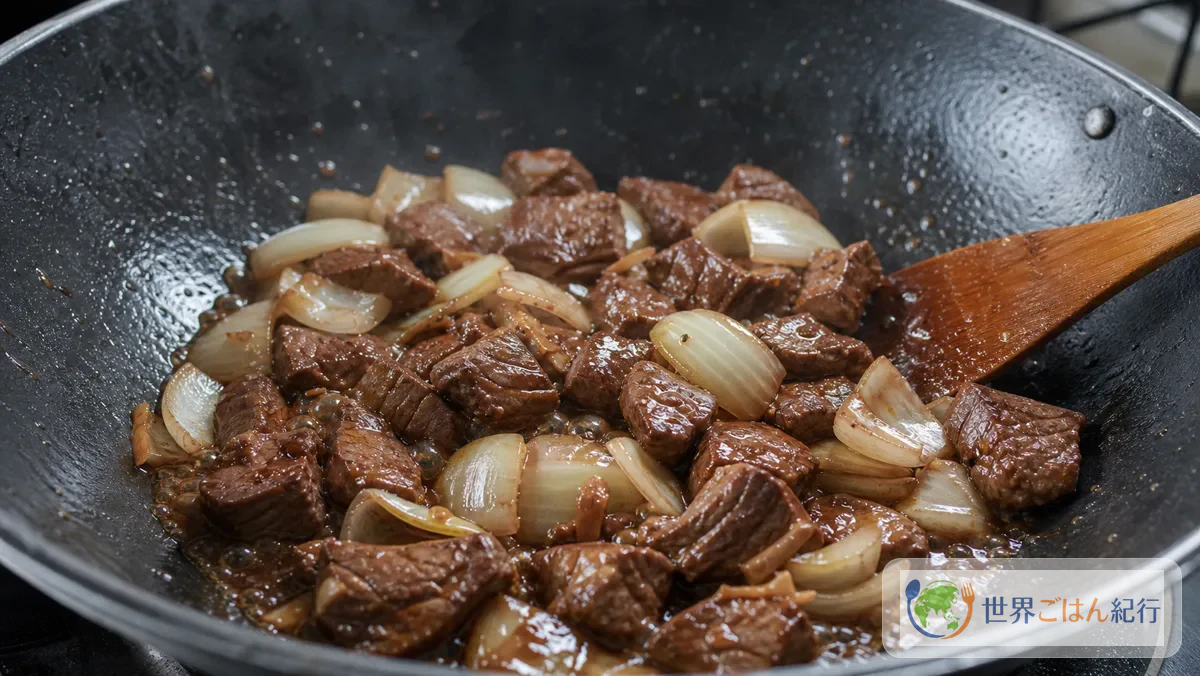
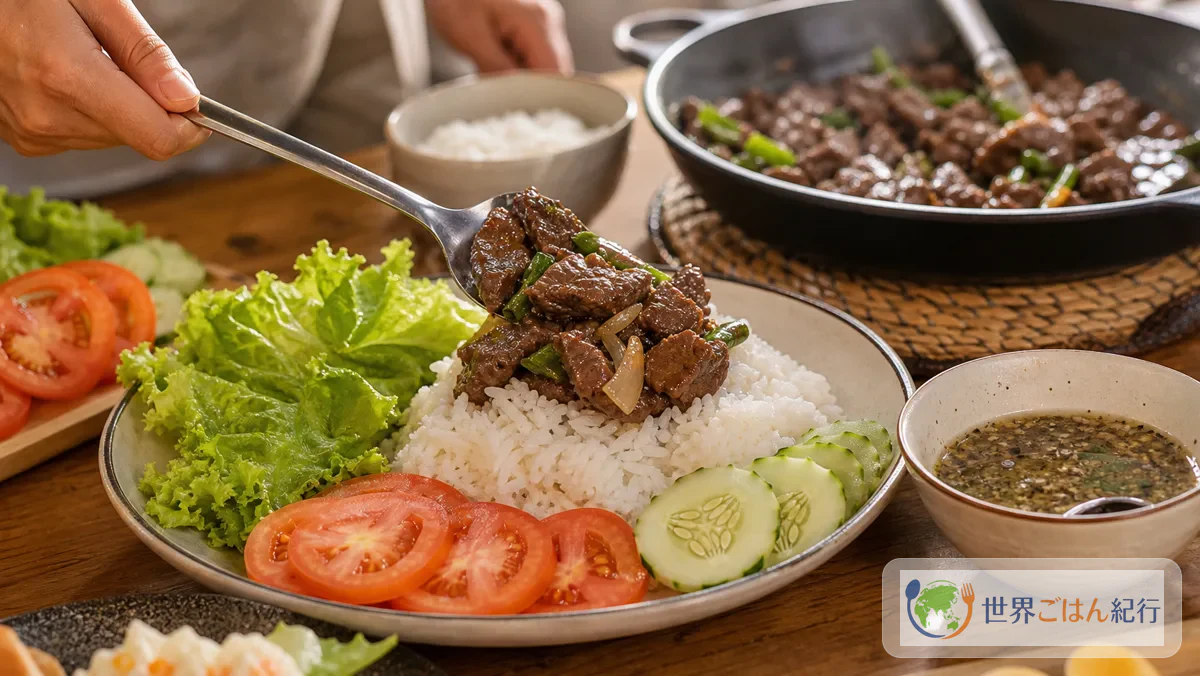
The moment the beef hits the hot pan, the sweet smell of garlic and oyster sauce rises, and your kitchen starts to smell like a street stall. Then comes the best part. You touch each piece lightly to a small dish of lime and black pepper, and the rich beef flavor tightens up in one stroke. Lok lak (Lok Lak / Loc Lac / ឡុកឡាក់) is a stir-fried beef loved all over Cambodia. The beef is cut or sliced, seasoned sweet and savory, and seared fast over high heat. It comes with lettuce, tomato, cucumber, onion and rice, plus a dip of lime, sea salt and Kampot pepper. It's a classic Cambodian dish with French influence.
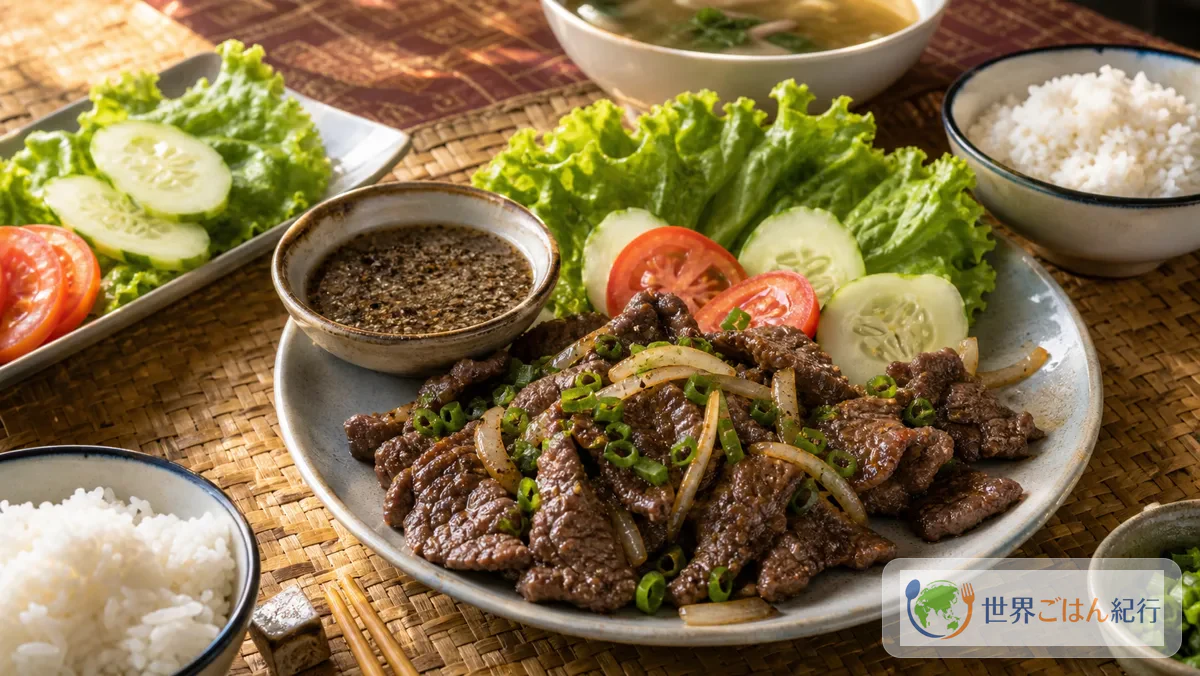
Lok lak on the Cambodian table
Origins and the Vietnamese cousin
Lok lak is often mentioned alongside bò lúc lắc from neighboring Vietnam. Both share Western touches that spread to tables across French-colonial Indochina: beef tossed in the pan as if you were shaking it, a soy-based seasoning, salad vegetables on the side. The Cambodian version stands apart for its strong black pepper aroma and the sour dip served with it. The meat may be the star, but this is a dish where rice, vegetables and acidity turn the plate around.
In English you'll also see Loc Lac and Beef Lok Lak. In Khmer food contexts it appears as Lok Lak Sach Ko and Chha Lok Lak.
How it is eaten
Lok lak is cooked at home, and it's also an easy plate to order at an eatery. Because it uses beef, it isn't an everyday budget dish. It's what you have for lunch when you want a little meat, or a standard order when you eat out, sometimes with a fried egg on top. Outside Cambodia, too, restaurants list it as the first Khmer dish that's easy to order.
If amok is the soft Cambodian dish of coconut and herbs, lok lak is closer to a town eatery. On a hot day, a good light side is aluek trei ngeat, which pairs dried fish with watermelon and mango.
The plate is simple, but every part has a clear job.
| Part | Role | What to keep in a home kitchen |
|---|---|---|
| Beef | The center of the sweet-savory flavor | Spread it in one layer over high heat |
| Rice | The base that takes the meat juices and the dip | Jasmine rice is light in aroma; cook short-grain rice somewhat firm |
| Lettuce, tomato, cucumber | Cut the oil and salt | Wipe off the water well and set them on the plate first |
| Onion | Links the sweetness of the meat | Stir-fry briefly at the end, leaving a little bite |
| Lime and black pepper dip | The Cambodian finishing touch | Combine the acid, salt and pepper first; don't pour much straight onto the meat |
Kampot pepper
Kampot pepper grows along the southern Cambodian coast, in Kampot Province and neighboring Kep Province. It received geographical indication status within Cambodia in 2010. In February 2016 it became the first Cambodian product registered as an EU Protected Geographical Indication (PGI). You can use this local pepper in lok lak's pepper dip.
It gives the dish a firmly local aroma, but you can manage without it the first time. What matters is making coarsely ground black pepper stand up with lime and salt, not stirring a lot of ground pepper into the meat. Ordinary black pepper smells plenty good if it's freshly ground.
Ingredients (serves 4)
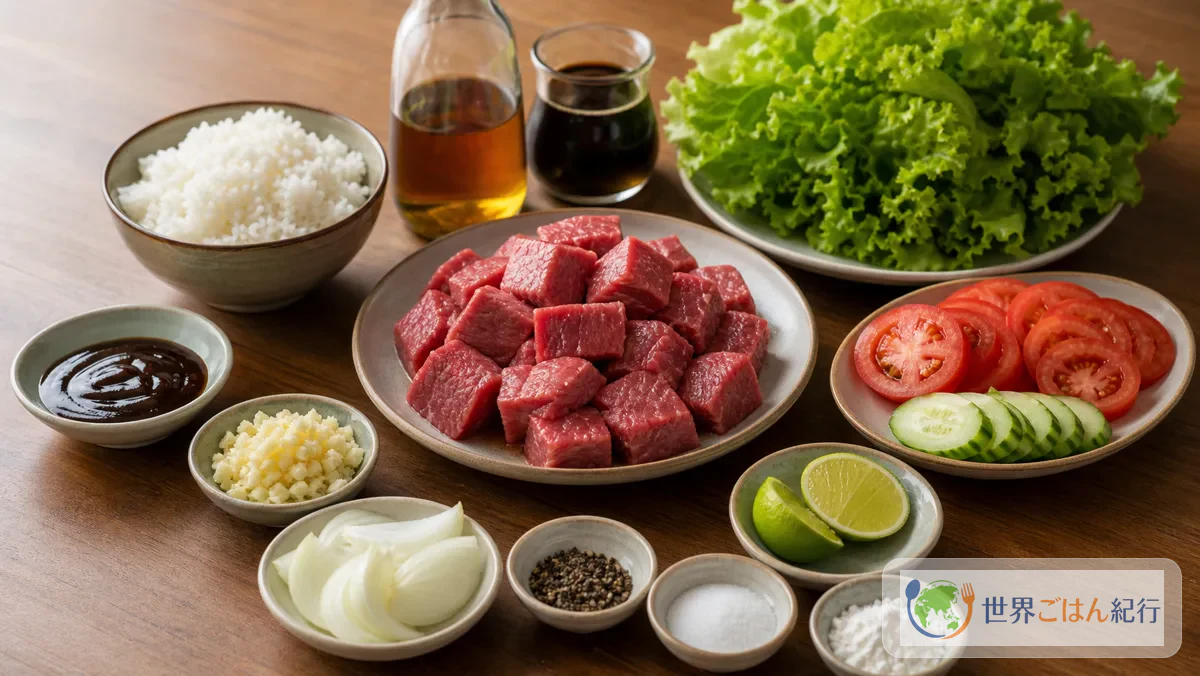
For the beef, steak cuts of chuck roast, round or rump are easier to handle than fatty sirloin. You can make it with thin sliced beef for grilling, but the "cubed feel where juices come out when you bite" typical of lok lak becomes weaker.
These seasonings contain wheat, soy, fish and shellfish. Check the ingredient labels of the oyster sauce, fish sauce and soy sauce. Wash the cutting board and knife you used for beef before cutting vegetables. Or, better, cut the vegetables first and then move on to the beef.
Choosing ingredients and substitutes for lok lak
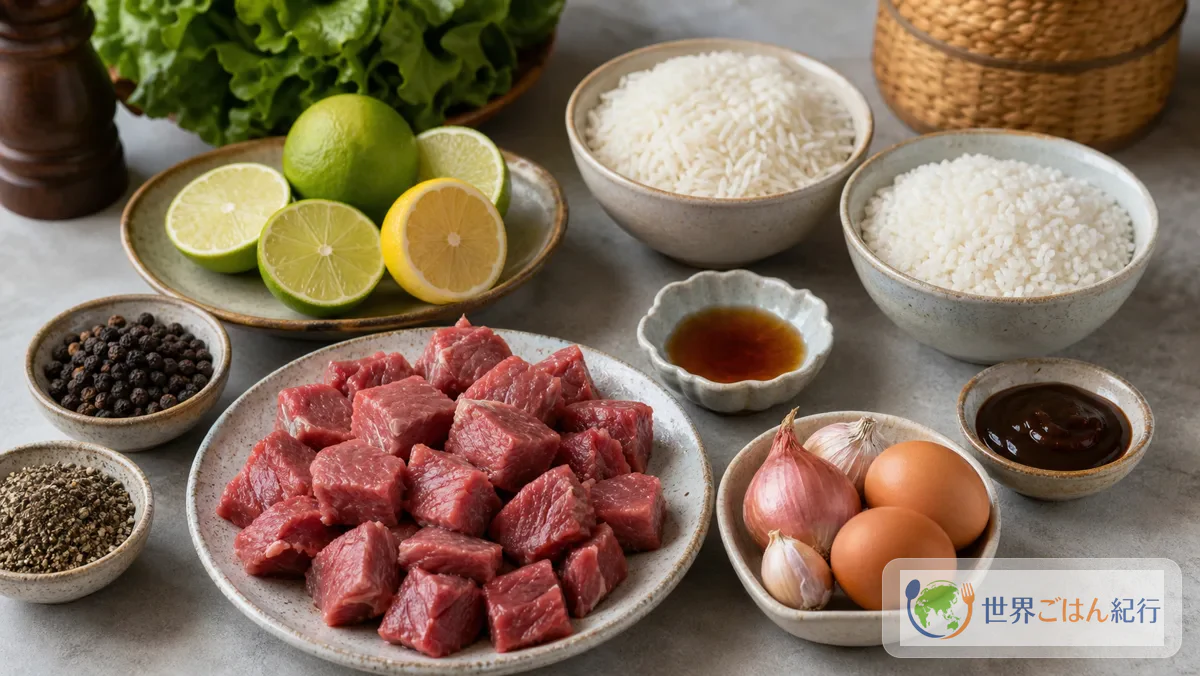
What to shop for
What is worth hunting for online for lok lak is not the beef. Beef from a neighborhood butcher counter is fine, and easy-to-find chuck roast or round works well. Spend your effort on jasmine rice, fish sauce and a deep skillet you can toss over high heat. If you can't find Kampot pepper yet, start with freshly ground black pepper. You can look for Kampot next time if you like the dish.
Jasmine rice takes up the strong sauce of the beef and the sharpness of the lime without getting heavy. If you're using short-grain rice, cut the water back a little so it cooks up firm rather than sticky.
Even a small amount of fish sauce pulls the saltiness of lok lak toward Southeast Asia. You can make the dish with soy sauce alone, but the lingering finish alongside the lime and pepper dip comes out a little flatter.
A deep skillet makes it easy to spread the meat out for searing and then toss in the onion at the end. A wok is just as good. If you only have a shallow skillet, searing the meat in two batches keeps it from turning watery.
Substitutes
Lok lak has so few ingredients that every swap changes the dish a lot. Instead of matching everything exactly, keep each ingredient's role in mind.
| Ingredient closer to the local one | Substitute elsewhere | The role to keep |
|---|---|---|
| Kampot pepper | Freshly ground coarse black pepper | The aroma of the lime dip. Skip old pre-ground powder |
| Lime | Lemon, sudachi | Acidity. Sudachi leans Japanese, so reduce the salt a little |
| Fish sauce | Add soy sauce, 1 tsp vinegar | The lingering finish of fish sauce |
| Oyster sauce | 1 tbsp soy sauce, 1 tsp sugar, 1 tsp potato starch | Glaze and savory depth. Use this if you're avoiding shellfish because of an allergy |
| Beef tenderloin | Beef chuck roast, round, rump | Tenderness. Remove sinew and do not overcook |
| Jasmine rice | Somewhat firm short-grain rice | Rice that takes the meat juices. Too sticky makes it heavy |
The hardest thing to replace is the pepper dip, not the beef. Soy sauce and oyster sauce are enough to season the meat. That little dish at the end is what turns a sweet-savory stir-fry back into Cambodian cooking. Even on a day you're out of limes, at least have lemon and freshly ground black pepper.
Method
Lok lak is a dish that cooks fast once seasoned. Prepare the vegetables, dip and rice first, and once you begin searing the meat, go straight through to the plate.
Local recipes and restaurants also serve it with a fried egg. If making it, before searing the beef, warm another skillet over gentle medium heat, add 1 tsp oil and fry 4 eggs for 3–4 minutes. Cook until the whites are completely set and the yolk is as firm as you like. For a fully set yolk, cover and cook 2 minutes more.
Common lok lak failures and fixes
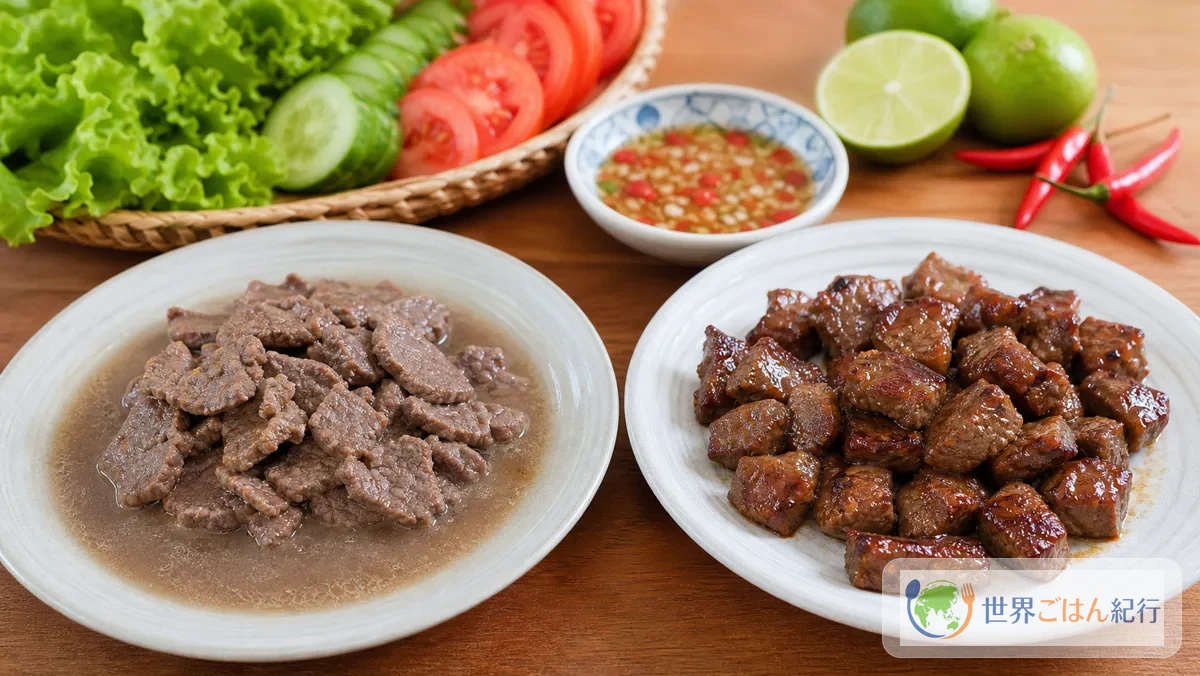
This is a quick stir-fry, and it goes wrong when you dawdle over low heat: water seeps out of the meat and the flavor of the dip you worked on goes blurry.
| Failure | Main cause | Fix |
|---|---|---|
| Meat is gray and watery | Cold pan, too much meat added | Heat over medium-high until the oil ripples and divide the meat in two |
| Meat is tough | Stir-fried too long, thin slices mixed too hard | Add the onion as soon as the meat has color and keep the final simmer short |
| Too salty | Fish sauce and oyster sauce are both salty | Halve the salt in the lime dip and add more vegetables and rice |
| The acidity is too sharp | Lime juice is strong, too little sugar | Add 1/2 tsp sugar and thin with 1 tsp water |
| Vegetables are watery | Dip poured on first, water left on the vegetables | Serve the dip on the side and wipe the lettuce and cucumber |
If you don't work out why the water came out, you'll make the same mistake next time. Lok lak is all about searing the meat well. Check heat, quantity, moisture and the final dip one at a time, and it's easy to put right.
Serving, storing and varying lok lak
How to eat it
Lok lak is best when you put a little rice, vegetables and dip on the same spoon instead of eating the meat on its own. Beef comes first, then the lime and black pepper dip, then the tomato and cucumber, so you taste sweet-savory, then sour, then the cool juiciness of the vegetables.
From the Cambodian kitchen, a light stir-fried green vegetable or a sour soup suits it better than the soft amok. For a wider Southeast Asian table, Hainanese chicken rice shares the fragrant rice, bun cha shares the beef and acidity, and pad kra pao is good practice for high-heat stir-frying. All three use up the fish sauce and jasmine rice you bought.
If you want heat, stir a little chopped red chili into the lime and black pepper dip rather than into the beef. Not making the whole plate hot means the same dish works for kids and anyone who doesn't like spice.
Making ahead and storage
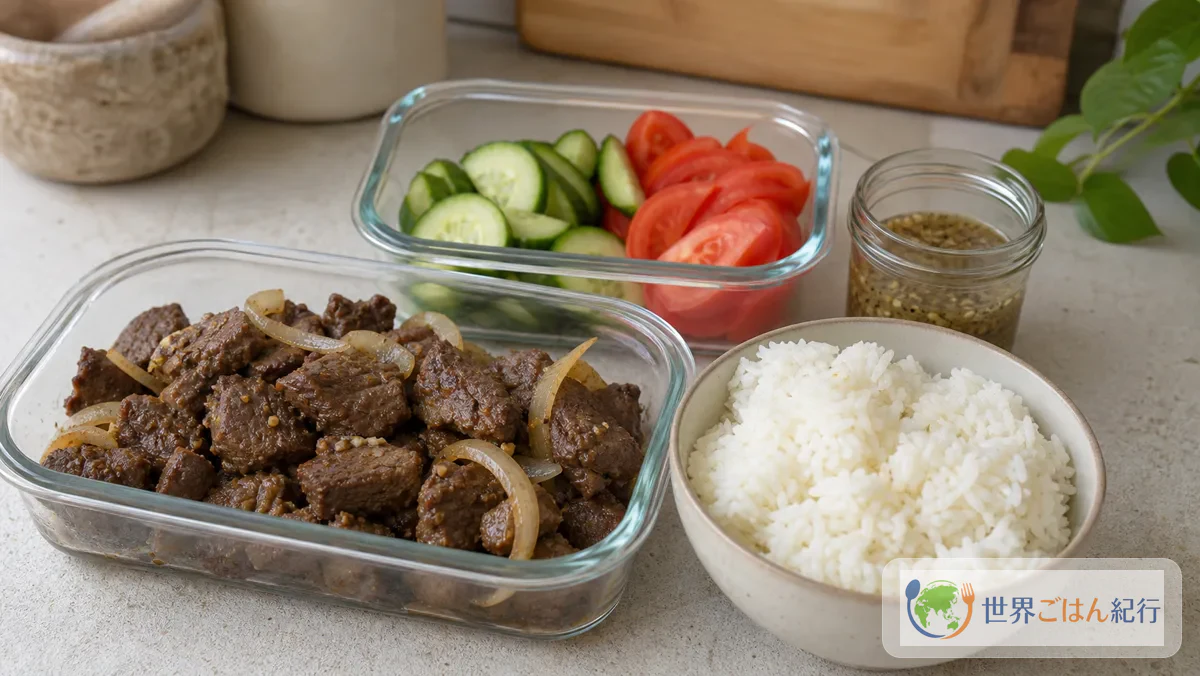
If you make it ahead, always keep the beef, vegetables, dip and rice separate. The beef keeps up to 2 days in the refrigerator, cut vegetables until the next day, and the lime and black pepper dip only the same day. If you store the beef with the dip on it, the acid tightens the surface of the meat and it turns tough when reheated.
Reheat only the beef, either in a skillet for 1 minute over medium heat or for 40–50 seconds in a 600 W microwave. It gets tough if overheated, so stop as soon as it is warm. Warm the rice separately and serve the vegetables cold, so you keep the contrast between hot and cold that makes lok lak what it is.
To prep only the seasoning the day before, refrigerate the beef with the seasonings but leave out the potato starch. Starch added a day early turns the surface gummy, so mix it in 10 minutes before searing.
Frequently asked questions
Is thin sliced beef okay?
Yes, but thin slices cook quickly and release water. Shorten the seasoning time to 5 minutes and stir-fry briefly, about 1 1/2 minutes over high heat. For the cubed texture typical of lok lak, steak cuts such as chuck roast, round or rump are easier to work with.
What if I do not like fish sauce?
In the beef seasoning, replace 1 tbsp fish sauce with 2 tsp soy sauce and 1 tsp water. You can leave out the 1 tsp fish sauce in the lime and black pepper dip. You lose some of the lingering finish, but the oyster sauce and garlic still hold the stir-fry together.
Is there a version without oyster sauce?
If you're avoiding shellfish, mix 1 tbsp soy sauce, 1 tsp sugar, 1 tsp potato starch and 1 tsp oil instead. The flavor is lighter, so add a little more black pepper at the end of searing and make the lime dip sharper so the dish doesn't fall flat.
Is the fried egg essential?
No. A fried egg makes the plate more filling, but on a weeknight the dish is plenty without it. If you add eggs, fry them before you sear the beef, then set them on the warm beef at the end so the plate comes together.
What do I change for children?
Serve the lime and black pepper dip on the side and cut the black pepper in the beef to 1/4 tsp. If the smell of fish sauce is a problem, season mainly with soy sauce and let anyone who wants more adjust with the dip in the small bowl. Kids usually find cucumber and tomato easier to eat than lettuce, so give them more of those.