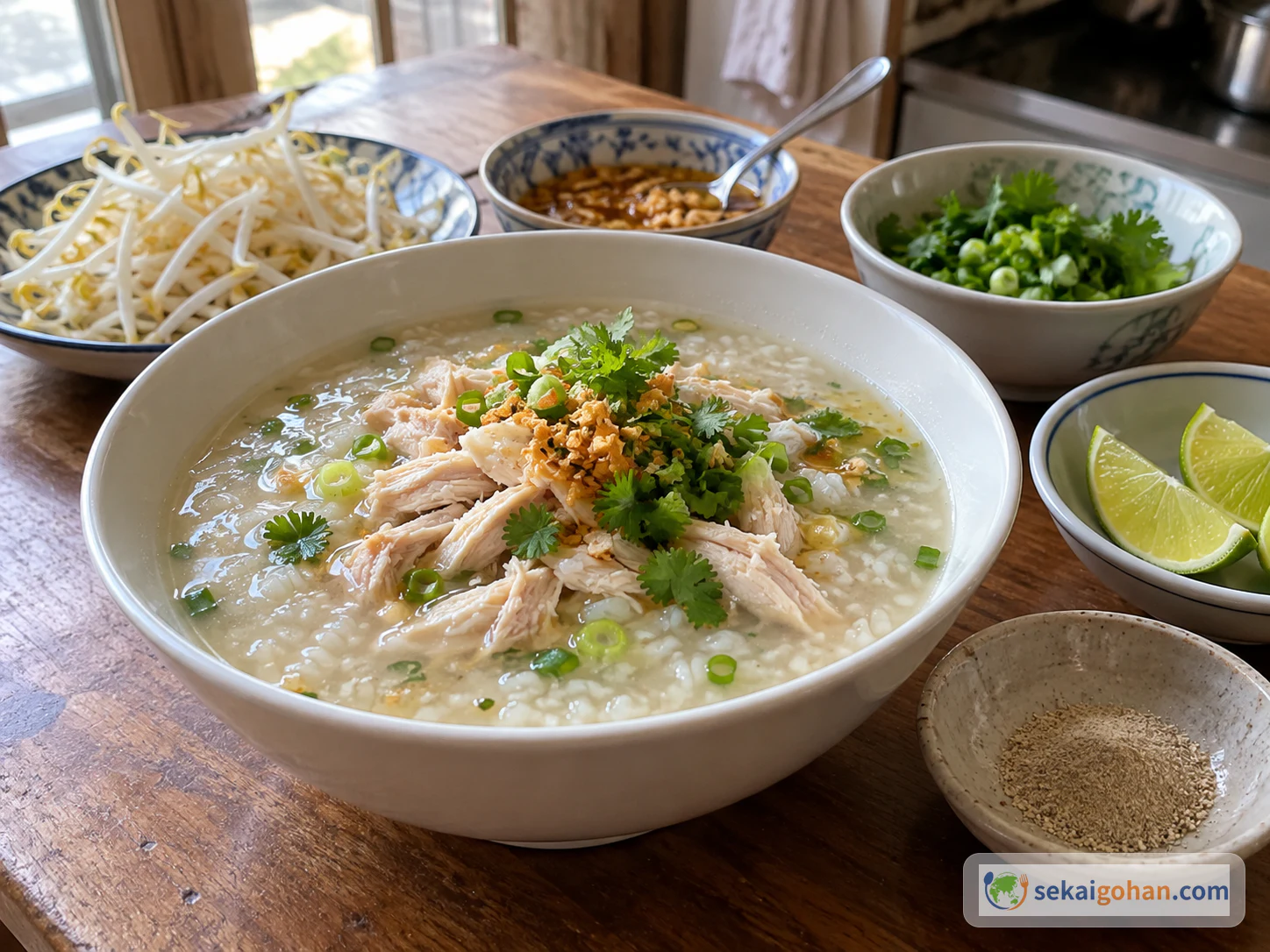
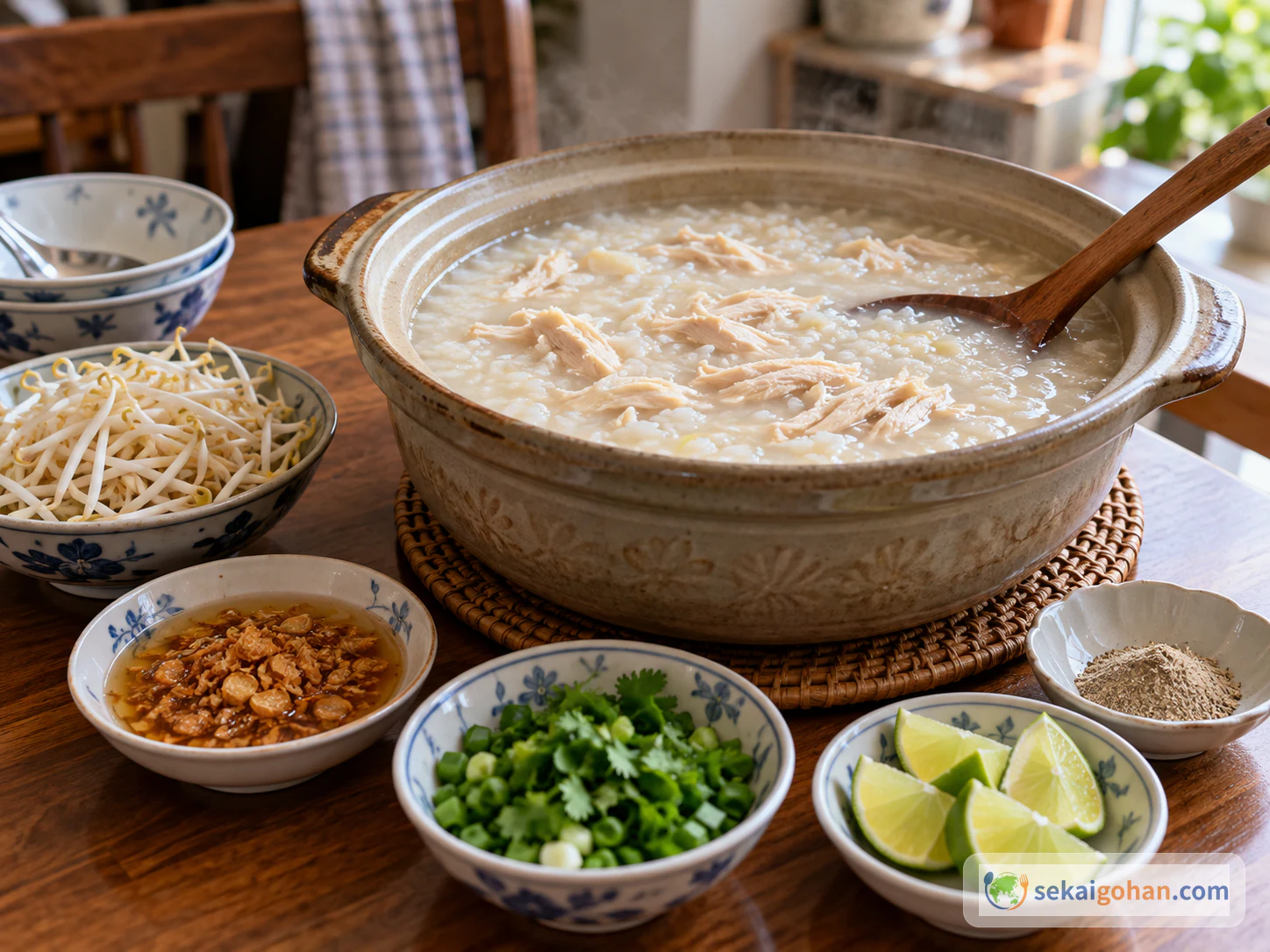
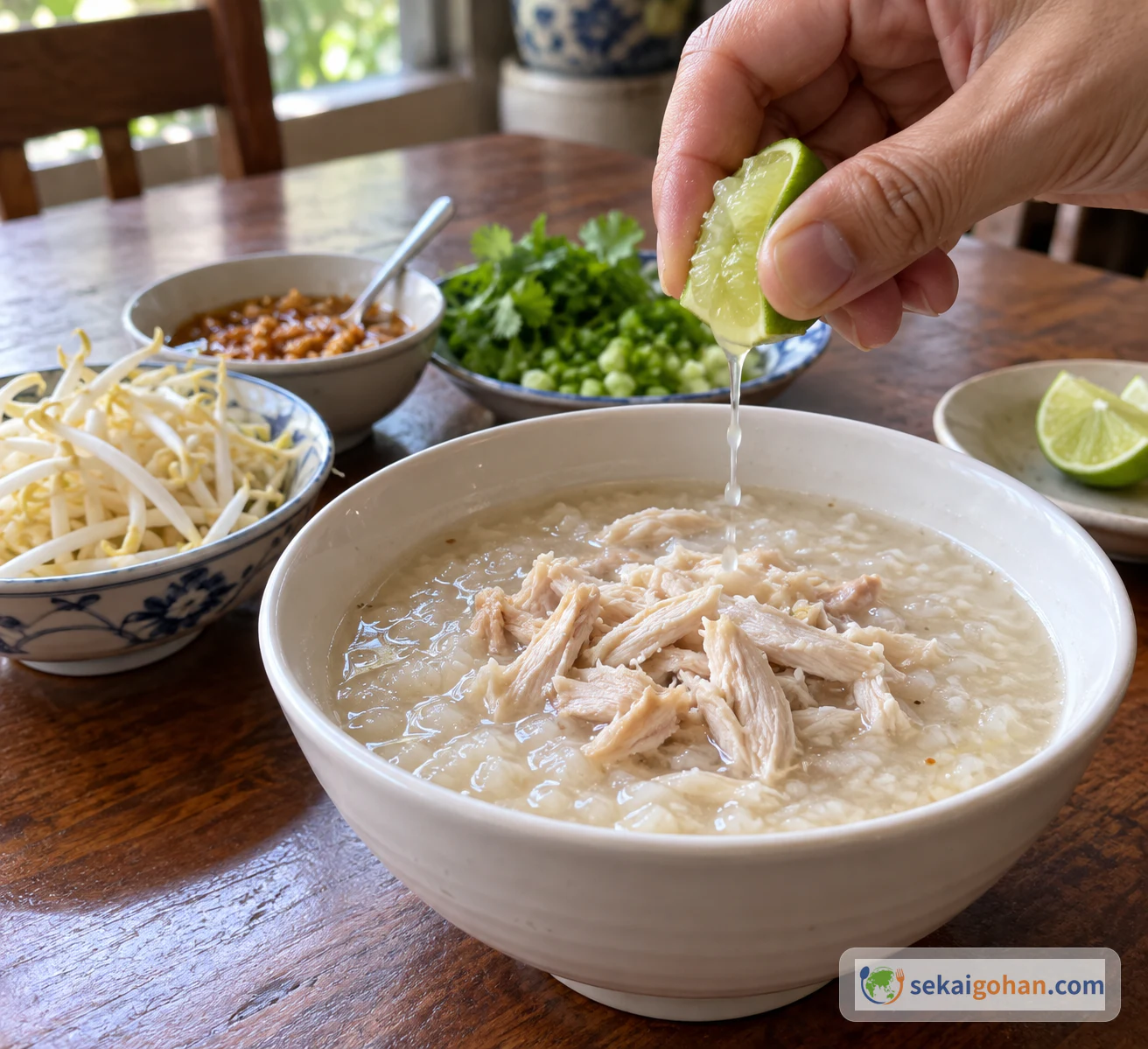
Picture a pot of white rice porridge steaming early in the morning. Everyone ladles some into a bowl and then reaches for the small dishes around it: a spoonful of fried garlic with its oil, a handful of raw bean sprouts, chopped scallion and cilantro, a squeeze of lime, a pinch of white pepper. In one mouthful the soft rice gives way to the snap of a sprout, and the mild broth turns bright with lime. This is bobor (បបរ, also written Borbor), a Cambodian rice porridge. The pot itself stays gentle, and the crunch, aroma and sourness go in afterward, one bowl at a time.
Bobor in Cambodia
In Cambodia, bobor is a favorite breakfast and a late-night meal. Street stalls sell it in the morning and again late at night, and restaurants serve it all day. Common toppings include chicken, scallion, fried garlic, fish sauce, pepper, lime and chili.
Bobor has many versions. Some have no filling at all, and others use pork or fish instead of chicken. In 2014, one eatery cooked its bobor in chicken or pork stock and topped it with minced pork, shrimp, bean sprouts, fried onion, boiled egg and fried rice paper.
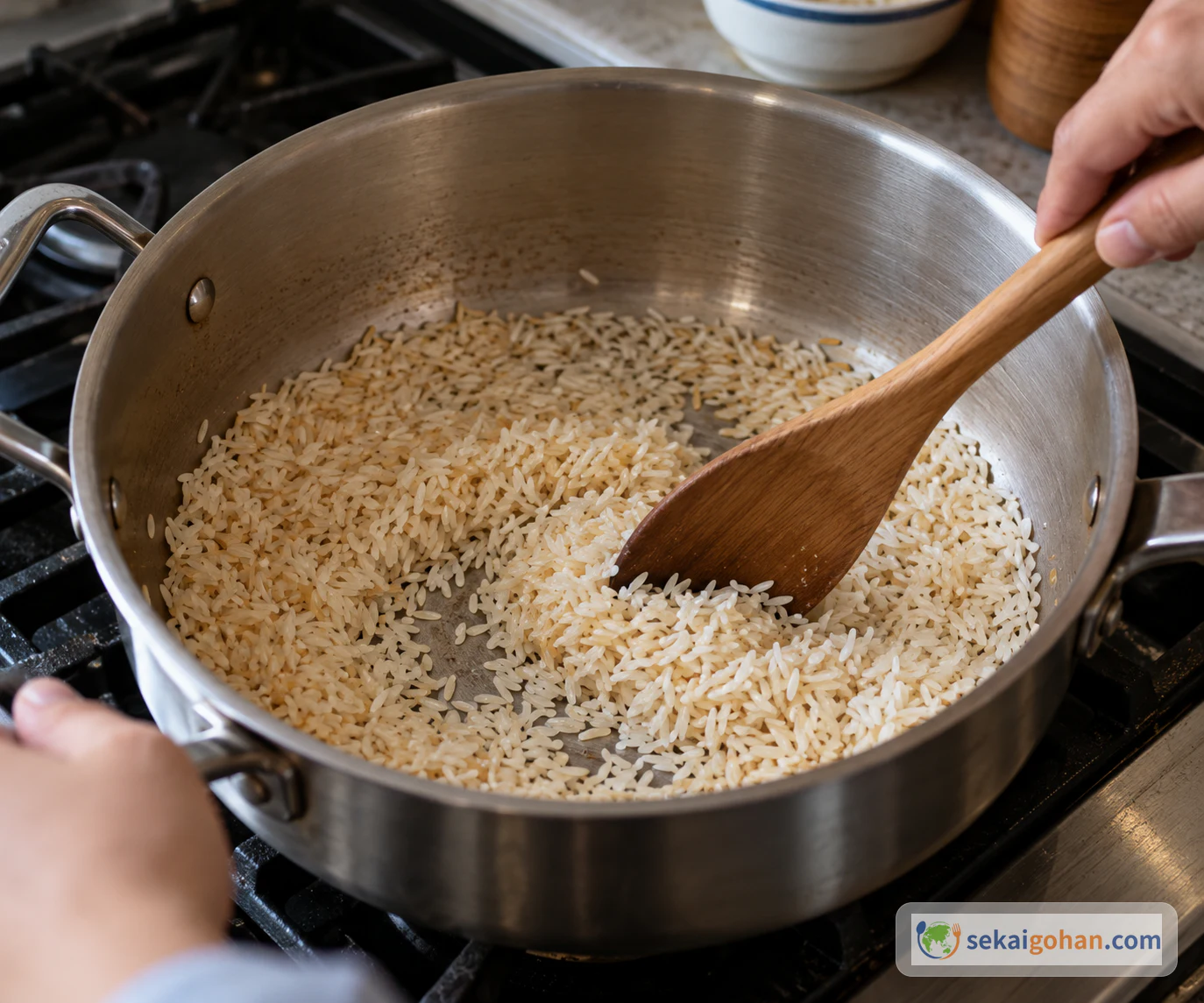
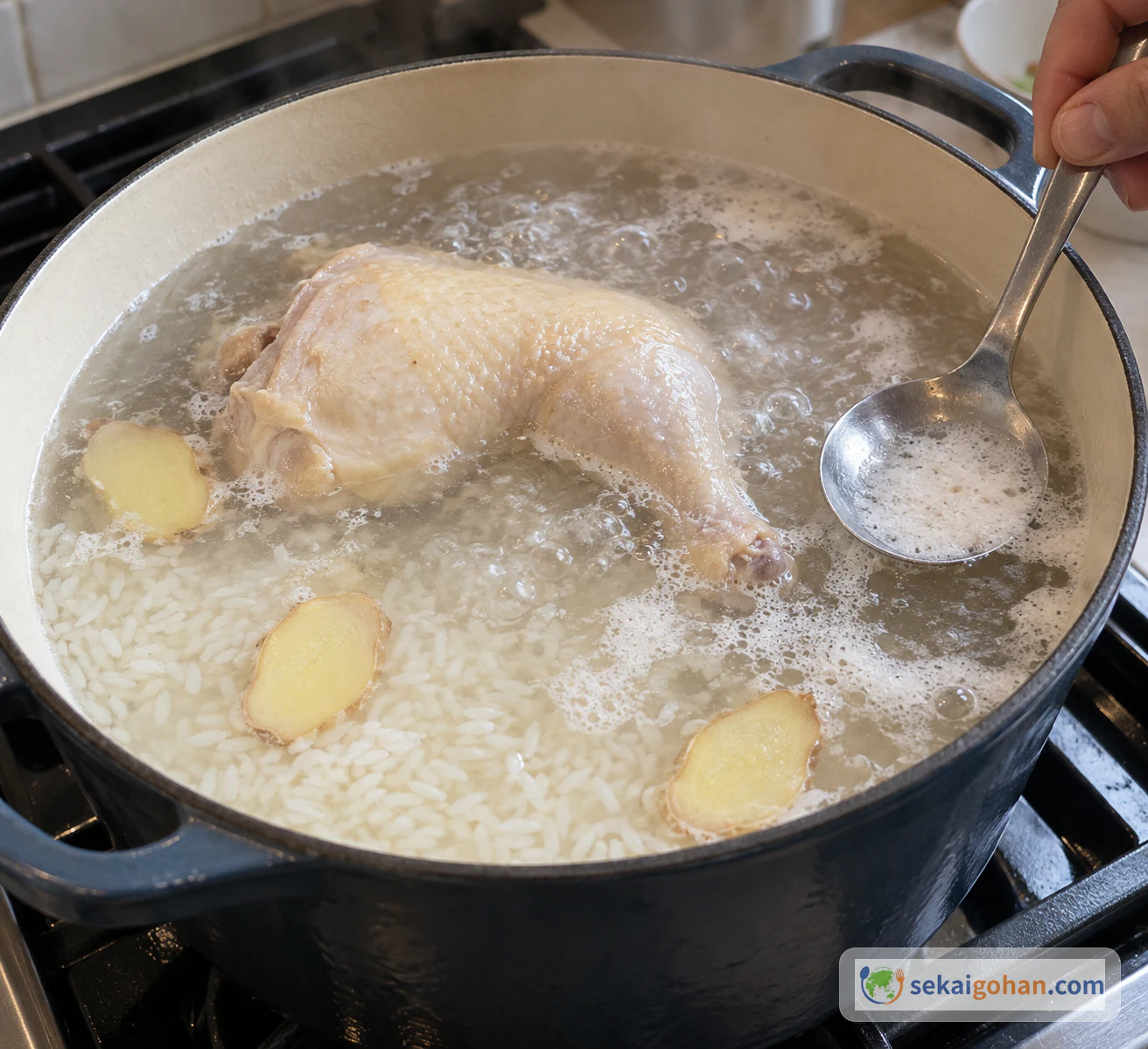
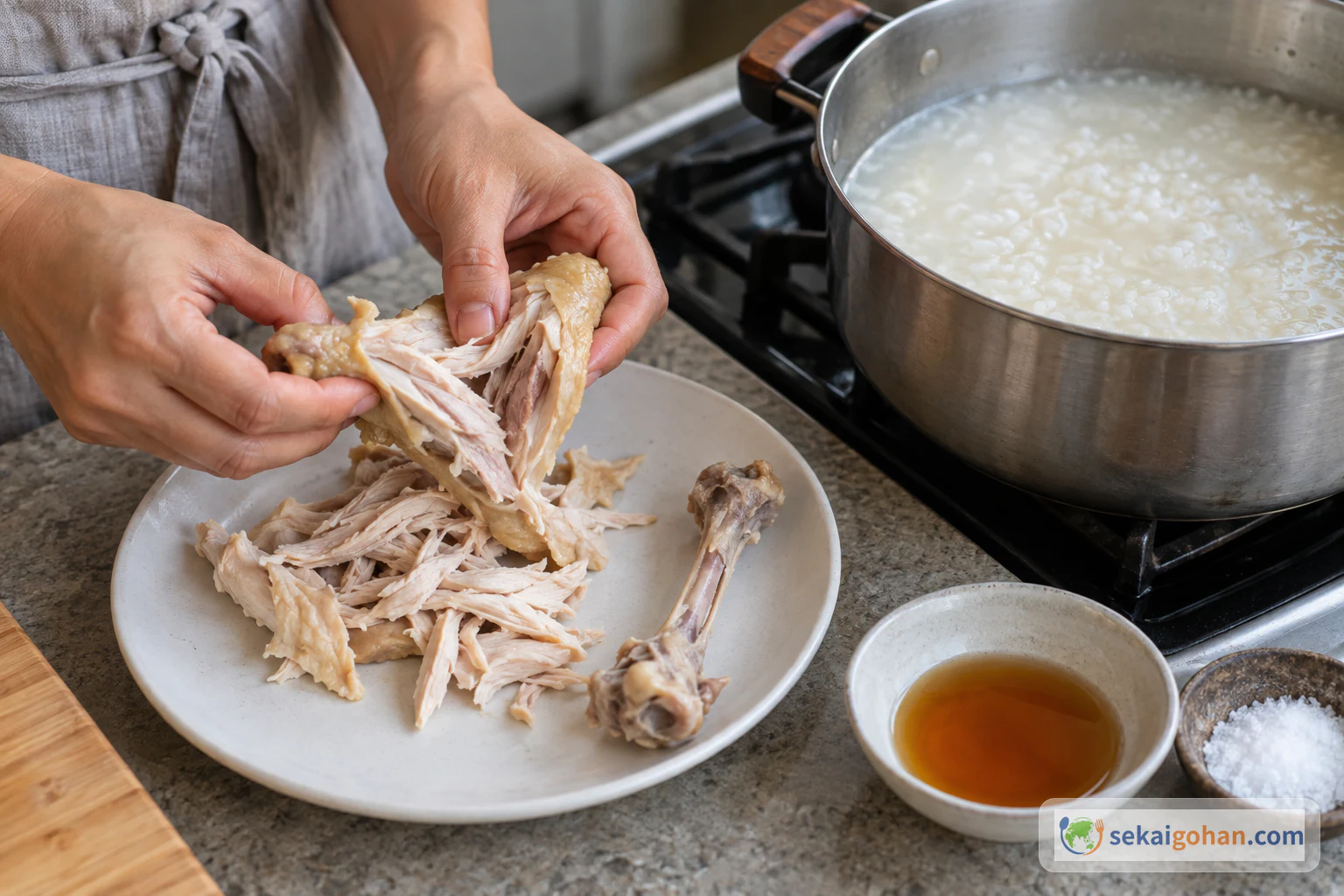
This recipe is bobor sach moan, bobor with chicken. You toast jasmine rice in a dry pot and simmer it with a bone-in chicken leg quarter and ginger. Then you shred the chicken, return it to the pot, and season with fish sauce and salt.
Ingredients (4 Servings): What Goes in the Pot and What Waits on the Table
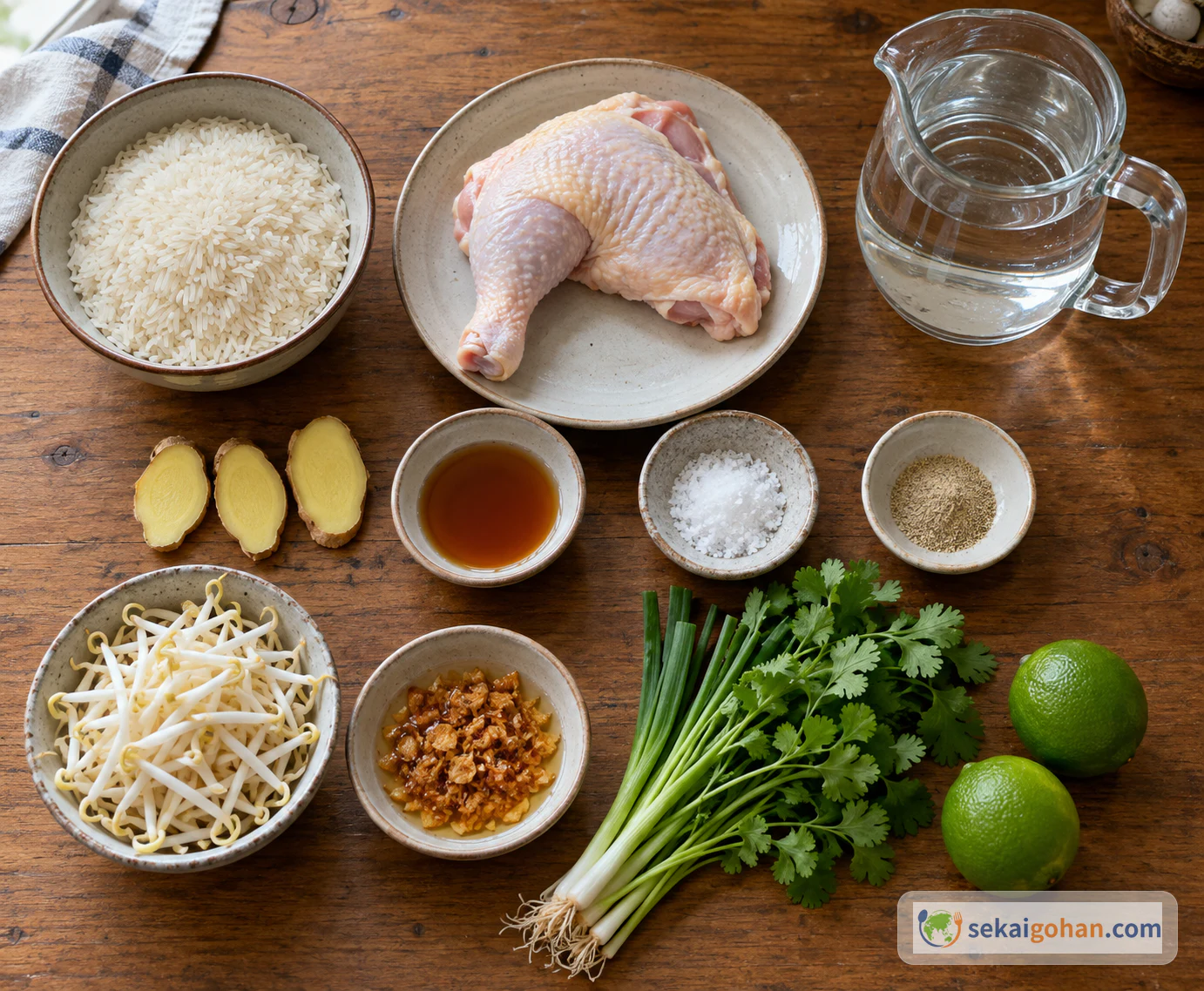
Six ingredients go into the pot. Everything else is set out at the table so each person can season their own bowl.
Serve the table toppings in separate small dishes rather than stirring them into the pot.
Bean sprouts are served raw here, so keep them, and every serving dish and utensil, away from the raw chicken and anything it has touched. Wash your hands and any boards, plates or tools after handling raw chicken. Cook the chicken until the center of the thickest part reaches 167°F (75°C) and holds there for at least 1 minute.
Equipment
- Heavy-bottomed pot large enough for 2.75 quarts (2.5 L) of water plus the rice and chicken
- Wooden spoon or spatula for toasting and stirring
- Spoon or ladle for skimming foam
- Clean plate for shredding the chicken, kept separate from the one that held it raw
- Food thermometer for checking the chicken
- Ladle, serving bowls and small dishes for the toppings
Choosing Ingredients for Bobor
Rice. Jasmine rice brings a gentle fragrance, and its grains open as they simmer. Japanese-style short-grain rice still makes a porridge, but it smells different and breaks down differently, so expect a different texture.
Fish sauce. Any plain fish sauce labeled as such will do. Brands vary in saltiness and fermented aroma, so start with the 2 tbsp and adjust at the table instead of adding more to the pot. Soy sauce can stand in if you'd rather avoid fish sauce. It changes the saltiness and has none of that fermented-fish aroma, so you'll get a different bowl.
Fried garlic. Store-bought fried garlic saves time. Use it together with its frying oil, as the recipe calls for, because without the oil the aroma and mouthfeel change.
White pepper. It smells different from black pepper. If you can, keep white pepper on the table for this dish.
How to Make Bobor
Start from raw rice toasted in a dry pot; this is not a quick version made from already-cooked rice. Judge the finish by the grains and the flow of the porridge, not only by the clock.
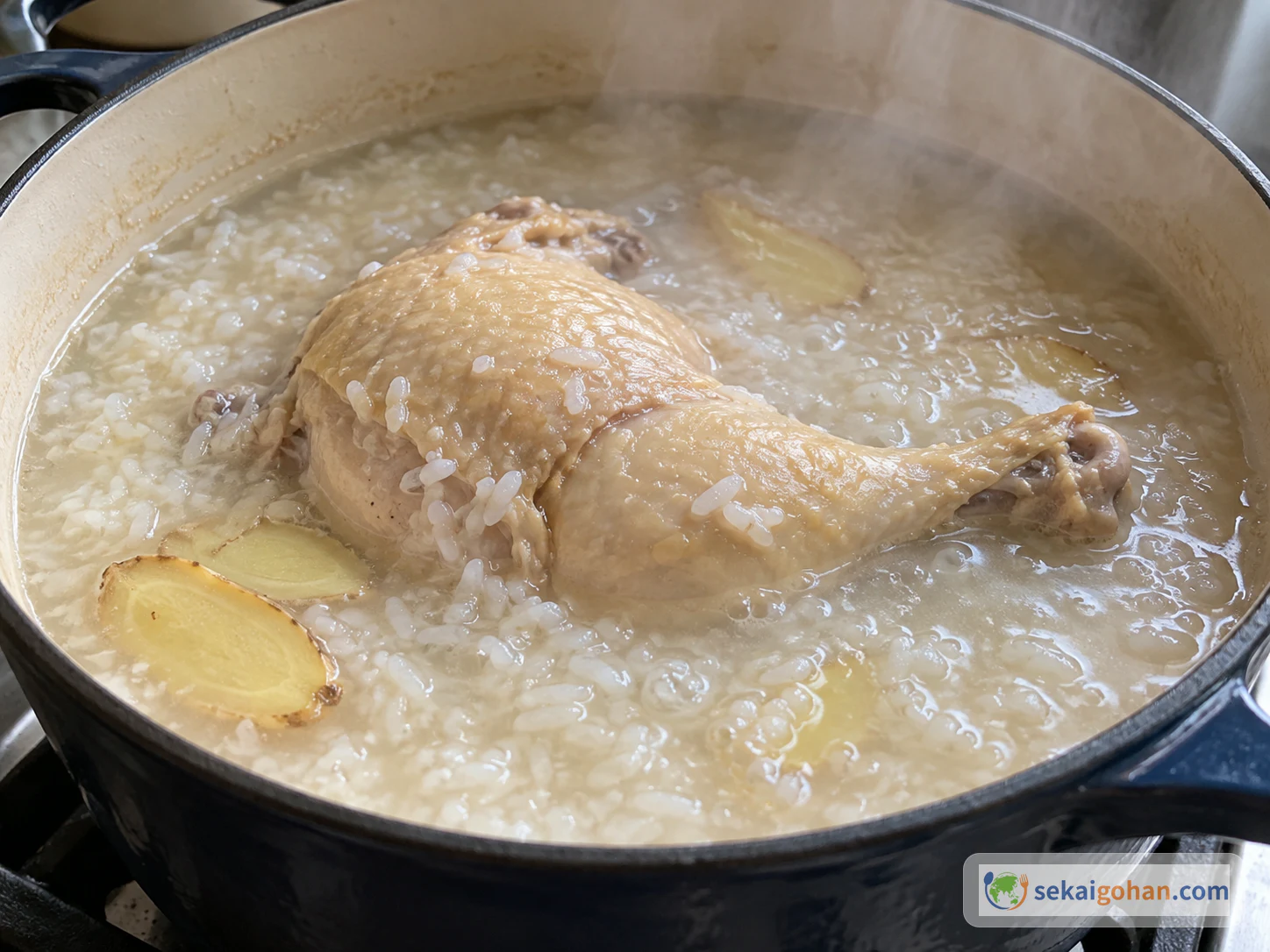
The rice and chicken cook together in one pot. The chicken comes out only near the end, to be shredded, and goes back in before seasoning.
Bobor Troubleshooting
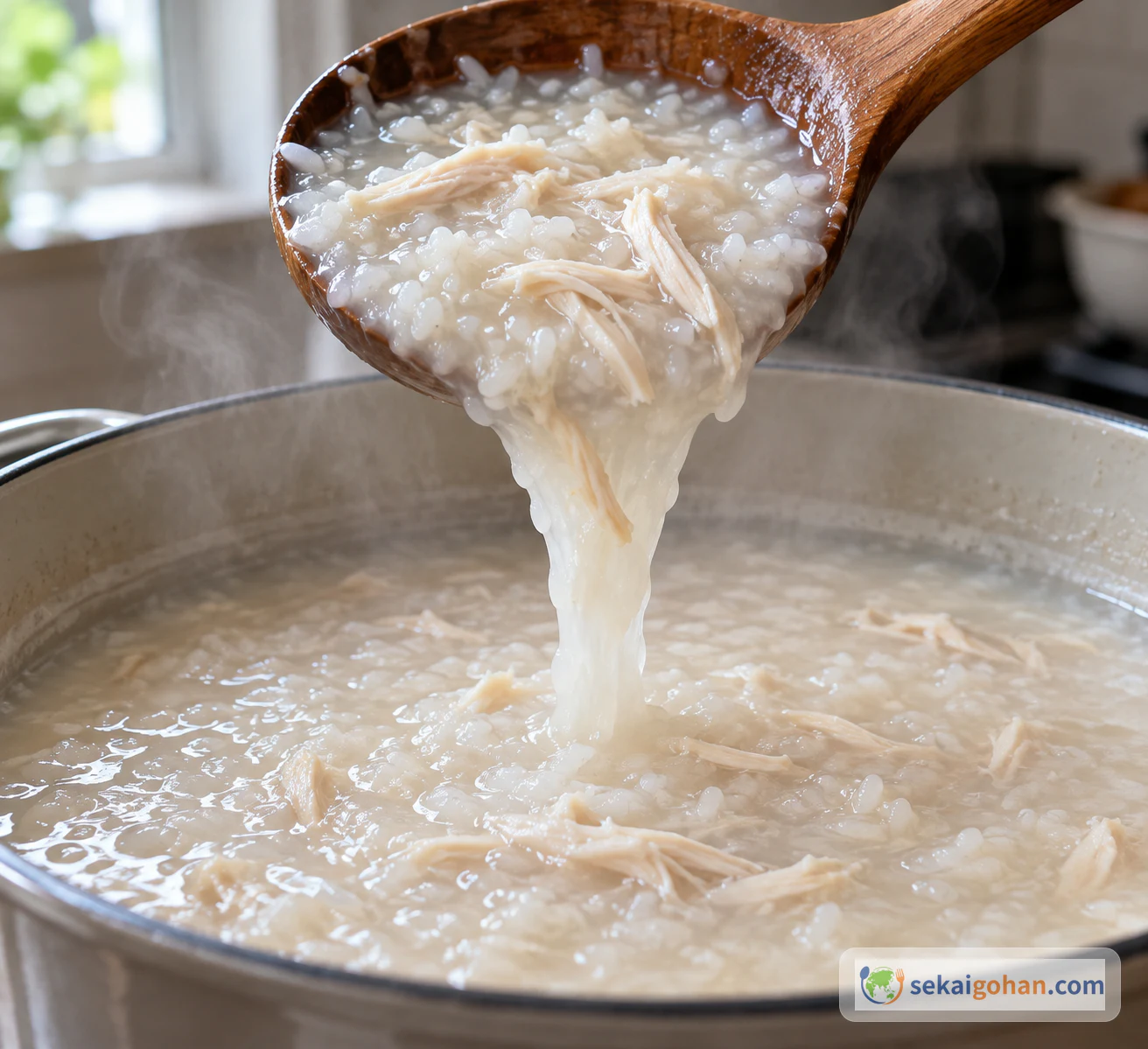
Simmer until the grains open and the liquid turns milky and pearly, then stop while the porridge still flows from a ladle. Most problems come from the porridge thickening more than you expected, the bottom of the pot catching, or adding all the seasoning at once.
| Problem | Likely cause | What to do |
|---|---|---|
| The porridge has set into a thick mass | Rice keeps absorbing liquid as it sits and on the way to the bowl | Stop cooking while it is still loose. Before serving, stir in a little boiling water at a time, never cold water |
| The bottom scorched | Heat too high, or not stirred | Use a heavy pot, keep the heat low, and stir from the bottom regularly |
| The flavor seems flat | Seasoning kept light in the pot | Add fish sauce, lime, white pepper or fried garlic to each bowl a little at a time instead of adding a lot to the whole pot |
| The chicken is not hot enough at the center | Thick piece, or removed too early | Return it to the simmering pot until the thickest part reaches 167°F (75°C) and holds for at least 1 minute |
| The grains still look whole and the liquid is clear | Not simmered long enough | Keep simmering on low, stirring from the bottom, until the grains open and the liquid turns milky |
Serving, Variations and Storing Bobor
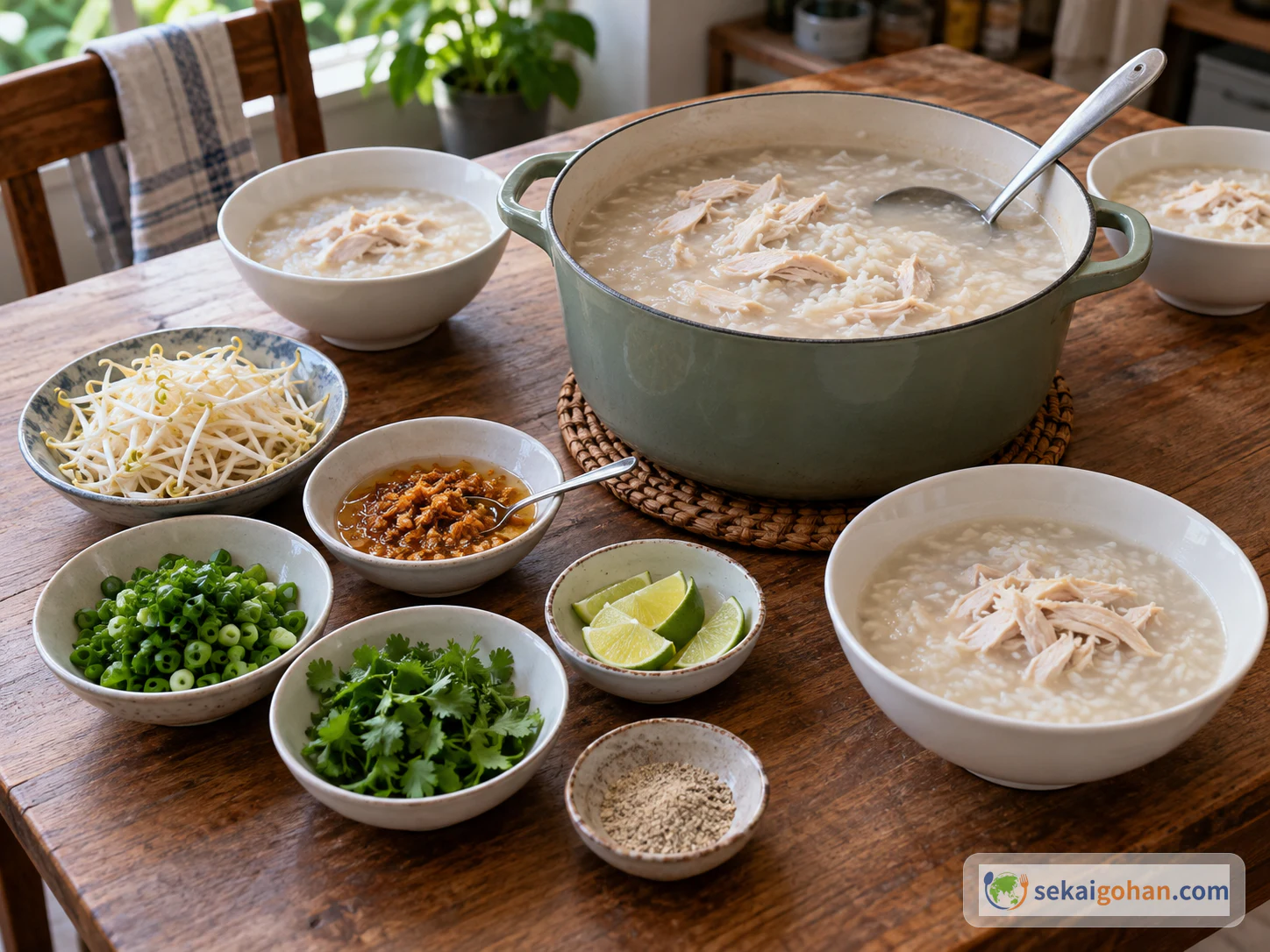
Toppings at the Table
Bobor works because of the contrast between the calm porridge and the sharp, crunchy, fragrant things added at the last moment. Raw bean sprouts stay crisp against the soft rice, and fried garlic adds a toasty richness. Scallion and cilantro bring freshness, lime cuts through with its sourness, and white pepper adds quiet warmth. Since everyone tops their own bowl, one pot works whether you like yours sour or heavy on the pepper.
Variations
- Plain bobor. Leave out the chicken and the broth is lighter, so the toppings at the table carry more of the flavor.
- Pork or fish. For these versions, follow a recipe written for them instead of swapping a different meat into this pot.
- Restaurant-style toppings. Minced pork, shrimp, boiled egg and fried rice paper, as in that 2014 eatery bowl, make it a fuller, more elaborate meal.
- A handful of sticky rice. This is an optional extra that changes the texture.
Leftovers and Reheating
Chicken rice porridge needs care once it has cooled. Divide leftovers into small, shallow containers so they cool quickly, and refrigerate them. Don't leave the pot sitting at room temperature for long. Reheat until the porridge is hot all the way through, loosening it with a little boiling water as it warms. Add the bean sprouts, herbs and lime fresh when you serve, and don't store them in the porridge.
Frequently Asked Questions
Do I have to use jasmine rice?
No, but the result will change. Jasmine rice is used here for its fragrance and the way its grains open. Japanese-style short-grain rice makes a porridge with a different aroma and texture.
My porridge got too thick. How do I fix it?
Stir in a little boiling water at a time until it flows from a ladle again. Porridge thickens as it cools, so it helps to stop cooking while it is still a little loose.
Can I make it without chicken?
Yes. Plain bobor is one of the traditional versions. The broth is lighter, so the toppings at the table matter more.