Pick up a kue satu and a little powder clings to your fingertips. Bite in and it crumbles softly, with a gentle sweetness, and then the scent of dry-roasted mung beans comes back after you swallow. Instead of the buttery smell of a freshly baked cookie, you get dry bean fragrance that dissolves in your mouth. Kue satu is a dry mung bean flour sweet loved around Java. It sits on the Indonesian pastry shelf without much show, and somehow you remember it anyway.
Kue satu in Java
Kue satu is a kue kering, a dry traditional sweet common in Java. It is made by grinding dry-roasted mung beans to flour, adding powdered sugar, vanilla and a little water, and packing the mixture into molds. People serve it at celebrations such as Lebaran, Christmas and Imlek. Between those occasions it lives in an airtight jar, and you eat it a little at a time.
Kue is the Indonesian word for sweets and snacks broadly. Satu means "one," but as a dish name Kue satu is treated as a single unit. In some regions it is called kue koya, kue koyah or putu kacang hijau. In Malay-speaking regions it goes by similar names such as kuih koya.
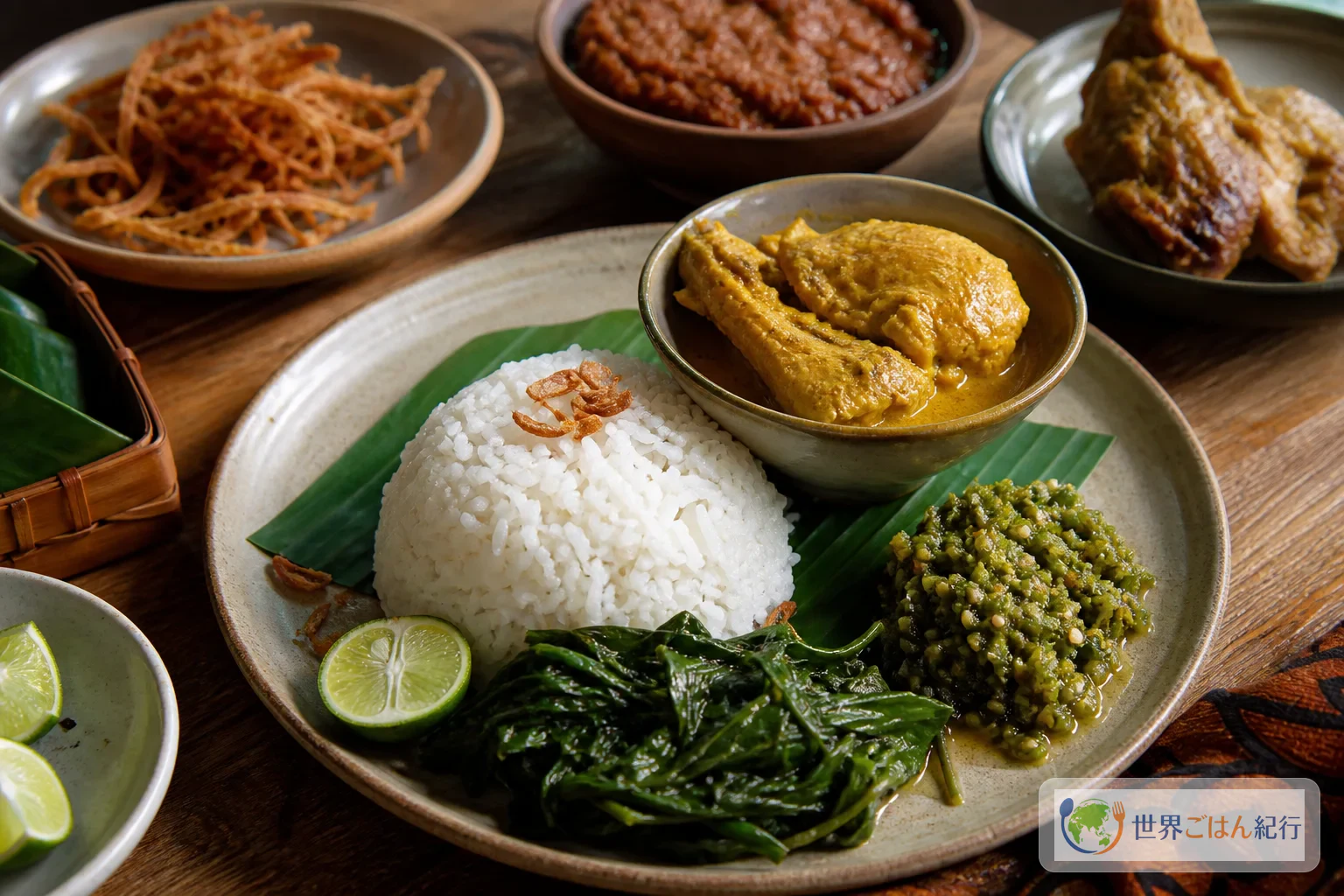
Indonesian cooking does a lot with starches and beans other than rice. Lemper is a snack eaten for its glutinous rice and leaf fragrance, and kue satu is the opposite kind of thing, a sweet made by drying bean flour. If you're curious, look at the pandan aroma of nasi uduk or the way starch is handled in papeda.
Ingredients: about 30 small pieces
Tools
| Tool | How it is used | Substitute |
|---|---|---|
| Frying pan | To dry-roast the mung beans | A heavy pot |
| Food processor | To crush the roasted beans coarsely | A mortar |
| Spice mill | To grind the flour finer still | A coffee grinder, but beware of flavor transfer |
| Fine-mesh sieve | To separate out coarse flour | A tea strainer used in several batches |
| Small sweet molds | For shaping | Silicone chocolate molds, small wagashi-style molds |
This dish contains mung beans. Powdered sugar and vanilla extract can contain milk, wheat or soy. If you have allergies, read the ingredient labels before you start.
Choosing mung beans and tools for kue satu

The scent of mung beans is the core of this sweet, so let the beans lead and keep it well away from a butter cookie. Drying and grinding the beans yourself gives the best aroma, but your flour won't get as fine as factory-milled flour, and at home you'll taste that difference. For a first batch, dry-roast hulled mung beans and grind them as finely as you can. You get a good balance of aroma and easy handling that way.
| What to decide | Traditional | Practical option at home | Direction to avoid |
|---|---|---|---|
| Beans | Dry-roasted mung beans, ground | Hulled mung beans, or mung bean flour | Roasted soybean flour (kinako) alone |
| Aroma | Pandan and the scent of the beans | Without pandan, vanilla only | Matcha or strong flavorings |
| Sweetness | Blended in with powdered sugar | Powdered sugar, not granulated | Coarse-grained sugar mixed in directly |
| Moisture | Packed into molds with a little water | Water or thinned coconut milk, bit by bit | Pouring in water all at once |
| Finish | Dried at low heat | Dry-bake in a 275°F (130°C) oven | Baking at high heat until it browns |
Look for mung beans and powdered sugar at import grocery stores, bean specialists and baking supply shops, and choose mung beans and pandan by their aroma and the condition of the grains. If you can't find mung beans, chickpea flour or roasted soybean flour will still make a bean flour sweet. It just drifts away from the white, light aroma of kue satu, so hulled mung beans from an import grocery are worth the hunt.
The tools that grind the beans matter more than anything else you buy, because the coarseness of the flour shows up directly in the mouth. A food processor handles the first crushing, but on its own it leaves the flour coarse. Finish with a spice mill or a fine-mesh sieve. If you plan to grind beans finely again and again, a small mill will save you a lot of failures.
Method: dry-roast, grind fine, dry at low heat
Do not hurry once you start mixing. Dry-roast the mung beans to bring out the aroma, cool them completely before milling, and add the moisture little by little. Packing the molds tightly makes them look easier to unmold, but they turn hard when eaten. Do not press too hard; that decides the melt-in-the-mouth texture.
Kue satu is not a sweet to bake until golden. The toasty flavor is made in the first dry-roast, and the oven only dries the pieces until they hold their shape. The darker the color, the more scorched bitterness comes forward over the delicate mung bean aroma.
Common kue satu problems: cracking, hardness, grittiness

| Problem | Cause | Fix |
|---|---|---|
| Cracks when unmolded | Lack of moisture, coarse flour | Add water 1 tsp at a time and re-sieve the coarse bits |
| Hard when eaten | Pressed too hard into the mold, too much water | Press more lightly next time and don't add excess water |
| Gritty | Flour ground too coarsely | Repeat the mill and sieve once more |
| Beany smell remains | Under-roasted | Roast further over medium-low heat until the aroma rises |
| Burnt smell | Dry-roasting or oven temperature too high | Don't stir in scorched beans; bake at 250–275°F (120–130°C) |
| Turns damp after storage | Sealed before cooling | Open the lid, dry in a 250°F (120°C) oven for 5 minutes, then cool |
The most common mistake is adding too much water so the pieces unmold cleanly. The dough is easier to handle while you work, but after baking it turns hard and a little sticky in the mouth. With too little water, it cracks the moment it leaves the mold. You want dough that holds together when squeezed in your hand but crumbles finely when pressed. Damp sand in a sandbox is a good picture to keep in mind.
Coarse flour is edible, but you lose the way kue satu disappears in your mouth. Pass the flour through a sieve at the end, and return the coarse bits left in the sieve to the mill instead of throwing them away. If you take care here, the cookies satisfy without any extra sugar.
Serving and storing kue satu
Kue satu is a tea sweet more than an after-dinner dessert. It draws moisture out of the mouth, so pour hot black tea, green tea or bitter coffee alongside, which also brings out its aroma. Put it alone on a small plate. Next to a moister sweet, it loses some of its aroma.
For an Indonesian menu, serve a few after nasi uduk, whose aroma runs in a similar direction, or with tea on a day you've had the rich meat dish rendang. After a spicy meal, it also resets the mouth from strong heat like sambal-based substitutes.
| Per piece (approx.) | Value |
|---|---|
| Energy | about 58 kcal |
| Protein | about 2 g |
| Fat | about 0.5 g |
| Carbohydrate | about 12 g |
| Fiber | about 1 g |
| Salt equivalent | about 0.03 g |
The pieces are small, but bean and sugar are packed tightly together, so they fill you up more than the light texture suggests. Two to 3 pieces are plenty with tea.
Dry sweets lose their texture quickly in humidity. Seal kue satu in an airtight jar only after it has cooled completely, and add a desiccant to keep it crumbly. Eat it within about 5 days at room temperature. The aroma settles best the day after making and fades the longer it sits. In humid weather or summer, move it to the refrigerator in an airtight container with a desiccant, because it easily picks up refrigerator smells. Don't freeze it: the moisture on thawing makes the surface sticky, and the crumbly texture is hard to bring back.
FAQ
Can I use mung beans with the skins on?
You can, but leftover skins make the flour coarser and the color a little greenish. After dry-roasting, rub the beans in a cloth to remove as much of the loosened skin as possible, and pick out any skins left in the sieve. For a first batch, hulled mung beans fail less often.
Can I make it with only store-bought mung bean flour?
Yes. Start with 9 oz (260 g) mung bean flour and dry-roast it with the pandan leaves over low heat for 8–10 minutes to bring out the aroma. The flour scorches easily, so keep stirring and shaking the pan. The aroma is milder than when you grind from beans, but the fineness of the flour is consistent.
Is it okay without pandan leaves?
Yes. Pandan adds a sweet green fragrance, but the center of kue satu is the mung bean. Increase the vanilla to 2/3 tsp and dry-roast carefully to bring out the bean aroma.
What if I don't have molds?
Small silicone chocolate molds, wagashi-style molds or even measuring spoons will work. Deep molds are hard to release from, so keep the thickness around 1.2–1.5 cm. You can also shape it by hand, but the density comes out uneven and it cracks more easily.
Can I make it without an oven?
On a clear, dry day, you can set the pieces on a rack in a well-ventilated place and dry them for several hours. In humid climates, hygiene and texture are less reliable, so at home it is safer to dry them briefly in a 250–275°F (120–130°C) oven. A toaster oven scorches easily, so cover the pieces with aluminum foil and watch them at a low temperature.