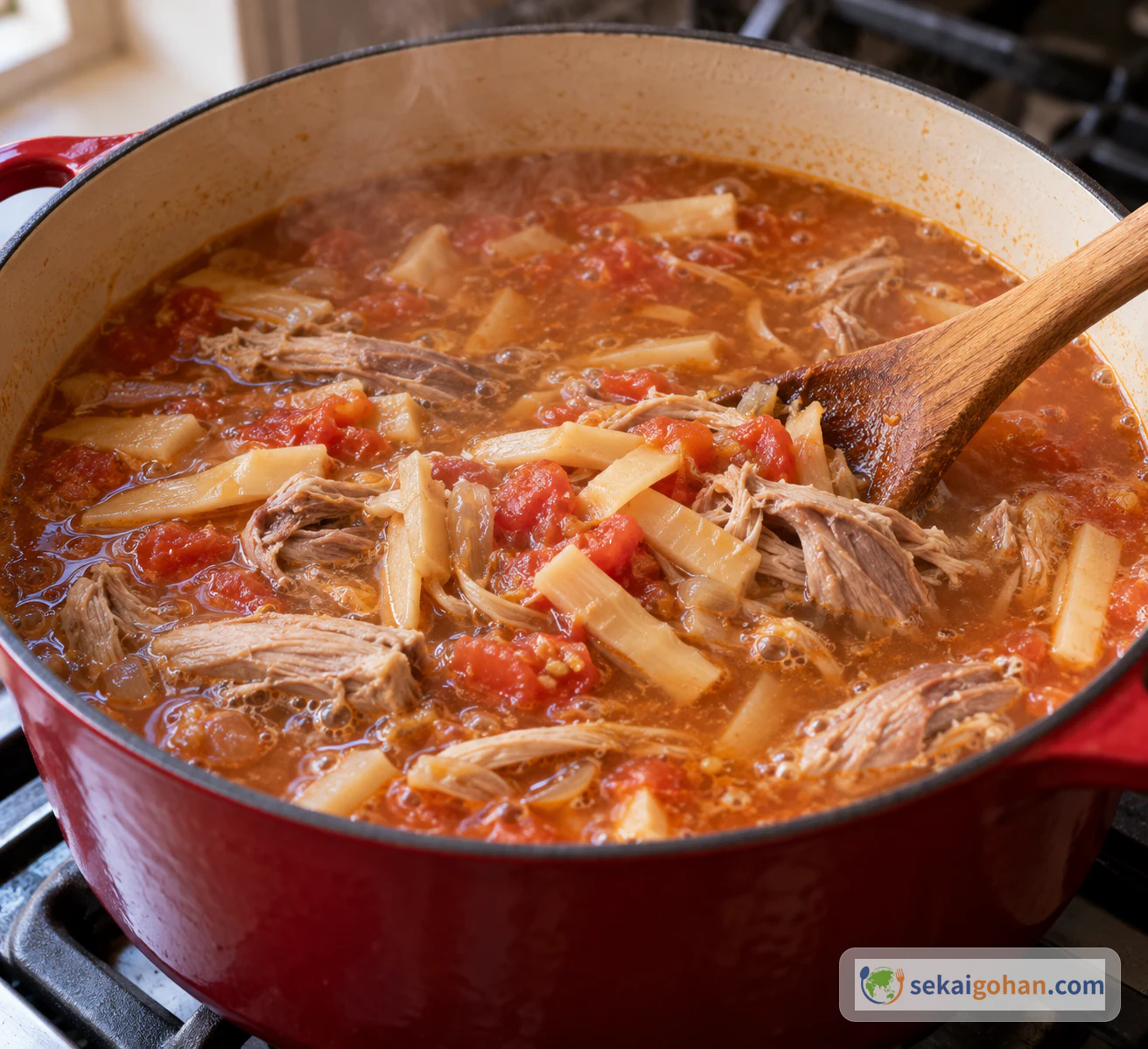
Bún Măng Vịt: Vietnamese Duck and Bamboo Shoot Noodle Soup

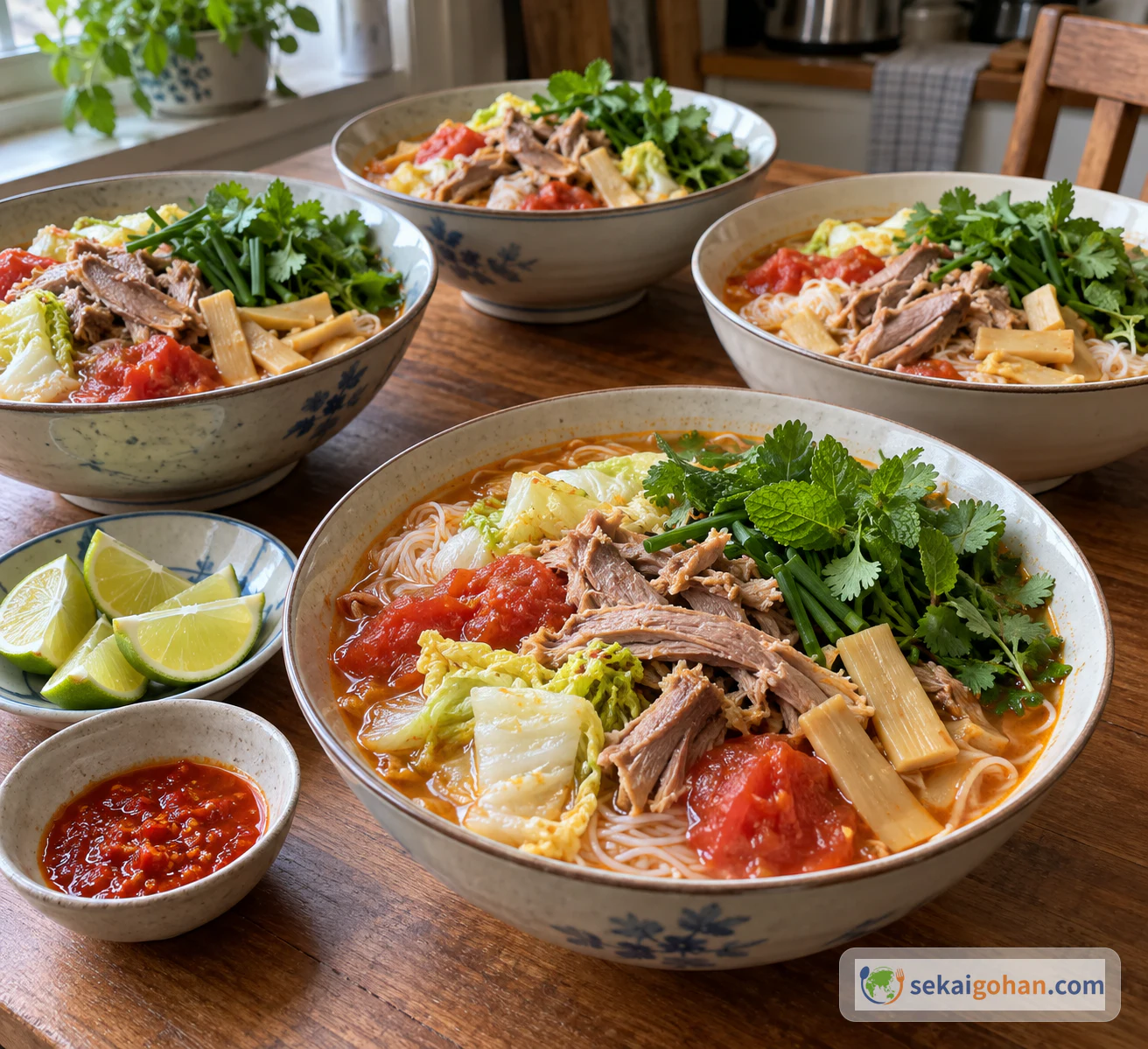
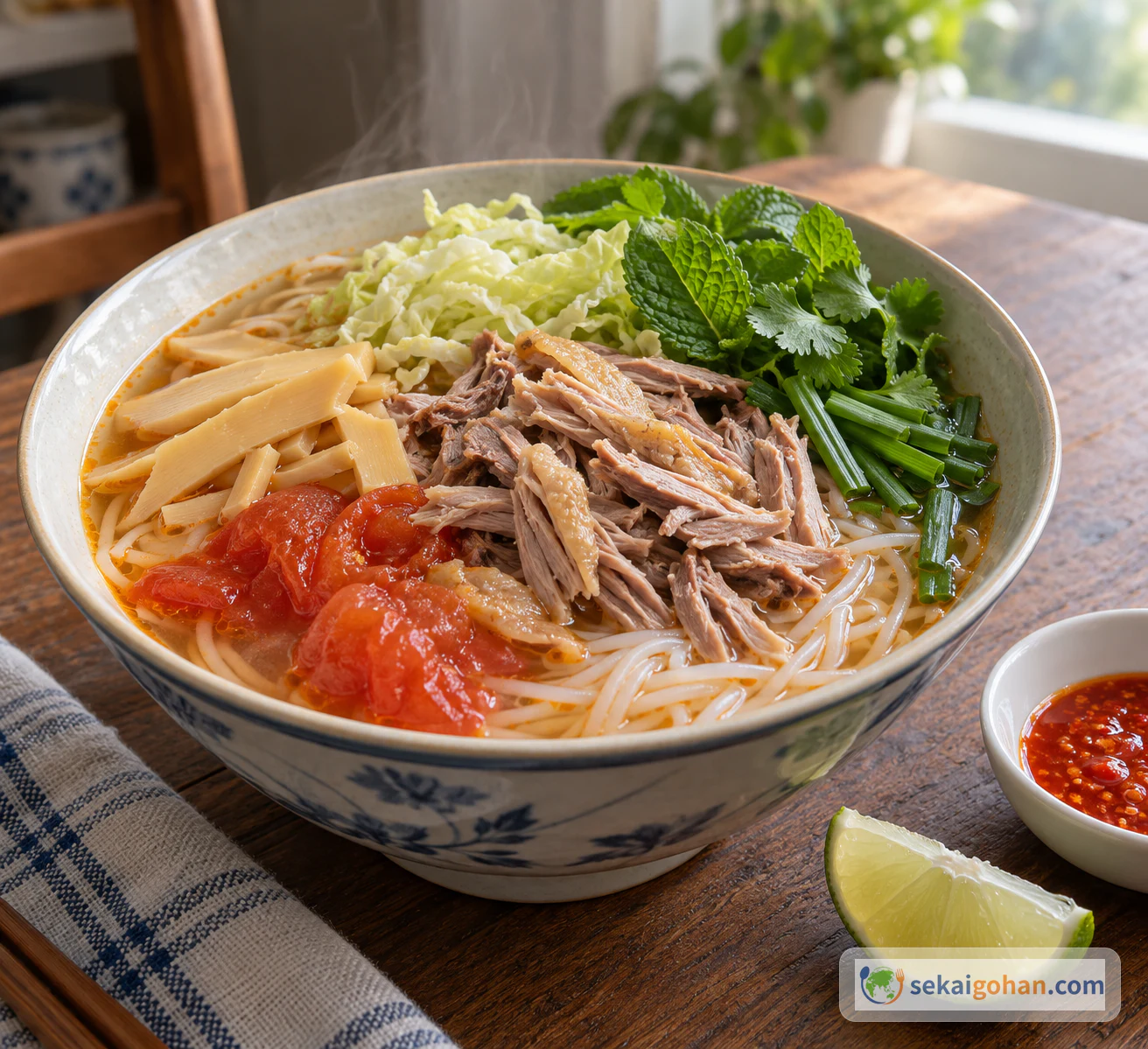
Bún măng vịt: rice vermicelli topped with shredded duck, bamboo shoots, tomato and fresh herbs
Serves
6 servings
Cuisine
Vietnamese

How to make bún măng vịt, a Vietnamese rice-vermicelli soup with duck and bamboo shoots, following Christine Pham's six-serving Chez Pham recipe published by Epicurious. Covers browning the duck, building the ginger broth, the tomato and bamboo-shoot sauté in duck fat, safe duck doneness, canned versus fresh shoots, make-ahead and reheating, and how this version differs from a northern Vietnamese bowl.

Cooking flow

Cooking steps

STEP11 / 7

Brown the duck

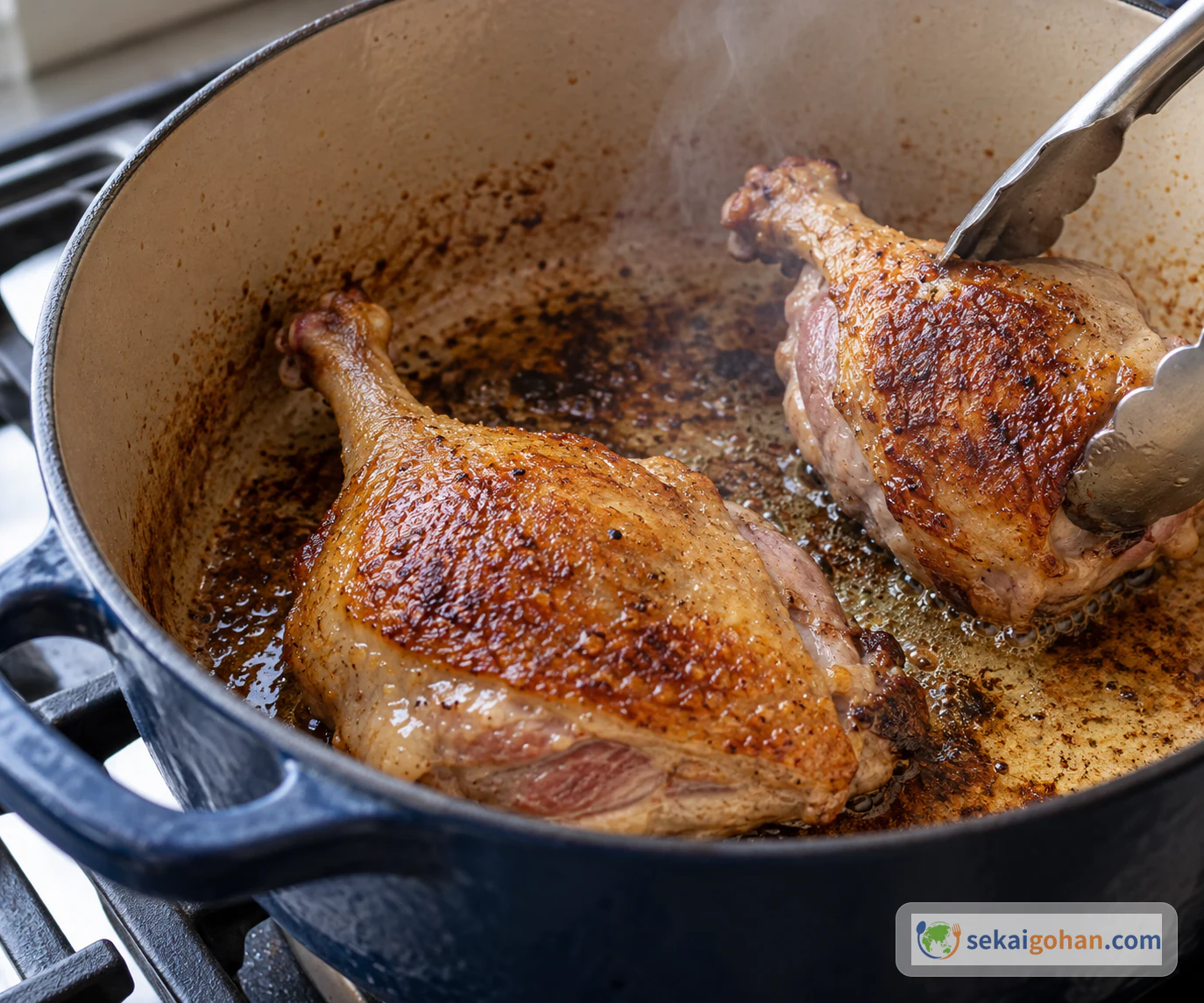
Skin-on duck leg-thigh pieces browning in a heavy pot
Brown the duck deeply on both sides before any liquid goes in

Do not rinse the duck. If needed, blot any drips with paper towel, and keep the raw duck away from the cabbage and herbs. Heat a large heavy pot over high heat. Season the duck pieces with salt and pepper and brown them deeply, about 6 minutes per side. Wash your hands, tongs and board after handling the raw pieces.

STEP22 / 7

Build the broth and simmer until very tender

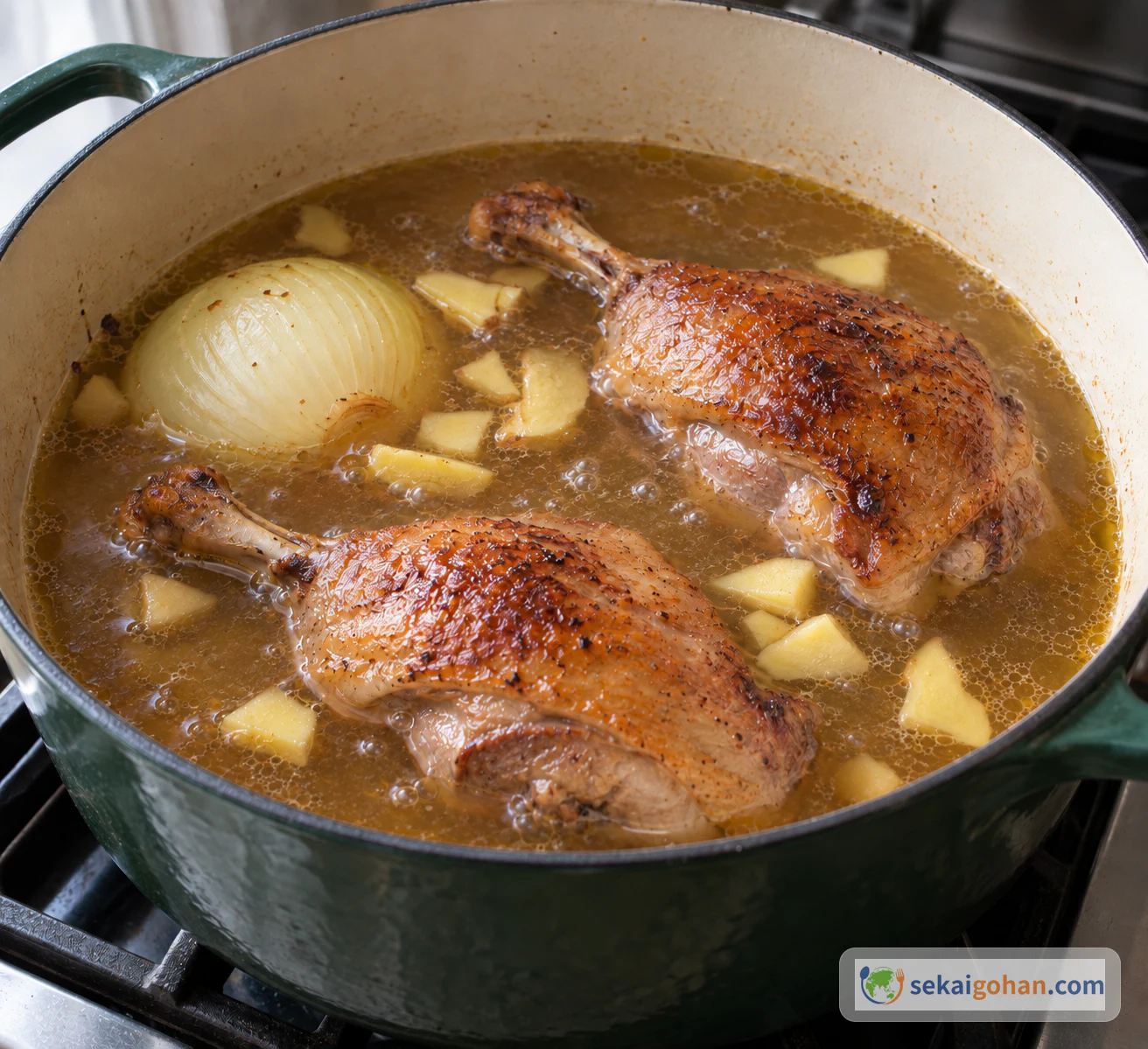
Browned duck simmering gently with broth, onion and ginger
A gentle uncovered simmer with small, steady bubbles

Add the chicken broth, halved onion, ginger, 2 tbsp fish sauce and 1 tbsp sugar. Bring to a boil, then lower the heat and simmer gently, uncovered, until the duck is very tender, about 45–60 minutes.

Before taking the duck out, check the thickest part with a thermometer: it should reach at least 167°F (75°C) for one minute. If it has not, keep simmering and check again. Do not rely on the color of the meat or its juices.

STEP33 / 7

Shred the duck and strain the broth

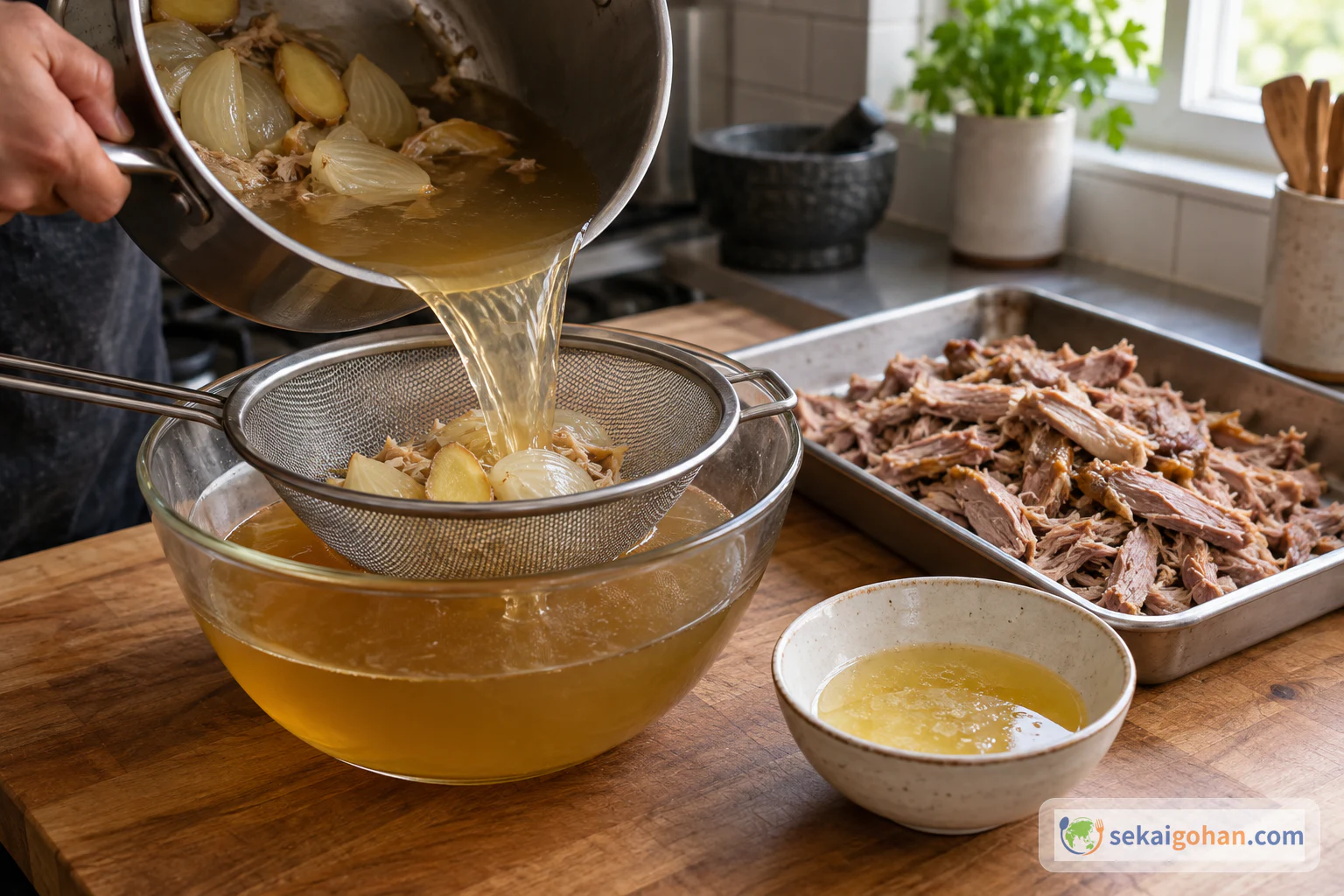
Broth strained through a fine-mesh strainer beside shredded duck and a bowl of duck fat
Shred the meat, strain out the onion and ginger, and keep 2 tbsp of the fat

Transfer the duck to a rimmed tray and let it cool about 30 minutes, just until you can handle it. Remove and discard the skin and bones, and coarsely shred the meat.

Strain the broth through a fine-mesh strainer into a large bowl and discard the onion and ginger. Skim the fat into a small bowl and set aside 2 tbsp. Return the broth to the pot and add the shredded duck.

STEP44 / 7

Cook the noodles

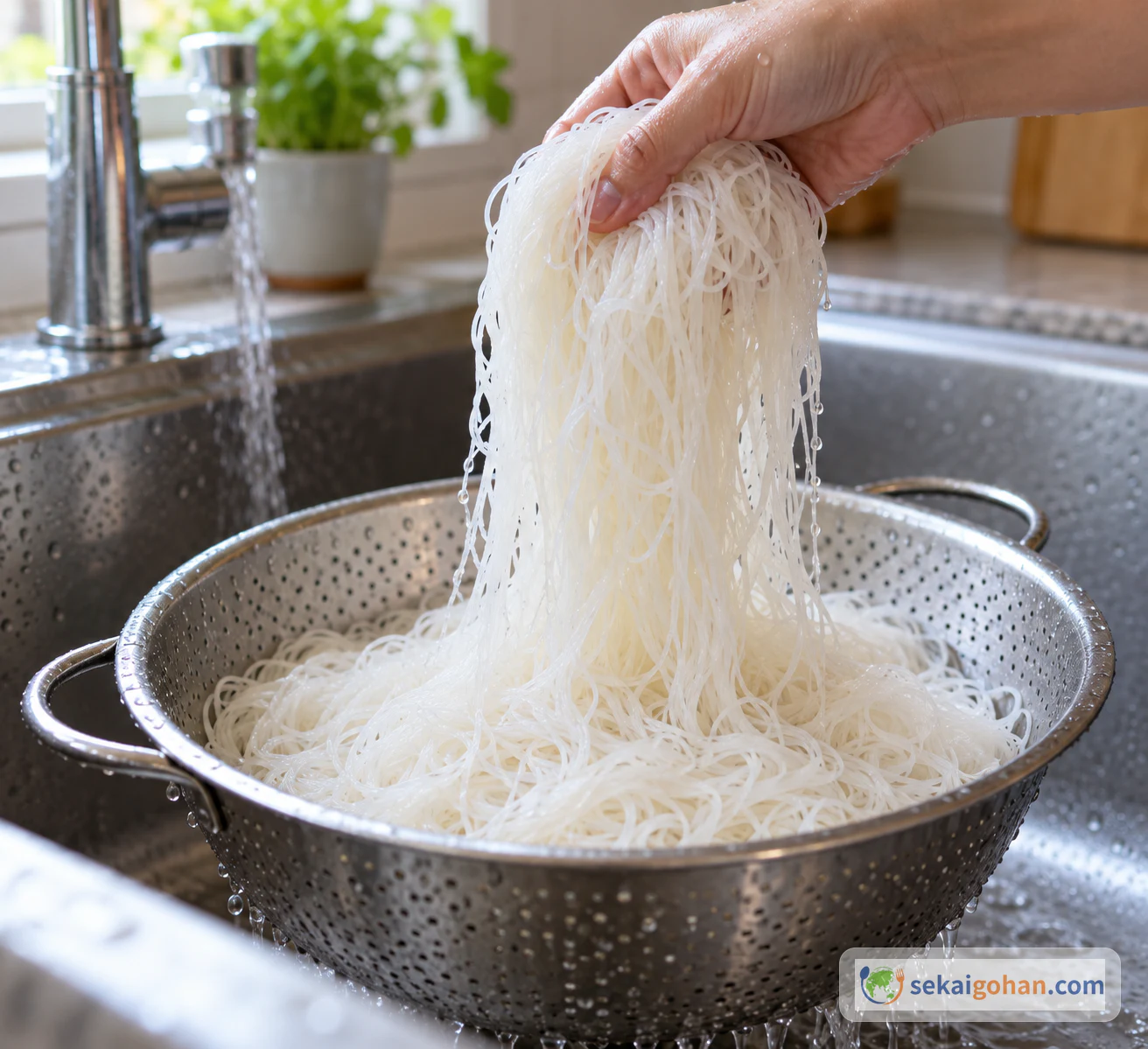
Rinsed rice vermicelli draining in a colander
Cook just until tender, then rinse in cold water and drain well

Bring a large saucepan of water to a boil. Cook the rice vermicelli until just tender, stirring now and then, 3–5 minutes. Drain, rinse with cold water, and drain again. Cut the noodles in half and keep them apart from the soup until you assemble the bowls.

STEP55 / 7

Sauté the shallots, tomatoes and bamboo shoots

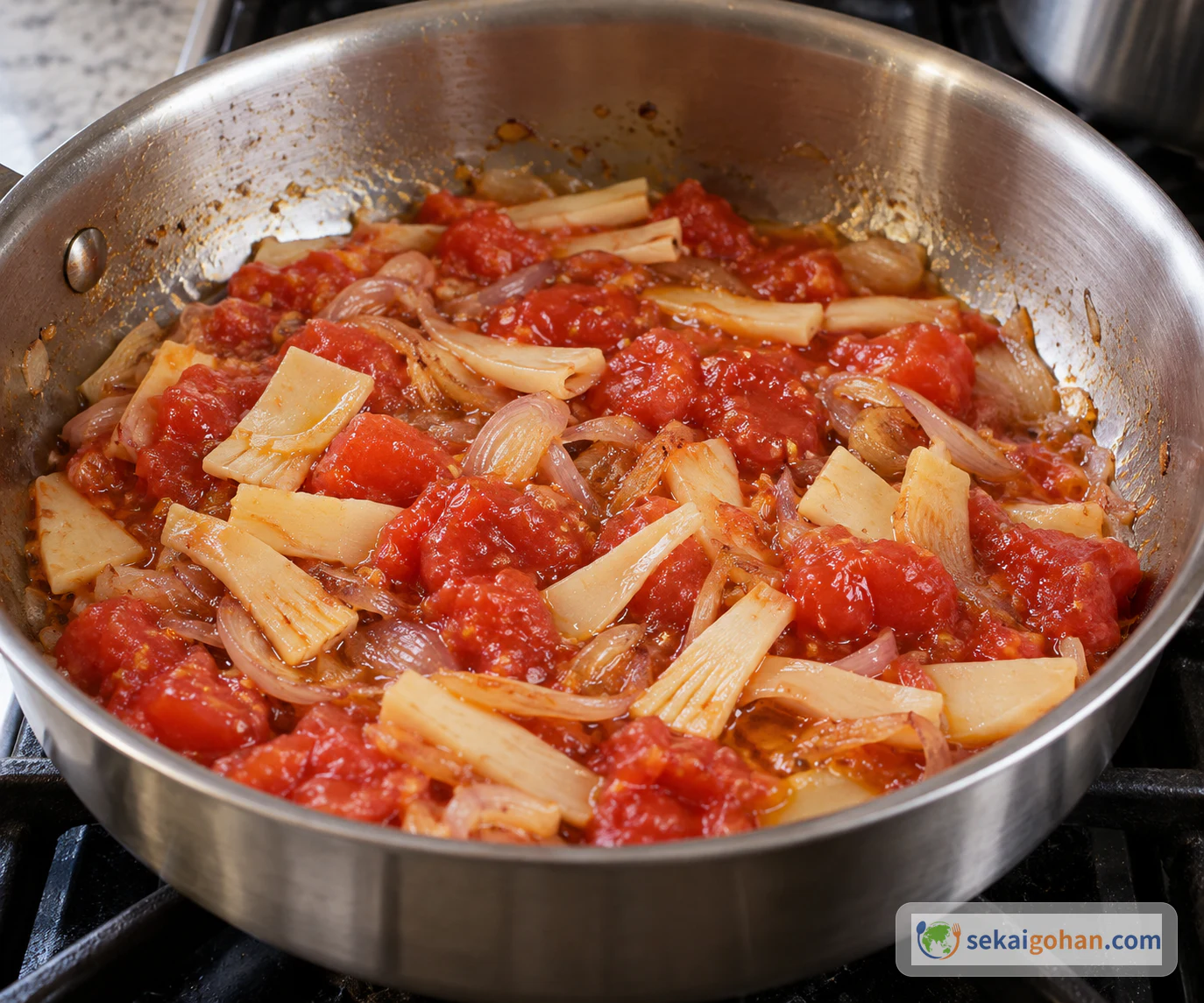
Shallots, tomatoes and sliced bamboo shoots cooking in duck fat
Cook the topping on its own until the tomato juices thicken

In the same saucepan, melt the 2 tbsp reserved duck fat over medium-high heat. Add the shallots and sauté for 3 minutes. Add the tomatoes and drained bamboo shoots and cook until the juices thicken, about 7 minutes.

STEP66 / 7

Combine and season the soup

The tomato and bamboo-shoot mixture stirred into the duck broth
A short simmer brings the topping and the broth together

Add the tomato and bamboo-shoot mixture to the broth and duck. Simmer 5–10 minutes so the flavors come together. Season with salt, pepper and more fish sauce to taste.

STEP77 / 7

Assemble the bowls

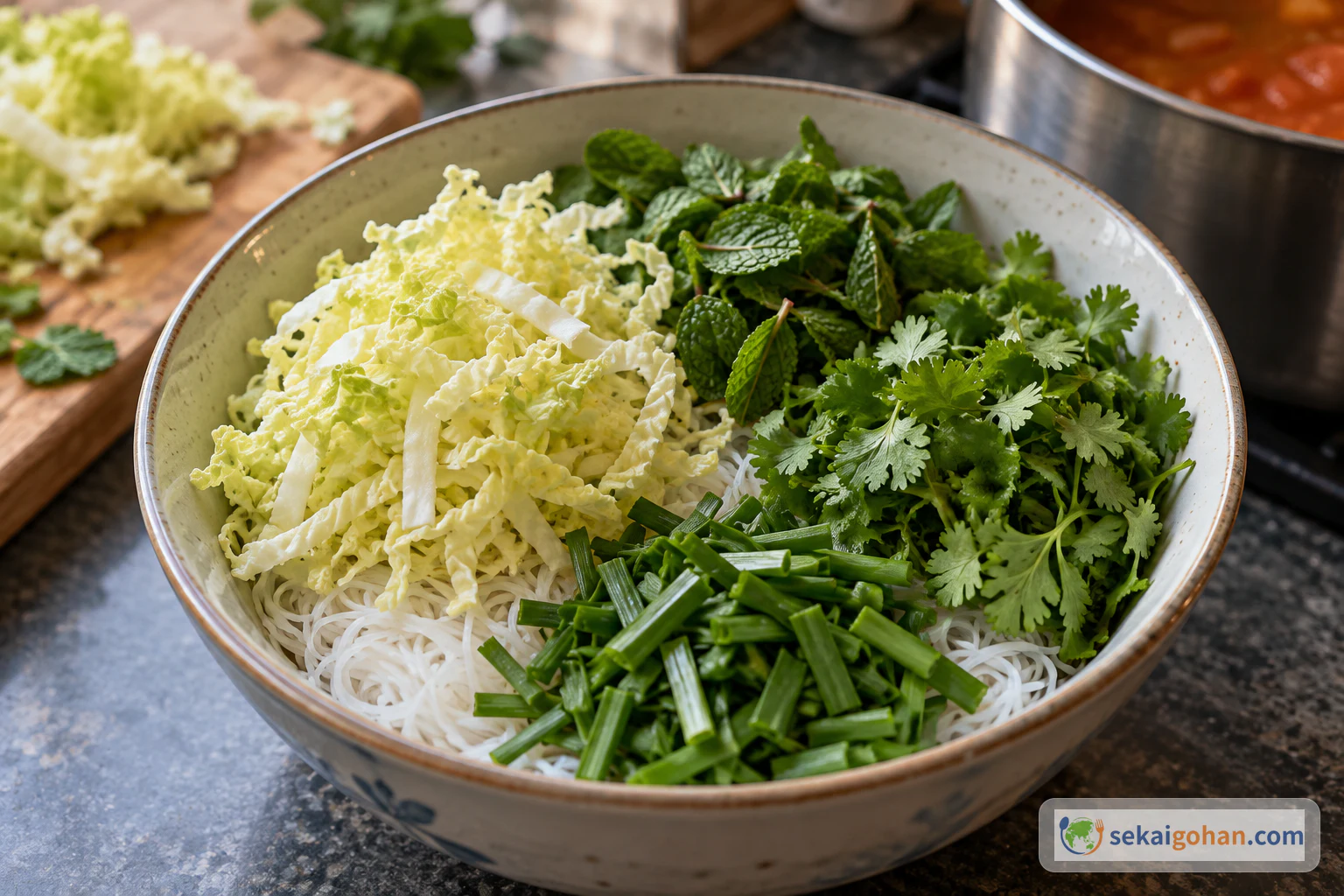
Rice vermicelli, Napa cabbage, mint, cilantro and chives in a bowl before the soup goes in
Noodles, cabbage and herbs go in first; the hot soup goes over them

Divide the noodles, Napa cabbage, mint, cilantro and chives among 6 large bowls. Ladle in the hot soup with the duck, tomatoes and bamboo shoots. Pass the chili sauce and lime wedges at the table.

0 / 0
Ingredients

Ingredients

1 / 1

Ingredients

Ingredient Amount Role
Duck leg-thigh pieces 6 pieces Browned, simmered, then skinned, boned and shredded
Salt to taste Seasons the duck before browning, and the soup at the end
Black pepper to taste Seasons the duck before browning, and the soup at the end
Low-salt chicken broth 16 US cups (about 3.79 L) The soup base; low-salt leaves room for fish sauce
Large onion 1, peeled and halved Flavors the broth; strained out
Fresh ginger 6 tbsp, peeled and finely chopped Flavors the broth; strained out
Fish sauce (nam pla or nước mắm) 2 tbsp, or more to taste Salt and savory depth in the broth
Sugar 1 tbsp Rounds out the broth
Dry rice vermicelli 1 package (6.75 oz, about 191 g) The noodles in each bowl
Shallots, sliced 3 cups (about 10 large) Sautéed in duck fat for the topping
Plum tomatoes, chopped 2 1/4 lb (about 1.02 kg) Cooked down with the bamboo shoots; tints the soup
Sliced bamboo shoots (măng) 3 cans (8 oz each), drained Texture in the soup
Duck fat, skimmed from the broth 2 tbsp For sautéing the shallots; not extra oil
Napa cabbage, thinly sliced 6 cups Raw, in the bowls under the hot soup
Fresh mint, chopped 1/3 cup Bowl garnish
Fresh cilantro, chopped 1/3 cup Bowl garnish
Fresh chives, chopped 1/3 cup Bowl garnish
Hot chili sauce (such as Sriracha) as needed Passed at the table
Lime wedges as needed Passed at the table
0 / 0

Duck leg-thigh pieces brown hard against the bottom of a heavy pot, and that browning carries the whole soup. Later, shallots sizzle in fat skimmed from the broth, then plum tomatoes and sliced bamboo shoots cook down until their juices thicken. Stirred back into the pot, the mixture gives the soup more color and body. The name describes the bowl plainly: bún is rice vermicelli, măng is bamboo shoots, and vịt is duck. It is a gingery, savory duck soup with a tomato tint, poured over noodles, raw cabbage and herbs. More dishes from the same country are gathered on the Vietnam page.

Bún Măng Vịt and the Northern Bowl

Bún măng vịt is a family of duck, bamboo-shoot and noodle bowls. This version simmers browned duck in broth with a generous amount of ginger, a halved onion, fish sauce and a little sugar until the meat is very tender. Each bowl is built on rice vermicelli, thinly sliced Napa cabbage, mint, cilantro and chives, with hot chili sauce and lime passed at the table.

The northern bowl, bún vịt xáo măng, familiar in Hanoi and northern Vietnam, works differently. It uses whole duck cooked with ginger and onion, and fresh bamboo shoots that are boiled and sautéed separately, then simmered in the duck broth. It comes with bún rối, mắm gừng (a ginger dipping sauce) and herbs including húng chó, mùi tàu and scallion.

Element This recipe Northern version
Duck Leg-thigh pieces, browned, then shredded off the bone Whole duck
Bamboo shoots Canned sliced shoots, drained Fresh shoots, boiled and sautéed separately
Broth character Tomato and shoots sautéed in duck fat, then folded into the broth Shoots simmered in duck broth
At the table Hot chili sauce and lime Mắm gừng and northern herbs

This bowl leans toward a fuller, tomato-led soup, while the northern one centers on fresh shoots and the sharp ginger dip.

Ingredients for 6 Servings
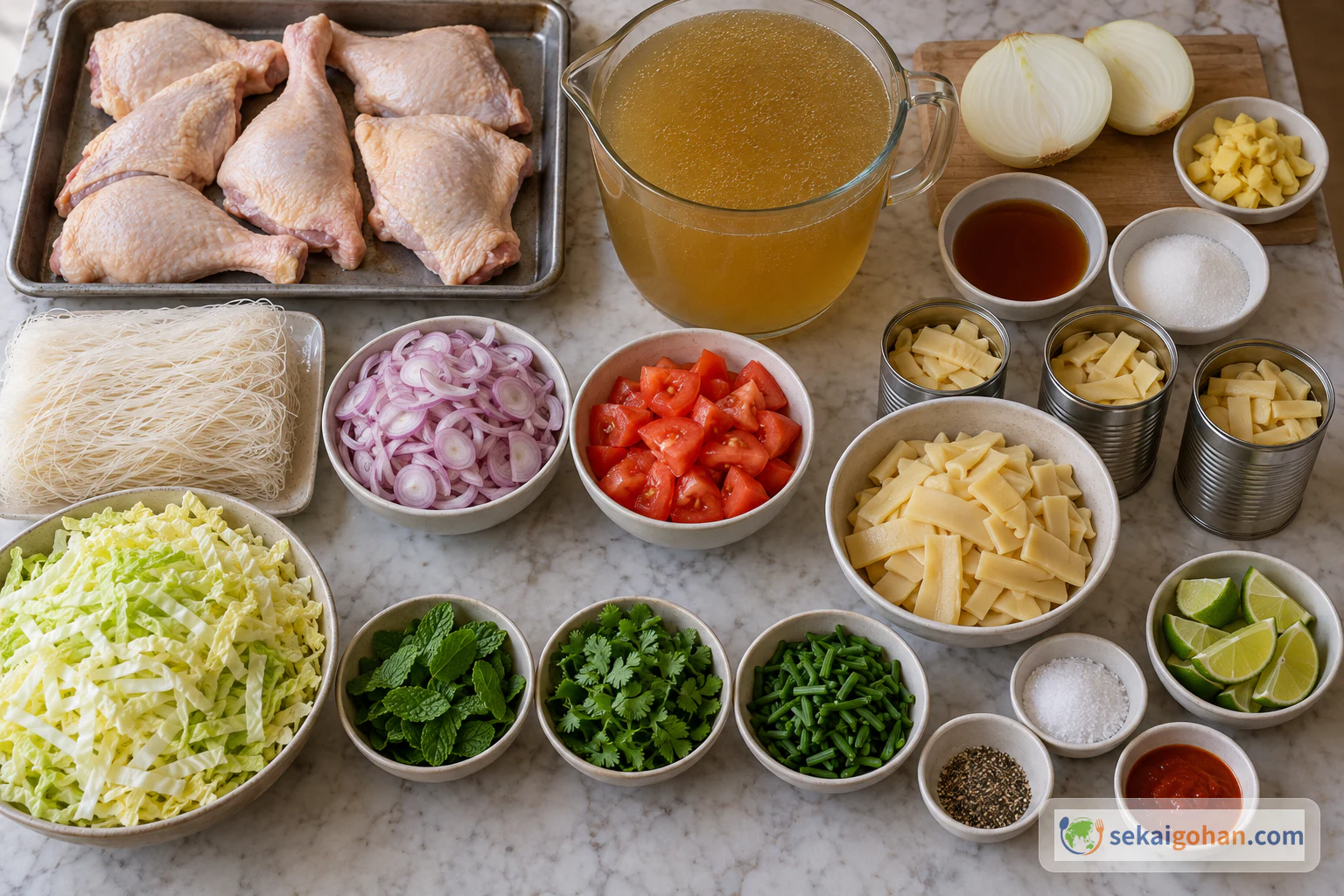
Duck leg-thigh pieces, rice vermicelli, canned bamboo shoots, tomatoes and aromatics laid out in separate groups
Keep the raw duck on its own tray, away from the herbs and cabbage

The 2 tbsp of duck fat comes out of the pot; there is no separate oil in this soup.

Equipment

  • Large heavy pot (big enough for the broth and the duck)
  • Large saucepan (for the noodles, then the shallot sauté)
  • Fine-mesh strainer and a large bowl
  • Rimmed baking tray
  • Small bowl for the skimmed duck fat
  • Colander
  • Food thermometer for checking the duck's core
  • Shallow containers, if making ahead
  • 6 large soup bowls

Choosing Ingredients for Bún Măng Vịt

Two choices matter most for cooks outside Vietnam: the noodles and the bamboo shoots. Look for dry rice vermicelli; wheat pasta and wide phở noodles give a different bowl.

Bamboo shoots. Use canned sliced bamboo shoots and drain them before cooking. Canned and dried shoots are processed to reduce hydrogen cyanide to safe levels. For water-packed or precooked shoots sold locally, follow the label.

If you want to use raw fresh bamboo shoots

Unprocessed fresh shoots contain cyanogenic glycosides and must be prepared before they go anywhere near this recipe: peel away the outer leaves, trim off the fibrous base, slice thinly, boil in lightly salted water for 8–10 minutes, and discard the cooking water. The soup's final 5–10-minute simmer does not replace this preparation. If that is not practical, stay with canned shoots.

Fish sauce and broth. Vietnamese nước mắm or Thai nam pla both work. Choose one with low-to-moderate salt if you can, and pair it with a low-salt chicken broth. The pot holds a lot of liquid and the fish sauce adds salt of its own, so this leaves you room to adjust at the end.

Herbs. Use chives, not garlic chives (nira), which are a different herb.

Allergy and raw-duck handling

Fish sauce contains fish. Check the labels of your chicken broth and chili sauce for their specific ingredients and allergens. Do not rinse raw duck; keep it apart from the cabbage and herbs, and wash your hands and utensils after handling it.

Method: From Browned Duck to Six Bowls

Times are cues, not a total

Each step below carries its own time range. Stages can overlap, so don't add the times up. For the duck, the temperature check in step 2 is the safety test.

Common Bún Măng Vịt Mistakes

What happened Likely cause What to do
The broth tastes thin or looks pale The duck was not browned deeply, or the shallot, tomato and shoot sauté was skipped Brown the duck well before adding broth, and cook the topping in duck fat before folding it in
The duck is tender by the clock but has not reached temperature Judging by the clock alone Keep simmering until the thickest part reaches 167°F (75°C) for one minute
The duck still looks a little pink Color and juices are not a reliable test Go by the thermometer, not by appearance
The topping is oily All the skimmed fat went into the sauté Use only 2 tbsp of the skimmed fat
The noodles are gluey Overcooked, not rinsed, or left sitting in soup Cook just until tender, rinse in cold water, drain again, and keep separate until assembling
The soup is too salty Fish sauce added early beyond the base amount Start with 2 tbsp and add more only after the final simmer; a low-salt broth helps

Serving and Storing Bún Măng Vịt

Several bowls of bún măng vịt on a table with lime wedges and chili sauce
Chili sauce and lime are passed at the table so each person adjusts their own bowl

The cabbage and herbs go into the bowl raw and soften slightly under the hot soup, so they stay fresh against the rich duck and tomato. Keep the chili sauce and lime on the side and let everyone season their own bowl: chili for heat, a squeeze of lime for sharpness. Anyone can leave an herb off their bowl, though it loses some of its fresh green aroma.

The soup can be made up to one day ahead, but no longer. Cool it fast by transferring it to shallow containers and refrigerating it right away instead of leaving a big stockpot on the counter. Chill it uncovered until cold, then cover. Reheat the soup until it boils, reheat any other leftovers thoroughly, and keep the noodles, cabbage and herbs separate until you build the bowls.

Frequently Asked Questions

Can I use fresh bamboo shoots instead of canned?

Yes, but prepare them first. Peel off the outer leaves, trim the fibrous base, slice thinly, boil in lightly salted water for 8–10 minutes and discard the water. The final simmer in this recipe does not replace that step.

Why shouldn't I rinse the duck?

Rinsing raw poultry splashes bacteria onto the sink, counter and nearby foods. Treat raw duck the same way as raw chicken and put it straight into the pot.

Is this soup suitable for people with fish allergies?

No. Fish sauce contains fish. Check the labels on your broth and chili sauce too.
Sources

  • Christine Pham, Chez Pham, "Vietnamese Duck Soup," Epicurious / Condé Nast. The recipe followed in this article: the name bun vit mang, the six-serving ingredient list and amounts, the sequence and stated step times, the serving arrangement, and the one-day make-ahead note. It gives no amounts for salt, pepper, extra fish sauce, chili sauce or lime, and no total time. https://www.epicurious.com/recipes/food/views/vietnamese-duck-soup-358555
  • Bùi Thủy, "Cách làm bún vịt xáo măng miền Bắc," VnExpress Đời sống. Used only for the separate northern comparison: whole duck, fresh bamboo shoots, bún rối, mắm gừng, húng chó, mùi tàu and scallion, and its description of the style as familiar in Hanoi and northern Vietnam. Its health claims are not used. https://vnexpress.net/doi-song-cooking-bun-vit-xao-mang-mien-bac-4777988.html
  • Food Standards Australia New Zealand, "Cassava and bamboo shoots." Cyanogenic glycosides in unprocessed fresh shoots, the preparation steps and 8–10-minute lightly salted boil for fresh shoots, and the safety of canned or dried shoots. https://www.foodstandards.gov.au/consumer/prevention-of-foodborne-illness/cassava
  • Food Safety Commission of Japan, Cabinet Office, "生活の中の食品安全-食中毒に気をつけよう-その2" (Food safety in daily life: preventing food poisoning, part 2), distributed 27 September 2019. Not washing raw chicken to avoid splashing, separating raw meat from ready-to-eat food, and washing hands and utensils. Applying this to duck and blotting with paper towel are editorial choices, not text from this page. https://www.fsc.go.jp/e-mailmagazine/mailmagazine_r0109_r2.html
  • Ministry of Health, Labour and Welfare (Japan), "家庭でできる食中毒予防の6つのポイント" (Six points for preventing food poisoning at home). Heating meat to a core temperature of 75°C for one minute, cooling leftovers in shallow containers, reheating soups until boiling and reheating leftovers thoroughly. It is general guidance, not a storage period for this dish. https://www.mhlw.go.jp/www1/houdou/0903/h0331-1.html