Gỏi Cuốn: Vietnamese Fresh Rice Paper Rolls with Shrimp and Pork

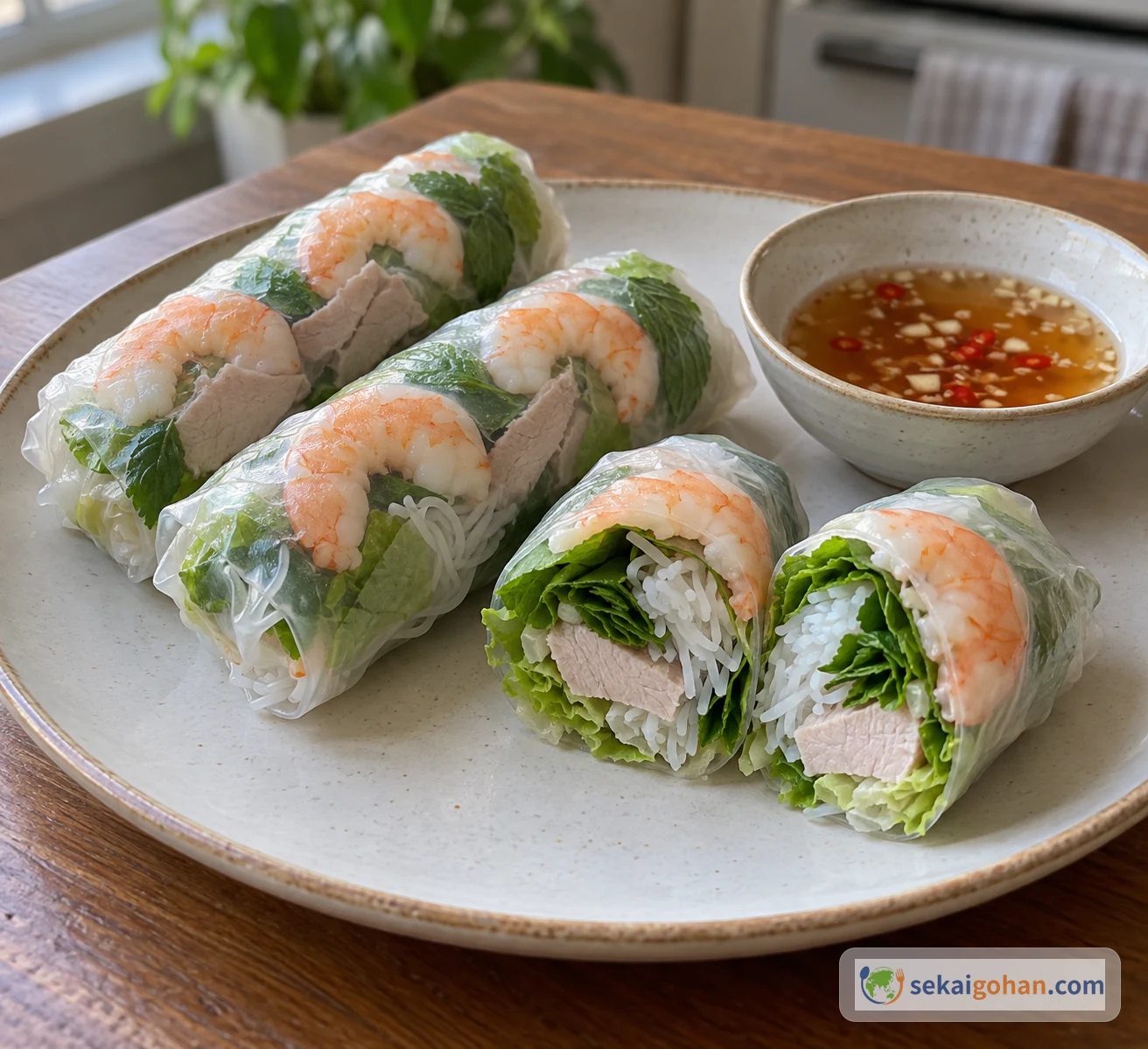
Southern Vietnamese fresh rolls with shrimp, pork, rice vermicelli, lettuce and herbs wrapped in translucent rice paper
Serves
12 rolls
Level
Beginner
Cuisine
Vietnamese

How to make gỏi cuốn, the southern Vietnamese fresh rolls of shrimp, pork, rice vermicelli, lettuce and herbs wrapped in rice paper and eaten without frying. Covers how to wet the wrapper, where to place the filling, how to roll without tearing, a warm-then-cooled fish-sauce dip, herb substitutions, safe handling of cooked pork and shrimp, and why the rolls are best made just before eating.

Cooking flow

Cooking steps

STEP11 / 8

Prepare the vegetables and set up separate tools

STEP 1

Wash the lettuce well, pat it dry and tear it into pieces that suit the wrapper. Pick the mint and other herbs into individual leaves. Trim the garlic chives so they will stick out a little beyond the width of the wrapper.

Keep the boards, knives and plates used for raw pork and raw shrimp separate from those used for washed vegetables and cooked fillings. Cooked meat and shrimp never go back onto a plate or board that held them raw.

STEP22 / 8

Cook the pork through and let it cool

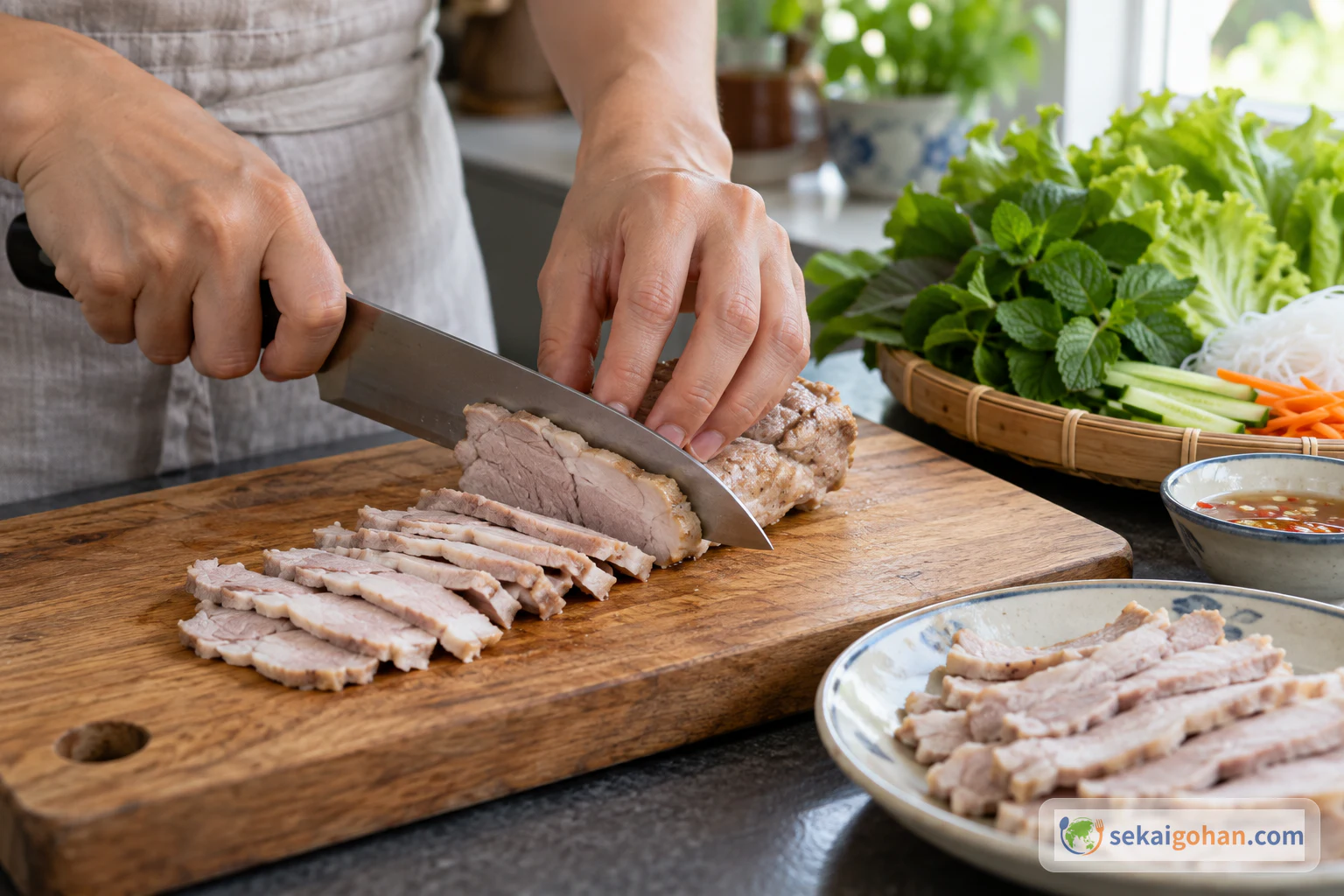
Cooked, cooled pork being sliced thinly for fresh rolls
Slice the pork only after it has cooled, on a clean board kept apart from raw meat

Cook the pork as a single piece in gently simmering water until it is cooked to the center. The time depends on the thickness of the piece, so don't judge doneness by the clock alone. Use a food thermometer and cook until the center reaches 167°F (75°C) and stays there for at least 1 minute.

Move the pork to a clean plate and let it cool. Once cool, slice it thinly across the grain. Rolling it while hot makes the wrapper absorb moisture faster and wilts the greens.

STEP33 / 8

Cook the shrimp, and cook and drain the noodles

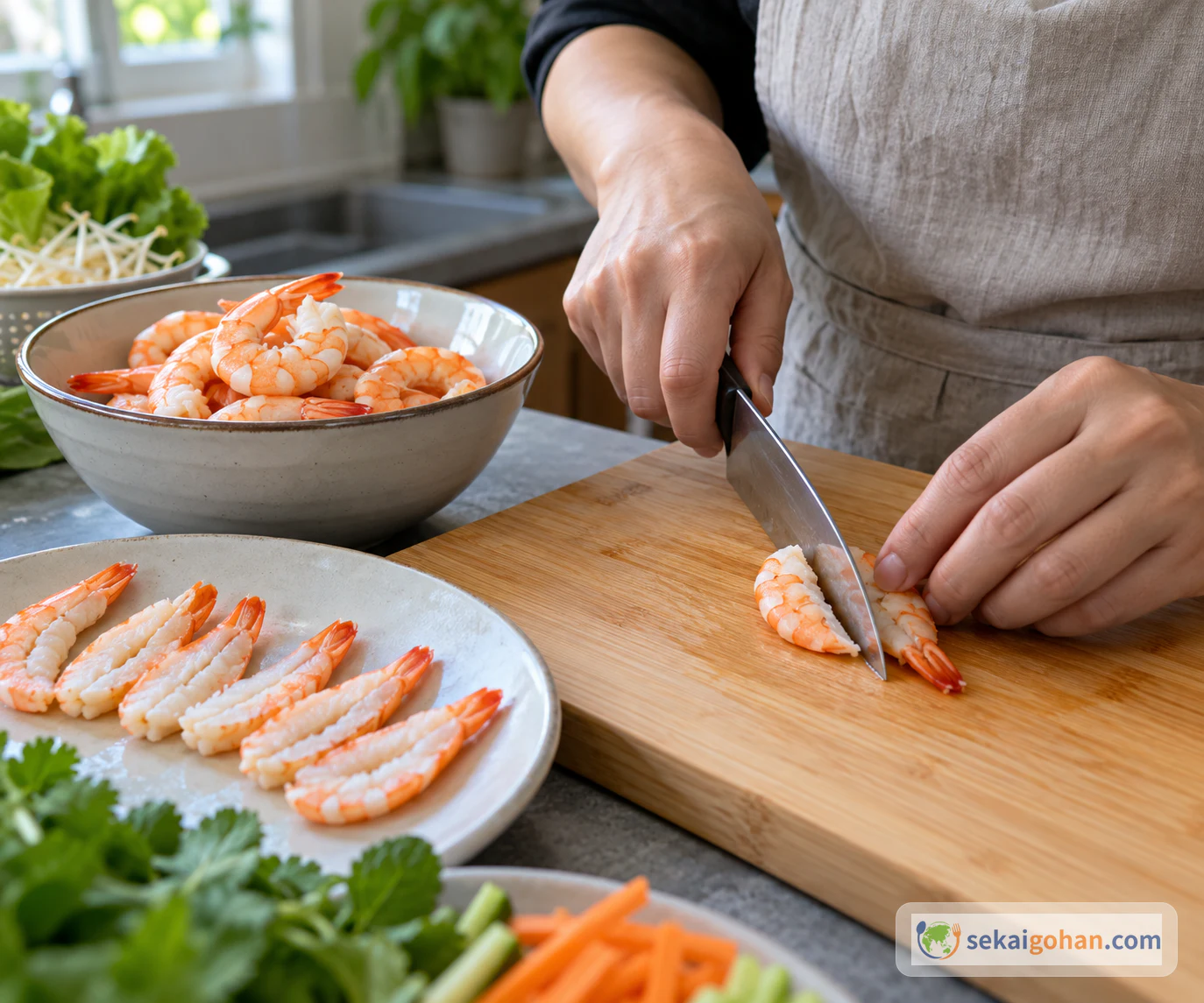
Cooked, opaque shrimp being cut in half lengthwise
Halve the shrimp only after confirming the centers are opaque and they have cooled

Cook the shrimp until the flesh is white and opaque all the way to the center. Let them cool, peel them, and cut each one in half lengthwise along the back. Each roll gets the two halves of one shrimp.

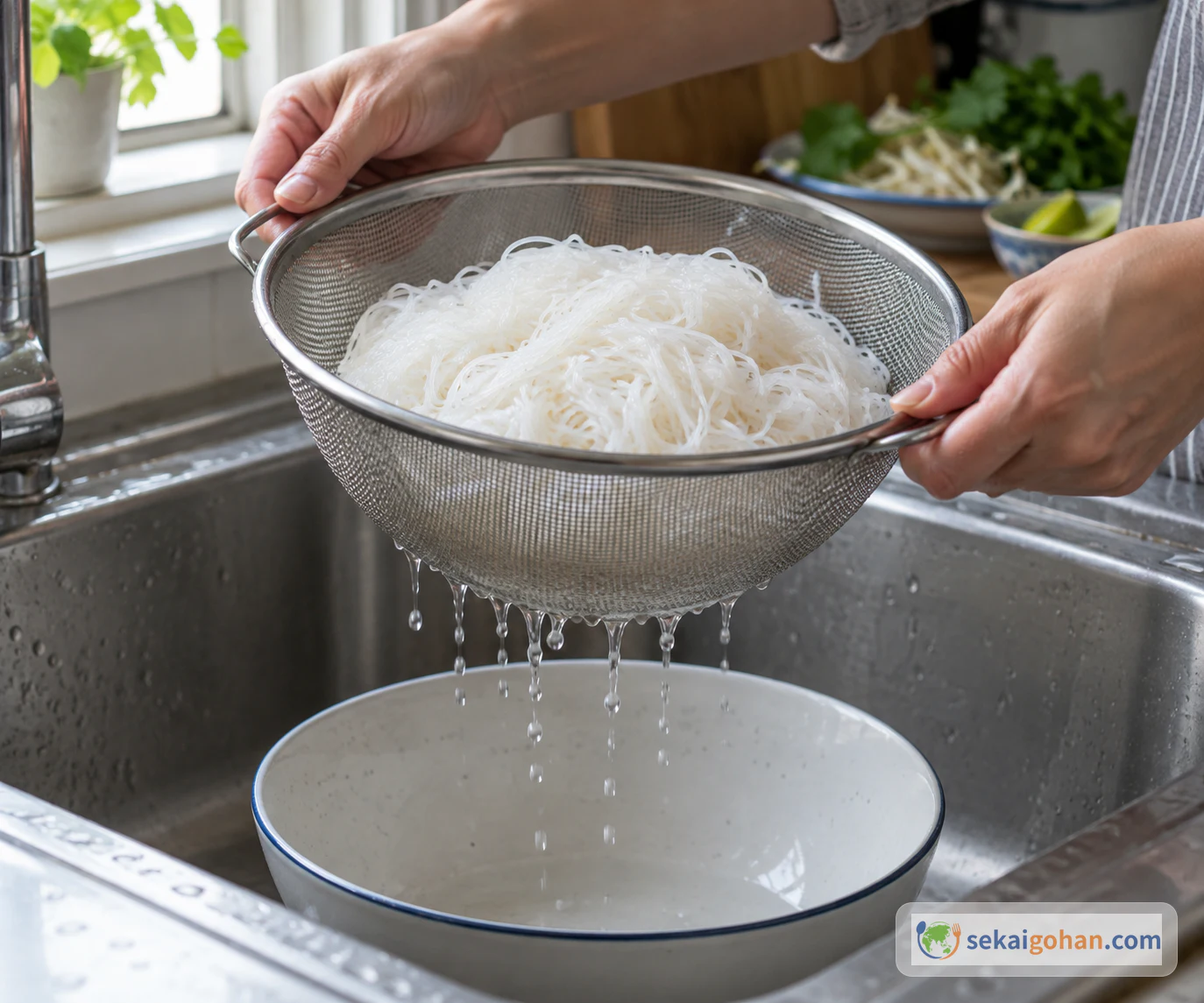
Cook the rice vermicelli following the package directions, rinse it under cold water if the package says to, and drain it well in a colander. Water left in the noodles makes the wrapper soggy and weak.

Thin rice vermicelli, cooked and cooled, draining in a colander
Drain the noodles thoroughly so no water pools on the wrapper
STEP44 / 8

Make the dip: warm, cool, then add the aromatics

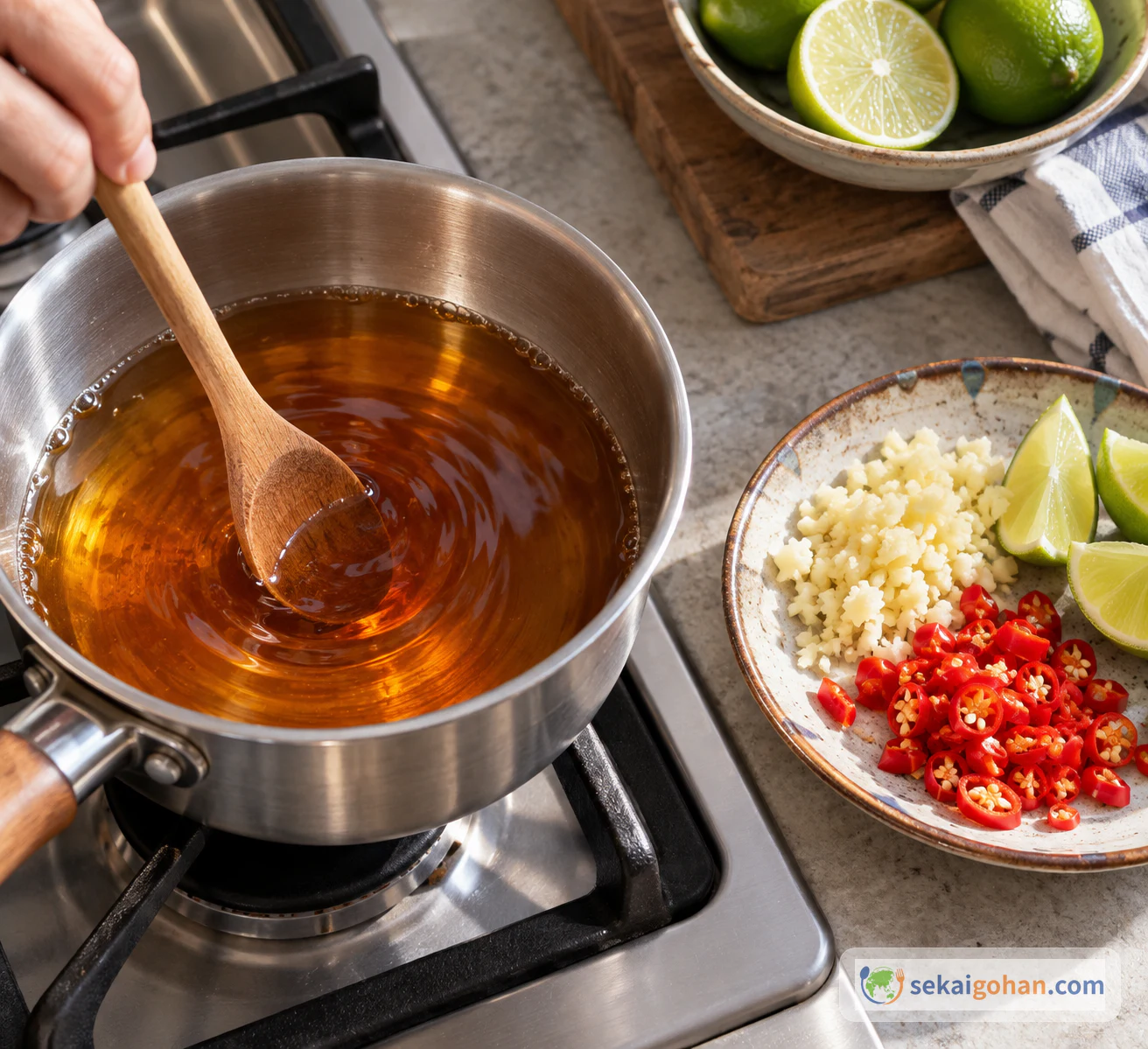
A fish-sauce dip being warmed in a small saucepan, with garlic, chili and lime set aside
Warm the fish sauce, vinegar, sugar and water to dissolve the sugar, and add garlic, chili and lime after it cools

Put the fish sauce, vinegar, sugar and water in a small saucepan and stir over medium heat, warming it until just before it boils so the sugar dissolves. Take it off the heat and let it cool. Once cool, stir in the chopped garlic, chili and lime juice. Don't pour the hot sauce over herbs or aromatics.

STEP55 / 8

Wet the rice paper briefly

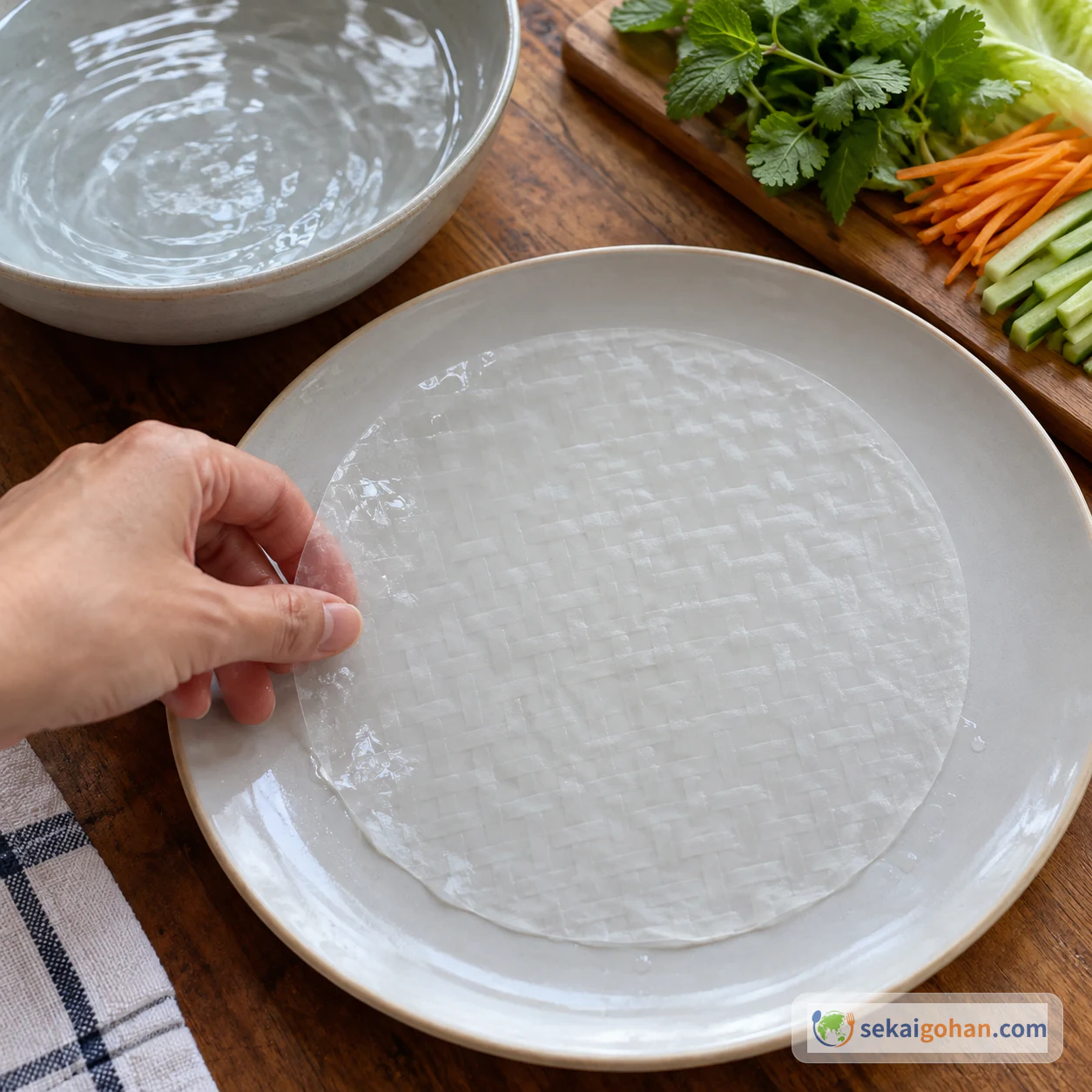
A rice paper wrapper passed briefly through water and laid on a plate while still slightly firm
Lay the wrapper down while it is still slightly firm; it finishes softening on the plate

Pour lukewarm water into a large flat plate or shallow tray. Pass one wrapper through the water once, starting from the edge, and lay it on a clean flat surface while it still has a little stiffness left. The wrapper keeps softening after you set it down, so don't leave it in the water until it goes completely limp.

Follow the package directions for soaking time, and aim for a sheet that folds easily but doesn't stick to your fingers.

STEP66 / 8

Arrange the filling

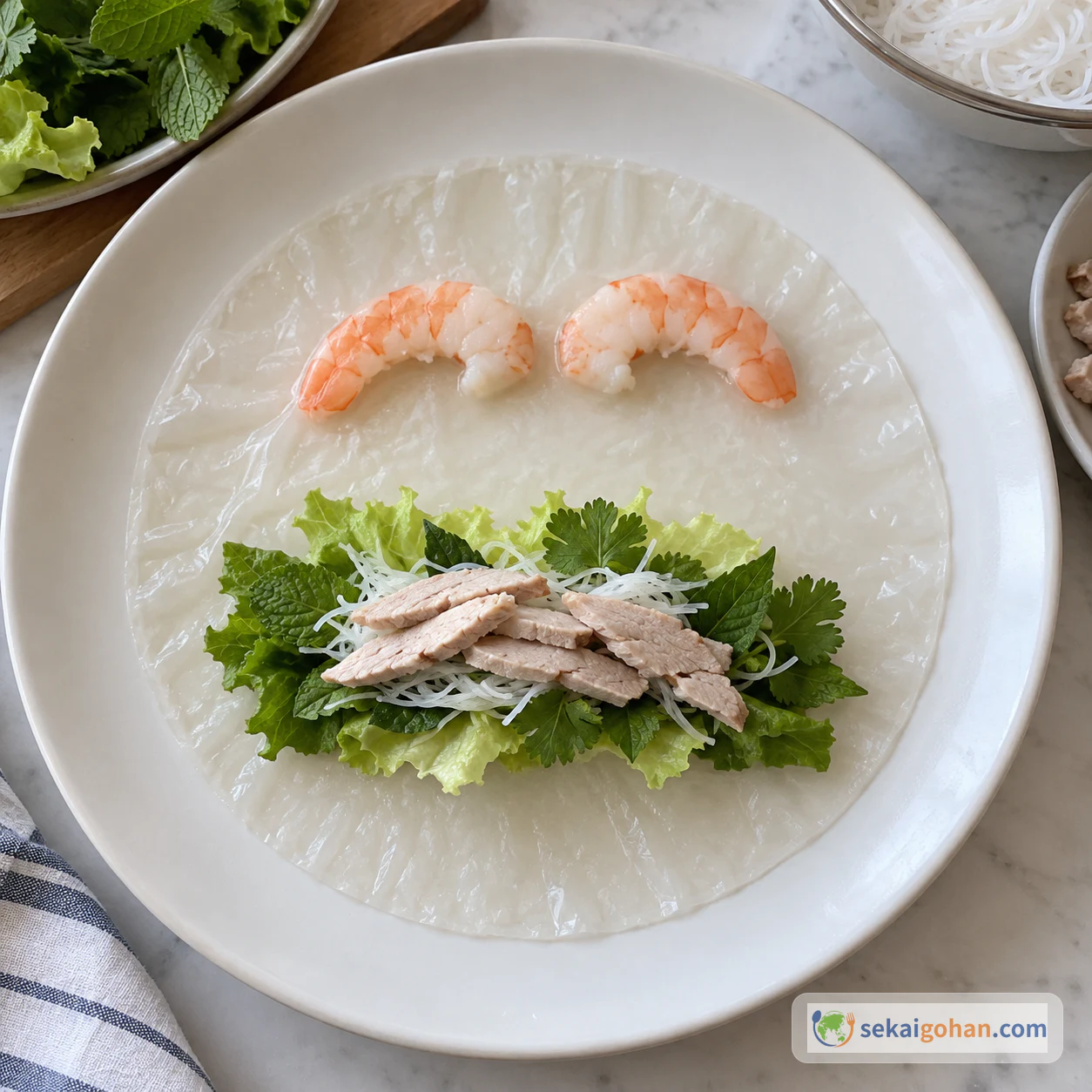
Lettuce, herbs, noodles and pork near the bottom of a softened wrapper, with shrimp halves toward the far edge
Keep the filling in a modest line and leave plenty of empty wrapper around it

On the half of the wrapper nearest you, lay lettuce, herbs, a small amount of noodles and pork in a horizontal line. Place the two shrimp halves in a row closer to the far edge, so their color will show through the wrapper after rolling.

Keep the filling within the middle of the wrapper, and use only as much as one turn of the wrapper can cover. Piling it high stretches the wrapper to its limit, and the end won't close.

STEP77 / 8

Fold in the sides and roll from the near edge

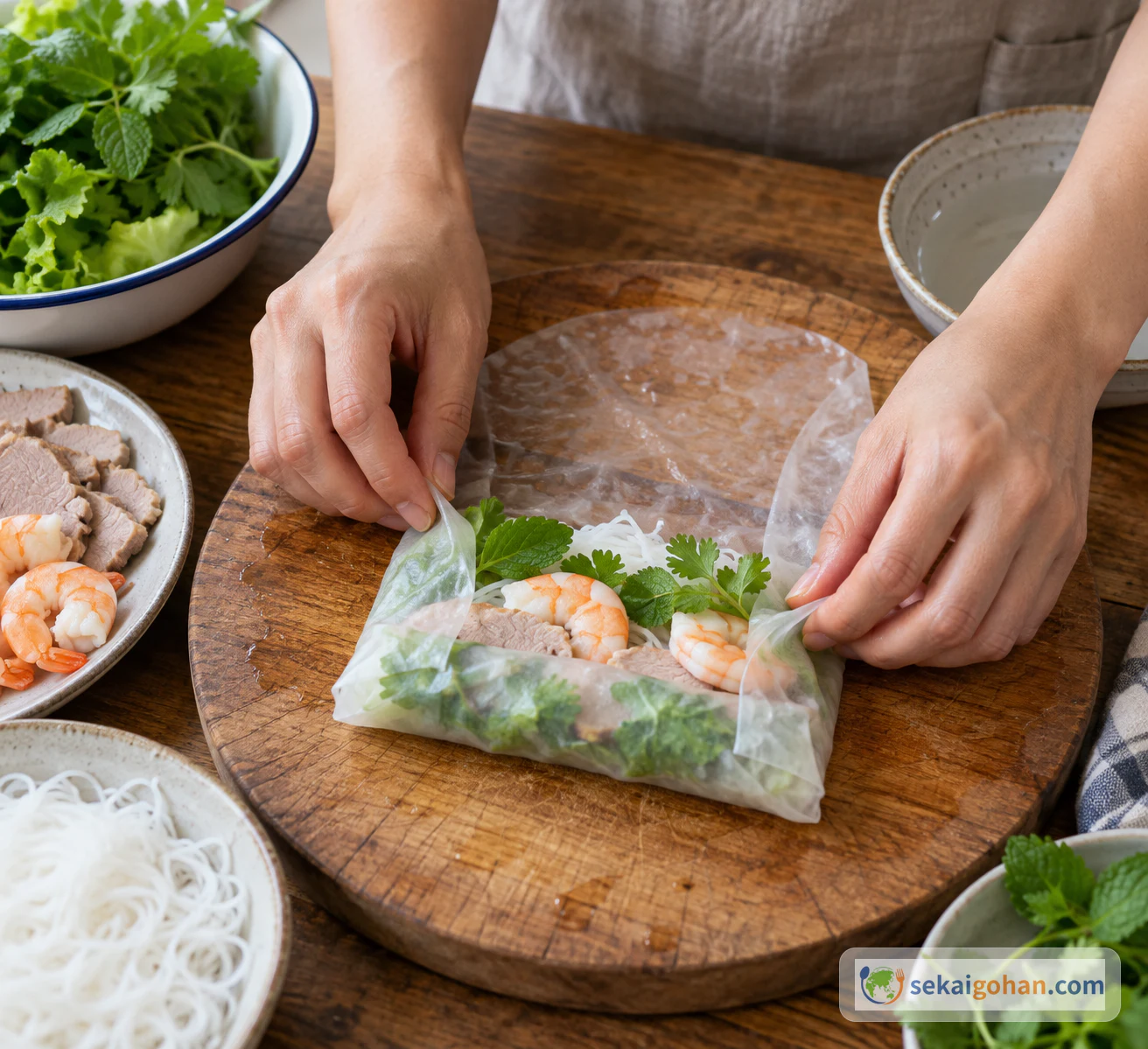
Hands folding in the sides of the rice paper and rolling from the near edge
Fold the sides in first, then roll from the near edge without stretching the wrapper

Fold the left and right sides inward. Bring the near edge of the wrapper up over the filling and, gathering the filling lightly with your fingers, roll it over once. Keep rolling the rest of the way, and tuck a garlic chive in near the end so a tip shows. Don't pull the wrapper hard; stop tightening once the wrapper is snug against the filling.

If the wrapper tears a little, don't stretch it to cover the gap. Wrap the roll again in a second, freshly wetted sheet instead. Layering many patches makes the roll thick and chewy.

STEP88 / 8

Plate seam-side down and serve with the dip

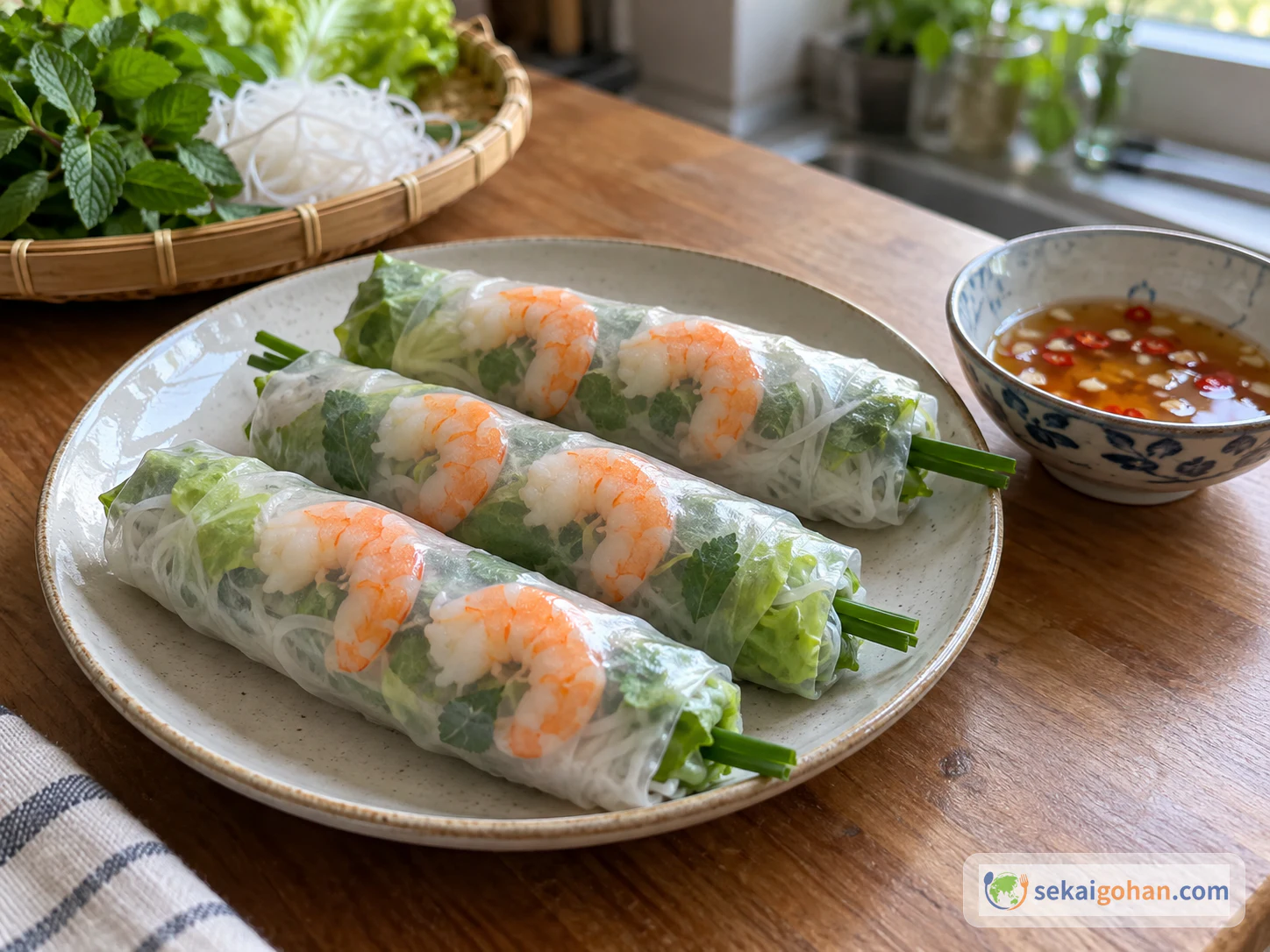
Fresh rolls resting seam-side down on a plate, shrimp showing through the rice paper, with a small bowl of dip
Rest the rolls seam-side down, with the shrimp showing through and a chive tip peeking out

Place each roll seam-side down on a plate, leaving a little space between them so they don't stick together. Serve with the dip, and eat them before the wrappers dry out. Moisture keeps moving into the wrapper, so the rolls are not meant to be made far ahead.

Refrigerate any leftover cooked pork, shrimp and other perishable fillings promptly; cooling them in shallow containers helps. Don't leave them at room temperature for more than 2 hours, or more than 1 hour if the room is above 90°F (32°C).

0 / 0
Ingredients

Ingredients

1 / 2

For the rolls

Ingredient Amount Role and notes
Round rice paper (bánh tráng) 12 sheets, about 22 cm across If your sheets are smaller, use less filling
Small shrimp (tôm) 12 (if buying raw, shell-on: about 180–220g as a shopping guide) Cooked, peeled and halved lengthwise: one shrimp gives two halves for one roll
Pork neck About 76g cooked, thinly sliced Cook it as a piece, then slice
Dried thin rice vermicelli (bún) About 57g dry Cook following the package directions
Lettuce About 2/3 cup, enough for 12 rolls Pat dry and remove thick ribs
Mint 12–24 leaves Adjust the leaf count to your bunch
Perilla Enough for 12 rolls Use alongside mint. See the notes below for substitutes
Garlic chives (hẹ) 12 stalks, about 10 cm each Tucked in at the end so one tip shows. Adjust the length to the roll
2 / 2

Fish-sauce dip

Ingredient Amount Notes
Fish sauce (nước mắm) 2 tbsp Two-thirds of the original 3 tbsp. Made from fish
White vinegar 2 tbsp Rice vinegar gives a milder sourness
Sugar 1 tbsp + 1 tsp Rounds off the salt and acid
Water About 80ml Two-thirds of the original 4 oz (1/2 cup)
Garlic 1⅓ cloves' worth Two-thirds of the original 2 cloves. Finely chopped
Red chili About 2/3 of one, to taste Two-thirds of the original 1 chili. Leave out if you avoid heat
Lime juice 1 tbsp + 1 tsp Two-thirds of the original 2 tbsp
0 / 0

Through a thin, nearly clear sheet of rice paper you can see the pink of halved shrimp, the green of lettuce and herbs, and the white of fine rice noodles. Dip a roll into a sweet, sour and salty fish-sauce sauce, and the soft wrapper, springy noodles, mild shrimp and pork, and cool herbs all arrive in one bite. Gỏi cuốn comes from southern Vietnam, where many people remember eating these rolls as an after-school snack in Ho Chi Minh City. Nothing is fried here; the rolls are eaten fresh, just as they are.

Gỏi Cuốn in Southern Vietnam

In Ho Chi Minh City the full name is gỏi cuốn tôm thịt: moistened rice paper (bánh tráng) wrapped around rice vermicelli (bún), boiled shrimp, thinly sliced boiled pork, and leafy greens and herbs, eaten freshly rolled. That sets it apart from chả giò, the Vietnamese spring roll that is wrapped and then fried.

This recipe makes 12 rolls, enough for 4 people as a light dish. Rice paper varies, so judge each wrapper by how it looks and feels rather than by the clock. The steps tell you what to watch for at the moment of rolling.

Ingredients for 12 Rolls (4 Light Servings)
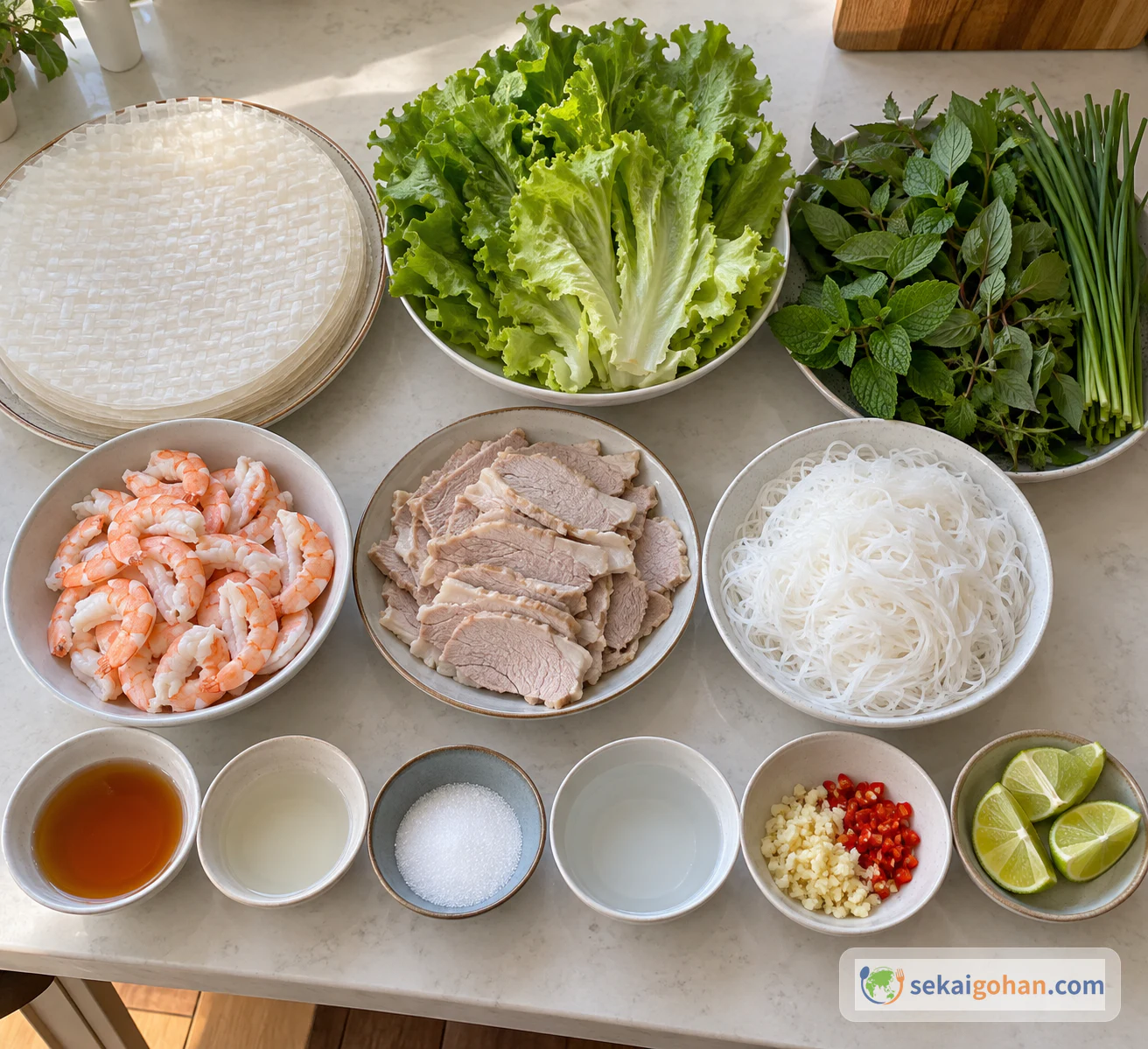
Ingredients for gỏi cuốn: rice paper, cooked shrimp, pork, rice vermicelli, lettuce, mint, herbs and garlic chives
Lay out the cooked fillings, washed greens and the dipping-sauce ingredients separately before you start rolling

Rolling shrimp, pork, noodles and herbs together gives each its job: the noodles and wrapper are soft, the shrimp and pork add gentle savoriness and some bite, and the herbs bring a cool, fresh aroma. The amounts below are two-thirds of a batch that makes 18 rolls for 6 people. The pork in particular looks small, but it is spread thinly and evenly across 12 rolls as a light snack.

Raw pork shrinks as it cooks, so buy a raw piece of roughly 100g–5.5 oz (150g). You will use about 2.75 oz (76g) of the cooked, sliced meat across the 12 rolls.

Allergies and food safety

This recipe contains shrimp (a crustacean) and fish sauce (fish). If you serve a peanut-based sauce, it also contains peanuts. Check the labels on rice paper and rice noodles for their ingredients. The pork and shrimp are always cooked before rolling; never roll raw meat or raw shrimp.

Equipment

  • A large flat plate or shallow tray, for wetting one wrapper at a time
  • A clean flat plate or cutting board for rolling
  • Separate cutting boards and knives for raw pork and shrimp, and for washed vegetables and cooked fillings
  • A small food thermometer, for checking the pork
  • A pot for cooking the pork and shrimp, and a small saucepan for the dip
  • A fine colander for draining the noodles

Choosing Ingredients for Gỏi Cuốn

The two specialty items to look for are round rice paper and thin rice noodles. Check the diameter and the ingredient list on the package (rice, tapioca and so on), and cook the noodles as the package directs. Thick rice noodles are harder to roll and change the texture.

Herbs. Use mint and perilla. In Vietnamese, rau thơm is the general word for fresh herbs, not another name for perilla or cilantro. Japanese shiso can stand in for perilla at home, though its aroma is stronger and different, and cilantro takes the rolls in another direction. Use one or mix them, but if you can find perilla or other Vietnamese herbs, reach for those first. Without any herbs you still get a roll, just with a much weaker cool, fresh layer.

Garlic chives. Scallions can stand in, but their aroma is milder.

Fish sauce. This is the core of the dip, giving it salt and savoriness. People who avoid fish can use a soy-and-citrus sauce, but it lacks the fermented depth and makes a different sauce altogether. Brands differ in saltiness, so taste as you go.

Method: Cook, Cool, Then Roll

Before you start

Cook and cool the pork, shrimp and noodles, and wash and dry the lettuce and herbs first; then make the dip, and only then start wetting wrappers. Rolling goes smoothly when everything is within reach.

Fixing Torn, Sticky or Unrolling Gỏi Cuốn

What these rolls should keep

The pork, shrimp and noodles go in cooked and cooled, with washed, dried raw lettuce and herbs; the wrapper is wet only briefly, and the rolls are made just before eating. Keep the filling modest so one turn of rice paper closes around it.

What happens Likely cause What to do
The wrapper tears Too much filling, wrapper soaked too long, or rolled while still dry Reduce the filling, wet the wrapper only briefly per the package, and wait for it to soften on the surface
The wrapper sticks Surface too wet, or finished rolls touching each other Roll on a clean plate or board, keep rolls apart, and don't leave wrappers sitting in the water
The roll comes undone Too much filling, sides not folded, not rolled all the way Keep the filling in a short band, fold the sides in before covering, and rest the roll seam-side down
The shrimp don't show from outside Shrimp placed too far in, or shifted sideways Line the shrimp halves up near the far edge and keep them in place as you roll
The flavor is flat Noodles or vegetables still wet, or the dip is too weak Drain the noodles and dry the greens well; adjust the dip a little at a time
The wrapper turns hard Rolls left standing for a long time, or dried out in the refrigerator Roll just before eating, and don't leave perishable fillings at room temperature

Sauces for gỏi cuốn

The sauce is where the rolls change the most, and there is no single correct one. This recipe uses a lighter fish-sauce dip, but in Ho Chi Minh City the rolls are also served with peanut-based sauce (tương đậu phộng) and mắm nêm, a rich, fermented dipping sauce. If anyone at the table has a peanut allergy, skip the peanut sauce.

Variations

  • Pork belly instead of pork neck. The fat in pork belly makes the rolls richer.
  • Shrimp-forward rolls. Use less pork to let the shrimp stand out; the rolls will be a little less savory and less filling.
  • More vegetables. Pat any extra vegetables dry and reduce the rest of the filling so the wrapper doesn't tear.

Related dishes

If you like rice noodles, pork and herbs together, bún thịt nướng puts them in a bowl instead of a wrapper. For another southern dish eaten wrapped in greens and herbs, try bánh xèo, the crisp rice-flour crêpe.

Frequently Asked Questions

What is the difference between gỏi cuốn and chả giò?

Gỏi cuốn wraps cooked fillings and herbs in moistened rice paper and is eaten without frying. Chả giò is wrapped and then fried.

How many seconds should I soak the rice paper?

Start with the package directions. Wet the wrapper briefly and let it finish softening on the plate until it folds easily without sticking to your fingers.

Why does the wrapper tear when I roll it?

Look at how long it soaked, how much filling you used, and how wide the filling is compared with the wrapper. Less filling, a shorter dip in water and a gentle hand all help.

Can I make them ahead?

They are best rolled right before eating, because the wrappers firm up and stick as they stand. Don't leave the cooked pork, shrimp or other perishable fillings at room temperature, and refrigerate leftovers promptly. There is no set number of days these rolls can be kept.
Sources