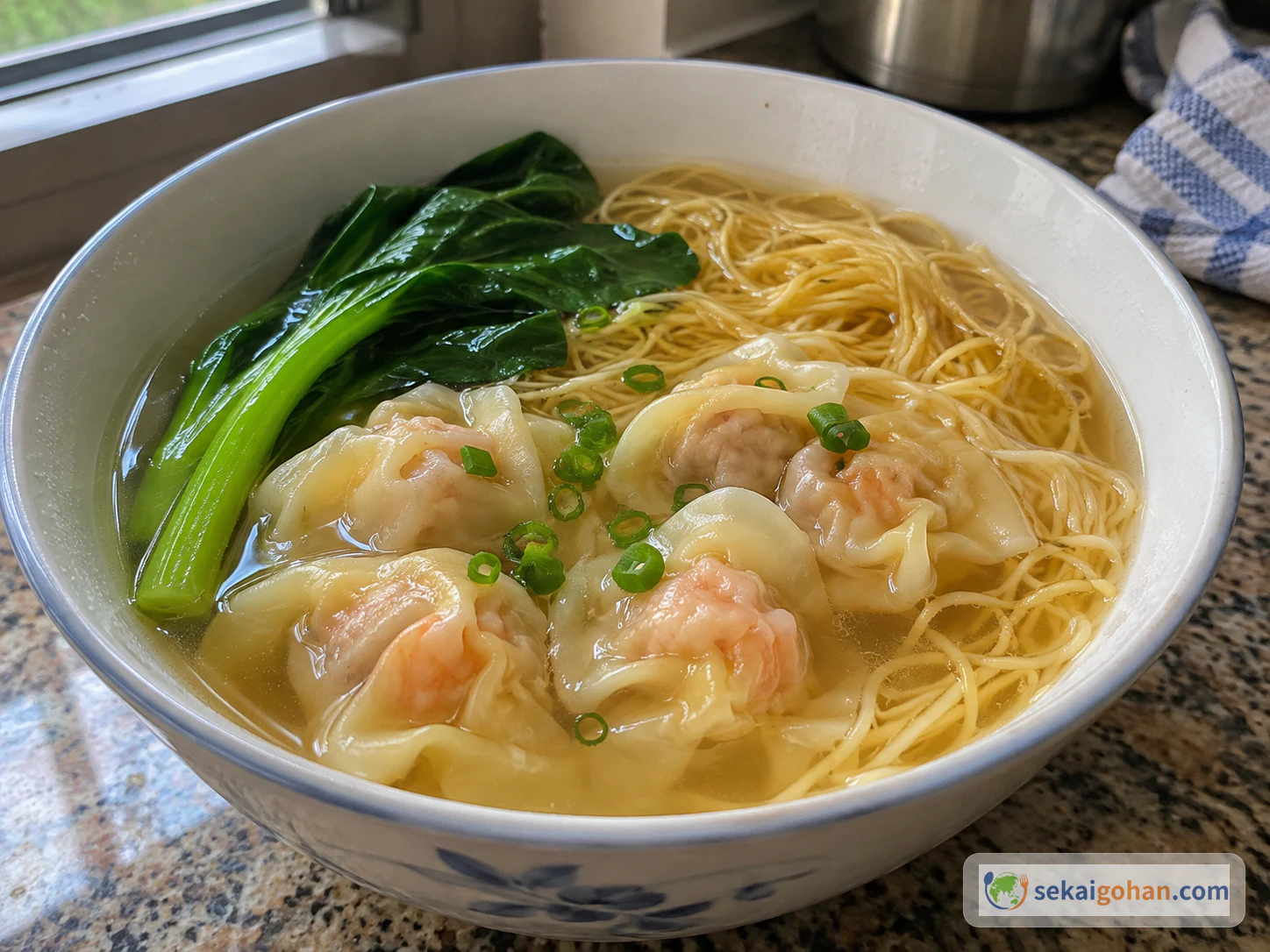
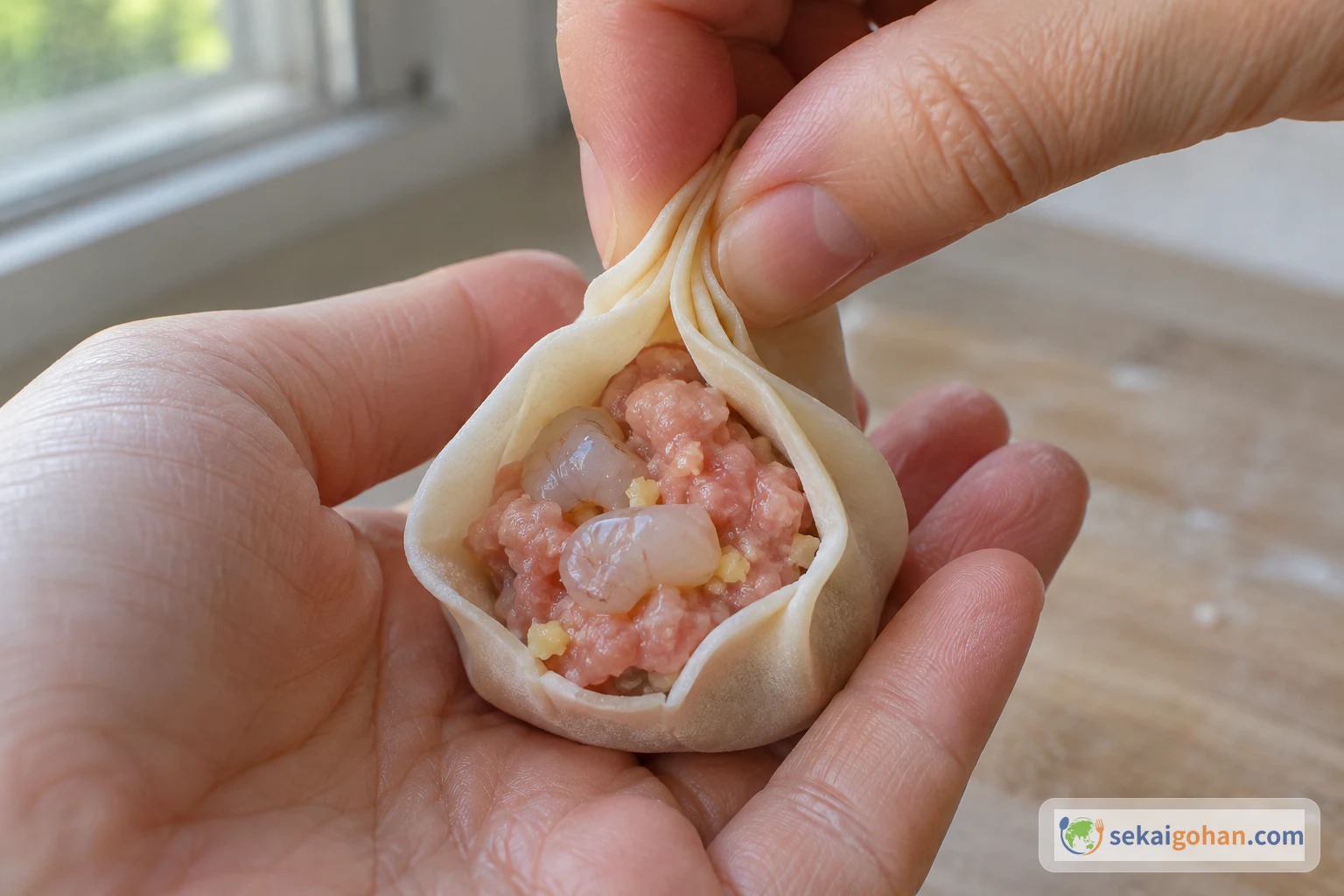
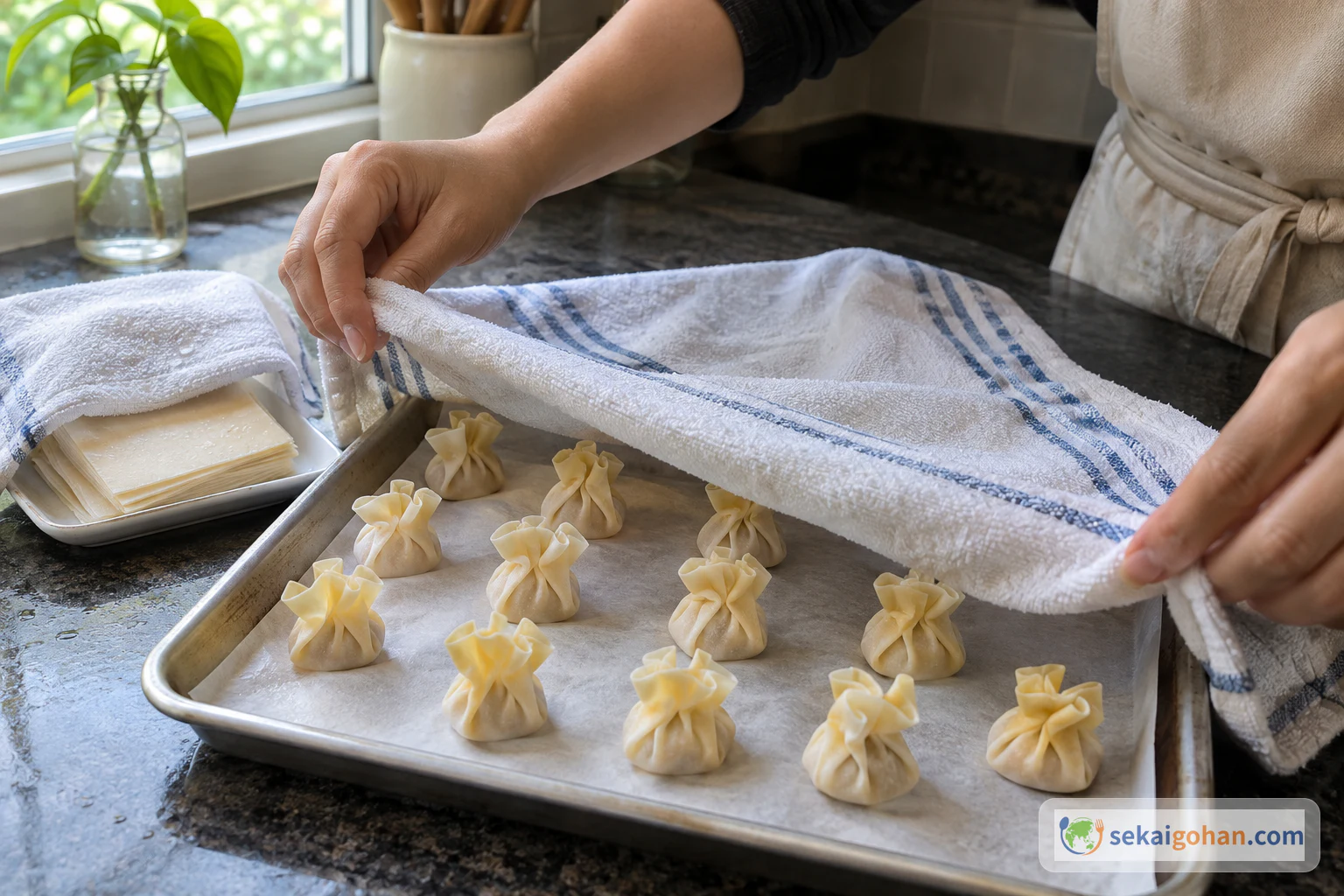
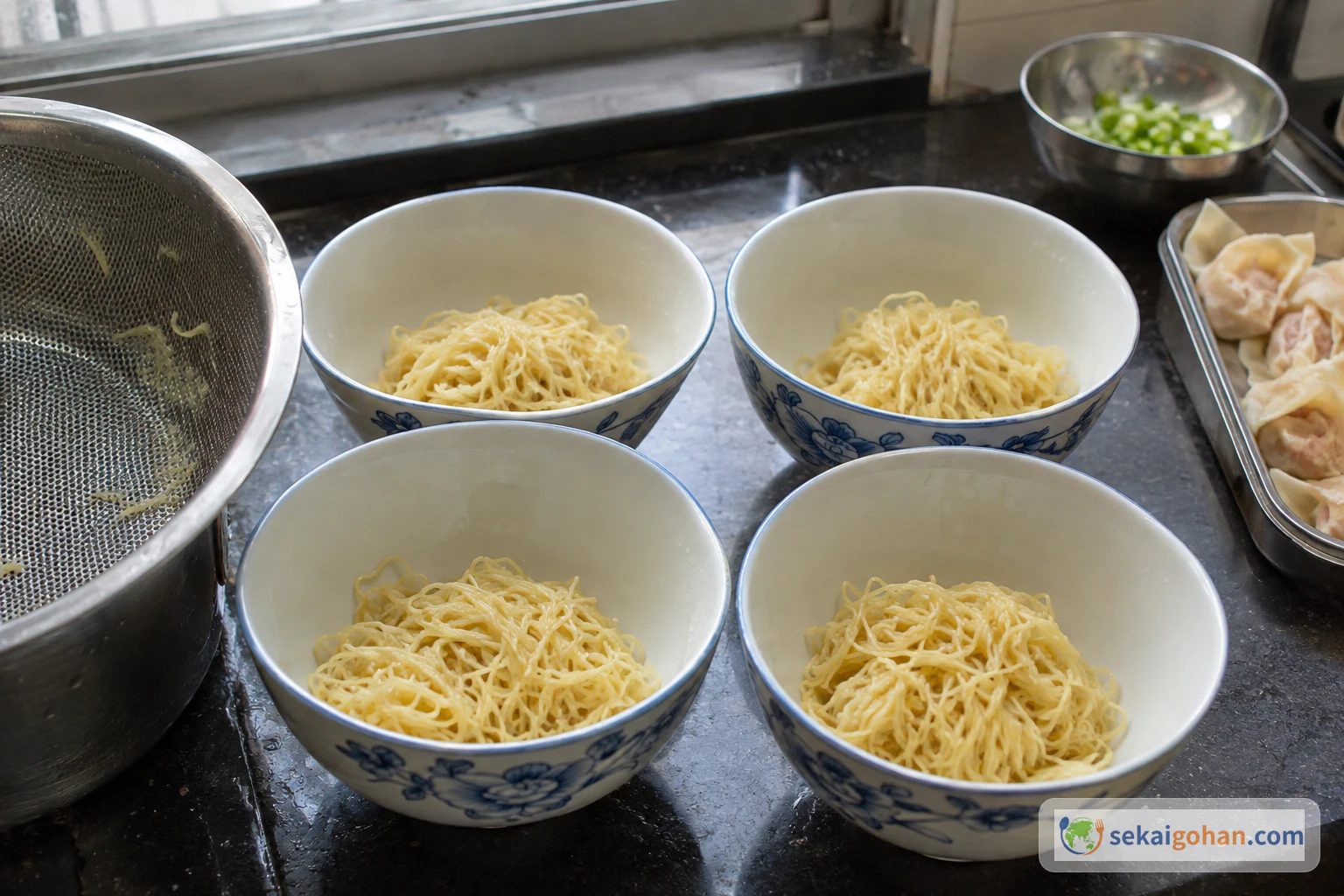
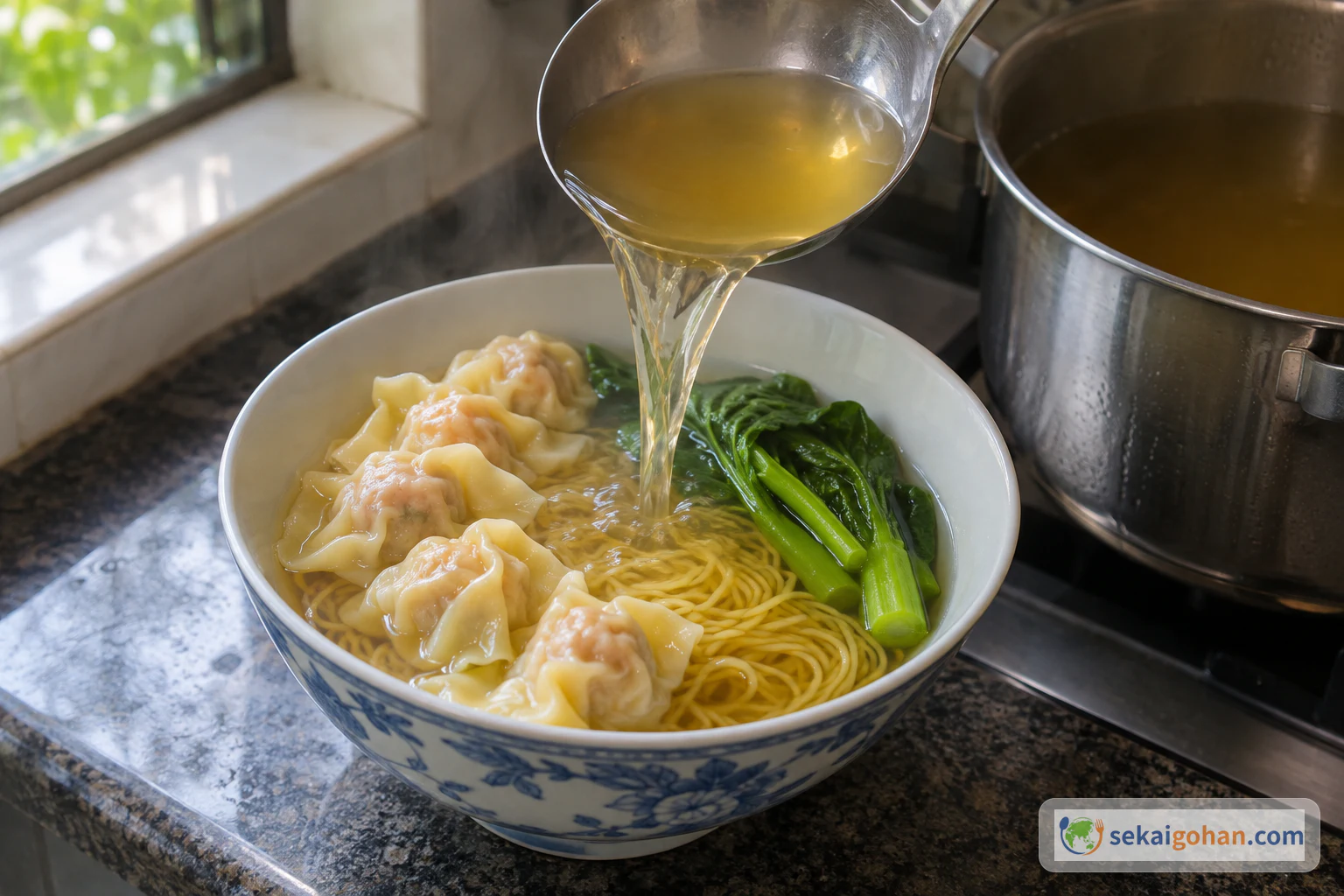
Steam rises from the bowl, carrying ginger and scallion from the broth. Under the clear, golden surface lie a nest of thin yellow egg noodles, a few purse-shaped wontons with pink shrimp showing through the wrapper, and bright stalks of choy sum, finished with a pinch of sliced scallion greens and fried shallots if you like. This is Hong Kong-style wonton noodle soup (广式云吞面): springy shrimp-and-pork wontons, fine egg noodles and a light chicken broth, each made separately and brought together at the last moment. Plan on about 1 hour 40 minutes, and most of that is wrapping. For more dishes from the region, see the Hong Kong country page.
What Makes Wonton Noodles Hong Kong-Style
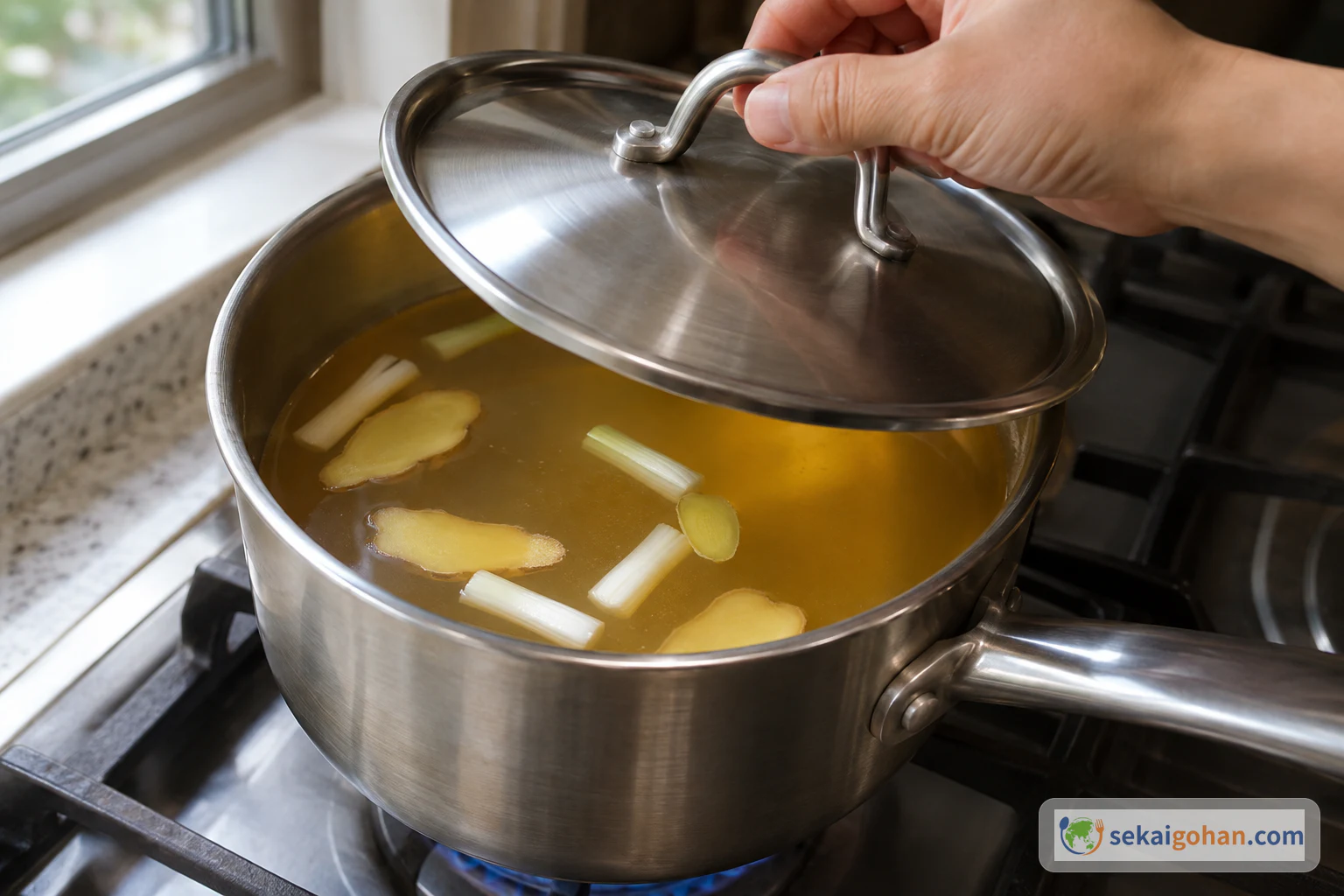
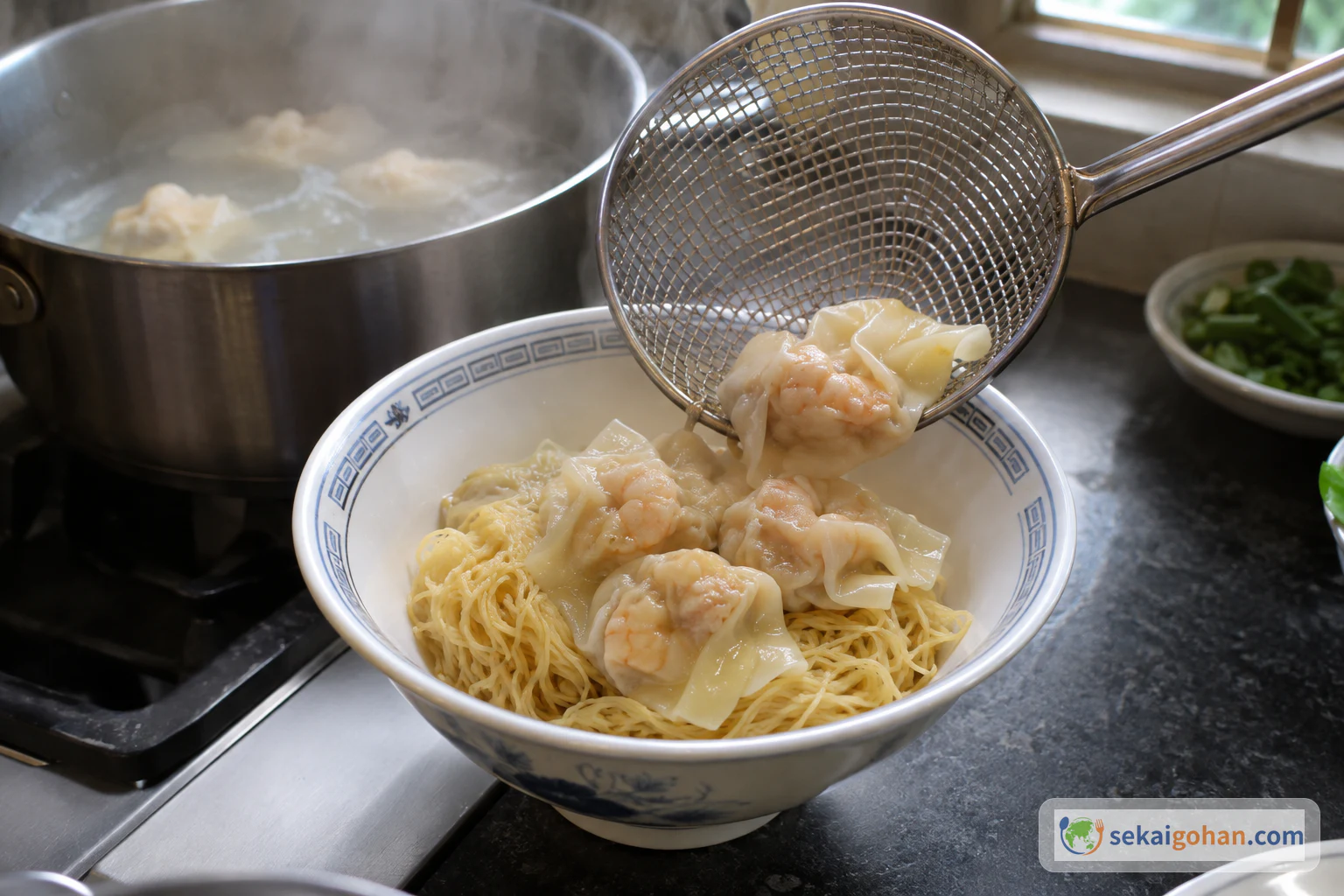
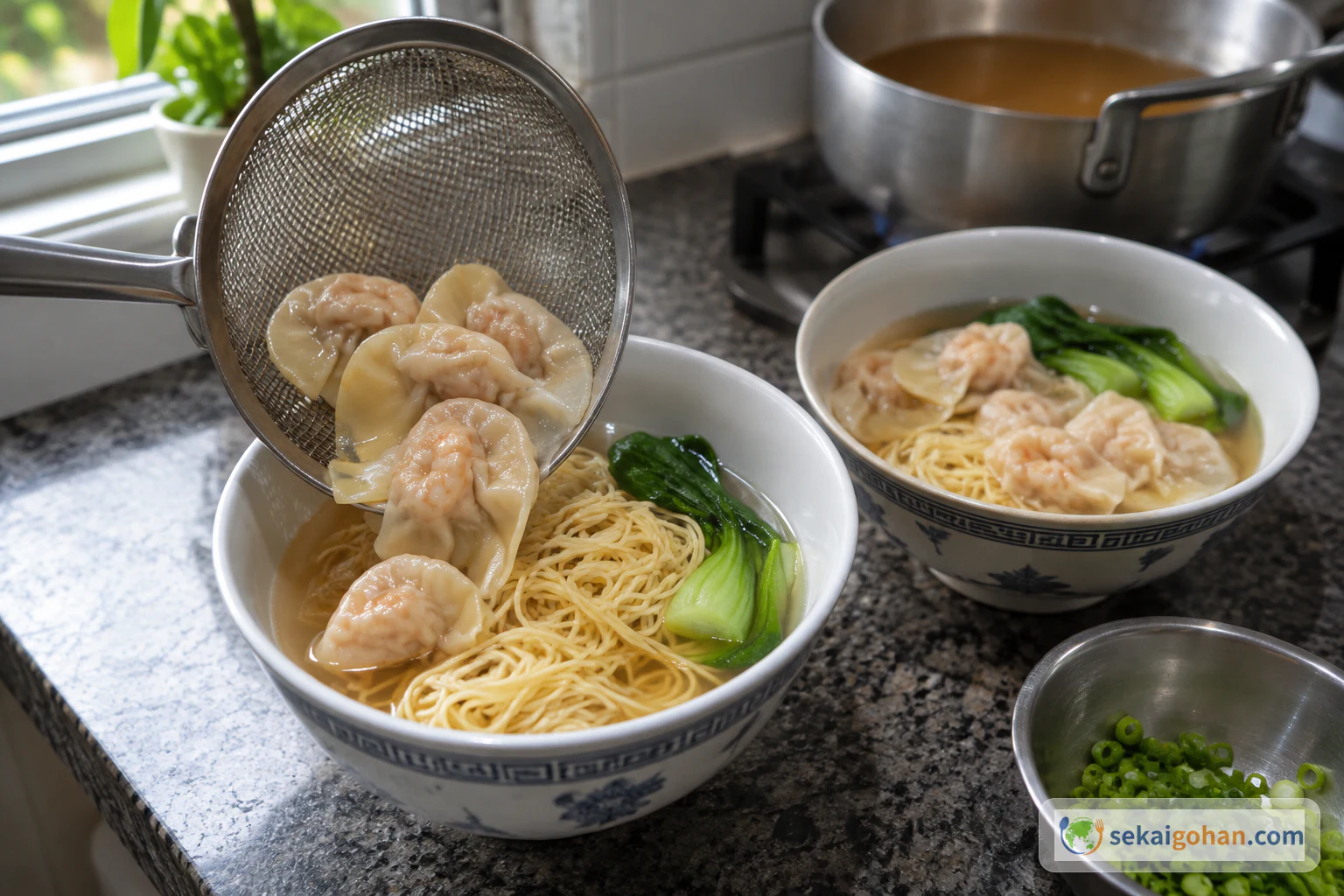
This style is defined by three components and how they come together in the bowl. The wontons are filled with pork and shrimp, the noodles are thin Hong Kong-style egg noodles, and the broth is chicken stock warmed with ginger and scallion whites. Noodles, wontons and greens cook in a separate pot of water so the broth stays clear. They go into the bowl first, and the hot broth is poured over them.
Hong Kong shops have their own takes on the dish. In Yuen Long, Ho To Tai Noodle, now run by its third generation, makes handmade wonton noodles and duck-egg noodles every day. It serves them as shrimp roe lo mein or with pork-and-shrimp wontons in a rich soup.
Ingredients: 4 Large Bowls or 6 Small Bowls
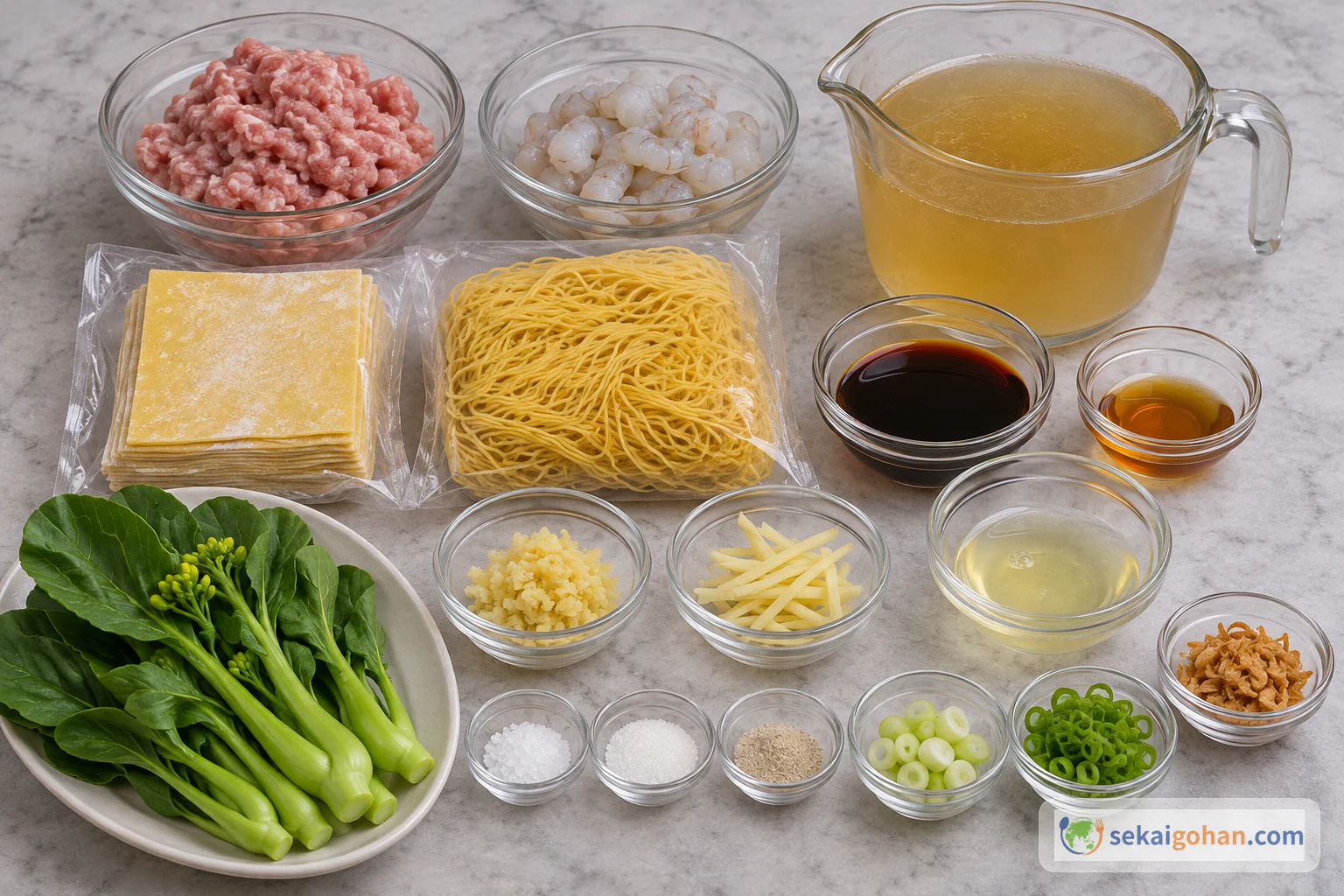
The salt and ginger each appear twice: one portion goes into the filling and the other into the broth. Measure them separately and don't add both to the same place. The soup water and the broth are also separate: noodles, wontons and greens cook in plain water, while the chicken stock is only warmed and poured.
Equipment
- A large pot for plain boiling water (noodles, wontons and greens)
- A medium saucepan for the broth
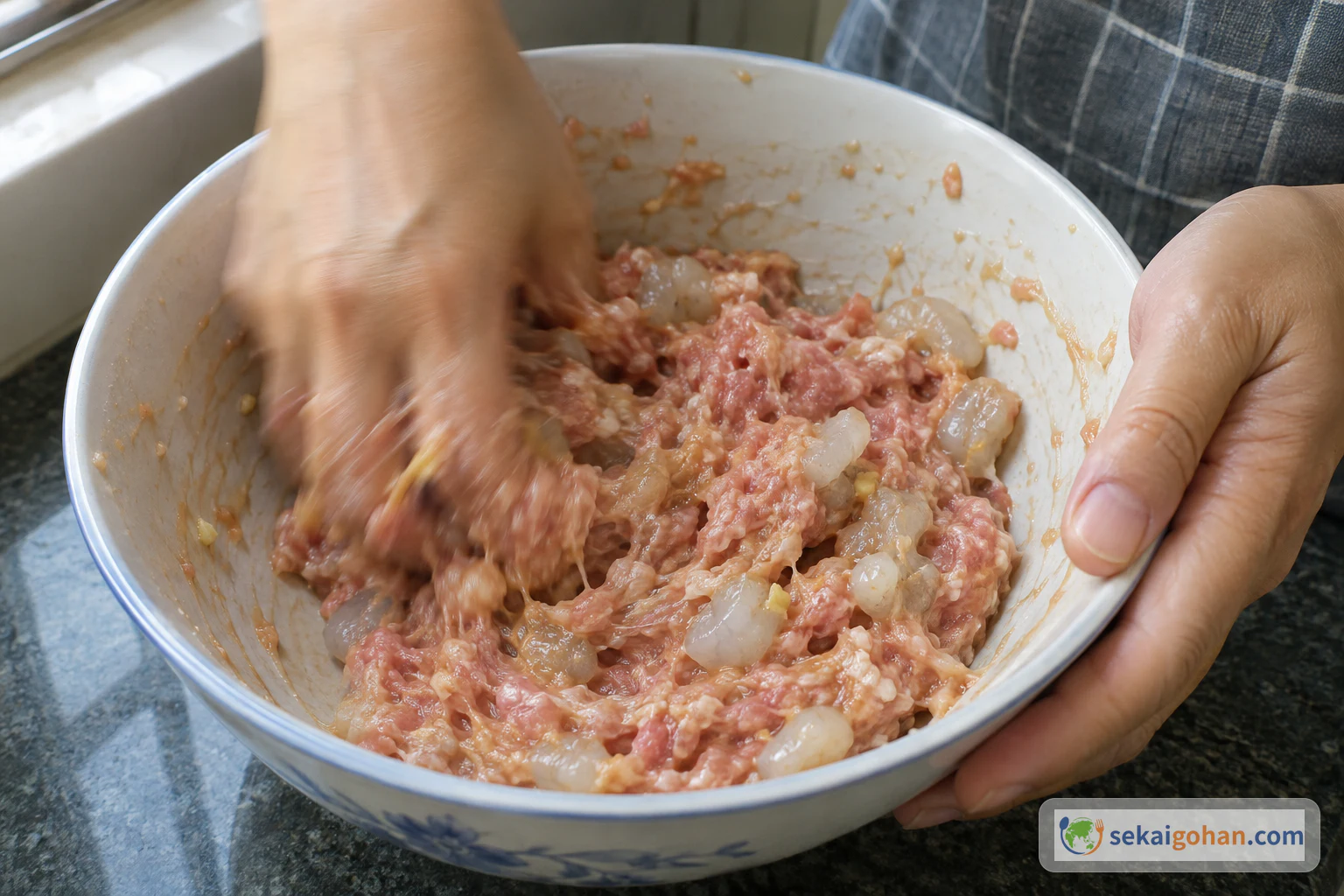
- A mixing bowl and a spoon for the filling
- A tray or plate for the wrapped wontons
- Clean damp kitchen towels
- A spider strainer, slotted spoon or mesh strainer, and a colander
- A skimmer or slotted spoon for lifting out the broth aromatics
- A ladle
- 4 to 6 soup bowls
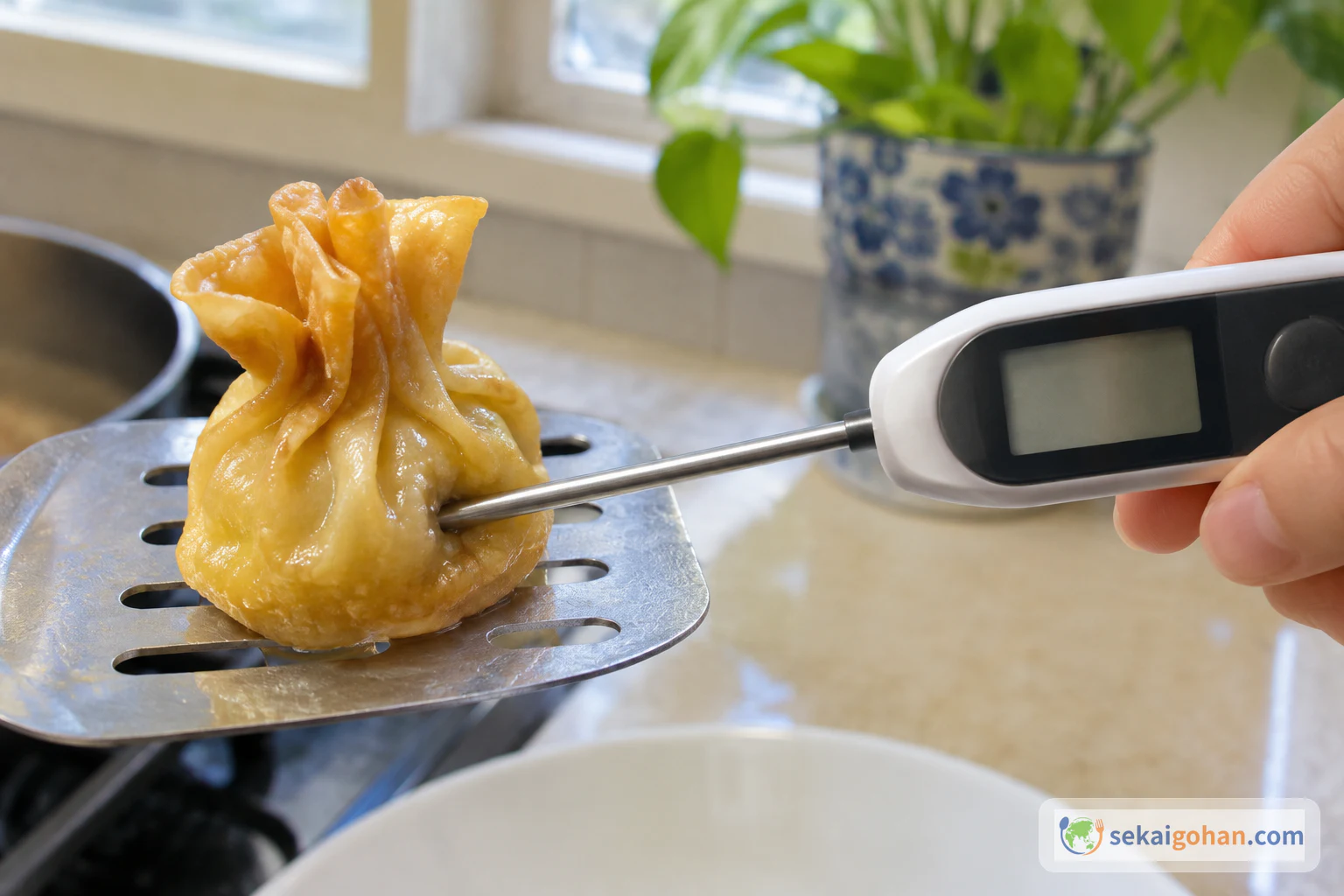
- A food thermometer
- Separate utensils and boards for raw filling and for cooked food
Choosing Ingredients and Substitutes for Wonton Noodles
Chinese light soy sauce (生抽) and Japanese usukuchi soy sauce are different products, even though the names sound alike. If you can't find Chinese light soy sauce, an ordinary Japanese-style soy sauce can stand in. Expect the filling's color and saltiness to change.
Look for the noodles and yellow wrappers in the refrigerated and frozen sections of an Asian grocery, and check the labels for type and cooking directions.
| Item | First choice | If you can't find it |
|---|---|---|
| Wrappers | Hong Kong-style yellow wonton wrappers | White wrappers work, but the texture and color change. Wrapper size and count vary by product |
| Noodles | Thin yellow Hong Kong-style egg noodles, fresh or frozen; follow the package | Thin Chinese-style egg noodles from a local market. Thickness, alkaline water (kansui) content and springiness differ. Thick wheat noodles such as udon make a different dish |
| Shrimp | Raw shrimp, peeled and deveined | Frozen peeled shrimp, thawed and patted dry |
| Ground pork | Any ground pork | The fat ratio is not fixed; a leaner or fattier grind will change the filling |
| Chicken stock | Homemade chicken stock | Unsalted or lightly salted chicken stock, adjusting the broth salt by tasting |
| Greens | Choy sum | Baby bok choy. Komatsuna also works, with a different texture |
| Fried shallots | Store-bought fried shallots | Fried onions, with a different aroma, or leave them out |
Method: Wrap First, Then Cook Each Part in Its Own Pot
Floating and cooking 1 more minute is not enough on its own. Use a food thermometer to check that the center of the thickest wonton has reached 167°F (75°C) and stays there for at least 1 minute. Keep raw filling and raw wontons away from cooked food, and use separate, clean utensils for each.
Wonton Noodle Troubleshooting
| What happens | Likely cause | What to do |
|---|---|---|
| Wontons tear while wrapping or cooking | The filling was loose | Keep stirring the filling in one direction until it becomes a sticky paste |
| The wrapper won't close | The edges dried out | Keep wrappers and wontons under a damp towel; dab the edge with a little water |
| Wontons stick to the tray or to each other | No dusting, or packed too close | Dust the tray with flour or brush it with a little oil, and leave space between wontons |
| Wontons stick to the bottom of the pot | Not stirred after going in | Stir gently right after adding them |
| The broth is cloudy | Noodles or wontons were cooked in it | Cook everything in a separate pot of plain water and only pour the broth |
| The noodles are soft and the broth has shrunk | The bowl sat before eating | Assemble just before serving |
| The thermometer reads under 167°F (75°C) at the center | Not cooked long enough, or a thicker wonton | Keep cooking, and check again until the center holds 167°F (75°C) for at least 1 minute |
Wonton Noodle Variations
- Baby bok choy instead of choy sum. Use the same number of stalks and blanch them the same way.
- Six smaller bowls. Divide the same noodles, wontons, greens and broth among 6 bowls instead of 4.
- No fried shallots. They're optional; scallion greens alone finish the bowl nicely.
- Frozen wontons. Cook them the same way, and still check the center temperature.
Frequently Asked Questions
Can I use ordinary Chinese-style noodles from the supermarket?
Yes, though the result changes. Supermarket Chinese-style noodles often differ from thin yellow Hong Kong-style egg noodles in thickness, alkaline water content and springiness, so the bite will be different. Choose the thinnest egg noodles you can find and cook them according to their own package.
How long do the noodles cook?
Fresh noodles usually take about 30 seconds, but noodle products vary, so follow the directions on your package.
Can I make the wontons ahead?
Yes. Made-ahead wontons keep for 1 day in the refrigerator or 3 months in the freezer. Store raw wontons apart from cooked food, and whether they're frozen or not, check the center temperature as described in step 6 when you cook them.
Why not boil the noodles and wontons in the broth?
Their starch would cloud it. Cooking them in a separate pot of water leaves the starch behind, and the chicken stock only needs to be kept hot.
Isn't floating plus 1 minute enough?
No. Floating plus 1 minute is a cooking cue, not a safety check. Use a thermometer to make sure the center of the wonton reaches 167°F (75°C) for at least 1 minute, and keep raw meat and seafood away from cooked food.