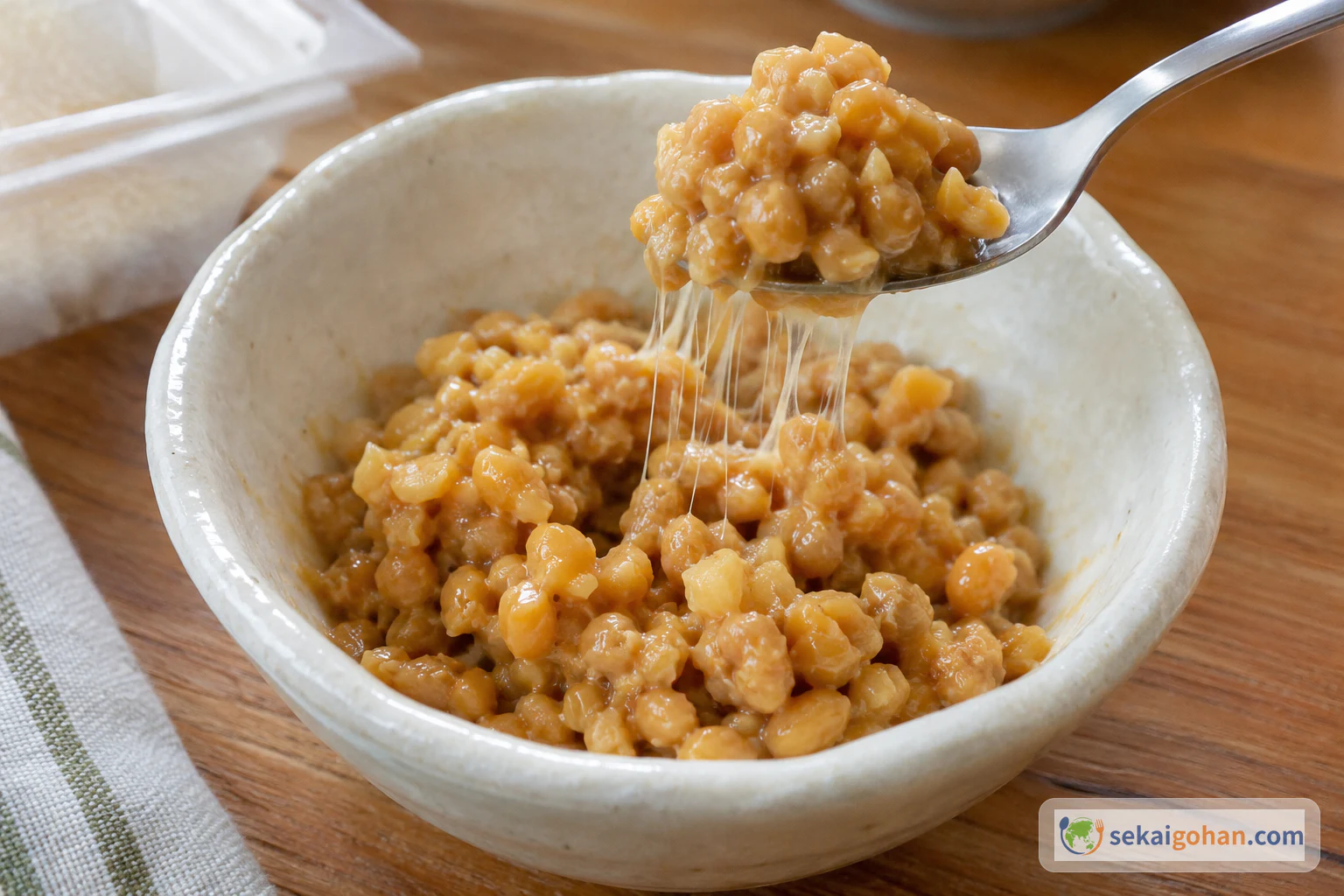

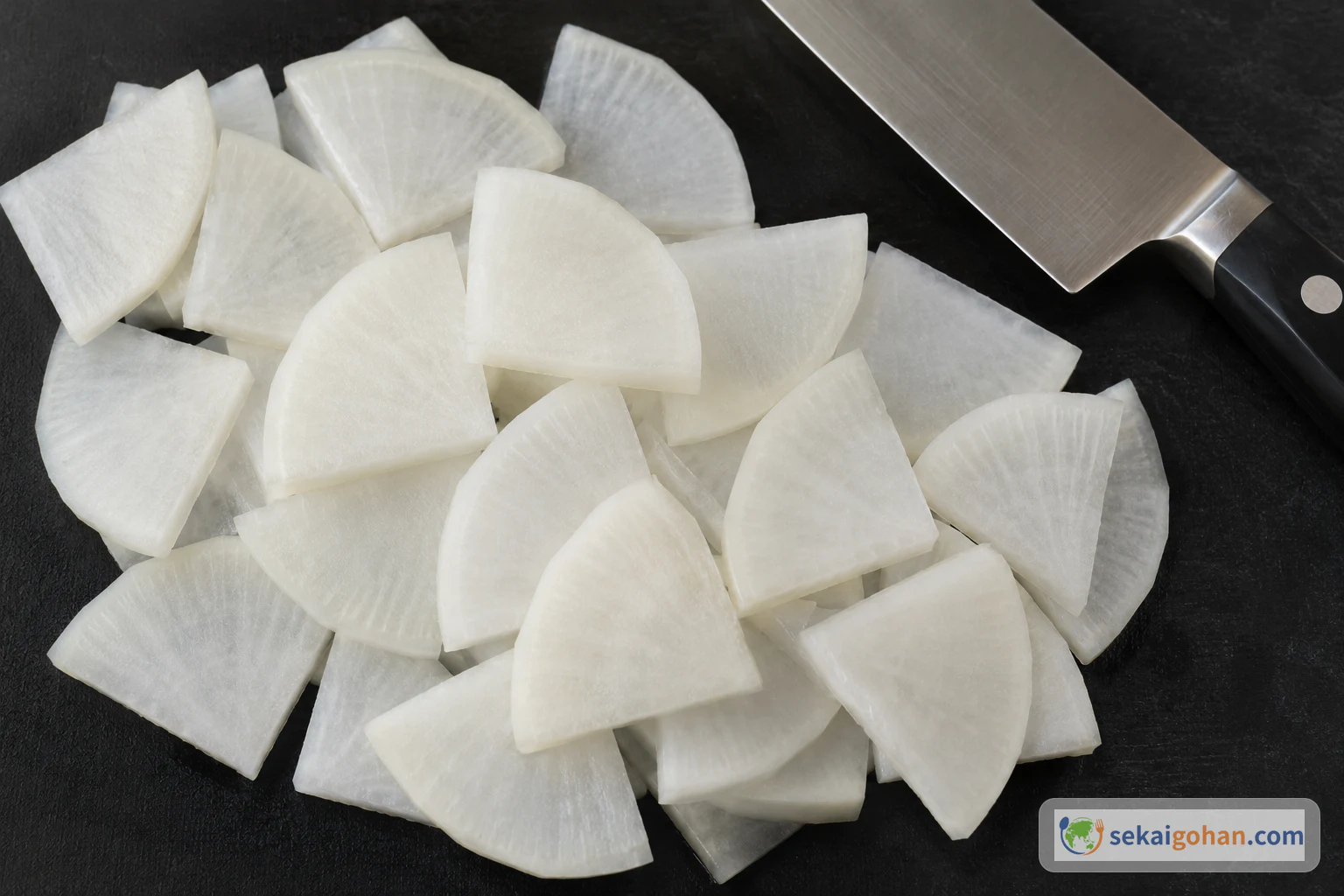
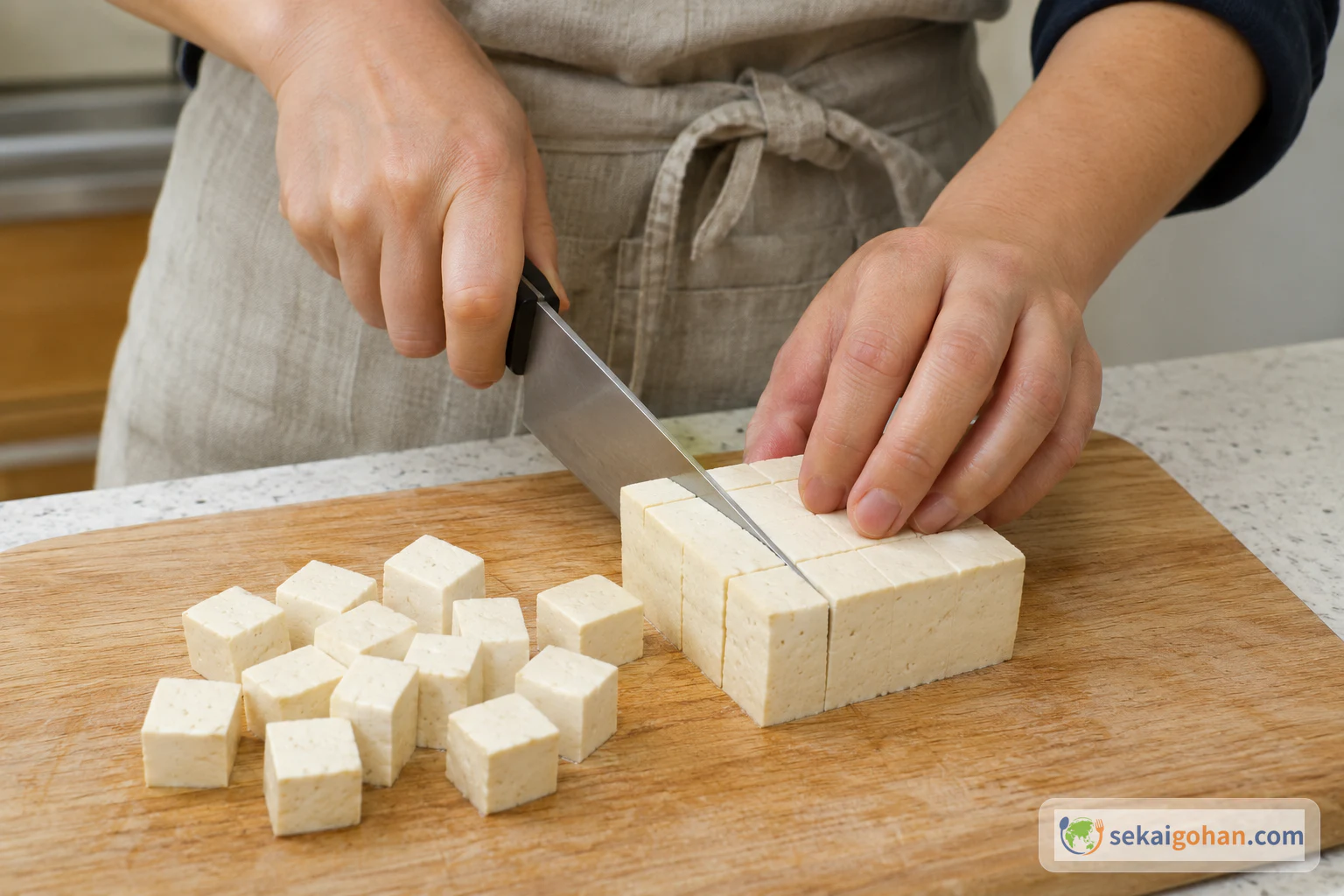

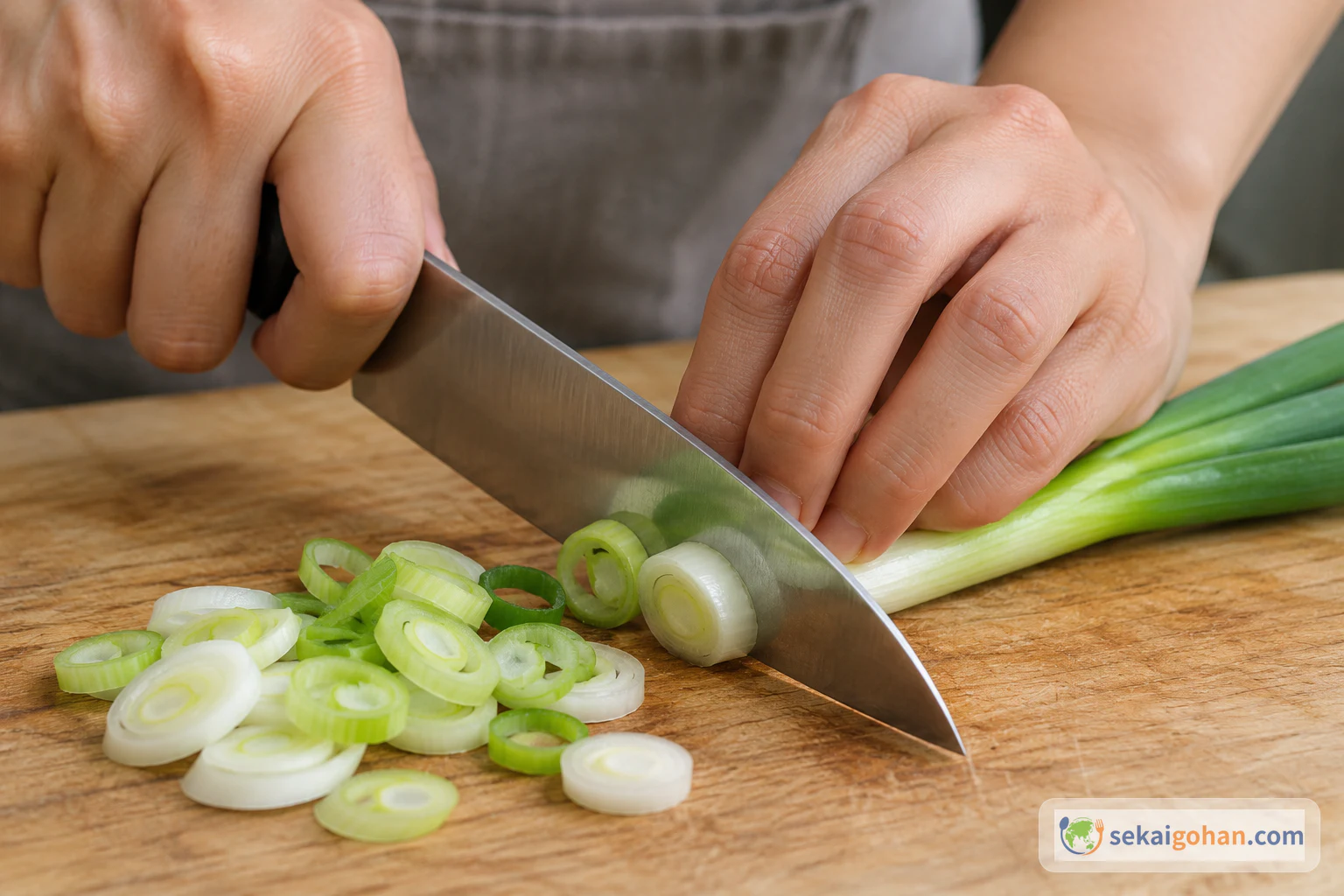
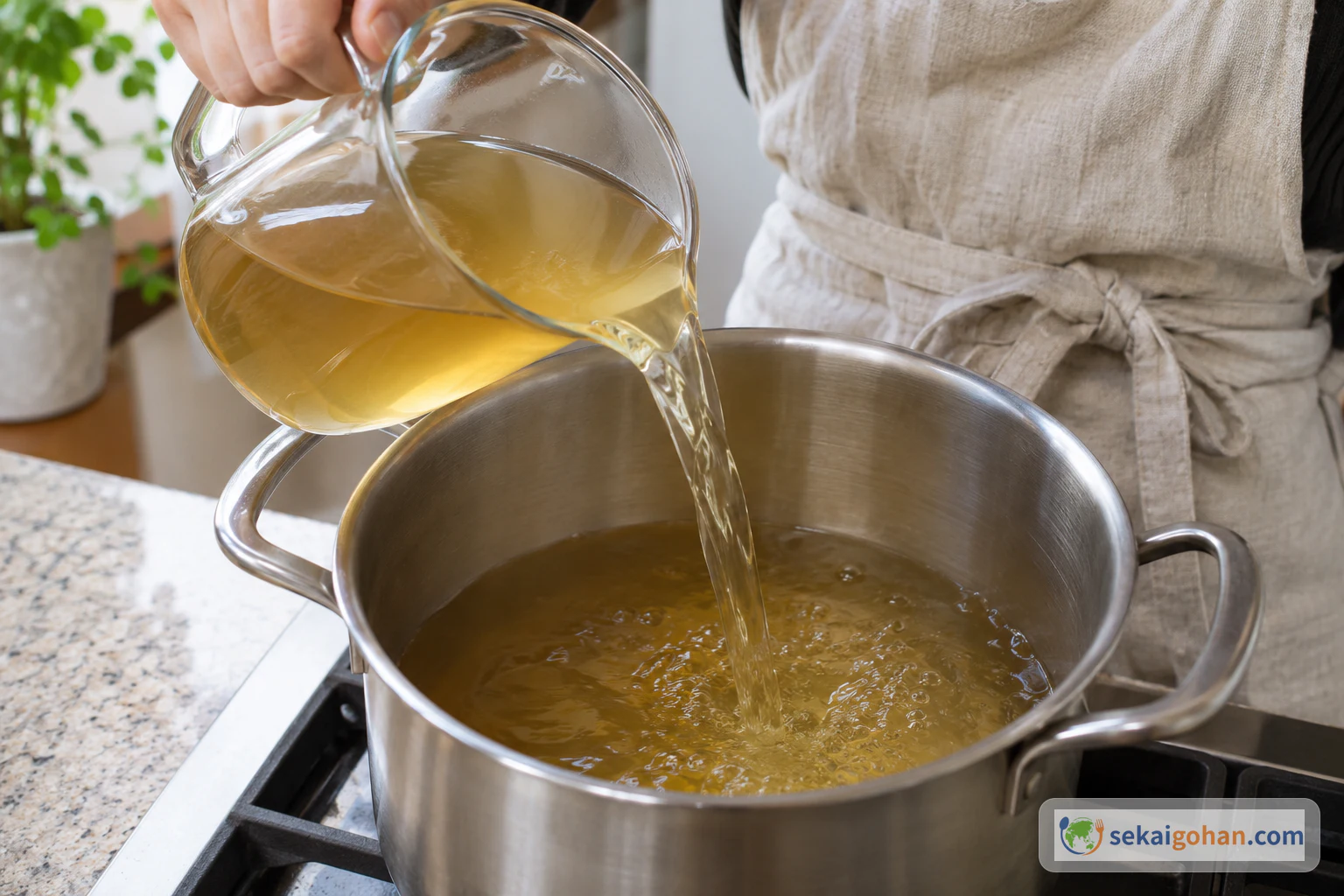
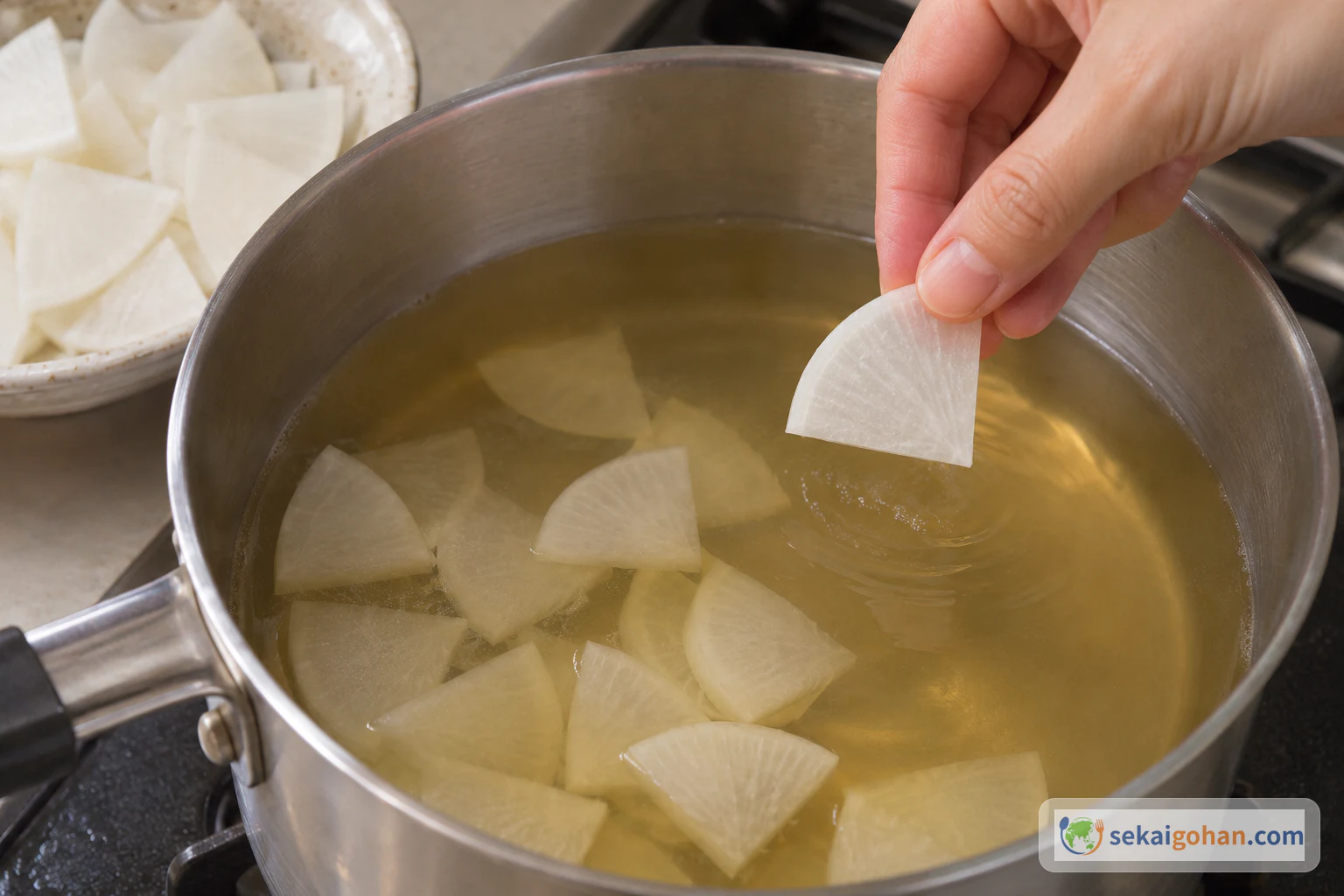
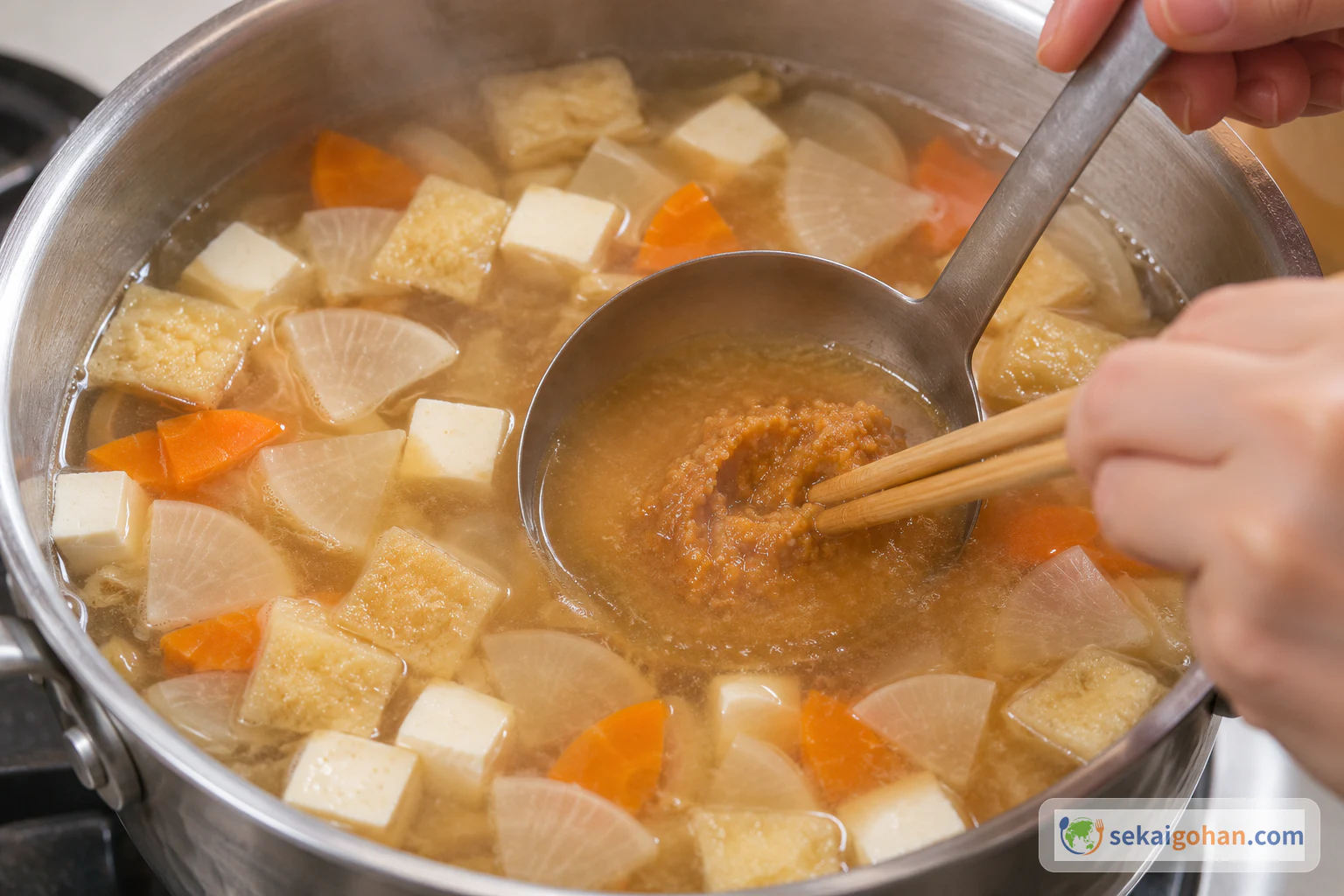
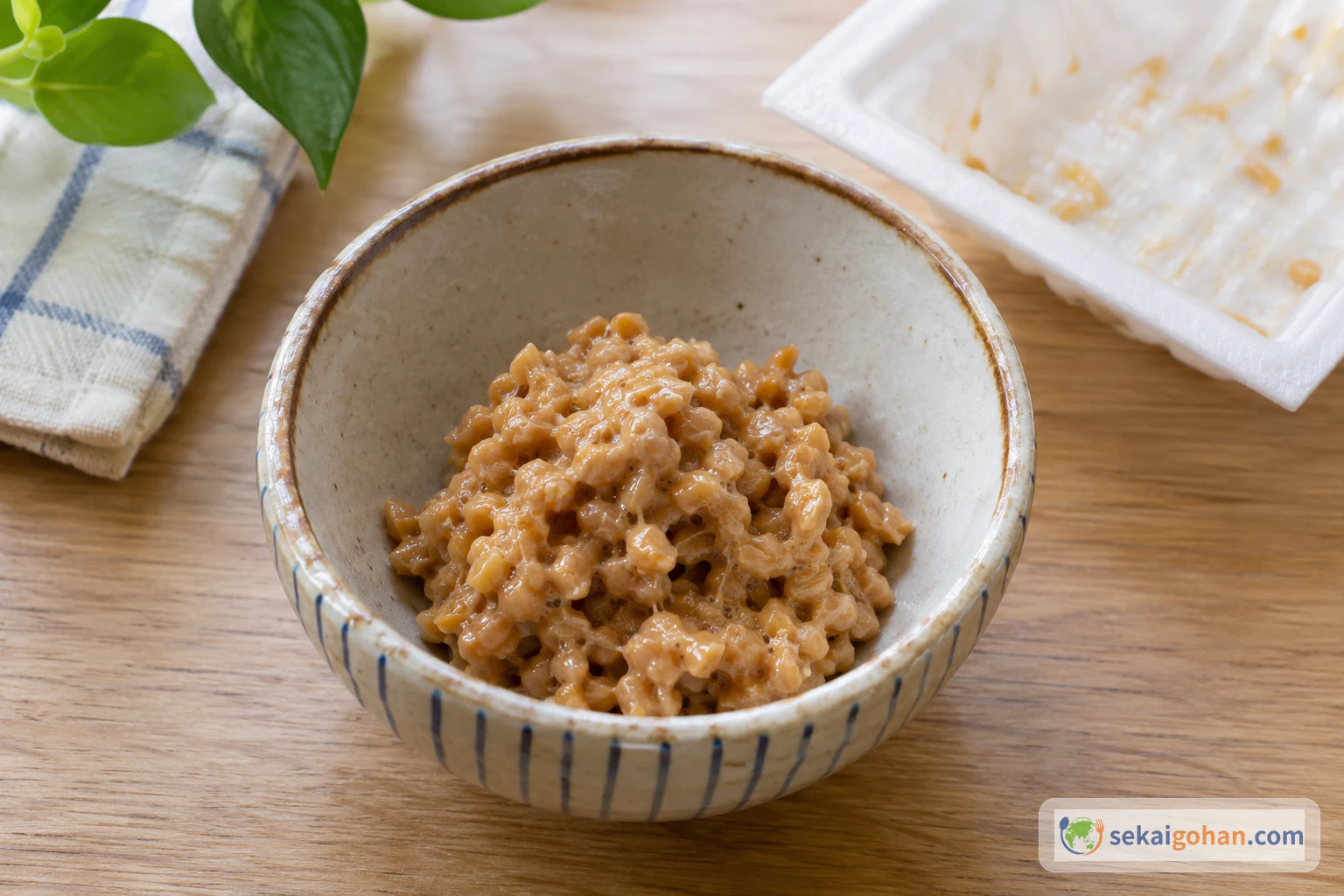
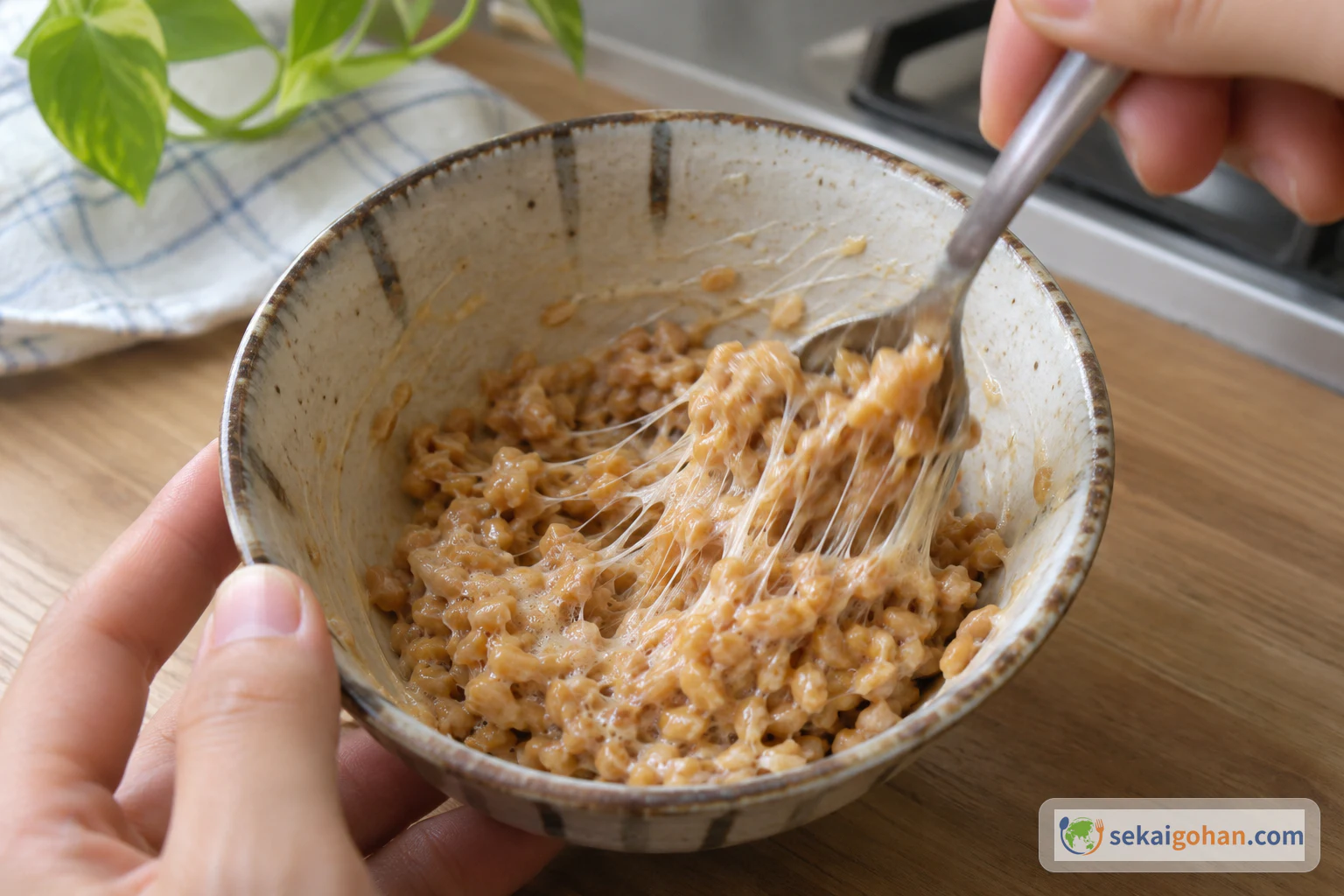
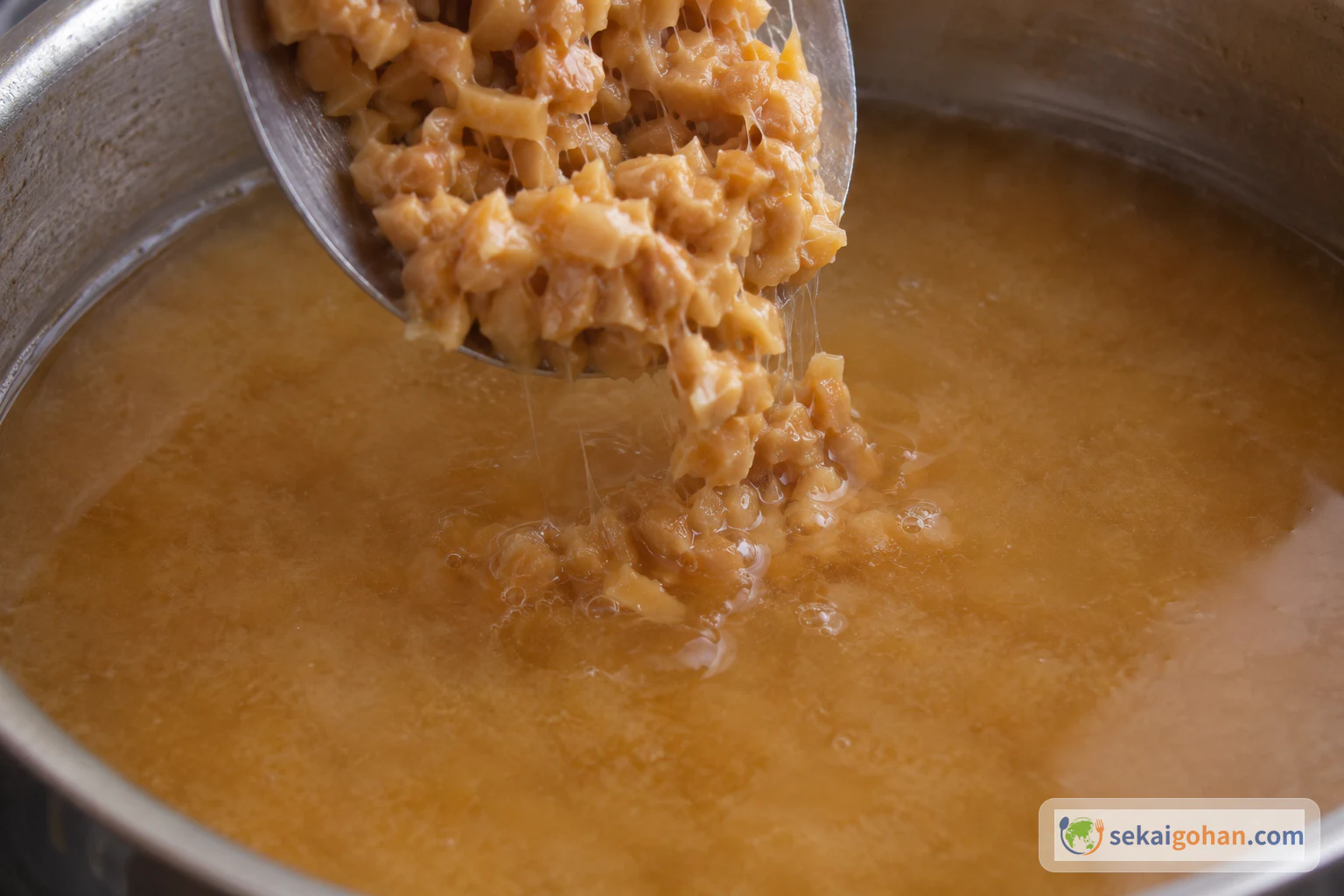
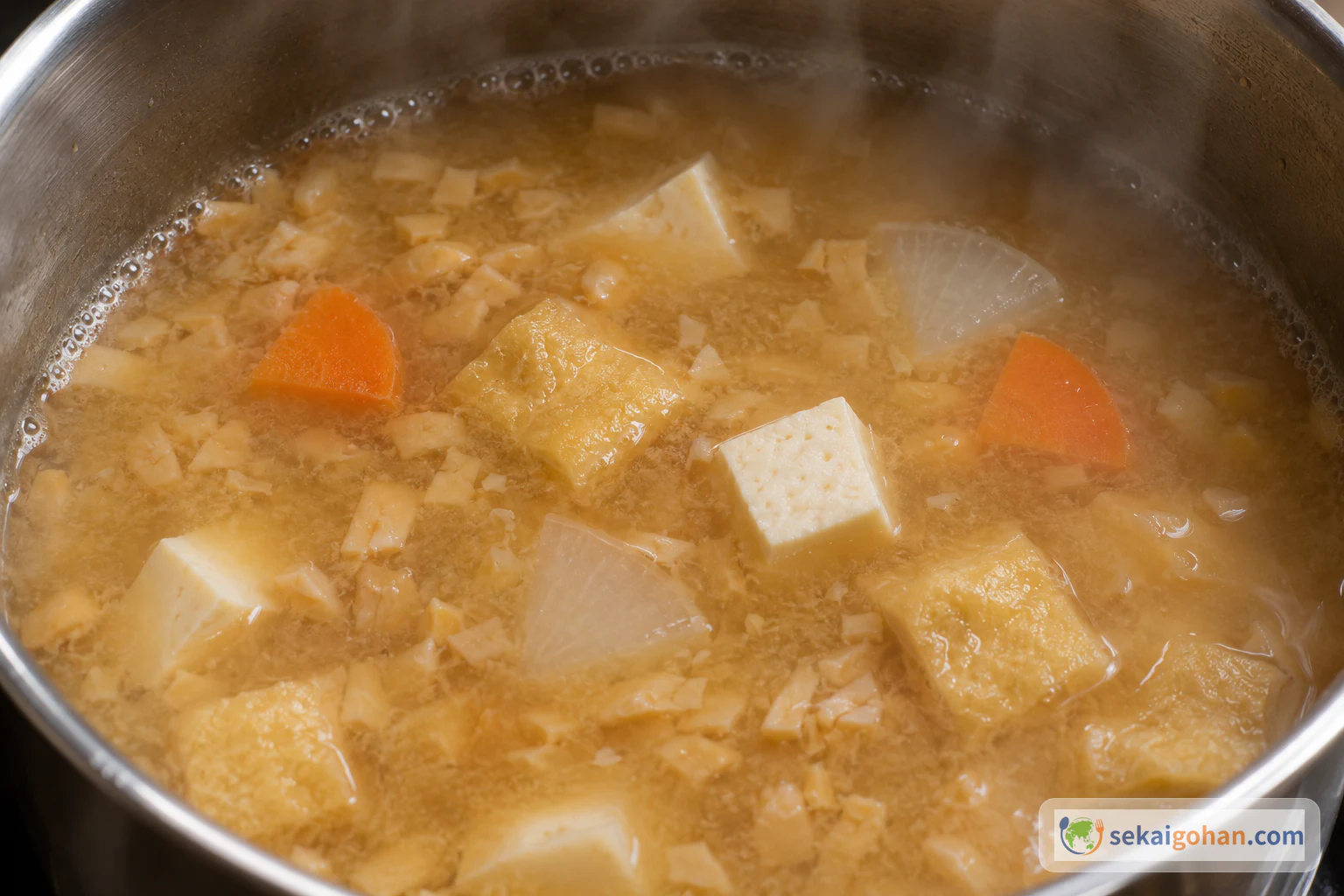
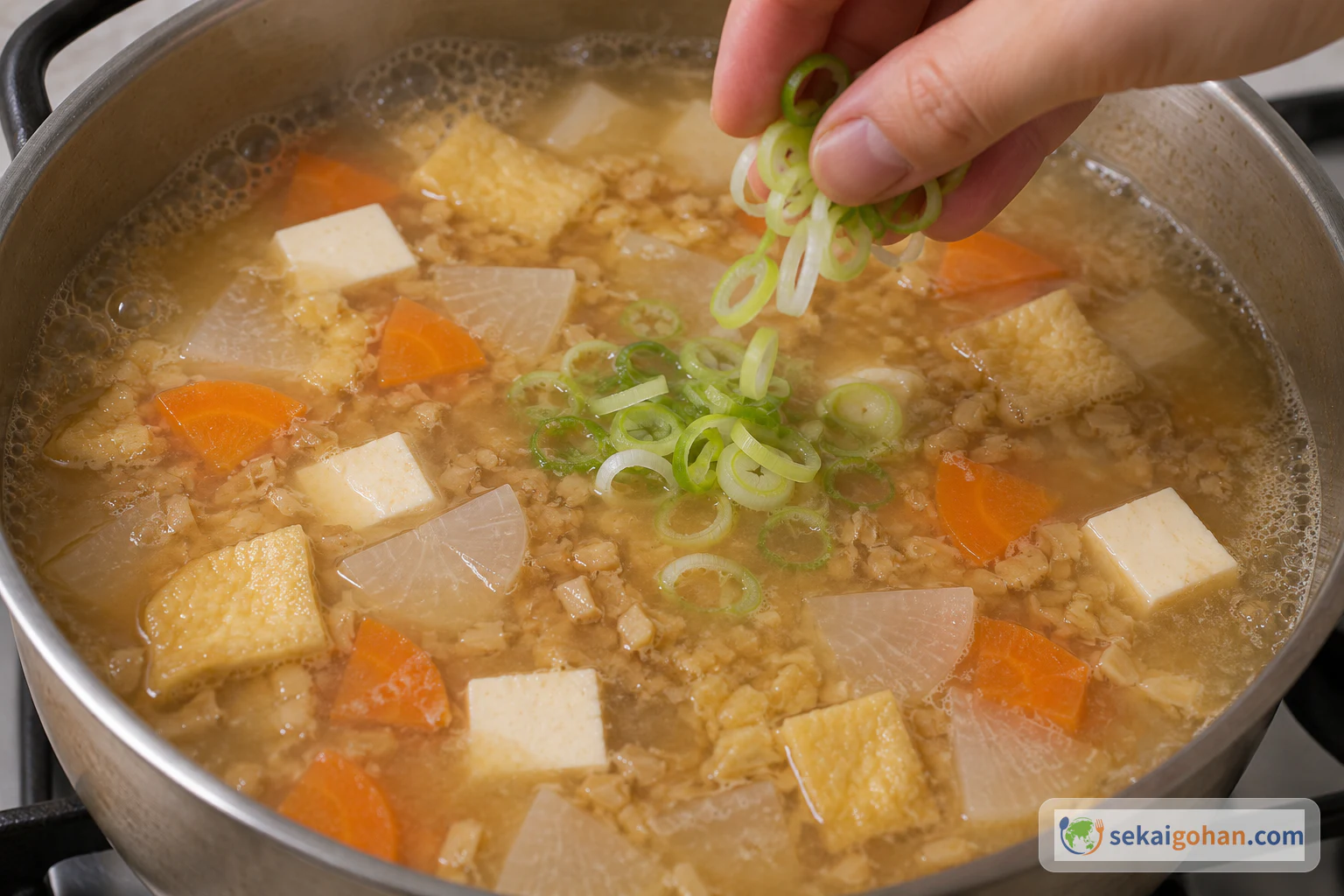
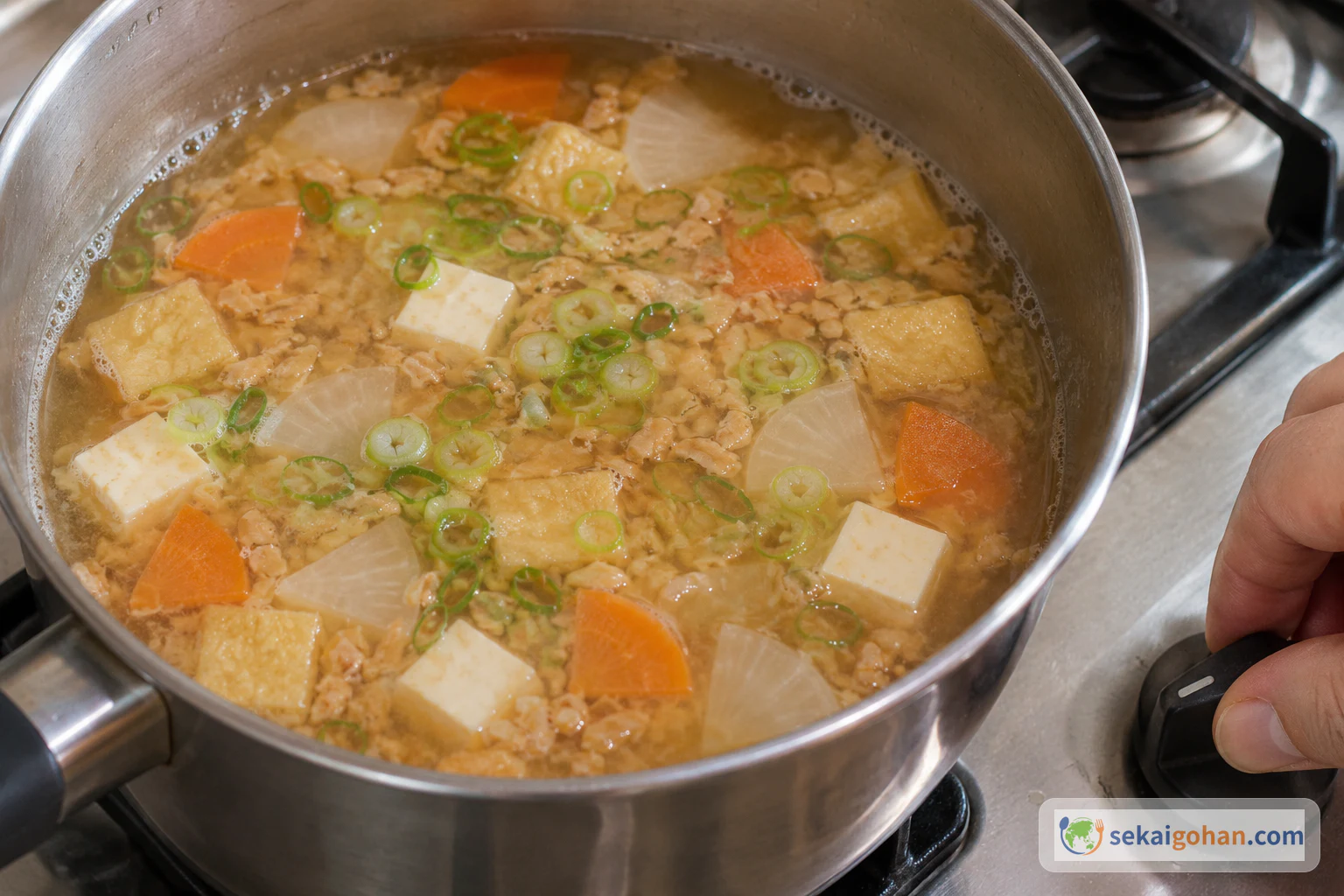
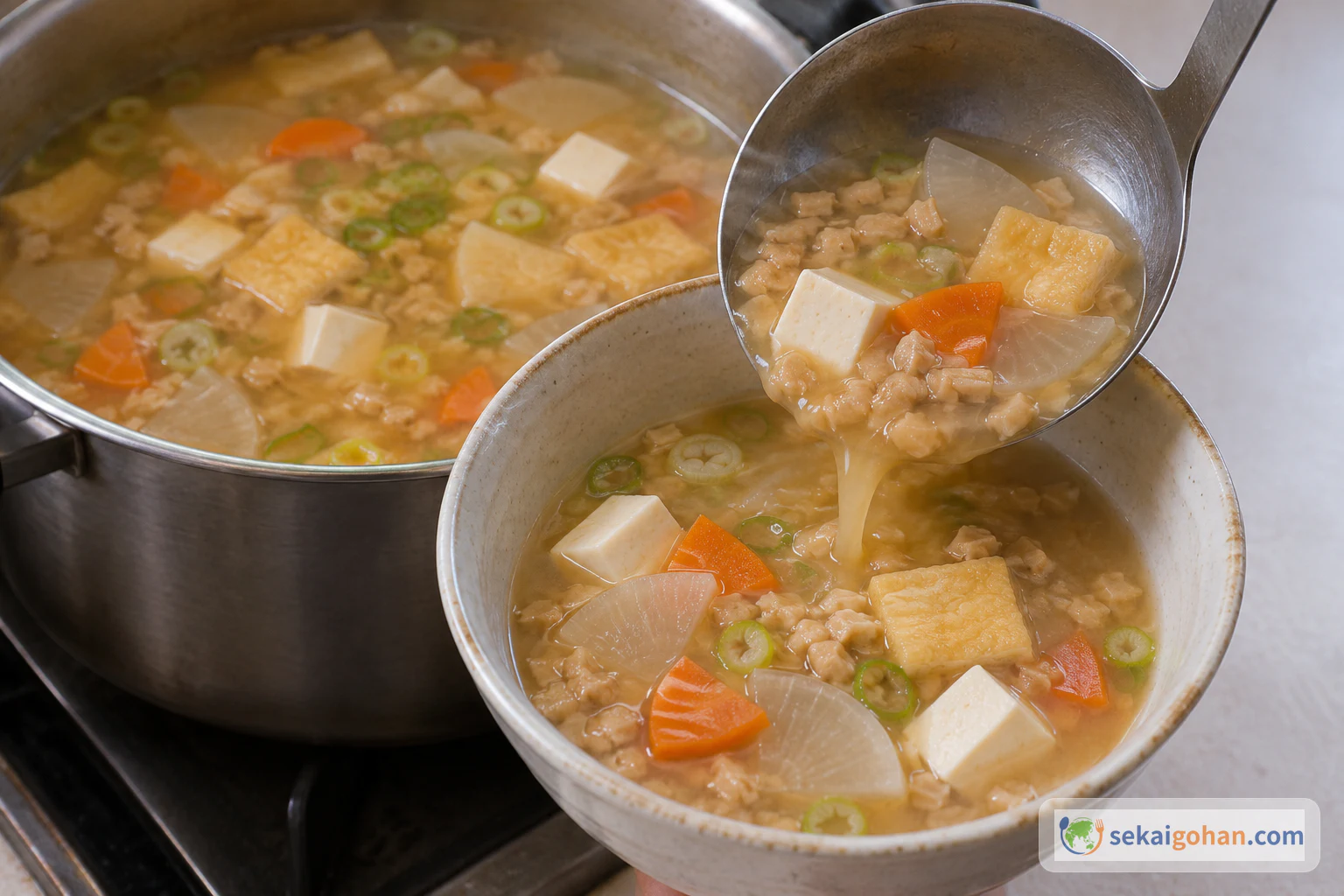
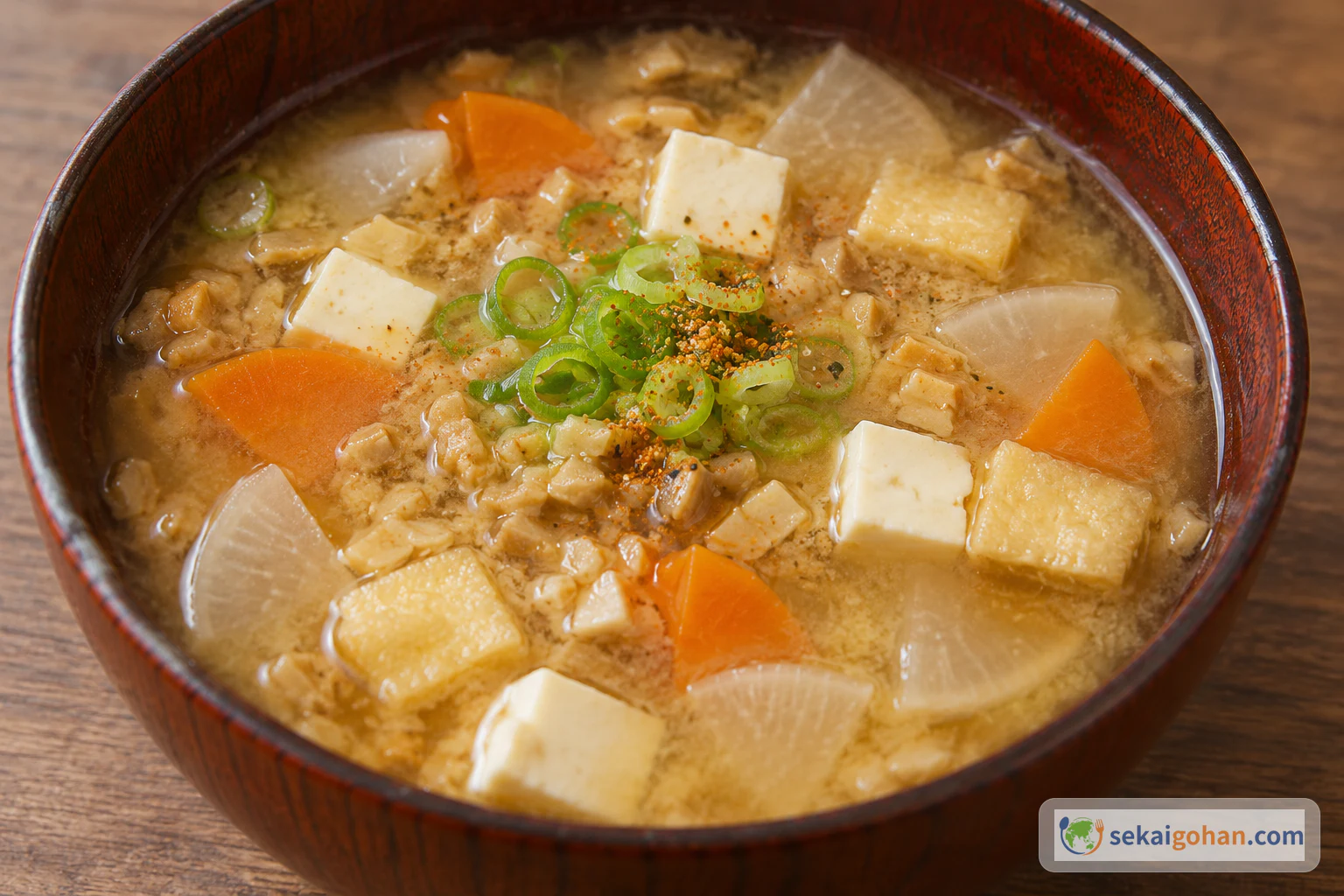
Lift a spoon out of a bowl of natto and fine, sticky threads stretch after it. Nattō is Japan's fermented soybean, sold ready to eat. In Miyagi Prefecture it also goes into the soup pot, stirred into a miso soup of tofu, carrot, daikon, aburaage and scallion simmered in dashi. For more dishes from the same country, see Japan.
Natto and Miyagi Natto Soup
Stringy Natto and Temple Natto
Not every food called "natto" in Japan is the sticky, stringy kind. Stringy natto (itohiki natto) is made from steamed soybeans and natto bacteria. Temple natto (tera natto) is a different food altogether: it is made with koji mold and salt water, and it forms no threads.
| Stringy natto (itohiki natto) | Temple natto (tera natto) | |
|---|---|---|
| Made with | Steamed soybeans and natto bacteria | Koji mold and salt water |
| Threads | Sticky threads | No threads |
Stringy natto is made commercially. In the factory, the soybeans are washed, soaked and steamed, sprayed with natto bacteria, packed into containers, fermented, and then cooled and matured. It comes in two main forms: whole-bean natto keeps each soybean intact, while hikiwari natto is made from chopped, split soybeans, so it comes as small, irregular fragments.
How Natto Is Eaten in Miyagi and Beyond
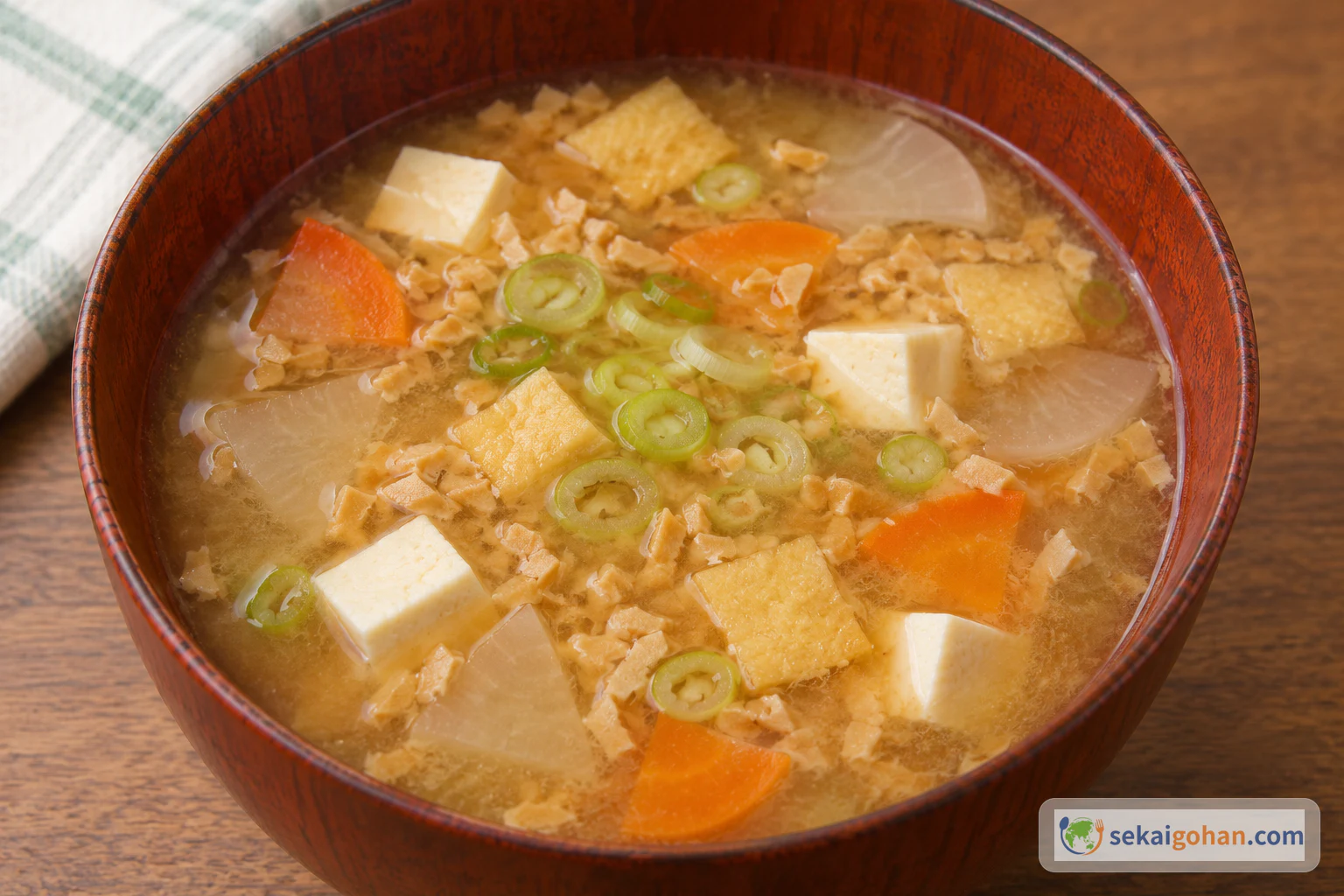
Natto soup is one of the ways Miyagi cooks with natto. It is also eaten there as natto rice and natto mochi. Other regions have their own forms. Ibaraki, for example, makes small-bean natto (kotsubu natto) and soboro natto, and it has its own legend about how natto began.
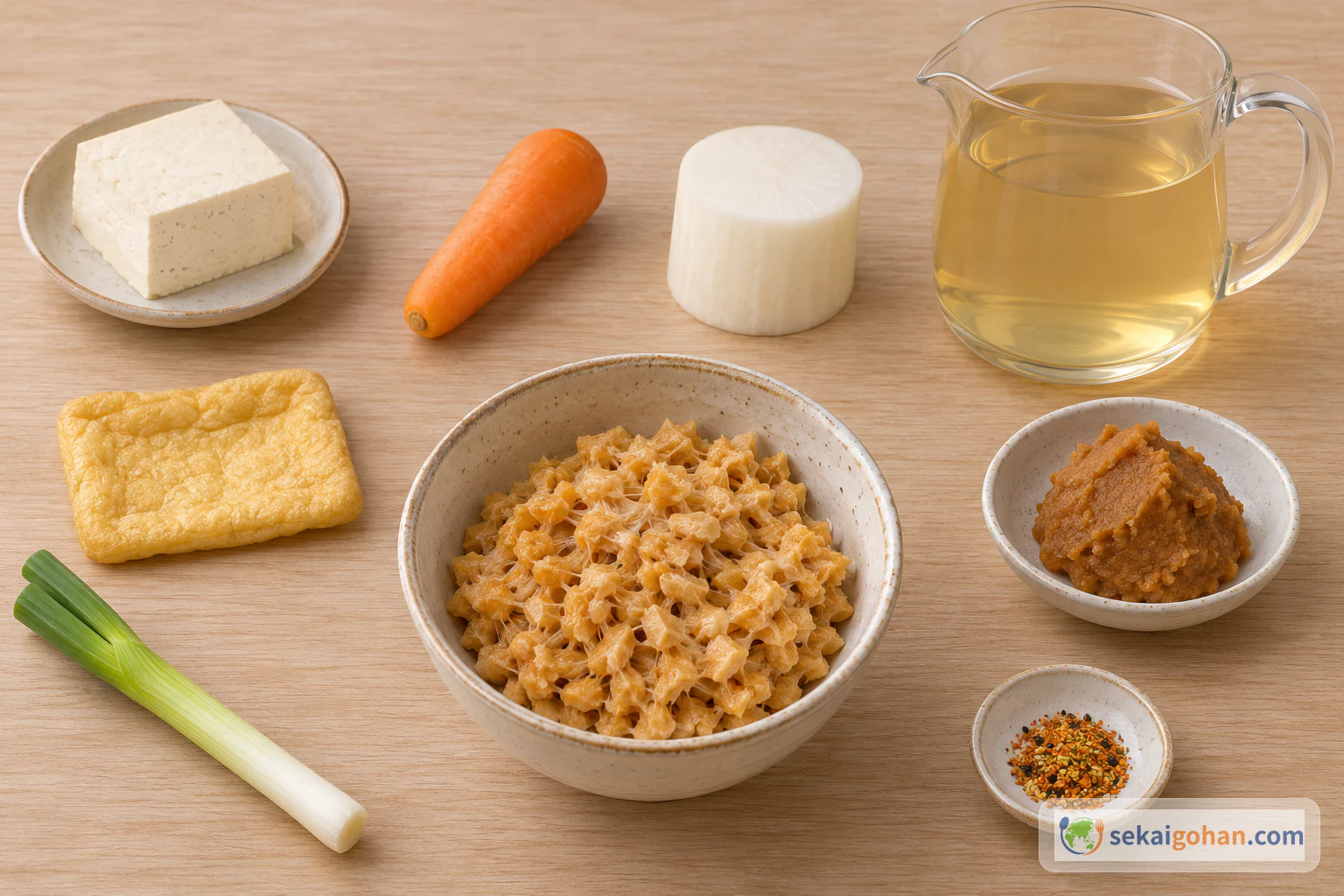
Ingredients for Miyagi Natto Soup (Serves 5)
Equipment
- Cutting board and knife
- Pot
- Ladle
- Small bowl and a spoon for stirring the natto
- Serving bowls
Choosing Natto, Miso and Dashi
Natto. Look for packs of hikiwari natto, the chopped kind. Whole-bean natto has a different bean shape and texture, so the soup won't come out the same.
Sendai miso. Use Sendai miso if you can find it. Another miso works as a substitute, though the soup will taste different.
Dashi. Use the dashi you normally make or buy. Shichimi, the chili blend, is optional and goes on at the table after serving.
Natto, tofu, aburaage and miso are all soy foods. Check the labels on your natto, miso and dashi products for soy and any other allergens that matter to the people you are cooking for.
Method: Roots First, Natto After the Miso, Heat Off After the Scallion
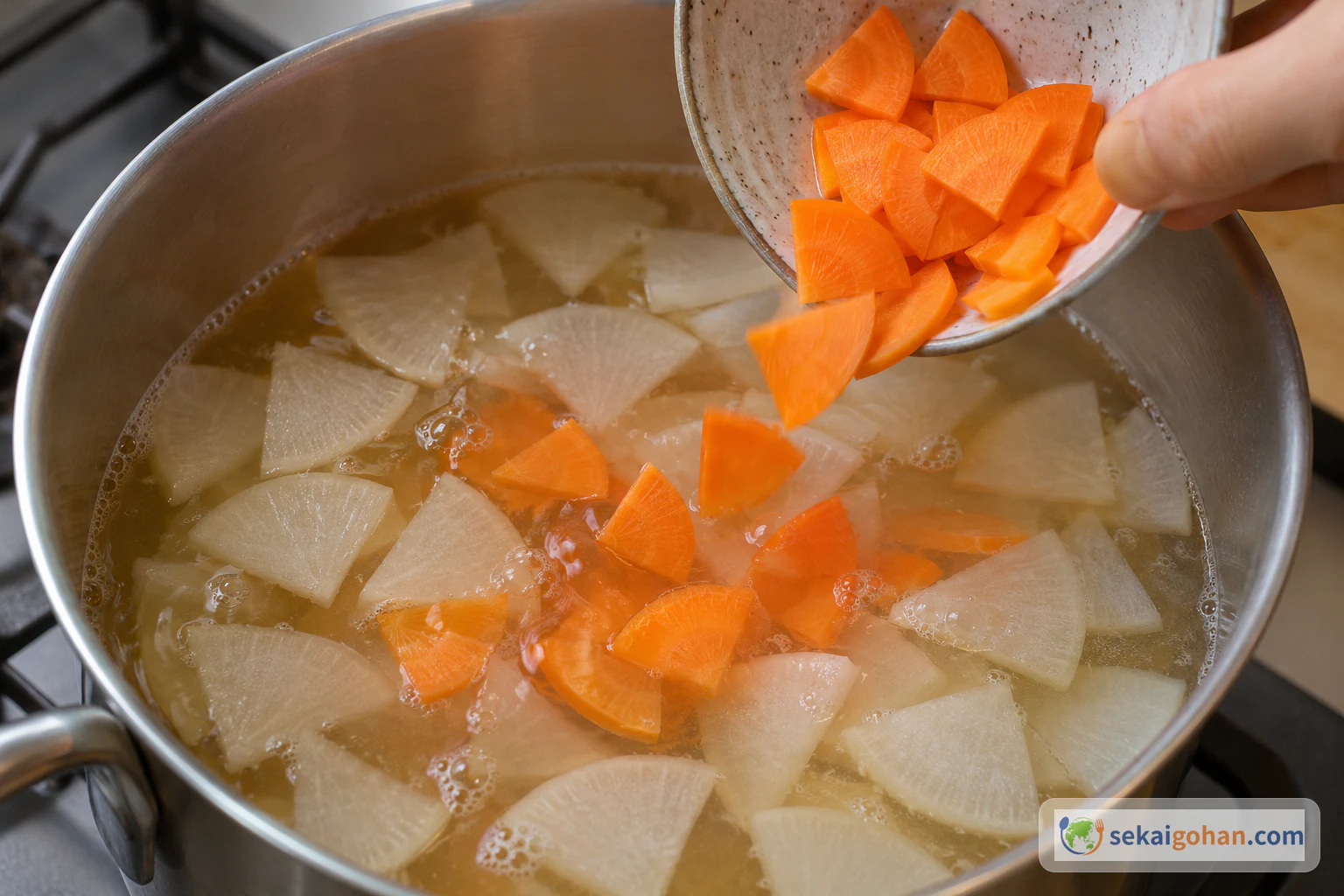
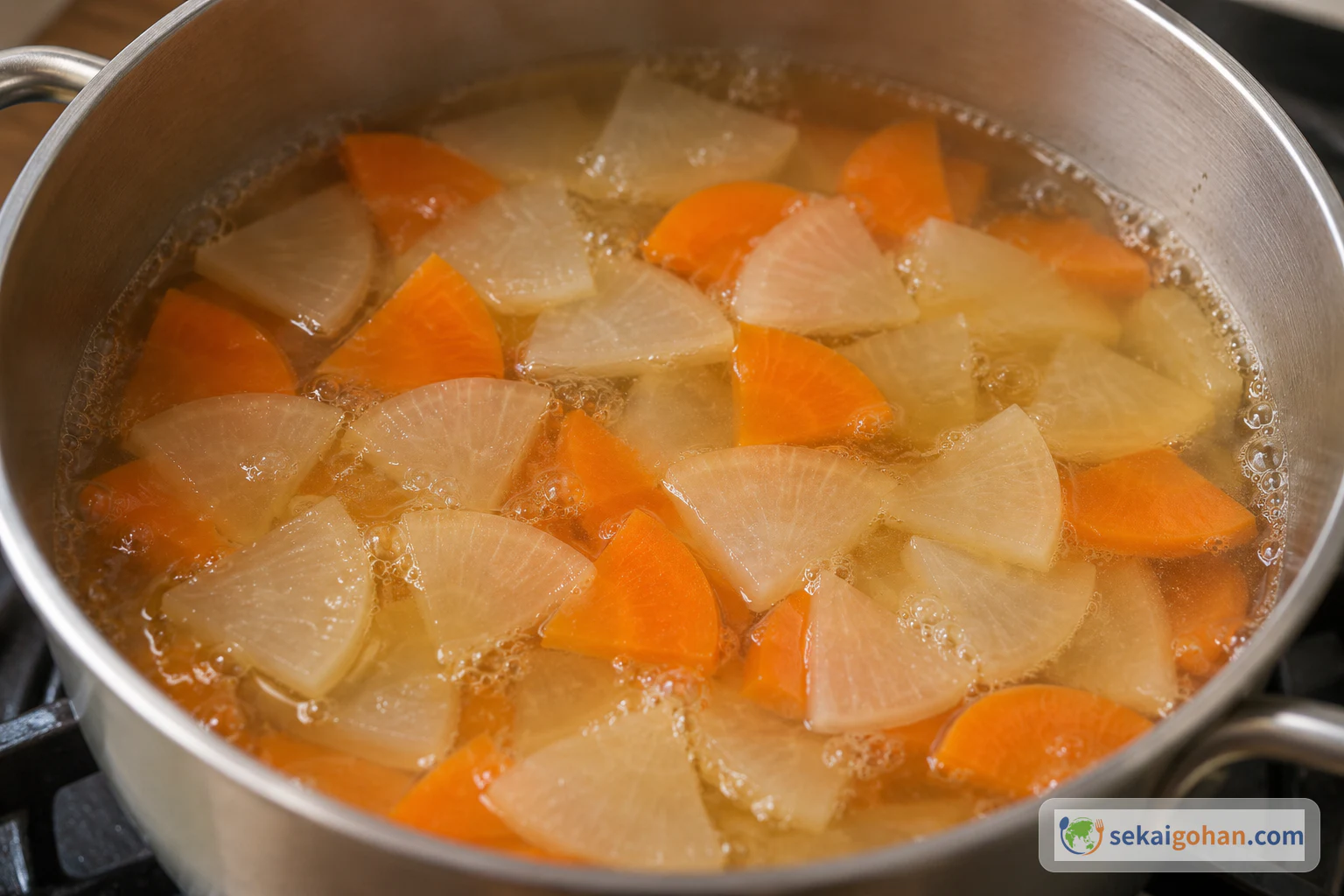
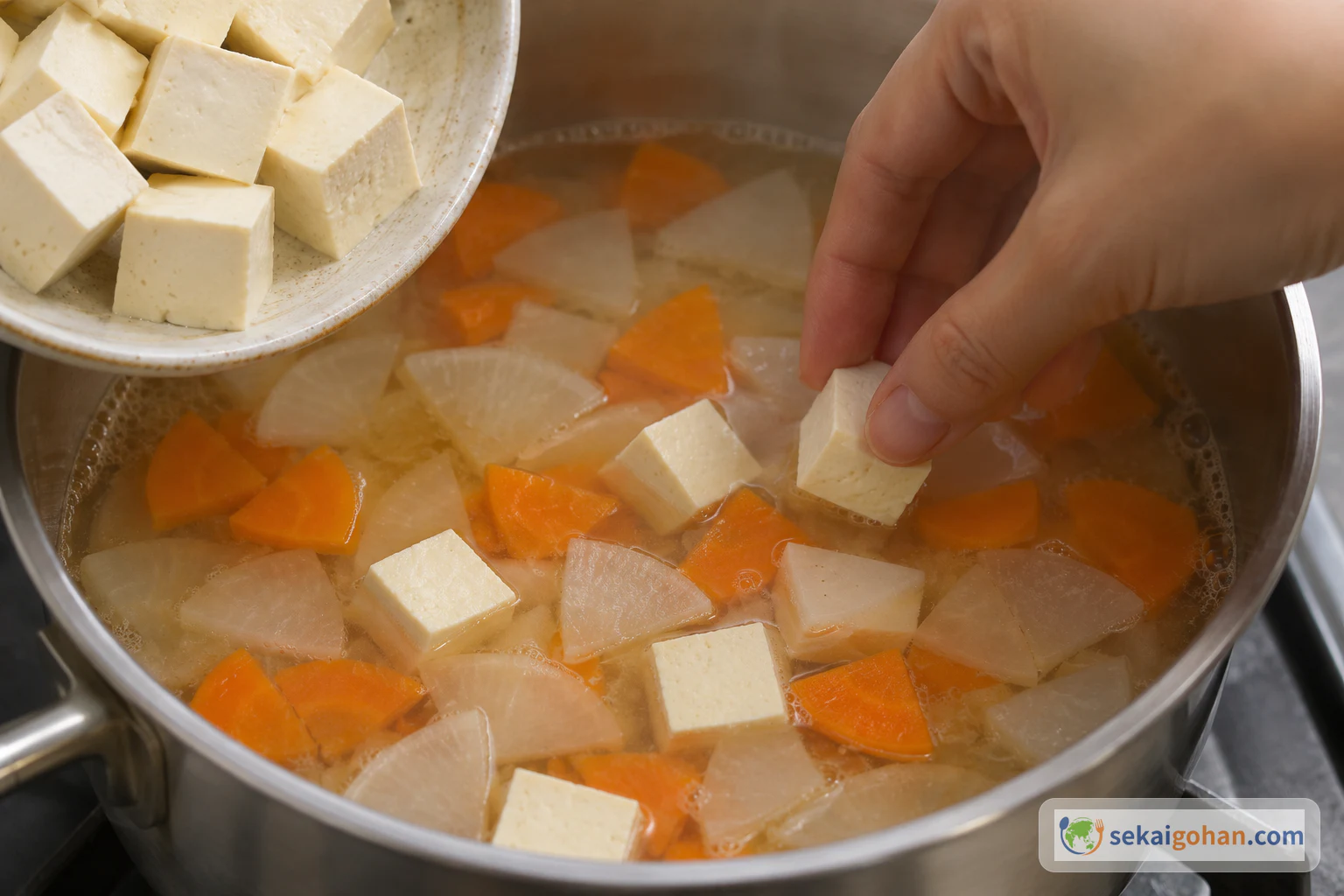
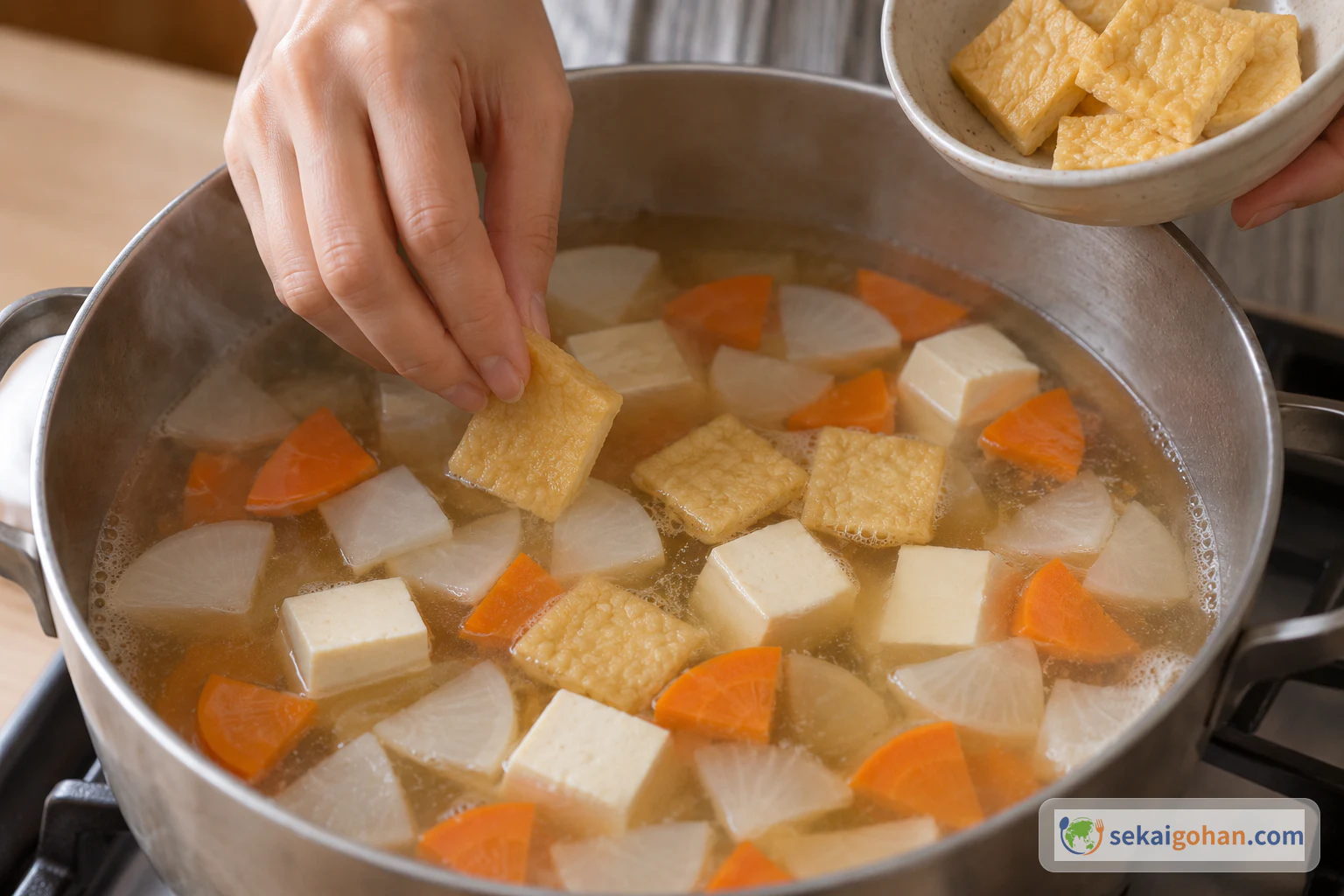
Simmer the roots until tender. Add the tofu and aburaage, then dissolve the miso. Add the well-stirred natto, add the scallion just before the pot boils, and turn off the heat.
Natto Soup Troubleshooting
Most problems with this soup come down to the order things go into the pot.
| What happened | What to do |
|---|---|
| The carrot and daikon are still firm | Keep simmering before you add the tofu and aburaage; the roots should be tender first |
| The natto went into the pot as one sticky lump | Next time, stir it well in a small bowl first, and add it only after the miso is dissolved |
| You are not sure when to add the scallion | Watch for the moment just before the pot comes to a boil, add the scallion, and turn off the heat |
Frequently Asked Questions
Are nattō and temple natto the same thing?
No. Temple natto is made with koji mold and salt water and has no threads. This soup uses stringy hikiwari natto.
Is this a recipe for making natto?
No. The soup starts with ready-to-eat natto from the shop. Natto is made commercially in factories, so buy it ready to eat.