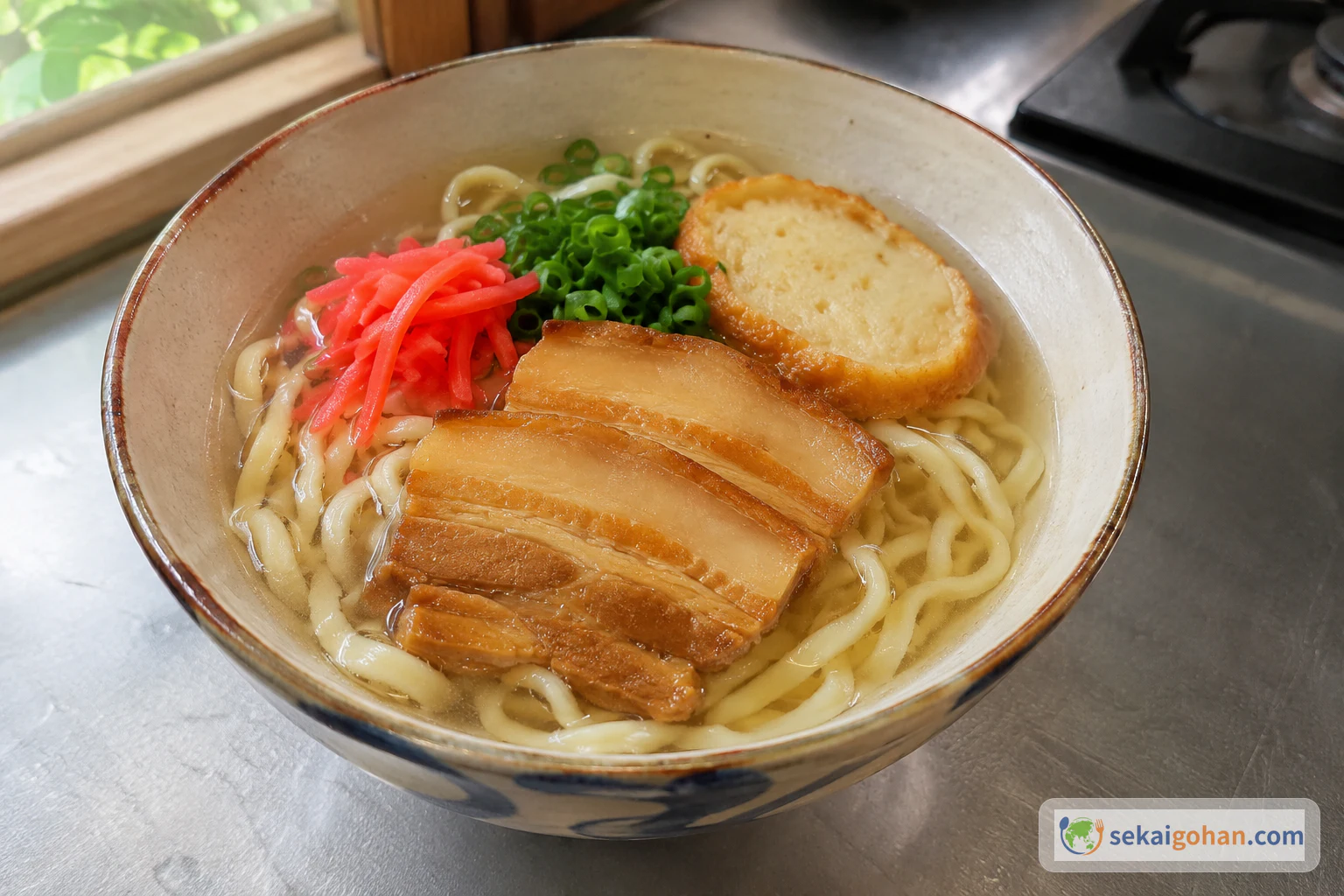
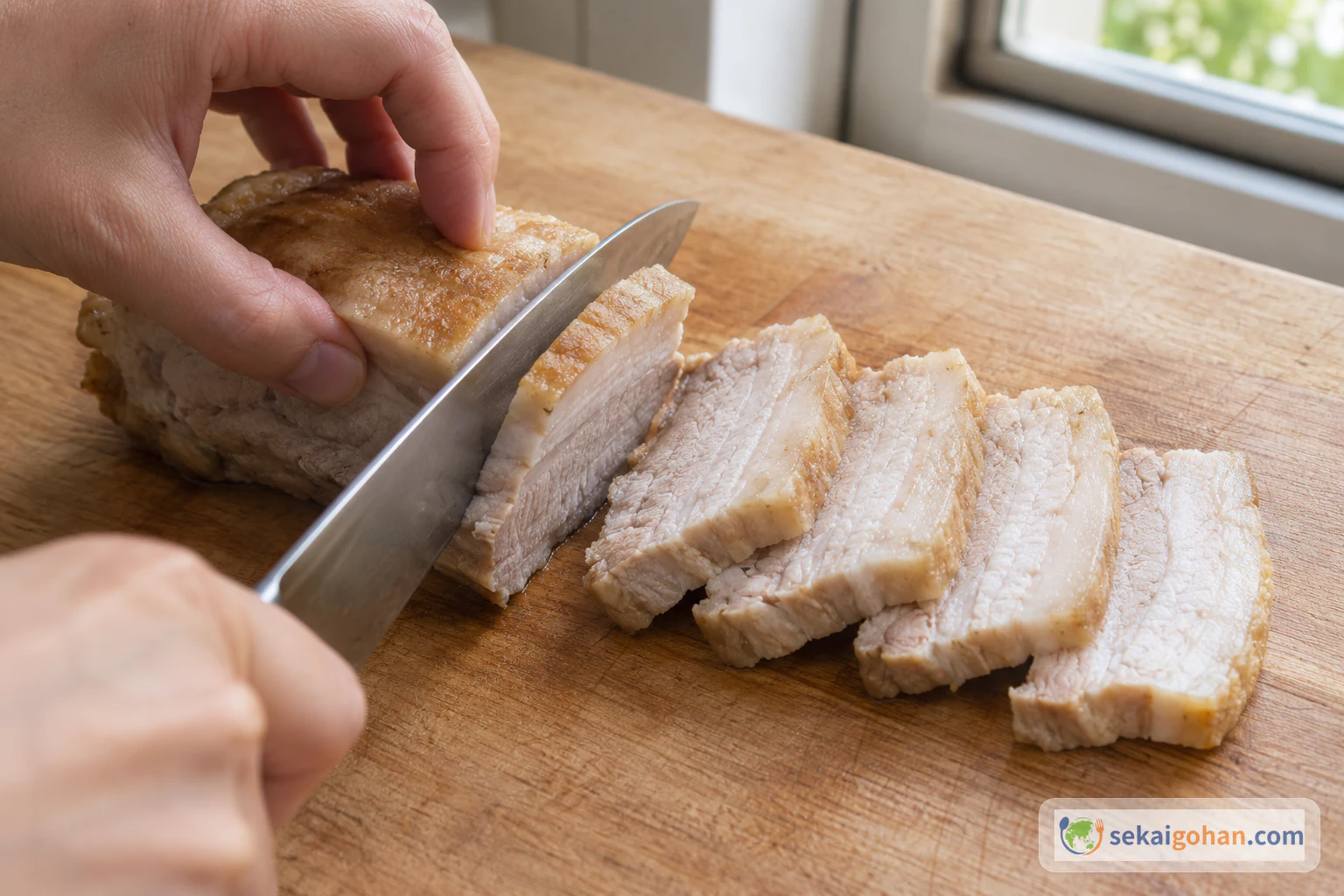
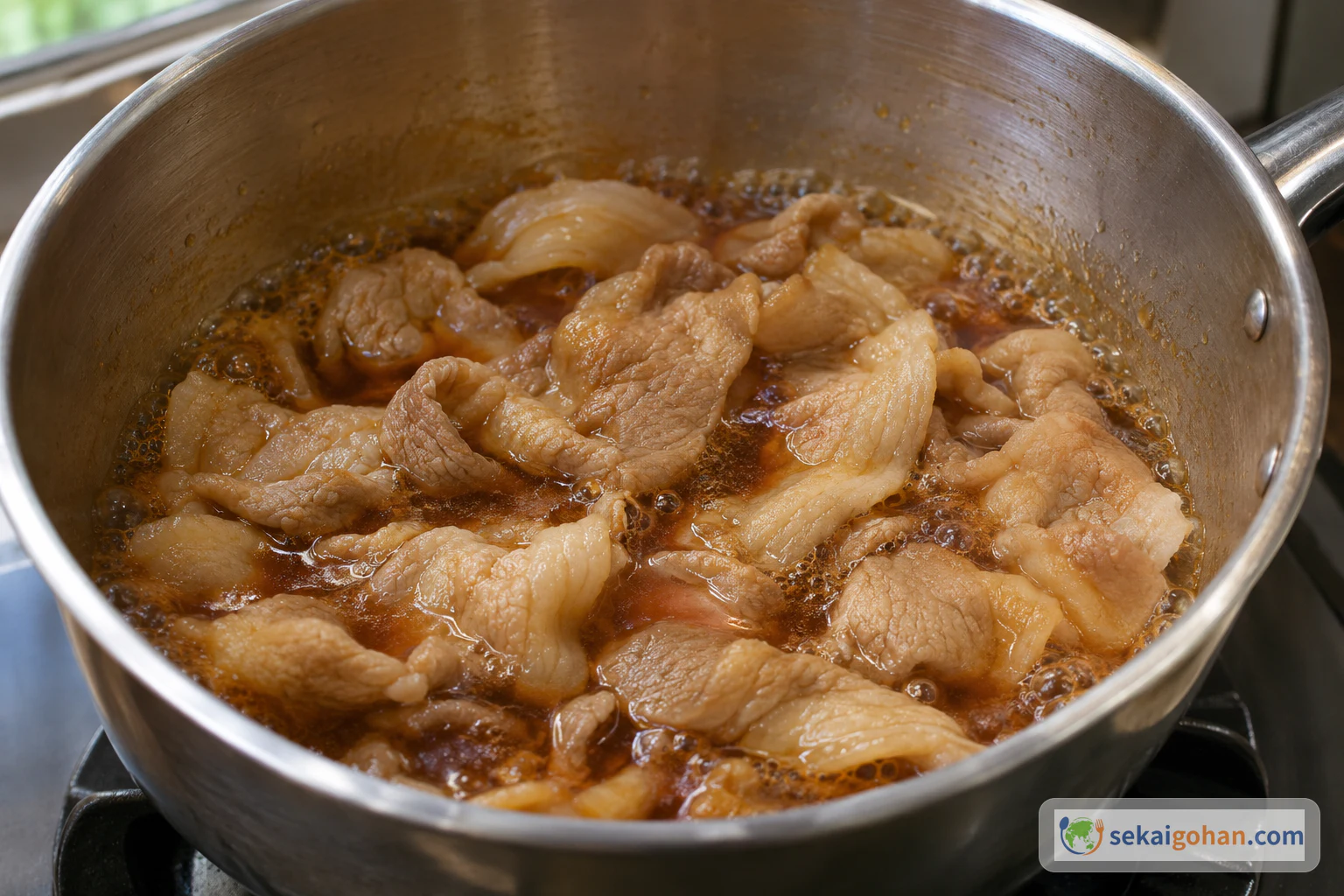
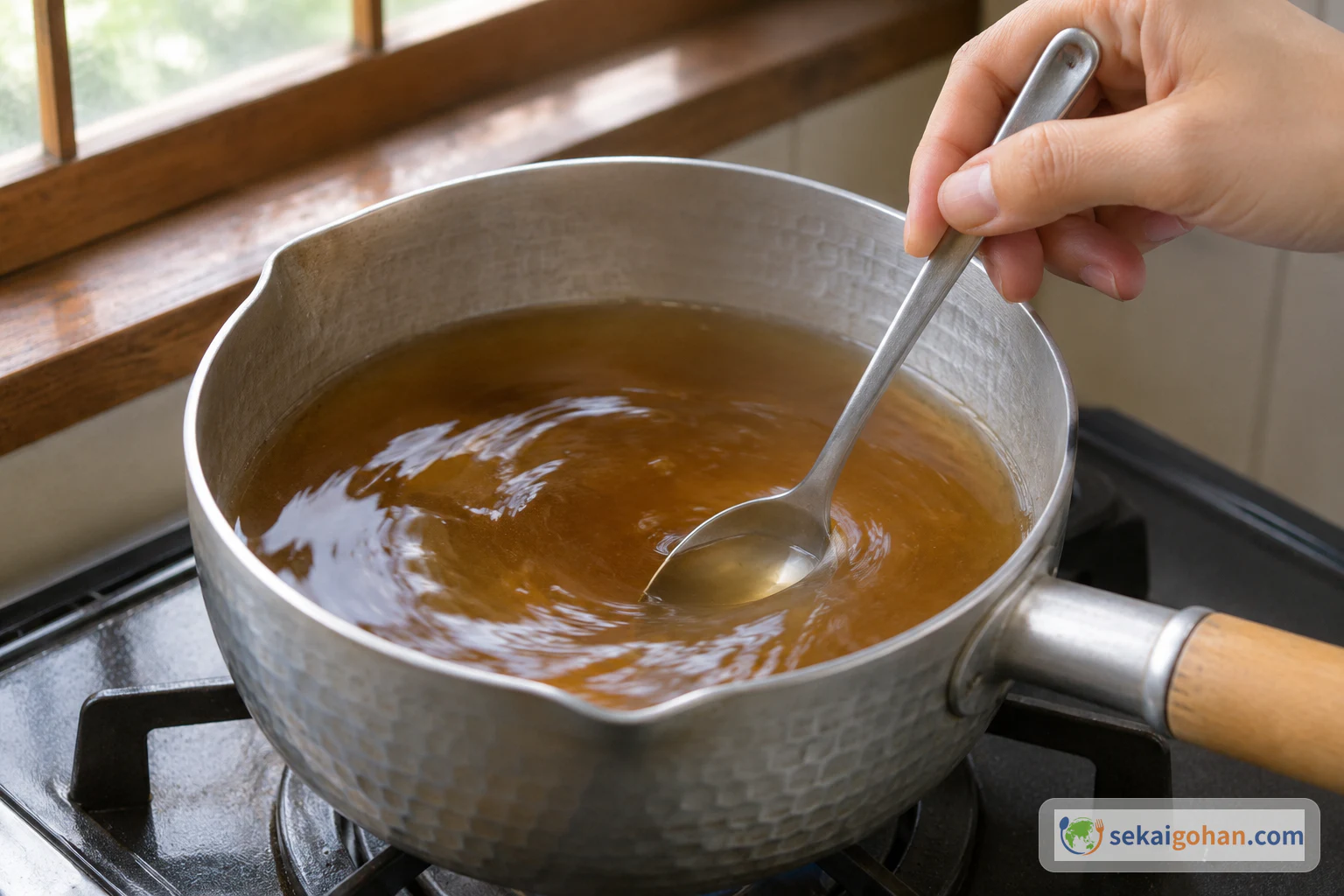
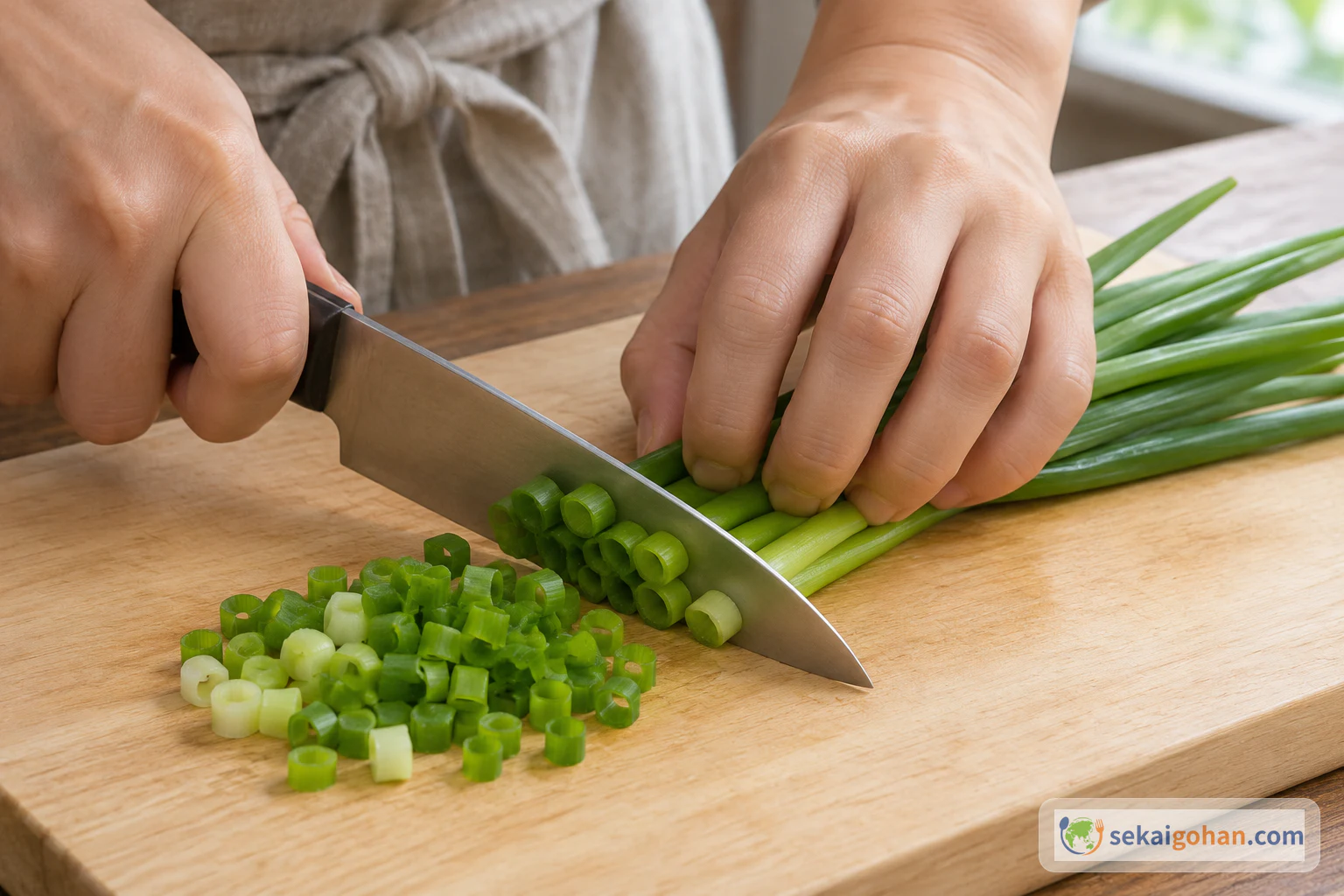
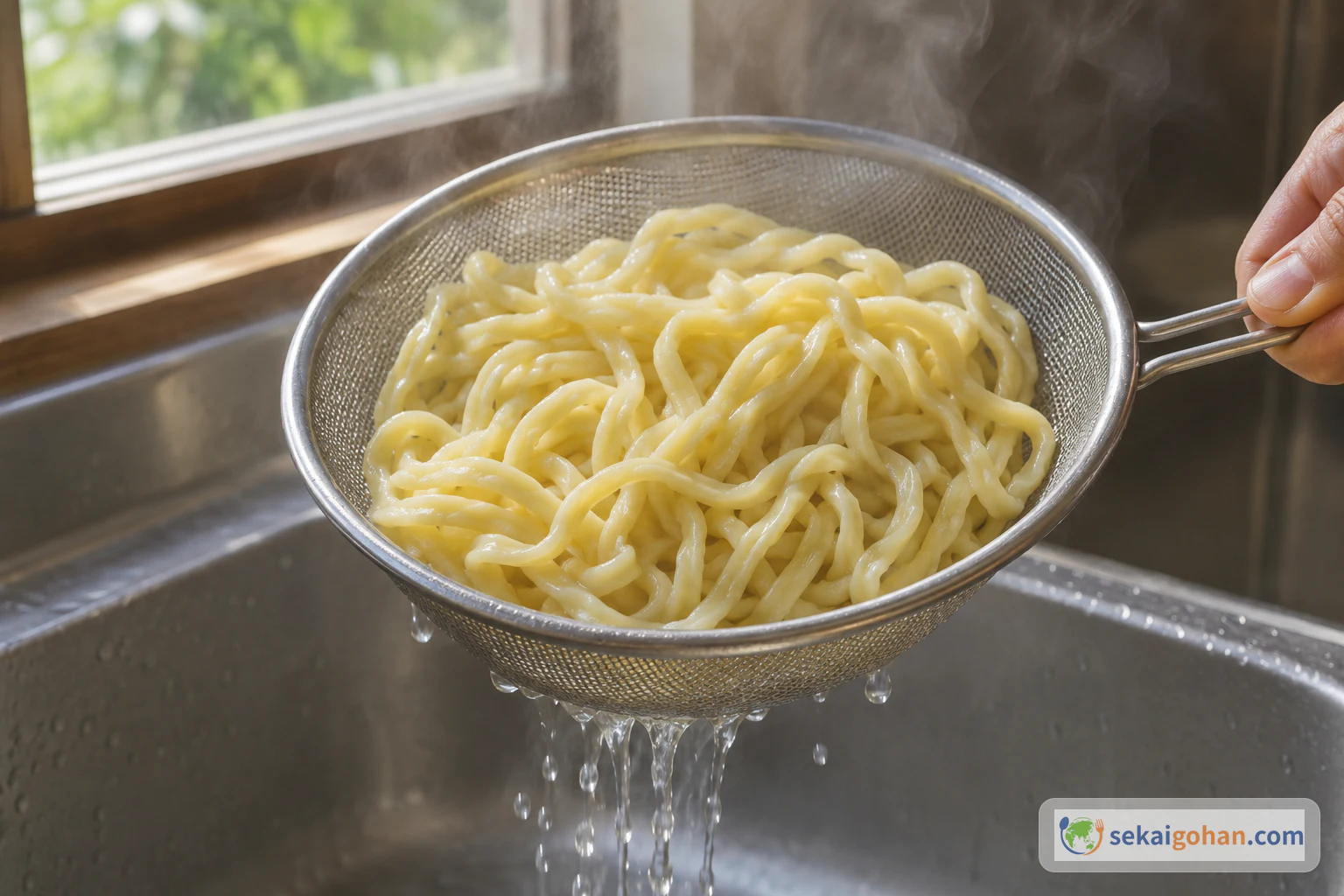
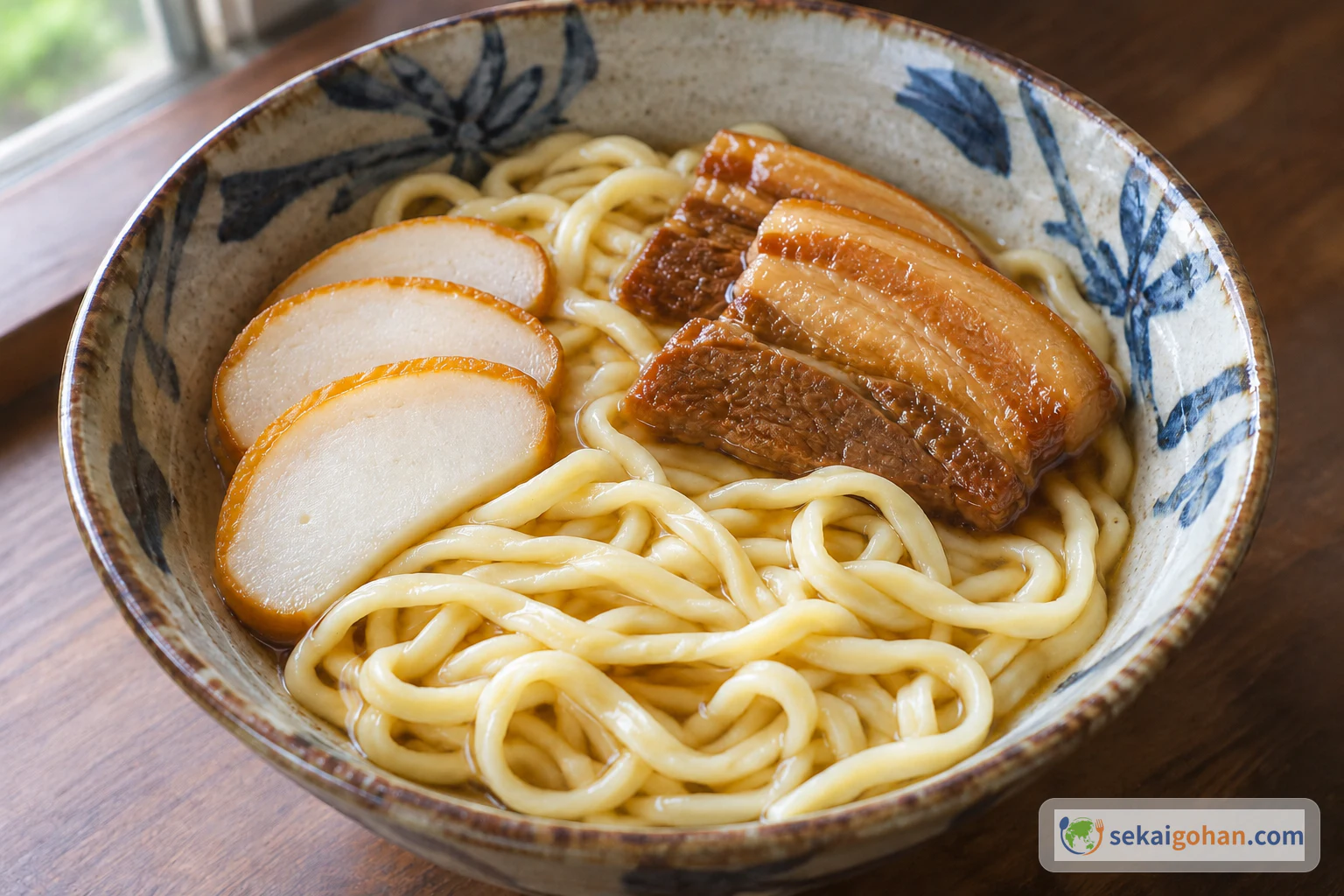
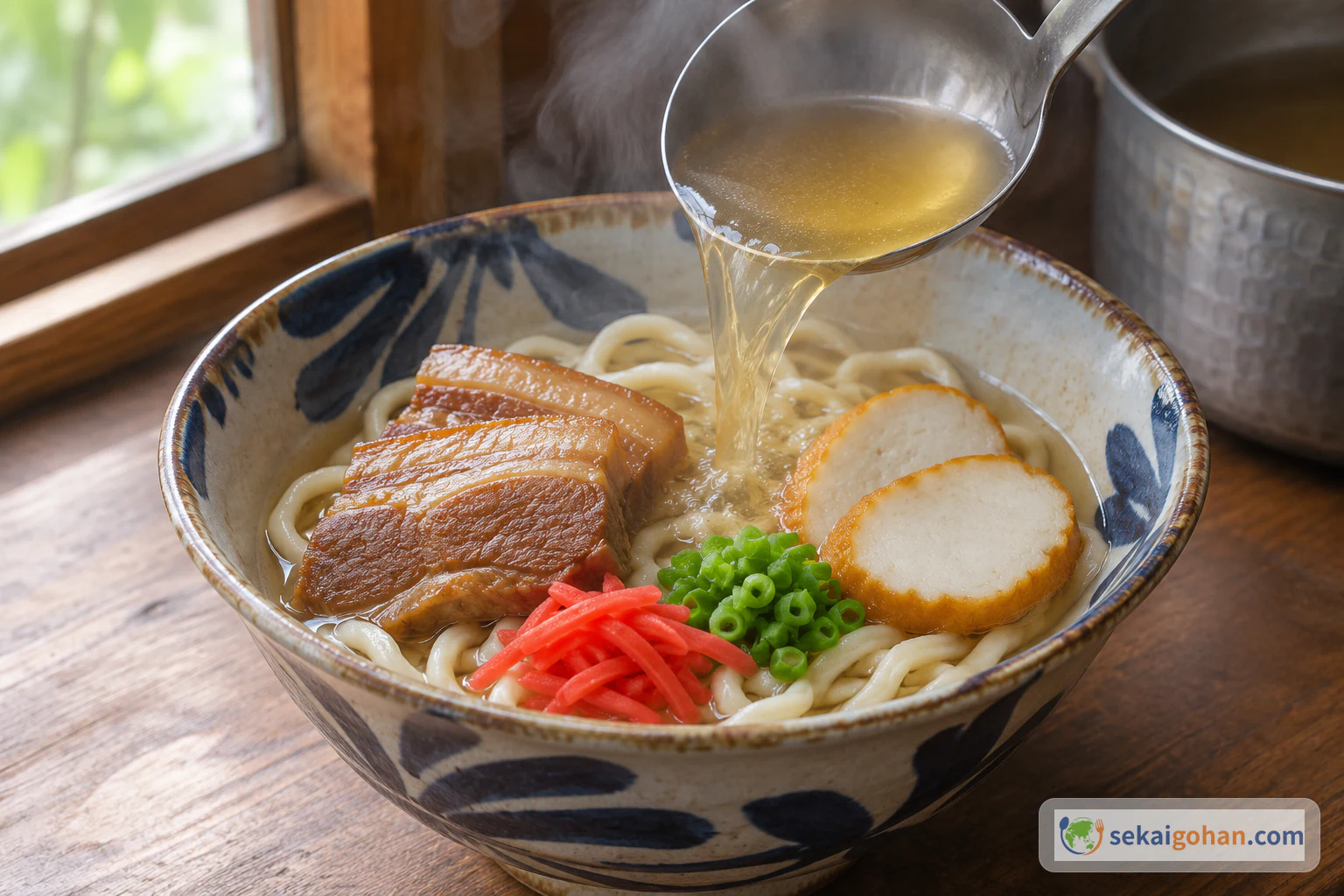
A bowl of Okinawa soba is thick wheat noodles under a hot broth of pork and bonito, topped with braised pork belly, fried round kamaboko, wakegi and a little red pickled ginger. Everything goes into the bowl first, and the hot broth goes in last. It's everyday food across Okinawa Prefecture, eaten at home and in restaurants alike. This version makes 5 servings and starts from ready-cooked noodles, so your time goes into the pork and the broth.
Okinawa Soba and Its Name
The name misleads almost everyone at first. Soba usually suggests buckwheat, but Okinawa soba noodles are made with wheat flour and kansui, with no buckwheat flour at all. The broth is built on pork bones and dried bonito, and the standard toppings are pork belly, stick kamaboko, green onion and red pickled ginger.
The dish has been handed down throughout the prefecture, though its beginnings are unclear, so there's no single origin story to tell. You can find more dishes from the same country on our Japan page.
Ingredients for 5 Servings
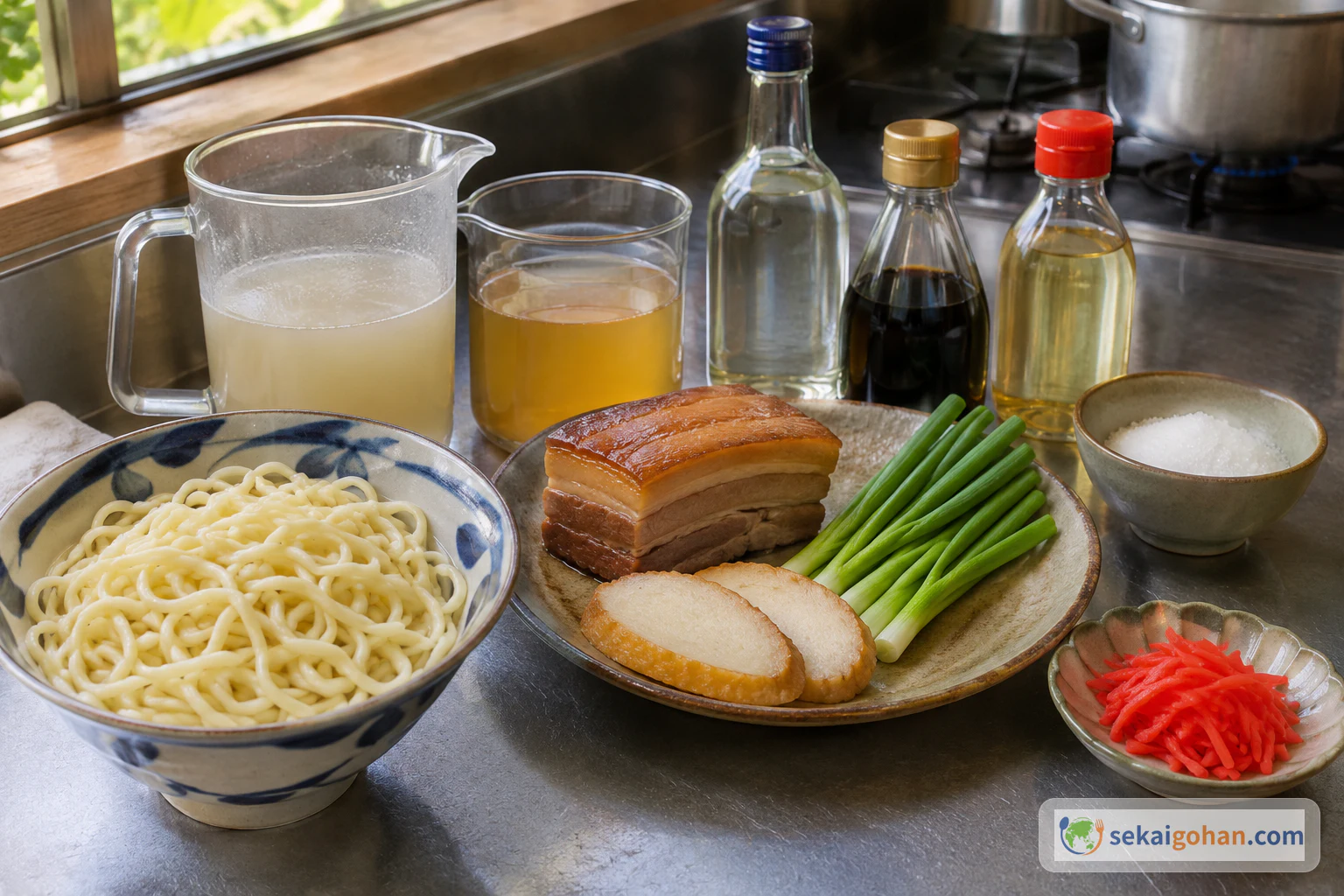
Measure both stocks with the same cup.
Equipment
- Food thermometer
- Deep pot for the pork
- Strainer
- Cloth for straining the bonito stock
- Pot for the bonito stock
- Pot for the broth
- Pan for braising the pork
- Saucepan or pot of boiling water and a strainer for the noodles
- Separate knife, cutting board and tongs for raw pork, and clean ones for cooked pork and serving
- Measuring cup and spoons
- Kitchen scale
- 5 serving bowls and a ladle
Choosing Ingredients for Okinawa Soba
Noodles: the 2.25 lb (1kg) is the weight of ready-boiled noodles. Dried noodles need a recipe written for them, so don't try to convert the amount by weight.
Kamaboko: look for fried round kamaboko, browned outside and pale inside, rather than a pink-and-white spiral fish cake.
Green onion: wakegi is the usual topping. If you can't find it, green onion is a reasonable choice; wash it the same way.
Stocks: the pork stock comes straight from the pot. It's the strained liquid left after boiling the pork belly whole, and it goes into the broth in equal parts with the bonito stock.
Awamori: this Okinawan spirit goes into the braise. See the FAQ if you'd rather not use it.
Allergens: the bowl contains wheat, soy and fish. Check the labels on the noodles, kamaboko and seasonings.
Method: Pork, Then Broth, Then the Bowl
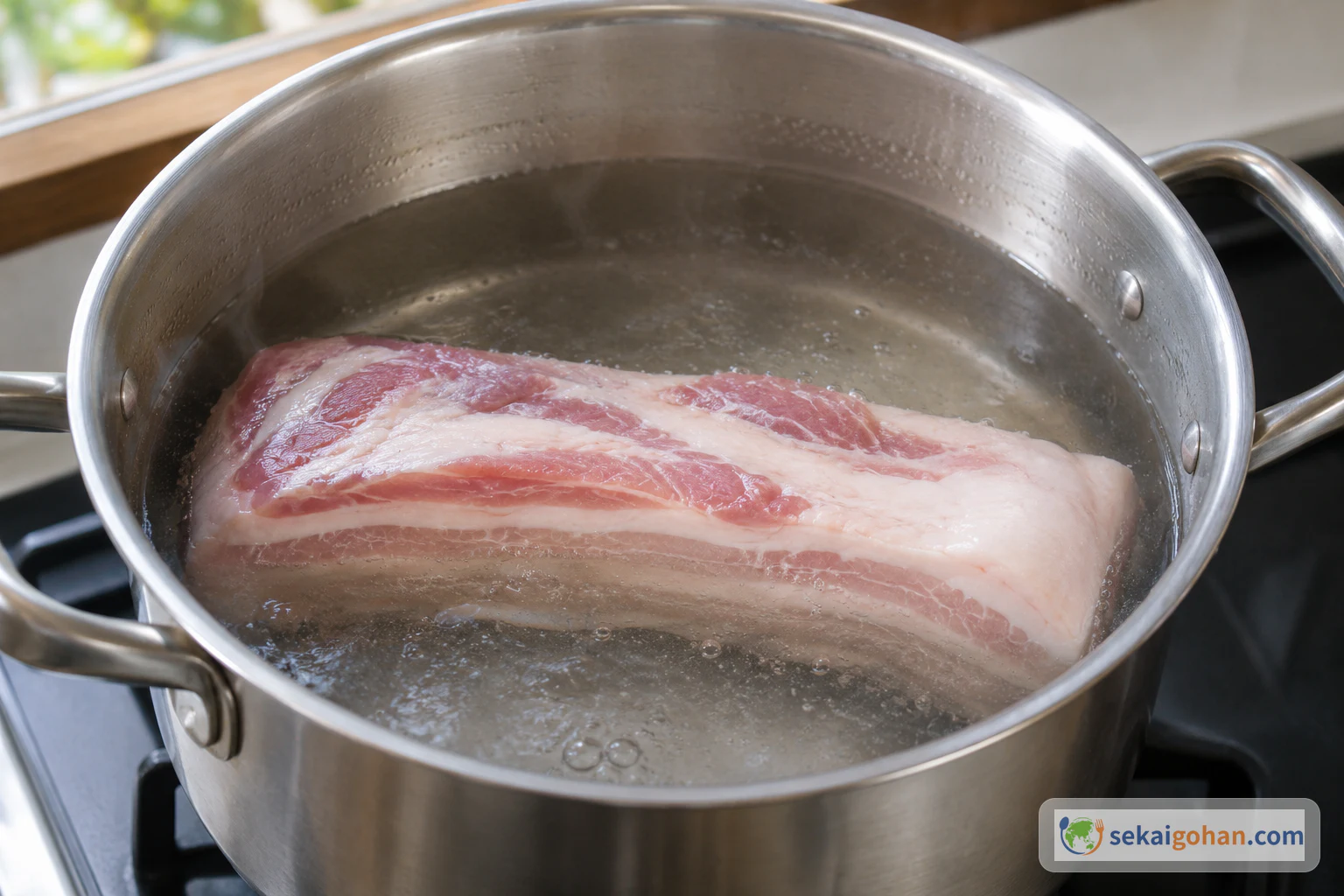
Heat the meat to at least 167°F (75°C) at the center for at least 1 minute. Check the thickest part with a thermometer. Time, color and bubbling won't tell you this. Keep tools that touched raw pork away from cooked pork and serving tools.
Okinawa Soba Troubleshooting
Most problems come down to the pork and the amount of stock you end up with.
| Problem | What to do |
|---|---|
| The pork's center is below 75°C, or hasn't held there for 1 minute | Keep boiling and measure again, even if 50 minutes have passed |
| The pork is sticking out of the water | Add water until it is covered, and keep the lid off |
| You have less than 3 3/4 cups of pork stock | Top up with water to reach 3 3/4 cups |
| You have more than 3 3/4 cups of pork stock | Leave the extra out so the balance stays as written |
| You only have dried noodles | Follow a recipe written for dried noodles instead of using 1kg of them |
| The broth has gone too salty | Next time, add the salt and soy sauce in smaller amounts and taste between additions |
Serving Okinawa Soba and Regional Variations
At the table, koregusu is the condiment to reach for: island chilies steeped in awamori. It's optional and fiery enough that you'll want to add a little at a time to your own bowl.
Across Okinawa, the bowl changes from place to place. The broth is often made with pork stock alone. Soki soba swaps the pork belly for soki, or pork spareribs, and there are versions with cartilage soki too; these need their own recipe rather than a straight swap of the meat here. Vegetable toppings are among the more recent variations, and Miyako soba and Yaeyama soba are regional styles within the prefecture.
Frequently Asked Questions
What size cup should I use?
Use the same cup for both stocks so the ratio stays the same. One cup here is 200ml. With a 200ml cup you get 750ml of each stock, 1.5L of broth in all, or 300ml per person.
Can I make the pork stock from bones instead?
Yes, by a different method. Simmer 1kg of bones or meat in 10 cups of water plus extra for what boils away, with the lid off, for about 2 hours. These steps use the pork belly cooking liquid instead.
Can I leave out the awamori?
A soki soba recipe uses mirin and cooking sake instead of awamori. That is a different recipe, and leaving the awamori out here will change the sauce.
Why not rinse the pork first?
Some guides say to rinse meat quickly before making stock. Rinsing raw meat can spread bacteria around the kitchen, so put the pork straight into the water.
Can I judge doneness by time or color?
No. Color doesn't measure doneness. Start checking with a thermometer after 40 to 50 minutes, and confirm at least 167°F (75°C) at the center for at least 1 minute.