Doganitang: Korean Beef Knee Cartilage Soup (도가니탕)

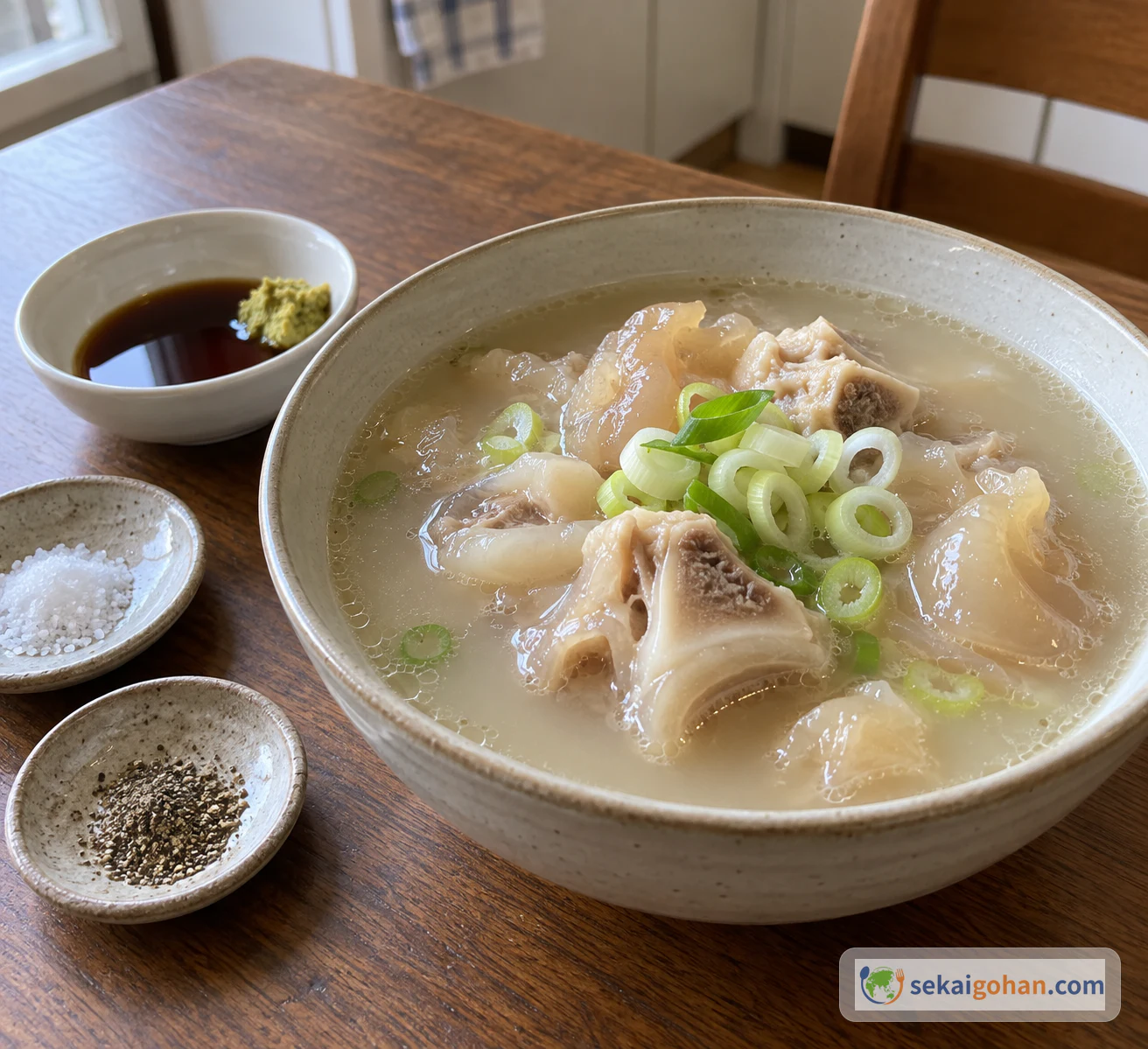
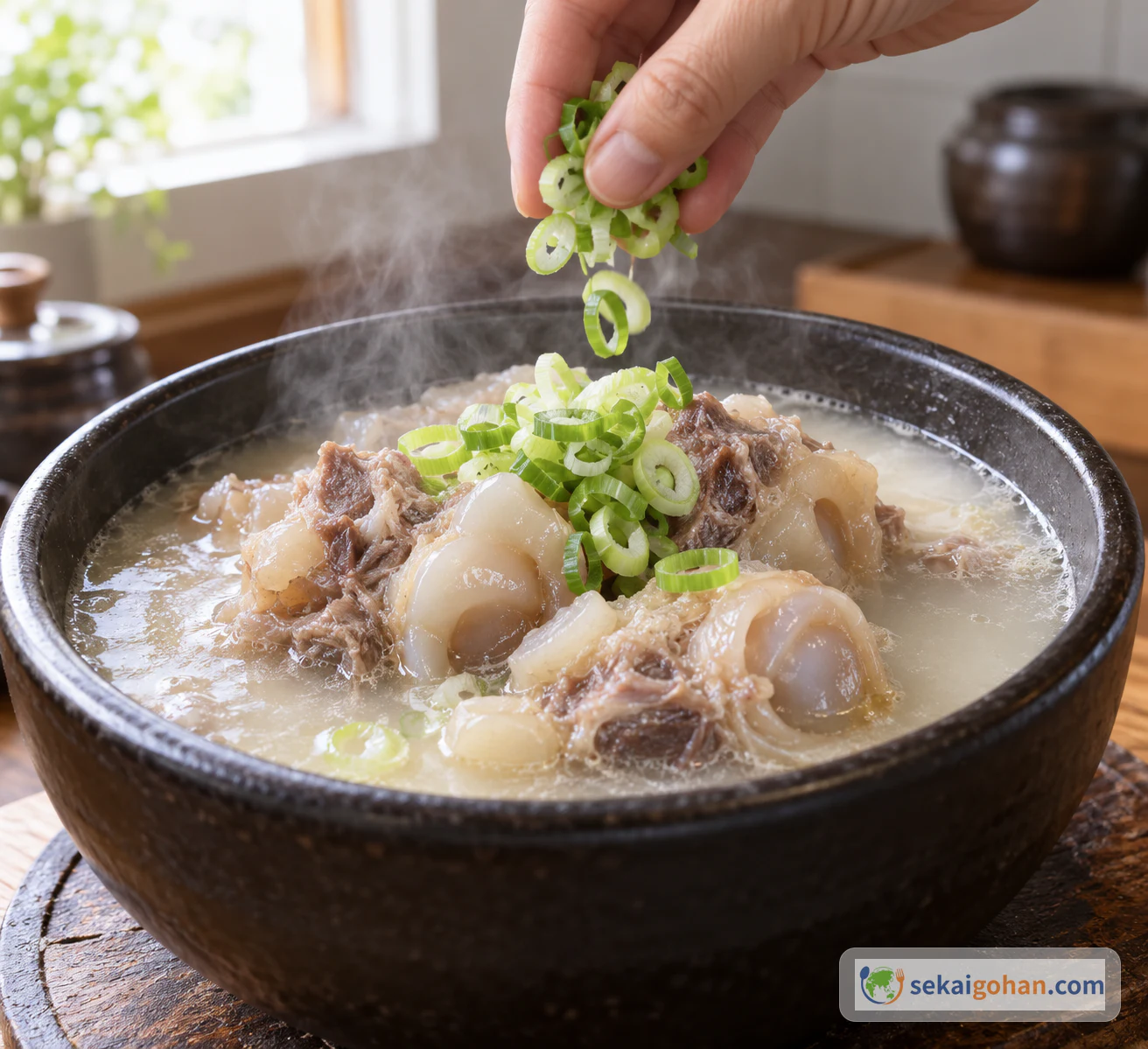
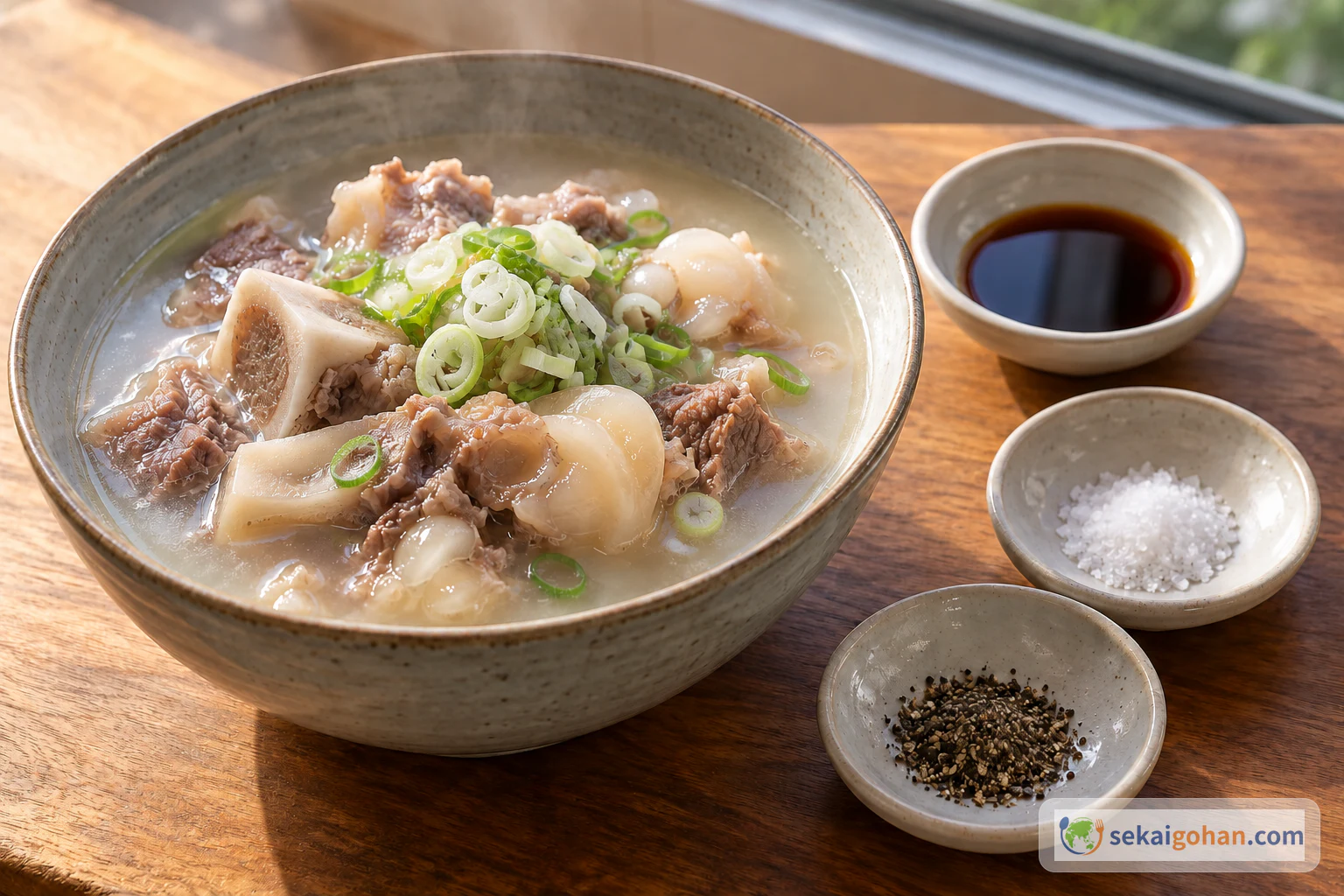
Doganitang made from simmered knee cartilage and bone, topped with large green onion (대파), with salt, pepper and wasabi-vinegar-soy sauce served separately on the table
Cuisine
Korean

How to make doganitang (도가니탕), the Korean beef knee cartilage soup, from a posted six-step home recipe: 1kg of Hanwoo knee cartilage and bone, two long extractions, and salt, pepper and wasabi-vinegar-soy sauce at the table. Includes clear notes on holding the broth safely, what the recipe leaves unstated, and how other versions differ.

Cooking flow

Cooking steps

STEP11 / 6

Soak the knee in cold water

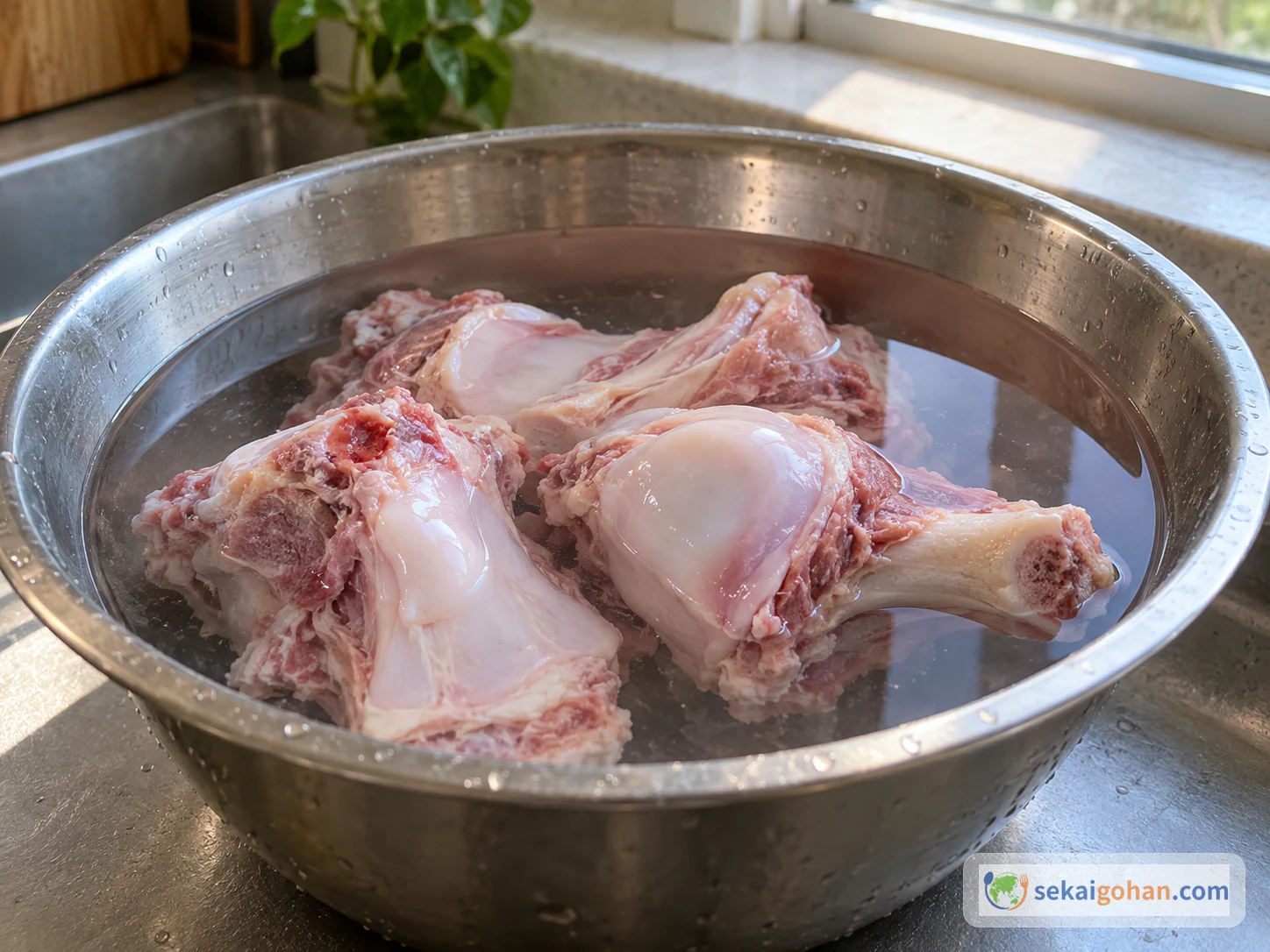
Beef knee cartilage and bone soaking in cold water
The knee pieces soaking in cold water

Put the knee cartilage and bone in cold water and soak for about 5 hours to draw out the blood.

STEP22 / 6

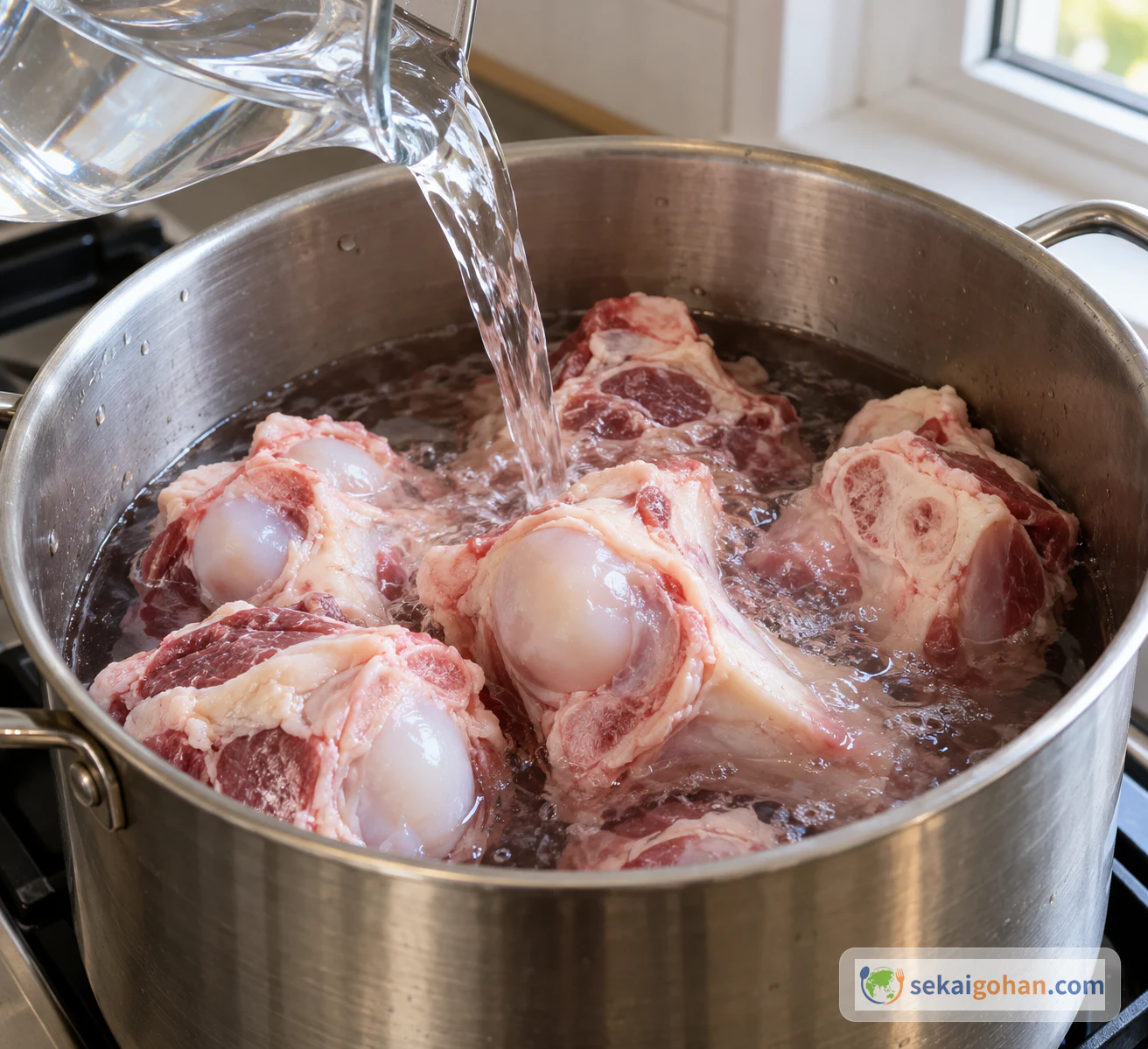
Blanch, then wash the knee and the pot

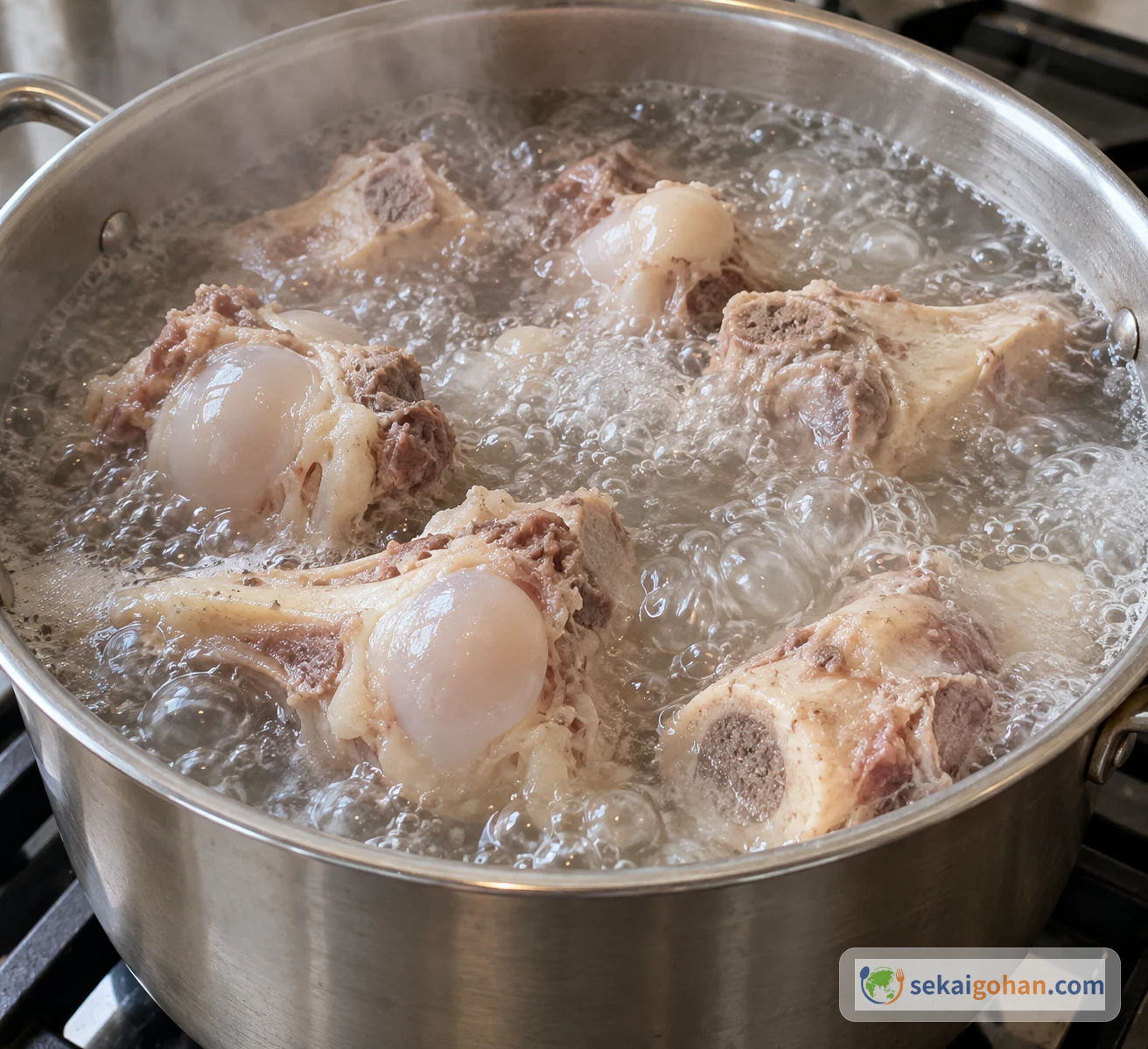
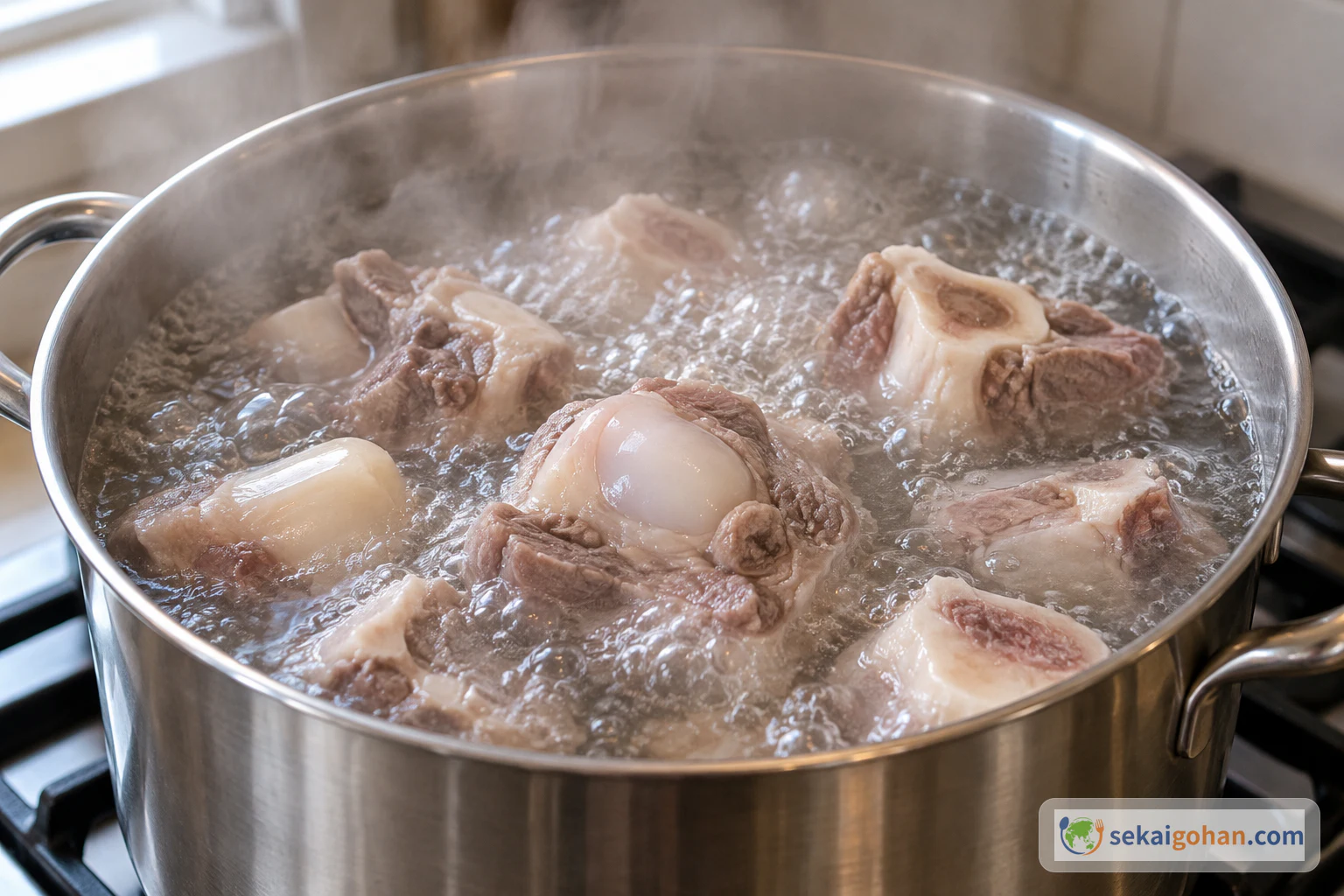
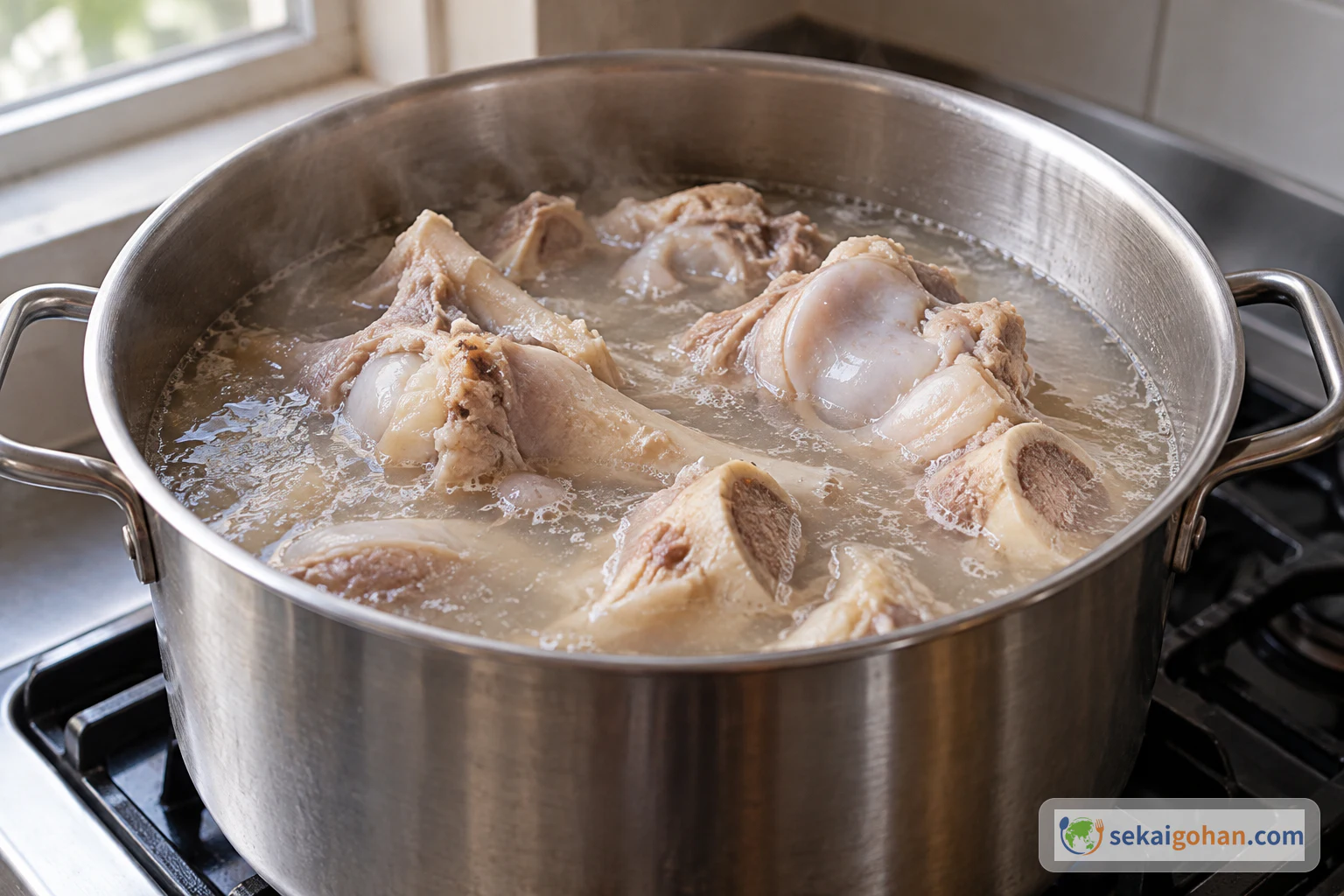
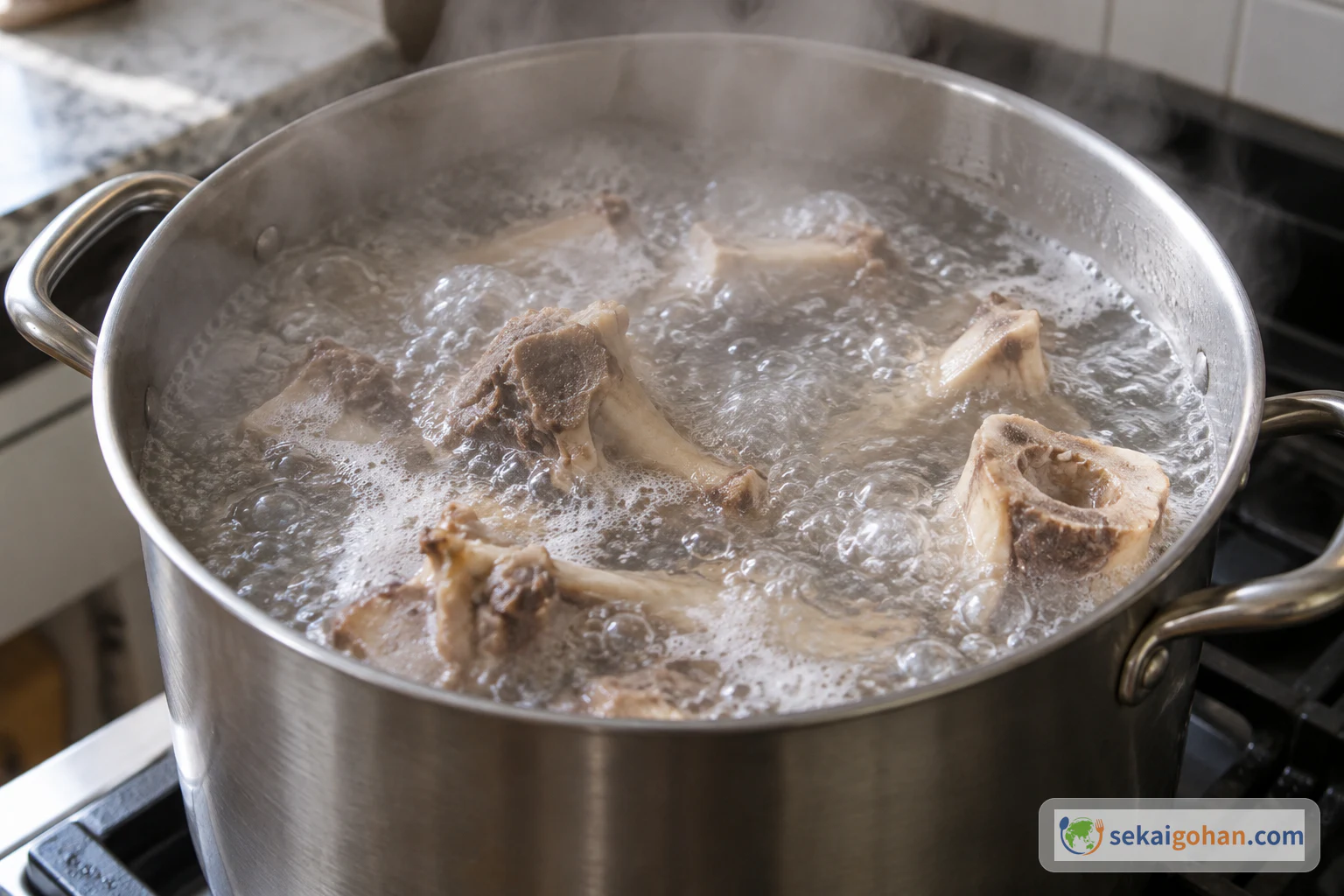
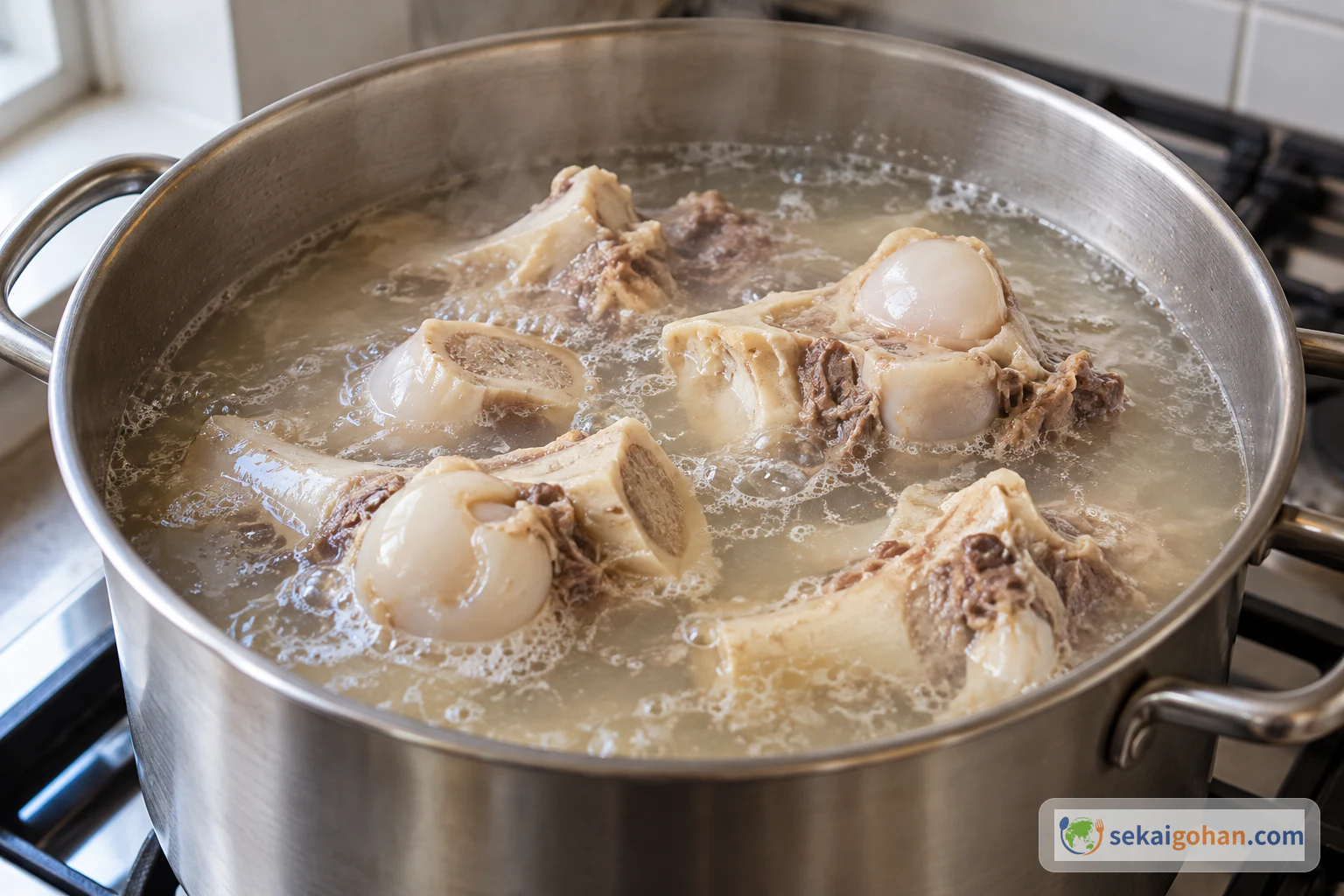
Knee cartilage and bone at a vigorous boil, covered with water, for blanching
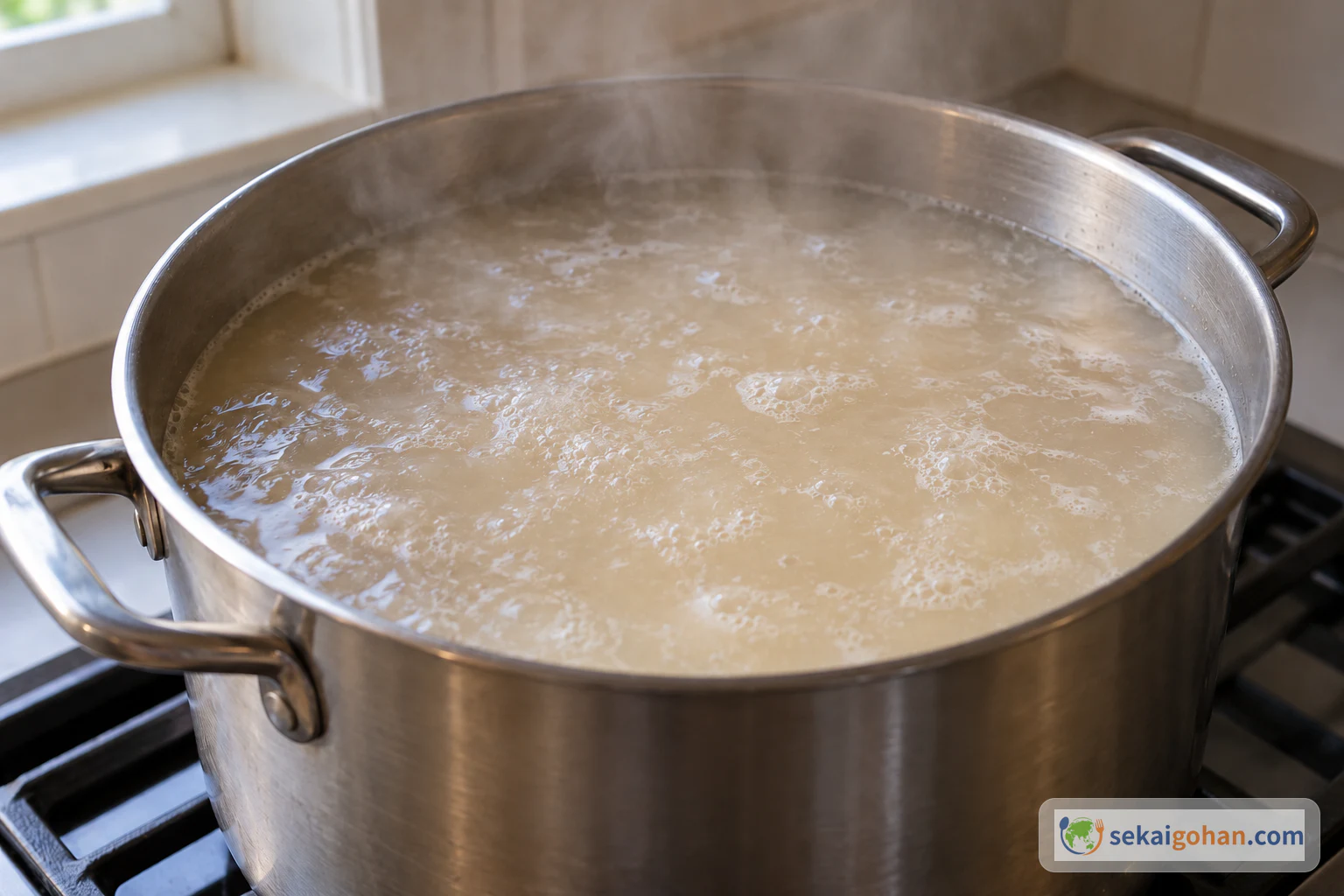
A hard boil for about 10 minutes

Add just enough water to the pot to cover the knee, and boil hard for about 10 minutes.

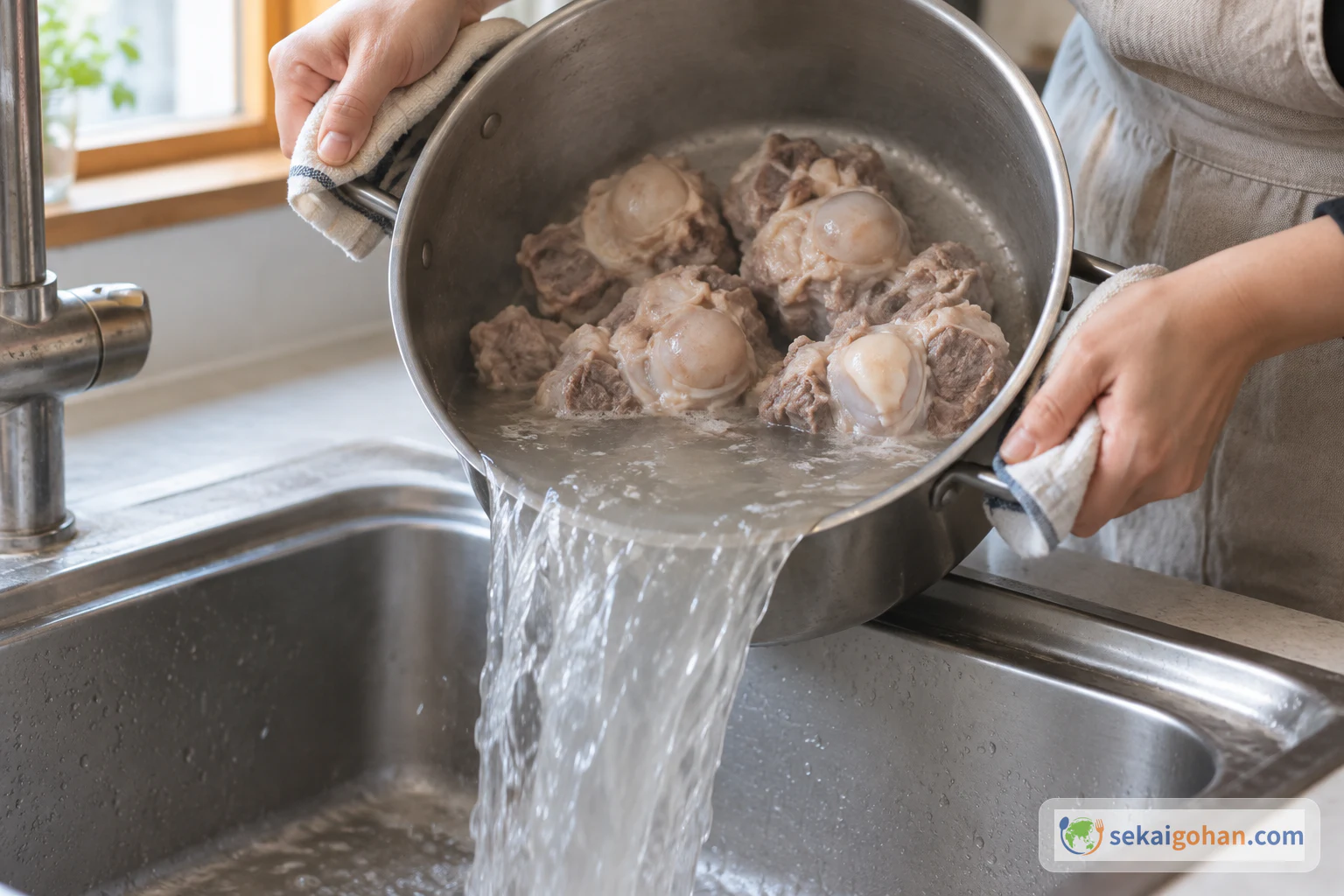
Pour off and discard the water.

Pouring away the water after blanching
The blanching water is discarded

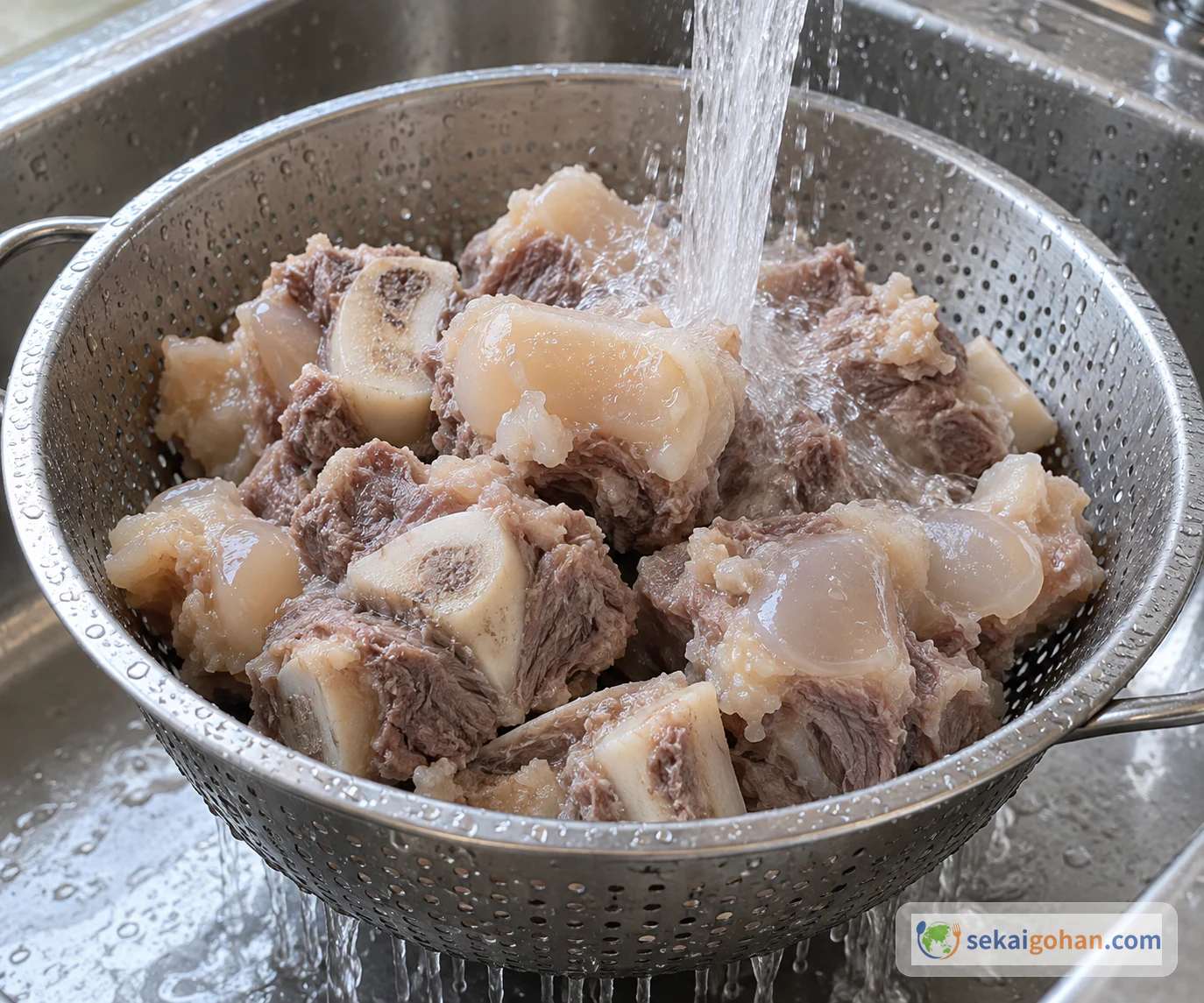
Rinse the knee pieces in cold water.

Rinsing the blanched knee pieces with cold water
Rinse the blanched knee in cold water

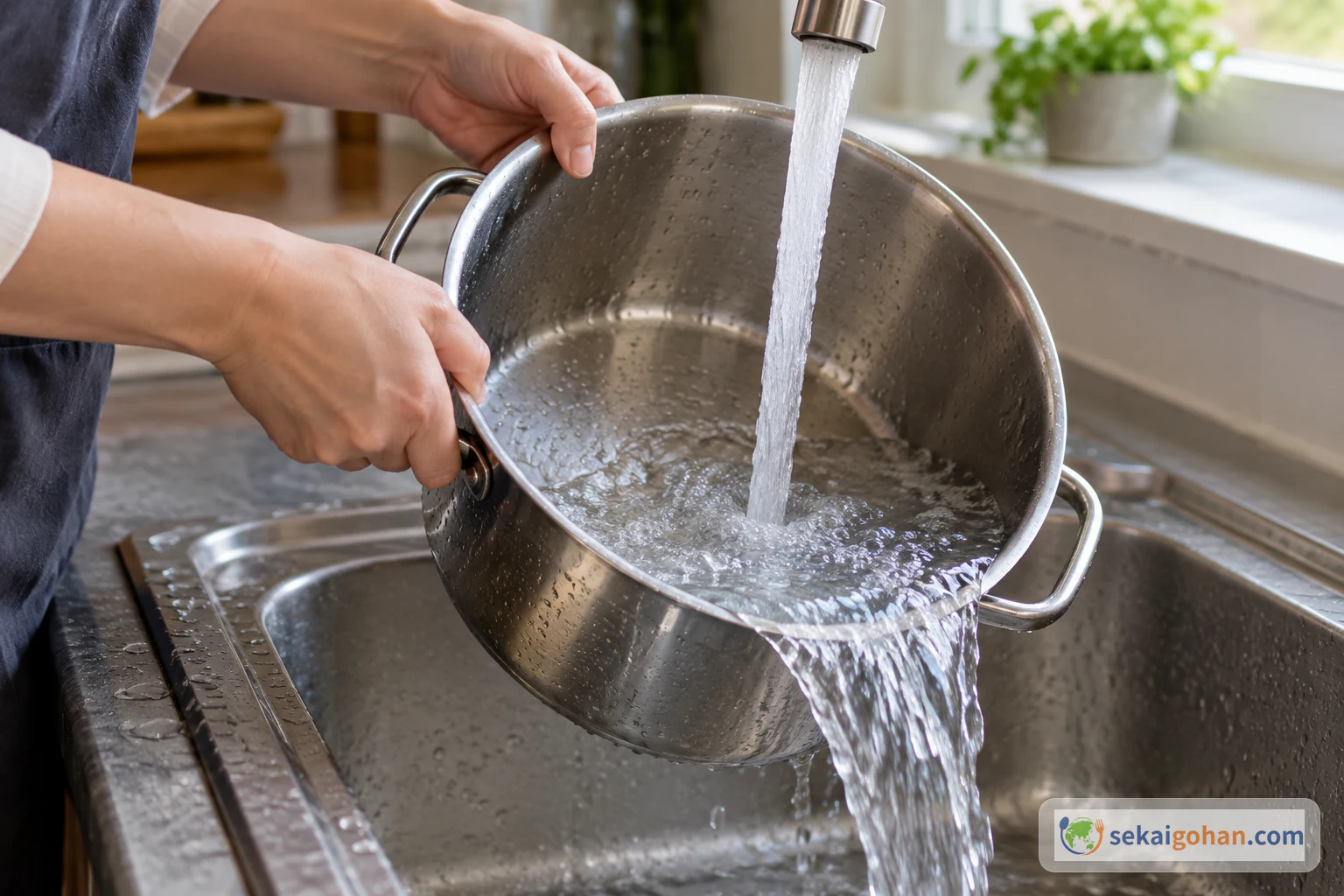
Wash the pot. Wash any knife, board or container that touched the raw knee and pour boiling water over them before using them for other foods.

Washing the pot used for blanching
A clean pot for the first extraction
STEP33 / 6

Make the first extraction and separate the cartilage

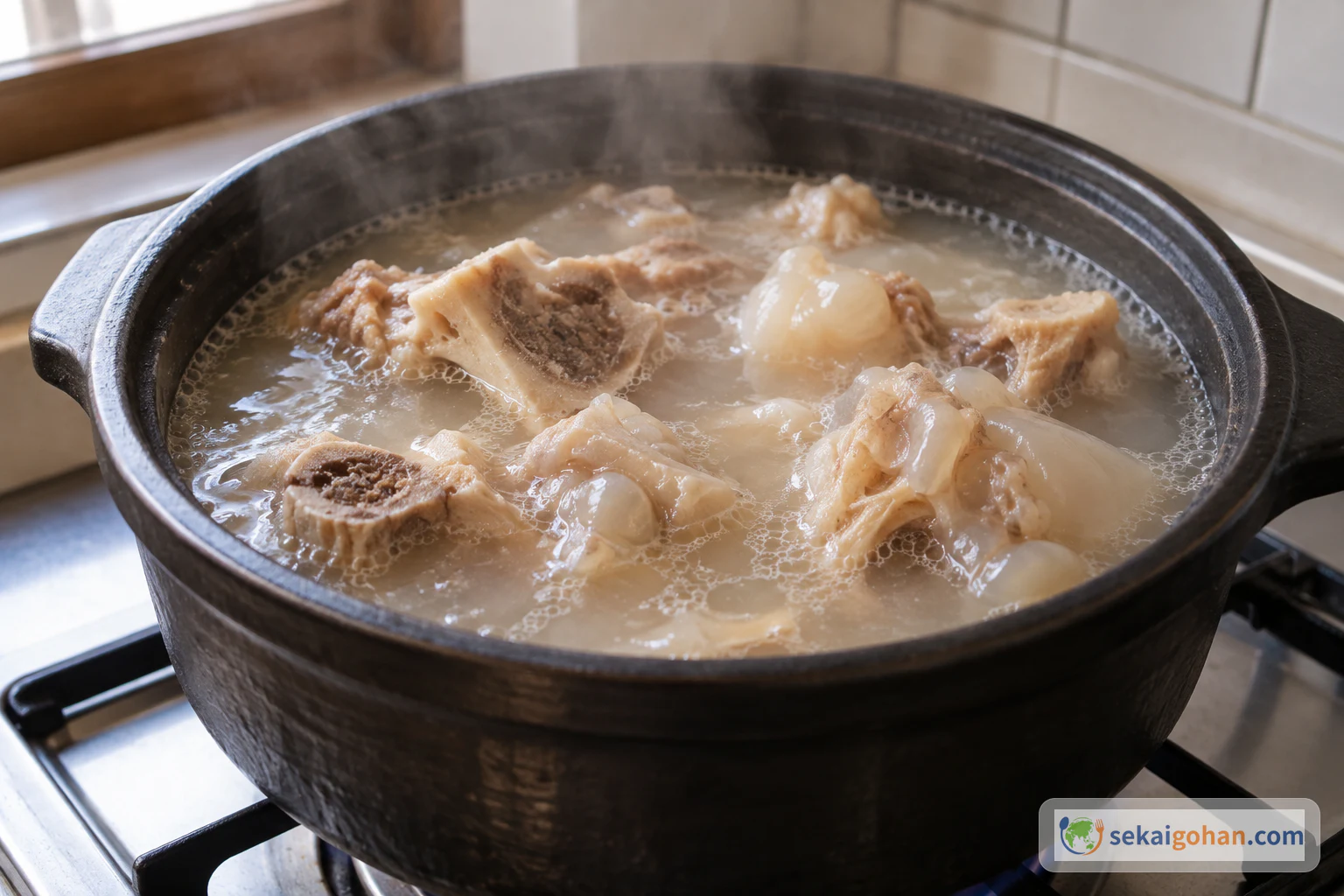
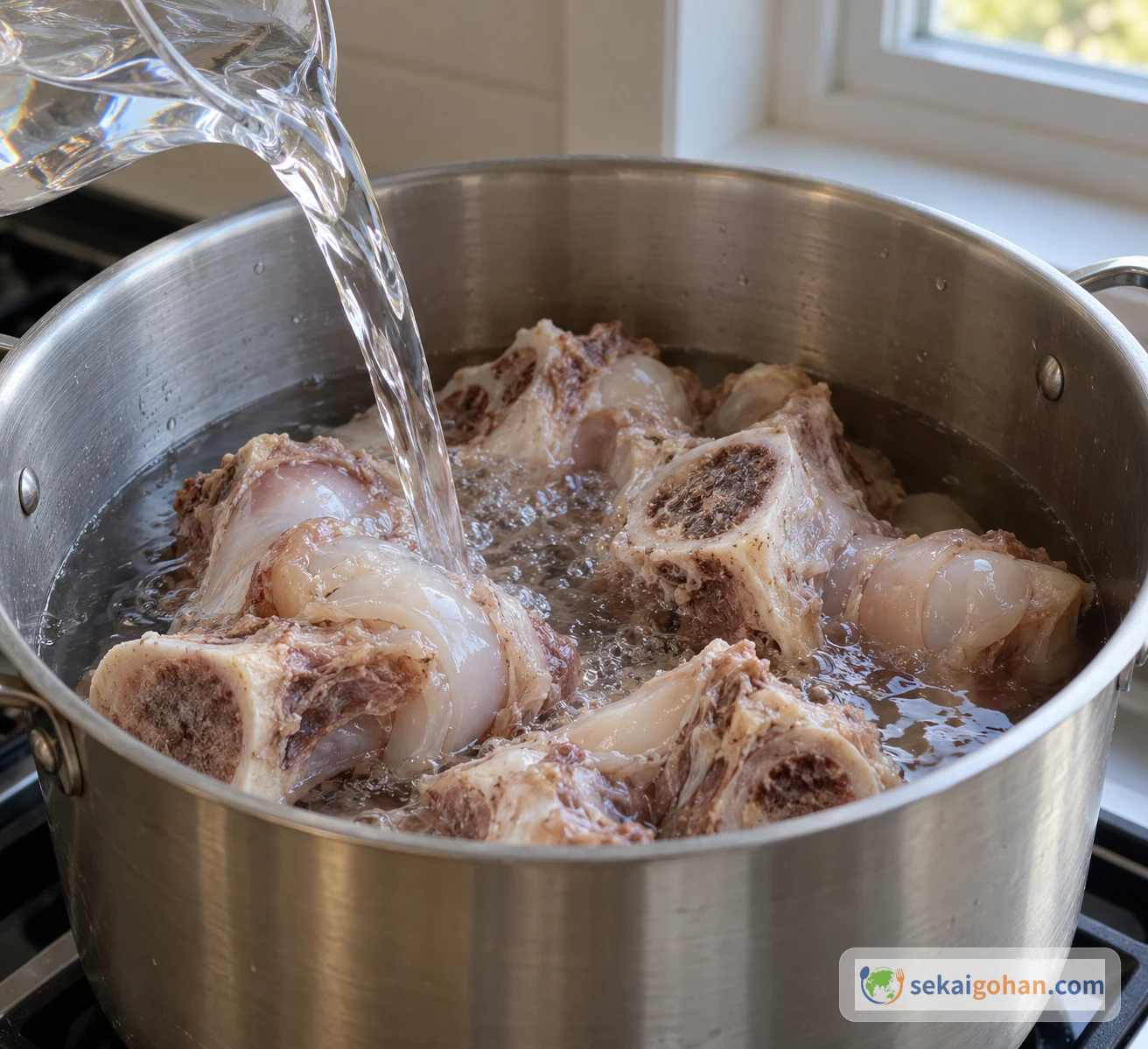
Adding the first-extraction water to the rinsed knee pieces in the washed pot
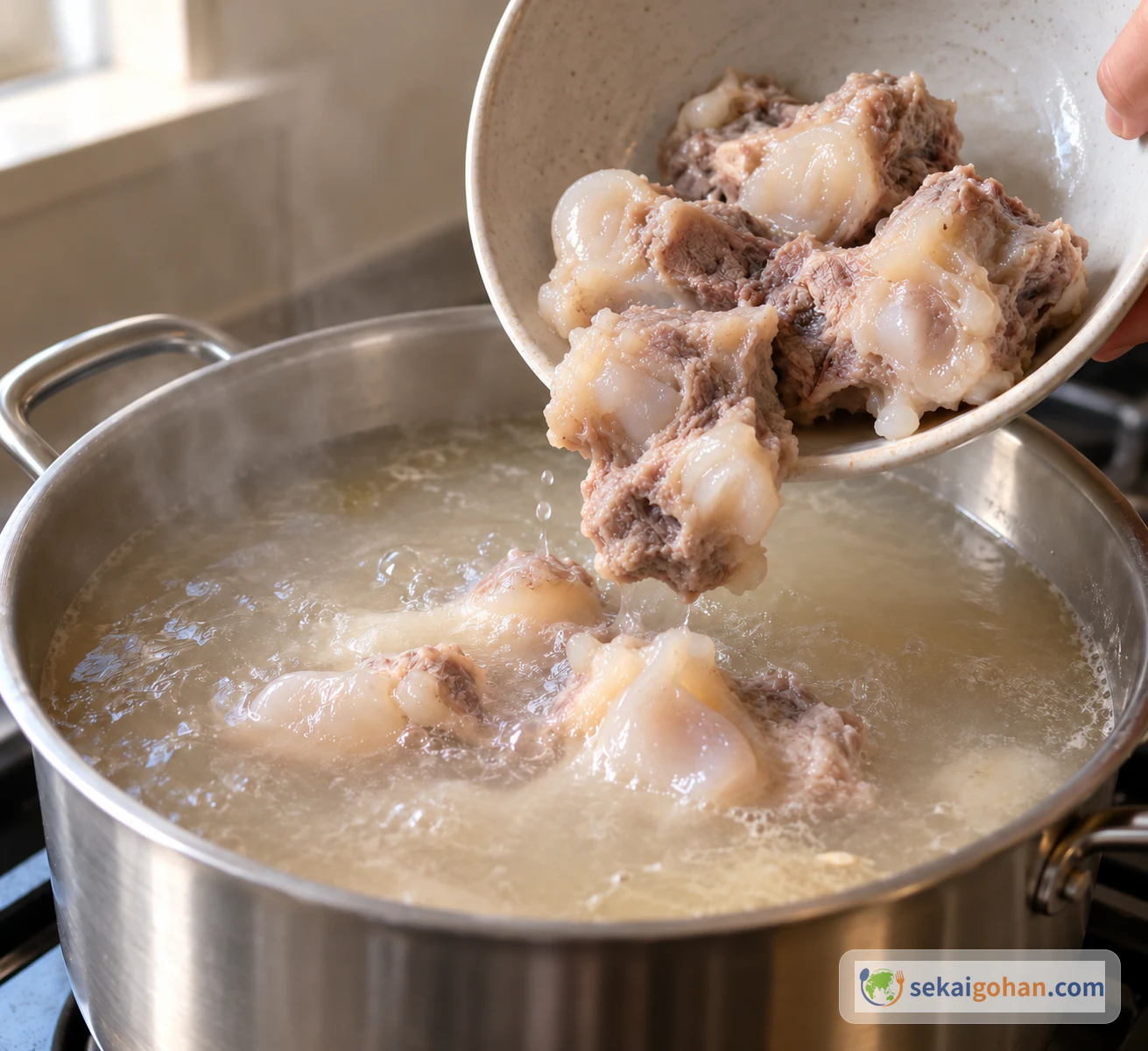
The first 5L goes in

Put the rinsed knee in the clean pot and add 5.25 quarts (5L) water.

Bring to a boil over high heat.

Bringing the first-extraction pot to a boil over high heat
High heat until it boils

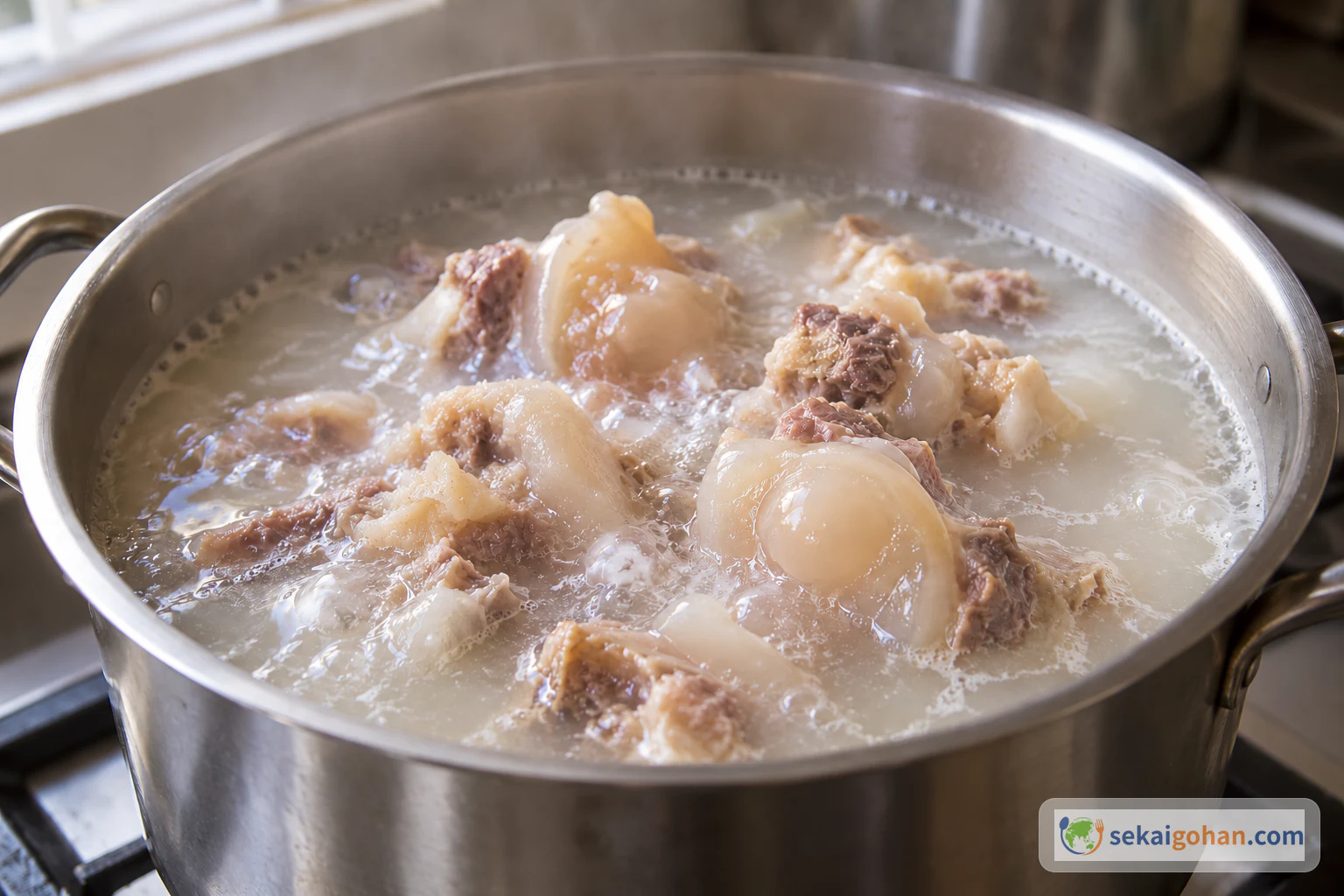
Lower the heat and simmer for about 2 hours.

Simmering the first broth over low heat
Low heat for about 2 hours

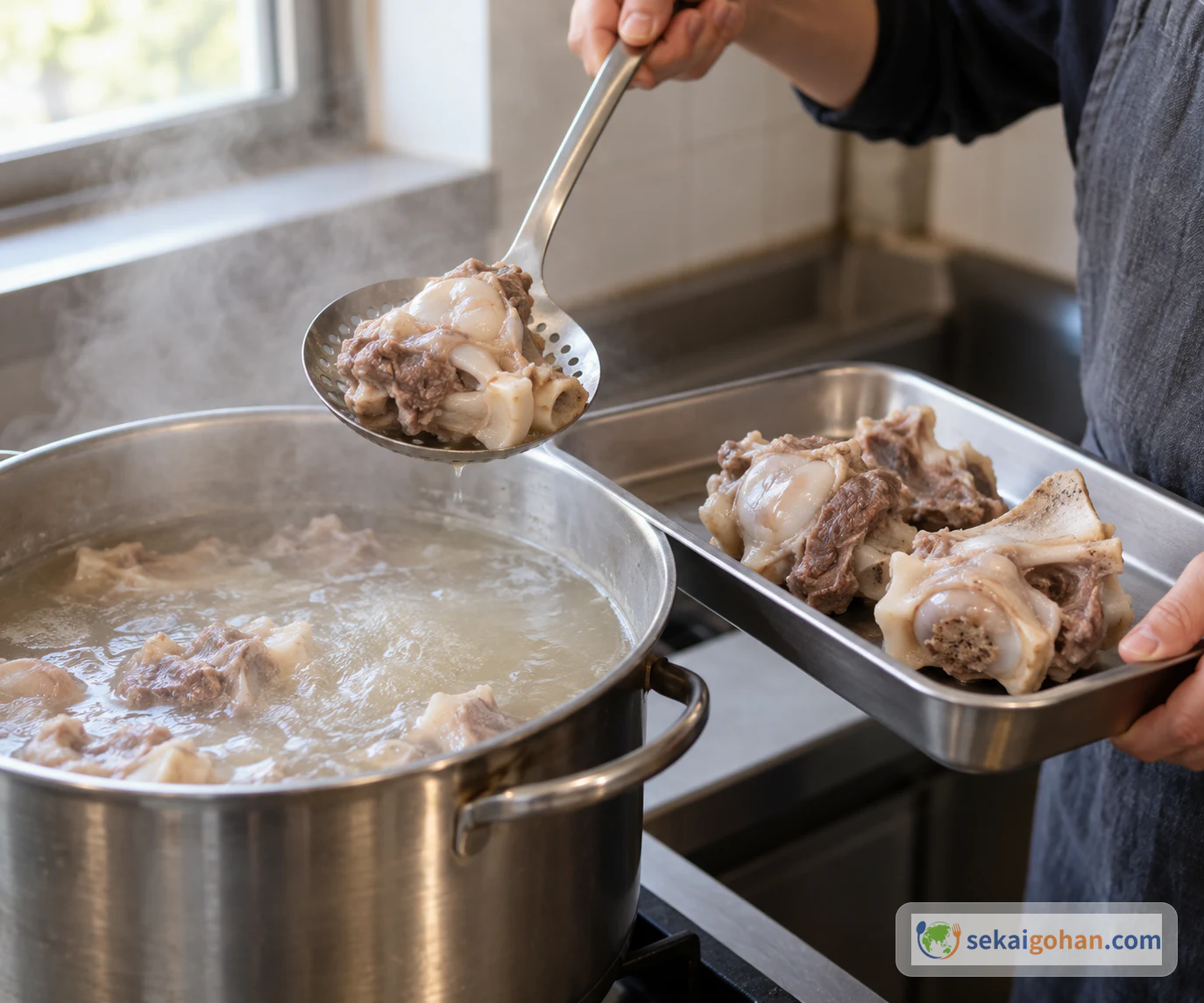
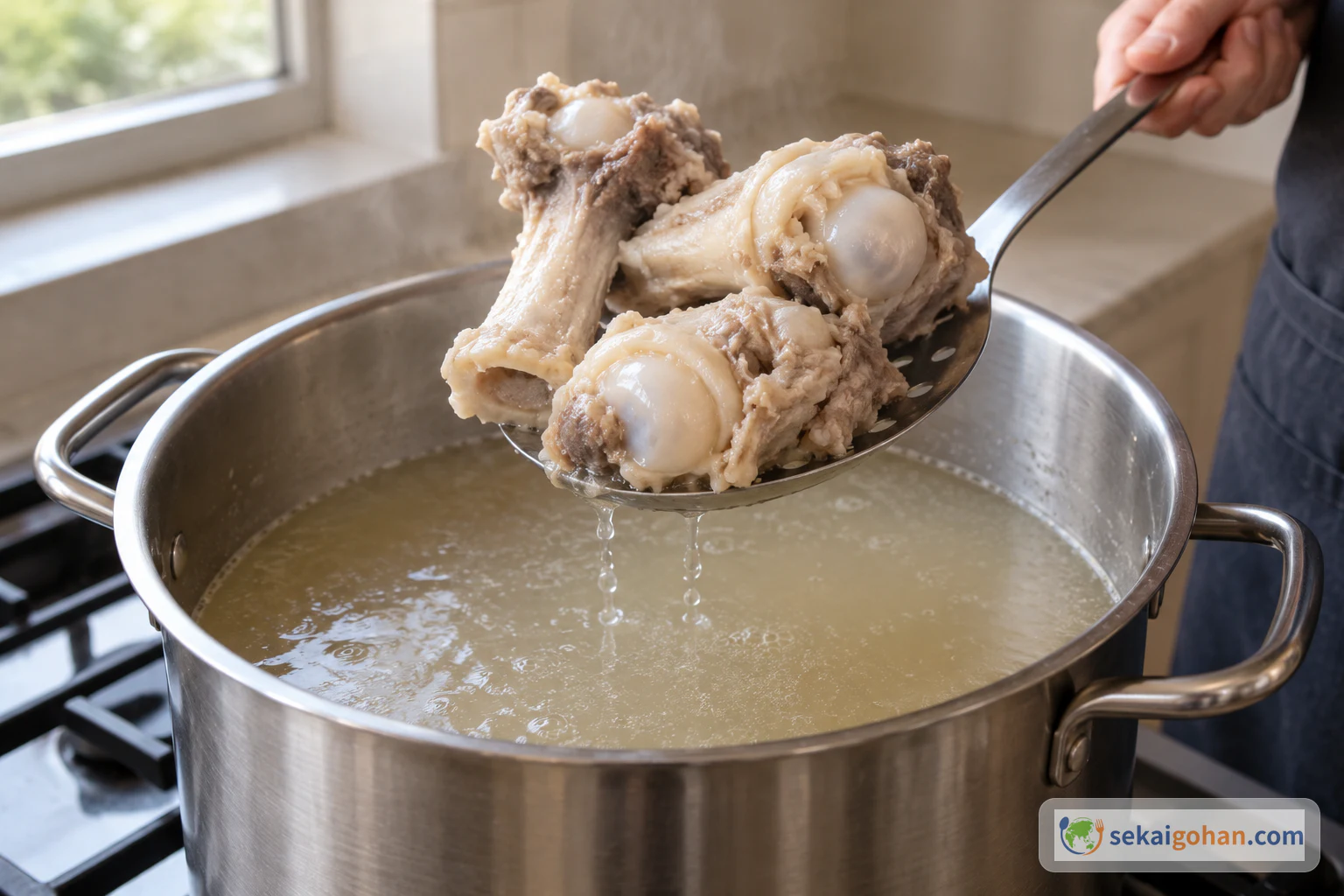
Lift the knee pieces out of the pot.

Lifting the knee pieces out of the pot after the first simmer
Lift the knee pieces out of the broth

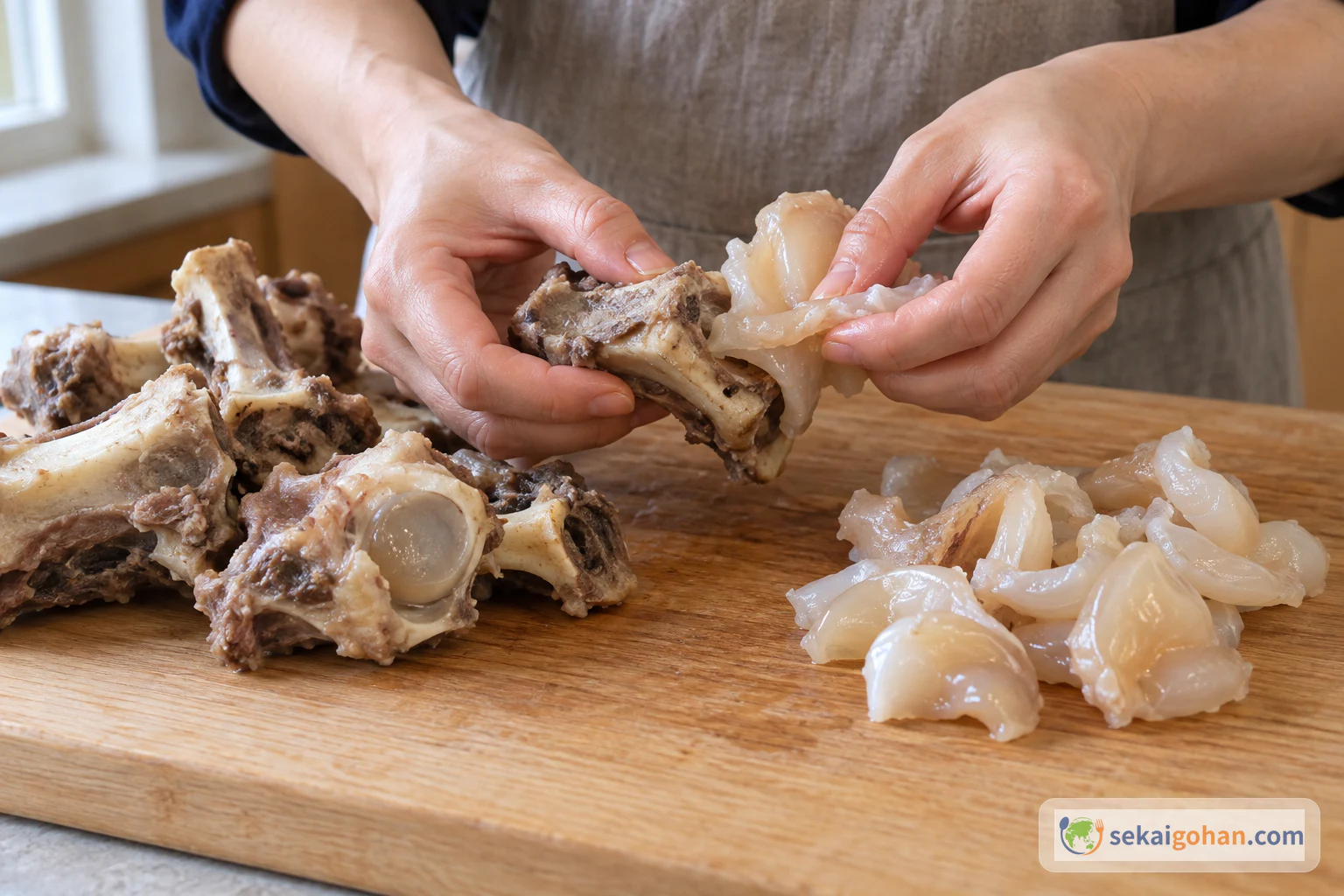
Separate the cartilage from the bone.

Separating cartilage and bone from the lifted knee pieces
Cartilage in one group, bone in the other

Return the bones to the pot and simmer over low heat for at least 1 more hour.

Returning the separated bones to the first-extraction pot and simmering over low heat
The bones go back for at least 1 more hour

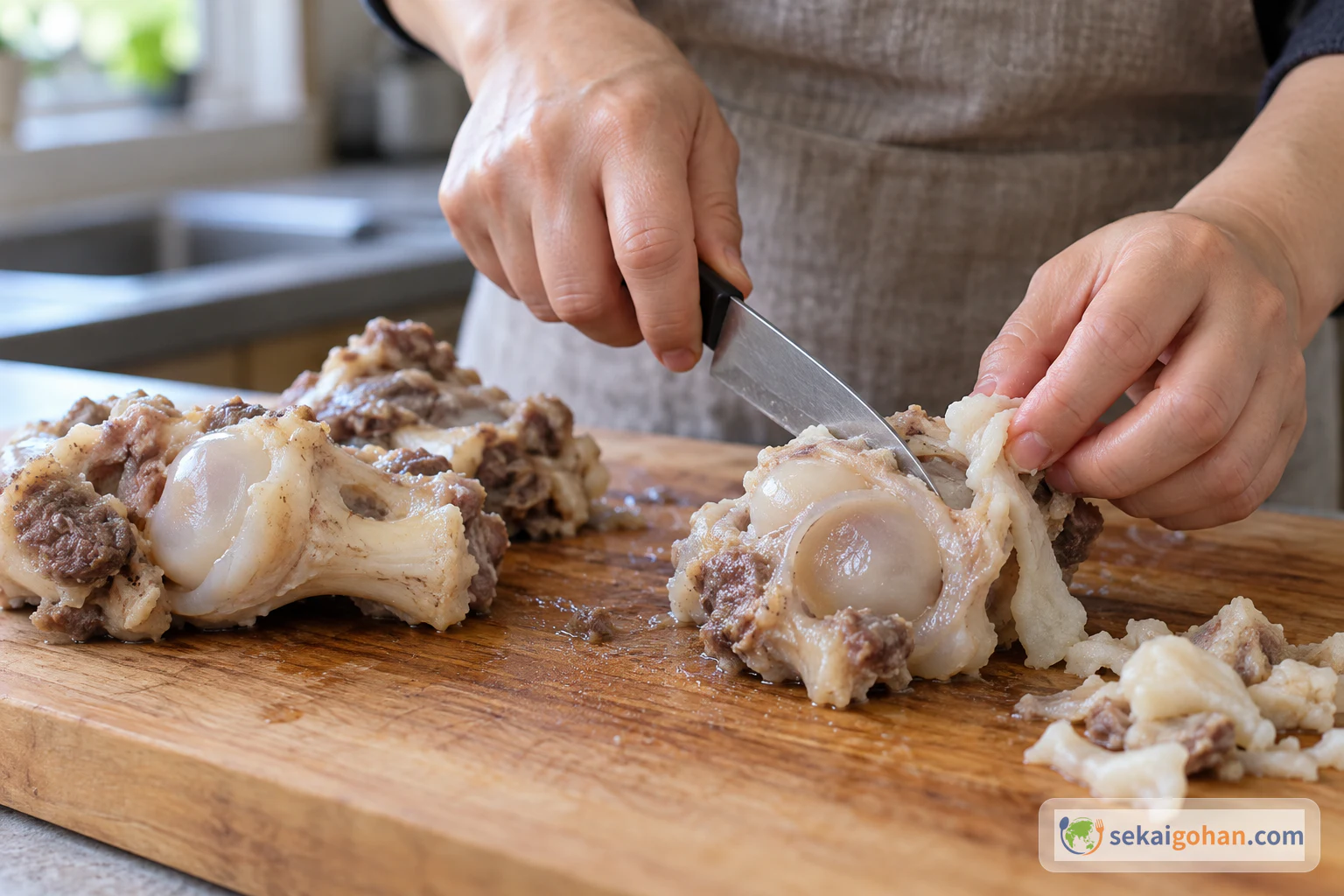
Trim the fat from the cartilage you lifted out.

Trimming fat from the reserved cartilage
Trim away the fat on the reserved cartilage

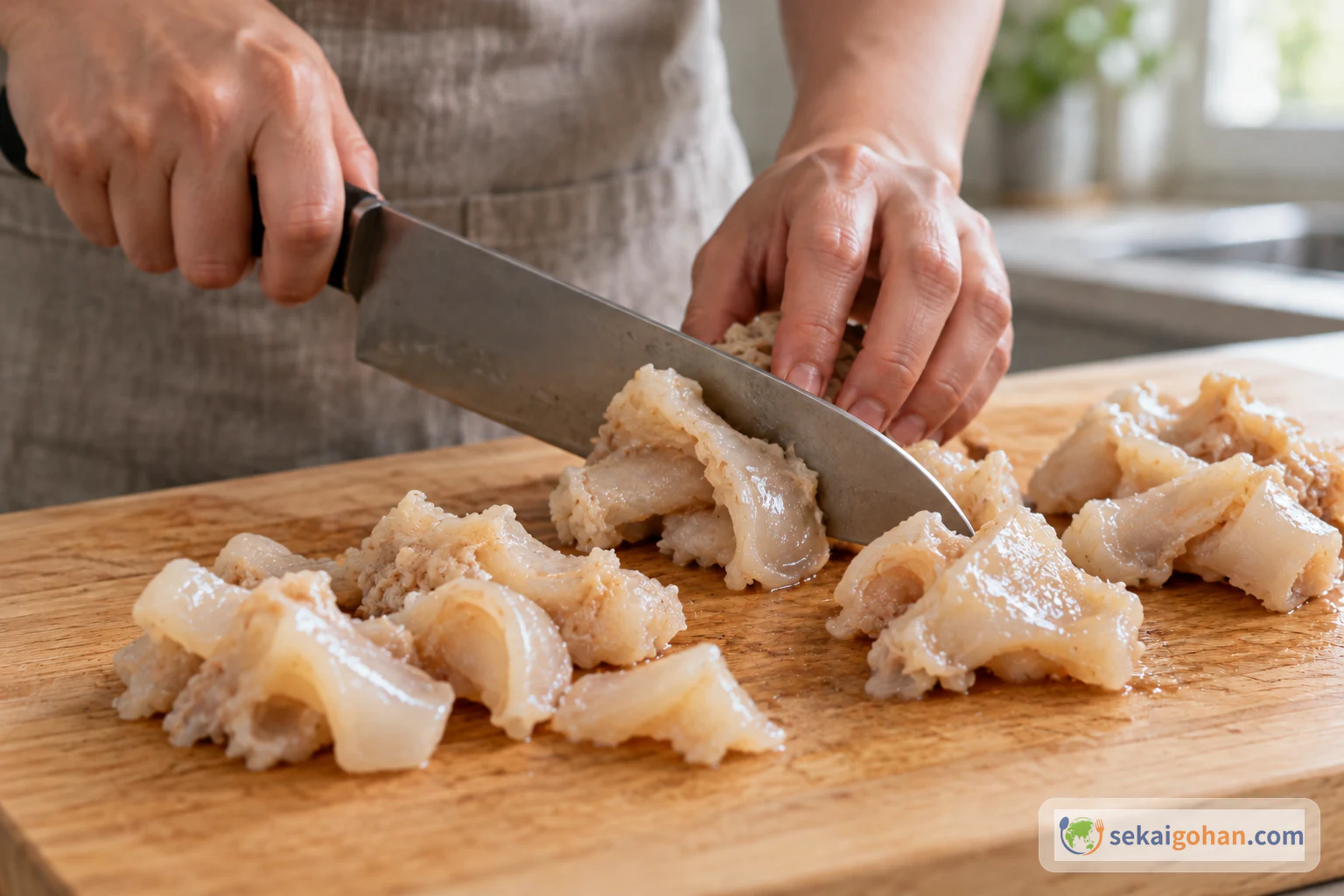
Cut the cartilage into pieces of a convenient size. Keep it in the refrigerator until step 6.

Cutting the trimmed cartilage to a convenient size
Cut the cartilage to a convenient size

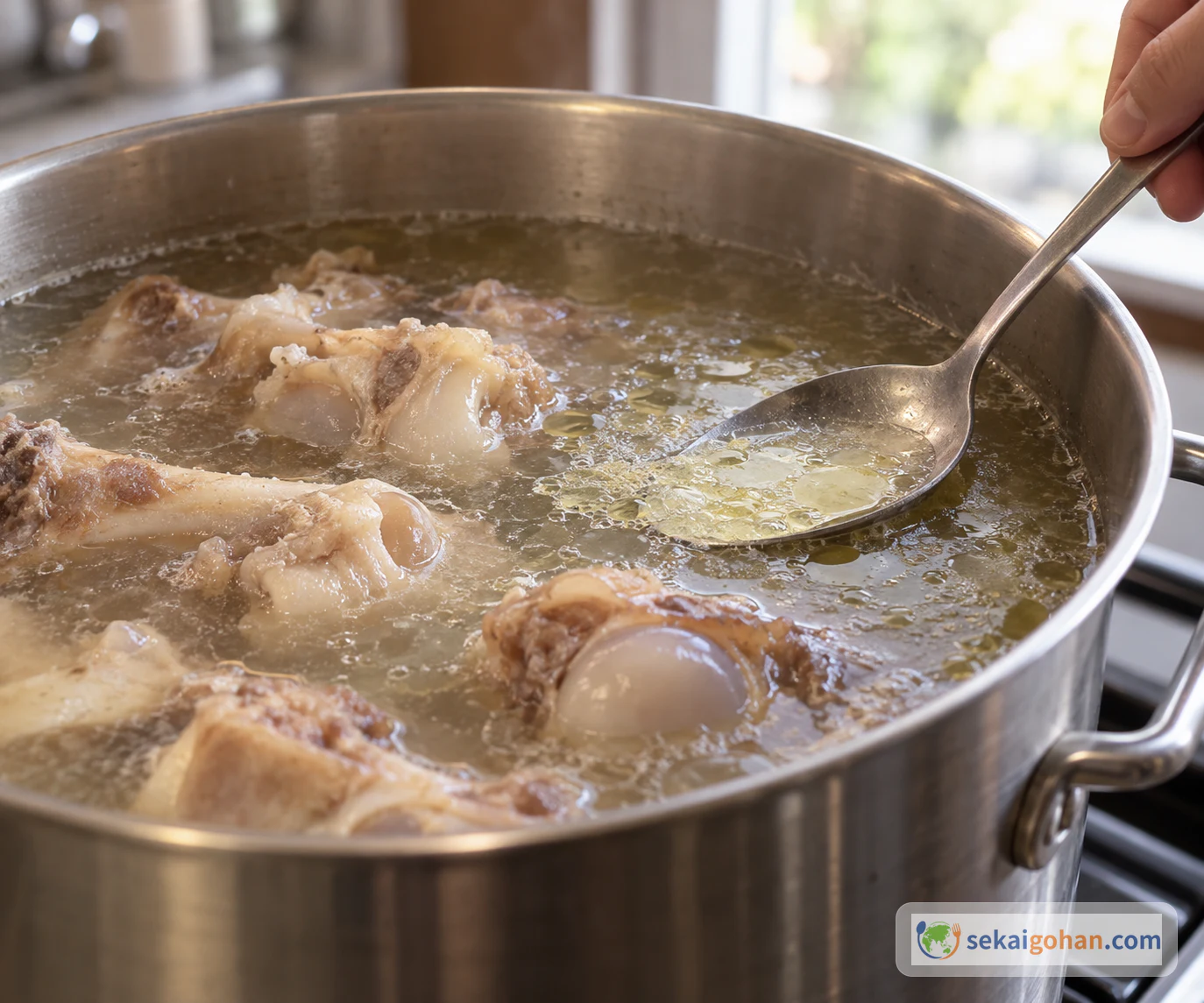
While the bones simmer, skim off the fat that floats to the surface.

Skimming fat from the surface of the first broth as it simmers
Skim the floating fat along the way
STEP44 / 6

Set aside the first broth and make the second extraction

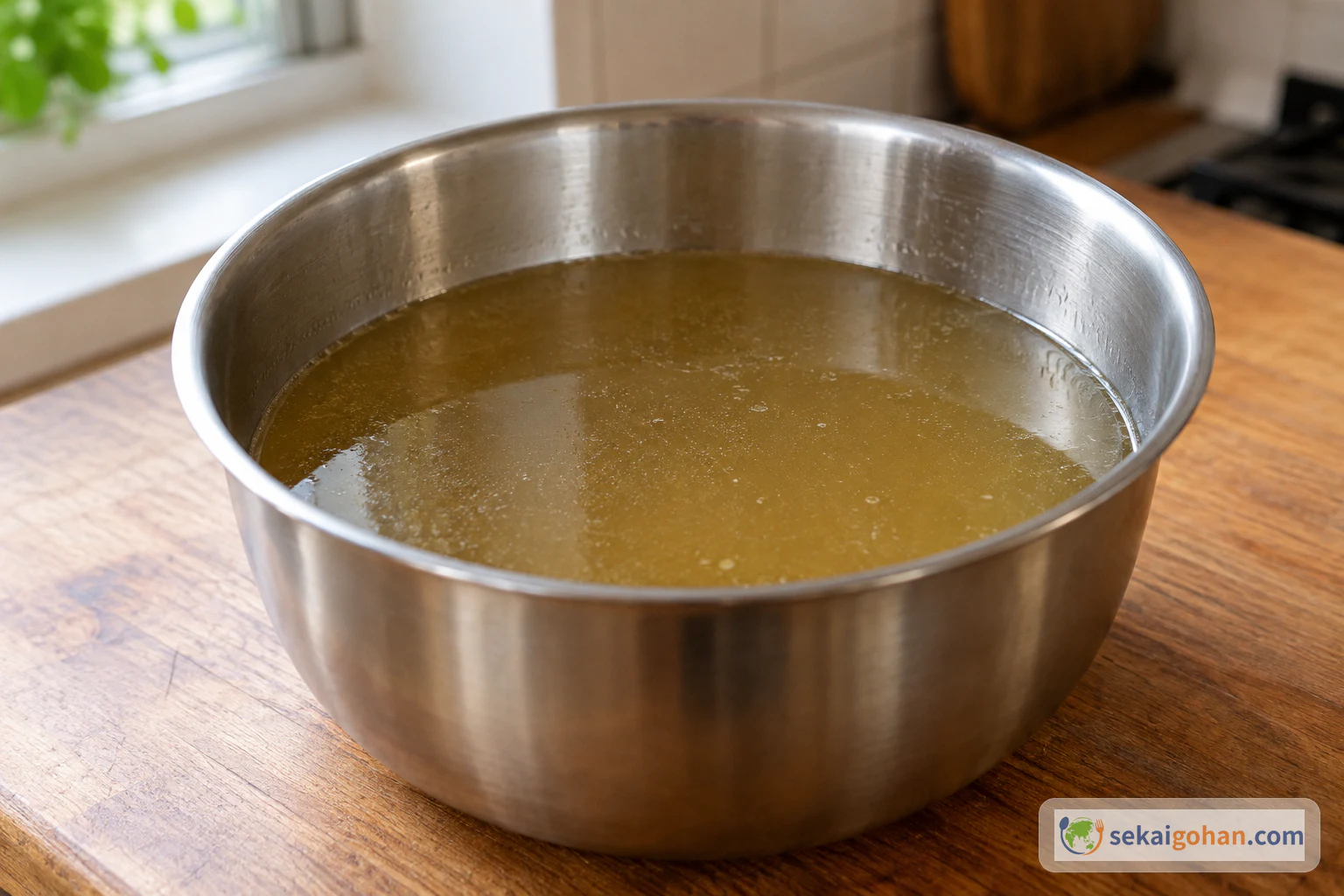
The first broth transferred to a container
The first broth moved out of the pot

Divide the first broth into shallow containers so it cools quickly, and put them in the refrigerator at 50°F (10°C) or below. Do not leave the broth at room temperature during the second extraction.

Put only the bones in the pot and add 2.75 quarts (2.5L) cold water.

Adding cold water for the second extraction to a pot holding only the bones
Only bones and cold water this time

Bring to a boil.

The second extraction coming to a boil
Bring the second pot to a boil

Lower the heat and simmer for about 5 hours.

The bones-only pot simmering gently over low heat
Low heat for about 5 hours
STEP55 / 6

Remove the bones and combine the broths

Lifting the bones out of the pot after the second extraction
The bones come out

Lift the bones out of the second broth and remove them.

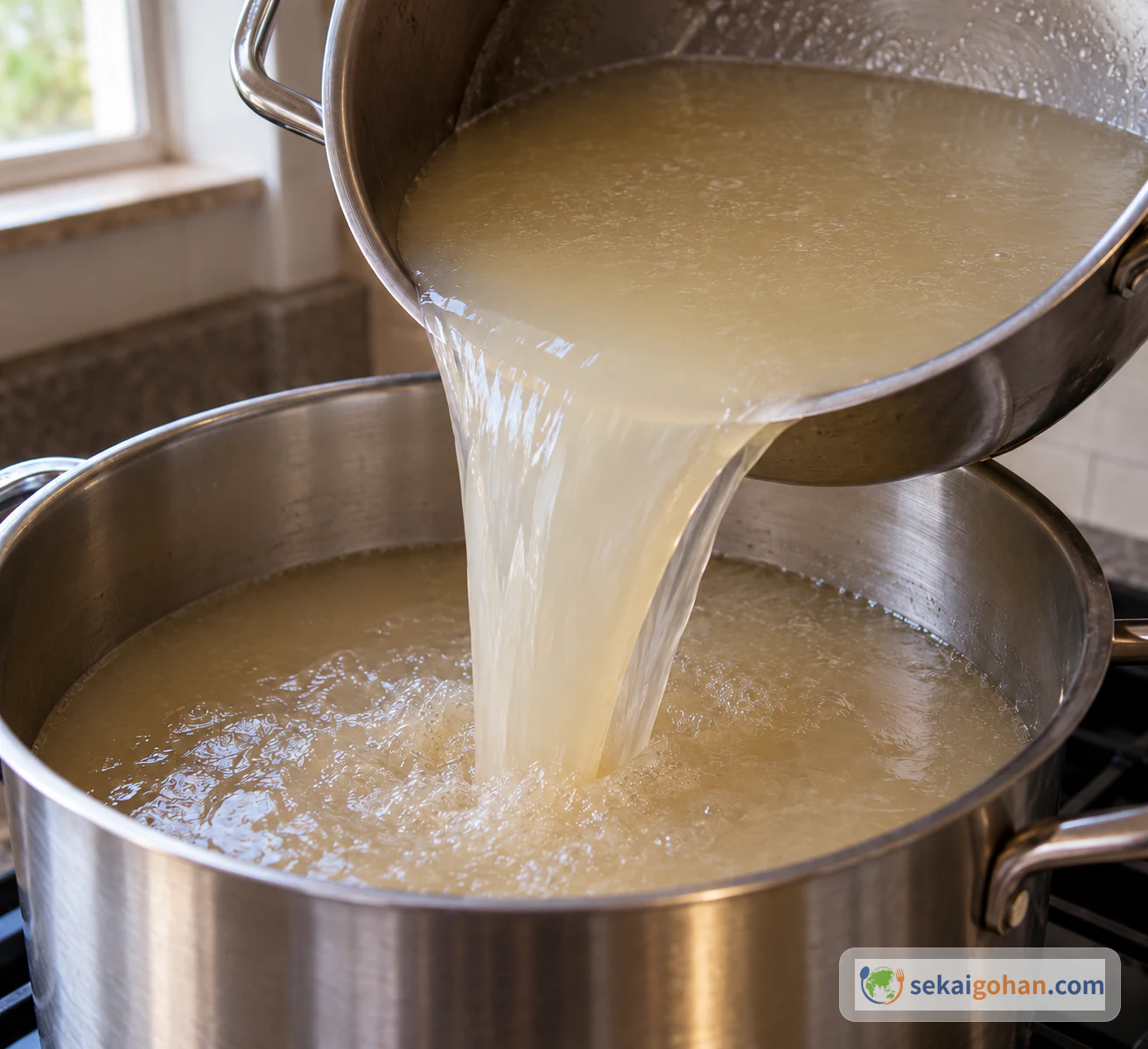
Combine the first and second broths in one pot.

Combining the first and second broths in one pot
The two broths become one

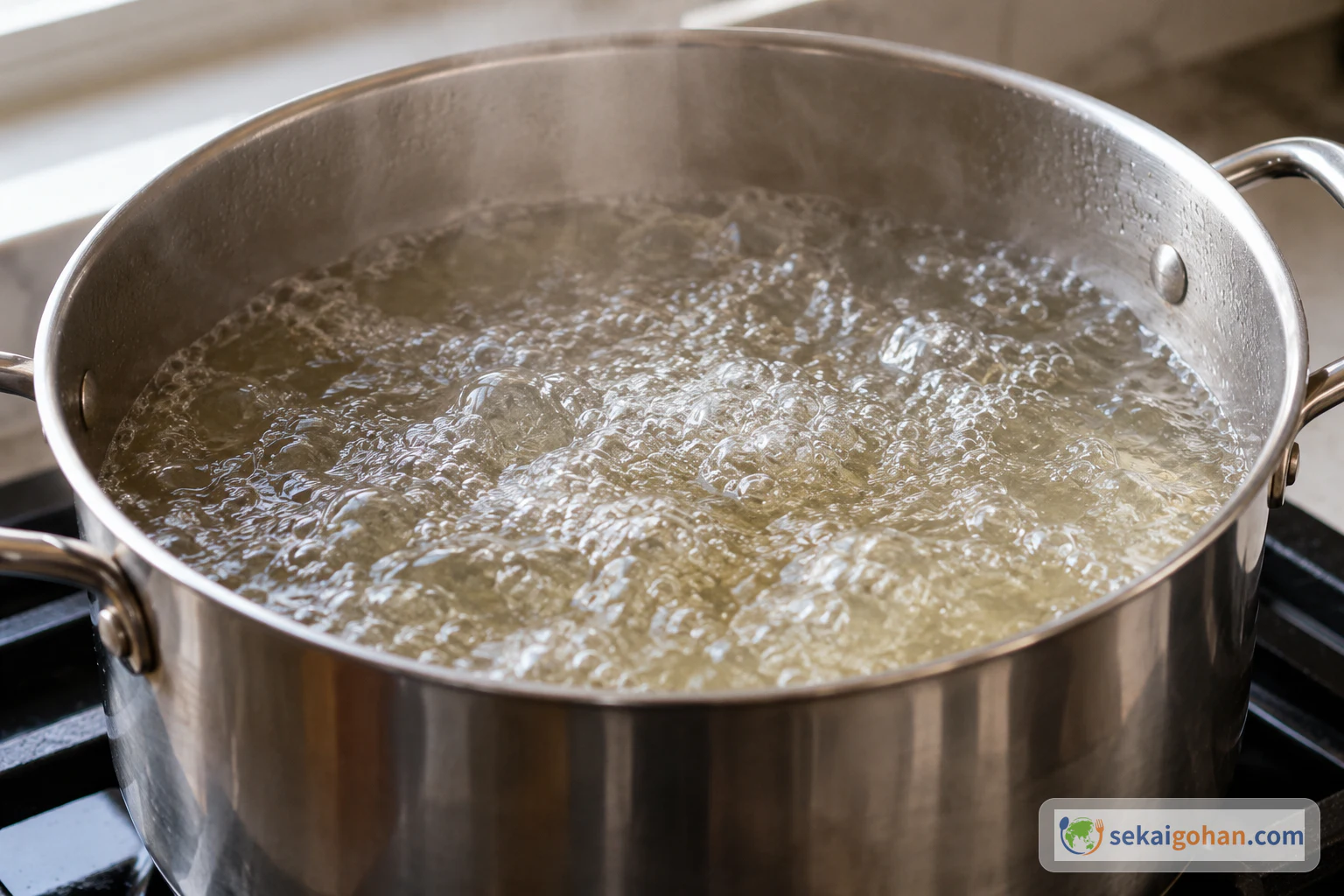
Bring to a boil.

The combined broth coming to a boil
Bring the combined broth to a boil

Lower the heat and simmer for about 3 hours.

The combined broth simmering over low heat after boiling
Low heat for about 3 hours
STEP66 / 6

Return the cartilage, boil once and serve

Returning the reserved cartilage to the combined broth
The cartilage goes back into the broth

Return the cut cartilage to the broth.

Bring to a boil once.

Bringing the broth with the cartilage back to a boil
One final boil

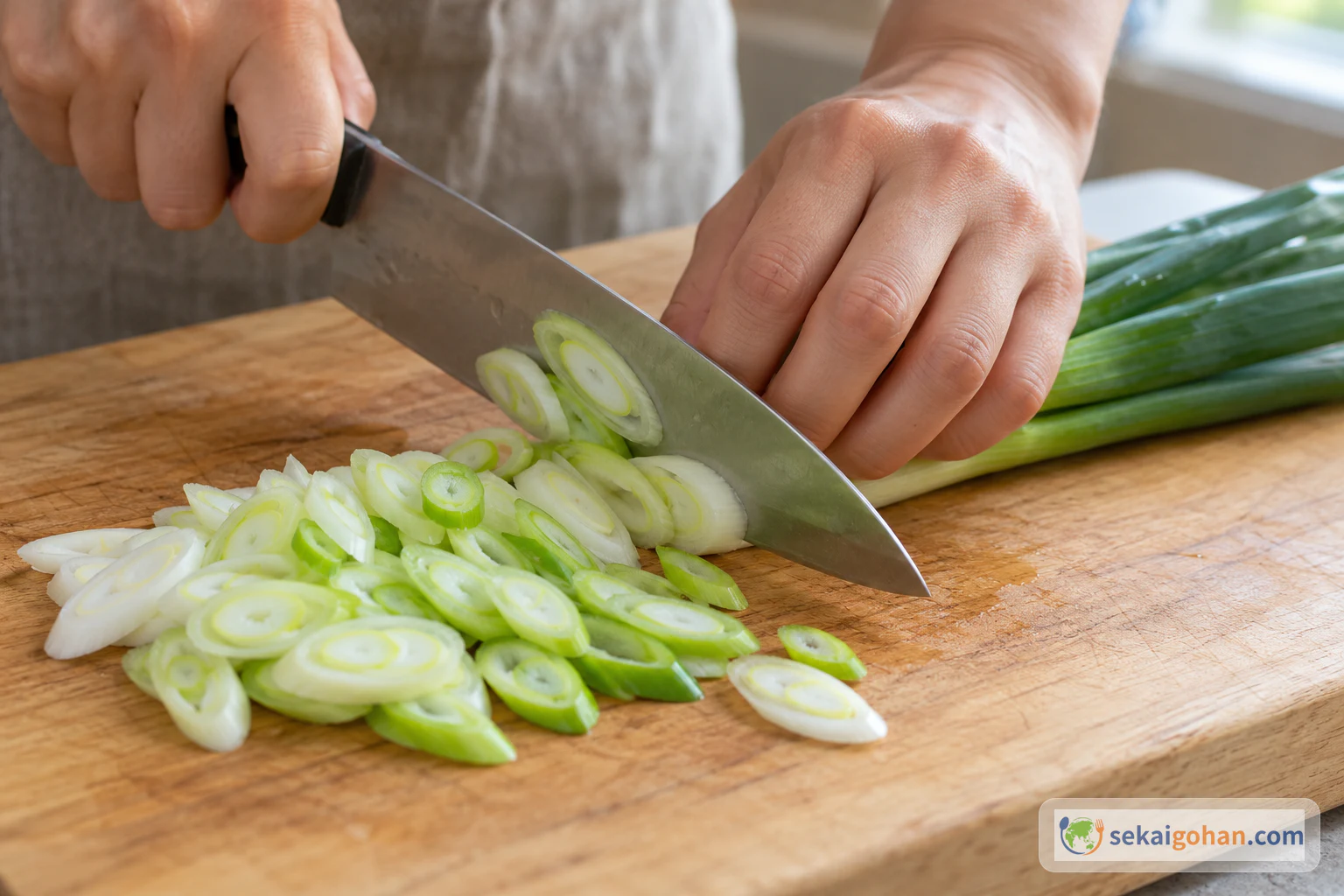
Wash the large green onion well under running water and slice it thin.

Slicing large green onion (대파) thinly
Slice the washed green onion thin

Ladle the soup into bowls and place the green onion on top.

Placing sliced large green onion (대파) on a bowl of doganitang
The green onion goes on top

Serve with salt, pepper and wasabi-vinegar-soy sauce on the side.

Doganitang with salt, pepper and wasabi-vinegar-soy sauce served separately
Each person adds seasoning at the table
0 / 0
Ingredients

Ingredients

1 / 1

Ingredients

Ingredient Amount Role
Hanwoo beef knee cartilage and bone (한우 도가니) 2.25 lb (1kg) The main ingredient
Cold water for soaking as needed Soaks the knee for about 5 hours
Water for blanching enough to cover the knee Boiled, then discarded
Cold water for rinsing as needed Rinses the knee after blanching
Water for the first extraction 5.25 quarts (5L) First broth
Cold water for the second extraction 2.75 quarts (2.5L) Second broth, from the bones only
Large green onion (대파, daepa) a little Sliced thin and placed on top at serving
Salt to taste Served on the side
Pepper to taste Served on the side
Wasabi-vinegar-soy sauce (와사비 초간장) to taste Served on the side
0 / 0

Knee pieces sit in cold water for about five hours before the stove is even lit. After a short, hard boil, that water goes down the sink, and the pot is washed and filled again. Later the cartilage comes off the bone and waits while the bones go through a second long simmer, and only when the two broths have been combined and simmered once more does the cartilage go back in, for one last boil. That is doganitang (도가니탕), a Korean soup sometimes called Ox Knee Soup in English. This home version uses 2.25 lb (1kg) of Hanwoo (Korean beef) knee cartilage and bone and 5.25 quarts (5L) of water for the first extraction, and it comes together in six steps.

Doganitang on the Korean Table

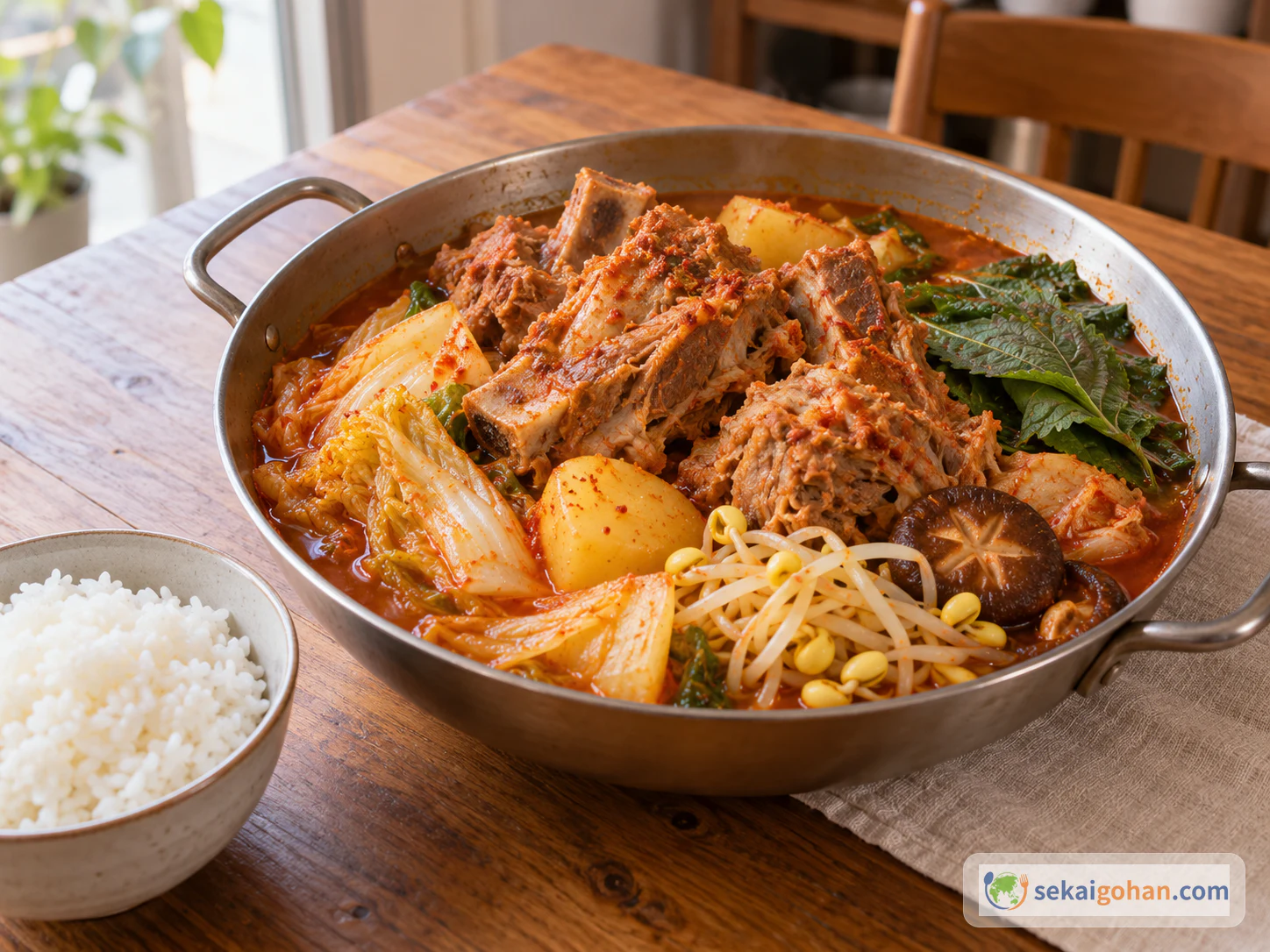
Doganitang can be made with knee, tendon, brisket and shank, simmered with green onion, garlic and black pepper, and served with mustard sauce or salt. One name covers quite different pots. This home recipe relies on knee alone, and the Sinseo version builds the soup another way entirely.

Seasoning on the side shows up in several versions, though the details differ. Here the soup comes to the table with salt, pepper and wasabi-vinegar-soy sauce, so everyone seasons their own bowl; other versions use mustard sauce or salt. To see the soup alongside other dishes, browse more Korean recipes.

Ingredients: 2.25 lb (1kg) of Knee and Two Rounds of Water
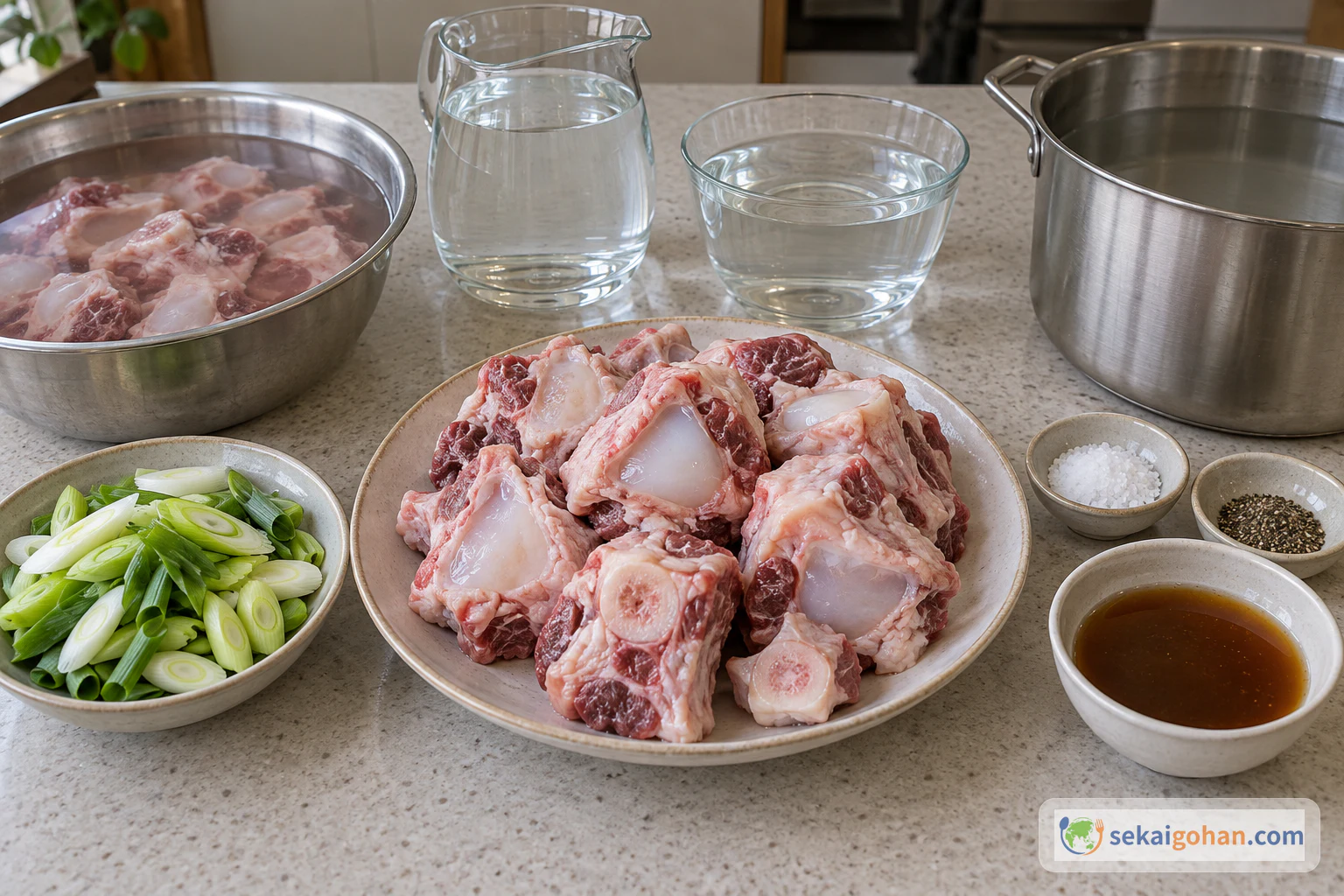
1kg of Hanwoo knee cartilage and bone, water for the first 5L extraction and the half-volume second extraction, unmeasured water for soaking and blanching, large green onion (대파) and table seasonings
Only knee cartilage and bone go into the pot with water; the rest comes in at serving time

Equipment

  • Basin or large bowl for soaking
  • Large stockpot
  • Colander
  • Slotted ladle or similar utensil
  • Spoon for skimming fat
  • Tray for the lifted knee pieces
  • Cutting board and knife
  • Shallow containers for the first broth

Choosing Ingredients for Doganitang

Knee cartilage and bone. Ask a Korean grocer or a butcher for beef knee cartilage (도가니, dogani). You want 2.25 lb (1kg) of Hanwoo knee cartilage and bone in all, and the bone count, cartilage ratio and cut size are up to you.

Large green onion. 대파 is a large green onion with a long, thick stem. Any variety works.

Wasabi-vinegar-soy sauce. Serve it alongside, made the way you already do or from a recipe you trust.

Method: Six Steps, Two Extractions

Read through all six steps first, because the first broth, the bones and the cartilage each go separate ways in the middle.

Troubleshooting Doganitang

The main risk with this soup is losing track of the stages. Most questions come down to what goes in which pot, and when.

Situation What to do
Unsure what goes in the second pot Bones and cold water only. The first broth is set aside, and the cartilage waits until step 6
Unsure how much water to use the second time Use 2.75 quarts (2.5L) if you have little bone. See Variations if you have a lot of bone
You reach the end and no salt has gone in That's as intended. Salt and pepper are added at the table
Unsure when the green onion goes in On top at serving, not during simmering

Food Safety

Food safety
  • First broth: divide it into shallow containers so it cools quickly, and keep it in the refrigerator at 50°F (10°C) or below. Do not leave it at room temperature during the roughly 5-hour second extraction.
  • Reserved cartilage: the recipe doesn't say where the cut cartilage waits. Keep it in the refrigerator until it returns to the pot.
  • Knife, board and containers: wash anything that touched the raw knee, then pour boiling water over it before using it for other foods.
  • Green onion: wash it well under running water before slicing. It goes on raw, while the soup itself has been through long simmering and a final boil.

Heat food until the center reaches 167°F (75°C) for at least 1 minute; steps 5 and 6 bring the combined broth and then the finished soup to a boil. Microbes multiply more easily as food warms, so refrigerate anything that needs it without delay. The same goes for the five-hour soak: don't leave the knee pieces at room temperature for a long time, and choose where the basin sits with that in mind.

Storing Doganitang and Variations

For leftovers, divide the soup into shallow containers so it cools quickly, and refrigerate at 50°F (10°C) or below. Don't leave it at room temperature for a long time.

The versions below are separate recipes, so pick one route rather than mixing their ingredients into the method above.

  • More bone in the pot. Use the same amount of water for the second extraction as for the first, which is 5L here.
  • Knee with beef shank. One version is written for 4 servings: half a knee, 400g of beef shank, 20 cups of water, and 2 green onions among other items.
  • Sinseo doganitang. A 2008 version has knee cartilage, tendon, deer antler, ginseng, milk, nuts, leg-bone stock and an egg garnish.

Frequently Asked Questions

Does "2h+" mean the soup takes about two hours?

No, that's just the figure on the recipe card. The steps themselves include about 5 hours of soaking, about 2 hours plus at least 1 hour for the first extraction, about 5 hours for the second, and about 3 hours after combining, so plan your day around the stages.

Is a "cool place" safe for the first broth?

The recipe asks you to keep the first broth in a "cool place" (시원한 곳) during the second extraction. To hold it safely, use shallow containers in the refrigerator at 50°F (10°C) or below, and don't leave the broth at room temperature for a long time.
Sources