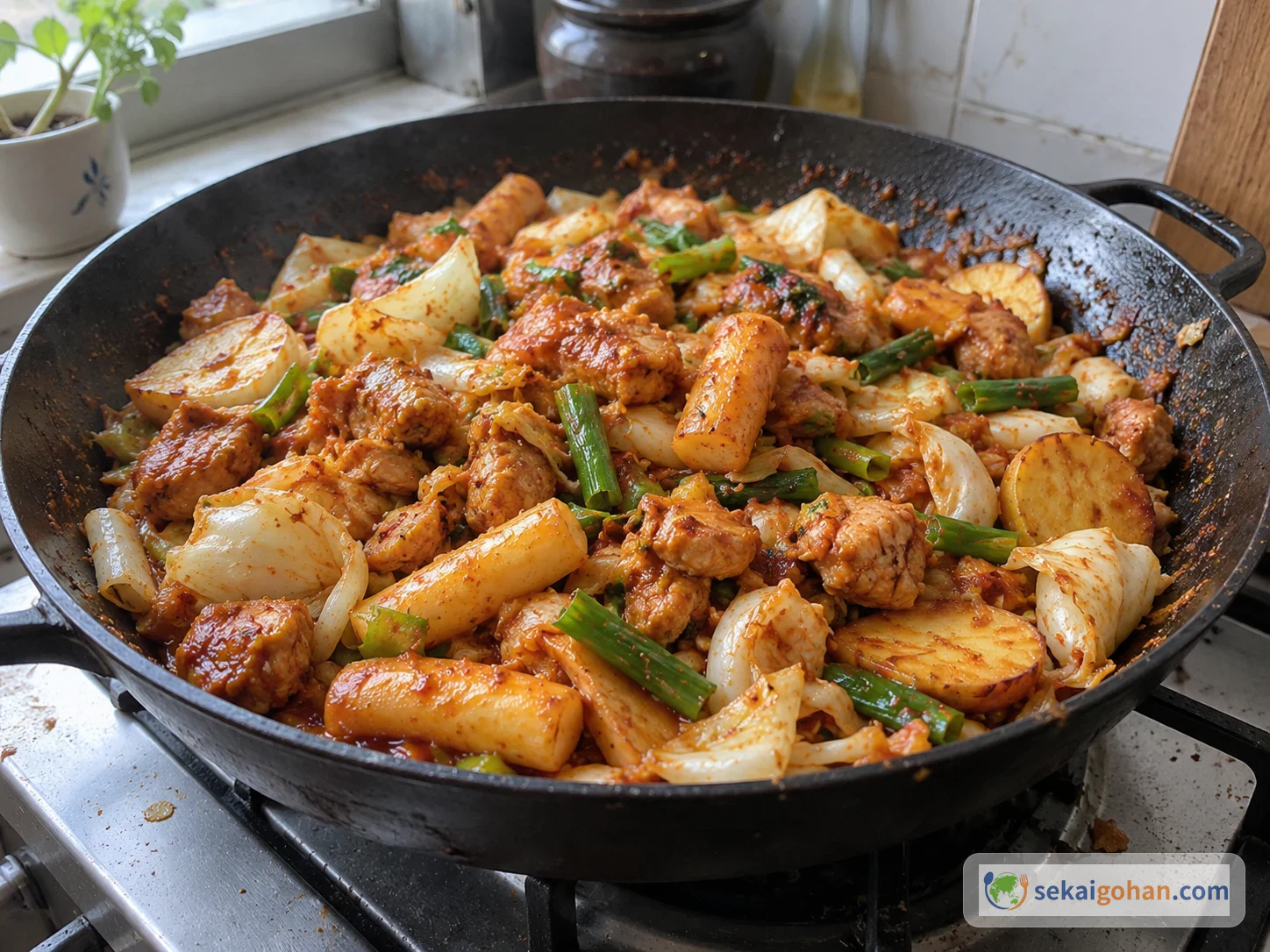
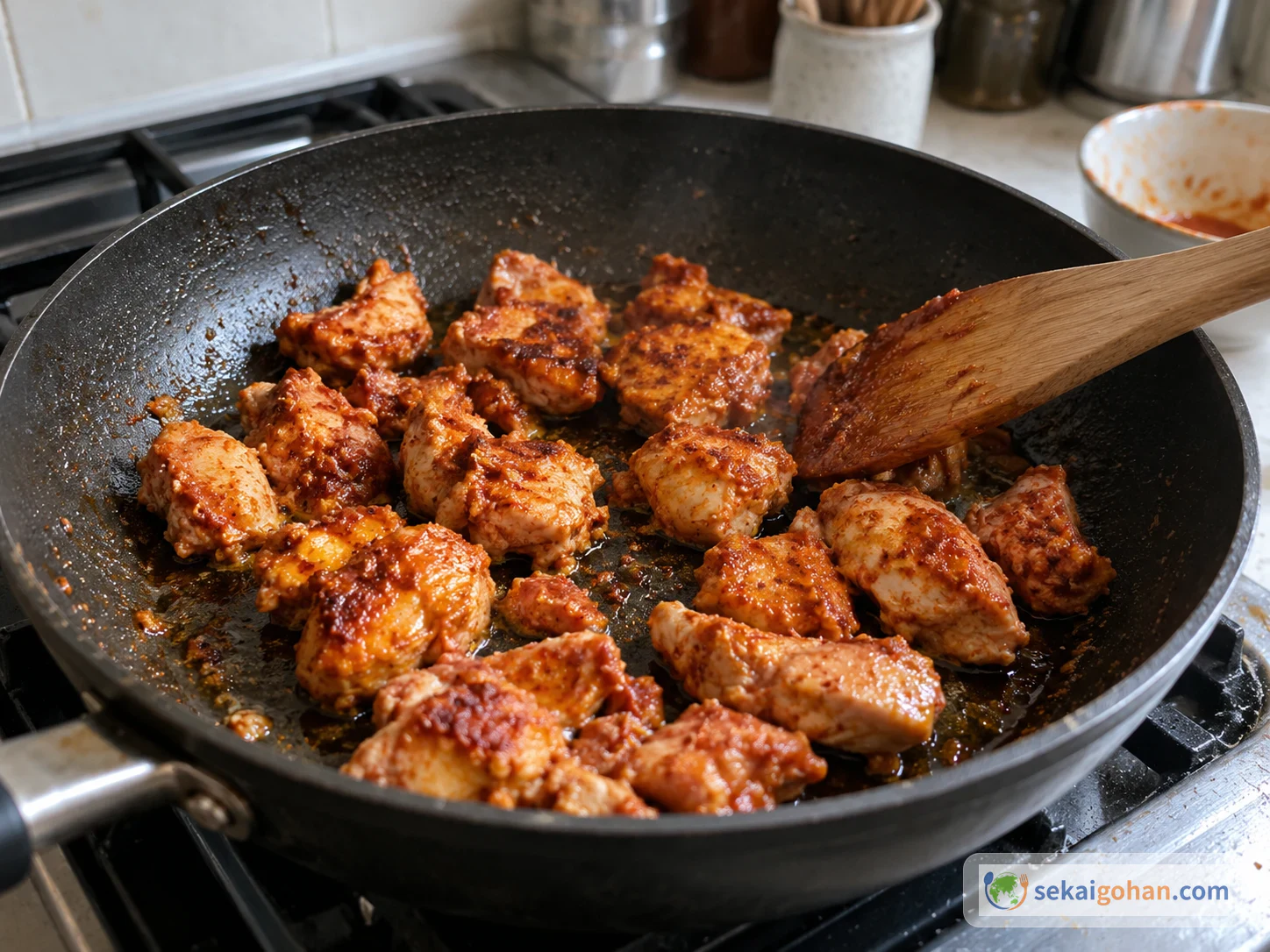
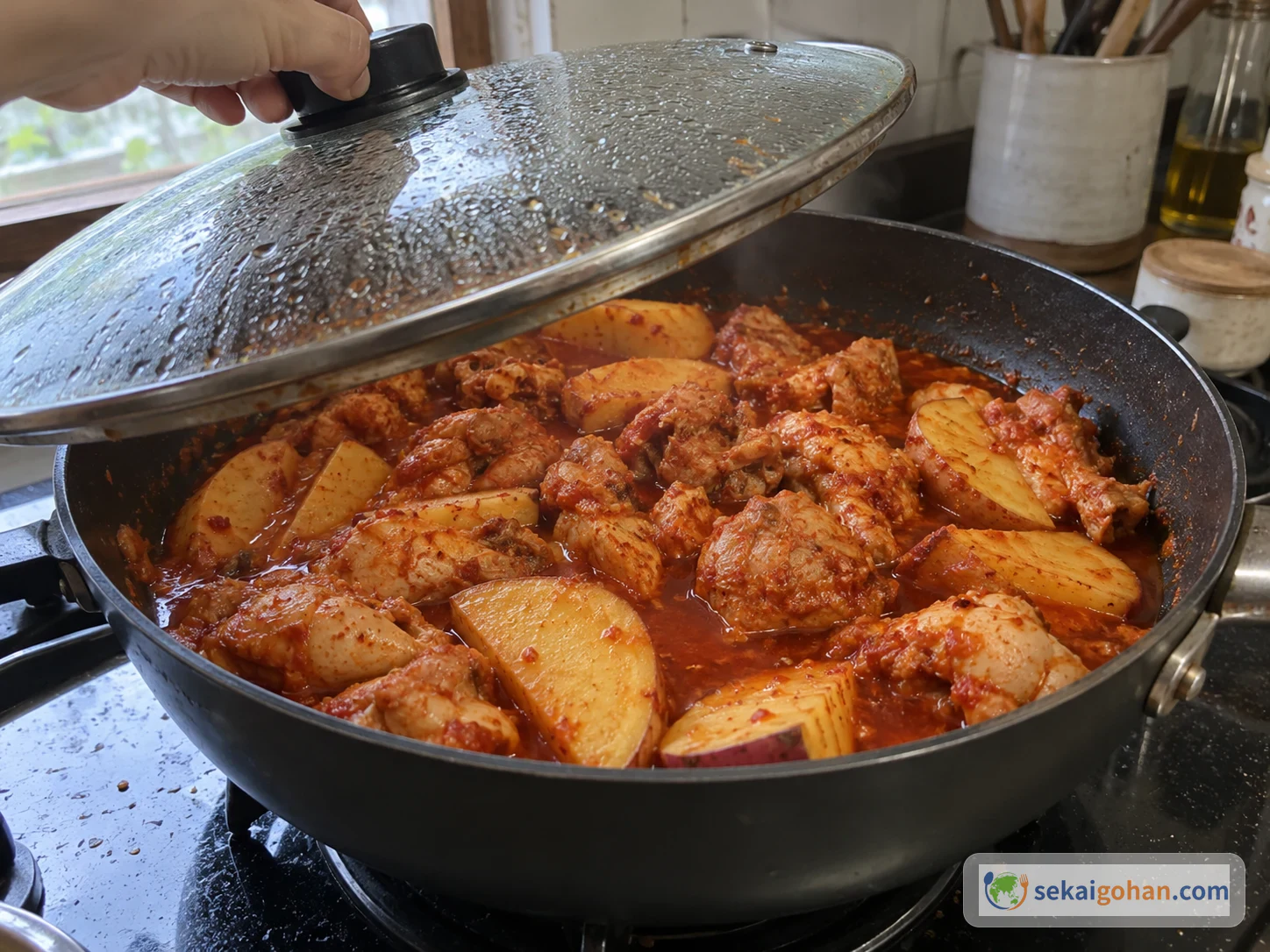
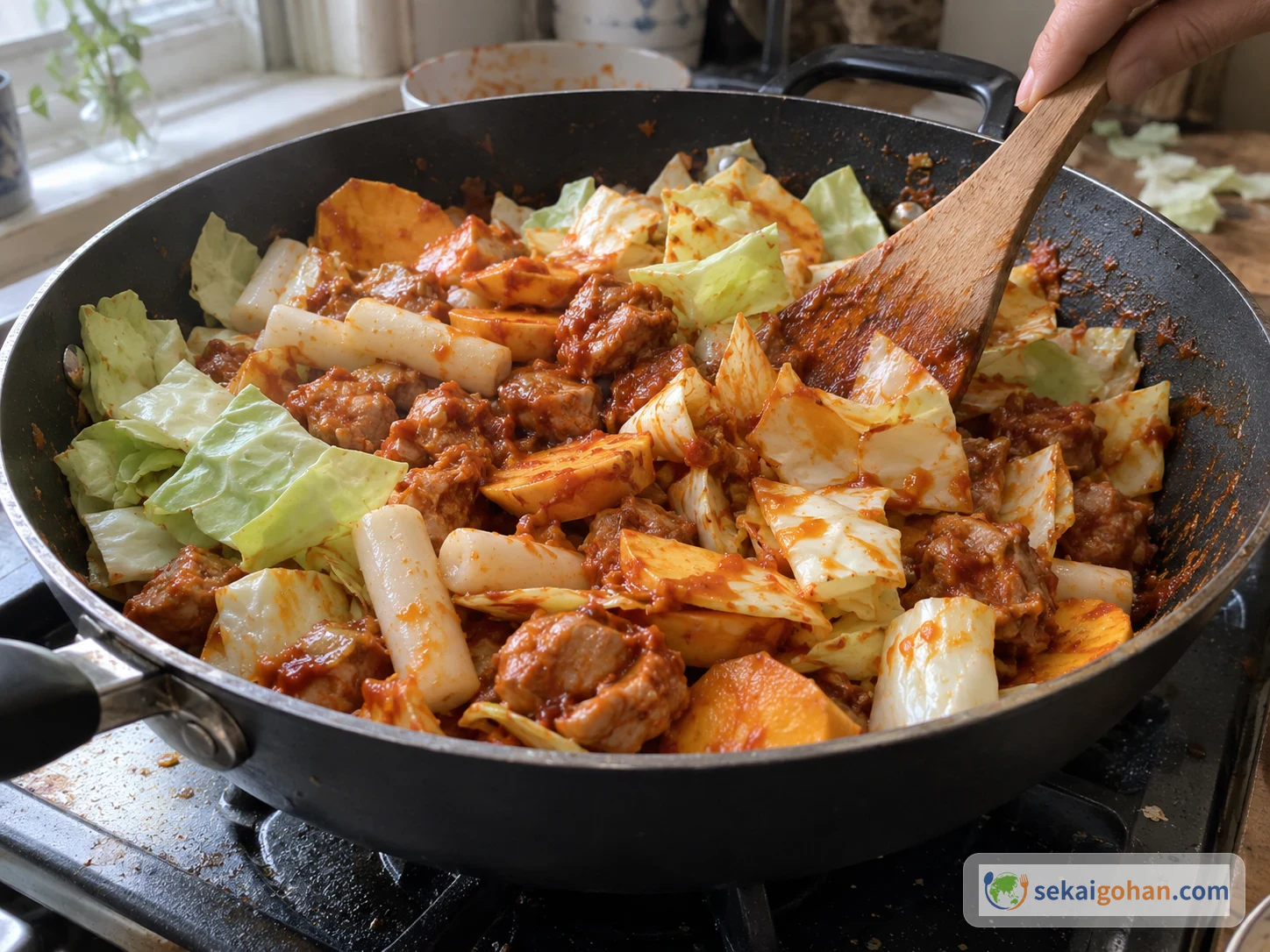
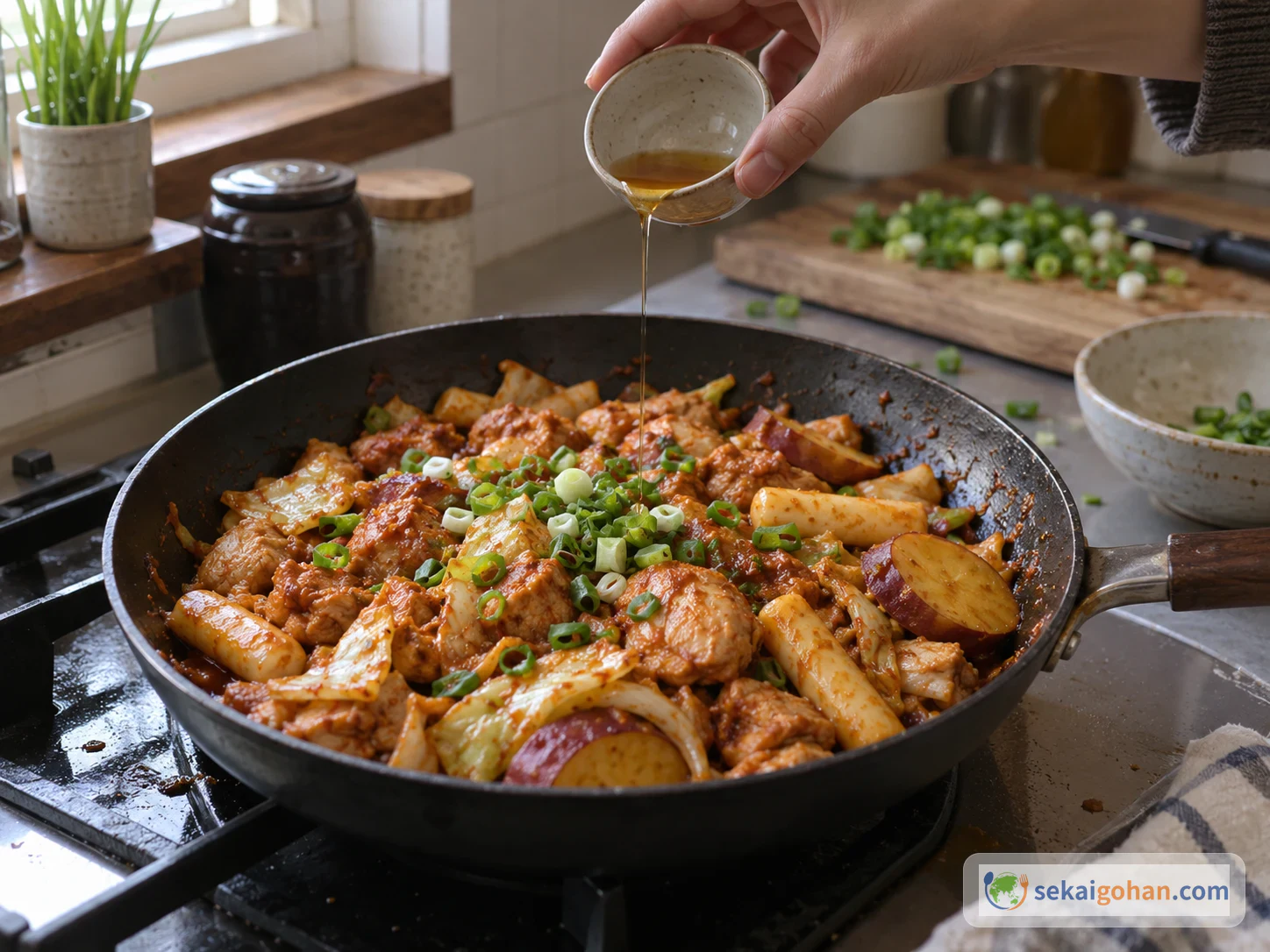
In the middle of the table, a round griddle set into the surface is piled high with chicken and cabbage coated in red sauce. Each time a server flips it with a big spatula, the sweet, caramelized smell of gochujang drifts through the whole restaurant. That's dakgalbi (닭갈비), the signature dish of Chuncheon, a city in Gangwon Province northeast of Seoul. The chicken is marinated in a sweet and spicy sauce, then stir-fried on the griddle with sweet potato, cabbage, and rice cakes.
The Story of Chuncheon Dakgalbi
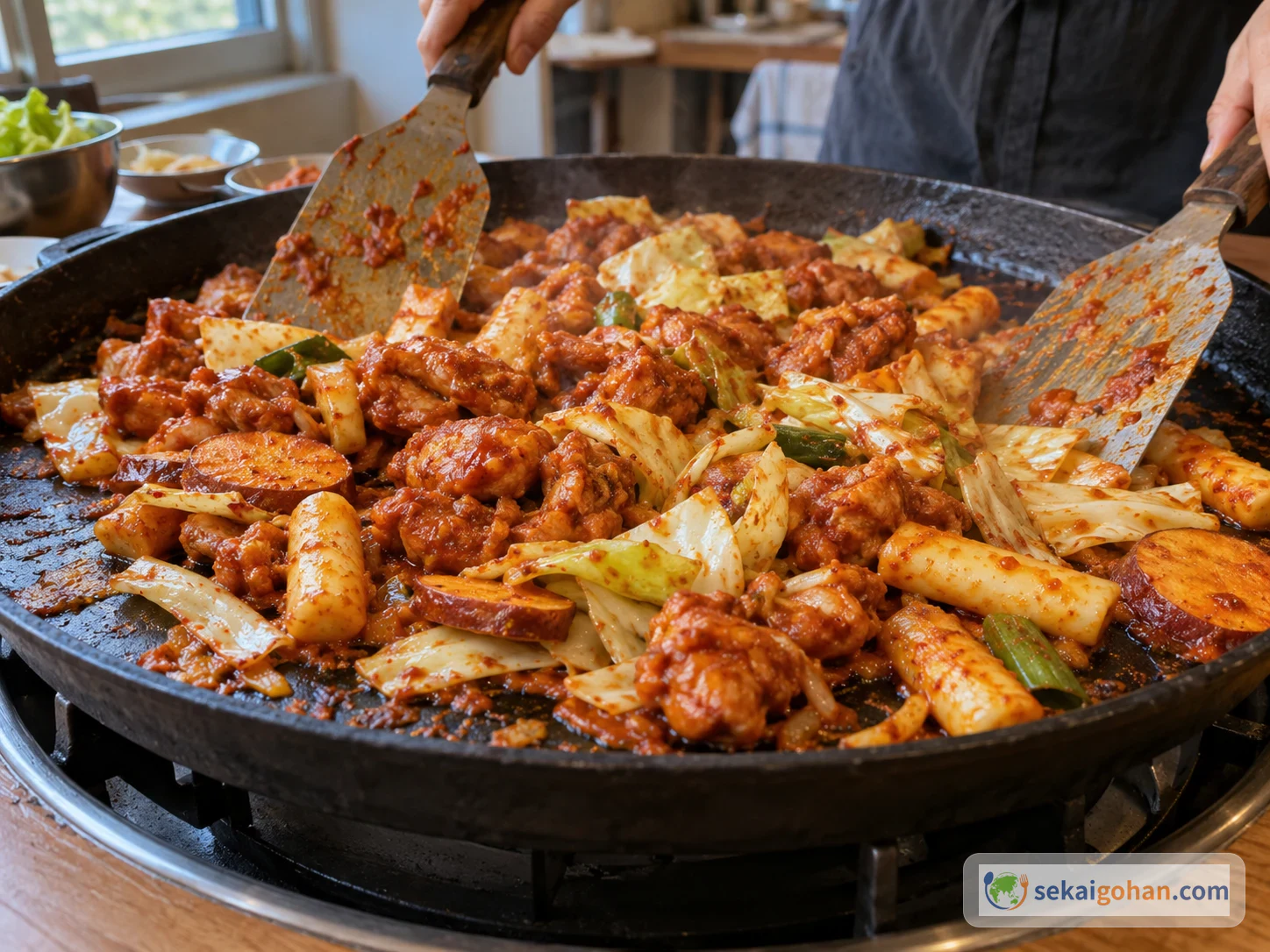
"Galbi" means ribs, but dakgalbi has no ribs in it. The name comes from the fact that chicken was grilled in place of pork galbi. The dish started in a Chuncheon bar in the 1960s as food to go with drinks. Someone who ran a pork restaurant ran out of pork and used chicken instead. At first it was called "dak-bulgogi" and was grilled over charcoal, just like pork galbi.
Large poultry farms were spreading around Chuncheon and nearby Hongcheon at the time, so chicken had become a cheap source of protein. Bar owners seasoned it with gochujang and grilled it over briquette fires. In the 1970s, cooks on Chuncheon's Jungang-ro started setting thick iron griddles over stoves made from oil drums. Cabbage, sweet potato, and rice cakes from nearby fields went onto the griddle too, and a small amount of chicken could now feed a crowd.
Cheap and generous, dakgalbi was loved by penniless university students and by soldiers from nearby front-line units who came into town on leave. In the 1970s it earned the nicknames "the common people's galbi" and "the students' galbi."
Dakgalbi restaurants opened one by one in the back alley of Chuncheon's Myeongdong through the 1970s and 80s, and the alley became known as "Dakgalbi Street." Restaurants line both sides for about 150 m, and you can get both griddle-fried and charcoal-grilled dakgalbi there. Locally it counts as one of the two great local specialties alongside makguksu, a cold buckwheat noodle dish, and a festival celebrating the two is held every year.
Ingredients (serves 4)
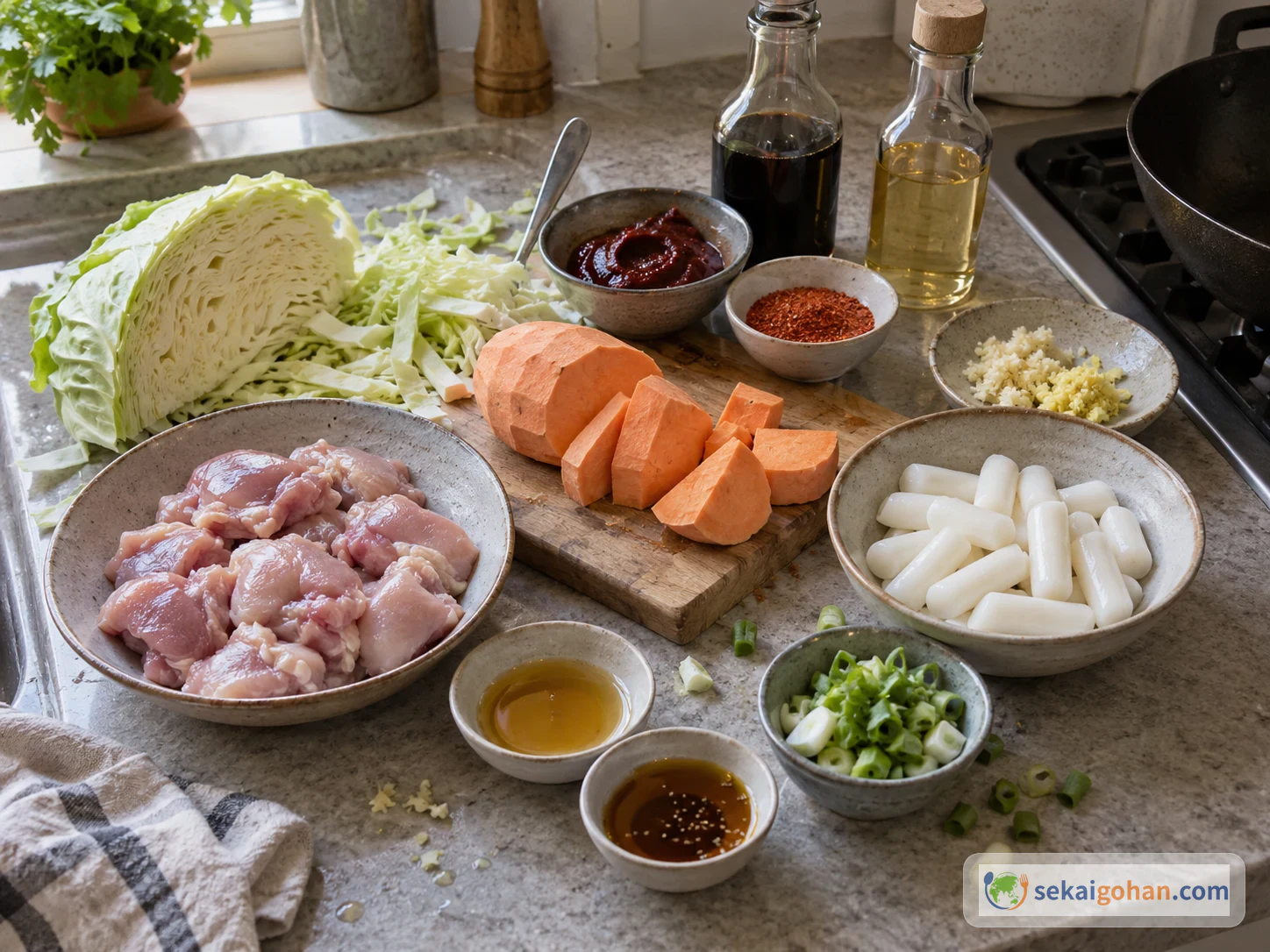
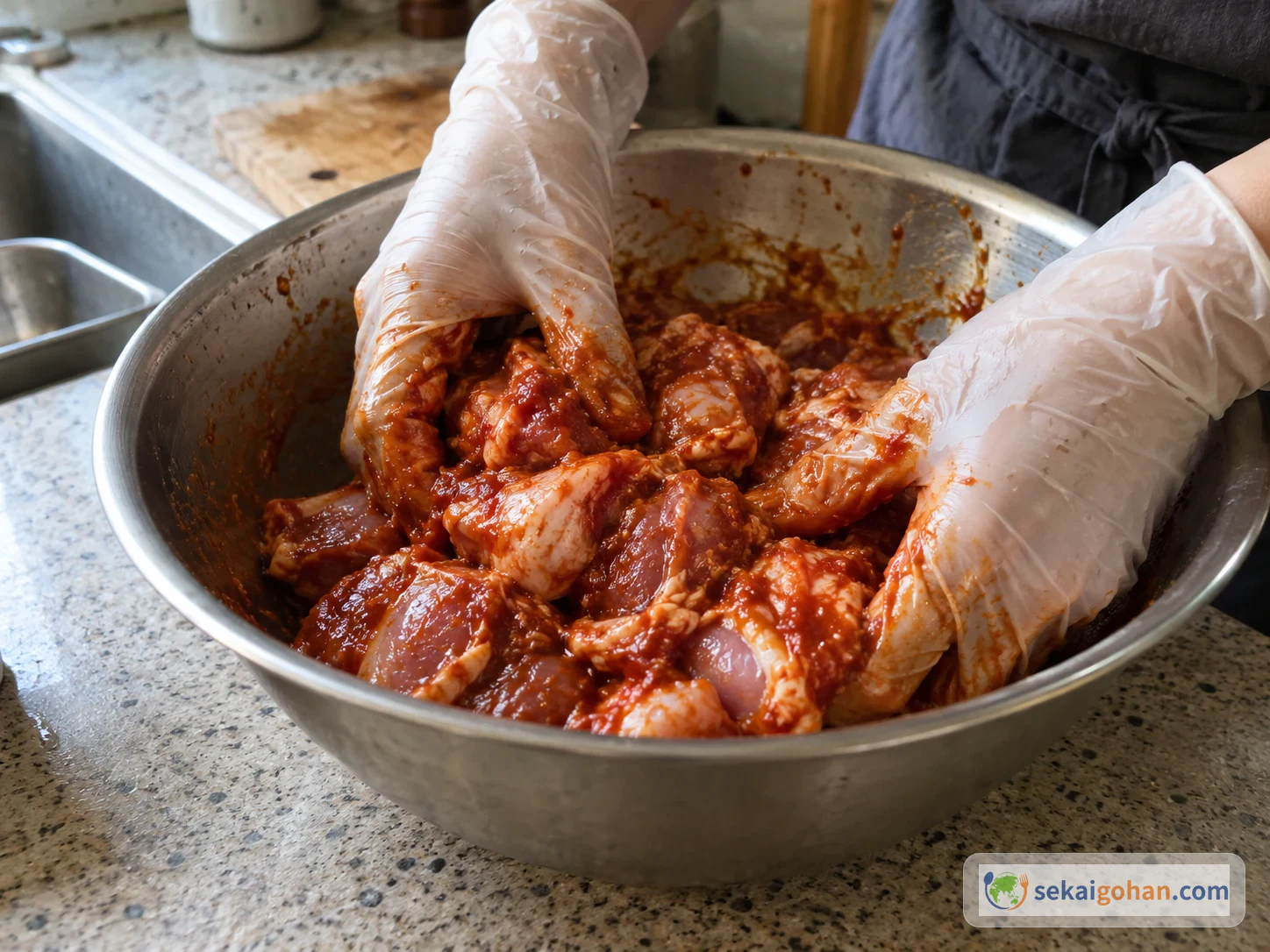
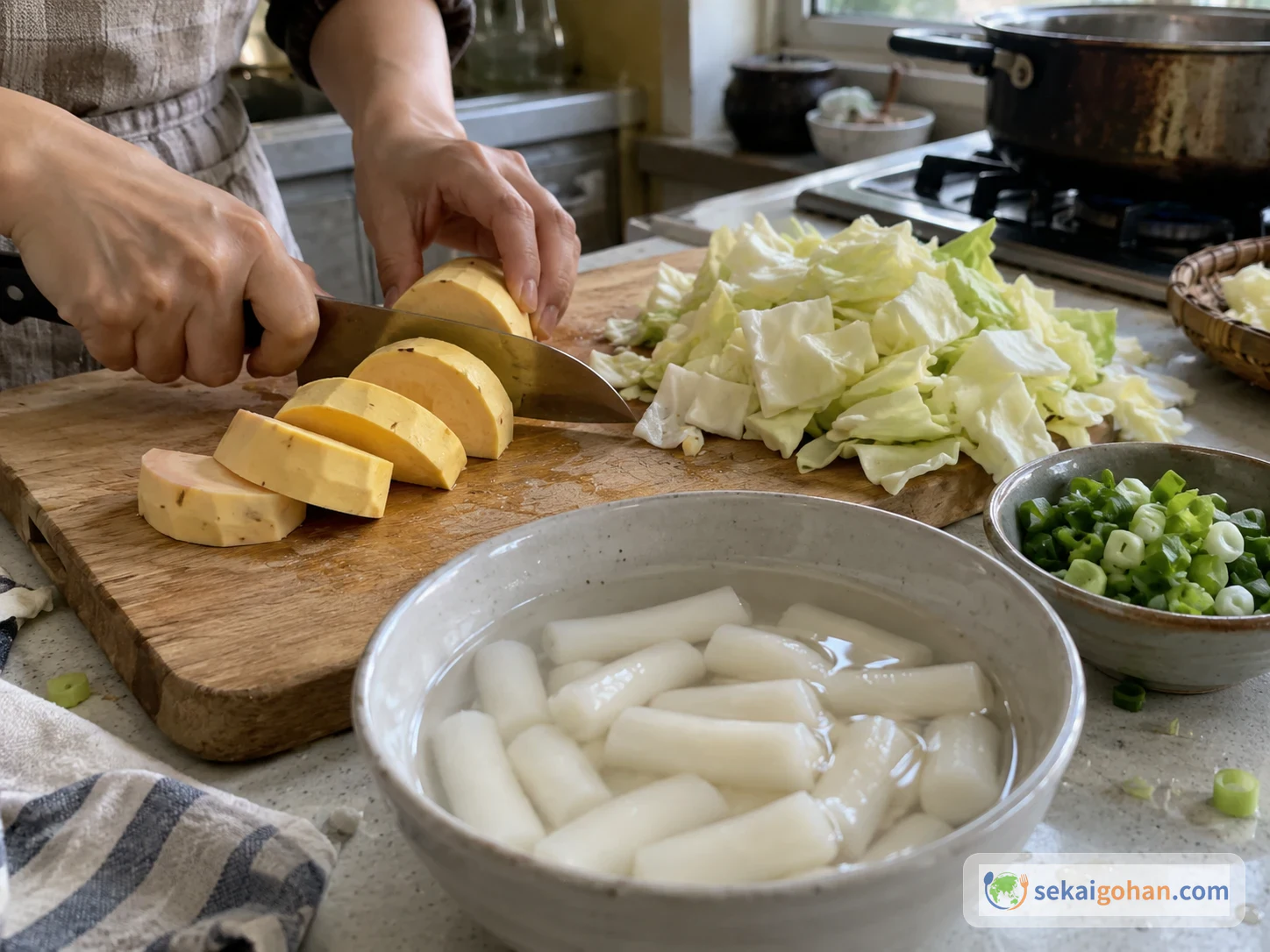
Mix all of the marinade first, then work it into the chicken and let it sit at least 20 minutes. If you have time, marinating in the refrigerator for a few hours makes the flavor soak in even better. Cut the vegetables while the chicken marinates, and all that is left is to cook.
This dish contains soy and wheat (gochujang, soy sauce) and sesame. Tteok is made from rice, but some products contain wheat or other allergens, so anyone with allergies should check the ingredient label.
Choosing Ingredients and Equipment for Dakgalbi
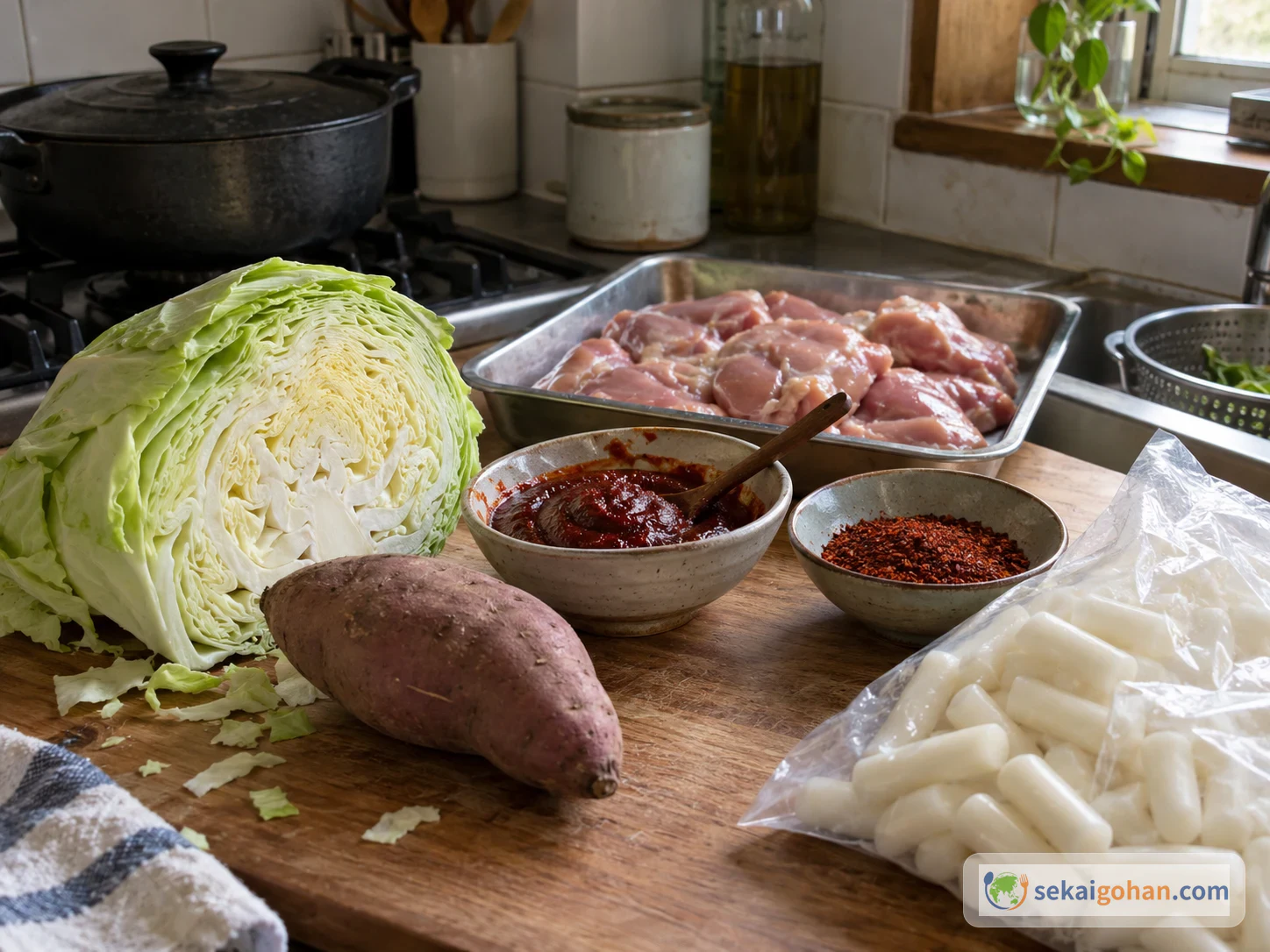
Most of the flavor comes from gochujang and gochugaru, the Korean chile powder. Gochujang brings sweetness and depth, and gochugaru brings aroma and a bright red color. You can find both in the Korean section of many supermarkets or at Asian grocery stores. Plain crushed red pepper flakes can stand in for gochugaru, but they're much hotter. Start with less than half the amount (1 tsp is a good first step) and taste as you go. A little paprika helps get that gochugaru red.
If the tteok (cylinder-shaped Korean rice cakes) are hard and dry, take them out of the bag and soak them in water for about 10 minutes. The surface softens a little and they are less likely to crack when stir-fried. Frozen ones can go straight from the freezer into the water to soften.
Some Korean restaurants serve perilla leaves or lettuce for wrapping. You'll find perilla leaves at Korean grocery stores and some supermarkets. If you can't find them, shiso leaves make a similar fragrant wrap.
Chuncheon restaurants cook on a round griddle built into the table, but a large lidded skillet or a hot plate works fine at home. A hot plate is fun if you want to cook at the table. A skillet gives steadier heat if you'd rather finish everything in the kitchen. Whichever you use, pick a pan with enough room to spread out four servings so everything cooks evenly while it steams.
How to Make Dakgalbi
Plan on about 20 minutes of prep, about 20 minutes of marinating, and about 25 minutes of stir-frying and steaming, for roughly 1 hour 5 minutes in total.
Cook the chicken thoroughly to the center. Poultry is safely cooked at an internal temperature of 74°C (165°F). If you have a cooking thermometer, check the center of the largest piece to be sure.
The cabbage releases water, so the sauce looks thinned out. Lift the lid and stir-fry over stronger heat for 1–2 minutes, and the sheen returns quickly. Do not stir too much at this point, or the sweet potato will fall apart.
Serving Dakgalbi and Variations
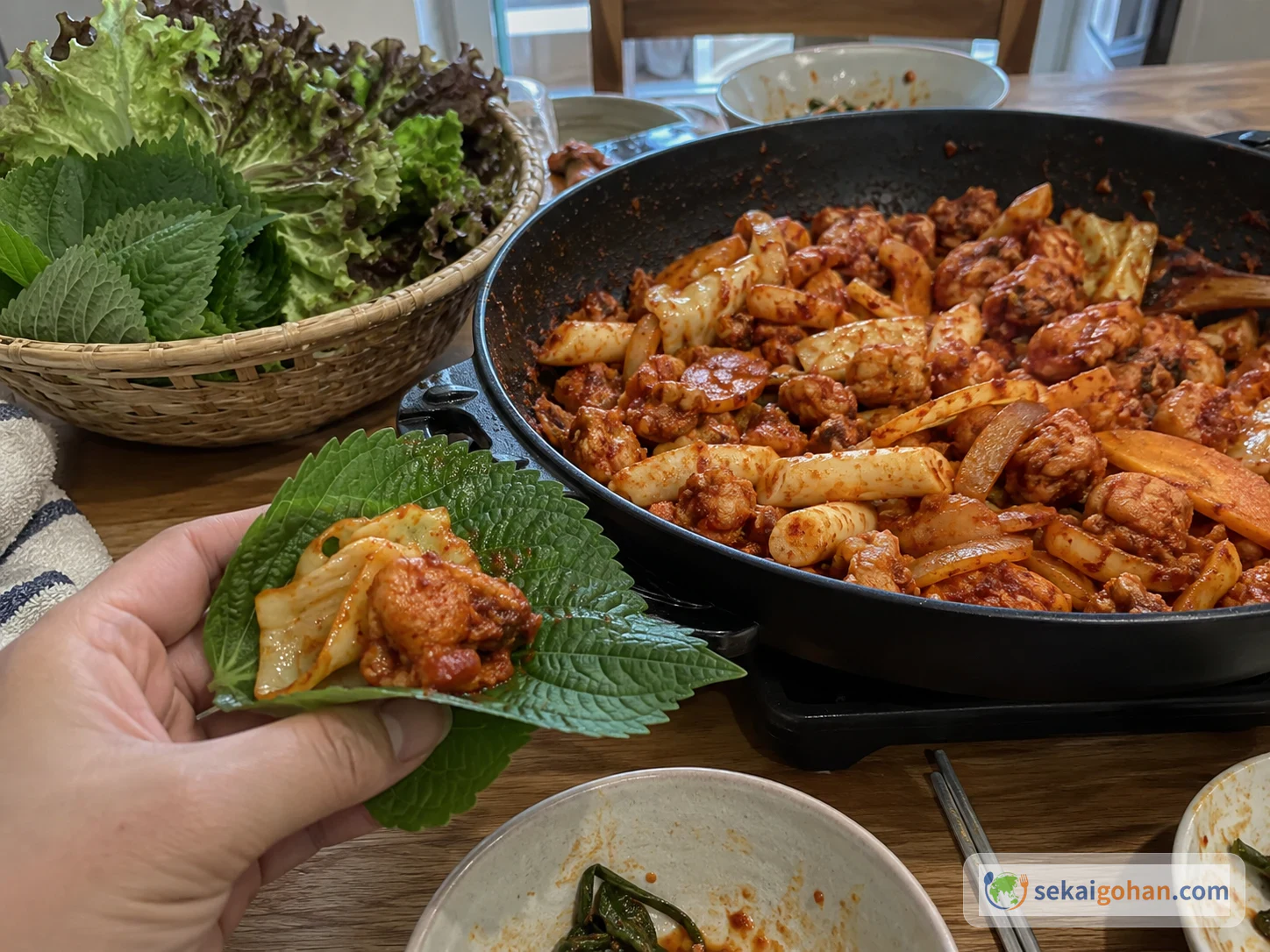
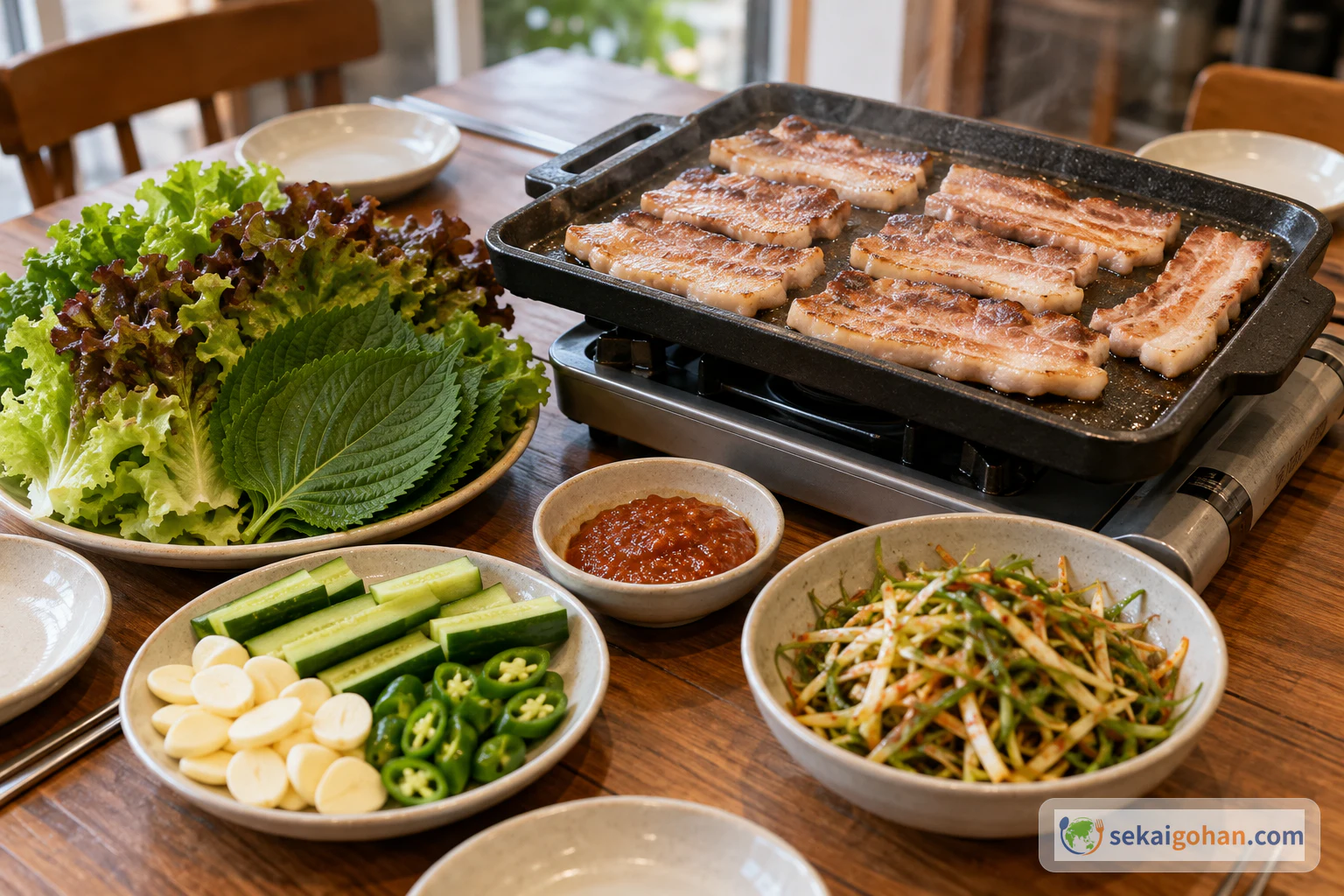
In Chuncheon, the server stir-fries the dakgalbi on the griddle and everyone helps themselves straight from it. Lay a perilla or lettuce leaf in your palm and wrap a bite of dakgalbi in it. The leaf's fragrance freshens up the sweet, spicy sauce. At home, bring the skillet to the table and serve as you eat to get a bit of that restaurant feel.
Cheese dakgalbi, covered in melted cheese, is another favorite. To make it, push everything to the sides of the pan at the finishing stage to clear the center. Add shredded mozzarella, cover, and heat for 1–2 minutes until it melts. For another Korean chicken dish with a completely different flavor, try Andong jjimdak, Andong's chicken braised with glass noodles in a soy-based sauce.
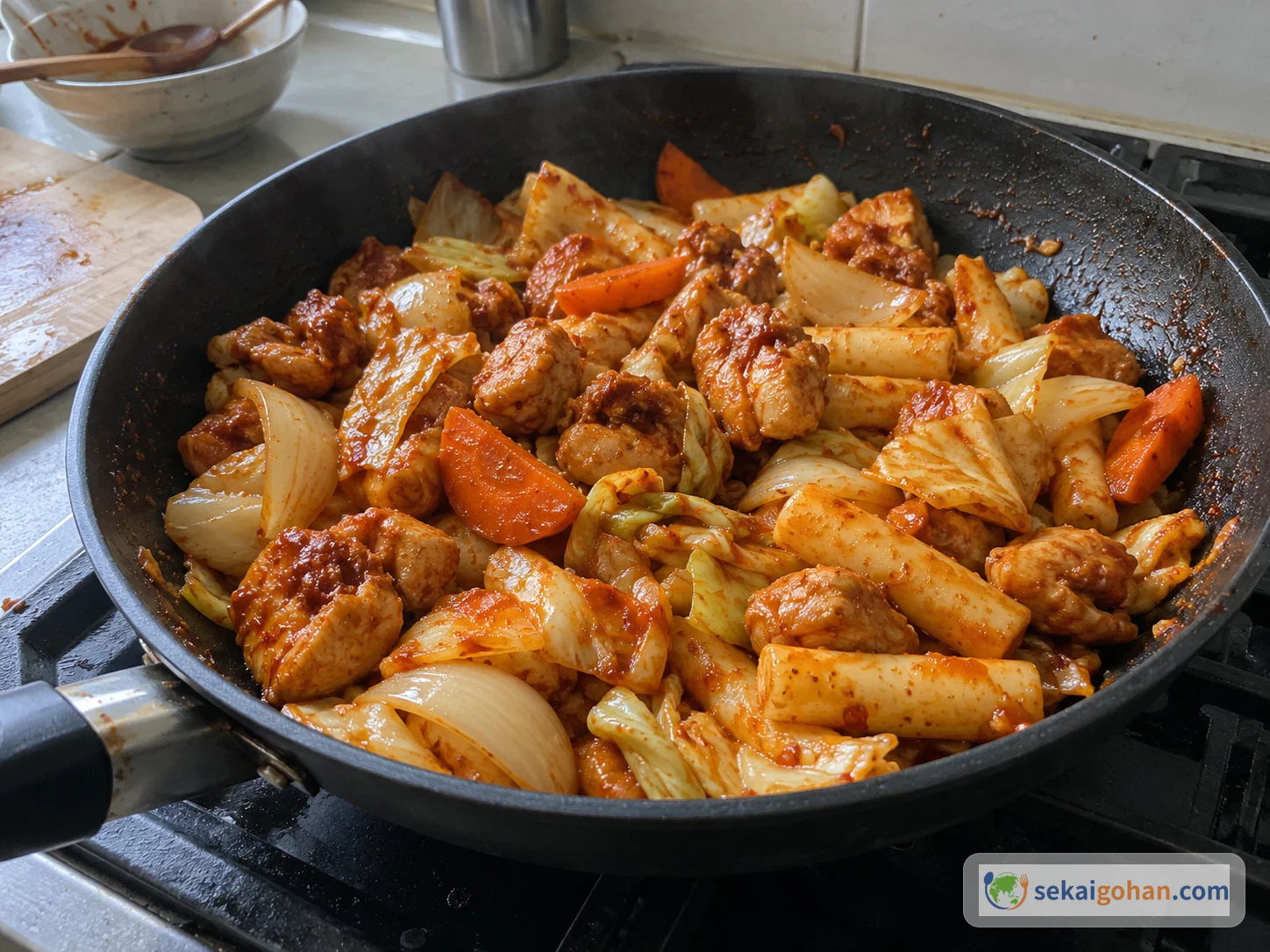
The vegetables can change with the season and whatever is in your fridge. Onion makes it sweeter and carrot adds color. If you use potato instead of sweet potato, cut it to the same thickness and steam it for the same time.
For a milder, sweeter version that kids can eat easily, cut the gochugaru to 1 tsp, use 3 tbsp gochujang, and add 1 tsp honey. For more heat, raise the gochugaru to 2 tbsp or add sliced green chiles at the end. You can also make it with chicken breast, but breast gets tough quickly once it's cooked through. Cut it a little larger than bite-size and keep an eye on it so the final cooking stays short.
Frequently Asked Questions
What if I do not have tteok?
You can make it without them. For a chewy texture, cut mochi into small pieces and add them in the last few minutes. Mochi melts easily, so don't overcook it.
Can I make it ahead?
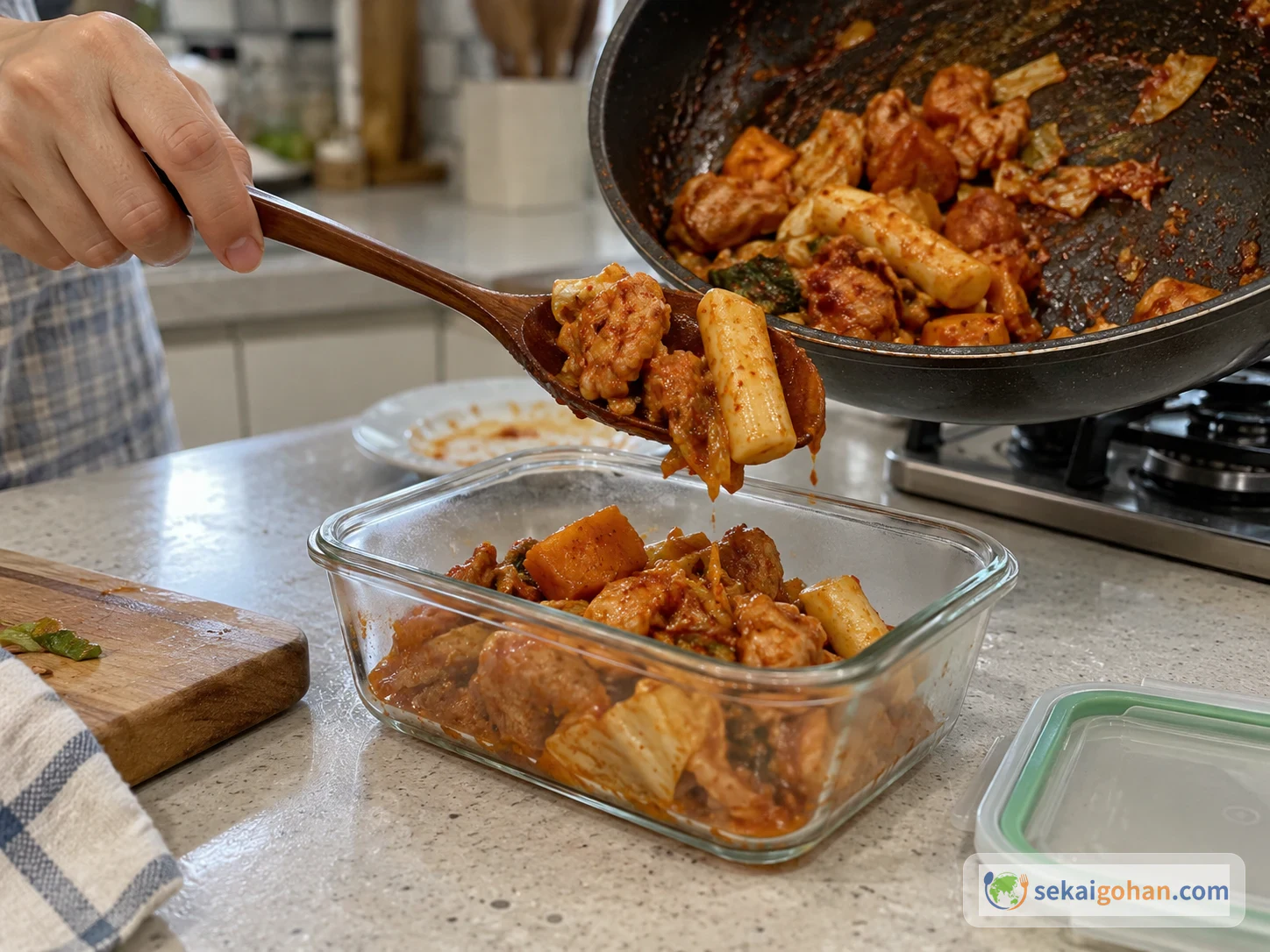
This is a cooked chicken dish, so eat it soon after cooking. Let leftovers cool just a little, then refrigerate them right away. Reheat in a skillet until piping hot all the way through. The tteok turns hard in the fridge, but reheating softens it again.
Is a longer marinating time better?
Twenty minutes is enough for the sauce to cling to the chicken. A longer marinade gives deeper flavor, but the sugar in the gochujang makes the chicken scorch more easily, so watch the heat when you sear.