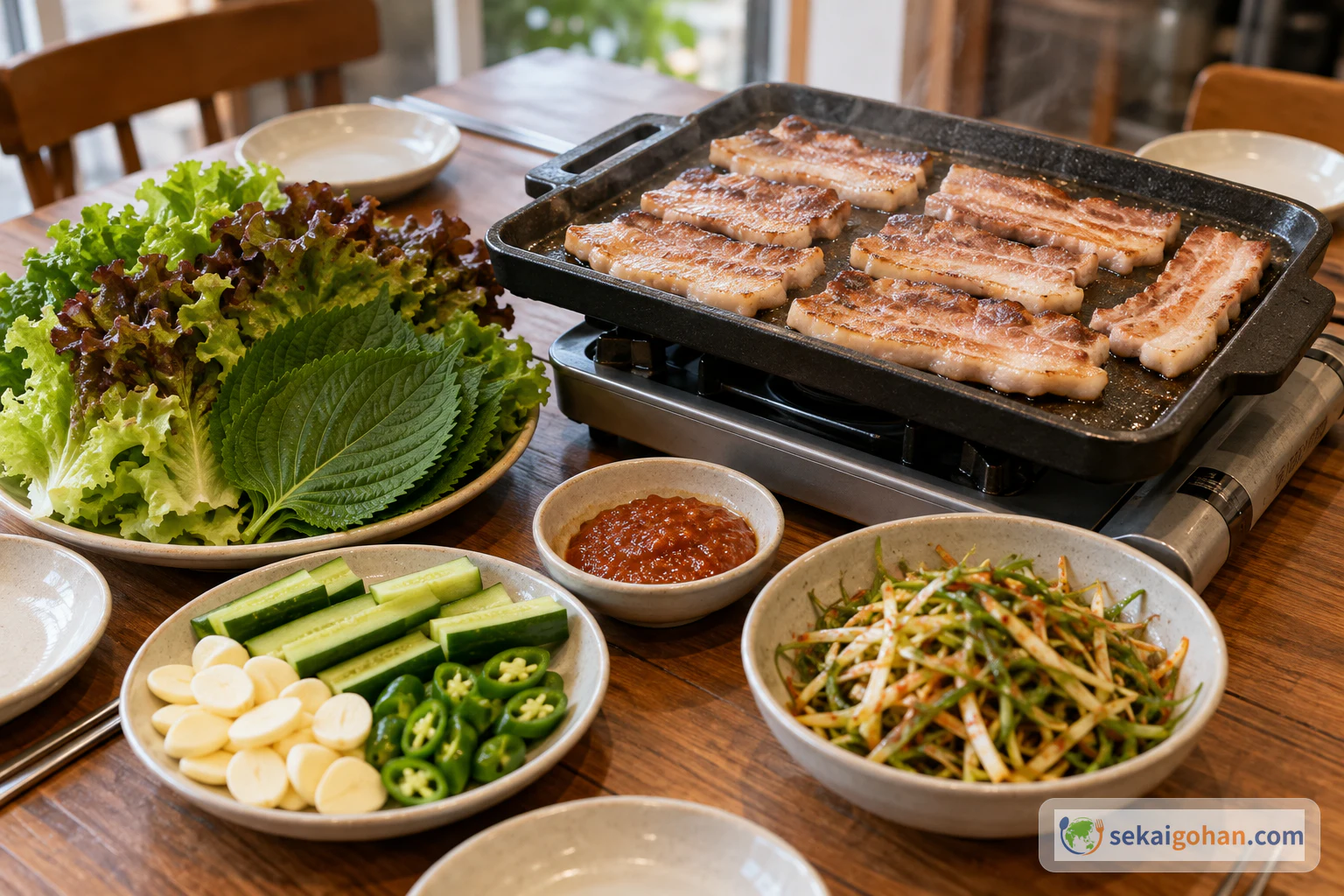
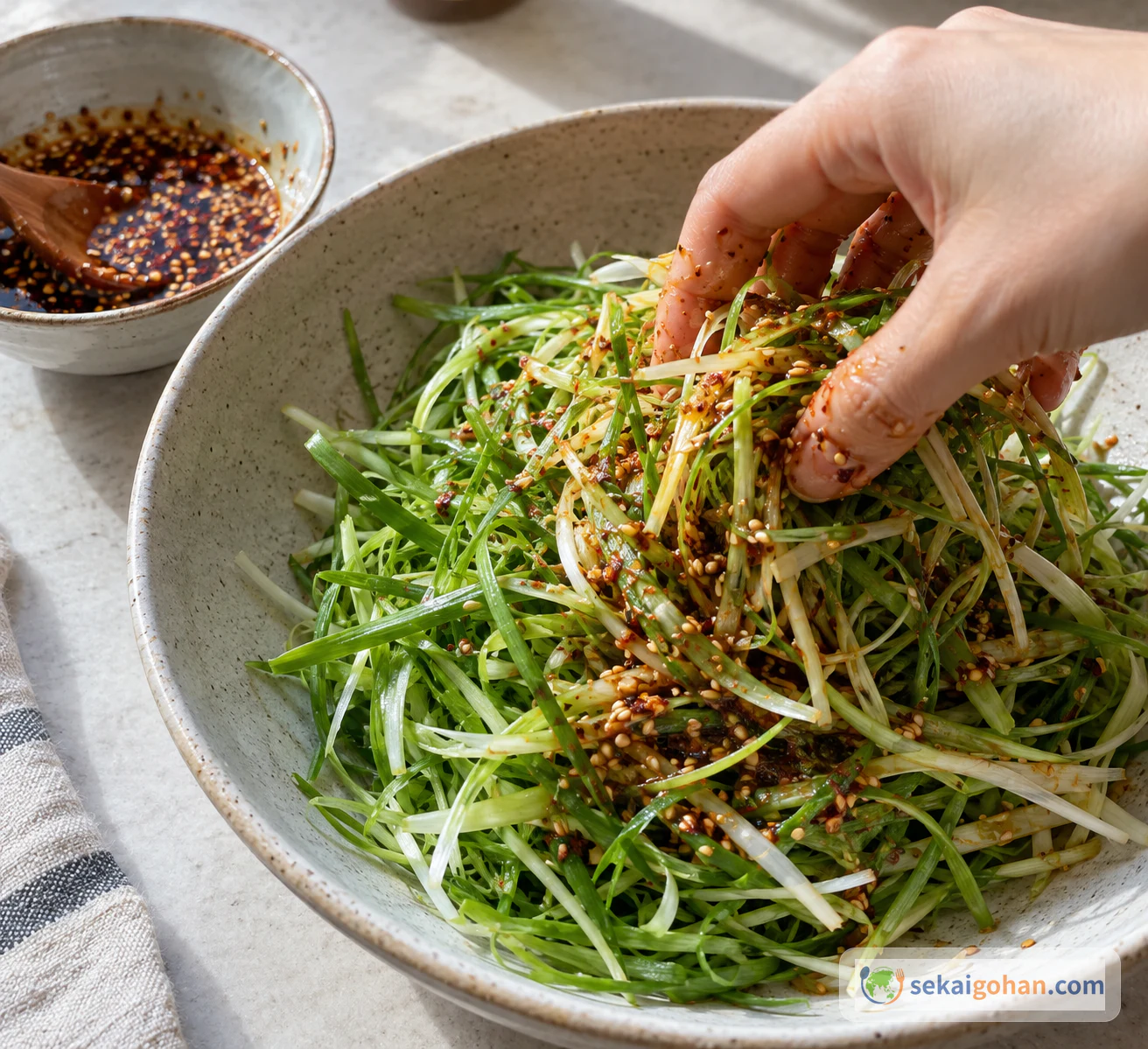
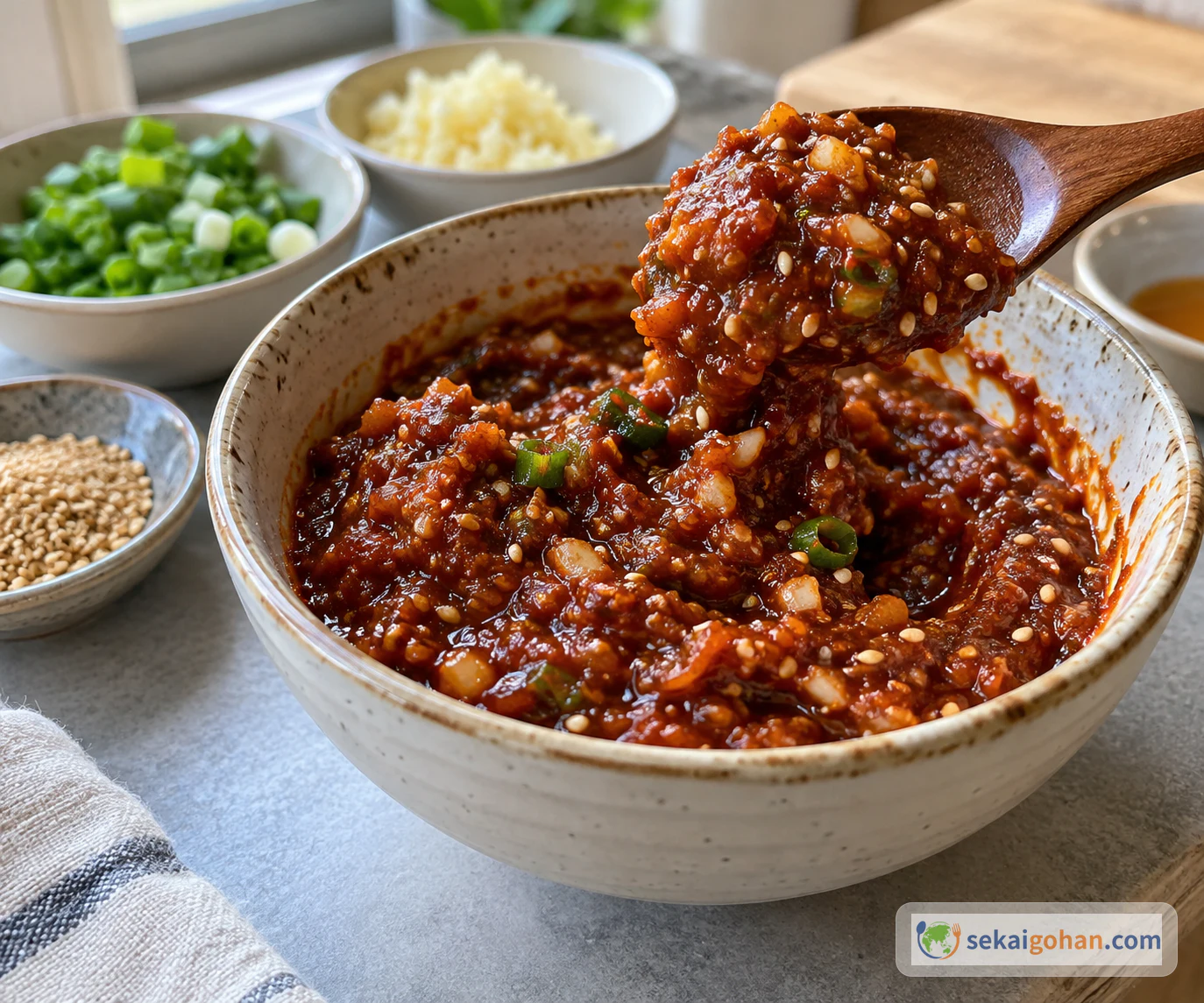
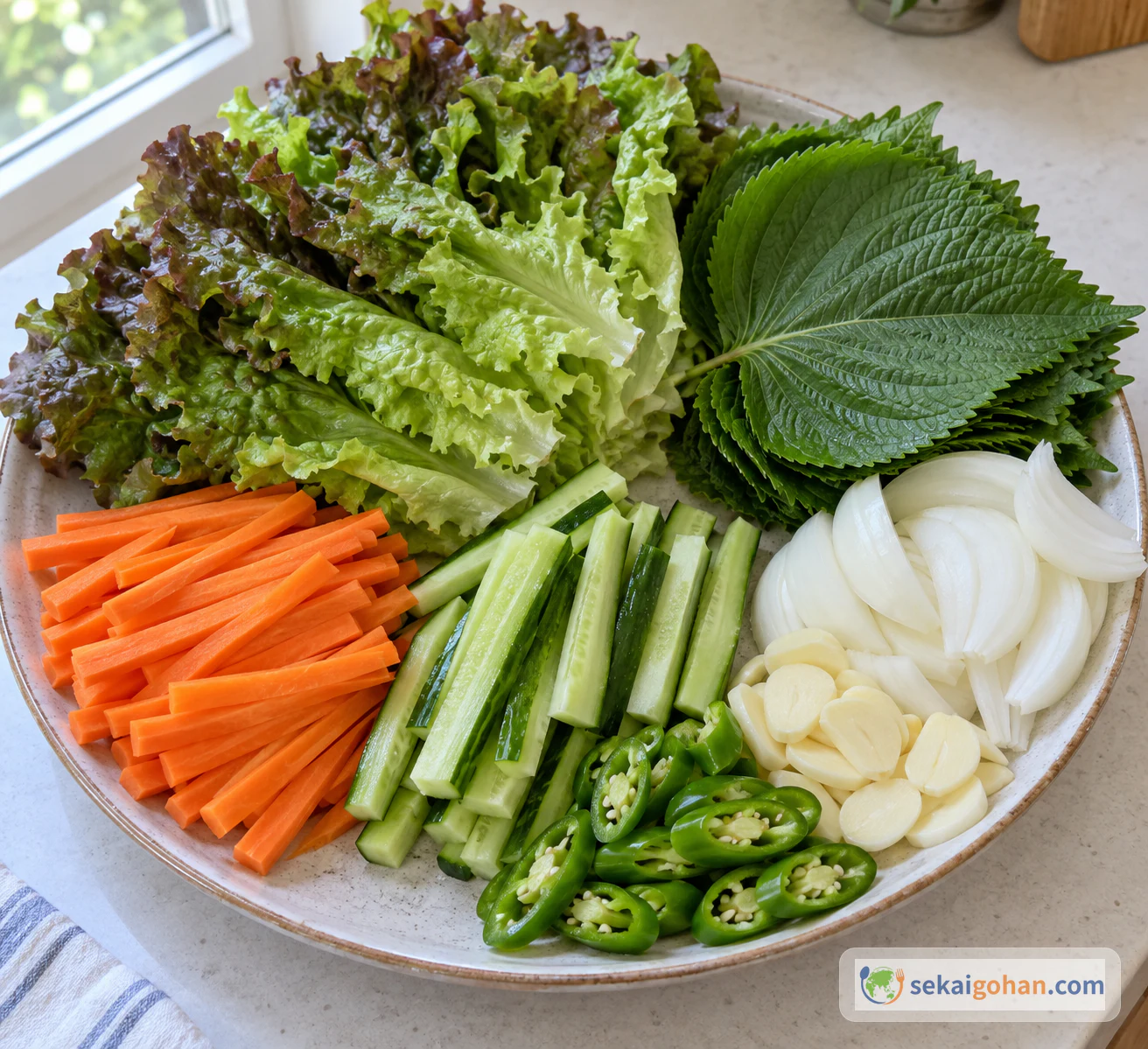
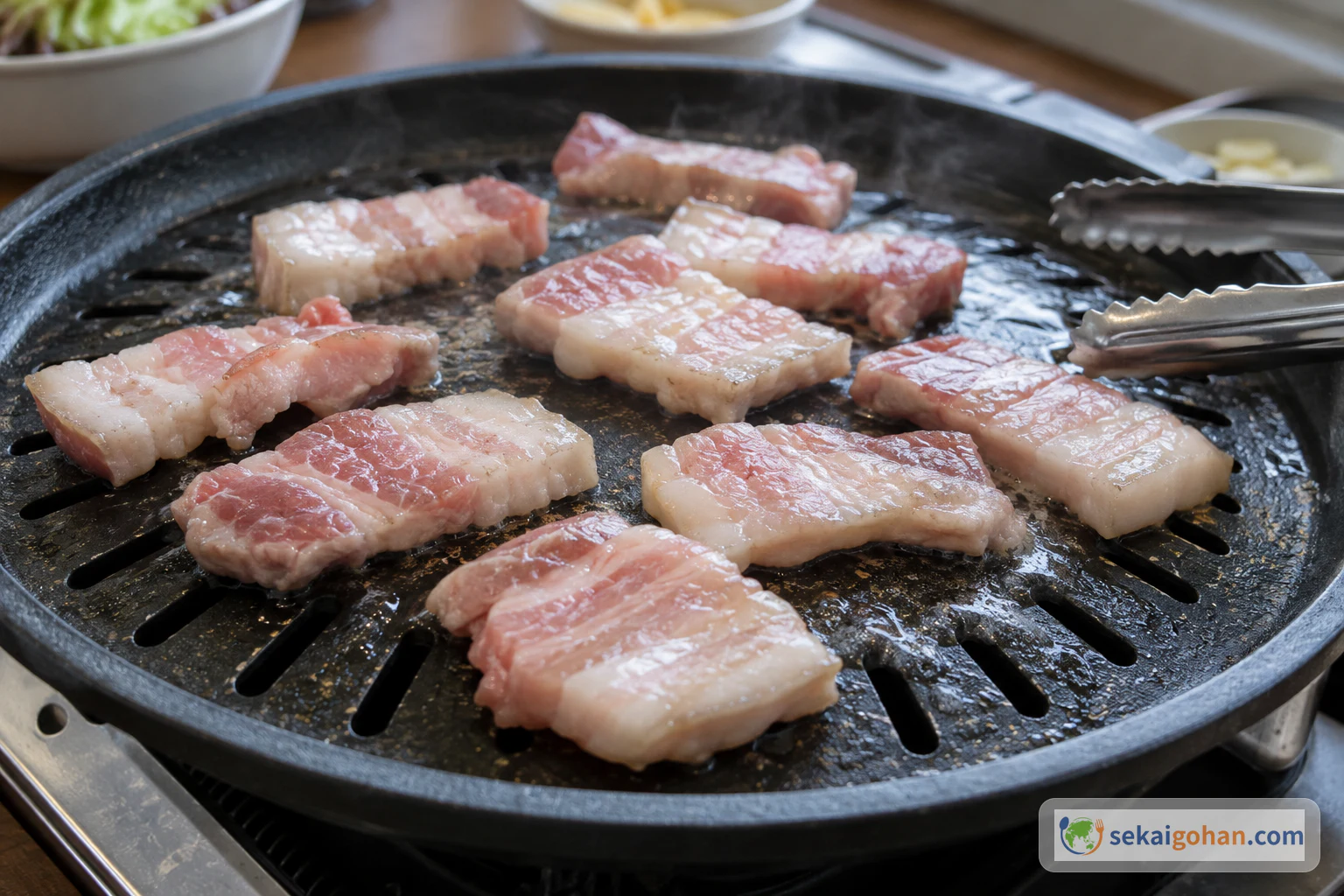
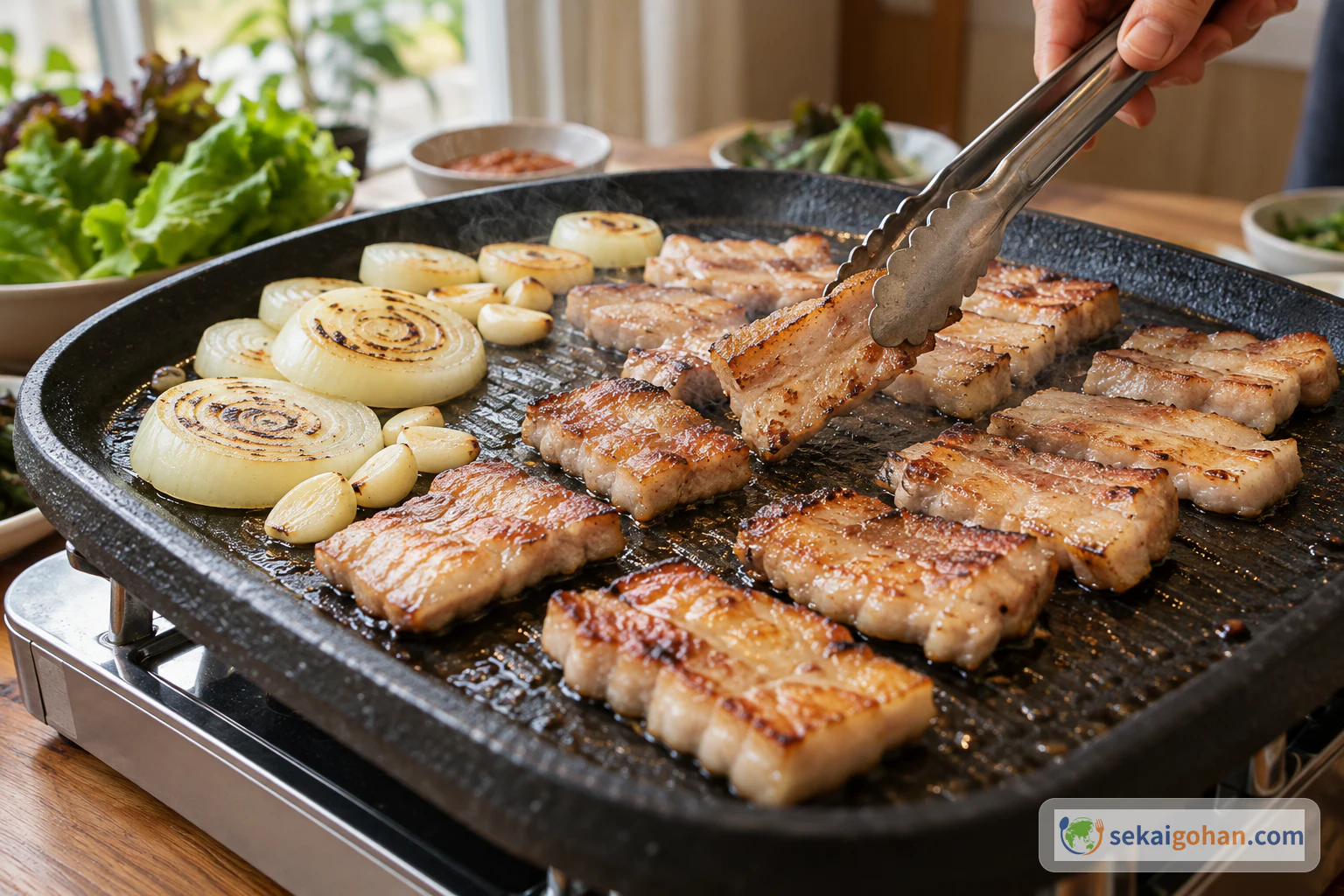
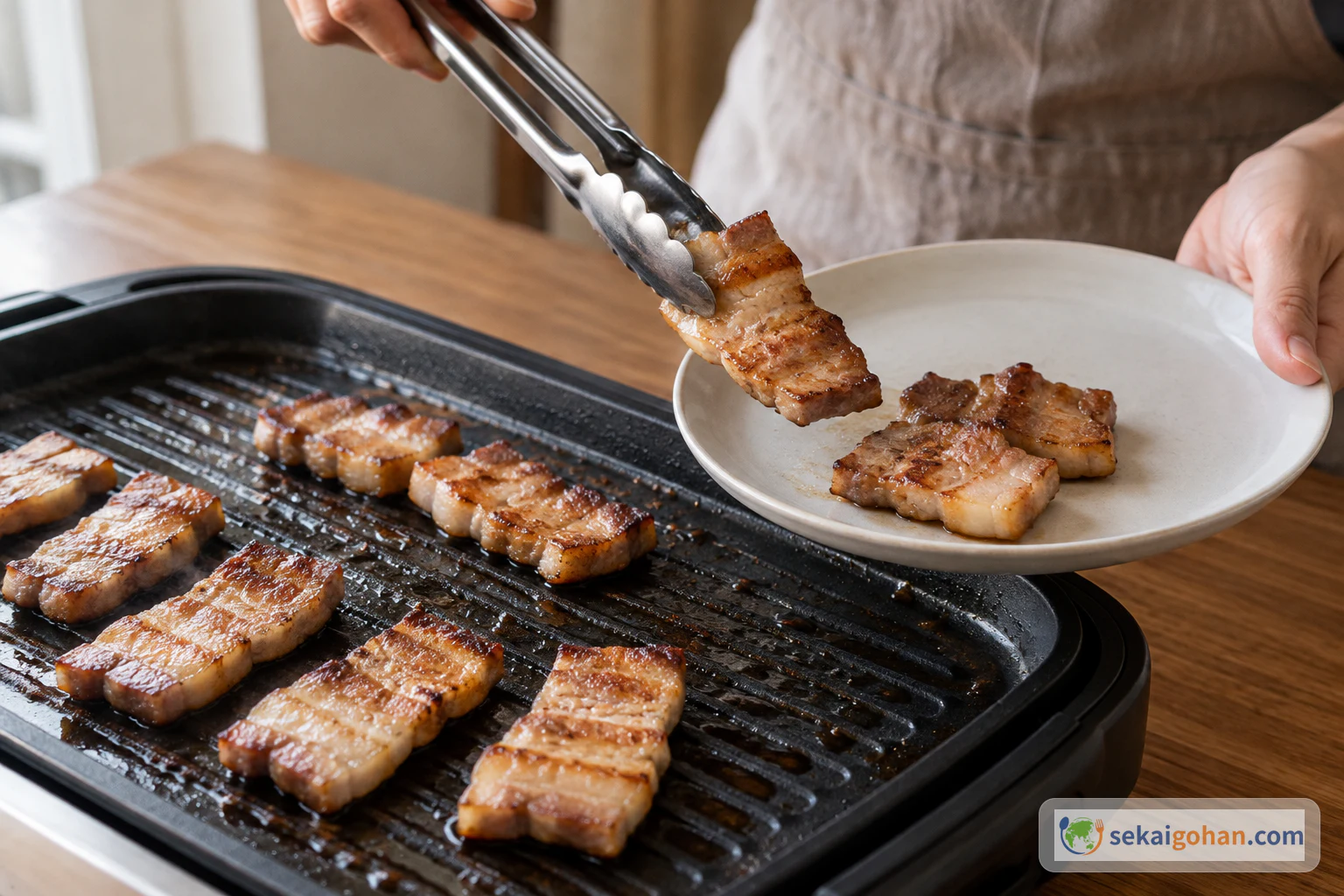
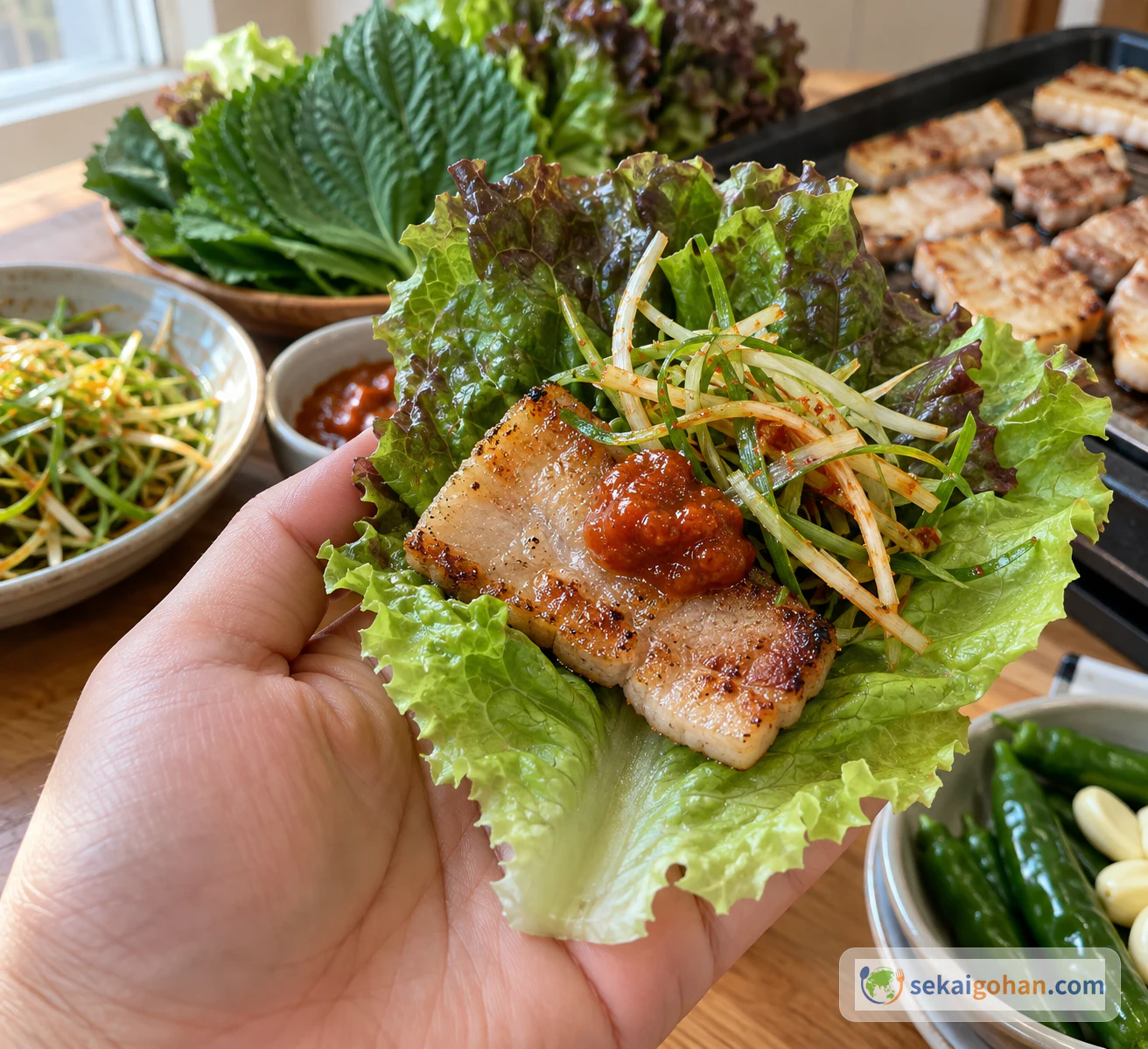
A grill sits in the middle of the table, and pieces of pork belly sizzle as their fat renders and their edges brown. Someone lifts a cooked piece onto a lettuce leaf, adds a little paste and a pinch of dressed scallions, folds the leaf closed and eats it in one bite, while the next pieces are already cooking. That's samgyeopsal-gui (삼겹살구이): Korean grilled pork belly, eaten as you cook it. The meat goes on the grill plain. The flavor comes from what you wrap it with: a cool leaf, a dab of salty, spicy ssamjang and a bit of sharp scallion salad.
Samgyeopsal at the Korean Table
Samgyeopsal is less a single plate than a way of eating together. At Korean meat restaurants, diners sit around a grill built into the table and eat the meat as ssam: wrapped in lettuce or perilla leaves with ssamjang and other accompaniments. Grilled meat comes with side dishes too, and often with stews or fried rice at the same table. Of all the meats grilled this way, samgyeopsal is one of the most widely loved.
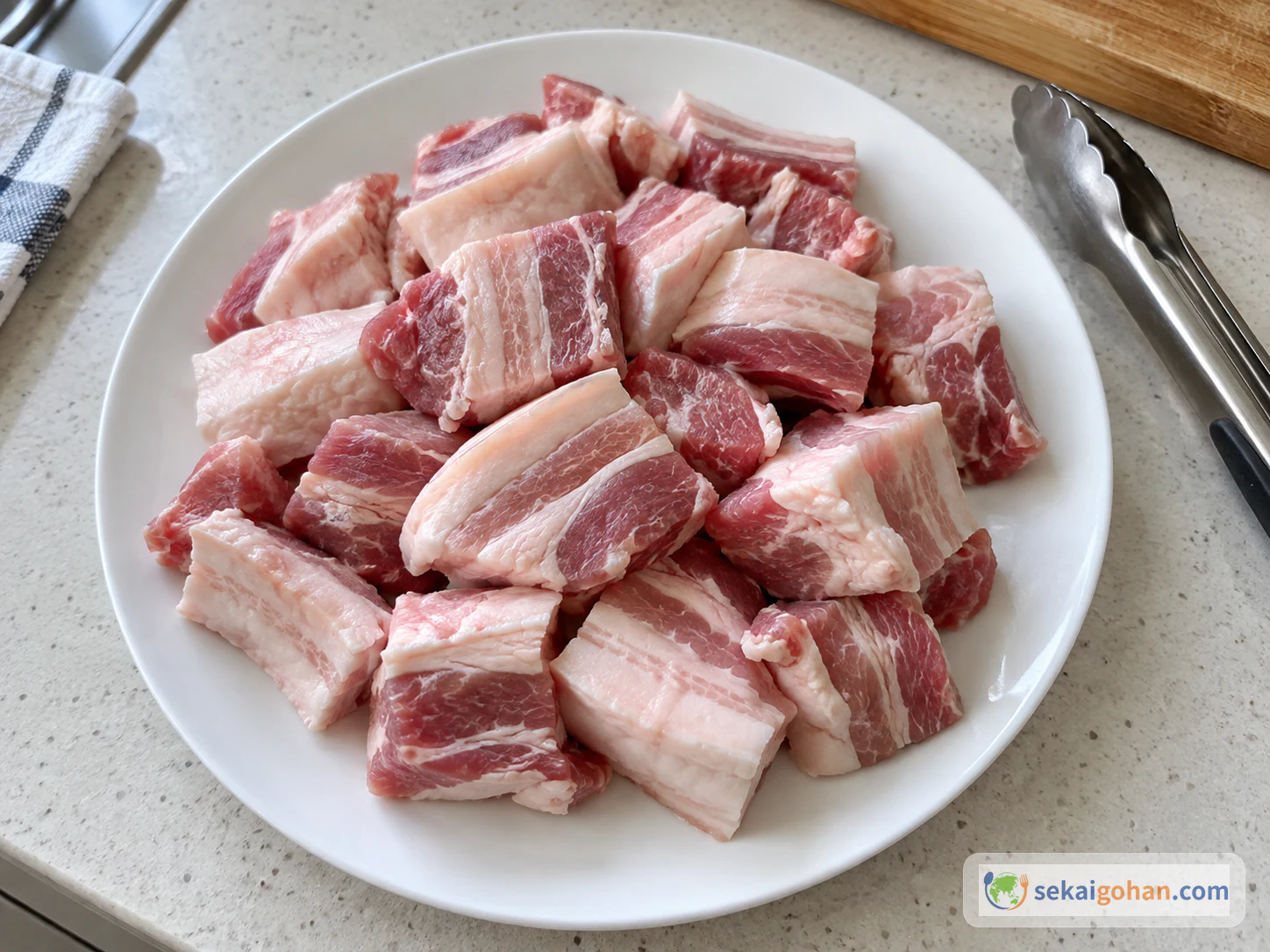
"삼겹살" (samgyeopsal) is used both for the dish and for the cut of meat itself, pork belly. The dish name in full, 삼겹살구이 (samgyeopsal-gui), refers to grilling it.
Samgyeopsal-gui is not marinated, and that's what sets it apart from its relatives. In spicy stir-fried pork (jeyuk-bokkeum, 제육볶음) and dwaeji bulgogi, the pork is seasoned before it's cooked. Bossam is pork that is boiled and then wrapped, and jukkumi-samgyeopsal cooks pork belly with small octopus (jukkumi). For more of the country's cooking, browse more dishes from Korea.
This version serves four. Along with the pork you make a scallion salad called pajeori, a ssamjang mixed from doenjang and gochujang, and a platter of leaves and vegetables. A tabletop grill works, and so does an ordinary frying pan.
Ingredients (Serves 4)
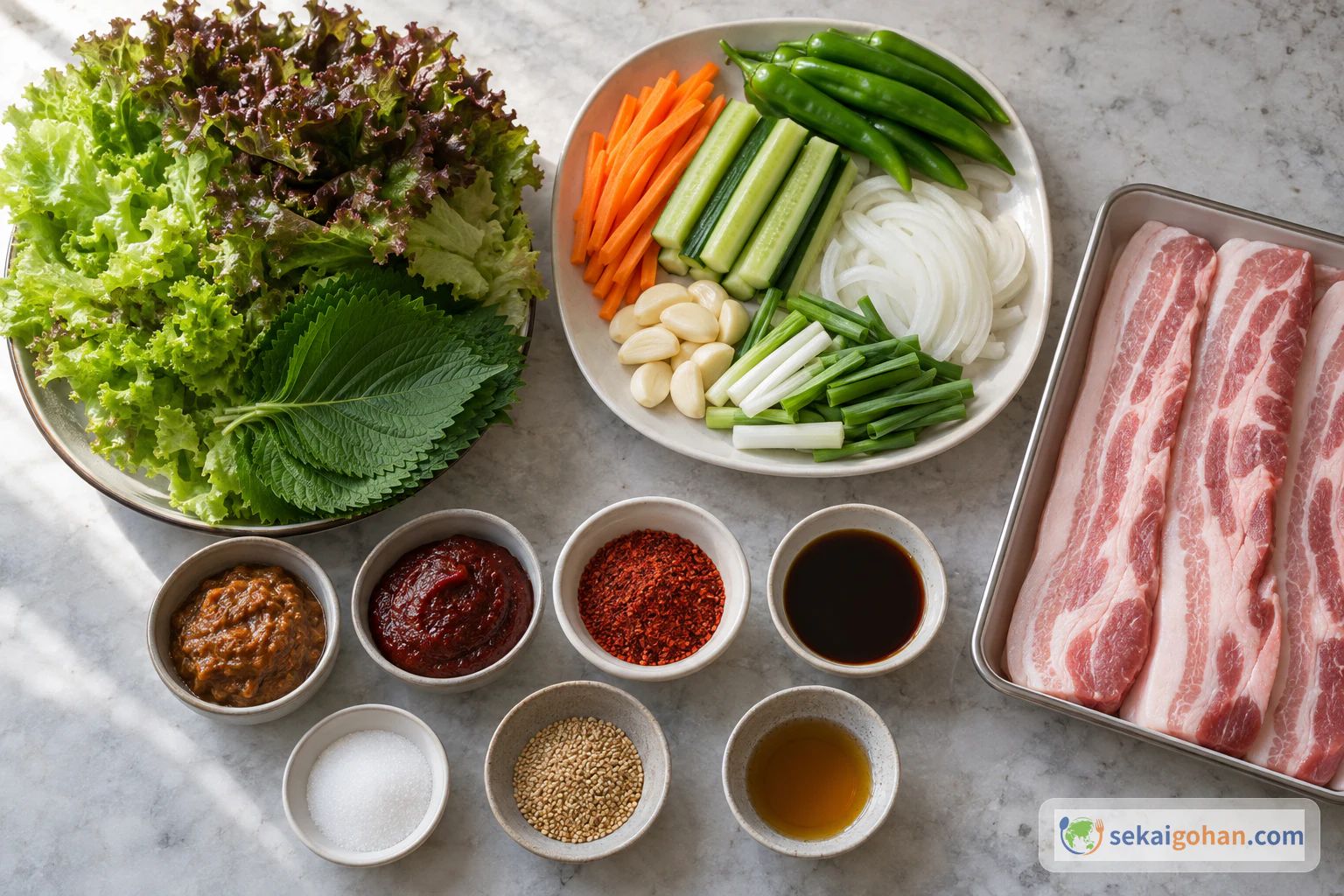
Green onion, garlic, sugar, sesame seeds and sesame oil each appear more than once, for different uses. Measure each separately.
This meal contains pork and sesame. Soy sauce, doenjang and gochujang can contain soy and wheat, and ingredients differ by brand. Check each label, including any other added ingredients such as seafood, before serving guests with allergies.
Equipment
- A tabletop grill plate or a frying pan
- Two pairs of tongs: one for raw pork only, one for cooked pork and serving
- A clean plate for the cooked pork, separate from the plate that held the raw pork
- A platter for the washed vegetables and leaves
- Bowls for the scallion salad and ssamjang
- A food thermometer, for checking the center of the pork
Choosing Ingredients and Substitutes for Samgyeopsal
Doenjang, gochujang and gochugaru are three different things, and each does its own job here. You'll find them at Korean grocers or in the international aisle.
| Item | What it is | If you substitute |
|---|---|---|
| Doenjang | Korean fermented soybean paste | Japanese miso has a different saltiness and fermented aroma. The ssamjang will work but taste different |
| Gochujang | Korean chili paste | Heat and sweetness vary by product, so taste before deciding how much to use |
| Gochugaru | Korean chili flakes | Other chili flakes differ in grain size, aroma and heat. Add a little and taste |
| Perilla leaves | Korean perilla (kkaennip) | Shiso is a different plant with a different aroma, but it can stand in |
| Green onions | Slender scallions | Thicker onions such as leeks differ in thickness and aroma |
| English cucumber | Long, thin-skinned cucumber | Other cucumbers work, with some difference in moisture and texture |
| Green chili peppers | Fresh green chilies | Heat varies widely by variety. Taste one before deciding how many to add to a wrap |
Ready-made ssamjang is a handy shortcut. Its balance of ingredients is different from the one you mix here, though.
How to Make Samgyeopsal
Make the scallion salad, ssamjang and vegetable platter before the pork goes on the grill. Once the grilling starts, the meal moves at the table: cook, eat, cook the next batch.
Troubleshooting Samgyeopsal at the Grill
| Problem | Likely cause | What to do |
|---|---|---|
| The pork steams instead of browning | Too many pieces on the grill at once | Cook in smaller batches, in a single layer without touching |
| Some pieces are scorching | They're sitting in a hot spot or in pooled fat | Move the pieces around as they cook, away from burning areas and pooled fat |
| Brown outside, unsure about the inside | Color alone doesn't show doneness | Check the center with a thermometer and keep cooking until it reaches 167°F (75°C) for at least 1 minute |
| The scallion salad has gone limp | It was all dressed at once | Dress only what you're about to eat, and dress fresh scallions as the meal goes on |
| The wraps are too hot | Green chilies vary widely in heat | Taste a piece first and add less to each wrap |
Serving Samgyeopsal and Home Variations
Leaves and accompaniments change from home to home and restaurant to restaurant. This recipe uses lettuce, perilla, ssamjang, scallion salad and cooked garlic. Some home cooks also add cucumber and chilies to the wraps and serve rice and kimchi alongside.
Another home version for four uses 1 lb (500g) of pork belly cut 0.5 inches (1cm) thick, cooked in several batches without overlapping until the fat renders and the meat browns. A pan over a portable burner works fine if you don't have a tabletop grill.
Frequently Asked Questions
What is ssamjang?
It's the thick sauce you dab into each wrap. This one is mixed from doenjang, gochujang, green onion, garlic, sesame seeds, sugar and sesame oil, with no cooking.
Can I make it in a frying pan?
Yes. Cook the pork in batches without crowding, and turn it until both sides are browned and the center is fully cooked.
What if I can't find sangchu lettuce?
Other leaf lettuces work as wrappers, with some difference in texture and aroma.
Can I use frozen sliced pork belly?
Yes. Grill it the same way: brown both sides and cook the center through.
What should I do with leftovers?
Divide them into shallow containers, cool them quickly and refrigerate. When reheating, heat to at least 167°F (75°C).