Kakegawa Imojiru: Skin-On Grated Jinenjo Yam with Mackerel Miso Broth (掛川いも汁)

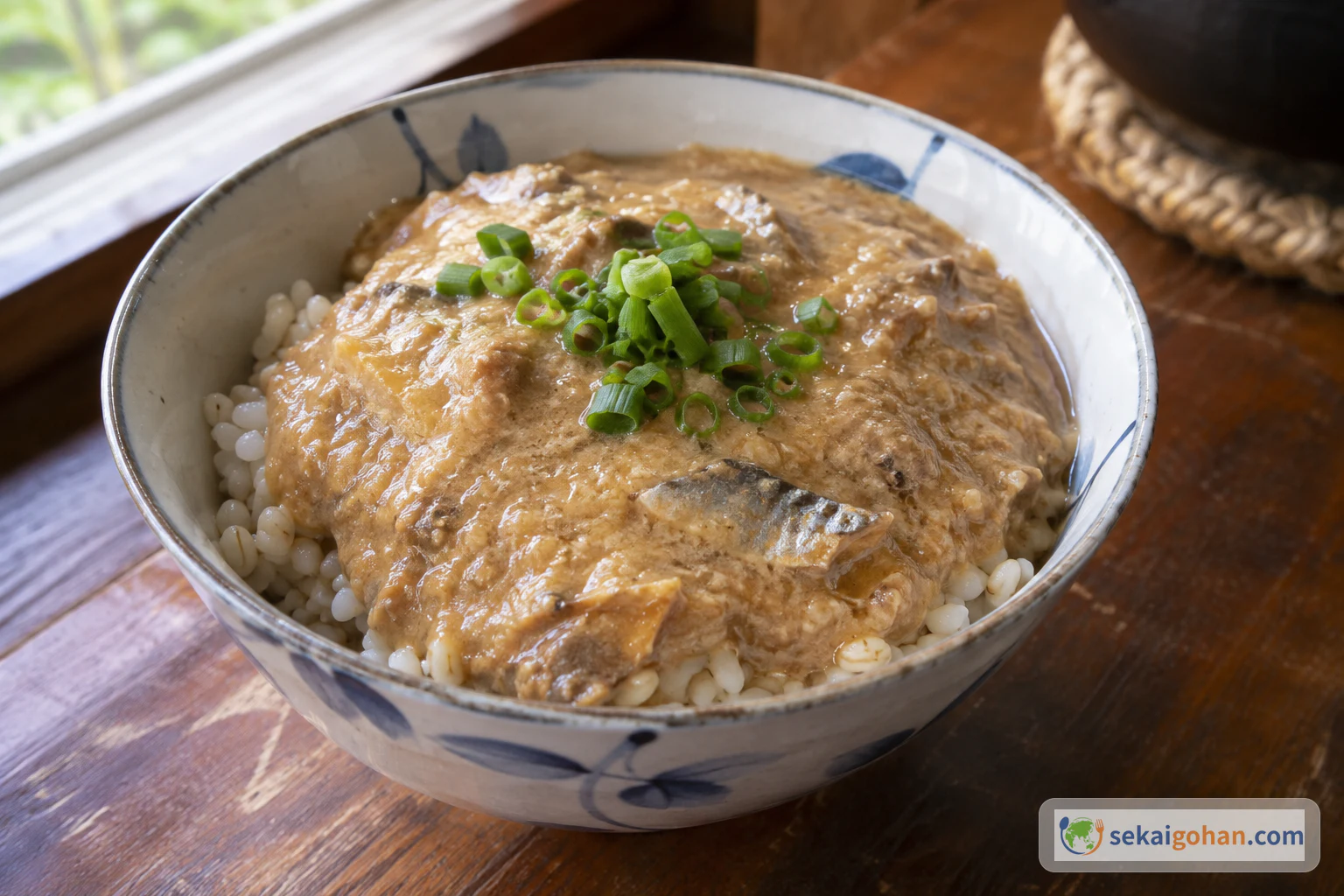
Kakegawa imojiru served over barley rice on a table
Serves
About 6 bowls
Level
Beginner
Cuisine
Japanese

How to make Kakegawa imojiru, a local dish from Shizuoka, Japan, in which skin-on jinenjo yam is grated and thinned with cooled mackerel miso broth. Follows a recipe from JA Kakegawa that makes about 6 bowls, with raw egg handling, adjusting the consistency, serving over barley rice, and the dish's place at Kakegawa's autumn gatherings.

Cooking flow

Cooking steps

STEP11 / 8

Make the mackerel miso broth

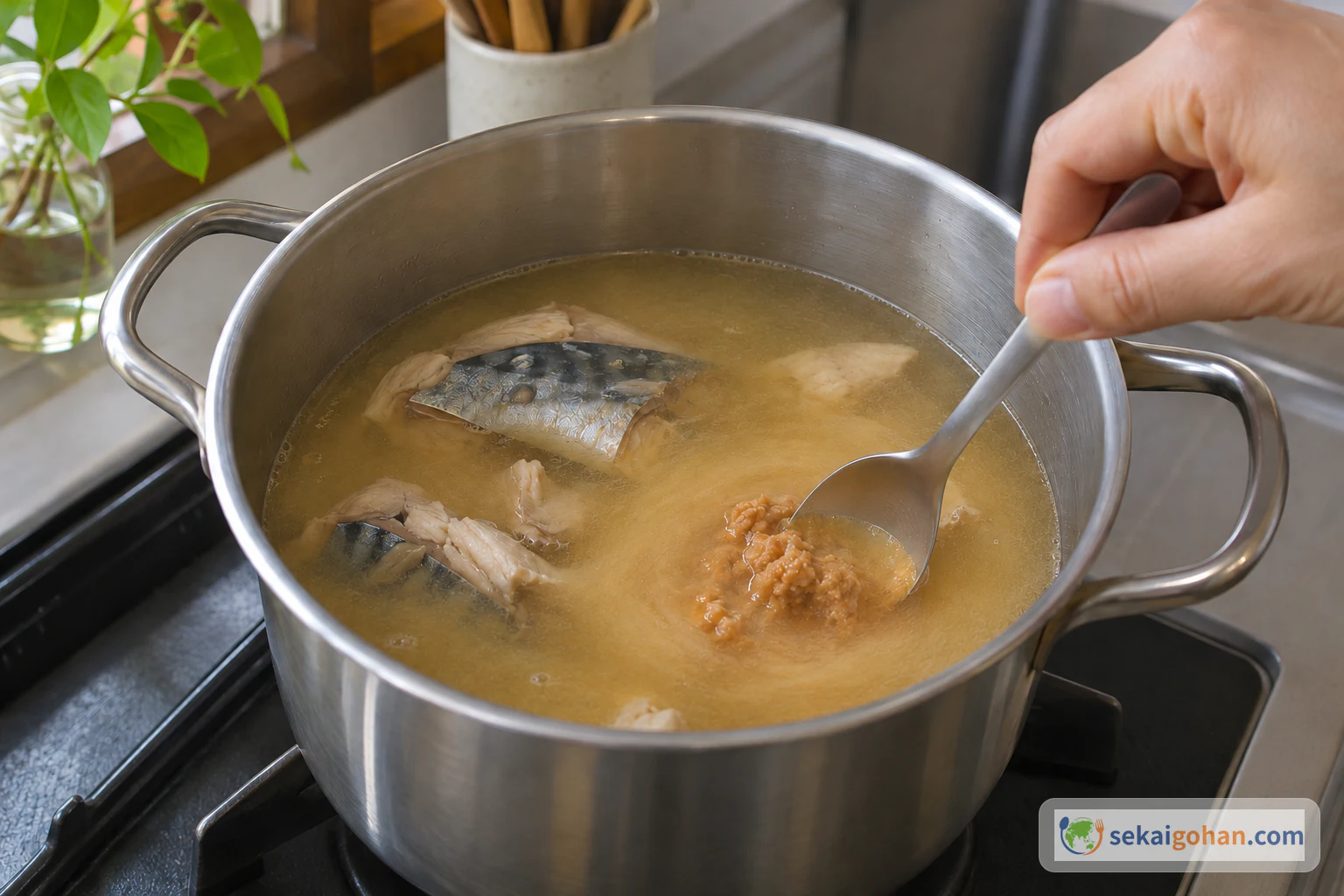
Dissolving miso into mackerel broth in a pot with the heat off
Dissolve the miso after the heat is off

Bring 4 cups (800cc) of water to a boil in a pot and add about 100g of canned mackerel to flavor the water. Turn off the heat and dissolve about 4 tbsp of miso into it, making a strong miso soup. Leave it to cool. Once it has cooled, do not leave it out at room temperature for long.

STEP22 / 8

Scrub and dry the yam

STEP 2

Scrub the jinenjo thoroughly with a brush under running water, since the skin goes into the dish. Peel only the spots where dirt will not come off. Wipe it dry with paper towels.

STEP33 / 8

Singe off the root hairs

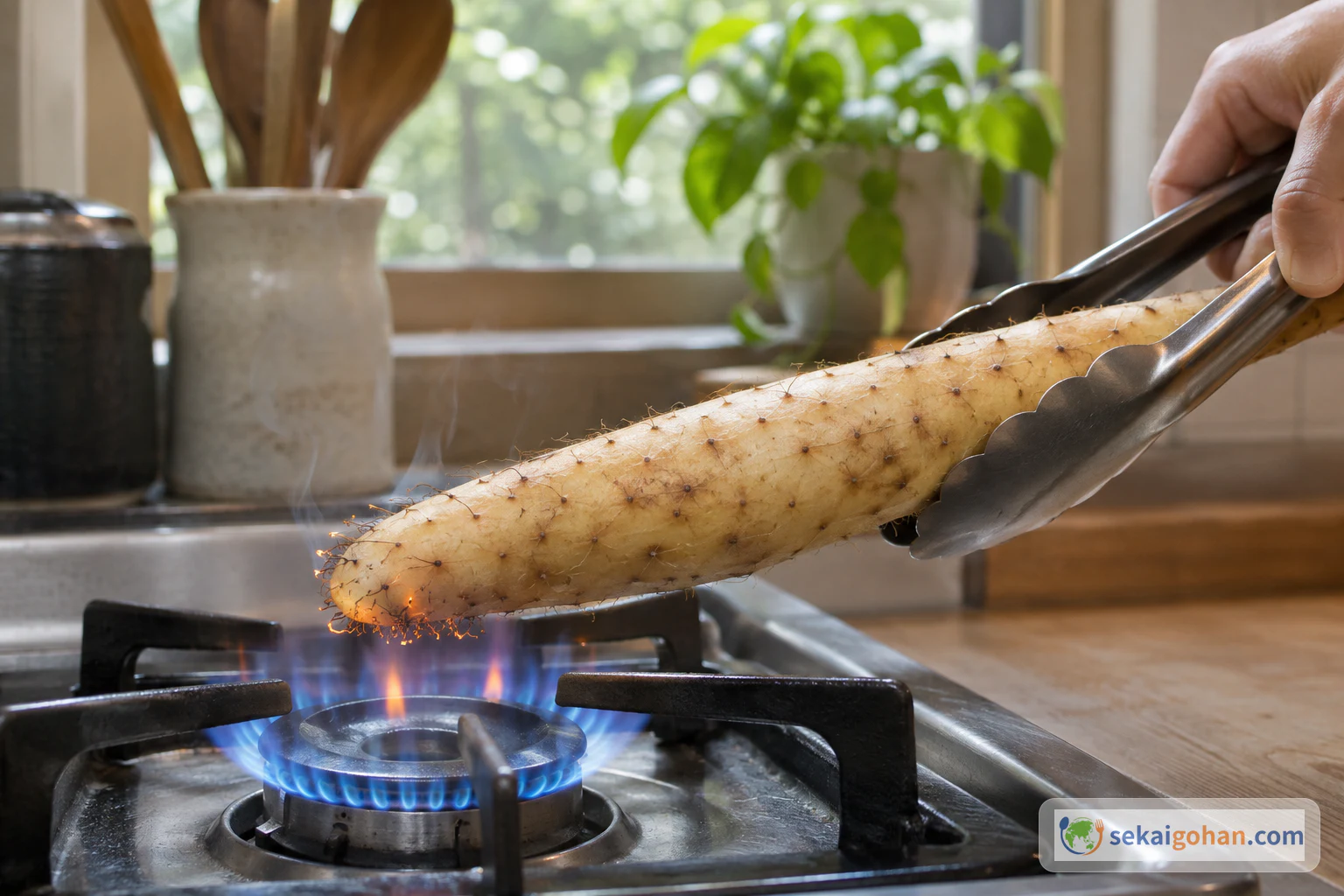
Singeing only the root hairs of a jinenjo yam over an open flame
Bring the root hairs to the flame, holding the yam with tongs

Hold the yam with tongs and pass it directly over a gas flame to burn off the fine root hairs, then remove them. Do not hold the hot yam with bare hands. This step only removes the hairs and does not sanitize the yam.

STEP44 / 8

Grate the yam with its skin on

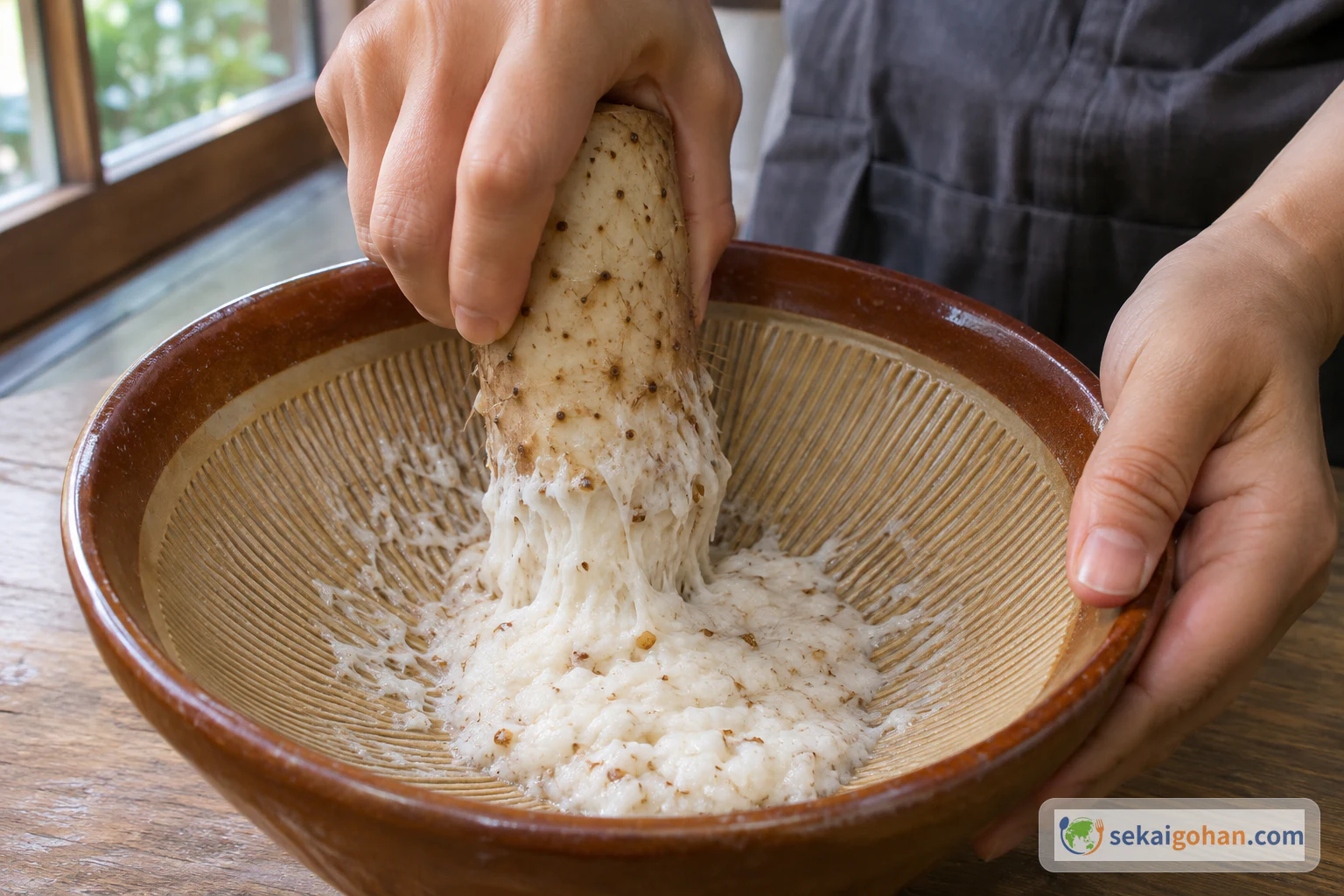
Grating skin-on jinenjo into a suribachi
Flecks of skin stay in the grated yam

Grate the skin-on yam into the suribachi.

STEP55 / 8

Knead, add the egg and seasonings, and knead again

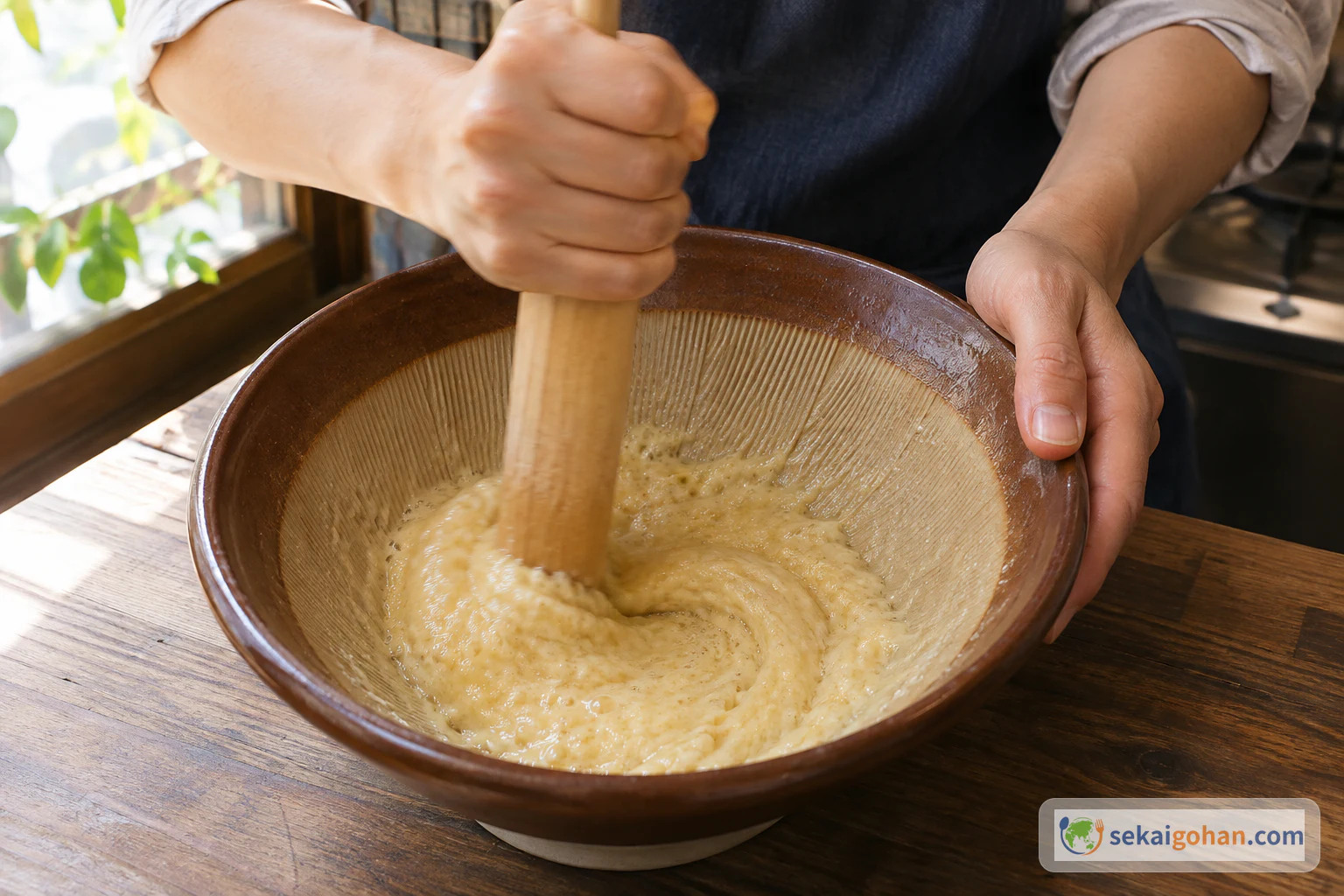
Kneading grated jinenjo with egg, soy sauce and sake using a wooden pestle
Knead the egg and seasonings into the yam

Knead the grated yam with the surikogi for 3–5 minutes. Wash your hands, then crack the egg only now, and do not let it stand once cracked. Add it to the yam with 1 tsp of soy sauce and 1 tsp of sake, and knead for another 3–5 minutes. After handling the egg, wash your hands, any utensils it touched and your work surface with warm soapy water.

STEP66 / 8

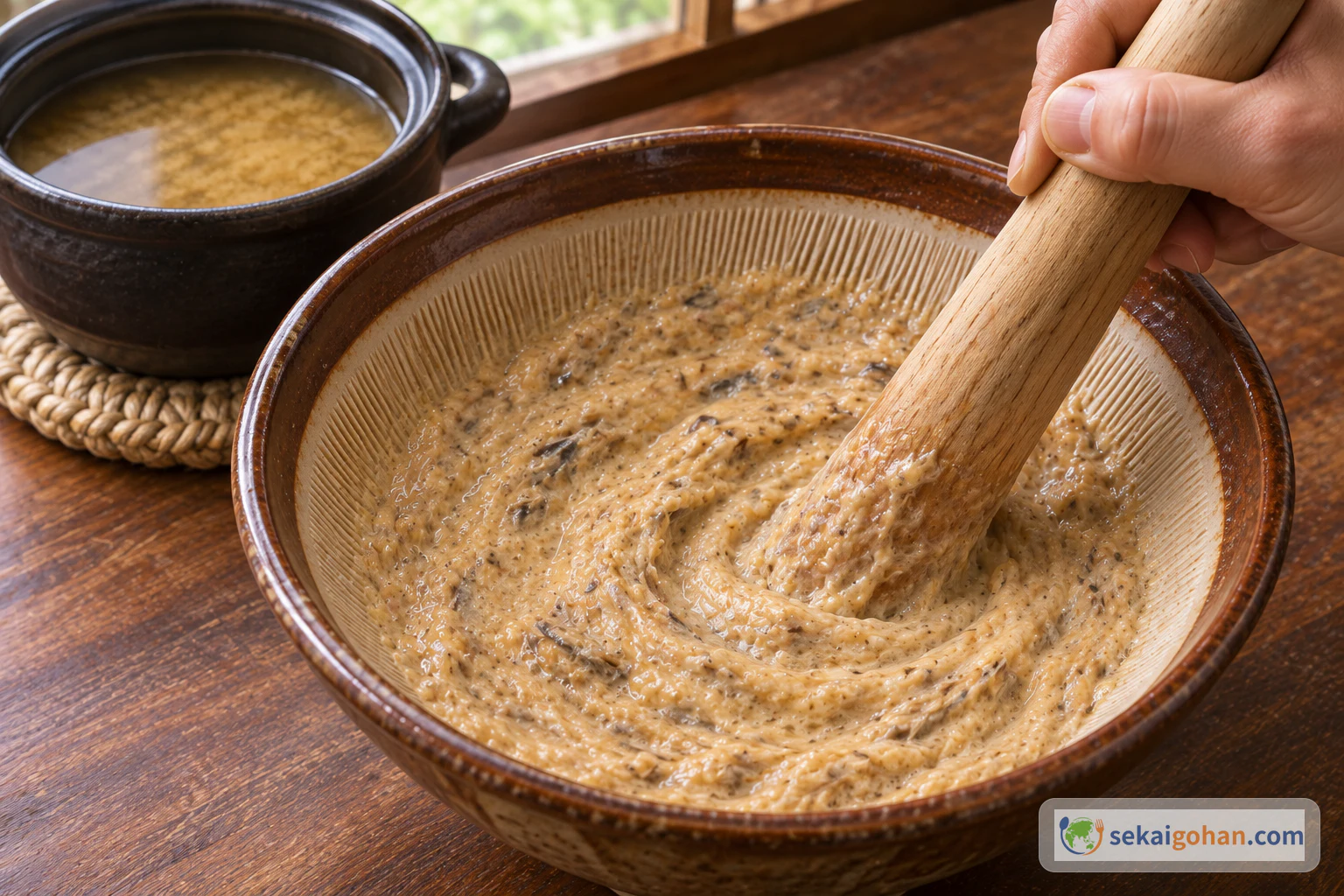
Mash the mackerel into the yam

Working mackerel into the jinenjo with a wooden pestle in a suribachi
The mackerel breaks down into fine flakes in the yam

Lift the mackerel out of the broth and put it in the suribachi, leaving the broth in the pot. Mash the fish finely and work it into the yam with the surikogi.

STEP77 / 8

Thin with the cooled broth, a little at a time

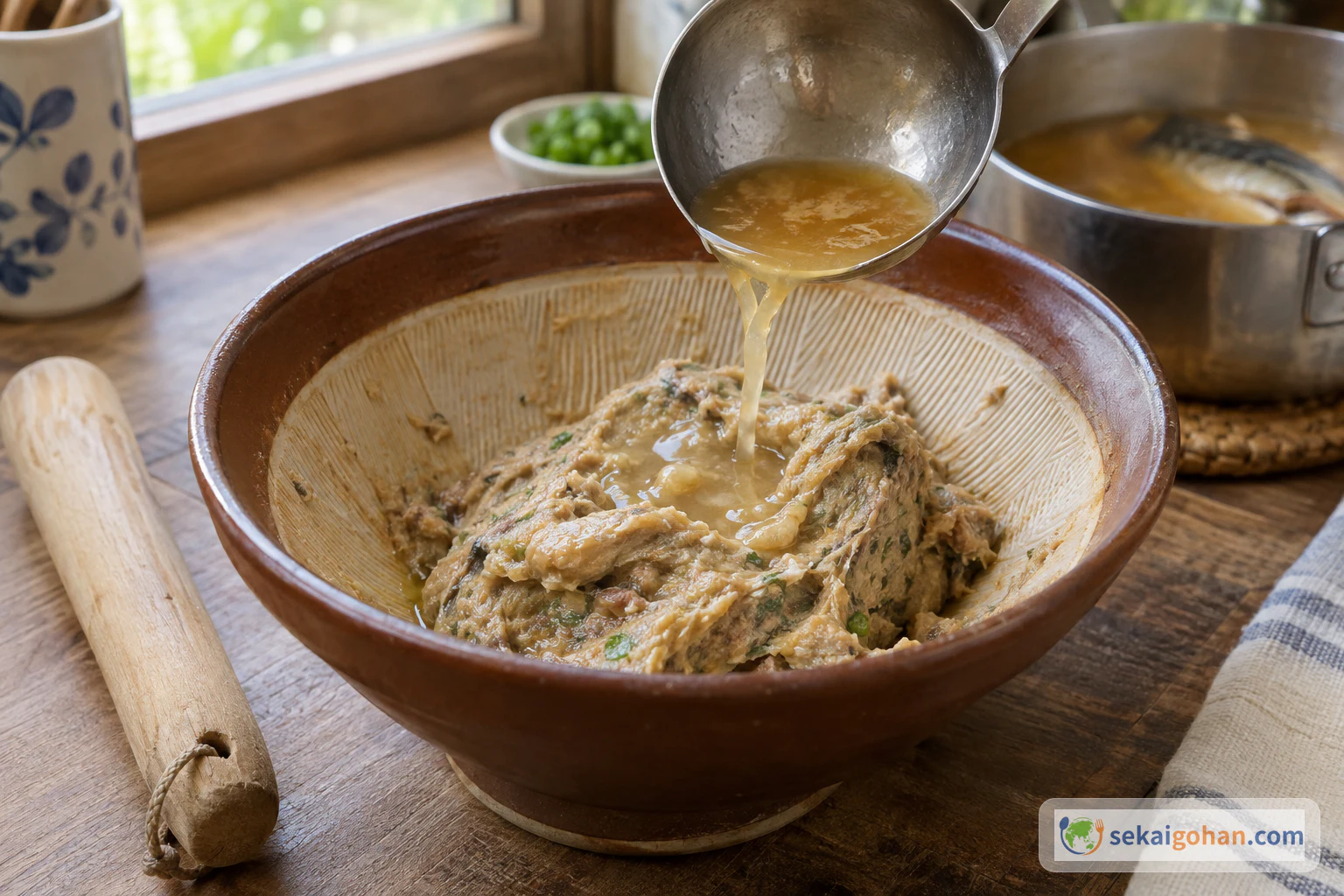
Pouring cooled miso broth into the jinenjo a little at a time
A small pour at a time keeps you in control of the consistency

Add the cooled miso broth a little at a time, working it in with the surikogi after each addition. Stop when it reaches the consistency you like. You do not need to use all the broth.

STEP88 / 8

Serve and finish the same day

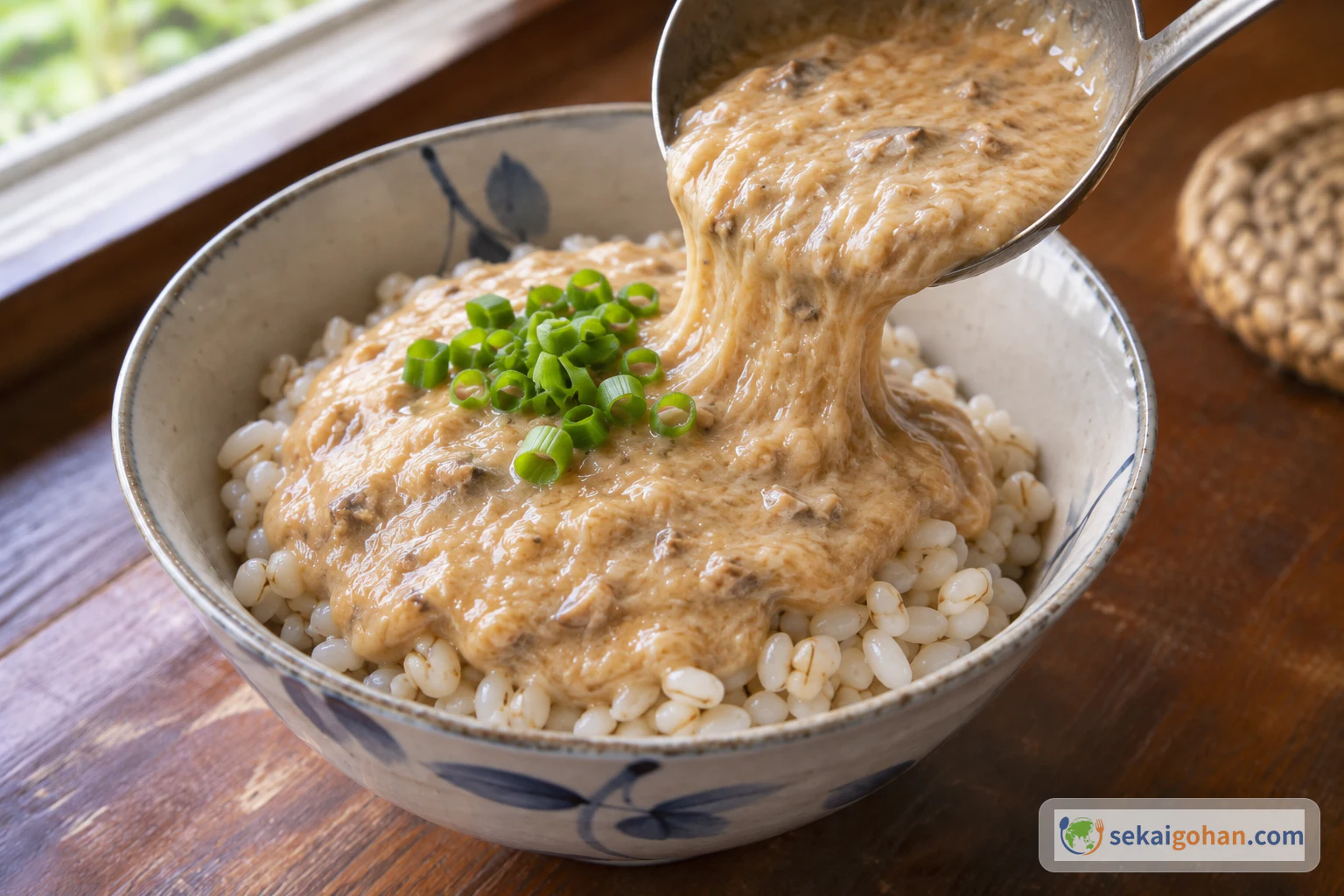
Pouring finished imojiru over barley rice garnished with chopped scallion
Poured over barley rice, with chopped scallion as the only garnish

Rinse the scallion well under running water and chop it. Ladle the imojiru into bowls, or over bowls of cooked barley rice, and add the scallion. Finish it the same day the egg goes in. Wash the suribachi, surikogi and other tools well after use.

0 / 0
Ingredients

Ingredients

1 / 1

Ingredients

Ingredient Amount Role
Jinenjo yam (自然薯) 400g The body of the dish, with its stickiness and flavor. Grated with the skin on
Egg 1 Worked into the yam and eaten raw. Use one that is within its date, with no cracks in the shell
Soy sauce 1 tsp Seasons the yam
Sake 1 tsp Seasons the yam
Water 4 cups (800cc) For the broth
Canned mackerel in water (さば水煮) about 100g (about 1/2 can) Flavors the broth, then is mashed into the yam
Miso about 4 tbsp Makes a strong miso broth
Chopped scallion to taste Garnish. Rinse well under running water before chopping
0 / 0

Spoon a ladle of imojiru over a bowl of barley rice and it slides down thick and pale, carrying the smell of mackerel and miso. In Kakegawa, a city in Shizuoka Prefecture, you eat it with a slurp, so the aroma comes through with every mouthful. The name has jiru, soup, in it, but this is no thin broth. It is jinenjo yam grated with its skin on and worked smooth, then loosened with miso soup flavored with mackerel stock. For more of the country's food, see our Japan page.

Kakegawa Imojiru and the Imojiru Party

Dishes made with jinenjo are a living part of Kakegawa's traditional food culture. The yam grows in the city's mountain districts and is harvested from November to March. The local way is to grate it with the skin on, grind in mackerel flesh, and add mackerel-stock miso soup.
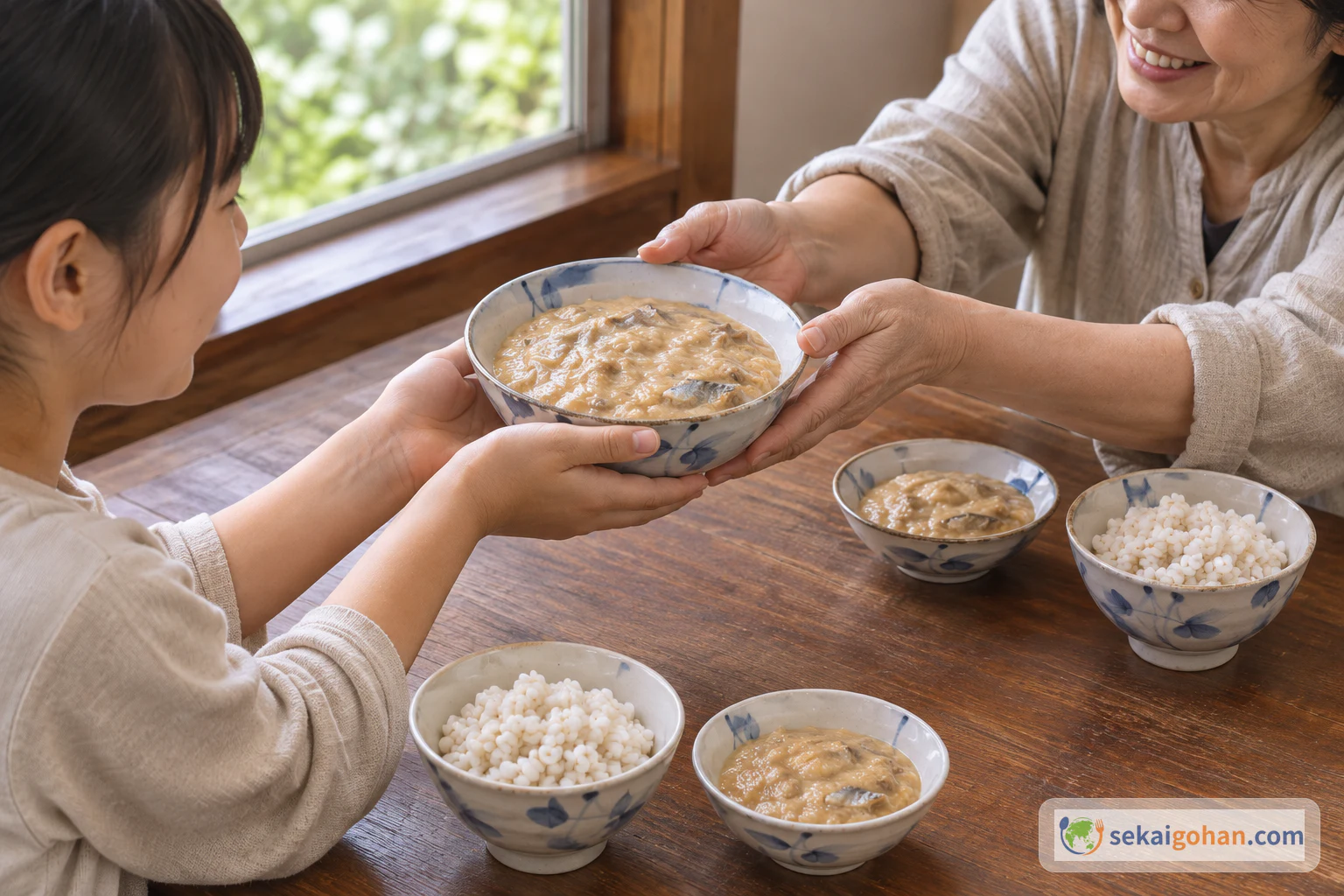
A shared table in the style of an imojiru party, with bowls passed by hand
Bowls of barley rice and imojiru shared at the table

Autumn is the season for the imojiru-kai, an imojiru party that brings relatives and friends together. Households split up the work. One person holds the suribachi (a grooved Japanese mortar) steady while another works the yam, and the finished mixture goes straight over barley rice.

Before You Cook Imojiru: Raw Egg and Raw Yam

This dish is eaten uncooked

The egg and grated yam are not heated at any point after they are combined, and the broth is cooled before it goes in. The steps below reduce risk, but they do not make the dish safe for everyone.

Who should avoid the raw egg. Older adults, infants aged 2 and under, pregnant women and people with weakened immune systems should avoid raw egg and choose thoroughly cooked dishes. For them, leave the egg out or make a different, fully cooked dish.

Storing and cracking eggs. Keep eggs at about 50°F (10°C) or below, and use them within their date. For raw eating, use only uncracked eggs. Crack each one just before you use it, and use it right away. Even clean, intact, in-date eggs can carry Salmonella, so in recipes that use raw or undercooked egg, use pasteurized eggs. Wash your hands, utensils and work surfaces with warm soapy water before and after handling raw egg.

Other limits.

  • Singeing the yam's root hairs is a preparation step. It does not sanitize the yam or make the egg safer.
  • The sake goes in without further heating, so its alcohol stays in the bowl.
  • Make only as much as you will eat that day.
  • Check the ingredient list against any food allergies at your table.

Ingredients for About 6 Bowls
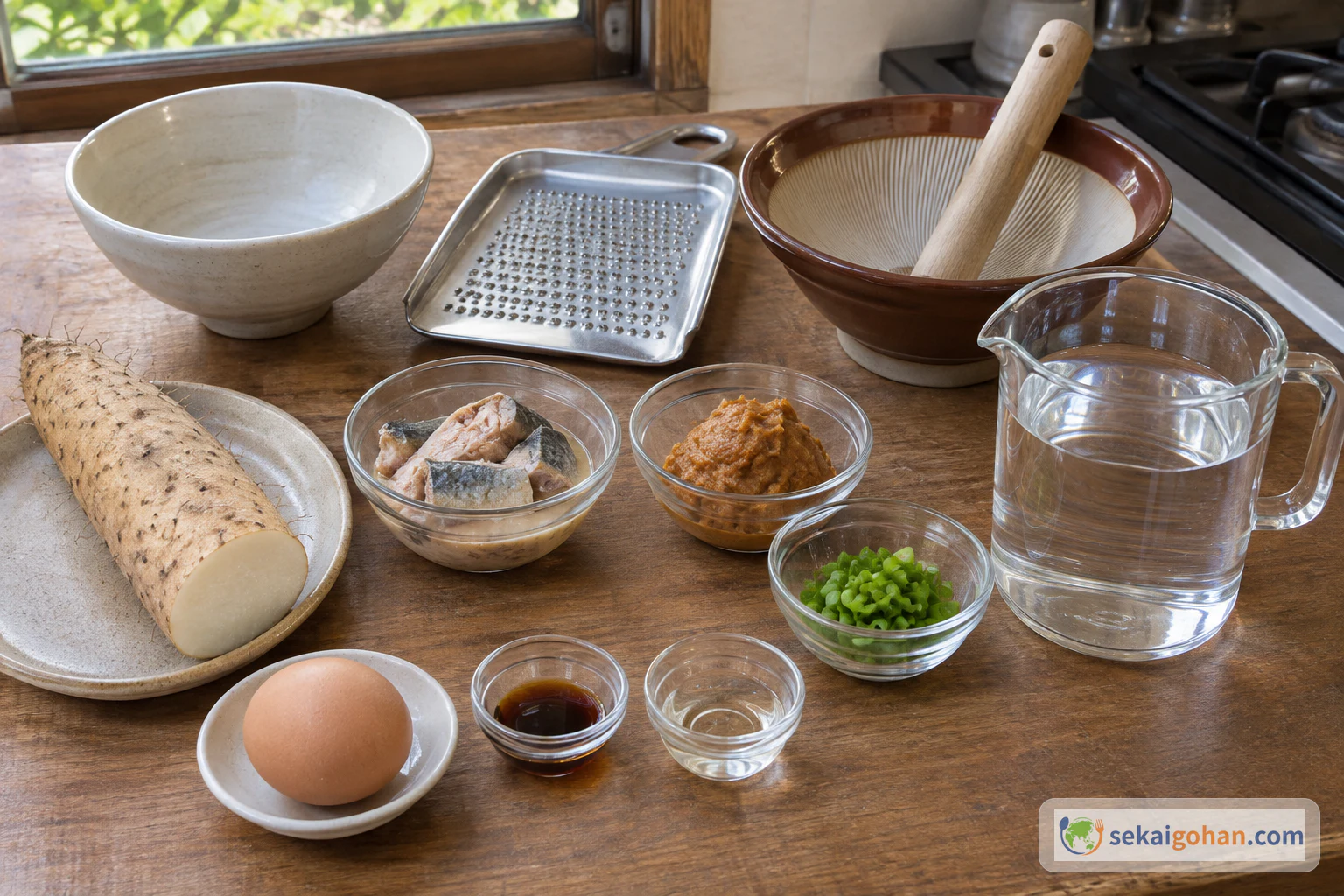
Kurami jinenjo, canned mackerel, egg, miso and other ingredients for Kakegawa imojiru
The yam, mackerel, egg, seasonings and scallion, set out before starting

Keep eggs in the refrigerator after buying, at about 50°F (10°C) or below, until you need one. If you plan to eat this over barley rice, cook as much as you like separately.

Equipment

  • Pot
  • Scrubbing brush (tawashi)
  • Paper towels
  • Tongs, to keep your hands away from the flame
  • Gas burner
  • Grater
  • Suribachi (grooved mortar)
  • Surikogi (wooden pestle)
  • Ladle
  • Bowls

Choosing the Yam, Mackerel and Miso

Jinenjo. Buy cultivated jinenjo from a shop rather than foraging wild yam. Kurami jinenjo (倉真自然薯) is the Kakegawa variety. Nagaimo is a different yam, and with it you get a different dish.

Mackerel. Use canned mackerel in water. Weigh it instead of going by the can, since can sizes differ.

Miso. Saltiness varies from one miso to the next, so treat about 4 tablespoons as a starting point. The broth gets its flavor from the mackerel and miso alone, with no salt, sugar, stock granules or dried shiitake.

How to Make Kakegawa Imojiru

Two parts, then together

Make the broth first and let it cool while you prepare the yam. The two only meet at step 7.

Imojiru Troubleshooting

Add the cooled broth a little at a time and stop when the texture suits you. Many cooks finish with broth still in the pot, and that's fine.

What you see Likely reason What to do
Too thick Not enough broth yet Add more cooled broth a little at a time, working it in between additions
Thinner than you wanted Broth went in too quickly Stop adding broth. Next time add smaller amounts and check after each one
Broth left in the pot You reached your consistency early That is fine; leave the rest
Pieces of mackerel stand out The fish was not mashed enough before the broth went in Mash the mackerel finely in the suribachi before step 7 next time
Dirt will not scrub off the yam Soil caught in the skin Peel just those spots and keep the skin everywhere else
Saltier or milder than expected Miso varies by product Adjust how much broth you add, rather than adding salt

Serving Imojiru and Other Kakegawa Versions

In Kakegawa, imojiru is poured over barley rice and slurped. Because of the raw egg, make only what you will eat and finish it the same day.

Each household makes the bowl a little differently, mostly in the stock and the miso. These versions each have their own amounts, so keep them separate from the recipe above.

Version What differs Area
Over barley rice A way of eating; the mixture stays the same Kakegawa
Producer group's tororo-jiru Uses dried shiitake and bone-in mackerel, among other differences Kakegawa
With sakura gohan A different rice to serve it with Kakegawa
Bonito stock and white miso A different broth added to well-ground yam A Kakegawa restaurant

The bonito and white miso version is one restaurant's own style rather than a Kakegawa standard.

Frequently Asked Questions

How many people does it serve?

The recipe makes about 6 bowls. Bowl size and how much broth you add will change how much you end up with.

How long does it take?

The two kneading stages take 3–5 minutes each. The recipe gives no total time.

What if I don't have a gas flame or a suribachi?

The recipe is written for these tools and gives no alternative. To singe the root hairs, hold the yam with tongs over the flame.
Sources

  • JA Kakegawa City, Shinsen Anshin Ichiba online shop, "Kakegawa specialty Kurami jinenjo, vegetables and rice," including the Harada Farm recipe. Ingredients, amounts, about 6 bowls, order of steps and kneading times, plus the separate adjacent recipe. https://secure01.blue.shared-server.net/www.ja-kakegawa.jp/shop/crops.php
  • City of Kakegawa, "Jinenjo and Kakegawa imojiru." Jinenjo in local food culture, grating with the skin on, mackerel-stock miso soup and autumn imojiru parties. https://www.city.kakegawa.shizuoka.jp/gyosei/docs/8750.html
  • Kakegawa Tourism Association, "Kakegawa imojiru." Jinenjo from the mountain districts and its harvest season, the ground mackerel, imojiru parties, shared work at the mortar, eating over barley rice and making only what will be eaten that day. https://www.kakegawa-kankou.com/imo/
  • Shizuoka Shimbun At-S, "Kakegawa imojiru restaurant Tororo Honmaru." One restaurant's yam preparation and its bonito stock and white miso version. https://www.at-s.com/life/article/ats/1773750.html
  • Mie Prefecture, "Hygienic handling of eggs at home," posting a notice from Japan's Ministry of Health and Welfare (now the Ministry of Health, Labour and Welfare). Egg storage at about 10°C or below, using eggs within their date, avoiding cracked eggs when eating raw, cracking just before eating, washing cooking tools and groups who should avoid raw egg. https://www.pref.mie.lg.jp/SHOKUSEI/HP/70497044691.htm
  • U.S. Food and Drug Administration, "What You Need to Know About Egg Safety." Salmonella in clean, intact eggs, washing with warm soapy water, higher-risk groups and pasteurized eggs for raw or undercooked use. General safety information, not a source for this Japanese home recipe. https://www.fda.gov/food/buy-store-serve-safe-food/what-you-need-know-about-egg-safety