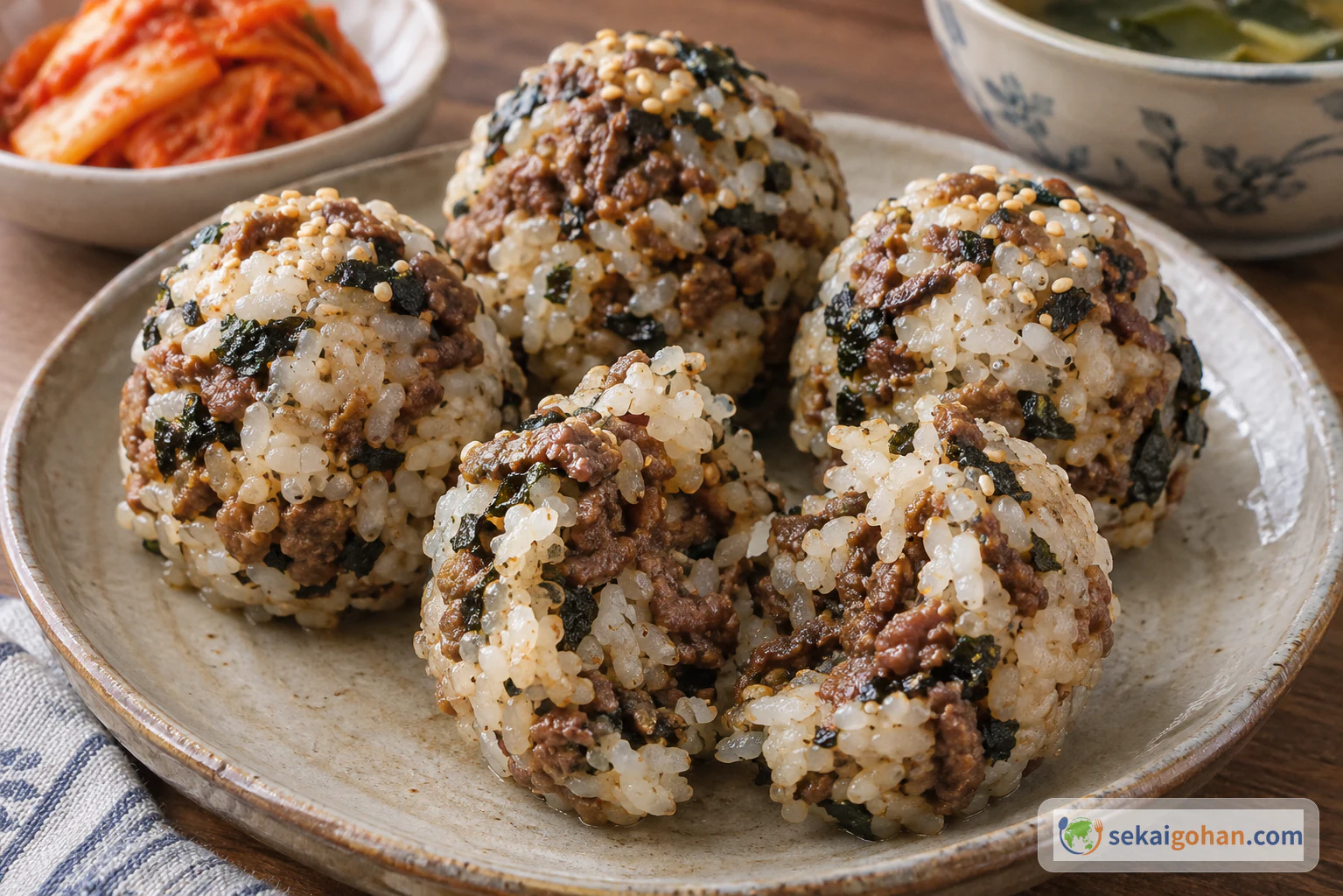
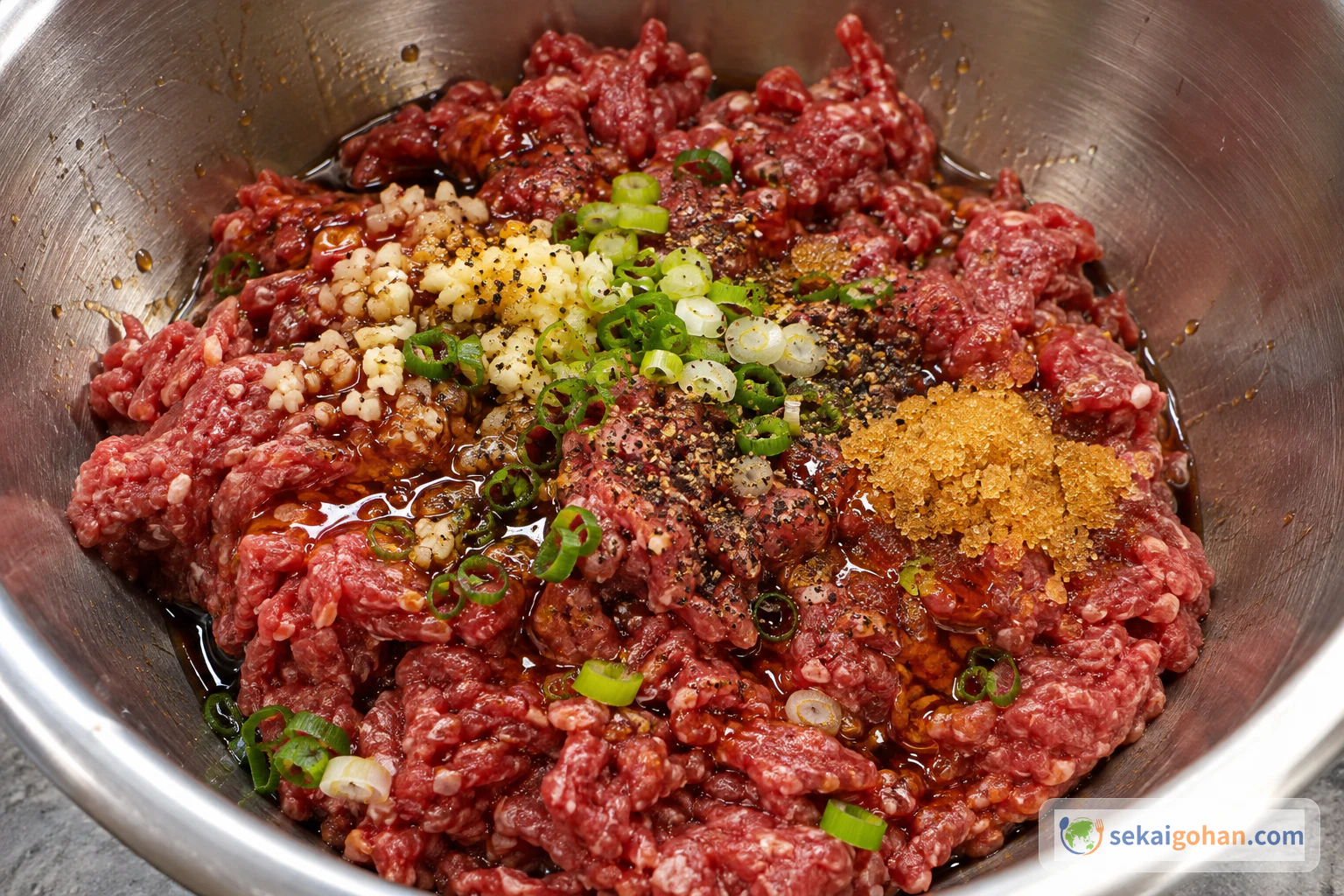
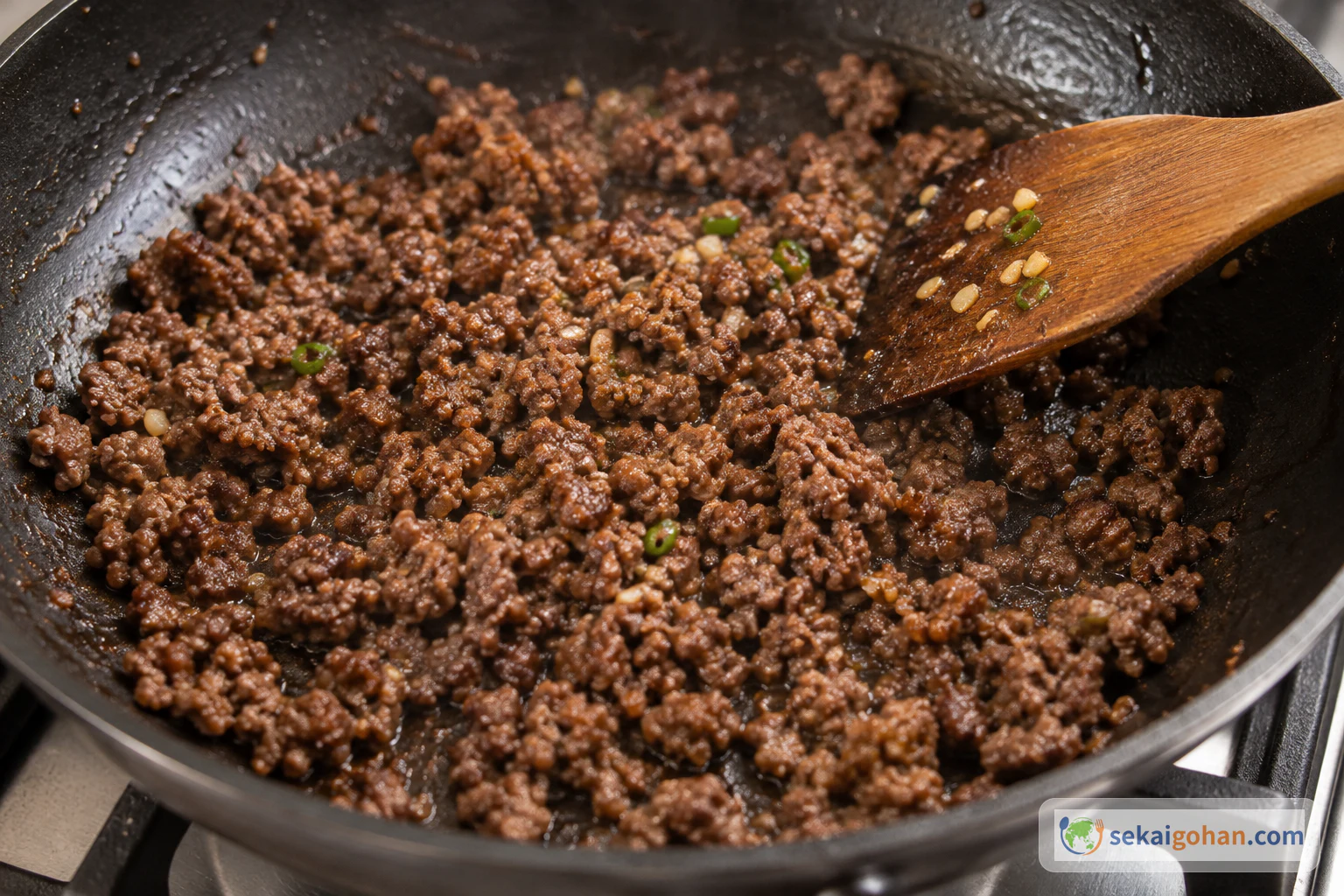
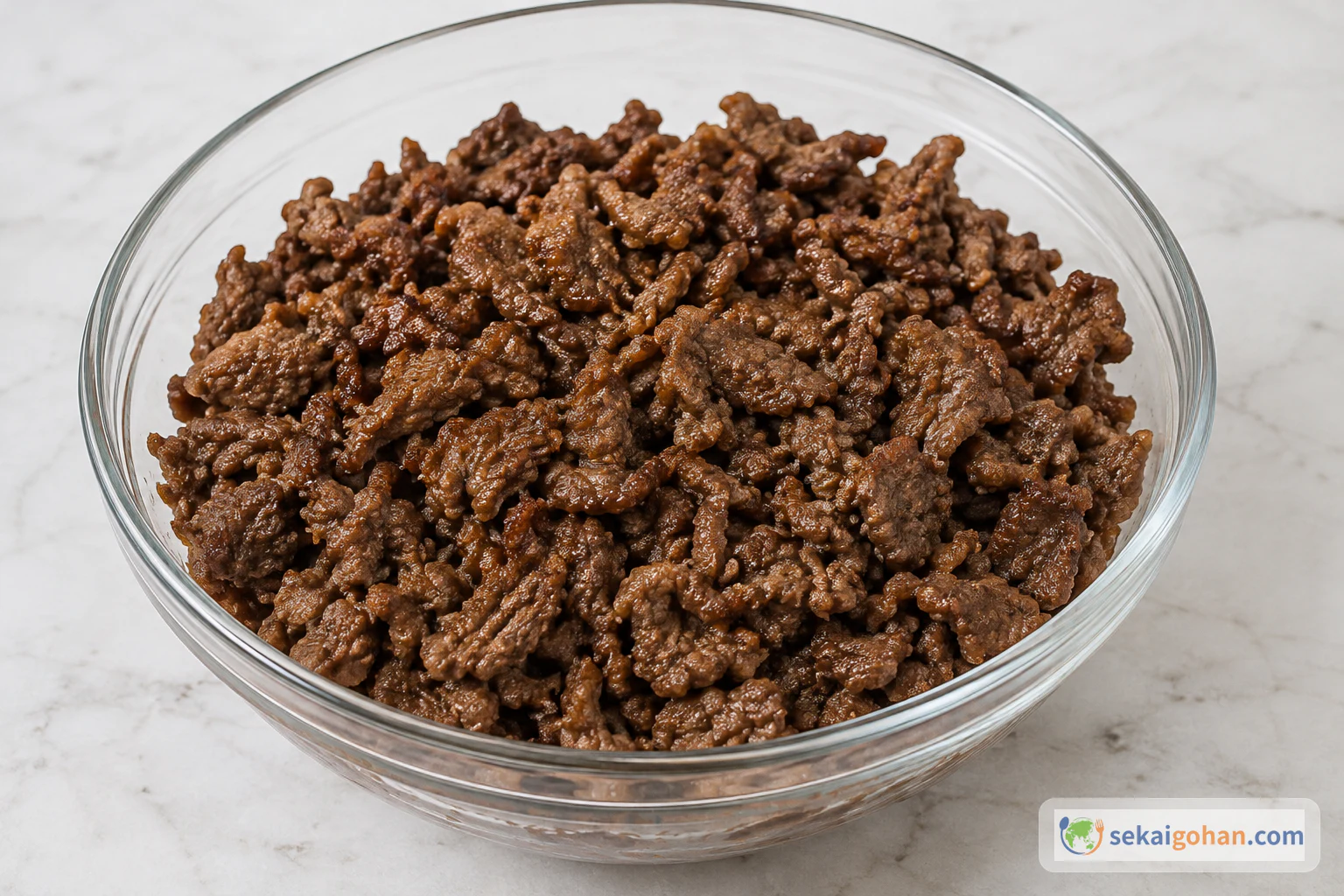
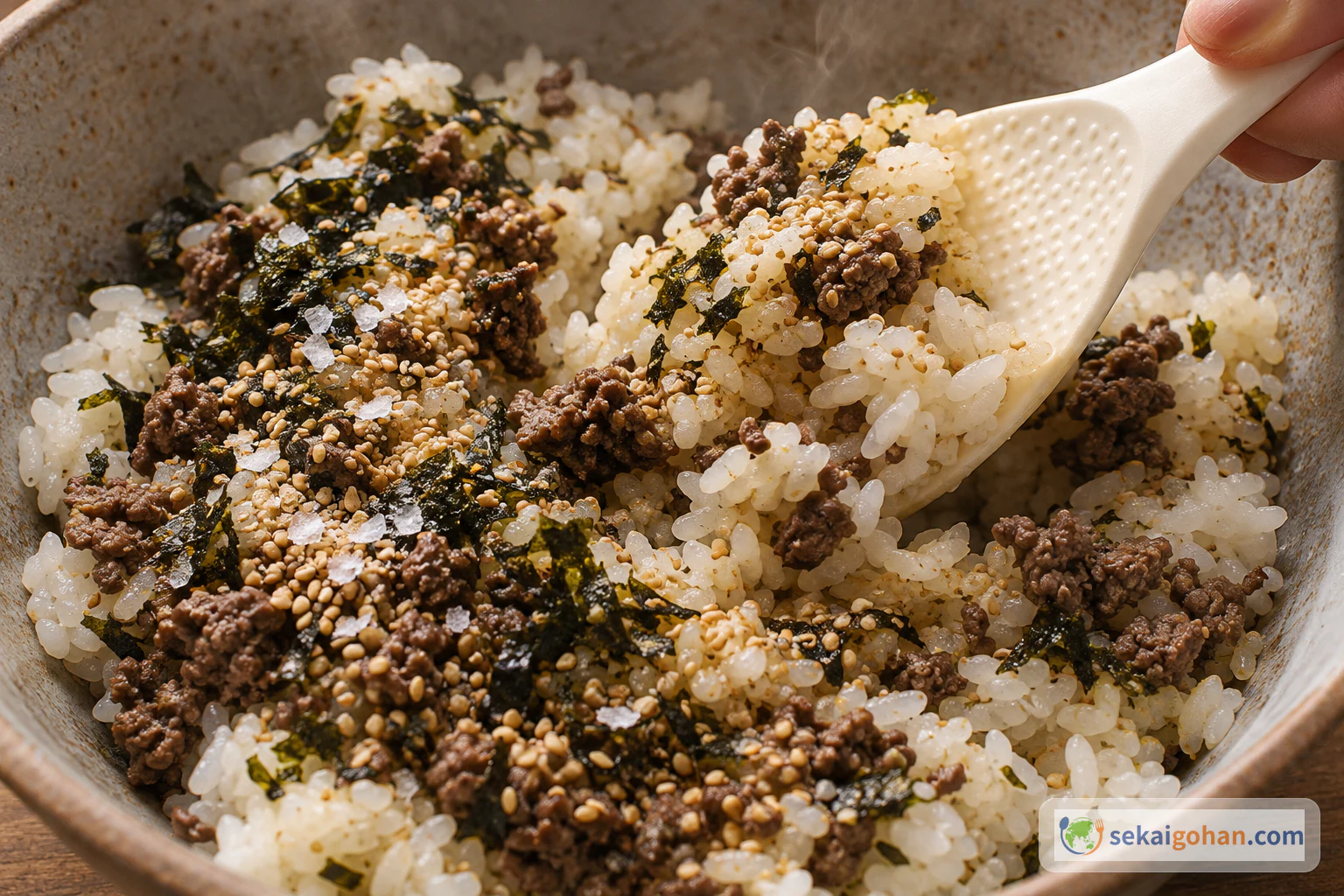
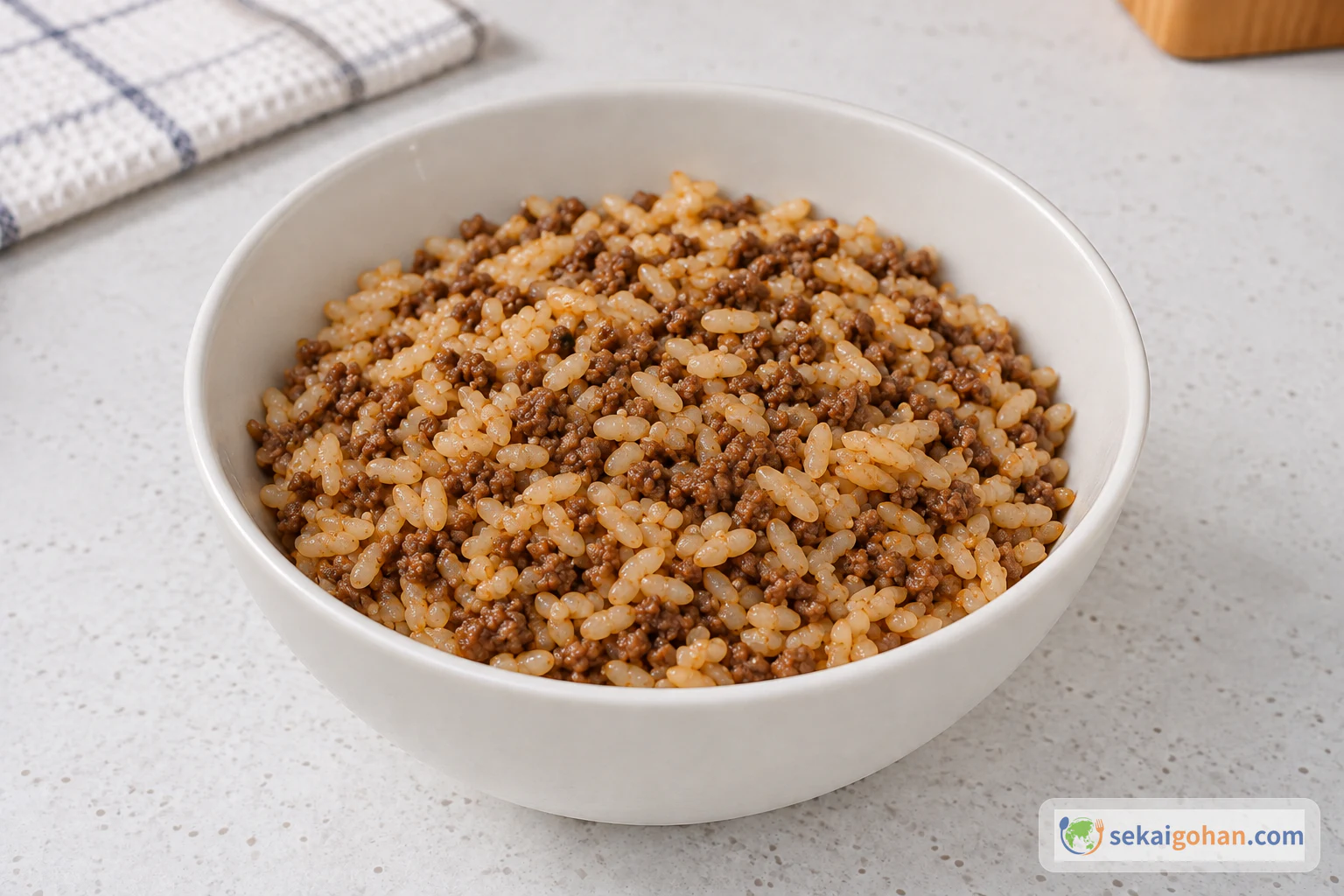
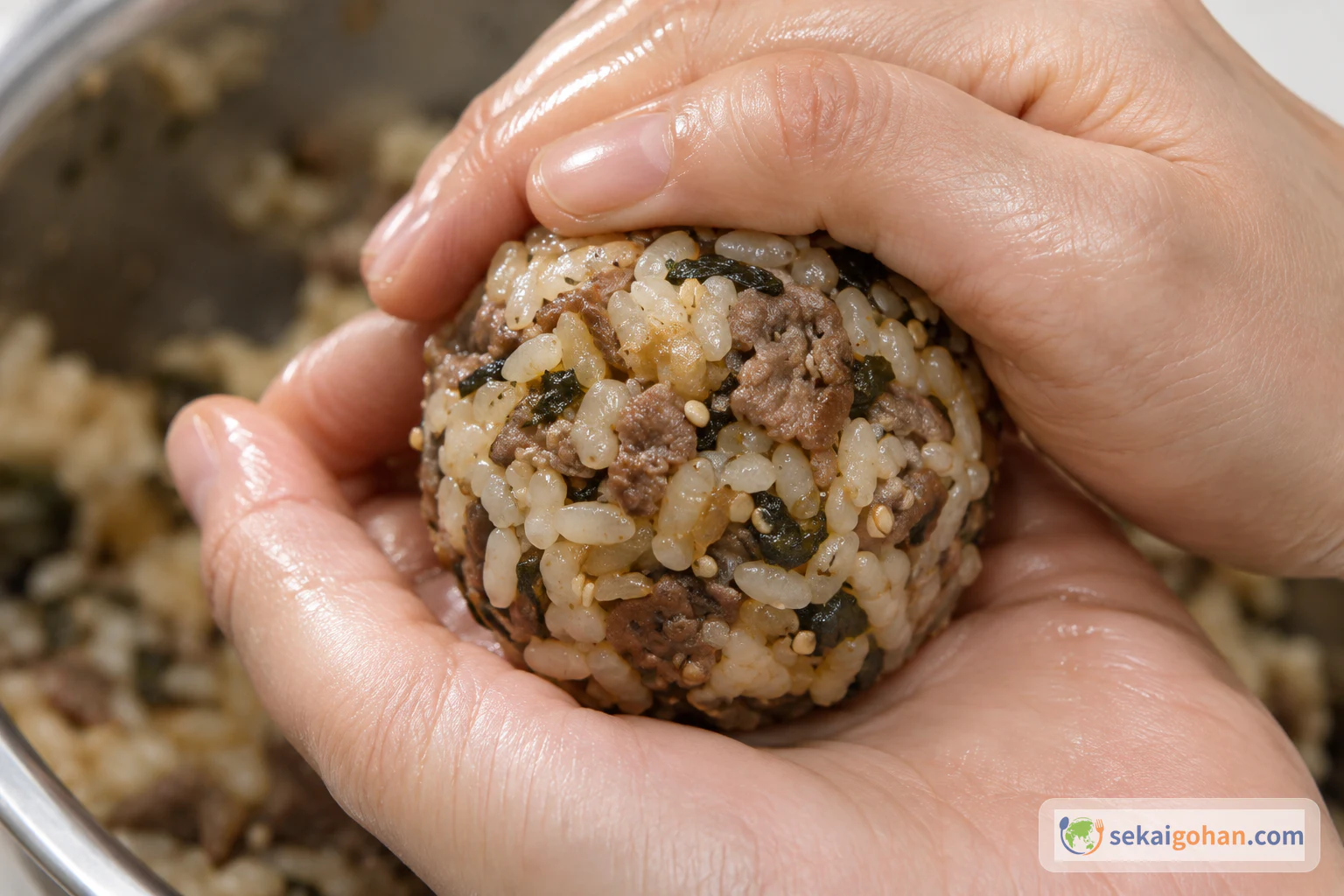
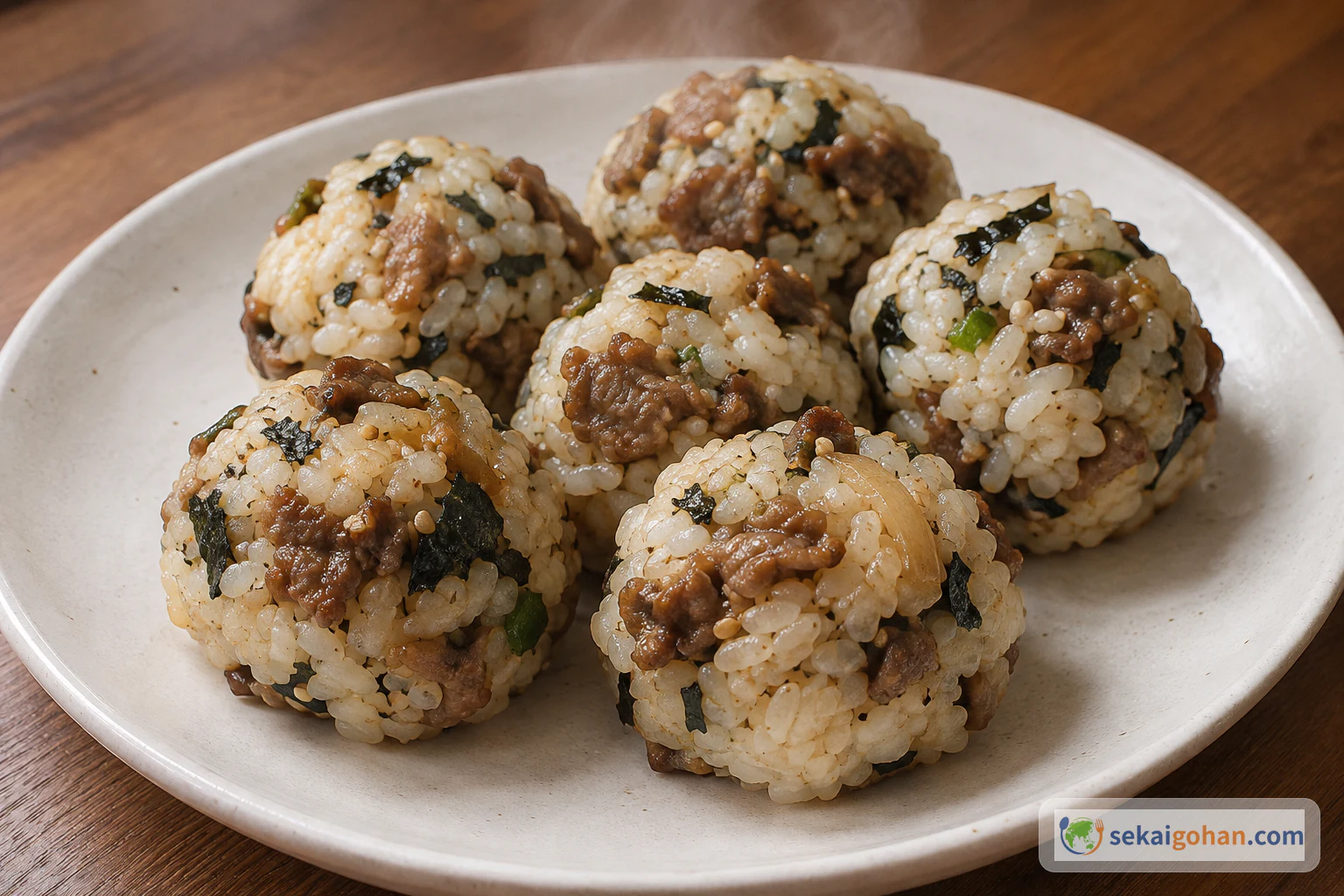
Warm rice, beef fried in its marinade until the pan is dry, toasted sesame, and a scattering of crumbled seasoned seaweed are mixed together and pressed by hand into balls. That's bulgogi jumeokbap, a Korean rice ball best eaten while still warm. Here the beef isn't tucked into the center. It's seasoned with garlic, spring onion, soy sauce, mirin, sugar, sesame oil and black pepper, browned, then folded through all of the rice, so every ball is seasoned throughout.
What Jumeokbap Is
Jumeokbap (주먹밥) means "fist rice": steamed rice pressed into a ball by hand. Jumeokbap is defined by its form, not by one filling. Tuna, egg and beef are common, and the filling can change from one ball to the next. It's easy to make with what you have to hand, and people pack it into lunch boxes, take it along as a snack, or eat it alongside extra-spicy dishes.
Recipes vary a good deal. A basic version uses just rice, salt, sesame oil and sesame seeds. Others include a beef version with carrot and a seasoned-anchovy version, sometimes with a seaweed coating. This bulgogi jumeokbap is one beef version, with everything mixed into the rice before shaping.
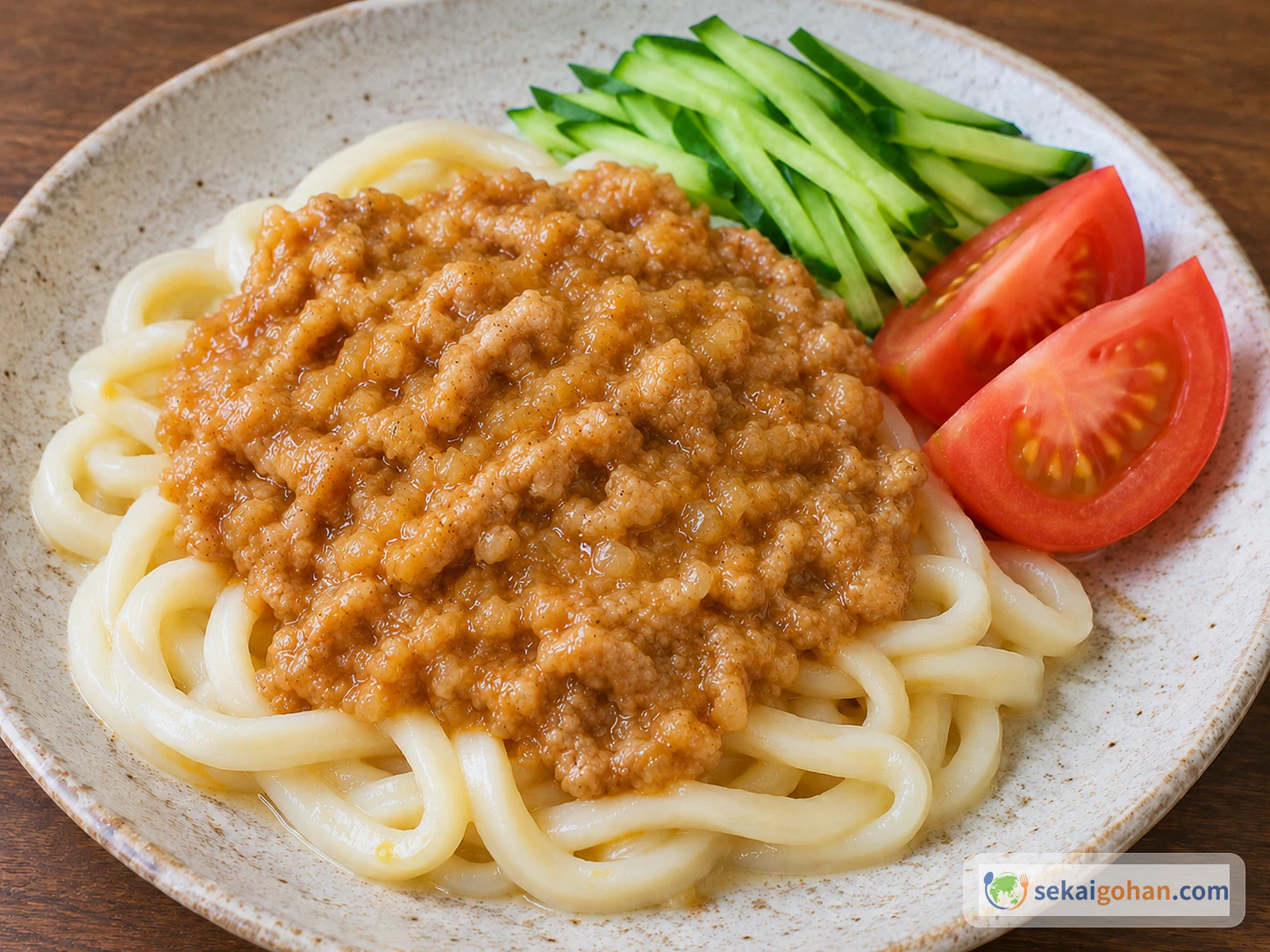
Gimbap is a different dish: rice and fillings are rolled in seaweed and then sliced. In jumeokbap, the seaweed is crumbled into the rice and the mixture is shaped by hand, with no rolling and no cutting. Japanese onigiri is also rice shaped by hand, but it has its own name and recipes. This version is round, seasoned all the way through, and made with gim jaban mixed into the rice. For more dishes from the same table, see our Korean recipes.
Ingredients for 2 Servings
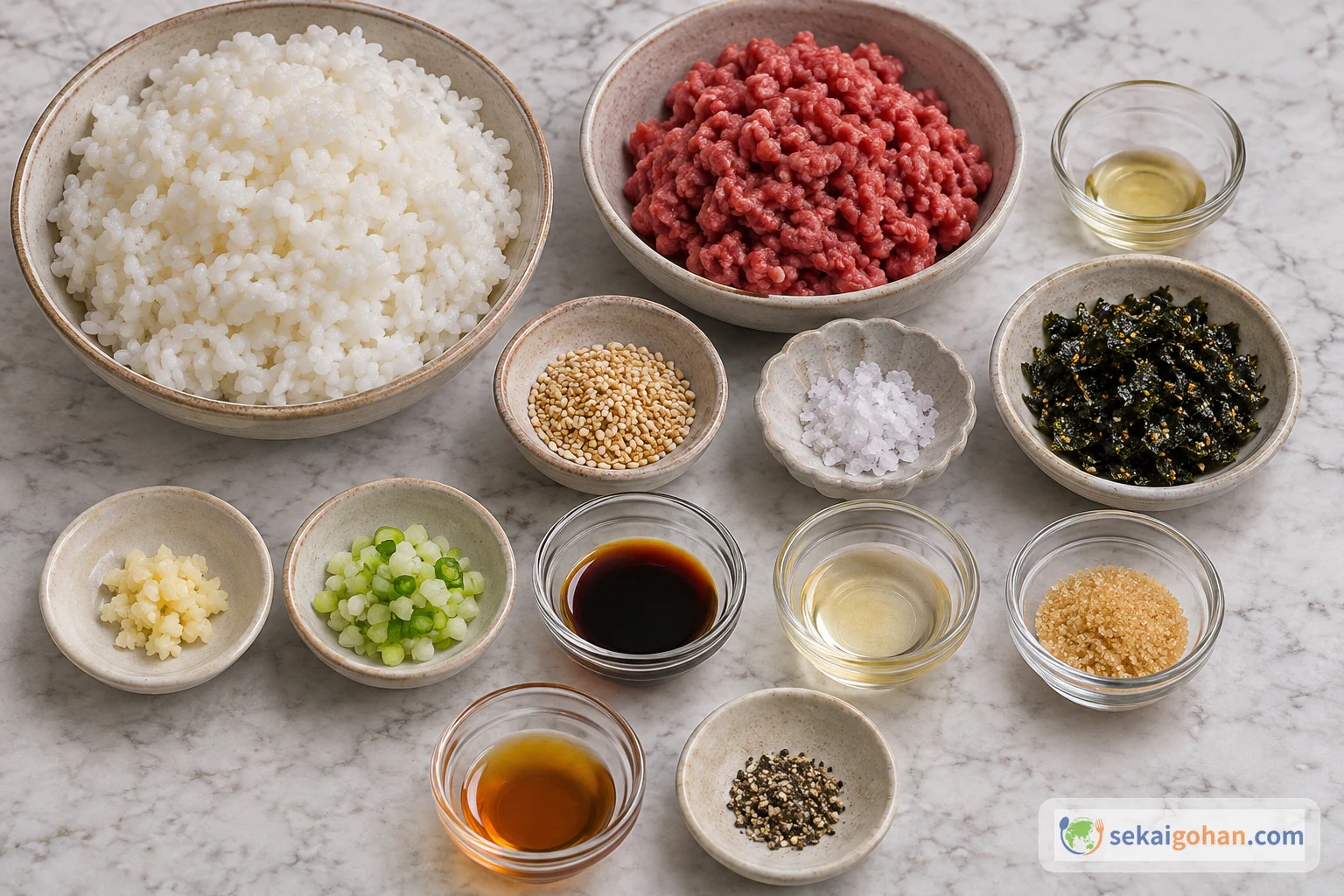
The rice is weighed after cooking.
The vegetable oil is only for the pan; the toasted sesame oil goes into the marinade. The sesame seeds, salt flakes and gim jaban go into the rice, not the beef.
Equipment
- Small mixing bowl
- Skillet or wok
- Spatula
- Food thermometer
- Large bowl
- Rice paddle or spatula
- Latex gloves (optional)
Choosing Rice and Seaweed for Jumeokbap
Rice. Short-grain rice is best, and medium-grain also holds together well. Long-grain rice can fall apart when you press it into balls. Weigh the rice after cooking, and use it while it's still warm.
Seaweed. Use gim jaban, toasted seaweed that's already seasoned and crumbled. Plain full sheets of seaweed for rolling are a different product and not a direct swap.
The spoon measures are Australian, so 1 tbsp is 20 ml and 1 tsp is 5 ml.
This recipe contains beef and sesame. Soy sauce contains soy and often wheat. Check the labels on soy sauce and seasoned seaweed for allergens.
Method: Fry, Fold, Cool, Shape
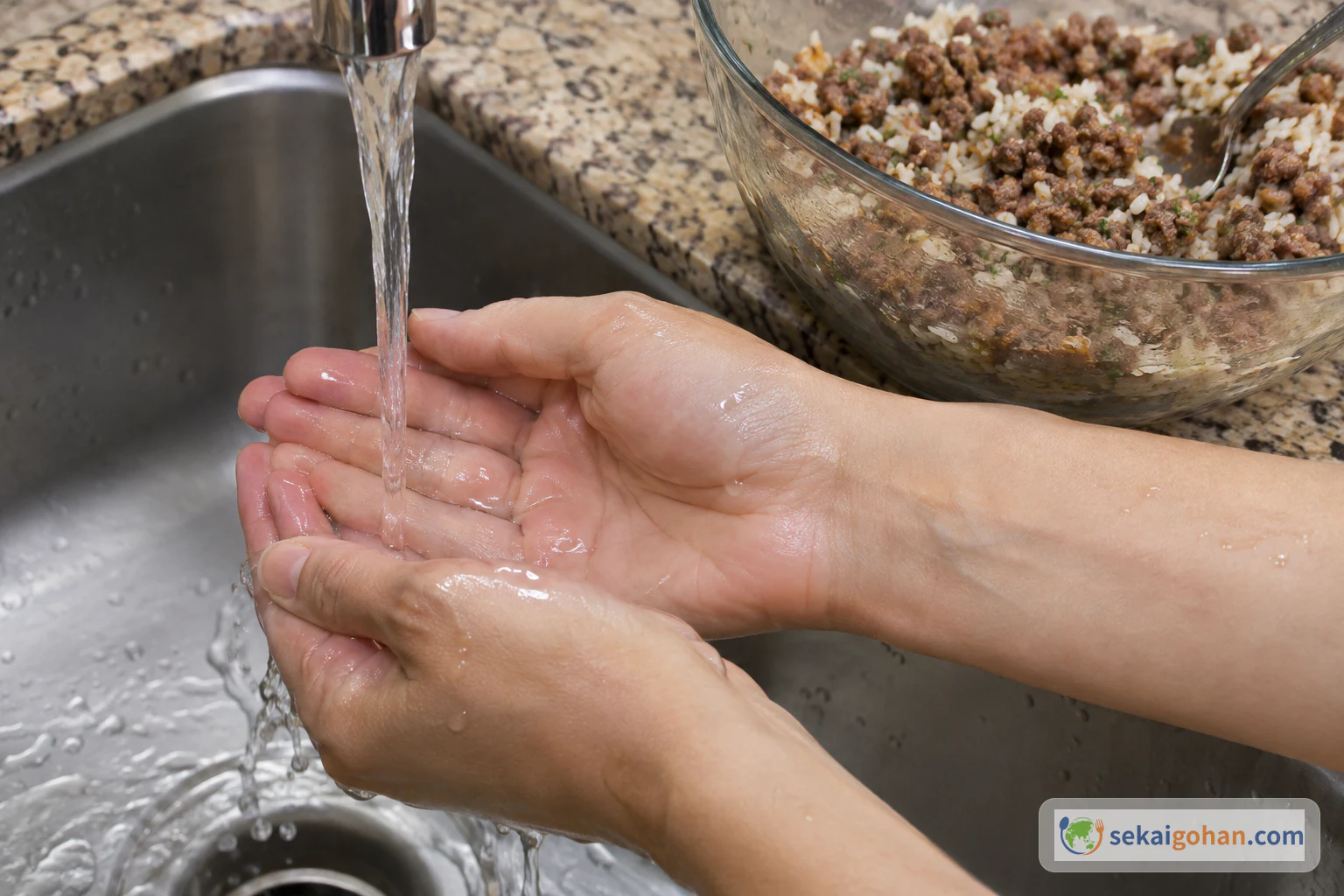
Season and fry the beef first, let it cool, then fold it through warm rice. Only after the mixture has cooled enough to handle do you wet your hands and shape it.
Troubleshooting Bulgogi Jumeokbap
| Problem | Likely cause | What to do |
|---|---|---|
| Sauce is still pooling in the pan | The beef hasn't cooked long enough | Keep frying over medium heat, breaking up lumps, until no sauce remains. Then check the center with a thermometer |
| The beef is catching or burning | Large lumps sitting in one place | Break the beef into smaller pieces and keep it moving over medium heat |
| The rice looks pasty | It was stirred or pressed while mixing | Fold from the edge toward the center and stop once it's evenly mixed |
| The balls won't hold together | Long-grain rice may not hold together | Use short- or medium-grain rice and fold in the seasonings while it's still warm |
| The rice is too hot to hold | Shaping started straight after mixing | Wait until the mixture is comfortable to handle |
| Rice sticks to your hands | Dry hands | Wet your hands again with water, or use gloves |
Serving and Storing Bulgogi Jumeokbap
Serve the rice balls warm. Jumeokbap is often packed for lunch, but this recipe gives no storage time, carrying time or chilled shelf life. If you keep cooked food for later, cool it quickly, for example in shallow containers, and refrigerate it at 41°F (5°C) or colder.
Cook minced meat until the centre reaches at least 167°F (75°C), and check it with a food thermometer. The recipe's frying time and the colour of the beef are cooking cues, not proof of that temperature. Keep equipment clean and raw meat away from food that is ready to eat. Since the rice is shaped by hand, wash your hands well before you start, or use gloves.
Frequently Asked Questions
How many rice balls does this make?
The recipe serves 2 and doesn't give a number of balls. The count depends on how large you make each one.
Should the beef go in the center?
Not in this version. The beef is folded through all of the rice before shaping. Jumeokbap with a filling in the middle is a different style.
How do I know the beef is done?
Fry it over medium heat until it's browned and no sauce remains. Time and color alone aren't a reliable check, so use a food thermometer and make sure the center reaches at least 167°F (75°C).