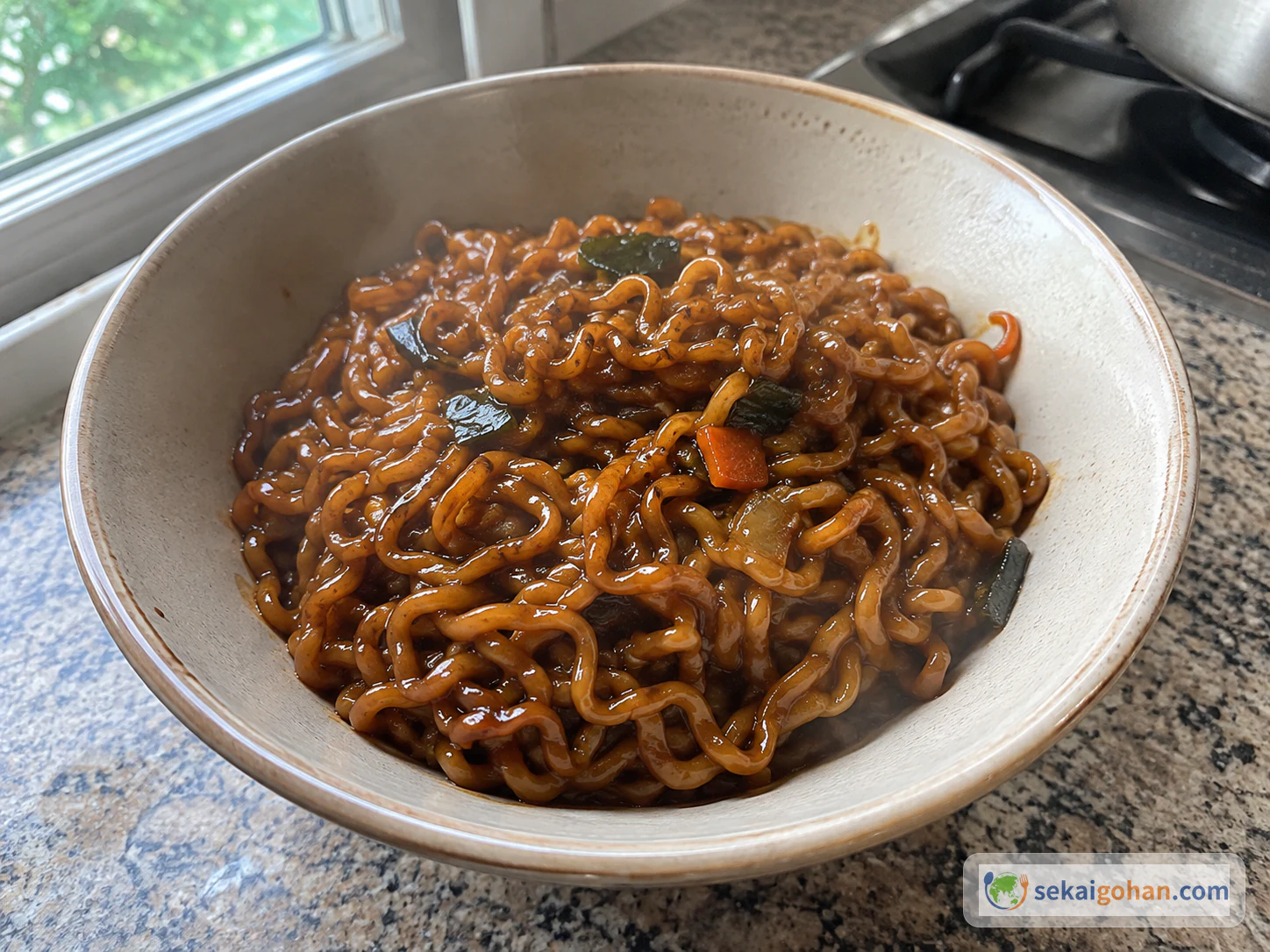
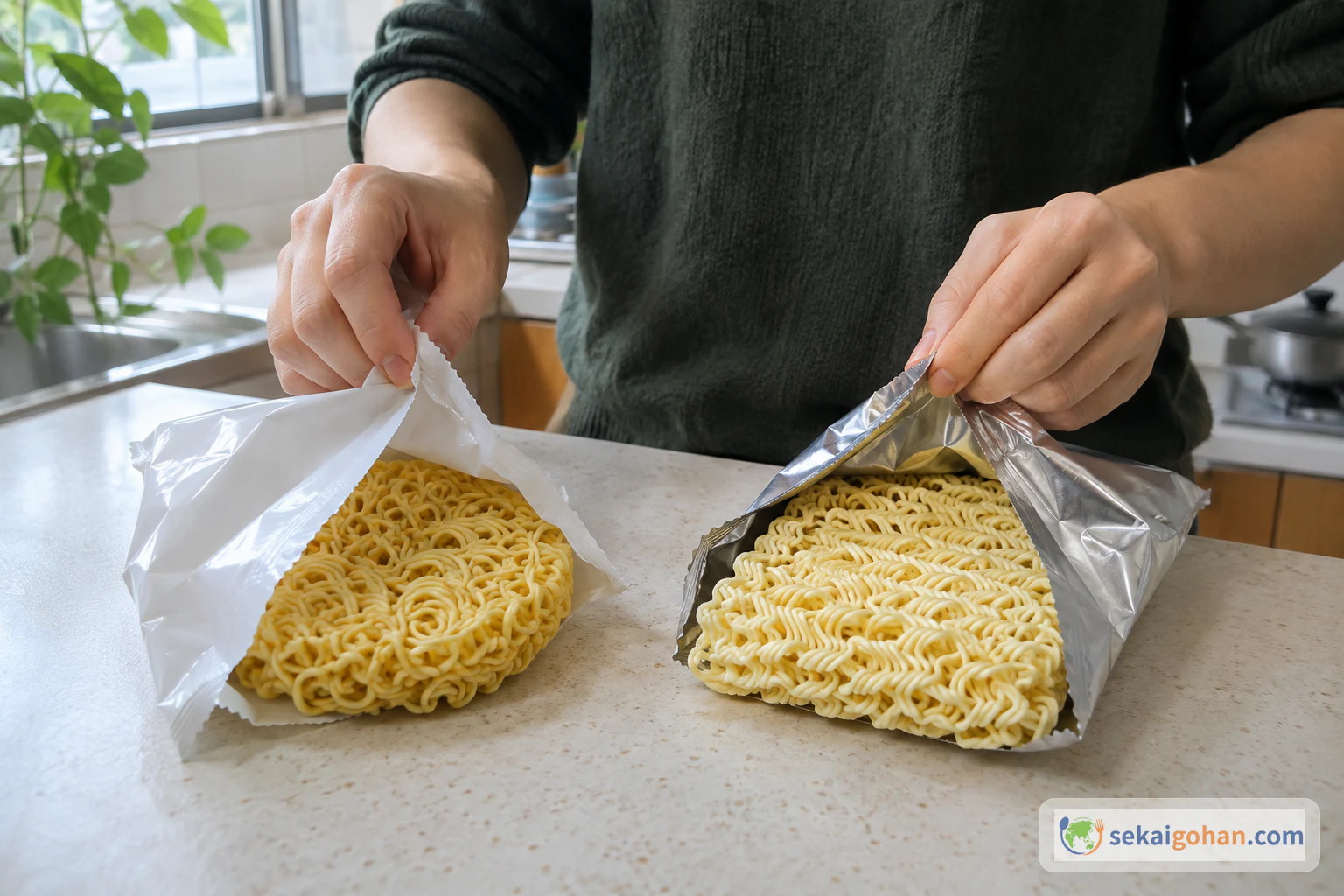
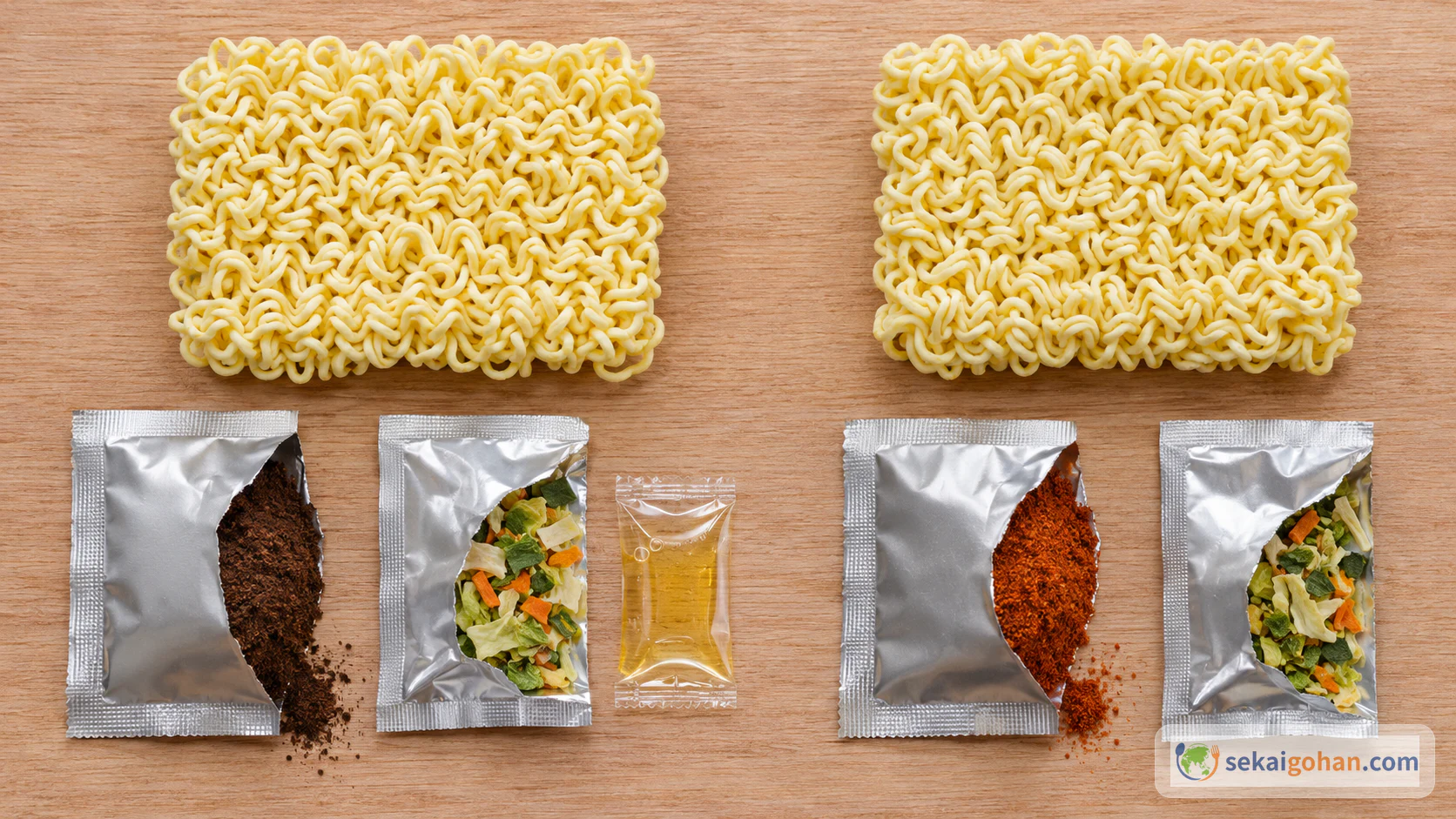
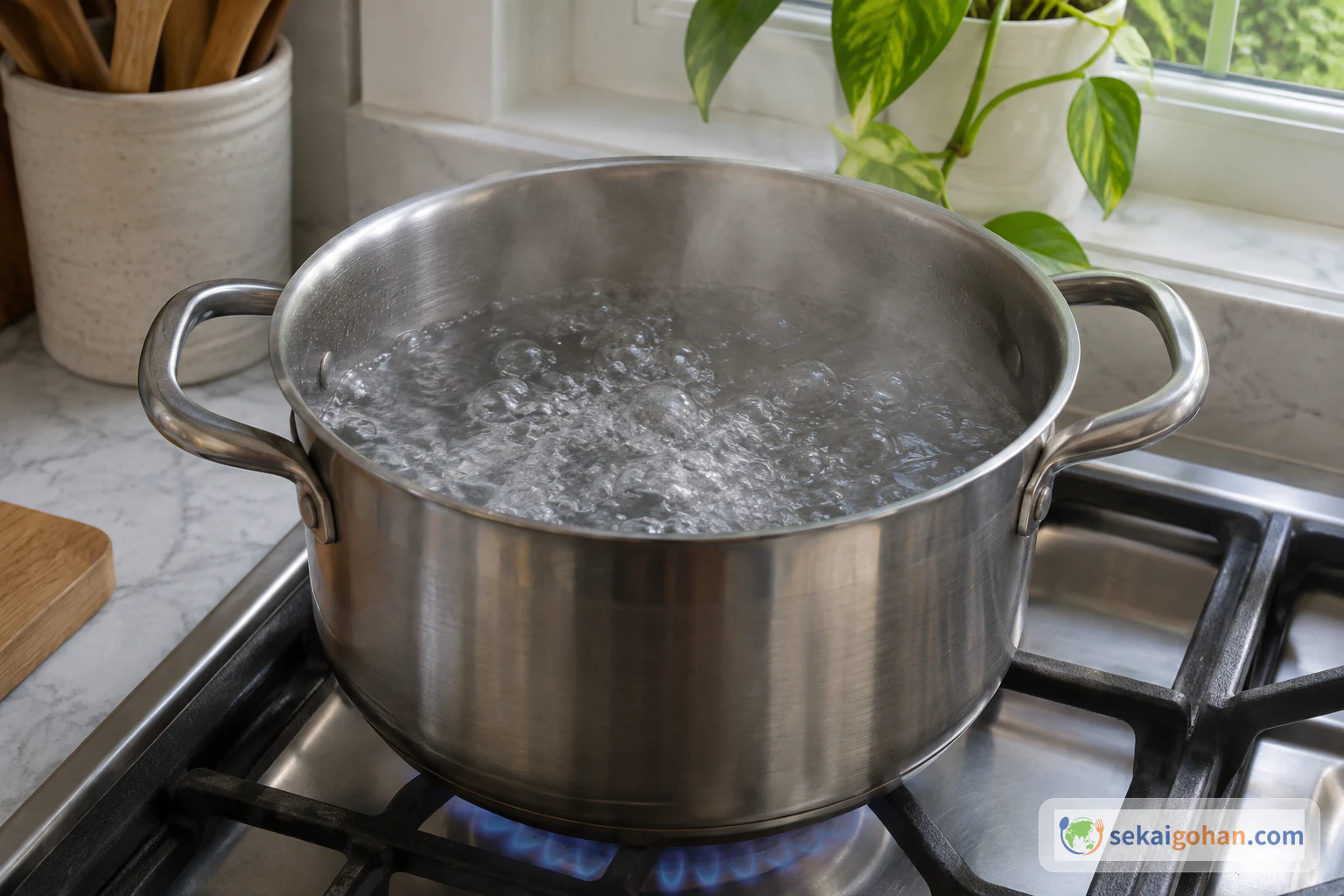
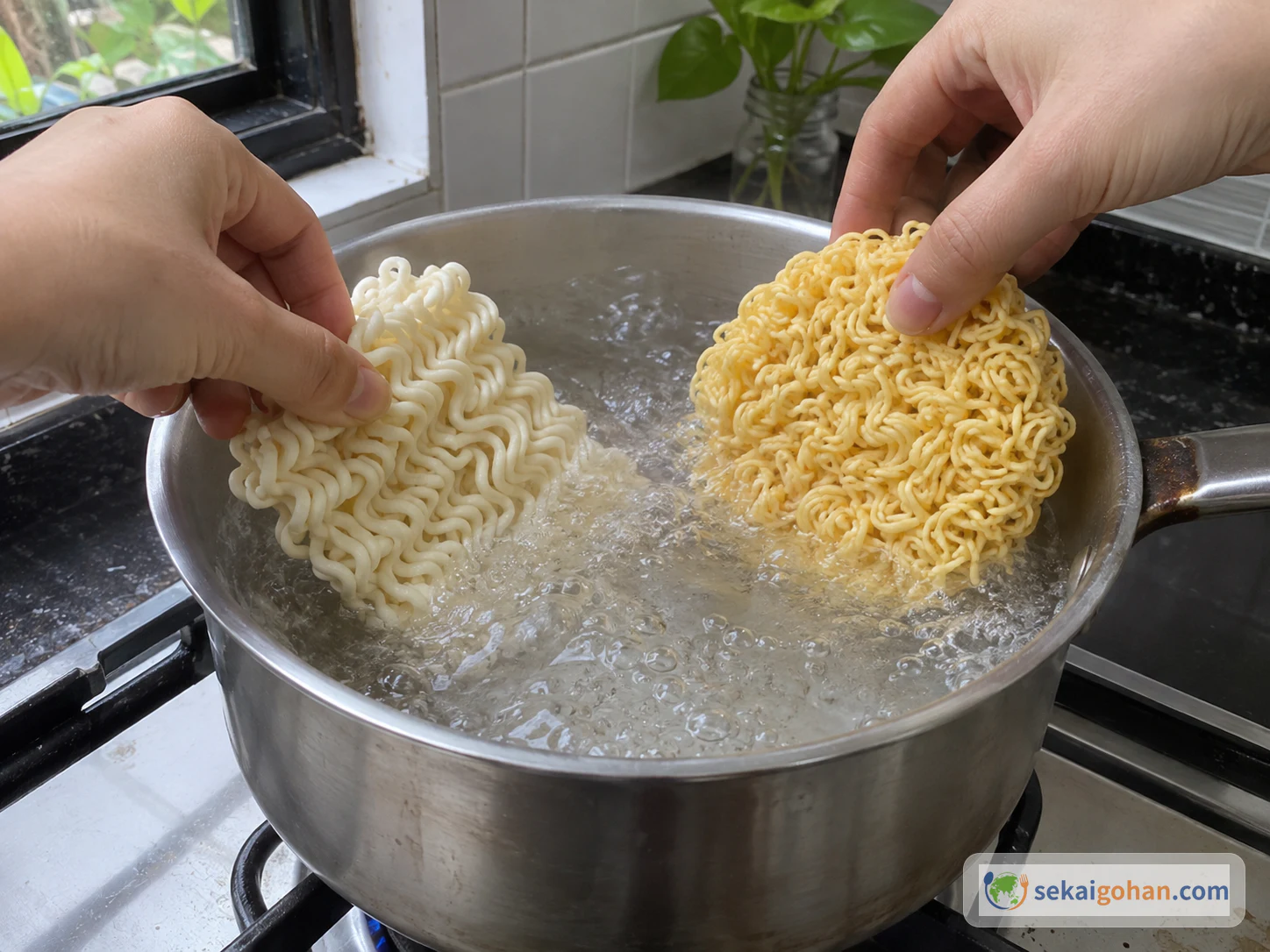
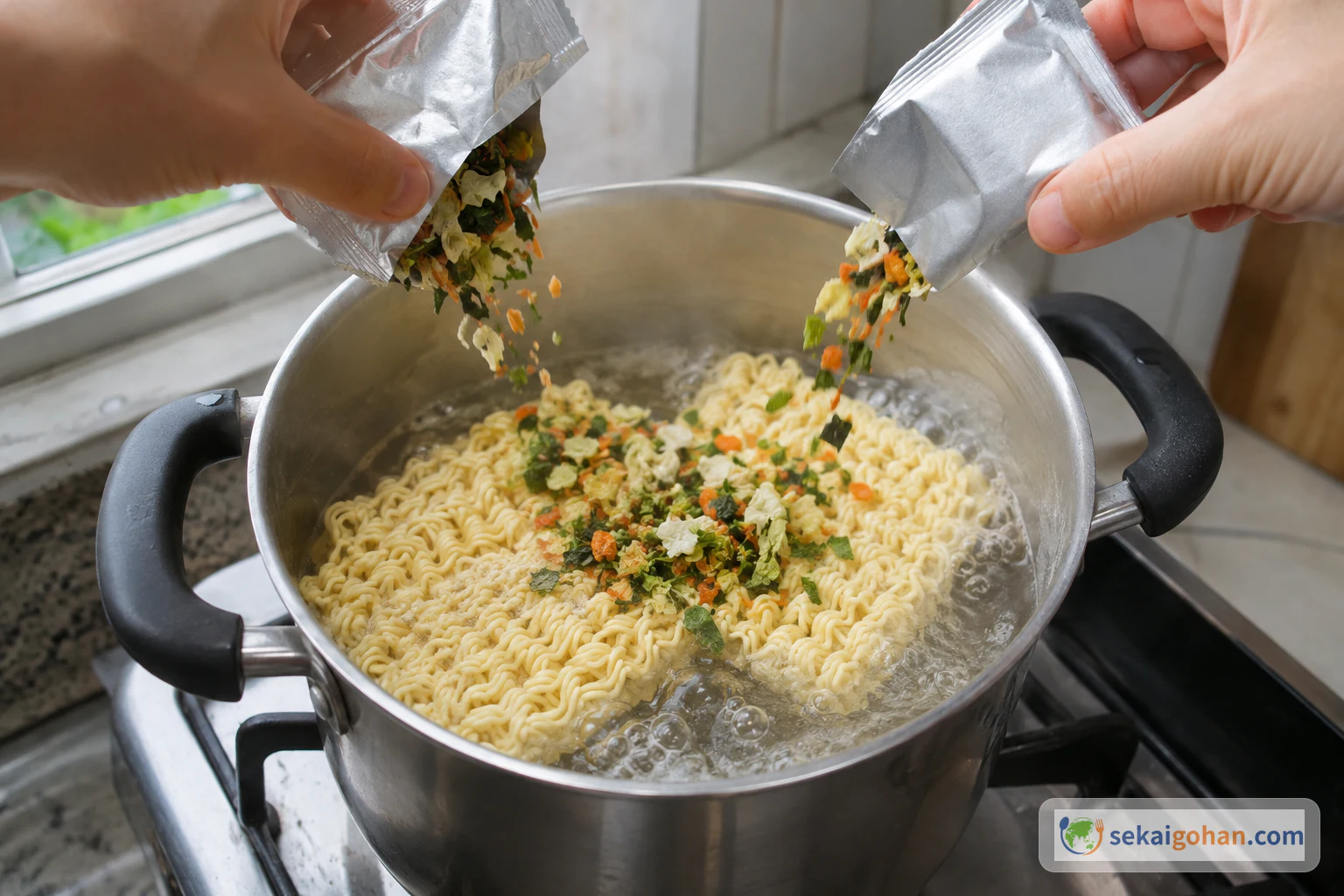
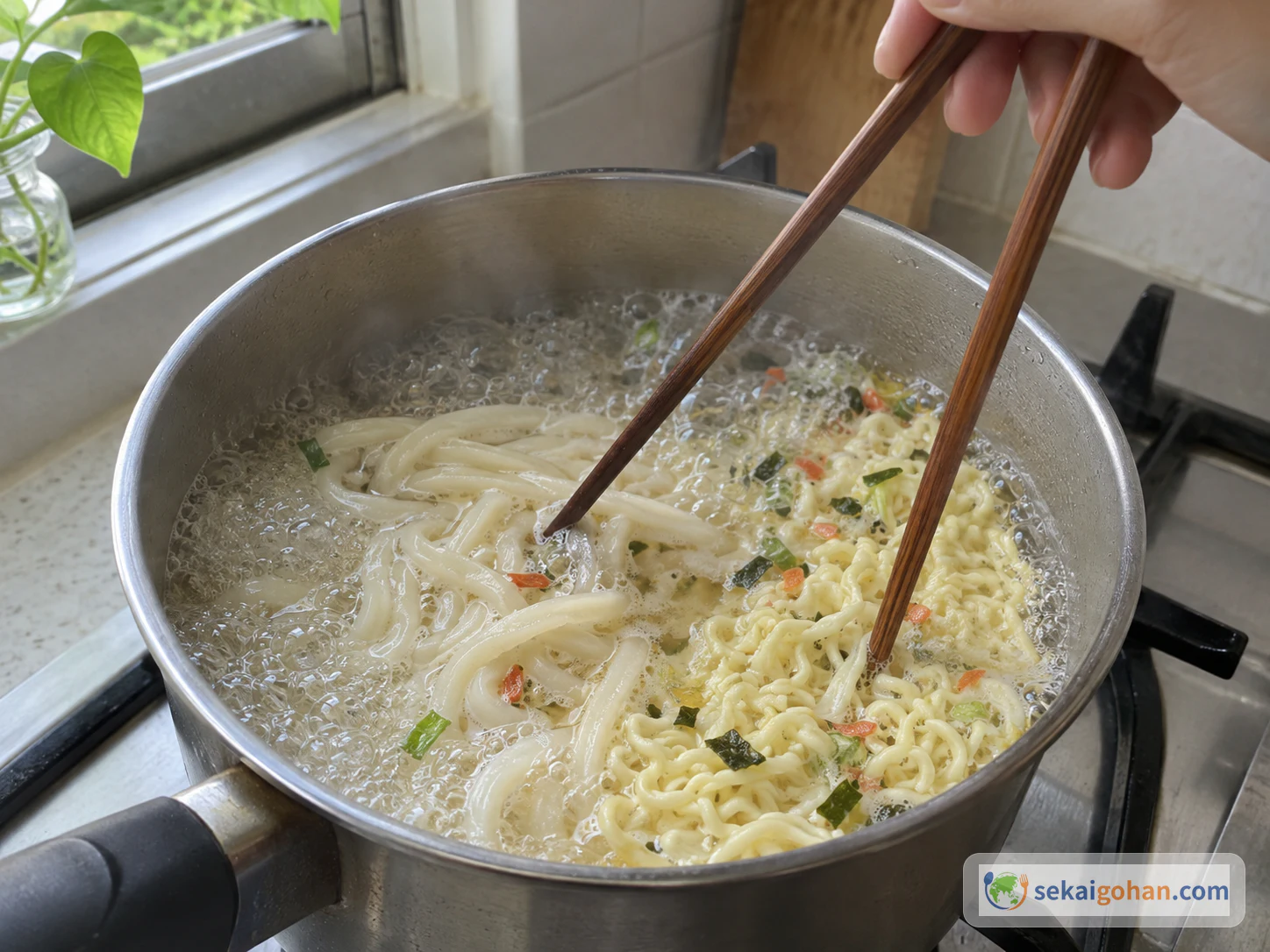
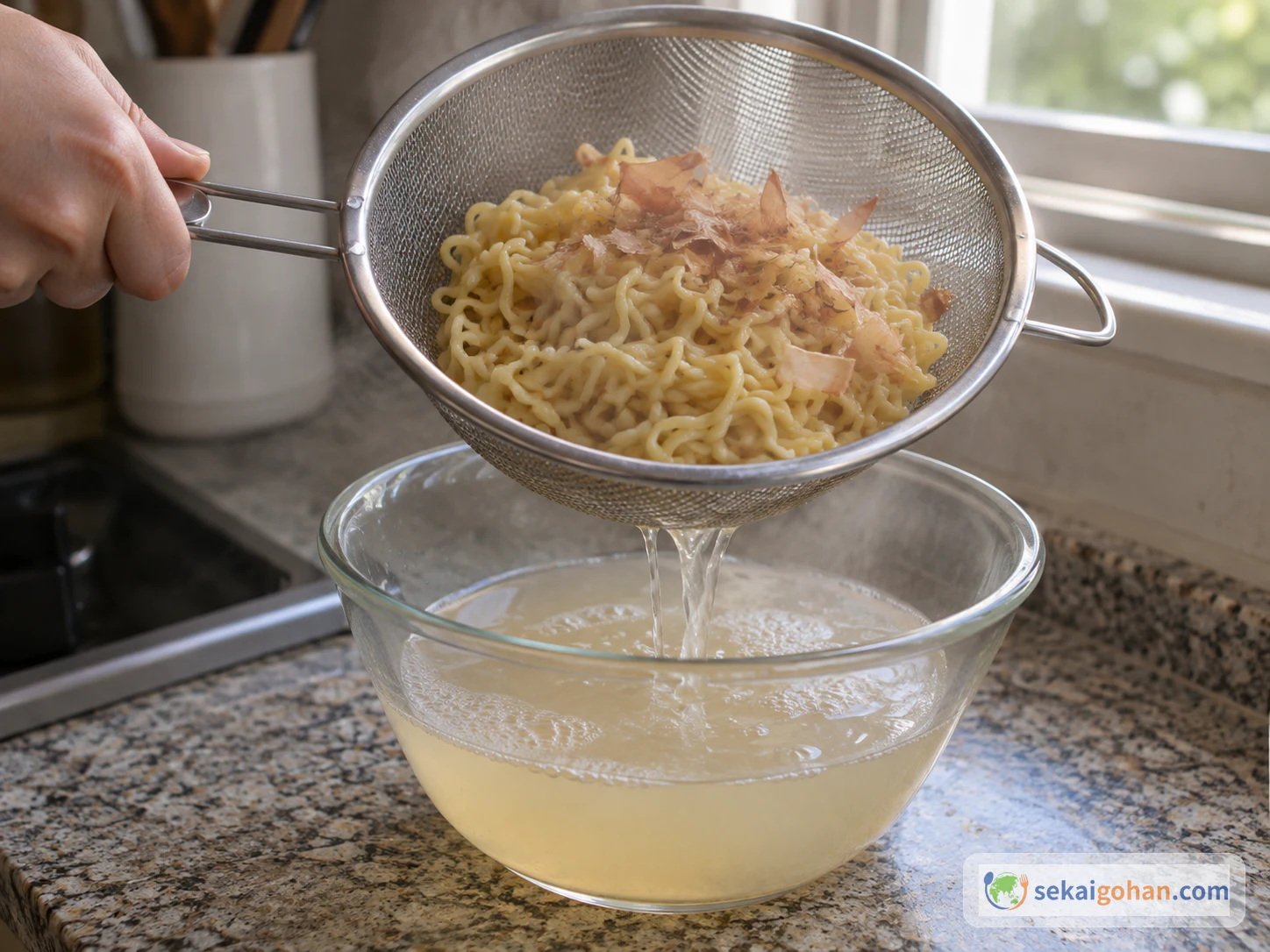
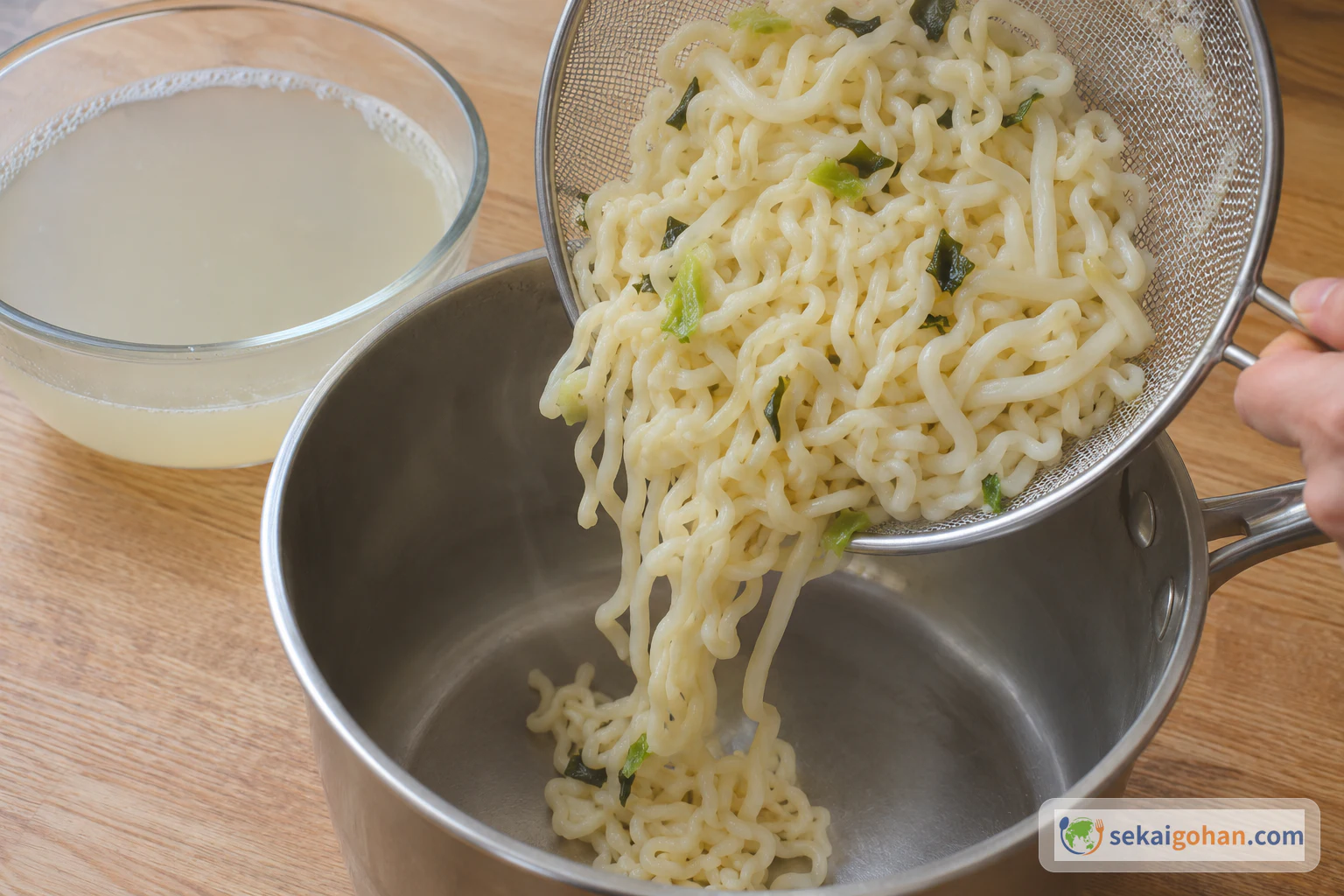
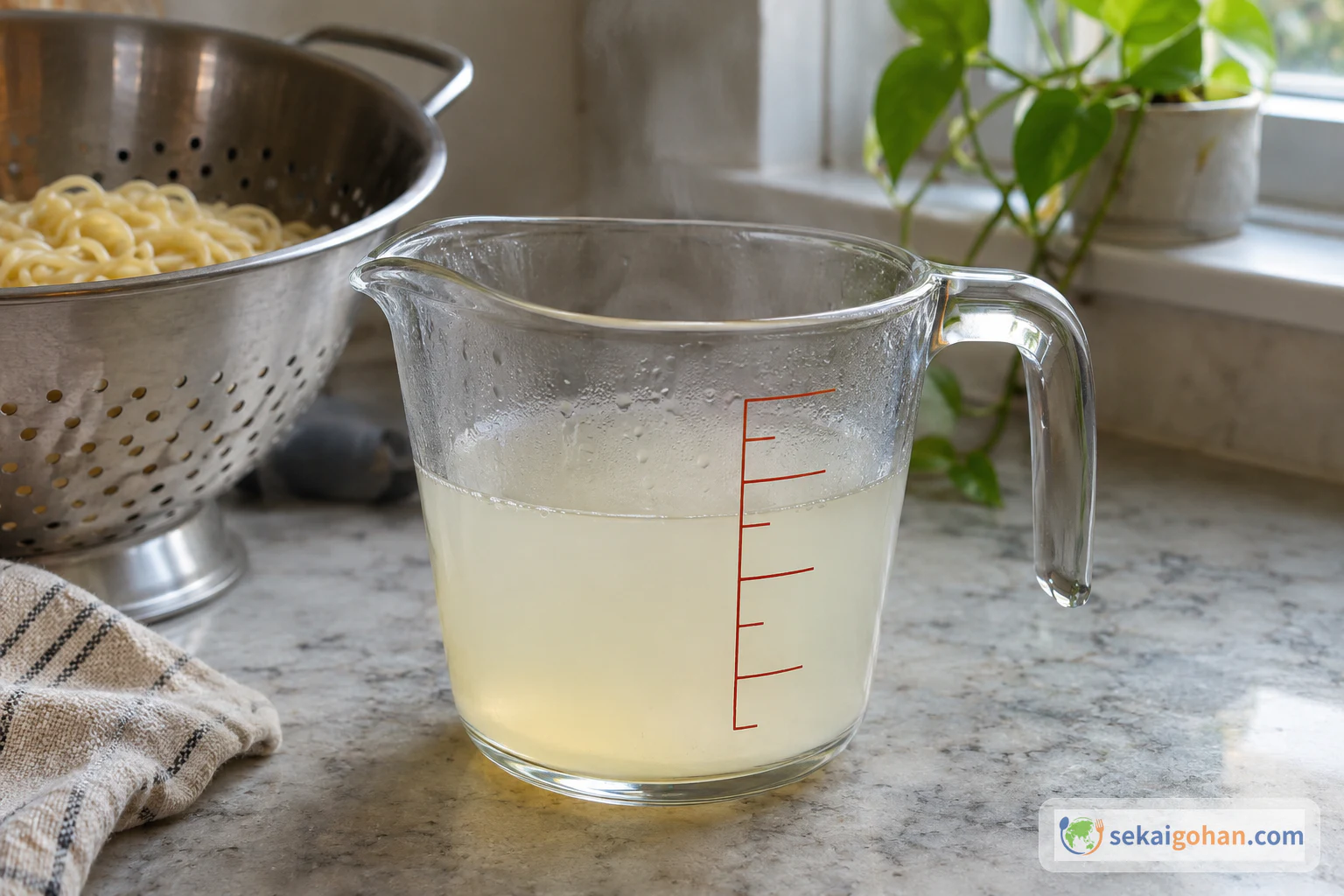
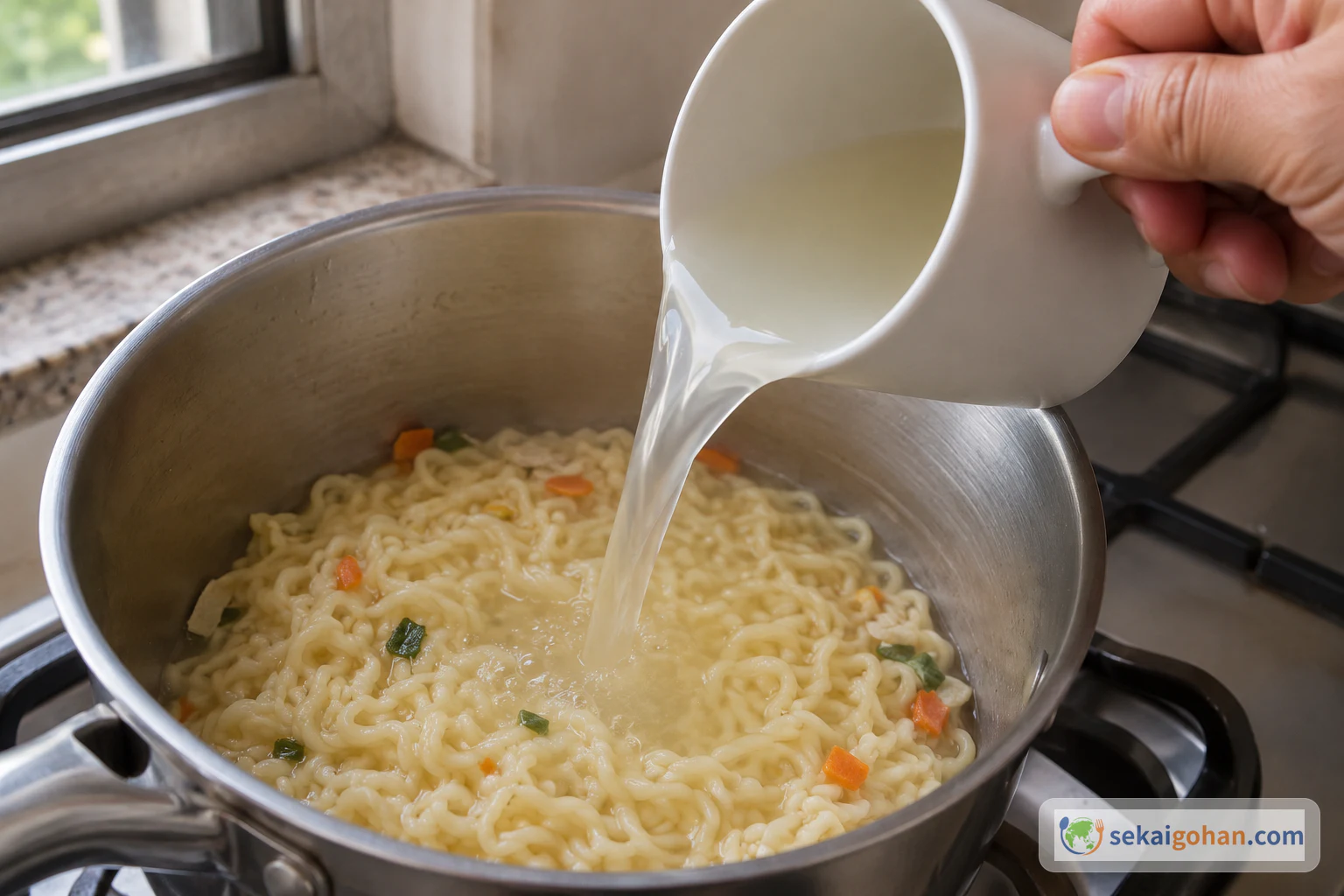
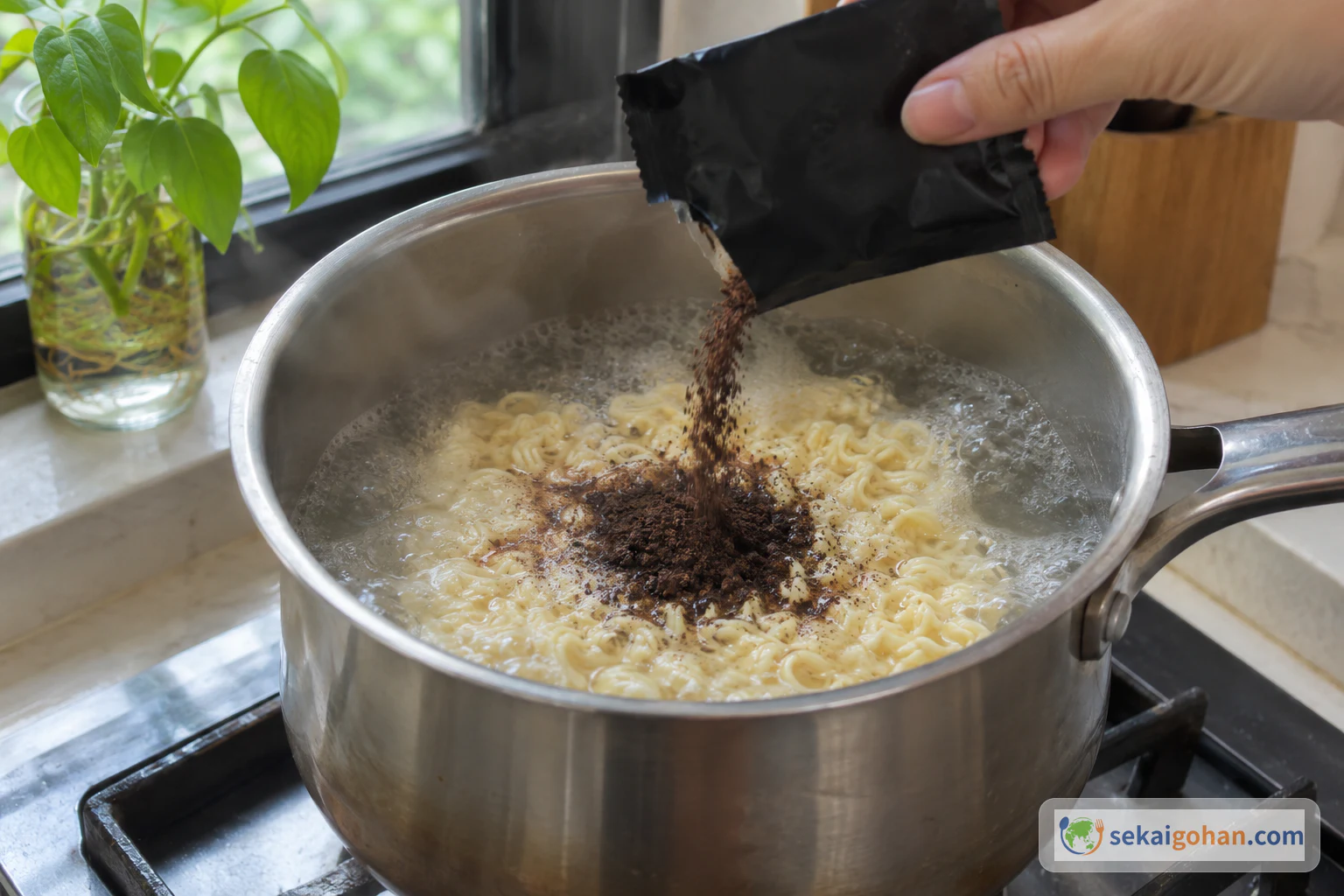
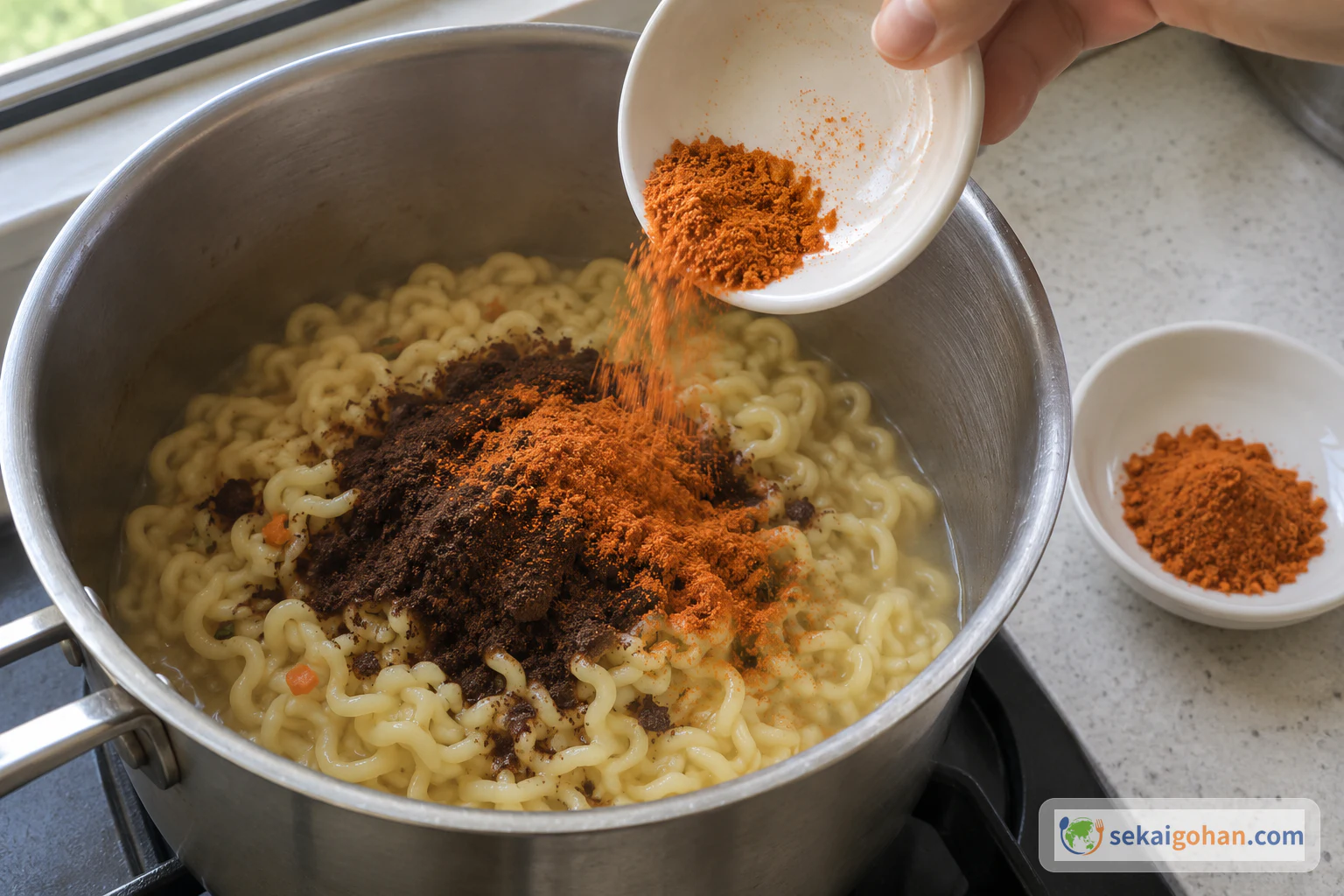
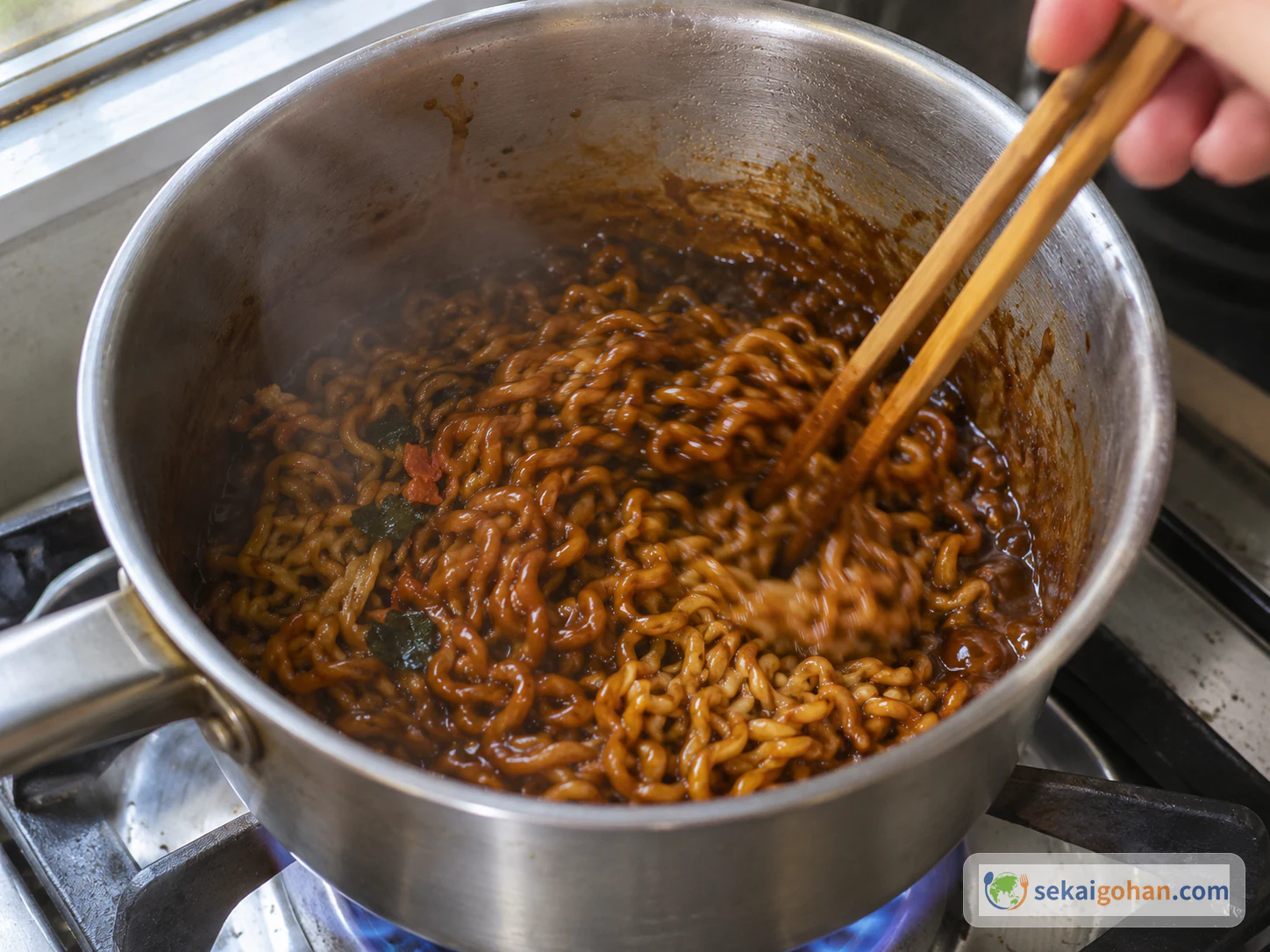
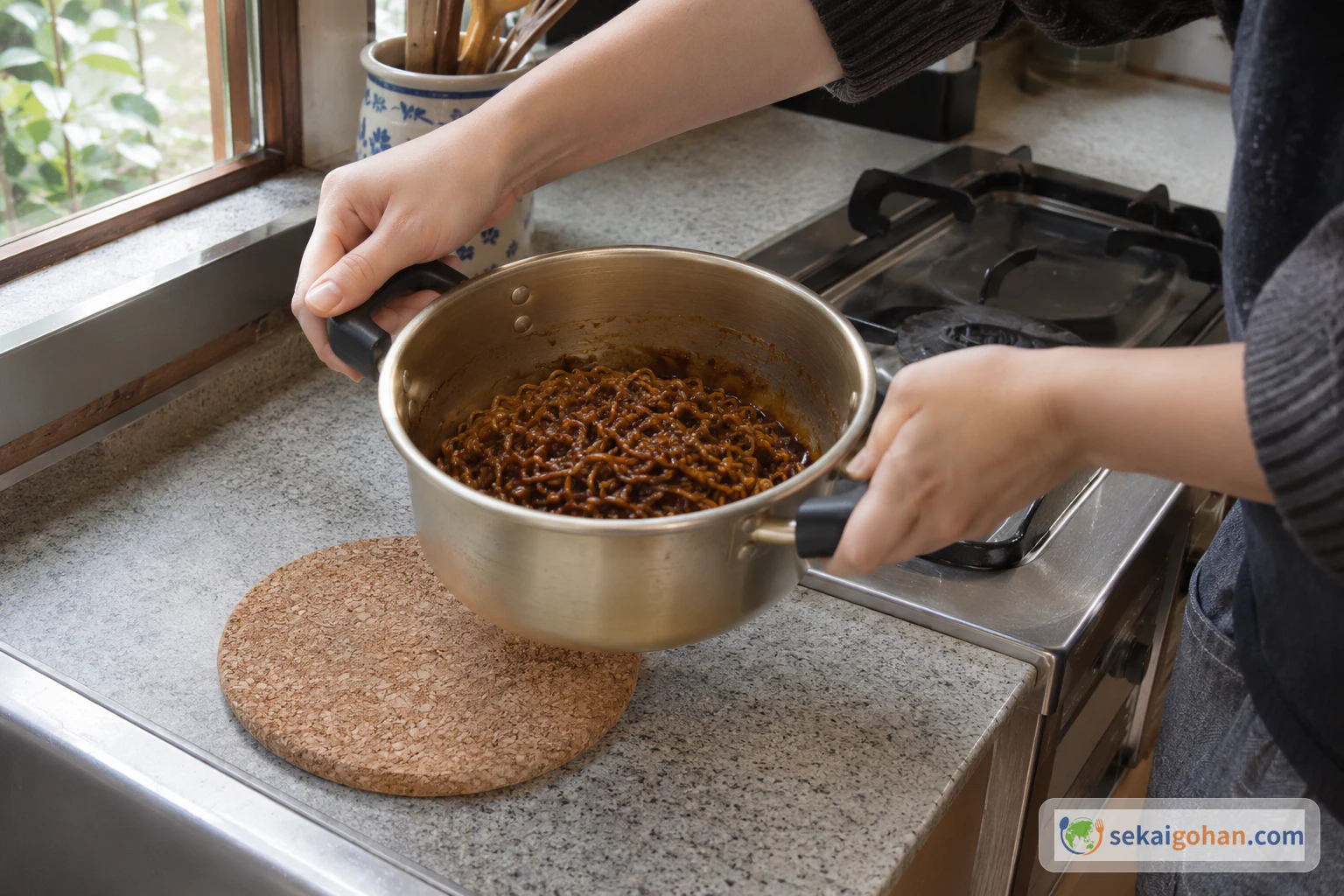
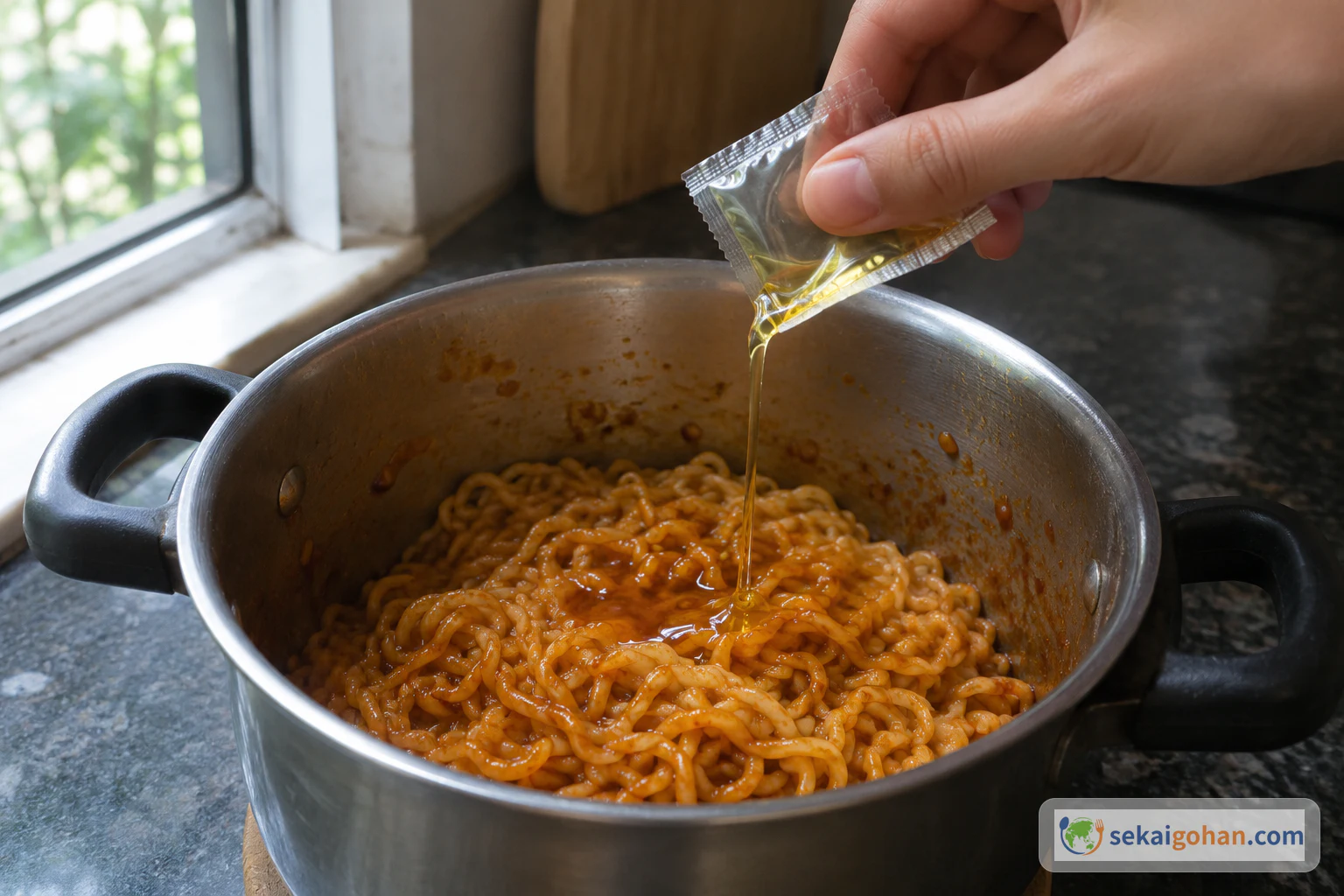
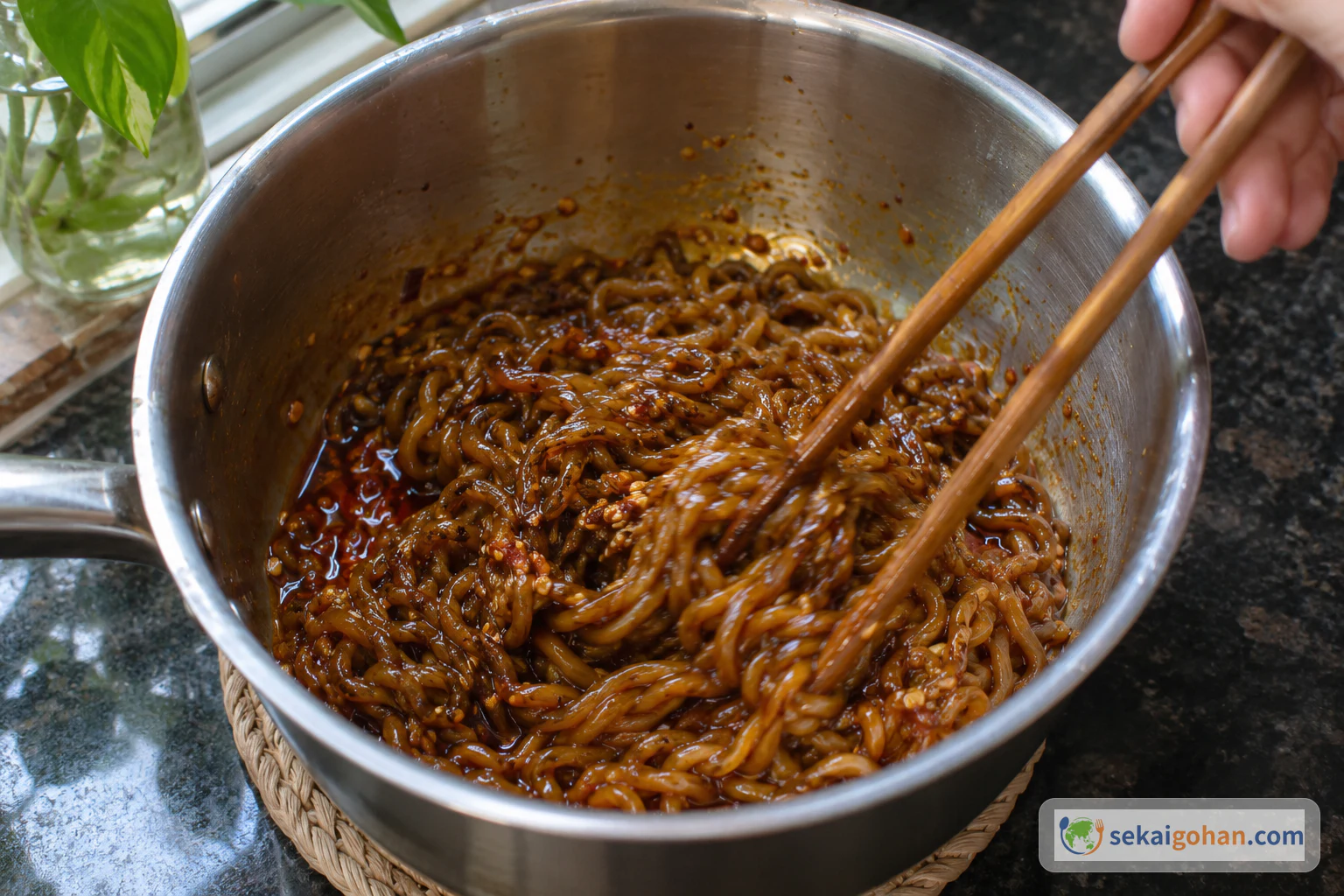
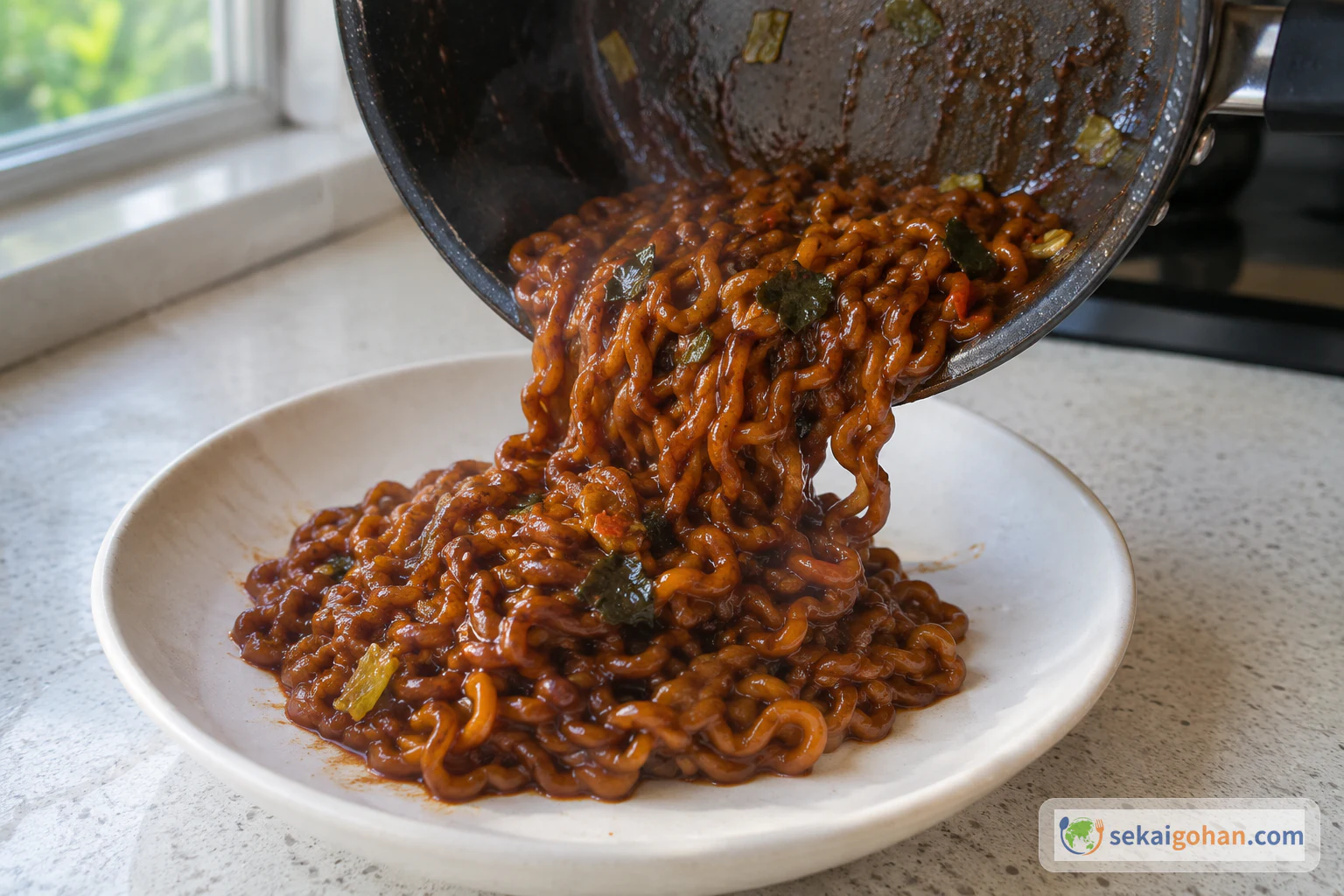
Two blocks of instant noodles go into one pot of boiling water, along with the dried vegetable flakes from both packages. A few minutes later, the drained noodles go back into the pot with a cup of their own cooking water, and the black-bean sauce powder turns everything glossy and nearly black, with a thread of heat running underneath. That's jjapaguri (짜파구리), also spelled chapaguri, made by cooking two Korean instant noodles together. Chapagetti brings a tangy-sweet black-bean flavor and Neoguri a spicy seafood taste, and one bag of each feeds two people, or one very hungry person.
Jjapaguri's Name and the Film Parasite
Jjapaguri brings together two products from the same maker, one sweet-savory and based on black beans, the other spicy with a seafood character. The name joins the start of Jjapagetti (the noodle sold as Chapagetti on English-language packaging) with the end of Neoguri. Who first combined the two, when, and how the habit spread are unknown.
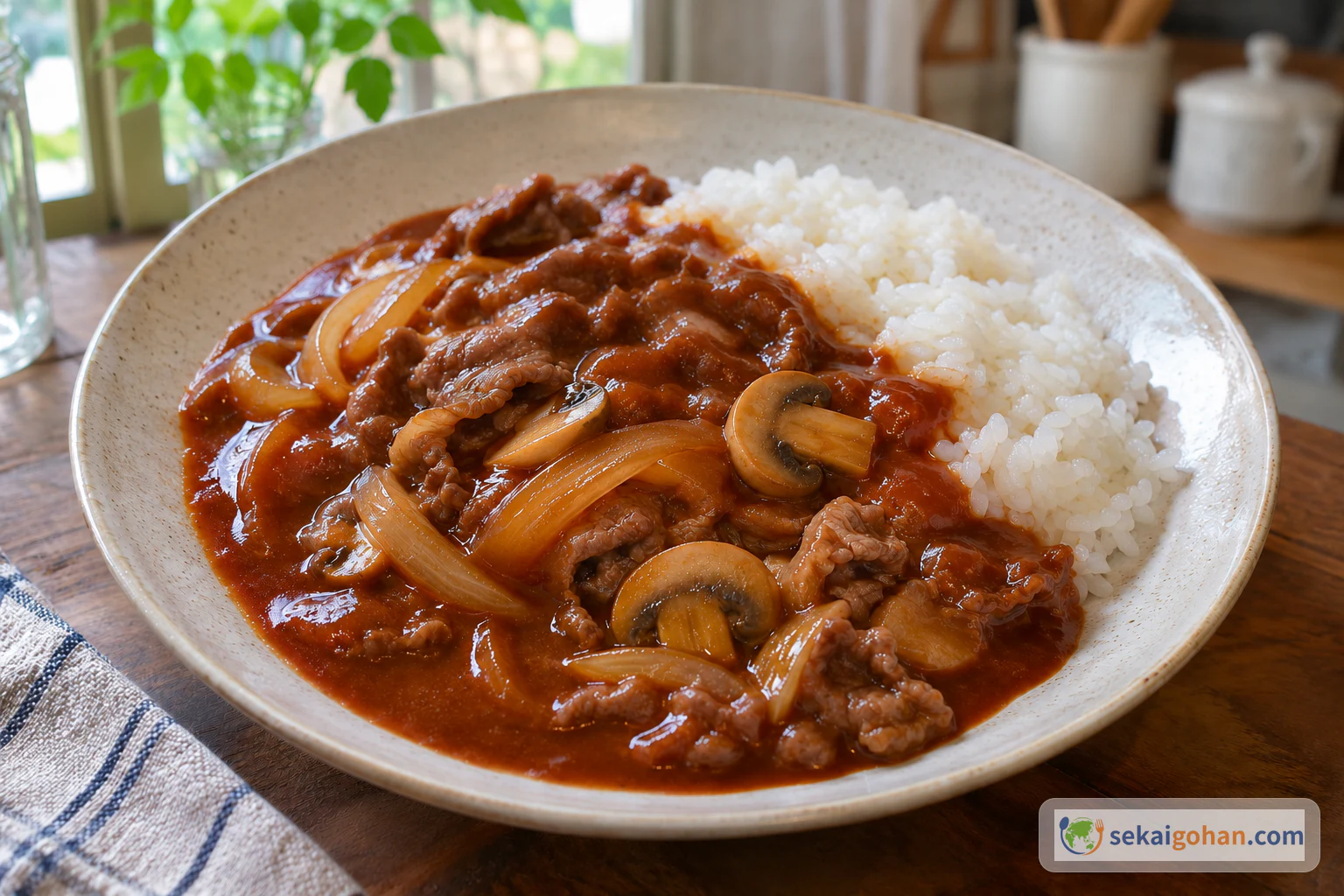
Many English-speaking readers first met the dish through Parasite, where the noodles are served with beef. The English subtitles call it "ram-don," a word coined from "ramen" and "udon." It isn't a Korean name for the dish, which is simply 짜파구리. For more dishes from the same country, see Korean food.
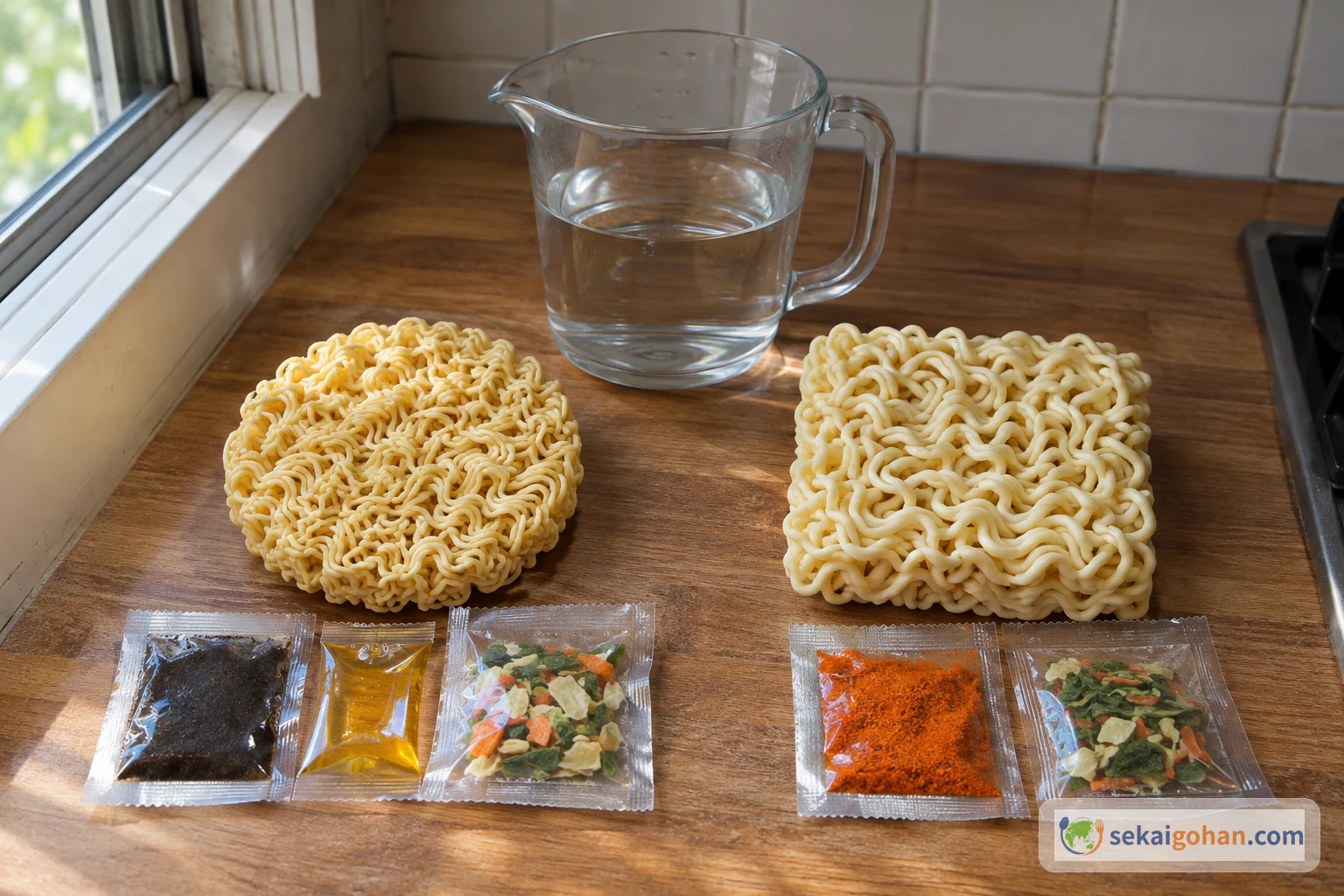
Ingredients: One Package of Each Noodle
Equipment
- Medium pot
- Tongs or long cooking chopsticks
- Strainer
- Medium heat-proof bowl to catch the noodle water
- Measuring cup
- Large serving plate
Choosing the Jjapaguri Noodles and Sachets
The flavor comes from these two products and their own sachets. Other brands of noodles, a different black-bean seasoning, or a seafood stock in their place will change the taste. The finishing oil is the seasoning oil sachet from the Chapagetti package, not the salad oil from your cupboard.
Sachet contents, net weights and allergen labels differ by market and product version, so read the allergens and ingredients on the packages you actually bought. The cup-noodle versions of the same brands have different products and sachets, so don't go by their labels.
You strain boiling noodle water into a bowl and then measure it, so set a stable, heat-proof bowl under the strainer before you start pouring. Handle the measuring cup and the pot with care to avoid burns.
Method: Short Boil First, Then Mix the Sauce
There are two timed stages: 2–3 minutes of boiling, then 1–2 minutes of mixing after the sauce goes in. In between, you strain the noodles and return some of the water. The oil goes in last, off the heat.
Jjapaguri Troubleshooting
| What happened | What to check |
|---|---|
| No water left for the sauce | The 1 cup comes from the strained noodle water, so always strain over a bowl, not straight into the sink |
| The noodles cooked unevenly or stuck together | Separate the two kinds with tongs or chopsticks during the 2–3 minute boil |
| Hotter or saltier than expected | Only half of the Neoguri spicy powder goes in; make the half-powder version first |
| The finish tastes different | Use the Chapagetti oil sachet, not a bottled oil, and add it after the pot is off the heat |
| The sachets don't match this description | Product versions differ by market, so read your packages and expect some difference |
Jjapaguri Variations
The steak version. This upgraded jjapaguri, modeled on the film Parasite, adds Korean hanwoo beef and uses butter. The steak is optional. In the United States, top-quality ribeye is a close substitute for hanwoo.
Other brands or added toppings. Swapping in other noodles or adding vegetables, egg or kimchi gives you a different dish. It can still be a good meal, so treat it as your own variation.
Frequently Asked Questions
Do I really need two different instant noodles?
Yes, one package of Chapagetti and one of Neoguri. The contrast between the two is the point of the dish.
Why only half of the Neoguri spicy powder?
Adding all of it makes the dish noticeably spicier and saltier. Start with half, and see how you like it.
Why not drain all the water?
You need 1 cup of the strained noodle water back in the pot. It turns the powders into a sauce that coats the noodles while you mix.