Jjamppong: Korean-Chinese Spicy Seafood Noodle Soup (짬뽕)

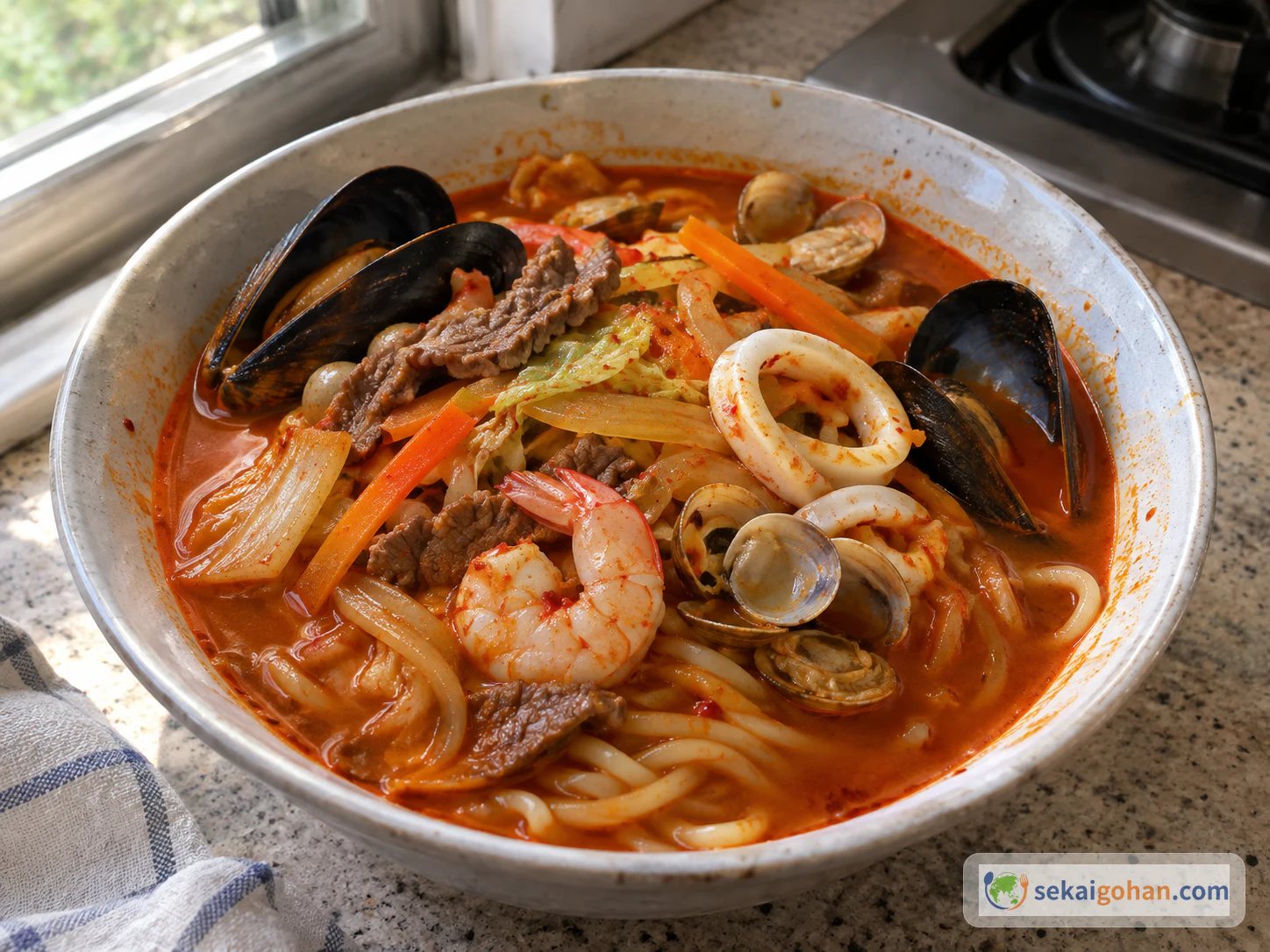
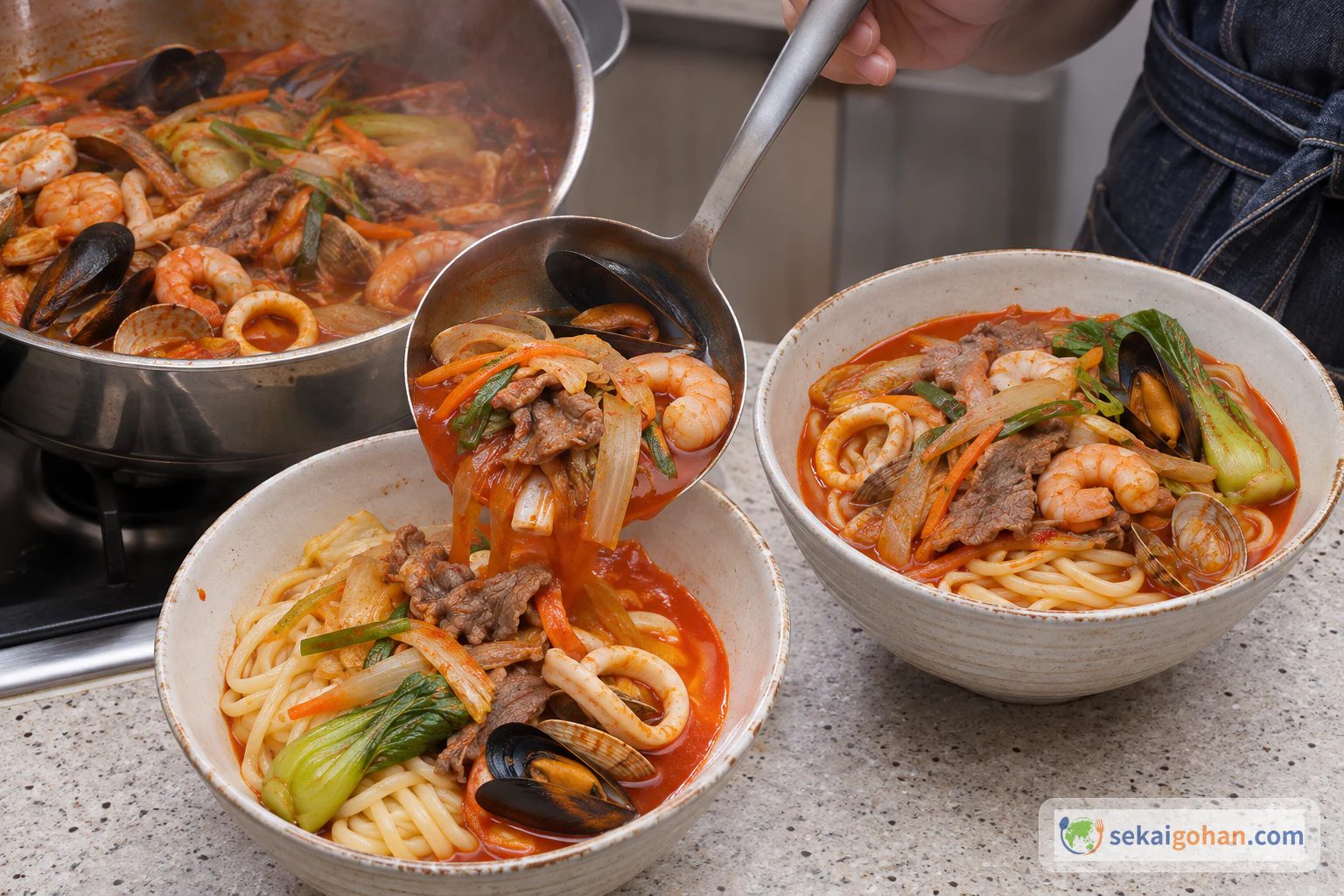
Korean-Chinese jjamppong in red chili broth topped with beef, mussels, clams, shrimp, squid and vegetables
Serves
2 servings
Cuisine
Korean-Chinese

How to make jjamppong (짬뽕), the red, spicy Korean-Chinese noodle soup with mussels, clams, shrimp, squid, thin beef and vegetables in an anchovy-kelp stock. A two-serving recipe in US measures, covering how to bloom gochugaru in oil without burning it, how to prepare shellfish, how to cook and rinse the noodles, separate food-safety guidance for shellfish and meat, and how the dish differs from Nagasaki champon.

Cooking flow

Cooking steps

STEP11 / 13

Make the anchovy-kelp stock

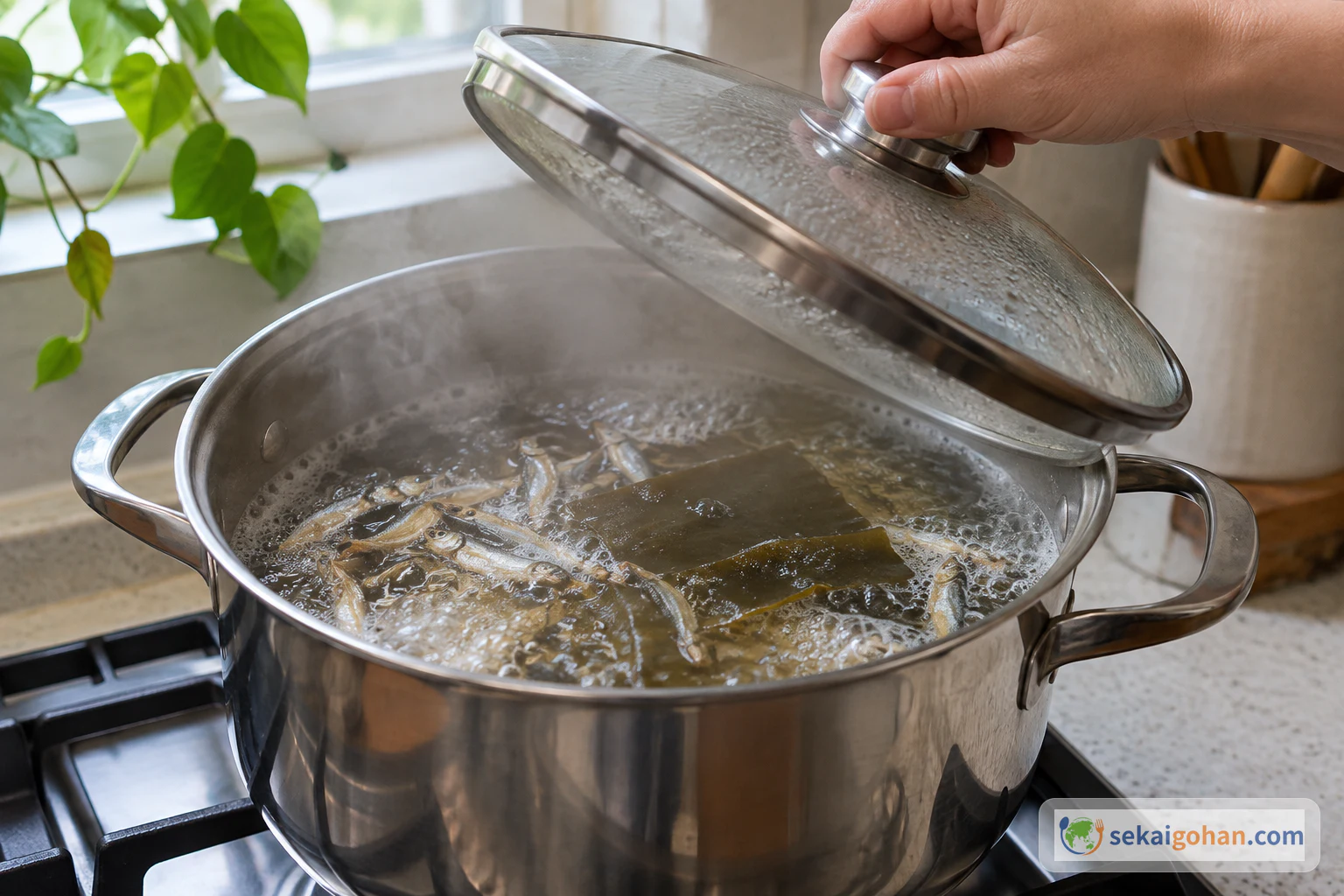
Anchovy-kelp stock cooking over medium-high heat for 20 minutes

Pull the heads off the dried anchovies and remove the dark guts. Put 12 cups of water, the 1 oz of cleaned anchovies and the piece of kelp in a large pot, then cover it. Cook over medium-high heat for 20 minutes. Turn the heat down to low and simmer for another 20 minutes.

STEP22 / 13

Strain and measure the stock

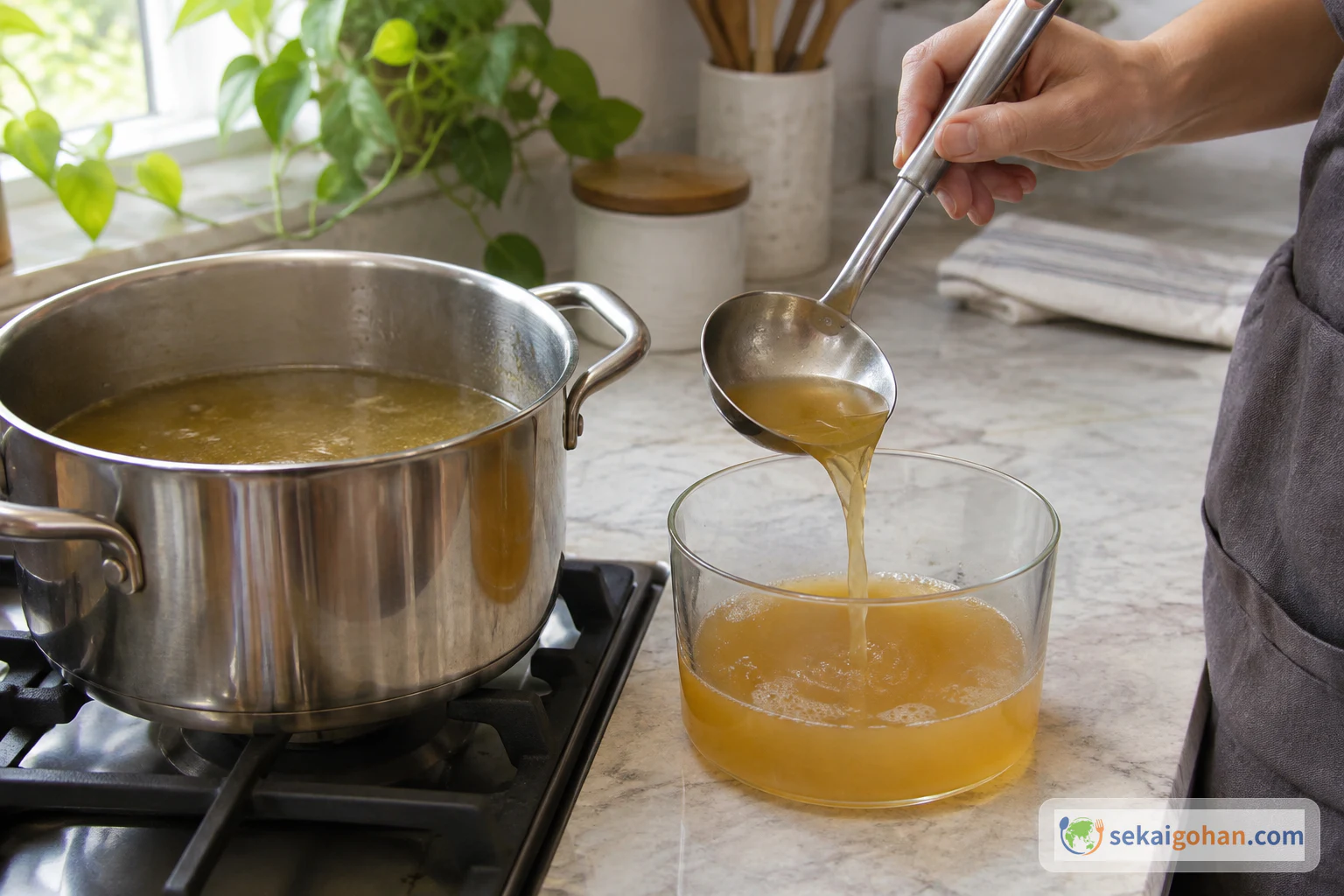
Measuring 6 cups from the 8–10 cups of strained stock

Pour the stock through a fine-mesh strainer into a heatproof bowl or pot, and discard the anchovies and kelp. You will have 8–10 cups of strained stock. Measure out 6 cups for the soup. The rest is not used in this pot.

STEP33 / 13

Cut the green onions, leek and cabbage

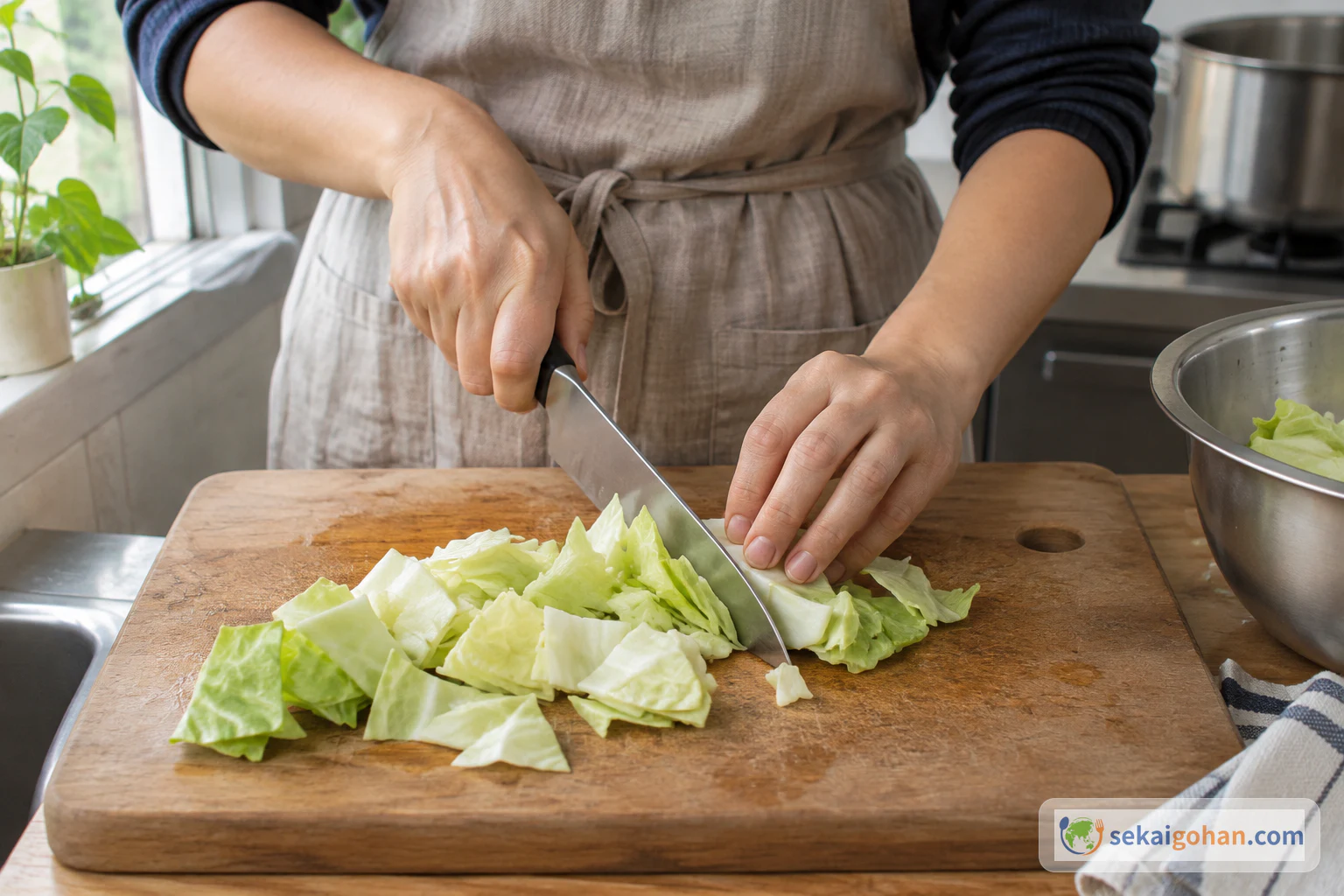
Cutting three large cabbage leaves into bite-size pieces

Wash the 4 green onions and cut them into 2-inch lengths. Wash the 2 oz of leek well and cut it into strips 0.5 inch wide and 2 inches long. Cut the 3 large cabbage leaves into bite-size pieces.

STEP44 / 13

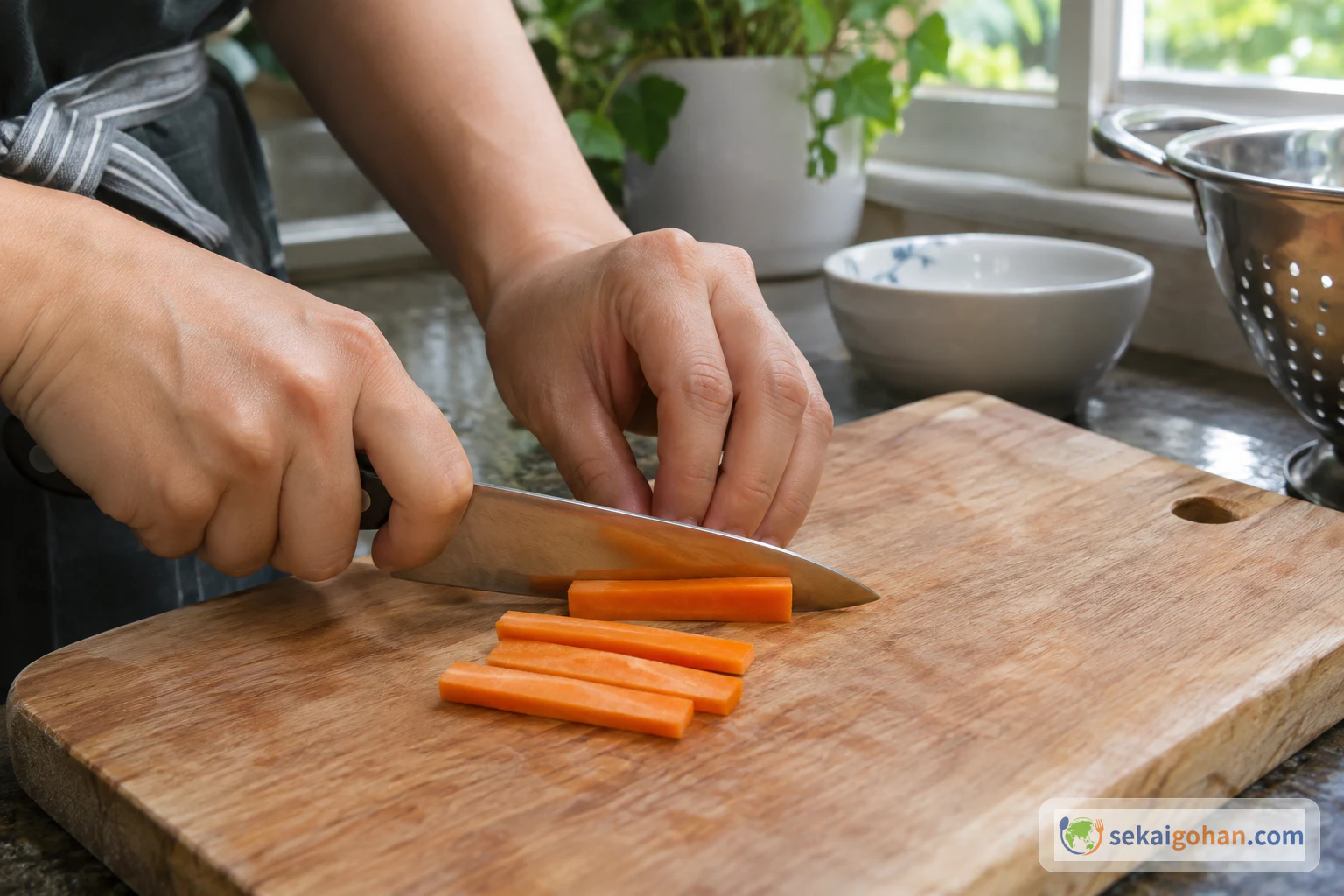
Cut the onion and carrot, and wash the bok choy

Peeling a small carrot and cutting it into 2-inch strips

Thinly slice the 4 oz of onion. Peel the small carrot and cut it into 2-inch strips. Wash the 4 oz of bok choy and let it drain.

STEP55 / 13

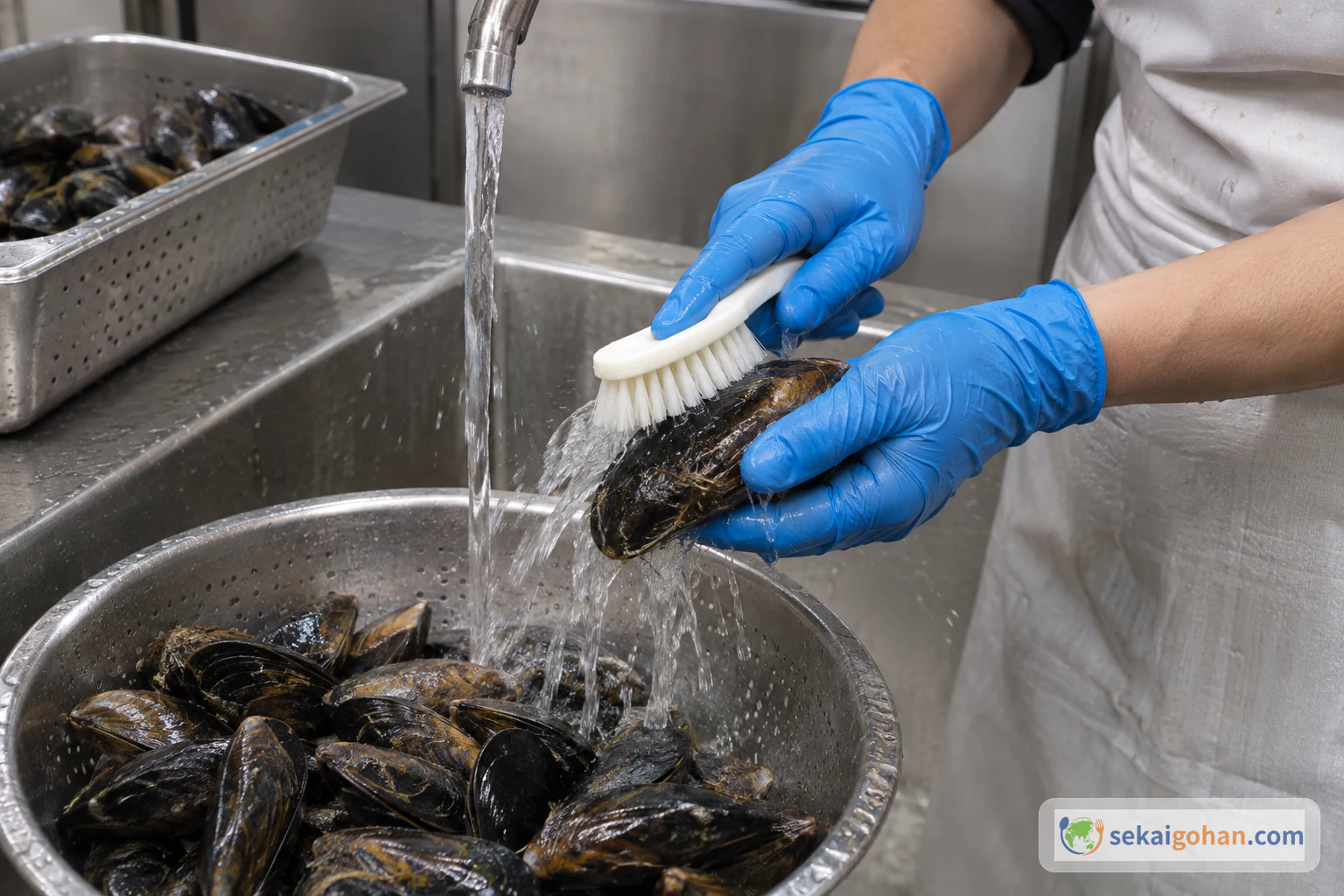
Scrub the mussels and wash the clams

Scrubbing mussels under running water

Scrub the 8 mussels under clean running water, working in an area kept for raw seafood. Discard any with cracked or broken shells. Pull the fibrous beard off each mussel. Rinse the 24 small clams in a colander and discard any with cracked or broken shells.

STEP66 / 13

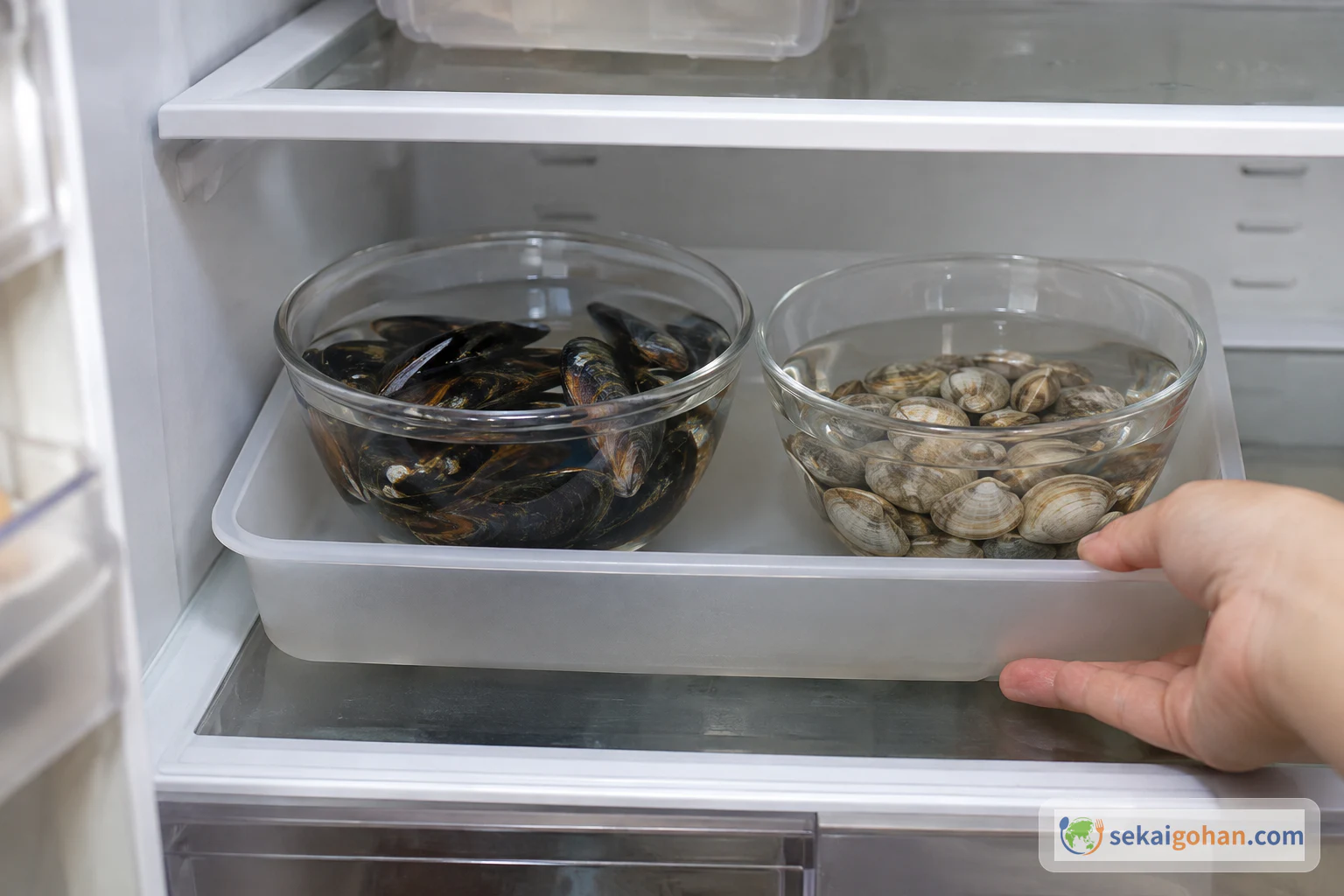
Soak and rinse the shellfish

Edible mussels and clams in separate bowls of salt water, placed in the refrigerator

Put the mussels and the clams in separate bowls of salt water. Set them on a tray in the refrigerator, away from ready-to-eat foods, and leave them for a few hours. Handle them according to the product label. Lift the shellfish out of the salt water and rinse them in a colander under clean running water. Keep them refrigerated until they go into the wok.

STEP77 / 13

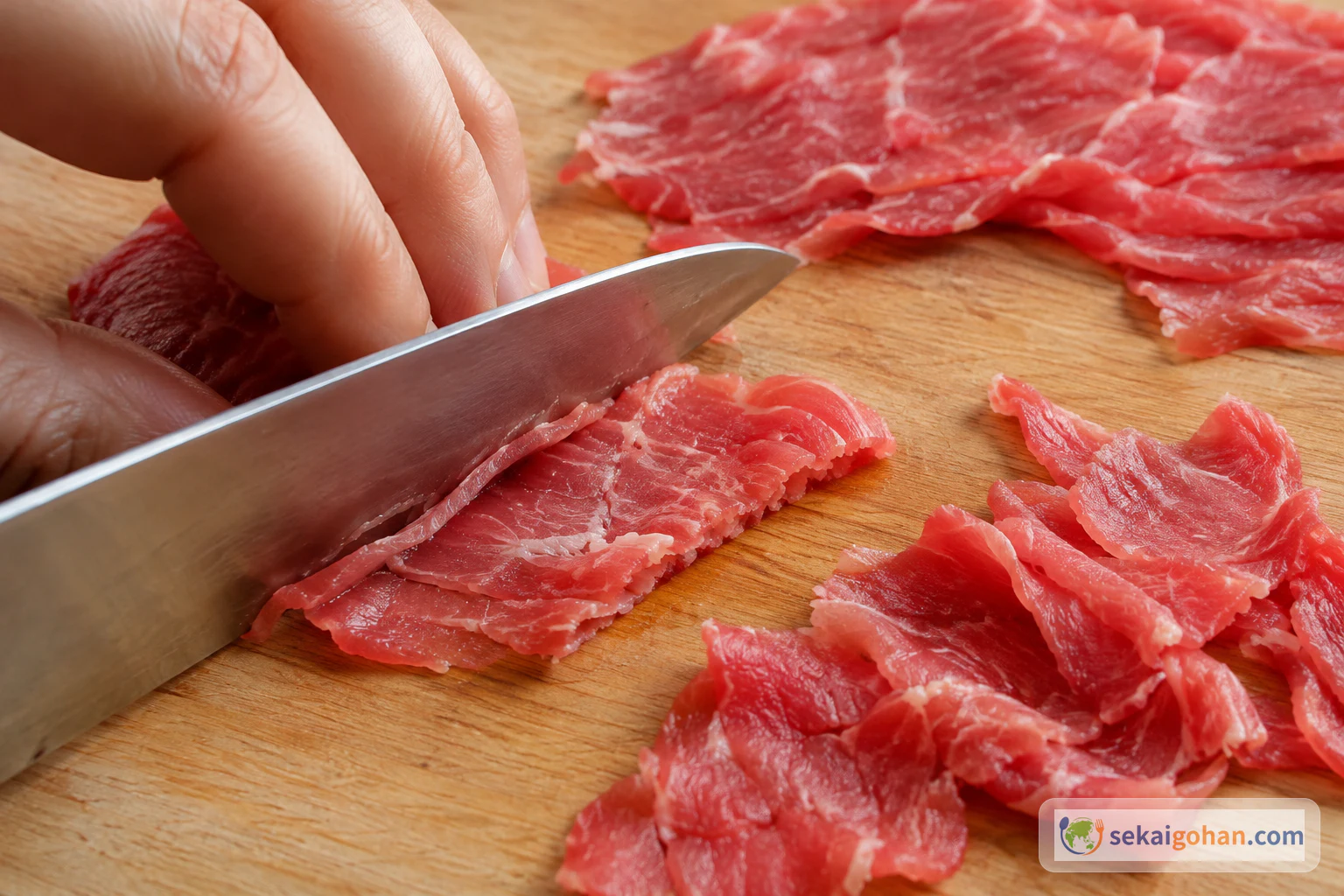
Prepare the shrimp, squid and beef, and mix the pepper paste

Cutting 4 oz of thinly sliced beef into bite-size pieces

Peel the 4 shrimp and remove the dark vein along the back. Using only the cleaned body, with the guts removed, cut the 4 oz of squid into rings. Cut the 4 oz of thinly sliced beef into bite-size pieces, then wash the board, knife and your hands before handling other foods. In a small bowl, mix 2 tbsp of the gochugaru with the 1 tsp of toasted sesame oil and set it aside. Keep the remaining 3 tbsp of gochugaru for frying in the wok.

STEP88 / 13

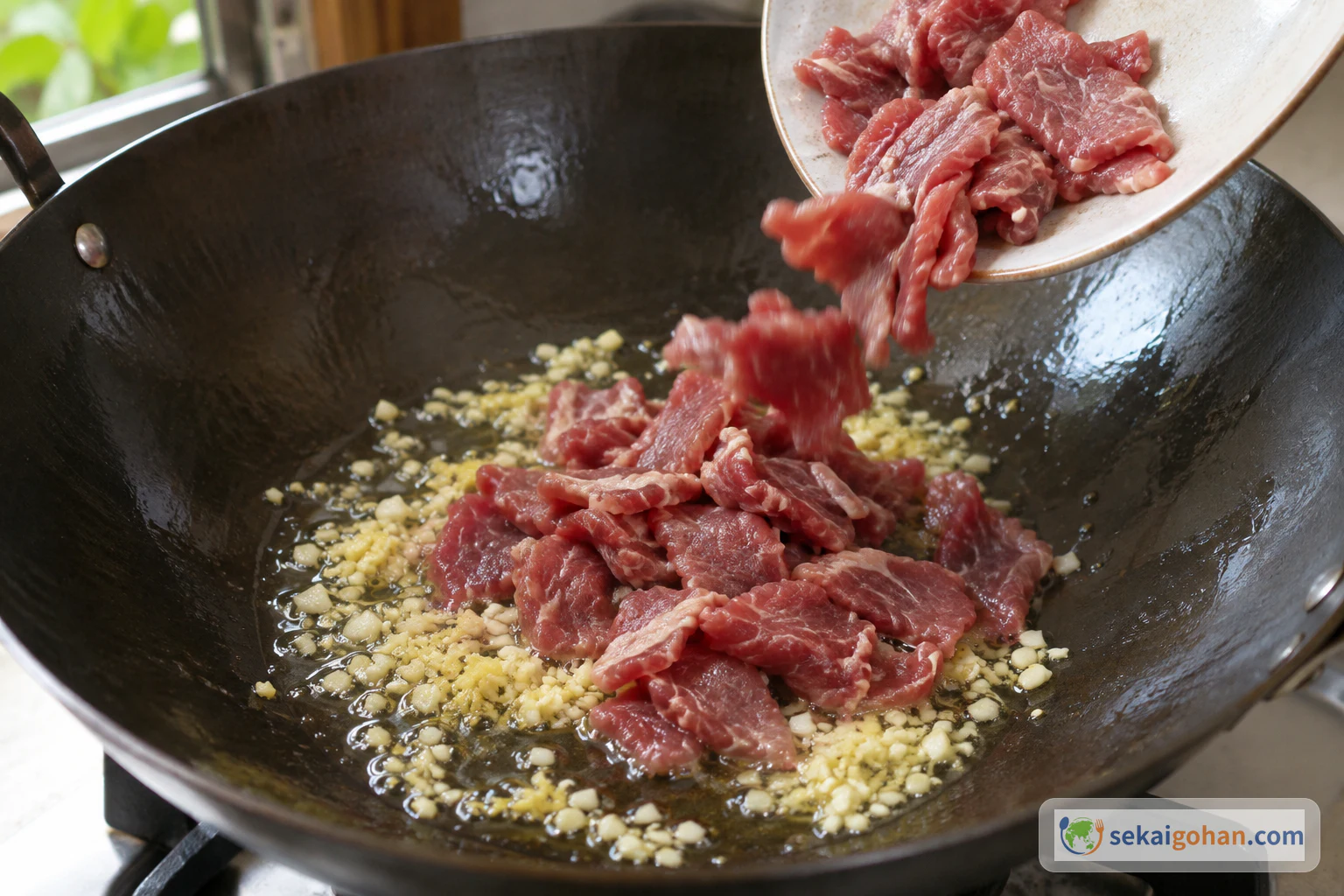
Stir-fry the garlic, ginger and beef

Adding the beef and stir-frying until slightly cooked

Set the empty wok over high heat and let it get hot. Add the 1/4 cup of vegetable oil, 1 tbsp of garlic and 1 tsp of ginger, and stir-fry for about 20 seconds. Add the beef and stir-fry until it is slightly cooked. It finishes cooking in the soup later.

STEP99 / 13

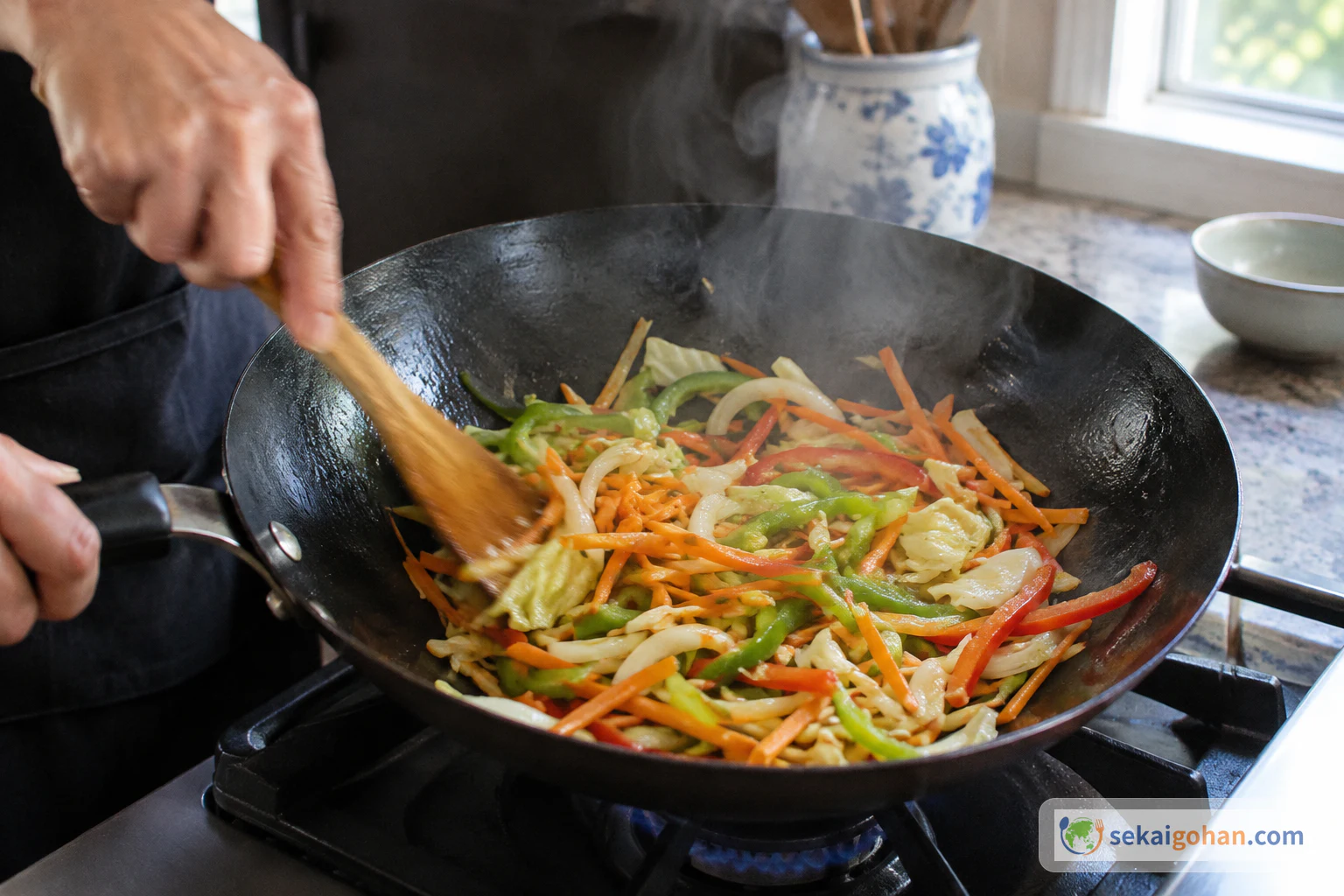
Fry the gochugaru and stir-fry the vegetables

Stir-frying green onions, leek, cabbage, onion and carrot for 3–4 minutes

Push the beef, garlic and ginger to the edge of the wok so that the oil collects in the open space. Add the remaining 3 tbsp of gochugaru to the pooled oil and stir it for about 1 minute, without letting it burn. Stir the beef and aromatics into the red pepper oil until everything is coated. Add the green onions, leek, cabbage, onion and carrot, and stir-fry for 3–4 minutes.

STEP1010 / 13

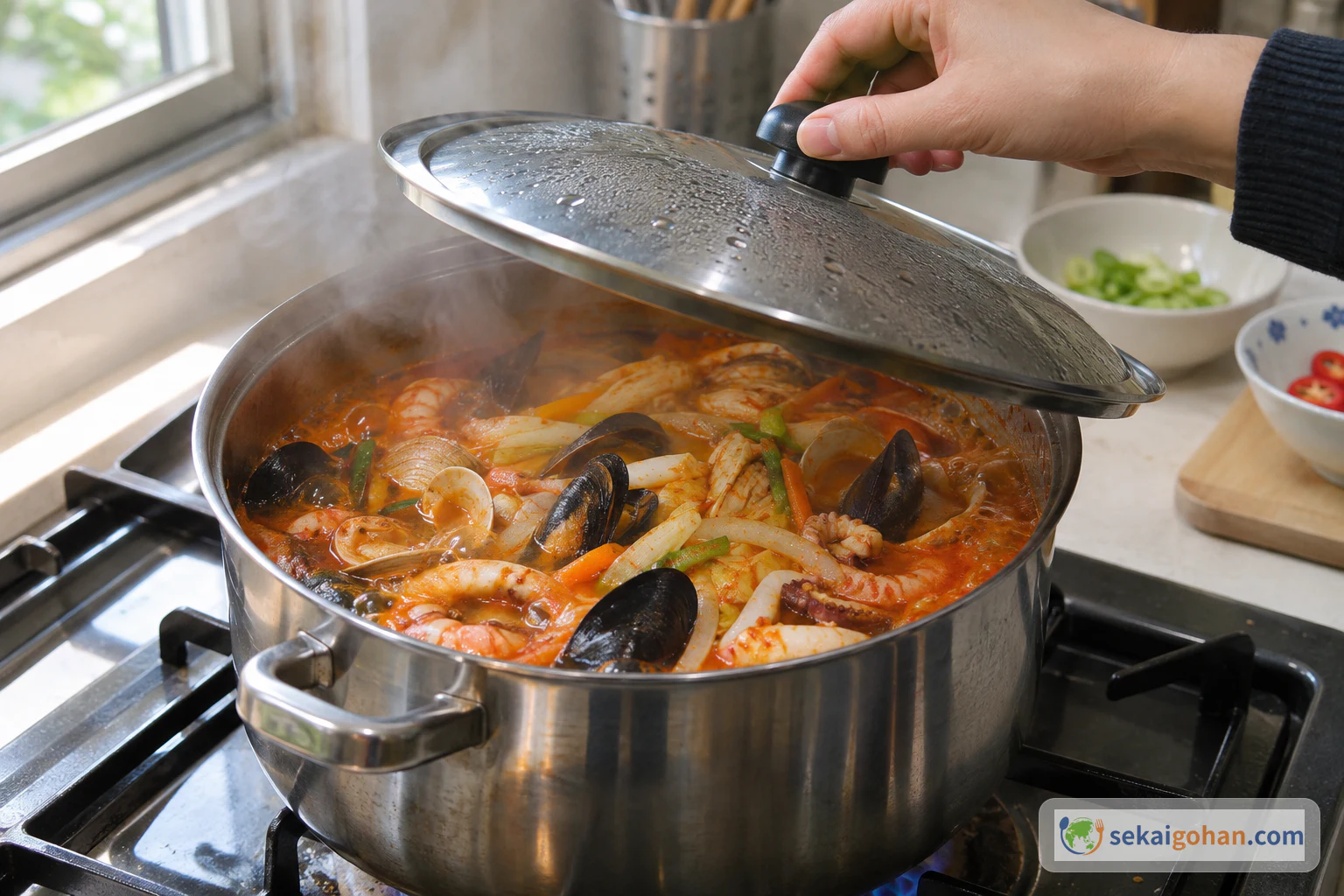
Add the stock and seafood, and cook through

After 7–8 minutes of covered cooking, the doneness is checked separately

Pour in the 6 cups of stock. Add the mussels, shrimp, squid, the 24 clams and the bok choy. Cover and cook for 7–8 minutes. Then check with a food thermometer and keep heating as needed until the center of the shellfish reaches 85–90°C for at least 90 seconds and the beef reaches 75°C at the center for at least 1 minute. The shrimp should be opaque. Discard any mussels or clams that have not opened.

STEP1111 / 13

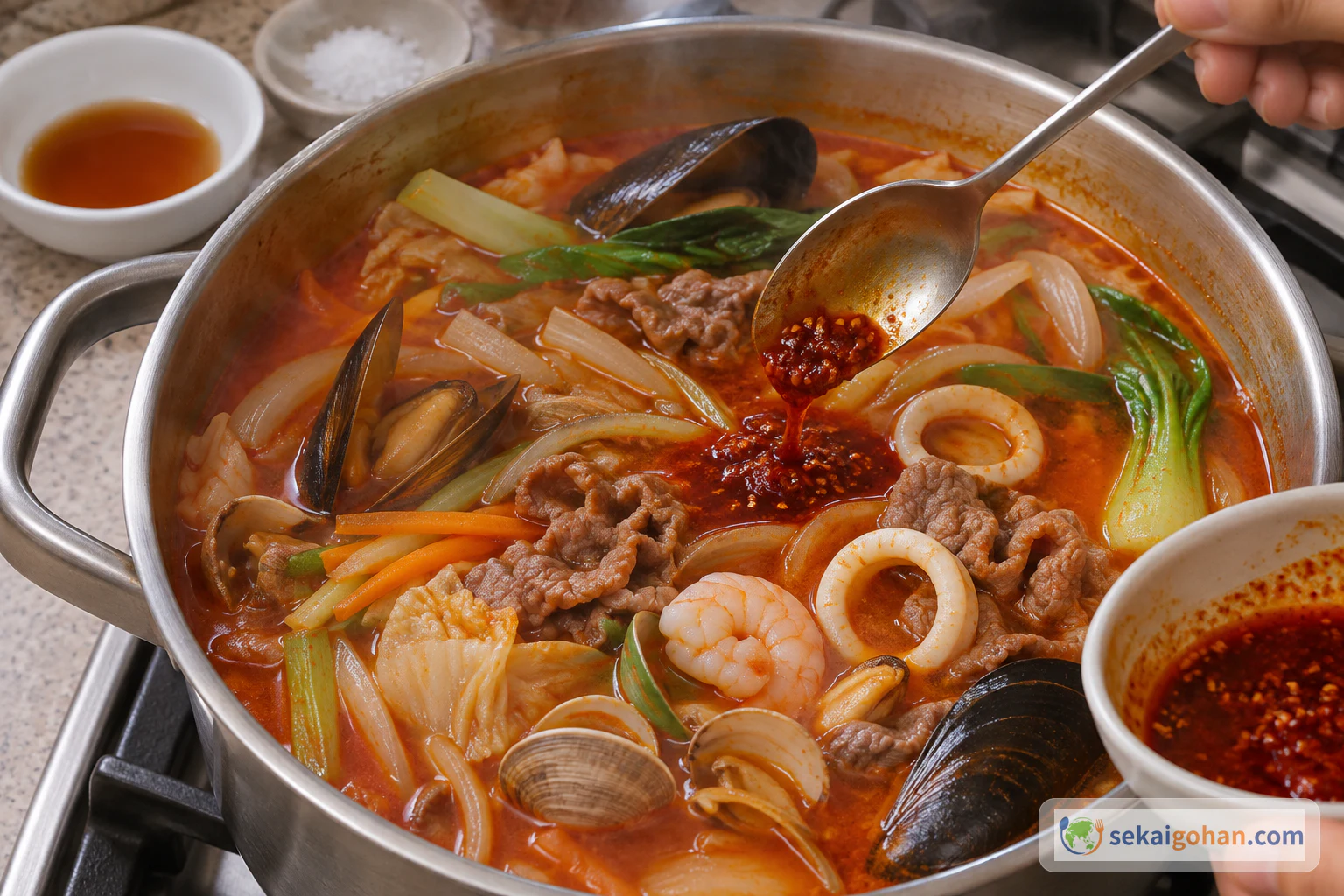
Season the soup and keep it warm

Adding 1 tbsp fish sauce, 1 tsp salt and the reserved pepper and sesame oil paste

Add the 1 tbsp of fish sauce, the 1 tsp of kosher salt and the reserved gochugaru–sesame oil paste. Turn the heat to low and let the soup simmer while you cook the noodles.

STEP1212 / 13

Cook, drain and rinse the noodles

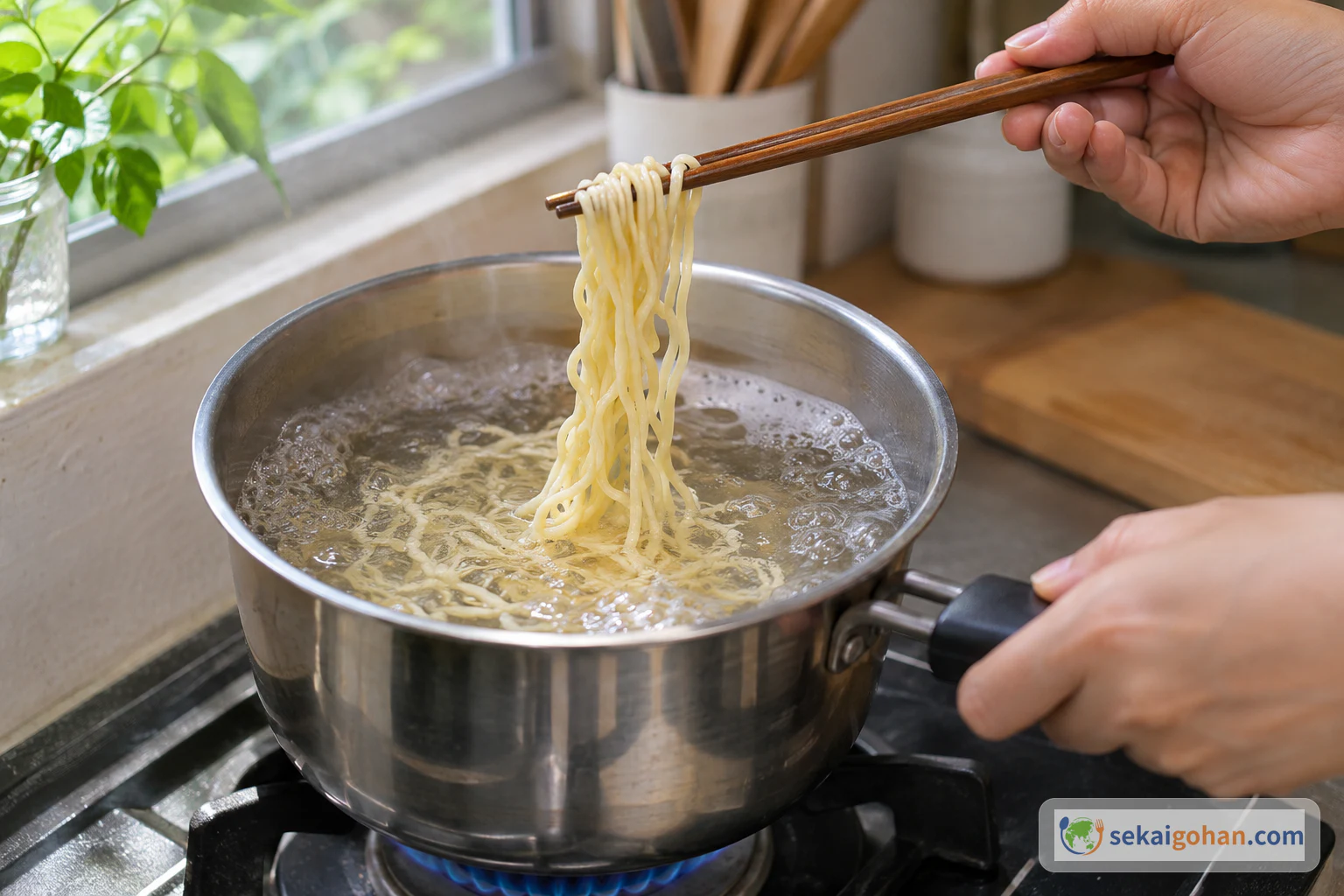
Boiling the noodles for 5–8 minutes or according to the package

Bring a separate pot of water to a boil. Add the 2 bunches (1 lb) of noodles. If they were frozen, thaw them and separate the strands first. Stir occasionally so the strands stay apart, and cook for 5–8 minutes, or as directed on the package, until a strand lifted out is tender but still springy. Pour the noodles into a colander and let the water drain away. Rinse them under cold running water, loosening them with your hand, then drain.

STEP1313 / 13

Reheat the soup and serve

Ladling the toppings and hot soup over the noodles to serve immediately

Just before serving, bring the soup back up over high heat. Divide the noodles between the two serving bowls. Ladle the hot soup and its seafood, beef and vegetables over the noodles, and serve right away.

0 / 0
Ingredients

Ingredients

1 / 1

Ingredients

Ingredient Amount Role
Large dried anchovies (myeolchi, 멸치) 1 oz (about 24) Stock. Remove the heads and guts
Dried kelp (dasima, 다시마) 1 piece, about 6 × 6 inches Stock
Water for the stock 12 cups Simmered and strained to 8–10 cups of stock; use 6 cups in the soup
Green onions 4 Washed, cut into 2-inch lengths
Leek 2 oz Washed, cut into 0.5 × 2-inch strips
Bok choy 4 oz Washed
Cabbage 3 large leaves (about 3 oz) Cut into bite-size pieces
Onion 4 oz Thinly sliced
Carrot 1 small Peeled, cut into 2-inch strips
Mussels 8 Scrubbed, beards removed, soaked in salt water for a few hours, then rinsed
Large shrimp 4 Peeled and deveined
Squid 4 oz Cleaned body only, cut into rings
Small clams 24 (optional) Washed, soaked in salt water for a few hours, then rinsed
Thinly sliced beef 4 oz Cut into bite-size pieces
Jjajangmyeon noodles, fresh or frozen (짜장면 noodles) 2 bunches (1 lb) Thaw if frozen; separate the strands
Gochugaru (고춧가루, Korean hot pepper flakes) 5 tbsp 2 tbsp mixed with the sesame oil and set aside; 3 tbsp fried in the oil
Toasted sesame oil 1 tsp Mixed with 2 tbsp gochugaru
Garlic, minced 1 tbsp Aromatic
Ginger, minced 1 tsp Aromatic
Vegetable oil 1/4 cup For the wok and the pepper oil
Fish sauce 1 tbsp Seasoning
Kosher salt 1 tsp Seasoning
Salt for soaking shellfish as needed For the salt-water soak
Water for boiling noodles as needed In a separate pot
Cold water as needed For rinsing the cooked noodles
0 / 0

Peppery red flakes hiss in a pool of hot oil for about a minute, and the kitchen fills with their smell. Green onions, leek, cabbage and onion go into that red pepper oil, then an anchovy-and-kelp stock, then mussels, small clams, shrimp, squid rings and bok choy. The whole wok is ladled over wheat noodles. This is jjamppong (짬뽕), the fiery seafood noodle soup of Korean-Chinese restaurants: brothy, spicy and full of the sea.

About Jjamppong

On a Korean-Chinese restaurant menu, jjamppong sits beside jjajangmyeon, the noodles in black bean sauce. Order jjamppong when you want the red, brothy bowl, and jjajangmyeon when you want the dark, saucy one. Both belong to the wider table of Korean food.

The dish was developed by Chinese immigrants in Incheon. In its classic form, pork, vegetables and seafood are stir-fried and then simmered in a chicken or pork-bone broth, and red pepper powder and chili oil came later to suit Korean tastes. This version builds the soup on an anchovy-kelp stock and uses beef, with pork or chicken as alternatives. Home cooks vary the meat, seafood, vegetables and chili oil to their liking.

Name and spelling

In Korean the dish is written 짬뽕. In English you will see jjamppong, jjampong or jjambbong. The name sounds close to Nagasaki's champon, but jjamppong is a Korean-Chinese dish in its own right.

Ingredients for 2 Servings
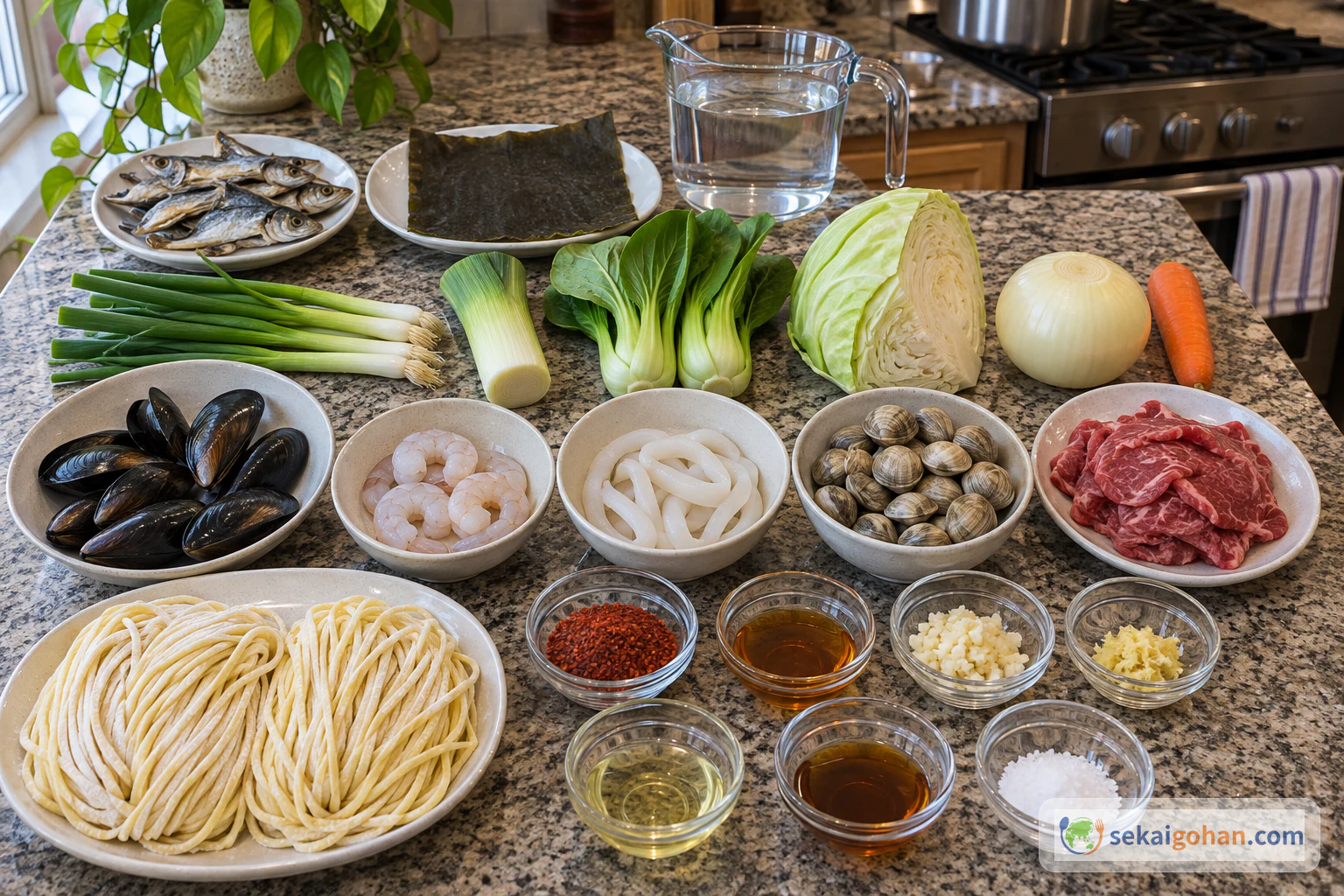
The full set of jjamppong ingredients: four green onions, leek, bok choy, cabbage, onion, carrot, thin beef, mussels, clams, shrimp, squid, noodles, dried anchovies, kelp and seasonings
Everything laid out before you start: stock, vegetables, seafood, beef, noodles and seasonings

Buy mussels and clams sold as food at a fishmonger or supermarket, and keep them and the other raw seafood and beef refrigerated until you prepare them.

Equipment

  • Large stockpot with a lid
  • Fine-mesh strainer and a heatproof bowl or pot
  • Liquid measuring cup
  • Cutting boards and knives, with one board kept for raw seafood and beef
  • Vegetable peeler
  • Scrub brush for the mussels
  • Two bowls for soaking the mussels and clams separately
  • Colanders
  • Small bowl for the reserved pepper mixture
  • Wok, or a large pot, with a lid
  • Spatula
  • Separate pot for the noodles
  • Chopsticks or tongs
  • Food thermometer
  • Ladle
  • Two serving bowls

Choosing Ingredients for Jjamppong

Green onions. A single large Korean green onion (daepa) can take the place of the four green onions.

Shellfish. The clams are optional; the soup is still complete with the mussels, shrimp and squid. Buy shellfish sold for eating, and discard any with cracked or broken shells.

Squid. Use only the cleaned body, cut into rings, and keep the guts out of the pot.

Noodles. Jjajangmyeon noodles are wheat noodles sold fresh or frozen. Thaw frozen ones and pull the strands apart before boiling. For other noodle options, see the FAQ.

Method: Stock, Pepper Oil, Seafood and Noodles

How the work divides

Make the stock and prepare all the vegetables, shellfish and beef first. Once the wok is hot, the steps move quickly. Cook the noodles in a separate pot while the soup simmers.

Jjamppong Troubleshooting and Food Safety

Most of what can go wrong happens in the first minute, when the gochugaru meets the hot oil, or at the very end, when the seafood looks done before it really is. Here is what to watch for.

What you notice What it means What to do
The pepper flakes are darkening fast The gochugaru is close to burning Keep stirring, and move on at about 1 minute
A mussel or clam shell is cracked before cooking The shell is damaged Discard it
A mussel or clam stays closed after cooking It did not open in the heat Discard it
The seafood looks done but the thermometer is below the target Looks are not enough; check the temperature Keep heating until the shellfish center holds 85–90°C for 90 seconds or more, and the beef holds 167°F (75°C) for 1 minute or more
The noodles are clumping in the pot Frozen noodles weren't separated, or they weren't stirred Thaw and separate the strands before boiling, and stir occasionally
The noodles feel soft and starchy in the bowl They weren't rinsed after draining Rinse under cold running water until they are springy
Shellfish, seafood and meat

Covered cooking for 7–8 minutes is not enough on its own. Heat mussels and clams until the center reaches 85–90°C and holds there for at least 90 seconds, because they may carry norovirus. Heat meat until the center reaches 167°F (75°C) for at least 1 minute. Check with a food thermometer. Opened shells and opaque shrimp are useful signs, but check the temperature too.

Use only shellfish sold commercially for eating. Don't use wild-gathered shellfish or shellfish you have purged yourself. Discard any shellfish with cracked or broken shells, and any that stay closed after cooking. Cook shrimp until the flesh is pearly and opaque. Keep the shellfish refrigerated during the salt-water soak, and follow the product label. Keep raw seafood and raw beef away from other foods and from the cooked noodles. Wash your hands, boards and tools after touching them.

Serving and Varying Jjamppong

Jjamppong is best the moment the soup hits the noodles, so serve it right away. Until then, keep the raw seafood and beef in the refrigerator.

The 4 oz of thinly sliced meat can be beef, pork or chicken; whichever you use, cook it to 167°F (75°C) at the center for at least 1 minute. If you'd like to try a pork version on a chicken or pork-bone broth, cook it from its own recipe rather than mixing amounts into this one.

Frequently Asked Questions

What if I can't find jjajangmyeon noodles?

Fresh Chinese-style wheat noodles are the standard choice. At home, dried noodles or spaghetti can stand in. Cook any noodle according to its package, then rinse it in cold water.

Why make so much stock and use only 6 cups?

The stock starts with 12 cups of water and yields 8–10 cups after straining. The soup uses 6 cups.

Where does the carrot go?

Add the small carrot, peeled and cut into 2-inch strips, with the green onion, leek, cabbage and onion in step 9, and stir-fry them all together for 3–4 minutes.

Sources

  • Maangchi, "Spicy mixed-up seafood noodle soup (Jjamppong 짬뽕)." The two-serving recipe used here: ingredients, amounts, US units, stock yield and the 6 cups used, step order and times. Also the description of jjamppong as a red, spicy Korean-Chinese noodle dish served alongside jjajangmyeon, the author's account of learning the method from a Korean grocery store owner, and her note that the online version is simplified from her book. Her ingredient list includes a carrot that her method does not place; its placement in this article is an editorial decision. https://www.maangchi.com/recipe/jjamppong
  • Korea Tourism Organization (VISITKOREA), "Spicy Seafood Noodle Soup (짬뽕 / Jjamppong)." The agency's description of a noodle dish of stir-fried pork, vegetables and seafood simmered in chicken or pork-bone broth, and its statement that red pepper powder and chili oil were added later to suit Korean tastes. No dates or single origin are drawn from it. https://english.visitkorea.or.kr/svc/contents/contentsView.do?vcontsId=179704
  • Korean Bapsang, "Jjamppong (Spicy Seafood Noodle Soup)." Used for the dish's place on the Korean-Chinese table alongside jjajangmyeon, fresh wheat noodles as the standard choice with dried noodles or spaghetti as home substitutes, and household variation. Its amounts and steps are not used in this recipe. https://www.koreanbapsang.com/jjam-bbong-korean-chinese-spicy-noodle/
  • U.S. Food and Drug Administration, "Selecting and Serving Fresh and Frozen Seafood Safely." Used for discarding cracked shellfish and shellfish that stay closed after cooking, cooking shrimp until pearly and opaque, and keeping raw seafood away from cooked foods. https://www.fda.gov/food/buy-store-serve-safe-food/selecting-and-serving-fresh-and-frozen-seafood-safely?os=win
  • Ministry of Health, Labour and Welfare (Japan), "Q&A on Norovirus," Q15. Used for heating bivalve shellfish that may be contaminated with norovirus until the center reaches 85–90°C for at least 90 seconds. https://www.mhlw.go.jp/stf/seisakunitsuite/bunya/kenkou_iryou/shokuhin/syokuchu/kanren/yobou/040204-1.html
  • Ministry of Health, Labour and Welfare (Japan), "Six Points for Preventing Food Poisoning at Home." Used for the guide of heating meat until the center reaches 75°C for at least 1 minute, and for keeping raw meat and seafood apart from other foods and washing hands and tools. https://www.mhlw.go.jp/topics/syokuchu/dl/point0709.pdf