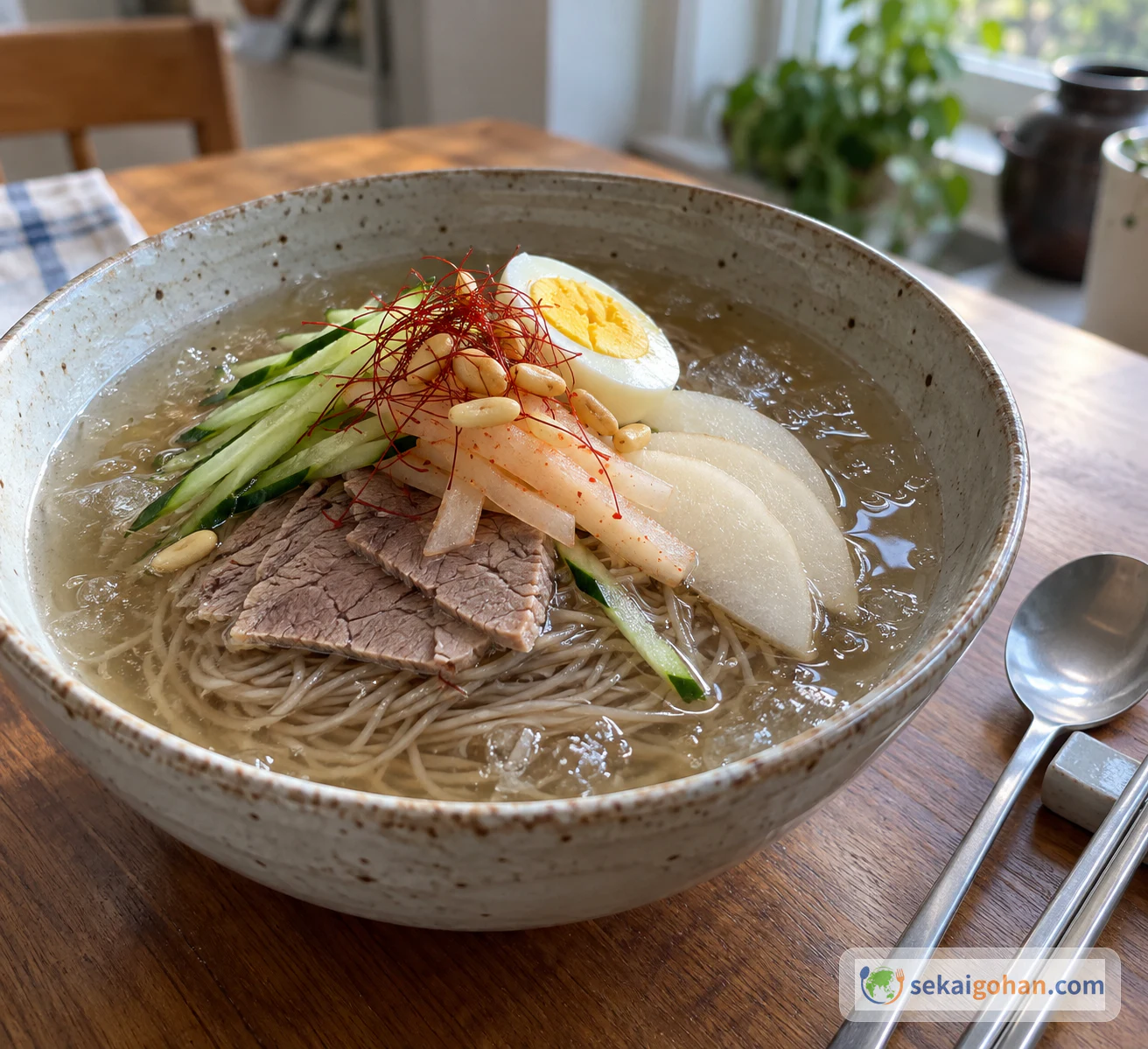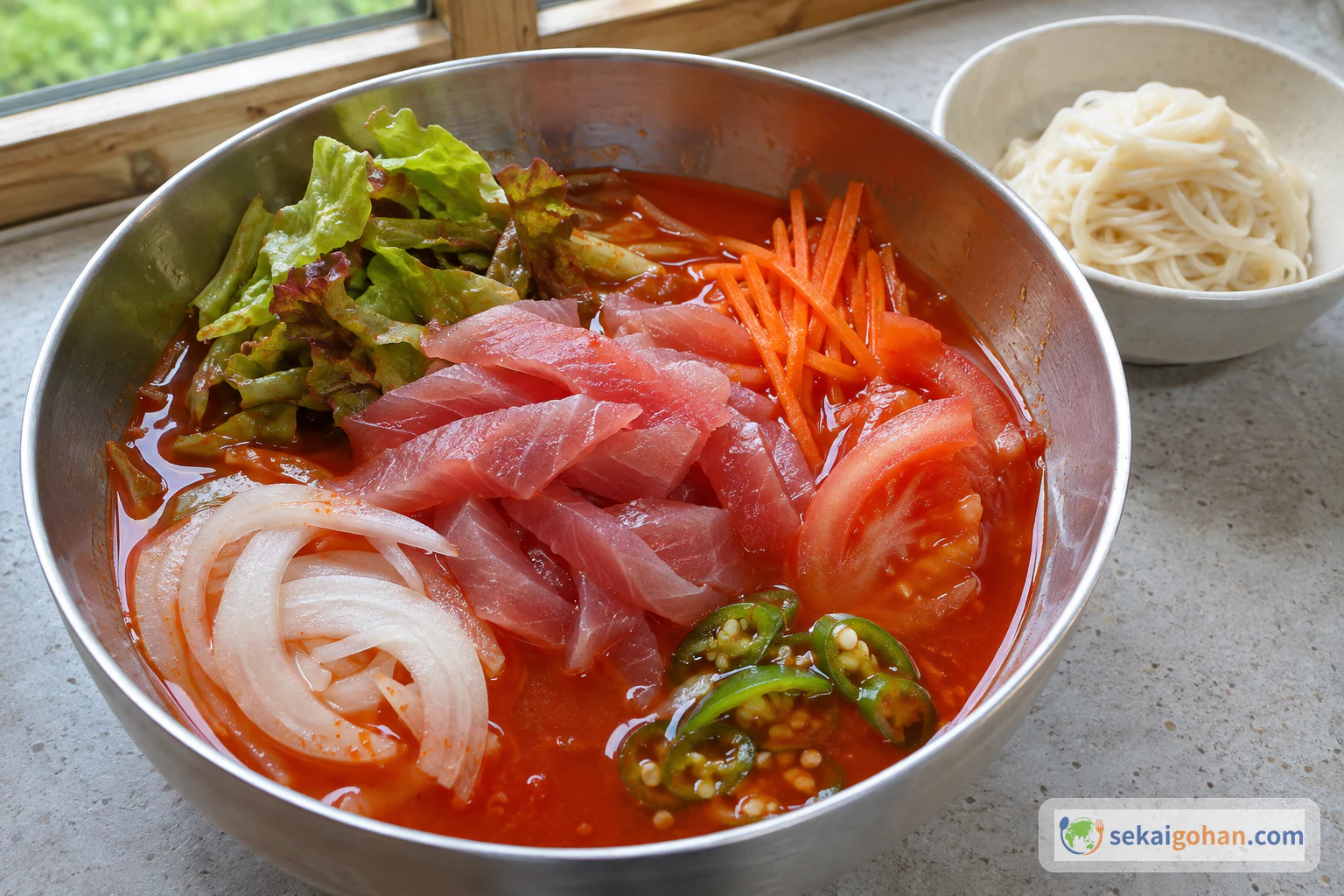
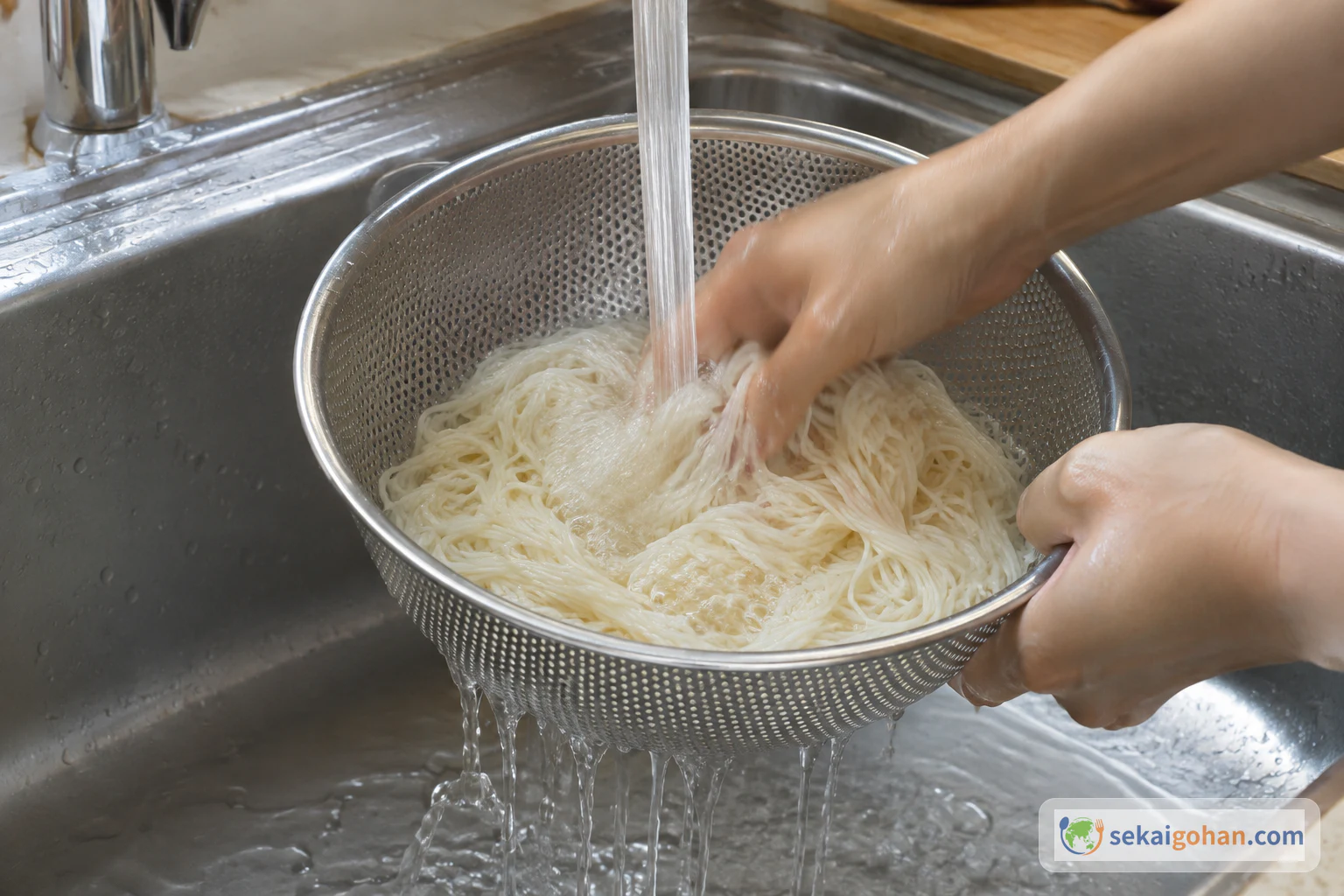
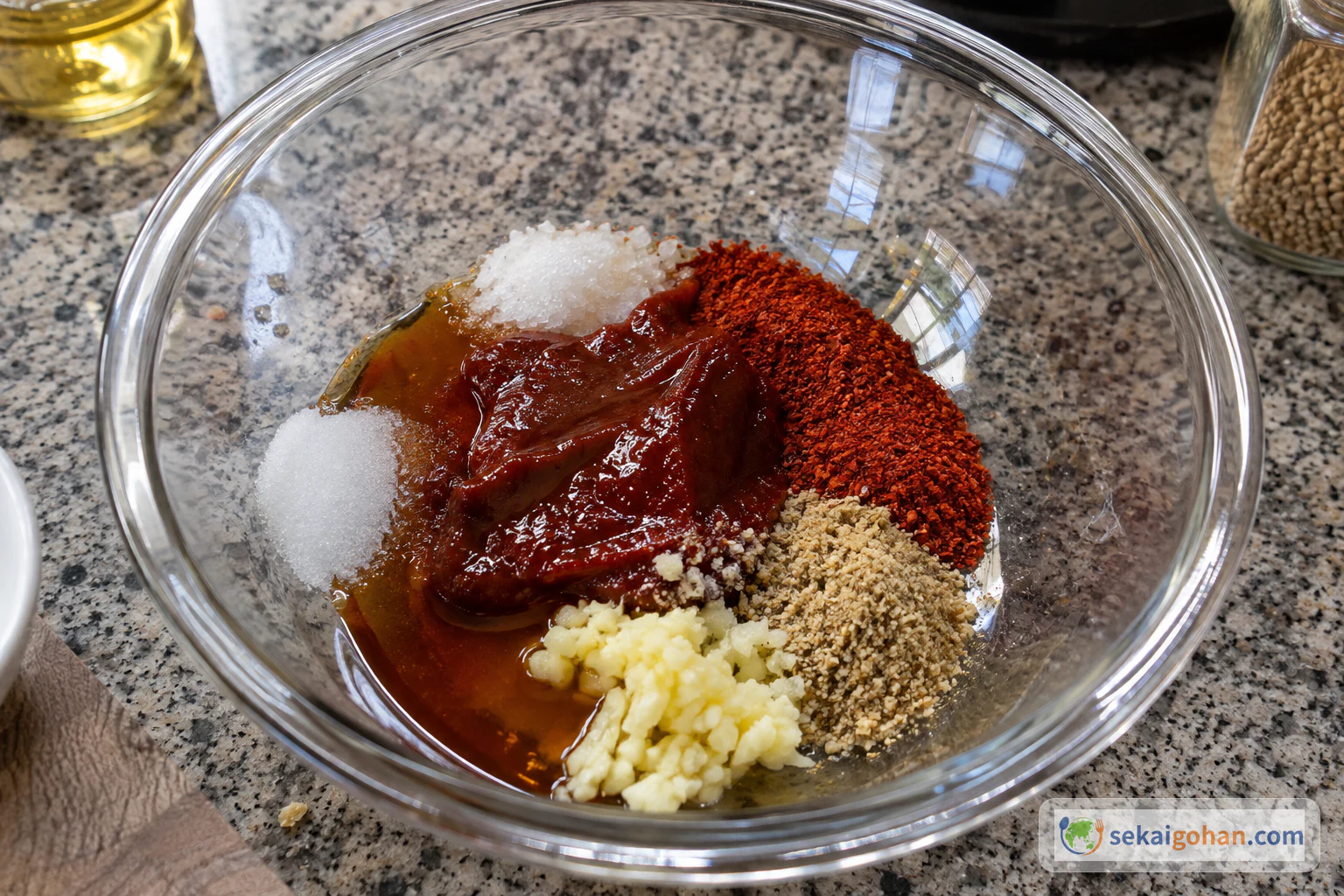
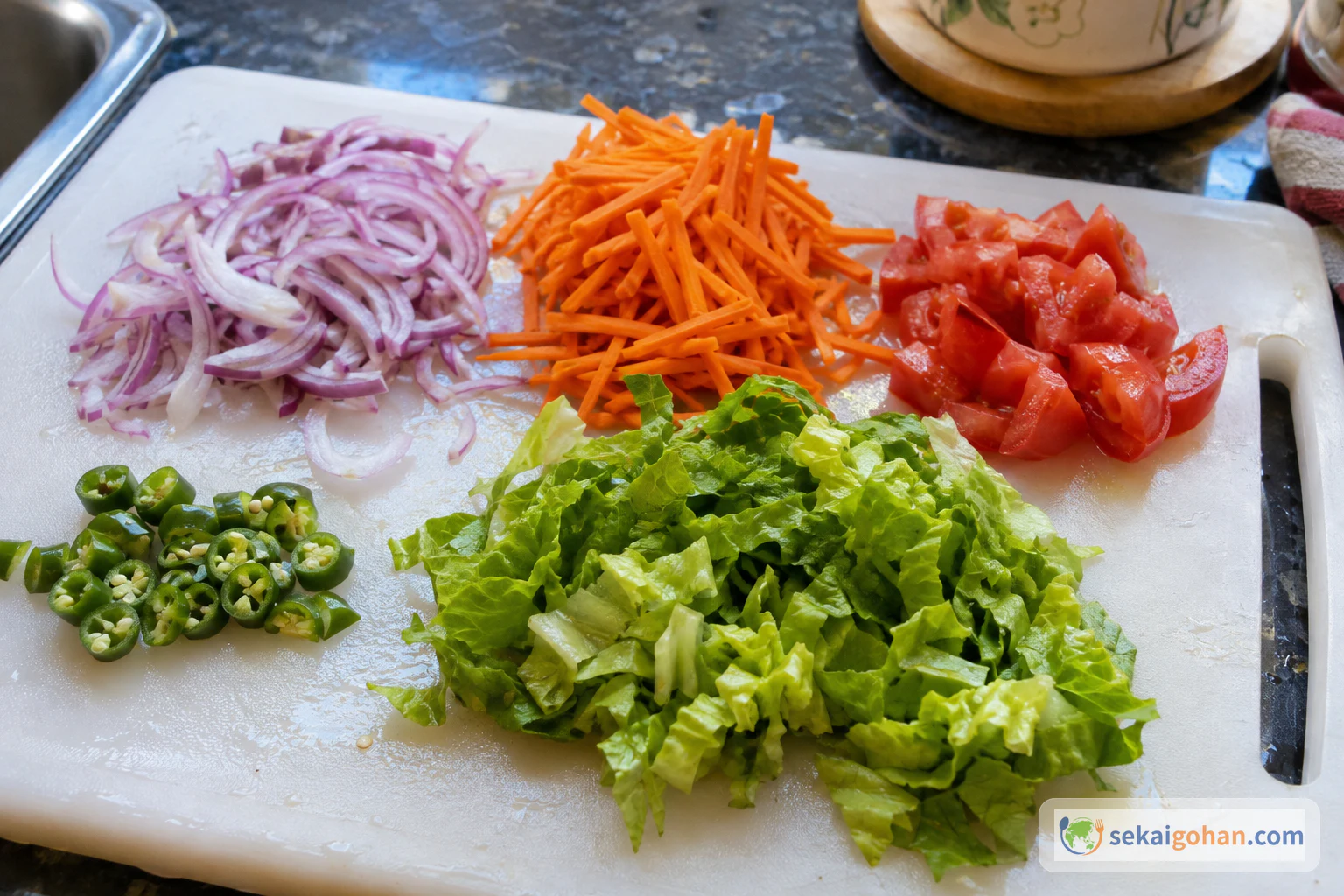
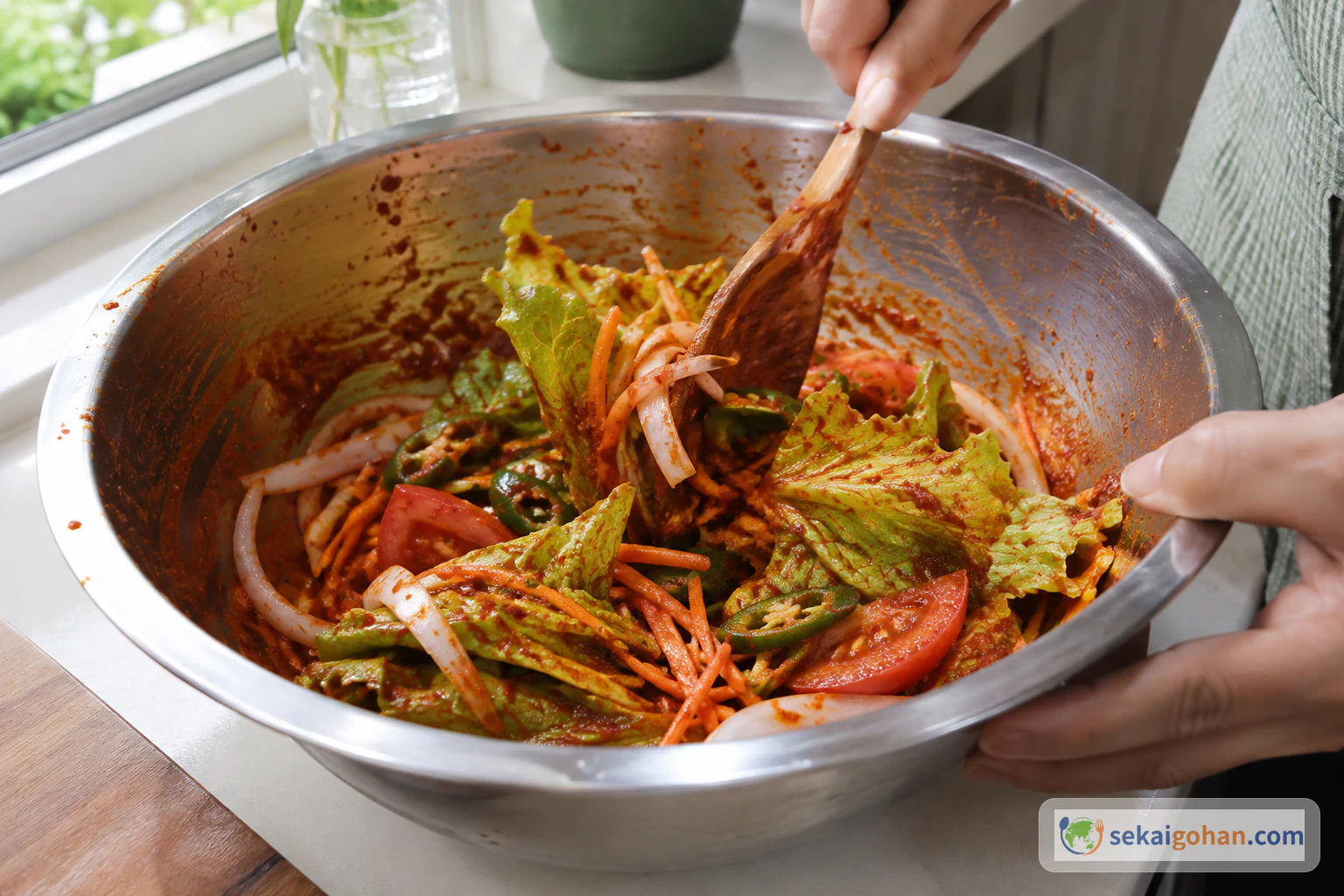
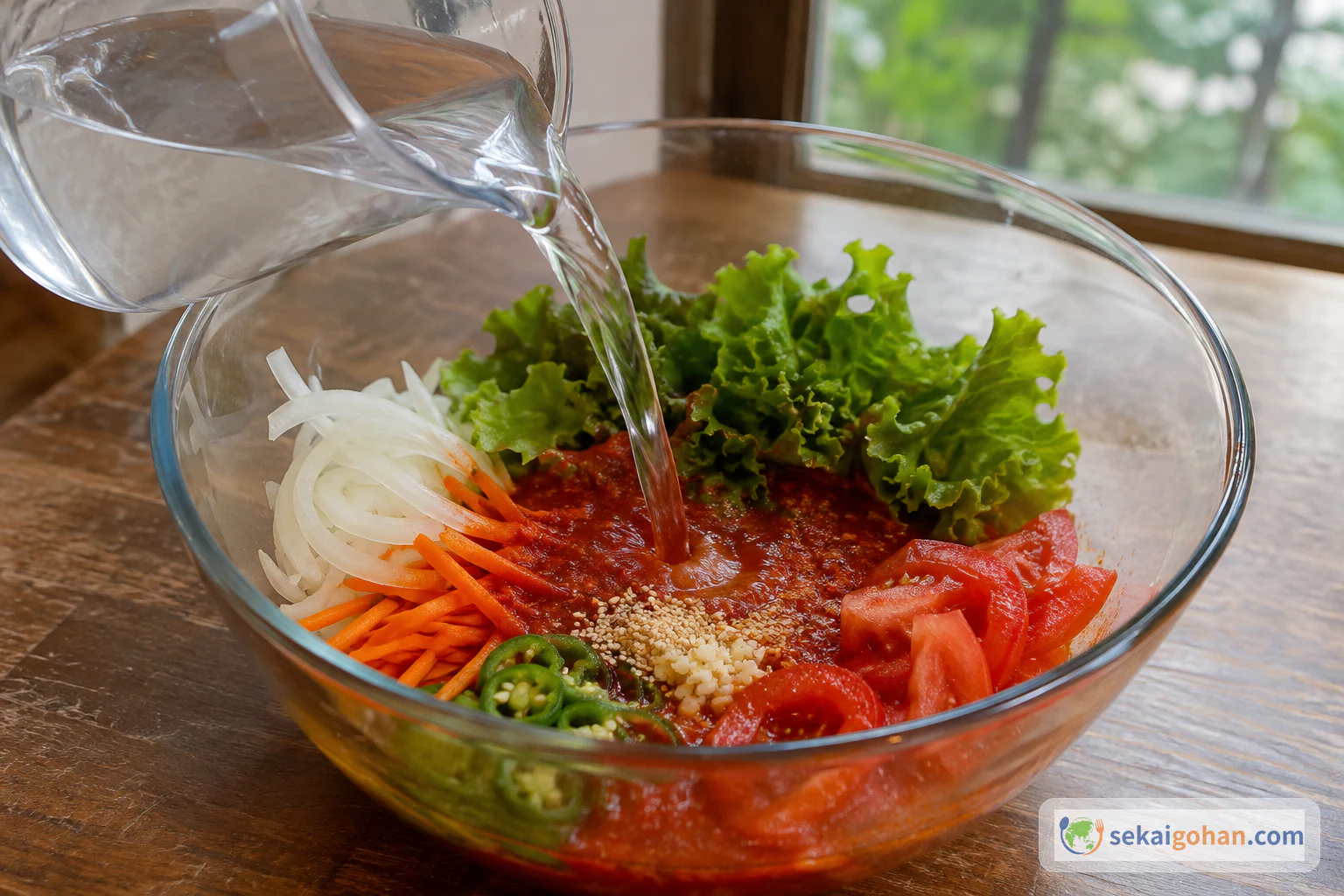
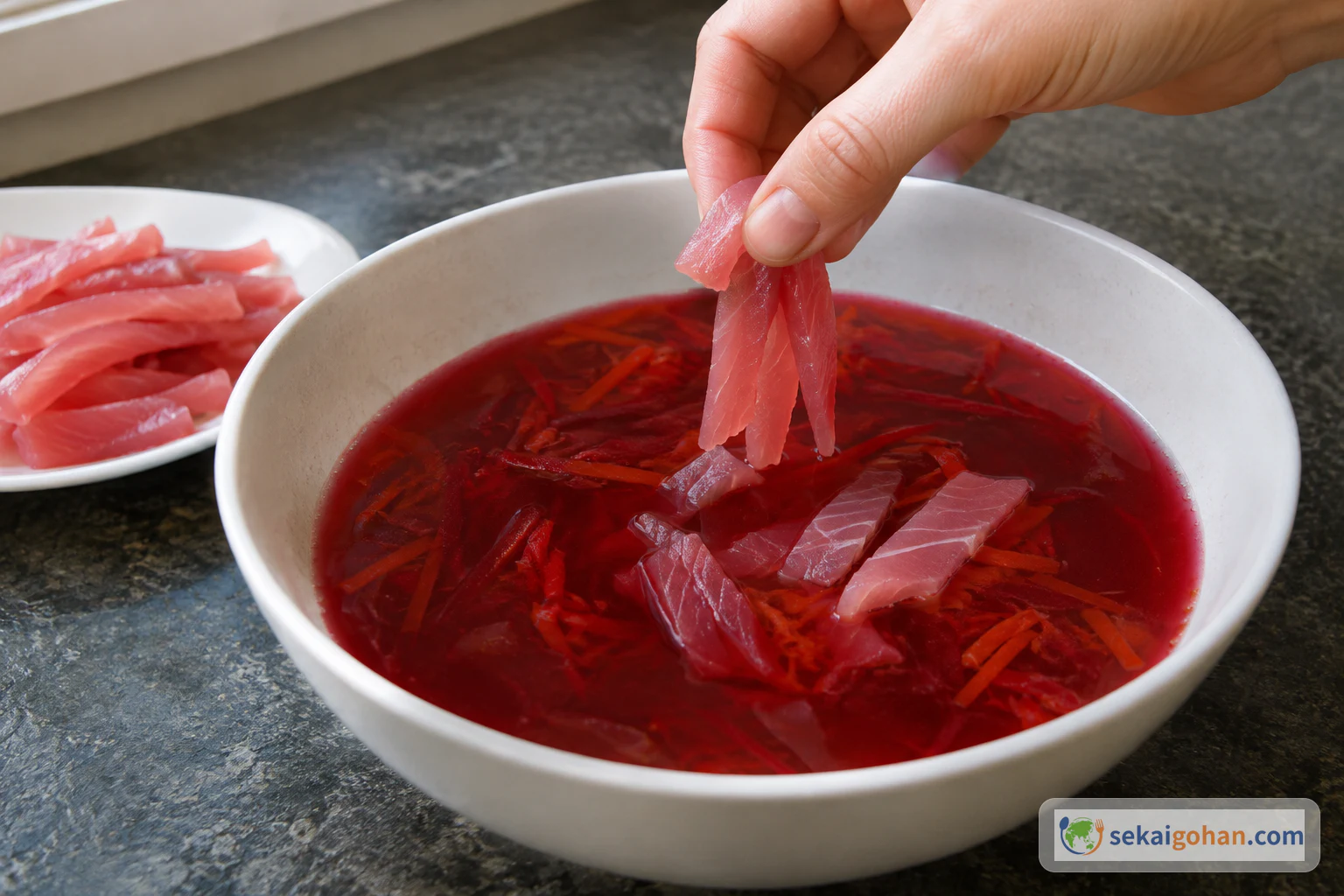
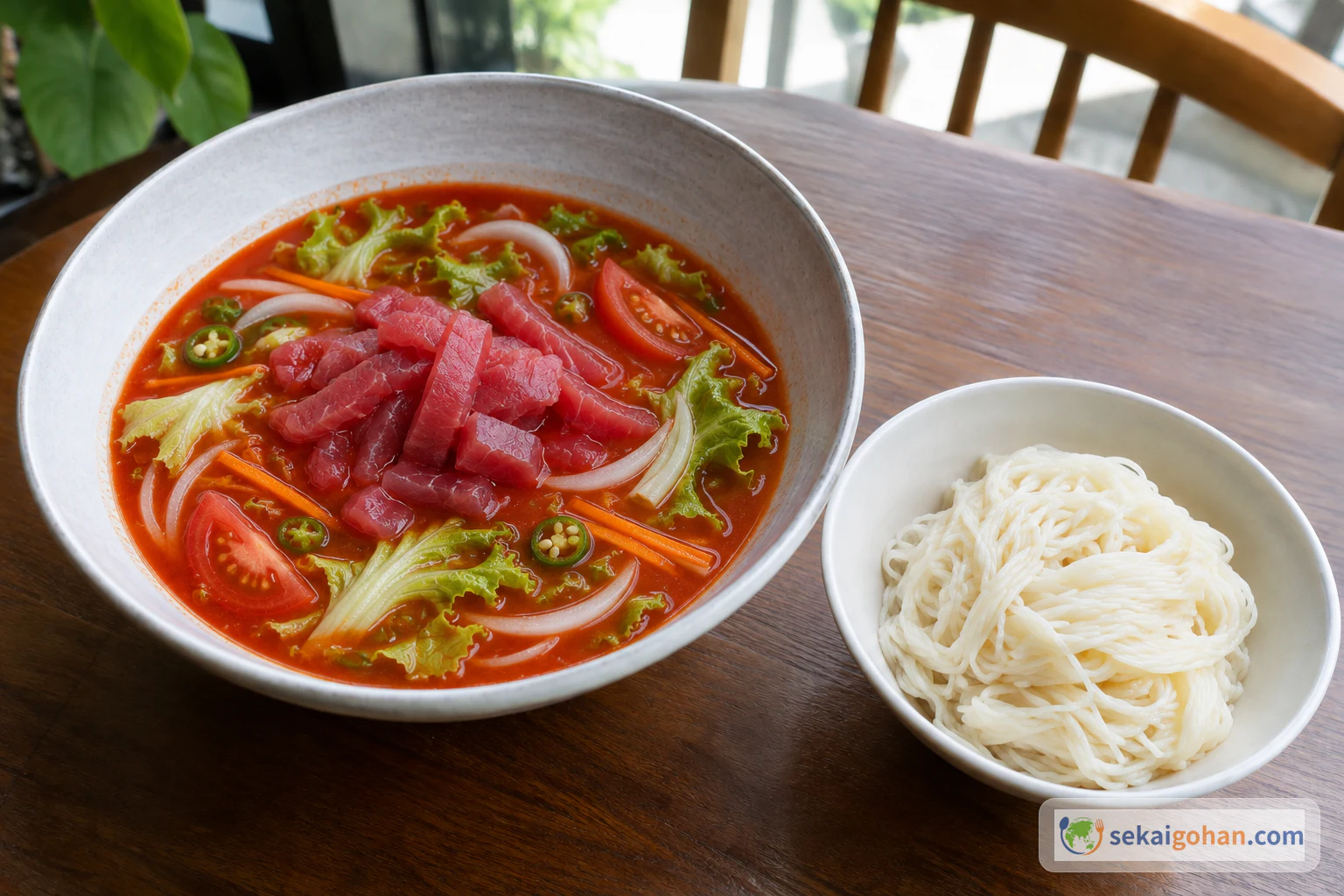
Fishers once ate mulhoe on their boats, without lighting a fire. The bowl still looks the part: raw fish, spicy seasoning and very cold water, all together. The broth is spicy and sour with a little sweetness, poured over strips of fish, onion, carrot, tomato, green chili and lettuce. Thin somyeon noodles come on the side, ready to be mixed in at the table.
Mulhoe's Origins in Pohang
Mulhoe is a chilled raw fish dish, and its broth should be very cold. It is tied to fishers' meals on boats, and the usual balance holds today: soup, fish or seafood, crisp vegetables, and rice or noodles. In the bowl, the fish, the crisp vegetables and the noodles should each stay distinct.
The dish is linked to Bukbu Market in Pohang, and it spread in the 1980s. Early versions combined raw fish, rice, gochujang and water. From the 1990s, noodles sometimes replaced the rice, and later versions added cucumber, red fish and soybean powder, or used a chilled broth with fruit and sweet-sour elements. There is no single fixed form; cooks change the fillings, the broth and the choice of noodles or rice. This version keeps things straightforward: frozen sashimi-grade tuna, vegetables, a cold gochujang-vinegar broth and somyeon.
Ingredients for 4 Servings
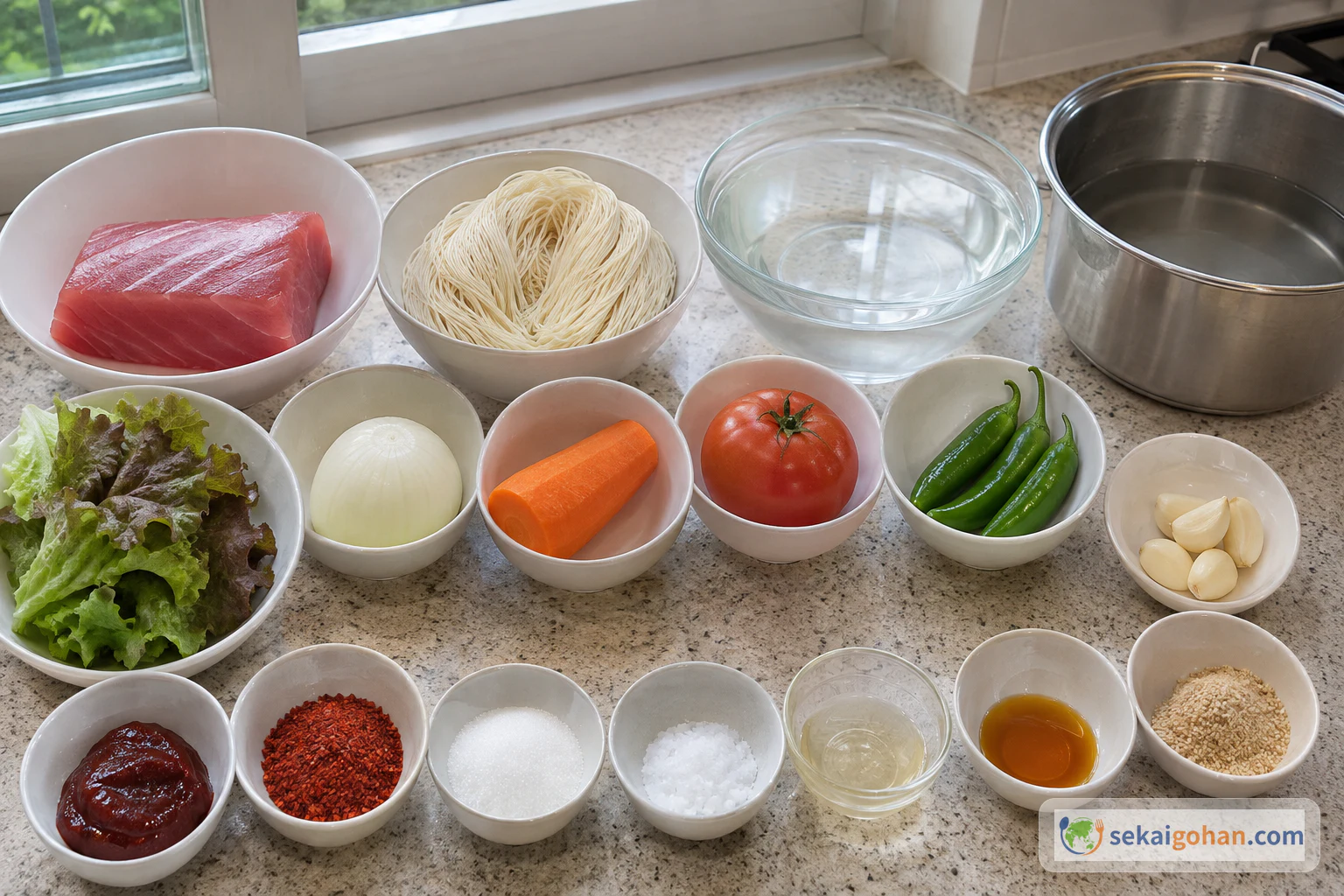
Keep the two waters apart: 10 cups for the noodles, 2 cups of ice-cold water for the broth.
Choosing Tuna for Mulhoe
The fish is the one purchase that shapes everything else. Buy frozen tuna the seller presents as being for raw consumption. "Sashimi grade" is a name, not a safety guarantee, so ask two things at the counter: is it sold to be eaten raw, and how was it frozen? If the seller can't answer, use that fish for something else.
Here are the freezing conditions to look for:
| Country | Freezing conditions | Scope |
|---|---|---|
| Japan (anisakis) | −20°C for 24 hours or longer | Businesses |
| US (parasites) | −20°C (−4°F) or below for 7 days, total time | Seafood businesses |
| US (parasites) | −35°C (−31°F) or below until solid, then stored at −35°C or below for 15 hours | Same |
| US (parasites) | −35°C (−31°F) or below until solid, then stored at −20°C or below for 24 hours | Same |
These are rules for businesses, so they don't certify any product you bring home, and very large fish are harder to freeze through to these conditions. Your own freezer won't close the gap: home freezers run at −15°C or below, which is not cold enough. Tuna can host anisakis, and freshness alone does not remove parasite risk.
Once you're home, put the fish straight into the freezer or refrigerator. Thaw it in a refrigerator set to 50°F (10°C) or below, and keep the freezer at −15°C or below.
Equipment
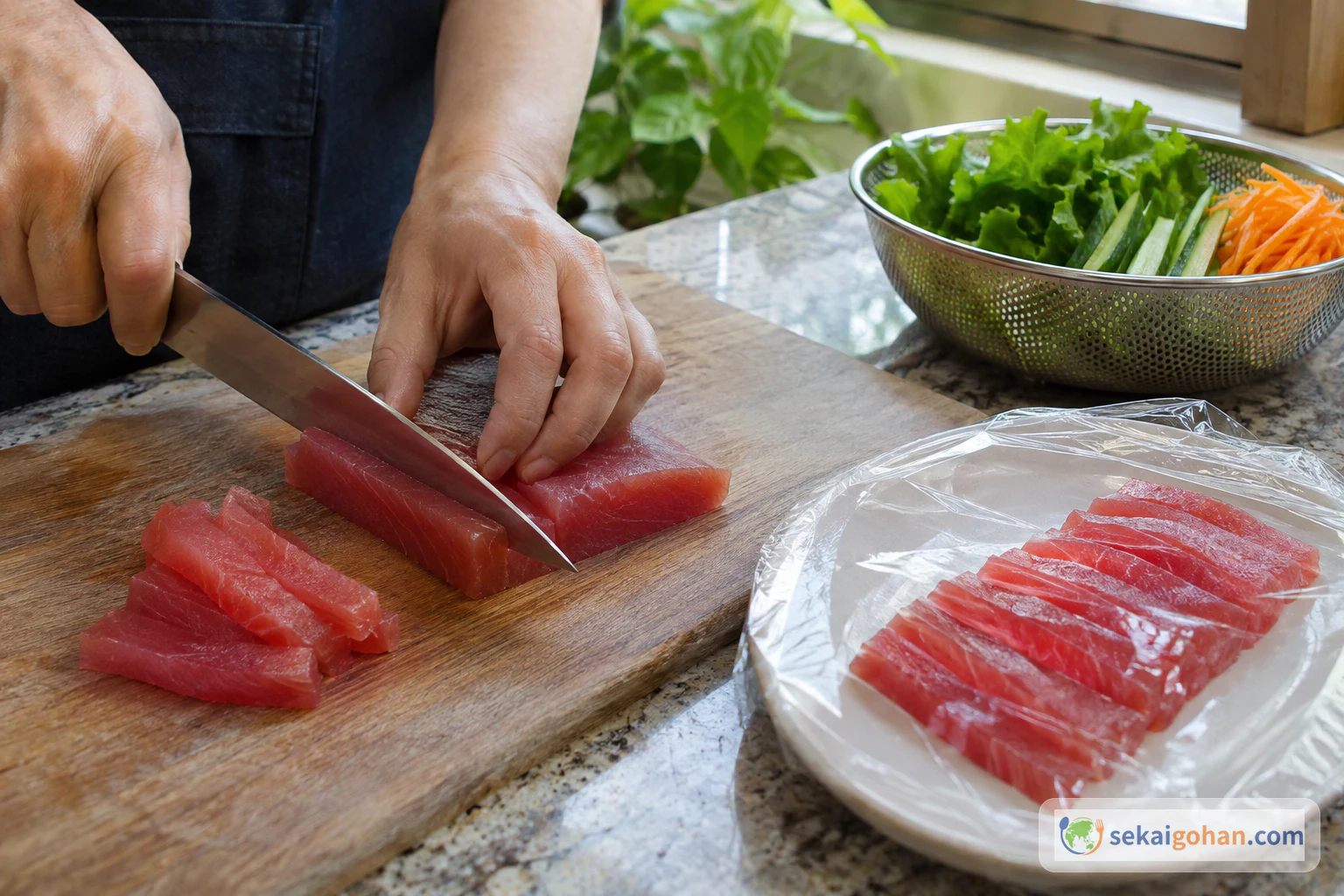
- Knife and cutting board for the fish only
- A separate knife and cutting board for the vegetables
- Covered plate or container for chilling the cut fish
- Large pot
- Colander
- Large, deep mixing bowl
Mulhoe Safety and Troubleshooting
Safety
Vinegar and chili are there for flavor. Ordinary vinegar, salt, soy sauce and wasabi do not kill anisakis, and chili is not parasite control. Brining and pickling reduce the parasite risk without eliminating it, and a cold broth changes nothing here.
Keep raw fish juices away from other food, and wash your hands. Use separate tools for fish and vegetables, and wash knives and cutting boards used for raw fish, then scald them with boiling water before reuse. Prepared food shouldn't sit at room temperature for long.
Raw fish is a poor choice for anyone who is pregnant, a child under 5, an older adult, or someone with a weakened immune system, including cancer, diabetes, HIV/AIDS, an organ transplant or an autoimmune disease. Be especially careful with anyone who has low resistance, and make them a different dish.
This dish contains raw fish. Avoid it if you are pregnant, a child under 5, an older adult, or have a weakened immune system, such as cancer, diabetes, HIV/AIDS, an organ transplant or an autoimmune disease. If you are cooking for anyone in these groups, make a cooked dish from our Korean recipes instead.
Following this recipe and the freezing guidance lowers the risk. It does not make raw fish risk-free.
Troubleshooting
| Problem | Likely cause | What to do |
|---|---|---|
| Broth tastes too strong | Too little water for your taste | Add a little ice-cold water at a time, tasting as you go |
| Broth isn't very cold | The water wasn't cold enough | Serve right away. Next time, use properly ice-cold water, or the water-and-ice option below |
| Noodles have a hard core | Not cooked long enough | Next time, keep cooking until no hard core remains, then rinse and drain |
| Noodles are falling apart | Cooked too long | Next time, start checking them sooner |
| Noodles feel warm or sit in water | Rinsed too briefly or not drained | Rinse longer under cold running water and drain well |
| You can't confirm how the fish was frozen or whether it's sold for raw eating | Seller couldn't answer | Skip that fish for this dish and make something else |
| You spot a parasite while cutting | Parasites can be present in tuna | Remove it. Visual checks work alongside properly frozen fish, not in place of it |
Mulhoe Variations
The broth is the easiest place to make the bowl your own.
| Variation | How it works | Keep in mind |
|---|---|---|
| Water and ice | 1 cup water plus 1 cup ice in place of 2 cups ice-cold water | The method above uses cold water only |
| Heat, sourness, sweetness | Adjust the existing seasonings to your taste | A change of flavor only; it does not affect fish safety |
Frequently Asked Questions
Is pear required?
No. Fruit-based broths belong to other versions of mulhoe; this bowl gets its sweetness from the seasonings.
Can I keep leftovers?
Eat mulhoe all at once rather than refrigerating what is left. Make only as much as you will eat.