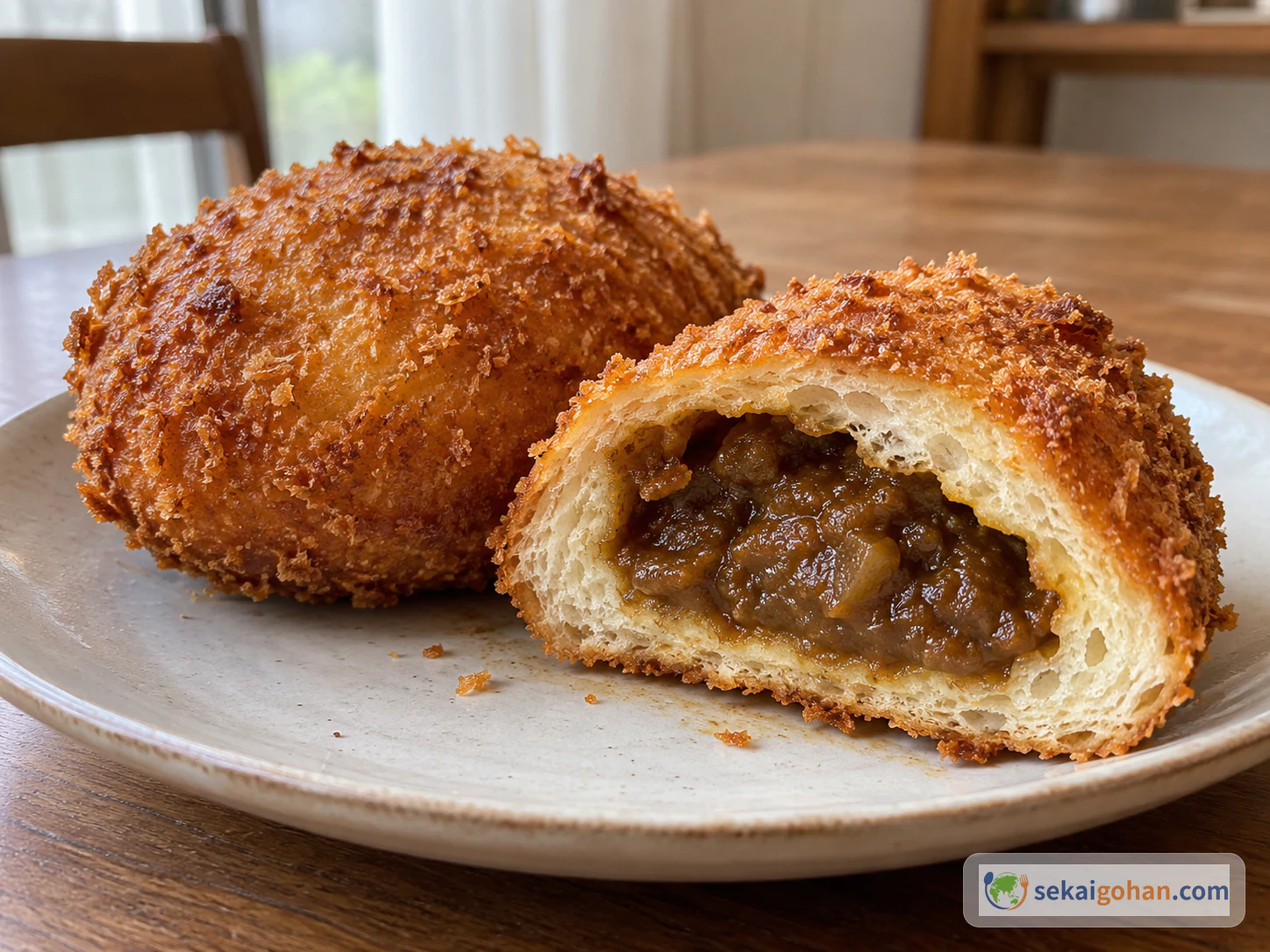
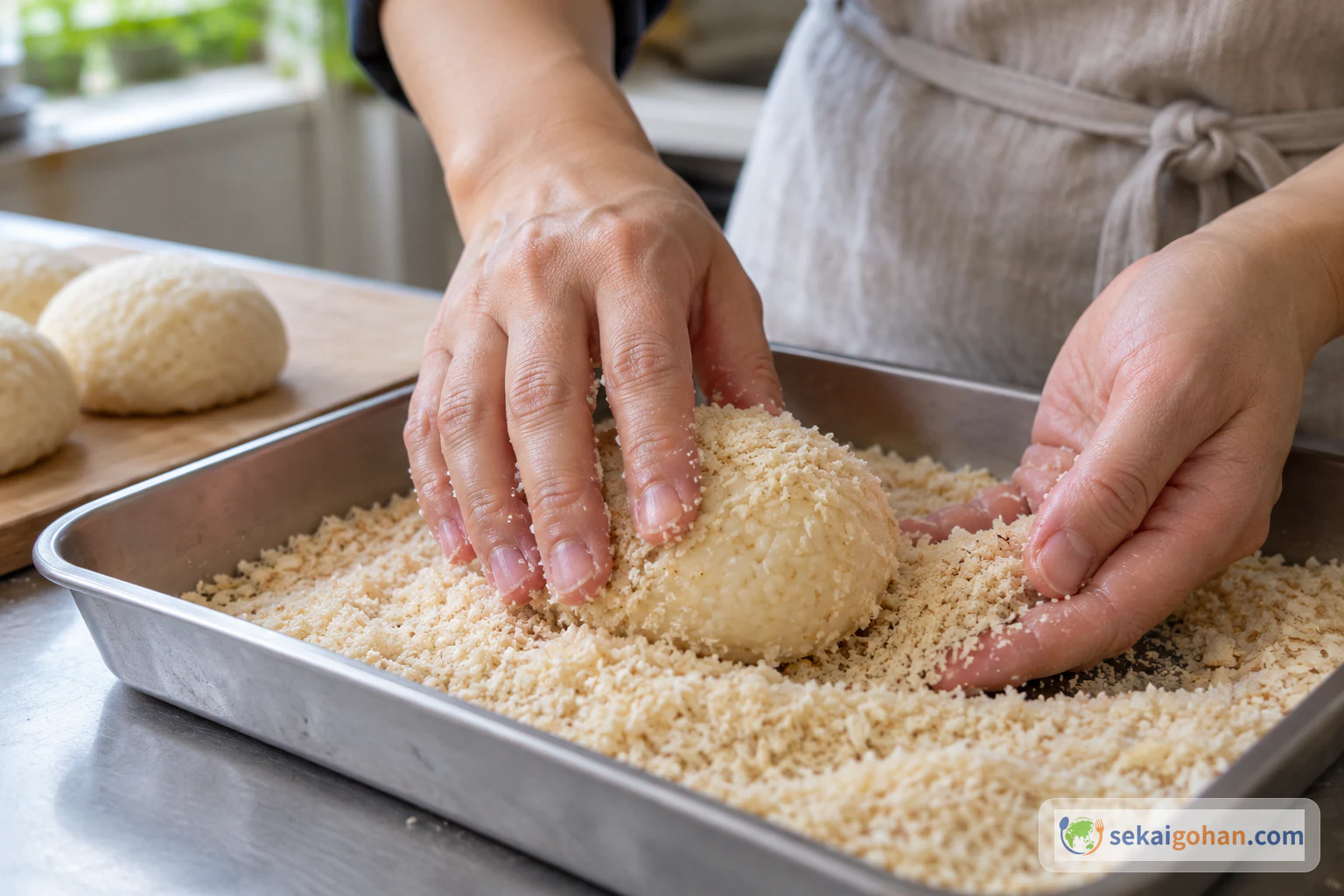
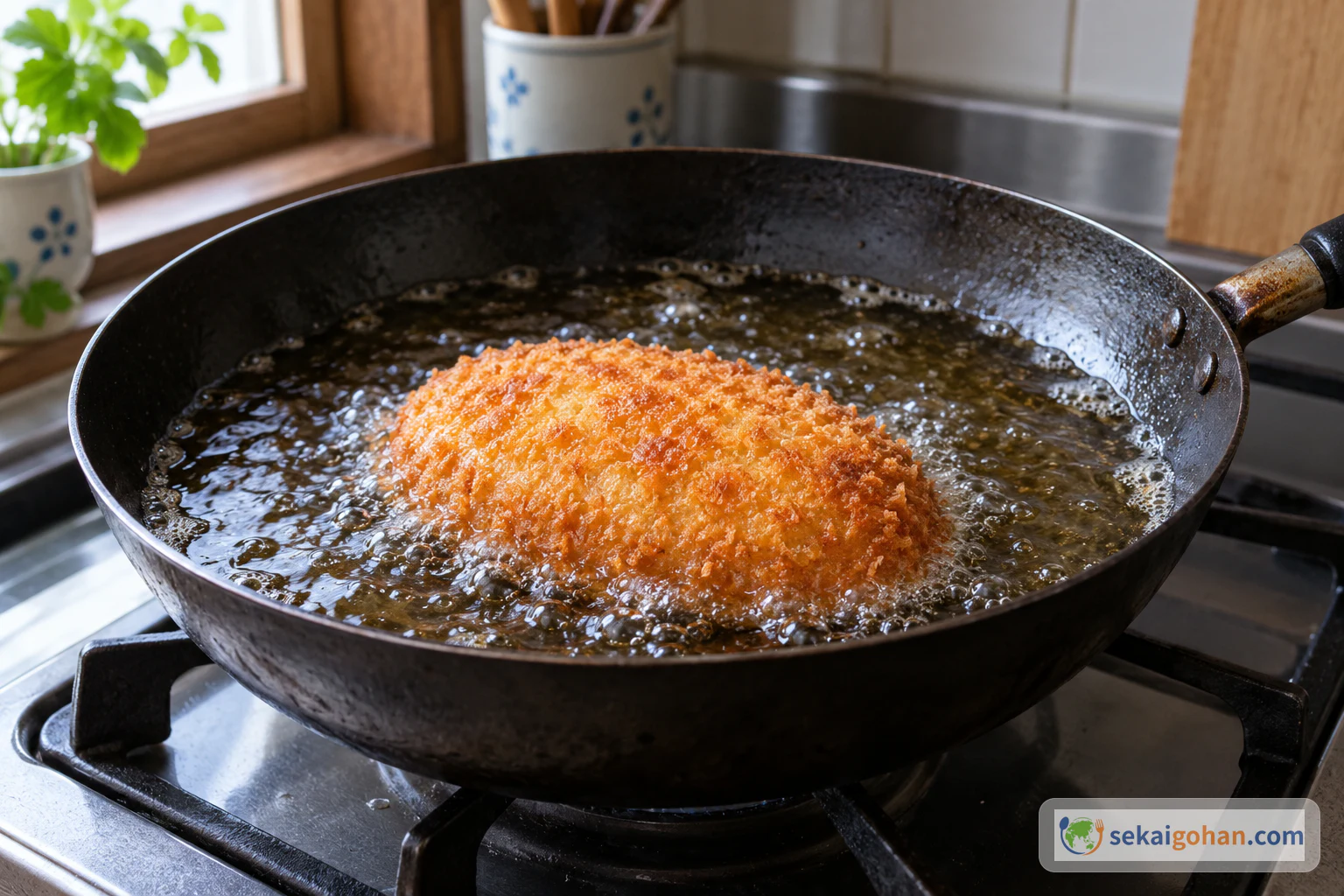
Golden and crunchy with panko on the outside, soft on the inside, with a pocket of curry at the center: curry bread is a fixture of Japanese bakeries and convenience stores, eaten for breakfast, for lunch or as a snack. This version has two quirks. The dough gets a little cooked rice folded in, and the filling is built up from onion, butter and cake flour before the curry goes in. The batch makes six buns. For more dishes from the same country, see our Japan page.
Curry Bread and This Version
Curry bread varies a great deal from cook to cook. At its simplest, it is bread dough wrapped around curry, rolled in panko breadcrumbs and fried until golden.
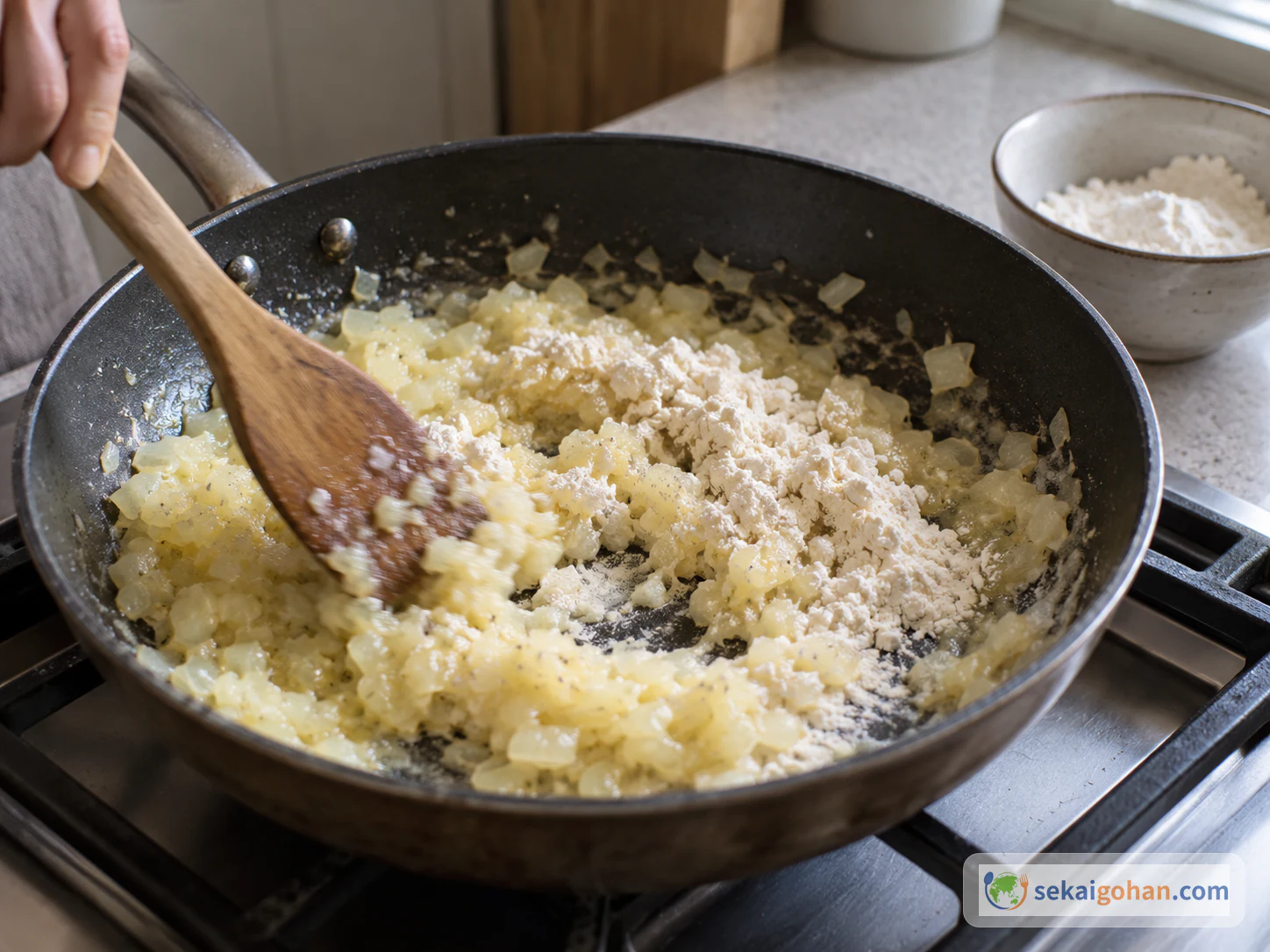
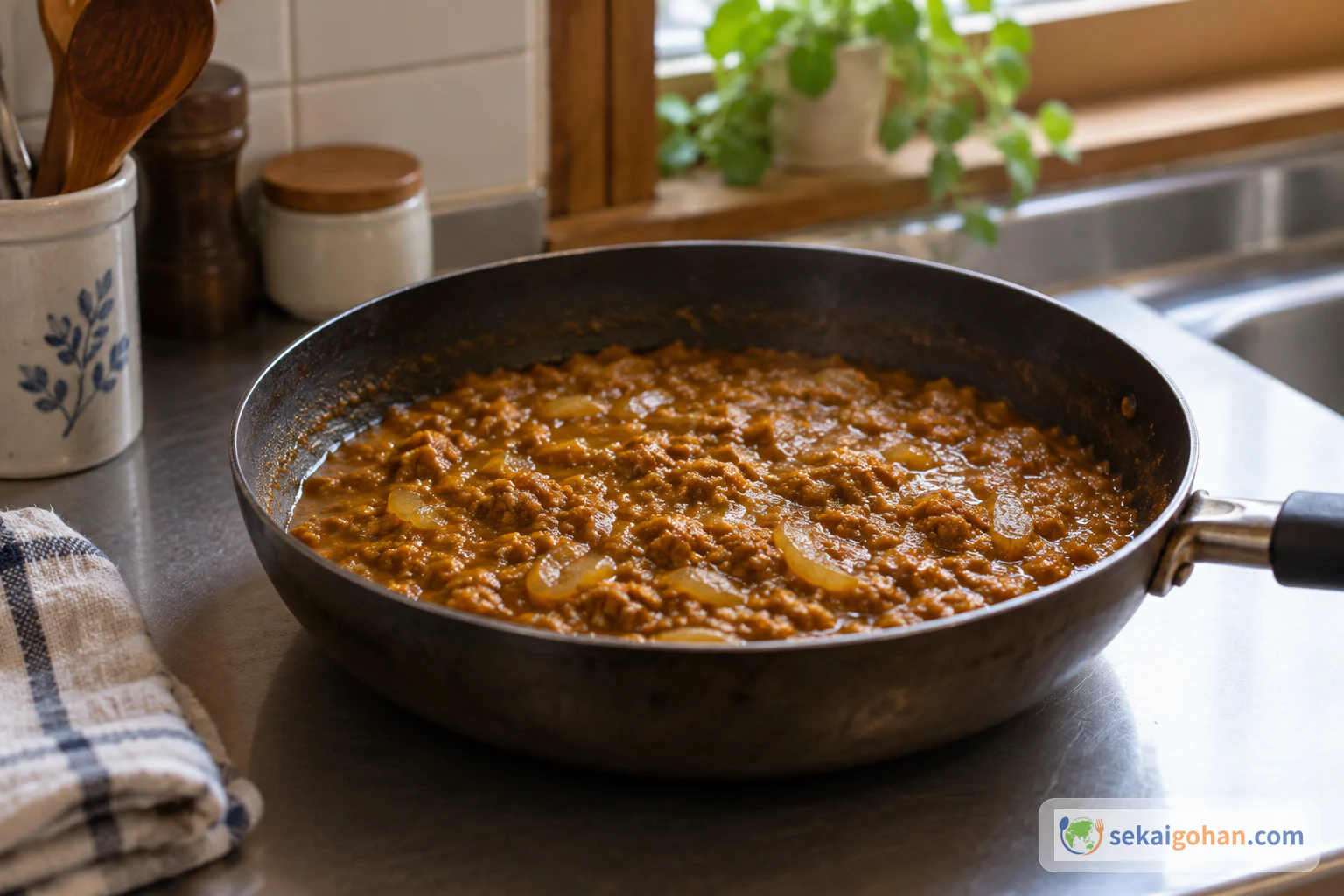
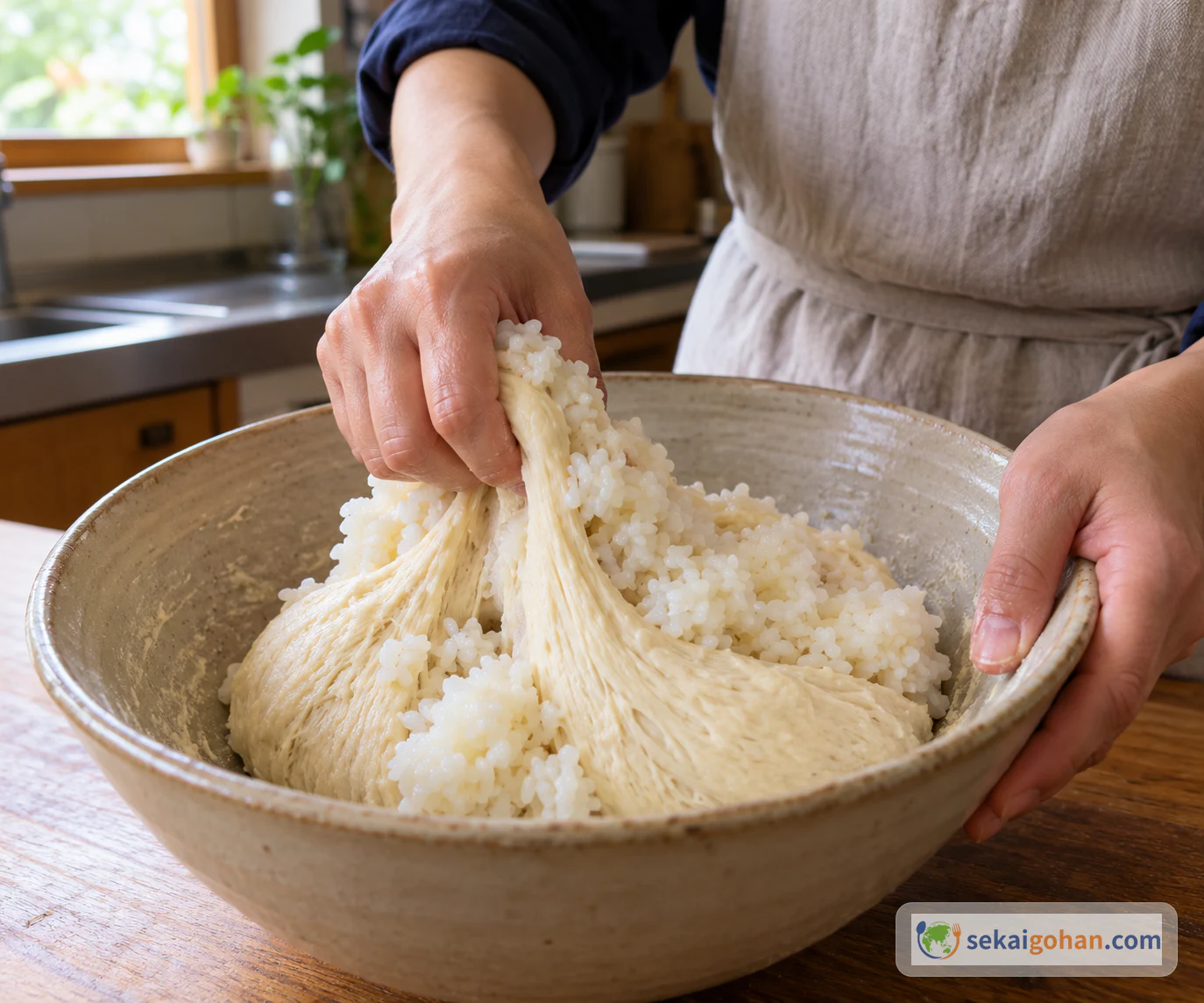
The filling here isn't curry straight from the pot. You cook chopped onion down, work in butter and cake flour, then add homemade curry and let the whole mixture cool. The dough takes 1.5 oz (45g) of cooked rice once it has firmed up. That's cooked rice, not rice flour. The buns go into panko with no egg wash first.
Ingredients for 6 Curry Breads
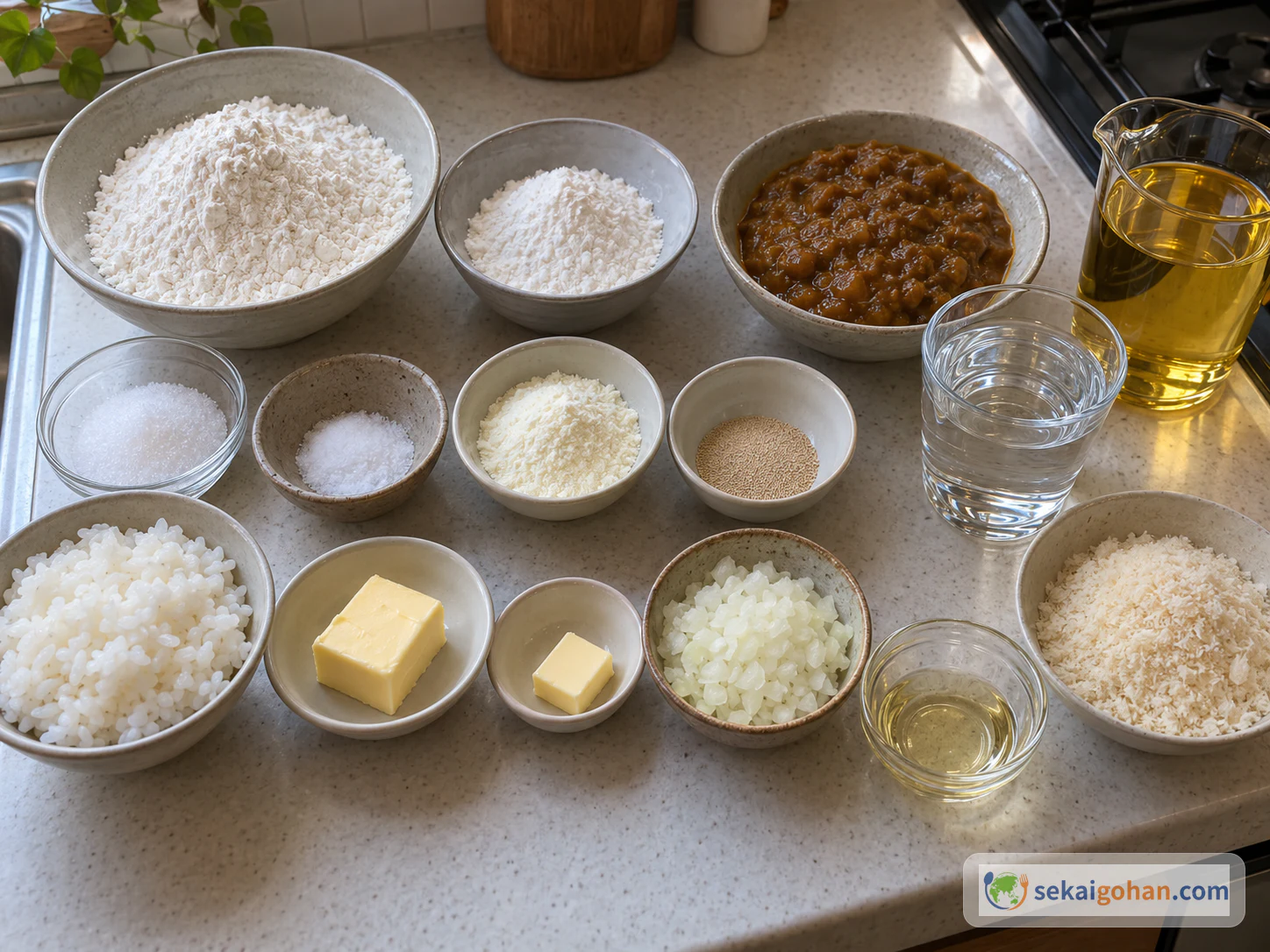
Makes 6 pieces. Weigh the dough butter and the filling butter separately, and keep the bread flour for the dough and the cake flour for the filling apart.
Choosing Curry Bread Ingredients
Cooked rice, not rice flour. The rice goes into the dough as ordinary cooked white rice. Rice flour or uncooked rice won't work here.
Two flours with two jobs. Bread flour forms the dough. Cake flour goes only into the filling, worked in a little at a time to bind the onion, butter and curry.
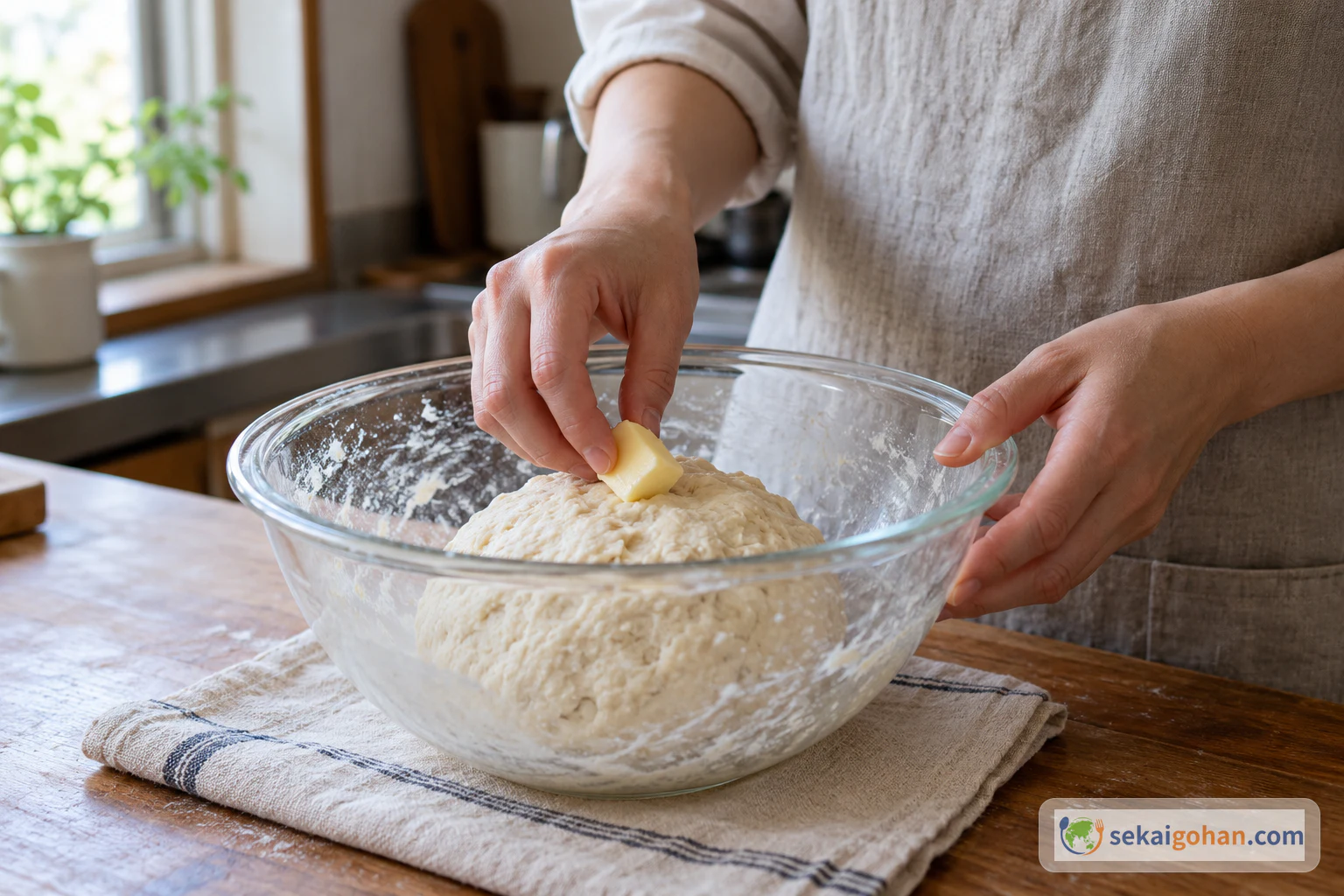
Two portions of butter. The 7.5g portion belongs to the dough, and the 25g portion belongs to the filling. Measure them into separate dishes before you start, and you won't mix them up.
The curry is already made. The 7 oz (200g) of homemade curry is a prepared ingredient. Use a curry you've made yourself, with whatever meat, vegetables or roux you like.
Panko only. The buns go straight into the breadcrumbs, with no egg or water coating.
Equipment
- Mixing bowl
- Frying pan
- Spatula
- Bench scraper
- A pan for deep-frying
Method: Filling First, Then the Rice Dough, Then Frying
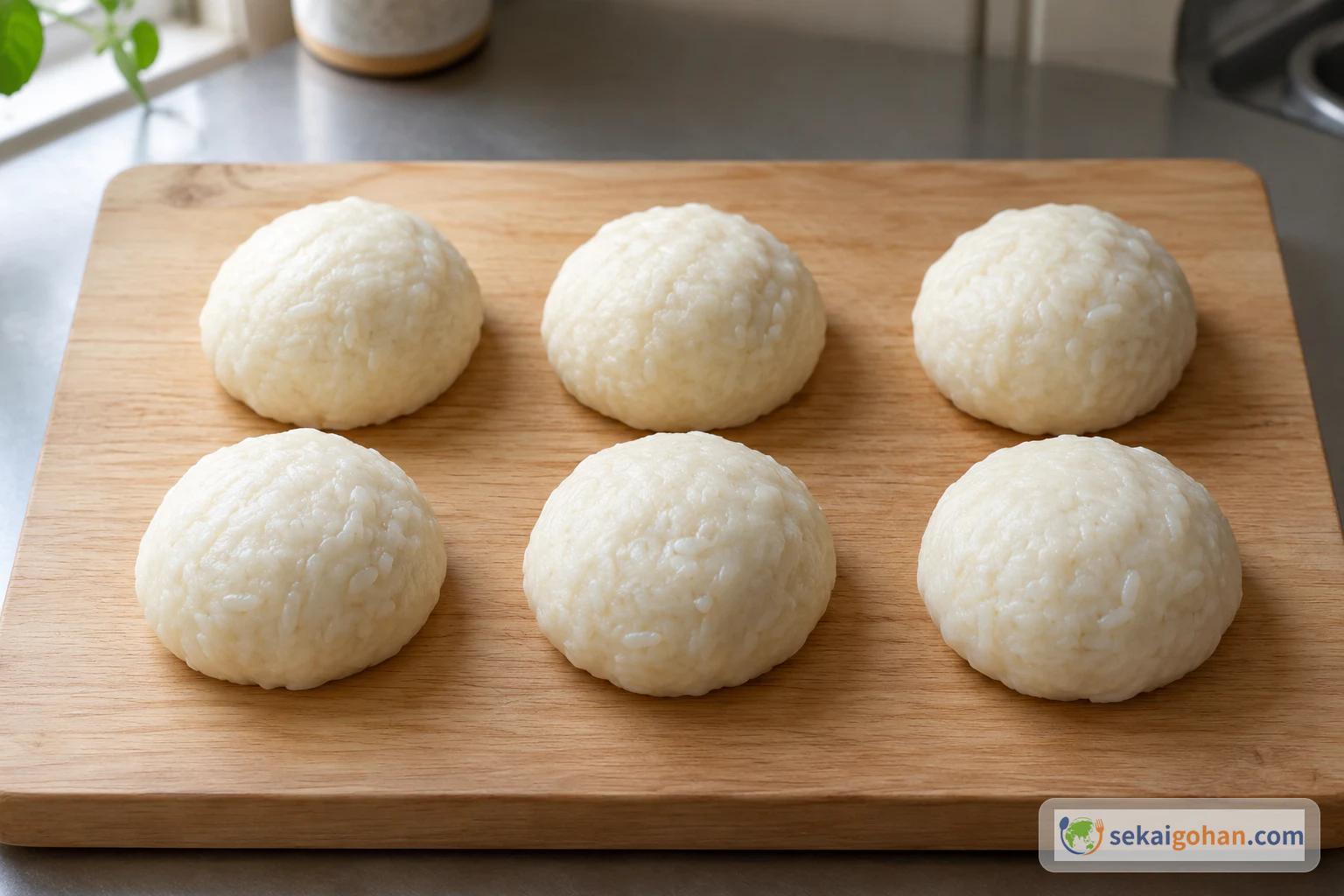
Steps 1–5 make the filling, which must cool thoroughly before it is wrapped. Steps 6–9 make and proof the dough. Steps 10–15 shape, coat, proof again and fry.
Curry Bread Mistakes and Fixes
Check three things: the filling cooled completely before wrapping, the rice was cooked rice, and nothing but panko went on the outside.
Most problems with this recipe come from mixing up its stages. A few details are left to you, and the table shows which.
| What to check | In this recipe | Up to you |
|---|---|---|
| Rice in the dough | Cooked rice, added after the dough is firm | — |
| Butter | Dough portion and filling portion, at different stages | Salted or unsalted |
| Filling | Onion, butter, cake flour in 2–3 parts, then curry; cooled thoroughly off the heat | What goes in the curry; how long and where to cool it |
| Filling per bun | 1 oz (30g) each for 6 buns | What to do with any extra |
| Proofing | About 40 minutes, then about 30 minutes | Temperature, how much the dough should grow, how to judge the end point |
| Shaping | Divide into 6, round, rest about 10 minutes, wrap | Dough thickness, size, how to seal |
| Coating | Panko only | — |
| Frying | 350°F (180°C), about 4 minutes | Type and amount of oil, how many buns at once, whether or how often to turn |
The 4 minutes is the total frying time, not 4 minutes per side.
Curry Bread Variations
Other curry breads can look quite different from this one. Here are two common styles:
- Eight-piece version: Japanese curry made the day before and chilled overnight becomes a thick, scoopable filling. The dough uses bread flour, cake flour, milk and butter, and the buns get an egg coating before the panko.
- Leftover curry version: Leftover curry stew fills 10–12 buns made from a dough with a different mix of flours. The buns get an egg-and-water coating before the panko and fry by their own method and temperature.
Compared with these, the recipe here has a rice-enriched dough, a filling bound with onion, butter and cake flour, and a coating of panko alone.
Frequently Asked Questions
Do I have to make the curry from scratch?
The filling calls for 7 oz (200g) of homemade curry. Use one you've made yourself, with whatever meat, vegetables or roux you like.
Do I dip the buns in egg before the panko?
No. The filled buns go straight into the panko.
At what temperature should the dough proof?
Go by time: about 40 minutes for the first proof and about 30 minutes for the second. No temperature, target size or visual end point is given.