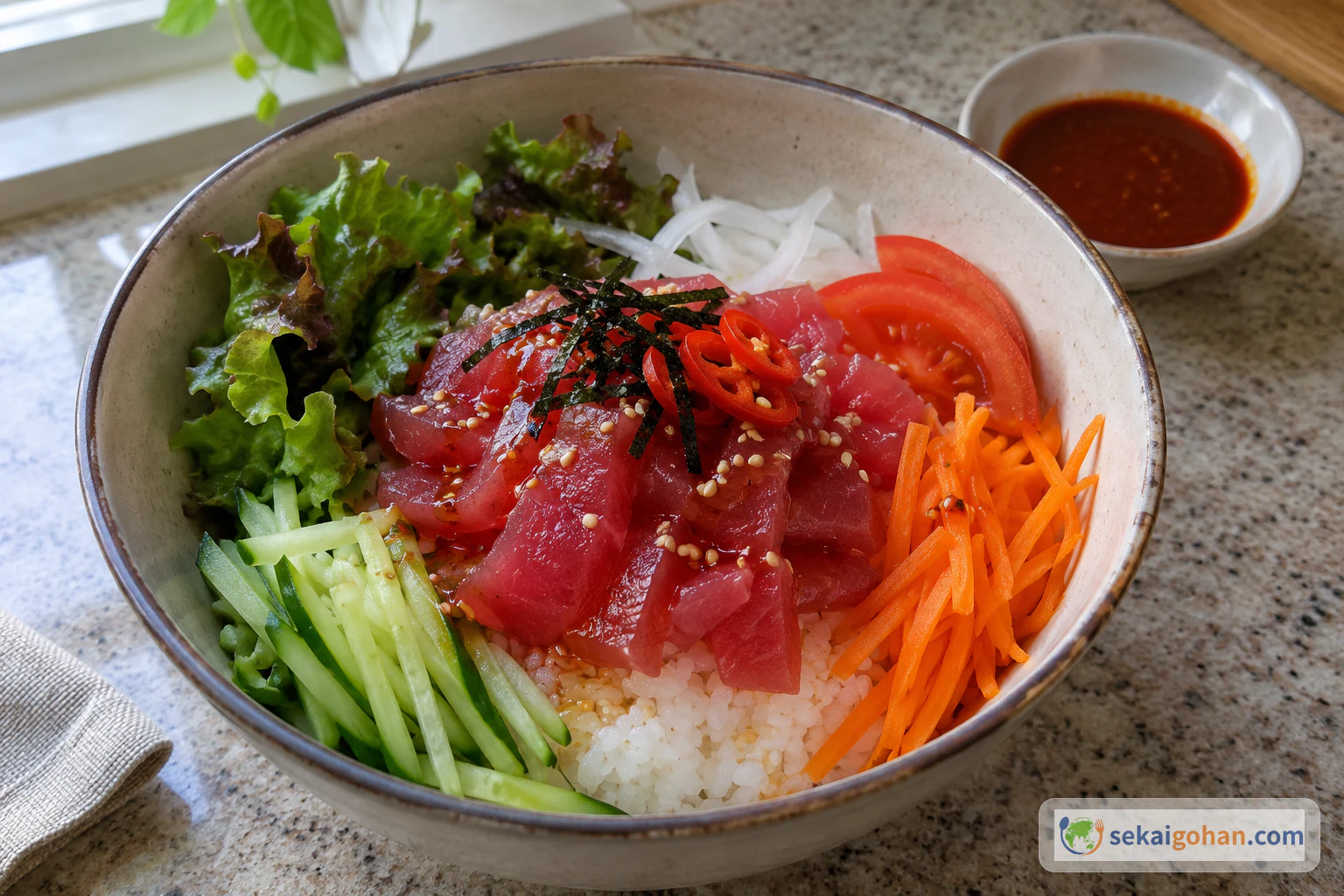
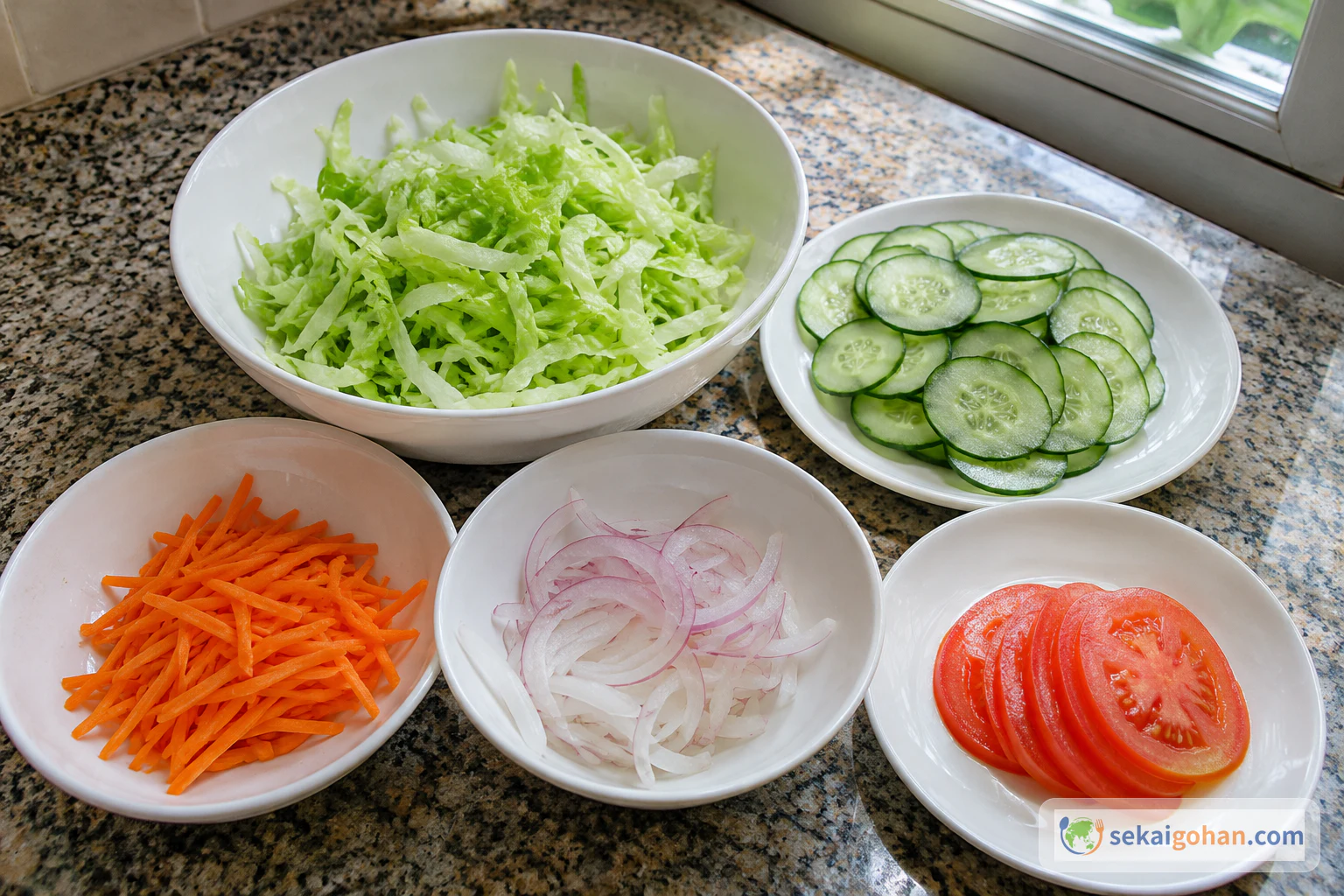
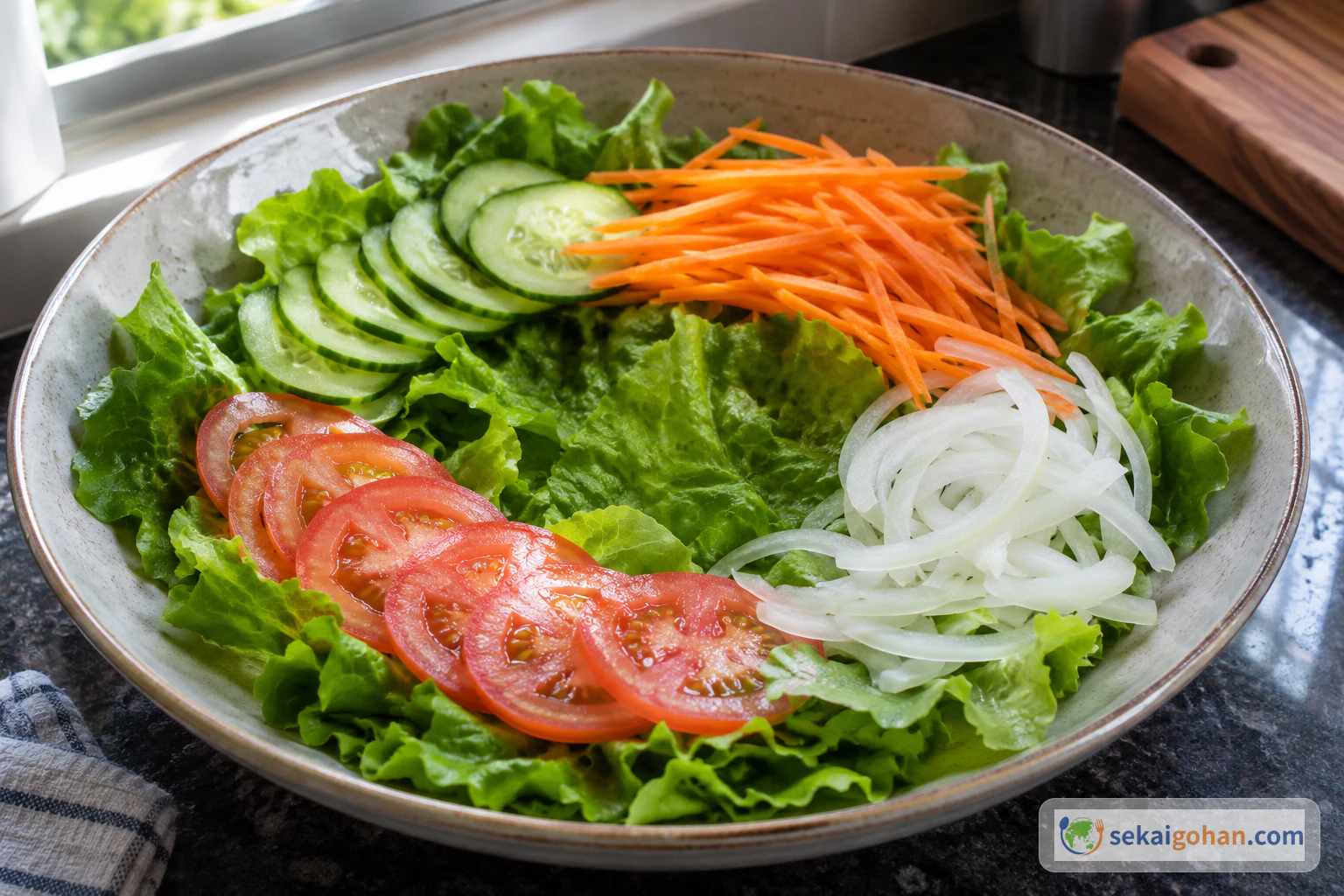
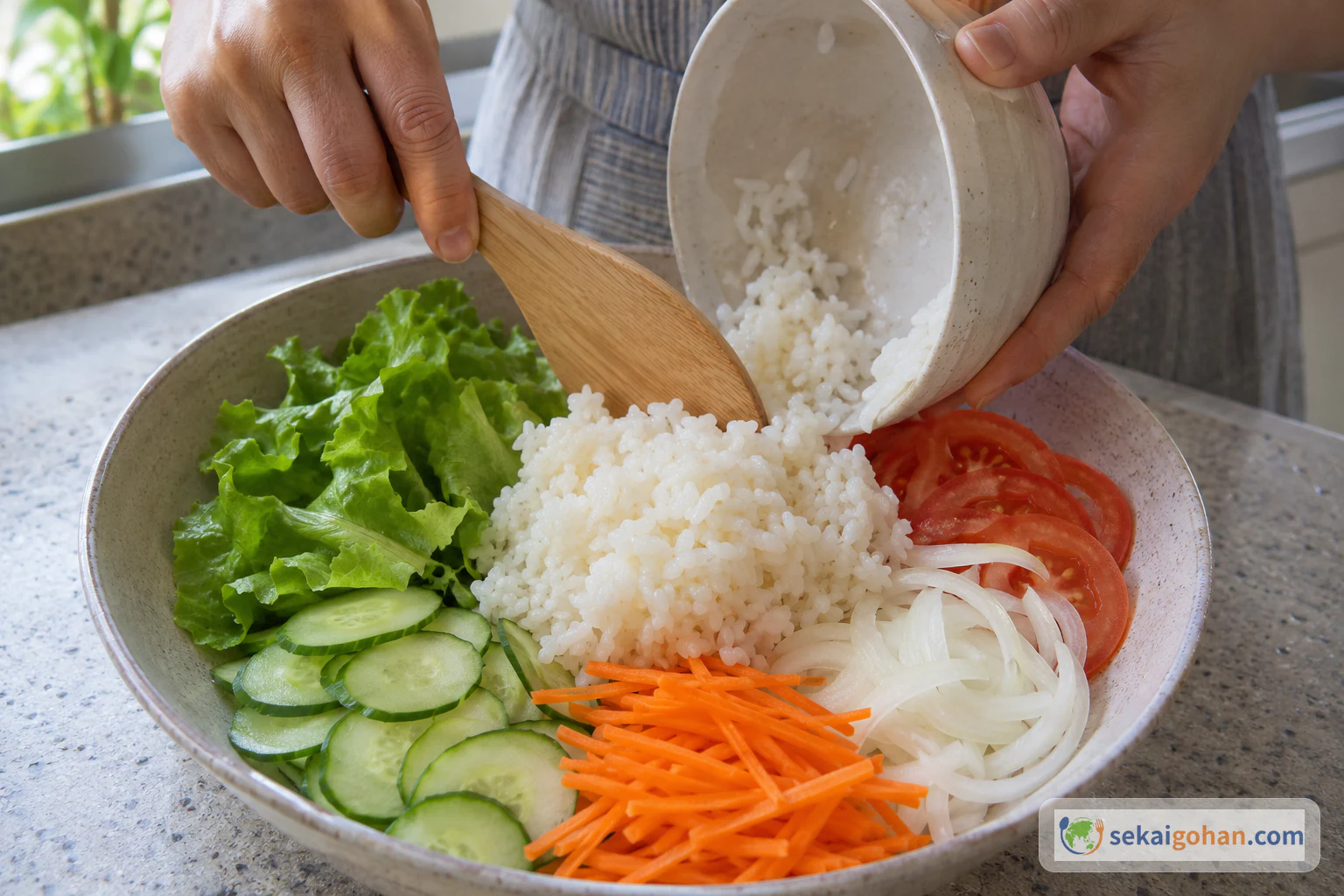
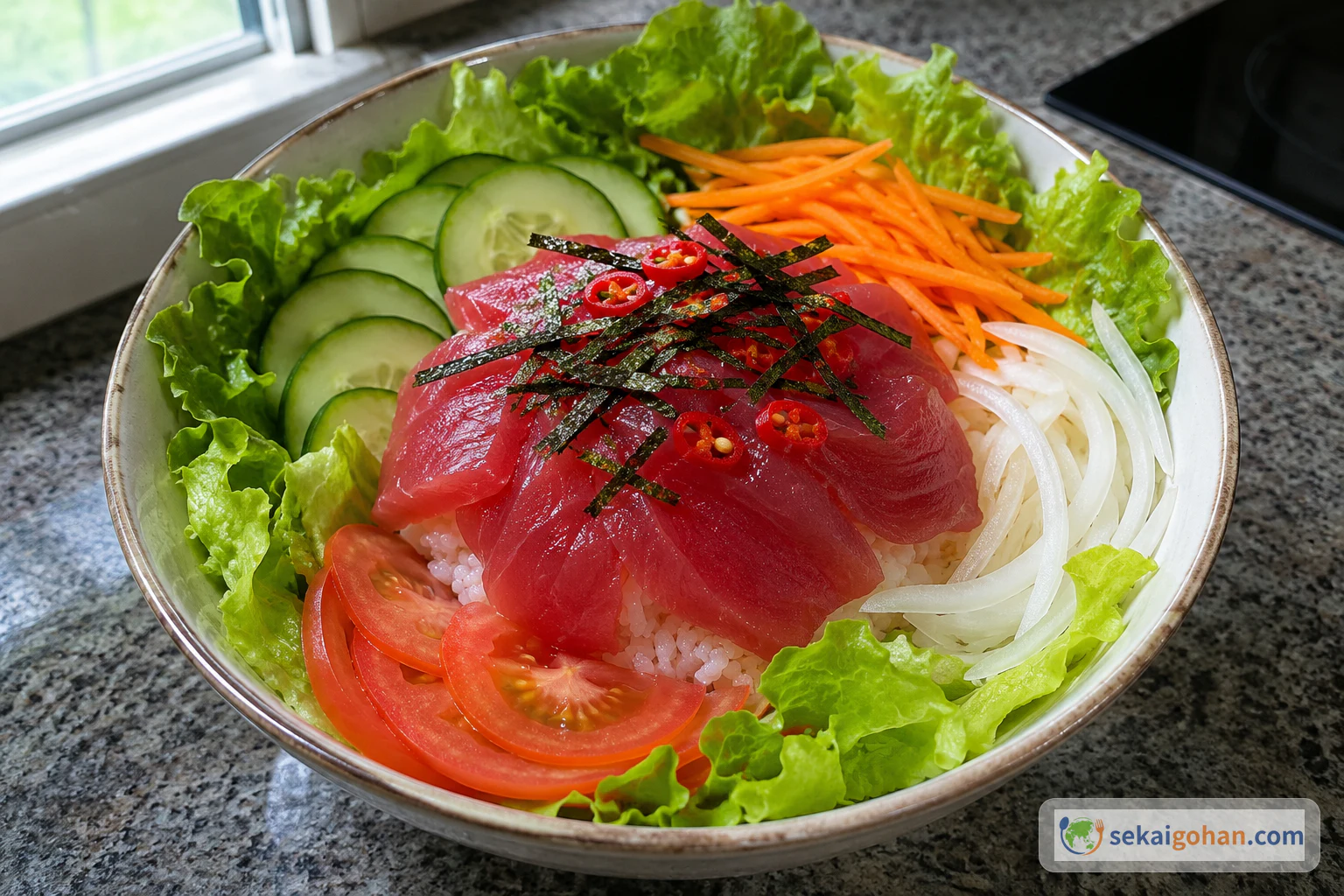
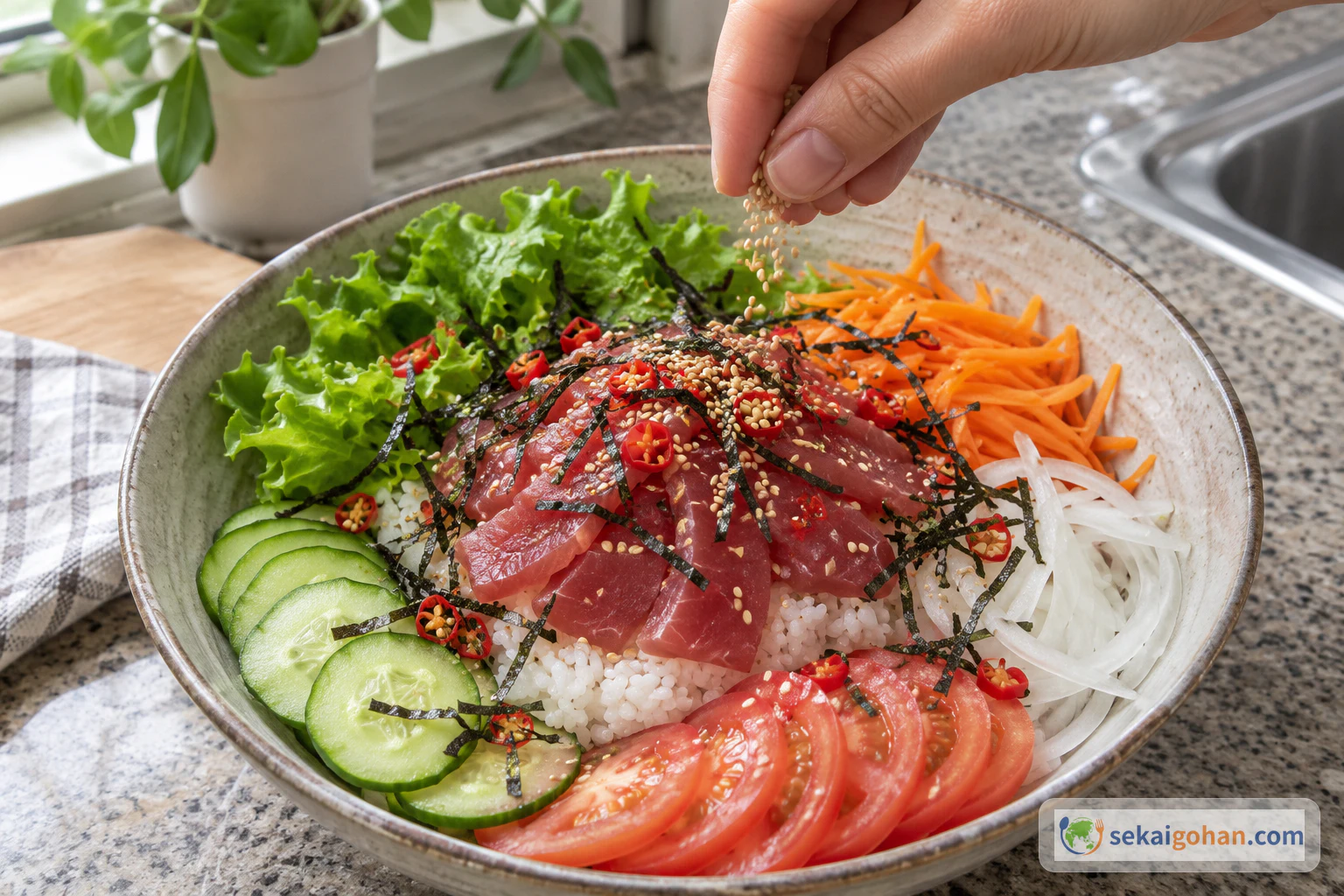
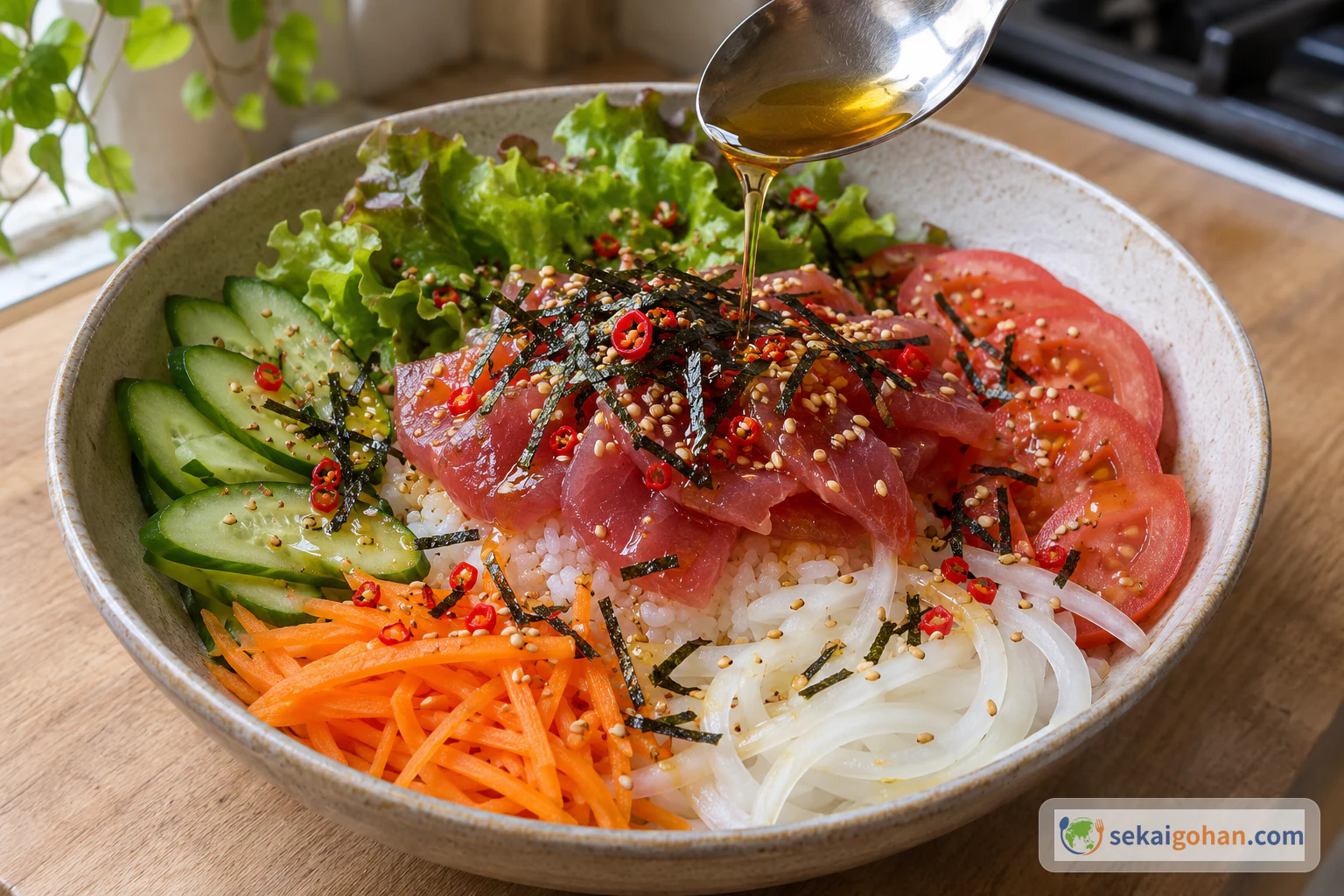
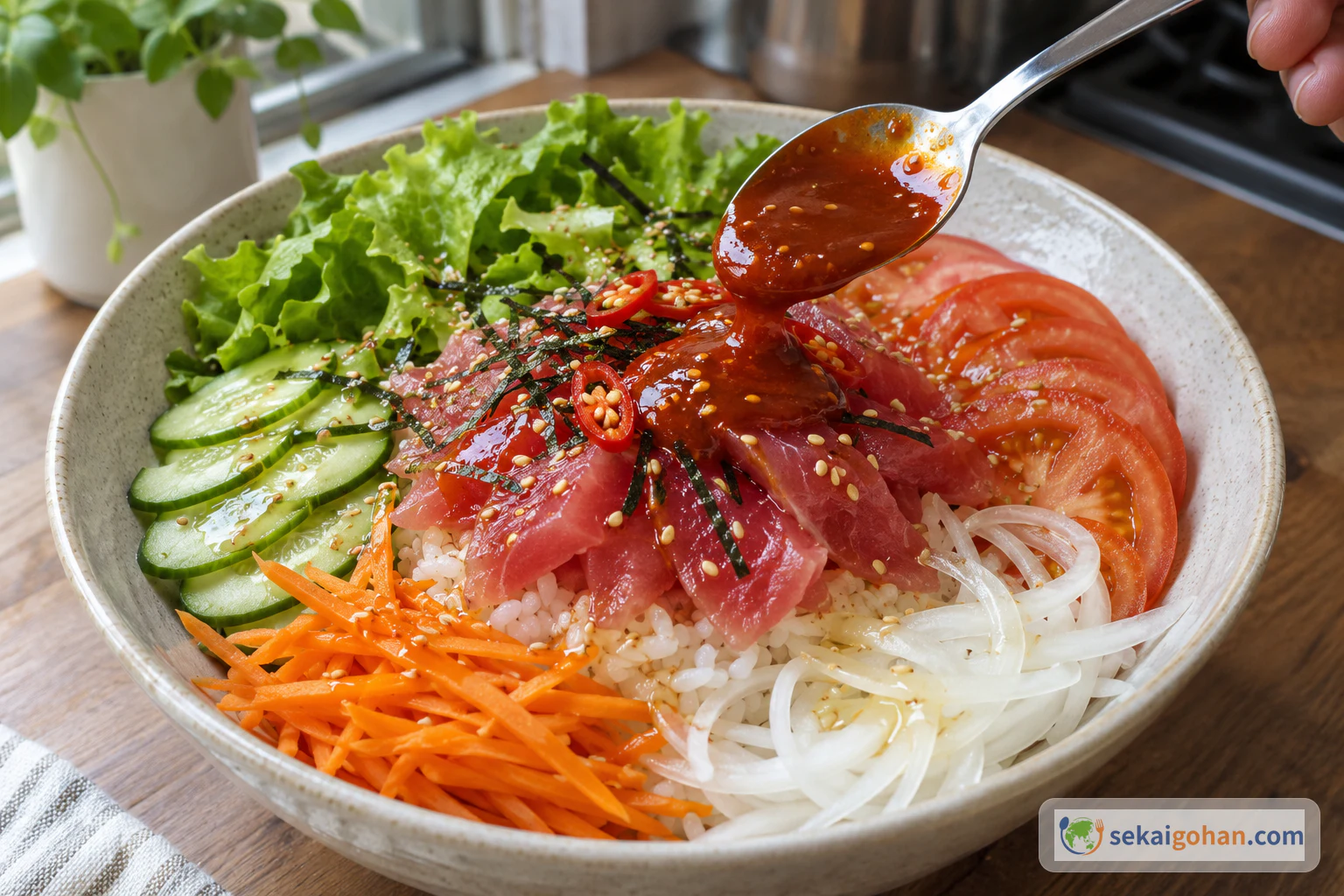
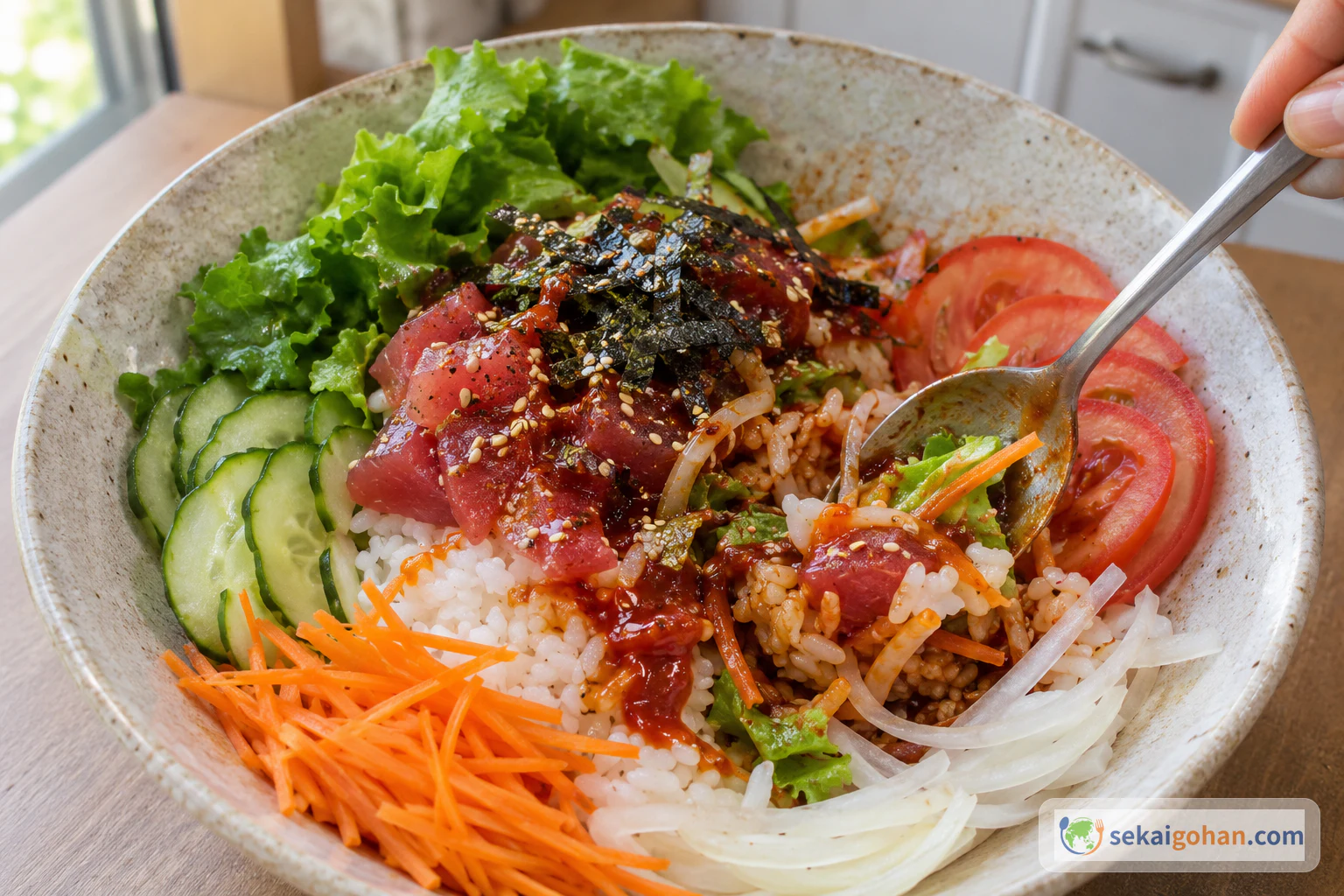
Thin slices of chilled raw fish sit on freshly made rice, ringed by lettuce, cucumber, carrot, onion and tomato, with strips of roasted gim, sesame seeds and a drizzle of sesame oil on top. At the table, a sour, spicy sauce of soy sauce and hot pepper paste goes over the fish, and everyone mixes their bowl together. Hoe-deopbap (회덮밥) is that bowl: raw fish over rice with a bright, fiery seasoning sauce. It's cold, crunchy and sharp all at once, and nothing in it is cooked except the rice.
Hoe-deopbap and Bibimbap
Hoe-deopbap is eaten much like bibimbap: everything goes into one big bowl and gets mixed before you eat. Some versions call it a bibimbap-style bowl topped with fish and salad vegetables, and their ingredients vary. Because the vegetables stay raw, it is simpler to put together than bibimbap.
To explore more of the country's cooking, see our guide to Korean food.
Ingredients: Serves 2–3
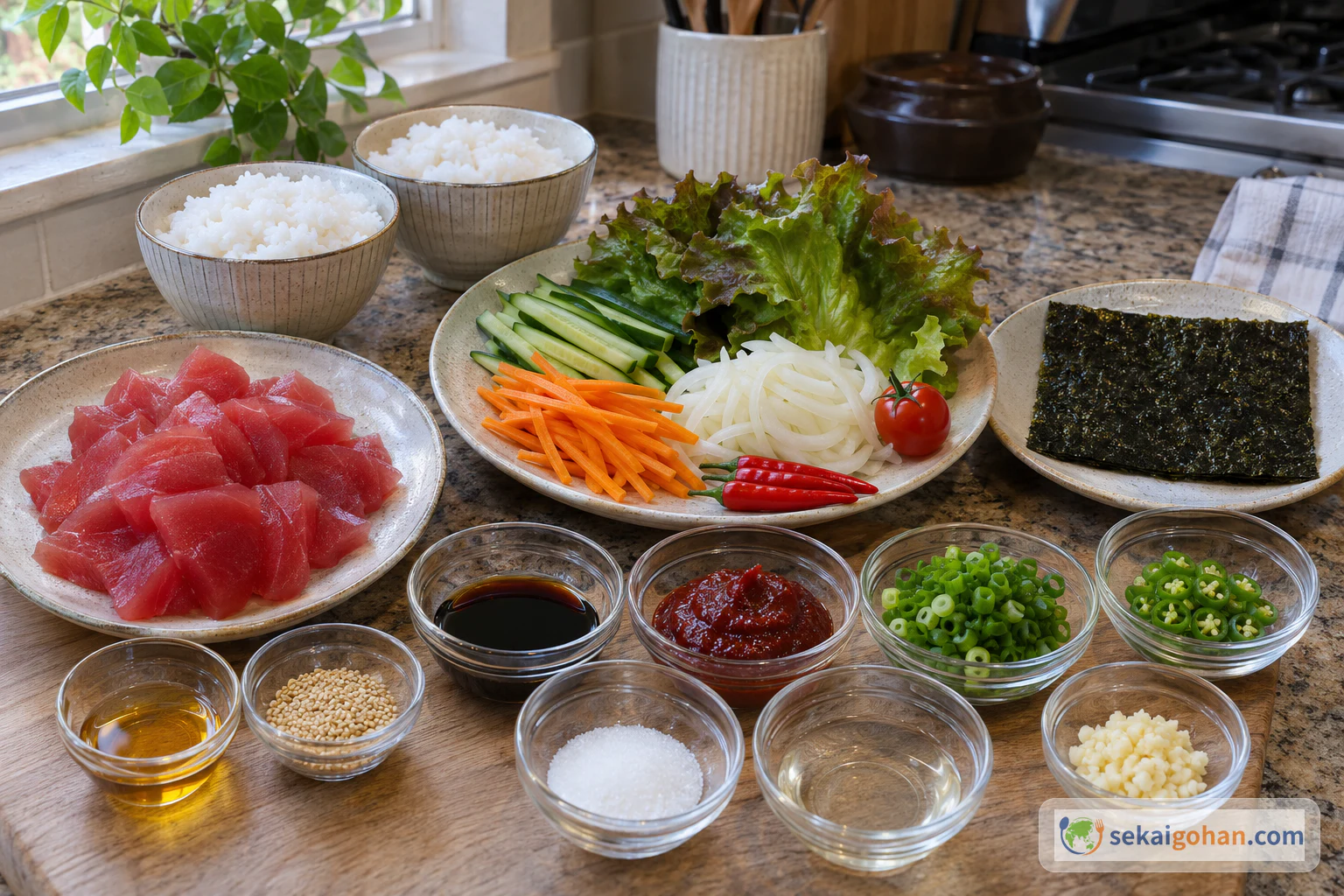
Equipment
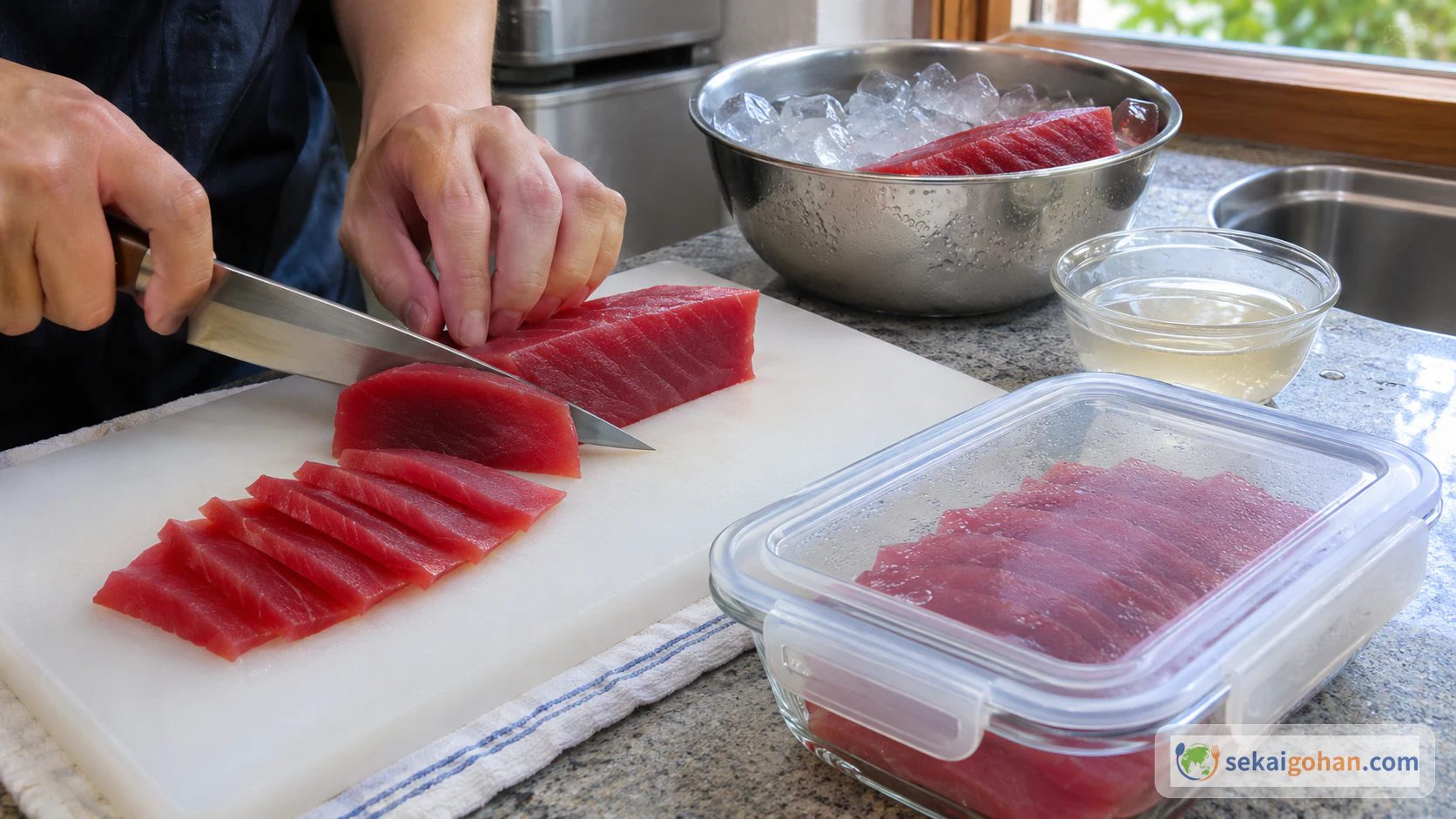
- Knife and cutting board used only for the fish
- Separate knife and cutting board for the vegetables
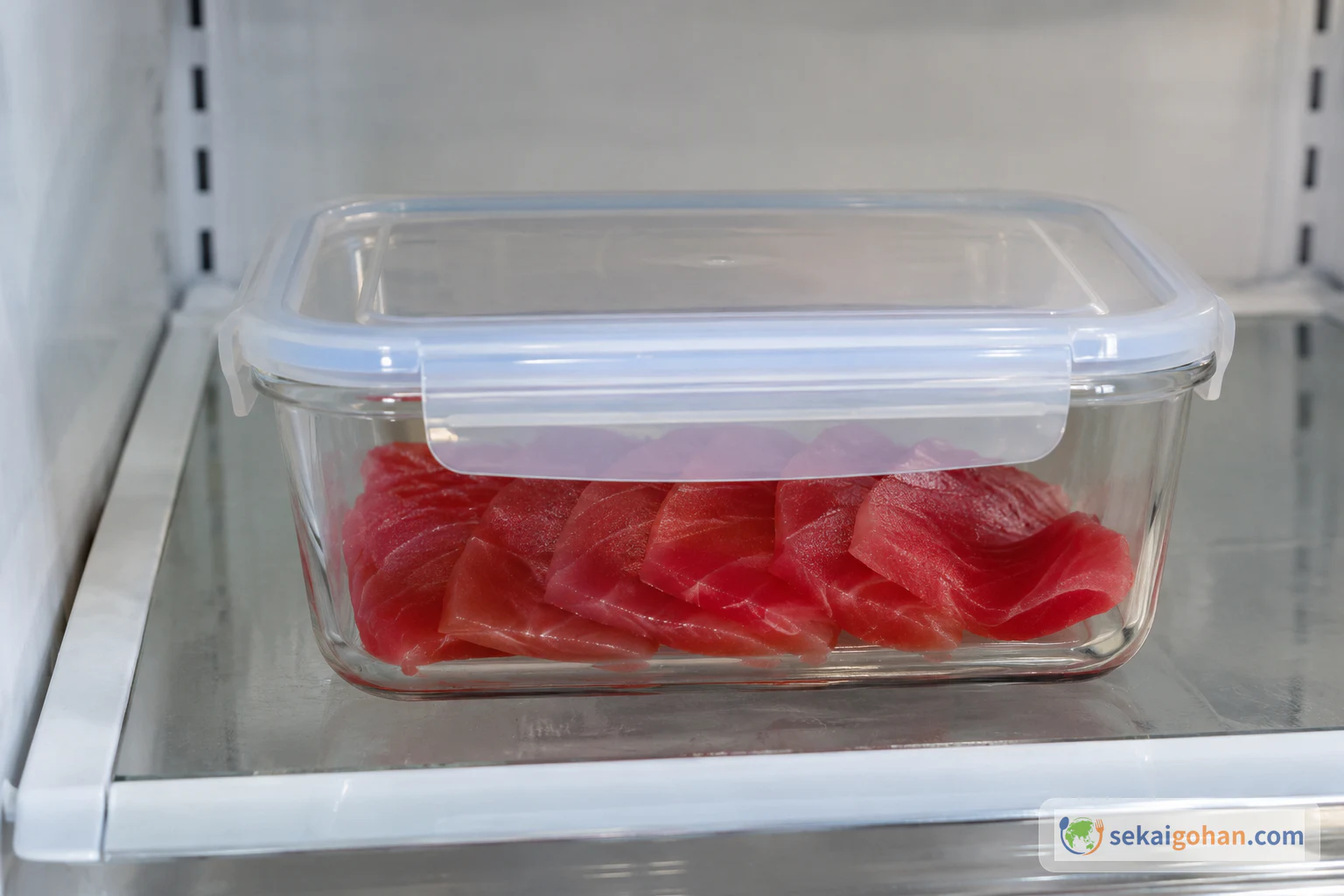
- Covered container for the sliced fish
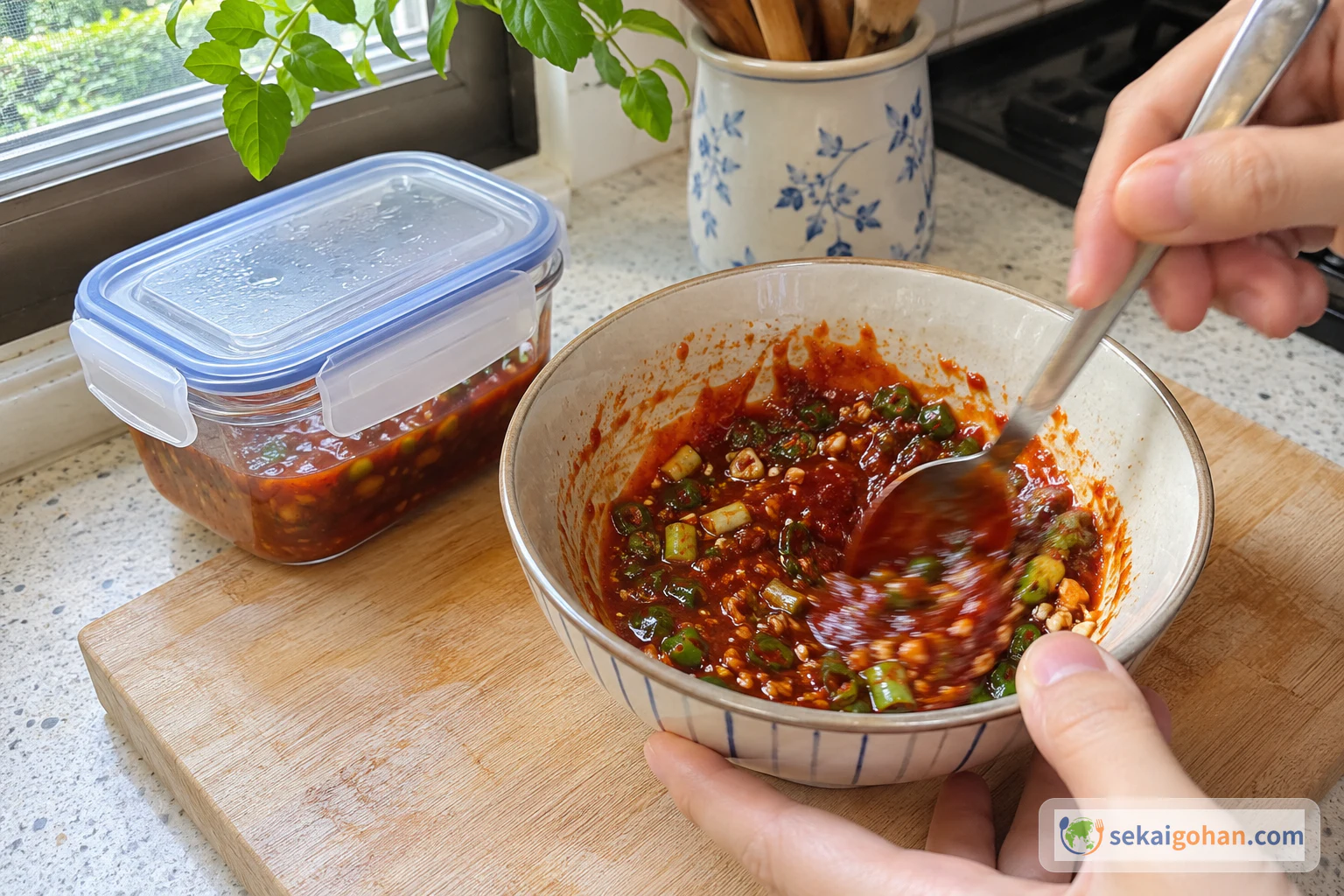
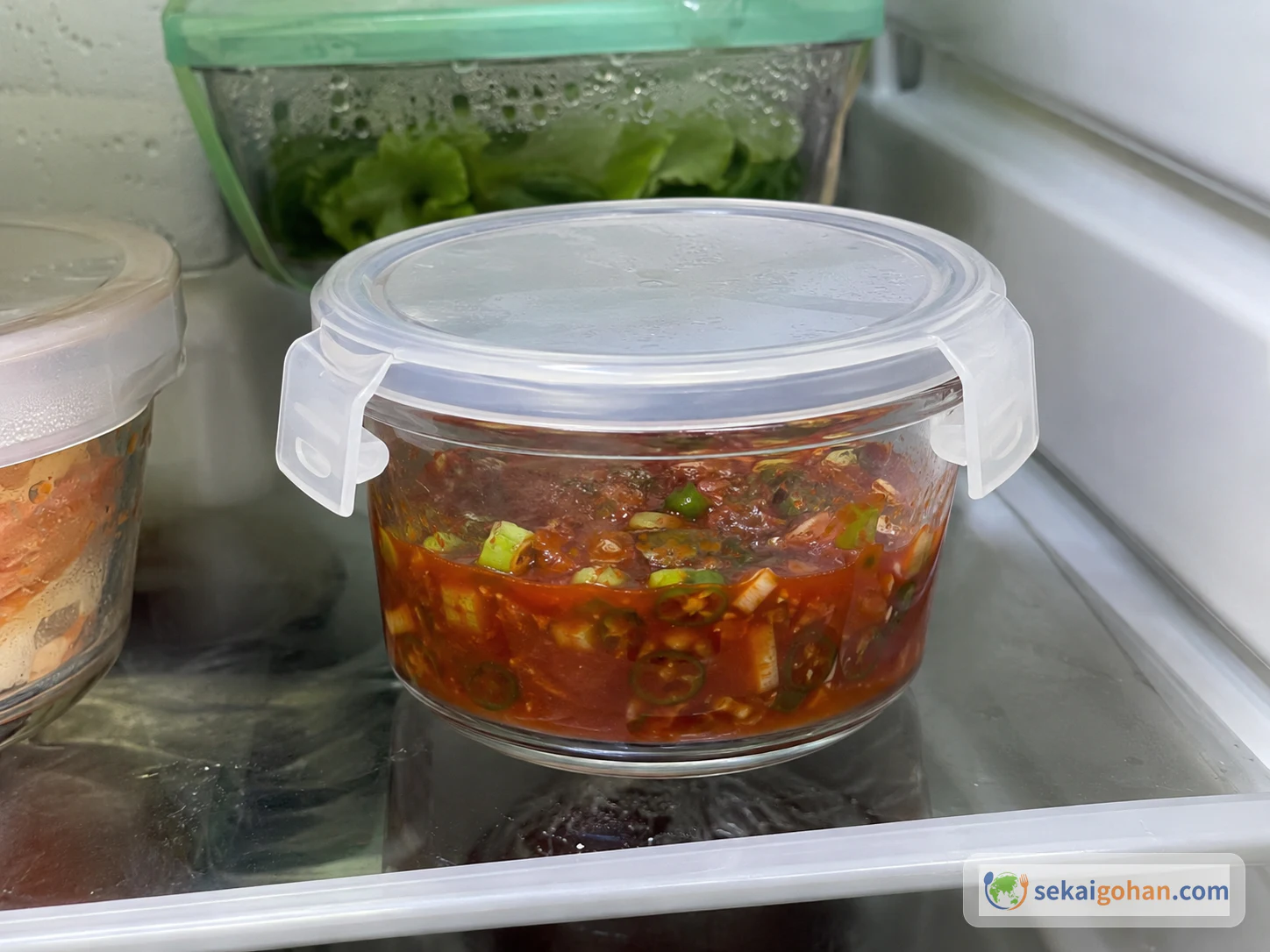
- Mixing bowl for the sauce, plus a covered container if you chill it in another dish
- Large shallow bowl or plate
- Spoon for mixing
Choosing Fish and Ingredients for Hoe-deopbap
Raw fish is never completely risk-free. The steps below lower the risk without removing it.
Avoid raw or undercooked seafood, including sashimi, if you are pregnant, or if young children, older adults or people with weakened immune systems are eating. If someone in one of these groups is at your table, serve them a different dish made with fully cooked fish.
Buying fish for raw eating
Choose fish sold for raw eating. Look for a label such as "for raw consumption" or "for sashimi" (in Japan, 生食用 or 刺身用), and follow the storage method and date on the package. Skip fish sold for cooking or fish whose intended use is unclear. "Sashimi grade" is not a defined label in Japan, and neither that phrase nor a raw-use label guarantees zero risk.
Use one kind of fish for the whole 1/2 lb: sail fish, tuna, salmon, snapper or flounder, whichever is sold for raw eating where you live. Don't combine them.
Take extra care with tuna. Red-fleshed fish such as tuna can cause histamine food poisoning, so pass on any that has sat at room temperature or lost its freshness. Heating does not break down histamine that has already formed.
Parasites and freezing
Know what kills anisakis, a parasite of raw fish. Freezing at −20°C for at least 24 hours kills anisakis larvae. So does heating to a center temperature of 140°F (60°C) for at least 1 minute, or to 158°F (70°C) or above. Since this dish is never heated, choose a raw-use product that has already been frozen, and check the fish by eye, removing any larvae you see.
Vinegar, salt, soy sauce and wasabi do not kill anisakis, and neither does gochujang sauce. Freezing has limits, too: it works against parasites, but it does not kill all harmful bacteria and does not make histamine safe.
Keeping fish cold
- Buy the fish last, keep it cold on the way home, and refrigerate it as soon as you arrive.
- MHLW's guide for a refrigerator is 10°C or below. The FDA advises storing seafood you will use within 2 days at 40°F or below.
- Thaw frozen fish in the refrigerator.
- Never leave fish out at room temperature.
Other ingredients and substitutes
- Gim: Japanese yaki-nori is a close substitute, though its thickness, aroma and saltiness differ.
- Green onions: Japanese naga-negi or ao-negi can stand in, with a different flavor and thickness.
- Vinegar: Use white vinegar, rice vinegar or lime juice. If you go with lime, wash the peel before crushing the limes for juice. The acid is there for flavor only.
- Hot pepper paste: Use gochujang. Doubanjiang and similar pastes change the flavor.
- Soy sauce: The soy sauce you normally cook with is fine.
- Where to look: Gochujang, gim and Korean sesame oil turn up at Korean grocers, online and in some supermarkets.
- Allergens: This dish contains fish and sesame. Soy sauce and hot pepper paste can contain soy and wheat, so check the label of each product.
Hoe-deopbap Problems and Fixes
Most trouble with this bowl comes from fish juices reaching the raw vegetables. Use one knife and board for fish and another for vegetables, and after cutting fish, wash the knife and board and pour boiling water over them. Wash boards, utensils and counters with soap and hot water after they touch raw seafood, and wash your hands often.
| Situation | What to do |
|---|---|
| The fish has been left at room temperature | Do not eat it raw. With tuna, cooking does not undo any histamine that has already formed |
| You cannot tell whether the fish is meant for raw eating | Do not use it for this dish |
| Fish juices got on the lettuce or other raw vegetables | Do not serve those vegetables raw. Wash the tools and your hands before cutting more |
| You used the fish board for vegetables | Stop, then wash the board and knife and pour boiling water over them. Do not use anything that touched fish juices in the bowl |
| The bowl is ready but people are not at the table | Keep the fish and sauce in the refrigerator until just before serving |
| You worry the bowl will be too hot | Use 1 red chili rather than 2. Chili varieties differ in heat |
| Fish or mixed bowl is left over | Mix only what you will eat right away; a mixed bowl does not keep. Store unused raw fish by its label, and do not eat it raw if you are unsure about it |
Serving and Variations
Keep the fish cold until just before it goes on the bowl, add the sauce at the table, mix gently and eat right away. Nothing in this dish is cooked except the rice, so careful handling matters as much as the seasoning.
There's no storage time for this dish; it is meant to be eaten as soon as it's mixed. If you want to change it up, treat these as alternatives rather than extras to pile on:
- Perilla or mint: Add as an optional extra.
- A different vegetable arrangement: Lay out the vegetables to suit the season or what you have.
- Tofu: A vegetarian version replaces the fish with tofu and has its own method.
- Cooked fish: Cooked fish makes a different dish, not hoe-deopbap.
Frequently Asked Questions
Can I just freeze the fish overnight at home?
Only if you can confirm the conditions. The target is −20°C for at least 24 hours, and a home freezer set to −15°C or below does not guarantee that. Check with a freezer thermometer, or buy a raw-use product that has already been frozen.
What does "cup" mean in the vegetable amounts?
It is probably a US cup. These are loose volumes of sliced vegetables, so there's no need to be exact.
Should the rice be hot?
Use freshly made rice, and don't let the assembled bowl sit before the fish goes on and the dish is eaten.