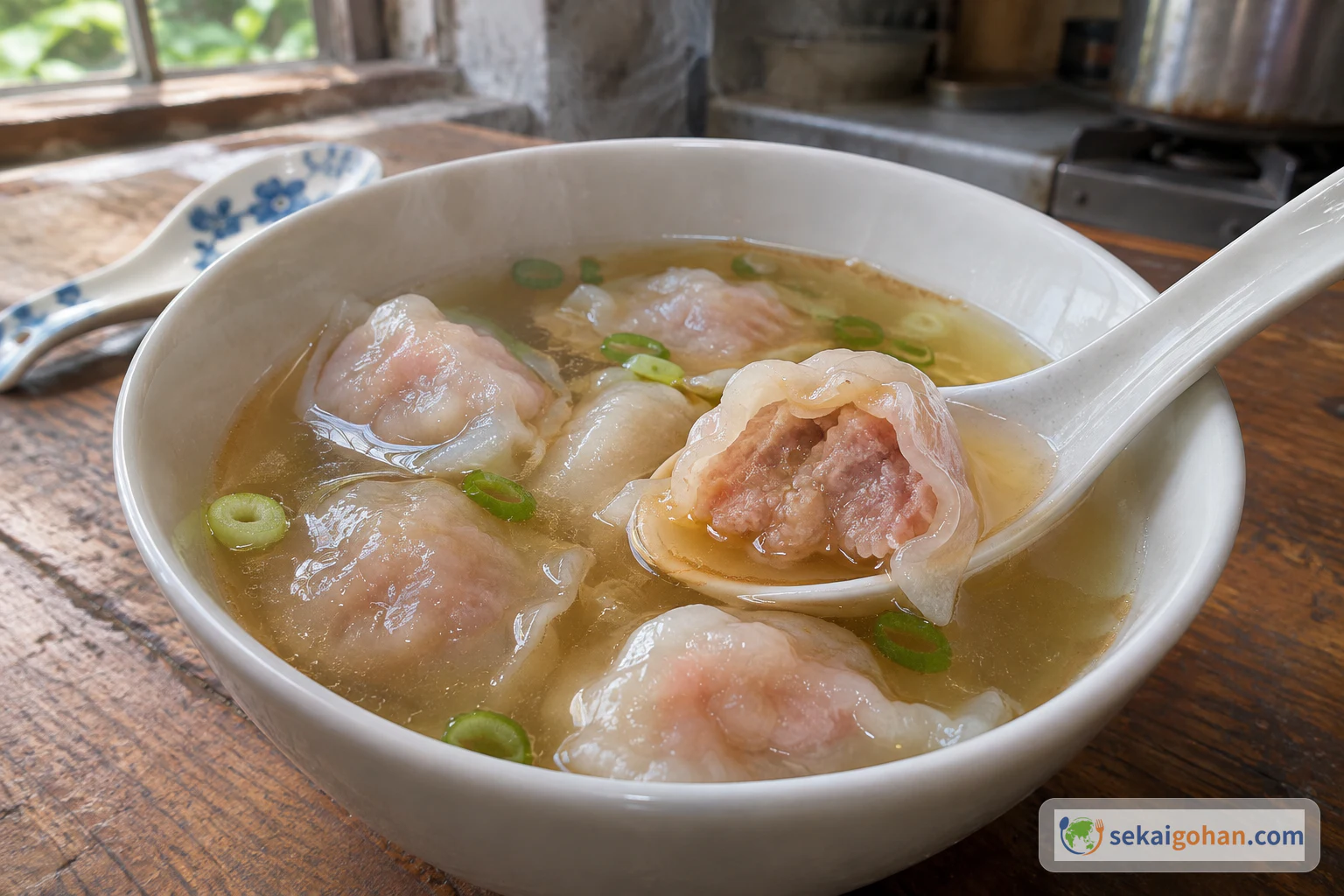
Squeeze a block of tofu in a cloth and a little milky liquid pools at the bottom of the bowl. Chop the kimchi and its tangy smell fills the kitchen, while the cooked Korean glass noodles shine translucent on the board. Mix them with ground pork, garlic chives, scallion and sesame oil, and you get a filling softer and juicier than the one in a typical potsticker. Mandu are Korean dumplings where the wrapping itself becomes part of the meal. This home-style version is filled with napa cabbage kimchi, tofu, pork and glass noodles, and the same batch can be finished three ways: steamed, pan-fried or in soup.
Mandu in Korean home cooking
Mandu (만두) have long been eaten on the Korean peninsula. They are thought to have arrived in the 14th century, during the Goryeo period, by way of the Mongol Yuan dynasty. In the northern regions, where winters are harsh, large mandu packed with filling are well known, and the shape and filling change from region to region and from home to home.
One filling covers several dishes. Steamed and eaten as is, they are jjinmandu; pan-fried until browned, gunmandu; simmered in soup, manduguk. In English you'll usually see the name written mandu, sometimes simply "Korean dumplings." Like Chinese jiaozi, Japanese gyoza and Central Asian manti, they belong to a broad family of fillings wrapped in wheat dough.

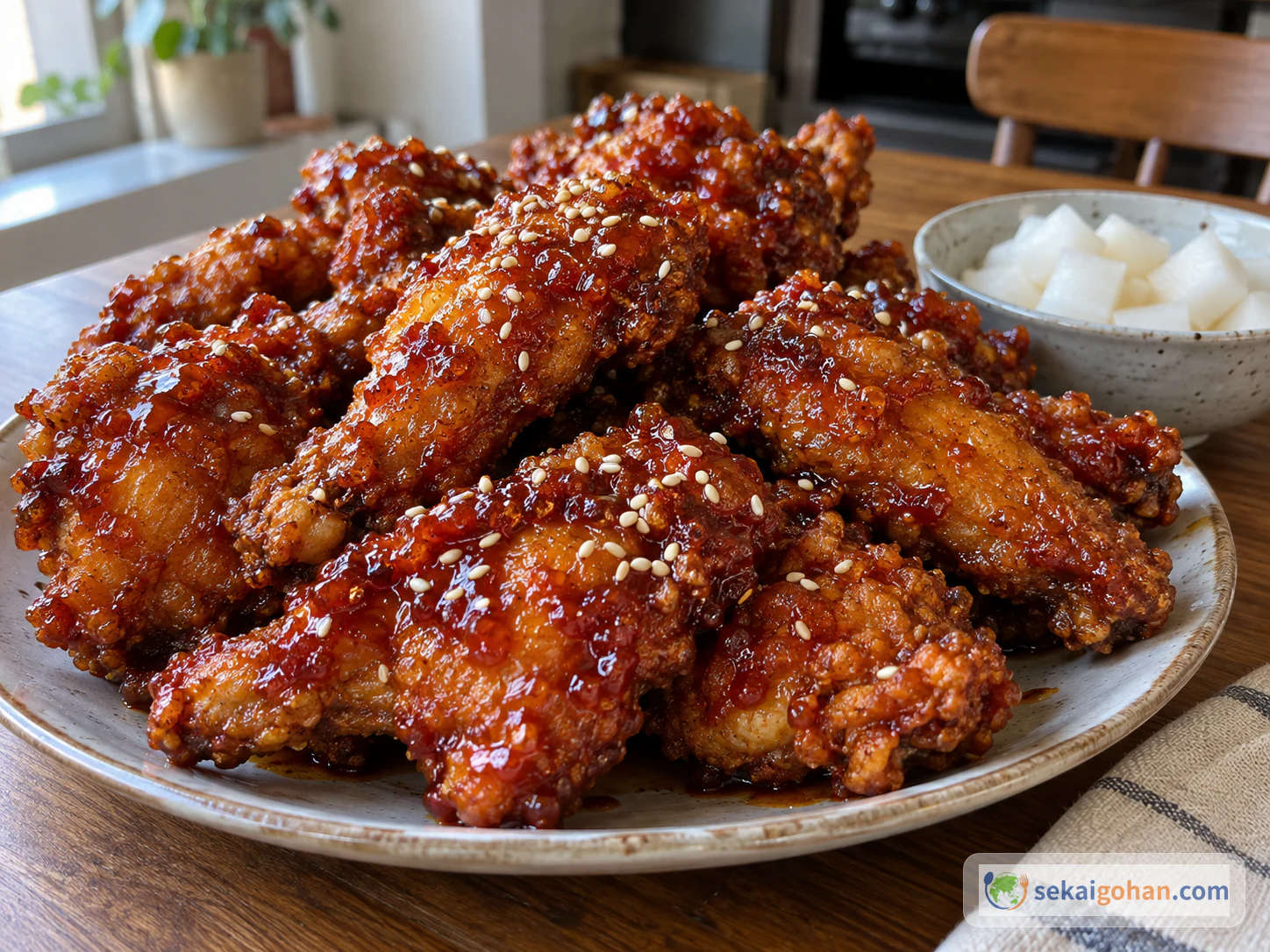
Mandu fit easily into a Korean menu. On a day you want something spicy alongside, add tteokbokki; for a richer soup, kimchi jjigae; and to put meat center stage, bulgogi (all in Japanese).
Ingredients and substitutes: settle the moisture of the tofu and noodles first

This makes 4 servings, 40–44 dumplings. As a main dish it serves 4; with plenty of soups and side dishes it stretches to 5 or 6. Use large round dumpling wrappers about 3.5 inches (9 cm) across. If you only have small wrappers, reduce the filling to about 18 g per dumpling.
The main allergens to watch are wheat, pork, egg, soy and sesame. Check the labels on store-bought dumpling wrappers, kimchi and soy sauce for wheat and soy. Because the filling is raw ground meat, cook it all the way through: the center should reach at least 75°C (167°F). Without a thermometer, cut one dumpling open and check that no pink remains in the center and the juices run clear.
Unlike a typical potsticker, mandu contain tofu and glass noodles, so they eat lighter and can be made larger. But skipping the draining step quickly leads to failure. Press the tofu in a cloth or thick paper towels, give the kimchi a light squeeze before chopping, and cut the glass noodles short after cooking. Do these three things first, and wrapping becomes much easier.
Choosing ingredients and tools for mandu

Ground pork, tofu, scallions, chives and eggs from your local supermarket are fine. The items worth thinking about are the wrappers, Korean glass noodles, kimchi, sesame oil and a steamer. Ordinary dumpling wrappers work, but choose large, thick ones if you can: thin wrappers pan-fry up light but tear easily when steamed and turn soggy in soup.
| What to buy | Priority | Why it matters |
|---|---|---|
| Large dumpling wrappers | High | Hold more filling and resist tearing when steamed |
| Korean glass noodles (dangmyeon) | Medium | Stay springy and absorb meat juices and kimchi liquid |
| Well-fermented kimchi | Medium | A sour kimchi tastes brighter after cooking |
| Korean sesame oil | High | Strongly aromatic even in small amounts; also used in the dipping sauce |
| Steamer | Medium | Cooks a batch of steamed mandu at once |
| Probe thermometer | Medium | Helps check doneness in large dumplings filled with ground meat |
Korean glass noodles also go into japchae. A 1 lb (500 g) bag will leave you with extra, but it's easy to finish if you use the rest for japchae or hot pots. Ordinary glass noodles will do in a pinch; thin ones break easily once they absorb moisture, so cook them for less time.
Korean sesame oil goes into the filling, the frying and the dipping sauce. Oil that has been open a long time loses its aroma. Since it also goes into bibimbap, japchae and tteokbokki, it's worth keeping a bottle if you cook Korean food often.
In place of a steamer, a deep pot with a steaming rack and a sheet of parchment paper with holes poked in it works too. If you're making around 40 dumplings at once, though, a steamer that lets you lay them flat keeps the wrappers from sticking together.
Because the filling contains raw ground meat, the larger the dumplings, the harder it is to judge doneness. A thermometer is good insurance the first time you make them, when cooking frozen mandu, or when switching to ground chicken.
Method: wrap, then steam, pan-fry or add to soup
It's easiest to wrap the whole batch first, steam only what you'll eat, and freeze the rest. Here you wrap 40–44 dumplings, steam half, and use the rest for pan-frying or soup. Raw wrapped dumplings left sitting out get damp, so dust a tray lightly with potato starch and work with a dry cloth draped loosely over them.
The filling already contains salt from the kimchi and soy sauce. If the dipping sauce is too strong, the first dumpling tastes great but the rest start to feel heavy. Mix soy sauce, vinegar and water 2:1:1, with just a little gochugaru for heat. Add a little sesame oil for pan-fried mandu; for soup, skip the sesame oil and make it more vinegary so you don't tire of it.
Troubleshooting mandu

Most problems come down to moisture. A watery filling tears the wrappers when steamed, and when pan-fried, the bottoms burn while the centers stay lukewarm. Control the moisture of the tofu, kimchi and glass noodles first, and the wrappers puff nicely and the filling falls apart pleasantly as you eat.
Watery filling
The culprit is the tofu, the kimchi or the glass noodles. If the tofu still drips when you squeeze it, it hasn't been drained enough. Kimchi added with all its juice brings tang but makes the wrappers tear, and long noodles tangle and stretch the wrapper as you fold. If liquid comes out after mixing, set the filling in a strainer for 5 minutes to drain before wrapping, rather than relying on starch alone to absorb it.
Torn wrappers
Look at the amount of filling and how you seal them. Even with large wrappers, more than 24 g per dumpling gets hard to close. Oil from the filling or kimchi juice on the edges keeps them from sticking, so place the filling in the center. Dumplings crowded on a tray stick together and tear when lifted; leave at least 0.5 inches (1 cm) between them and cover with a cloth to keep them from drying out.
Lukewarm centers
The steam is too weak or the steamer is too crowded. Bring the water to a full boil and add the dumplings only when steam billows out as you lift the lid. In a two-tier steamer the upper tier cooks more slowly, so after 12 minutes swap the tiers and steam for another 2 minutes. If you have a probe thermometer, insert it into the center of the largest dumpling.
Burnt bottoms when pan-frying
There was too little water after browning, or the heat was too high. Brown for 3 minutes over medium heat, then add ¼ cup (70 ml) water and cover to steam-fry. If the water evaporates all at once, lower the heat; if the wrappers are still white and stiff, add 2 tbsp water and cook 2 more minutes. Uncovering at the end dries the bottoms and brings the crispness back.
Flat flavor
Check the moisture before adding more salt. Salt or soy sauce in a loose filling only draws out more water. Before wrapping, add 2 tsp potato starch; once they're cooked, adjust with the dipping sauce. If your kimchi is young and not very sour, raising the vinegar in the dipping sauce to 1 1/2 tbsp tastes cleaner than adding vinegar to the filling.
Serving, storing and freezing mandu

Freezing raw mandu
Raw mandu can be frozen right after wrapping. Line a tray with parchment paper, arrange them so they don't touch, and freeze for 2–3 hours. Once firm, transfer them to a freezer bag, press out as much air as possible, and use within about 3 weeks. Bagged before they're frozen, the wrappers stick together and tear before cooking.
Cook them straight from the freezer. Put them in the steamer without thawing: get the steam going over high heat, arrange them, and steam over medium-high heat for 14–16 minutes. For soup, add them frozen and simmer over medium-low heat for 8–9 minutes. To pan-fry, brown them from frozen over medium heat, add ½ cup (90 ml) water, cover and steam-fry for 6 minutes, then dry the bottoms.
Storing and reheating cooked mandu
Cool cooked mandu and refrigerate within 2 hours. They keep about 2 days in the refrigerator. To reheat steamed mandu, arrange them on a microwave-safe plate, sprinkle with 2 tsp water, cover loosely with plastic wrap and heat at 600 W for 1 minute 30 seconds, then another 30 seconds if needed. For pan-fried mandu, add 2 tbsp water to the frying pan, cover and warm over medium-low heat for 3 minutes, then uncover to dry the bottoms.
Preparing ahead
If you prep the day before, stop after draining the tofu, cooking the noodles and chopping the kimchi. A filling with meat, egg and salt mixed in releases water overnight and turns loose by the time you wrap. On the day, mix the prepped ingredients with the ground meat, then wrap and cook right away. If the family is wrapping together, divide the tray at the start into what gets steamed, pan-fried and frozen, so you can cook just what's going to the table without rushing.
What to serve with mandu
Steamed mandu with white rice, kimchi and seaweed soup make a light dinner. Pan-fried mandu have a toasty oil aroma that pairs well with a mixed-grain rice like kongbap and a sour kimchi. On a soup day, making bulgogi the main dish keeps the table from getting too heavy.
When mandu are the whole meal, use thicker wrappers and plan on about 10 per person. As a side dish, plan on 4–5 per person and round out the meal with japchae or bibimbap (both in Japanese). Wrapping takes a bit of work, so make a big batch and freeze half for your next Korean dinner.
Frequently asked questions
Can I use regular gyoza or potsticker wrappers?
Yes. Choose large wrappers about 3.5 inches (9 cm) across, ideally thick ones. With small wrappers, reduce the filling to about 18 g and focus on pan-fried mandu. Thick wrappers made for boiled dumplings also suit soup; thin ones should be simmered briefly and eaten before they turn soggy.
Can I make them without pork?
You can use 11.5 oz (320 g) ground chicken and add 1 tsp more Korean sesame oil. Chicken is lean, so squeezing the tofu too dry makes the filling dry. All ground beef gives a strong flavor, so a mix of 5.5 oz (150 g) beef and 5.5 oz (150 g) pork is easier to work with. For a completely meatless version, coarsely chop 4 oz (120 g) shiitake mushrooms, sauté them over medium heat for 3 minutes to drive off the moisture, then add them.
Can I make white mandu without kimchi?
Yes. Leave out the 5.5 oz (160 g) kimchi, coarsely chop 7 oz (200 g) napa cabbage, rub it with 1/2 tsp salt, let it sit for 10 minutes and squeeze it. Add 2 tsp more soy sauce and increase the black pepper to 1/2 tsp. Without the sourness of kimchi, a slightly more vinegary dipping sauce tightens the flavor.
Which is most authentic: steamed, pan-fried or in soup?
All three are eaten in Korea. Steamed mandu let you taste the wrapper and filling most clearly, pan-fried mandu bring a toasty flavor, and manduguk is an easy, warming meal. The first time, steam a few to check doneness and moisture, then pan-fry the rest; that makes it easier to find the cause of any problems.
Should I freeze them raw or cooked?
Raw is easier to use next time. Cooked mandu tend to crack when frozen and turn watery when reheated. If you want to keep a few for a packed lunch, pan-fry them, refrigerate, and eat them by the next day.
Can I make them mild for kids?
Yes. Rinse the kimchi lightly in water and squeeze it well before using. Rinsing too much washes away the flavor, so rinsed well-fermented kimchi with 1 tsp soy sauce added holds together better than young kimchi. Leave the gochugaru out of the dipping sauce and use just green onion and sesame seeds.
Sources
The background and spelling of mandu were checked against the Wikipedia article on mandu. Filling combinations, draining the tofu and kimchi, and handling the glass noodles were cross-checked against Korean recipes from Maangchi, Korean Bapsang and My Korean Kitchen. For cooking ground meat through, the heating guideline from Japan's Ministry of Health, Labour and Welfare was also consulted.