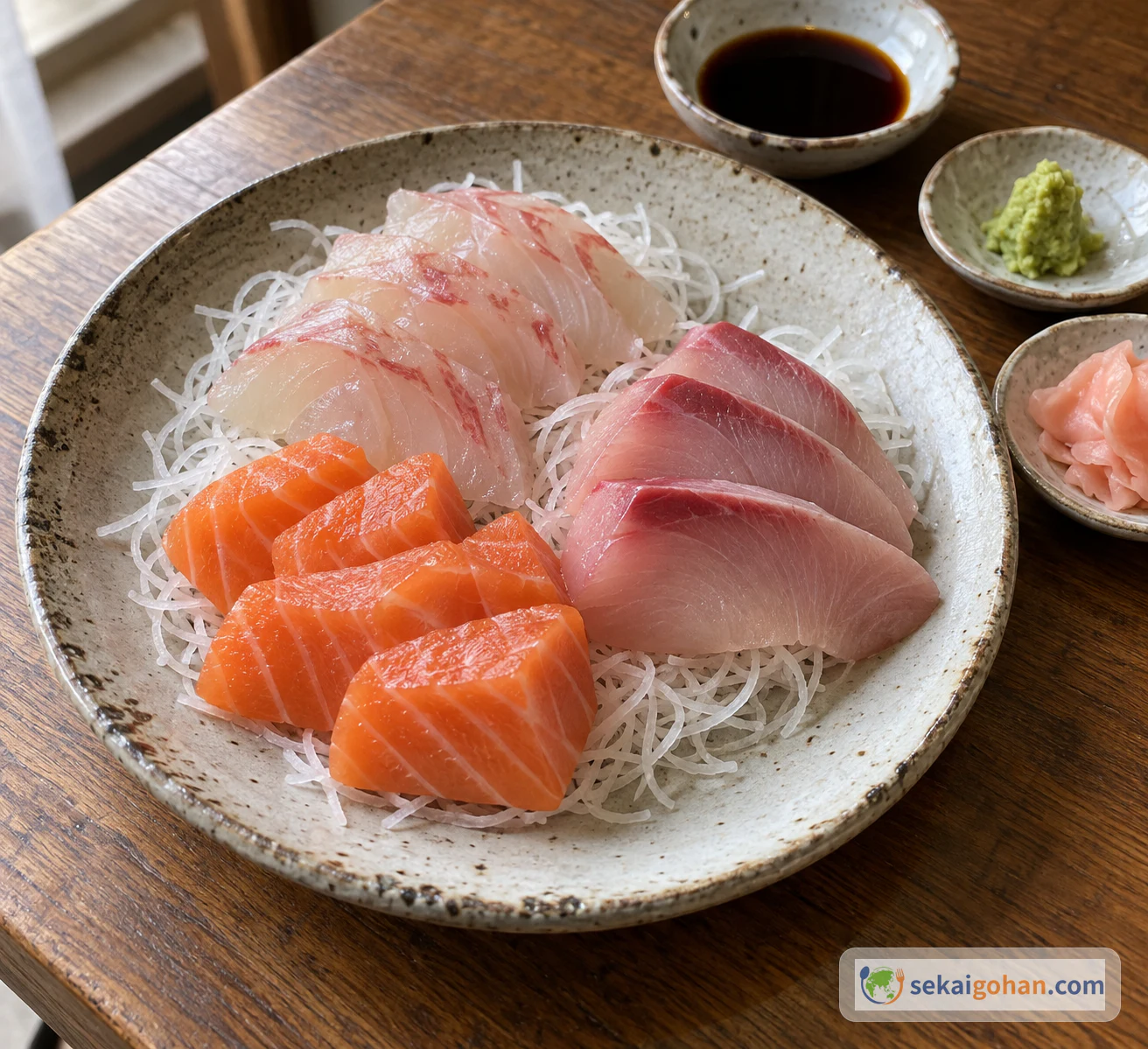
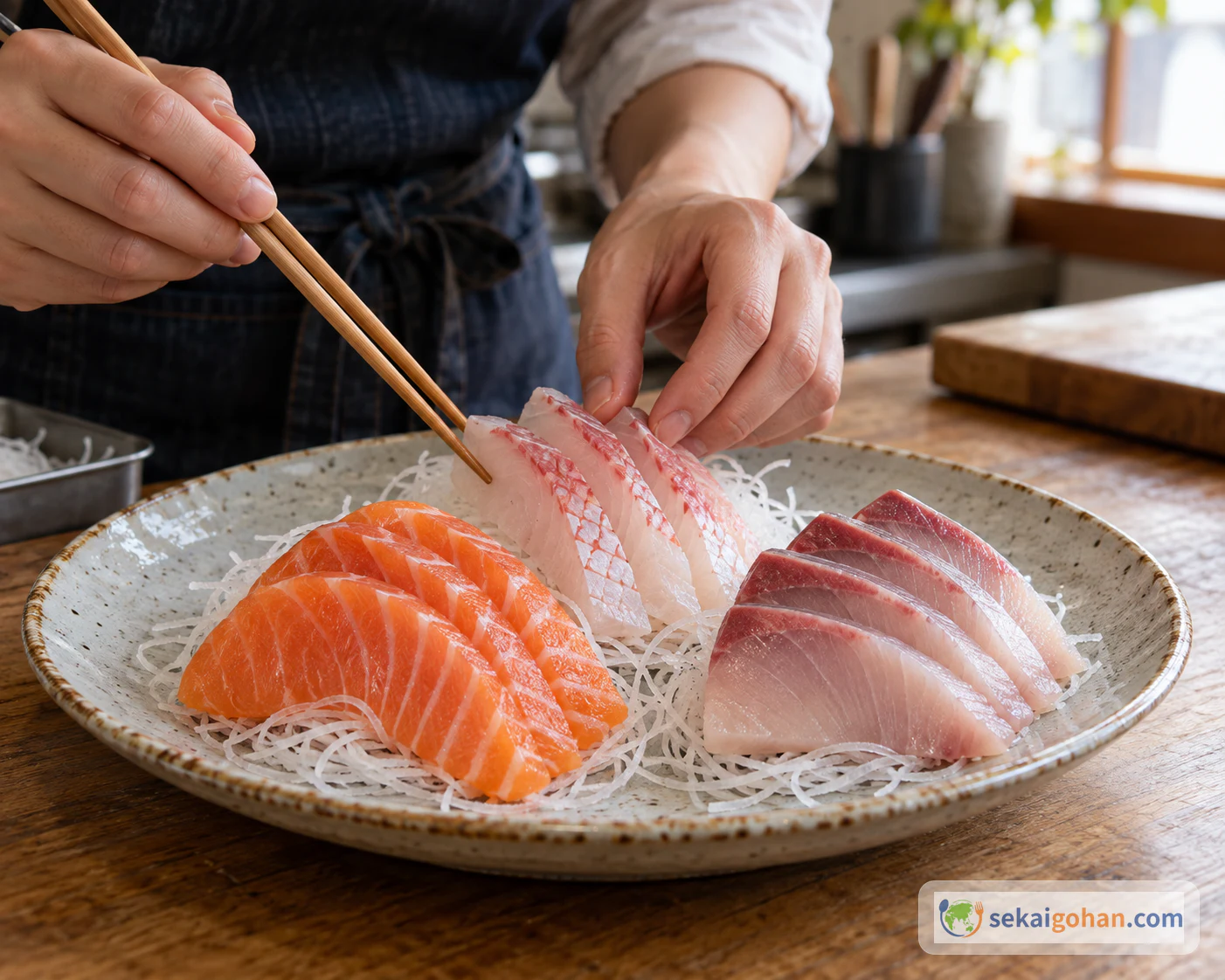
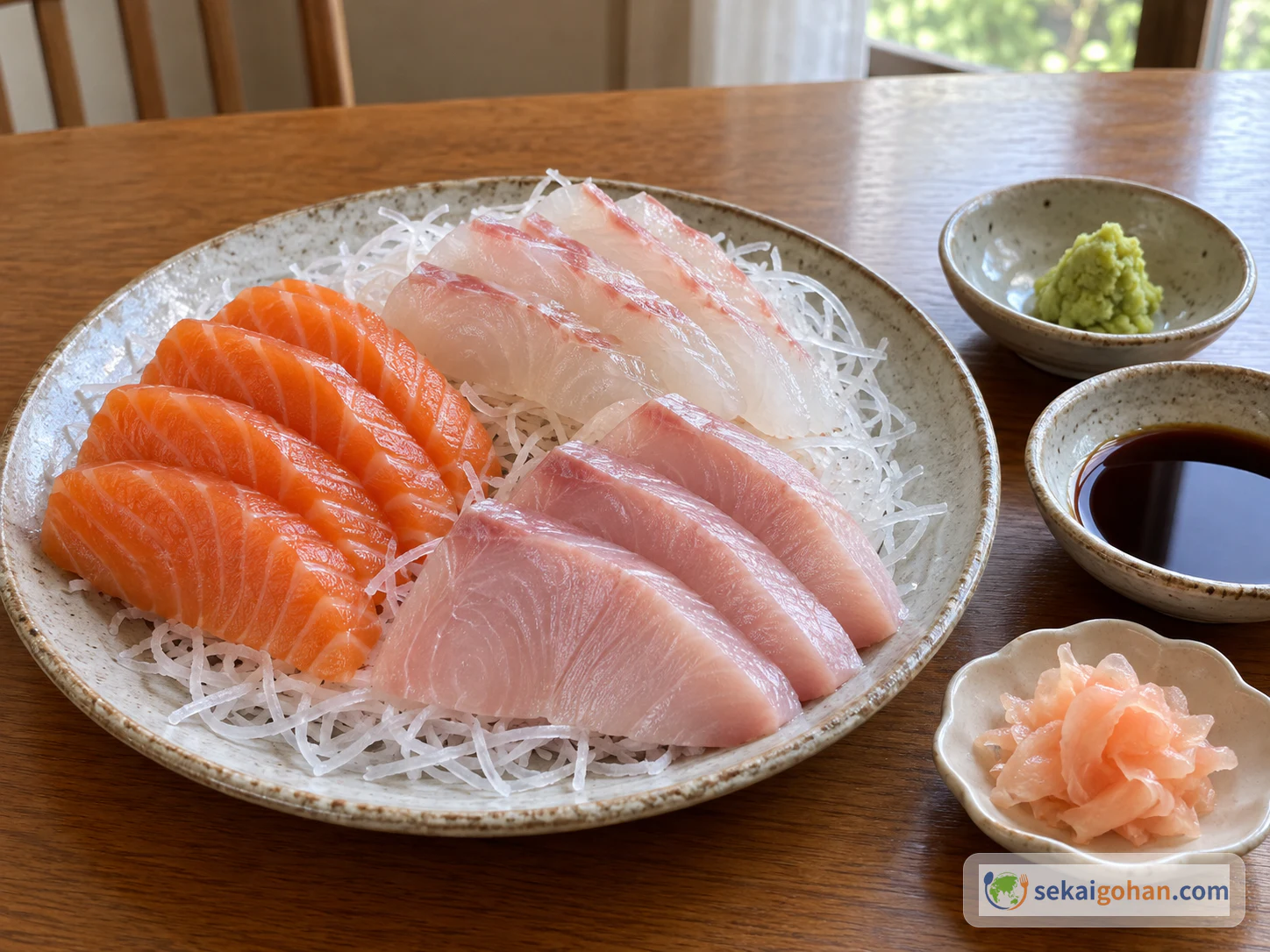
On a single plate, three small groups of raw fish sit apart on a bed of fine white daikon: orange salmon in neat blocks, pale white fish in broad slanted slices, and a richer, pale pink fish beside them. A dab of wasabi, a little shredded pickled ginger and a small dish of soy sauce complete the table. Nothing is cooked, and there is no rice. The appeal is practical rather than decorative: each fish gets its own cut, so each group on the plate has its own texture. Because nothing is cooked, the fish you buy and how you keep it matter as much as the knife, so read the safety notes before you shop.
What Sashimi Is
Sashimi is often mentioned alongside sushi, but the two are different dishes. Sushi is built with rice; sashimi is raw fish served on its own, so the flavor of the seafood stays in the foreground. A platter that puts several different fish on one plate is home-style food, made in kitchens across Japan rather than as the specialty of any one region. You'll find more like it on our page on Japanese home cooking.
Plenty of dishes start from raw fish and go somewhere else. Vinegar-cured fish, soy-marinated zuke, seared tataki, carpaccio, Peruvian ceviche and Filipino kinilaw all use different processes, and ikizukuri presents the fish while still live. Seafood rice bowls, like sushi, bring rice to the table. Sashimi is the plain version: cold fish, a good knife, and a few condiments.
Ingredients for 3 Servings
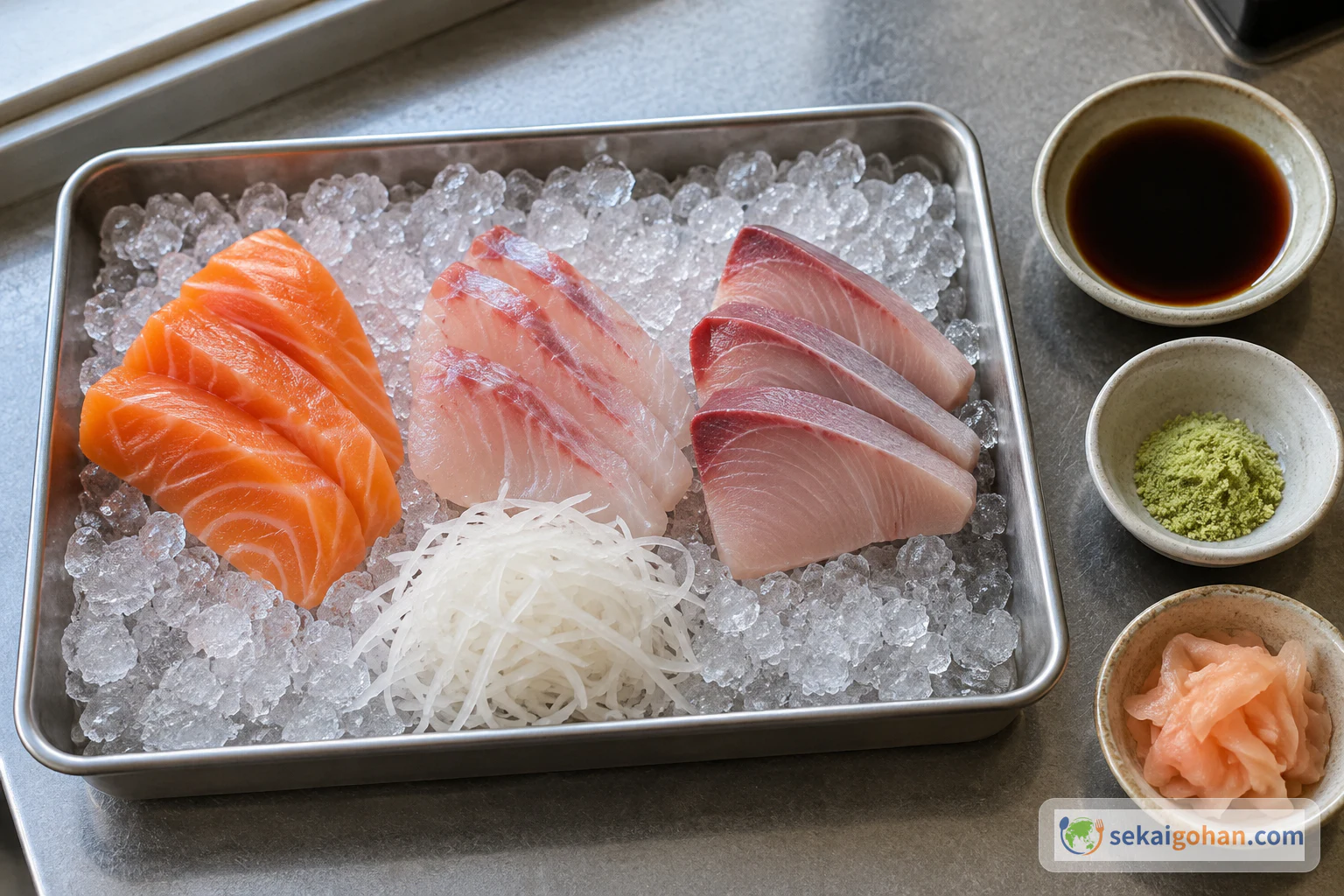
All three fish are fillets with the skin and bones already removed. Serve as much sushi ginger and soy sauce as you like. For wasabi, choose either powder or paste; the powder needs a little water, the paste does not. Do not combine the two amounts.
No oil, salt or vinegar goes into this plate. The water for the wasabi powder is a recipe ingredient; any water you use to rinse the daikon or your tools is separate.
Equipment
- A sharp, clean knife: a santoku works, as does a sashimi knife
- A clean cutting board that is easy to wash and sanitize, ideally kept for fish
- A serving plate, plus small dishes for wasabi and soy sauce
- A teaspoon for mixing the wasabi
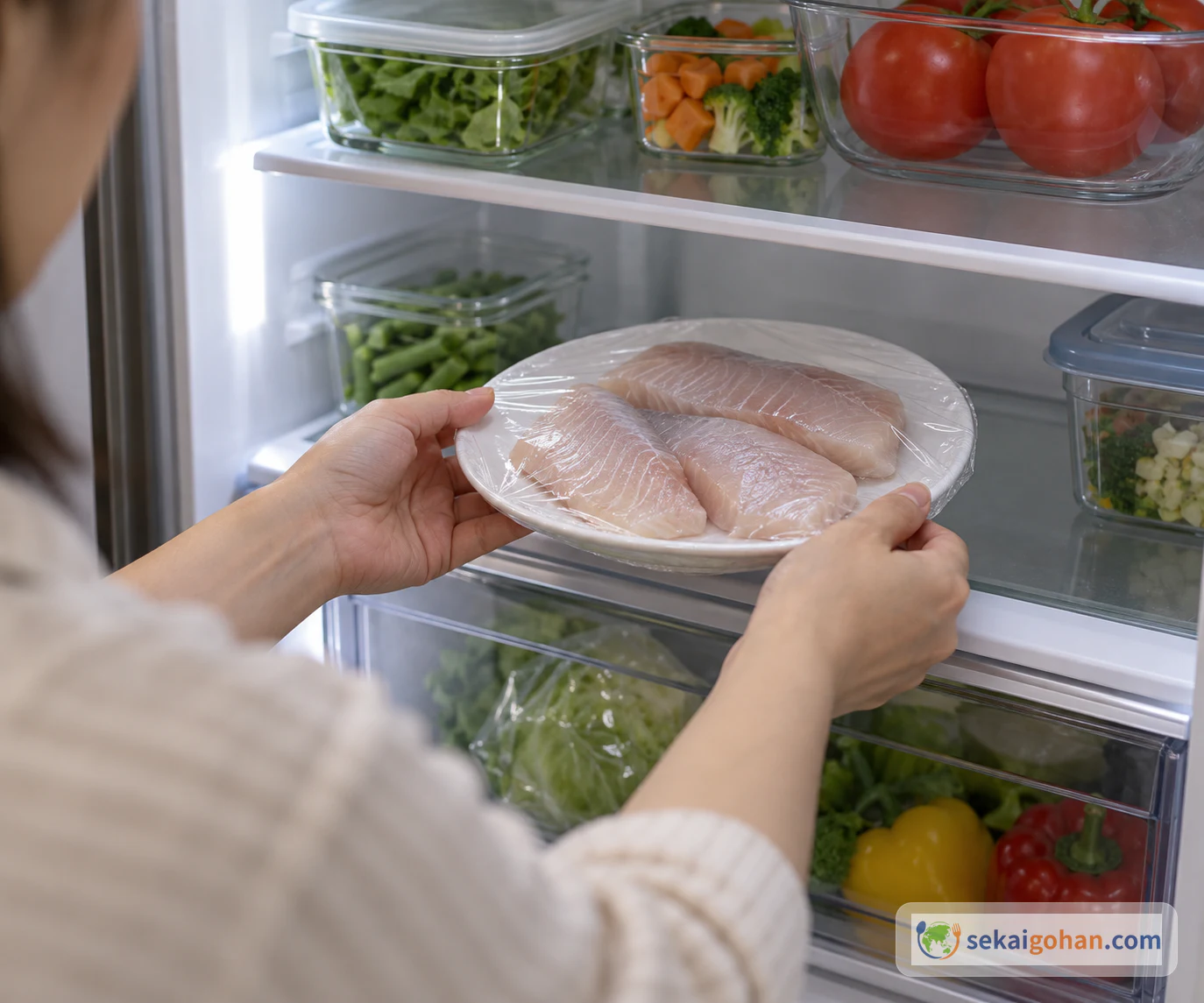
- A clean plate and cover for keeping the fish in the refrigerator
Choosing Fish for Sashimi
Buy only fish labeled for raw eating. At supermarkets, Asian grocery stores, or online, look for fish clearly marked for raw consumption or for sashimi (at Japanese grocery stores, the labels may read 生食用 / 刺身用). Fish sold for cooking stays in the cooking pile, however fresh it looks. Terms like "sashimi-grade" and "sushi-grade" are marketing language rather than food safety standards, so check the actual label, the expiration date and the storage instructions, and ask the seller if anything is unclear.
The recipe calls for snapper and kingfish. If they're hard to find, red sea bream (madai) is an easy-to-find raw-eating white fish in Japan, and yellowtail (buri) or amberjack (hiramasa) can stand in for kingfish. Expect some difference in richness and aroma, and identify an unlabeled fish by its label and the seller, never by color or brand alone. Any salmon labeled for raw eating fits the plate.
- Parasites: Anisakis larvae can be present in fish and cause illness when the fish is eaten raw. Vinegar, salt, soy sauce and wasabi do not kill Anisakis. Check each fillet carefully for visible parasites before you slice, but remember that a clean-looking fillet is not proof of safety. Buy fish labeled for raw eating, and keep it refrigerated.
- Freezing and heating: Freezing and heating under the right conditions control Anisakis. Do not assume a home freezer meets those conditions.
- Temperature: In Japan, seafood for raw consumption must be stored in hygienic packaging at 50°F (10°C) or below. That is a storage standard, not a condition that kills parasites. At home, follow the label and the seller's storage instructions, buy chilled fish at the end of your shopping trip, refrigerate it promptly, and keep it cold until just before you cut it.
- Allergies: Fish and seafood can cause allergic reactions. Some soy sauces contain soy and wheat, so check the label of the product you use.
- Who should eat raw fish: If you are unsure whether raw fish is safe for you or someone you are serving, ask a medical professional before serving it.
Method: Three Fish, Three Ways with the Knife
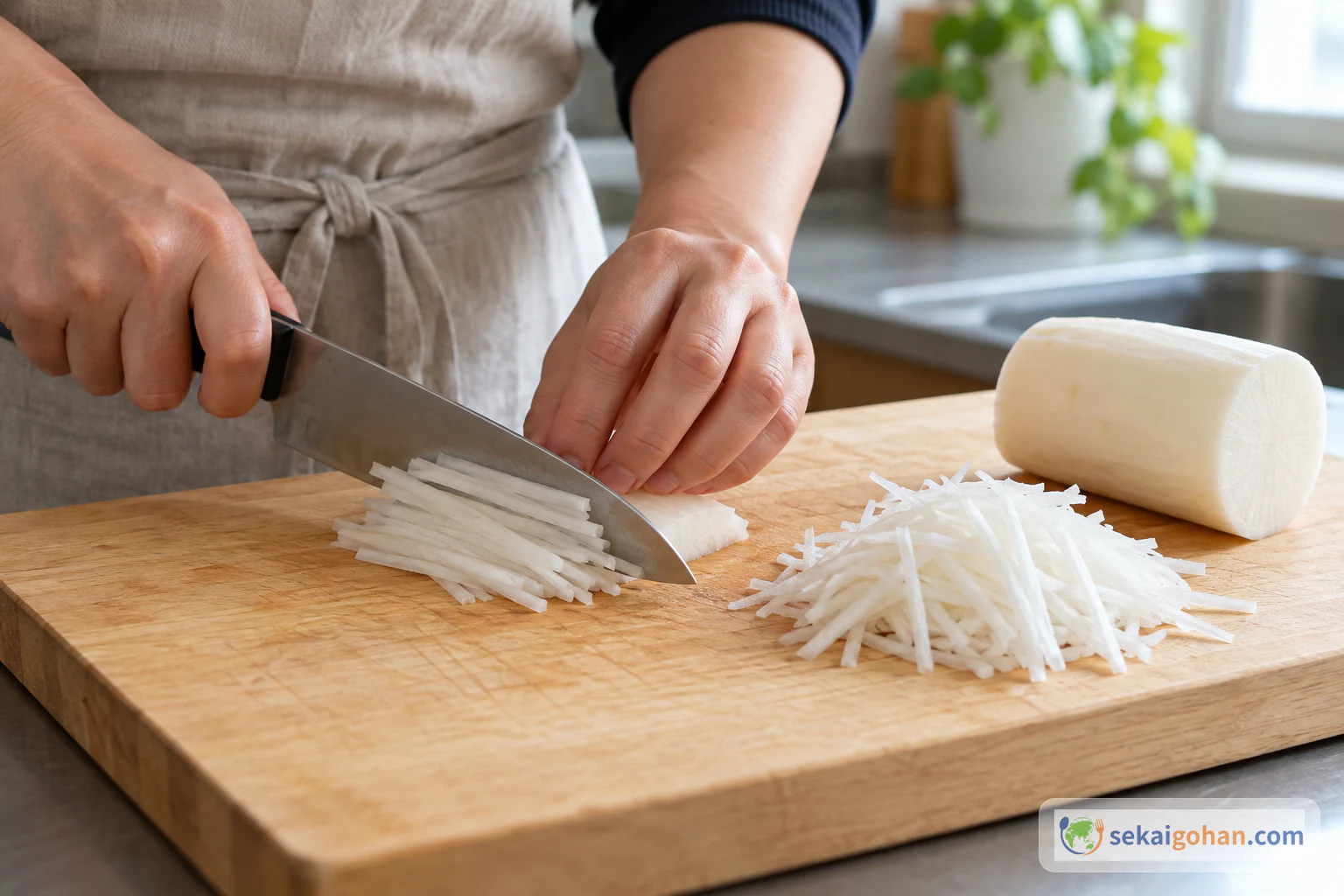
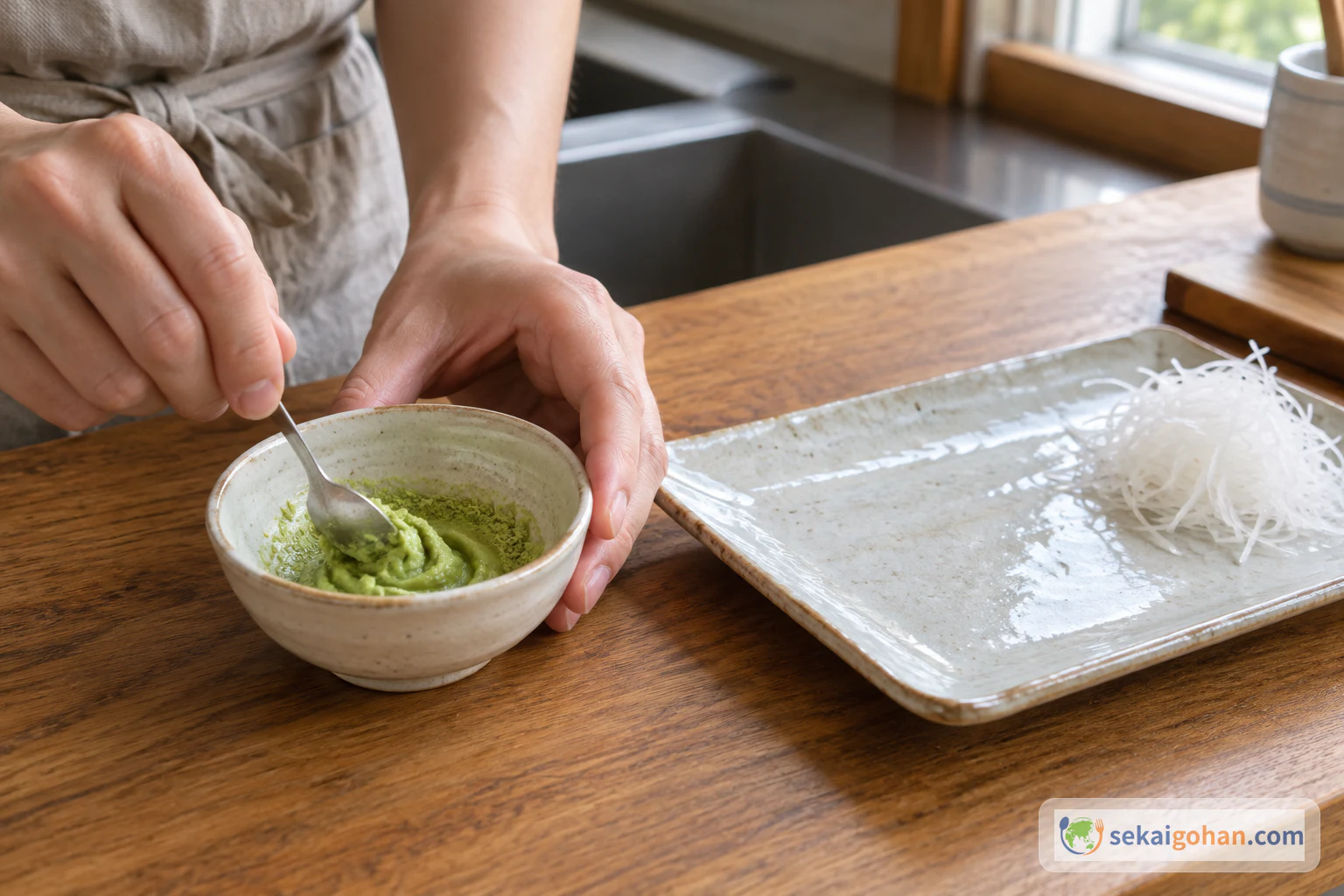
Prepare the daikon and wasabi first so the fish spends as little time out of the refrigerator as possible. Cut the fish last and serve it right away.
Common Sashimi Problems and Fixes
| Problem | Likely cause | What to do |
|---|---|---|
| The fish feels soft and is hard to cut neatly | It warmed up while sitting out | Keep the fish refrigerated until just before slicing and work quickly |
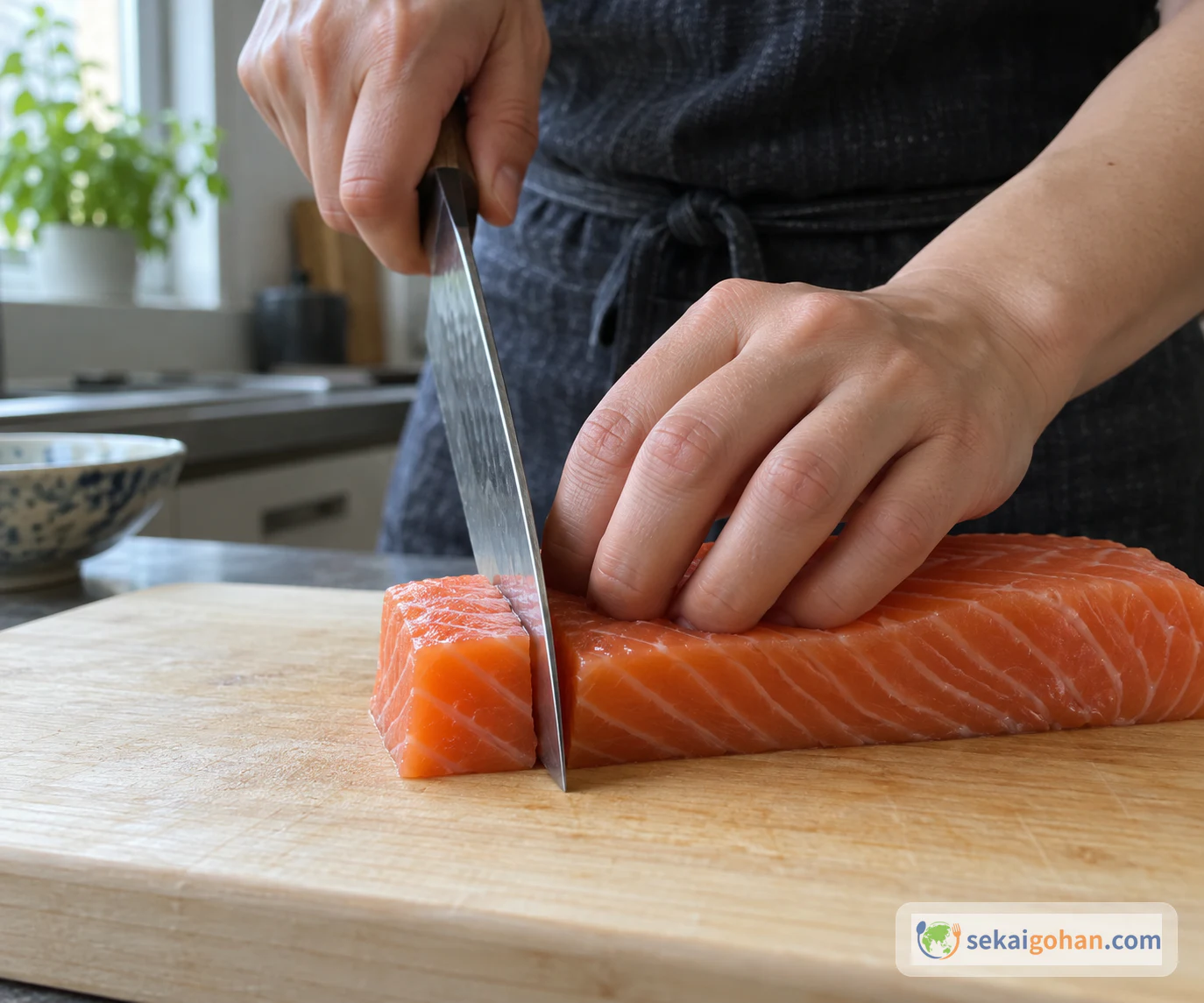
| The cut surfaces look ragged | Sawing the knife back and forth, or a dull blade | Use a sharp, clean knife and cut in one smooth pull |
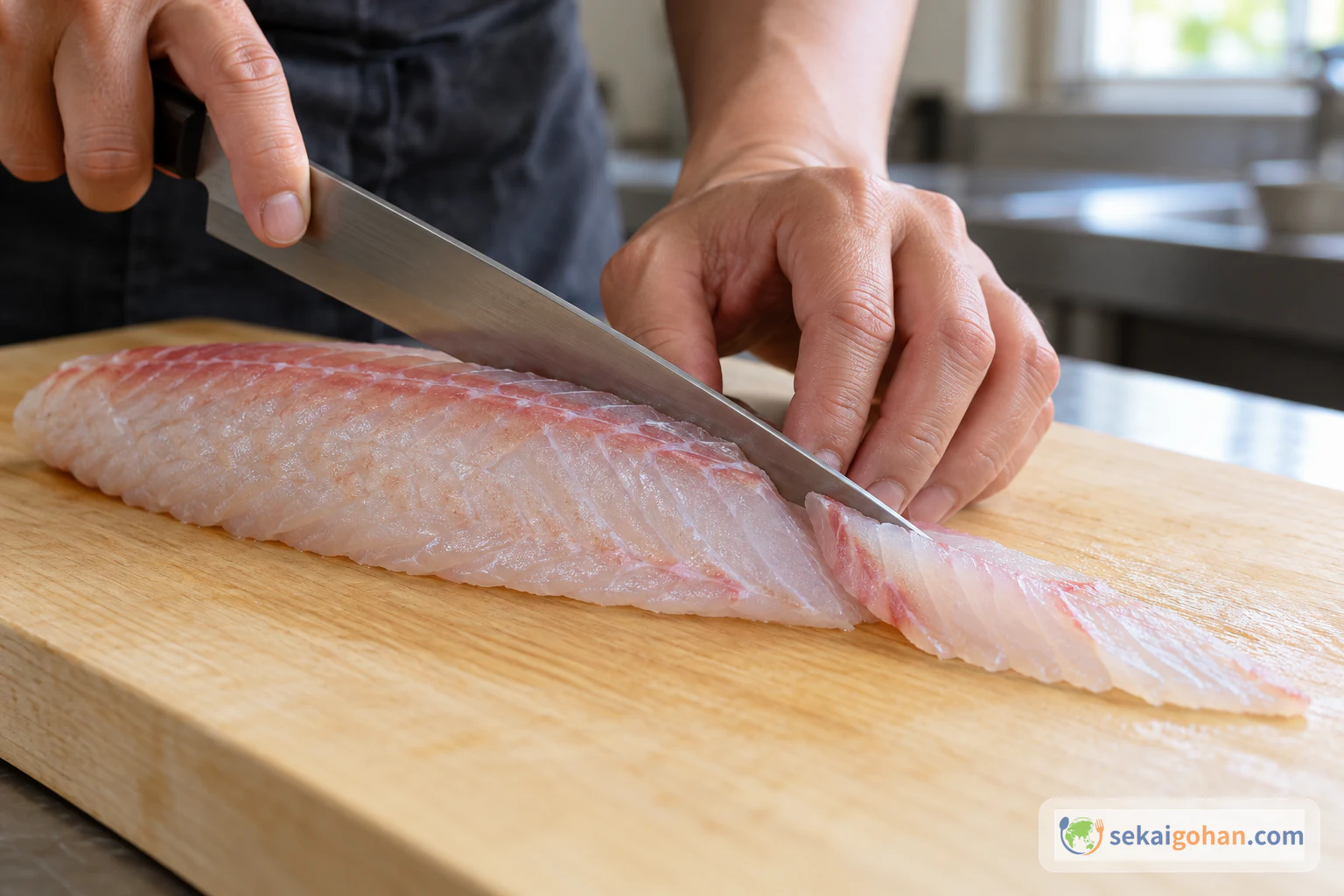
| Every fish looks and tastes the same | All three were cut the same way | Cut the salmon straight down into blocks and slice the white fish with the blade tilted across the grain |
| The substitute fish tastes different from what you expected | The substitute differs in species or richness | Treat red sea bream, yellowtail and amberjack as fish with their own richness and aroma |
| Fish is left over after the meal | Too much was cut at once | Next time, cut only what will be eaten. Don't leave fish at room temperature or plan to keep it for the next day |
Serving Sashimi and Simple Variations
A plate built around just one of the three fish puts all the attention on its flavor and bite. You can also leave out the daikon and serve only the fish and condiments, though you lose the bed and its crisp contrast. Skip the wasabi and the fish is eaten with soy sauce alone; the plate simply loses its heat.
Adding vinegar, oil or chili to the fish moves it toward ceviche or carpaccio, which are different dishes rather than versions of sashimi.
Frequently Asked Questions
Do wasabi and soy sauce protect against parasites?
No. Vinegar, salt, soy sauce and wasabi do not kill Anisakis, and refrigeration and visual checks do not remove every risk of parasites. Start with fish labeled for raw eating and keep it cold.
Can I make sashimi ahead or keep leftovers?
Cut it right before eating, only as much as you'll eat, and serve it freshly sliced and cold.