Haejang-guk: Korean Ox Bone and Napa Cabbage Soup with Doenjang (Ppyeo-haejangguk, 뼈해장국)

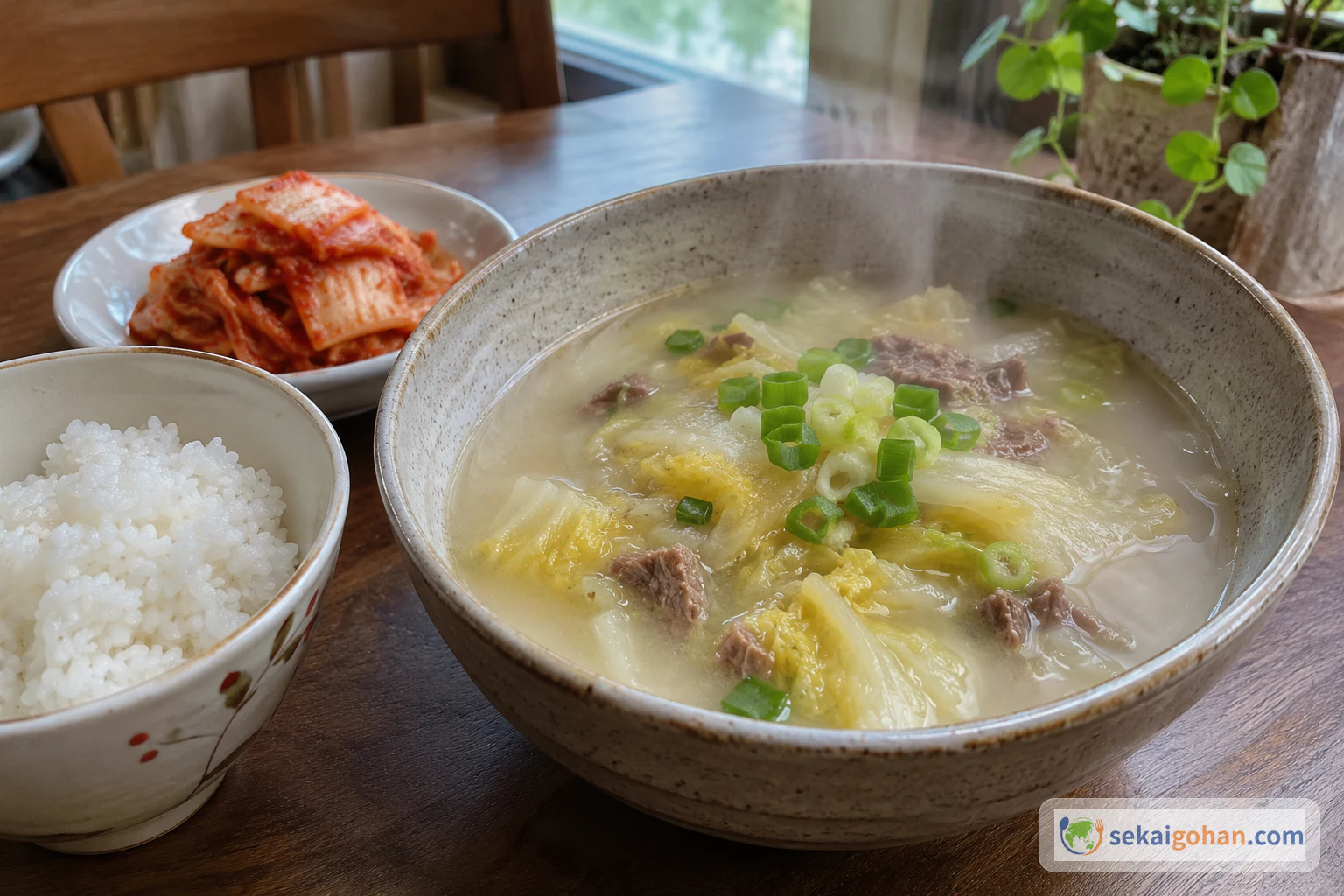
Korean ppyeo-haejangguk: milky beef bone broth with doenjang-seasoned napa cabbage, served with rice and kimchi
Cuisine
Korean

How to make ppyeo-haejangguk (뼈해장국), a Korean soup of long-simmered ox bone broth and napa cabbage seasoned with doenjang, garlic, green chili and fish sauce. It is one example from the wider haejangguk family of soups. Covers the four-hour bone broth, chilling and skimming, quick refrigeration in shallow containers, serving with rice and kimchi, and how this version differs from bean sprout, blood and pork backbone styles.

Cooking flow

Cooking steps

STEP11 / 7

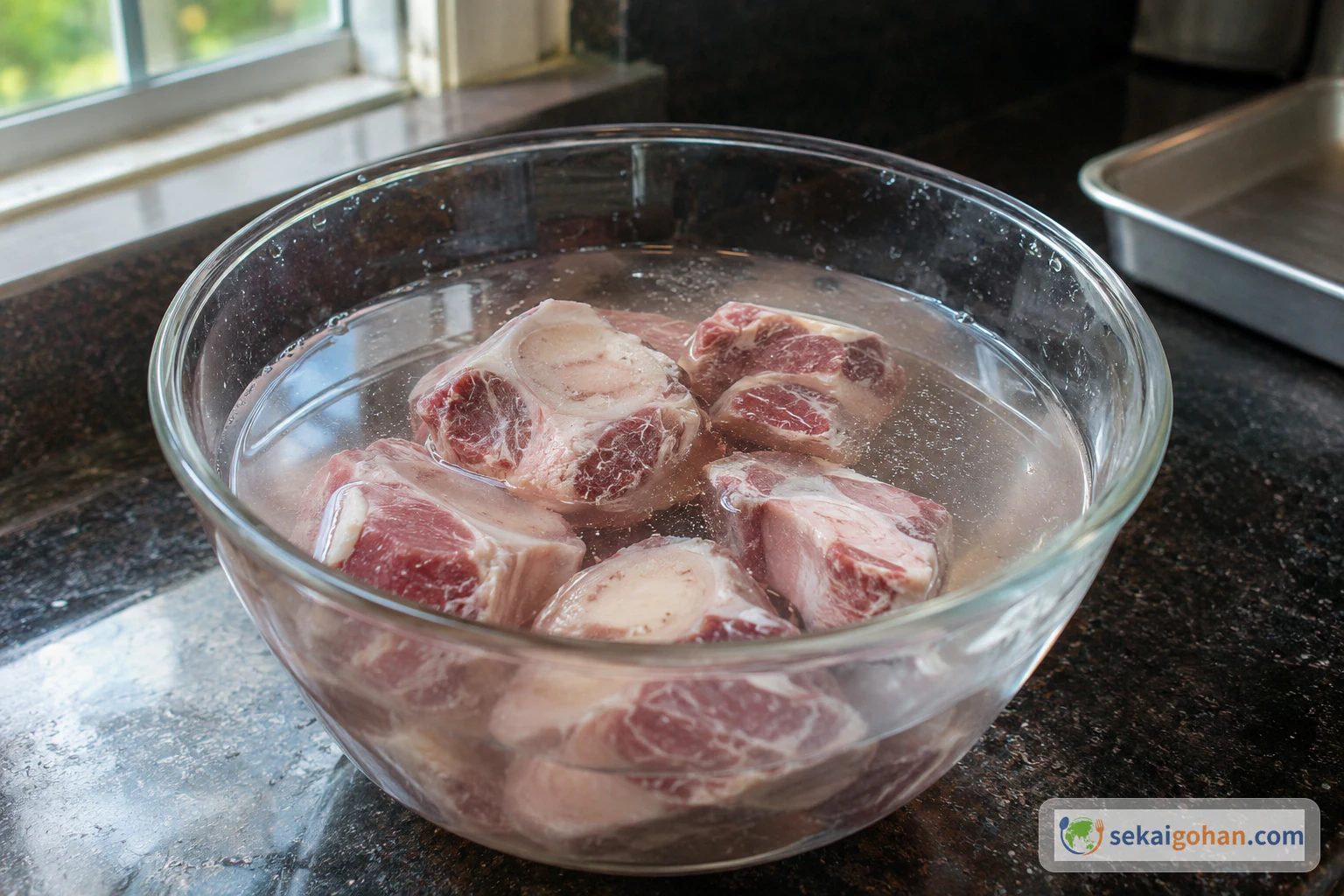
Rinse the bones and soak them in cold water

Sliced raw beef bones submerged in a bowl of cold water
Soak the bones in cold water in a separate raw-work area

Rinse the sliced ox bones to wash off any small bone fragments, then submerge them in a bowl of cold water to draw out the blood. Rinsing and soaking do not make raw meat safe. Work in an area kept for raw bones, avoid splashing the water onto nearby food or surfaces, and clean the surfaces, bowl and your hands afterward.

STEP22 / 7

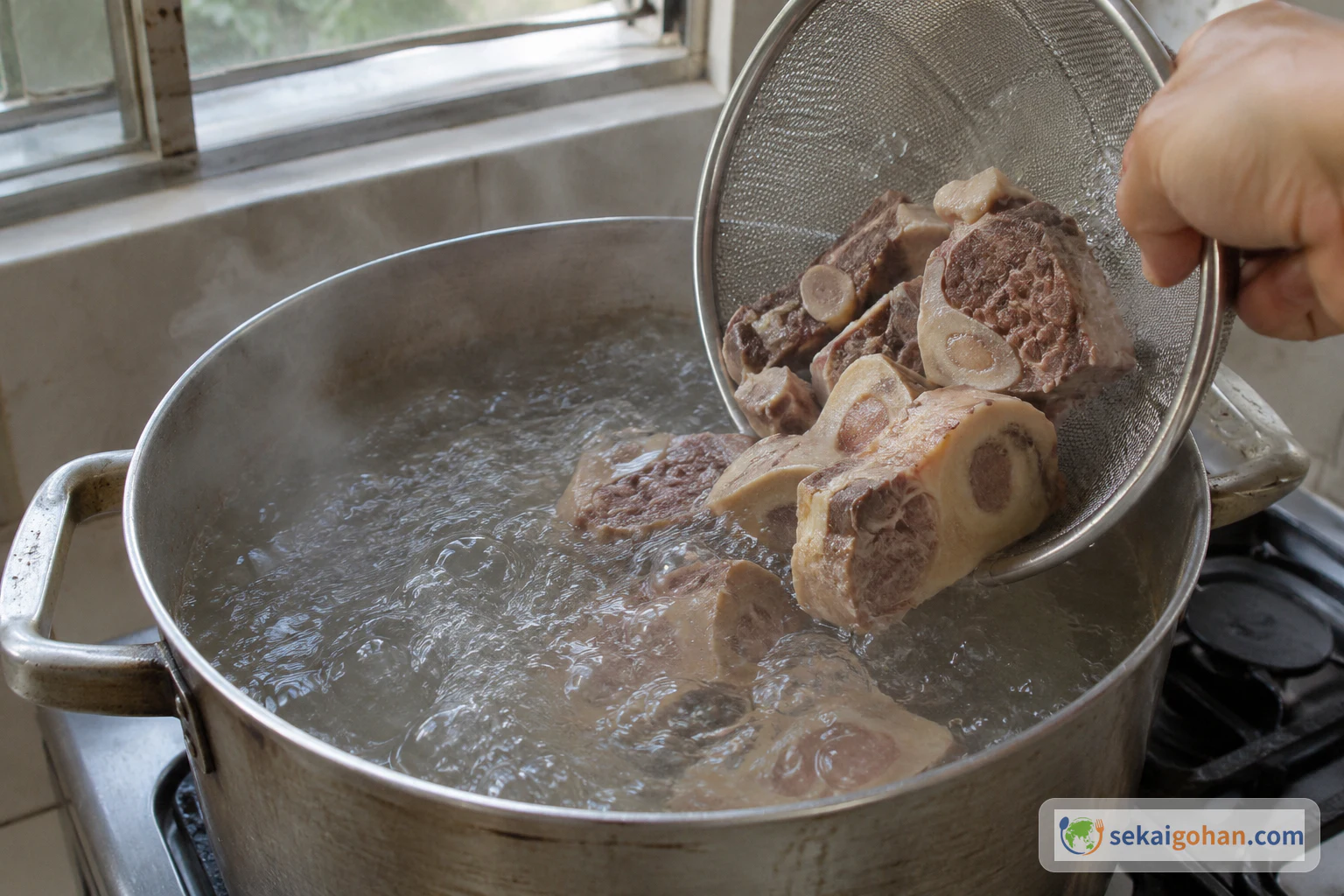
Boil the bones covered for 4 hours

Drained sliced beef bones being lowered into a large pot of boiling water
Add the bones once the water is at a full boil

Bring 6 qt water to a boil over high heat in a large pot. Drain the bones and lower them carefully into the boiling water.

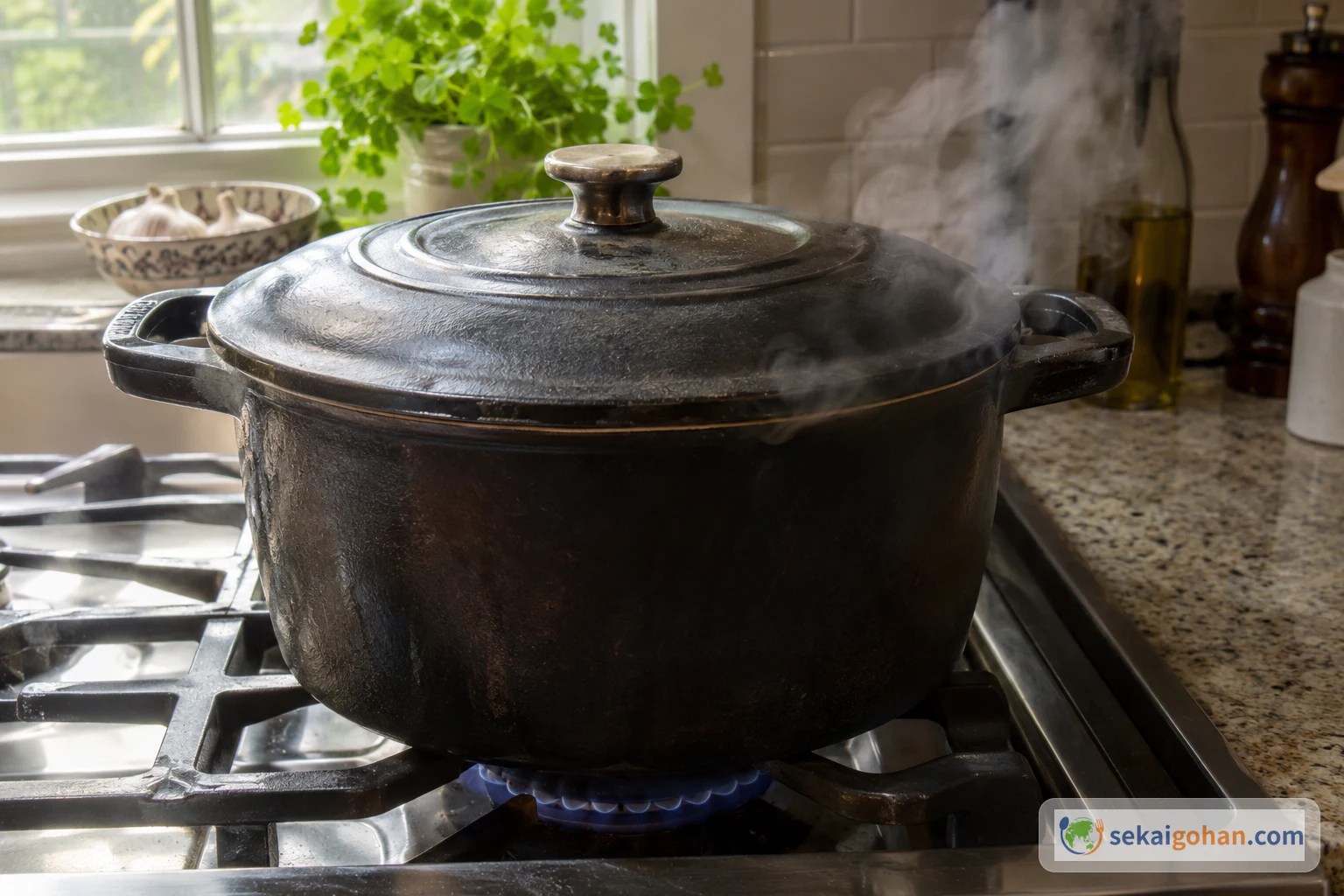
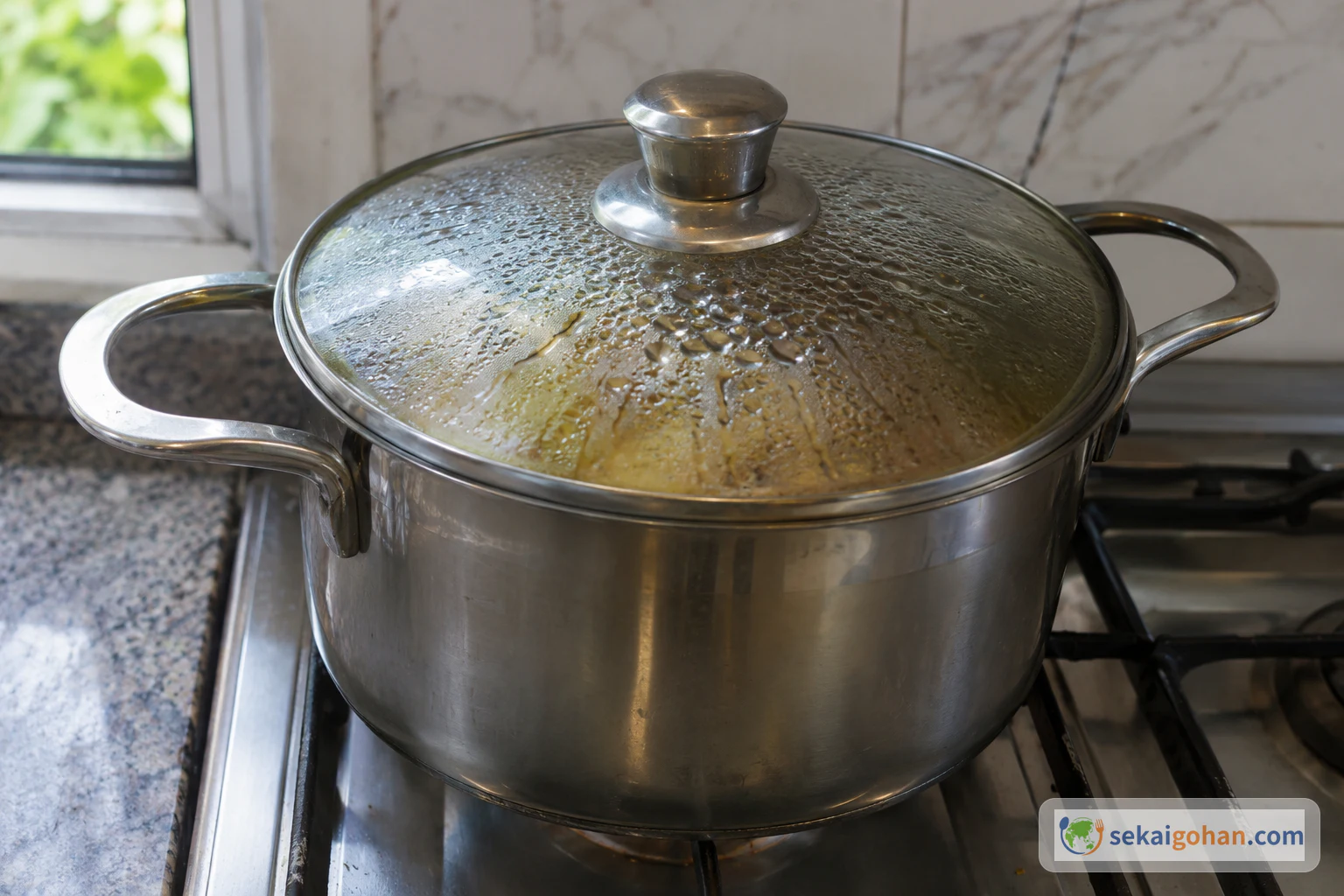
Cover the pot and cook over medium heat for 4 hours.

A large covered pot on the stove with steam escaping at the lid as the bones simmer
Keep the lid on for the long boil

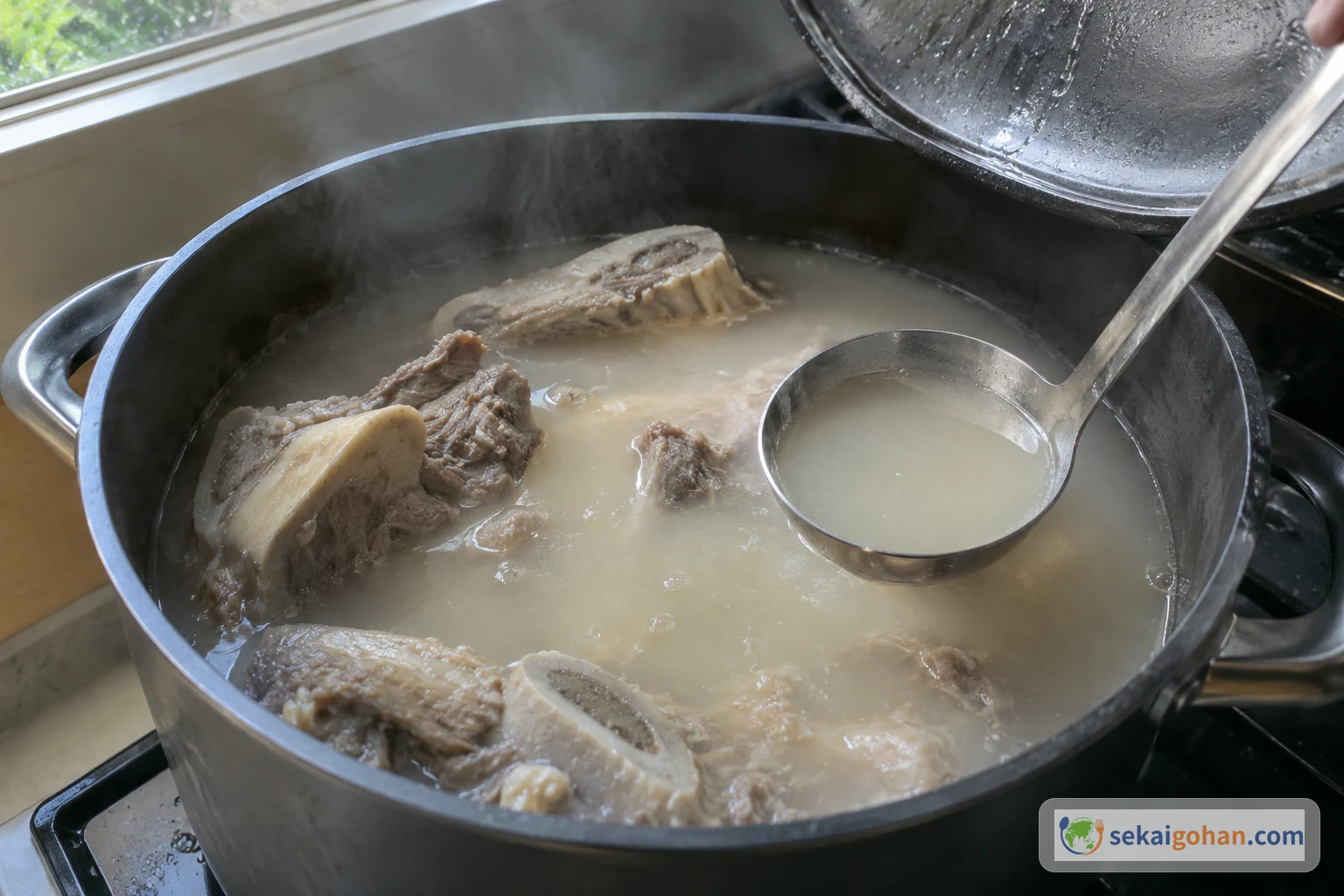
Check the level from time to time. The broth turns milky as it cooks. You need at least 6 cups of broth at the end.

An uncovered pot of sliced beef bones in milky broth, with a ladle checking the level
Check the level of the milky broth during the boil

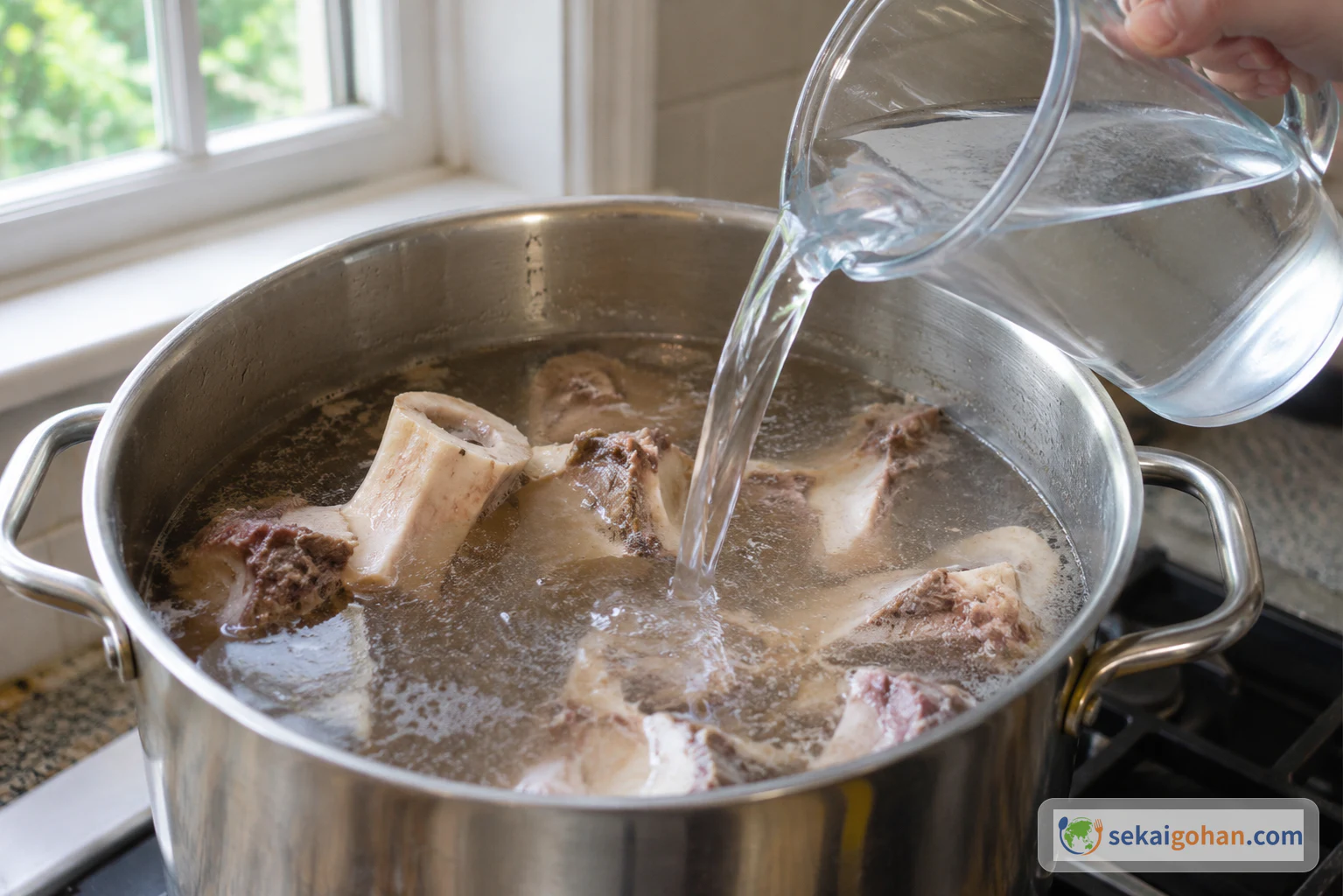
If the broth looks like it will drop below 6 cups, add cold water.

Cold water poured from a pitcher into the beef bone broth pot
Top up with cold water so at least 6 cups of broth remain
STEP33 / 7

Strain, pick the meat, chill quickly and skim the fat

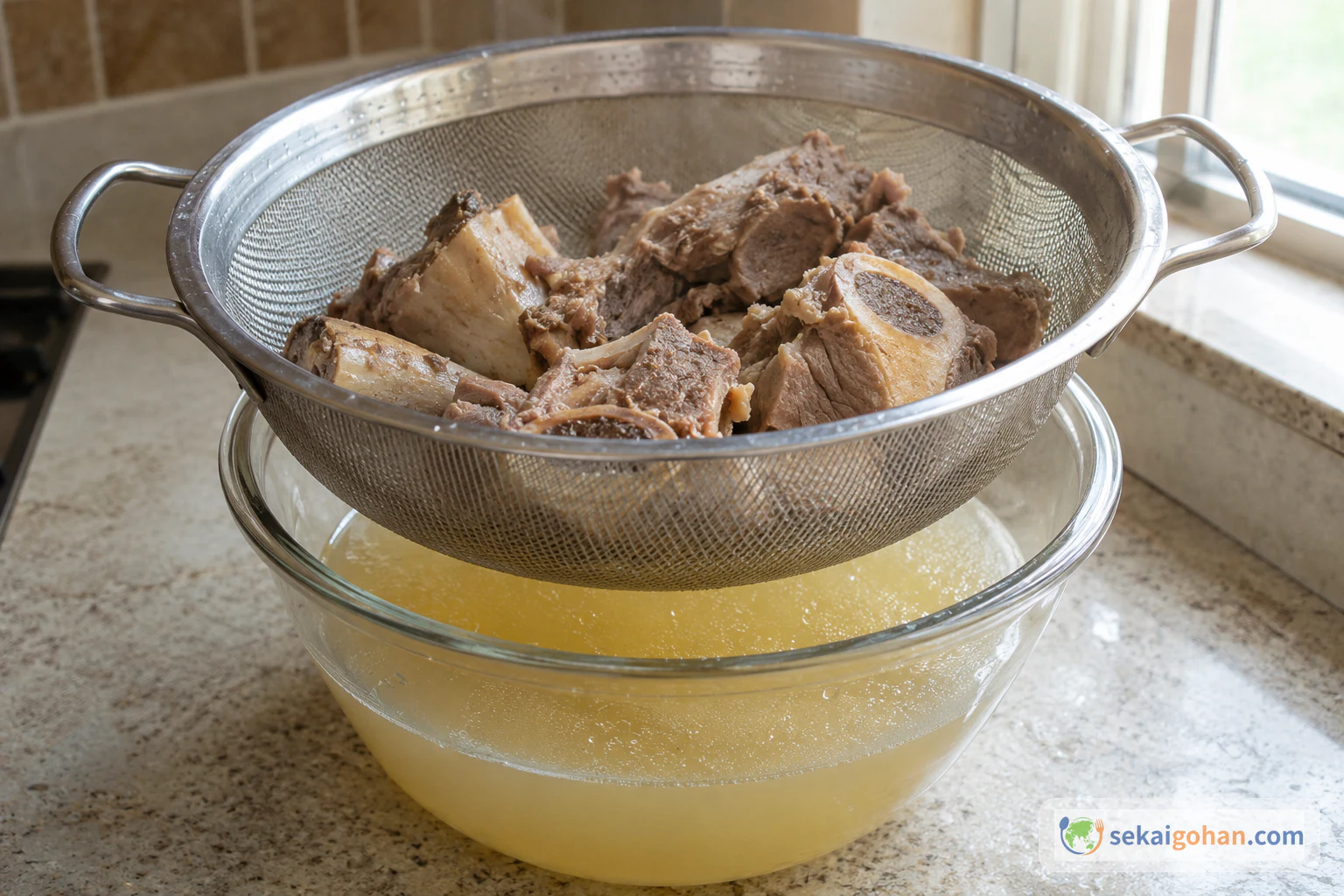
Cooked beef bones in a metal colander, with pale broth collected in a bowl below
Separate the bones from the broth

Strain the broth through a heat-safe colander into a heat-safe bowl to separate the bones.

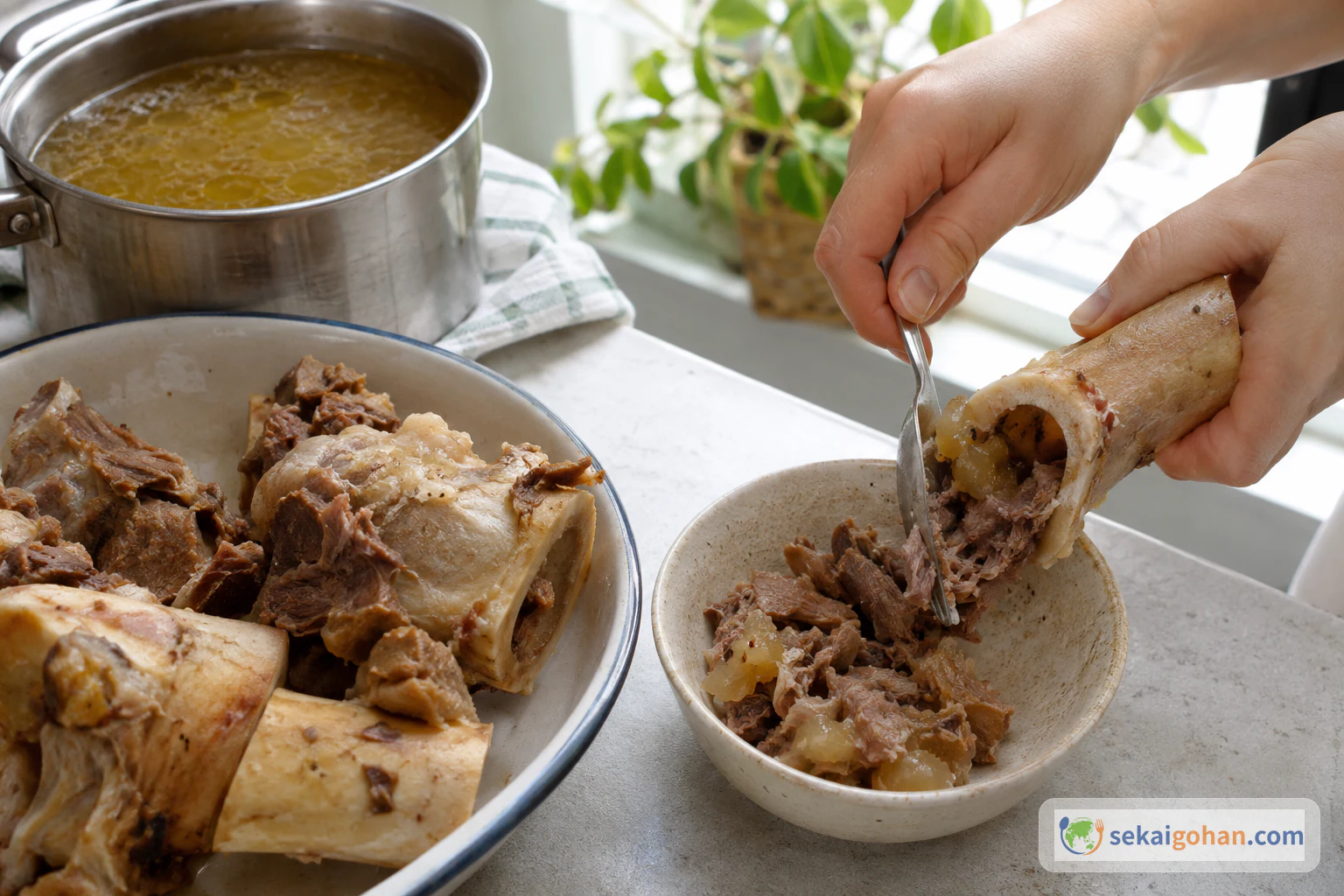
When the bones are cool enough to handle, pick off the remaining meat and ligaments and set them aside in a separate bowl.

Cooked meat and ligaments removed from beef bones into a small bowl
Pick off the meat and ligaments and keep them for the soup

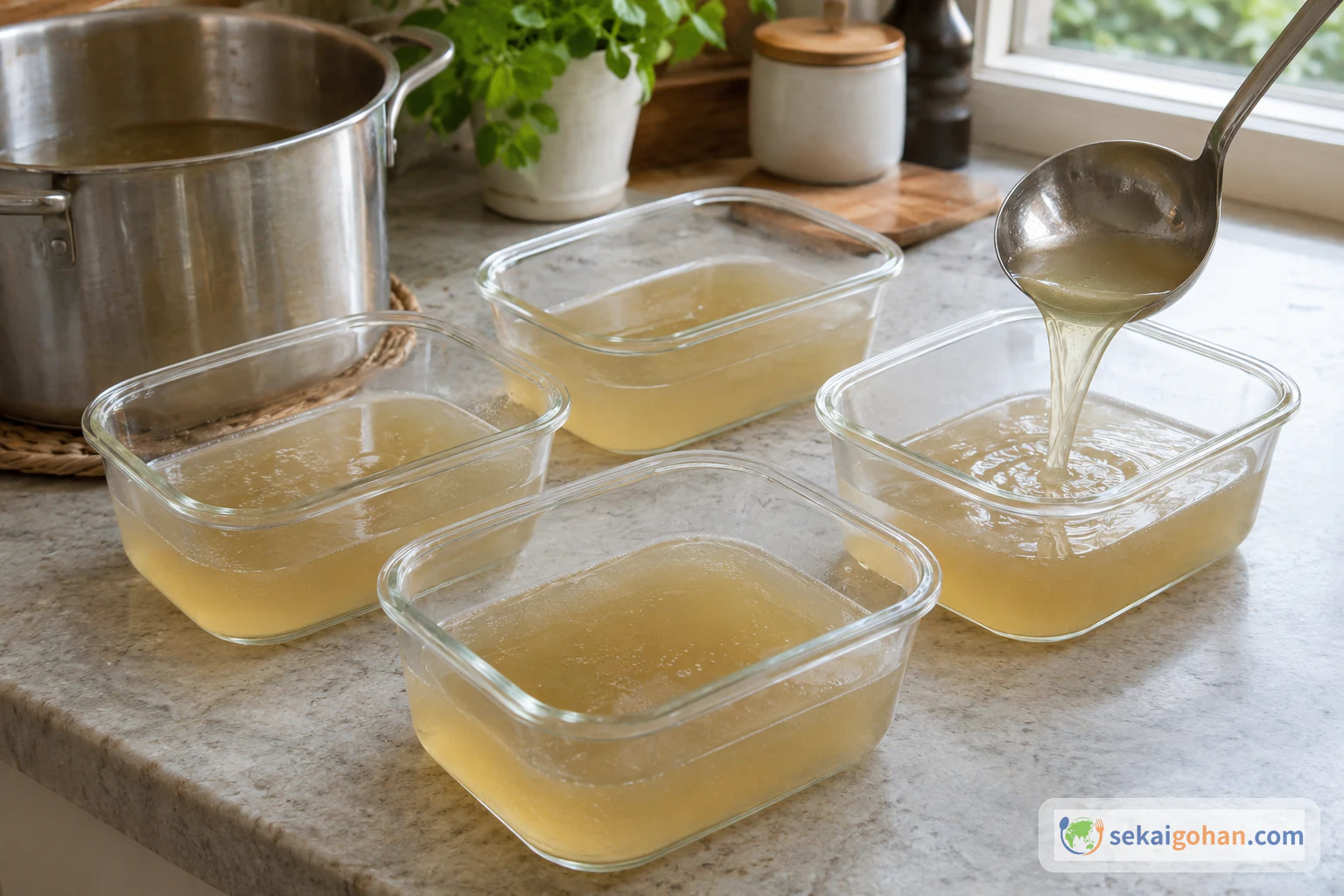
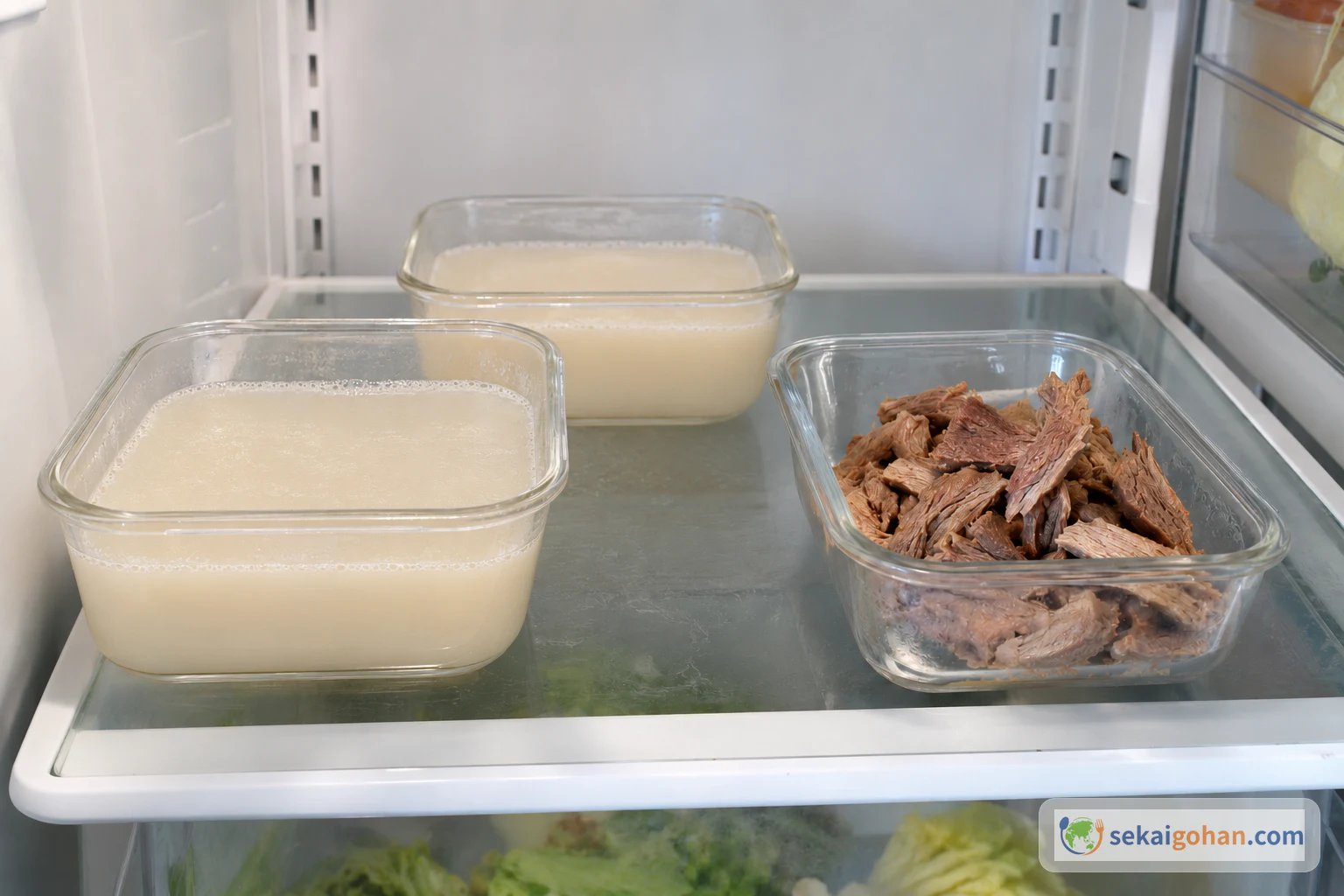
Right away, divide the strained broth into several shallow food-safe containers, and put the recovered meat in its own shallow container. Do not leave the big pot of broth on the counter to cool overnight.

Strained beef broth ladled into several open shallow containers
Shallow containers cool faster than one deep pot

Refrigerate the broth and meat within 2 hours of cooking, or within 1 hour if the room is above 90°F (32°C). Keep the refrigerator at 39°F (4°C) or below. Leave space between the containers on the shelf.

Shallow containers of beef broth and a separate container of cooked meat on a refrigerator shelf
Refrigerate the broth and meat in separate shallow containers

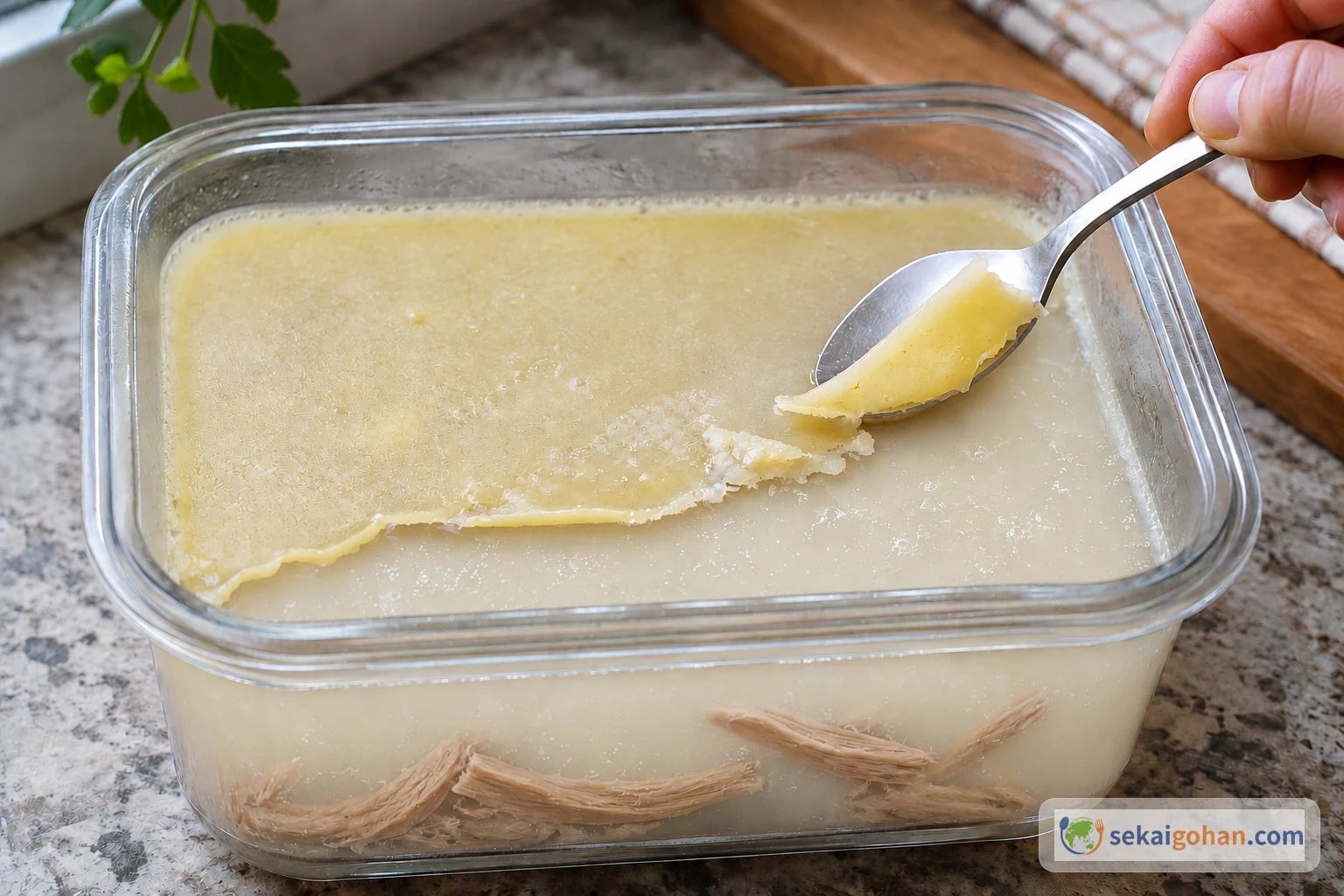
Keep the broth in the refrigerator for several hours or overnight, until the fat sets in a solid layer on the surface. The fat is pale or brownish-yellow. Lift it off with a spoon and discard it.

A spoon lifting a thin layer of solid pale yellow fat from chilled beef broth
Remove the set fat from the chilled broth
STEP44 / 7

Blanch, rinse, drain and chop the cabbage

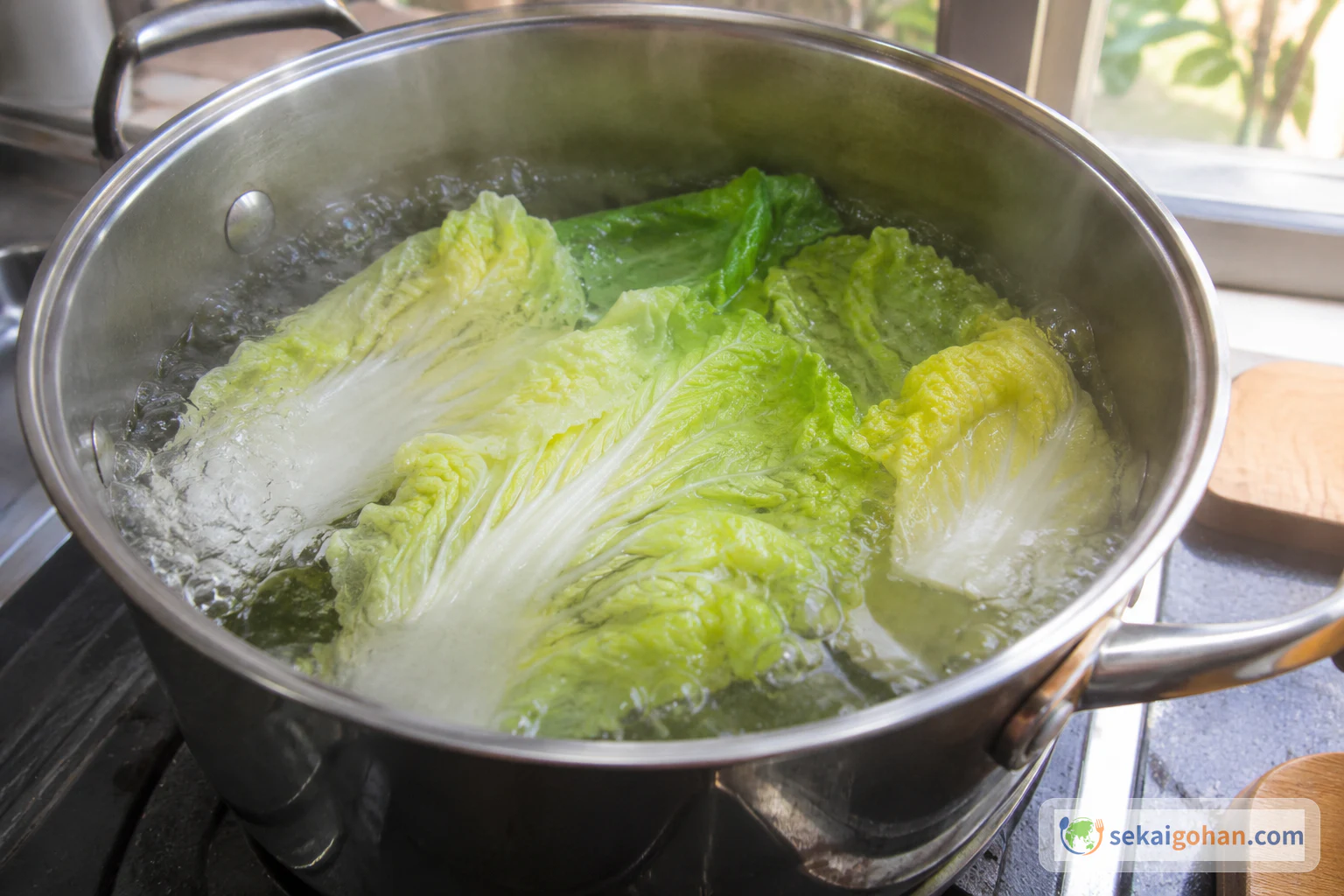
Napa cabbage leaves blanching in a separate pot of boiling water
Blanch the cabbage in its own pot

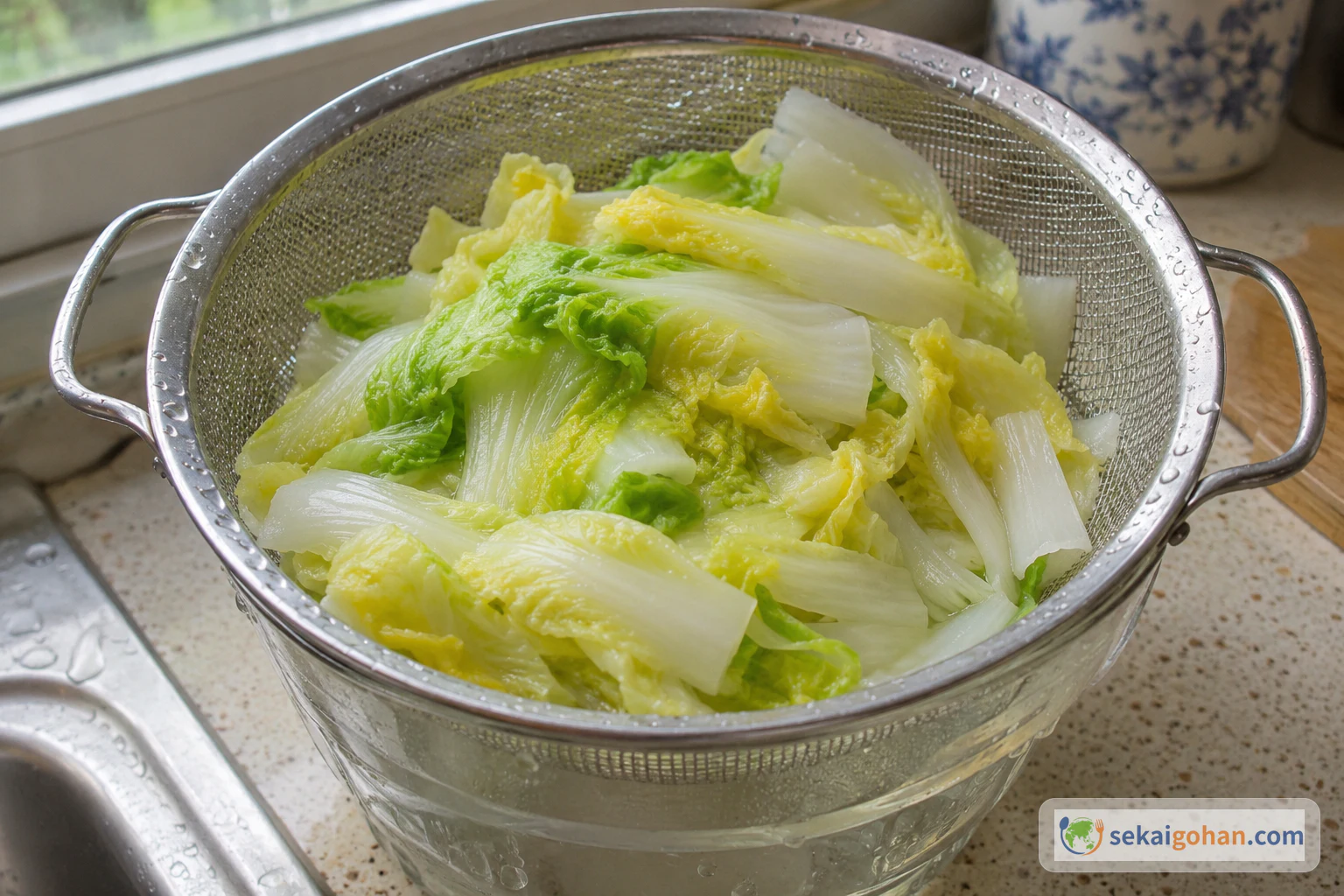
Bring a separate pot of water to a boil and blanch the napa cabbage for 5 minutes.

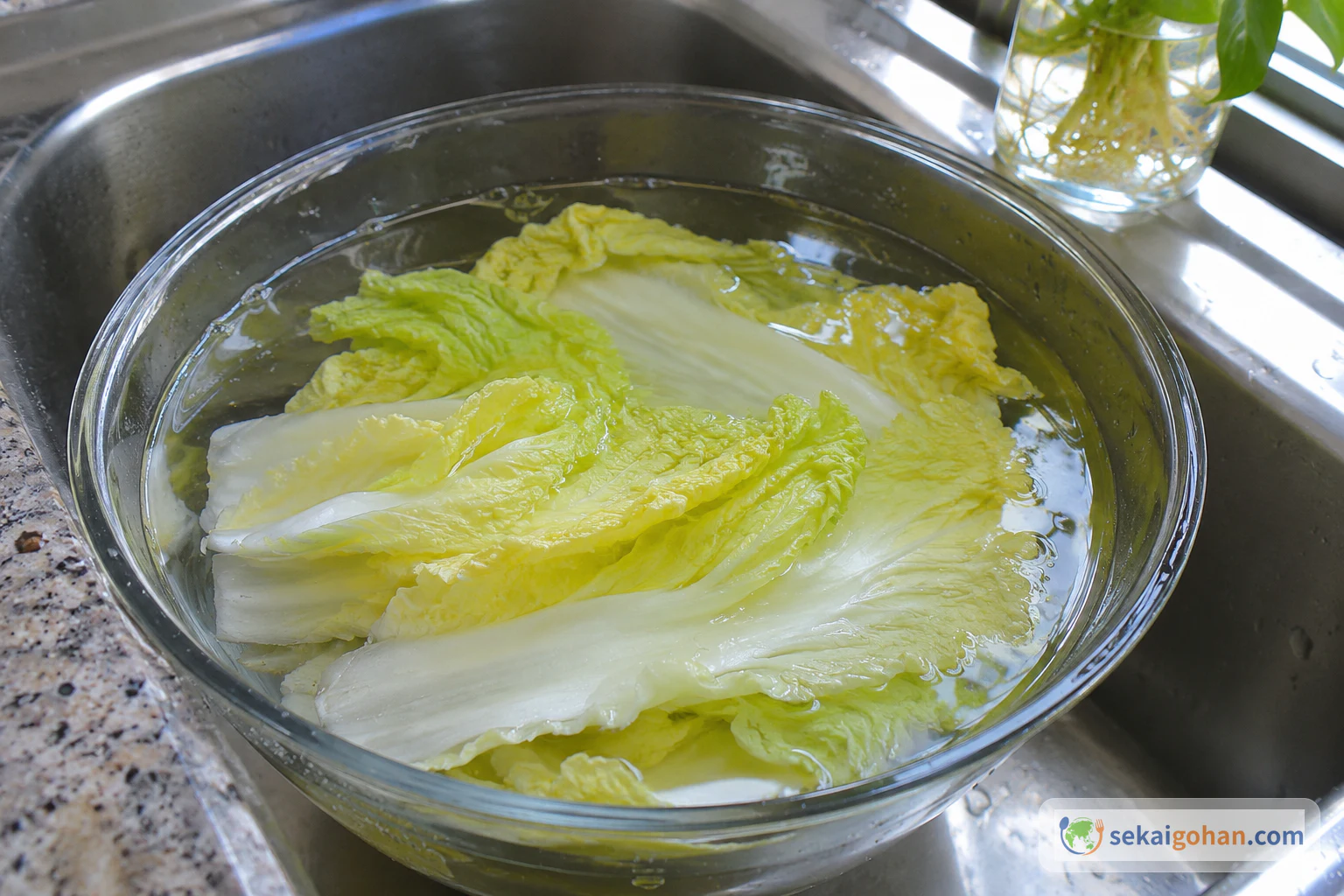
Rinse the cabbage in cold water several times.

Blanched napa cabbage leaves rinsed in a bowl of cold water
Rinse the blanched cabbage a few times

Drain well.

Blanched, rinsed napa cabbage draining in a colander over a bowl
Let the cabbage drain

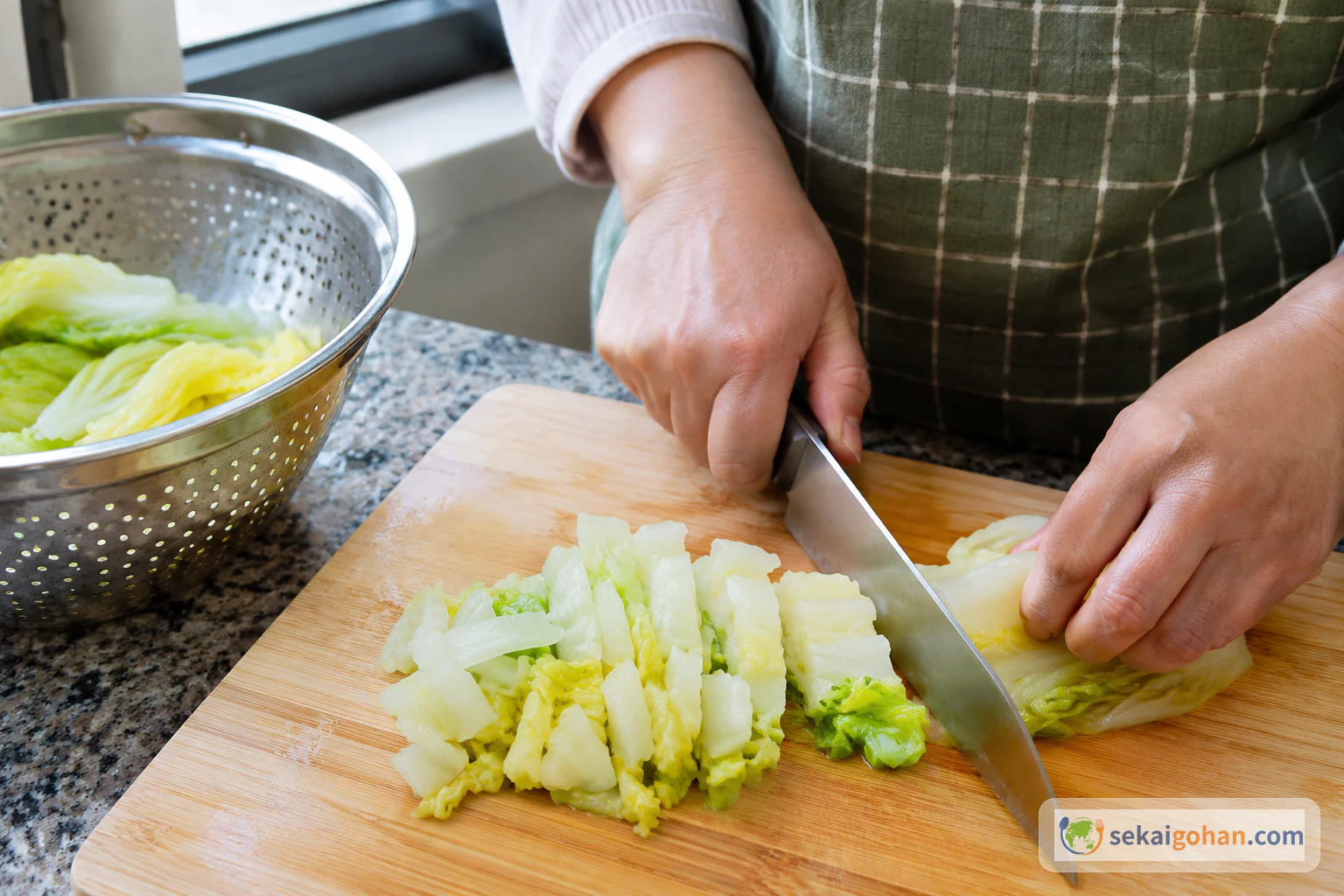
Cut the cabbage into small pieces on a clean board used for vegetables.

Blanched napa cabbage cut into small pieces on a clean vegetable board
Chop the cabbage small on a clean board
STEP55 / 7

Season the cabbage

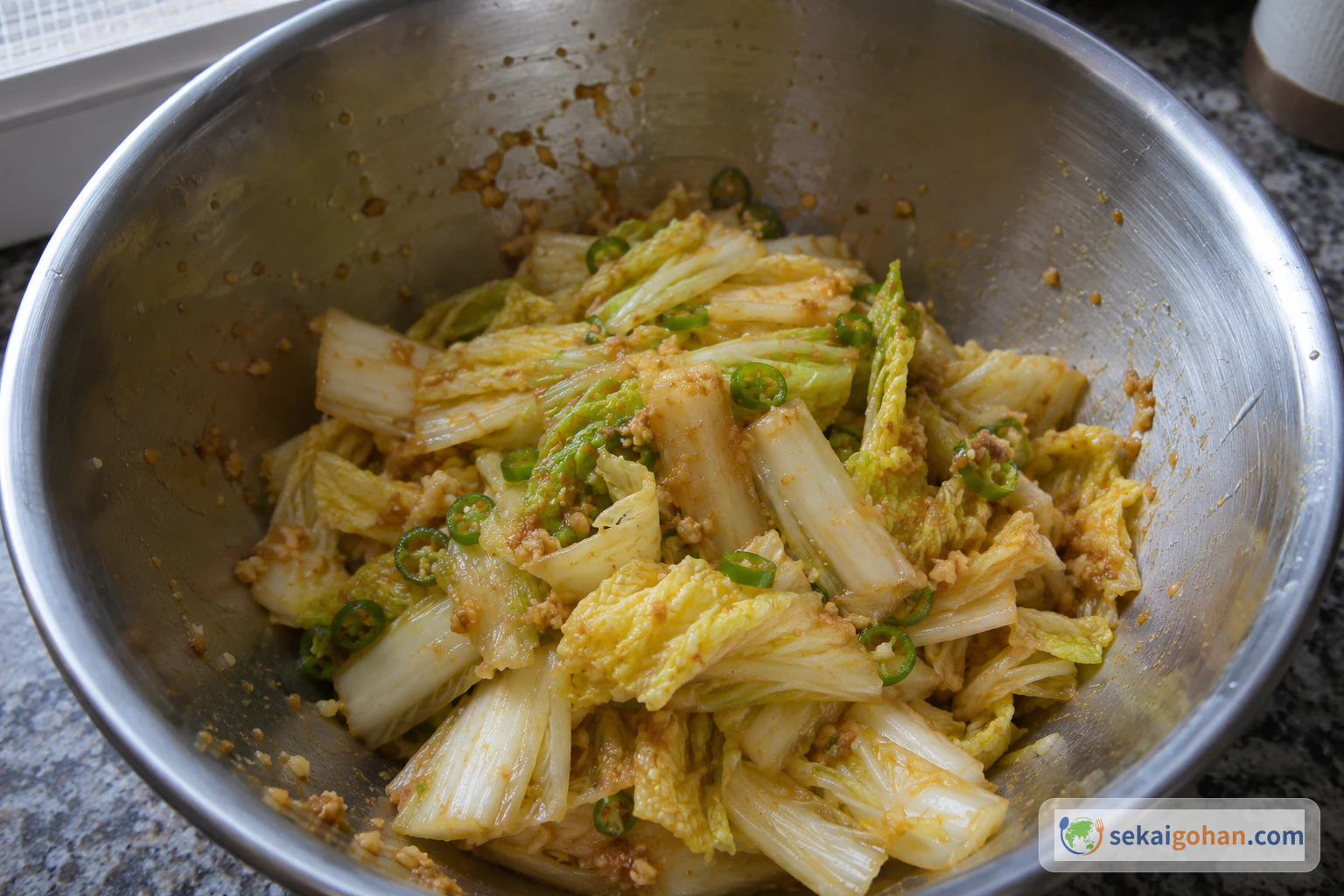
Chopped blanched cabbage mixed in a bowl with doenjang, garlic, sliced green chili and fish sauce
Coat the cabbage with the seasonings before it meets the broth

In a large bowl, mix the chopped cabbage with 1/4 cup doenjang, the 8 minced garlic cloves, the 2 chopped green chilies and 1 tbsp fish sauce until the cabbage is evenly coated.

STEP66 / 7

Simmer the cabbage in the broth

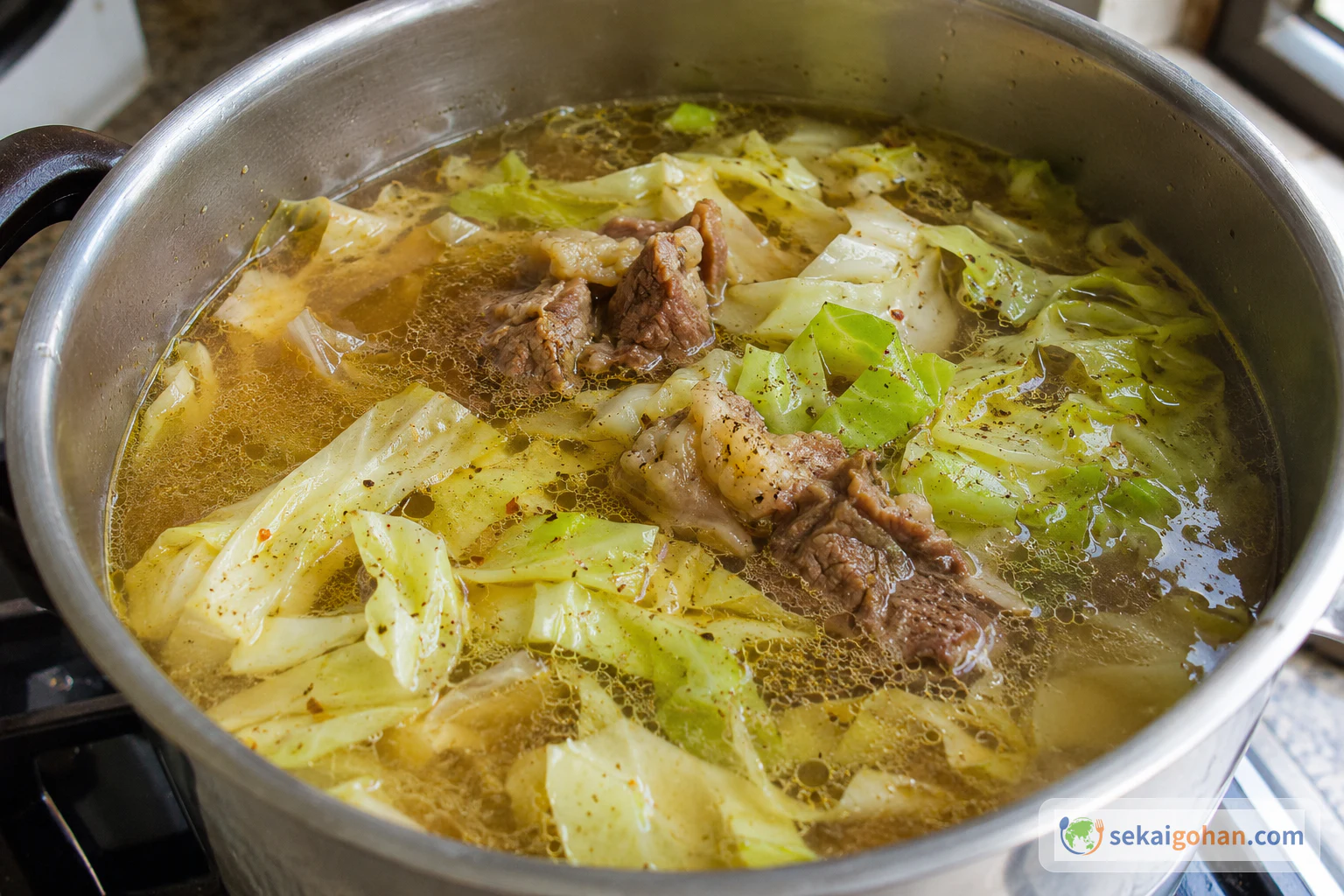
Seasoned cabbage and pieces of cooked beef added to beef bone broth in a pot
Combine the cabbage, broth and meat

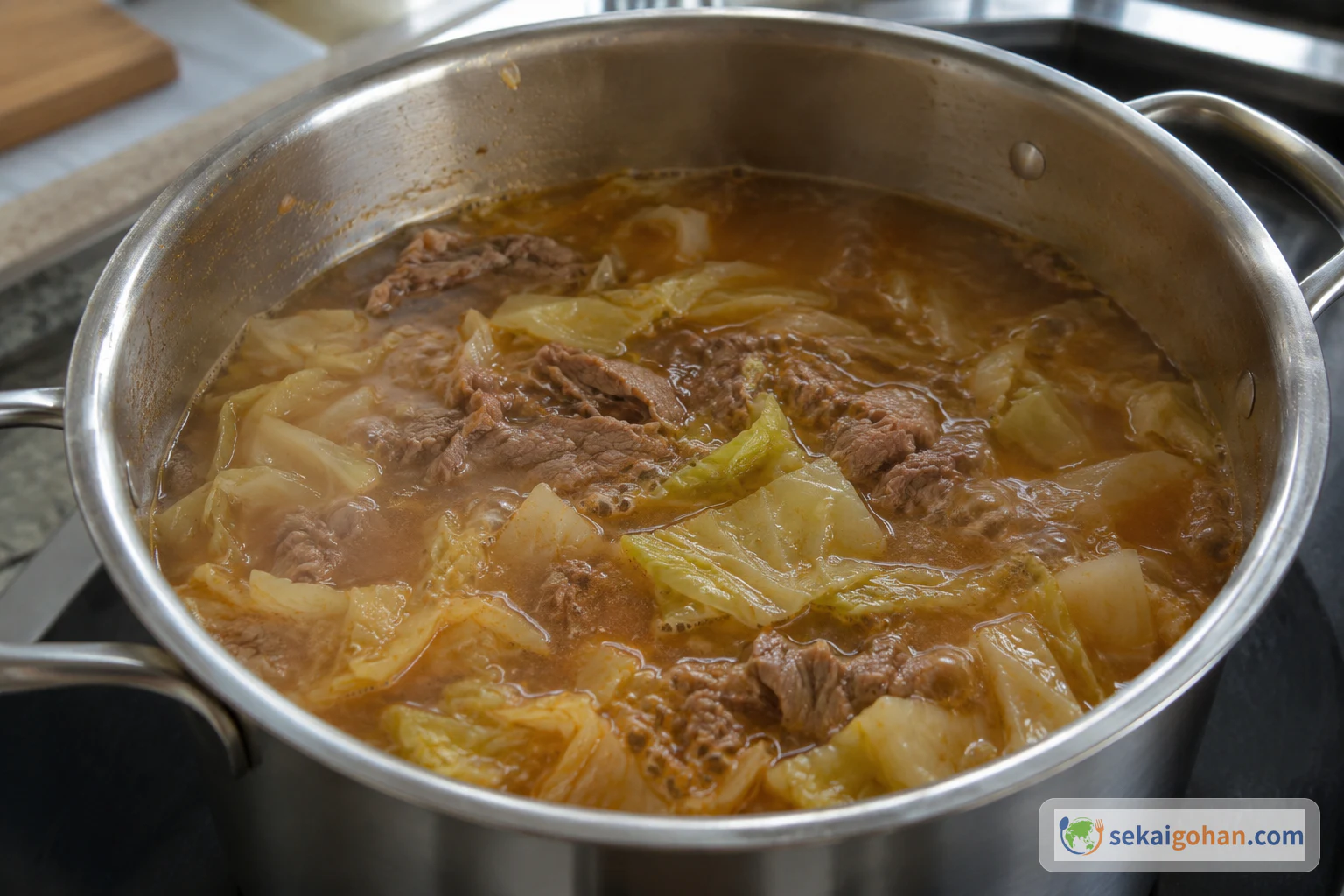
Put the seasoned cabbage, 6 cups of the skimmed beef bone broth and the reserved meat and ligaments in a pot.

Cover and cook over medium-high heat for 20 minutes.

The soup pot covered with its lid on the stove
Cook covered over medium-high heat

Turn the heat to low and simmer for another 10 minutes. Make sure the soup is heated through, since the broth and meat came out of the refrigerator.

Beef broth, cabbage and doenjang soup gently simmering over low heat
Finish over low heat
STEP77 / 7

Ladle into bowls and finish with green onion

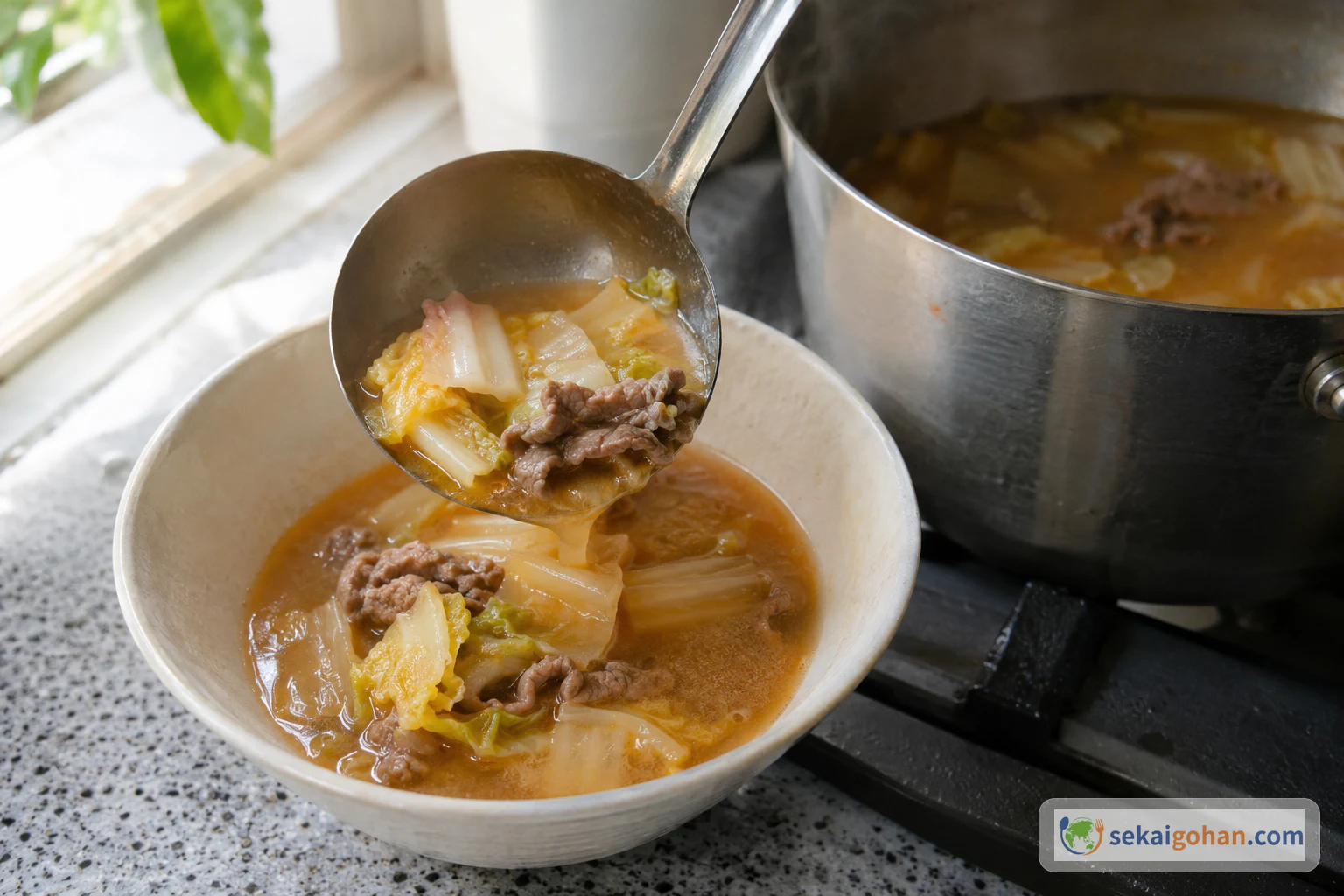
Doenjang cabbage beef soup ladled into a plain ceramic bowl
Portion the soup into bowls

Ladle the hot soup into bowls.

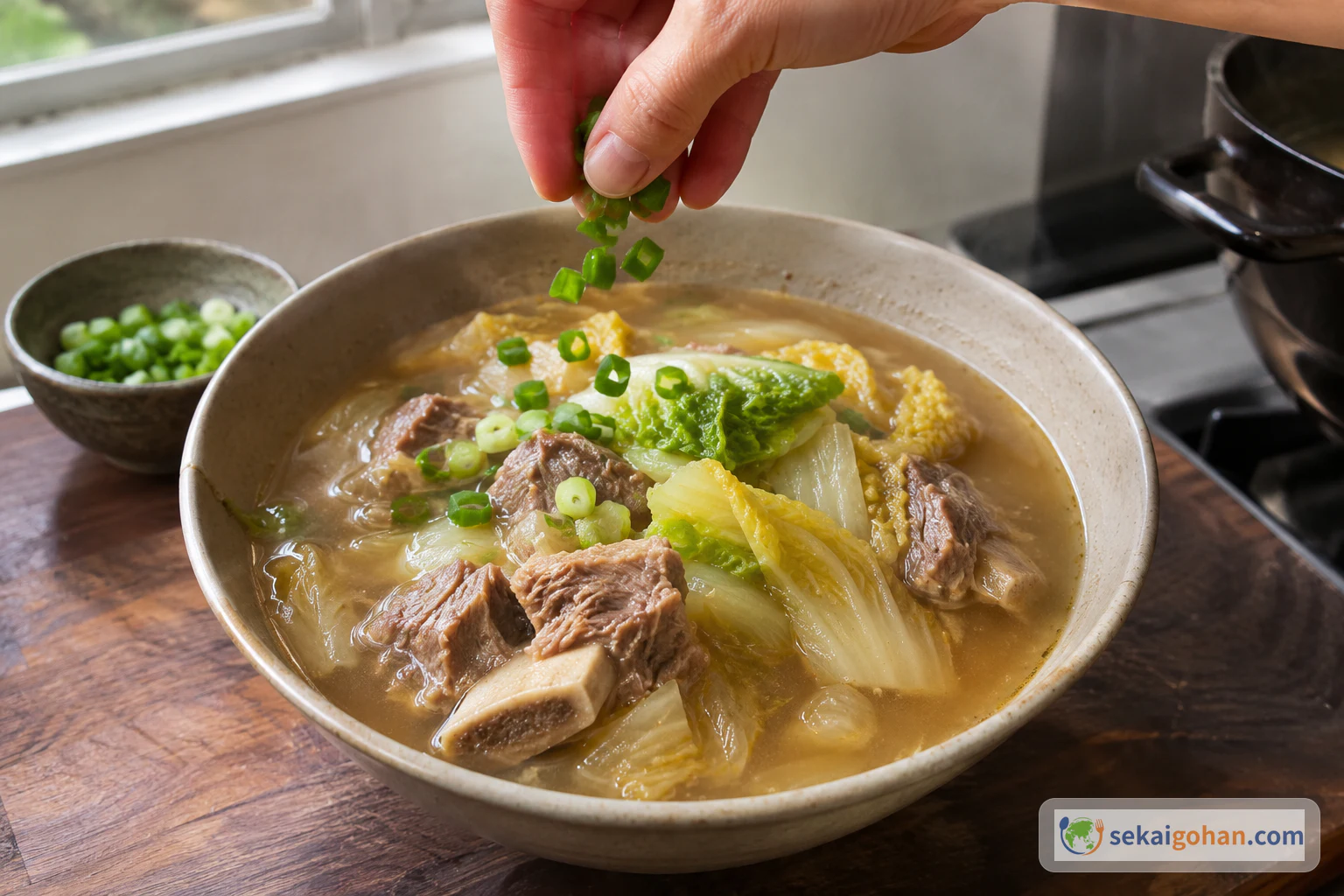
Scatter the chopped green onions over each bowl. Serve with rice and kimchi, and set out gochugaru so each person can add it to taste.

A hand sprinkling chopped green onion over a finished bowl of beef bone and cabbage soup
Green onion goes on last
0 / 0
Ingredients

Ingredients

1 / 1

Ingredients

Ingredient Amount Role
Sliced ox bones (beef bones) 2 lb Simmered for the broth; the meat and ligaments left on them go into the soup
Water 6 qt (US) For boiling the bones
Cold water as needed For soaking the bones and topping up the broth pot
Napa cabbage (or chard) 2 lb Blanched, chopped and seasoned before it goes into the broth
Water for blanching as needed In a separate pot for the cabbage
Doenjang (된장, Korean soybean paste) 1/4 cup (US) Main seasoning for the cabbage
Garlic 8 cloves Minced, for the cabbage
Green chili peppers 2 Chopped, for the cabbage. Heat varies by variety
Fish sauce 1 tbsp Seasoning for the cabbage
Green onions 2 Chopped, scattered over each bowl last
Gochugaru (고춧가루, Korean chili flakes) to taste (optional) Added at the table
Cooked rice as needed To serve alongside
Kimchi as needed To serve alongside
0 / 0

A big pot of sliced ox bones sits covered on the stove for four hours, until the water turns milky. Into that broth go the bits of meat and ligament picked from the bones, along with blanched napa cabbage tossed in doenjang (Korean soybean paste), garlic, green chili and fish sauce. The soup is ladled into bowls, topped with chopped green onion, and set down with rice and kimchi. This is ppyeo-haejangguk (뼈해장국), a Korean ox bone and cabbage soup that is deep, savory and gently salty from the doenjang, with any real heat added at the table.

Haejangguk, a Family of Korean Soups

In Korea, haejangguk (해장국) is a family of soups rather than one fixed recipe. People eat it after a night of drinking, which is why it is often called "hangover soup" in English. One type uses beef bone broth, kimchi cabbage, bean sprouts and doenjang. Others are made with blood or with pork backbone, and spicy versions are common.

The pot here is the beef bone version, built on ox bones, napa cabbage and doenjang, with the amounts and times worked out in US units for an ordinary pot. Korean pork gukbap, a rice soup made with pork and pork bones, is a different dish altogether. For more dishes from the same country, see our South Korea page.

Ingredients for Ox Bone and Napa Cabbage Haejang-guk
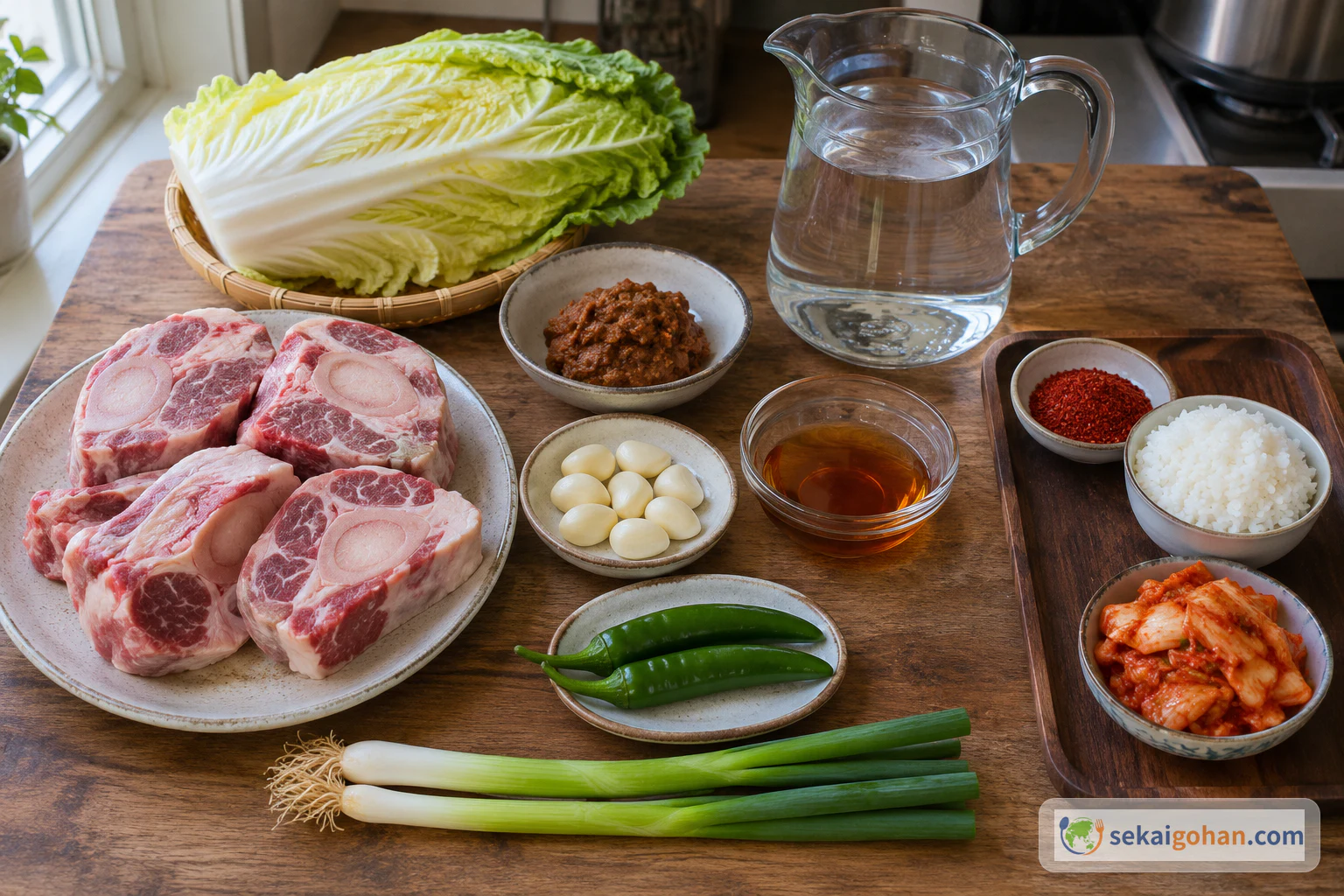
Ingredients for ppyeo-haejangguk: beef bones, napa cabbage, doenjang, garlic, green chilies, fish sauce, green onions and water, with rice, kimchi and chili flakes set apart
The soup ingredients, with the serving extras kept to one side

The broth is made first and needs at least 6 cups for the soup. Rice, kimchi and gochugaru are served at the table and are not cooked in the pot.

Allergens

Fish sauce is made from fish, and doenjang is made from soybeans. Check the labels of the products you buy for these and any other allergens.

Equipment

  • Large heavy pot with a fitted lid, for the four-hour bone boil
  • Separate pot for blanching the cabbage
  • Heat-safe colander or strainer and a heat-safe bowl
  • Several shallow food-safe containers for cooling the broth and meat
  • Large mixing bowl
  • Ladle and spoon
  • Clean cutting board for vegetables, kept apart from raw bones

Choosing Ingredients for Ppyeo-haejangguk

Bones. Look for sliced beef bones sold for making broth.

Cabbage. Napa cabbage is the usual choice. Chard works too, though it gives the soup a different flavor and texture.

Doenjang. Saltiness varies from one brand of this fermented soybean paste to the next, and that carries straight through to how salty the finished soup tastes.

Heat. Green chilies vary in strength. If you want more fire, add gochugaru to your own bowl rather than to the pot.

Method: From Bone Broth to a Finished Bowl

Plan the day around the broth

The bones boil for four hours, then the broth is chilled until the fat sets on top. The cabbage and the final simmer come after that. Keep raw bones, the water they soaked in, and the tools that touched them away from vegetables and cooked food the whole way through.

Troubleshooting Ppyeo-haejangguk

Problem Likely cause What to do
The broth is running low during the boil Evaporation over 4 hours Add cold water so you finish with at least 6 cups. Keep the lid on
The broth is not milky — Keep to the 4-hour covered boil. Color is not a sign of safety
The fat will not lift off Not chilled long enough Leave the containers in the refrigerator until the fat forms a solid layer, then skim
Too salty Doenjang and fish sauce vary by product Choose the doenjang carefully next time; saltiness differs between brands
Not spicy enough Mild chilies Add gochugaru in your own bowl at the table

Serving and Storing Ppyeo-haejangguk

At the Table
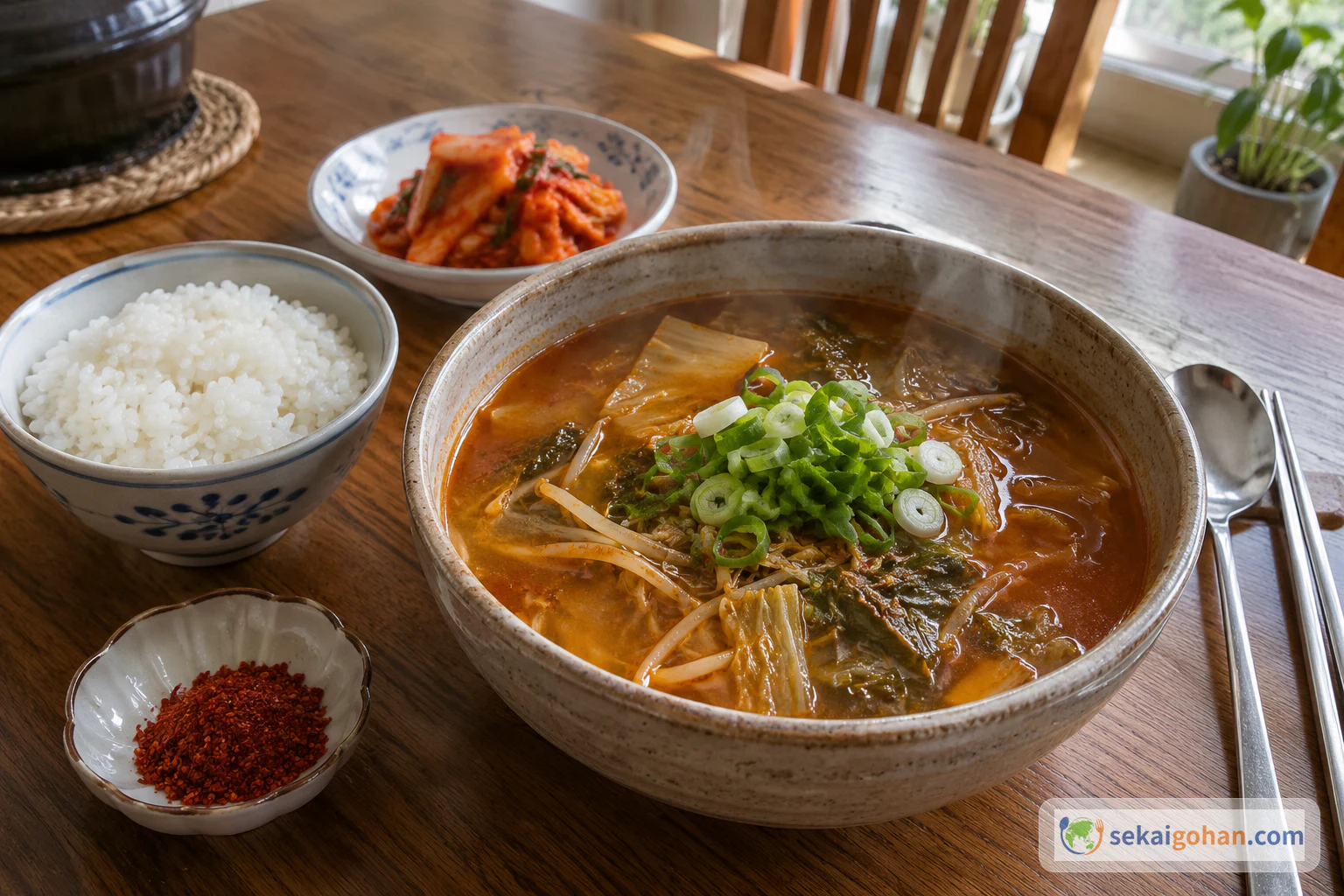
A bowl of ppyeo-haejangguk with chopped green onion, beside bowls of rice, kimchi and a small dish of chili flakes
Rice, kimchi and optional chili flakes are served on the side

Serve each bowl with rice and kimchi on the side, and put the gochugaru in its own small dish so everyone can make their bowl as spicy as they like.

Food Safety and Leftovers

A large pot of broth cools slowly

Four hours of boiling produces a lot of hot liquid. Never leave the pot on the counter overnight. Divide the broth and recovered meat into shallow food-safe containers and get them into the refrigerator within 2 hours (within 1 hour if the room is above 90°F (32°C)), with the refrigerator at 39°F (4°C) or below.

A pot of broth this size cools slowly, so never leave it overnight in the pot. Divide it into shallow containers and get it into the refrigerator quickly.

  • Keep raw and cooked apart. Use separate tools, bowls and boards for the raw bones and for vegetables and cooked food. Avoid splashing the bone-soaking water, and clean surfaces after handling raw bones.
  • Check the temperature. The 4-hour boil and the 30-minute final simmer are cooking times only. Heat soups and stews to 158°F (70°C), and check with a food thermometer.
  • Keeping it hot. If the soup is held hot before serving, keep it at 140°F (60°C) or above. Cooked soup should spend less than 2 hours at room temperature.
  • Leftover soup. Divide it into shallow food-safe containers and refrigerate within 2 hours (within 1 hour above 90°F (32°C)) at 39°F (4°C) or below. Reheat it thoroughly before eating.

Frequently Asked Questions

Does it cure a hangover?

"Hangover soup" refers to when the soup is traditionally eaten, after a night of drinking.

How many servings does it make?

2 lb of bones feeds about four people. Make 6 to 8 cups of broth; the soup uses 6 cups.

Can I make the broth in a pressure cooker?

The times here are for an ordinary pot and the 4-hour covered boil.

Why chill the broth before making the soup?

Chilling lets the fat set on the surface so it can be lifted off. Dividing the broth into shallow containers before refrigerating helps it cool quickly instead of sitting warm in a deep pot.
Sources