Jungguk-naengmyeon (중국냉면): Cold Kit Noodles with Peanut Butter, Mustard, Shrimp and Egg

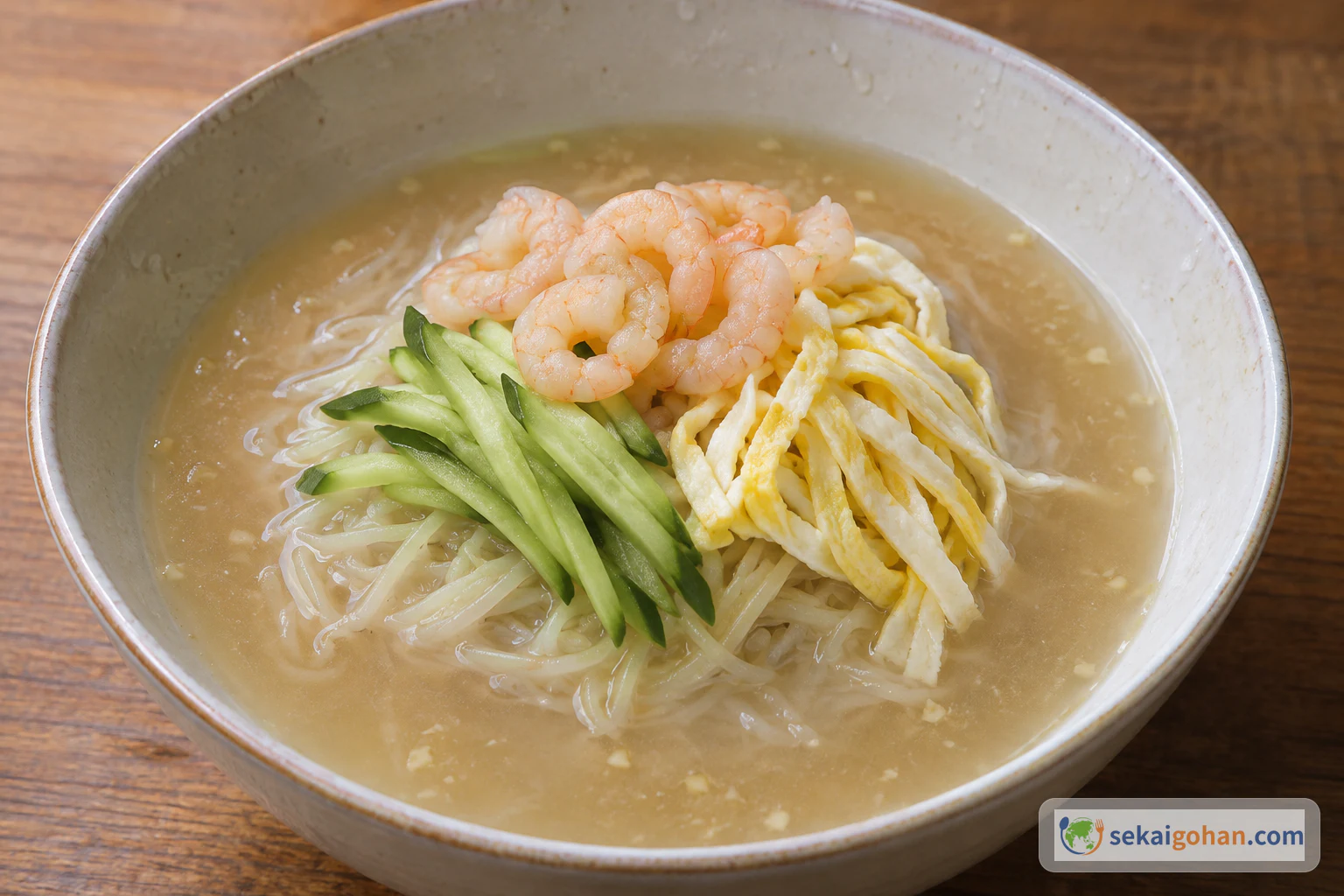
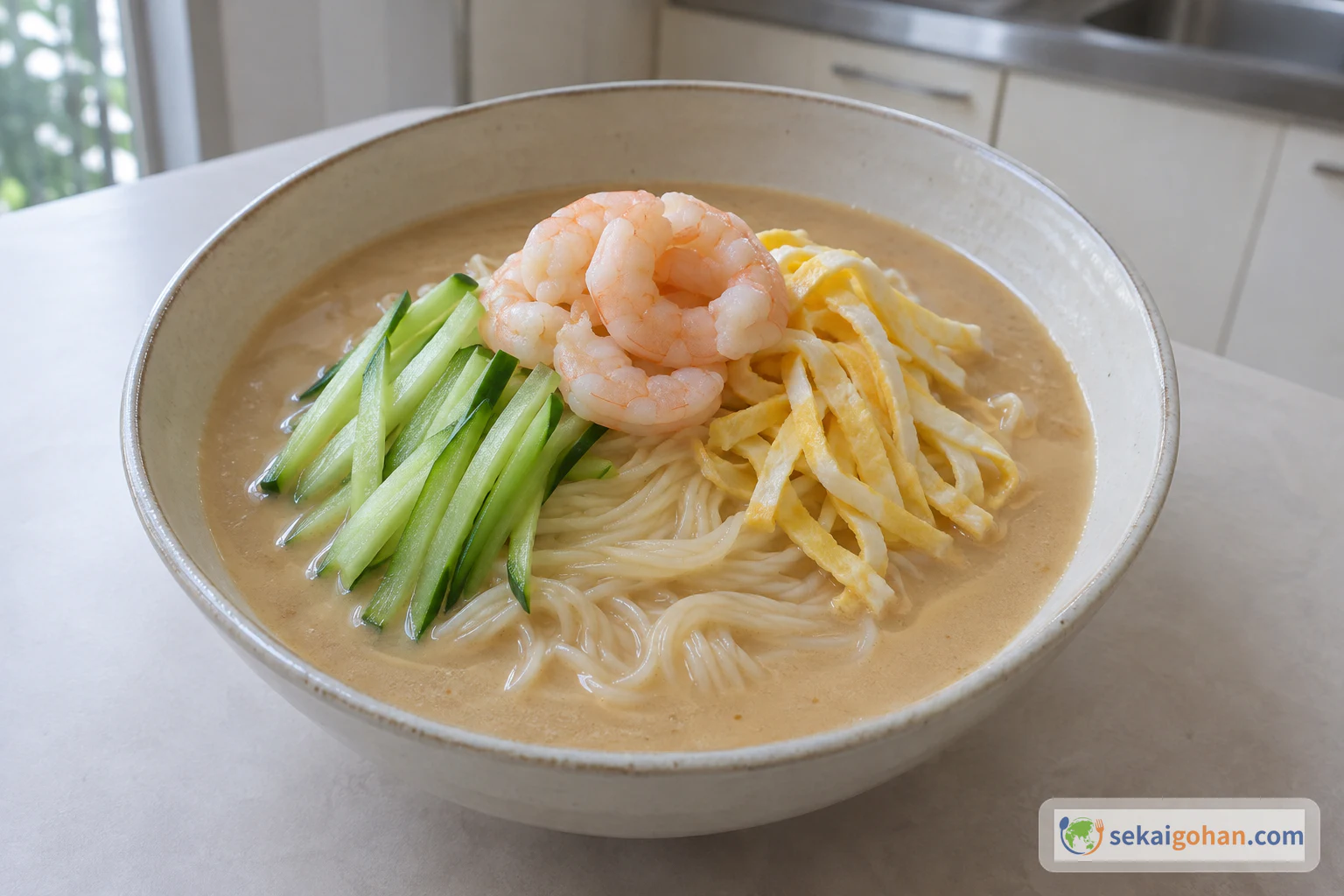
Finished cold Chinese-style naengmyeon with cucumber, shrimp and egg ribbons in pale broth
Level
Beginner
Cuisine
Korean

A home version of Korean Chinese-style cold noodles, based on a recipe Nongshim published in 2016: a dongchimi naengmyeon kit, a chilled broth with peanut butter, mustard, soy sauce and garlic, and toppings of cucumber, shrimp and egg ribbons. Includes label checks, shrimp safety, and how it differs from everyday naengmyeon.

Cooking flow

Cooking steps

STEP11 / 8

Mix and chill the broth

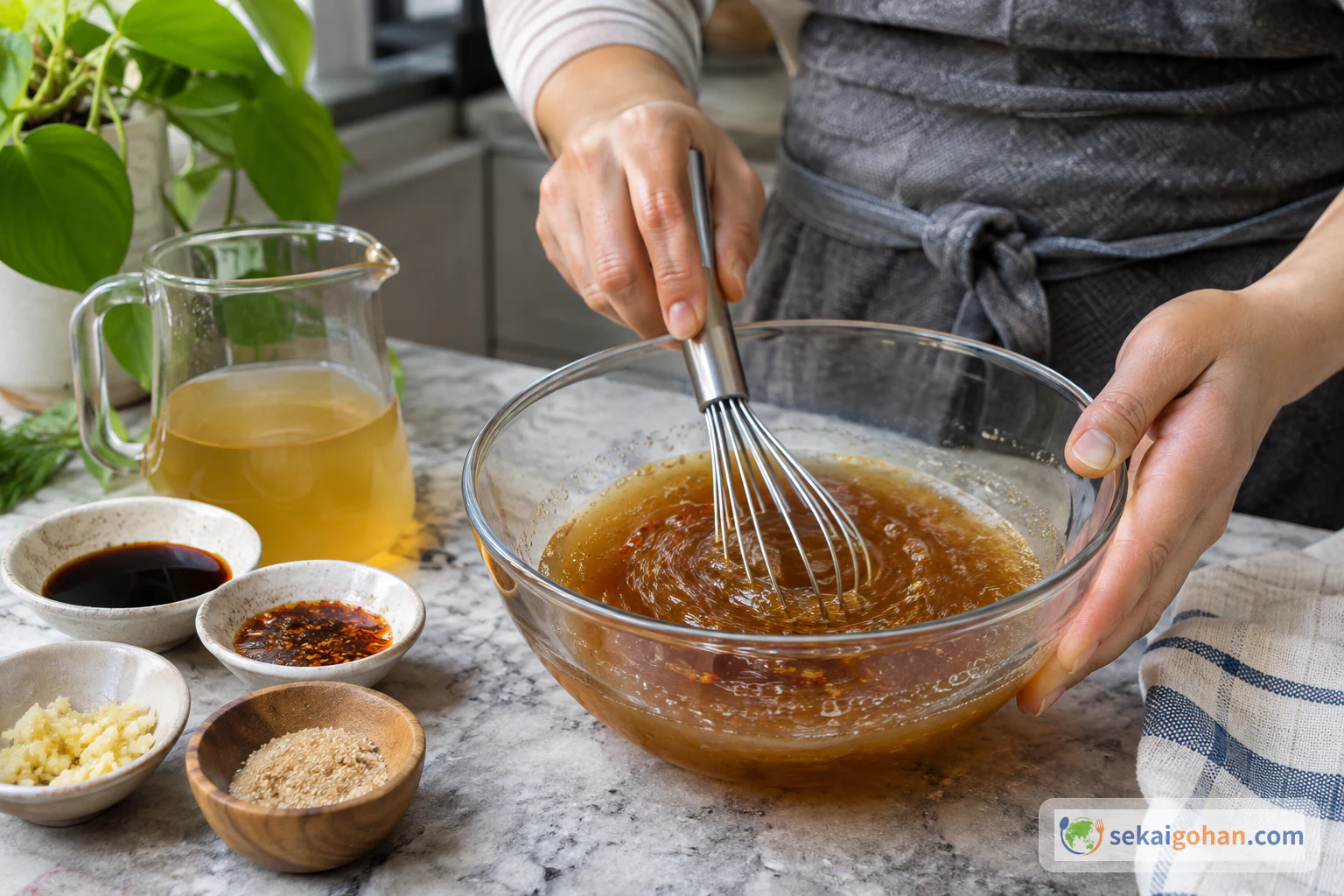
Whisking the soup and seasonings together
Whisk until the seasonings are combined

Empty the kit's soup pouch into a clean mixing bowl and pour in 1 cups (260 mL) cold drinking water. If your bag gives a different dilution, use the bag's amount. Add 4 g minced garlic (mince it with a clean knife on a clean board), 4 g mustard, 5 g soy sauce and 6 g peanut butter, then whisk until the peanut butter and other seasonings are fully combined with the soup. Cover the bowl and refrigerate it until you are ready to pour it.

STEP22 / 8

Cut the cucumber

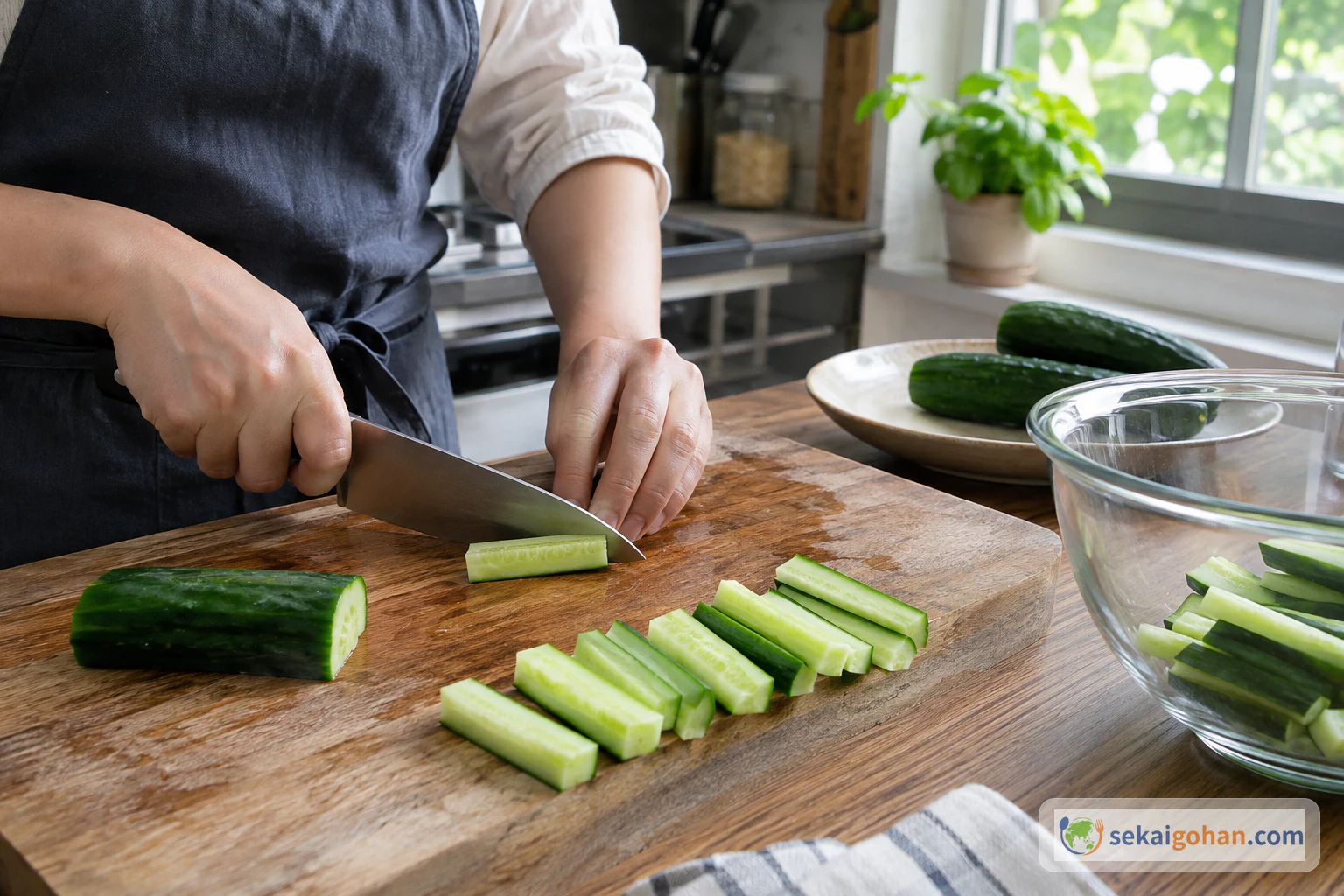
Cutting the cucumber into 4 × 1 cm pieces
Pieces 4 cm long and 1 cm wide

Wash the cucumber well under running water. On a clean board, cut it in half, using a board and knife that have not touched shrimp. Cut the halves into pieces 1.5 inches (4 cm) long and 0.5 inches (1 cm) wide, until you have 20 g. Refrigerate them until you assemble the bowl.

STEP33 / 8

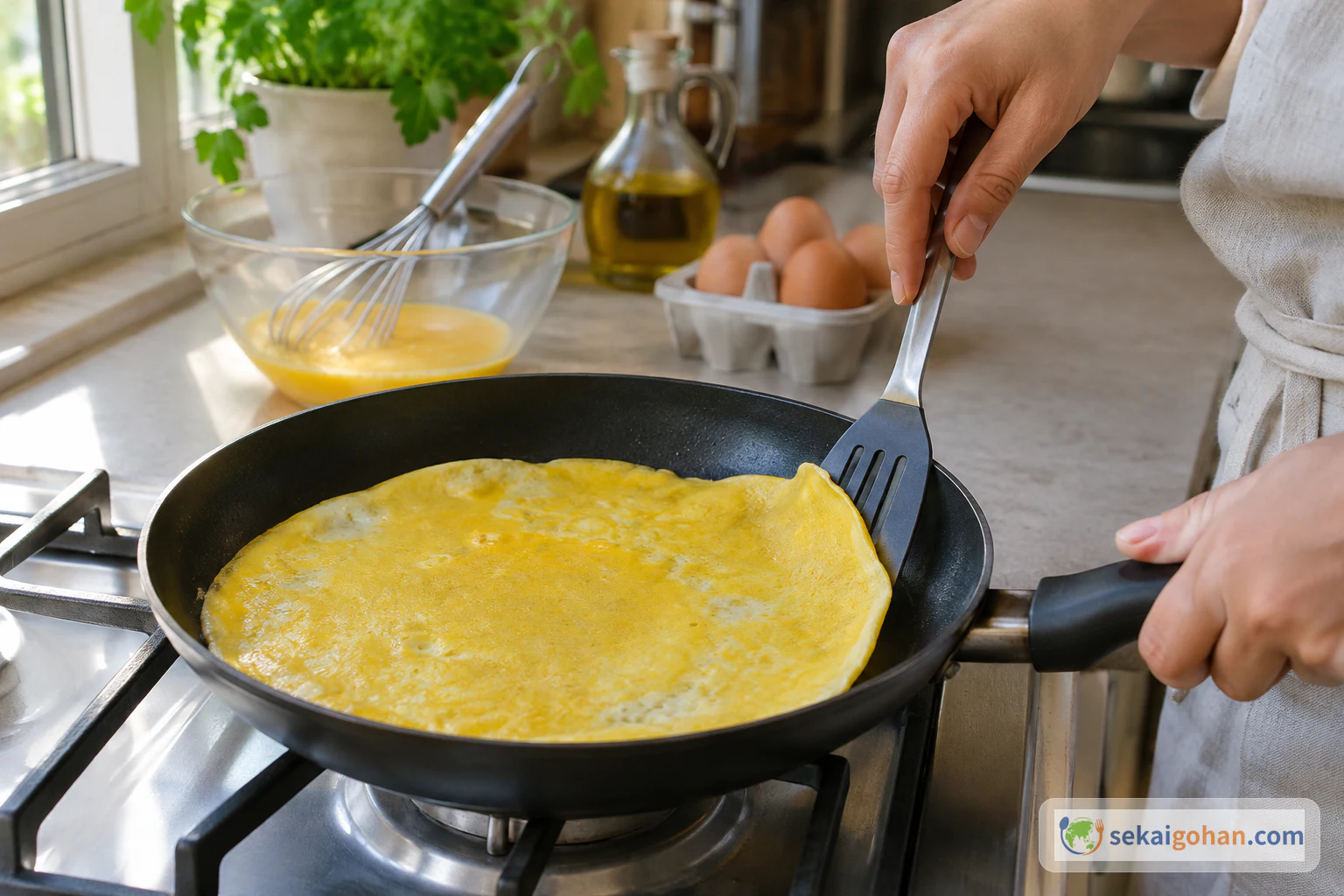
Cook the egg ribbons

Cooking the beaten egg into a thin omelet
Cook the thin omelet all the way through

Crack 1 egg into a small bowl and beat it with a fork or chopsticks until the egg is an even color. Spread a little cooking oil over the frying pan with a paper towel, pour in the beaten egg and spread it thin. Cook it through, until no liquid egg remains. Cut the omelet into ribbons 0 inches (0.5 cm) wide on a clean board, then refrigerate them until you assemble the bowl.

STEP44 / 8

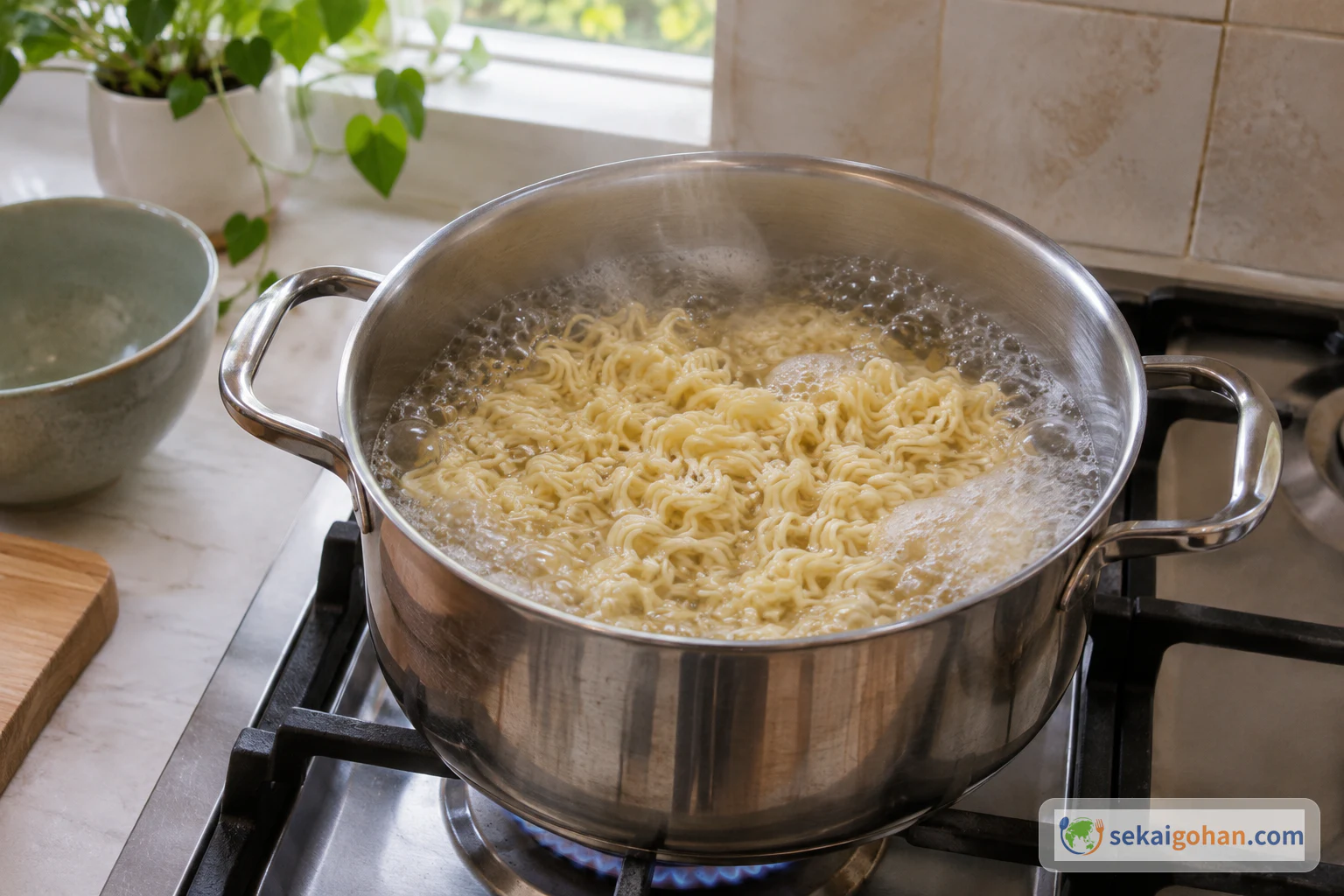
Boil the noodles

Noodles boiling in the pot
The noodles boil alone at first

Measure 2¼ cups (550 mL) water into a pot (if your bag gives a different amount, use the bag's amount) and bring it to a full boil. Add the kit's noodles to the boiling water and boil for 2 minutes. If your bag gives a different time, follow the bag and boil until the noodles are soft.

STEP55 / 8

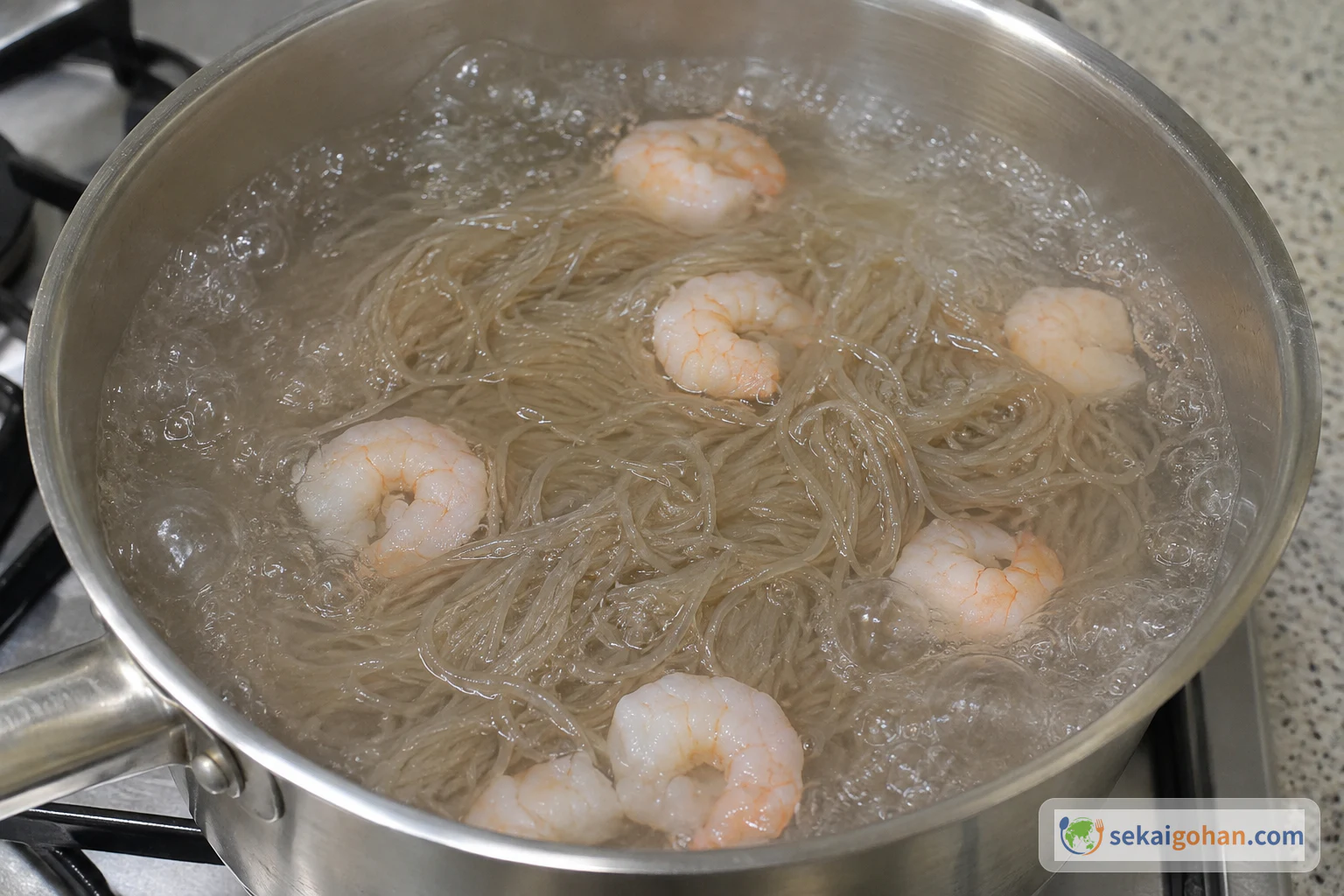
Reheat the shrimp with the noodles

Heating the noodles and shrimp together in the same pot for 1 more minute
One more minute in the same pot reheats the cooked shrimp

Add the 6 cooked shrimp to the pot with the noodles and boil for 1 more minute. This only reheats shrimp that are already cooked, and it is not a cooking time for raw shrimp. Follow the directions on the shrimp package. Set aside the dish that held the shrimp, and keep it away from the cucumber and egg.

STEP66 / 8

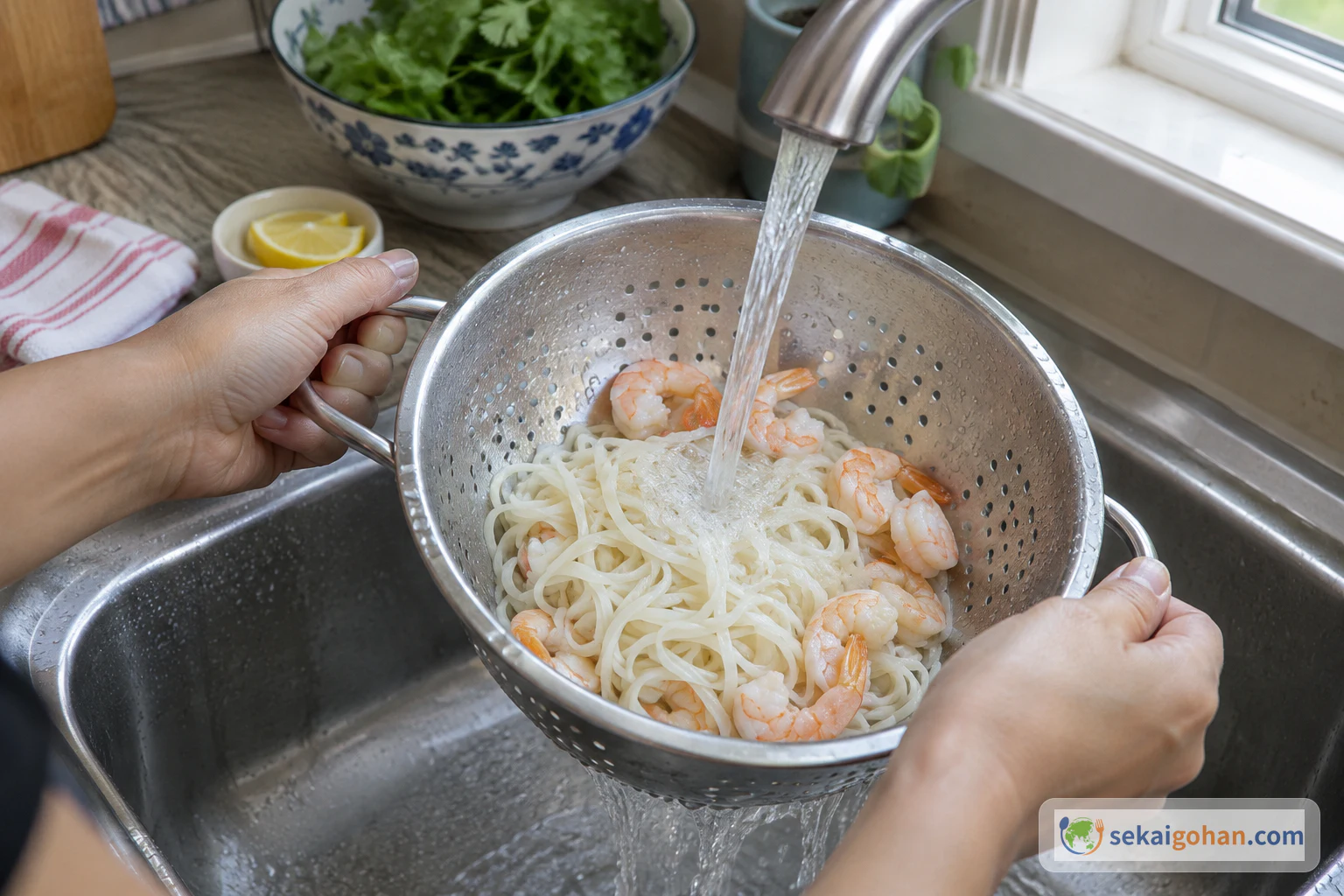
Rinse and drain

Rinsing the noodles and shrimp in cold water in a colander
Rinse noodles and shrimp together under cold drinking water

Tip the noodles and shrimp into a clean colander and rinse with cold drinking water. Let the water drain away from the noodles and shrimp until they are cold and no longer dripping.

STEP77 / 8

Assemble the bowl

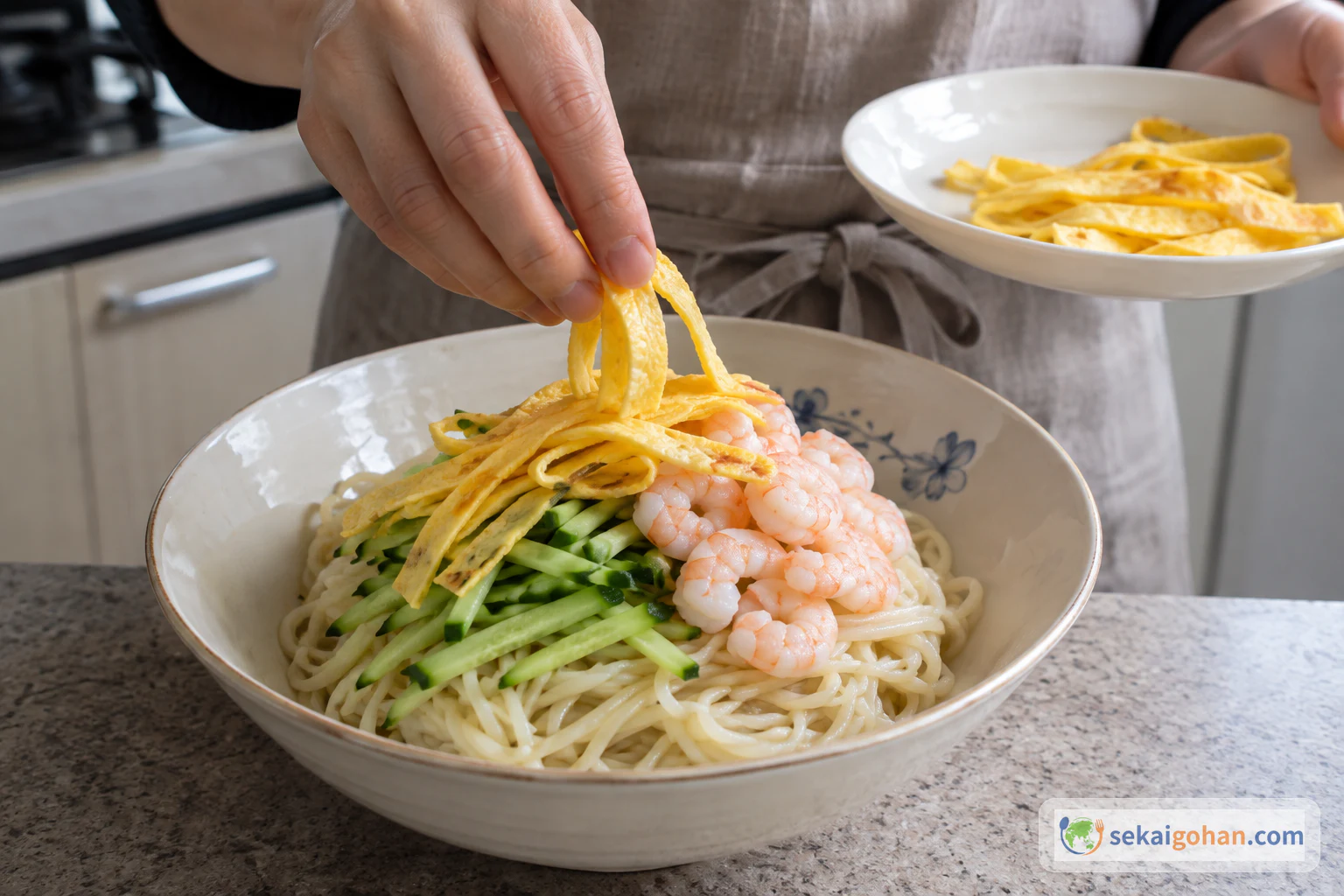
Adding egg ribbons to the noodles
The egg ribbons are the last topping

Lift the noodles into a clean serving bowl, leaving the shrimp in the colander for now. Set the cucumber on the noodles, then add the shrimp, and finish with the egg ribbons as the last topping.

STEP88 / 8

Pour in the broth and serve

The cold noodle bowl served at the table
Serve as soon as the bowl is assembled

Take the chilled broth from the refrigerator and pour it into the bowl. Bring the bowl to the table cold and eat it right away.

0 / 0
Ingredients

Ingredients

1 / 1

Ingredients

Ingredient Amount Role
Dongchimi naengmyeon kit (둥지 동치미물냉면) 1 kit Supplies the noodles and the soup base
Water for boiling 2¼ cups (550 mL) Boils the noodles and reheats the shrimp
Cold drinking water 1 cups (260 mL) Dilutes the soup base
Cold drinking water for rinsing as needed Rinses the noodles and shrimp
Cooked small shrimp, peeled and deveined 6 Topping
Cucumber 20 g Topping; washed well and cut into 1.5 inches (4 cm) × 0.5 inches (1 cm) pieces
Egg 1 Thin omelet, cut into 0 inches (0.5 cm) ribbons
Minced garlic 4 g Seasons the broth
Mustard (겨자) 4 g Seasons the broth
Peanut butter (땅콩버터) 6 g Seasons the broth
Soy sauce 5 g Seasons the broth
Cooking oil a little For the egg
0 / 0

In August 2016, a playful question led to a recipe: what happens when naengmyeon meets peanut butter? The answer was "Chinese-style naengmyeon," or jungguk-naengmyeon. You start with a naengmyeon kit and dilute its soup base with cold water. Then you stir in peanut butter, mustard, soy sauce and garlic, and chill it. The kit's noodles are boiled, rinsed cold and topped with cucumber, shrimp and thin ribbons of egg before the cold broth goes in. For other dishes from the same table, browse our Korean recipes.

Jungguk-naengmyeon and Traditional Naengmyeon

Traditional naengmyeon is buckwheat noodles in chilled dongchimi or beef broth, and it comes in Pyongyang and Hamheung styles. Mul-naengmyeon is served in broth, while bibim-naengmyeon is mixed with a spicy sauce.

Jungguk-naengmyeon has no single fixed formula. A useful comparison is the Mokran Chinese-style cold noodle set, which comes with Chinese wheat noodles, chilled broth, five-spice meat and a peanut sauce you add to taste. Its frozen noodles are boiled for 2 minutes, rinsed cold and drained. Because the set is sold as its own product, you can see that this chilled noodle dish in the Korean Chinese restaurant style has a place of its own in Korea. The kit bowl here is one way to make it at home.

Point of comparison Traditional naengmyeon This kit from 2016 Mokran set
Noodles Buckwheat noodles Kit noodles; check your bag Chinese wheat noodles
Liquid or sauce Chilled dongchimi or beef broth; or a spicy sauce for bibim-naengmyeon Kit soup with cold water, peanut butter, mustard, soy sauce and garlic Chilled broth with peanut sauce to taste
Toppings named Varies by type Cucumber, shrimp, egg Five-spice meat

Ingredients for One Kit

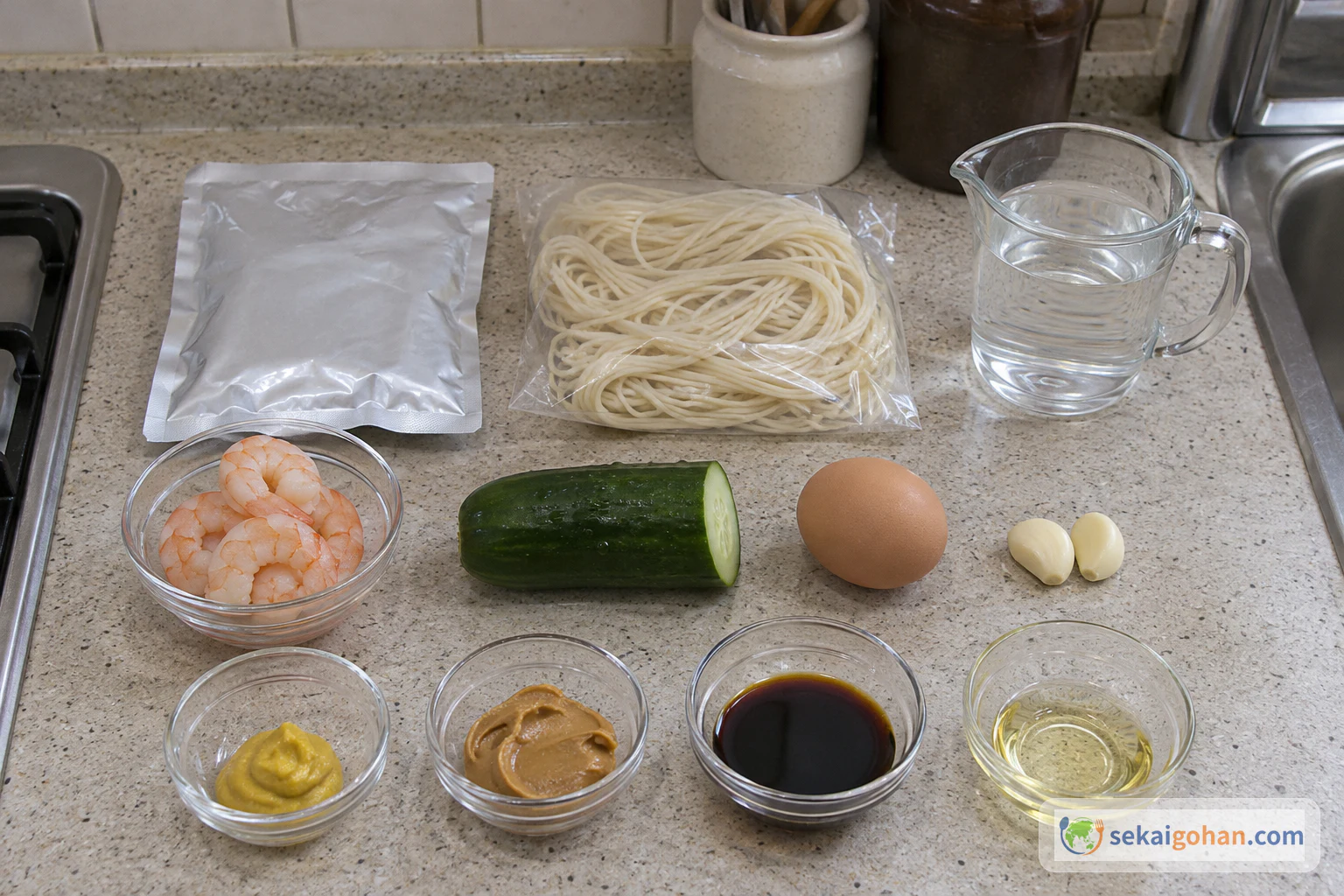
The kit's noodles and soup pouch, shrimp, cucumber, one egg, garlic, mustard, peanut butter, soy sauce, cooking oil and water
Everything for one kit, set out before you start
Check every label

Peanut butter, shrimp and egg are all in this bowl. Read the ingredient and allergen labels on your kit and on every other product, looking for peanut, shrimp, egg, wheat, buckwheat and any other allergen that matters to you. Do not assume a product is free of an allergen unless its label tells you so.

Equipment

  • Kitchen scale
  • Measuring jug
  • Clean glass mixing bowl with a cover
  • Whisk and spoon
  • Separate clean cutting boards and knives for vegetables and for anything that touches shrimp
  • Small bowl and a fork or chopsticks
  • Frying pan and paper towel
  • Pot
  • Colander
  • Serving bowl

Choosing the Kit, Shrimp and Seasonings

The kit

This bowl uses Doongji dongchimi mul-naengmyeon, and everything depends on its noodles and soup base. The amounts belong to this kit, so a different product won't give the same result. The kit's standard method calls for 3¼ cups (800 ml) of boiling water and 3 minutes for the noodles, with the same 1 cups (260 ml) of cold water for the soup. The steps below use 2¼ cups (550 mL) and 2 minutes instead. If your bag says something different, follow your bag and boil until the noodles are soft.

Read the label for what goes into the noodles and soup base, and for any allergens. If you avoid wheat or buckwheat, this matters most. Your kit's noodles may be different from the wheat noodles in the Mokran set.

The shrimp

The original recipe calls for "cocktail shrimp" without saying whether they are raw or cooked. Buy small shrimp labeled as already cooked, peeled and deveined, then follow the handling directions on the package. Keep them refrigerated until you need them. If your noodles need a longer boil, the shrimp still go by the shrimp package's directions.

One minute is a reheat, not a cooking time

The 1 minute in the pot only reheats shrimp that are already cooked. It does not make raw shrimp safe. If your shrimp are raw or you can't tell, don't rely on this step. Follow the package's directions.

Mustard, peanut butter and soy sauce

Any mustard, soy sauce or peanut butter you like will work, sweetened or not. Check each label for allergens.

Method: Chill the Broth First, Cook the Noodles Last

Before you start, compare your bag's boiling water, boiling time and dilution with the steps below. Where they differ, the bag comes first.

Fixing Jungguk-naengmyeon Problems

What you see What to do
Your bag's numbers don't match the steps Follow the bag for boiling water, boiling time and dilution, and boil until the noodles are soft
The noodles are still hard Keep boiling until they are soft, using the bag's time as your guide
The peanut butter hasn't blended into the broth Keep whisking before you chill the broth, or whisk again before pouring
The broth isn't cold yet Return it to the refrigerator before pouring
The noodles still feel warm after rinsing Rinse longer with cold drinking water, then drain again
The egg still looks wet Keep cooking until no liquid egg remains, before you cut it
You aren't sure whether the shrimp are cooked Check the package and follow its directions. Don't decide by color or rely on the 1-minute step

Keeping the bowl safe

The noodles, egg and shrimp are all heated, but the cucumber and garlic go in raw. Use drinking water for the broth and the rinse, and keep the tools that touched shrimp away from the raw vegetables. When you heat food, bring the center to 167°F (75°C) for at least 1 minute.

Keep seafood cold, and don't leave any of it at room temperature for long. You can't judge freshness or safety by looking. The color of a shrimp, whether in your pot or in the photos, doesn't prove it is safe.

Frequently Asked Questions

Are the kit noodles wheat noodles?

The noodle ingredients aren't listed here. Check the label on your bag, especially if you avoid wheat or buckwheat.

Can I use raw shrimp?

Not with this method, so use cooked shrimp. The extra minute only reheats cooked shrimp. It isn't long enough to cook raw shrimp safely.

Can I use a different noodle kit?

You can, but think of it as a different recipe. The amounts and times here are for one kit and don't carry over to other products, so start from that product's directions.

Can I keep leftovers?

No storage time is given for leftovers. Keep the broth and toppings refrigerated until you assemble the bowl, then serve it right away and don't leave it at room temperature for long.
Sources

  • Nongshim official blog, "[레시피] 냉면과 땅콩버터가 만나면? '중국식 냉면'" (2016-08-04). All ingredients, amounts and steps of the version used here. The recipe does not list the kit's noodle composition, full ingredients or allergens, and does not specify the shrimp's raw or cooked state or the type of mustard, peanut butter or soy sauce. https://blog.nongshim.com/1736
  • Nongshim, Doongji naengmyeon official brand page. The current product's dried noodles and standard directions (260 ml cold water for the soup; 800 ml boiling water for 3 minutes). The page lists no ingredients or allergens and does not prove the product is identical to the 2016 version. https://brand.nongshim.com/icedoongji/main/index
  • Korea.net / Ministry of Culture, Sports and Tourism, with the Institute of Traditional Korean Food, "Korean recipes: Naengmyeon (냉면)." Contrast only: traditional naengmyeon with buckwheat noodles in chilled dongchimi or beef broth, including Pyongyang and Hamheung styles. <https://www.korea.net/NewsFocus/Culture/view?=psvp_48636194__t_w&articleId=143235>
  • Korean Bapsang, "Naengmyeon (Cold Noodles)." Contrast only: the distinction between mul-naengmyeon and bibim-naengmyeon. https://www.koreanbapsang.com/naengmyeon-cold-noodles/
  • Kurly, "[이연복의 목란] 중화냉면" product listing. A separate product shown for comparison: Chinese wheat noodles, chilled broth, five-spice meat and peanut sauce. Not used in the recipe above. https://www.kurly.com/goods/1001458452
  • Ministry of Health, Labour and Welfare, Japan, "家庭でできる食中毒予防の6つのポイント." General guide of 75°C at the center for at least 1 minute, clean utensils, and avoiding long periods at room temperature. https://www.mhlw.go.jp/topics/syokuchu/dl/point0709.pdf
  • U.S. Food and Drug Administration, "Selecting and Serving Fresh and Frozen Seafood Safely." General guidance on handling seafood and keeping it cold, and on not judging freshness or safety by appearance alone. https://www.fda.gov/food/buy-store-serve-safe-food/selecting-and-serving-fresh-and-frozen-seafood-safely