Ohaw: Hokkaido Ainu Soup of Kombu, Root Vegetables and Salted Salmon

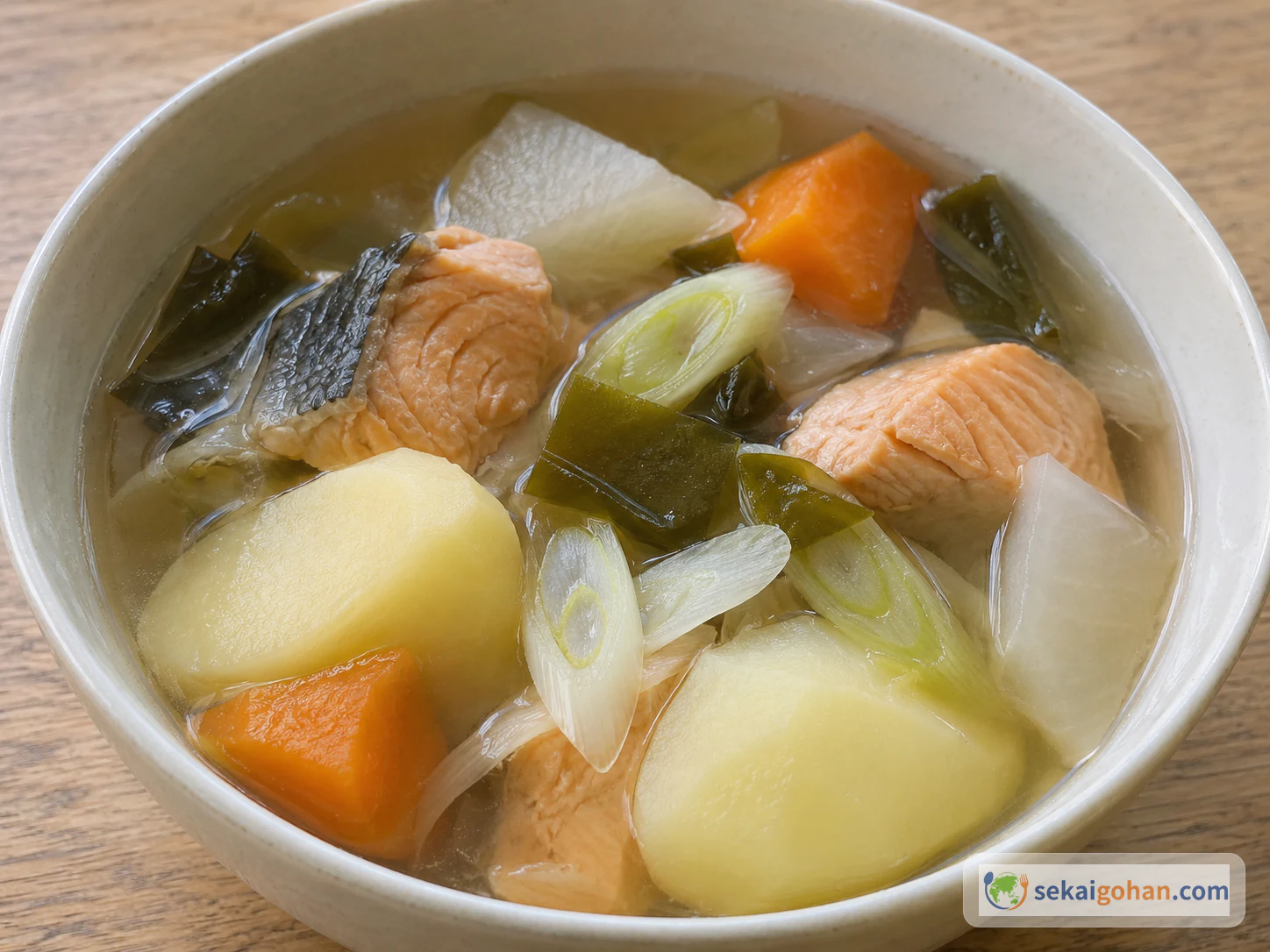
Ohaw with kombu, daikon, carrot, potato, cooked salted salmon and long green onion
Serves
4 servings
Cuisine
Ainu (Hokkaido, Japan)

How to make ohaw, an Ainu soup from Hokkaido, following one home recipe from Cafe Rimse at the former Shiraoi Ainu Museum, as presented by the Hokkaido Museum. Kombu, roll-cut daikon and carrot, salted raw salmon and May Queen potatoes go into one pot, finished with salt, a drizzle of oil and briefly boiled long green onion. Covers the order of additions, doneness cues, salmon safety, troubleshooting and how this pot relates to other ohaw.

Cooking flow

Cooking steps

STEP11 / 7

Prep the daikon, carrot and salmon

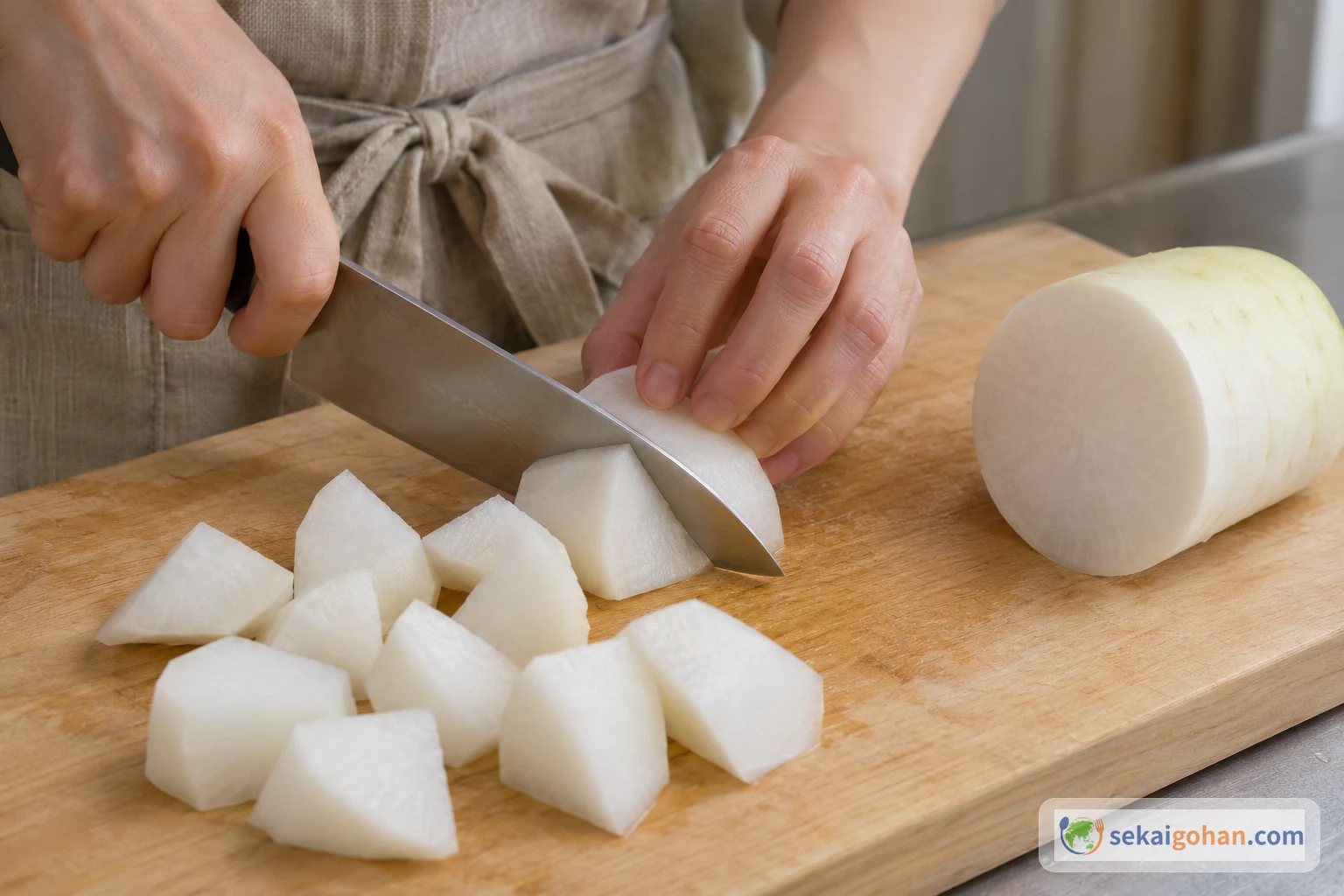
Cutting daikon into irregular roll-cut chunks
Thick, irregular chunks with several angled faces

Peel 1/2 daikon and cut it rangiri: cut on the diagonal, roll it between cuts, and cut on the diagonal again, making thick, irregular chunks. Do not quarter it lengthwise or slice it into rounds. Cut 1 carrot the same way into chunky, irregular roll-cut pieces. Cut each of the 4 salted raw salmon fillets in half, keep the pieces in the refrigerator until they go into the pot, and wash your hands and tools after handling the raw fish. The vegetables should be thick chunks with several angled faces.

STEP22 / 7

Simmer the kombu and vegetables

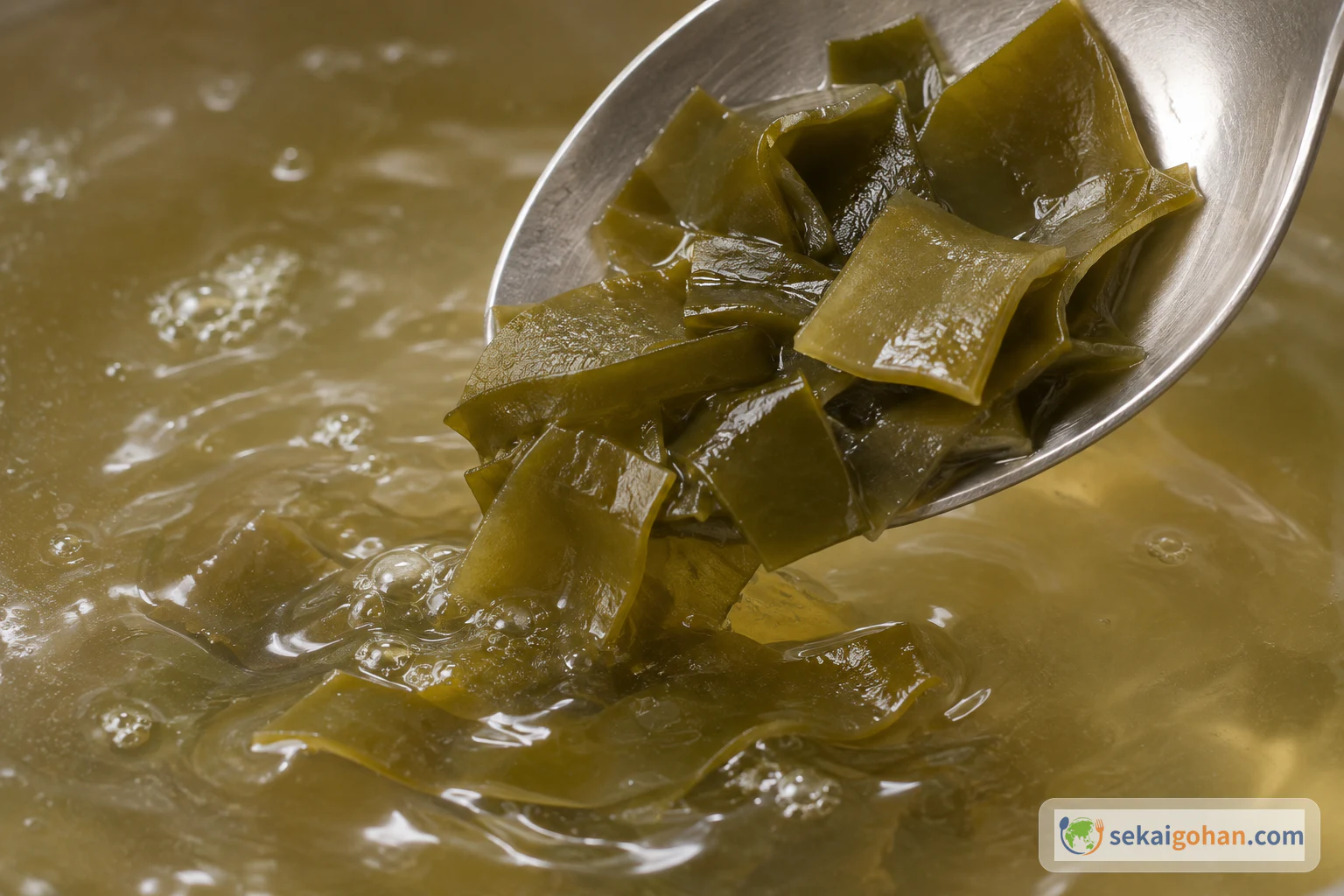
Cooking until the kombu is soft
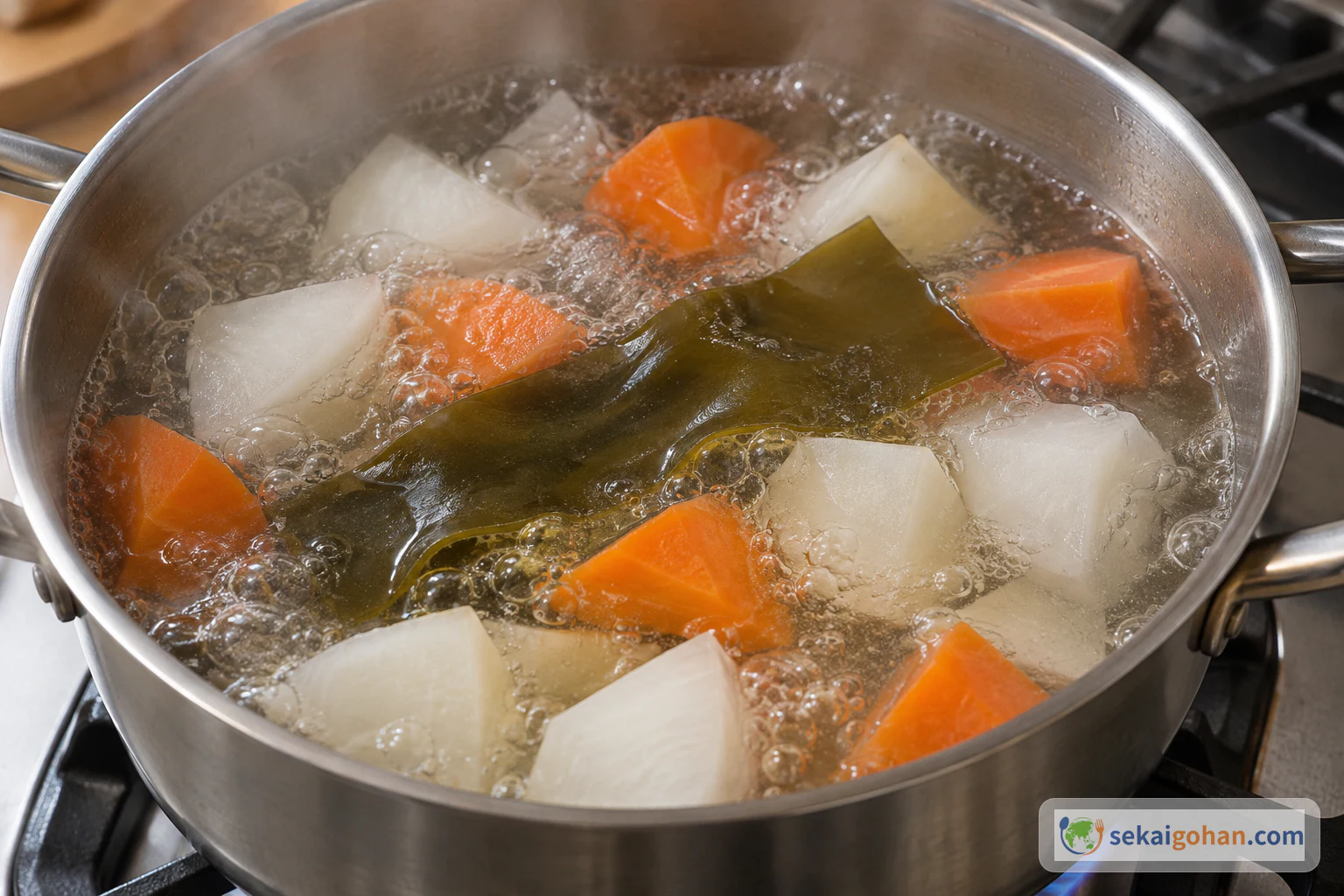
The kombu turns soft and wavy in the boiling water

Place the piece of kombu, about 8 inches (20 cm), in the soup pot and pour in water. Add the roll-cut daikon and carrot, set the pot over the heat and bring it to a boil. Keep cooking until the kombu has softened and turns wavy in the boiling water.

STEP33 / 7

Chop the kombu and return it to the pot

Returning chopped kombu to the pot
The chopped kombu goes back into the broth

Take the softened kombu out of the pot, leaving the vegetables cooking. On a cutting board, roughly chop the kombu into coarse pieces, not fine shreds. Put the chopped kombu back into the pot. Keep cooking until the daikon pieces turn translucent.

STEP44 / 7

Cook the salmon

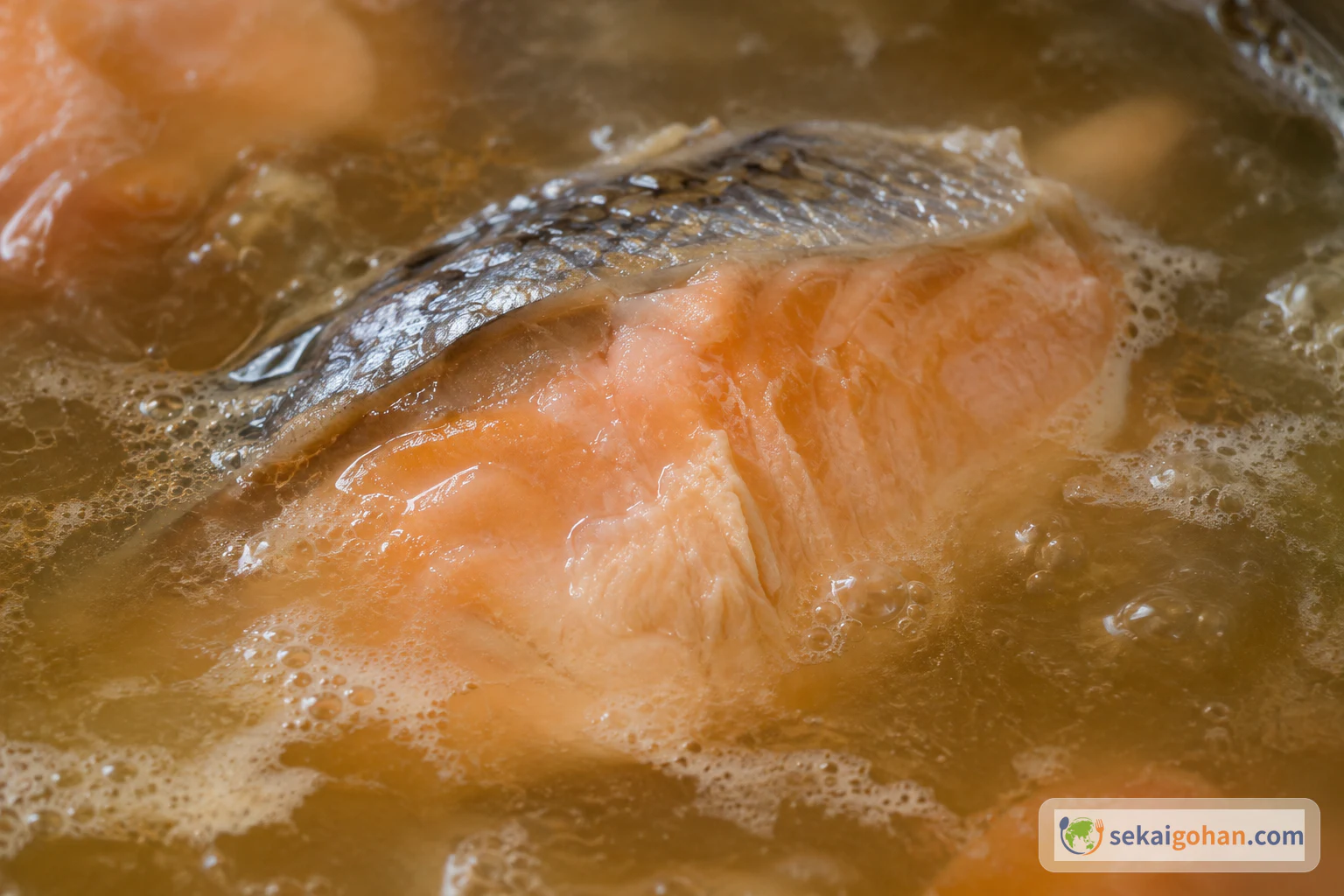
Cooking the salmon for about 10 minutes
The salmon cooks in the gently simmering broth

Add the halved salted salmon to the pot. Let it cook in the soup for about 10 minutes. Check that it is cooked through before you move on; if it is not, keep cooking.

STEP55 / 7

Prepare and cook the potatoes

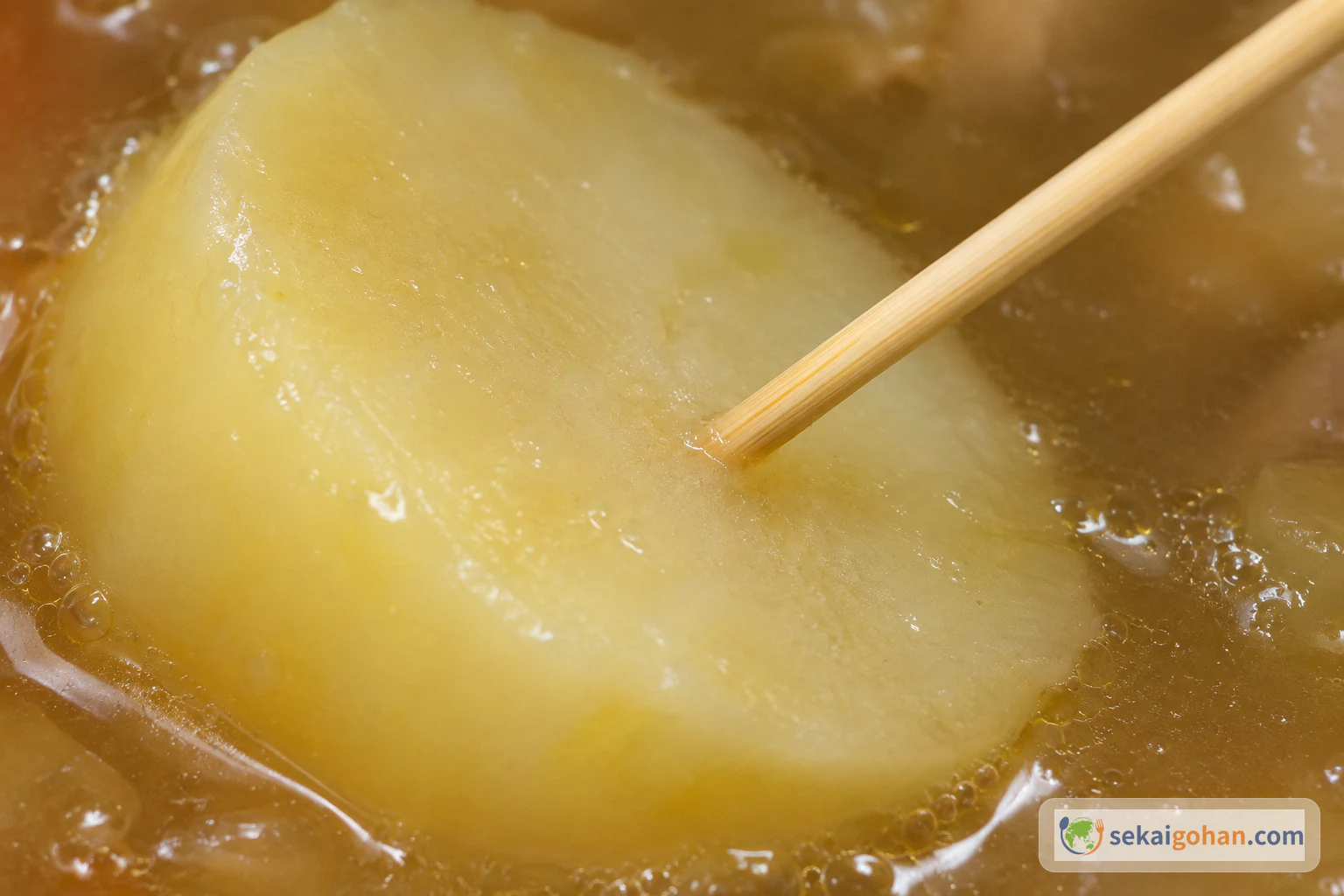
Checking doneness with a bamboo skewer
The skewer should slide through the potato

Peel the 2 May Queen potatoes, removing all the peel, and cut each in half. You can do this before you start cooking. Add the potato halves to the pot, and skim off any foam that gathers on the surface as needed. Cook until a bamboo skewer slides through the potatoes and their corners have rounded off.

STEP66 / 7

Season and add the oil

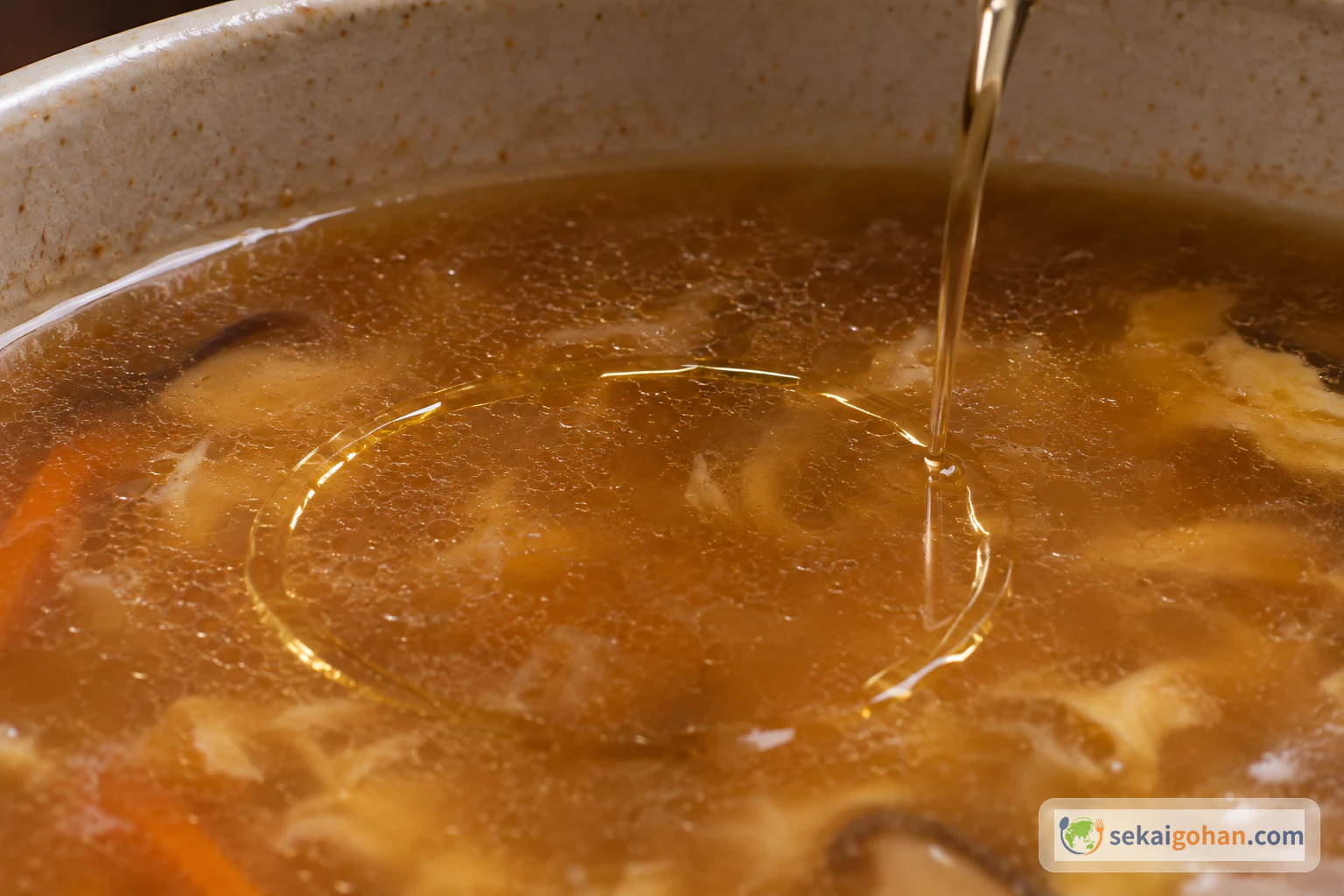
Adding a drizzle of salad oil
A single circle of oil over the surface

Taste the soup, then add salt to taste, a little at a time. Drizzle salad oil once around the pot. The soup should taste well seasoned, with a single circle of oil over the surface.

STEP77 / 7

Add the long green onion and serve

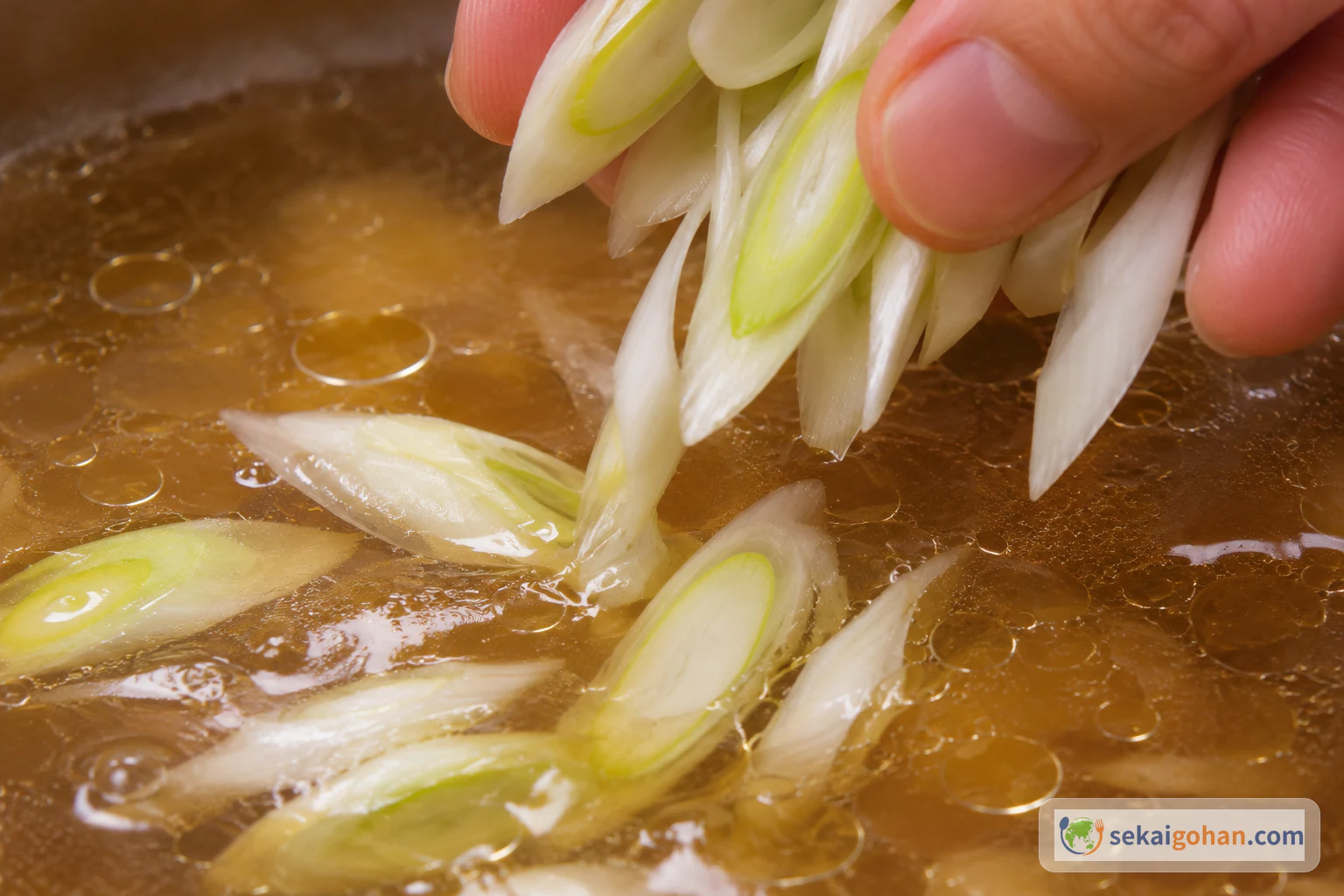
Adding long green onion to the pot
The onion goes into the pot after the oil

Slice the long green onion thinly on the diagonal, not into rings. Add it to the pot, since it goes into the soup and not on top of the bowls raw. Bring the soup back to a boil briefly, then ladle the broth and the ingredients into bowls and serve.

0 / 0
Ingredients

Ingredients

1 / 1

Ingredients

Ingredient Amount Role
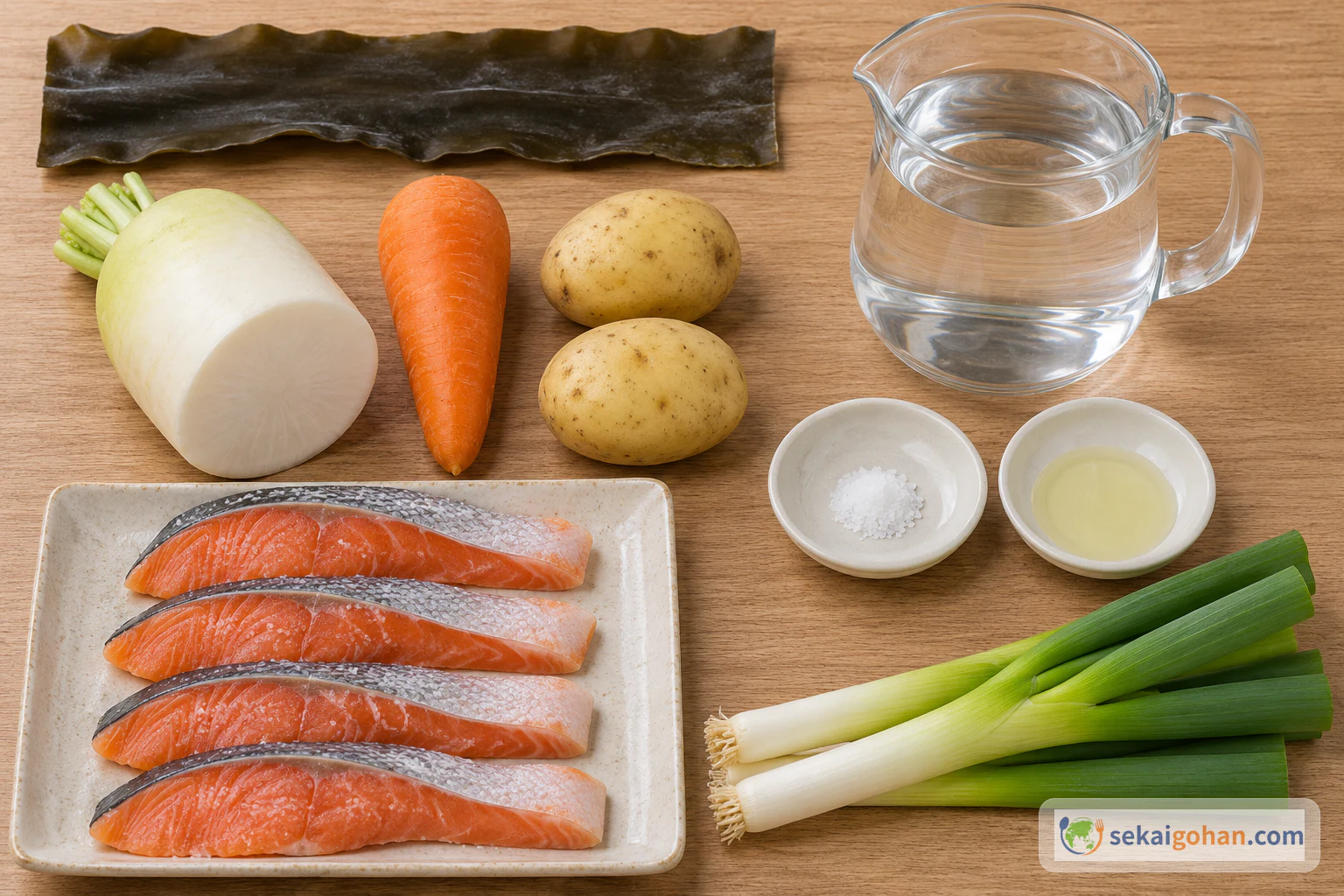
Kombu (kelp) 1 piece, about 8 inches (20 cm) Gives the broth its base; softened, chopped and returned to the pot
Daikon radish 1/2 Roll-cut (rangiri); cooked until translucent before the salmon goes in
Carrot 1 Roll-cut (rangiri); cooks alongside the daikon
May Queen potatoes (mēkuin) 2, about 7–8 cm long Peeled and halved; added after the salmon
Salted raw salmon fillets (aramaki) 4 fillets Each fillet cut in half; cooked in the soup
Water as needed For cooking the kombu and vegetables
Salt to taste Seasoning, added after tasting
Salad oil one drizzle around the pot Added once, after the salt
Long green onion (naganegi) as needed Thinly sliced on the diagonal; briefly boiled in the pot
0 / 0

Kombu softens in the water while chunks of daikon and carrot bob around it. Once the kombu gives, it comes out, gets a rough chop and goes back in; when the daikon turns translucent, halved fillets of salted salmon follow, and then peeled potato halves. Ohaw is an Ainu soup from Hokkaido, and in this pot each ingredient goes in at its own moment. The flavor comes from very little: kombu, the salt already in the salmon, salt to taste, a drizzle of salad oil and long green onion simmered briefly at the end. If you want to keep exploring, browse more dishes from Japan.

Ohaw in Ainu Cooking

Ohaw is a word for soup dishes, and those soups vary by region, so other pots called ohaw can look quite different from this one. In Tokachi, for example, everyday soups were historically made with fish, meat, bones, wild plants, salt and fat. This version is a home recipe built on kombu, root vegetables and salted salmon.

Pot What it contains How it relates to this recipe
This recipe (Shiraoi) Kombu, daikon, carrot, May Queen potatoes, salted raw salmon, salt, salad oil, long green onion The version cooked here
Salmon and mushroom miso soup Miso and mushrooms such as shimeji and maitake A different dish with its own recipe
Historical soups of Tokachi Everyday soups using fish, meat, bones, wild plants, salt and fat Regional history rather than a recipe for this pot

Ingredients (Serves 4)

Raw ingredients for this recipe laid out from above before cooking
Everything is raw at this stage; the salmon is cooked later in the pot

Equipment

  • A soup pot
  • Knife and cutting board
  • Peeler (or a knife for peeling)
  • Chopsticks or tongs for lifting out the kombu
  • A spoon for skimming foam
  • A bamboo skewer for checking doneness
  • Ladle and serving bowls

Choosing the Salmon and Vegetables for Ohaw

Salmon: Use store-bought salted raw salmon fillets. Cutting each of the 4 fillets in half gives 8 pieces, a good size for simmering in the soup.

Daikon and carrot: Cut them rangiri, the Japanese roll cut. Make a diagonal cut, roll the vegetable, and cut diagonally again, so each chunk comes out thick and irregular with several angled faces.

Potatoes: Choose two May Queen potatoes about 7–8 cm long, then peel them and cut them in half.

Handling raw salmon

Keep the salmon refrigerated until you cut it and add it to the pot. After handling raw fish, wash your hands, knife and cutting board before touching ingredients that will not be cooked further. Cook the salmon in the soup until it is cooked through, and check each piece before you move on.

Method: Kombu and Roots First, Then Salmon, Then Potatoes

Order in the pot

Kombu, water, daikon, carrot → boil until the kombu is soft → chop and return the kombu → cook until the daikon is translucent → salmon for about 10 minutes → potatoes until tender → skim, salt, oil → long green onion, brief boil → serve. You can peel and halve the potatoes before you start cooking.

Troubleshooting Ohaw

Most of this soup comes down to watching the pot and waiting for the right signs: soft kombu, translucent daikon, potatoes a skewer slides through.

What you see What to do
The kombu is still stiff Keep boiling until it is soft before lifting it out to chop
The daikon is still white and opaque Keep cooking until it turns translucent, then add the salmon
You are not sure the salmon is cooked through Keep it cooking in the soup and check again
The skewer meets resistance in the potato Keep cooking until it slides through and the corners round off
Foam on the surface Skim it off as needed
The soup tastes flat Add salt a little at a time, tasting each time
The onion still looks raw Bring the pot back to a brief boil
The daikon and carrot ended up as rounds or slices The soup still works; next time use the roll cut for thick, irregular chunks

Frequently Asked Questions

Is salted salmon already cooked?

No. Store-bought salted salmon is raw fish. Here it cooks in the soup, so treat it as raw until it is cooked through.

Is 10 minutes enough to cook the salmon?

After about 10 minutes, check that the fish is cooked through, and keep cooking if it is not. Heat food until the center reaches 167°F (75°C) for at least 1 minute.

How much water should I use?

Use enough water to cook the kombu and vegetables.

Why are the potatoes peeled at step 5, after the salmon?

You can peel and halve them before you start cooking. What matters is that they go into the pot after the salmon has cooked for about 10 minutes.

How should I store leftovers?

Refrigerate leftovers rather than leaving them out, and keep raw fish and cooked food separate while you work.
Sources

  • Hokkaido Museum (materials provided by Cafe Rimse, Shiraoi Ainu Museum), "おうちミュージアム:カフェ リムセのオハウ" (Ouchi Museum: Cafe Rimse's Ohaw), recipe sheet (PDF). Ingredients and amounts for 4 people, halving the salmon fillets, peeling and halving the potatoes, the order of cooking, about 10 minutes for the salmon, the skewer check, salt, oil and the option of boiling the long green onion in the pot. https://www.hm.pref.hokkaido.lg.jp/wp-content/uploads/2025/02/9f144191091539ee5e83fe84b1abb899.pdf
  • Hokkaido Museum, "おうちミュージアム:カフェ リムセのオハウ" (Ouchi Museum: Cafe Rimse's Ohaw). The home recipe example based on photographs and text provided by Cafe Rimse in April 2015, the page's publication on 13 March 2020, and the closure of the former Shiraoi Ainu Museum on 31 March 2018. https://www.hm.pref.hokkaido.lg.jp/ouchi-museum/detail-10/
  • Obihiro Centennial City Museum Riwka, "十勝の地域文化資料" (Regional Culture of Tokachi). Historical description of everyday soups using fish, meat, bones, wild plants, salt and fat, used here as regional comparison only. https://www.museum-obihiro.jp/riwka/culture/04
  • Ministry of Agriculture, Forestry and Fisheries, Hokkaido Regional Agricultural Administration Office, "アイヌ伝統料理" (Traditional Ainu Dishes). Ohaw as a word for soup dishes, regional differences, and a separate salmon and mushroom miso soup made with the cooperation of Tahara Ryoko of the Sapporo Ainu Association. https://www.maff.go.jp/hokkaido/jigyou_shien/syokubunka/ainu-dentouryouri.html
  • Ministry of Health, Labour and Welfare, "家庭でできる食中毒予防" (Preventing Food Poisoning at Home). General food-safety guidance: heating the center to 75°C for at least 1 minute, refrigeration, handwashing and preventing cross-contamination. It does not verify this recipe's salmon cooking time. https://www.mhlw.go.jp/www1/houdou/0903/h0331-1.html