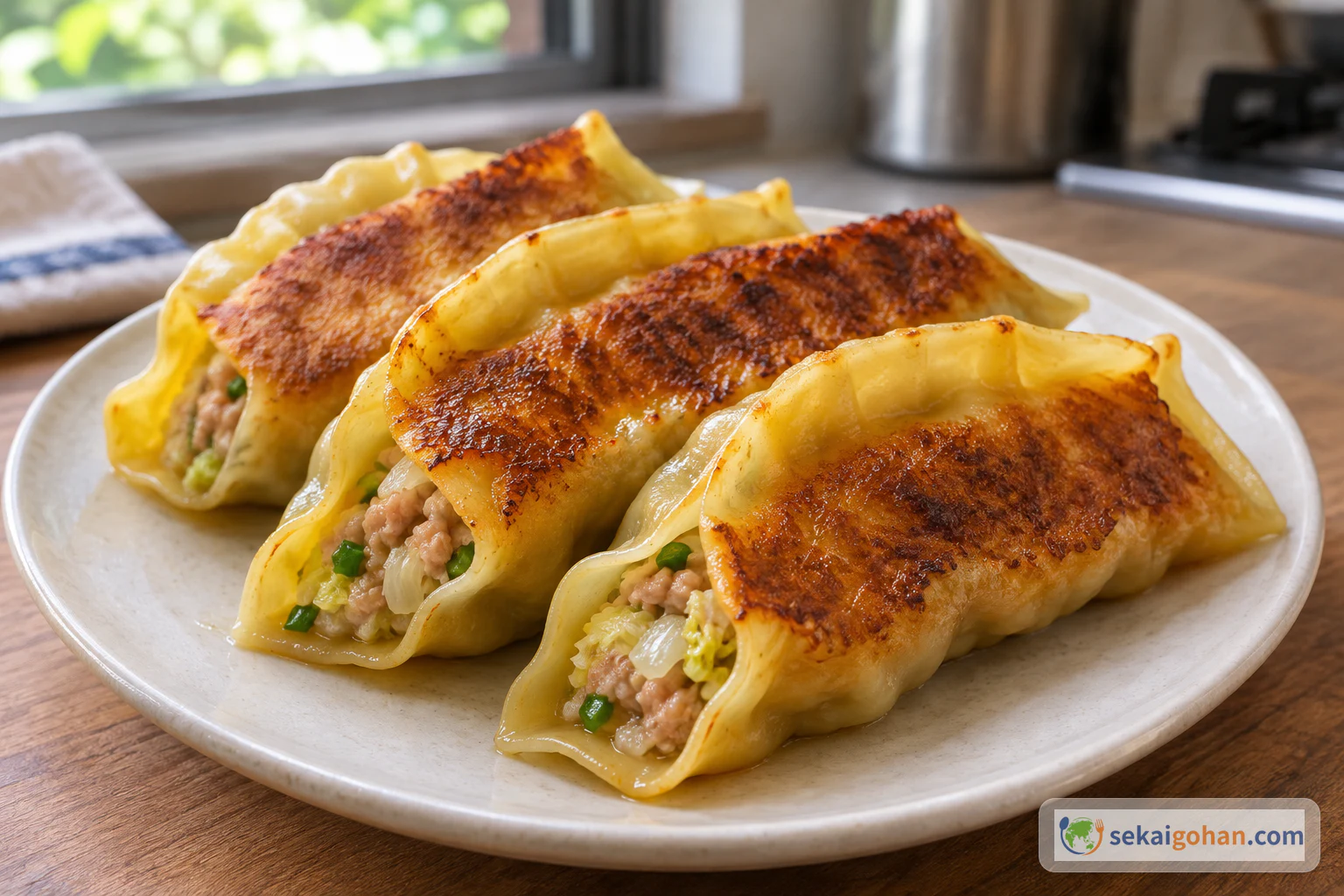
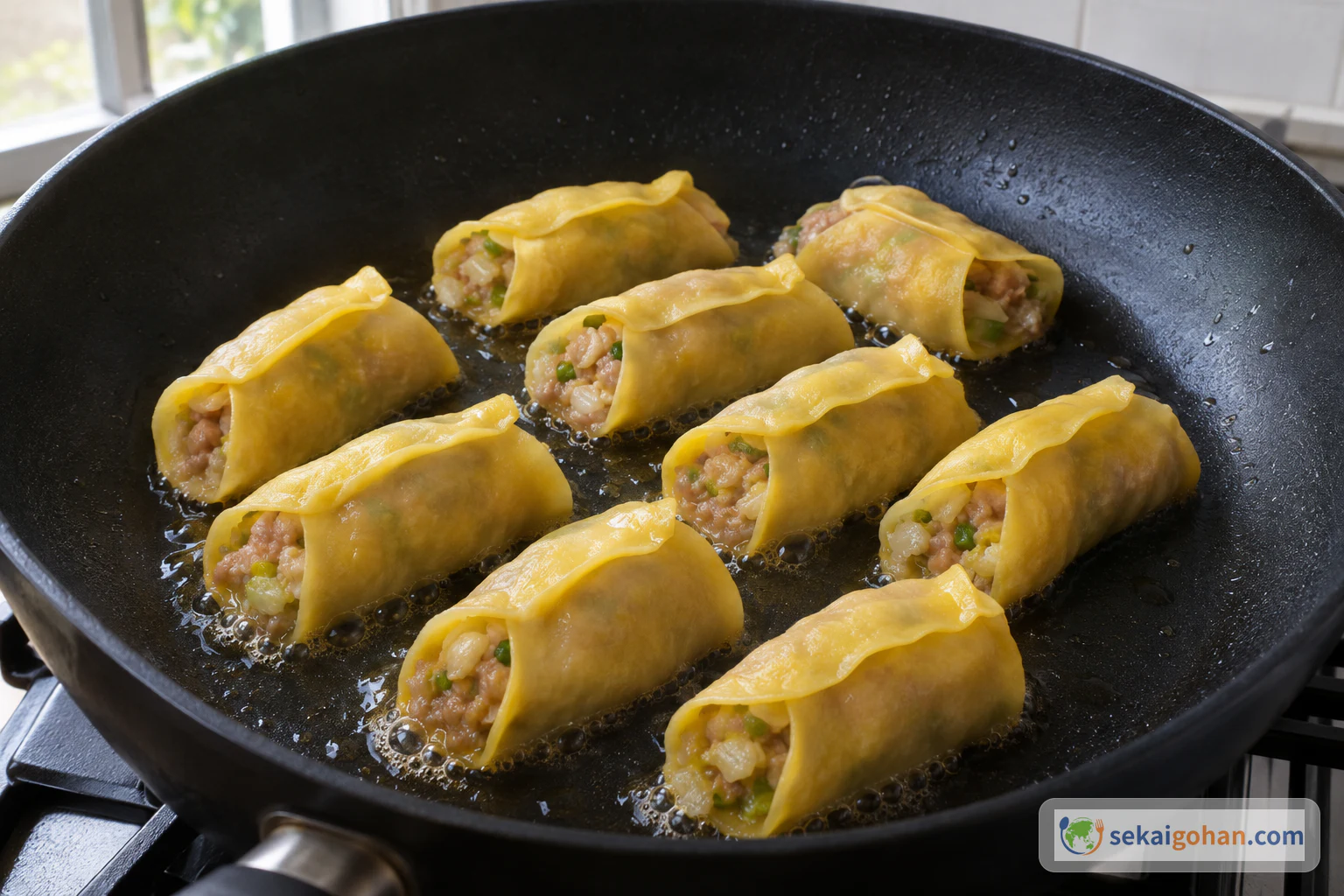
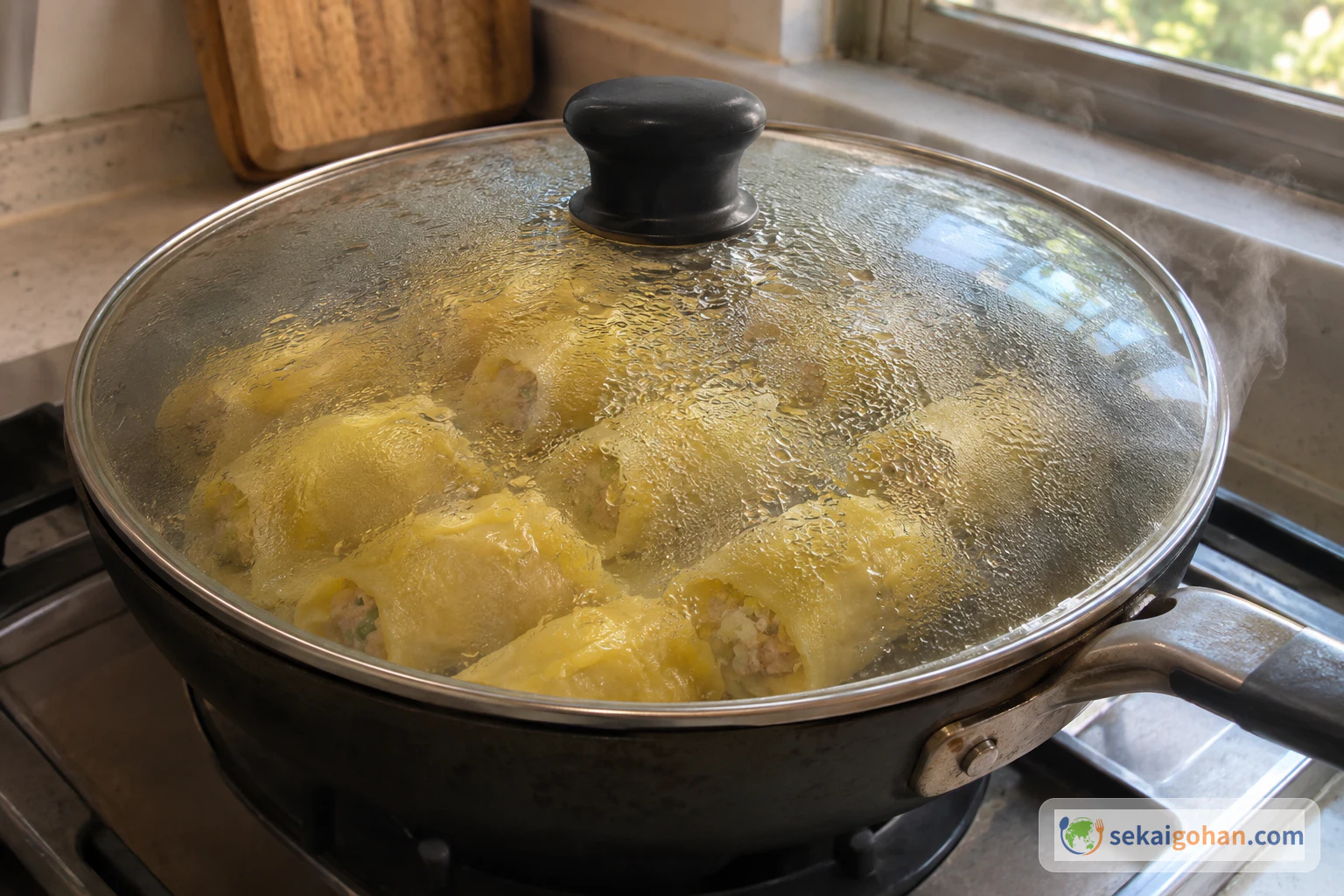
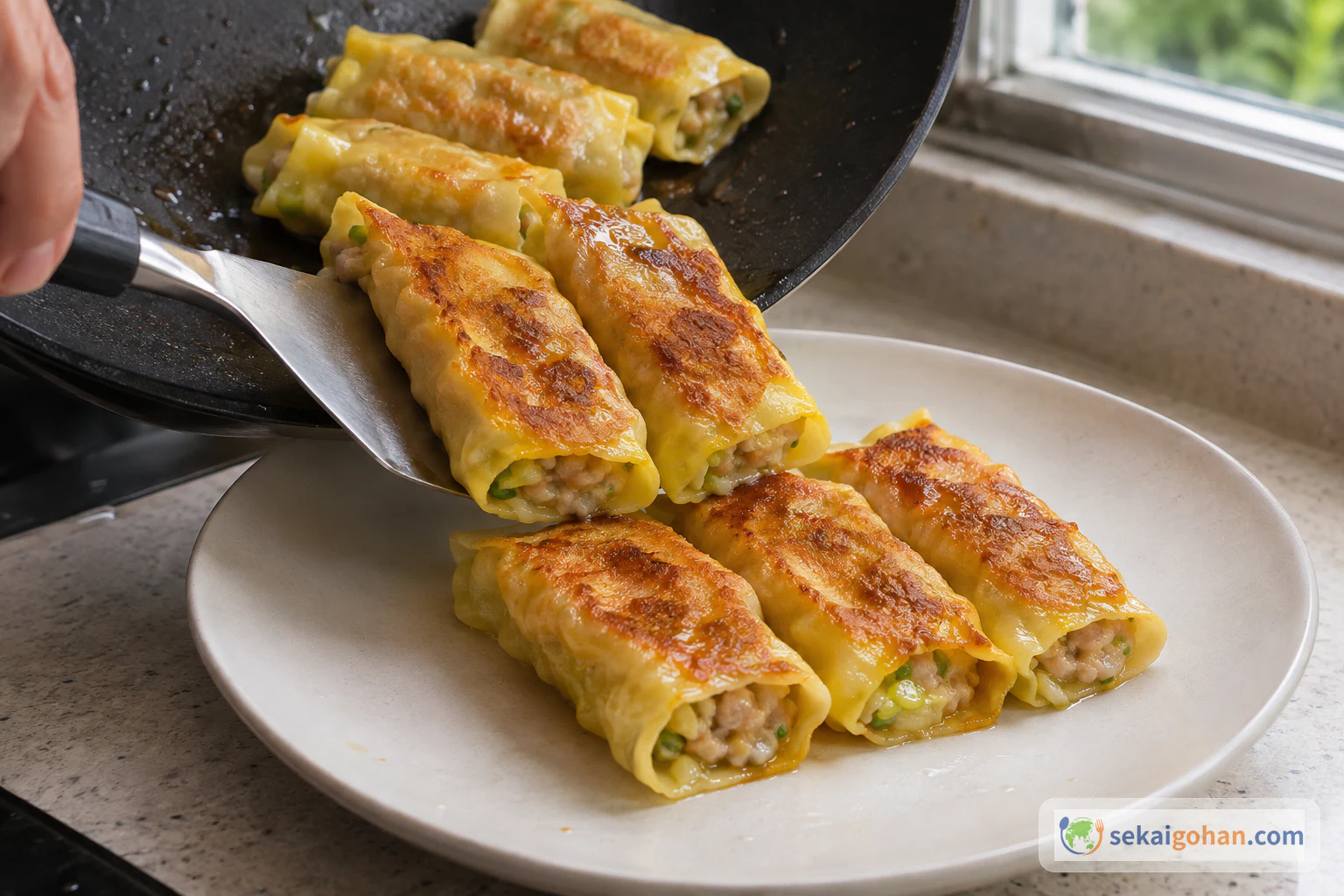
The dumplings start to sizzle in the oil, and that's your cue. In goes the water, on goes the lid, and the pan switches from frying to steaming. When the lid comes off, the last of the moisture cooks away and the bases turn crisp again. Potstickers, or guotie (鍋貼), are pork, napa cabbage and scallion dumplings with a crisp, browned underside and a soft top. A batch makes about 6 dozen, enough to serve 6.
About Guotie
"Potsticker" is the English name and guotie is the Chinese one. The dish is associated with Northern China and is defined by how it's cooked. Guotie are pan-fried and then steamed with water, while shui jiao are boiled.
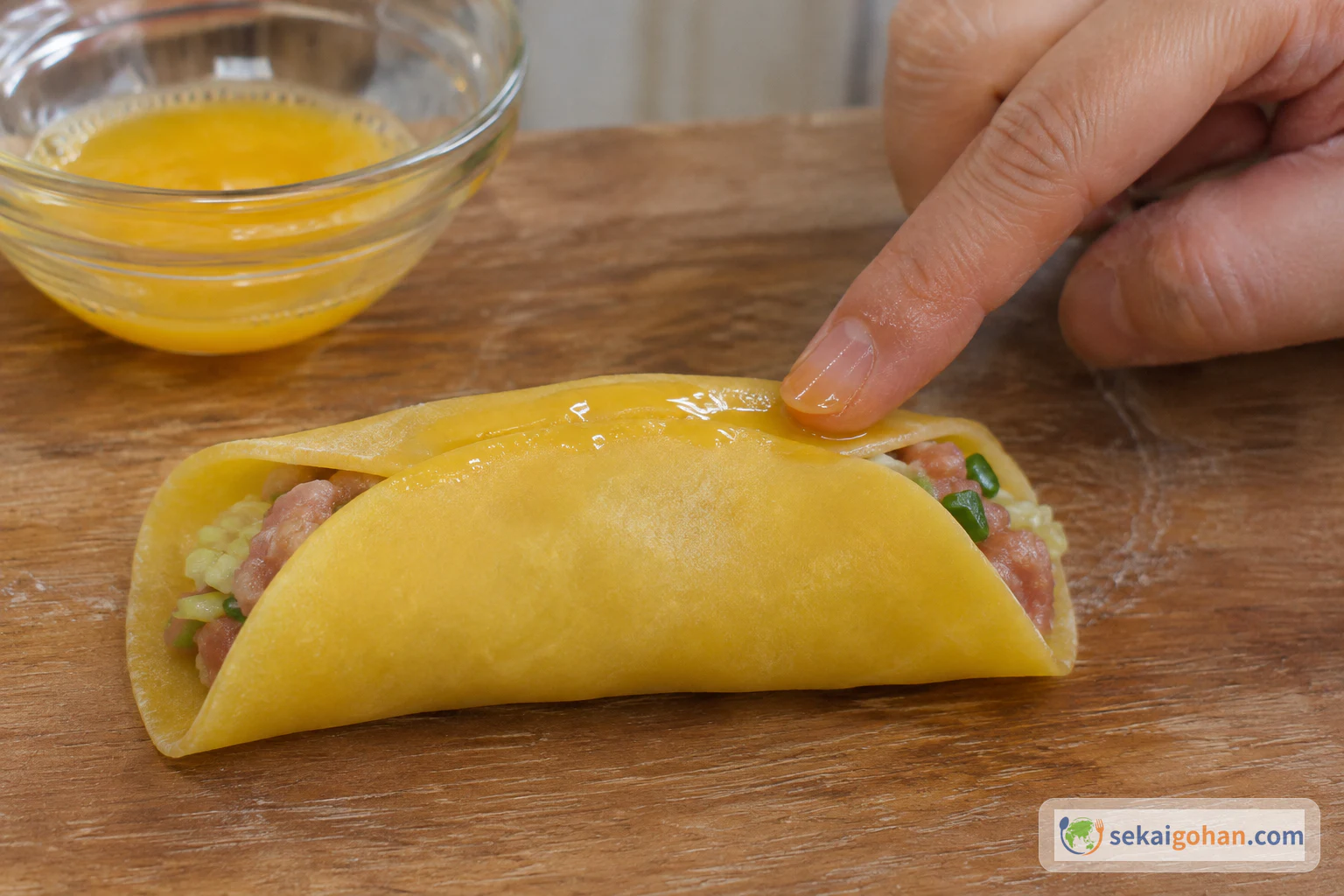
Shapes vary from cook to cook. Here each dumpling is sealed along the top edge and left open at both short ends, so there's no pleating to practice. For more dishes from the same country, see the China page.
Ingredients: Pork, Napa Cabbage and Scallion
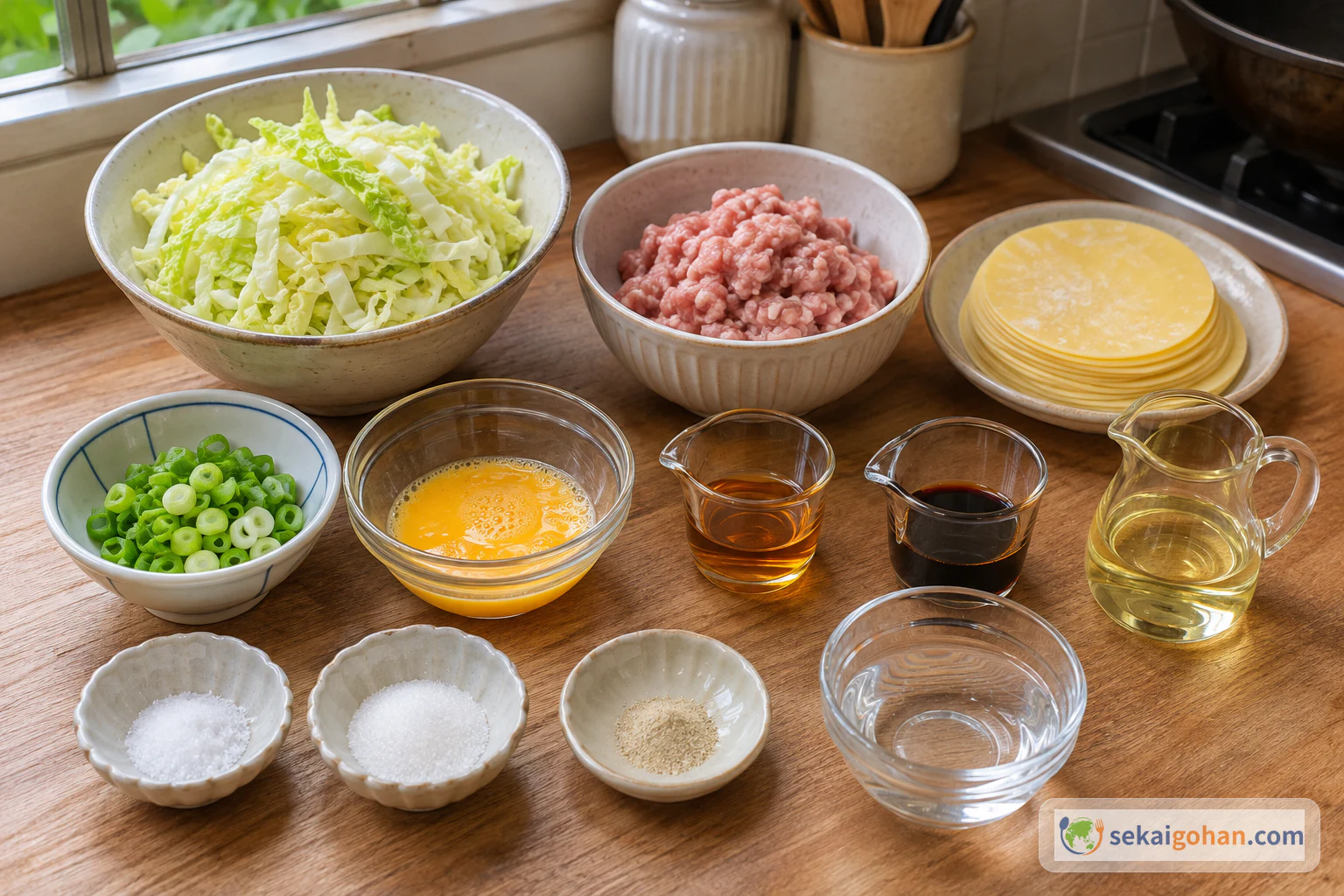
Serves 6. Makes about 6 dozen potstickers.
Equipment
- Food processor
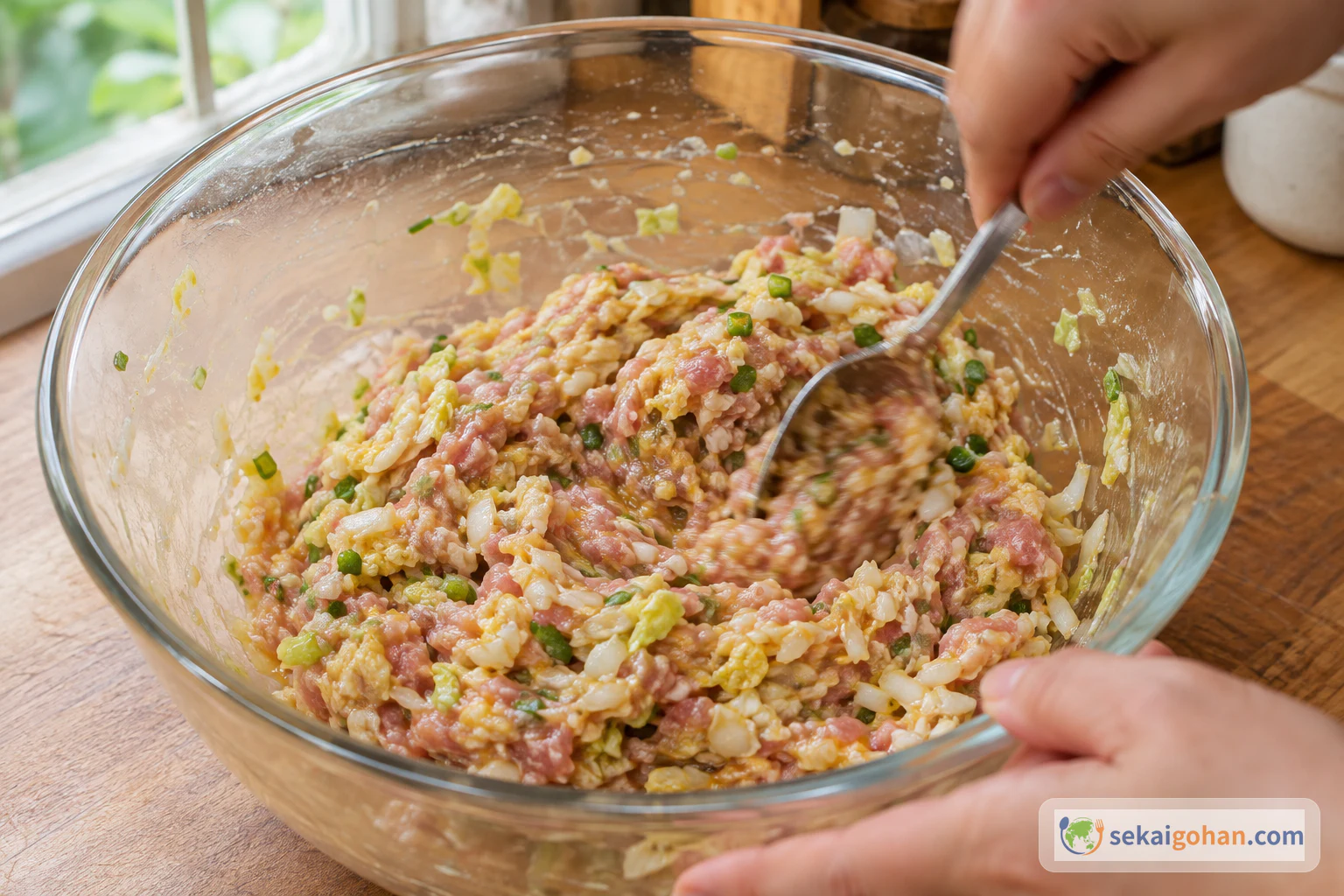
- Large mixing bowl and spoon
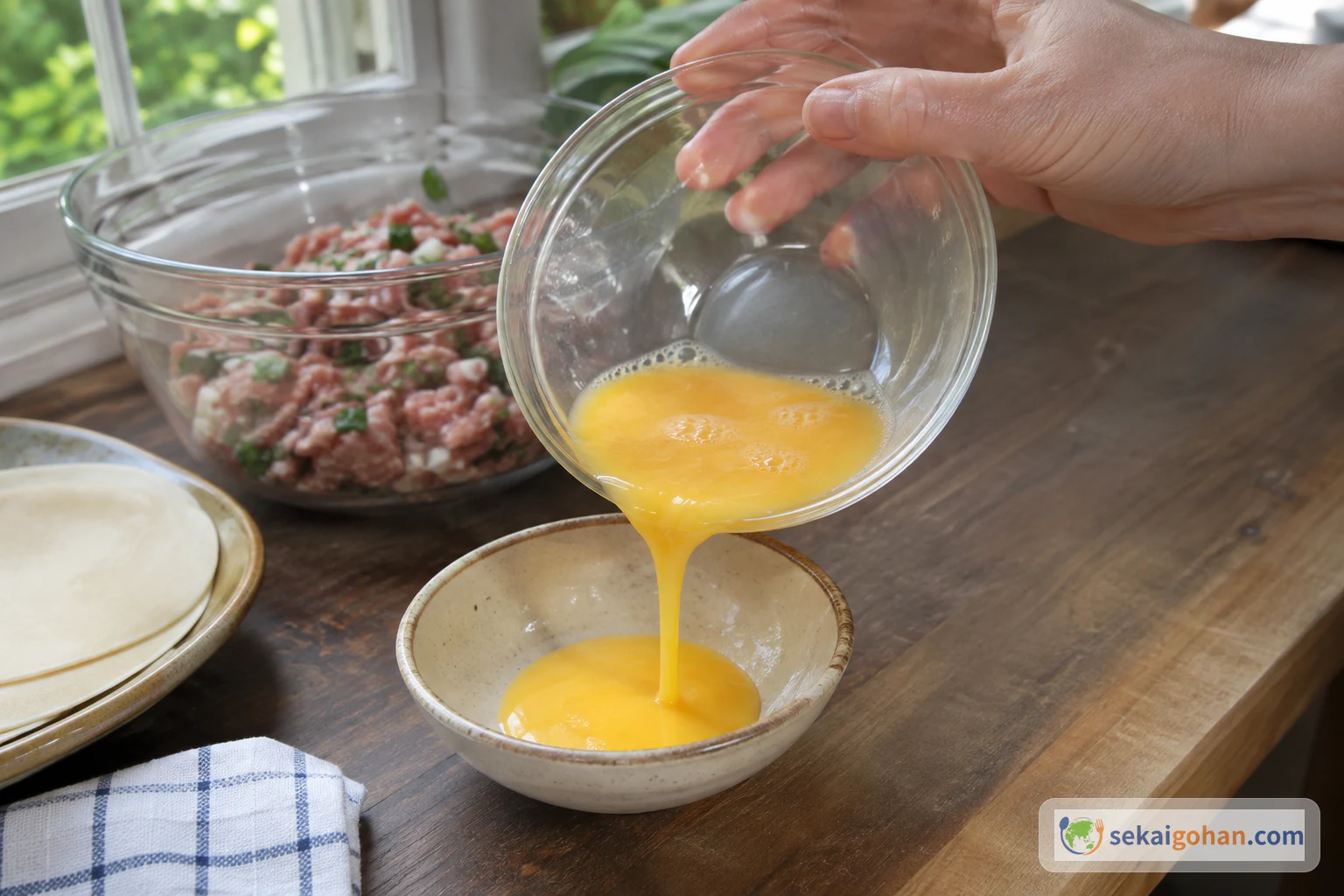
- Small dish for the reserved egg
- Skillet with a fitted lid
- Food thermometer with a probe
- Spatula that has not touched raw meat, for the cooked potstickers
- Plate for serving
Choosing Wrappers and Filling for Potstickers
Look for round dumpling skins made with egg, and pick the yellow ones over the white. White wrappers will give a different result, at least in color.
For the filling, use the scallion, or 1/2 cup leek in its place if you prefer. Choose whichever soy sauce you like, but keep in mind that different types don't taste the same. The card lists vegetable oil without an amount, and in the pan you'll use 2 tablespoons of oil and 1/4 cup of water.
This recipe contains egg, wheat (wrappers), soy (soy sauce), sesame (sesame oil) and pork. Check the allergen labels on packaged products. Keep the utensils that touch raw pork separate from the ones you use for cooked food.
Method: Fold, Fry, Steam, Measure, Crisp
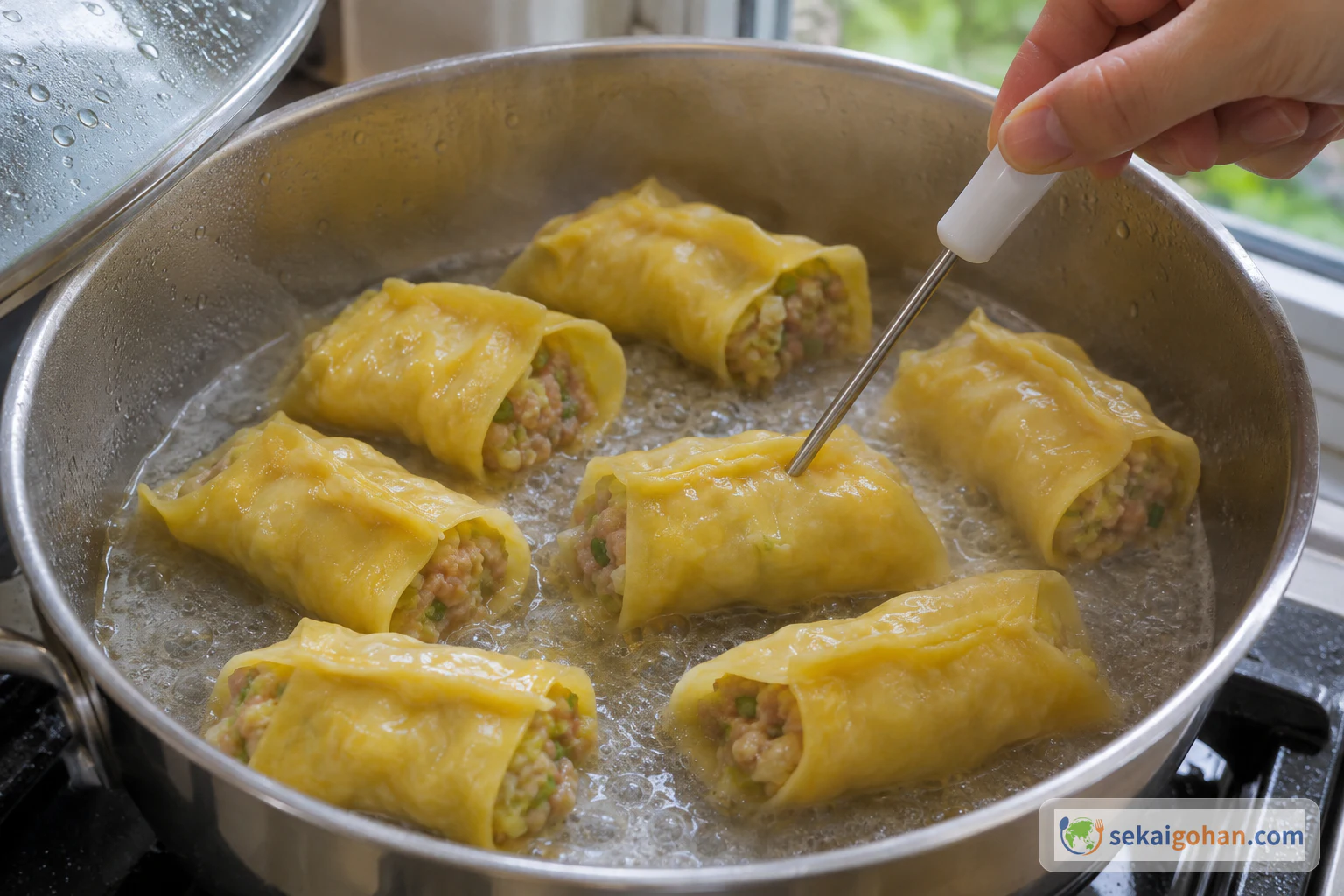
Serve only after the center of the pork has reached 167°F (75°C) for at least 1 minute. Step 6 is only for when the measurement falls short.
Potsticker Problems and Fixes
Pathogens can sit in the center of minced meat, and fresh meat carries the risk too. Cook the filling until the center reaches 167°F (75°C) for at least 1 minute. Cooking time, browning and steam don't tell you the filling is done. Only a thermometer reading at the center does.
| What you see | What to do |
|---|---|
| Water is still in the pan | Leave it. Keep the lid on and let it evaporate. |
| The pan is drying out or starting to burn | Add a little water. |
| The center has not reached 167°F (75°C) for at least 1 minute | Add a little water, replace the lid, keep heating and measure again (step 6). Don't plate yet. |
| The base isn't crisp | Once the temperature check is done, cook with the lid off until the remaining moisture has evaporated. |
| The bases look nicely browned, but you haven't measured | Color doesn't confirm the temperature. Measure the center before plating. |
| Filling shows at the short ends | That's how it should look. The top edge is sealed and both ends stay open. |
Serving Potstickers
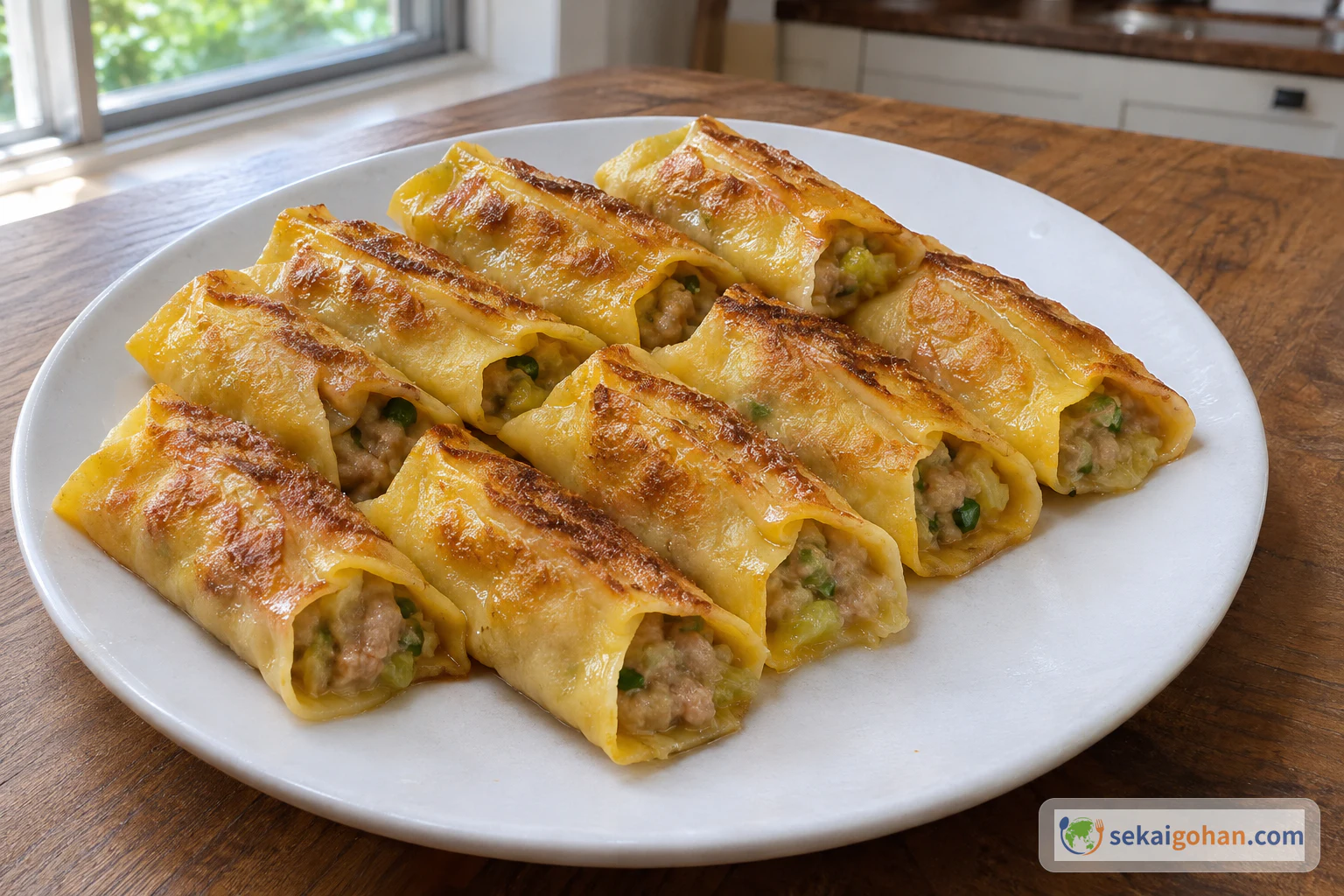
Bring the plate to the table with the browned bases facing up, so the crisp side is the first thing anyone sees. The open ends show off the pork, napa cabbage and scallion inside. The filling is seasoned enough to eat without a dipping sauce.
Frequently Asked Questions
What is the difference between potstickers and boiled dumplings?
Shui jiao are boiled. Guotie are pan-fried and then steamed with water, which gives them a crisp underside and a soft top.
How do I close the wrapper?
Fold a yellow round egg skin in half over the filling and seal the top edge with the reserved egg. Leave both short ends open.
How long do they take to cook?
Plan on 35 minutes in total: 25 minutes of prep and 10 minutes of cooking. The times are only a guide to doneness. The center of the pork should reach 167°F (75°C) for at least 1 minute.
There is still water in the pan. Should I do anything?
Keep the lid on and let it evaporate. Add a little water only if the pan is drying out or burning, or if the center hasn't reached temperature yet and needs more steaming.