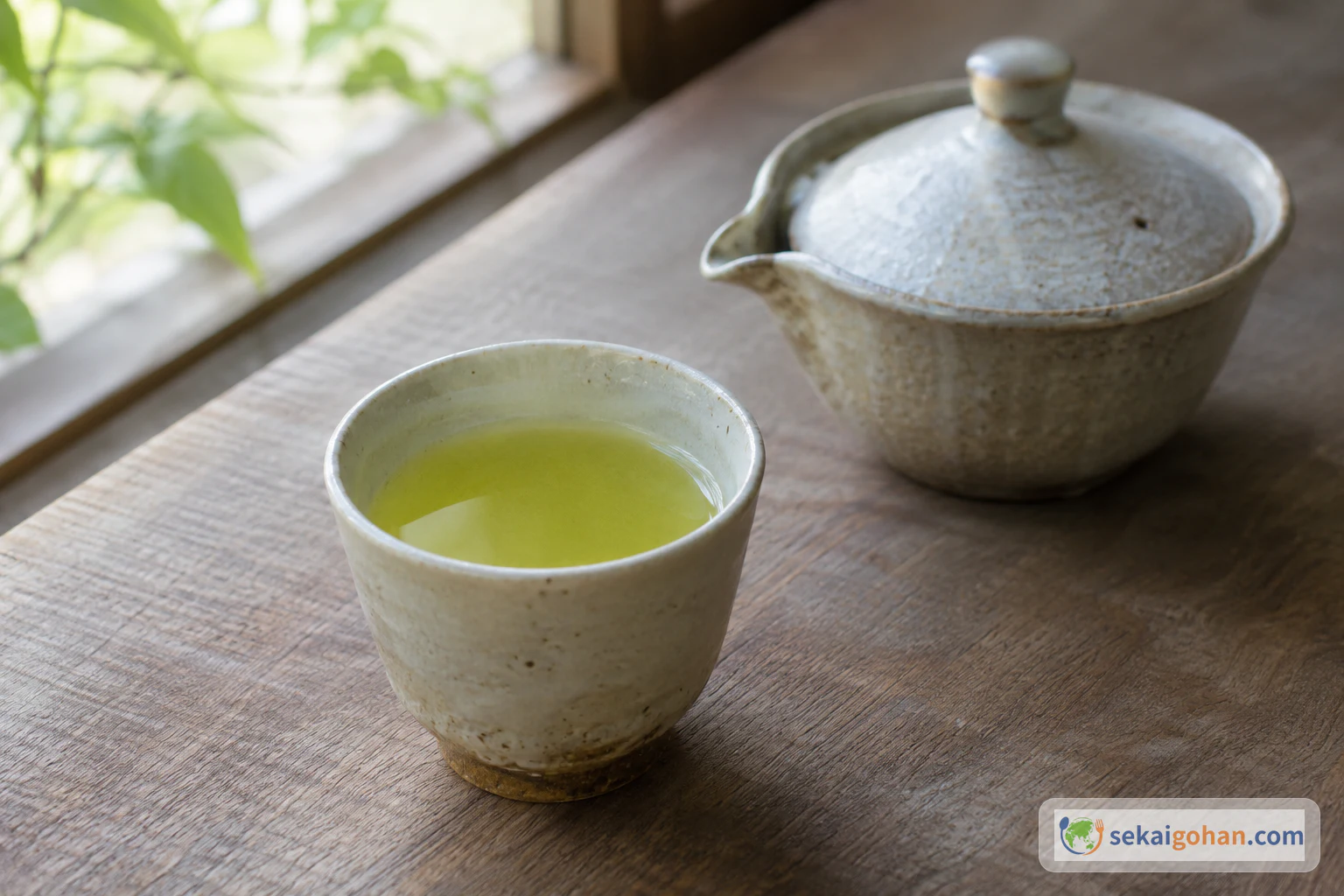
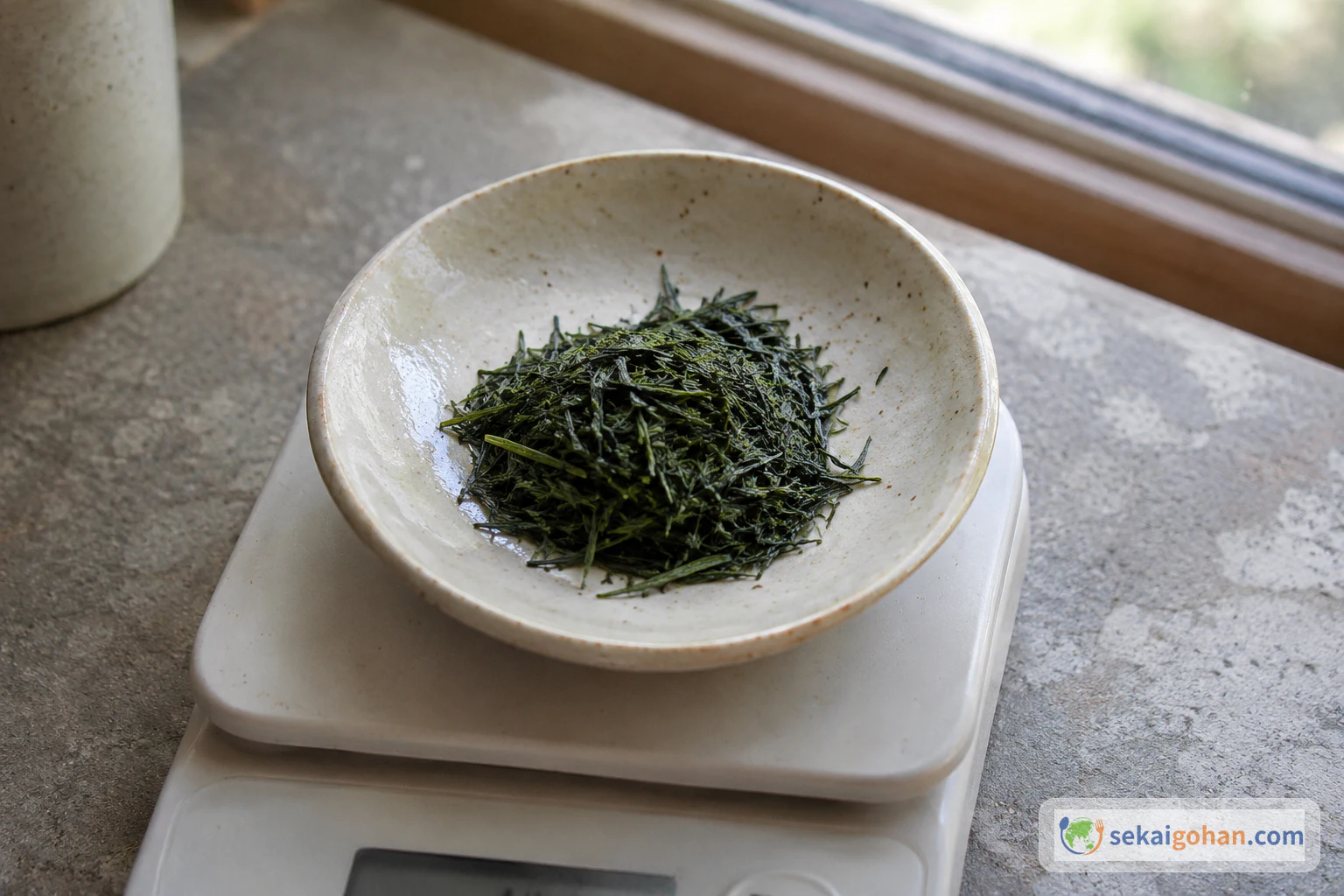
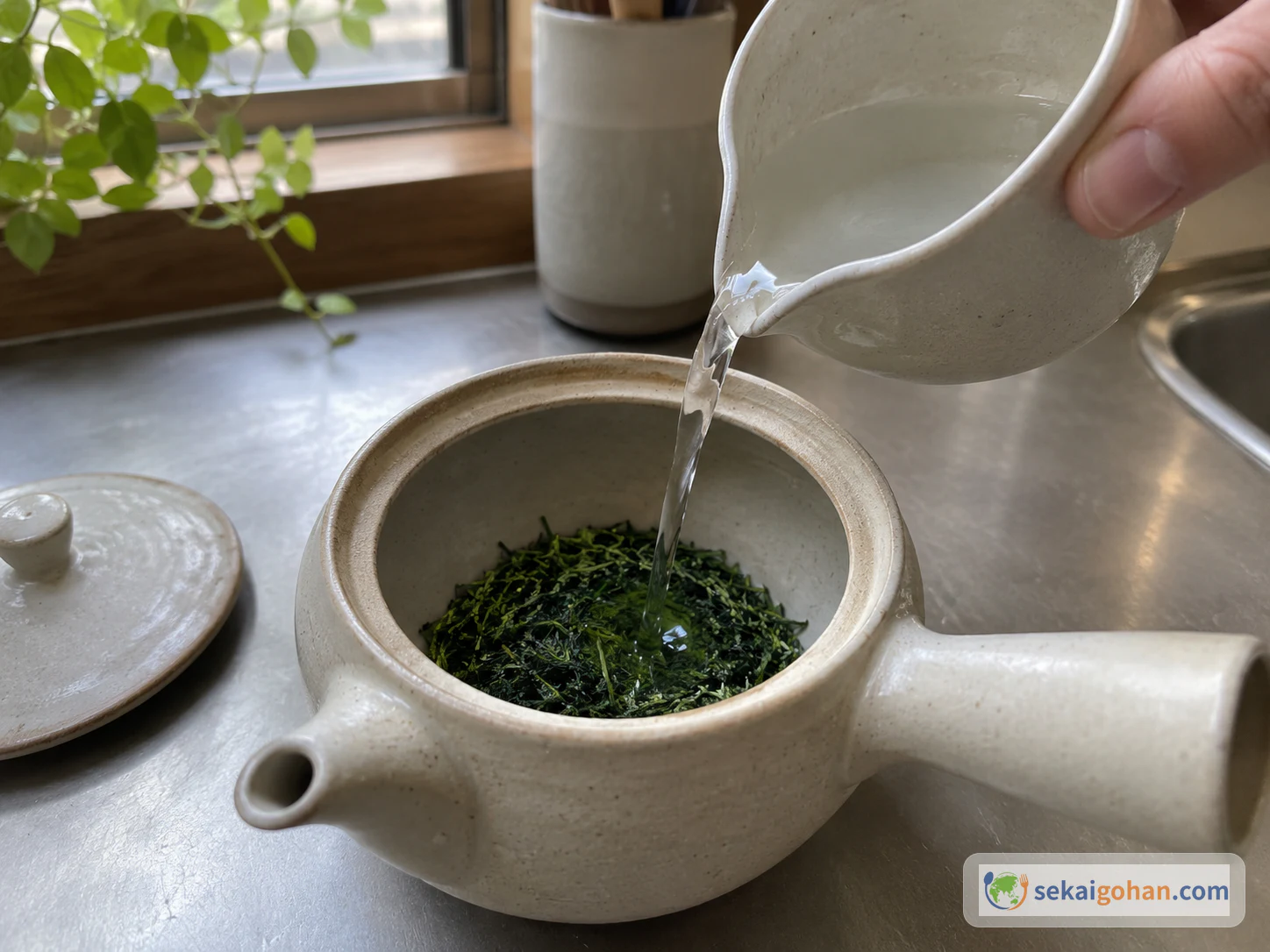
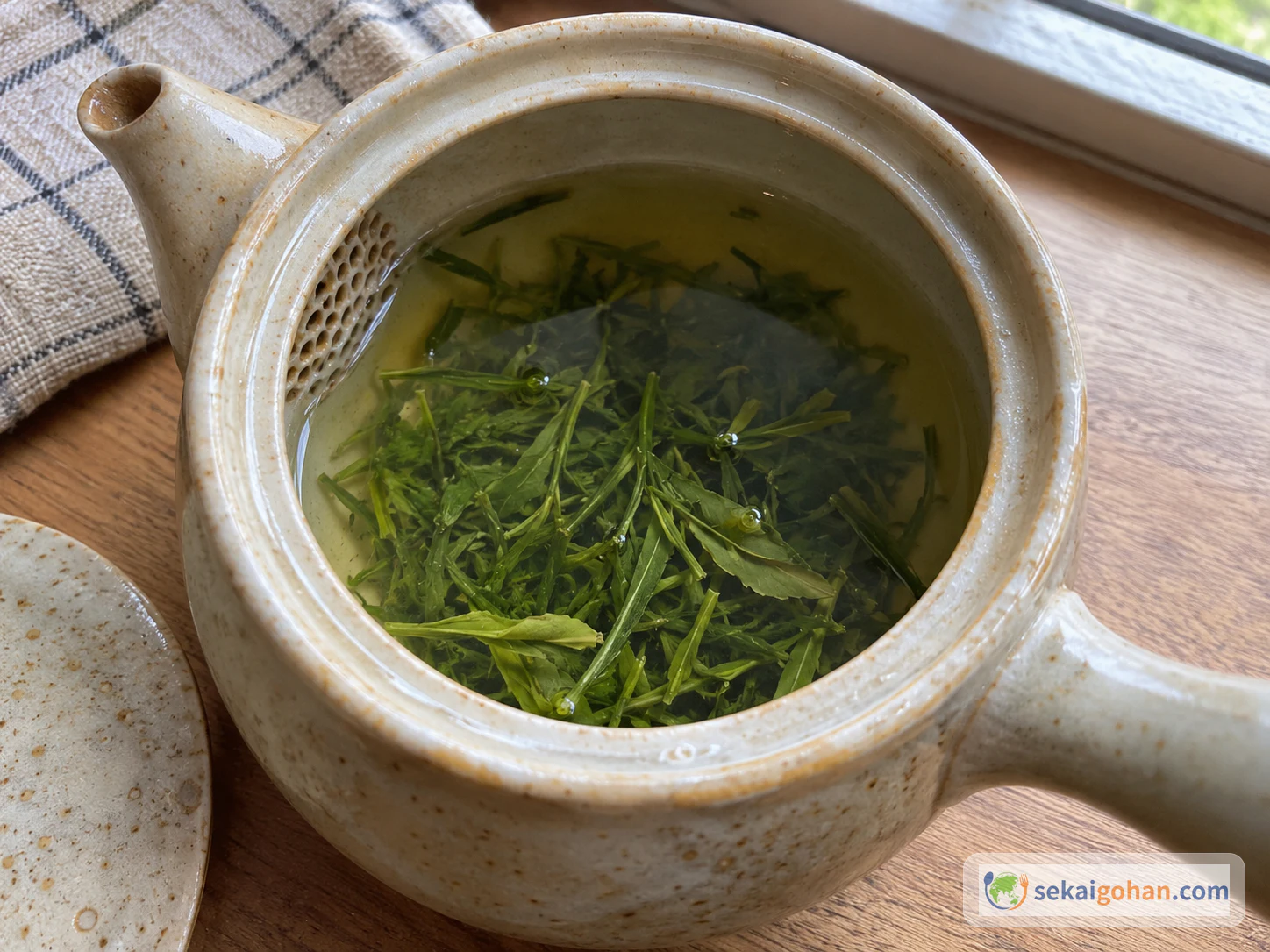
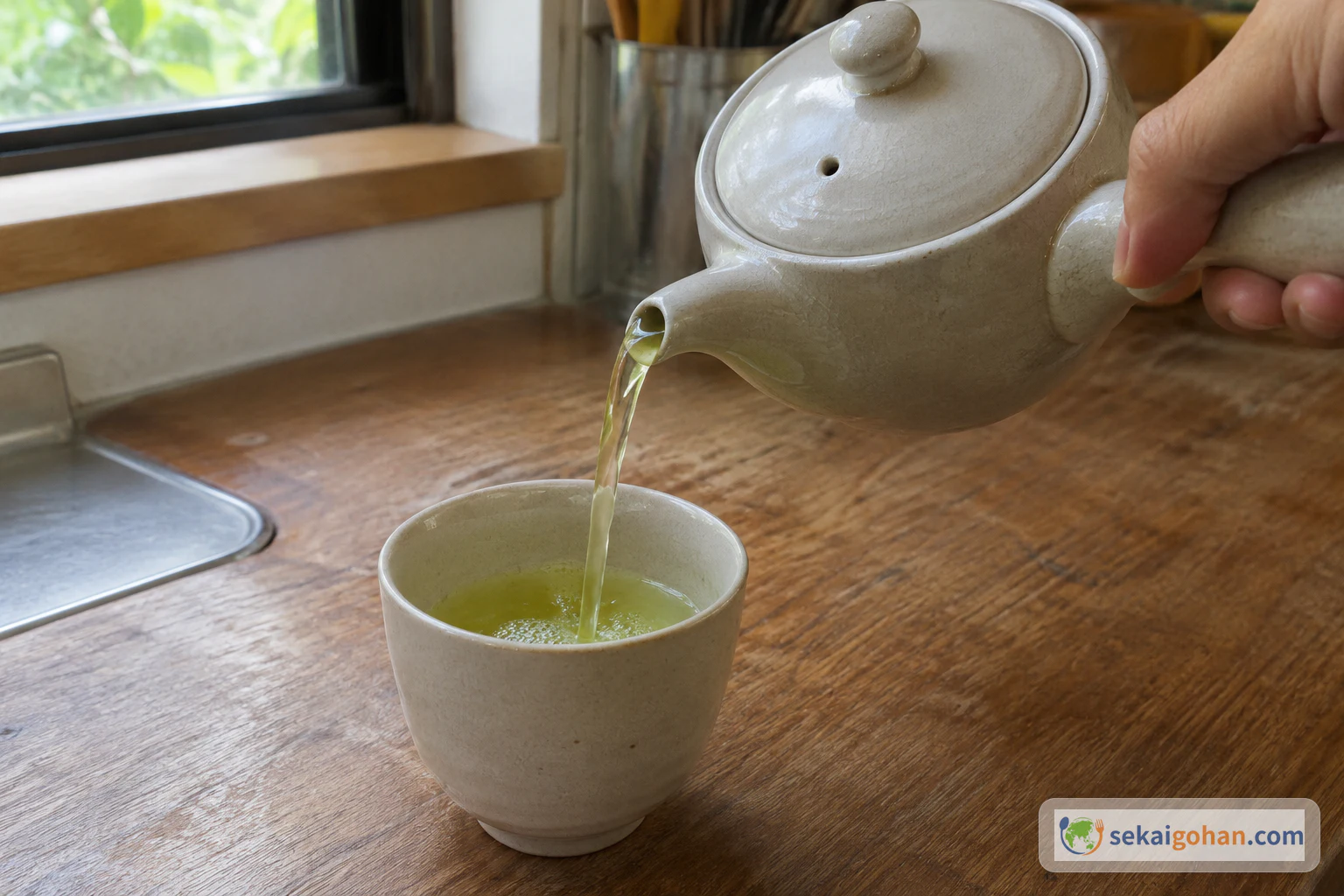
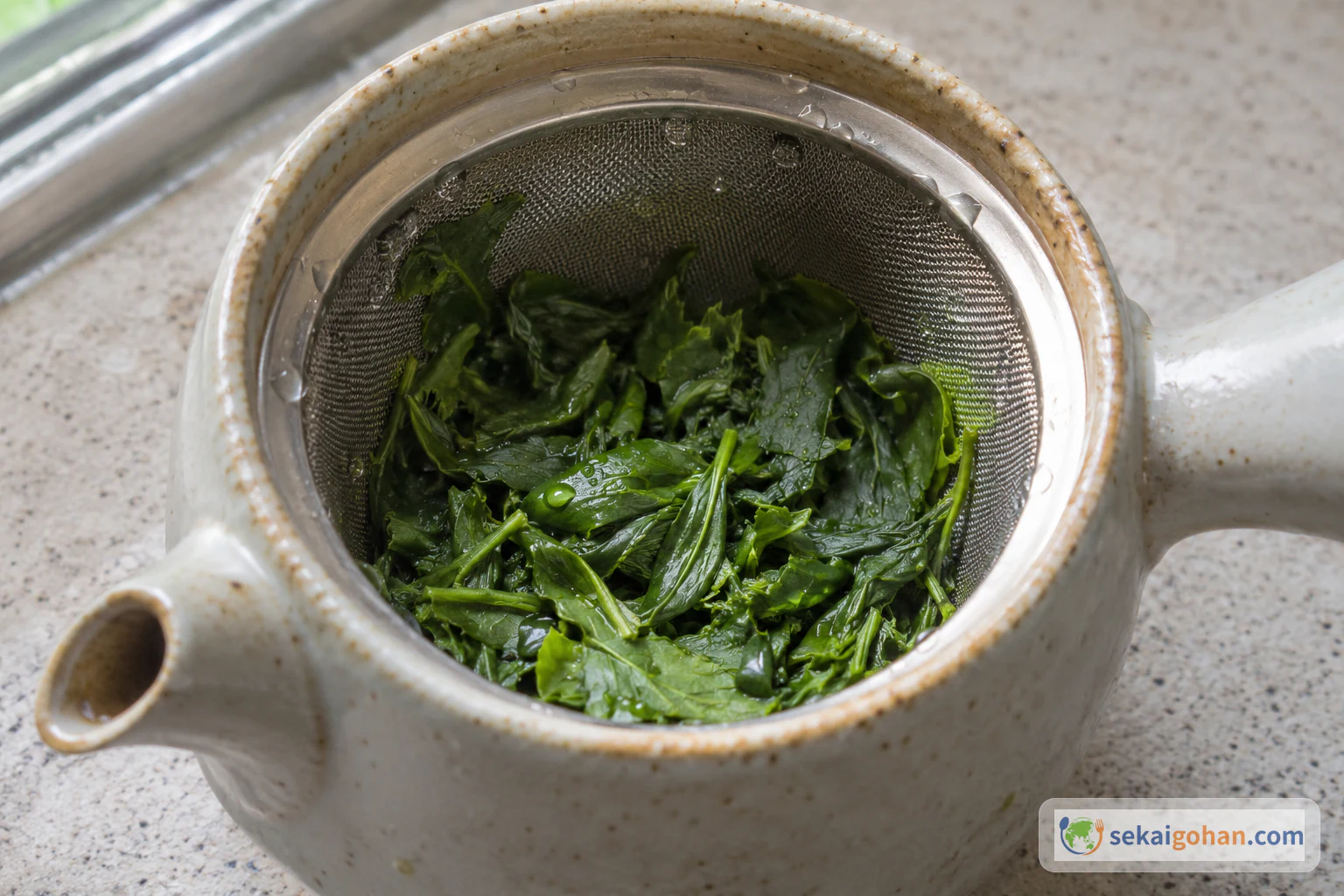
A small dish of dark green leaves goes on the scale, and the kettle that has just boiled is left to cool. Gyokuro (玉露, gyokuro) is a Japanese green tea made from leaves grown under shade, and it is brewed in an unusual way: a generous measure of leaf, very little water, and water well below the boil at 140°F (60°C). The reward is a mellow umami with a gentle sweetness. Use 10g of leaves and ¼ cup (80 ml) of water, and pour the tea off 90 seconds after you begin pouring.
Gyokuro, Japan's Shade-Grown Tea
Unlike matcha, which is a powder, or genmaicha, which mixes green tea with roasted rice, gyokuro is brewed from whole leaves and water alone. Brewing it is a relaxing part of the day, and it fits right in at your own table with no special ceremony. For more dishes and drinks from the same country, see Japan.
Shade, Steaming and Uji
Gyokuro is defined by the shade it grows under. The new shoots are covered for 20 days or more, then plucked, steamed and dried while rolled. Shading takes extra work, and that is what makes gyokuro a premium Japanese tea.
The Uji processing method dates to 1738, and together with shade cultivation it led to the formation of gyokuro in Uji. Uji tea today means green tea made from leaves grown in Kyoto, Nara, Shiga and Mie and finished by businesses in Kyoto Prefecture using Uji methods. So a gyokuro labeled Uji can include leaves grown outside Kyoto.
Yame Dento Hon Gyokuro
In Fukuoka Prefecture, Yame Dento Hon Gyokuro (八女伝統本玉露) is a registered Geographical Indication. It is covered with rice straw, which gives it a distinctive aroma, and the leaves are hand-picked using methods tied to the area and handed down there. These features belong to Yame Dento Hon Gyokuro specifically, and they show how much gyokuro varies from region to region.
Ingredients: Gyokuro Leaves and Water Only
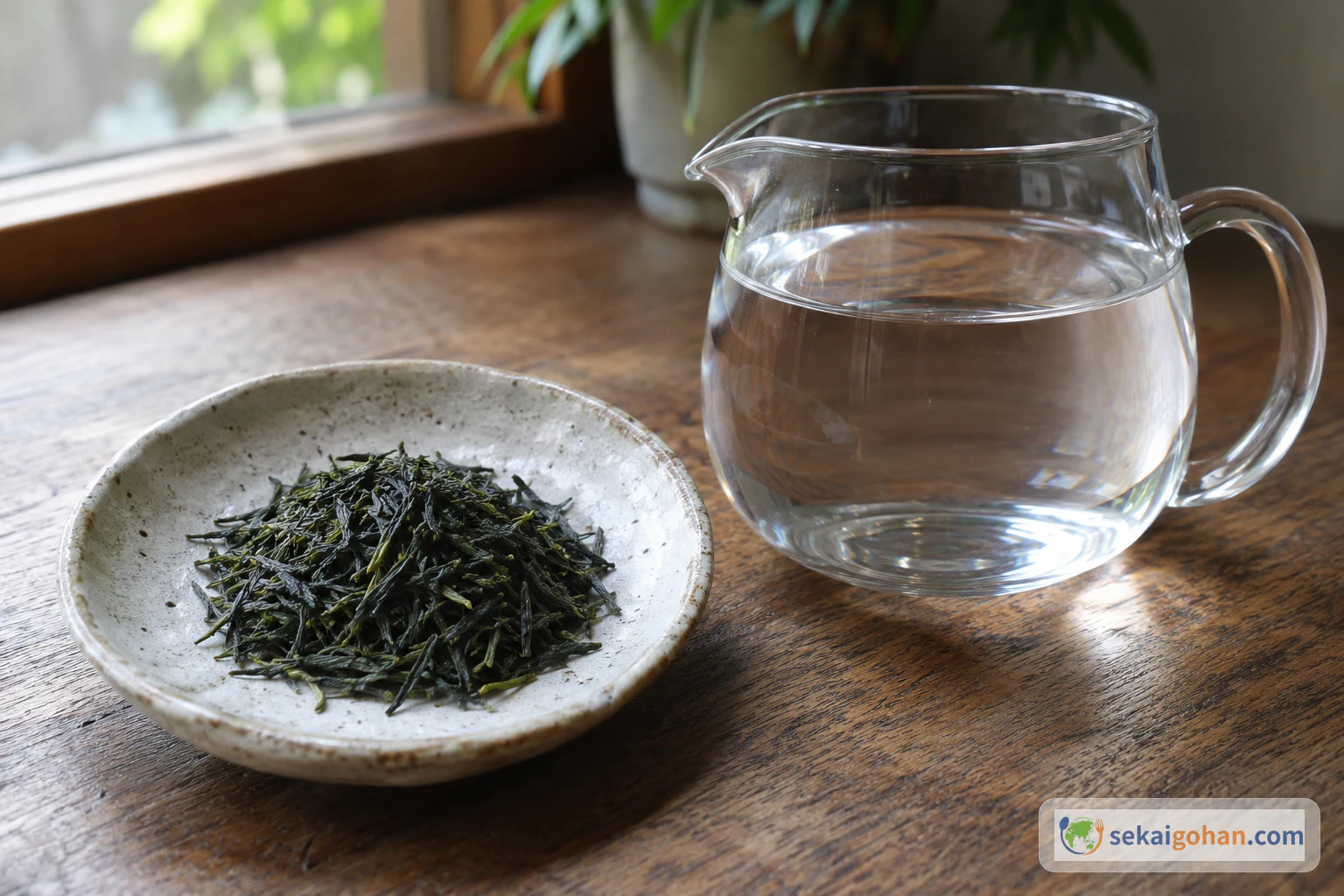
80mL is the amount of water you pour over the leaves. It is not the amount of tea that ends up in the cup. :::
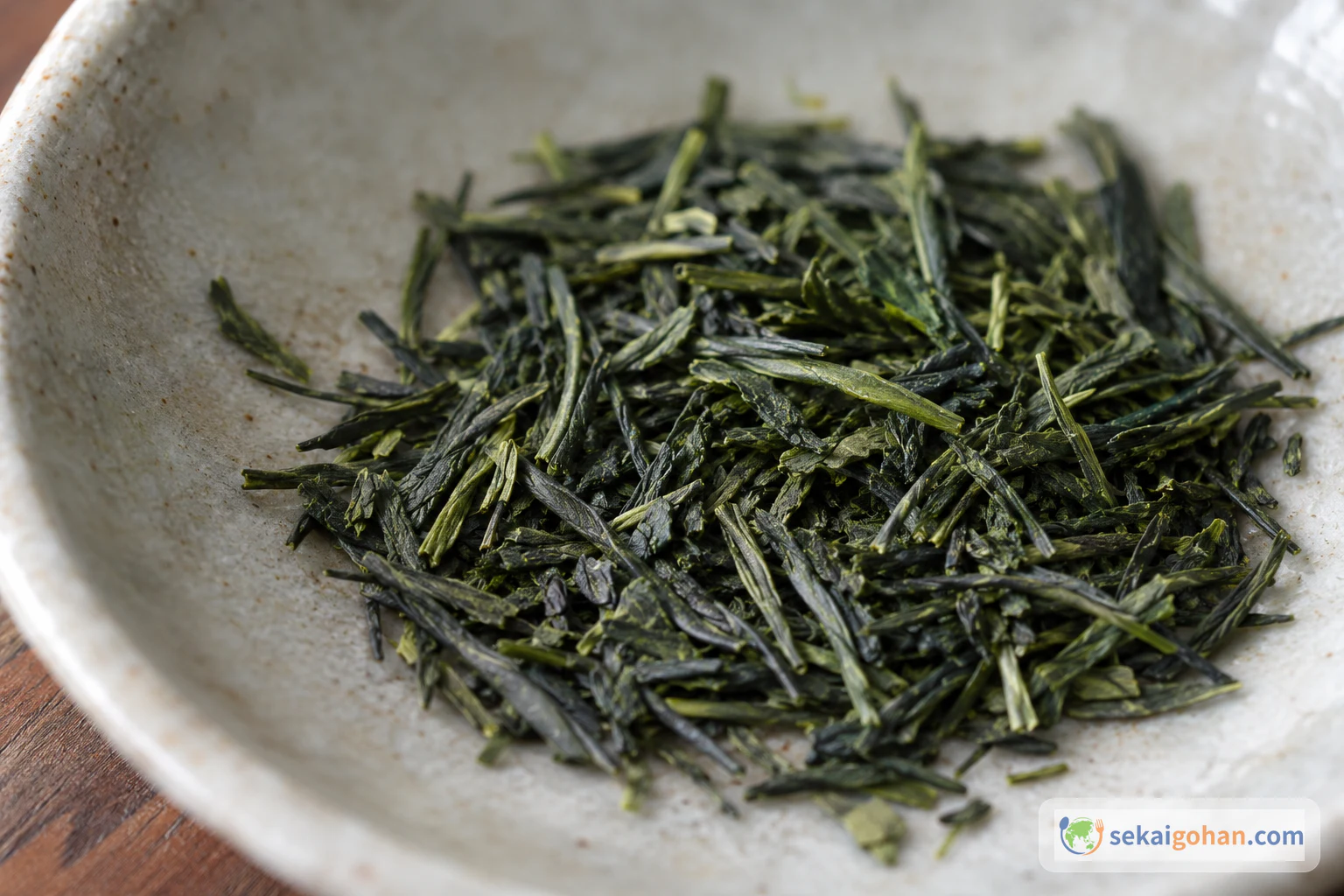
Equipment
- Kitchen scale (makes the 10g easy to get right)
- Thermometer, or a kettle you can set to a temperature (makes 60°C easier to confirm)
- Kettle or pot for boiling water
- A measuring cup for the 80mL
- A brewing vessel with a way to strain the leaves, such as a small teapot you already own
- A cup to serve
None of these has to be a specific item. Plain, practical teaware you already have is enough.
Choosing Gyokuro and Water
Buy loose leaves sold as gyokuro. Sencha, kabusecha and matcha are related Japanese teas, but swapping in any of them gives you a different tea. Kabusecha, for instance, is shaded for a shorter period than gyokuro.
Regional labels such as Uji or Yame tell you something about how and where a particular gyokuro was grown and finished, so read the origin and production notes on the pack. Either one brews the same way.
Use the drinking water you would normally make tea with. If you buy a flavored or blended tea instead of plain gyokuro, check the ingredient label on the pack.
Method: Weigh, Cool, Pour and Count from the First Drop
Start counting the 90 seconds as soon as the water begins to pour onto the leaves. Do not wait until the pour is finished.
Gyokuro Brewing Problems and Fixes
Most problems come from changing one of the four numbers without noticing, so check them before blaming the tea. The low temperature is what brings out sweetness and keeps bitterness away, though the leaf, the product and the water all play a part too.
| What happened | Likely cause | What to do next time |
|---|---|---|
| The count started late | The timer started when the pour finished or the lid went on | Start the timer as the water first begins to pour |
| The water was hotter than intended | Water went in straight from the boil, or was poured before it had cooled | Let boiled water cool well, and confirm 140°F (60°C) with a thermometer or temperature-set kettle |
| The leaf amount varied from brew to brew | Leaves were measured by spoon | Weigh 10g. A spoon of one tea may not weigh the same as a spoon of another |
| The numbers came from two recipes | Leaf amount from one recipe, water or time from another | Keep one recipe's set together |
| The tea looks pale, not bright green | Expectations set by vivid photos | A restrained pale green or yellow-green is natural |
Gyokuro brewing guides often give quite different numbers, since each tea seller sets its own ratios. Any of them can work, as long as you treat each set as a complete whole.
Frequently Asked Questions
How much tea does this make?
The 80mL is the water you pour onto the leaves, not the volume you end up drinking.
How long does boiled water take to cool to 140°F (60°C)?
Let boiled water cool well. A thermometer or a temperature-set kettle is the most direct way to know when you reach 140°F (60°C).
I found a different gyokuro recipe. Which is right?
Both can be right. Tea shops publish their own sets of numbers, so use one set as a whole. For example, 7–8g, ¾ cup (200 ml), 140–158°F (60–70°C) and 1 1/2–2 minutes go together, and they shouldn't be mixed with the 10g, ¼ cup (80 ml), 140°F (60°C) and 90 seconds here.
Do I need a special teapot?
Any brewing vessel that lets you pour the tea off the leaves will do.