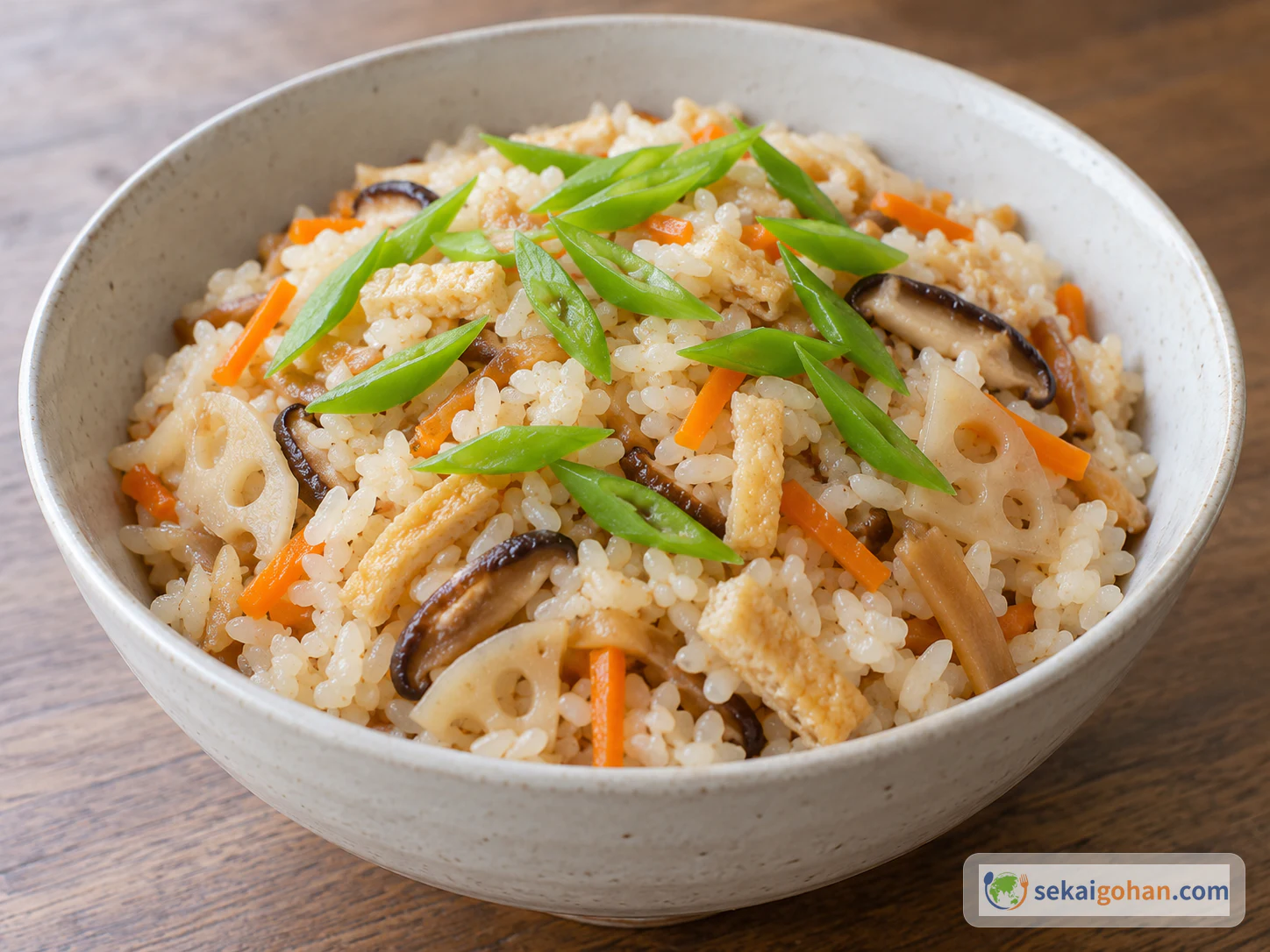
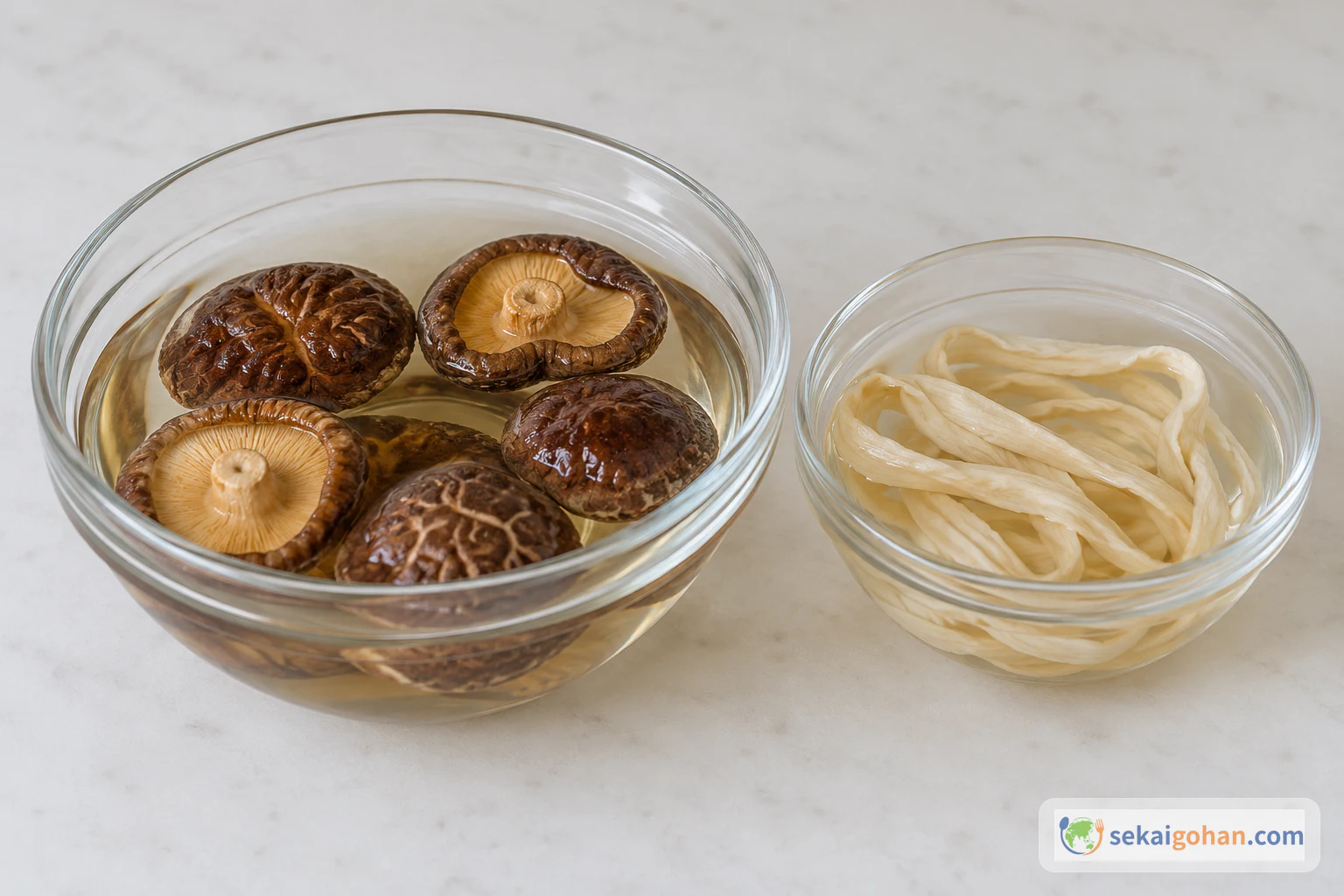
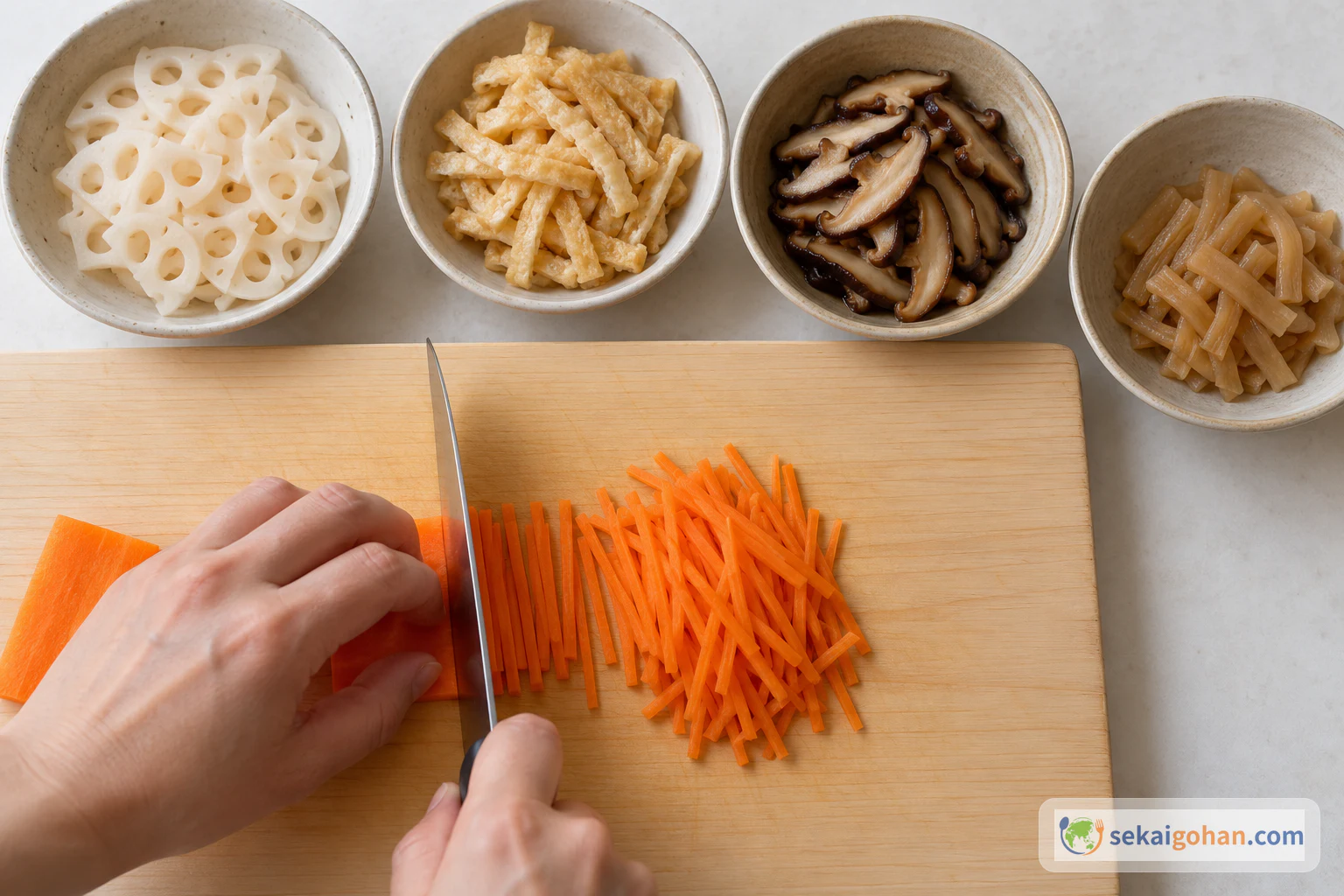
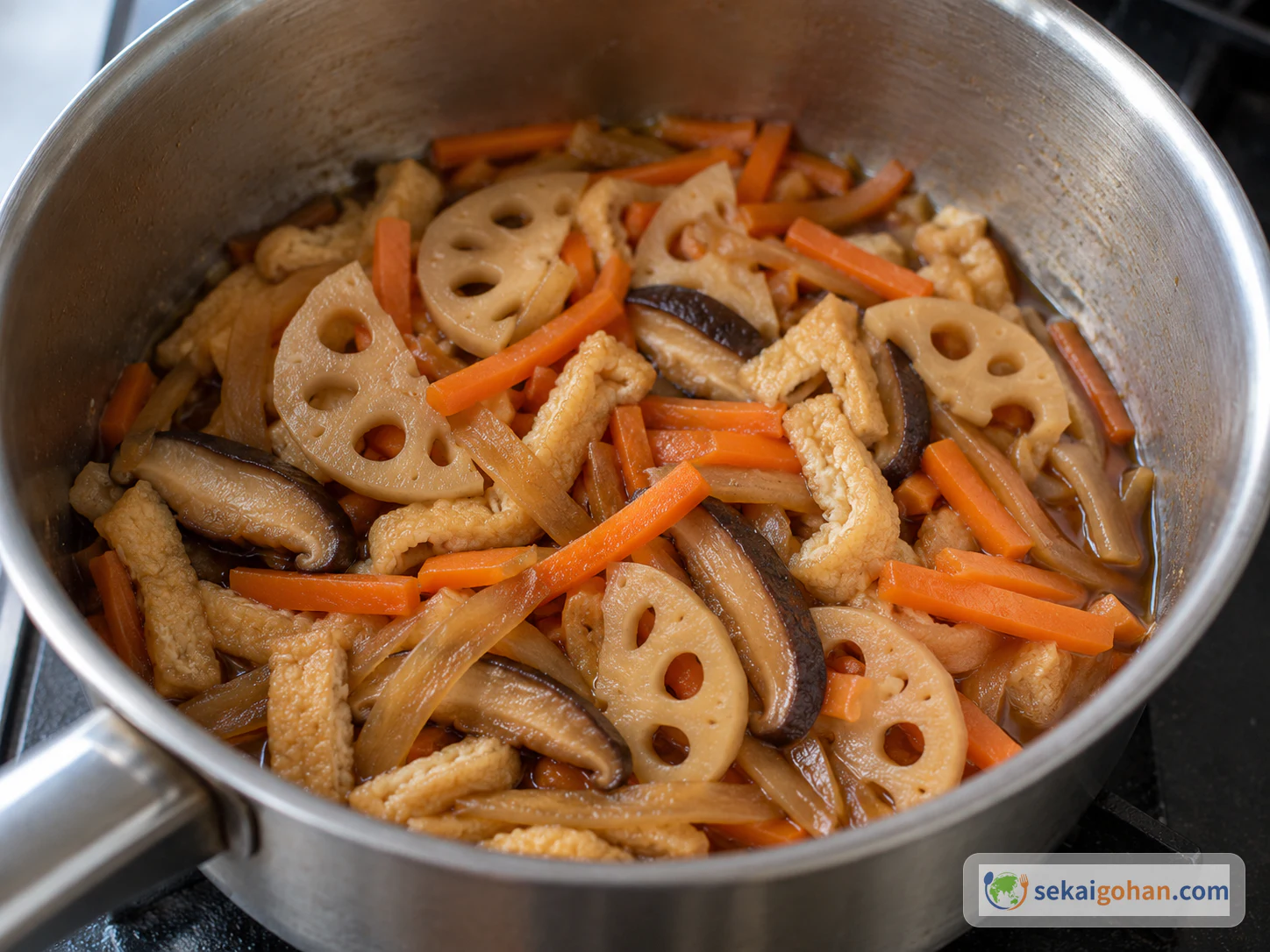
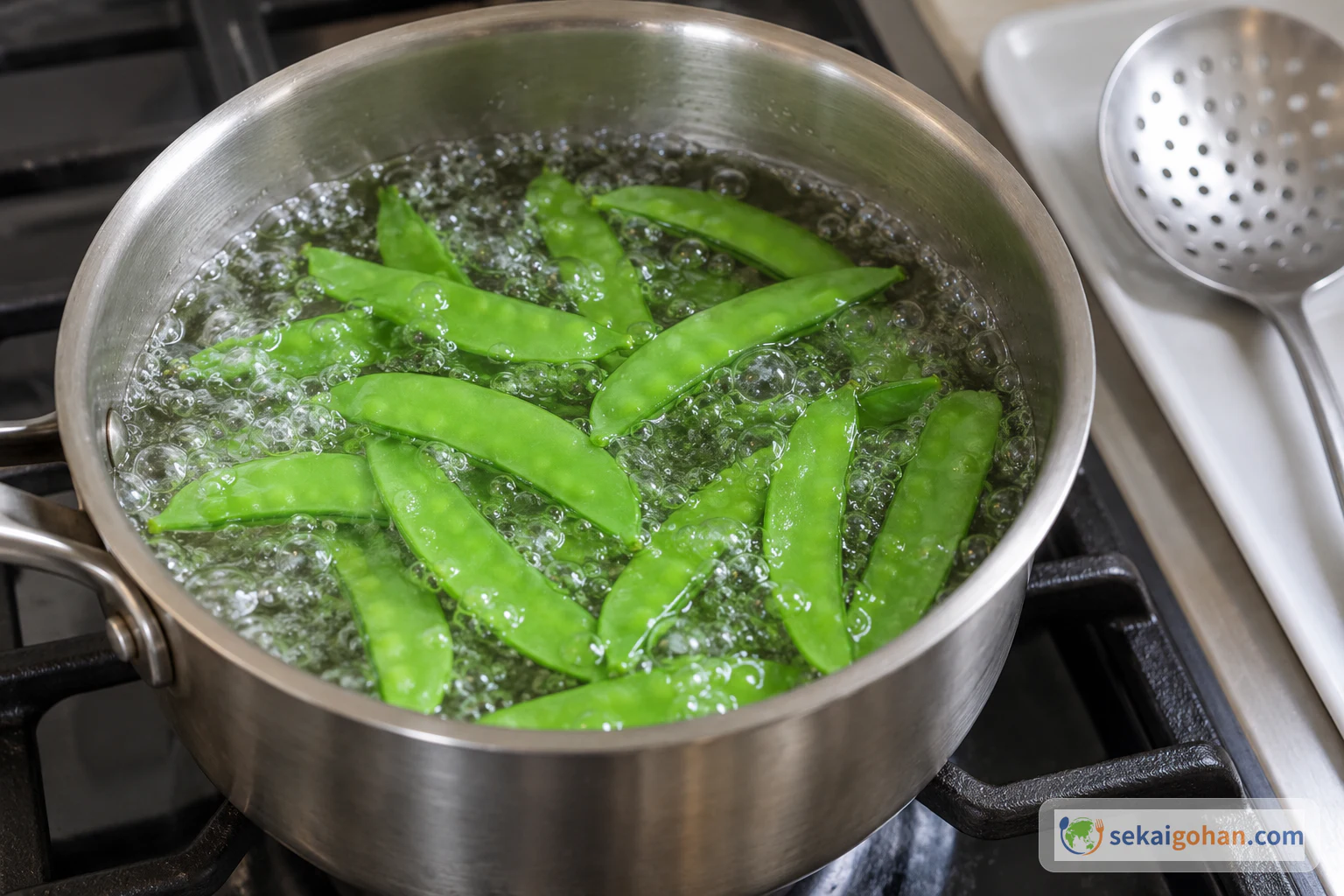
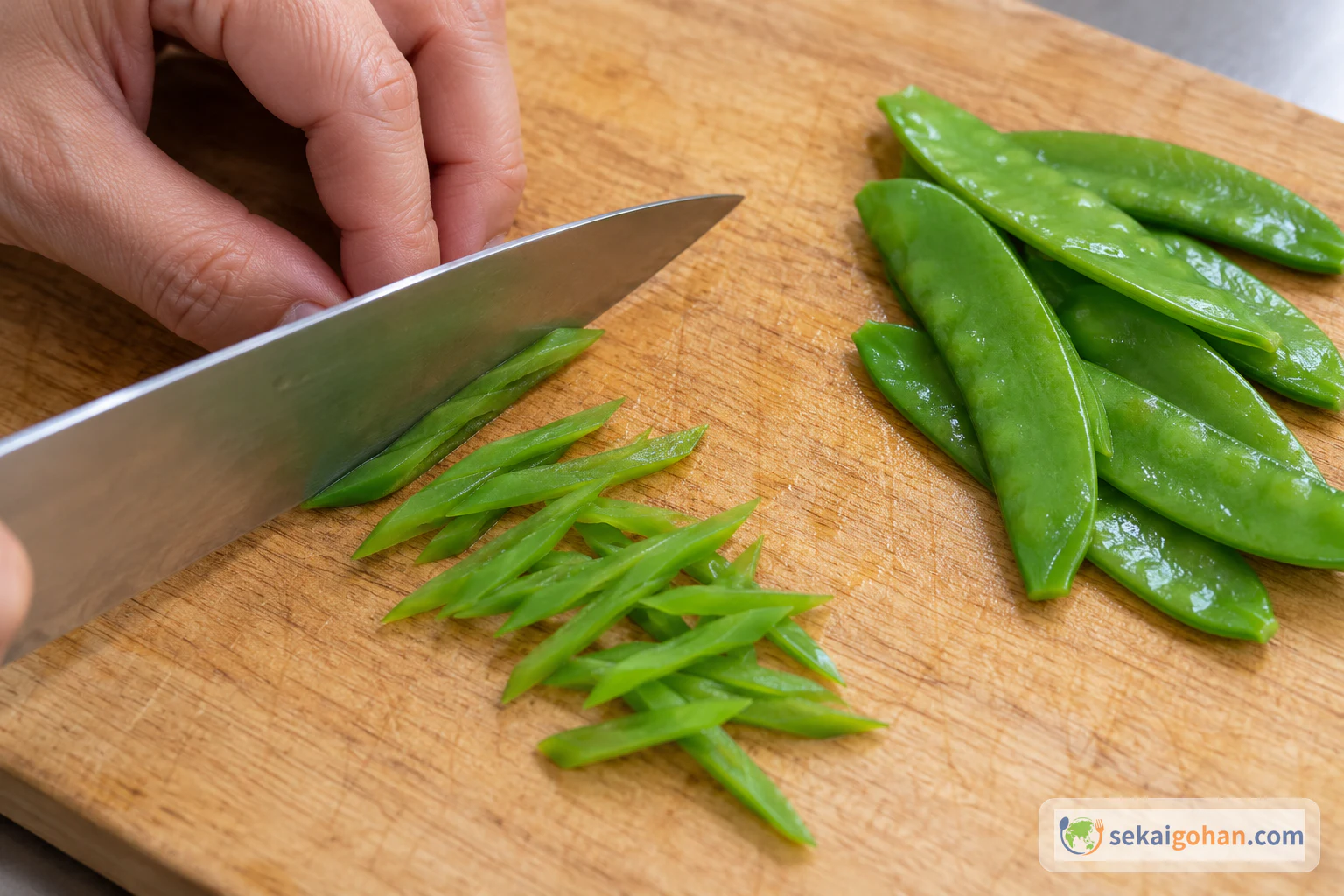
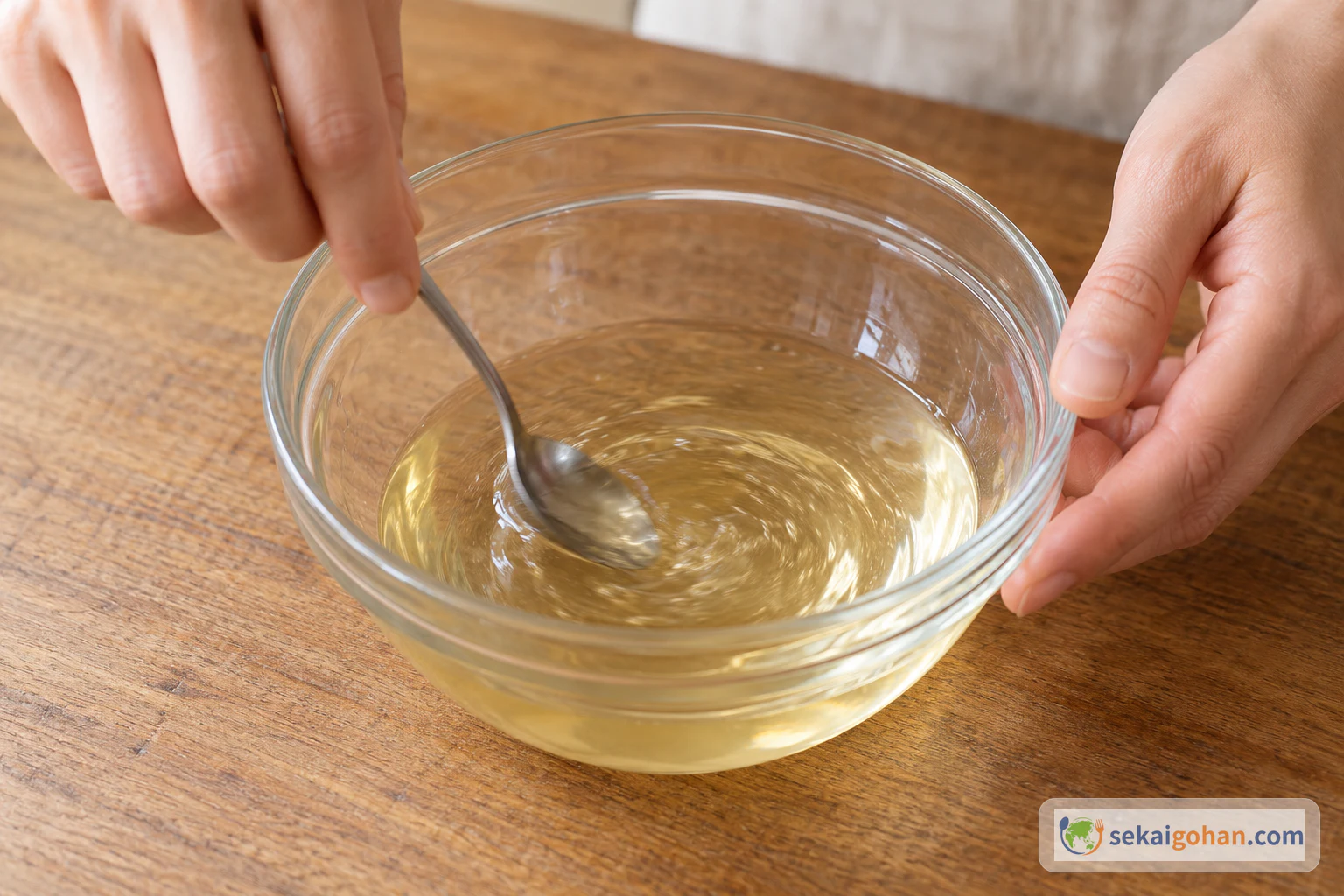
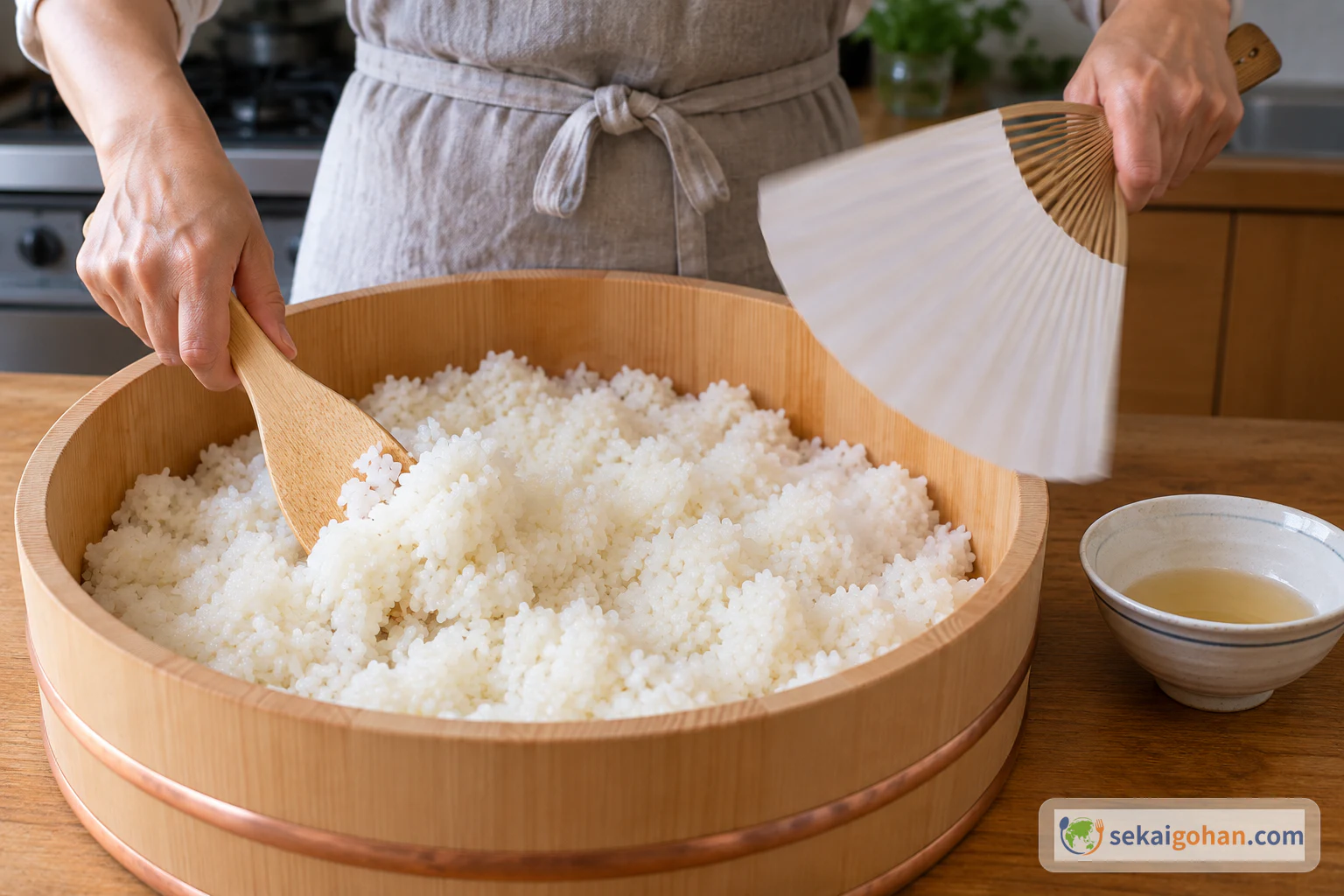
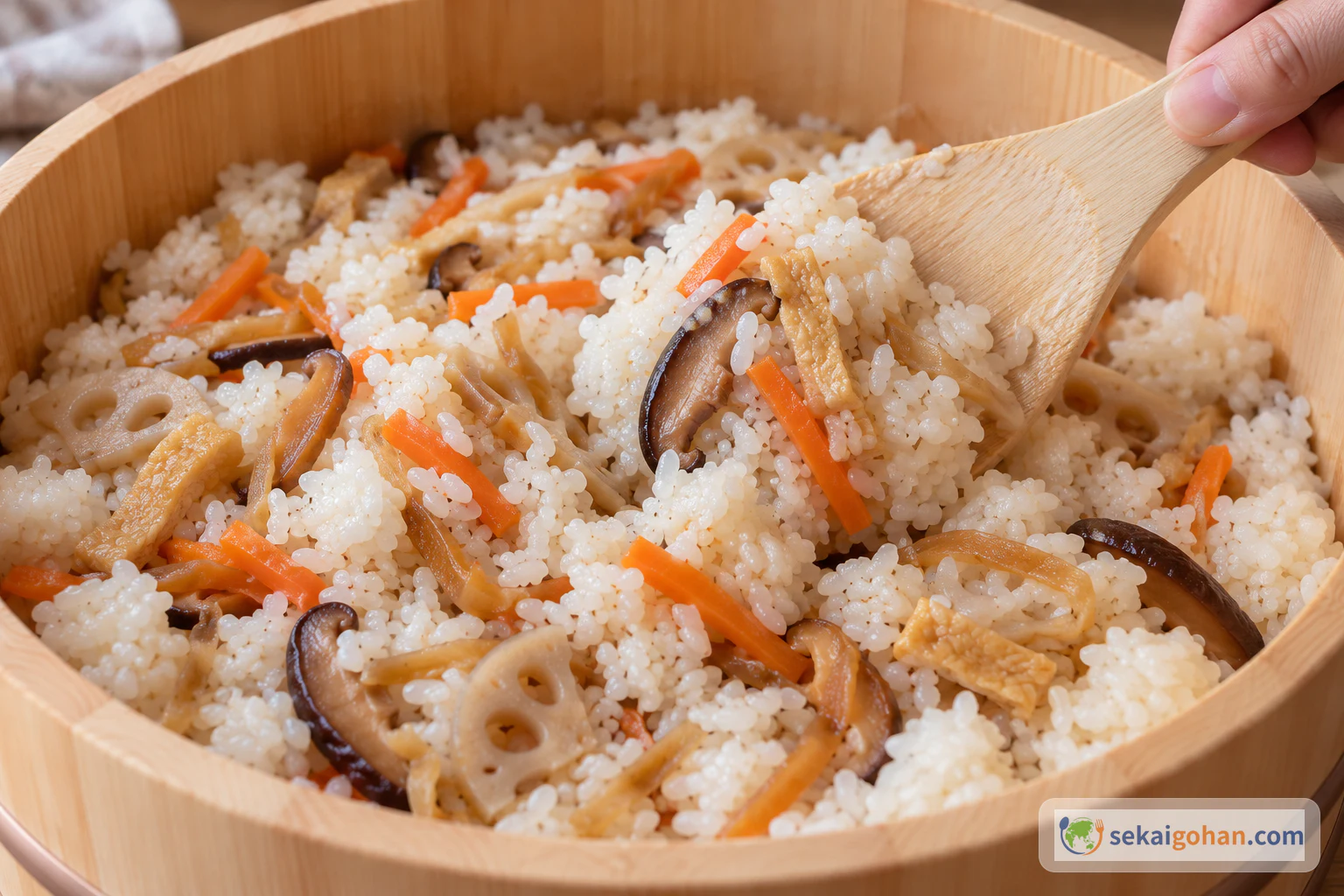
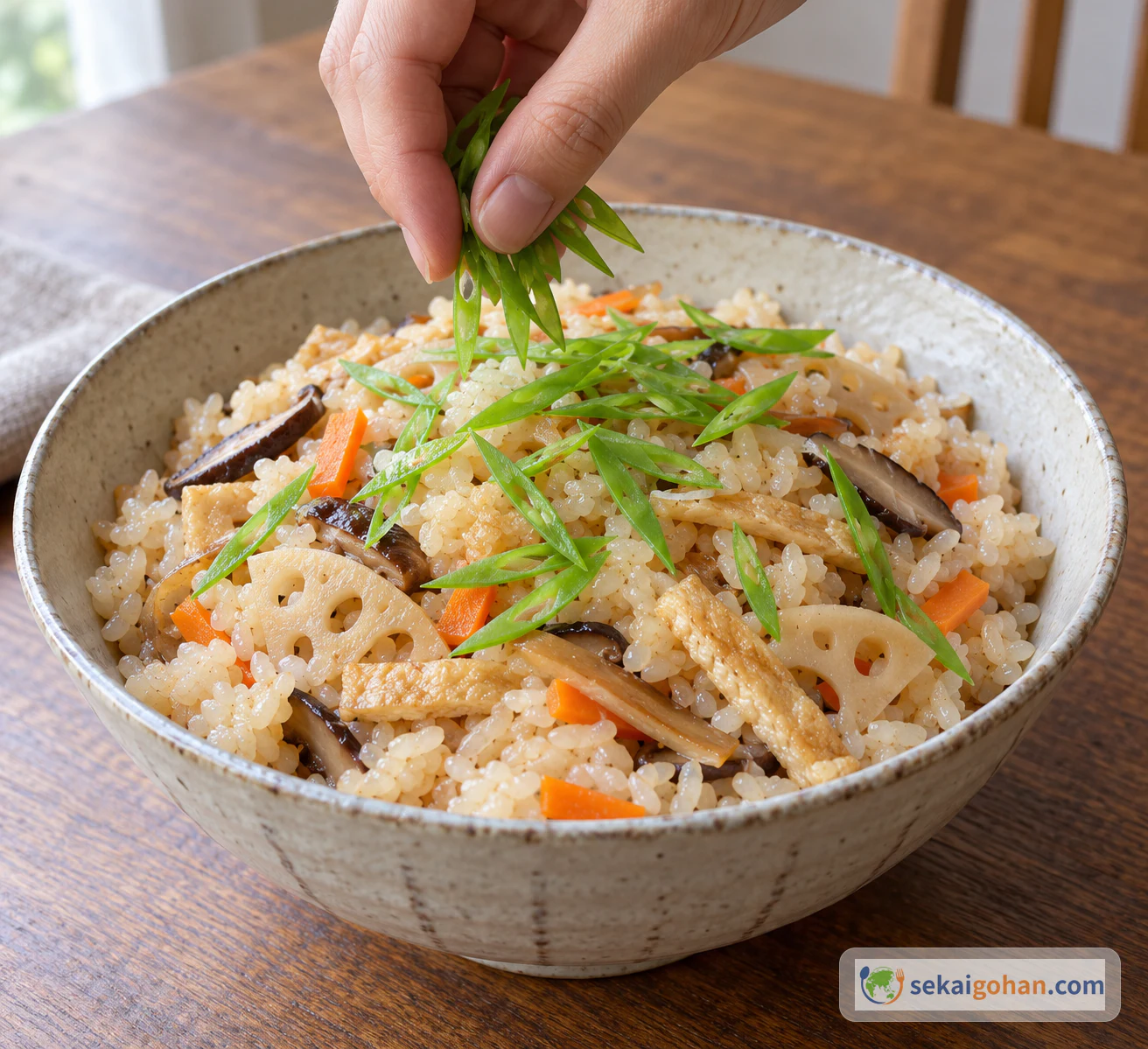
Dried shiitake swell in a bowl of water, and that soaking water becomes the simmering liquid for strips of aburaage (fried tofu), small ginkgo-leaf slices of lotus root, fine carrot, shiitake and short pieces of kanpyo (dried gourd strips). Meanwhile, freshly cooked rice is turned with a wooden paddle while someone fans it, sweet vinegar going in a little at a time, until the grains take on a gloss. The simmered fillings are folded through, and thin green slivers of snow pea are scattered over the top. This is a gomoku-zushi from Wako in Saitama Prefecture, a chirashizushi built on dried ingredients, with the fillings mixed into the rice rather than laid over it.
Gomoku-zushi and Other Chirashizushi
Gomoku-zushi is a sushi in which several ingredients are mixed into the rice. The name "gomoku" means "five items," because it is made with five or more kinds. This version uses no raw fish, no egg and no nori; everything that goes in is simmered or blanched.
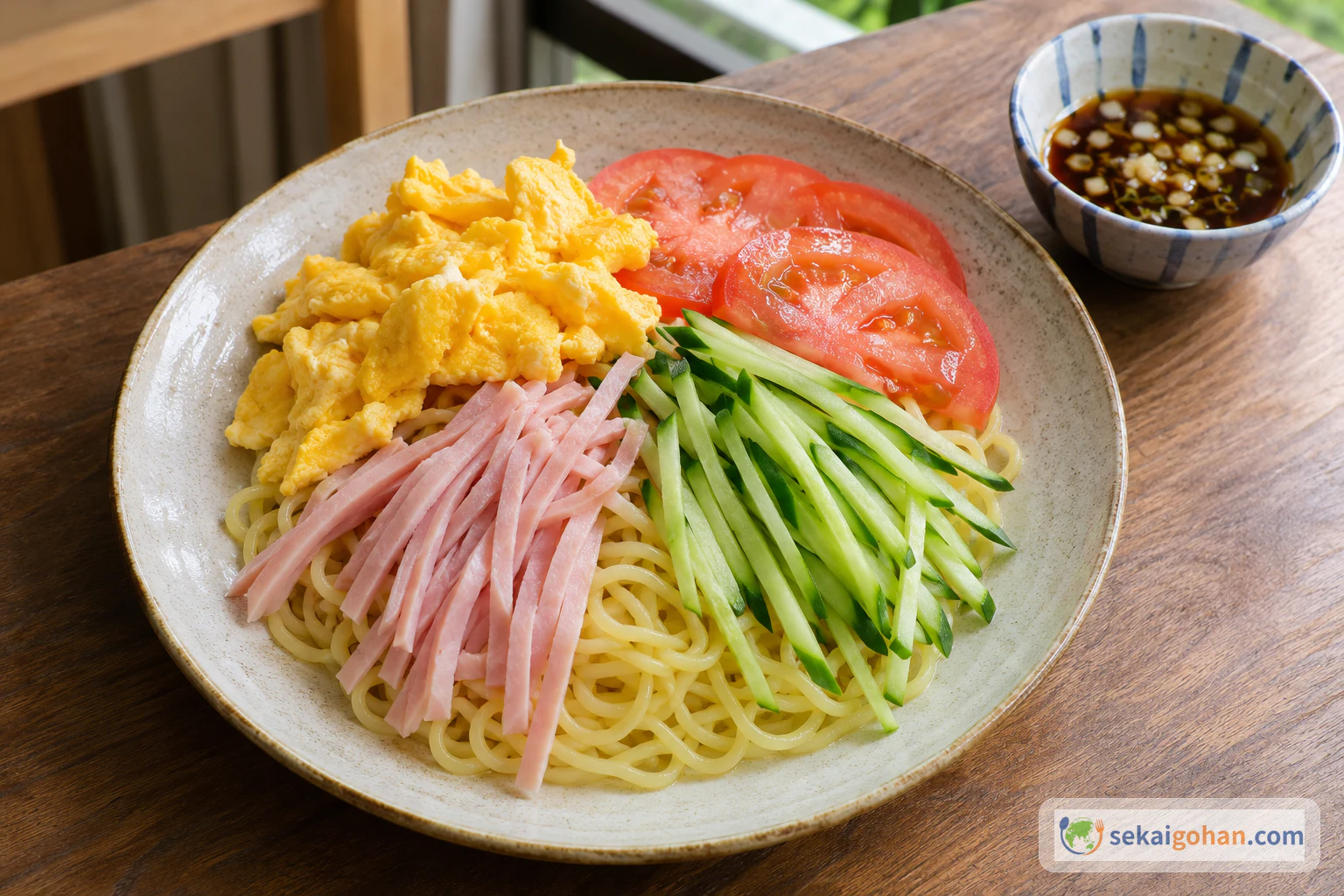
Chirashizushi comes in two clearly different shapes. In the mixed-in style, like this one, the fillings are simmered and folded through the vinegared rice, and only the snow peas sit on top. In the topped style, seasoned rice goes into a dish and the toppings are arranged over it, for example scrambled egg, boiled asparagus and smoked salmon.
Chirashizushi (ちらし寿司) is the broad name for "scattered" sushi. Gomoku-zushi (五目ずし) and gomoku chirashi (五目ちらし) refer to the style with several fillings. In English you will also see chirashi sushi or chirashi-zushi.
For more dishes from the same country, see the Japan page.
Ingredients (Serves 4)
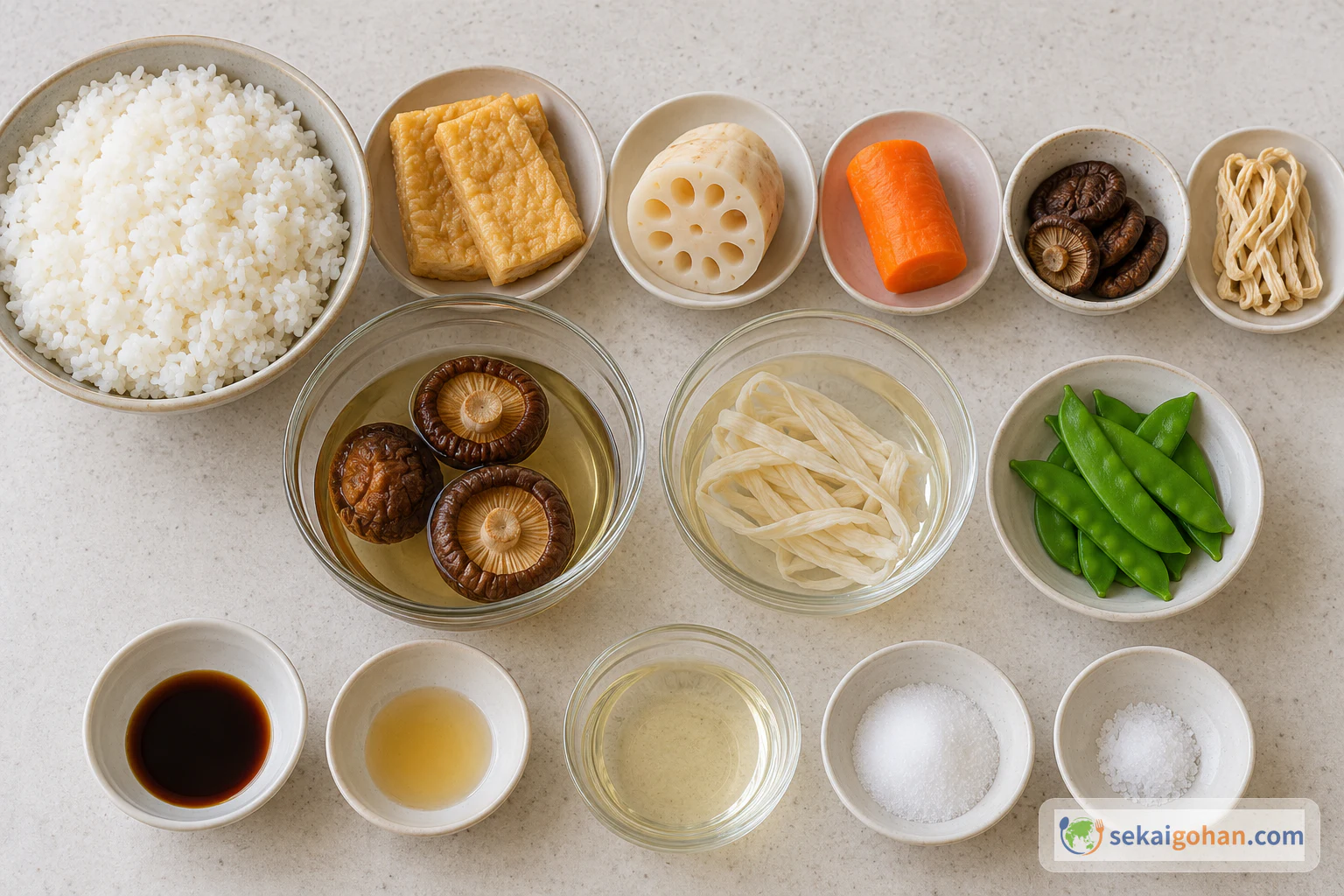
The soy sauce and mirin season only the fillings. The sugar and 1/2 tsp salt go only into the vinegar dressing. The pinch of salt for the snow peas is separate from both.
Equipment
- Rice cooker with a sushi rice water line
- Two bowls for soaking the shiitake and kanpyo
- Knife and cutting board
- Saucepan for simmering the fillings
- Small pot and slotted spoon for the snow peas
- Microwave-safe bowl for the vinegar dressing
- Large bowl or wooden sushi tub (hangiri)
- Wooden rice paddle (shamoji)
- Hand fan (uchiwa)
- Serving bowl or plates
Choosing Ingredients for Gomoku-zushi
The flavor comes from the dried ingredients and their soaking water rather than a separate stock: the shiitake soaking liquid, soy sauce and mirin make up the whole simmering liquid. That is why the dried shiitake matter so much here.
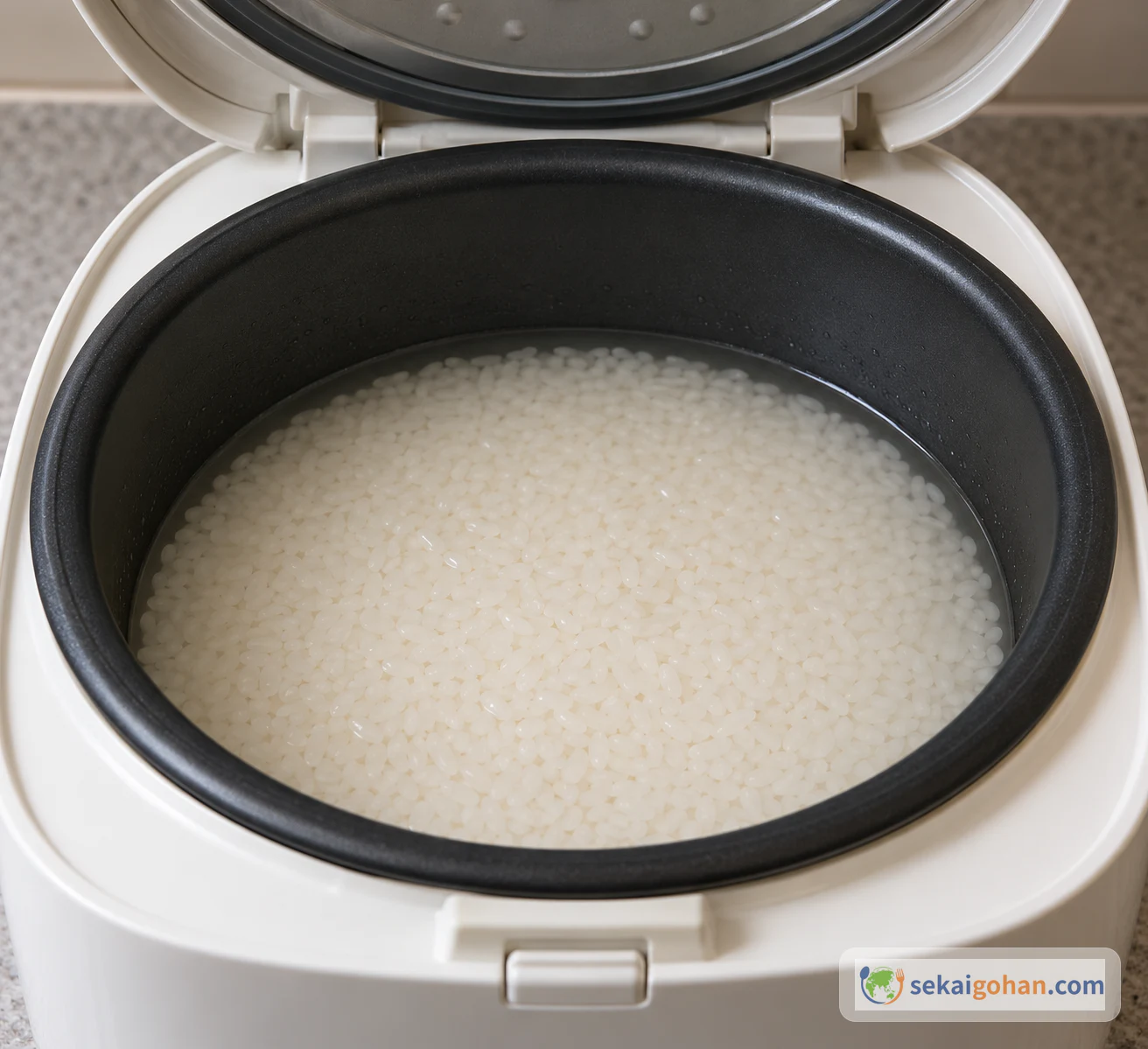
- Rice measured in go. Use the rice cooker's sushi 2-go line.
- Grain vinegar (kokumotsu-su) is used for the dressing.
The recipe is balanced around exactly these ingredients, so if you swap any, treat the result as your own variation.
Method: Simmer, Season, Fold, Scatter
The rice is seasoned with the vinegar dressing and fanned before any filling goes in. The fillings are mixed in directly; the snow peas wait until the very end.
Fixing Common Gomoku-zushi Problems
| Condition | Likely cause | What to do |
|---|---|---|
| The fillings are swimming in liquid | They came off the heat too early | Keep simmering until only a little liquid remains, then mix them in |
| Grains of sugar remain in the dressing | It was not stirred long enough after heating | Keep stirring until fully dissolved before adding it to the rice |
| The rice is mushy or the grains are crushed | The dressing went in all at once, or the rice was stirred instead of cut | Add the dressing in portions and use a cutting, folding motion with the paddle |
| The rice looks dull and wet | It was not fanned while the dressing was mixed in | Fan as you fold so the excess moisture can evaporate |
| The snow peas look lost in the rice | They were mixed in with the fillings | Keep them aside and scatter them only at the end |
Serving and Storing Gomoku-zushi
Fanning the rice is for texture and moisture. It is not a step that makes the dish safe to keep at room temperature.
Serve with clean hands, utensils and dishes, and keep the time the rice spends at room temperature short, both before and after cooking. Bacillus cereus is a concern in rice dishes, so either keep the rice hot or refrigerate it quickly.
For leftovers, divide them into shallow, clean containers so they cool quickly, get them into the refrigerator, and keep storage as short as possible.
Frequently Asked Questions
Does this chirashizushi use raw fish?
No. Every filling is simmered or blanched, and the dish has no raw fish, egg or nori.
Can I add scrambled egg, asparagus or smoked salmon?
Those belong to the topped style. This gomoku-zushi finishes with snow peas only.
Why microwave the vinegar dressing?
The 30 seconds of heating helps the sugar and salt dissolve into the vinegar. Stir until nothing undissolved remains before adding it to the rice.