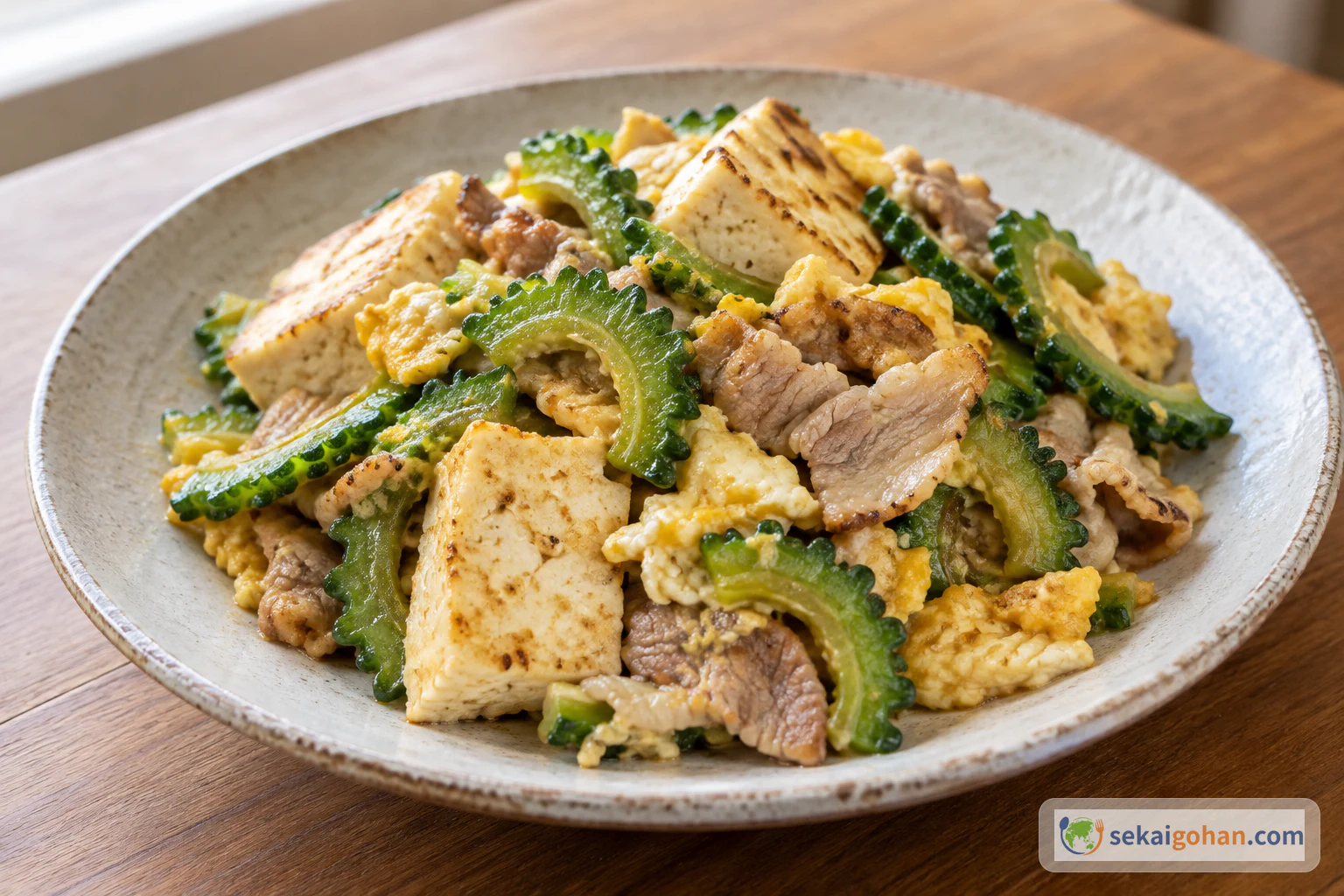
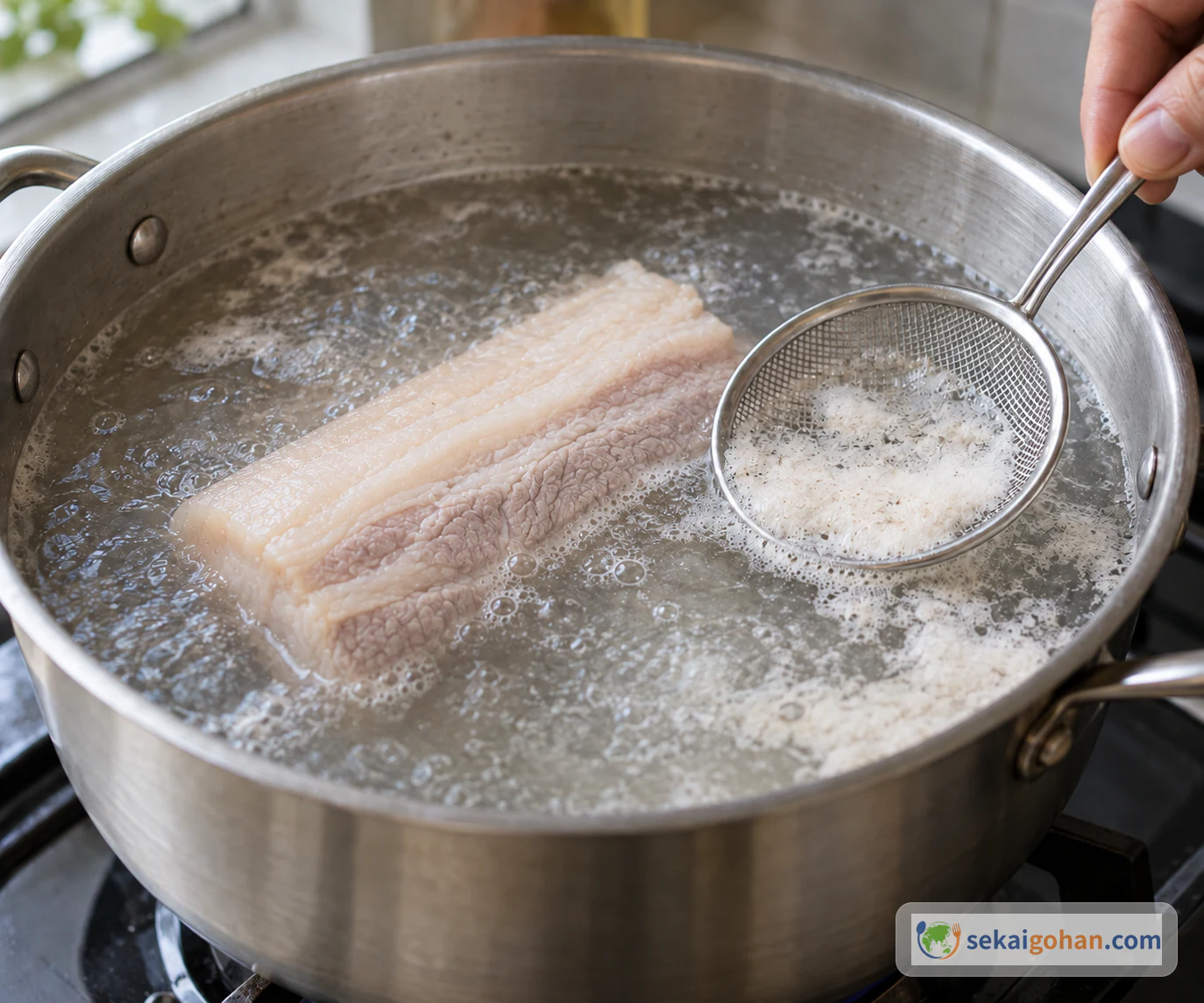
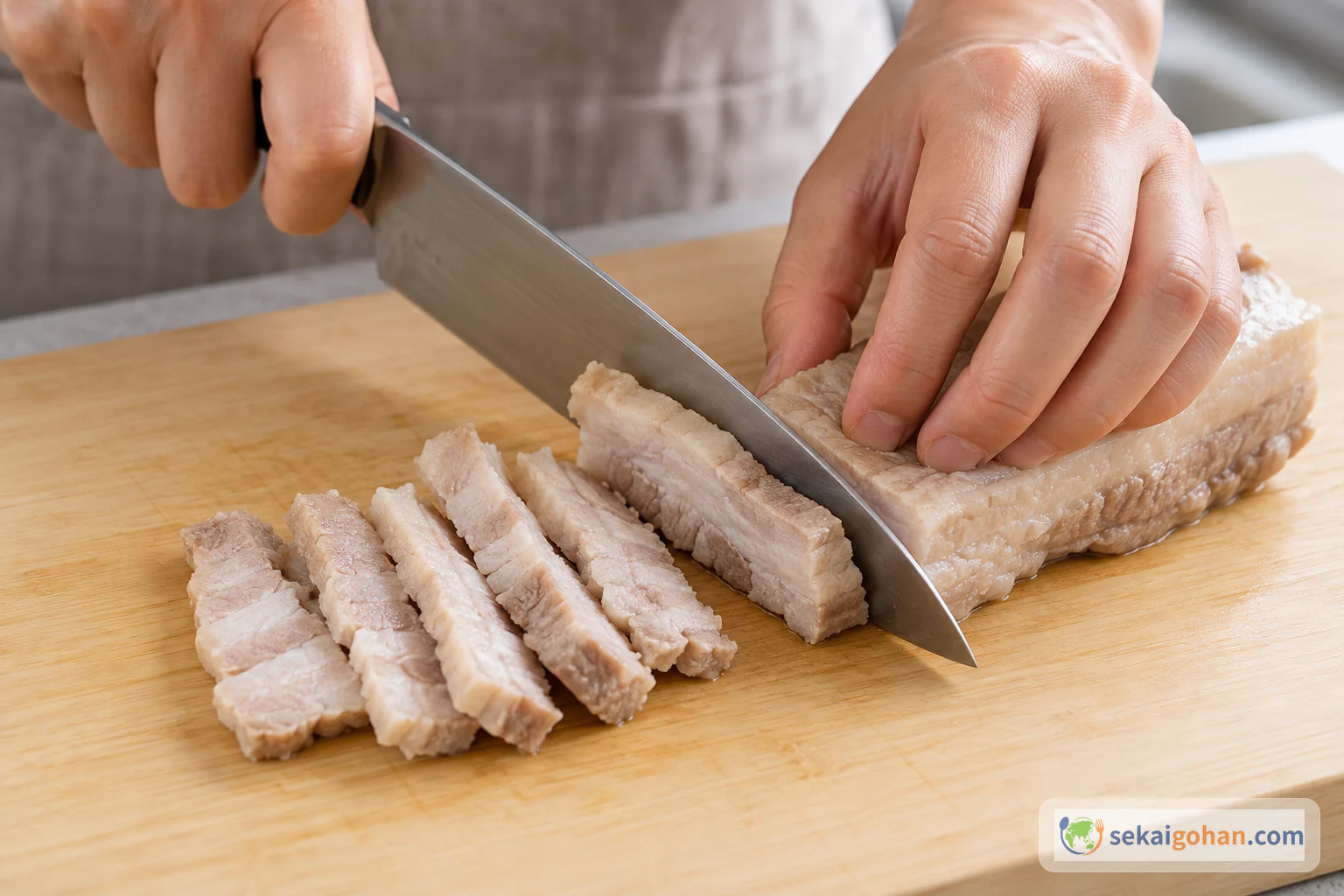
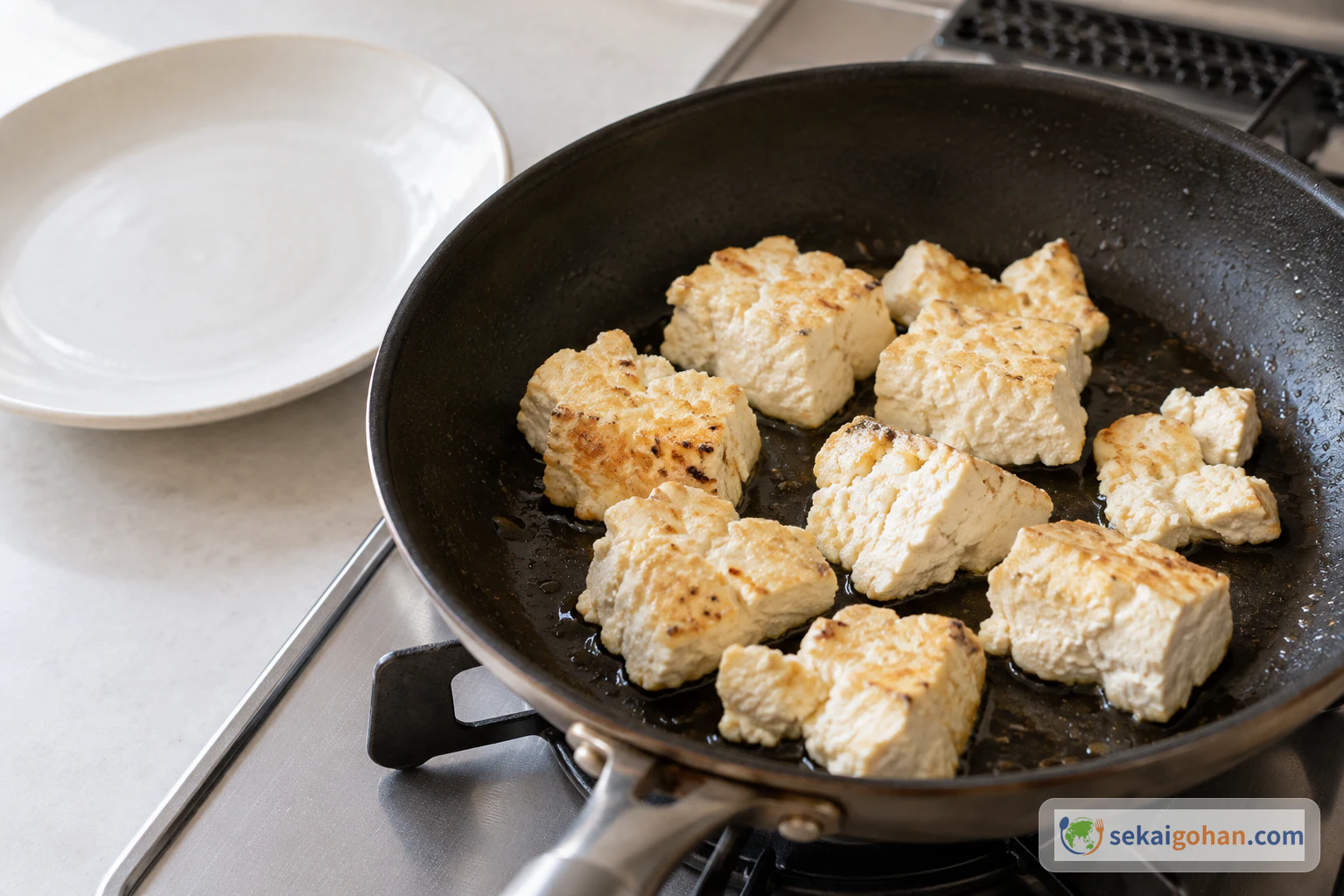
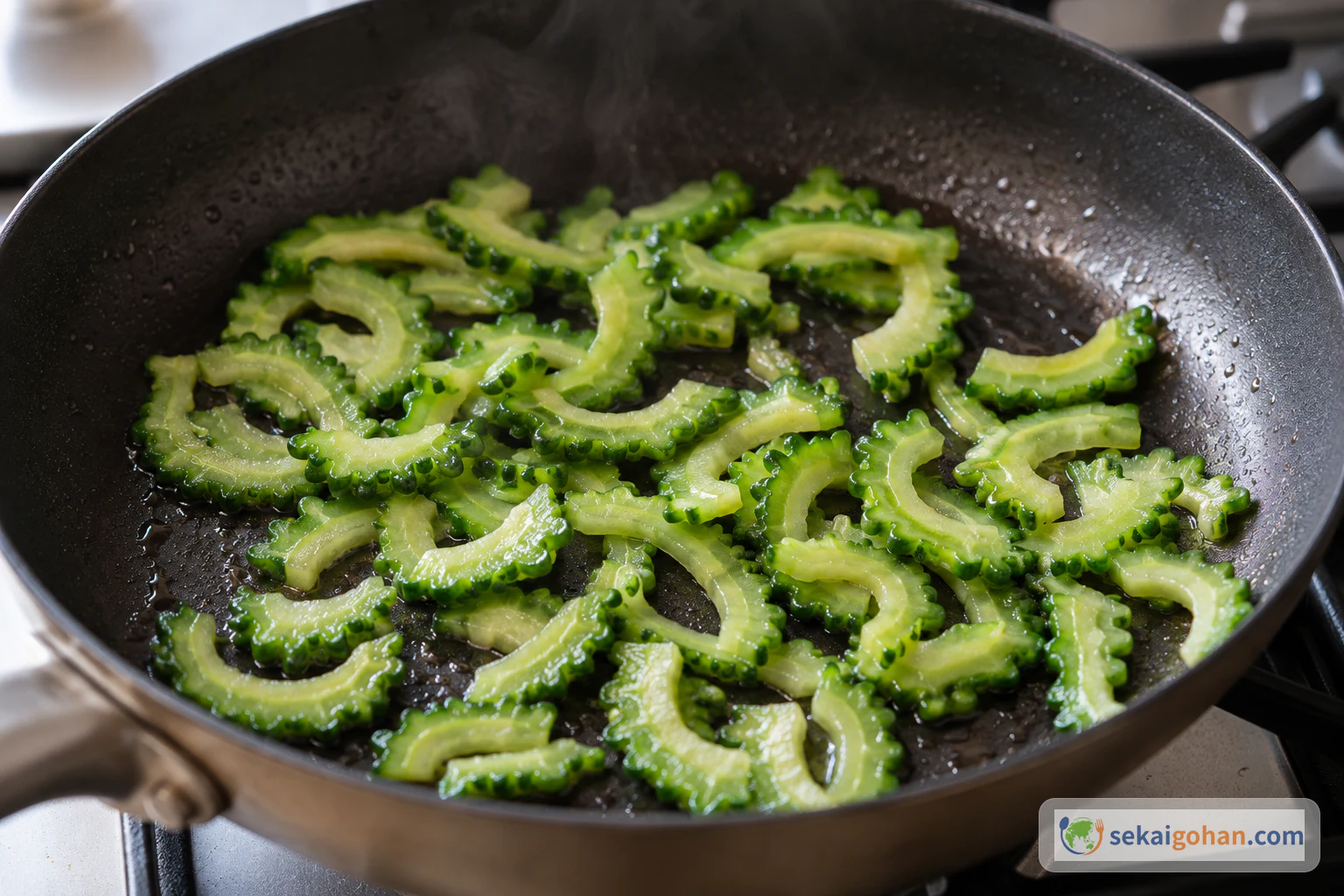
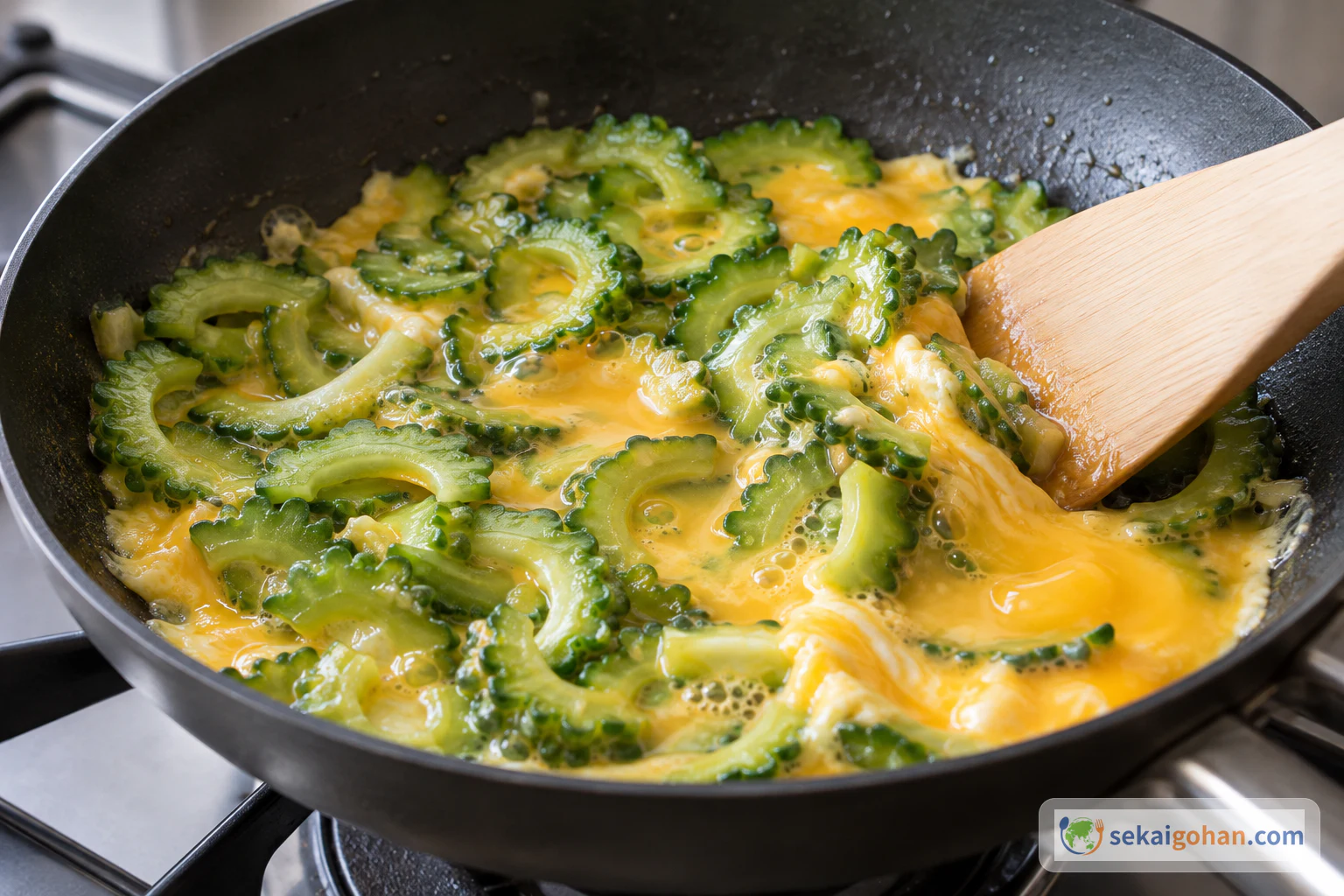
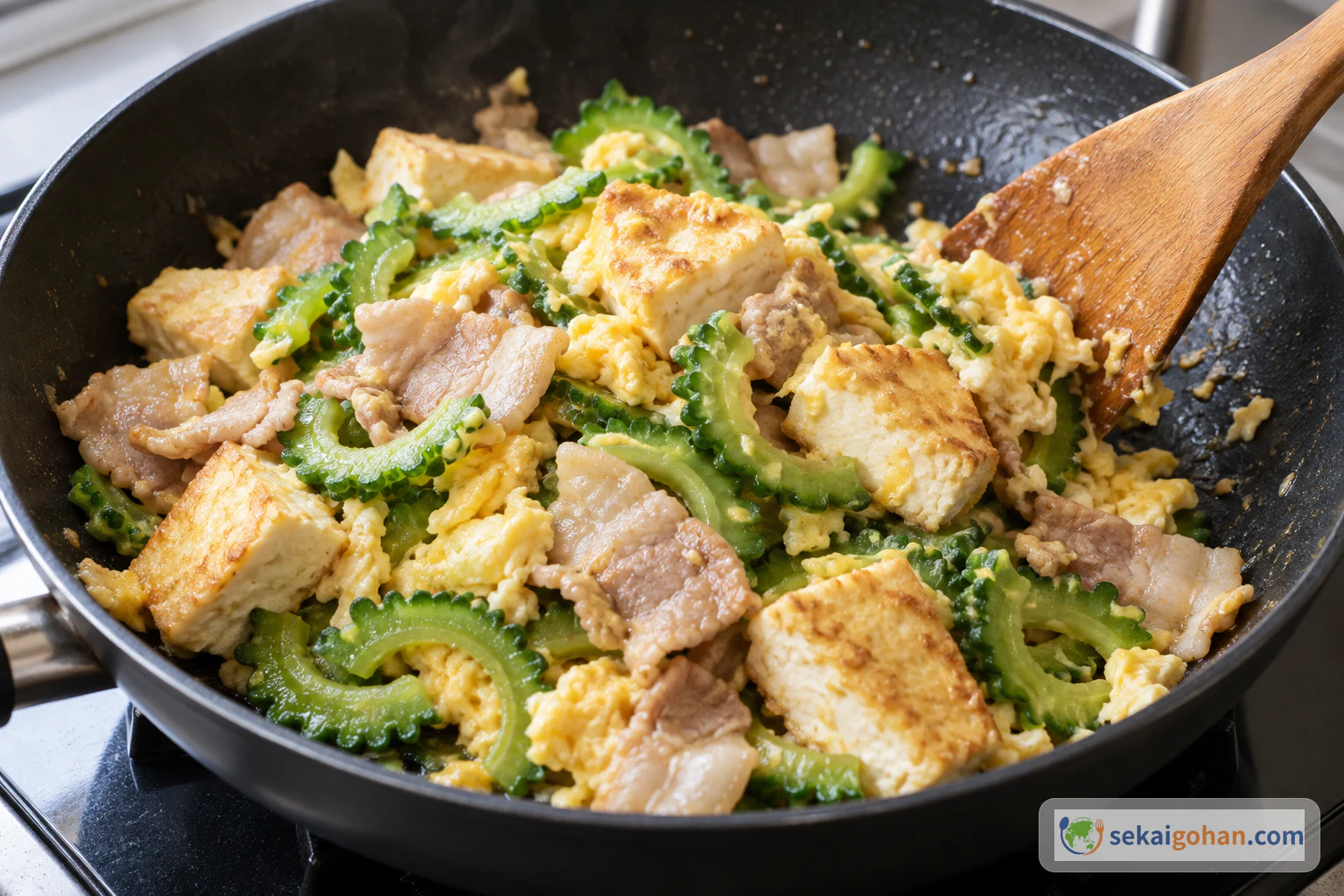
Near the end of this recipe, the frying pan holds thin green half-moons of goya (bitter melon) just coated in beaten egg. Large, hand-torn pieces of tofu, browned a few minutes earlier and waiting on a plate, go back in, along with strips of pork belly that were simmered in a separate pot before the pan was ever heated. Everything is folded together, and the dish is done. Goya champuru (ゴーヤーチャンプルー) is Okinawa's best-known stir-fry: bitter melon, browned tofu, rich pork belly and soft egg, seasoned simply with salt.
Goya Champuru and the Chanpurū Family
Chanpurū (チャンプルー) is a stir-fry of browned island tofu and seasonal vegetables, and goya champuru is its most representative example. The name covers a whole family of dishes rather than one ingredient list. What they share is the method: tofu is browned, set aside, then returned to the pan at the end.
The branches differ in concrete ways. This version uses pork belly and egg, while another goya champuru is made with luncheon meat. One tofu chanpurū lets the tofu take the lead and stir-fries seasonal vegetables quickly. Another uses cabbage, onion, carrot, bean sprouts, "pork", soy sauce and powdered dashi, with no egg at all.
Goya champuru has been passed down throughout Okinawa Prefecture and is eaten both at home and in restaurants. Goya is a summer vegetable, but improved varieties now make it available all year, so the dish is no longer limited to the hot months. For more dishes from the same country, see Japan.
Ingredients for 4 Servings (Goya Champuru, Momen Tofu Version)
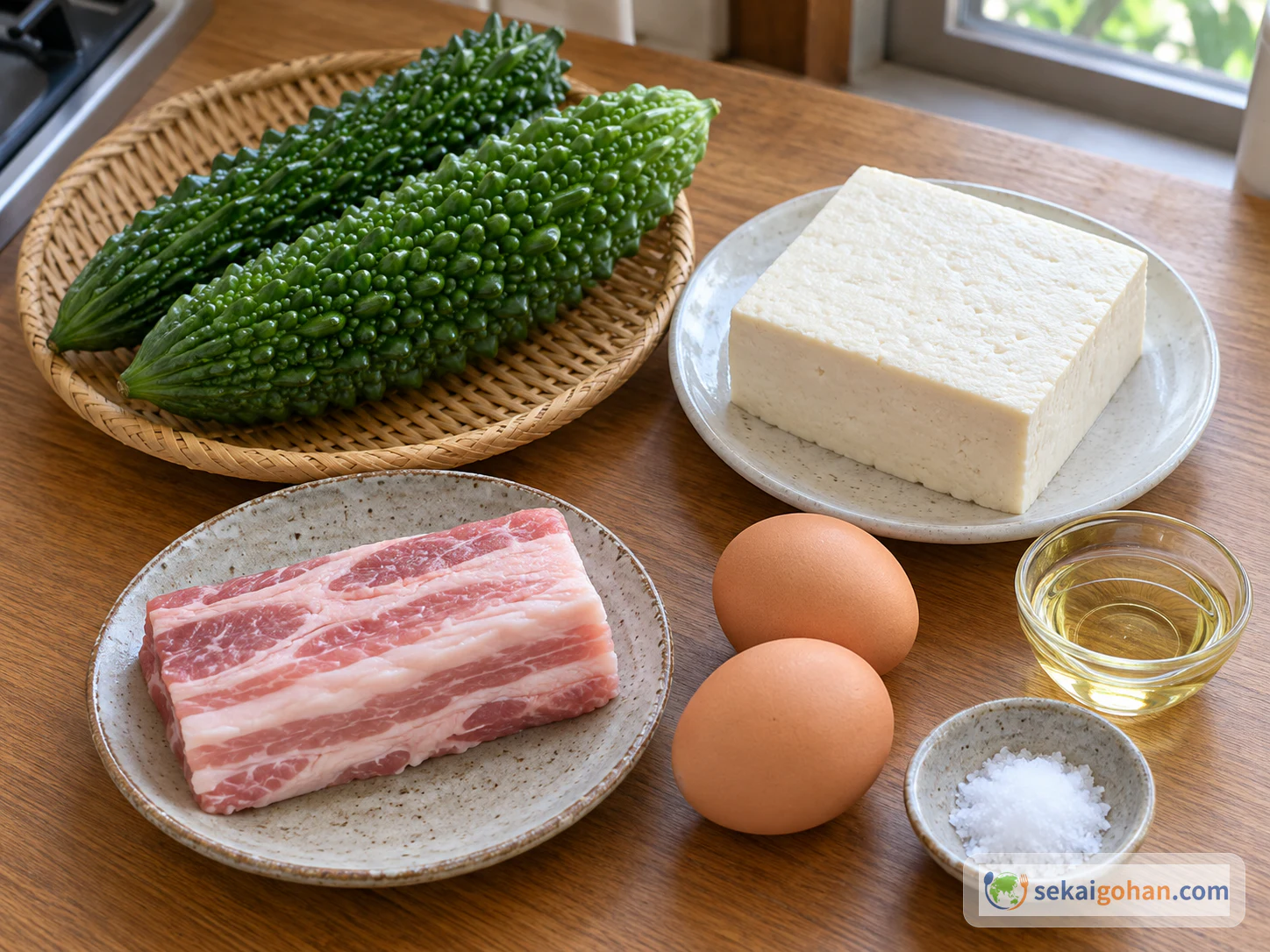
Either Okinawa tofu or momen tofu can be used. This article uses momen tofu throughout, so the steps and photos follow one consistent method. There is no soy sauce, luncheon meat, onion, cabbage, dashi or garnish in this version.
Salt as needed.
This recipe contains soy (tofu) and egg, and it contains pork. If you choose a variation that uses canned pork or soy sauce, check that product's label separately.
Equipment
- Frying pan
- Pot for simmering the pork
- Kitchen paper (paper towels)
- A small, clean plate to use as a weight for the tofu
- A plate for holding the browned tofu
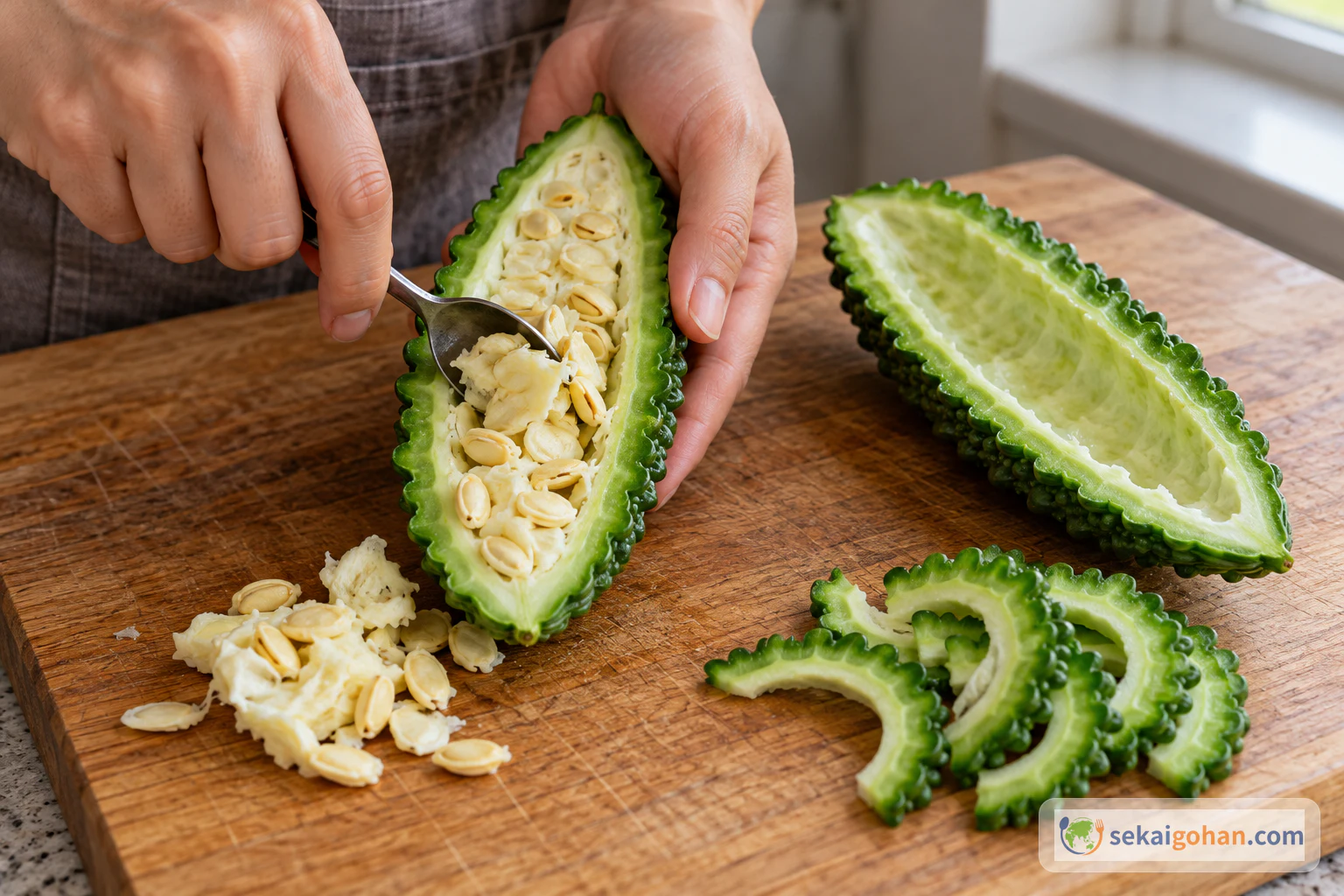
- Knife, cutting board and a spoon for scraping out the goya seeds
- Food thermometer (optional, for checking the pork's center temperature)
Choosing Ingredients for Goya Champuru
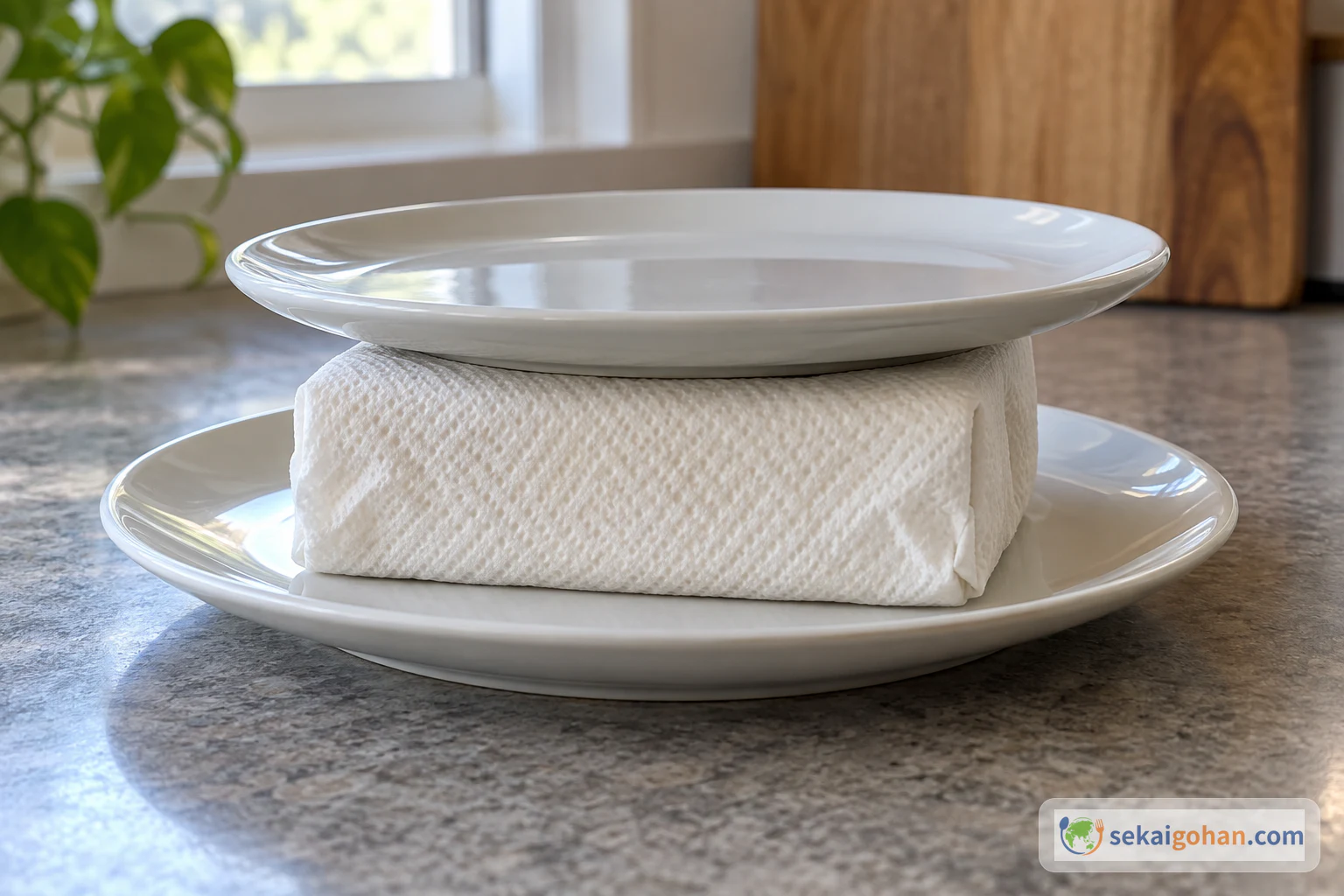
Tofu. Okinawa tofu (island tofu) and momen tofu both work. If you use momen, as this version does, wrap it in paper and weight it for about 10 minutes so it browns rather than steams.
Pork. Use pork belly (三枚肉) or a pork belly block. Thinly sliced pork is not a substitute. Some households use canned pork, such as Spam, in place of pork belly.
Soy sauce. This version has none; salt does the seasoning.
Method: Three Separate Preparations, Then One Pan
Prepare the goya, the tofu and the pork separately before the frying pan goes on the heat. Wash anything that has touched raw pork, including hands, knife, cutting board and tongs, before it touches the goya or any cooked ingredient, and keep raw meat juices away from other foods.
Troubleshooting Goya Champuru
| Problem | What to check | What to do |
|---|---|---|
| The tofu releases water in the pan | Whether the momen tofu was wrapped and weighted | Give it the full paper-and-weight drain of about 10 minutes before tearing it |
| The tofu breaks up or does not brown | Piece size and how often it is moved | Tear it into large pieces, brown it in 1 tbsp of oil over medium heat, and take it out before cooking the goya instead of stirring it in from start to finish |
| The goya scorches | Heat level | Keep the heat at low to medium for about 1 minute |
| The egg overcooks | How long the egg cooks alone | Pour it straight over the goya to coat it, then return the pork and tofu right away |
| You are unsure about the pork | Thickness, pot, water | Go by temperature as well as the 20–30 minutes: check with a thermometer that the center reaches 167°F (75°C) for at least 1 minute, and keep raw-meat utensils away from cooked food |
| It tastes too bitter | Goya preparation | Lightly salt the goya and give it a gentle squeeze to tame the bitterness |
Storing and Reheating Goya Champuru
Keep the cooked dish out of room temperature for long stretches. Handle leftovers with clean utensils, divide them into shallow containers so they cool quickly, and refrigerate them at 50°F (10°C) or below. When reheating, heat the leftovers thoroughly to 167°F (75°C) or above.
Frequently Asked Questions
Does every chanpurū contain goya?
No. Chanpurū is a stir-fry of browned island tofu and seasonal vegetables, and goya champuru is one representative example. Other versions are built around cabbage, onion, carrot and bean sprouts, or let the tofu take the lead.
Can I use Spam?
Some households use canned pork such as Spam in place of pork belly. The amounts here are written for 3.5 oz (100g) of pork belly or pork belly block.
Is 20 minutes of simmering enough for the pork?
Simmer for 20–30 minutes until the pork is tender. For safety, go by temperature rather than the clock: check that the thickest part reaches 167°F (75°C) at the center for at least 1 minute.