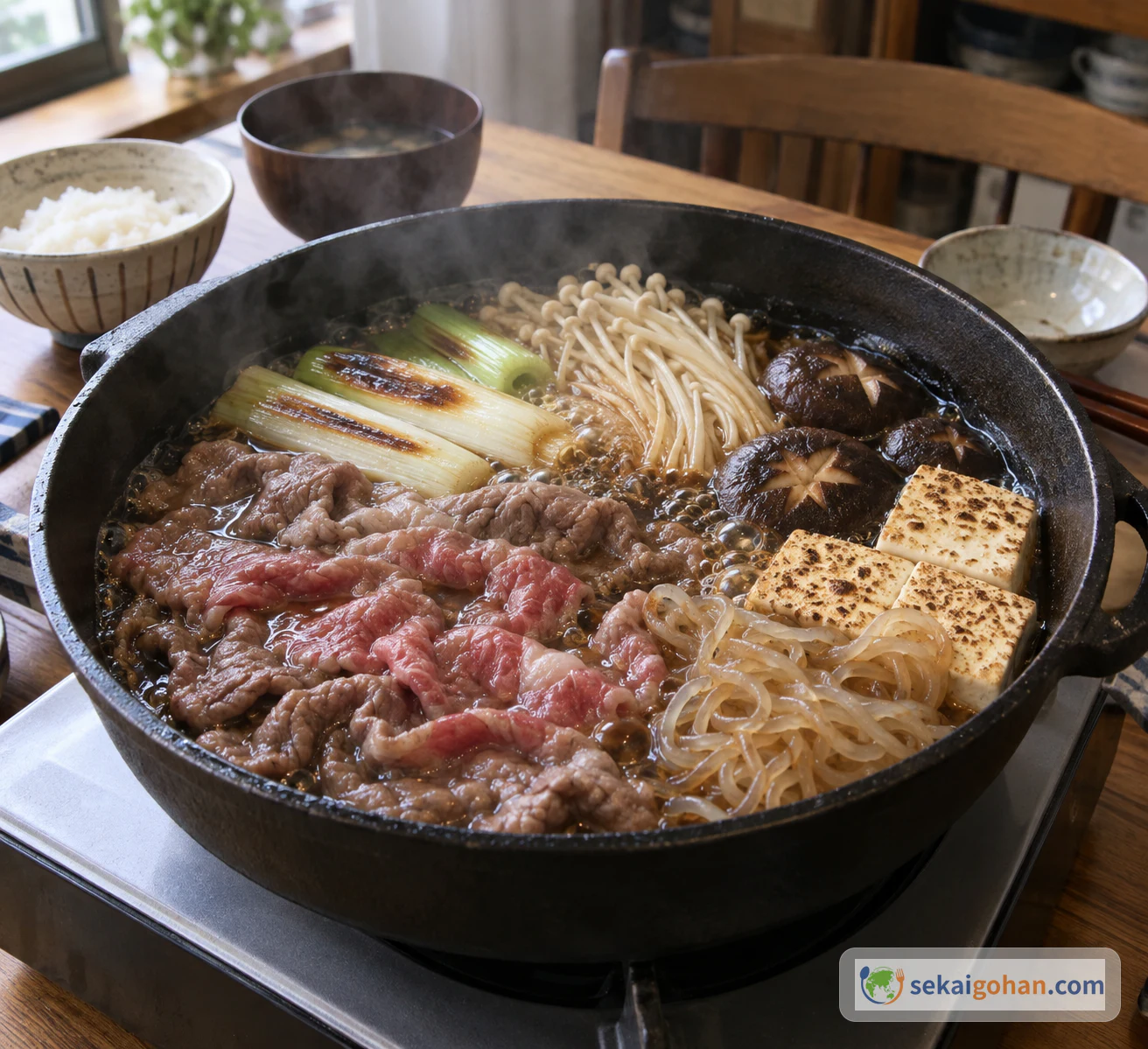
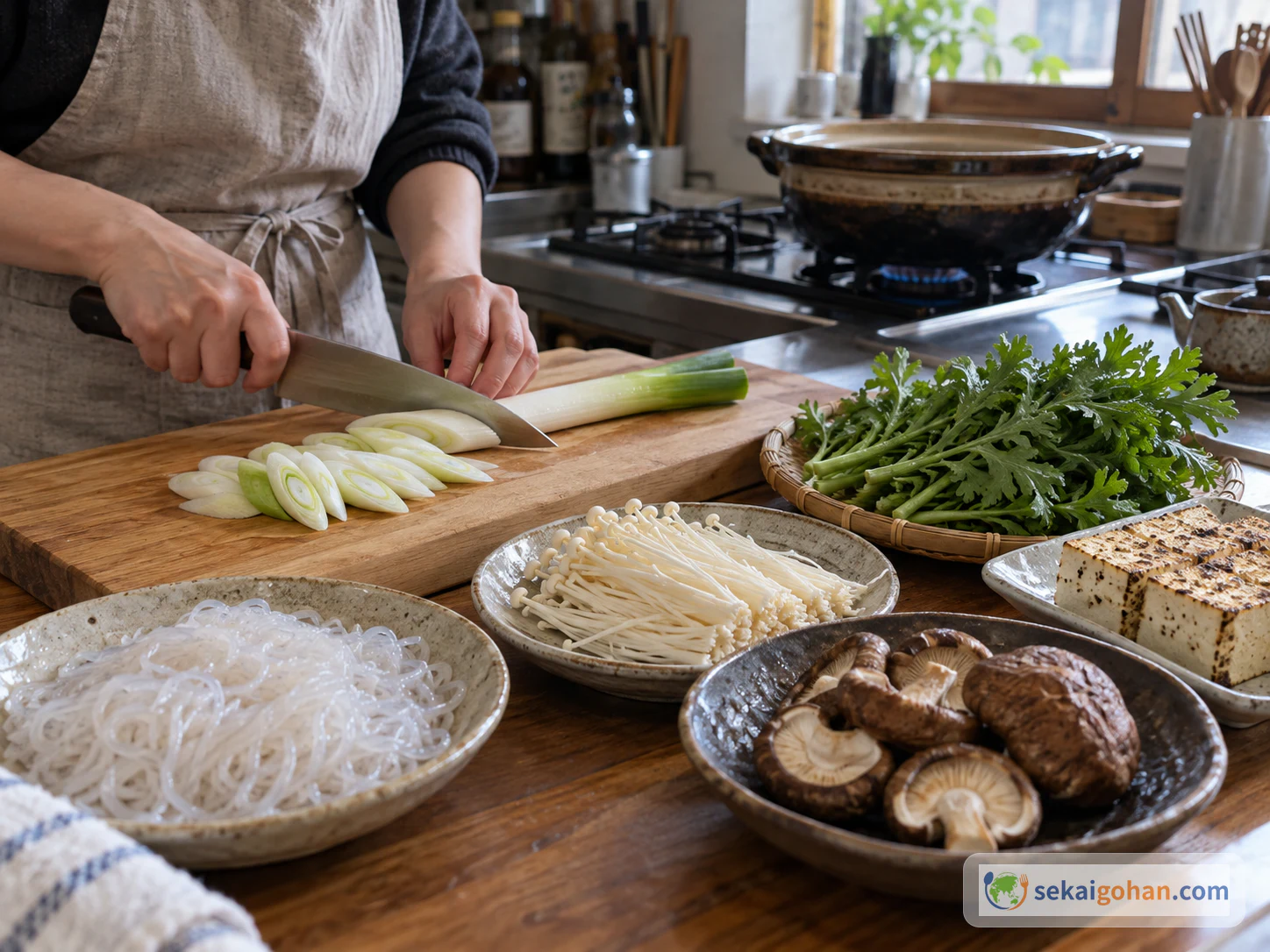
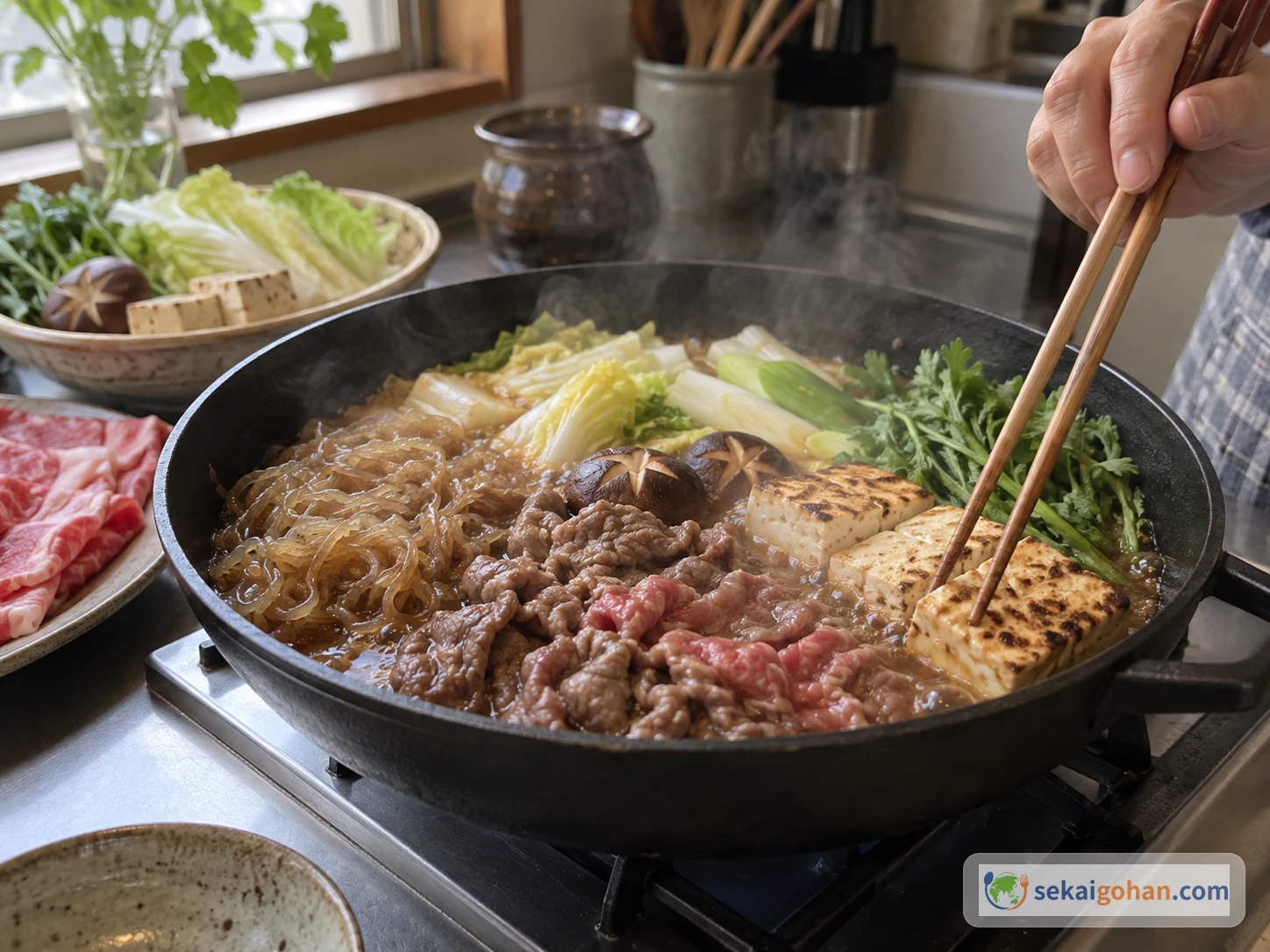
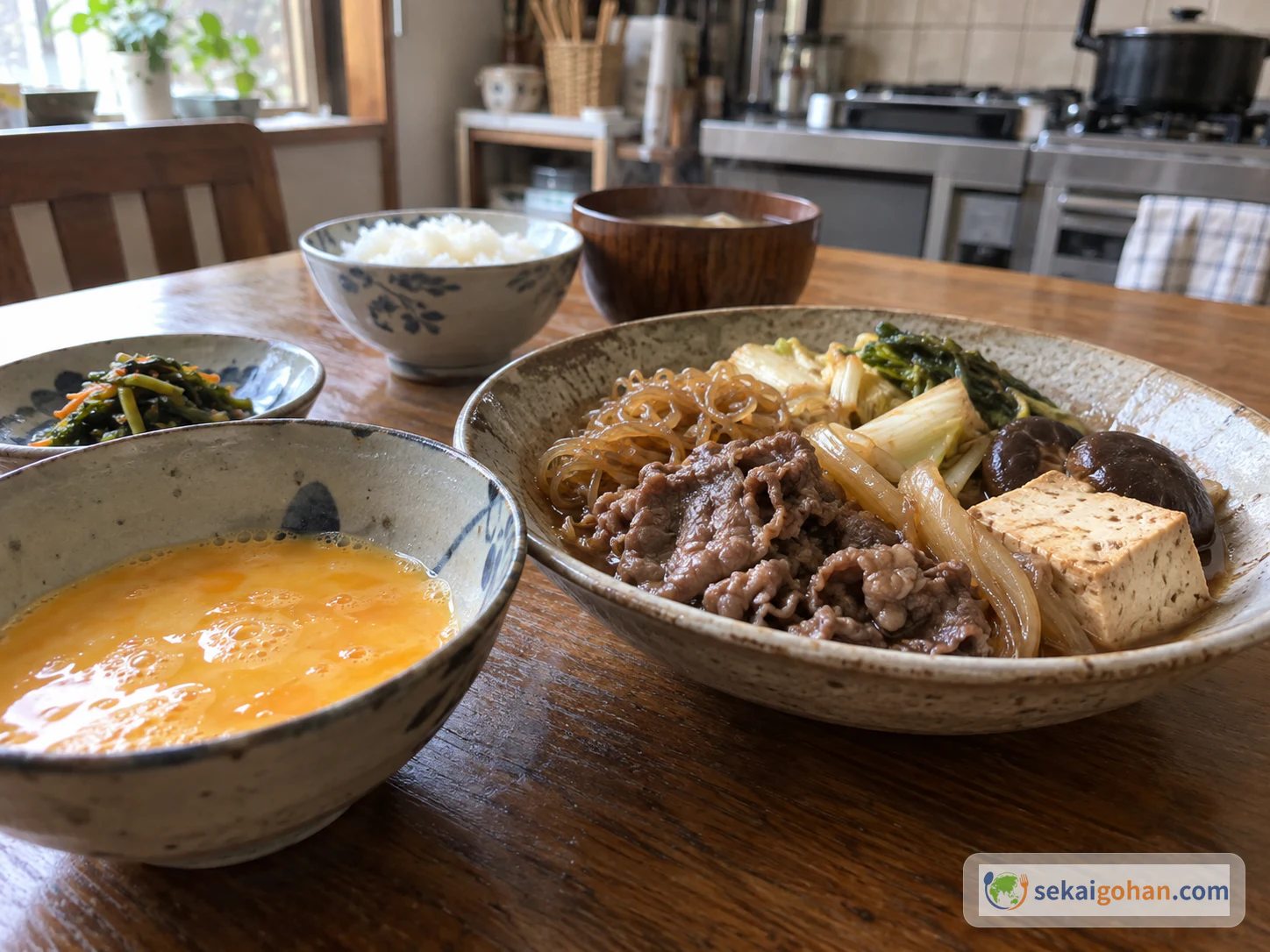
A shallow pot sits in the middle of the table, and thin slices of beef, long green onion (negi), grilled tofu, shirataki noodles, mushrooms and chrysanthemum greens simmer together while everyone reaches in for pieces as they're done. Each bite gets dipped in beaten egg before eating. Sukiyaki is Japan's beef hot pot, and its flavor comes from a sweet-savory sauce of soy sauce, mirin, water and sugar. Cooking takes about 20 minutes, a little more or less depending on how long you parboil the shirataki.
Sukiyaki Styles and Background
Warishita and the Two Styles
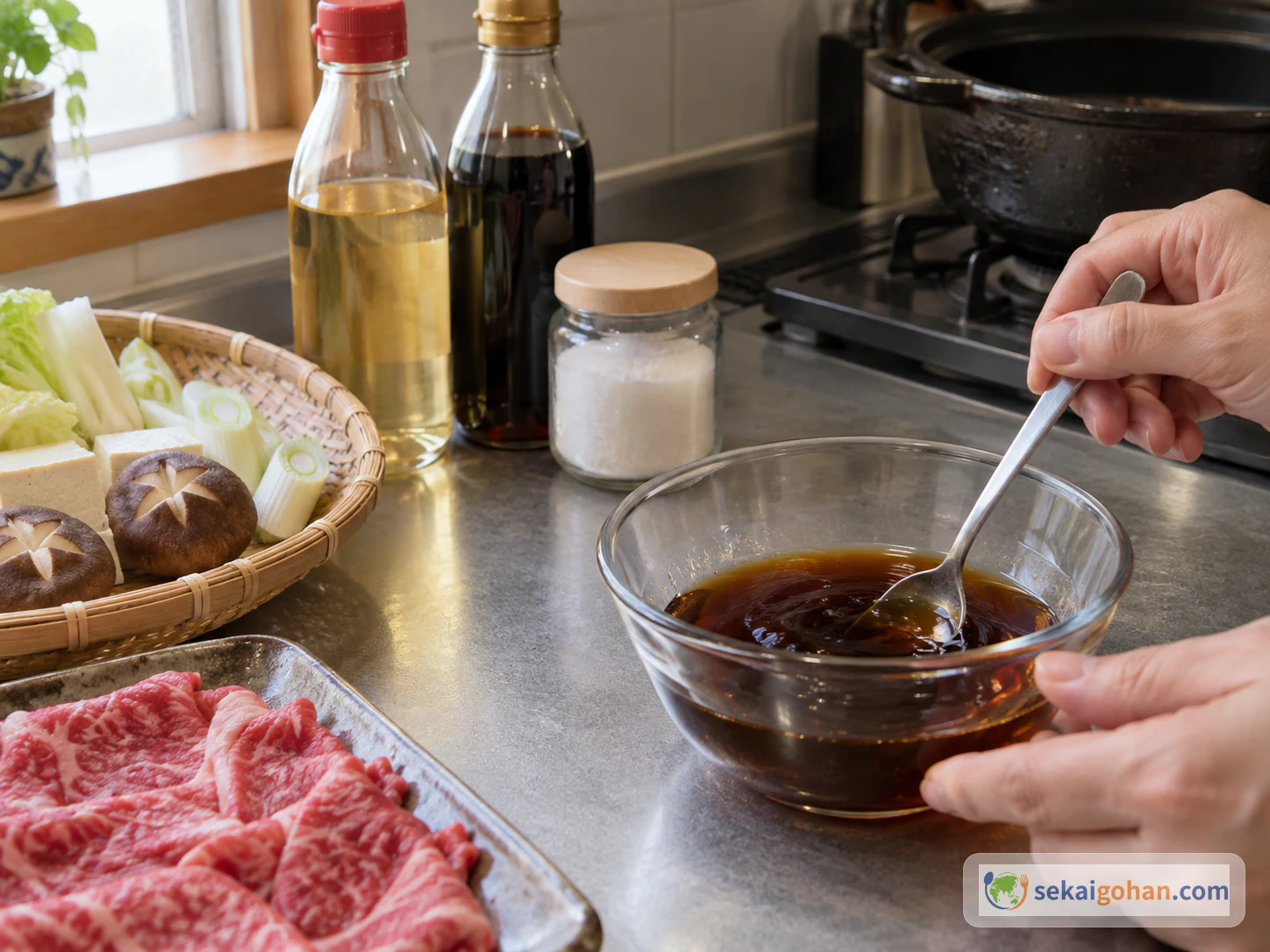
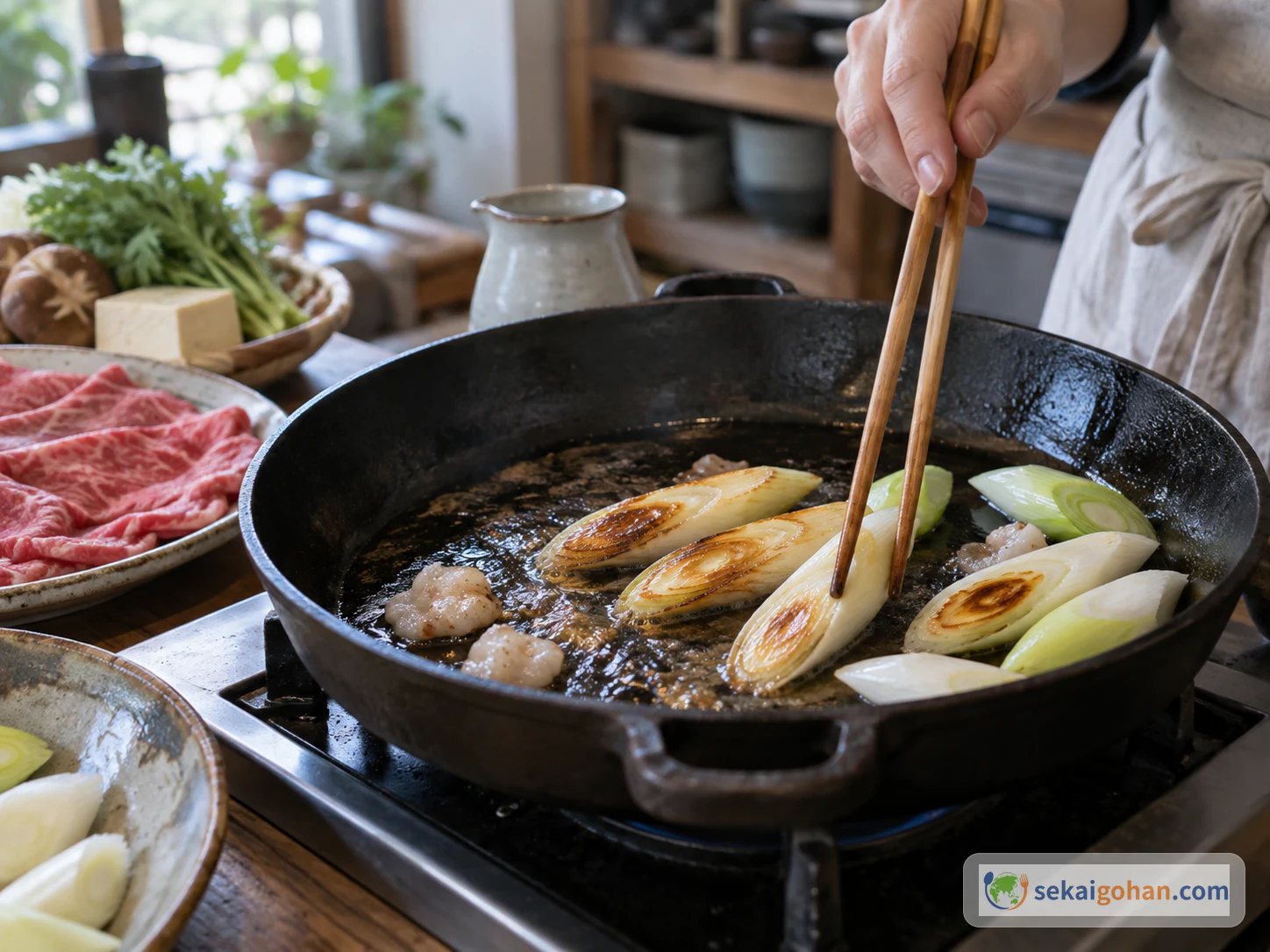
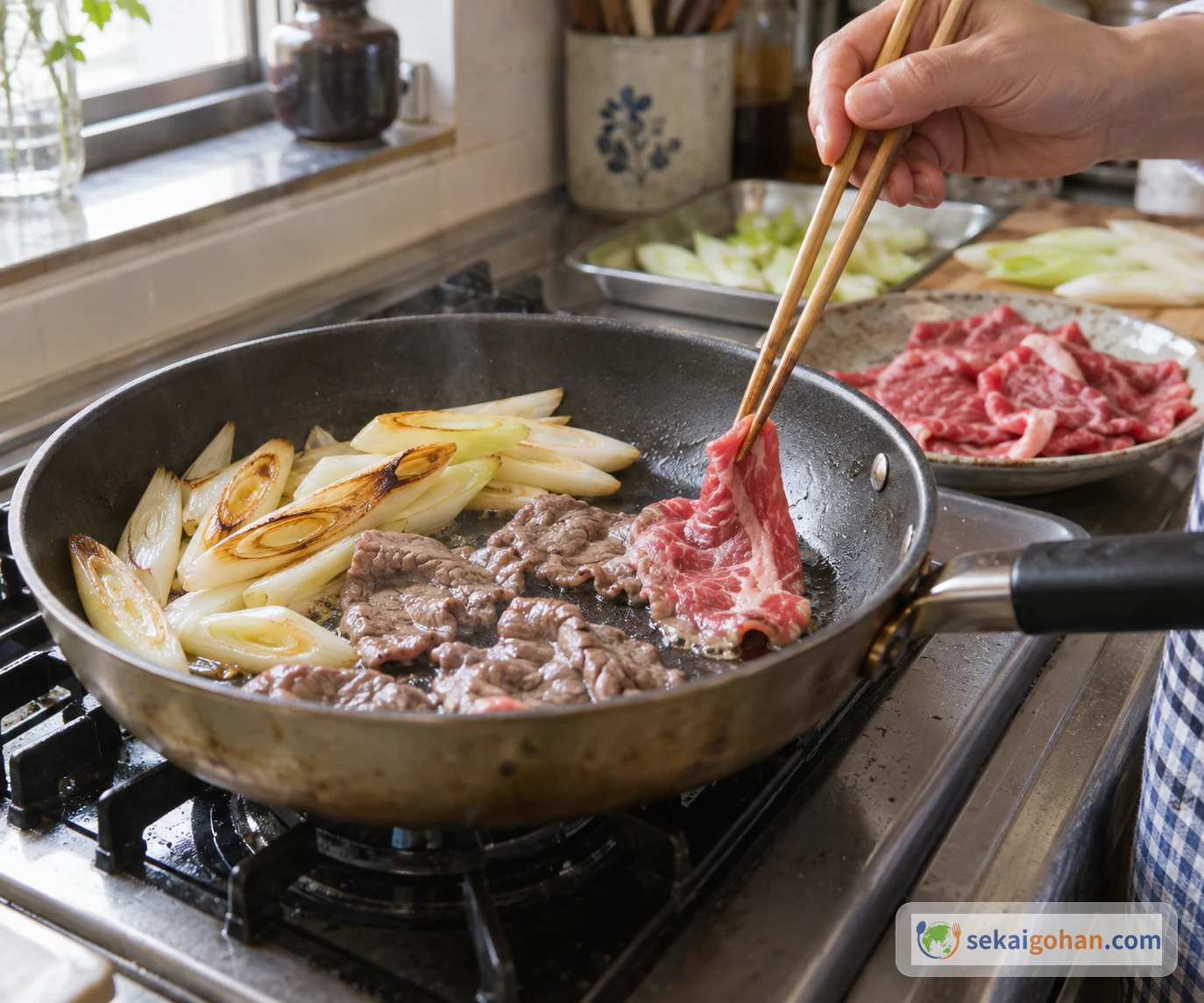
The sauce is called warishita, a premixed blend poured into the pot. Mix it first, then sear the negi in beef suet until fragrant, give the beef a brief sear, and pour the warishita in. The tofu, shirataki, mushrooms and greens then take up the sweet-savory liquid as they simmer.
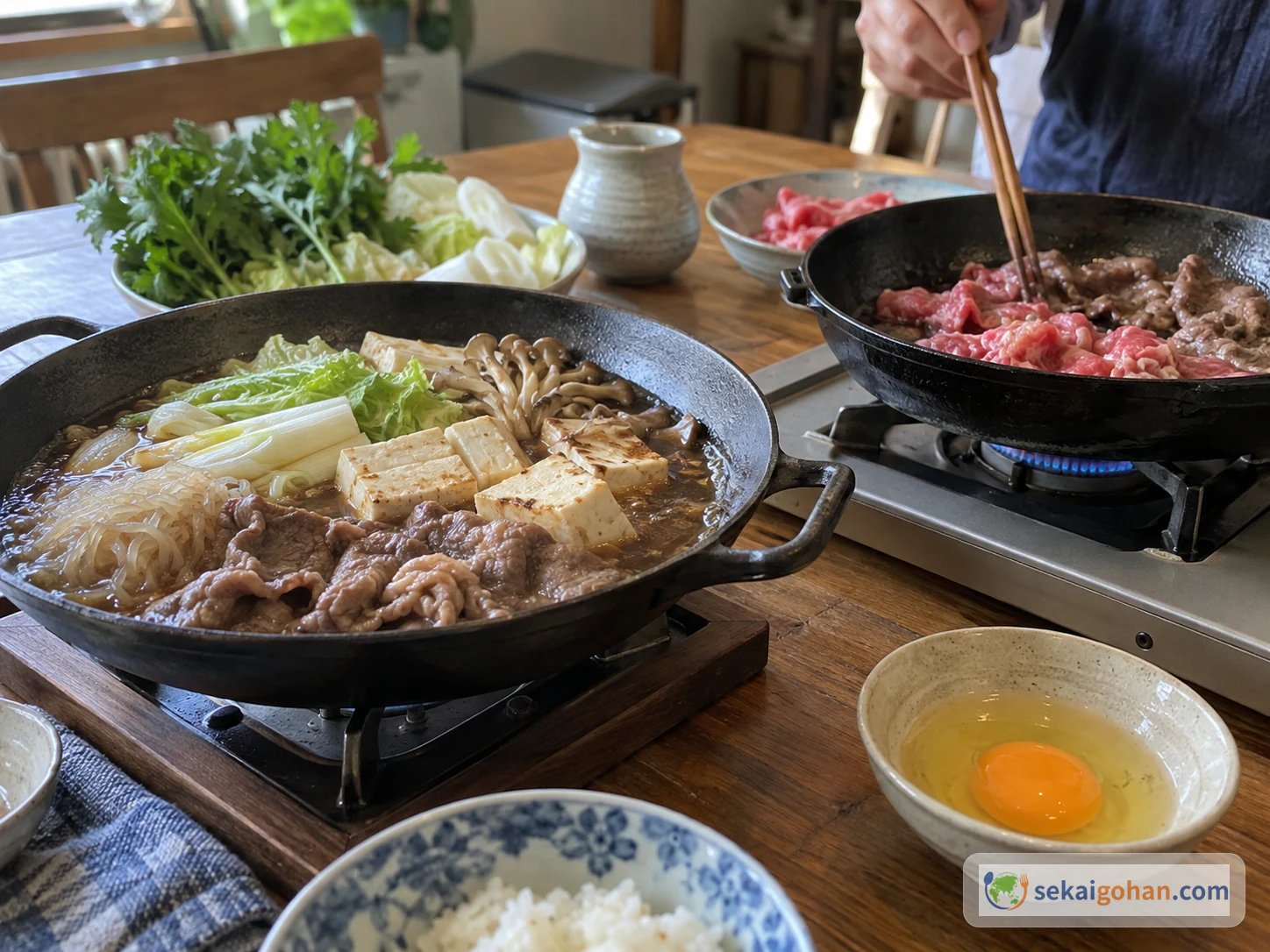
Sukiyaki is made in two broad styles. In the Kanto style, the warishita is prepared in advance and the ingredients simmer in it. In the Kansai style, the beef is seared first, then sugar and soy sauce go straight into the pot and the liquid is adjusted as you go. This recipe uses a warishita but borrows the Kansai habit of searing first; if you want to cook the Kansai way, use a recipe written for it rather than mixing its amounts into this one.
Both styles vary from household to household. Families in Japan adjust the sweetness, the strength of the liquid and the choice of ingredients to their own taste, and in Aichi Prefecture a regional version for 4 servings uses kombu water in the warishita.
Background of Sukiyaki
Sukiyaki made with beef spread in the early Meiji era, around 1870. The origin of the name, its exact birthplace and its inventor are not clear. What hasn't changed is how it's eaten: ingredients go into one pot in turn, and people serve themselves as each piece is done.
For other ways beef appears in East Asian cooking, see Sichuan shuizhu niurou and Korean japchae. For more about the country's cooking, see the Japan page.
Ingredients for 3–4 Servings
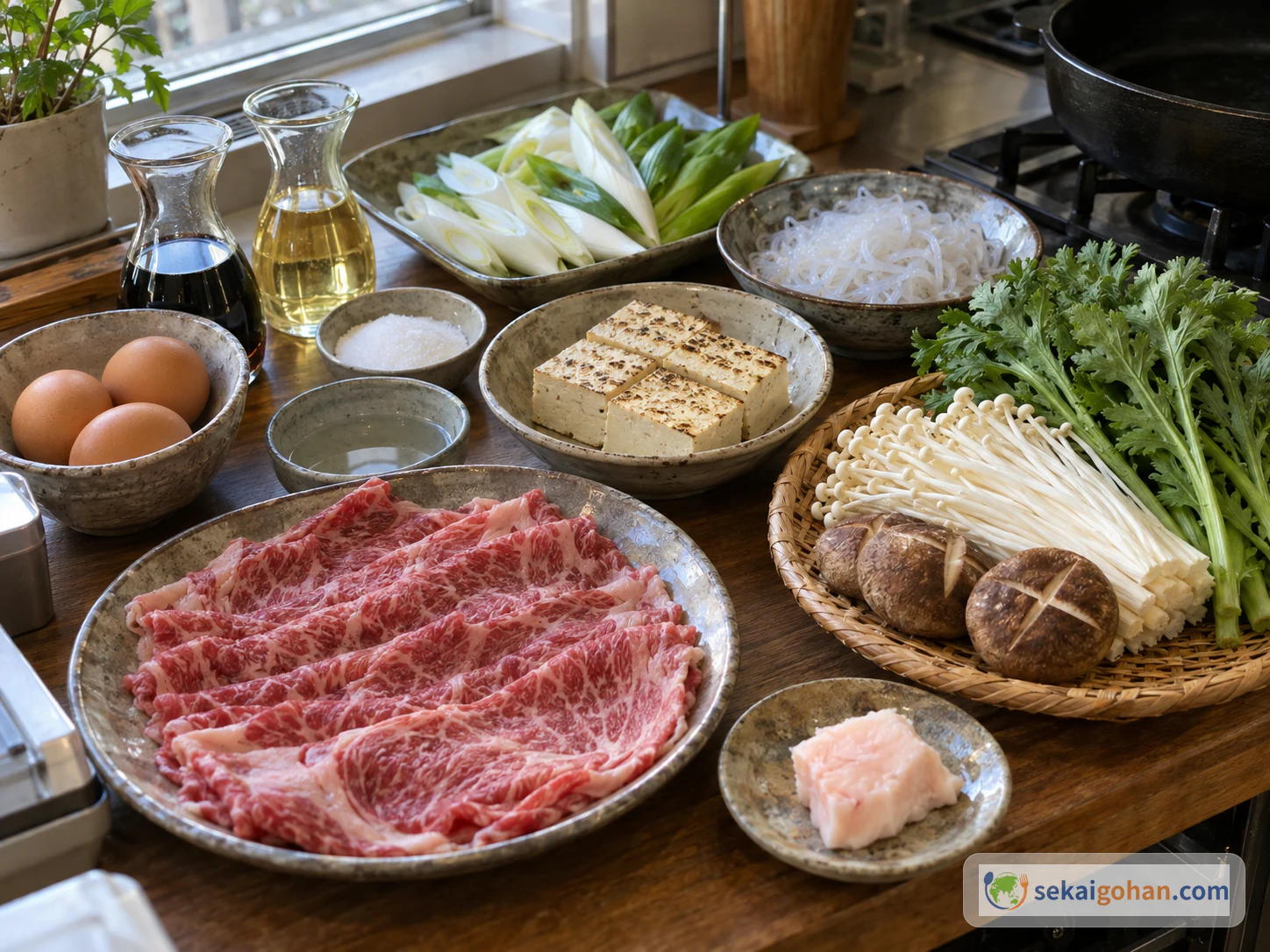
These amounts are for 3–4 servings. The 4 eggs are for the whole pot, not 4 per person.
The warishita is soy sauce, mirin and water at ½ cup (100ml) each, plus 4 tbsp sugar. To make it a little sweeter or lighter, adjust after the base is mixed.
A whole-soybean soy sauce works well; an ordinary Japanese dark (koikuchi) soy sauce is also fine.
This dish contains beef, egg and soy (grilled tofu and soy sauce). Soy sauce can also contain wheat, so check the label of the product you use, along with labels on shirataki, tofu and mirin. Keep the plate, chopsticks and tongs you use for raw beef separate from the ones you eat with.
Equipment
- A shallow sukiyaki pan or shallow pot
- Knife and cutting board
- A small bowl and spoon for mixing the warishita
- A saucepan for parboiling the shirataki
- A separate plate and chopsticks or tongs for raw beef
- Small individual bowls for beaten egg
Choosing Ingredients for Sukiyaki
Beef. Use thin slices of chuck roll sold for sukiyaki. Thin slicing matters because the beef cooks only briefly before it simmers. Leaner thin slices also work, though the sweetness from the fat will be milder.
Tofu. Grilled tofu holds its shape in the simmering liquid. Pressed firm (momen) tofu can stand in, but it breaks apart more easily.
Shirataki. Other konjac noodles will change the flavor and texture.
Shungiku. Its aroma and gentle bitterness are part of the pot's character, and a substitute shifts the flavor. If you dislike it or can't find it, leave it out; the rest of the method stays the same.
Mushrooms. Enoki and shiitake are the base, and shimeji can be added too.
Vegetable oil instead of beef suet. It coats the pot just as well, but you lose the aroma of beef fat.
How to Make Sukiyaki
Mix the warishita ahead of time, but in the pot the order is: suet, negi, beef, then warishita, then everything else.
Fixing Common Sukiyaki Problems
Whatever goes wrong, cook everything through before eating.
| Condition | Likely cause | What to do |
|---|---|---|
| The sauce becomes too strong and salty | The warishita reduced as it simmered | Add the warishita gradually, topping up as it reduces. If it's already too concentrated, add a little water |
| The beef turns tough | It simmered too long after cooking through | Sear the beef only briefly before adding the warishita, and take pieces out once cooked through. Never cut heating short for the sake of texture |
| The shungiku goes limp and dull | The thin leaves soften quickly in hot liquid | Place it where you can see it and take it out once wilted and cooked |
| The tofu takes up uneven color | It was never turned | Turn it over partway through simmering, as in step 5 |
Serving Sukiyaki and the Zosui Finish
Bring the pot to the table and let everyone take pieces as they're done, dipping them in beaten egg. When the pot is empty, the leftover simmering liquid makes a good zosui (rice porridge). Bring the liquid back to a full boil before adding the rice.
Frequently Asked Questions
Can I use store-bought warishita?
You can. Sweetness and concentration differ between products, so follow the label for how much to use and whether to dilute it.
Can I eat sukiyaki without raw egg?
Yes. Leave out the egg and eat the ingredients once they are fully cooked. If you want egg but would rather cook it, cook it until the yolk and white are firm. Hot food does not cook raw egg safely, so skip the raw egg if you are unsure.
How should I handle leftovers?
Divide them into shallow containers, cool them quickly and refrigerate. When reheating, heat to 167°F (75°C) or above and bring the liquid to a boil. Eat leftovers soon.