Nasi Tempong: Banyuwangi Rice Plate with Fresh Sambal, Greens and Fried Sides

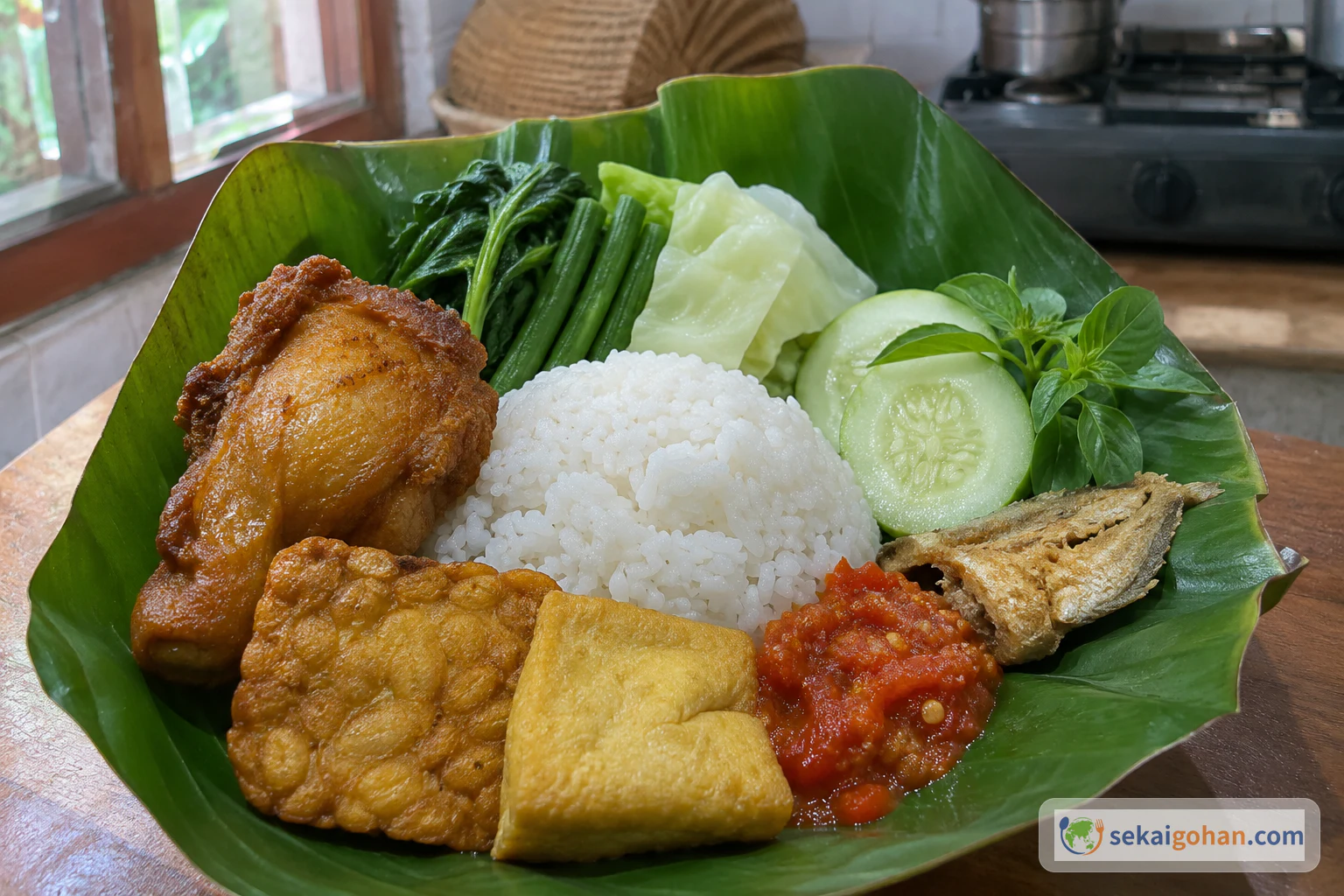
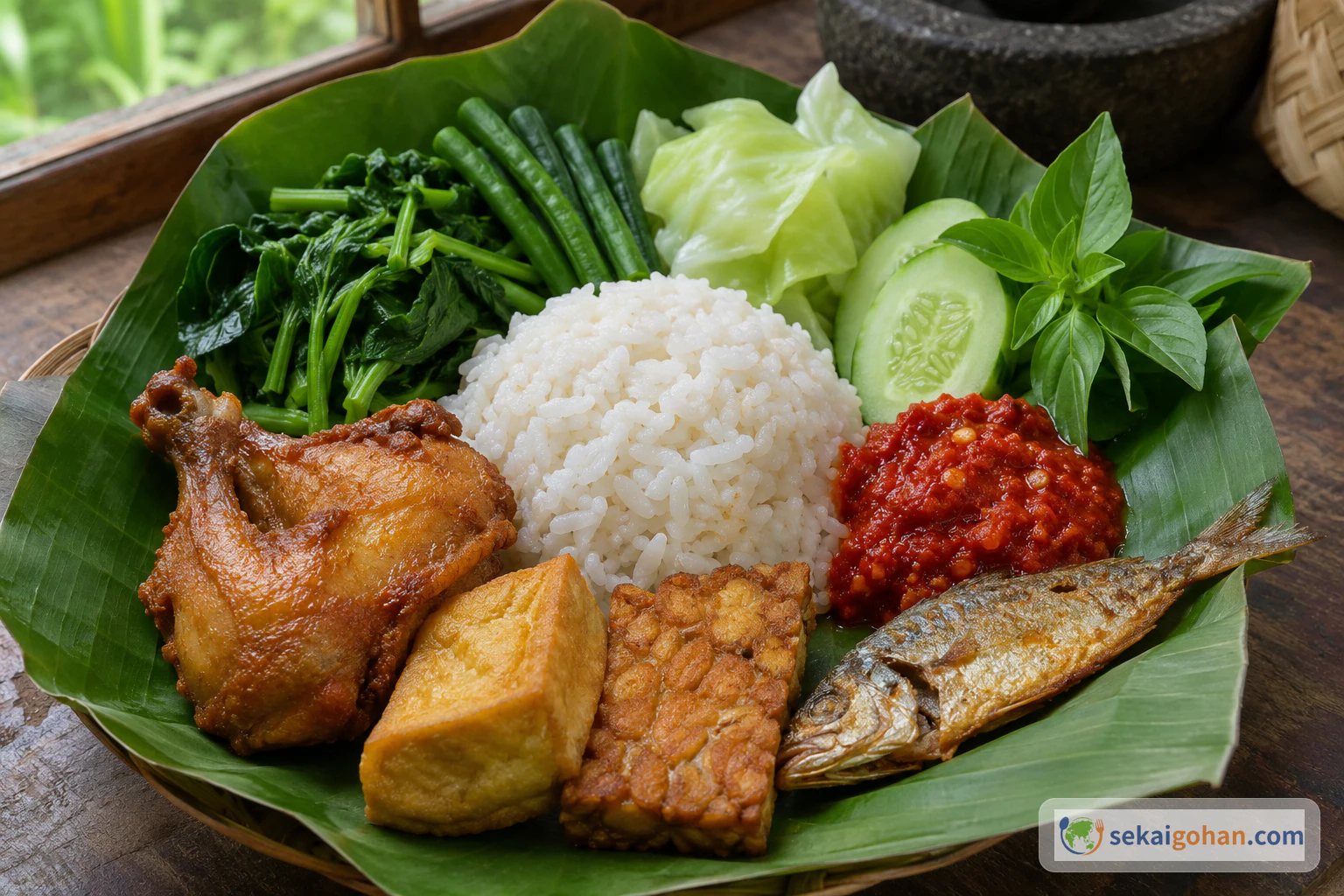
Nasi tempong with warm white rice, fresh sambal, fried chicken, tofu and tempeh, and blanched vegetables
Serves
4 servings
Level
Intermediate
Cuisine
Indonesian

How to make nasi tempong from Banyuwangi, East Java: warm rice, freshly ground sambal, blanched vegetables, and chicken, tofu and tempeh simmered in coconut milk and then fried. Includes one credited Indonesian recipe, ingredient choices, food-safety checks, and the dish's Osing background.

Cooking flow

Cooking steps

STEP11 / 14

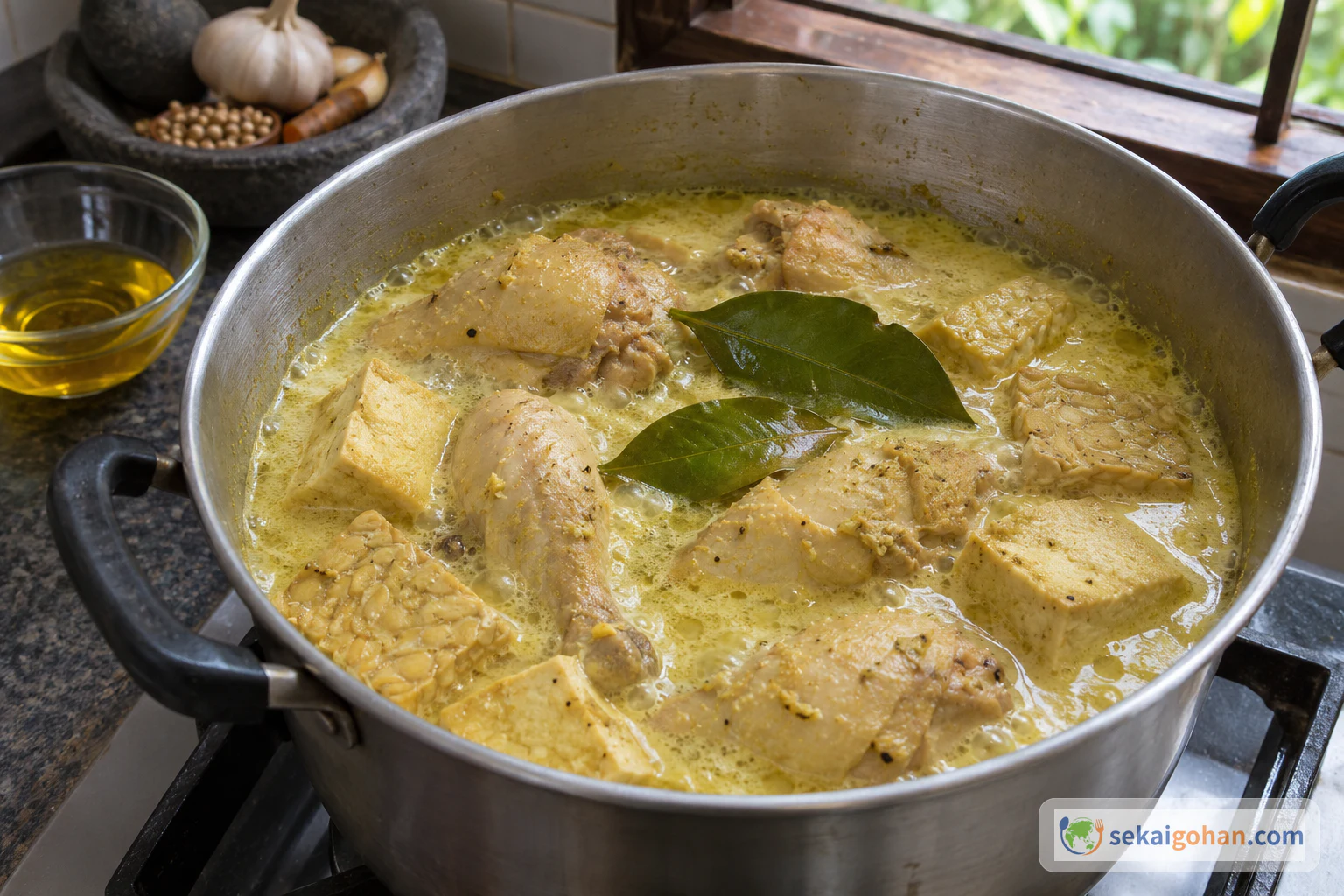
Simmer the chicken, tofu and tempeh uncovered

Chicken, tofu, tempeh and salam leaves simmering in coconut milk in an uncovered pot
Simmer uncovered, with the frying oil kept separate

Combine the coconut milk, 1 tbsp salt, pepper, coriander, turmeric and grated garlic in a pot. Add the chicken, tofu, tempeh and salam leaves. Simmer uncovered over low heat until the liquid has reduced by half. Keep the frying oil out of this pot.

The reduced liquid and yellow surface do not prove the chicken is cooked through. You will check it with a thermometer in step 4.

Wash your hands after handling raw chicken, and wash any knife or board that touched it before using them for anything else.

STEP22 / 14

Cool the simmered pieces briefly

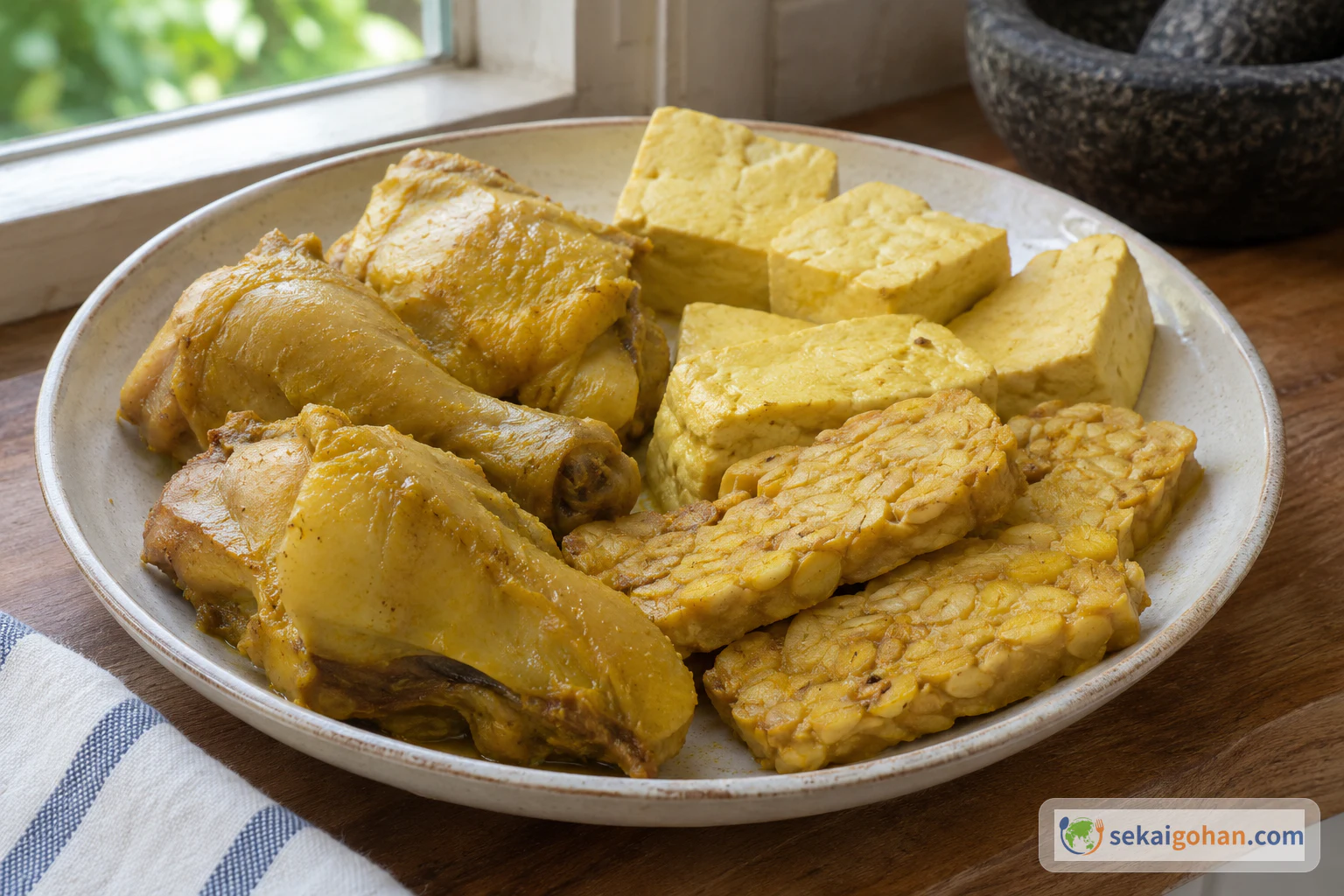
Simmered chicken, tofu and tempeh resting in a clean shallow dish
A short rest for handling, not long storage at room temperature

Lift the chicken, tofu and tempeh into a clean shallow dish. Cool them only long enough to handle them. Keep them away from raw vegetables.

If you are not frying right away, cool them quickly in shallow containers and refrigerate. Put perishable food in the refrigerator within 2 hours, or within 1 hour if the surrounding temperature is above 90°F (32°C). Keep the refrigerator at 39°F (4°C) or below.

STEP33 / 14

Fry the chicken, tofu and tempeh

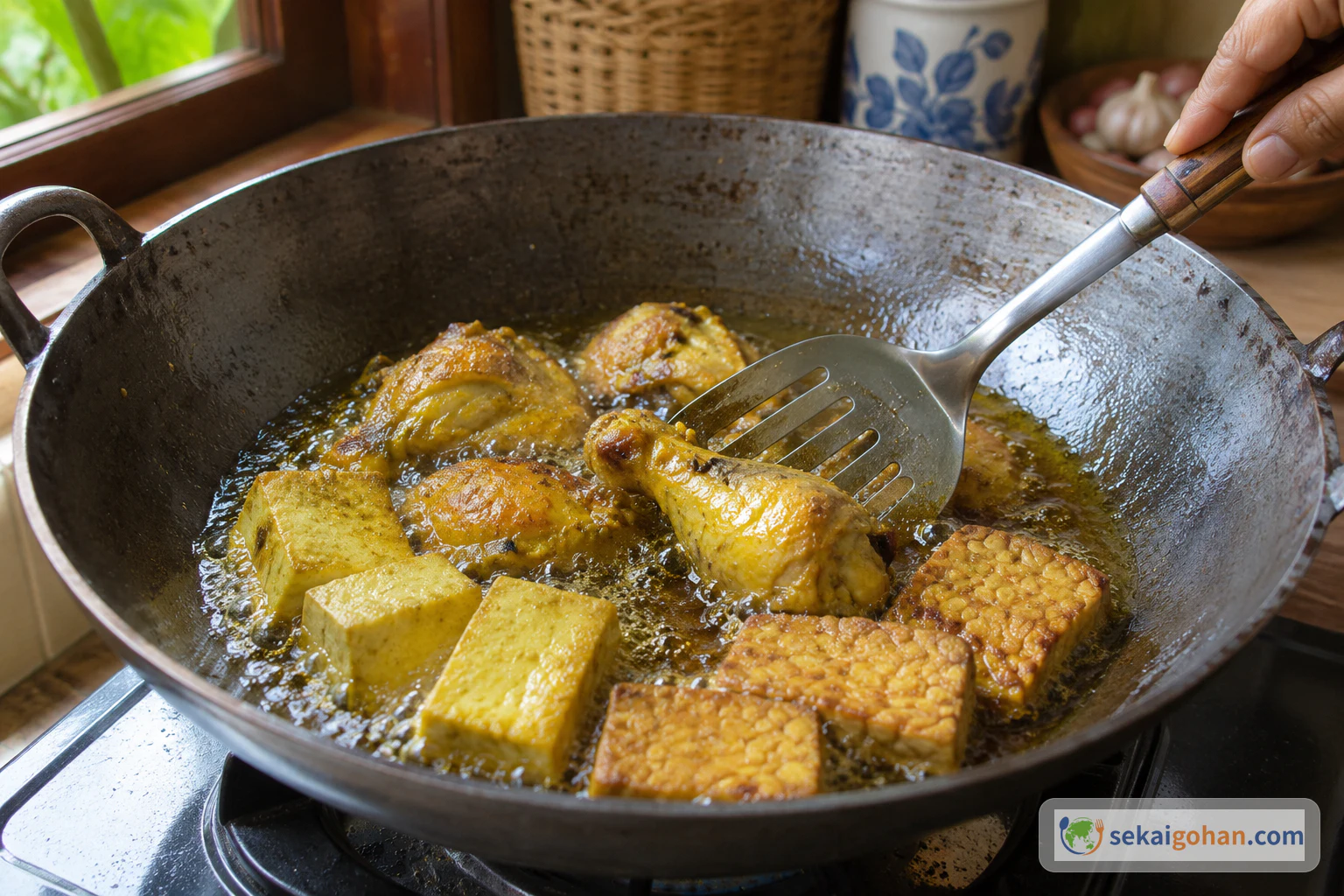
Chicken, tofu and tempeh frying in a separate pan of oil
Turn the pieces gently in the frying oil

Heat the 1 cup (250ml) of frying oil in a separate pan. Gently add the simmered chicken, tofu and tempeh, and fry until golden, turning them as they cook. Leave the salted fish out of this pan, since it is already fried.

STEP44 / 14

Drain the pieces and check the chicken

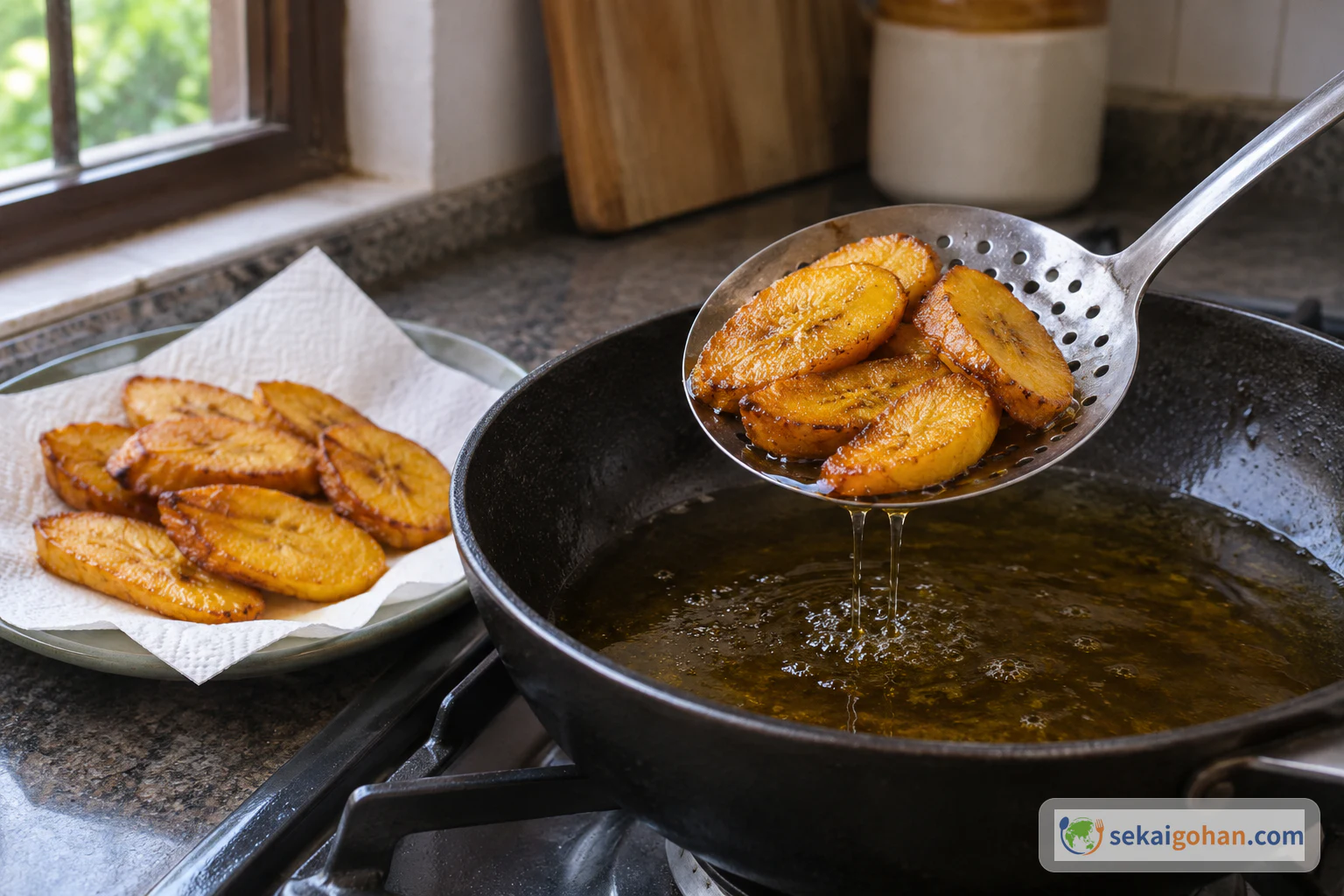
A slotted spoon lifting fried pieces above the pan to drain
Drain the oil, then check the chicken with a thermometer

Lift the fried pieces with a slotted spoon and let the oil drain back into the pan.

Insert a food thermometer into the thickest part of the chicken, without touching the bone. It must read at least 165°F (74°C). If it reads lower, keep cooking and check again.

STEP55 / 14

Grind the sambal base

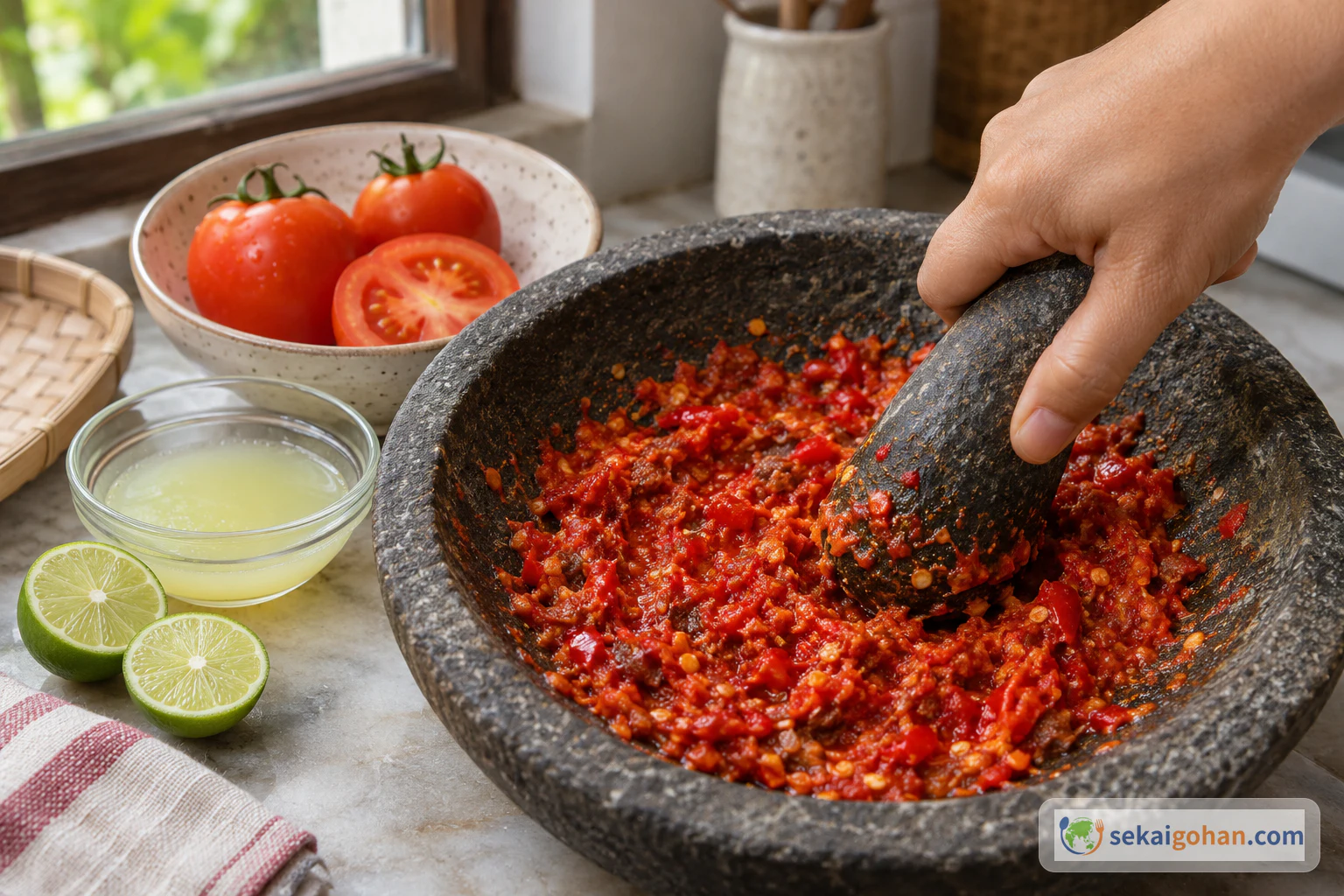
Grinding chilies, cooked terasi, salt and sugars in a mortar
The tomatoes and citrus juice wait in separate bowls

Grind the sambal just before eating. Wash the chilies under running water. Use clean tools here, not any knife, board or hands that touched raw chicken unless they have been washed.

Set the tomatoes and lime aside for now. In the mortar, grind the bird's eye chilies, curly chilies, ready-to-eat terasi, 1 tsp salt, palm sugar and granulated sugar into a base. No heat is used.

STEP66 / 14

Press in the tomatoes

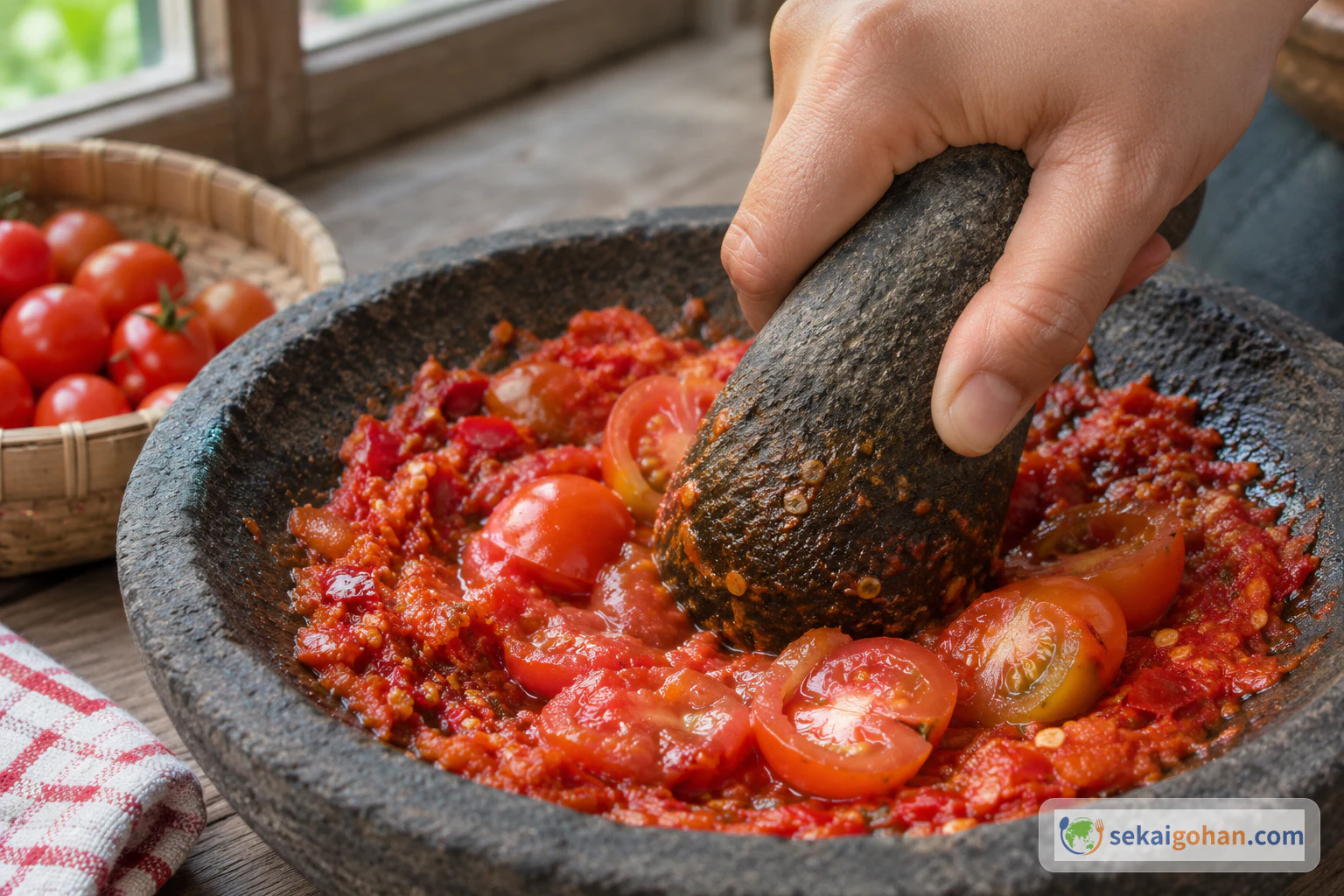
Pressing the set-aside tomatoes into the sambal base with a pestle
The tomatoes go in after the base

Wash the tomatoes under running water. Add them to the base and press and grind them together with the pestle.

STEP77 / 14

Add the lime juice

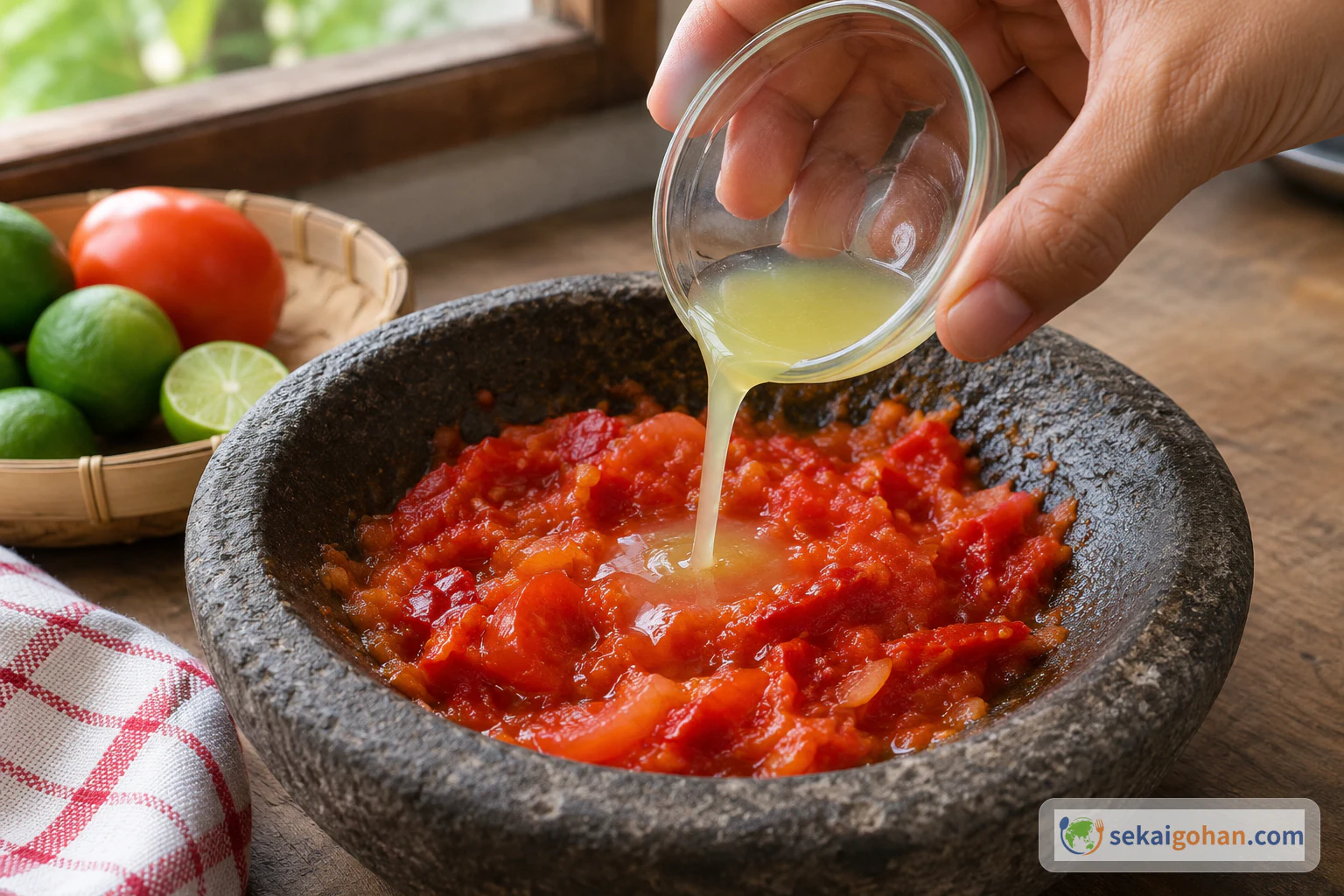
Pouring citrus juice into the sambal
Squeeze the limes after washing the peels, then add the juice

Wash the lime peels well, without detergent, then squeeze the 2 limes. Pour the juice into the mortar.

STEP88 / 14

Stir the sambal until even

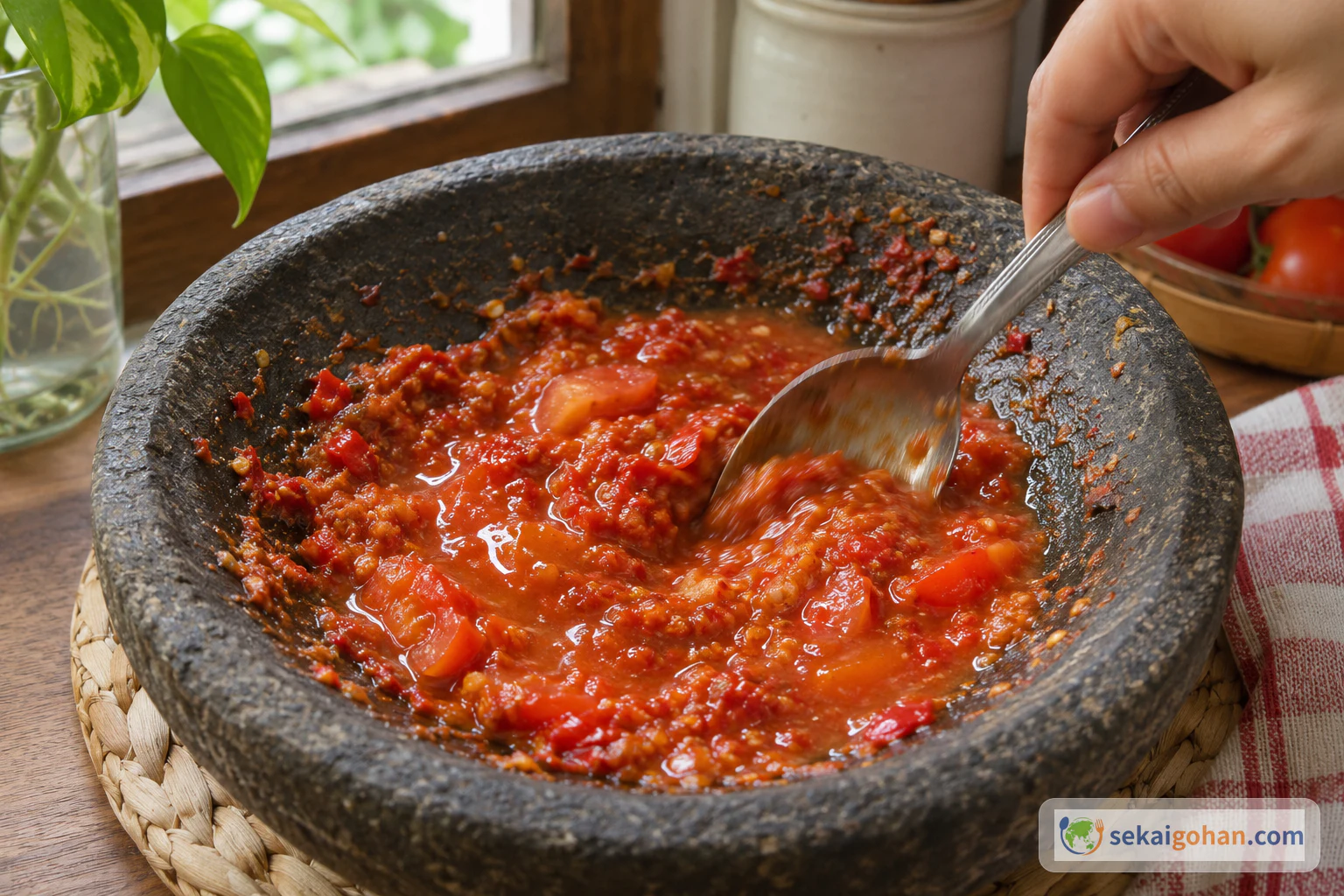
Stirring the tomato and citrus juice evenly into the sambal base
Mix with a spoon, with no heat

Stir with a spoon until the tomato and juice are evenly mixed into the base. Use the sambal right away.

STEP99 / 14

Set out the vegetables

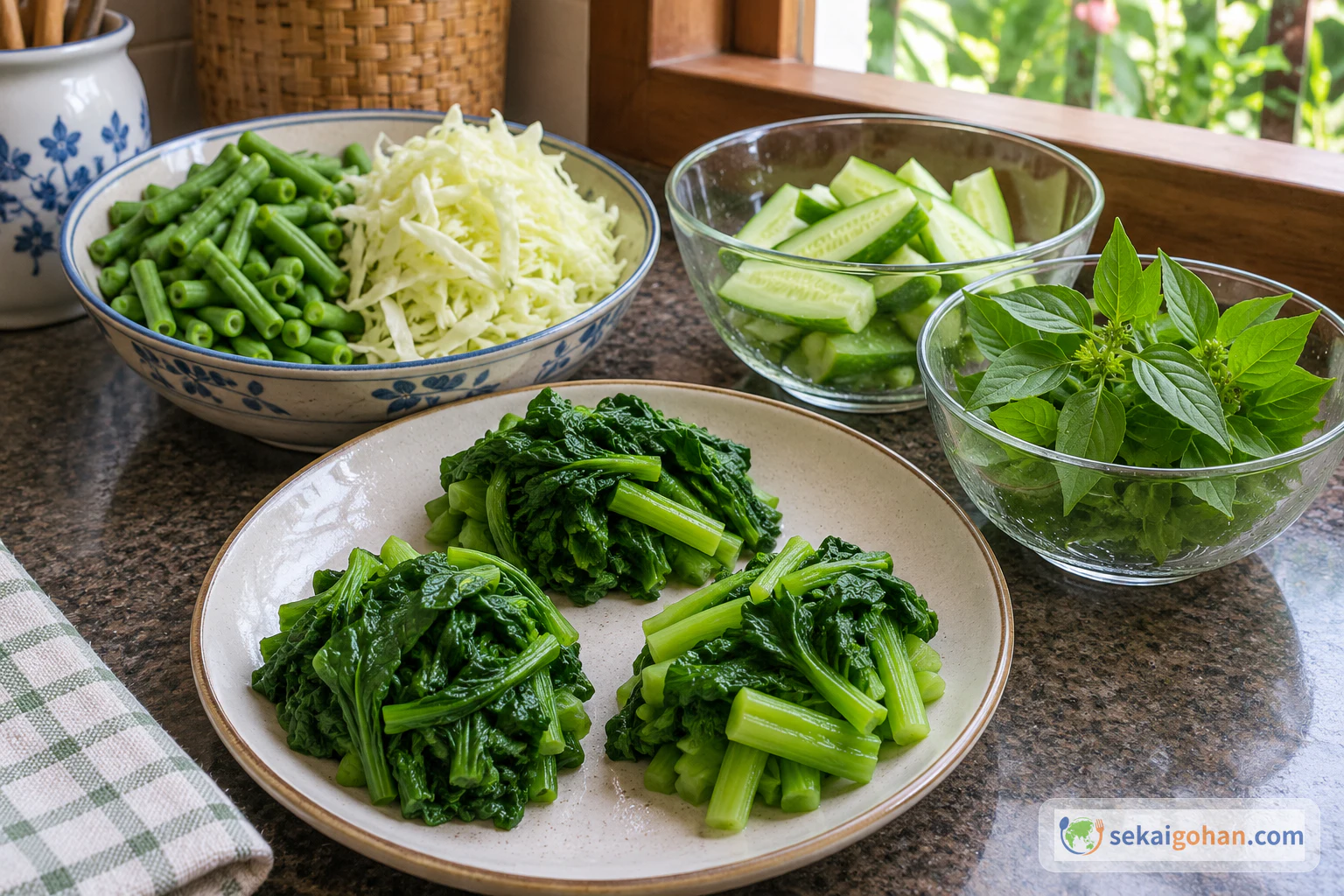
Blanched mustard greens, long beans and cabbage set out separately from cut cucumber and kemangi
Keep the blanched vegetables and raw vegetables in separate groups

Wash the vegetables and herbs thoroughly under running water. Blanch the mustard greens, then cut them into 3. Cut and blanch the long beans. Shred and blanch the cabbage. Cut the cucumber. Set out the blanched vegetables, cucumber and kemangi separately, away from raw chicken and anything it touched.

STEP1010 / 14

Add the warm rice to the pincuk

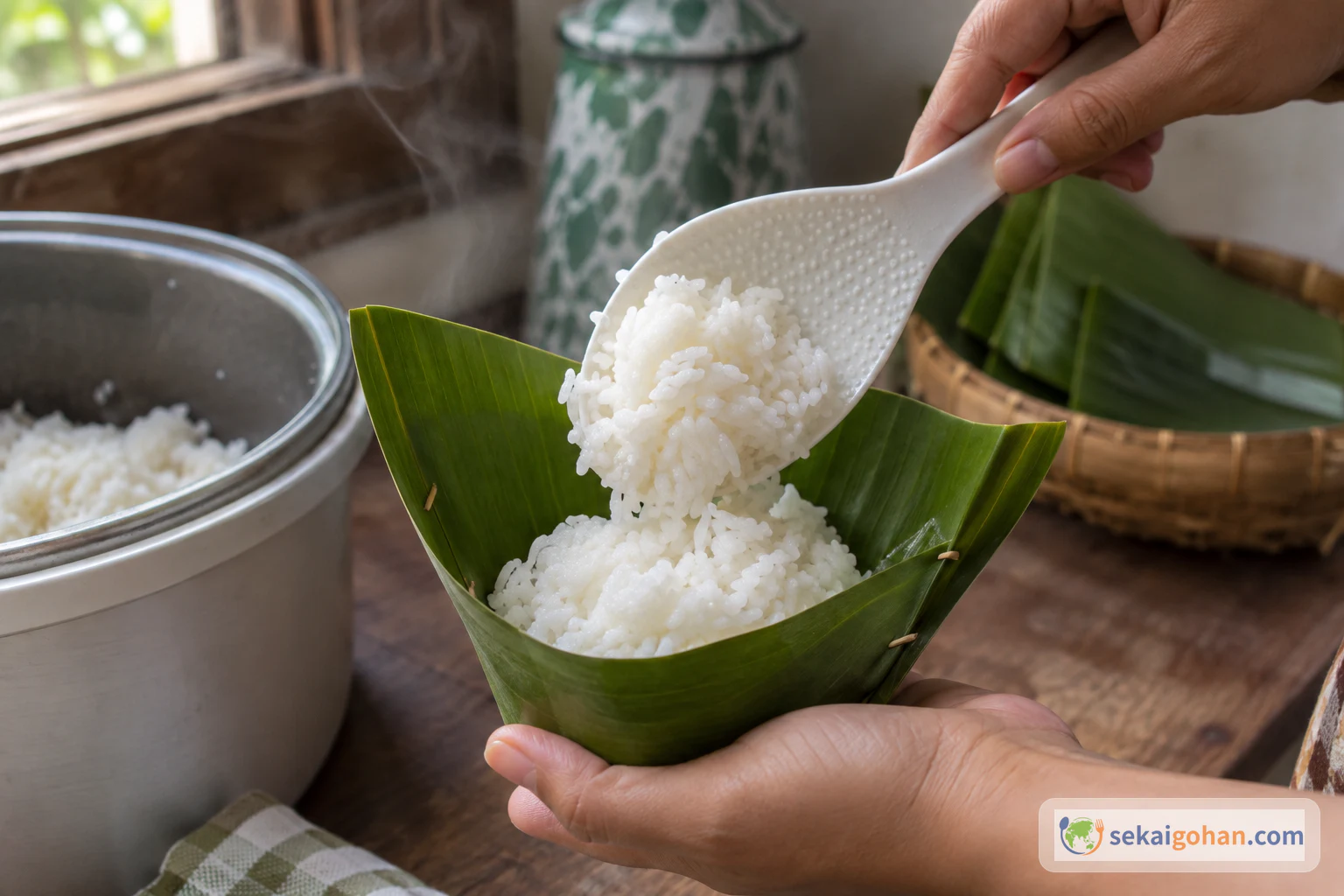
Placing cooked white rice into a leaf pincuk
Use warm cooked rice, not dry rice

Form a pincuk from a food-contact leaf and secure it with a lidi pin. Place 5.5 oz (150g) of warm cooked rice in it. Repeat for each serving.

STEP1111 / 14

Add the vegetables beside the rice

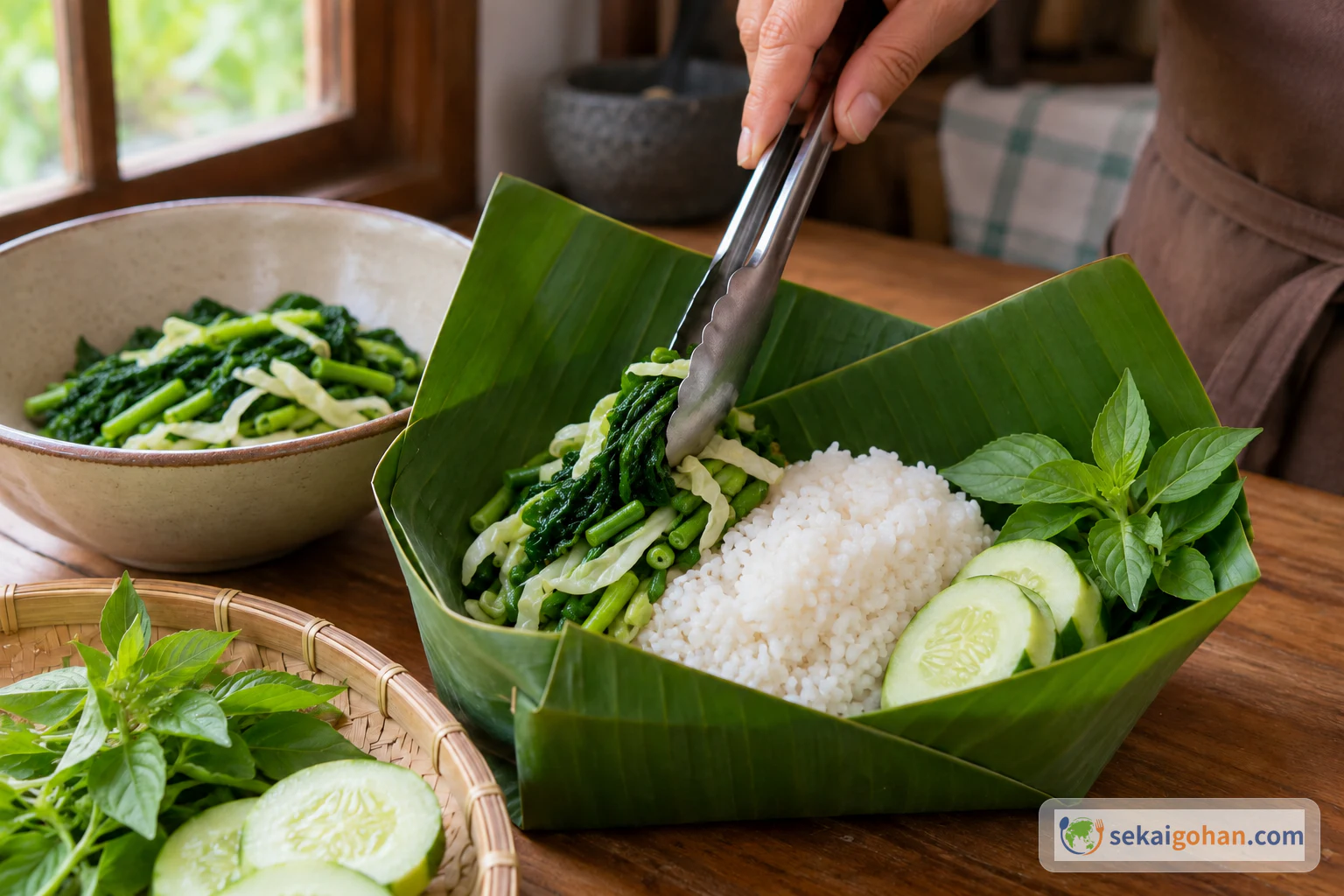
Placing the prepared vegetables beside the rice
The vegetables go right beside the rice

Arrange the blanched vegetables, cucumber and kemangi beside the rice, dividing them among the servings.

STEP1212 / 14

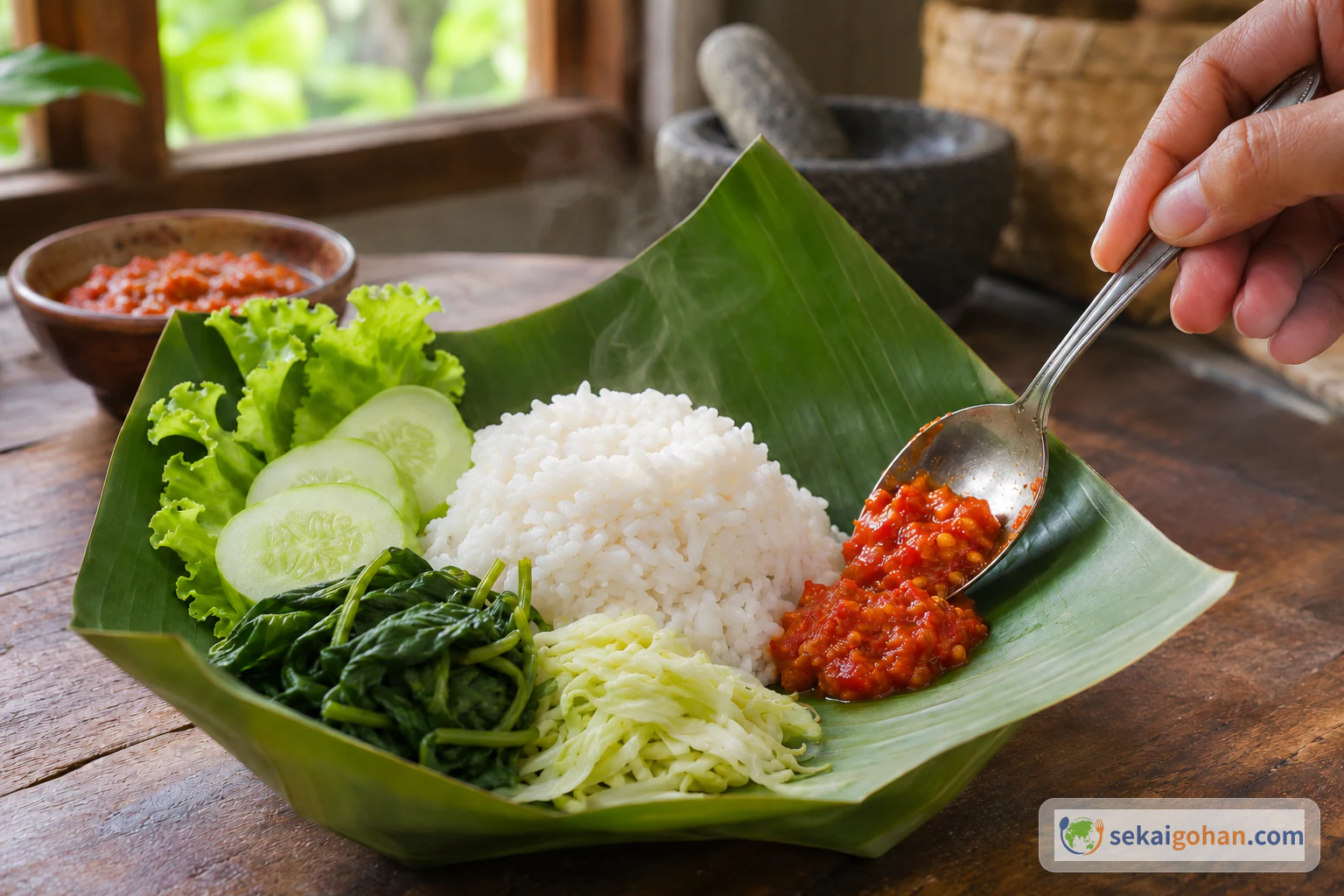
Spoon on the sambal

Spooning sambal beside the rice and vegetables
2 tbsp of sambal per serving

Add 2 tbsp of sambal to each serving, beside the rice and vegetables.

STEP1313 / 14

Add the fried sides

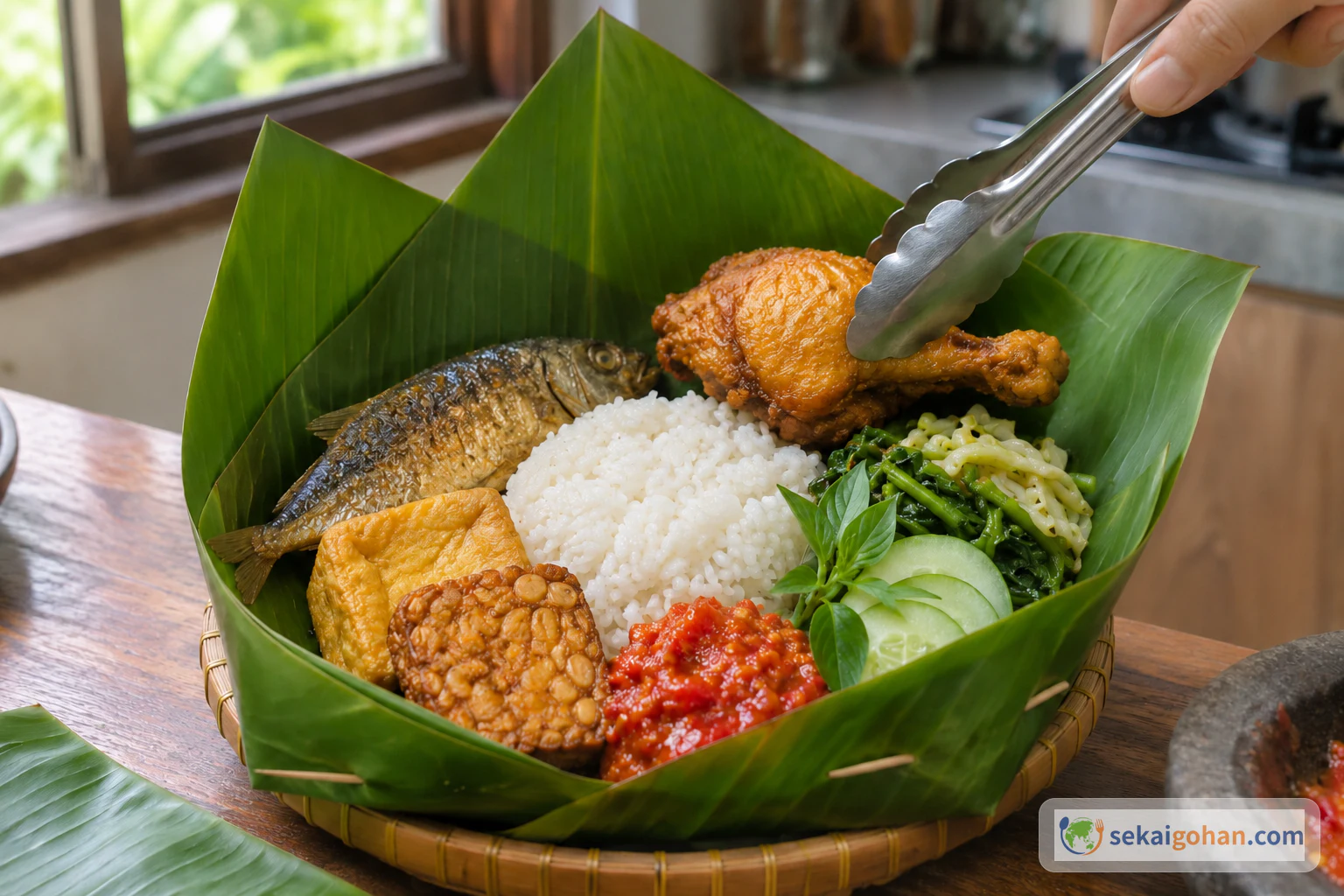
Placing fried chicken into the pincuk beside the fish, tofu and tempeh
The chicken joins the fish, tofu and tempeh already on the leaf

Divide the fried salted fish, tofu and tempeh among the servings. Finish each with a piece of fried chicken, using clean tongs or a clean spoon.

STEP1414 / 14

Serve while warm

A finished serving of rice, vegetables, sambal and four fried sides on one pincuk
One finished serving, ready to eat

Serve as soon as the plates are built, while the rice is warm and the sambal is fresh.

0 / 0
Ingredients

Ingredients

1 / 1

Ingredients

Ingredient Amount Role
Thin coconut milk (santan encer) 3 cups (750ml) Braise: the simmering liquid
Salt (garam) 1 tbsp Braise: seasoning. Separate from the sambal salt
Ground pepper (merica bubuk) 1/2 tsp Braise: seasoning
Ground coriander (ketumbar bubuk) 1 tbsp Braise: seasoning
Ground turmeric (kunyit bubuk) 1 tsp Braise: seasoning
Garlic (bawang putih) 6 cloves, grated Braise: seasoning
Chicken (ayam) 1/4 chicken, cut into 4 pieces Side: simmered, then fried
Tempeh (tempe) 5.5 oz (150g), cut 0.5 inches (1.5 cm) thick Side: simmered, then fried
Tofu (tahu) 7 oz (200g), cut 0.5 inches (1.5 cm) thick Side: simmered, then fried
Salam leaves (daun salam) 2 leaves Braise: aroma
Frying oil (minyak goreng) 1 cup (250ml) Frying only. Keep out of the braise
Red bird's eye chilies (cabe rawit merah) 10 Sambal base: heat
Curly chilies (cabe keriting) 2 Sambal base: heat and color
Terasi 2 tsp Sambal base. Use a cooked product labeled ready to eat
Tomatoes (tomat keriting/ranti) 2 Sambal: added after the base. Use tomatoes sold as food
Salt (garam) 1 tsp Sambal base: seasoning
Palm sugar (gula merah) 1 tbsp Sambal base: sweetness
Granulated sugar (gula pasir) 1 tsp Sambal base: sweetness
Limes (jeruk limau/sambal) juice of 2 Sambal: added after the tomato
Mustard greens (sawi hijau) 5.5 oz (150g), blanched, each cut into 3 Vegetable side
Long beans (kacang panjang) 3.5 oz (100g), cut and blanched Vegetable side
Cabbage (kol) 3.5 oz (100g), shredded and blanched Vegetable side
Fried salted fish (ikan asin bulu) 5.5 oz (150g), already fried Side: goes on the plate without more frying
Young cucumber (timun muda) 1, cut Raw vegetable side
Kemangi 1.75 oz (50g) Raw herb side
Warm cooked rice (nasi hangat) 5.5 oz (150g) per serving The base of each serving
0 / 0

Picture warm rice on a leaf, with a spoonful of red sambal that has only just left the mortar. Nasi tempong, also written sego tempong, comes from Banyuwangi in East Java. The plate pairs that fresh, fiery sambal with plain vegetables to cool the heat and a spread of fried sides: chicken, tofu and tempeh first simmered in seasoned thin coconut milk, then crisped in hot oil, alongside fried salted fish, cucumber and kemangi.

Nasi Tempong in Banyuwangi

Nasi tempong is tied to the food culture of the Osing people of Banyuwangi, and it's an everyday meal rather than a festive one. At its center are warm white rice and sambal dadak, a sambal ground fresh to order instead of made ahead and kept ready. The sides change from one vendor to the next, so what holds all the versions together is that just-ground sambal and warm rice.

The name comes from the sting of the chili, which locals compare to a slap (tampar). For more dishes from the same country, see our Indonesian recipes.

Ingredients for 4 Servings
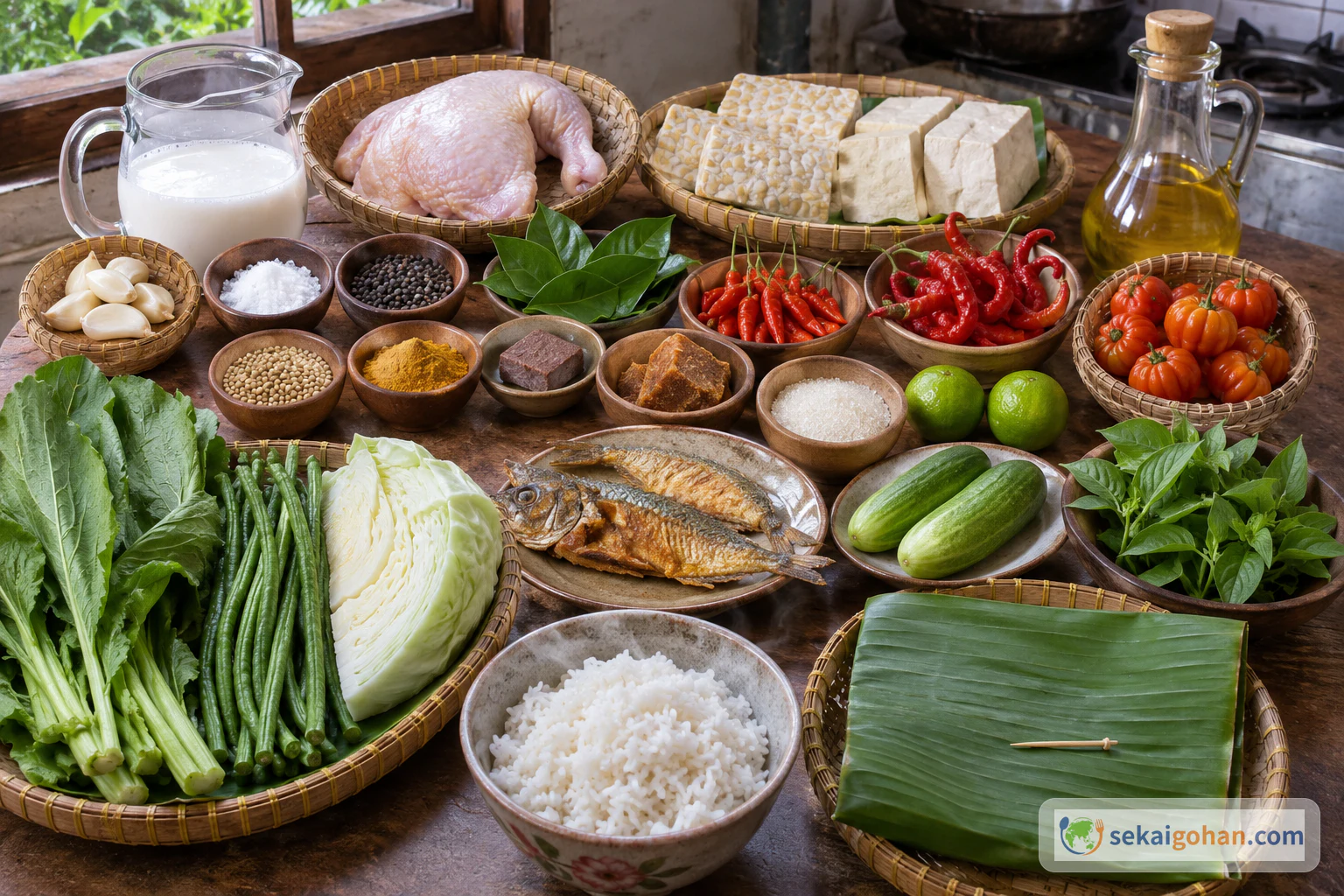
The braise, sambal, vegetable and fried ingredients for nasi tempong, arranged in groups
The frying oil stays separate from the braise, and the salted fish is already fried

Wash vegetables and herbs used raw, such as tomatoes, chilies, cucumber, kemangi and cabbage, thoroughly under running water before use. Wash the lime peels well before squeezing. Never use detergent on food.

Allergens

Tempeh and tofu contain soy, and salted fish contains fish. Terasi brands differ, so read the full ingredient list before you buy. Check for fish, shrimp or other crustaceans, other allergens and any cross-contact statement, and confirm whether the product needs cooking or can be eaten as is. If you cannot confirm what is in a product, do not use it.

Equipment

  • Pot for simmering the braise
  • Separate pan for frying
  • Slotted spoon
  • Food thermometer
  • Mortar and pestle (cobek)
  • Clean shallow dish
  • Separate knife and cutting board for raw chicken, or wash them before reusing
  • Leaves for the pincuk (a folded leaf serving wrap), as needed, sold for food contact, such as banana leaf
  • Lidi pins to secure the leaf, as needed, sold for food contact

Choosing Ingredients for Nasi Tempong

Buy food-grade products under their Indonesian names when you can. A substitute will give you a different plate, not the same one, so expect the flavor to shift.

Ingredient How to choose If you swap it
Tomat keriting/ranti Only tomatoes sold as food. Never pick wild plants or fruit that share the name Ordinary tomatoes will change the acidity and texture
Kemangi Herb sold for eating, labeled kemangi if possible Other basils, Thai basil included, are different plants with a different aroma
Jeruk limau/sambal Citrus sold for eating Another citrus will change the aroma and sourness
Daun salam Food-grade Indonesian salam leaves Bay leaf is a different leaf
Terasi Cooked, labeled ready to eat Never mix uncooked terasi into this sambal, and don't ferment your own
Ikan asin bulu Edible salted fish, already fried Another fish will change the texture and flavor. Don't salt or ferment fish at home for this

Method: Braise, Fry, Grind, Then Build the Plate

Timing the sambal

Grind the sambal right before eating. While the chicken simmers, blanch and cut the vegetables from step 9, so that step becomes a last check that everything is ready.

Nasi Tempong Troubleshooting

Two Steps to Read Carefully

The method is unclear in two places. First, the oil: the 1 cup (250ml) of oil is listed in the second ingredient group, which the steps say to simmer, but it's marked for frying and the next step heats it for that, so keep it out of the simmering pot. Second, the sambal: set the tomato and juice aside, grind the base, then add the tomato, and add the juice last.

Check the chicken with a thermometer

When you cook the chicken, a food thermometer in the thickest part must read at least 165°F (74°C).

Common Problems and Fixes

Problem What to do
The liquid has halved and the chicken looks yellow, but you're unsure if it's done Looks can't tell you. Check the thickest part with a thermometer after frying
The chicken reads below 165°F (74°C) Keep cooking and check again, without letting the probe touch the bone
You aren't ready to fry after simmering Cool the pieces quickly in shallow containers and refrigerate within the limits in step 2
The terasi label doesn't say it's ready to eat Leave it out of this uncooked sambal and find a product whose label confirms it
You can't find ranti tomatoes, kemangi or the citrus Choose a food-grade alternative, expect a different flavor, and never forage to fill the gap
The sambal is too hot for someone at the table Give them less sambal and leave the rest of the plate as is

Serving and Varying Nasi Tempong

Build the plate one serving at a time. Finish the fried sides and vegetables first, then put each plate together as people are ready to eat, so the rice stays warm. Anyone who wants less heat can simply take a smaller spoonful of sambal.

The sides are flexible, since vendors serve different ones anyway, so swap in your favorites. If you can't find leaves sold for food contact, a clean plate works fine. Don't use leaves you've picked yourself.

Frequently Asked Questions

Is the 5.5 oz (150g) of rice weighed dry or cooked?

Cooked. Use warm cooked rice (nasi hangat), 5.5 oz (150g) per pincuk.

Is the uncooked sambal safe to eat?

Yes, if you handle it carefully. Wash the produce under running water and wash the lime peels too. Use ready-to-eat cooked terasi, keep the sambal away from raw chicken and anything that touched it, and grind it just before eating.

Can I make the sambal or the rest of the meal ahead?

The sambal should be ground just before eating. Any cooked food you plan to keep should be cooled quickly in shallow containers, covered, and refrigerated within 2 hours, or within 1 hour above 90°F (32°C). Keep the refrigerator at 39°F (4°C) or below.

How closely should I follow the 15-minute and 45-minute times?

Use them as a rough guide. Go by the visual cues in the method, and for the chicken, the thermometer reading.
Sources