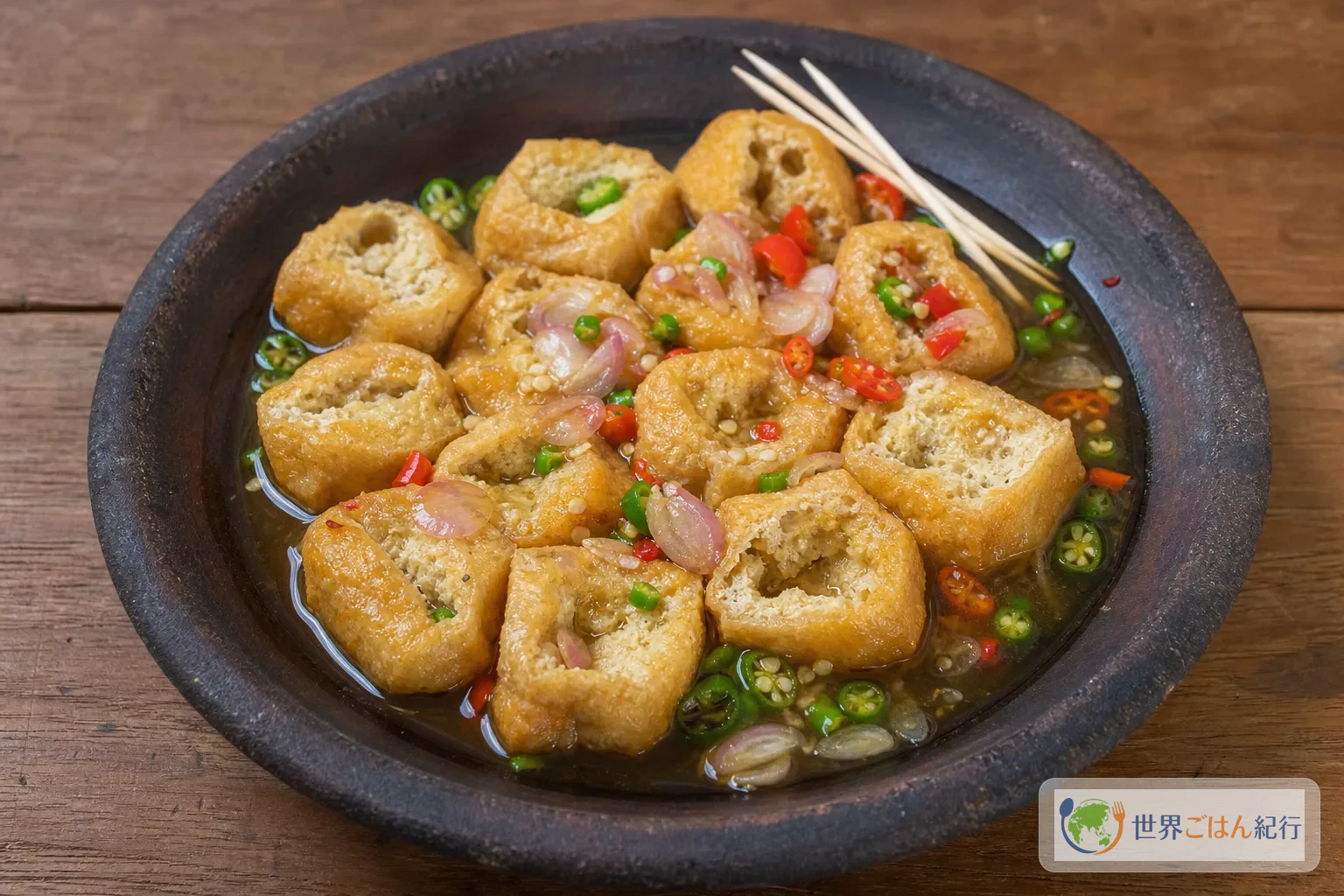
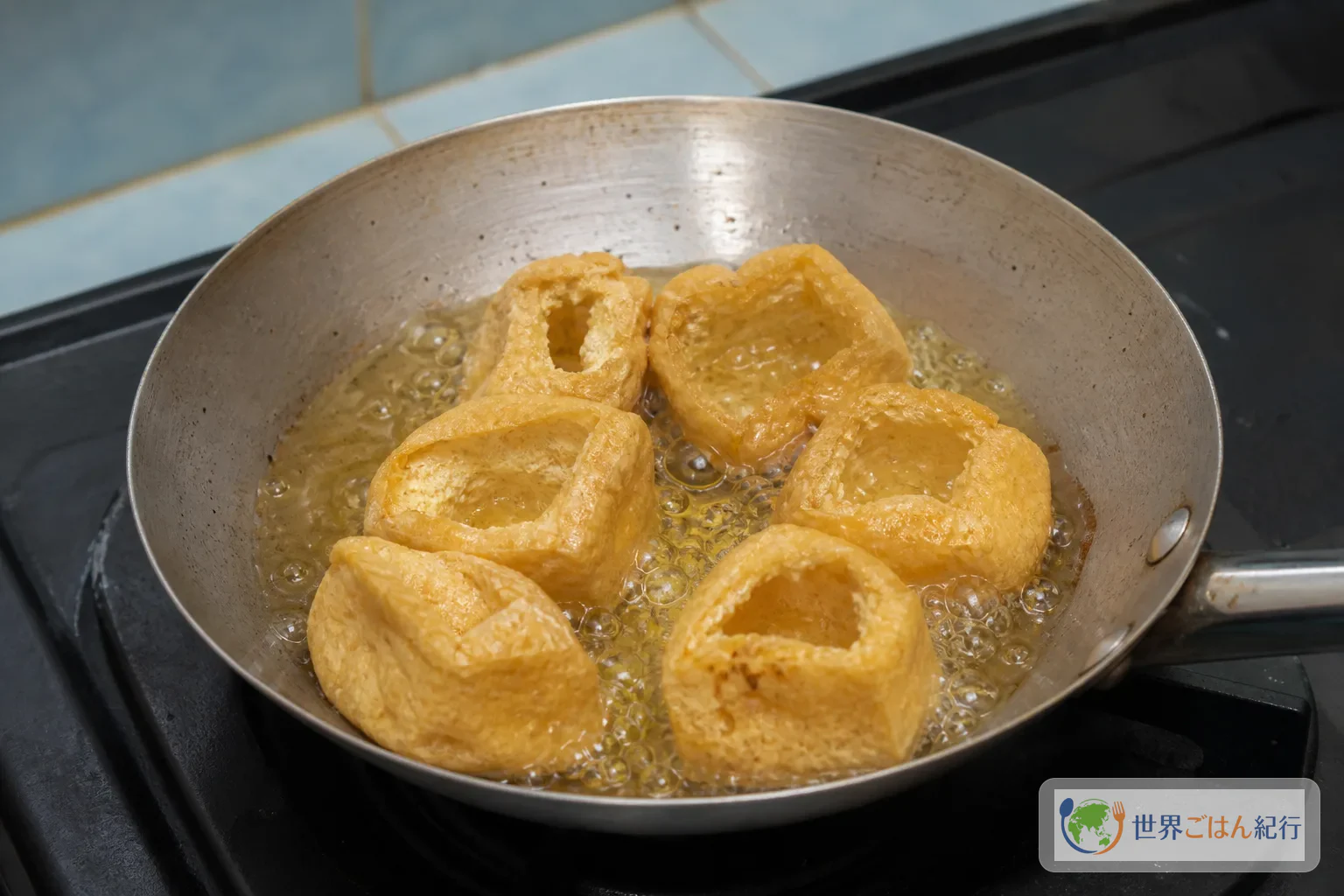
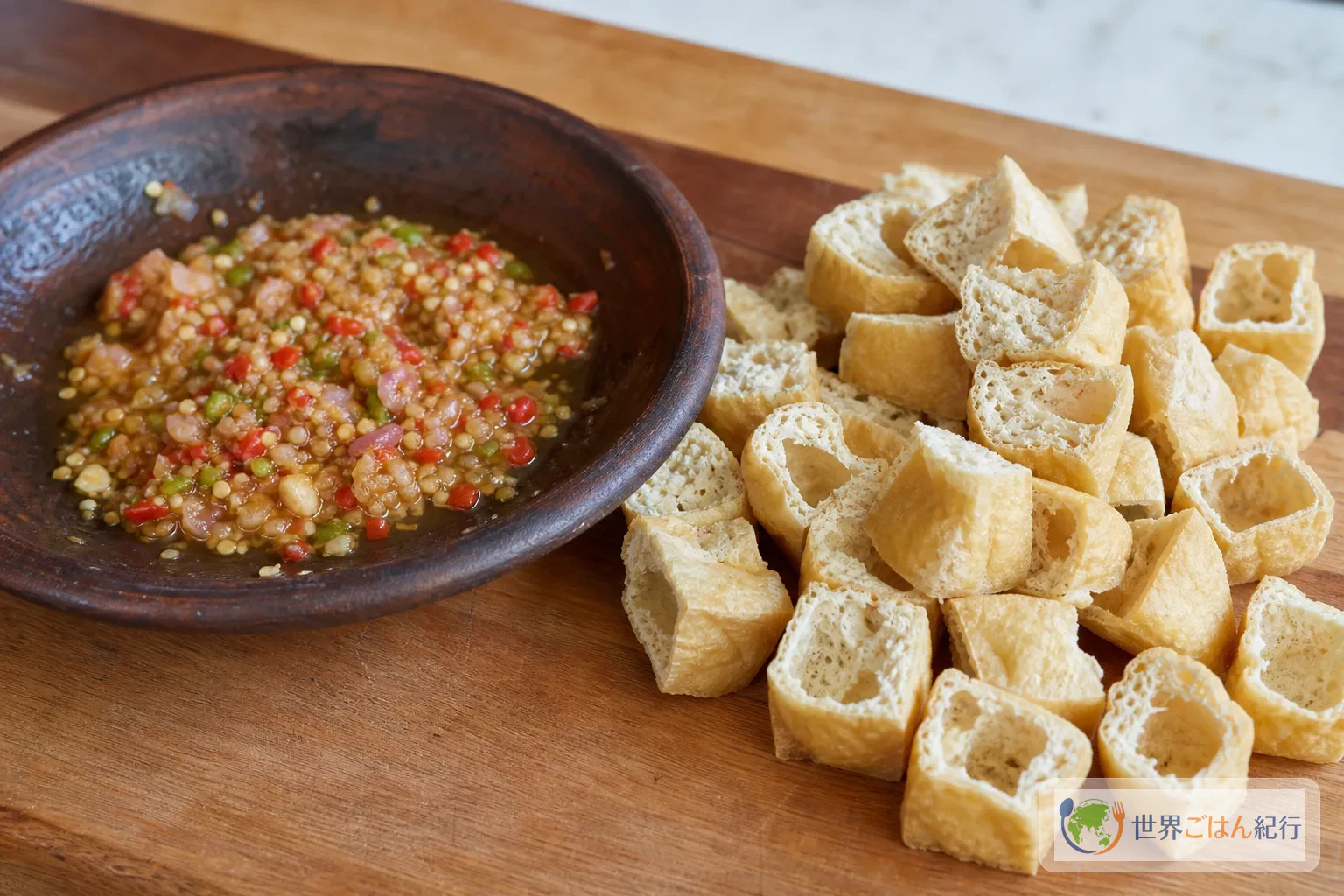
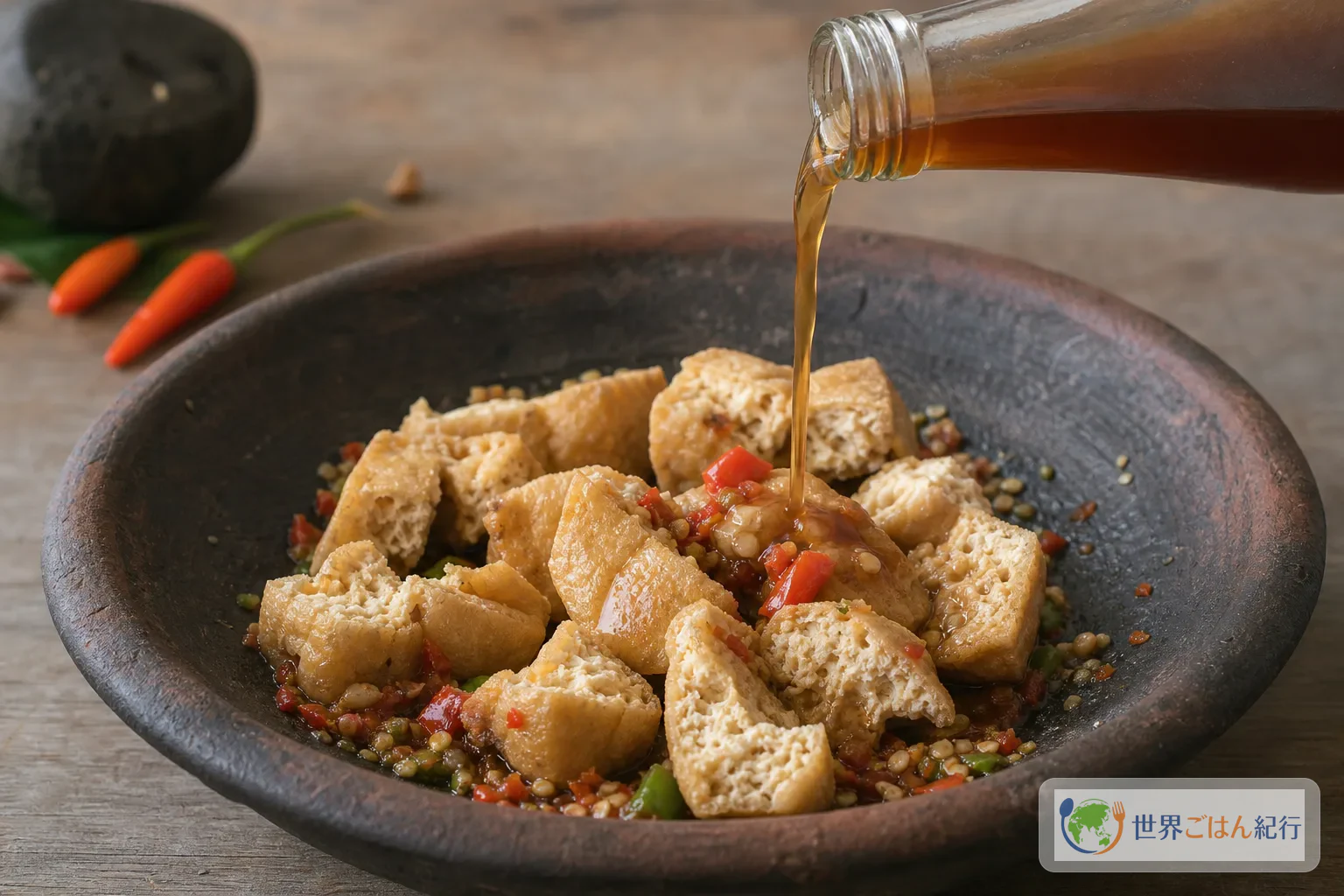
Wait just a minute after plating. The surface of the tofu is still crisp, and the sauce has started to seep into its holes. In each bite you taste the sweetness first, then the fruity sourness of tamarind, and last the green heat of fresh chilies. Tahu gejrot is very plain on paper: fried tofu cut into bite-size pieces, topped with coarsely crushed chilies and aromatics and a thin sweet, sour, slightly spicy sauce. Fried tofu with a sweet, sour and spicy sauce is a specialty of Cirebon, a port town in West Java. The sauce soaks in instead of coating the tofu, so the tofu keeps its texture.
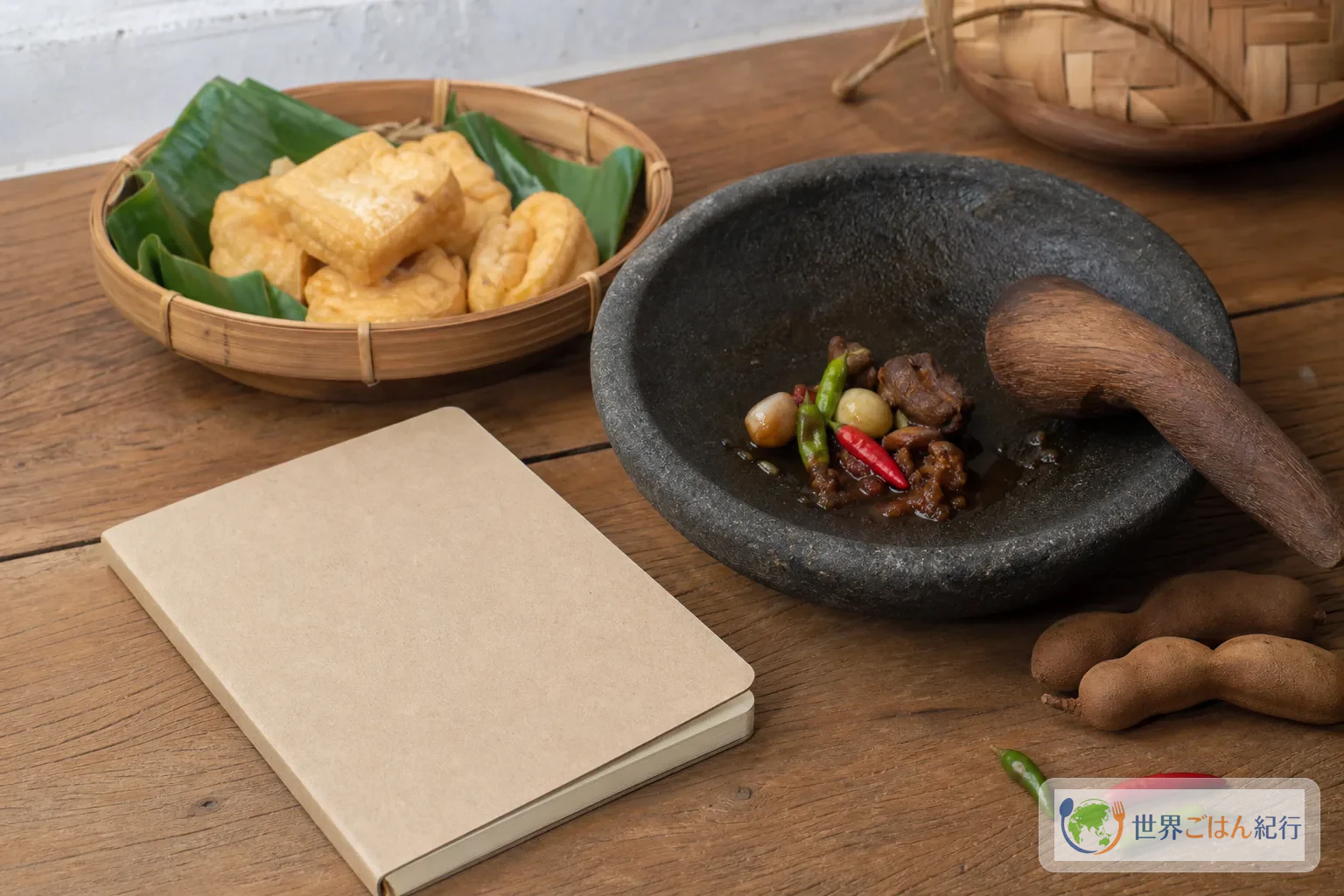
Tahu Gejrot and Cirebon
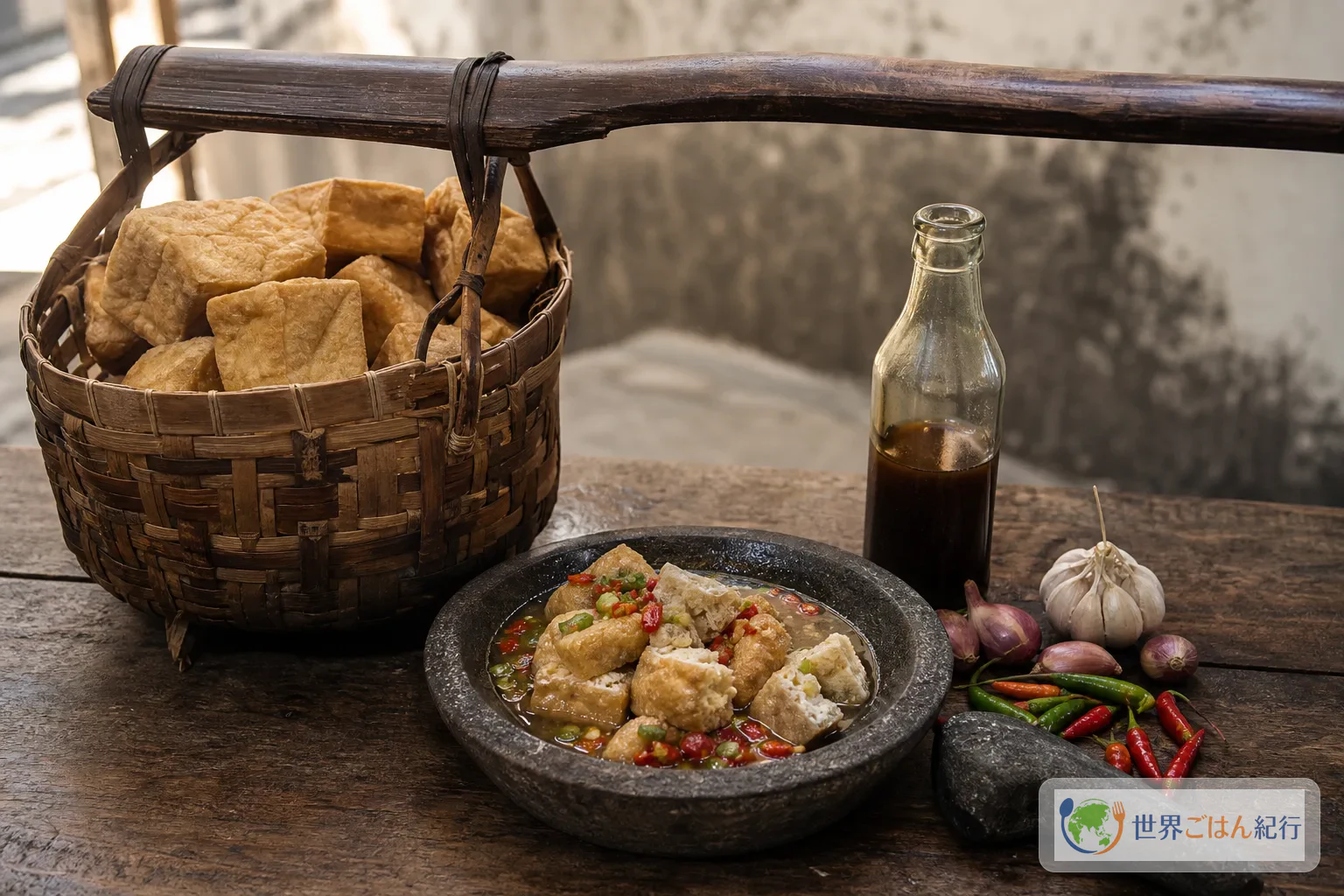
Cirebon and the Name
As a port on the north coast, Cirebon was where Javanese, Sundanese, Arab, Chinese and European cultures crossed. It is one center of north-coast food culture, and tahu gejrot came from that mix. The dish is a street snack, light enough to eat mid-afternoon or between dishes without adding carbohydrate.
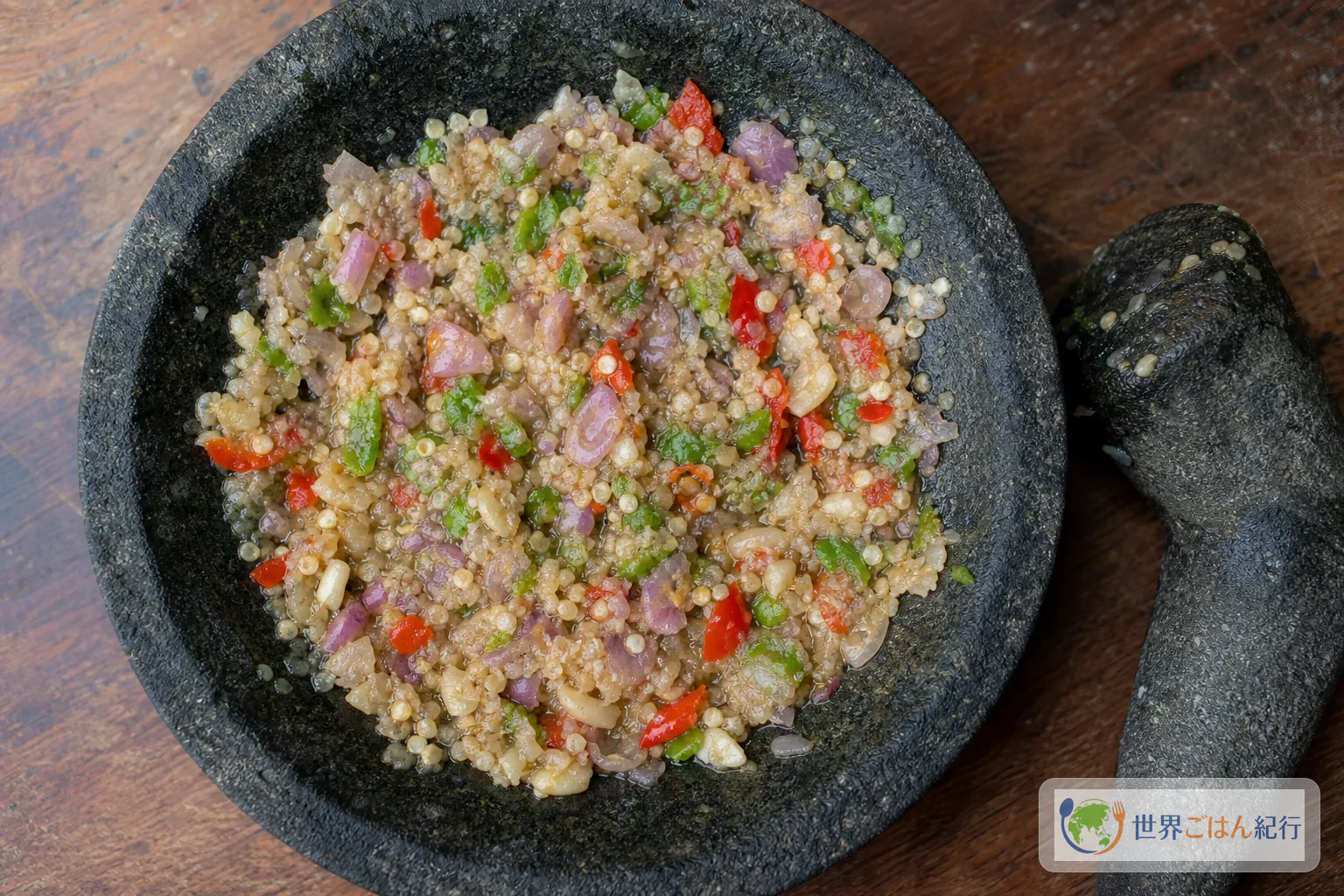
There are two stories about the name. One says it comes from the sound "jrot" of sauce poured from a bottle. The other says it comes from the sound of crushing aromatics in a small clay dish. Both sounds belong to the dish, since making it means crushing and then pouring.
Street-Stall History
No single founder or year is known for tahu gejrot, and accounts differ on which part of Cirebon it spread from. That is normal for a dish made at street stalls and passed on by word of mouth. This Indonesian food record describes it as a snack from around Jatiseeng village and Ciledug in Cirebon Regency. It lists fried Sumedang-type tofu with palm sugar water, shallots, garlic, chilies and salt. The record also repeats a well-known story: the snack was born when the inside of the tofu turned out hollow.
This overview explains how the palm sugar water, tamarind, shallots, garlic and chilies are coarsely crushed and combined. In 2025, tahu gejrot was recognized as national intangible cultural heritage, so a small street snack is now counted as part of the region's memory.
Vendors once sold it on foot, carrying wooden poles and baskets. Today you find it at stalls, in shops and at food events. Nothing simmers for hours in a big pot. The fried tofu, crushed aromatics and sauce are put together on the spot, right in front of you.
Ingredients (serves 4)
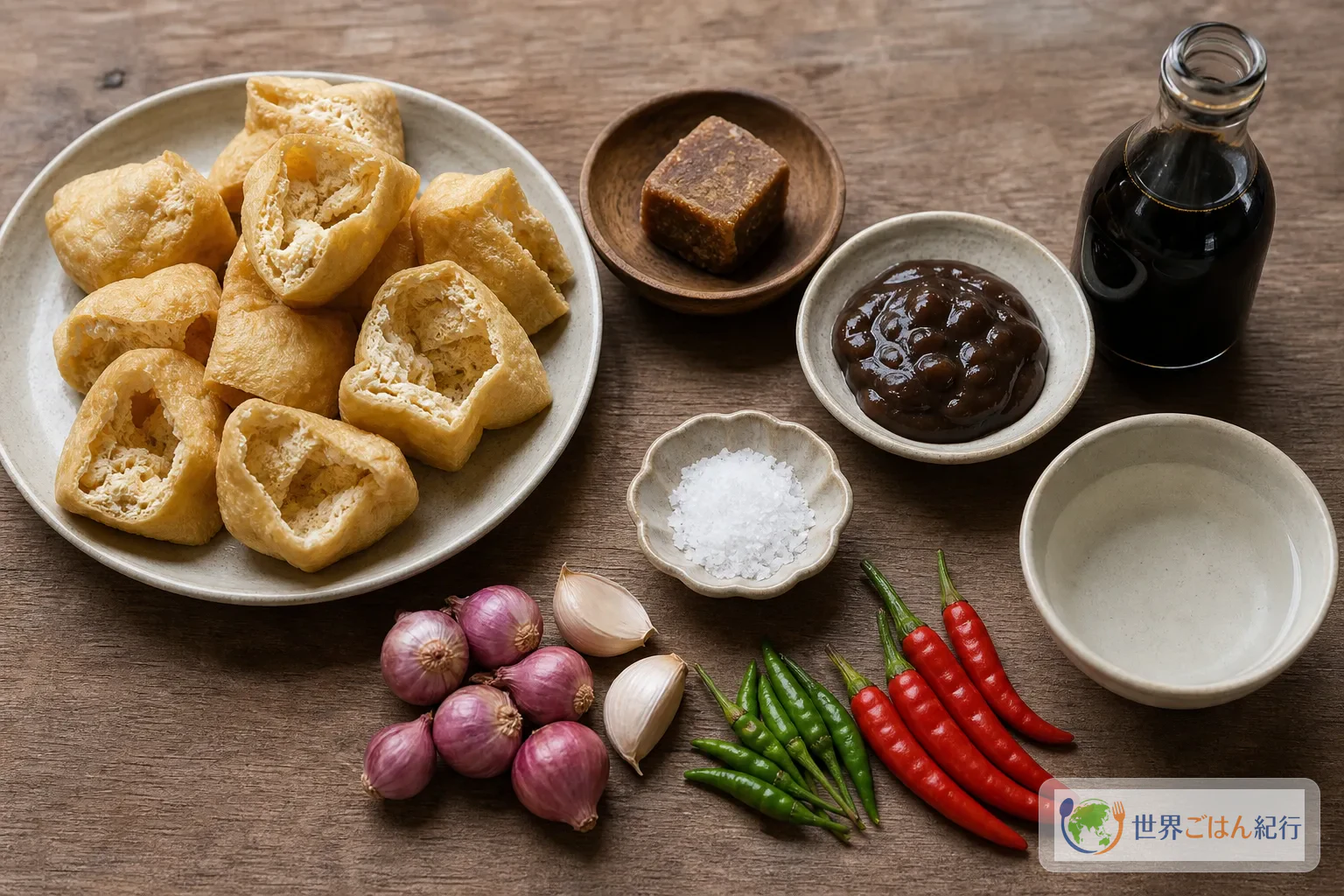
For 4 people as a snack, use 16 pieces of tahu pong, about 4 per person. As a side dish at a meal, divide it into 2 servings.
Tahu pong is fried tofu that has become hollow inside. Japanese aburaage is thin and thick fried tofu is solid inside, so the closest substitute is tofu puffs or the fried tofu used in Chinese cooking. If you prioritize availability, thick fried tofu is fine, but take care over the step of letting the cut faces absorb a little of the sauce.
Do not crush all 6 chilies from the start. The heat differs by variety, and even with the same number the warmth that lingers in the mouth changes. Start with 4 green chilies and 1 red chili, then taste and add the rest, and setting aside a portion for children first is not difficult.
Tamarind Is the Core of the Sourness
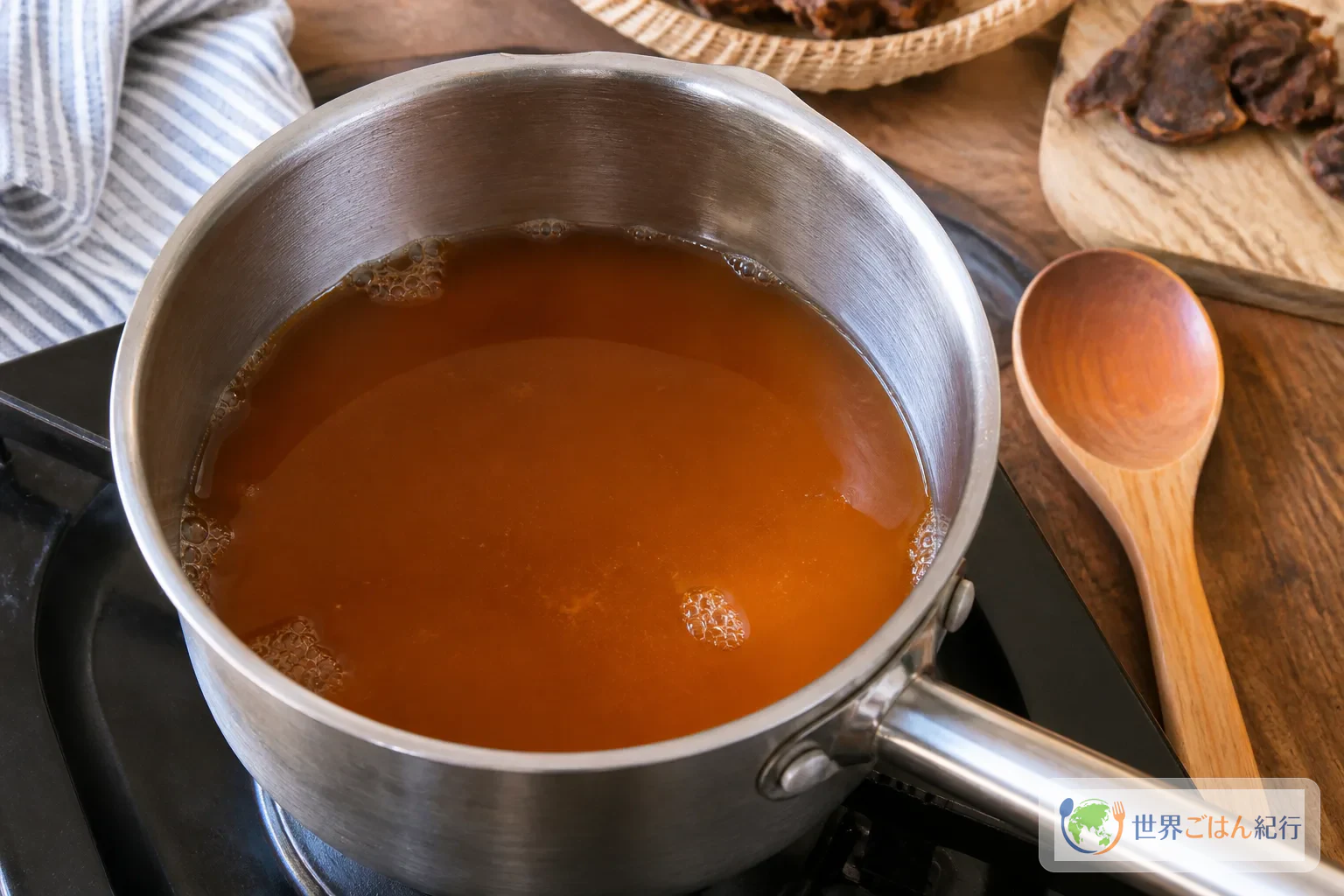
Vinegar or lemon juice can also make sourness. But tamarind has a round, fruity sourness with a slightly earthy aftertaste. When a sauce of only sweet soy sauce and sugar feels heavy, restoring tamarind rather than increasing the sourness gives the dish its outline.
The condition for buying is to use it not only for tahu gejrot but also for pad thai and Indonesian sauces. For just one dish, you can try it with block tamarind or rice vinegar and know the direction of the flavor before it is too late. Tamarind paste differs in strength and saltiness by product, so do not put in the whole amount from the start; taste the sourness and adjust.
Tofu and kecap manis contain soy. Depending on the product, kecap manis can contain wheat, sesame and so on, so if you have a food allergy, check the label on the bottle you buy. Estimated for the whole batch: about 1,180 kcal energy, about 1.5 oz (42 g) protein, about 2.5 oz (72 g) fat and about 3.5 oz (96 g) carbohydrate.
Choosing Ingredients for Tahu Gejrot
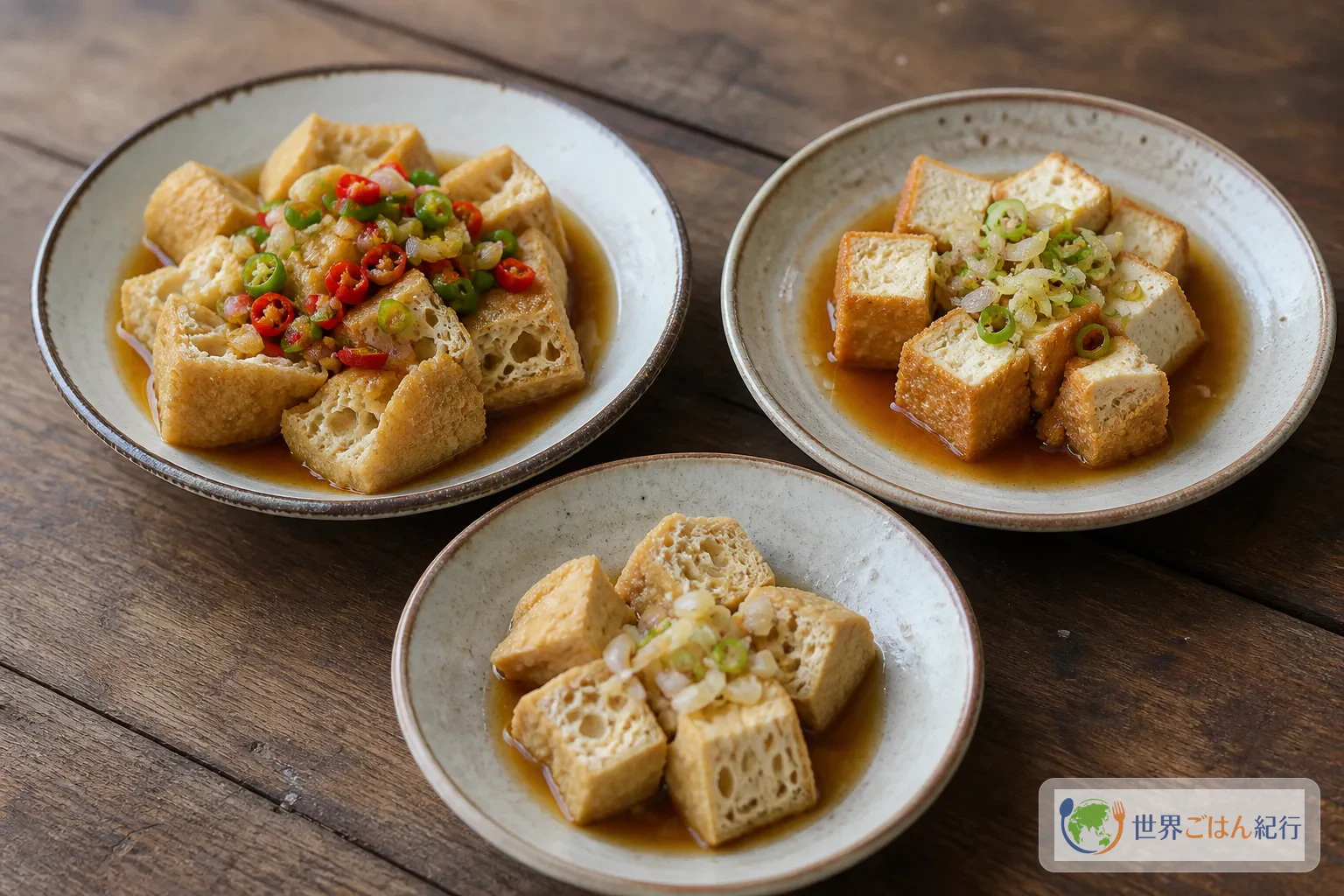
If you can find tahu pong, use it. Its hollow, holey inside gets you closest to the texture in Cirebon. Thick fried tofu (atsuage) from a nearby supermarket works too, but its holes are smaller and it holds less sauce. Nobody needs to match every ingredient. Decide first which difference matters most to you, and the dish will still taste like itself with substitutes.
Kecap manis is a sweet Indonesian soy sauce, thick and sweet. With ordinary dark soy sauce alone, the salt comes forward and the sauce turns a hard black instead of red-brown. You only use about 2 tbsp here, but a bottle also goes into the sauce for nasi goreng and satay. It's worth buying if you plan to cook Indonesian food two or three more times. If you're trying the dish once, dissolve 2 tsp dark soy sauce, 10 g brown sugar and 1 tbsp (15 ml) water over low heat, then cool it. Stop as soon as the sugar dissolves, because boiling brown sugar hard makes it bitter. The aroma and thickness won't match kecap manis, but it tells you whether you'd want to buy a bottle.
Tamarind gives the sauce a round sourness and an earthy aroma. To replace 15 g tamarind, use 2 tsp rice vinegar and 2 tsp (10 ml) water. Vinegar tastes sharper and simpler, so don't cook it. Add it after the sugar has dissolved and the heat is off. If the sourness is sharp, round it with 2–3 g brown sugar. Lemon or lime has a strong aroma, so add it little by little once the sauce has cooled slightly, starting with 1 tsp. Make one plate this way, then decide whether to buy tamarind.
| Approach | What changes | Difference in the result | Good for |
|---|---|---|---|
| Closer to Cirebon | Tahu pong, tamarind, kecap manis | Sauce enters the holes; sweet-sour and heat stand out | Those who prioritize the local texture |
| Made from ordinary groceries | Thick fried tofu, brown sugar, rice vinegar | Denser cut face, cleaner flavor | Those starting at a nearby supermarket |
| Milder heat | 2 green chilies, seeds removed | Aroma stays, less heat on the tongue | Families eating the same dish |
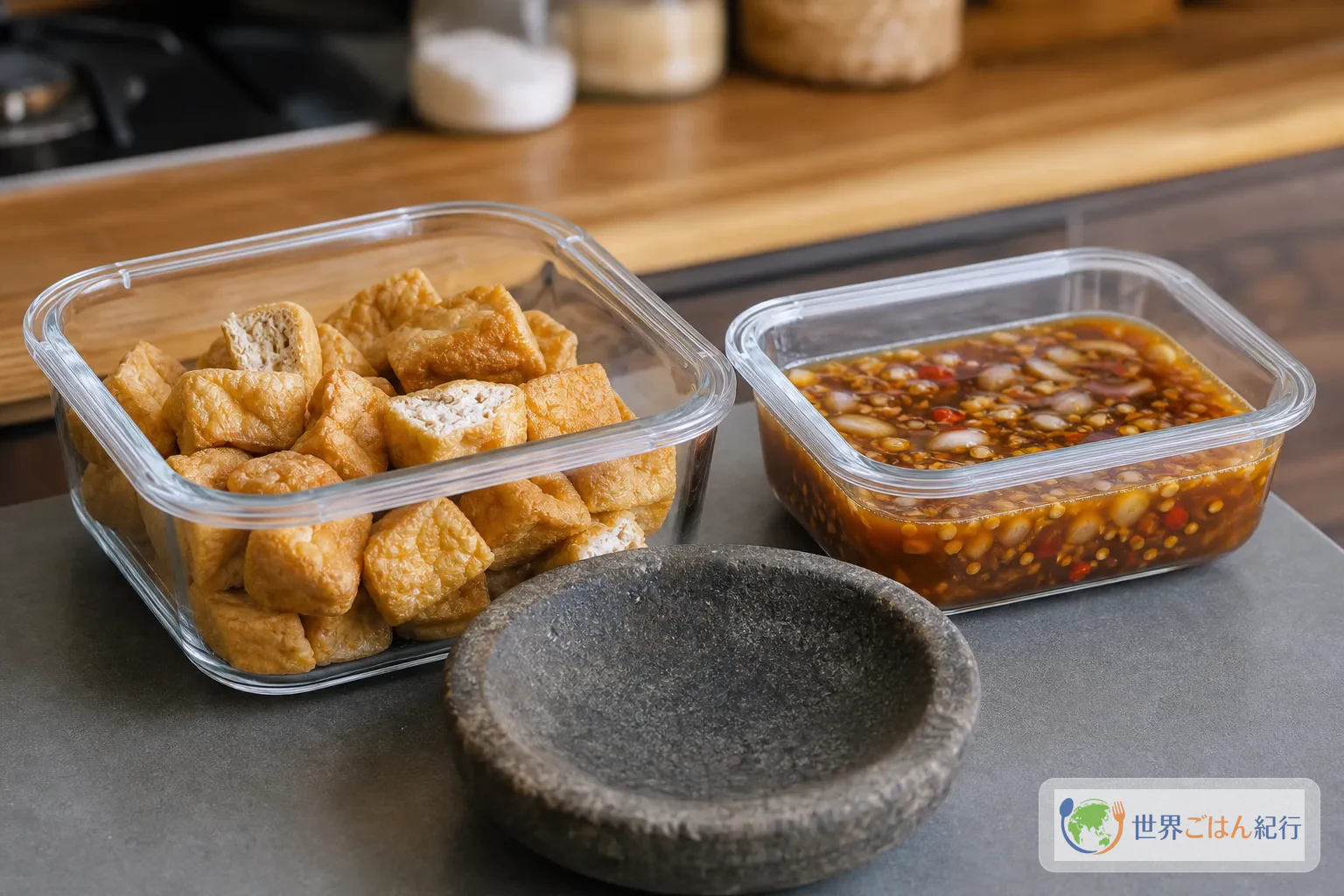
| Make-ahead leaning | Tofu and sauce stored separately | Pouring right before keeps the surface texture | People who eat at different times |
Method
Make the sauce first, re-fry the tofu, coarsely crush the aromatics and then combine them. If you pour the sauce on the tofu while it is hot, the surface goes soft quickly, so the time to let the sauce cool is part of the method.
Tahu Gejrot Mistakes and Fixes
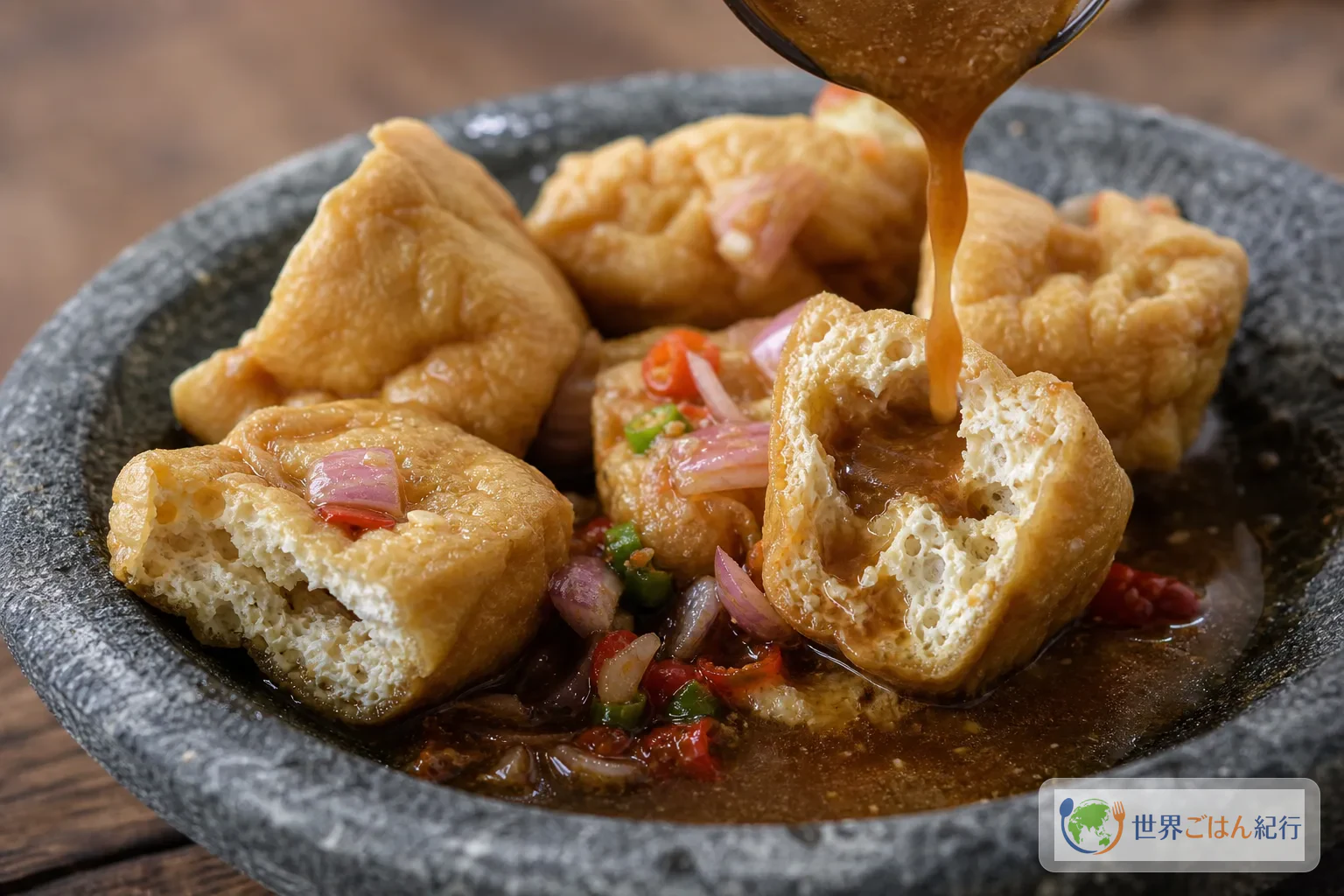
At home, you're aiming for three things: chilies crushed coarse, a thin sauce poured at the end, and tofu that stays whole while the sauce gets into its holes and rough surface. When the dish turns out watery, the instinct is to reduce the sauce. But a thick sauce only coats the outside of the tofu and covers up the contrast in textures. Check the dryness of the tofu first, then the size of the aromatics, then how much sauce you pour.
When you want the heat even and quick, it's tempting to keep pounding. Leave 2–4 mm (up to 0.125 inch) pieces instead, and the sweet scent of the onion, then the garlic, then the chili come through one after another in a single bite. With a food processor, pulse just 1–2 times for 1 second each.
A sauce that looks right in the pot tends to feel heavy once it's on the tofu. It should fall loosely from a spoon and pool thinly at the bottom of the dish. If it tastes weak, add a pinch of salt and then 2–3 g more tamarind before you reach for more sugar.
Wet tofu makes the crust absorb moisture fast, and more sauce won't fix that. If the corners are soft and the surface sinks when you lift a piece with chopsticks, rewarm it in 170°C (340°F) oil for about 1 minute. Let the steam escape on a rack before plating.
Working with Thick Fried Tofu
Thick fried tofu is denser than tahu pong and gives the sauce fewer ways in. Cut it into 1 inch (2 cm) cubes and set them cut side up. Re-fry the surface to dry the corners, and once the aromatics are on, don't pour all the sauce at once. Pour half, wait 1 minute to see whether it has soaked into the cut faces, then add the rest.
Crumbling the tofu finely helps the sauce cling, but then you lose the contrast of dry outside and sauce inside. Keep the cubes whole.
Serving and Storing Tahu Gejrot
Serving
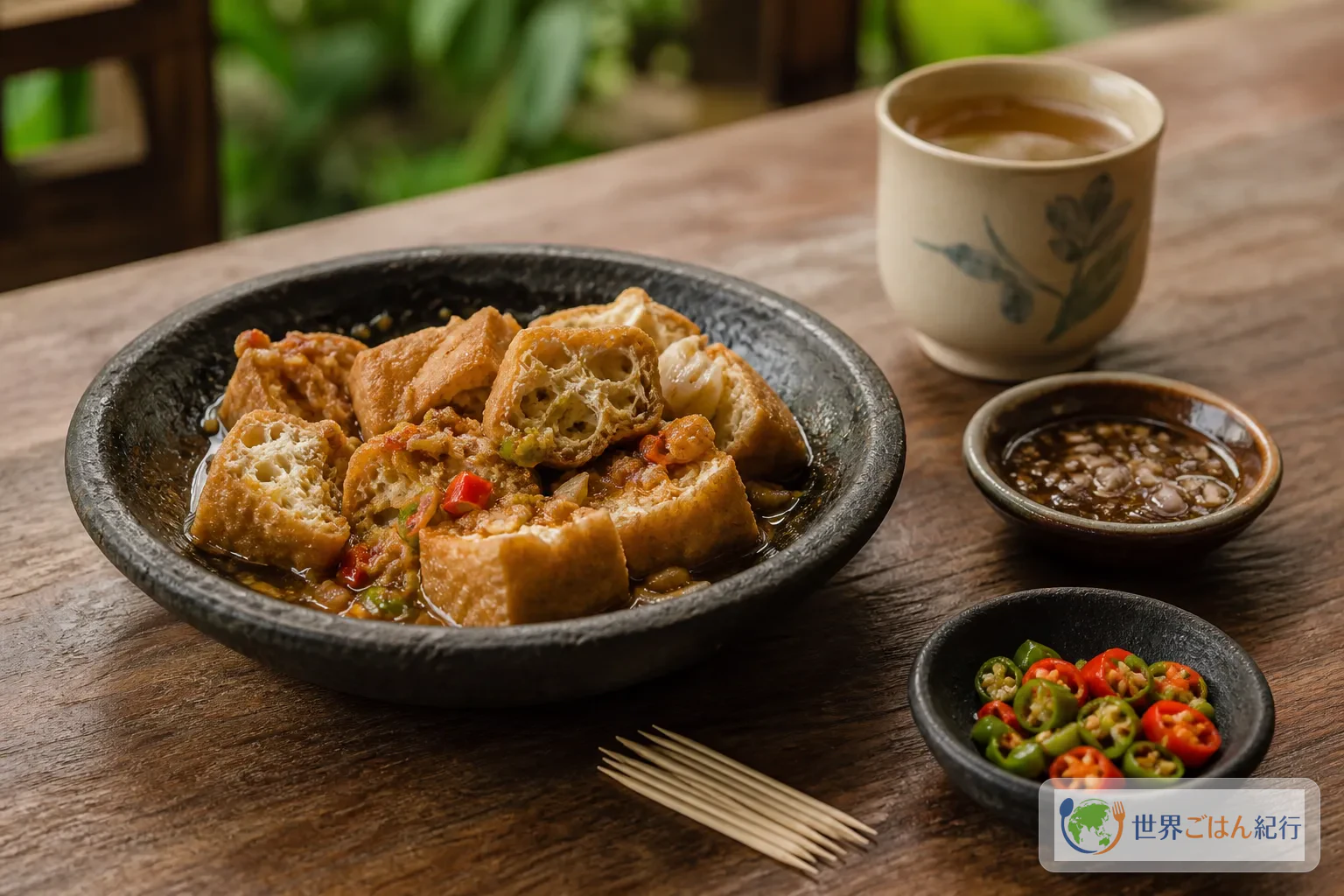
Tahu gejrot is best eaten right after it's made, because the surface starts changing as soon as it's done. Use a shallow dish rather than a deep bowl. Don't pile up the tofu, and leave room for the sauce to spread thinly across the bottom. Pour about 80 percent of the sauce first and drizzle on the rest if it needs more. Set out toothpicks the way street stalls do. They also keep people from turning the pieces over and over with chopsticks and breaking the crust.
As a small bite, serve it with unsweetened tea or a little plain rice. On a day with a proper staple, serve it as a side to nasi goreng or nasi uduk, with about 3 pieces per person so the meal doesn't get heavy. It also fits alongside gado-gado, vegetables and tofu in a rich sauce, and sate ayam, meat glazed with sweet soy sauce. Tahu gejrot is the lightest of the three.
Storing and Making Ahead
If you're eating later, keep the fried tofu, the aromatics and the sauce separate. Once the tofu is sauced and refrigerated, the crust won't come back, and the heat spreads through everything so you can no longer adjust it. If the sauce and aromatics are already mixed, cool them, then refrigerate in a clean, lidded container. Cool the tofu well on a rack and store it in its own container. The sauce and aromatics can be made up to the day before.
Eat leftovers the same day or the next. Throw out anything left long at room temperature or anything that smells off or has turned sticky. A sauce with raw shallots and chilies is easier to keep fresh and safe in small batches.
To serve stored tofu, warm it in a skillet over medium-low heat for 2–3 minutes, until the surface dries and the corners crisp up again, then let the steam escape on a rack. Warm the sauce in a small pot over low heat without boiling it, to just above body temperature. Hot sauce on cold tofu makes the crust soak up moisture fast. Bringing the two closer in temperature prevents that. Then sauce it, since the last 2 minutes of finishing are what count.
Frequently Asked Questions
Can I make it with aburaage or firm tofu?
Aburaage is too thin, and firm tofu straight from the package is watery, so thick fried tofu is the easiest substitute for tahu pong. If you use firm tofu, wrap it in paper towels, set a weight on it and drain it in the refrigerator for about 30 minutes, then cut it into 1 inch (2 cm) cubes. You can also dust it with potato starch and fry it, but a thick coating turns it into a different fried tofu dish. For a first batch, thick fried tofu adds no extra steps.
Can I make tahu gejrot that is not spicy?
Yes. Without the chilies it becomes a sweet-and-sour fried tofu that still smells of tamarind, sugar, garlic and shallot. If you want some heat, crush only 2 green chilies with the aromatics and set the rest out sliced on a separate plate. That way children and anyone not used to spice can eat the same tofu. Chilies mixed in later have less aroma than crushed ones, so press and crush them with a little sauce just before eating.
Does the flavor change without a mortar?
The flavor stays the same, but it's harder to get the aromatics into even pieces. Chopping them to the coarse size above with a knife and pressing them with the back of a spoon in a bowl works fine. Just don't let them turn into a paste. A mortar is worth buying if you'll also make sambal, the aromatics for gado-gado or Thai pastes. If you're short on storage or making this once, skip it.