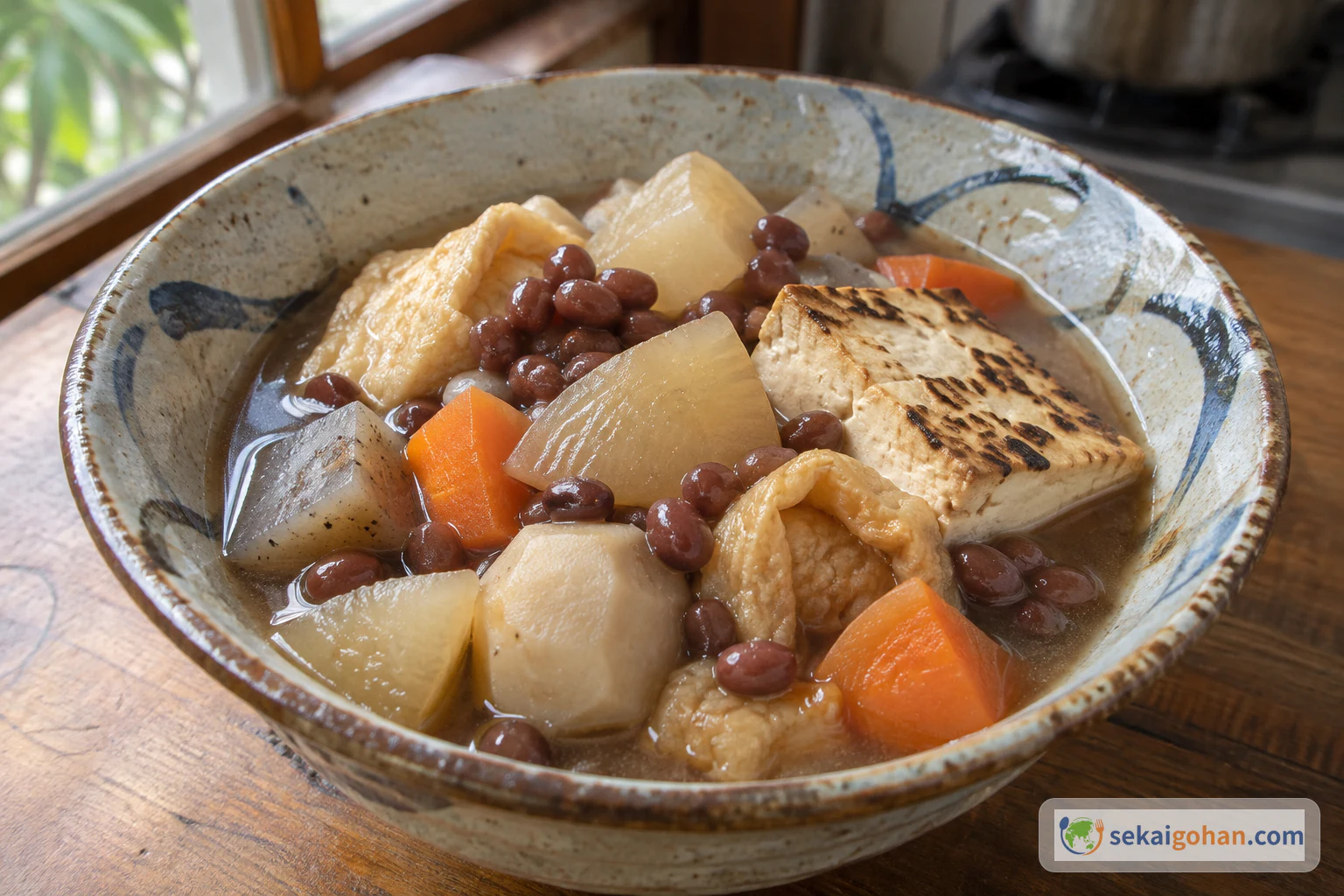
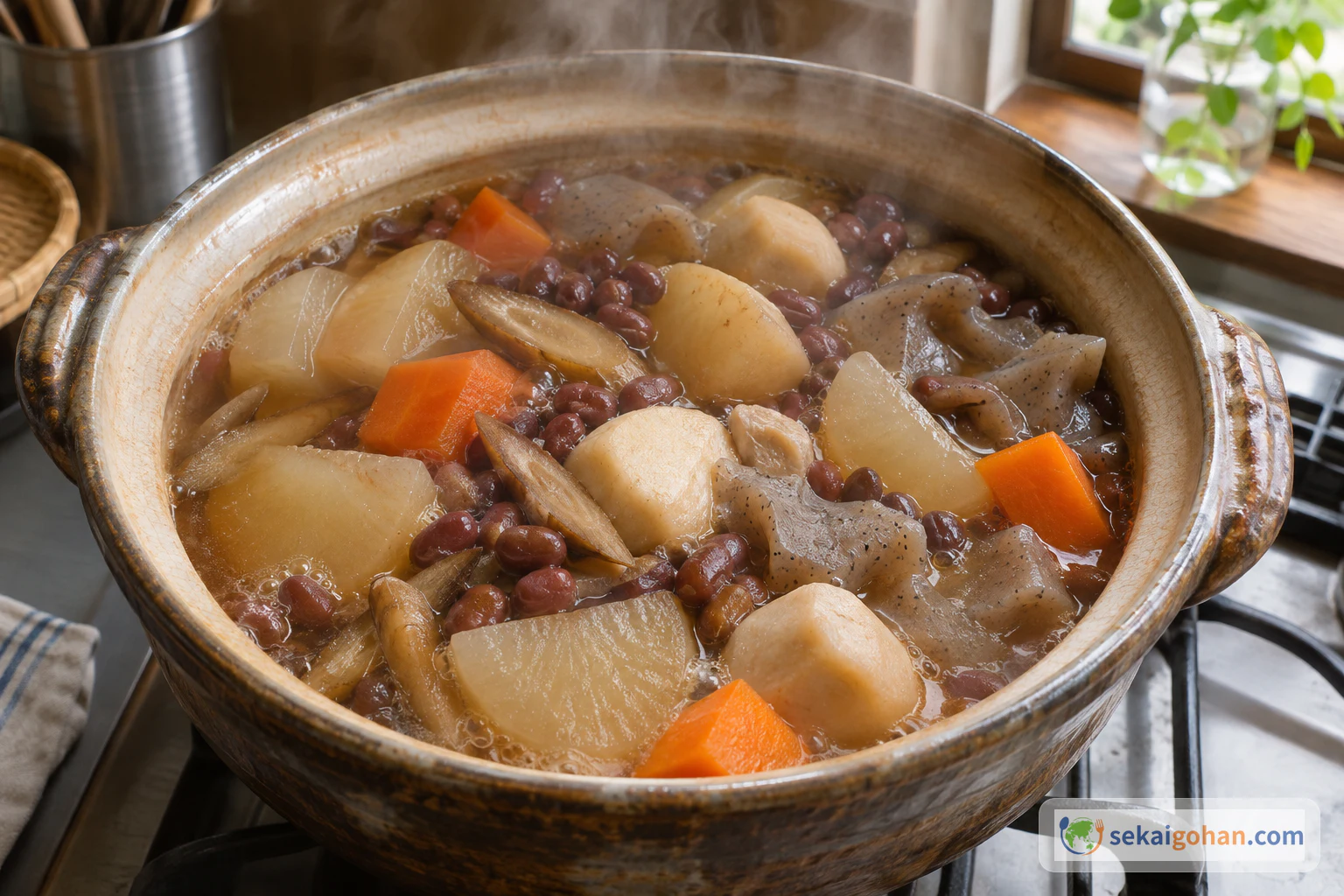
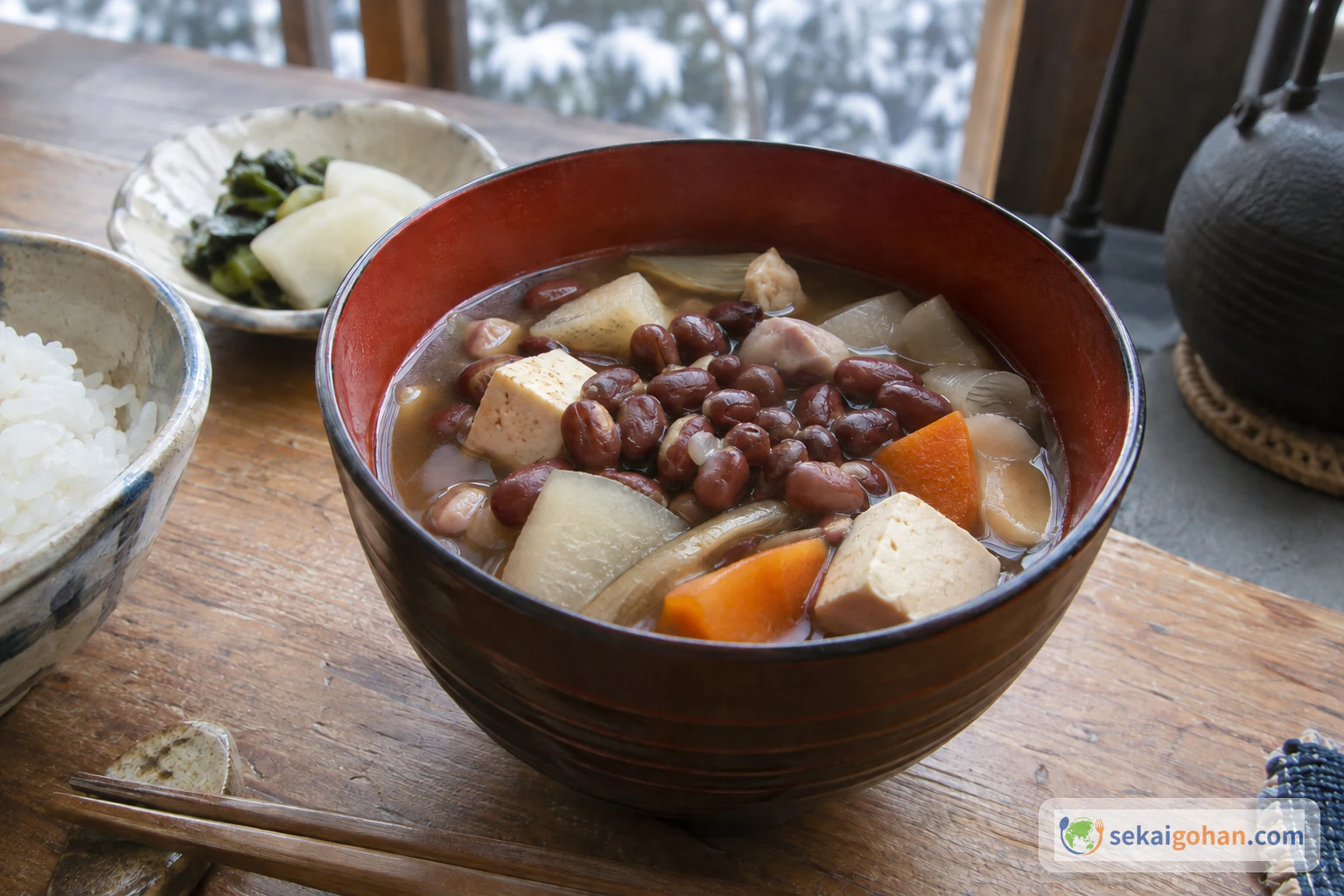
Around November 28, temples and homes across Toyama Prefecture start cooking for Hōonkō, the Buddhist memorial service held near the anniversary of the monk Shinran's death. One pot that turns up on those tables is itoko-ni. It is a warm, brothy simmer of red azuki beans with daikon, burdock, carrot and taro, along with torn konnyaku, thick fried tofu and grilled tofu, all seasoned with just a little miso and soy sauce. It's savory, earthy and gentle, very much a winter dish. For more dishes from across the country, see our Japan page.
Toyama Itoko-ni and Hōonkō
Outside Toyama, the name itoko-ni usually means something sweet, such as azuki simmered with pumpkin or azuki with shiratama rice dumplings. In Toyama, itoko-ni is a simmered dish of azuki beans, root vegetables, konnyaku and tofu, not a sweet pumpkin dish. It uses no pumpkin and no sugar. It has been handed down throughout the prefecture. Around Kurobe in eastern Toyama it is called nizai, and in the Gokayama area it is served as otsuke. The vegetables and seasoning ratios shift from place to place.
The dish is tied to the season as much as to the service. In the Tonami and Gokayama areas, produce from the harvest is set aside for the Hōonkō meals, and itoko-ni is one of the dishes made from it.
Where the name comes from
Nobody agrees on the origin of the name. One theory says the ingredients are "like cousins" (itoko) to one another. Another links it to simmering ingredients one after another (oioi). A third points to itoku, the virtue left behind by Shinran, and tradition also holds that Shinran loved azuki beans.
Ingredients: Serves 4
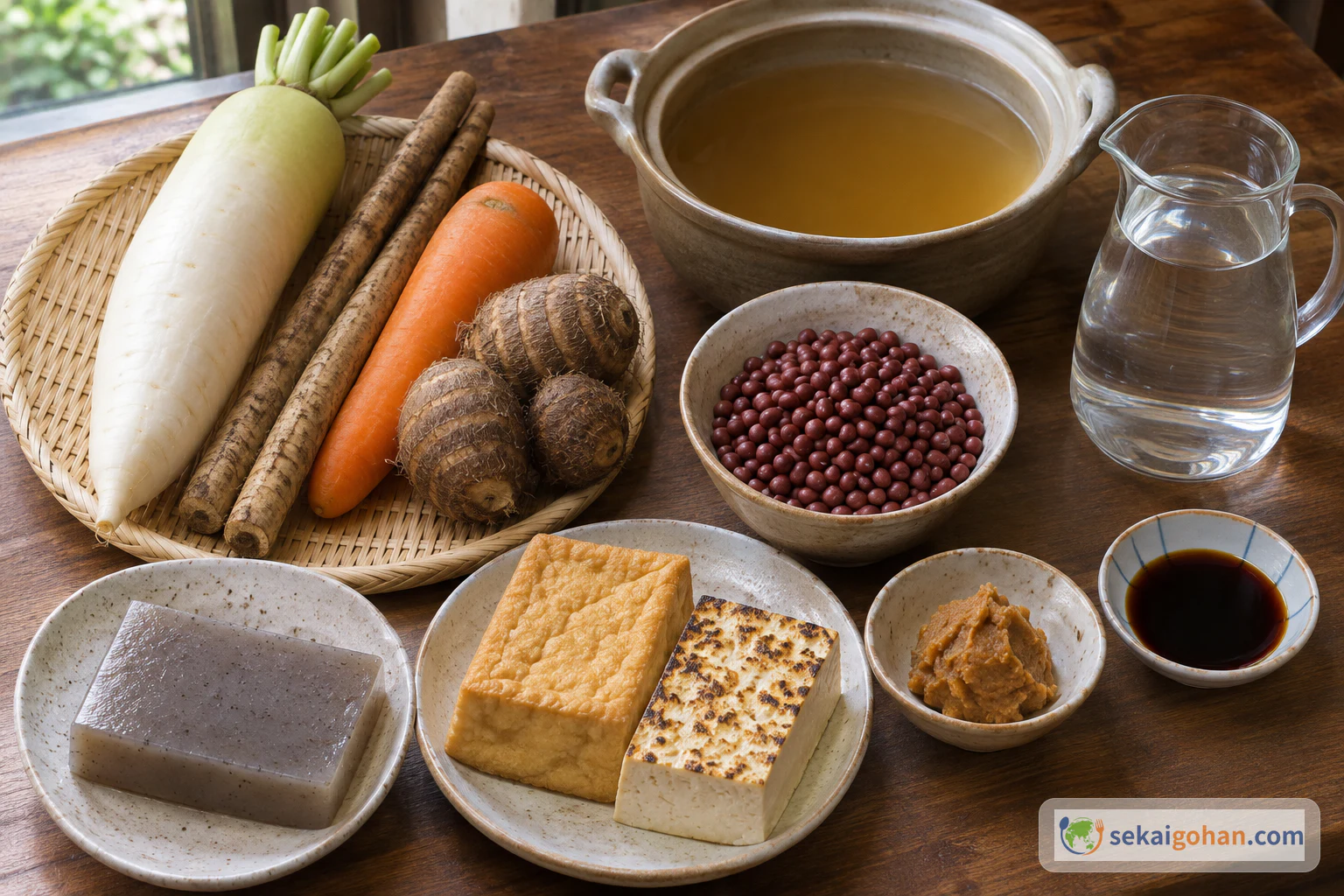
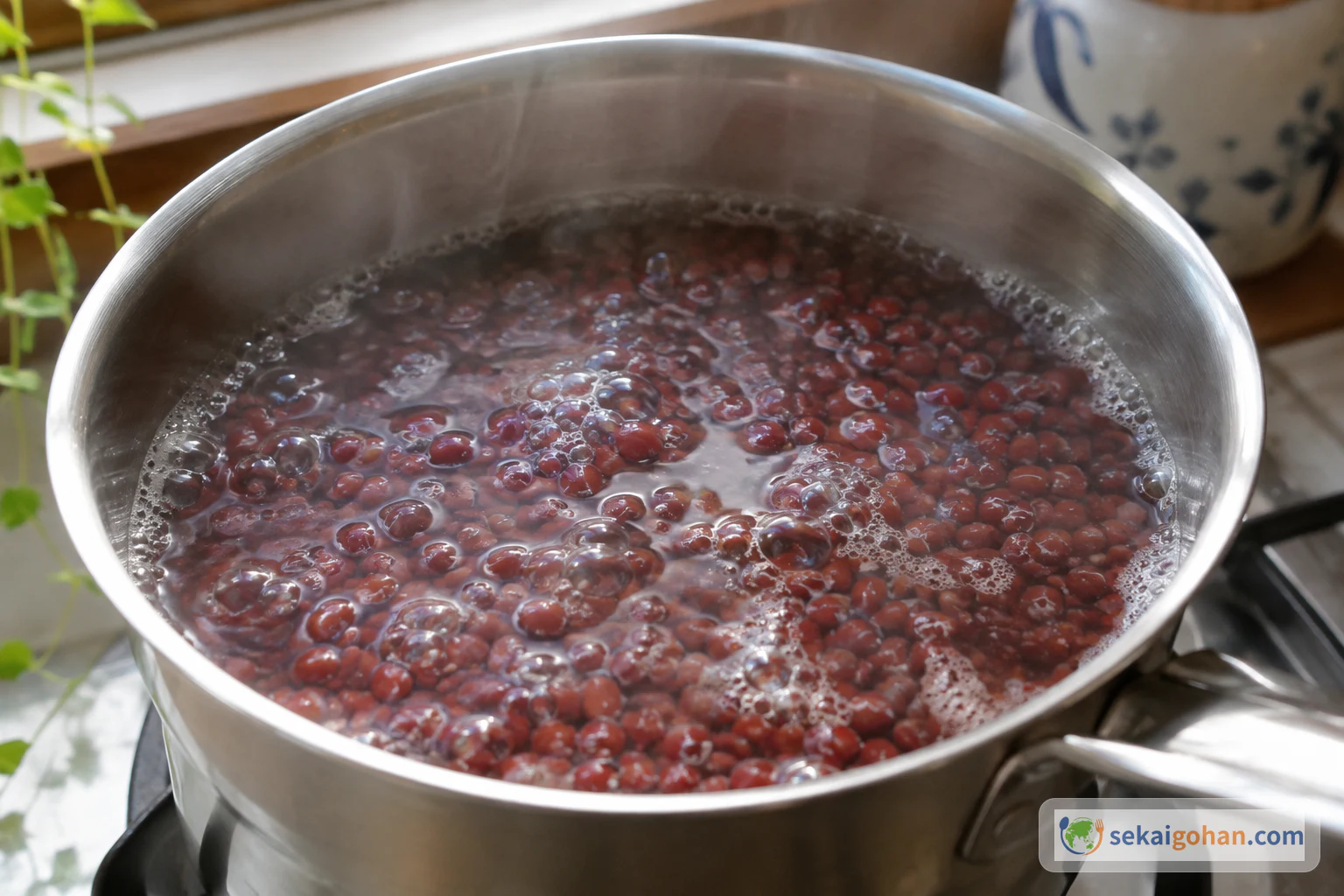
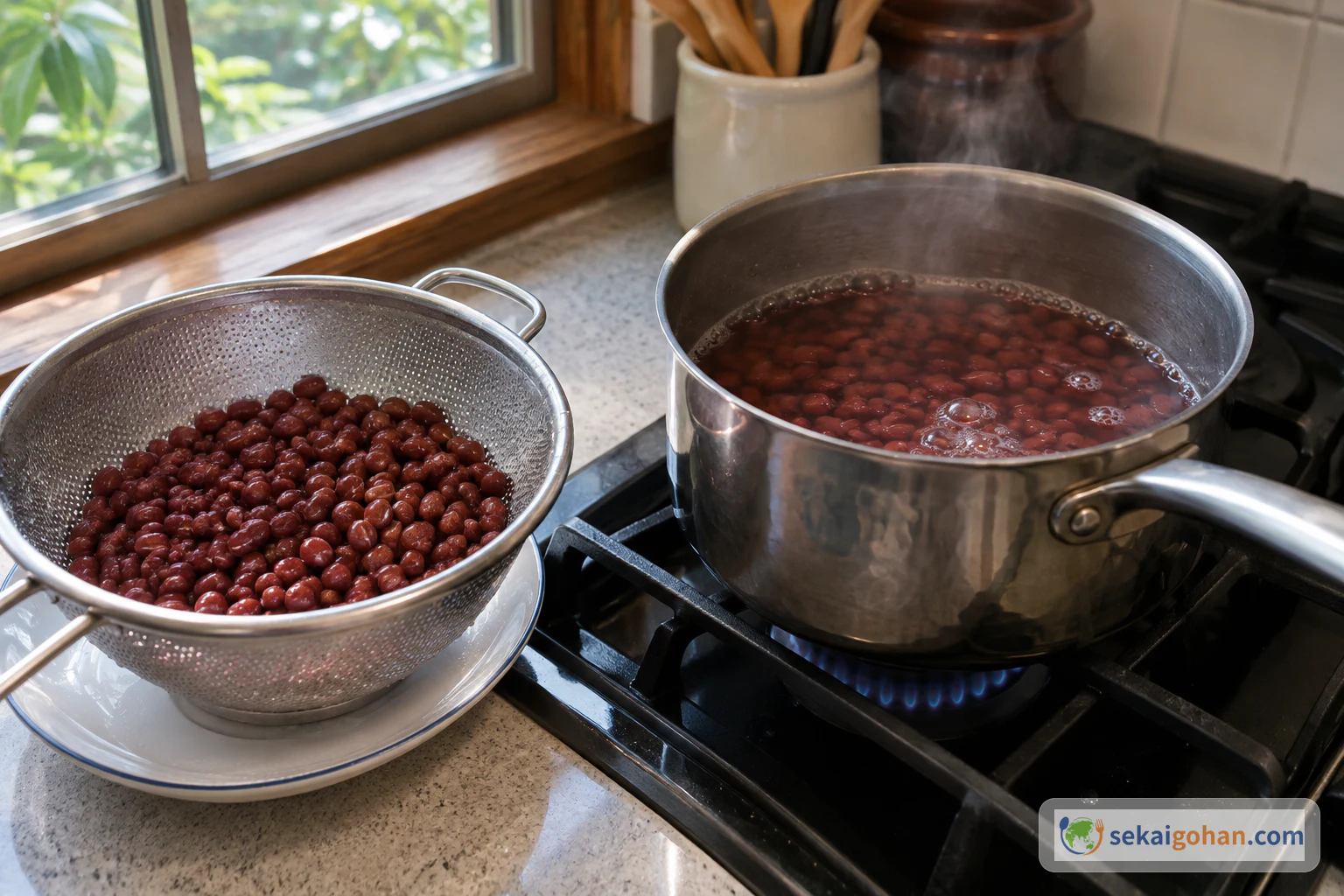
The azuki are cooked in their own pan with separate water. The dashi is only for the main pot.
Choosing Ingredients for Itoko-ni
- Azuki: Use dried azuki so you can do the first boil and water change in step 1. Canned or steamed azuki skip that stage and have a different texture, so they won't give the same result.
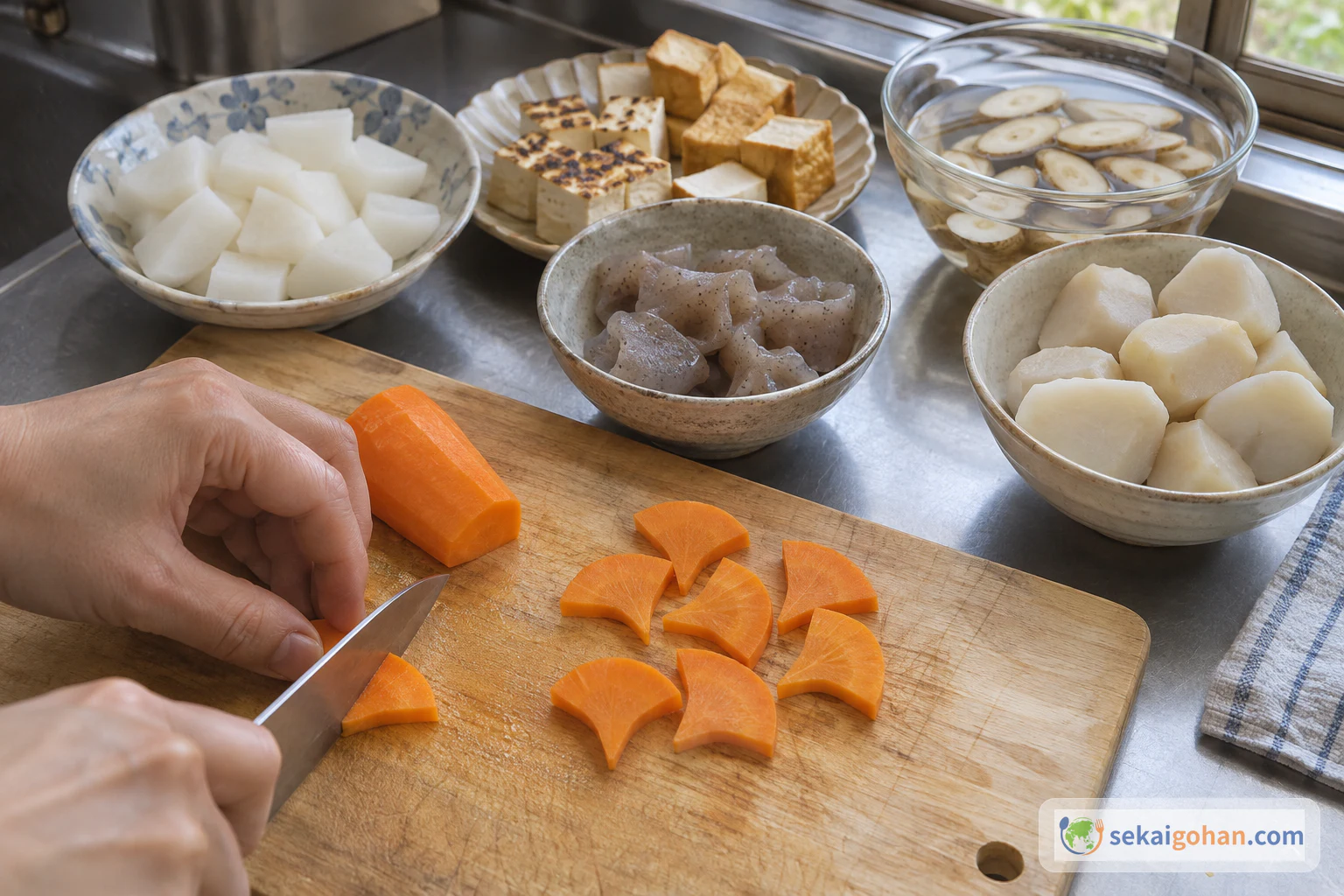
- Thick fried tofu: Atsuage is a block of tofu fried on the outside and soft inside. Thin aburaage won't stand in for it here.
- Grilled tofu: Yaki-dōfu is firm tofu seared on the surface. Plain firm (momen) tofu breaks apart more easily if you use it instead.
- Taro: Use fresh satoimo and parboil it before it goes into the pot. Frozen taro changes the texture and moisture, and other kinds of potato aren't a substitute.
- Konnyaku: You can leave it out, though it is part of the traditional set of ingredients.
- Dashi, miso and soy sauce: Any prepared dashi you normally use will work, and the same goes for your favorite miso and soy sauce.
- This version keeps to azuki alone, with no sugar, pumpkin, soybeans, kidney beans or scallions.
Miso, soy sauce, atsuage and grilled tofu all contain soy. Check the labels on your miso, soy sauce, dashi and tofu for wheat and other allergens.
Equipment
- Small saucepan for the azuki
- Main pot for the stew
- Colander
- Cutting board and knife
- Small bowl of water for soaking the burdock
- Ladle
Method: Firm Azuki, Roots First, Tofu Last
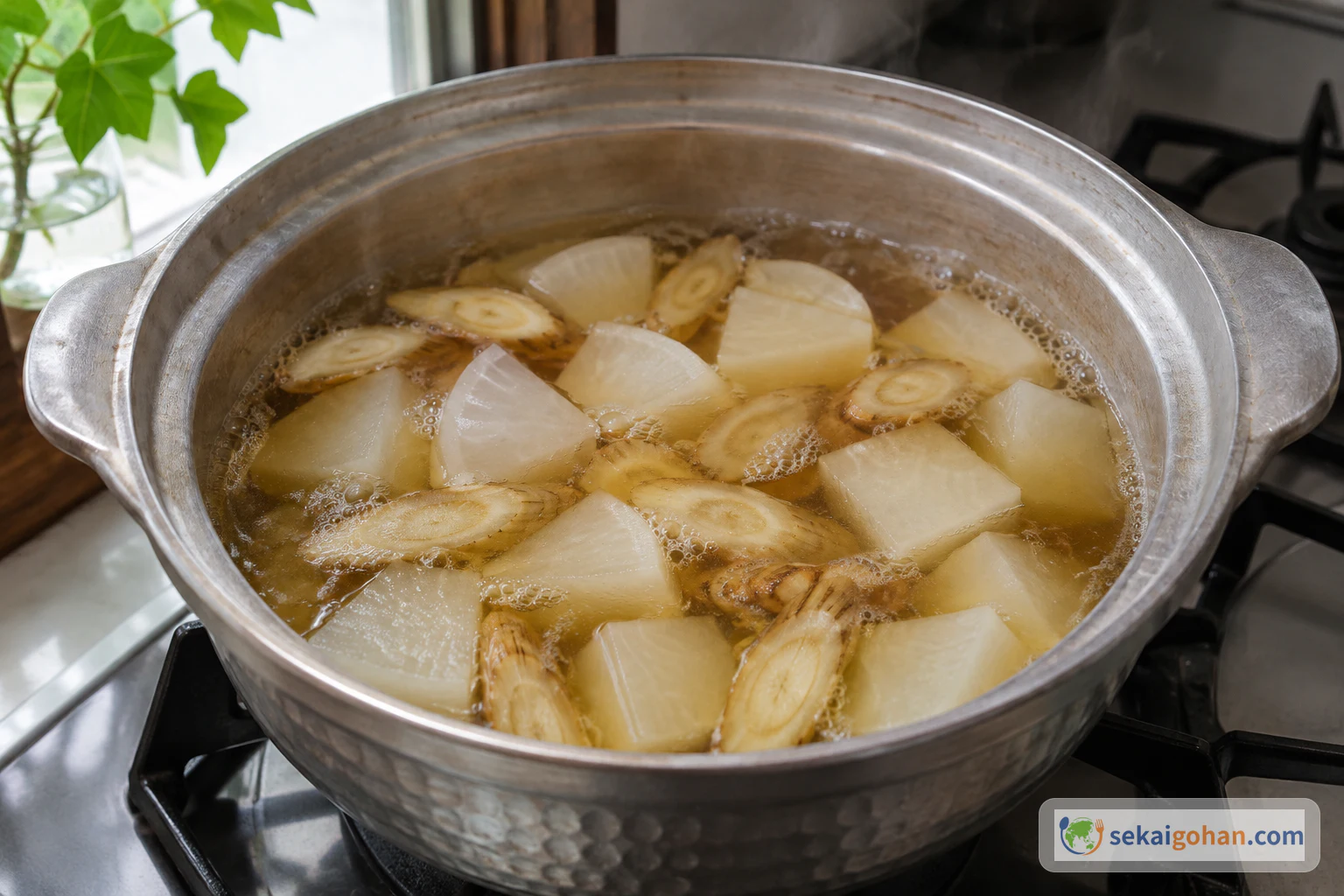
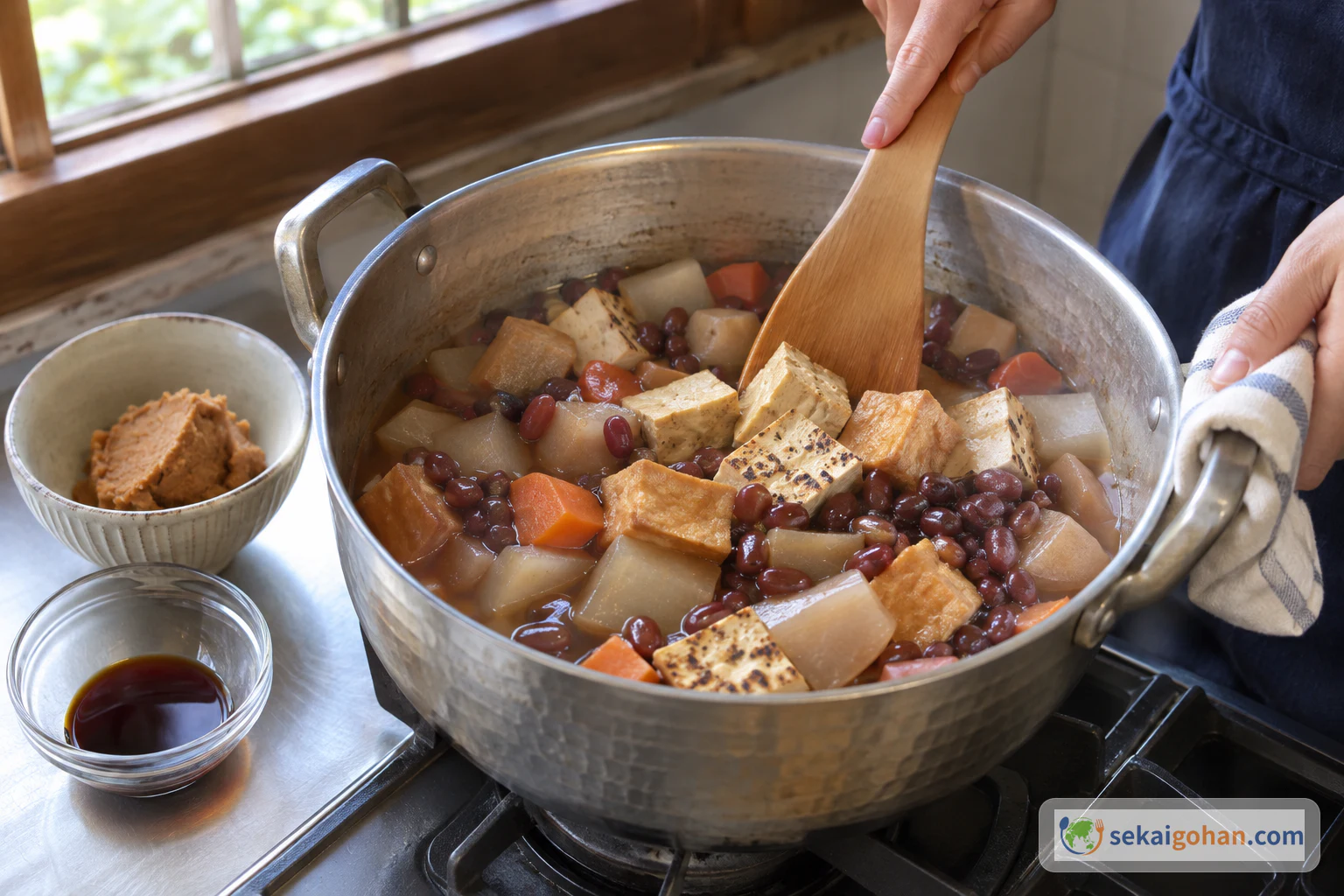
Each ingredient goes in only when the one before it has reached the right point. Judge by how soft the daikon and the rest of the pot have become.
Itoko-ni Problems and Fixes
Cook the azuki separately and keep them firm. Start the hard roots first, add the softer things once the daikon is tender, and save the tofu and seasoning for the last few minutes so that every piece keeps its shape.
| Condition | Likely cause | What to do |
|---|---|---|
| The azuki have broken apart | Cooked too soft at the start, or simmered too long in the main pot | Cook them only until firm in their own pan, and add them in the middle stage, not at the beginning |
| Some pieces are hard while others are soft | Ingredients added out of order, or cut to different sizes | Keep the daikon and burdock first, and follow the cut sizes, so everything reaches softness together |
| The broth has turned cloudy | Changed order or cuts, or hard boiling after the tofu went in | Follow the order first, and keep the last few minutes to a gentle simmer |
| The tofu is crumbling | Added too early or stirred hard | Add both kinds of tofu only after everything else is soft, and stir gently |
Other Toyama Versions and Leftovers
Sweetness and the choice of beans change from household to household, and two other Toyama versions show how far that goes:
- Kurobe version: a ten-serving version with soybeans and azuki (1/2 cup each), 2 L water, 1 tbsp soy sauce, 5 tbsp sugar, 2 tbsp sake and 50 ml mentsuyu, with all the ingredients cooked together from the start. It is eaten around the anniversary of Shinran's death.
- Four-serving version with soybeans: soybeans, azuki and kidney beans (1/3 cup each), with 25g each of burdock and carrot. The beans are boiled until firm, simmered with the root vegetables, and seasoned at the end.
For leftovers, use clean utensils and clean containers. If there's a lot left, divide it into shallow containers and refrigerate it promptly rather than letting the pot cool at room temperature. Reheat it thoroughly before eating.
Frequently Asked Questions
Isn't itoko-ni a pumpkin dish?
In many parts of Japan it is, and the name also covers azuki with shiratama dumplings. Toyama's itoko-ni is a different, savory dish built on azuki, root vegetables, konnyaku and tofu.
What kind of dashi should I use? Is the dish vegetarian?
Any prepared dashi works. Whether the dish is vegetarian depends on the dashi, miso and other products you choose, so check their labels.
Can I add sugar or other beans?
Some Toyama households do, as in the Kurobe version above. This version leaves them out.