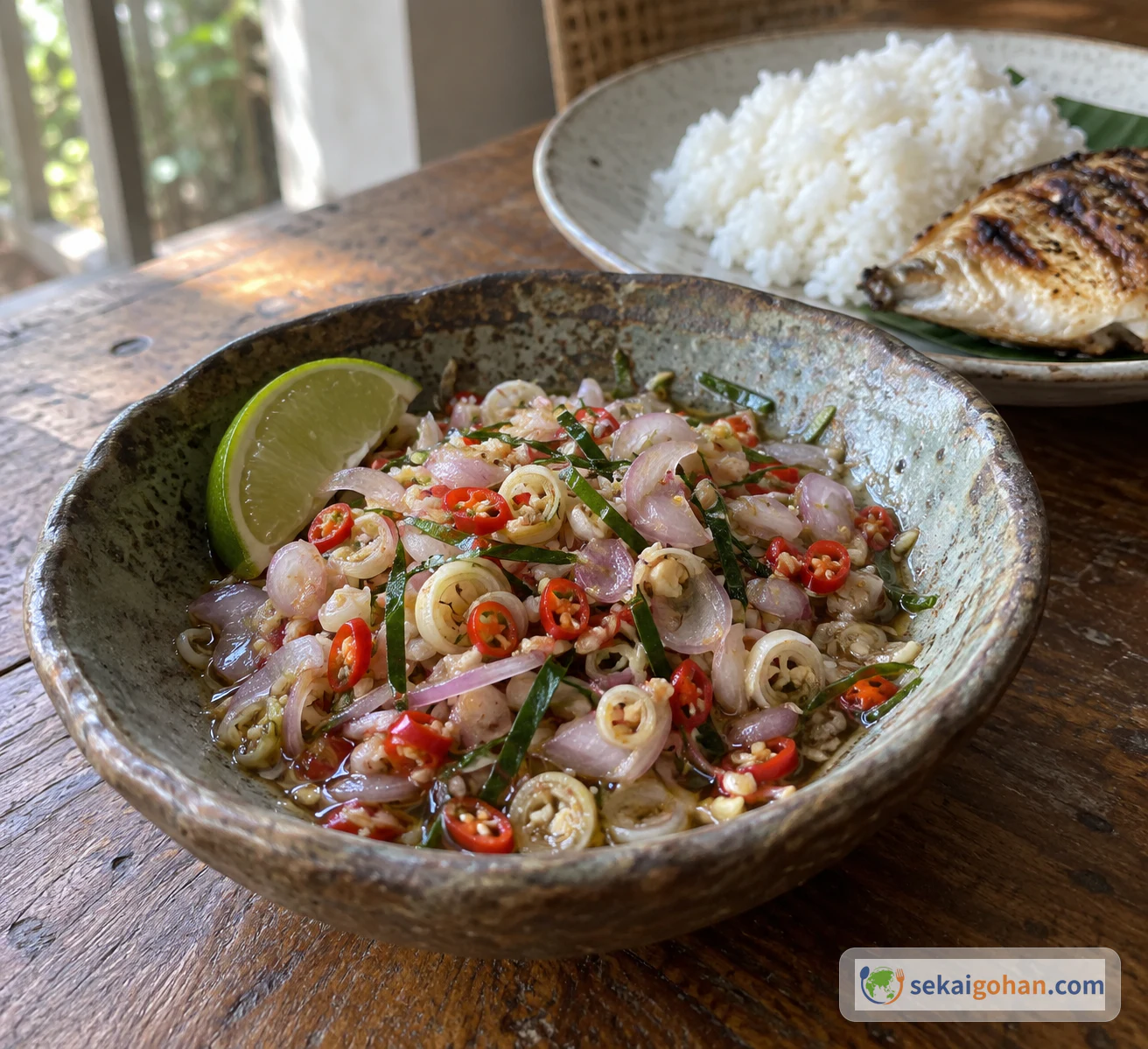
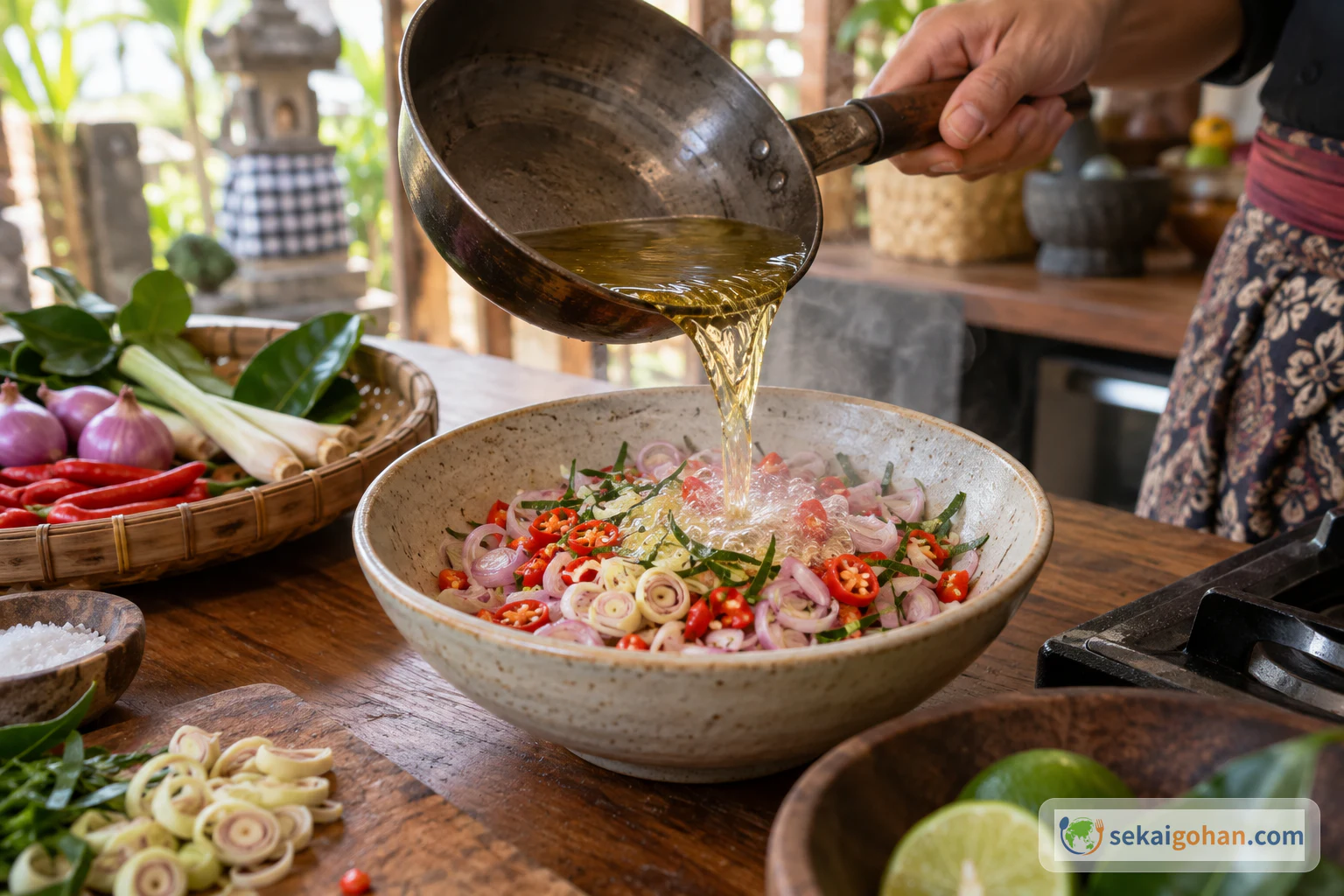
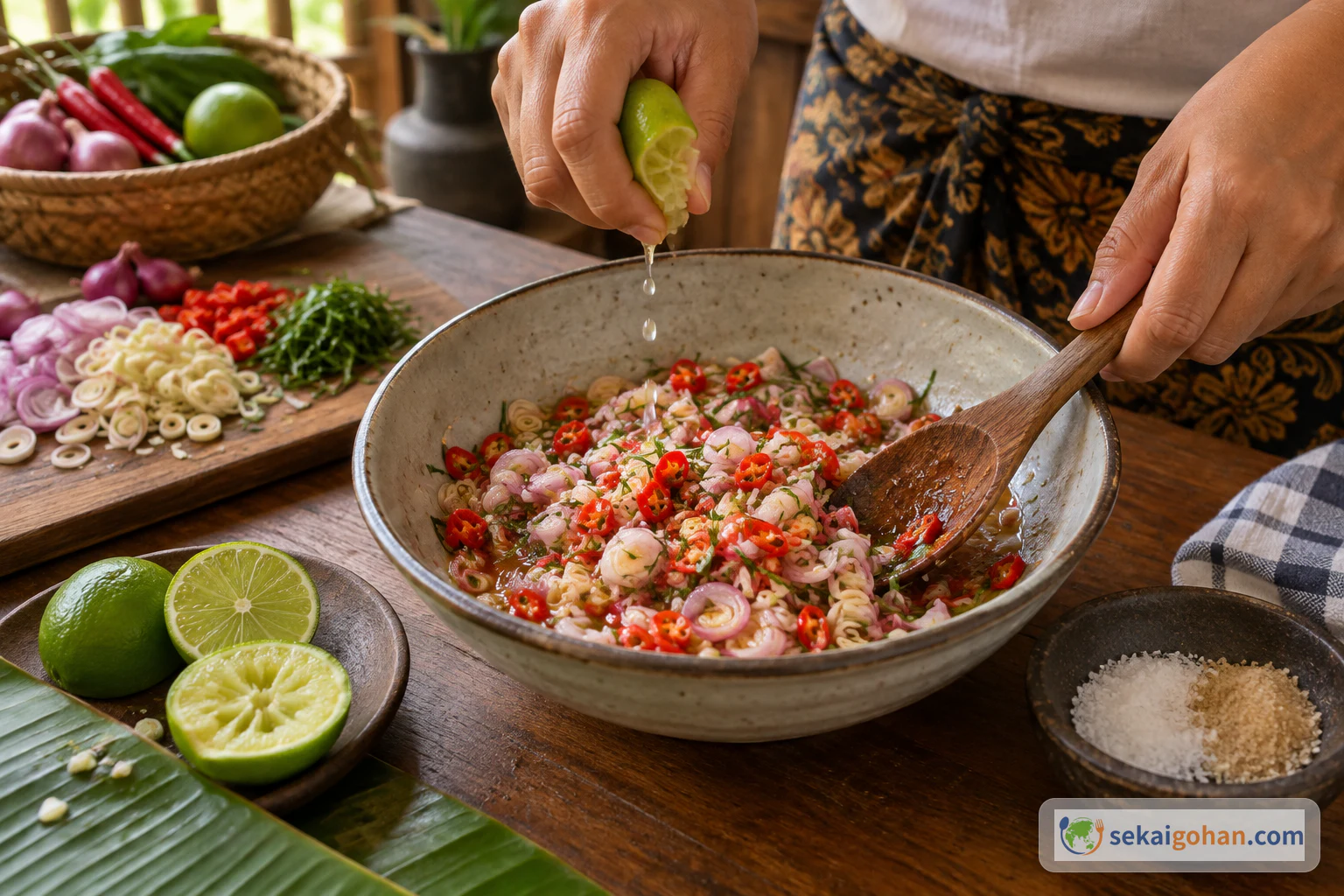
Rings of red chili glisten in the bowl, slick with oil. The shallots hold their thin rings and the lemongrass its tiny whorls, while the makrut lime leaves turn into fine green threads. Squeeze lime over the top and the roundness of the hot oil loosens, and the aroma that reaches your nose turns a shade brighter.
This is sambal matah, the raw sambal of Bali: chopped shallots, chilies, lemongrass and makrut lime leaves dressed with hot coconut oil. Unlike sambals ground smooth in a stone mortar, it keeps the texture of the chopped pieces, and it is finished without pounding or frying. It's bright, sharp and fragrant, with heat that arrives alongside lime and green leaf.
Sambal matah in Balinese cooking
On the Balinese table
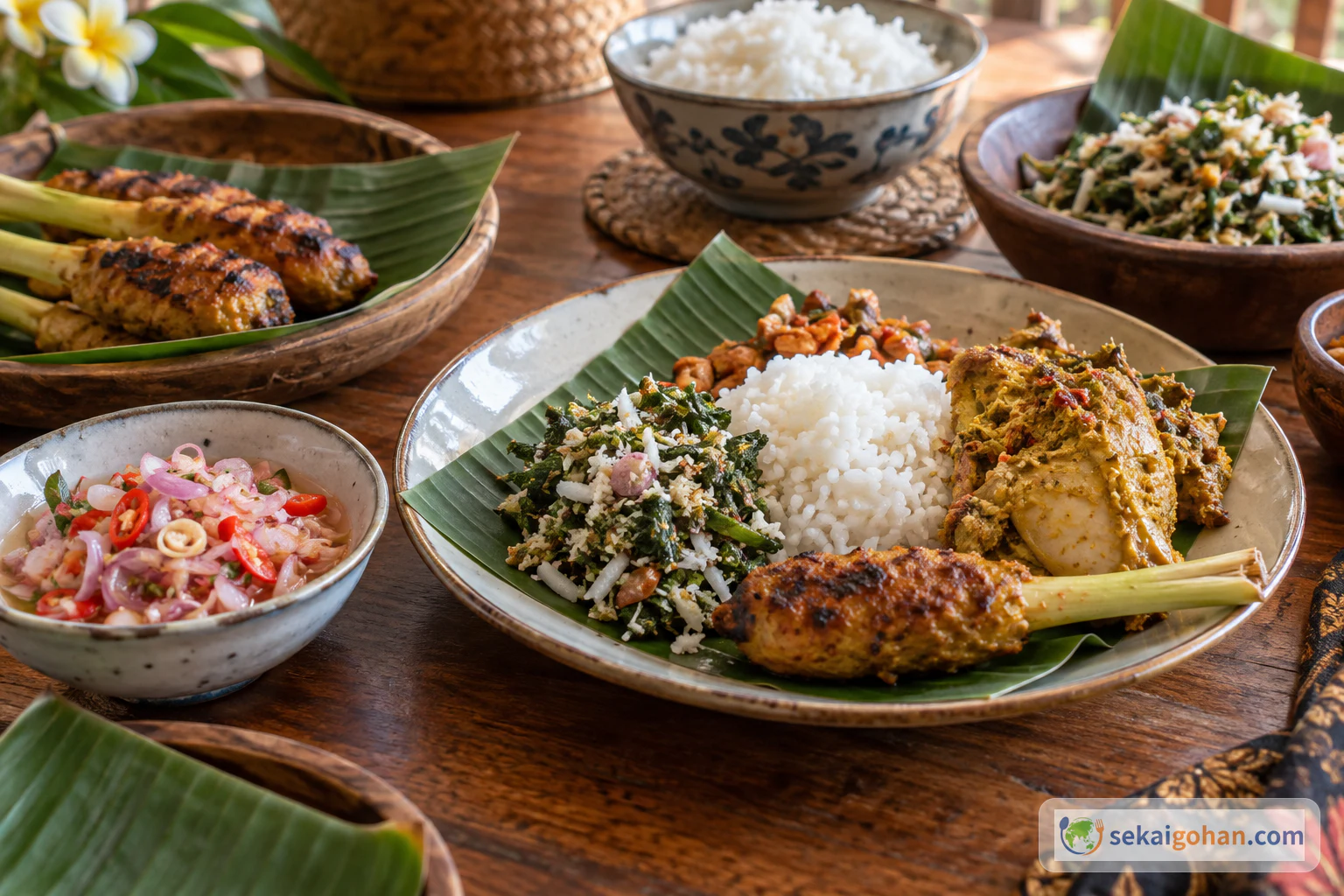
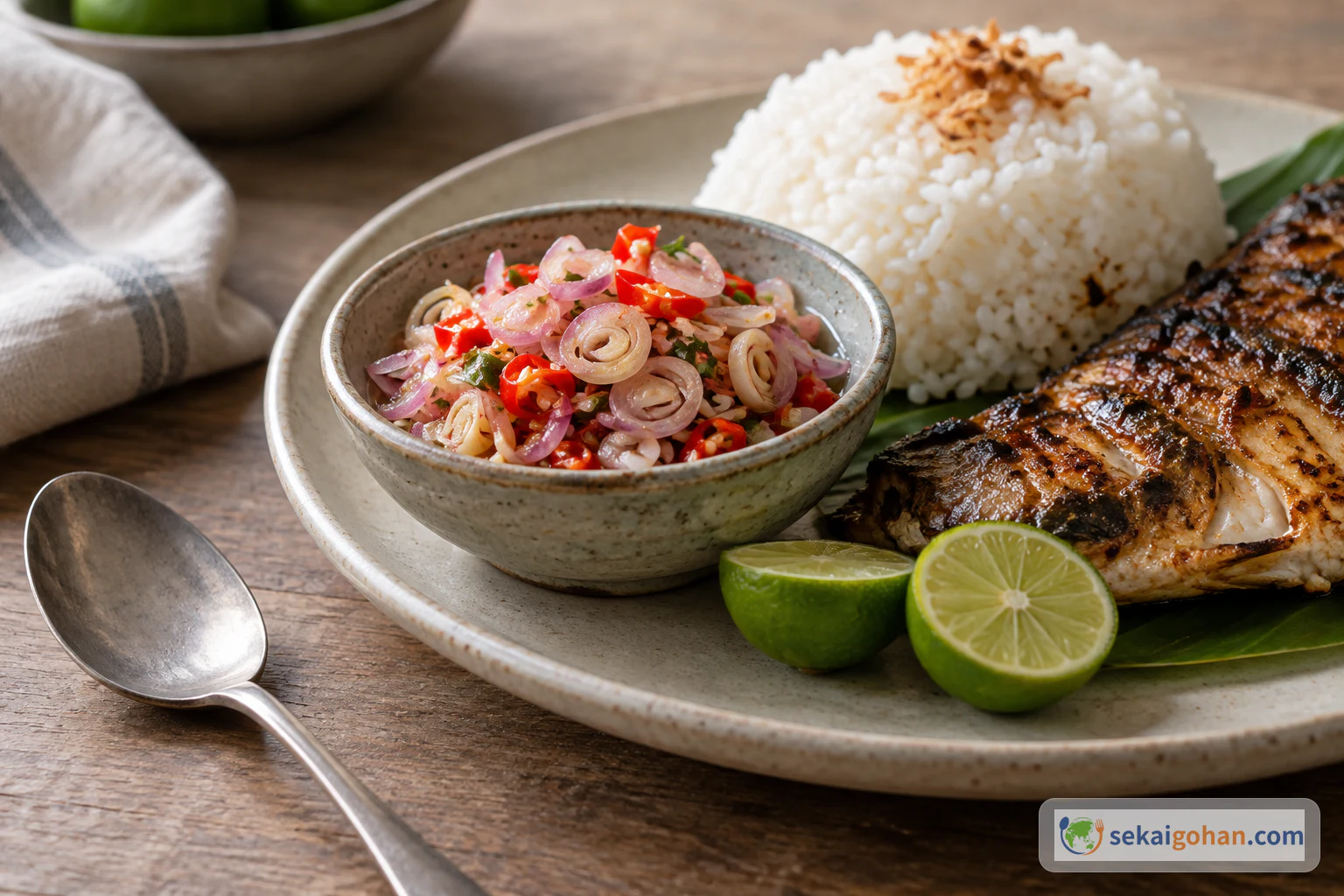
Sambal matah isn't used to season or simmer meat or fish. At a Balinese nasi campur, the rice is served with small portions of sate lilit, ayam betutu, lawar and so on, and sambal matah sits to the side. Rather than blanketing the main dish like a sauce, it adds heat, acidity and a green fragrance with each bite, tying together the flavors of the side dishes around it.
That's why it works best in small amounts. Instead of pouring a lot on at the start, serve about 1 tsp beside the fish, chicken or rice and let each person decide how much to add.
Sambal matah and other Indonesian sambals
Sambals across Indonesia change shape with local ingredients, preferred heat and the dishes they accompany. Sambal matah is Bali's chopped raw sambal, while dabu-dabu of North Sulawesi is a different raw sambal, made with tomato and lime.
Bali alone has many more: sambal cantok, in which the ingredients are crushed, sambal nyuh, which uses coconut, and sambal sera, sambal embe and sambal bongkot, which are built on lemongrass. Sambal matah isn't tied to one birthplace or one set of amounts, and the ingredients and the dishes it's served with vary by region.
Ingredients (serves 4): choose authentic ingredients only for the core of the aroma
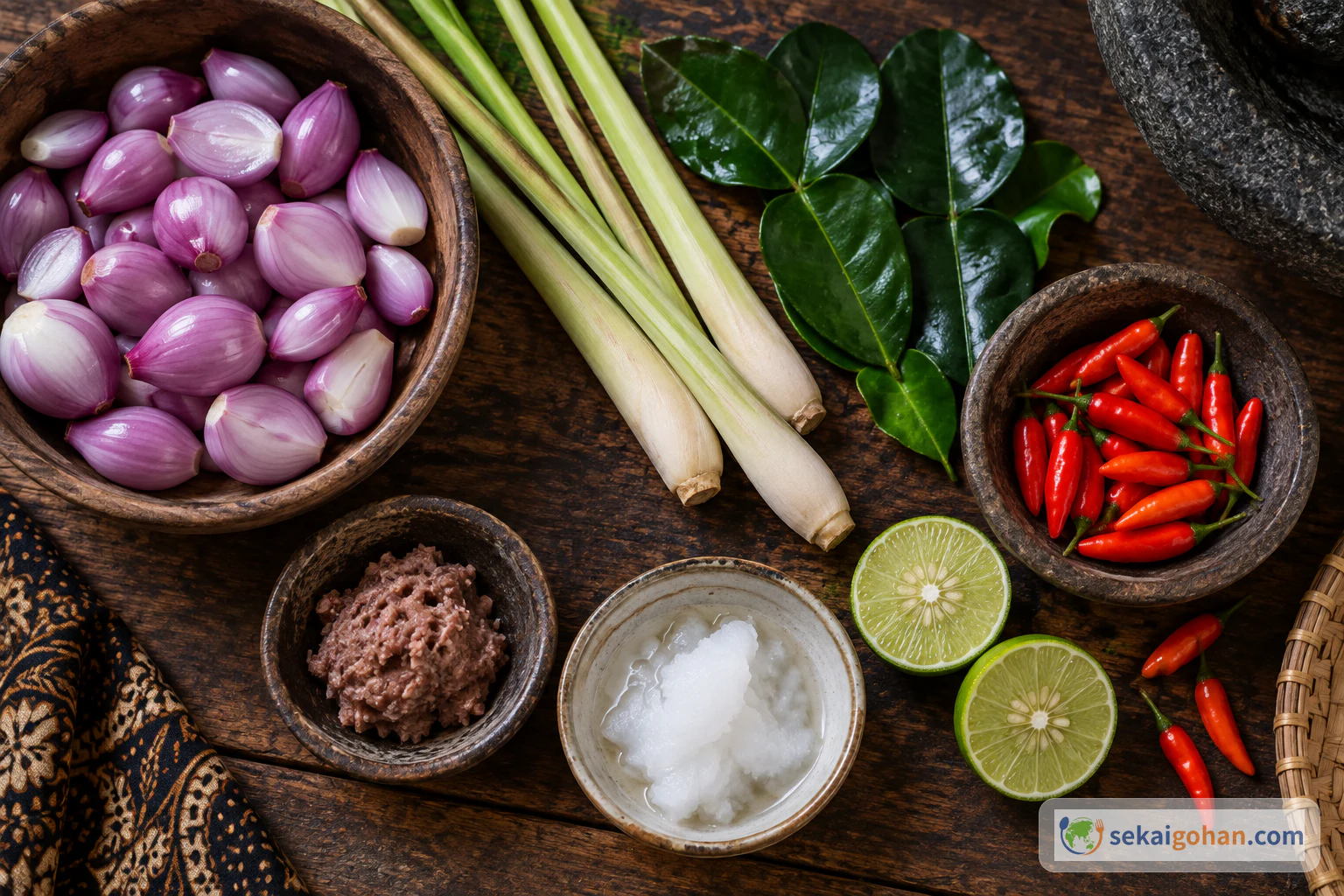
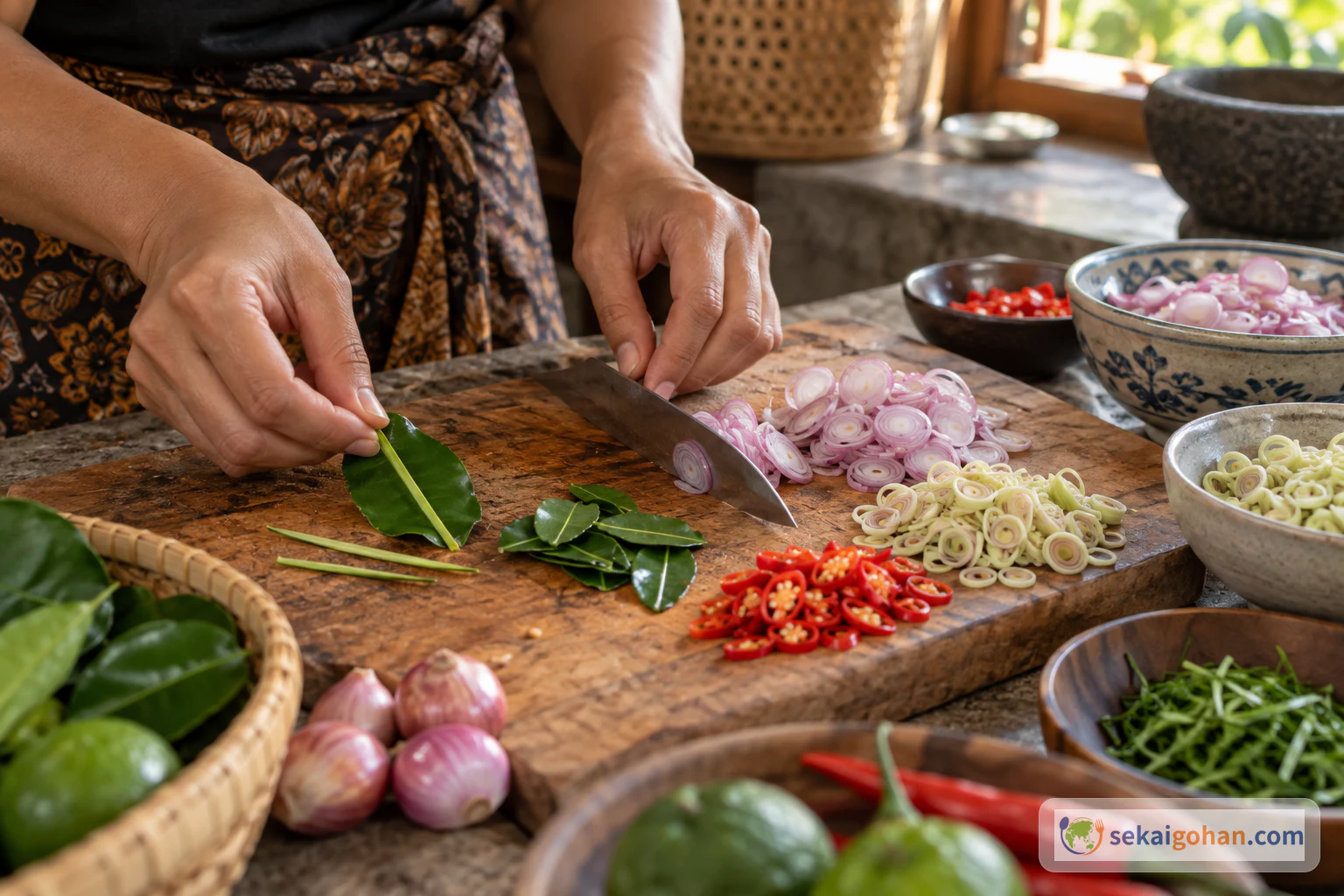
These amounts make 4 servings, a size that is easy to handle at home. Chop the shallots, chilies, lemongrass and makrut lime leaves, stir shrimp paste into the oil, and pour it over. The heat and salt are adjusted for a home table, with the method drawn from a survey and a recipe card.
Makrut lime leaves are not there to add more sourness to the lime juice. When the chopped leaves touch the oil, they add a green citrus fragrance that is different from the juice. If you cook Southeast Asian food often, buy them frozen. For this one dish alone, skip the leaves and grate a little lemon zest for brightness.
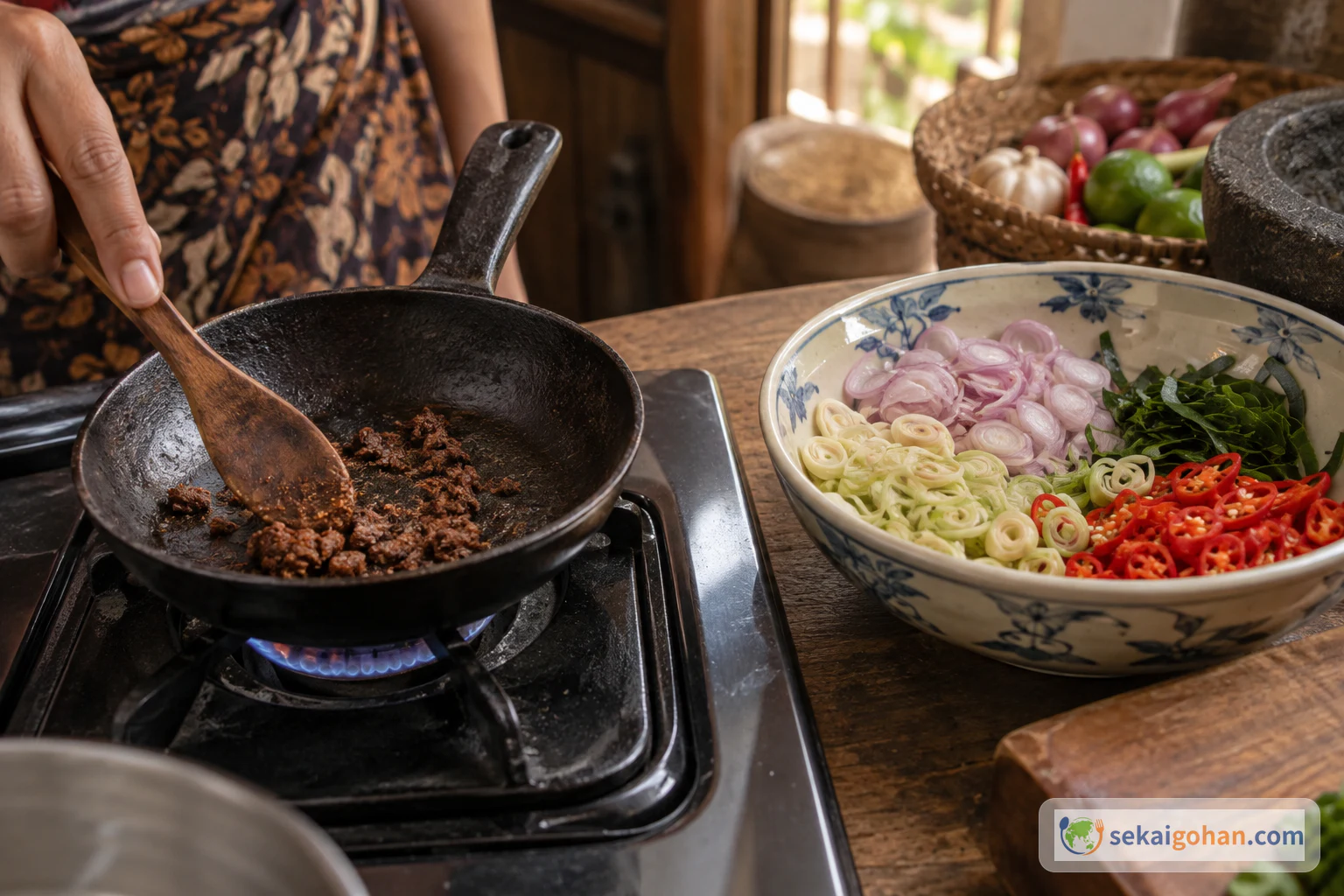
Warm terasi in a small amount in a dry pan to bring out its fragrance. It adds a seafood flavor, so leave it out for a vegan version, and do not increase the salt all at once; taste at the end.
If fresh red chilies are hard to find, sambal oelek can stand in. It brings the roundness and saltiness of a fermented seasoning, though, so rather than swapping it one-for-one for the 20 g of red chilies, start from about 15 g and hold the salt until the end. Choose a jar whose label lets you check the ingredients, the net content and how to store it after opening.
If you use terasi or shrimp paste, check the label of the product for shrimp. If you avoid shellfish, wash utensils separately too; instead of adding a substitute to fill in the flavor, adjust the salt and acidity little by little for what you omitted.
Choosing ingredients and tools for sambal matah
Think of sambal matah as a dish that keeps the chop, opens its aroma with hot oil and sits beside the meal. Hold on to that, and you'll know what you can change when substituting ingredients.
Red onions instead of shallots. Red onions are larger than shallots and can release more water. Soaking them to tame the bite tends to wash out the aroma and the crunch too, so adjust with the cut instead: slice them thinner than 0.125 inch (2 mm) and blot the surface with paper towels. If they're still strong, add lime and let them rest for 5 minutes. Once the oil goes over those thin slices, the sharpness softens while the crunch at the center stays.
Lemongrass. Use only the base. The white part of the lowest 2–3 stalks is tender and edible when sliced thin, while the tough outer sheaths and dry tips leave fibers in your mouth. The trimmings don't have to go to waste; drop them into soups or the rice pot for fragrance.
Tools. A knife is enough for 4 servings. A small food processor shortens the time it takes to chop the aromatics evenly, but it's worth buying only if you'll make batches four times this size or use it for other aromatic pastes. Check the capacity, the blade setup and whether the bowl gathers a small amount toward the blade. If you only ever make small amounts of sambal, the knife you already own is the sensible choice.
Method: even cuts, and the oil goes on last, hot
Separate the chopping from the work that needs heat. Blot the moisture from the ingredients with paper towels and keep the bowl cool until just before you pour the oil. Cut the lemongrass large and it is hard to bite through; run it too long in a food processor and it releases water and turns into a paste. A knife and thin slicing are the most reliable tools for this dish.
Common sambal matah problems and fixes
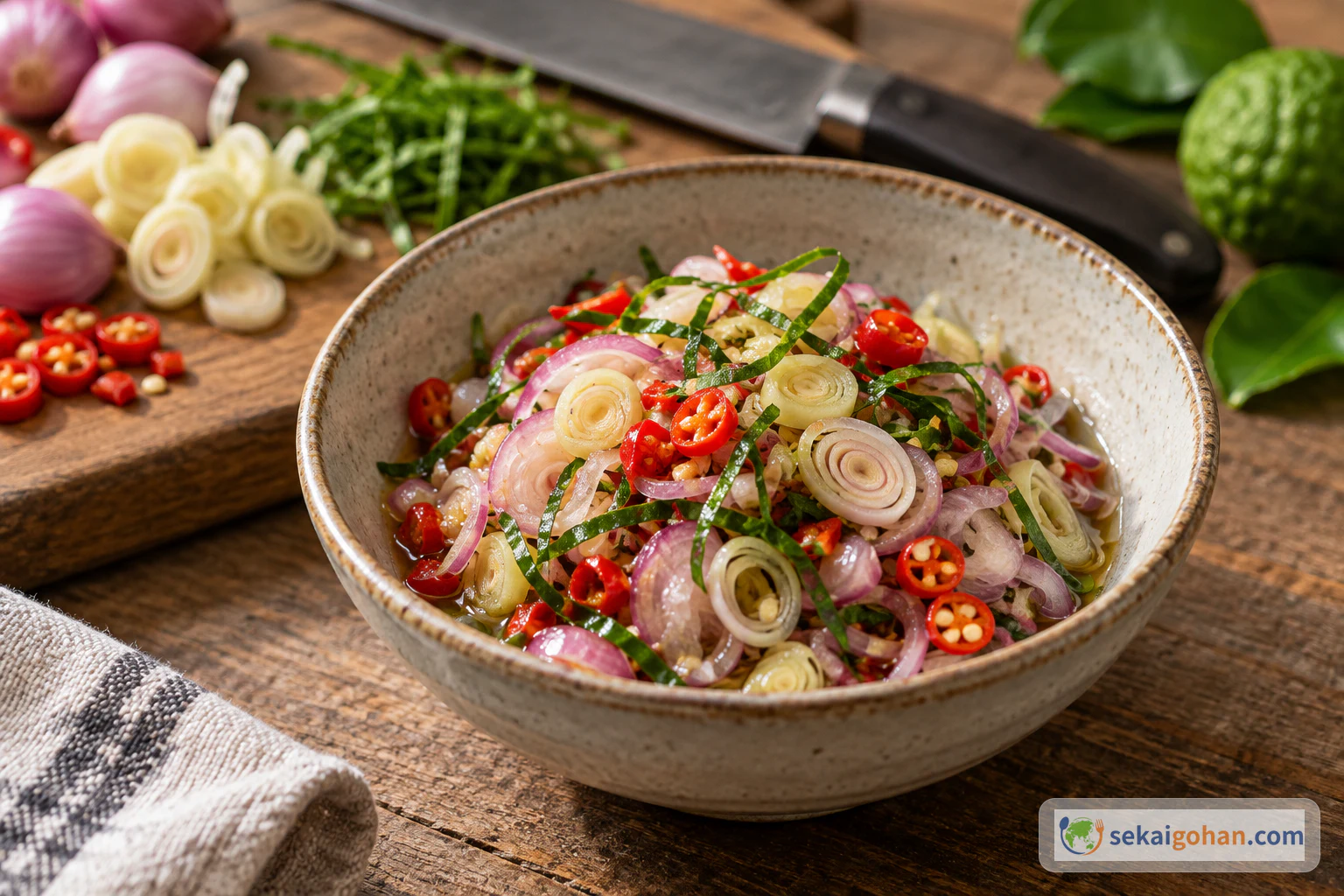
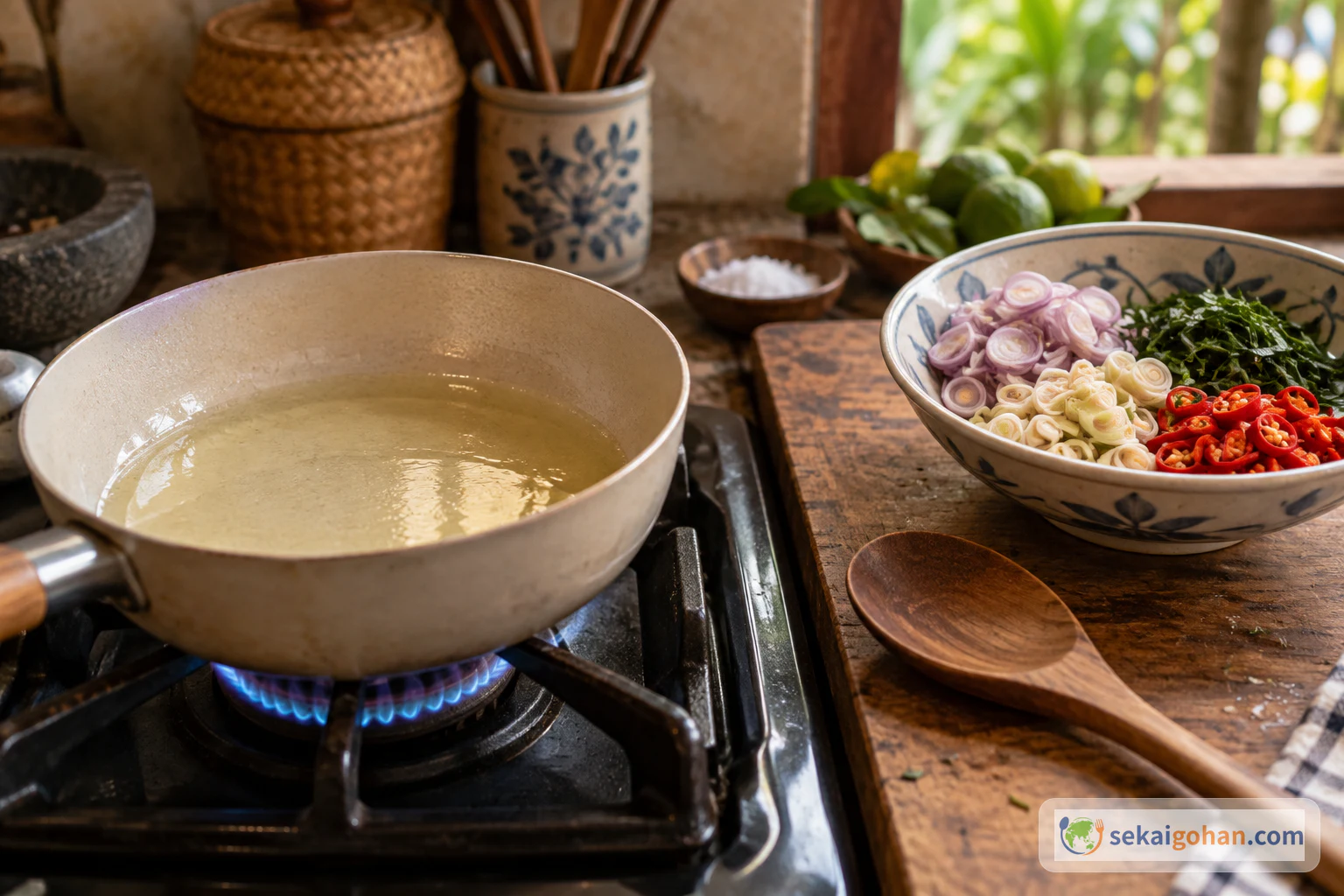
Most problems come down to oil temperature. Read only the word "raw" in the name and mix in cold oil, and the toughness of the lemongrass and the bite of the onion come forward. Heat the oil until it smokes, and the green aroma of the leaves scorches and the whole thing drifts toward a stir-fry. What you want is a small sizzle the moment the oil lands, with the rims of the shallots turning translucent and some crunch left at the center.
The size of the cut matters too. If the lemongrass rings are too large, the heat of the oil doesn't reach the center, and that toughness can't be undone afterward.
If the aromatics turn watery, don't make it richer with more oil or salt. Add a little more chopped shallot and lemongrass to give the flavor more to cling to. If it's too hot, eat it with warm rice, grilled fish or unsalted cucumber, and don't add a lot of sugar to the bowl. Only when the oil was cold and the aroma stayed closed, warm a small amount of oil in a separate pan and add it over the top.
Serving and storing sambal matah
Serving and pairing
Spooned over grilled fish, sambal matah brings lime and chili into the savor of the skin; with chicken, it lightens the fatty parts. Let the main dish cool a little before adding it, and the aroma of the makrut lime leaves and the lime will last. Combining small amounts on each person's plate, rather than mixing it into a hot dish from the start, also makes it easier to adjust the heat.
At home, it goes well with ayam betutu, steam-roasted with its aromatics, and sate lilit, minced meat wrapped around lemongrass and grilled. On days when you want another vegetable dish, add the coconut sweetness of urap, another Balinese side, so the table doesn't rely on heat alone.
Storage
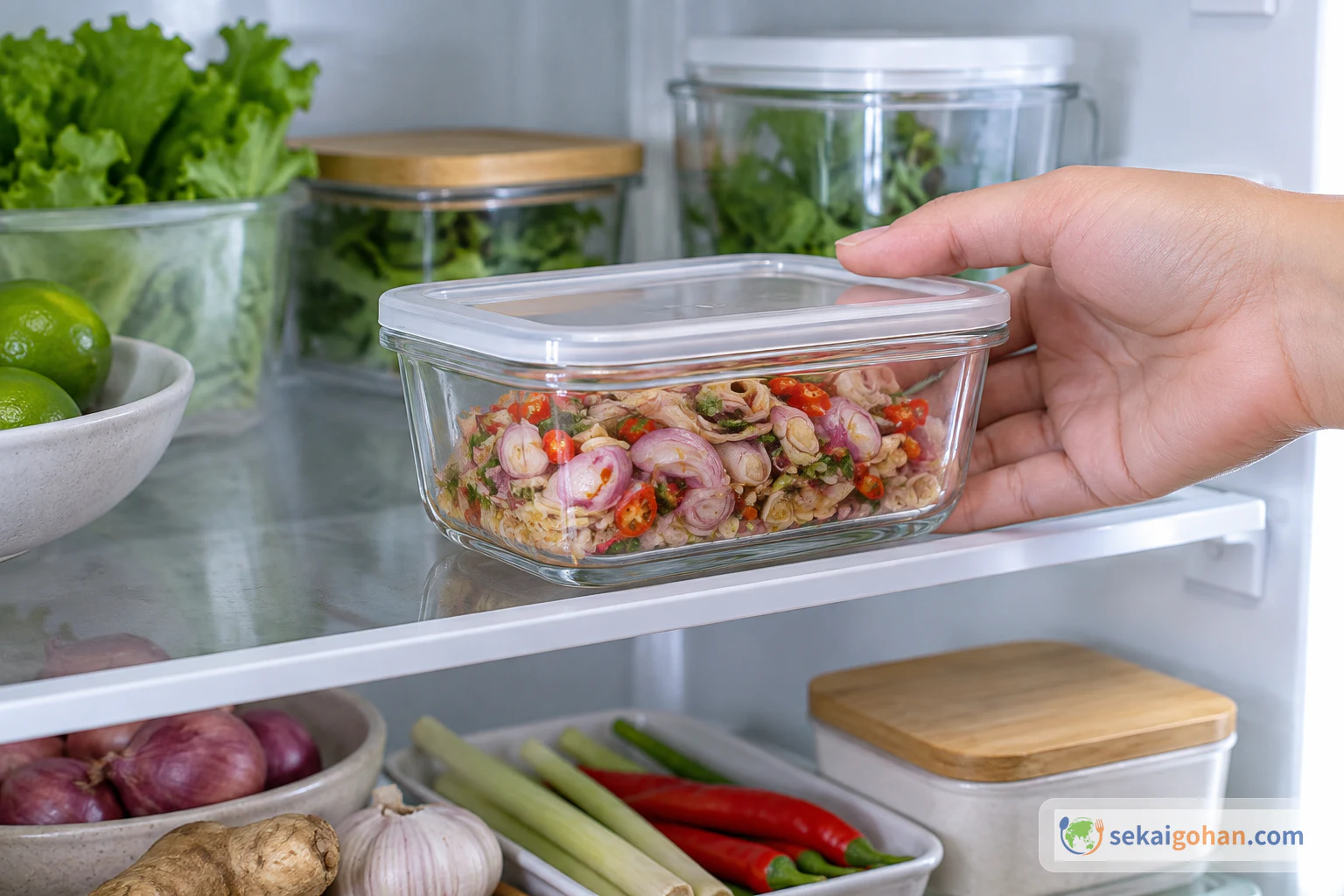
Sambal matah shows the outline of its aromatics best on the day it's made. If you have leftovers, first set aside what you'll eat, then move the rest to a clean, shallow, airtight container and refrigerate it. Water comes out of the onion and the lime overnight, so stir once before eating and check the aroma and texture. Don't freeze it: the vegetables release water on thawing and the chopped texture collapses.
For food safety, don't leave it at room temperature. Refrigerate leftovers within 2 hours, or within 1 hour when the air temperature is above 32°C (90°F). Refrigerated leftovers keep for about 3–4 days, but sambal matah loses quality quickly, so finish it the same day or by the next day.
If there is an off smell, sliminess or any sign that it was left out of the container for a long time, discard it without tasting it. If you used shrimp paste, do not share the storage container or spoon, and do not serve it to anyone who avoids shellfish.
Frequently asked questions
Is terasi necessary?
No. Terasi adds the savor of fermented seafood, but the heart of sambal matah is the chopped aromatics and hot oil. If you avoid shrimp, leave it out and adjust the salt at the end.
Can I substitute dried makrut lime leaves?
You can, but the aroma is weaker than with frozen or fresh leaves, and dry leaves tend to stay in the mouth. Chop them finely, use less, and let lemongrass and lime carry the core of the aroma. Lemon zest can stand in for the brightness, but it won't give the same green fragrance as the leaves.
Can I chop it finely in a food processor?
For a small amount, use a knife. Run a processor too long and the onion and chilies release water, making a paste that separates from the oil. If you do use one, pulse in short bursts and stop while you can still see the lemongrass rings and the leaf shreds.
How do I make it less hot?
The easiest way is to use fewer chili seeds while keeping the weight of chilies the same. To reduce the heat a lot, replace part of the chilies with red bell pepper and finish with lime to tighten the flavor. Sambal oelek adds salt too, so if you use it, leave the salt for the final adjustment.
Is it all right to keep eating the sambal at room temperature?
Because this dish combines raw aromatics with oil, take out only what you'll eat and refrigerate the rest early. Don't eat anything that has sat at room temperature for a long time or that smells off or feels slimy. If you use shrimp paste, keep separate utensils and servings so it doesn't get into dishes for people with shellfish allergies.