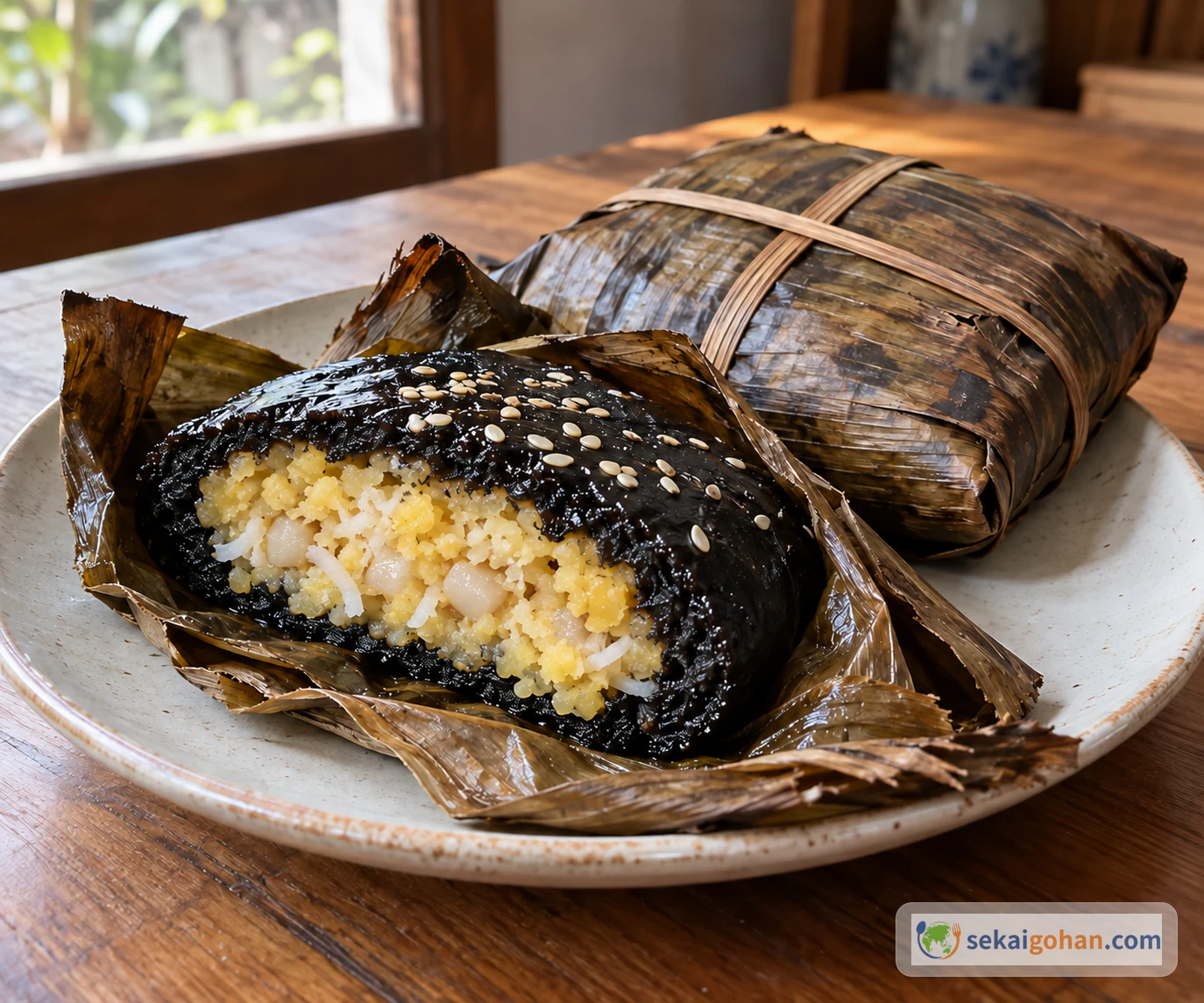
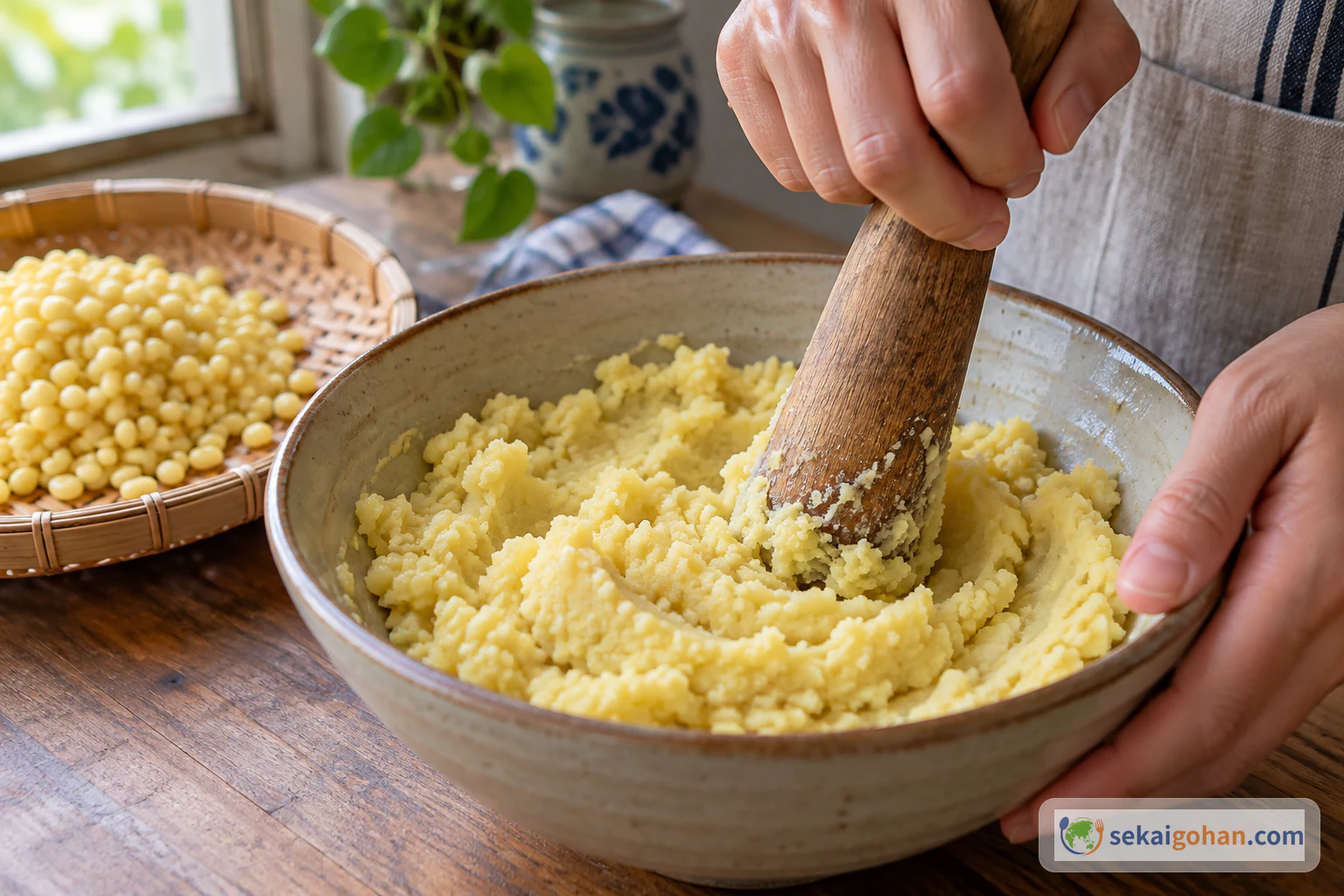
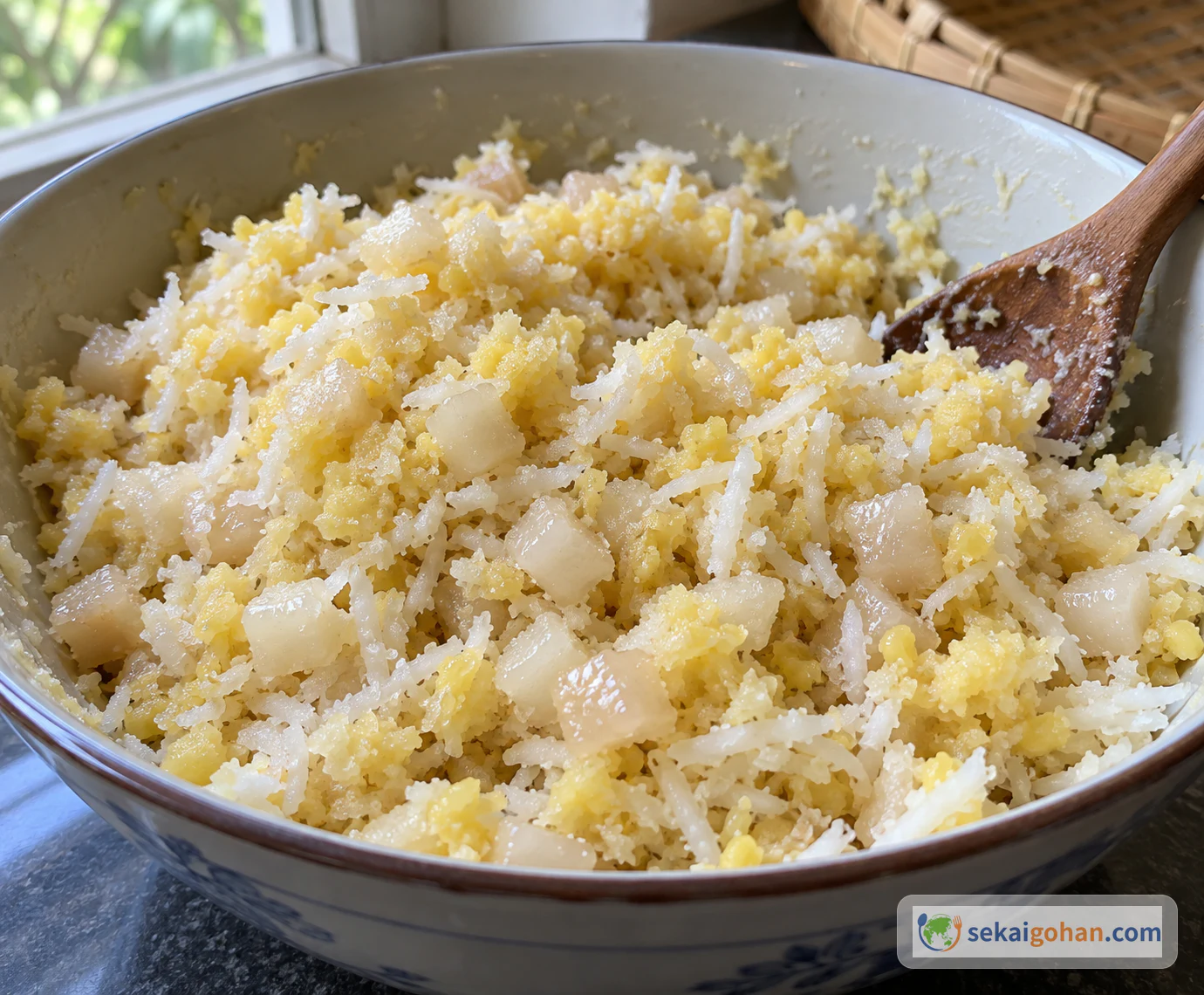
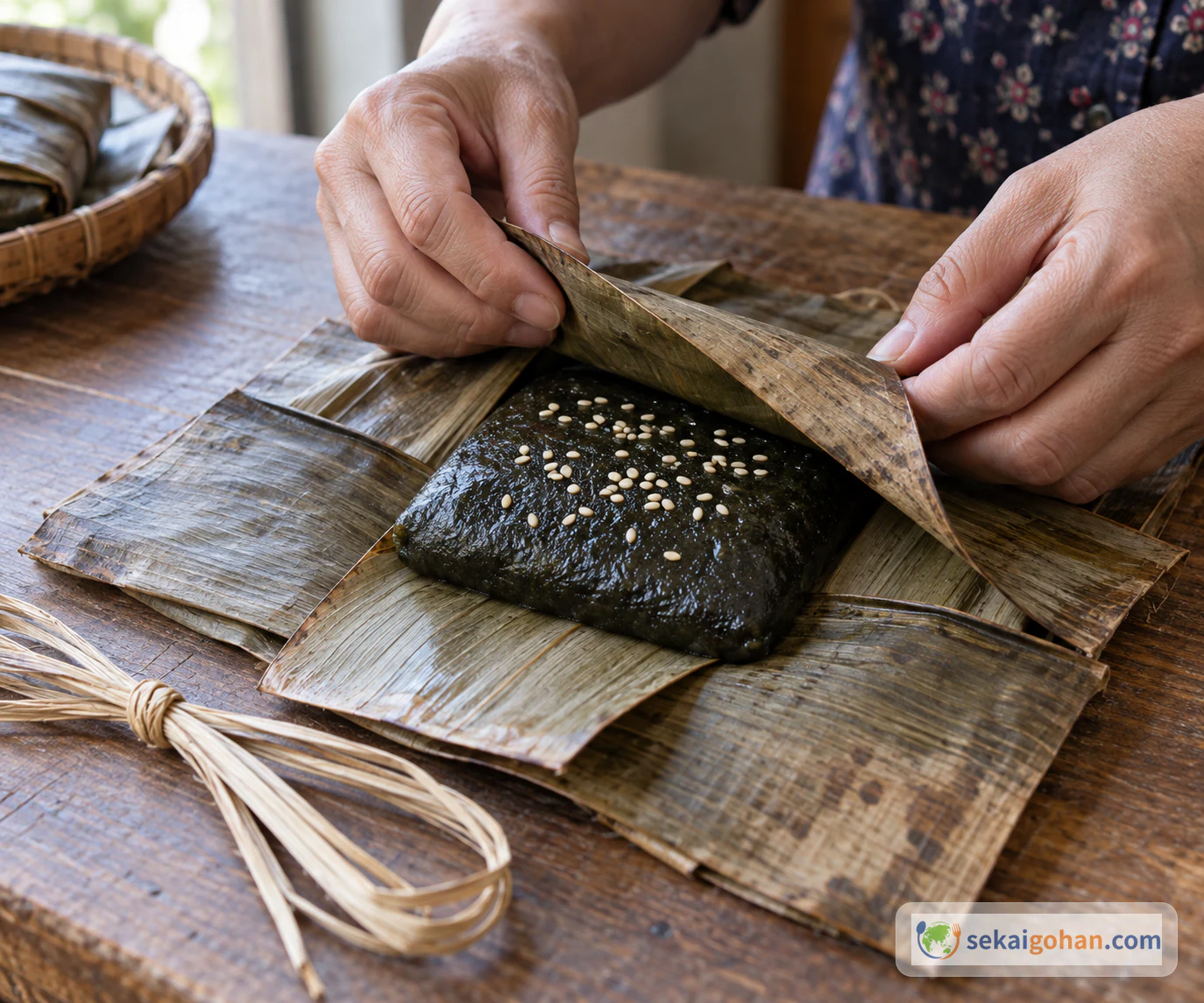
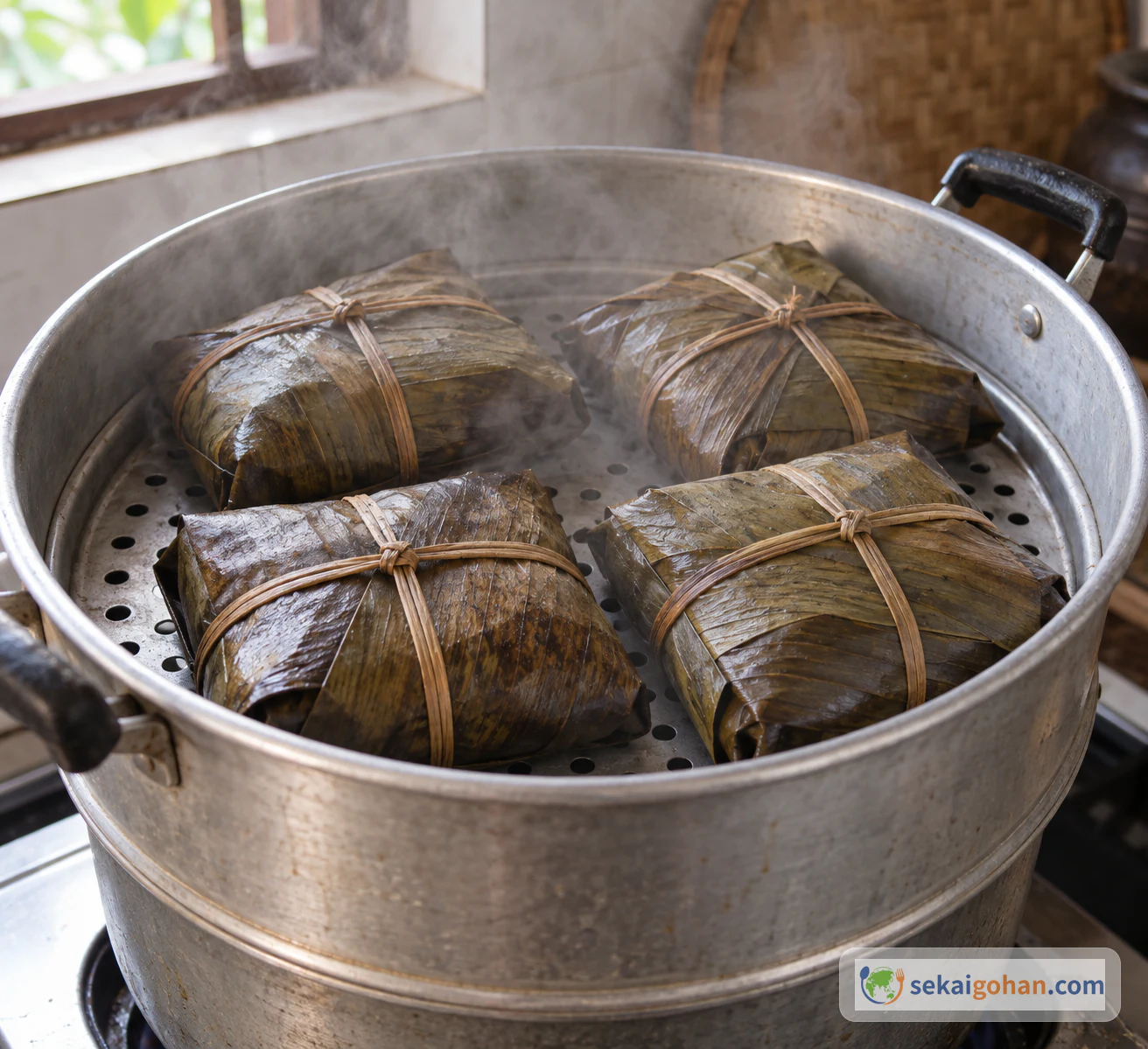
Untie the string and peel back the layers of dry, brown banana leaf, and what appears is a flat square cake so dark it looks almost black, flecked with a little white sesame. It smells of ramie leaves, sesame and, if you like, a hint of pomelo flower. Bánh gai is a sweet steamed cake from northern Vietnam, with a chewy wrapper and a soft filling of mung bean and coconut. If you are exploring the country's food more widely, start from our Vietnam page.
Bánh Gai and Its Regional Styles
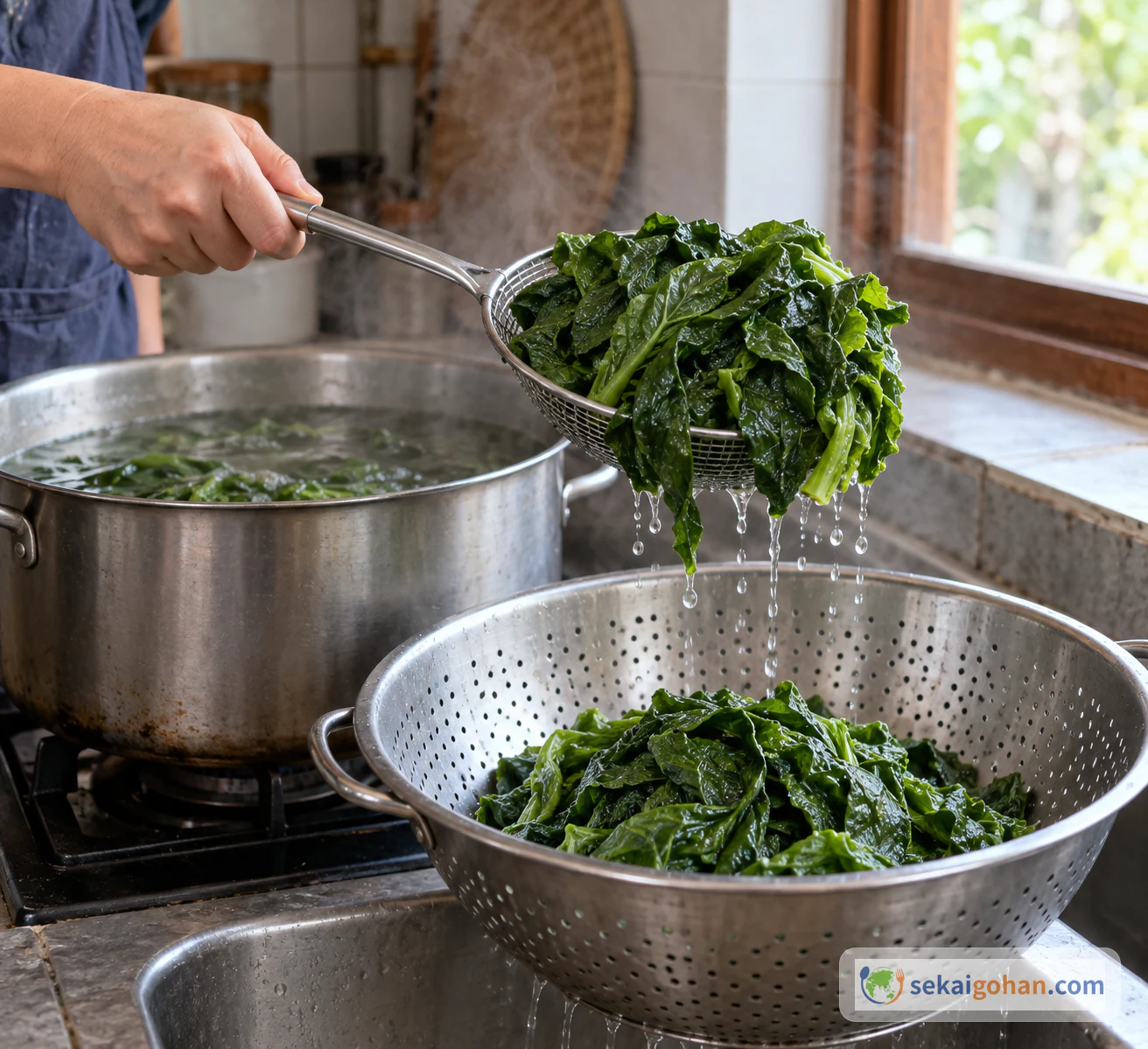
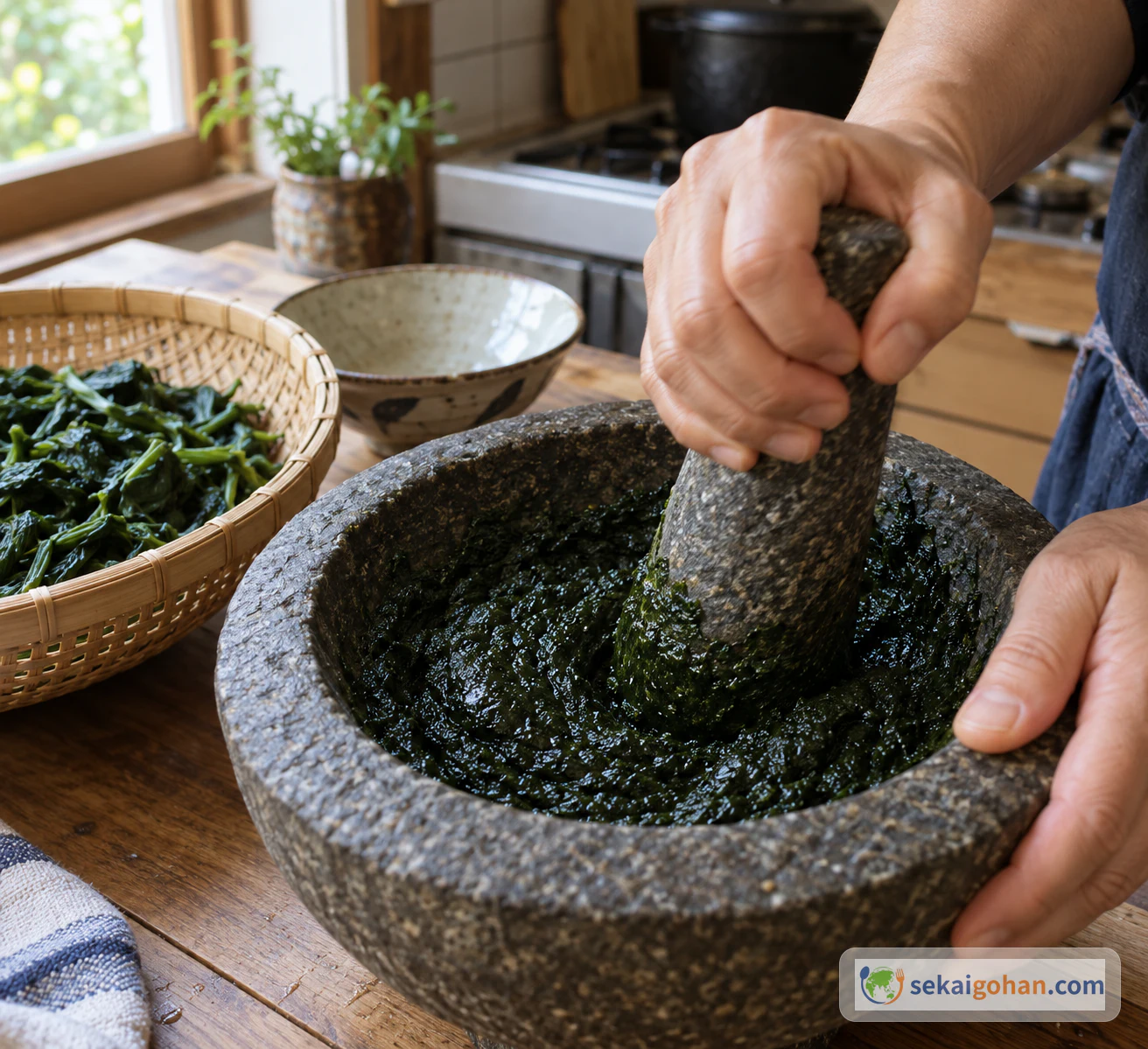
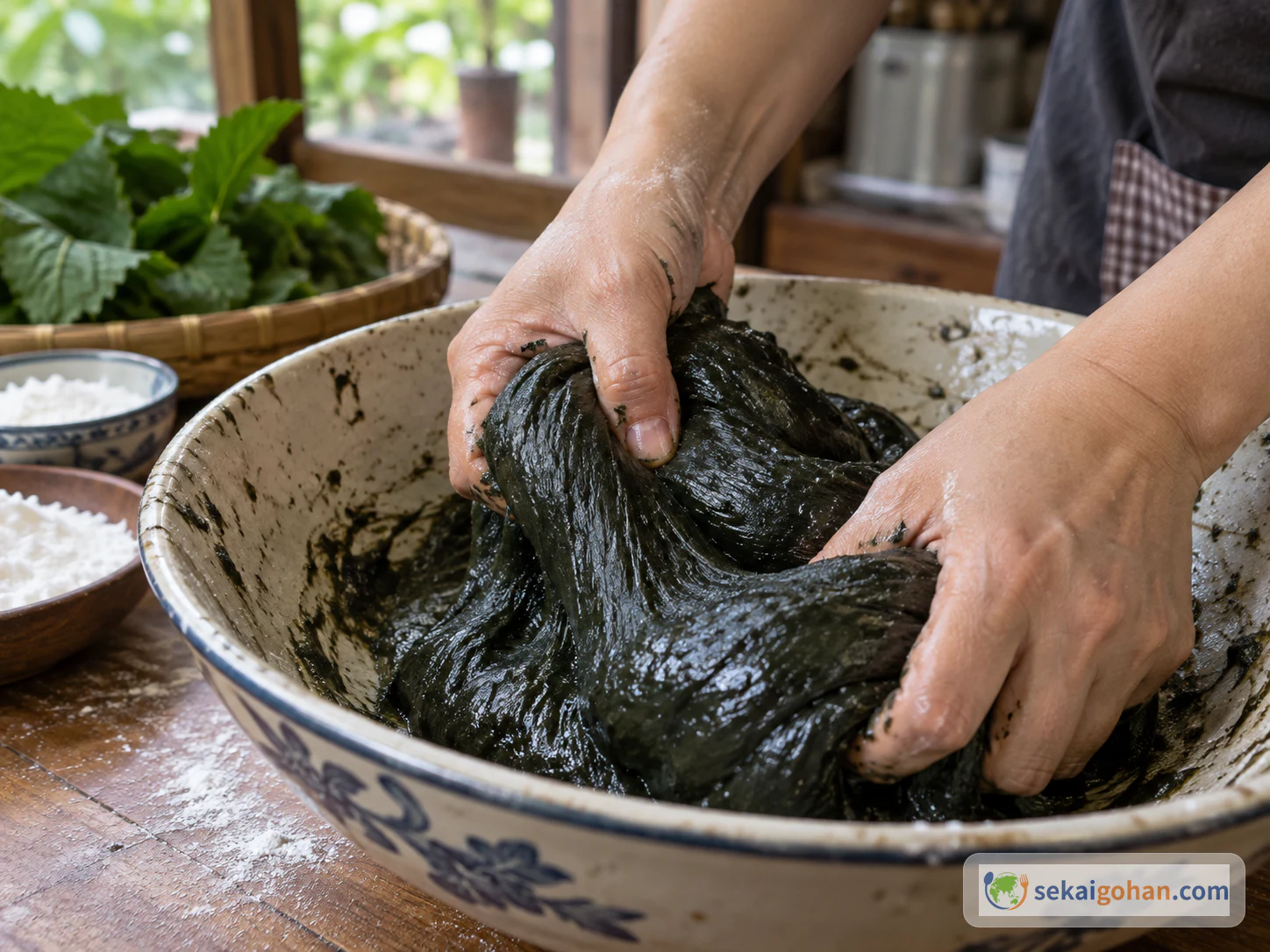
The cake takes its name and its color from lá gai, ramie leaves, which are boiled until very soft and pounded into a fine paste before being worked into glutinous rice flour. It is a sweet cake, even though the classic northern filling includes a little pork back fat. Glutinous rice flour, ramie leaves and mung beans are the base everywhere, but fillings and wrapping methods differ from province to province.
In the northern style, made here, the cakes are wrapped in dried banana leaves. The Thái Bình version's filling can include peanuts alongside mung bean, pork fat and coconut, while Ninh Giang versions add candied winter melon (mứt bí) or lotus seeds (mứt sen). Tứ Trụ style bánh gai has a wrapper sweetened with molasses and flavored with banana essence. Another method treats the ramie with ash water and steams the cakes for about an hour.
Don't confuse this flat, square, pillow-shaped cake with bánh ít lá gai. That is a different dish, wrapped as a pyramid-shaped parcel.
Ingredients for 10 Portions
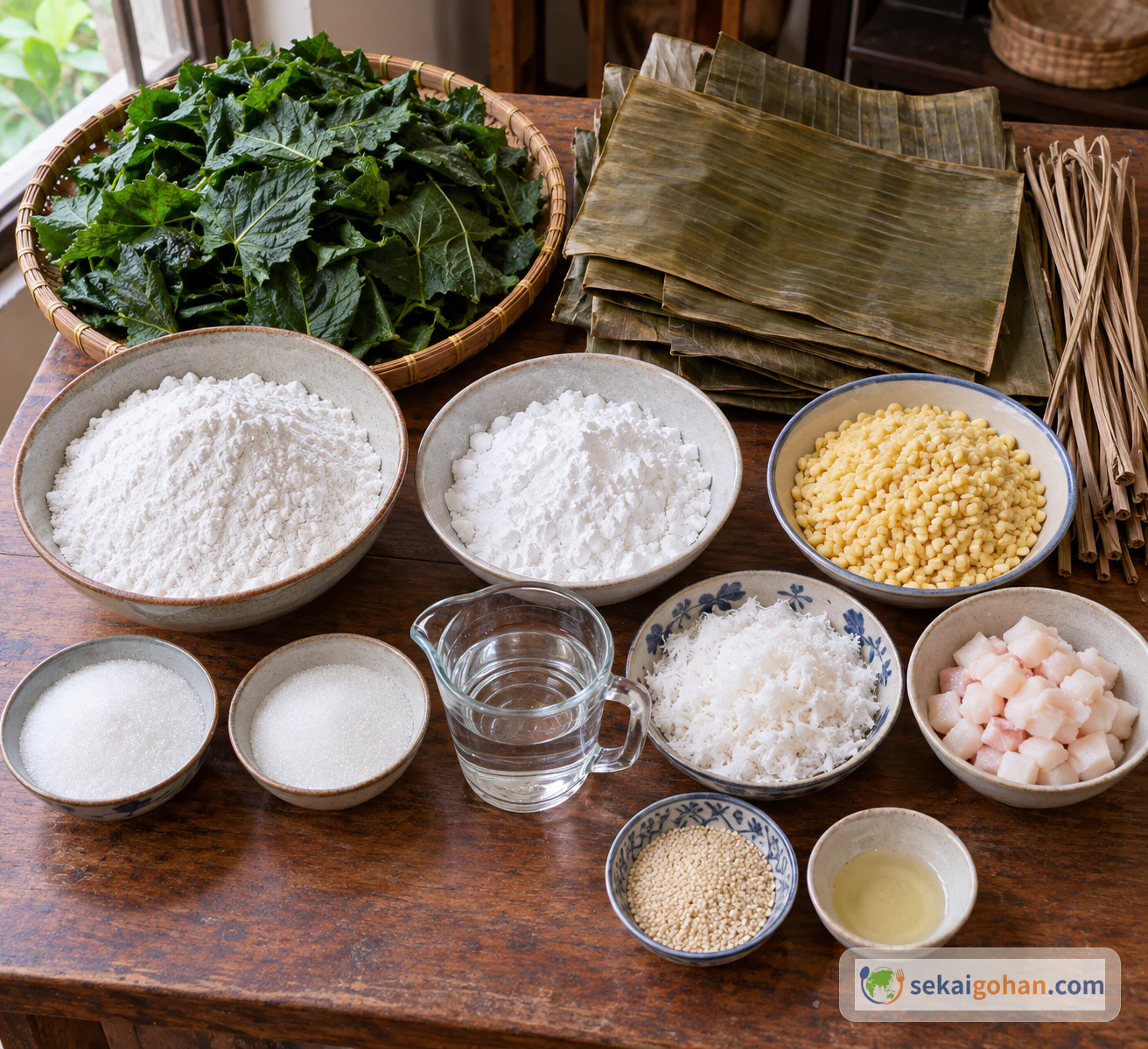
Prepare the wrapper, filling and wrapping leaves separately, and bring them together at the end. Divide the filling into 10 portions, and divide the dough to match.
This cake contains pork back fat, so it is not vegetarian. It also contains sesame and coconut. Wheat, milk and egg are not part of this recipe, but check the labels of flours, starches and flavorings for allergen and shared-facility statements. Boil the back fat until cooked through before dicing it.
Equipment
- A large pot for boiling the ramie leaves and the back fat
- A colander
- A stone mortar and pestle, or a food processor, to reduce the leaves to a very fine paste
- A steamer
- A clean damp cloth for softening the banana leaves
- A small saucepan for the syrup
- Mixing bowls, a knife and a cutting board
Choosing Ingredients for Bánh Gai
Ramie leaves are the one ingredient you cannot really replace. Outside Vietnam, look in Vietnamese grocers or online shops for "lá gai" or "ramie leaf." Ramie is sold fresh, dried and as a powder, and freshness and drying change the color and aroma. Dried leaves and powder are easier to find abroad, but they can't be swapped in at the same weight as fresh. Work out amounts and rehydration for your product. Mugwort (yomogi) is sometimes suggested as a stand-in, but its aroma and color are different, and the result is not bánh gai.
Cassava starch is not potato starch. Bột sắn here means cassava (tapioca) starch. Vietnamese also has bột sắn dây, which is a different product, so read labels carefully. Potato starch such as Japanese katakuri-ko changes the texture of the wrapper.
Glutinous rice flour varies. Check that the label says glutinous (sweet) rice flour. Japanese mochiko and shiratamako differ from Vietnamese bột nếp in grind and in how much liquid they absorb, which is one more reason to add the syrup a little at a time.
Pomelo flower flavoring is optional. If you can find a food-grade pomelo flower water or essential oil, a few drops go into the filling. The cake is complete without it.
Method: From Leaves to Steamed Parcels
Only two times are fixed: about 2 hours of soaking for the mung beans and 30 minutes of steaming once the water is boiling. Everything else, from boiling the leaves to kneading and wrapping, goes by how the food looks and feels.
Fixing Common Bánh Gai Problems
| Problem | Likely cause | What to do |
|---|---|---|
| The wrapper feels gritty | Leaf fiber left in the paste, or the dough not kneaded evenly | Pound or blend the leaves until very fine, and knead until the color and texture are even throughout |
| The cake is watery or the inner leaves are soaked | Too few leaf layers, letting condensed steam seep in | Use more layers, offset the folds, and close every gap before tying |
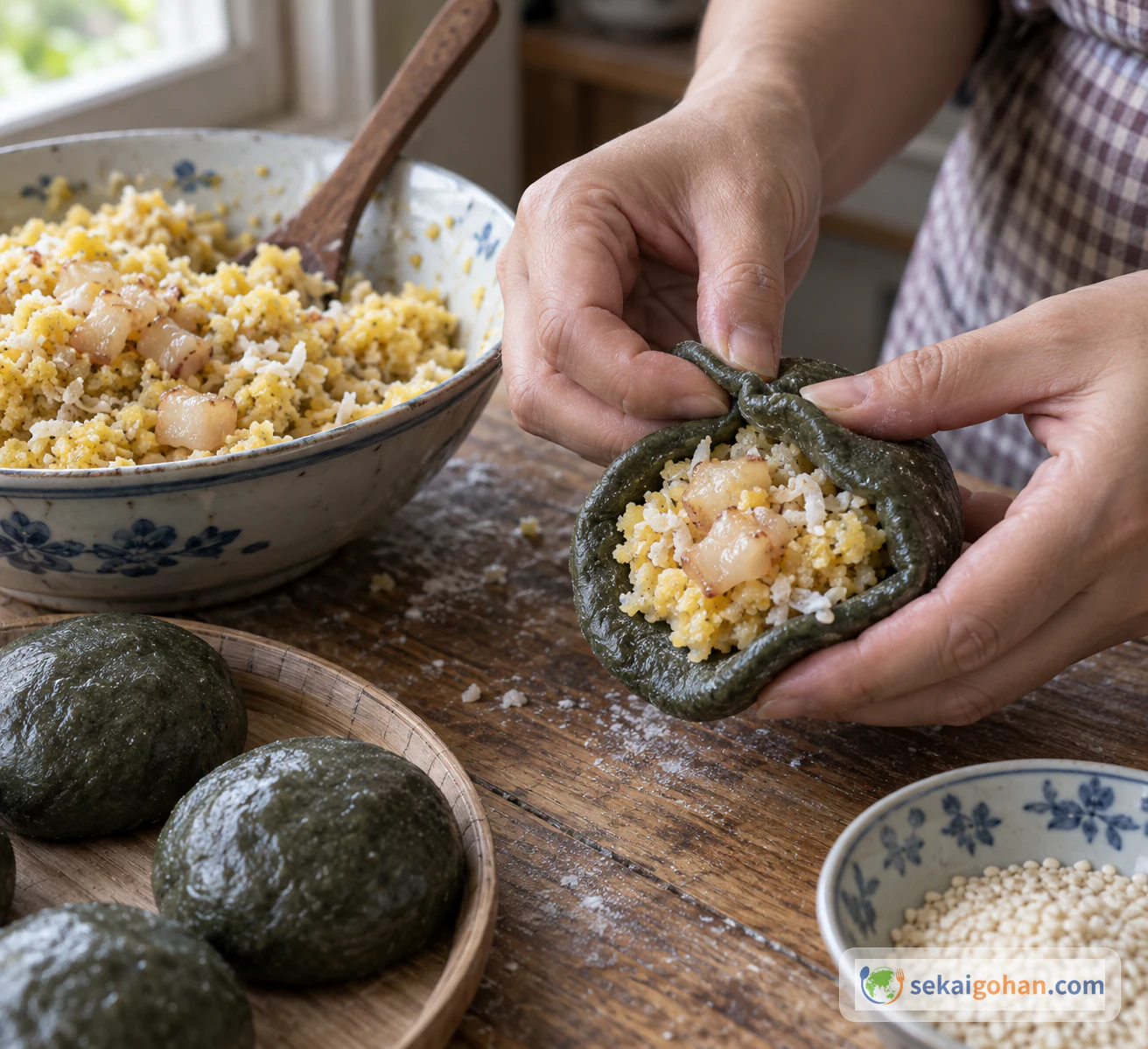
| Filling leaks out | Uneven dough thickness, or a seam left open | Flatten the dough evenly and pinch the seam completely shut before rolling in sesame |
| The dough feels slack | Syrup added too quickly or all at once | Add the syrup in small amounts and stop as soon as the dough is shapeable |
Serving, Storing and Varying Bánh Gai
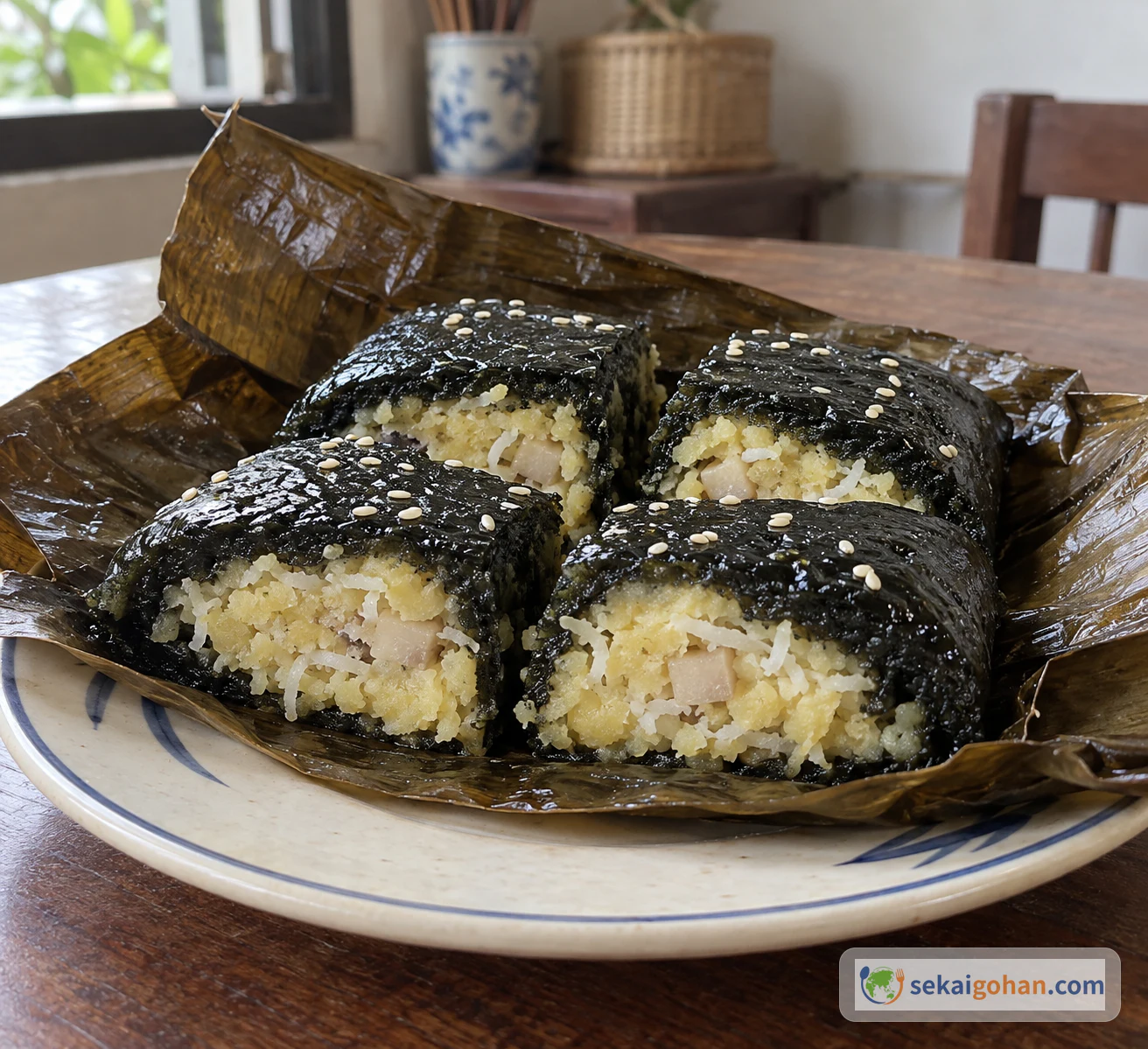
Let the cakes cool before you cut them. Then untie the parcel, peel away the leaves and cut the cake into four. The cut faces are the best part: a thin, chewy, nearly black wrapper, a pale gold filling with threads of coconut and small translucent pieces of back fat, and a few sesame seeds clinging to the outside. Don't leave the cakes sitting at room temperature for long.
Once you know the northern version, the variations are worth exploring, though each is really its own recipe rather than a tweak to the amounts above:
- Without pork back fat. This makes the cake suitable for vegetarians, but the filling loses richness and changes in texture.
- Toward Tứ Trụ style. Replacing some of the sugar in the wrapper with molasses shifts its color, stickiness and flavor.
- Ash-water method. This version steams for about an hour; that time doesn't carry over to this recipe's 30 minutes.
Frequently Asked Questions
Can I make bánh gai without ramie leaves?
Not really. The leaves give the cake its dark color and its aroma, and they are what the name refers to. Mugwort or other greens produce a different-looking, different-smelling cake. Dried leaves or powder are the closer route, but you would need to work out amounts for your product rather than converting from this recipe.
Can I use potato starch instead of cassava starch?
It is not the same ingredient, and the wrapper's texture will change. Look for cassava or tapioca starch, and do not confuse bột sắn with bột sắn dây.