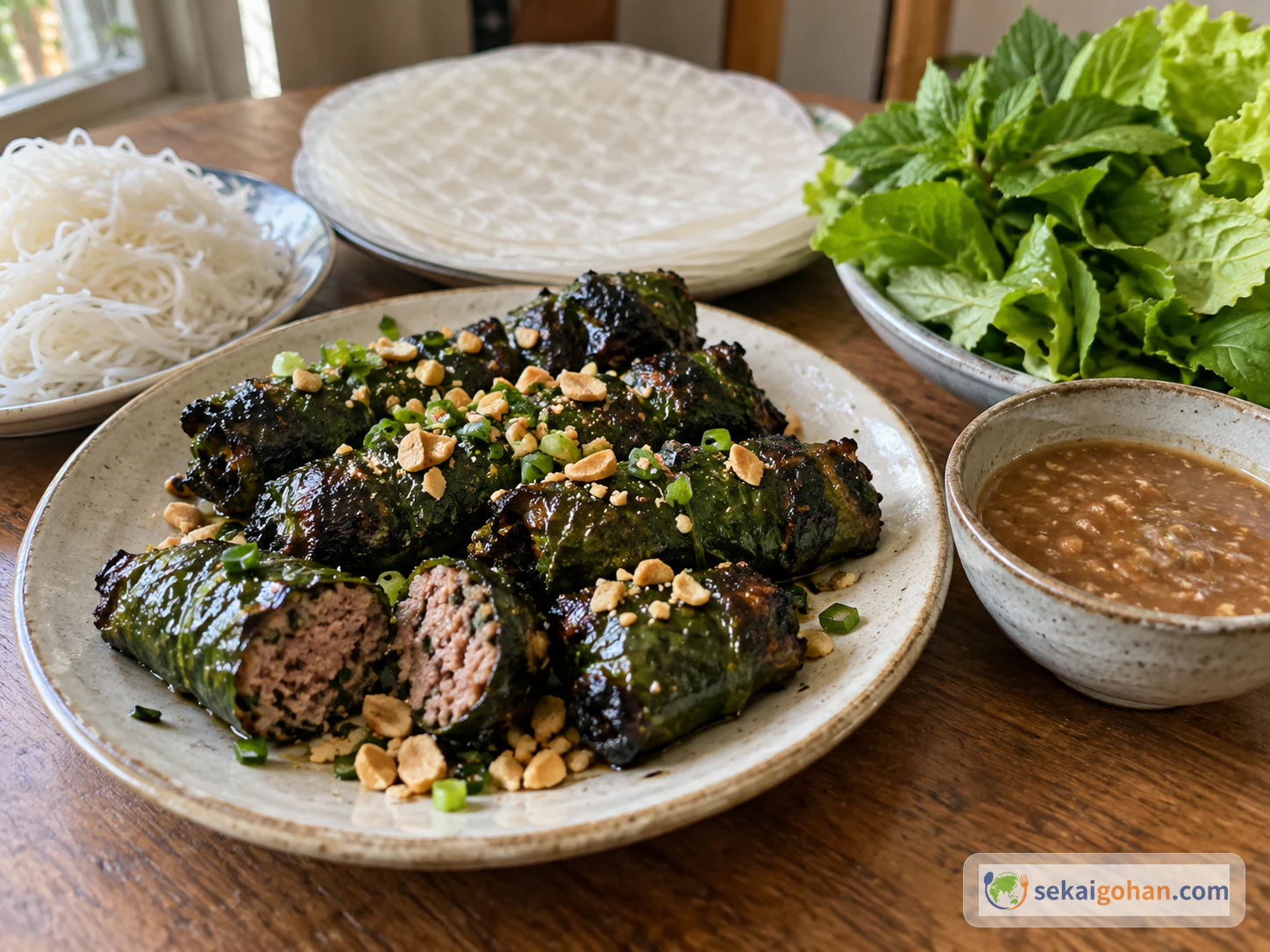
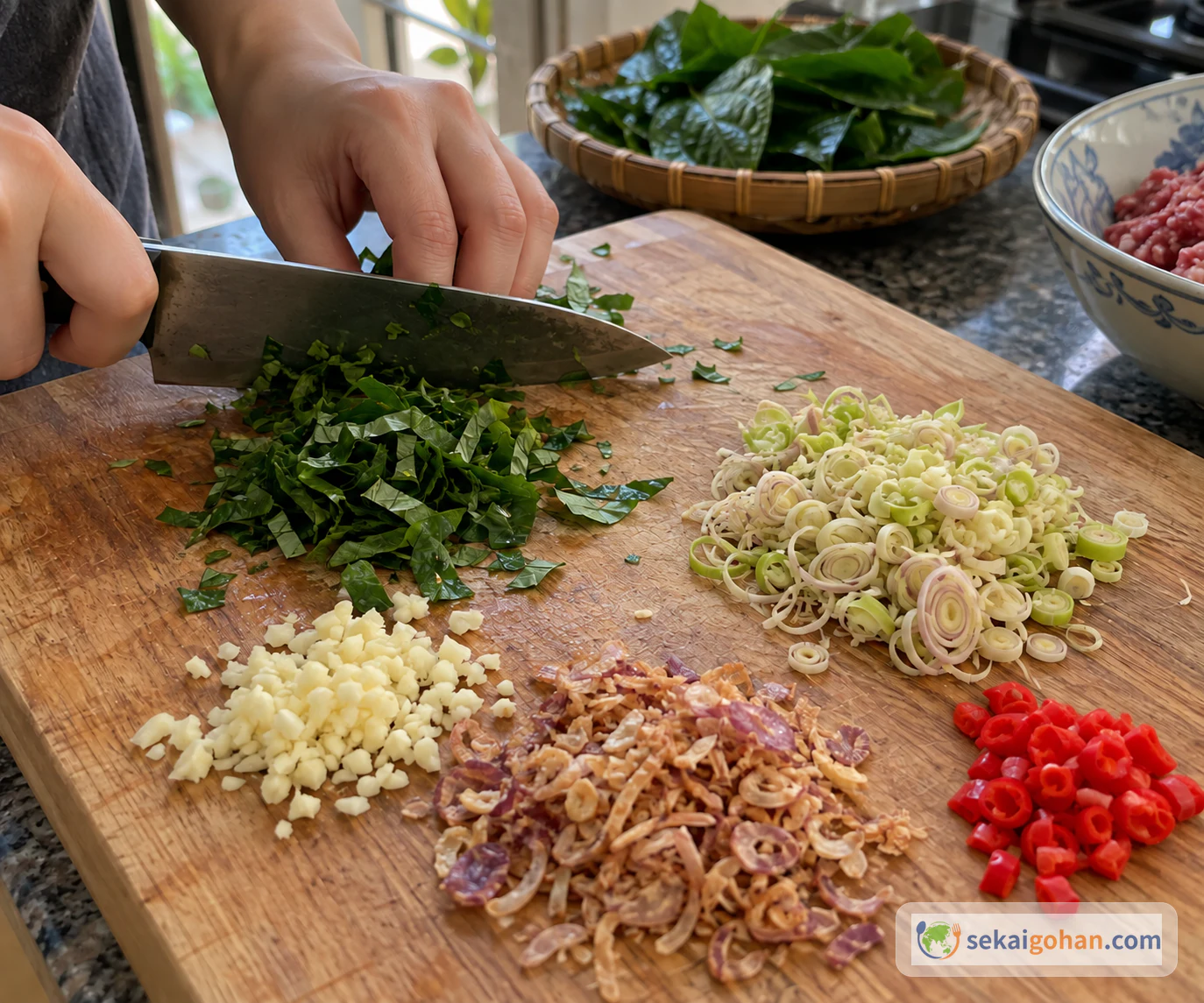
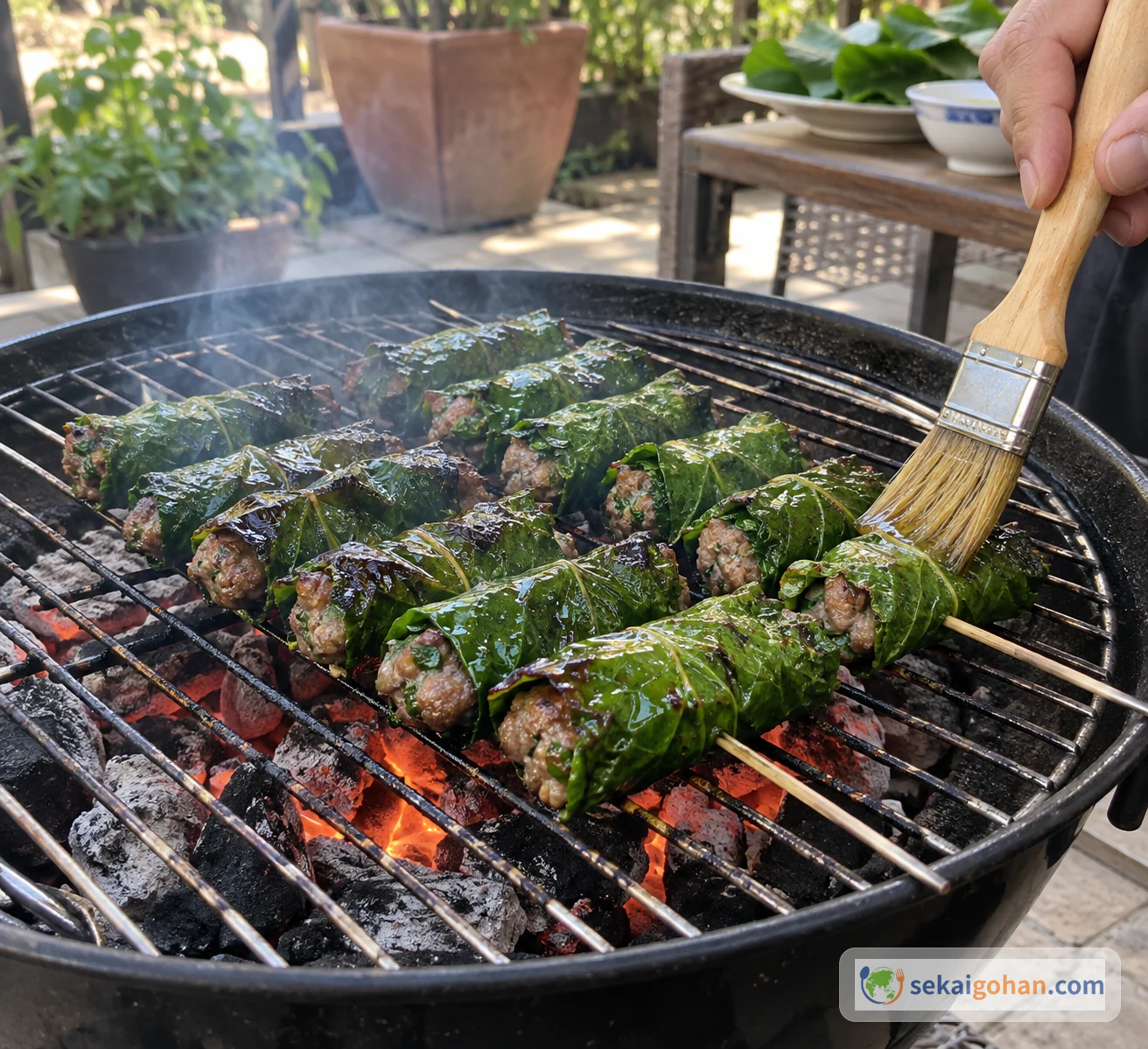
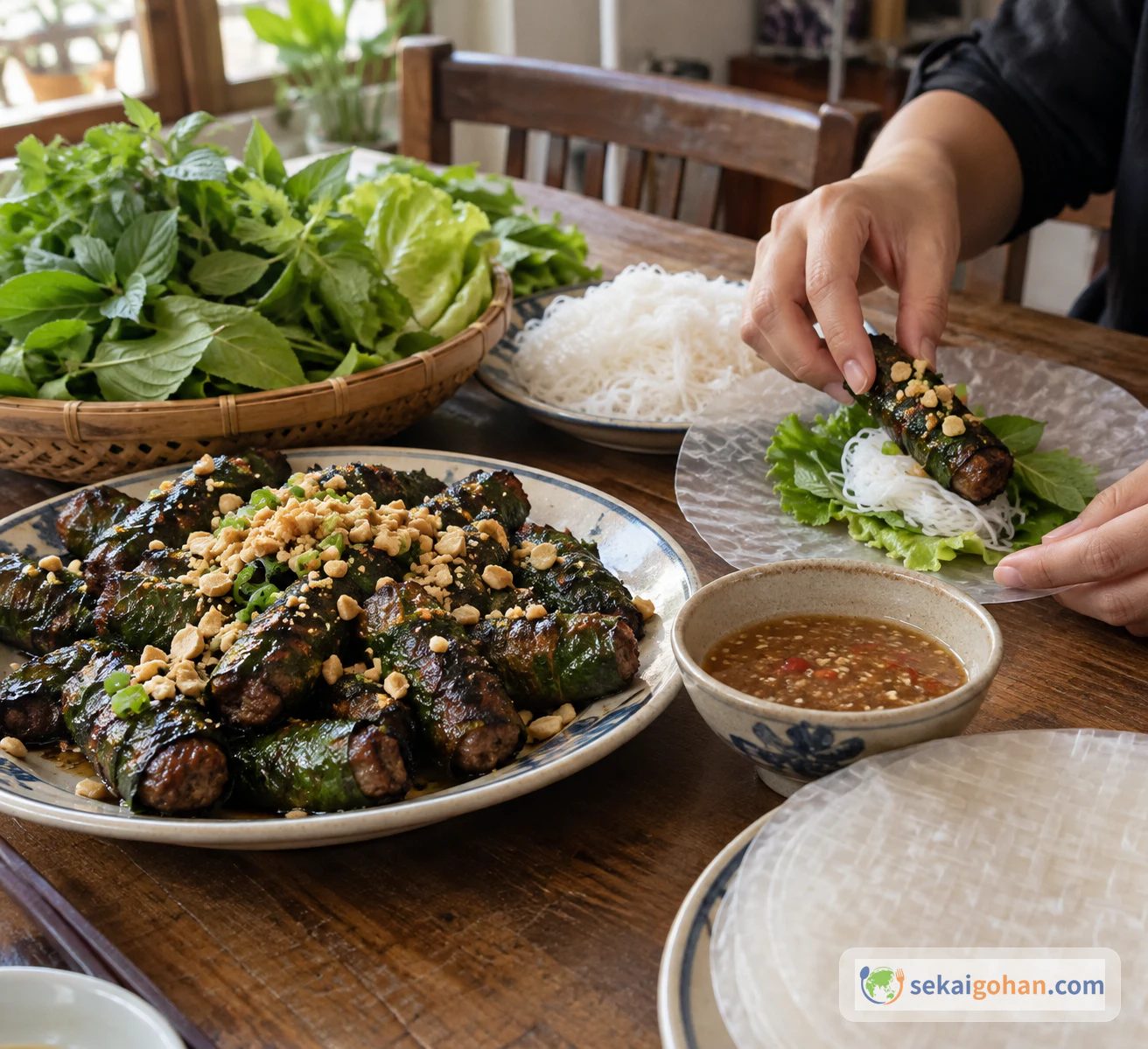
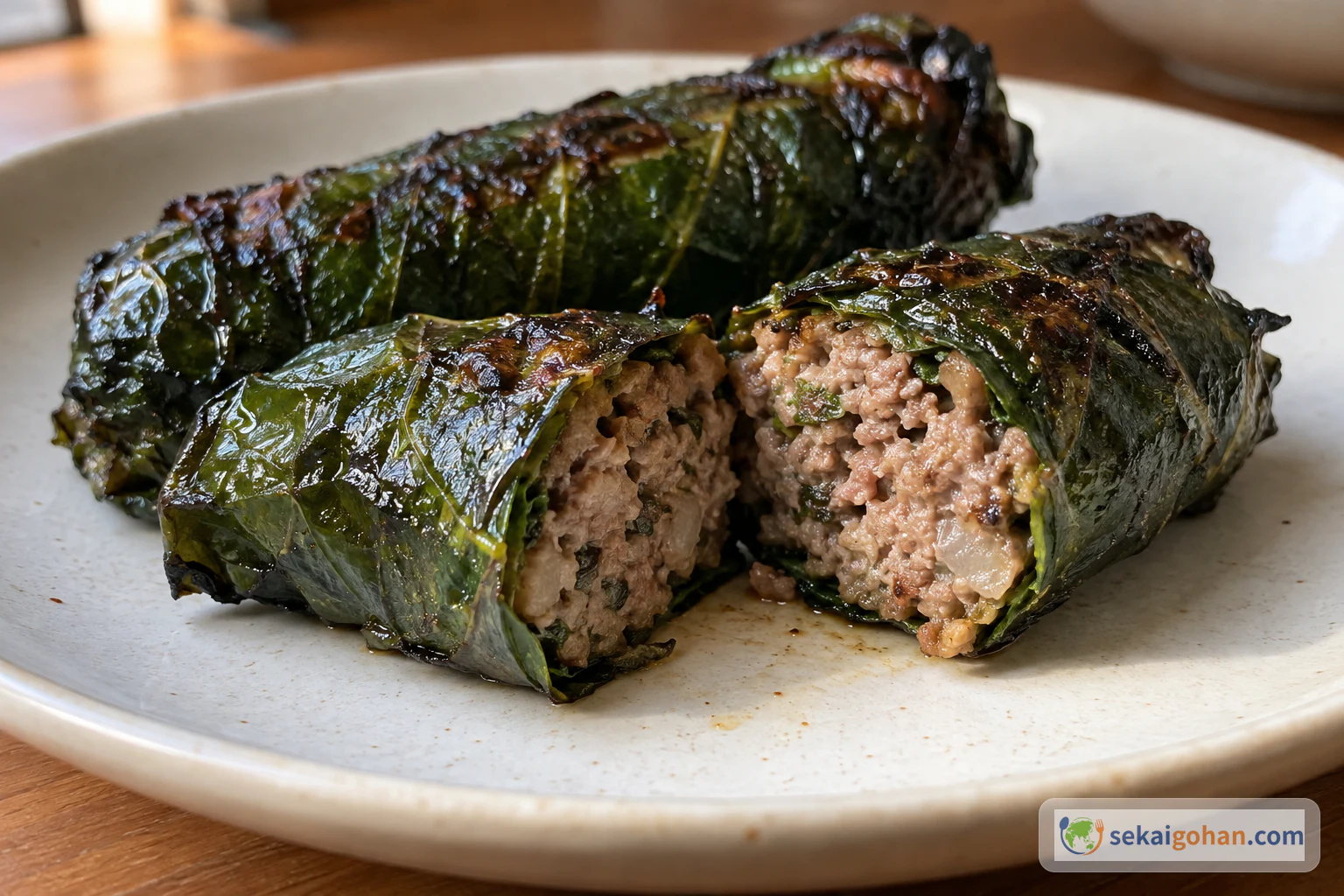
On Tôn Đức Thắng Street in Hồ Chí Minh City in 2015, rolls of minced beef wrapped in lá lốt leaves sat grilling over charcoal. Once cooked, they were wrapped again at the table in rice paper with greens and rice vermicelli, then dipped in mắm nêm. Bò nướng lá lốt is all there: a smoky green leaf, a filling of beef seasoned with lemongrass, garlic and shallot, and a table where everyone wraps their own. This is the southern-style (Nam Bộ) version. For more dishes from the same country, browse Vietnamese recipes.
Bò Nướng Lá Lốt on the Street and at the Feast
You will see the dish written as bò lá lốt or bò cuốn lá lốt too, so search all three names when you look for it or for the leaf. In 2015, bò cuốn lá lốt was a familiar street food in Hồ Chí Minh City: minced beef with fat, lemongrass, garlic, dried shallot, seasoning powder, sugar and five-spice, grilled over charcoal and eaten wrapped in rice paper with greens, rice vermicelli and mắm nêm.
The dish travels well, too. In 2014, a manager at a Vietnamese restaurant in Houston, Texas, identified beef wrapped in "betel leaf" as bò lá lốt, a popular dish there. It is served as one course of the seven-course beef meal (bò bảy món), a special-occasion meal. The same roll turns up on a Hồ Chí Minh City street and on a celebration table.
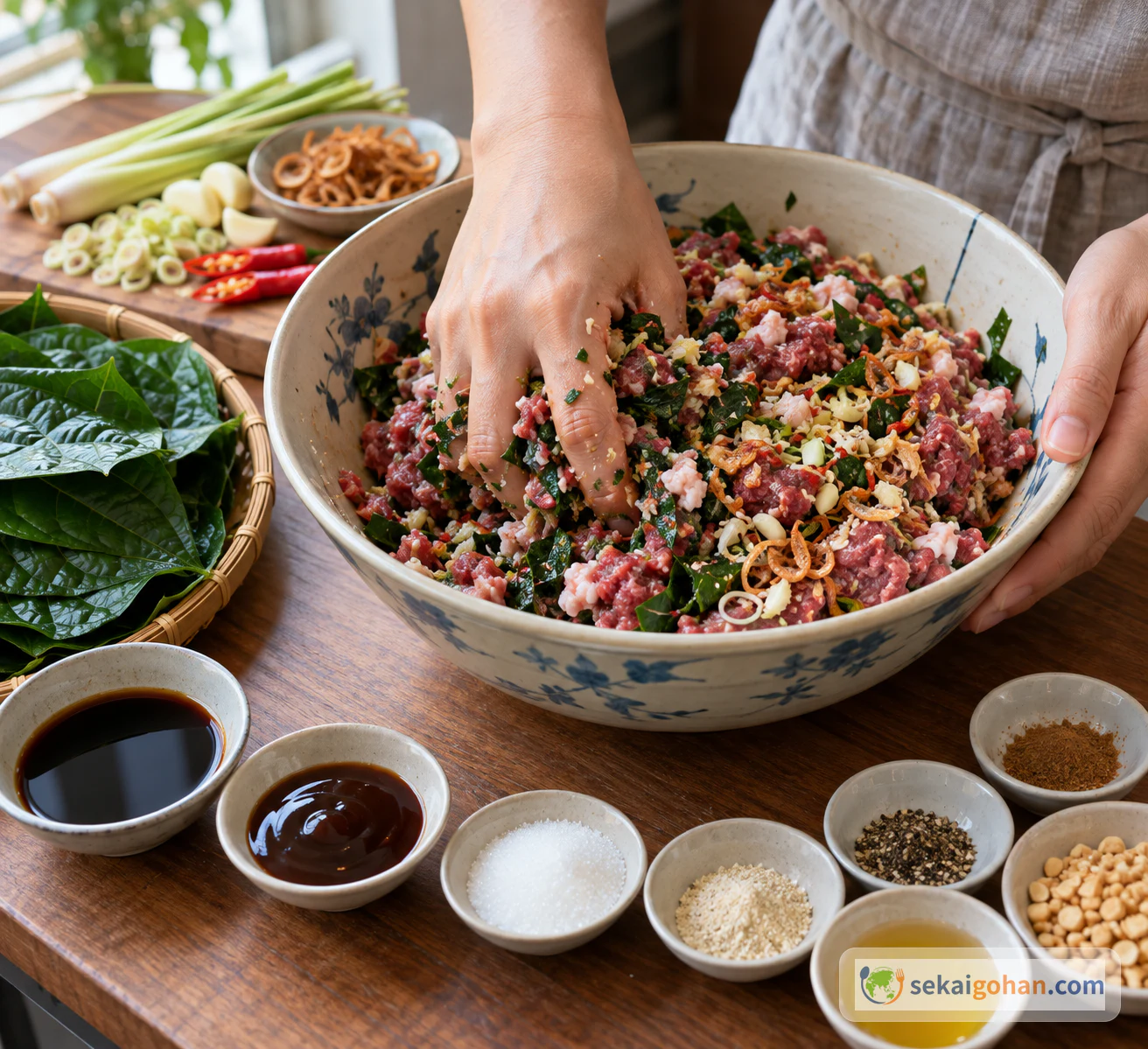
Ingredients for Bò Nướng Lá Lốt
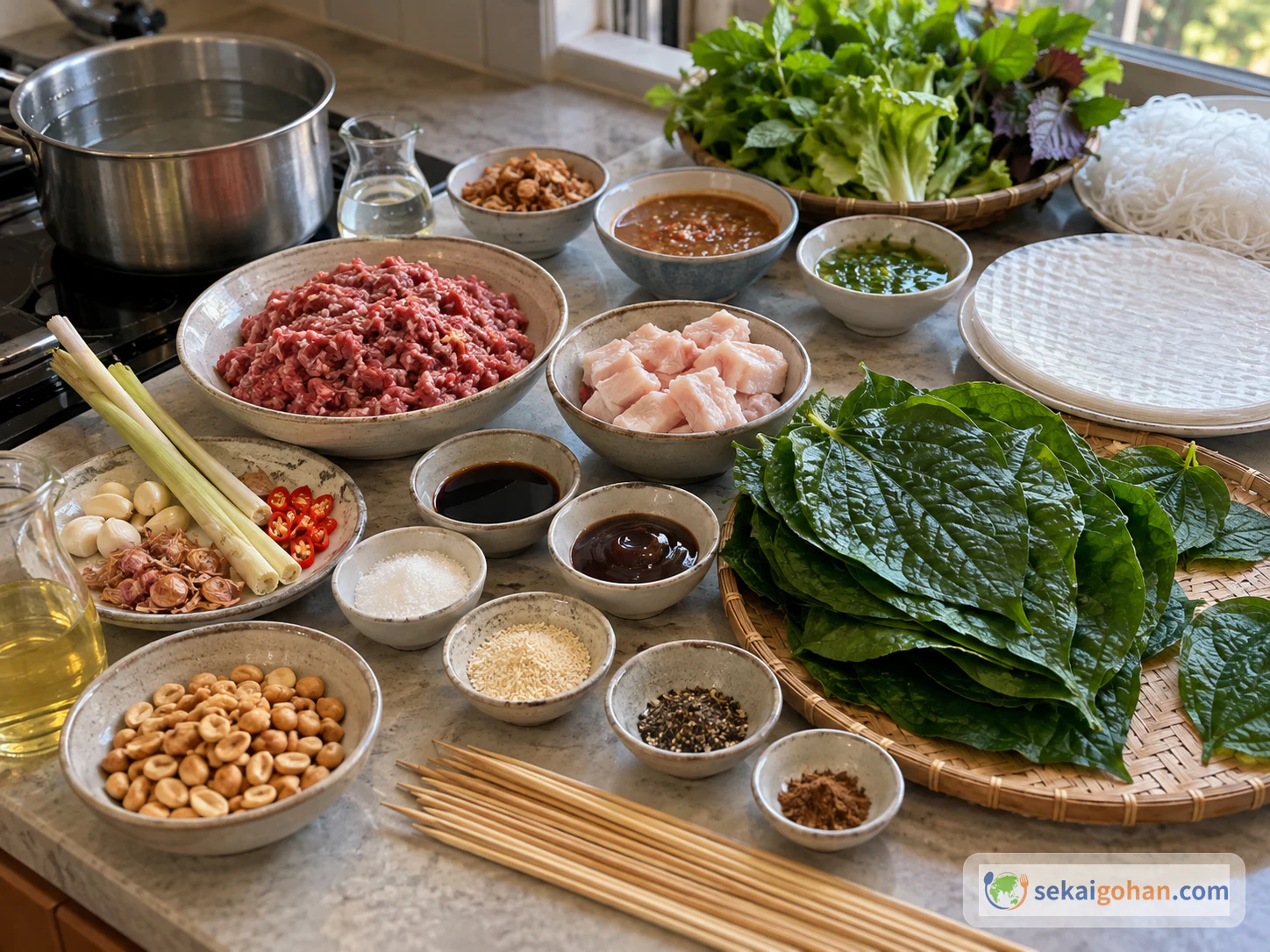
Equipment
- Knife and cutting board for raw meat, plus separate utensils and plates for serving
- Small saucepan for parboiling the fat
- Mixing bowl and measuring spoons
- Bamboo skewers (xiên tre)
- Charcoal grill, set up outdoors in the open air
- Pastry or basting brush
- Food thermometer for checking the center of the rolls
Choosing Lá Lốt, Beef and Seasonings
The leaf
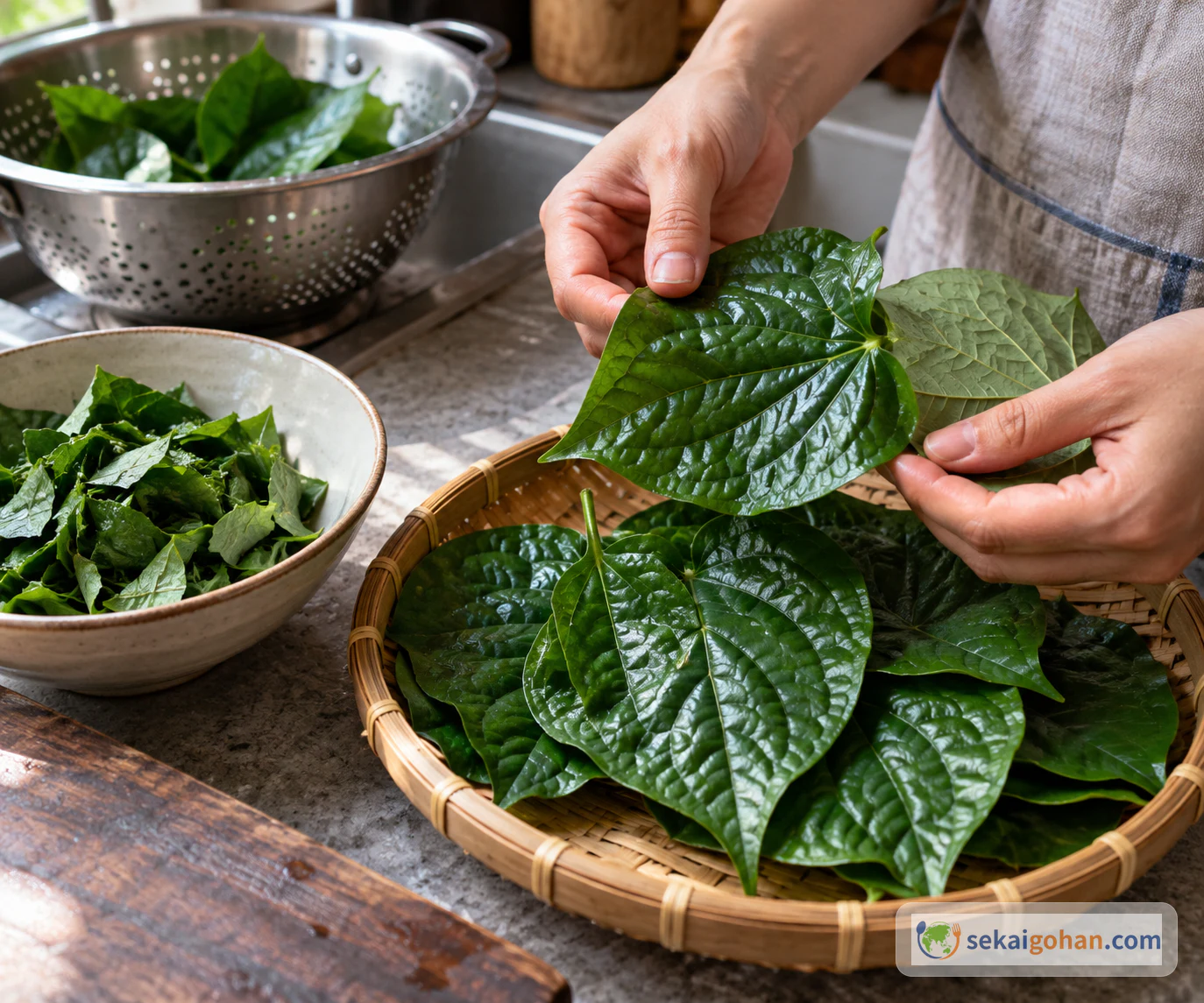
Lá lốt shapes both the flavor and the wrapper, so find it before anything else. In English it is often loosely called "betel leaf," and that loose name causes mistakes. Lá lốt is Piper sarmentosum, also called Piper lolot. Piper betle looks similar but is a different species, the leaf chewed in betel quid with areca nut and slaked lime. If a shop labels a leaf only "betel leaf," check the species before you buy.
Grape leaves and other leaves won't give you this dish. If you can't find lá lốt, wait rather than make a roll that tastes different under the same name. When you do find it, pick large, evenly sized, intact leaves for wrapping. Torn or tender leaves are still useful: chop them into the filling, so the lá lốt aroma sits inside the roll as well as outside.
Beef, fat and seasonings
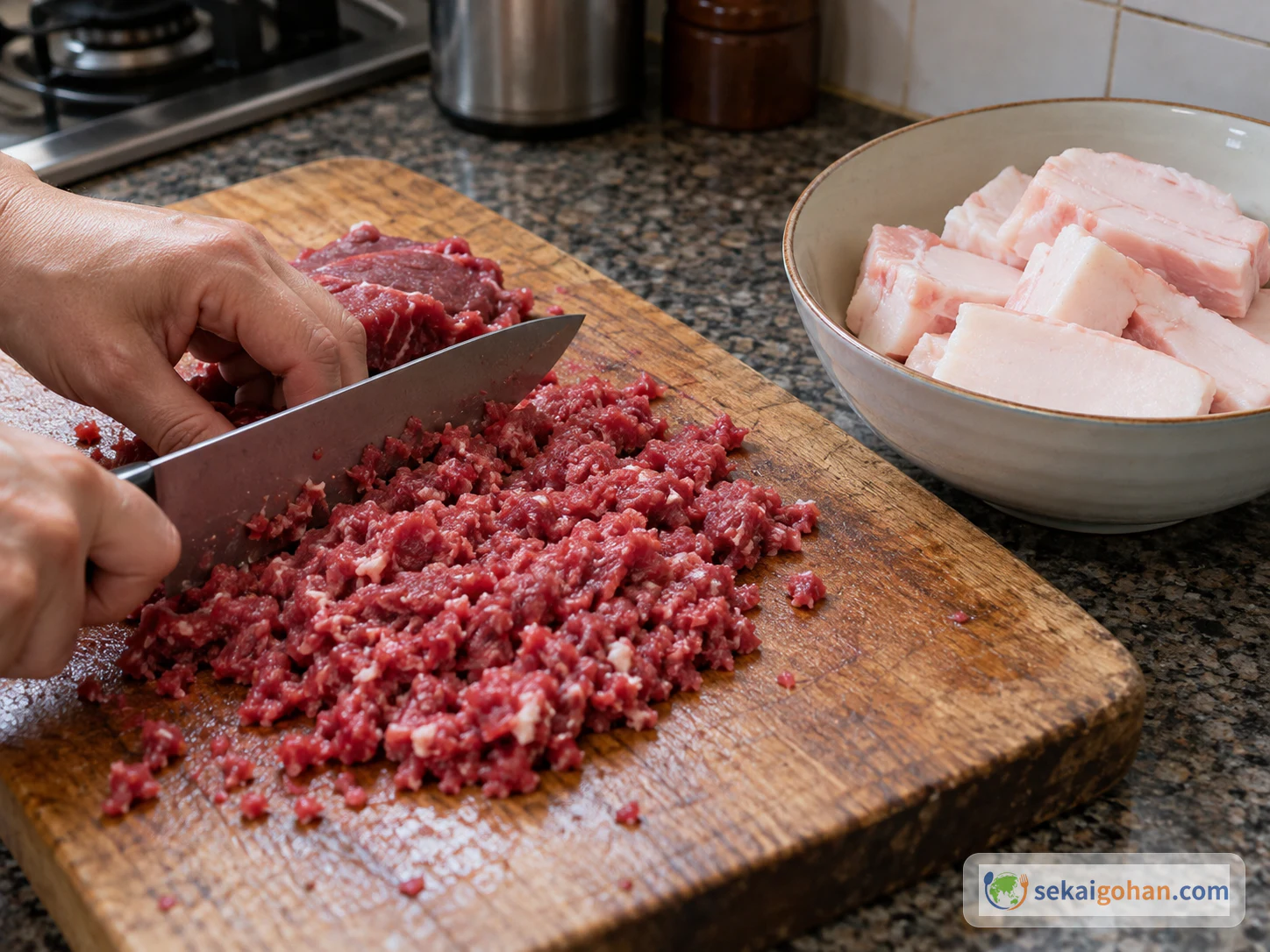
Use a tender cut such as beef tenderloin (thịt bò thăn), chopped or minced. The pork back fat (mỡ thăn) keeps the rolls from drying out. Caul fat (mỡ chài) is another option, but this recipe is measured for mỡ thăn.
For seasoning granules (hạt nêm), choose whichever chicken, pork or beef type you normally use. Soy sauces differ, so check the label of yours, including for allergens such as wheat and soy, and do the same for oyster sauce and any ready-made dip. The scallion oil (mỡ hành) and the dips are easiest bought ready-made.
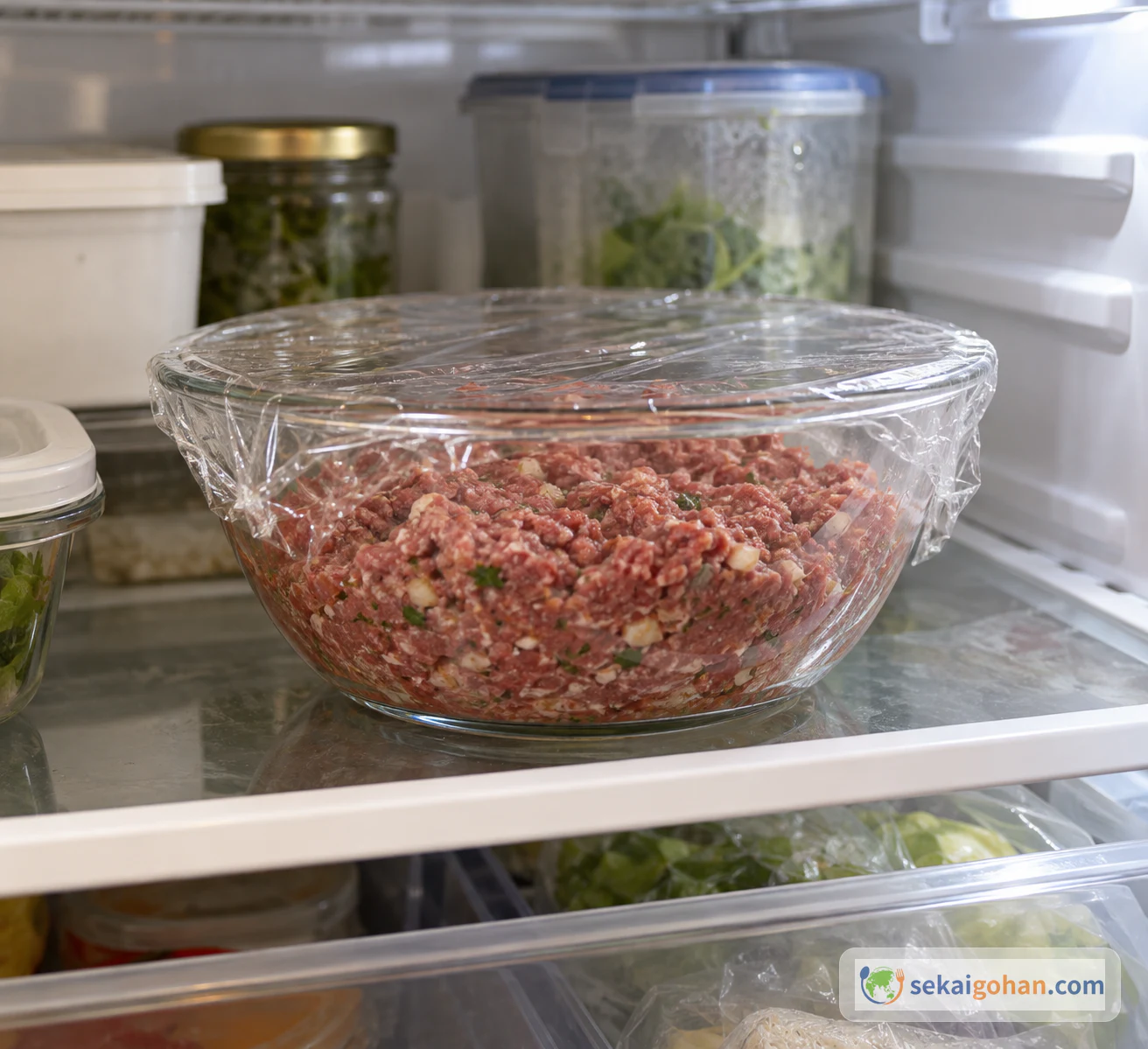
Keep raw beef and pork fat refrigerated until you use them, and keep raw-meat boards and utensils apart from the ones you use for serving.
Method: From Parboiled Fat to Charcoal-Grilled Rolls
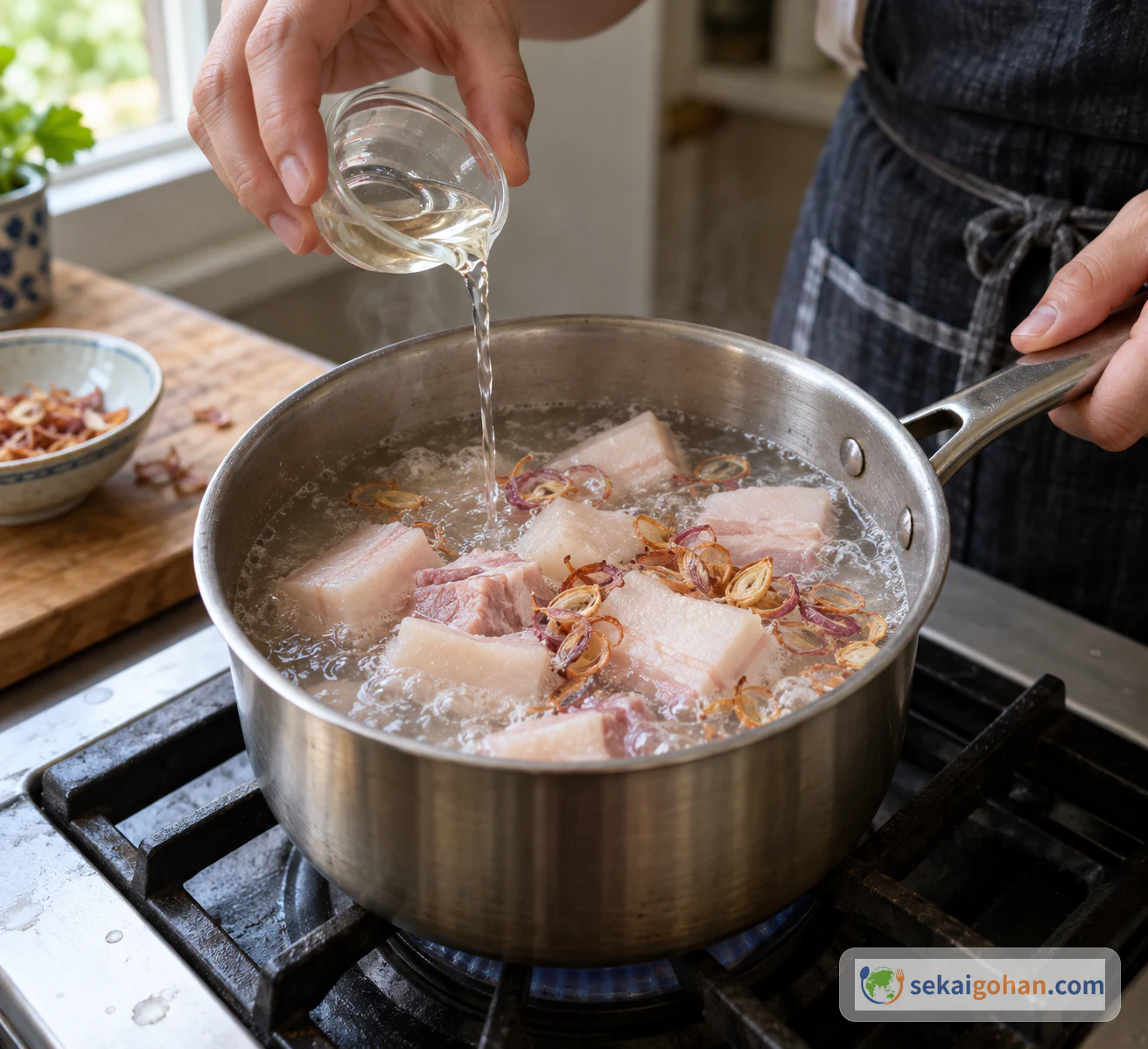
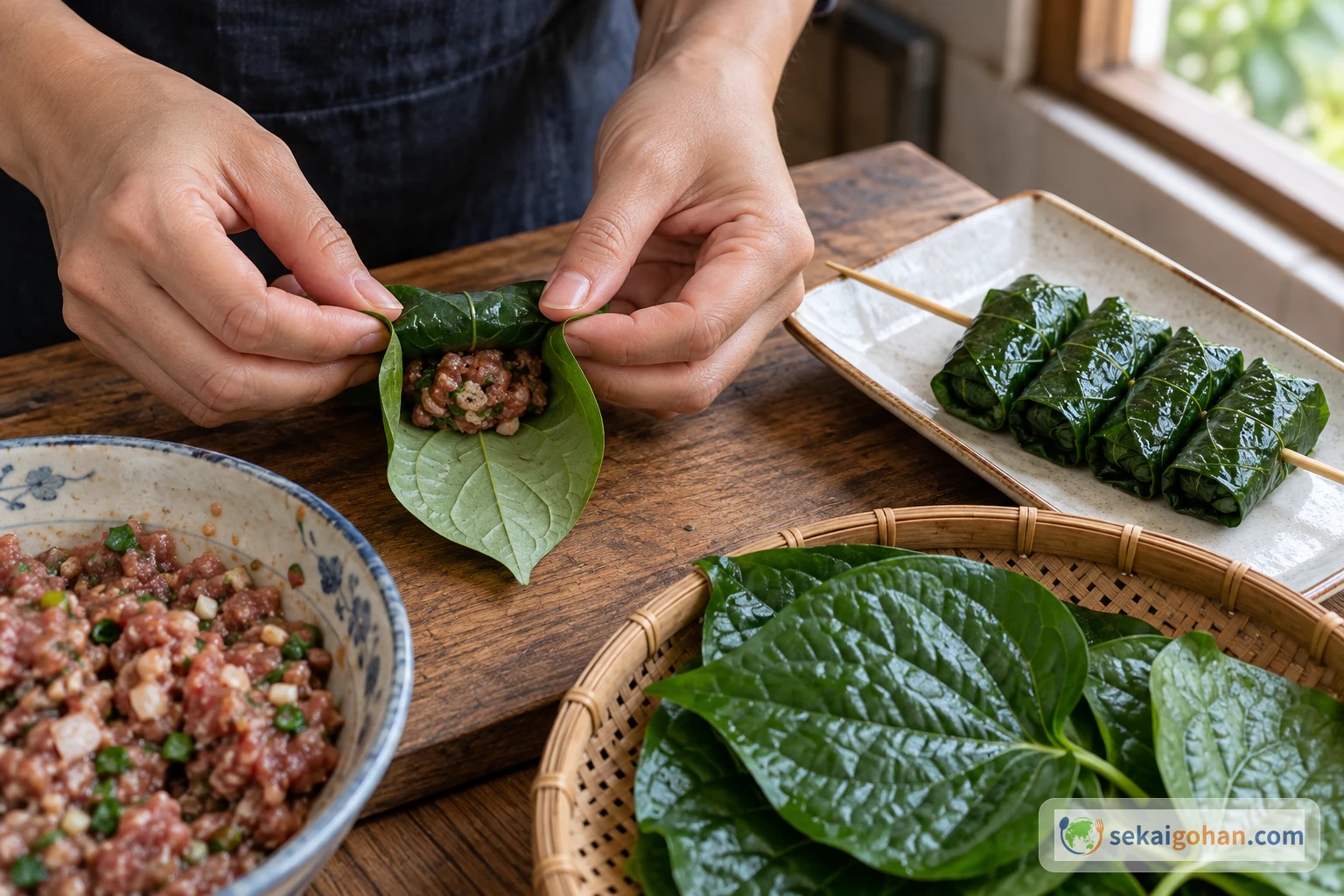
Parboil and rinse the pork fat while it is still in pieces, then mince it. Roll each leaf with its matte underside against the filling. Grill until the center of the thickest roll reaches 167°F (75°C) for at least 1 minute.
The method runs in nine steps, from preparing the beef to cutting open the finished rolls. No step has a fixed cooking time, so judge the grilling by the thermometer, not the clock.
Fixing Bò Nướng Lá Lốt at the Grill
A seasoned minced-beef filling, a lá lốt leaf wrapped with its glossy face outward, and charcoal heat that makes the leaf fragrant. Charred leaves alone don't tell you the beef is done. Pathogens can be present inside ground meat, so grill until the center of the rolls reaches 167°F (75°C) for at least 1 minute.
| Problem | Likely cause | What to do |
|---|---|---|
| The filling is dry | Fat left out, or no oil brushed on while grilling | Keep the 5.5 oz pork back fat in the mix. Brush the leaves lightly with oil as they grill |
| One side is pale, the other charred | Not turned | Turn the skewers so both sides face the charcoal |
| Leaves are dark, but the center is under temperature | Heat too strong for the thickness of the roll | Keep grilling until the center reaches 167°F (75°C) for 1 minute. Next time, roll them a little thinner and more evenly |
| Rolls are hard and dry | Grilled well past done | Check the temperature as you go and take them off once the safety point is reached |
| Leaves split while rolling | Torn or very young leaves used as wrappers | Use those leaves in the filling, and save large intact leaves for wrapping |
| The leaf comes loose on the grill | Sides not folded in, or too few rolls per skewer | Fold in the side edges before rolling, and secure several rolls together on one skewer |
Serving and Variations
Set out rice paper, rice vermicelli and fresh greens, or just the ones your table likes, with greens chosen from whatever you have. For the dip, serve either mắm nêm or nước mắm chua ngọt; pick one rather than blending the two.
The 1/2 tsp five-spice powder is optional, and leaving it out keeps the lemongrass and leaf at the front. An oven or air fryer can stand in for charcoal, though you lose the smoke. Without a set time for either, rely on the thermometer.
Frequently Asked Questions
Can I use any leaf sold as "betel leaf"?
Not without checking. The dish uses lá lốt, Piper sarmentosum (also called Piper lolot). The betel leaf in chewing quid is Piper betle, a different species. Check the species on the label.
Is fish sauce part of the filling?
No. The filling is seasoned with 1 tbsp soy sauce (nước tương), with no fish sauce. The dip, mắm nêm or nước mắm chua ngọt, brings its own flavor at the table.
Can I cook these in an oven or air fryer?
Yes. Use a thermometer and cook until the center of the thickest roll reaches 167°F (75°C) for at least 1 minute.