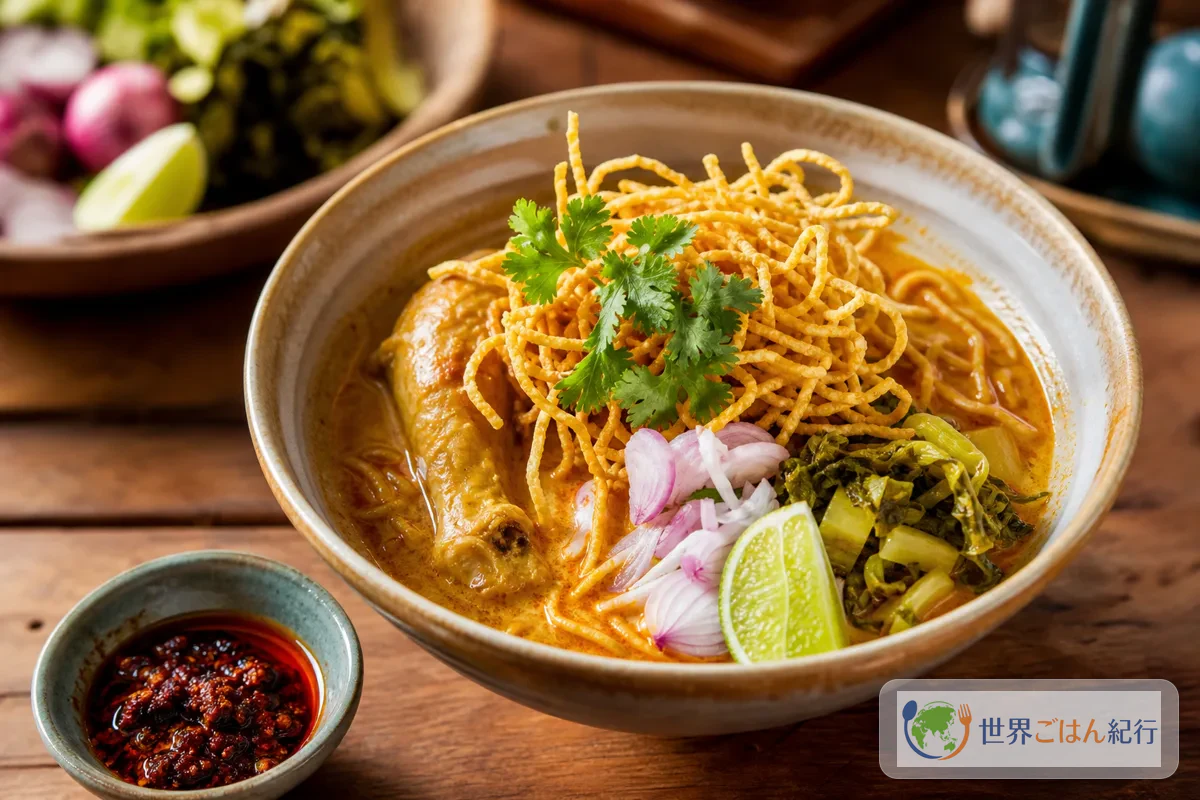
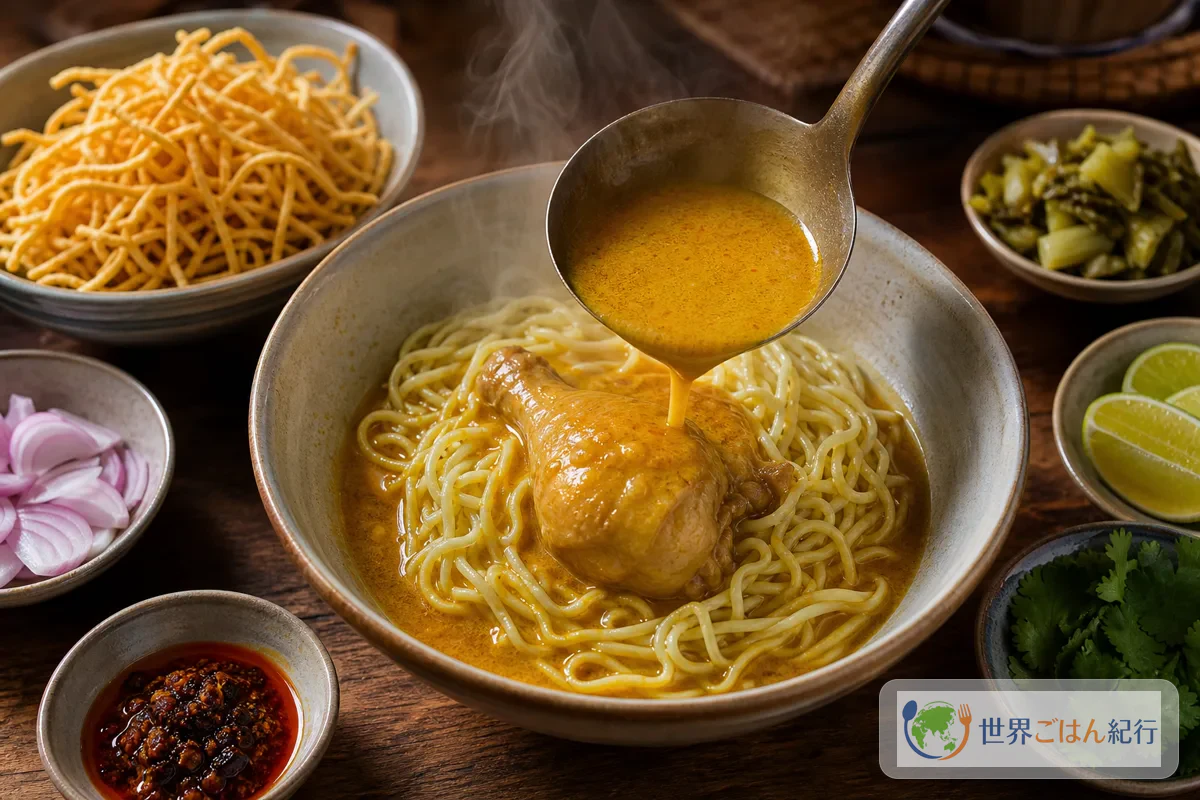
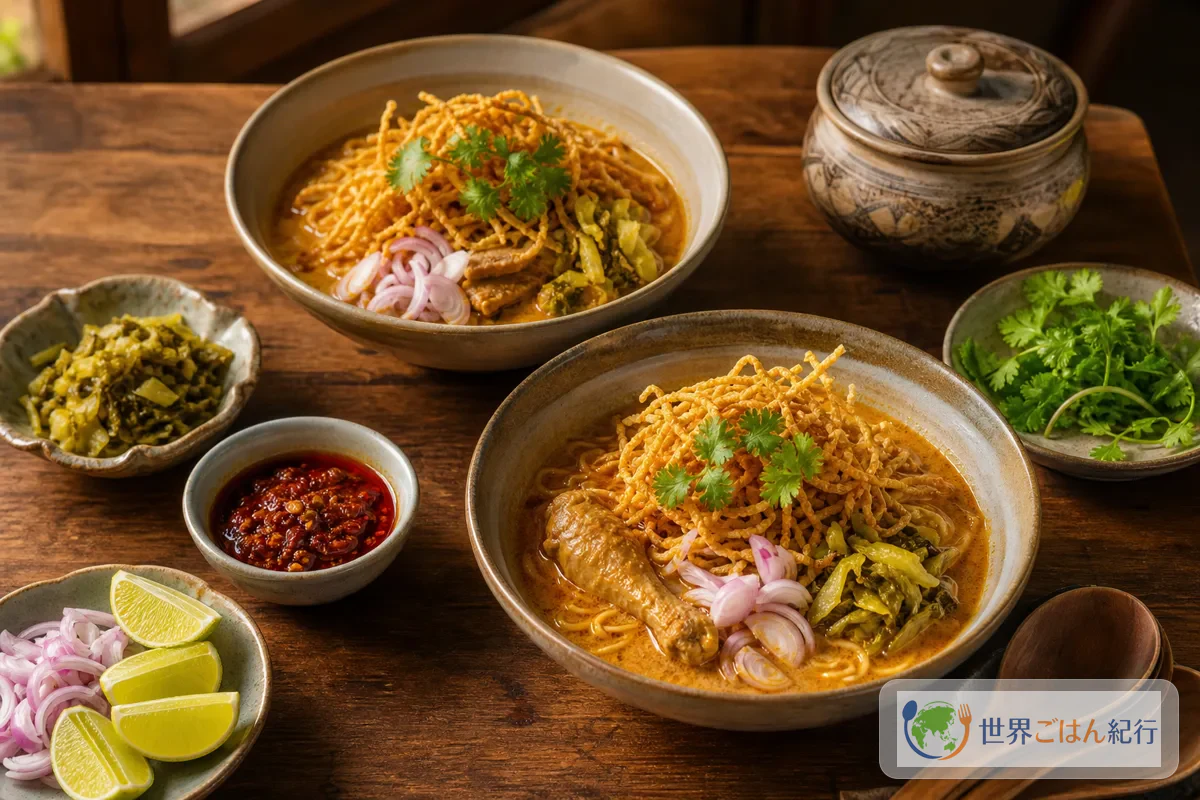
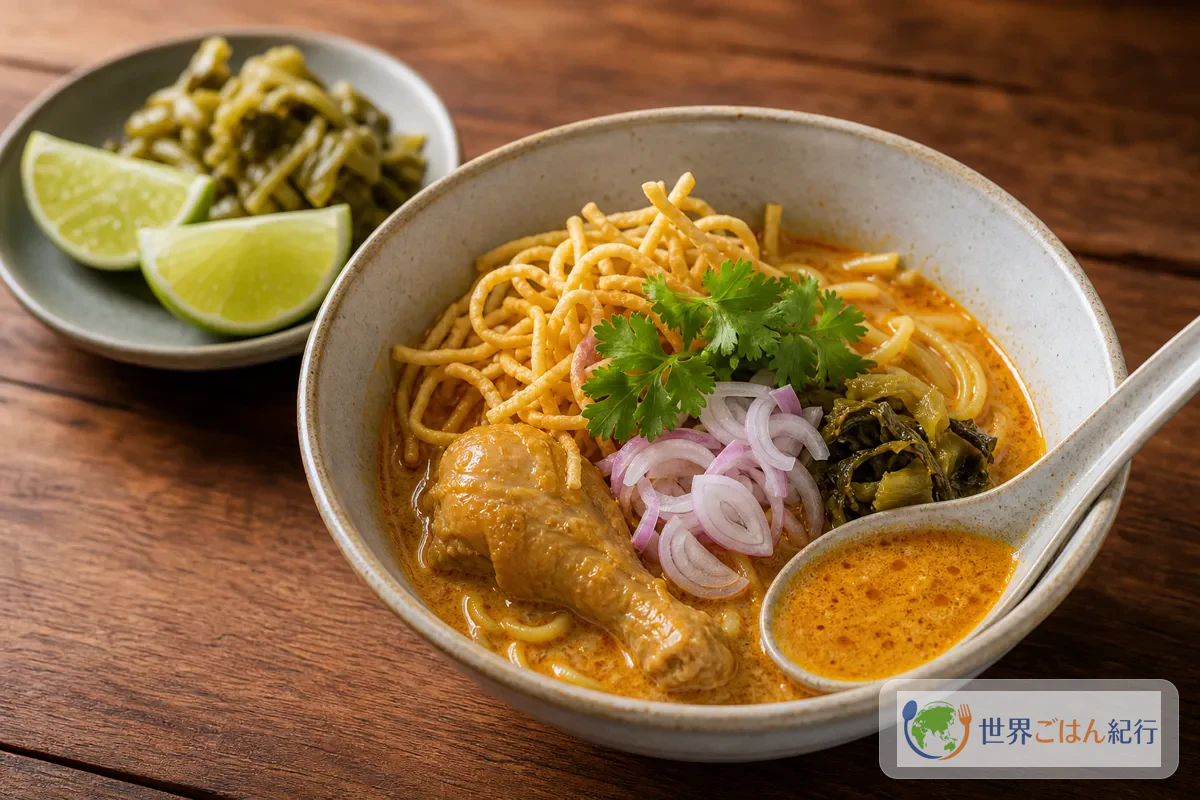
Crushed fried noodles crackle when your chopsticks first go in. Then they soften as they take up the soup, and they reach your mouth together with the egg noodles underneath. Khao soi (ข้าวซอย / khao soi) is the coconut-curry egg-noodle dish of northern Thailand, loved above all in Chiang Mai and Chiang Rai. Unlike the hot-and-sour tom yum goong or the sweet-and-sour pad thai, it tastes rounder and toastier, with the calm of a breakfast in the northern mountains.
Khao Soi in Chiang Mai
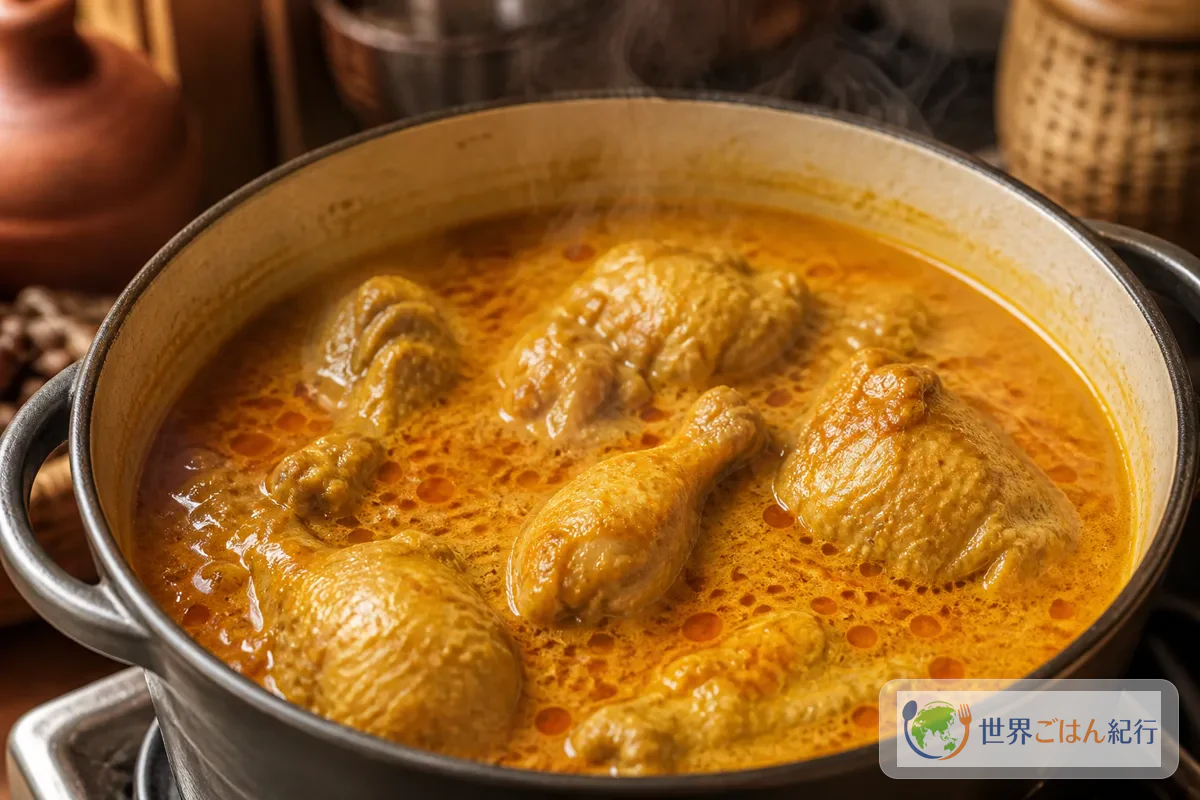
Walk through the old city of Chiang Mai before noon and you'll see queues outside the khao soi specialty shops, with tourists and locals alike grabbing a bowl between jobs. In the pot, chicken sits in yellow soup. At the front of the shop, fried noodles and pickled mustard greens are piled in mounds.
Origin of khao soi
Khao soi grew out of Lanna culture in northern Thailand, the Yunnanese Muslim traders who passed through, and the food culture stretching toward Myanmar. It is better understood as a dish of a mountain trade route than as a tropical coconut curry. It is built from egg noodles, coconut milk, spices, meat, fried noodles and pickles. In Chiang Mai, chicken khao soi gai is the one most people eat, and Muslim-run shops also serve beef versions.
How a bowl is built and eaten
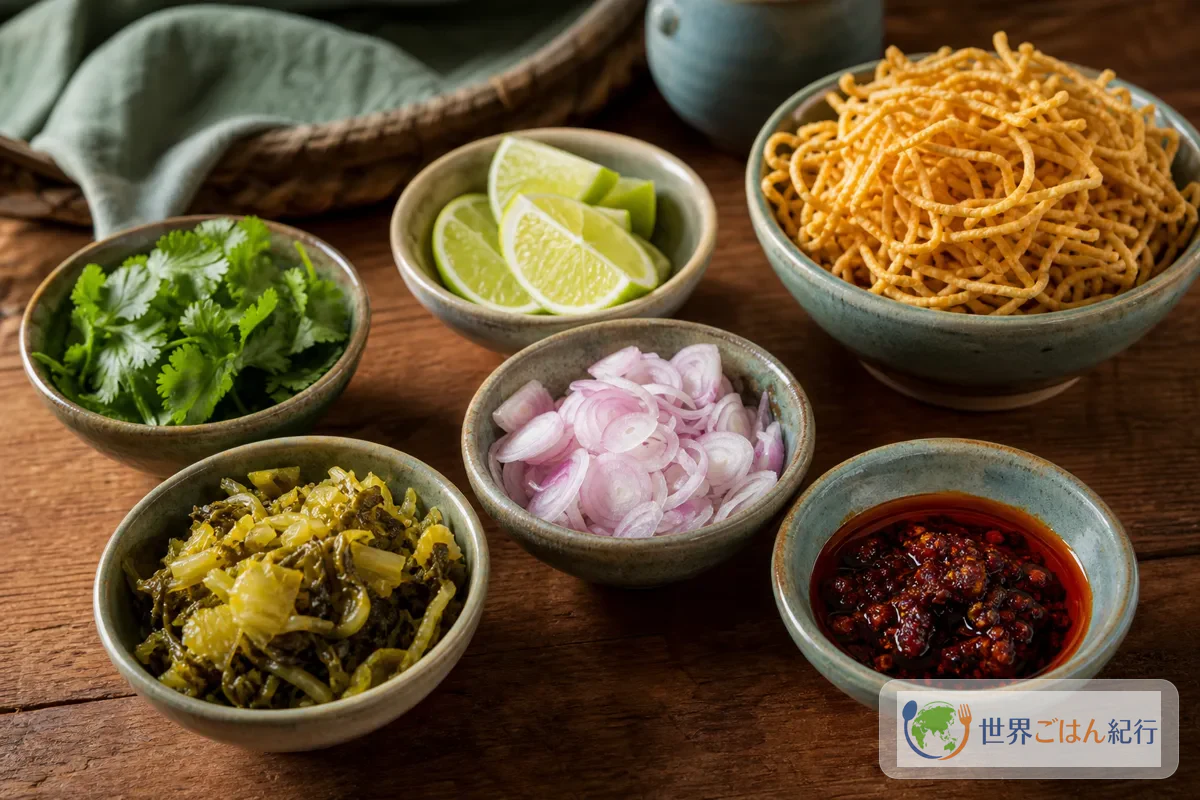
Boiled egg noodles go in the bottom of the bowl, a rich curry soup with simmered chicken goes over them, and fried egg noodles go on top. Sour pickled mustard greens, red onion, lime and chili oil are set out alongside. Those extras matter. Khao soi made rich can feel heavy by the last few bites. In Thailand the bowl stays easy to keep eating because the toasty fried noodles, the lime, the salty pickle and the sharp red onion cut through the soup.
Khao soi's flavor isn't set in the pot. Once it's served, each eater adjusts it with lime, pickled mustard greens, red onion and chili oil. At home, too, keep it from getting too sour at the start and leave room to finish at the table.
Khao soi, laksa and curry ramen
The noodles are what separate khao soi from Japanese curry ramen. Curry ramen treats soup and noodles as one. Khao soi puts boiled and fried noodles in the same bowl for two layers of texture, then lets you tune the rich soup with pickle and lime, which is a very Thai way to eat. Laksa is also a coconut-based noodle dish, but khao soi puts the toastiness of chicken, spices and fried noodles ahead of the umami of shrimp.
| Similar-looking dish | What they share | What makes it khao soi |
|---|---|---|
| Laksa | Coconut-based noodle soup | Egg noodles and fried noodles, pickle, northern Thai spices |
| Curry ramen | Curry-flavored noodle dish | Built on coconut and fish sauce, not fish powder or Japanese dashi |
| Burmese-style noodle dishes | Spice culture along the trade routes | In northern Thailand, adjusted at the table with lime, red onion and chili oil |
Look beyond the coconut. Use egg noodles, top them with fried noodles, and eat it with sour pickle and lime. With these three, ordinary store ingredients still give you the feel of khao soi.
Ingredients: Shopping to Get Close with What You Can Find
This recipe serves 4. The noodles are rich, so for dinner serve a side of som tam or lightly salted cucumber. If you want khao soi to be the whole meal, use a little more chicken.
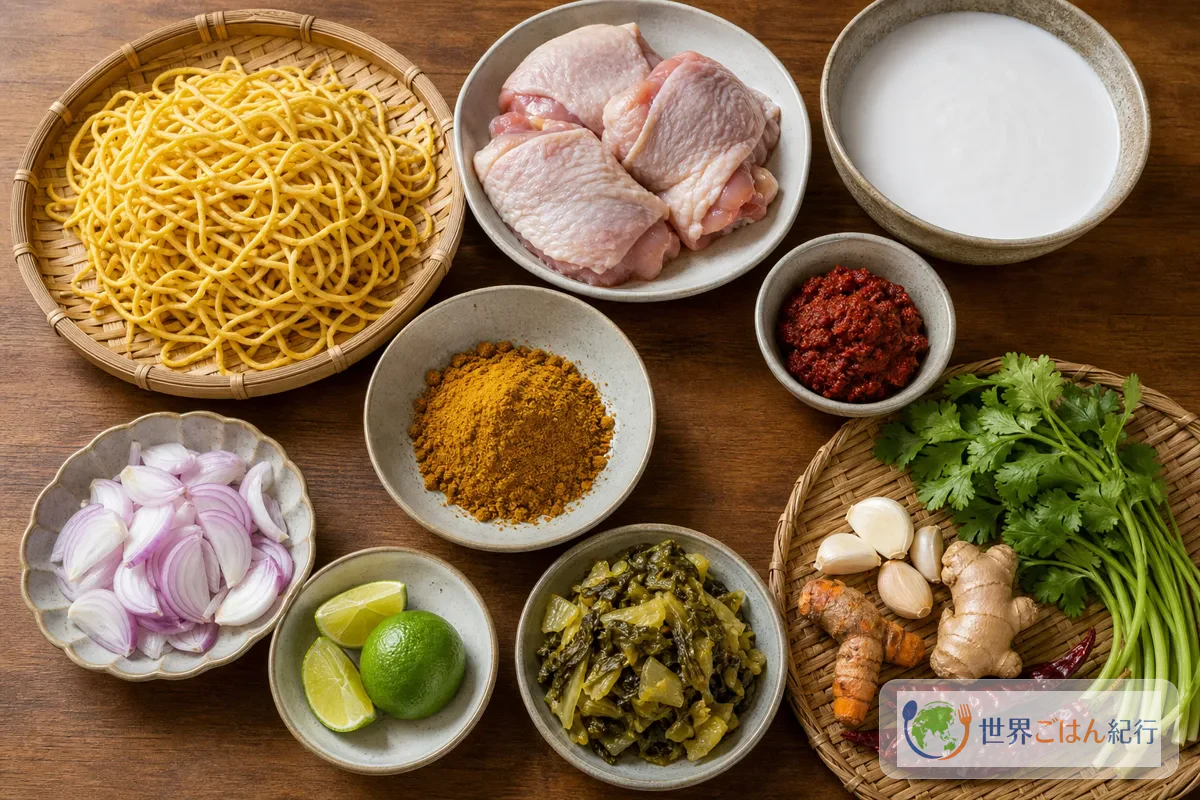
This recipe contains wheat, egg, chicken and fish sauce. Some store-bought curry pastes contain shrimp, seafood and soy. If you have allergies, check the ingredient labels before buying.
Ingredients worth looking for
Ingredients you struggle to find nearby carry over to the next gapao or tom yum goong. When shopping online, choose containers you can finish.
Choosing Khao Soi Ingredients and Substitutes
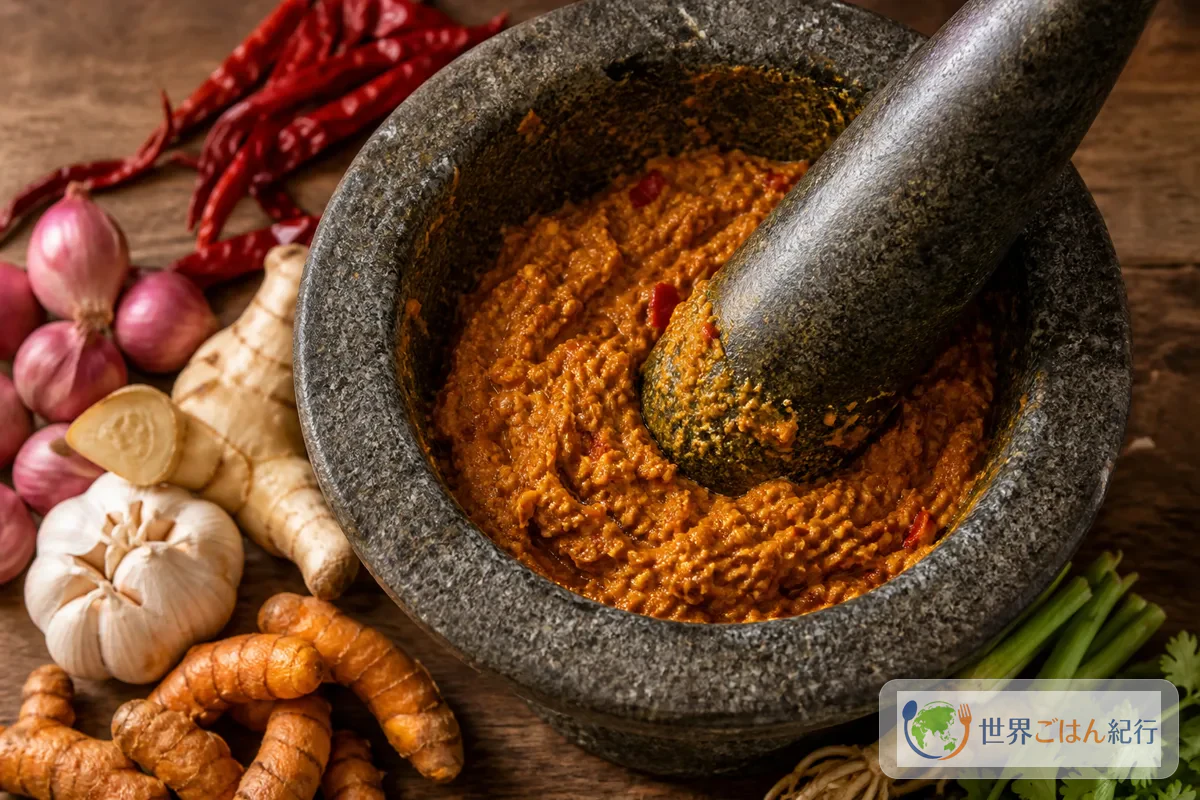
Store-bought Thai curry paste makes a good base. Add turmeric, curry powder, ginger and garlic for the yellow fragrance of northern Thailand. Shopping is a little easier than for som tam, which needs green papaya, though how you handle the noodles and toppings changes the result a great deal.
For the meat, bone-in chicken thighs or drumettes are easiest to handle at home and give umami to the soup. If you go with beef, simmer it longer and let the meat soften before adding the coconut milk.
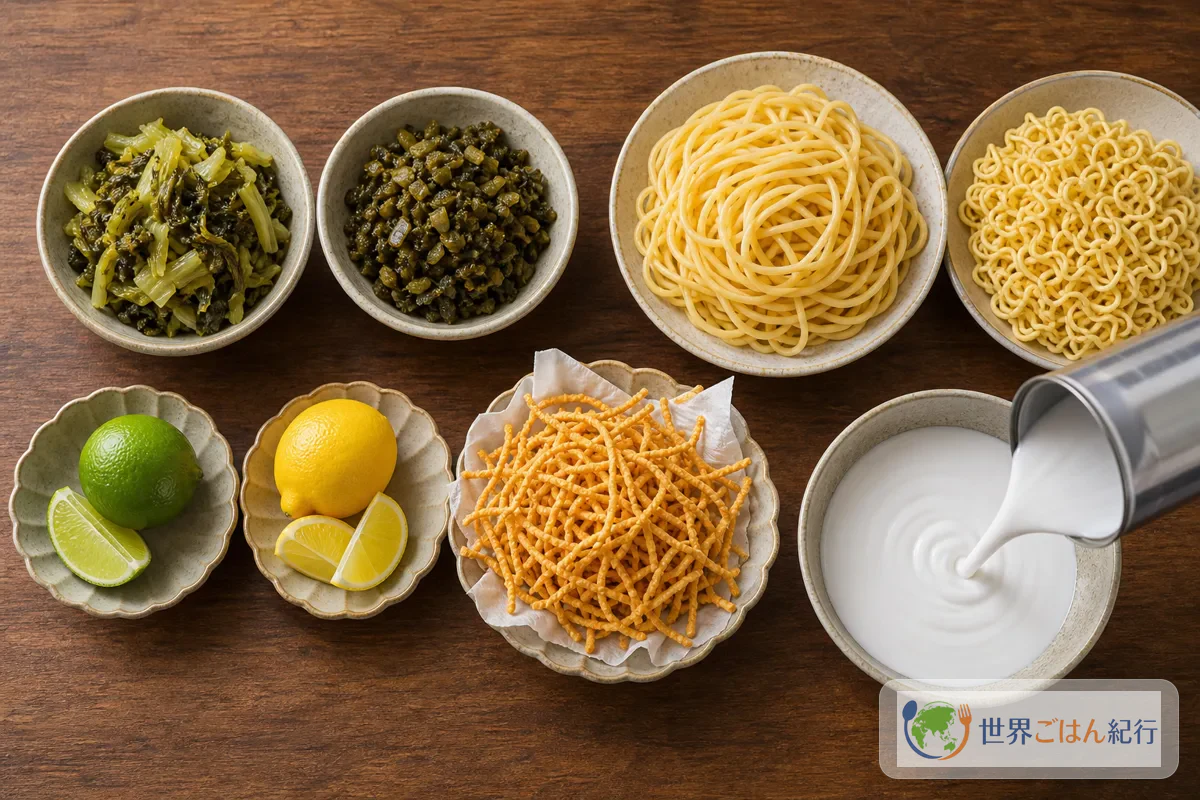
Some ingredients swap easily; others turn it into a different dish.
| Ingredient | Can it be replaced? | Realistic choice |
|---|---|---|
| Egg noodles | Quite replaceable | Fresh Chinese noodles, yakisoba noodles, thick ramen noodles. Rice noodles make a different line |
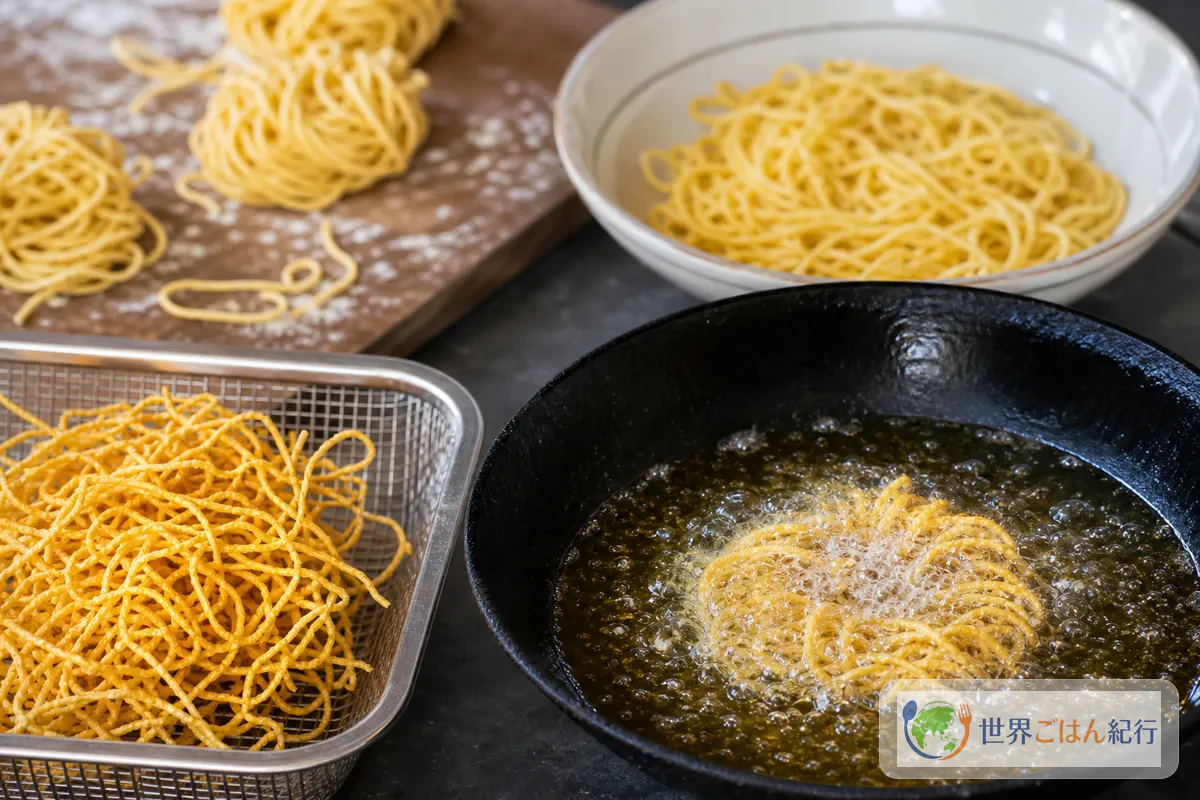
| Fried noodles | Replaceable | Homemade is best. On a busy day, a small amount of thin fried noodles for sara udon |
| Pickled mustard greens | Replaceable | Choose a pickle with sourness and saltiness. Avoid sweet pickles |
| Coconut milk | Hard to replace | Milk or soy milk is unlikely to give khao soi's body |
| Fish sauce | Ideally do not replace | Soy sauce alone moves it toward Japanese. If you dislike fish sauce, start with half |
| Curry paste | Replaceable | Red or yellow both work. Green moves the aroma in another direction |
Method: Bring Out the Coconut Oil and Make the Noodles Two-Tiered
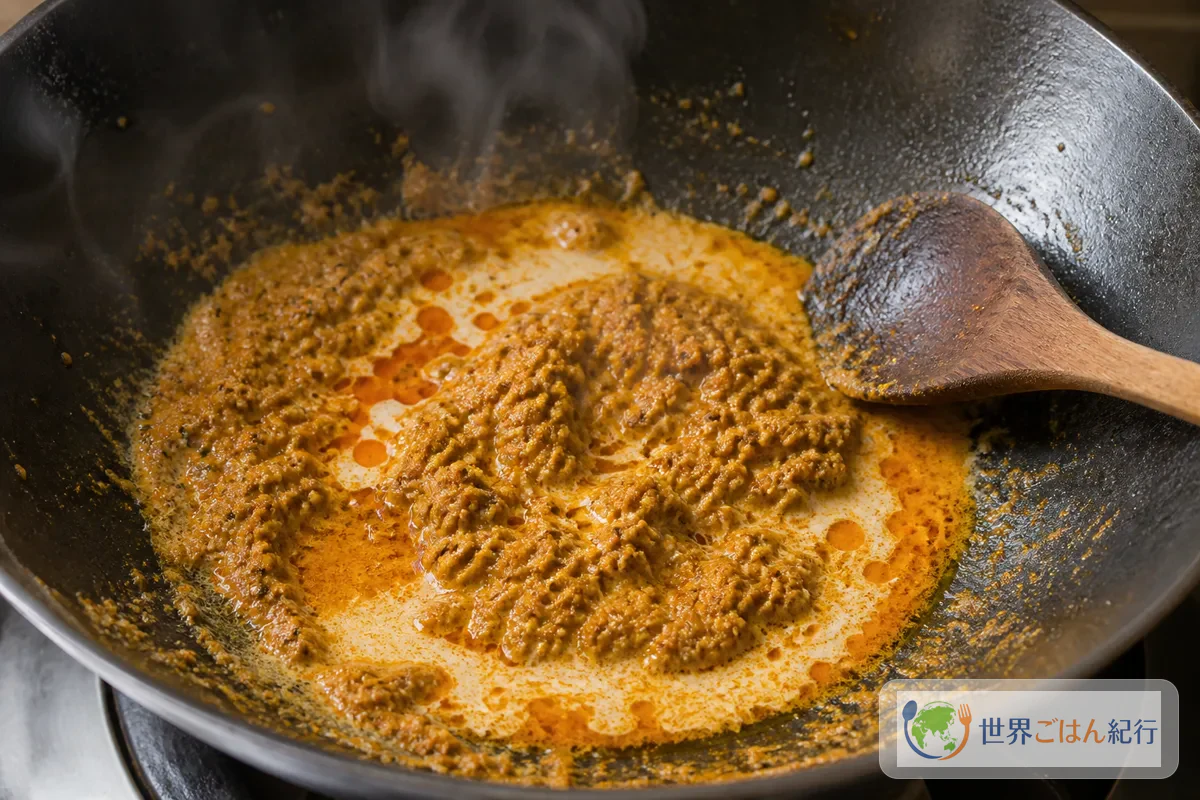
Khao soi is easy if you only boil noodles. But what sets the flavor is frying the paste and splitting the noodles into two kinds. You use both a pot and a frying pan, so cut the toppings first and you will not be rushed.
If you taste only the soup in the pot, it is fine for it to seem a little rich and a little sweet. Once the noodles go in the saltiness dilutes, and with lime and pickled mustard greens the outline tightens. If you try to finish the sourness in the pot, it gets too sour once you add more at the table.
Common Khao Soi Problems and Fixes
The coconut oil doesn't separate
Boxed coconut milk and products with emulsifiers often won't separate. Stop waiting, add 2 tsp oil and fry the paste until the powdery edge of the spices is gone.
The soup is too heavy
Either the coconut milk is too rich or there isn't enough lime and pickle. Rather than adding water to the pot, squeeze lime into the bowl and add more pickled mustard greens and red onion; that keeps the khao soi character. Reheated the next day it feels heavier still, so make the portion you save slightly thinner.
It tastes like Japanese curry ramen
Too much curry powder pulls it straight toward Japanese curry. Stop the curry powder at 2 tsp and build color and aroma with turmeric and red curry paste. If something still seems missing, sharpen it with fish sauce and lime rather than more powder.
The noodles go soft
Noodles simmered in the soup soften at once, so boil them separately and combine them in the bowl. Pho ga has a clear soup, but the same rule applies there. When making ahead, always keep noodles and soup apart.
It's too spicy
Heat is easier to control with chili oil at the table than with the paste. If you've put in too much hot paste, add ½ cup (100 ml) coconut milk and ½ cup (100 ml) water, then bring the salt back with fish sauce. Sugar alone won't remove the heat; it only leaves sweetness.
Serving, Storing and Leftover Khao Soi
Storing khao soi
Khao soi can be made ahead, but stored with the noodles in, it loses its texture. Keep the soup, boiled noodles, fried noodles and condiments separate and the next day's bowl is much better.
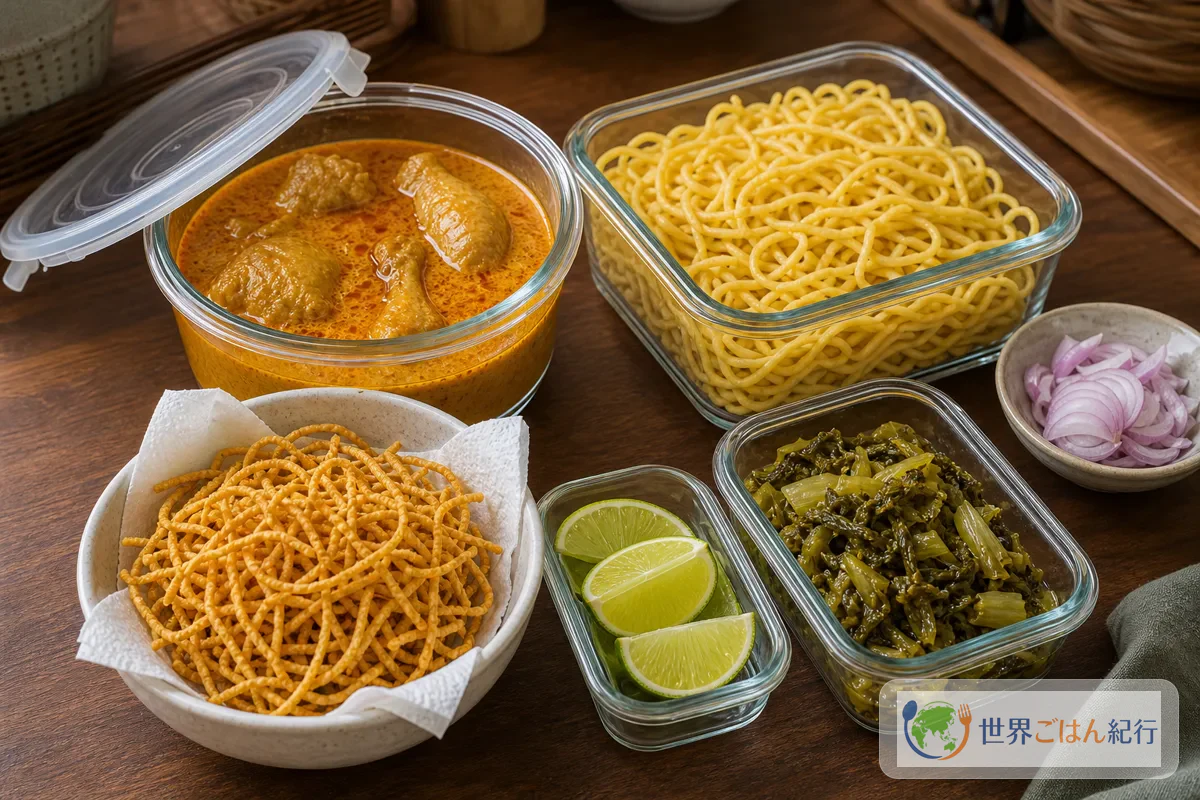
Cool the soup, refrigerate it and eat it within 2 days. Coconut milk splits easily, so reheat slowly over low heat without a hard boil. You can freeze the soup alone for up to 2–3 weeks; after thawing it may be slightly grainy, so stir it over low heat until smooth.
Toss the boiled noodles with a little oil and refrigerate them, then pour boiling water over them the next day to loosen them before they go in the bowl. Fried noodles go soft in humidity. Cool them completely, store them in a container lined with paper and use them at room temperature by the next day. Add the pickled mustard greens and red onion just before eating to keep their aroma.
What to serve with khao soi
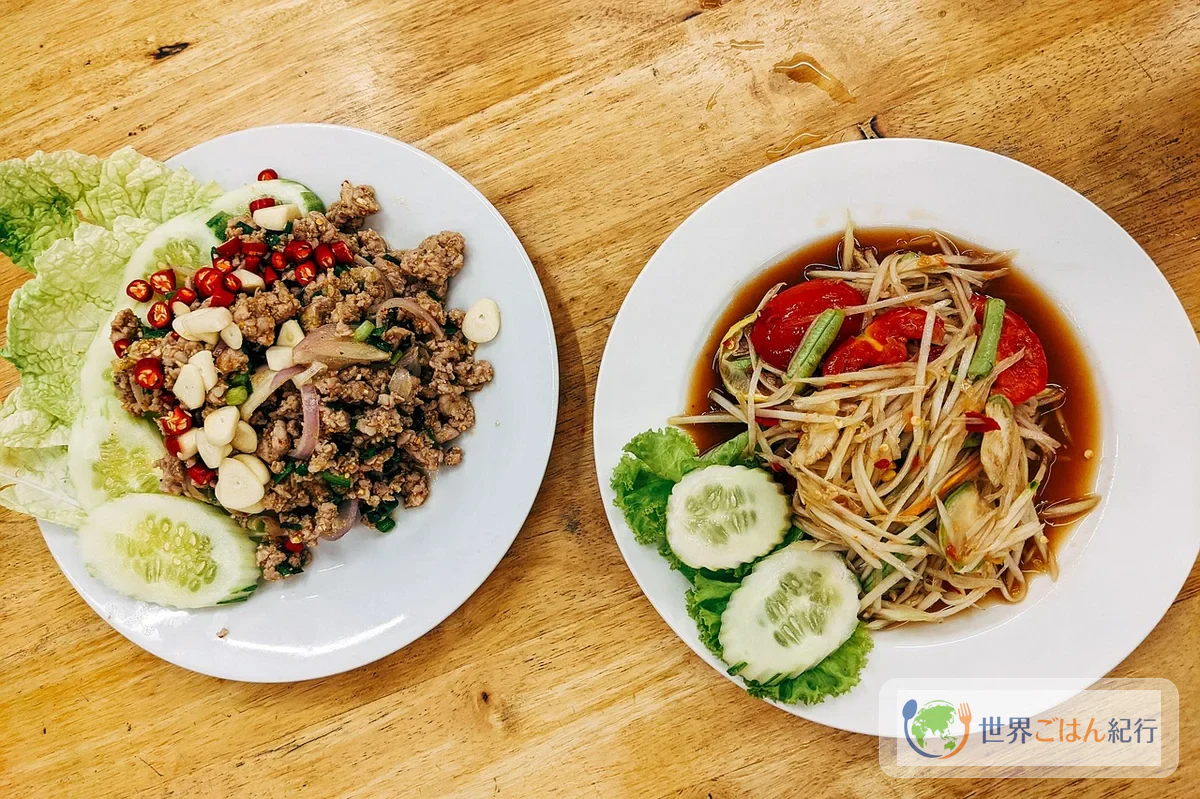
A sour or vegetable dish rounds out the meal. Som tam contrasts in sourness and texture, and laab brings lightness with mint and toasted rice powder. For a sweet-spicy coconut stew with potatoes and tender meat, massaman curry is a close match.
Skip another rich main on khao soi days. Instead of fried chicken or a stir-fry, put out a small dish of cold vegetables, a sour salad or herbs, which is closer to the way you add condiments at a Chiang Mai eatery.
| Occasion | What to serve | Why |
|---|---|---|
| Weeknight dinner | Salted cucumber, boiled egg, tomato | Little extra shopping; vegetables rest you from the rich soup |
| Weekend Thai menu | Som tam, a little gapao, cold beer | Heat, sourness and herbs point different ways, so khao soi doesn't feel heavy |
| Comparing Southeast Asian noodles | Laksa, khao piak sen, pho ga | Compare coconut, chicken broth and rice noodles |
| When guests come | Fried noodles and condiments on separate plates | Each person finishes their own bowl, which keeps the table lively |
If you'd like to compare noodle soups, try Lao khao piak sen (see khao piak sen, in Japanese), Indonesian soto ayam and Malaysian laksa; the differences among Southeast Asian noodle dishes become clear. After khao soi, which cuts richness with pickle and lime and layers noodle textures, the next tom yum goong or laksa you make may taste a little different.
Using up leftovers
Leftover pickled mustard greens go well in yakisoba or fried rice the next day. Leftover coconut milk works in the curry sauce for roti canai or in a steamed-braised dish like amok, so nothing goes to waste.
Leftover soup is good over rice, eaten casually with a boiled egg and scallions, as a northern Thai-style coconut curry rice bowl. For khao soi again, serve it with egg noodles and fried noodles.
Frequently Asked Questions
Most khao soi failures come from three things: skipping the fried noodles, leaving out the pickle and lime, and simmering the noodles in the soup. Here are the points where home cooks tend to hesitate.
Q1. Can I make it without coconut milk?
You can, but it becomes a different curry noodle dish. Milk and soy milk lack the fat and aroma that give khao soi its round richness. If you must skip coconut milk, make a strong chicken stock and stir in a small amount of unsweetened peanut butter at the end for body, though the flavor still changes a lot.
Q2. Can I make khao soi that isn't spicy?
Yes. Reduce the red curry paste to 1.25 oz (35 g). With less heat the flavor tends to blur, so build it up with fish sauce, lime and pickled mustard greens. If children are eating, make one mild soup and add chili oil only to the adults' bowls.
Q3. Can I skip the fried noodles?
On a busy day you can, but much of the khao soi character goes with them. If you'd rather not get out the frying oil, a small topping of thin fried noodles for sara udon still gives texture. What matters is that a crisp toastiness comes with the first bite, not the amount.
Q4. Can I make it with something other than chicken?
Beef shank, pork shoulder, fried tofu or mushrooms all work. Beef needs a pre-boil or a longer simmer. For fried tofu or mushrooms, use light soy sauce and a little kombu dashi in place of fish sauce, and enjoy it as a home vegetarian curry noodle rather than a northern Thai dish.