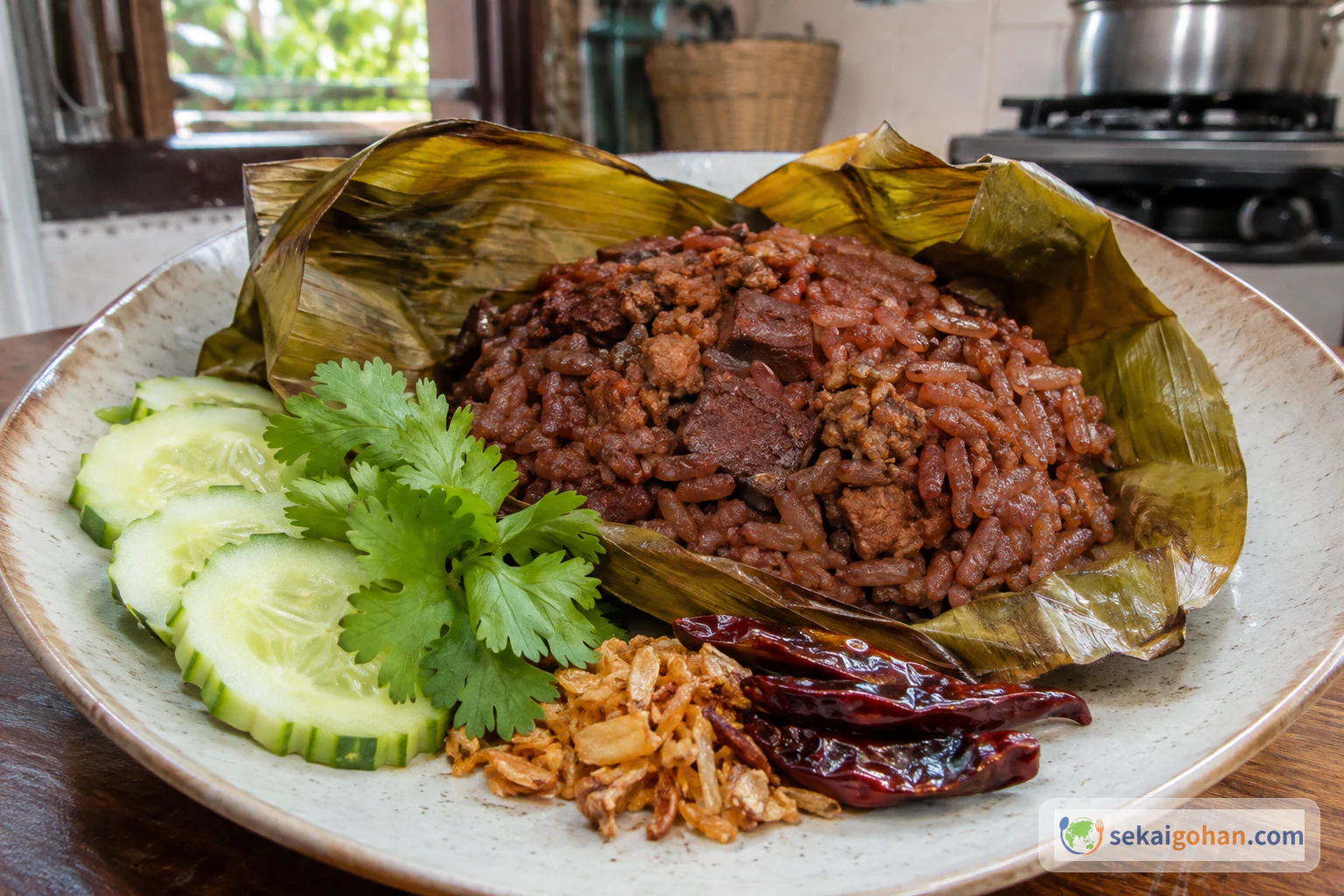
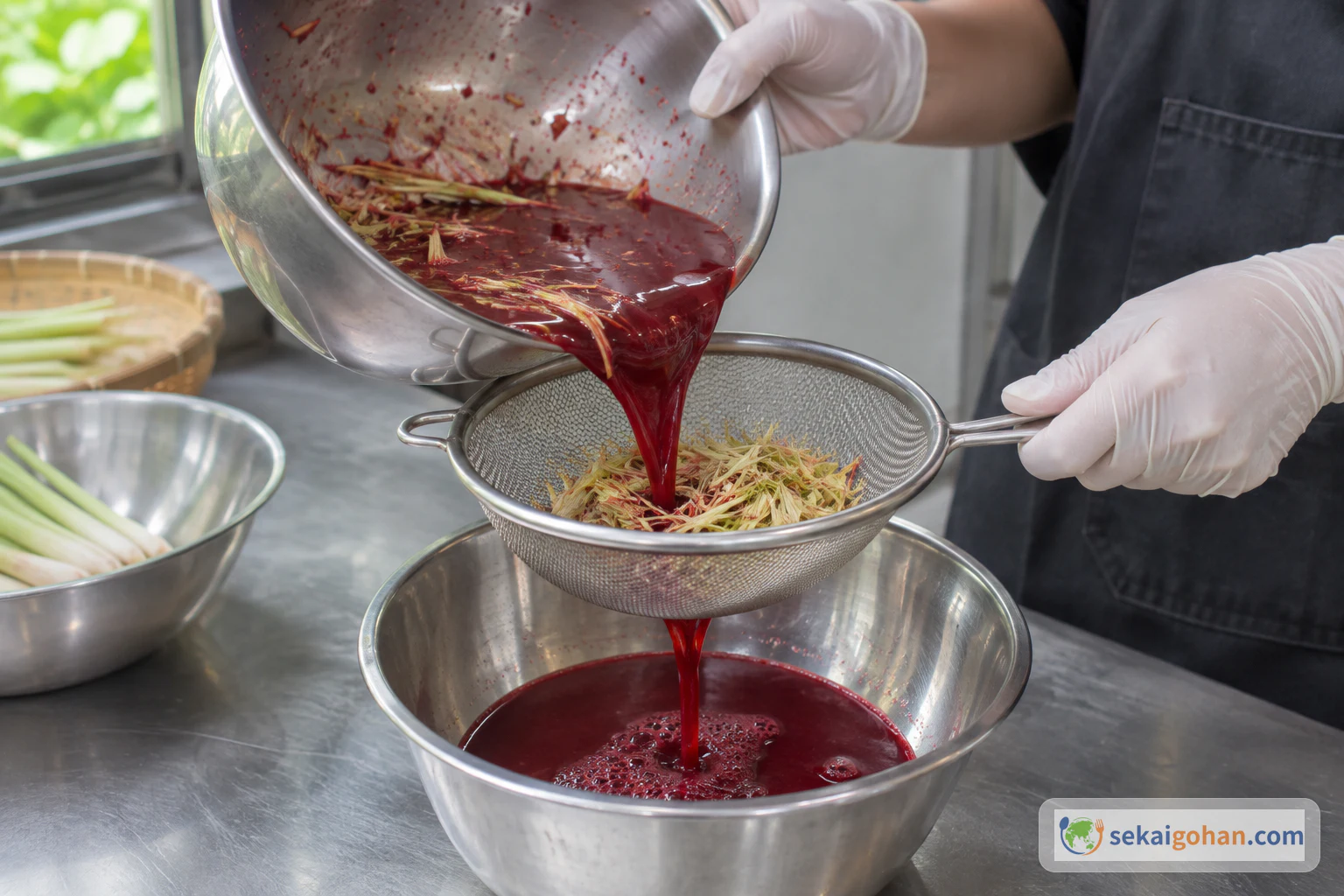
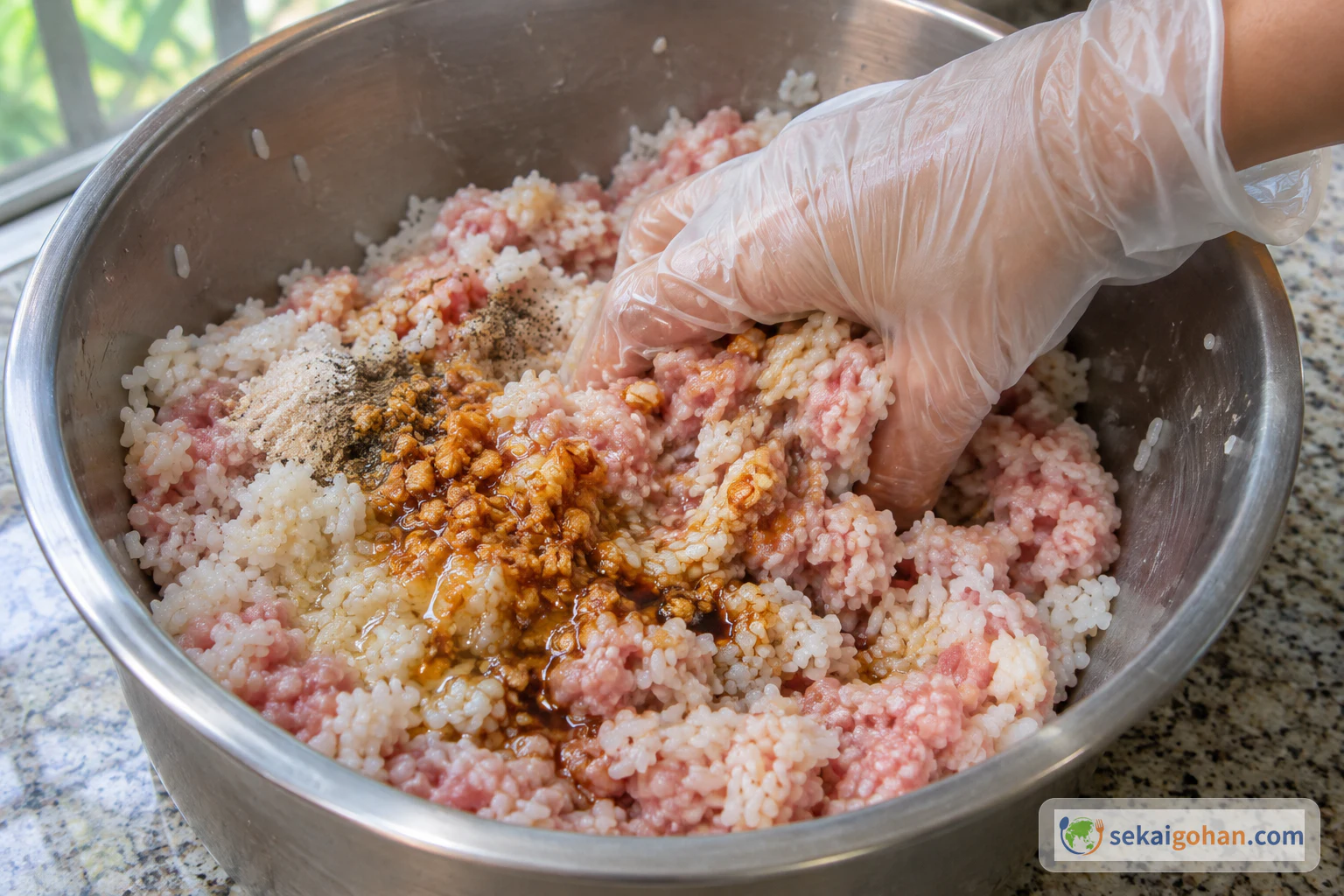
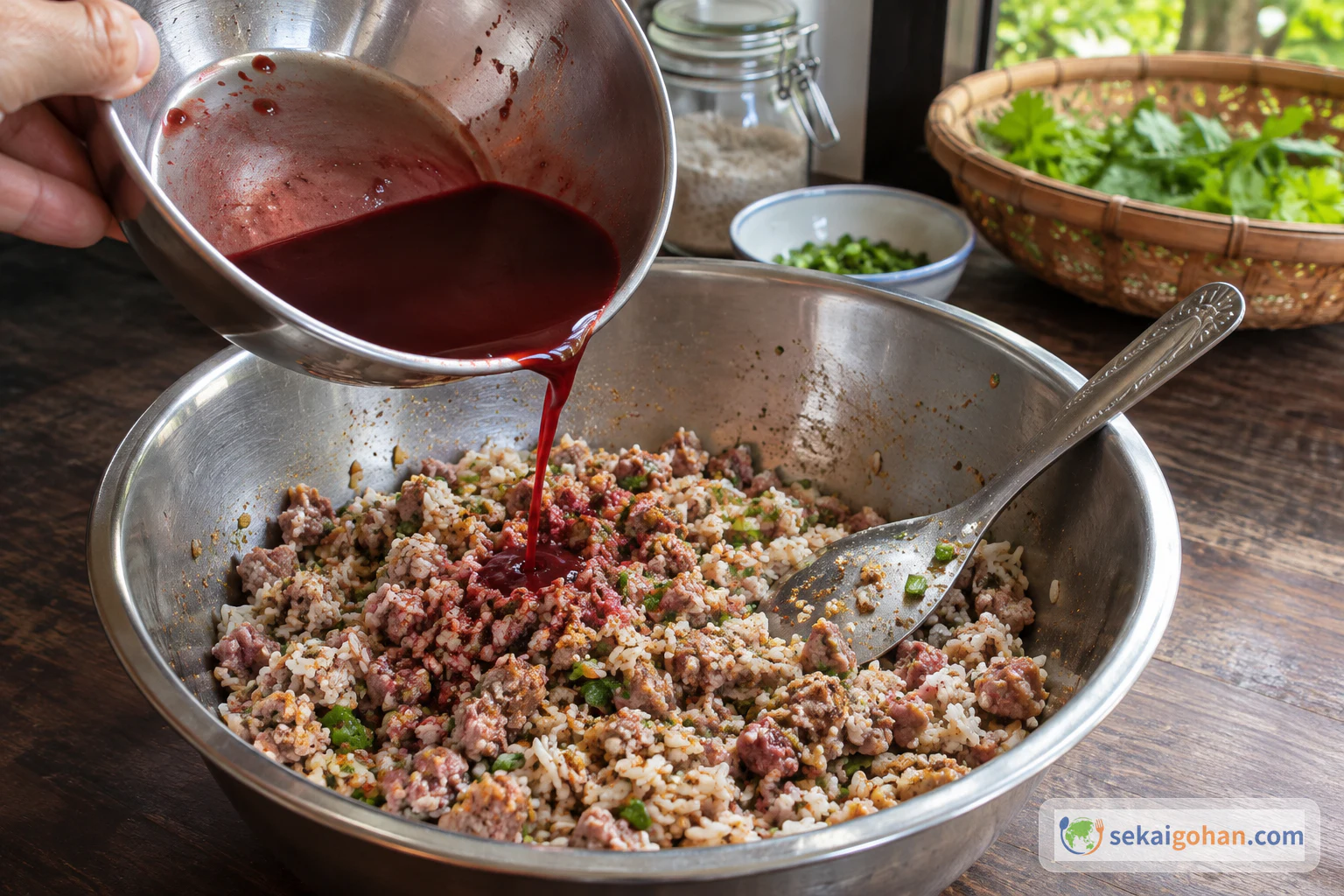
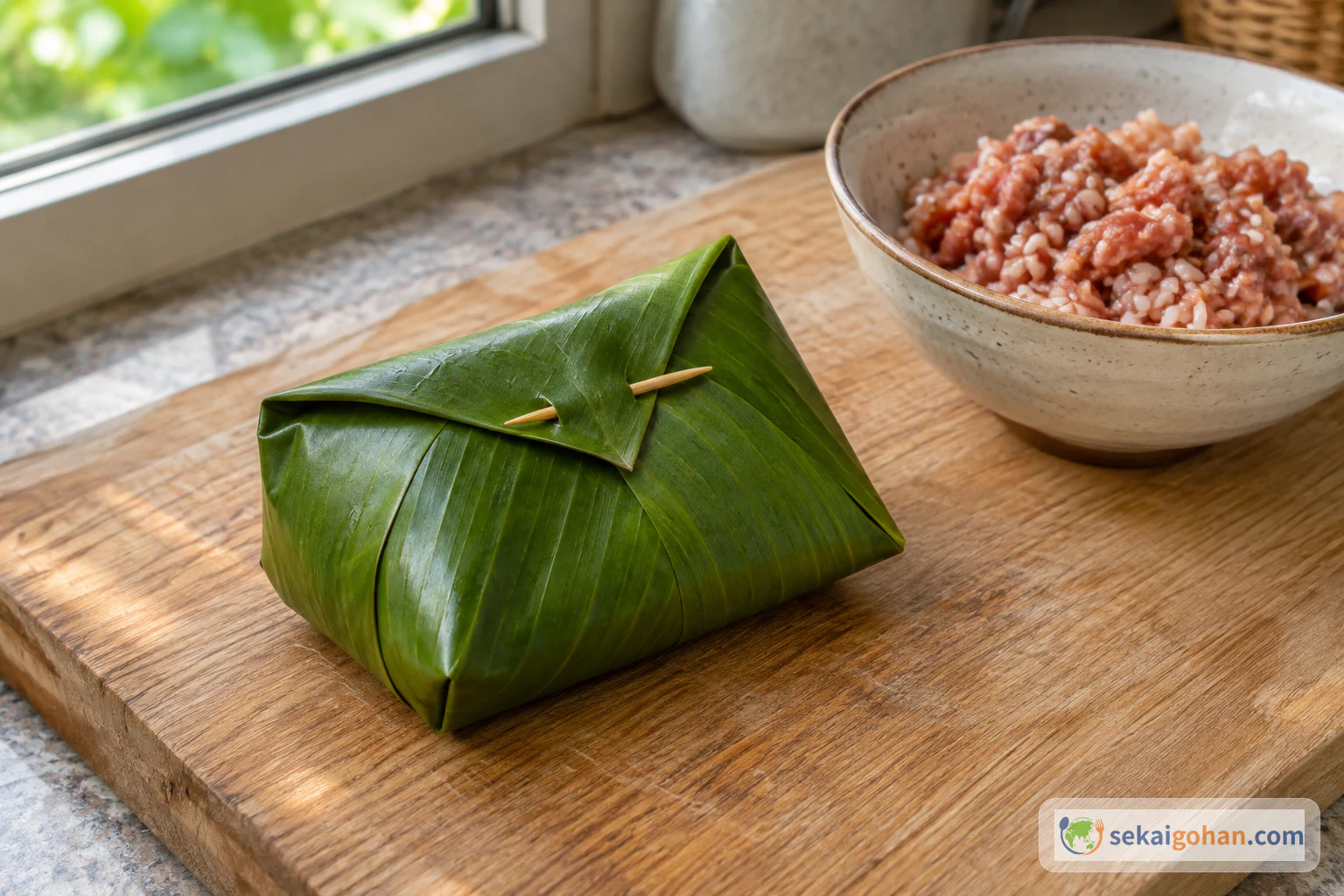
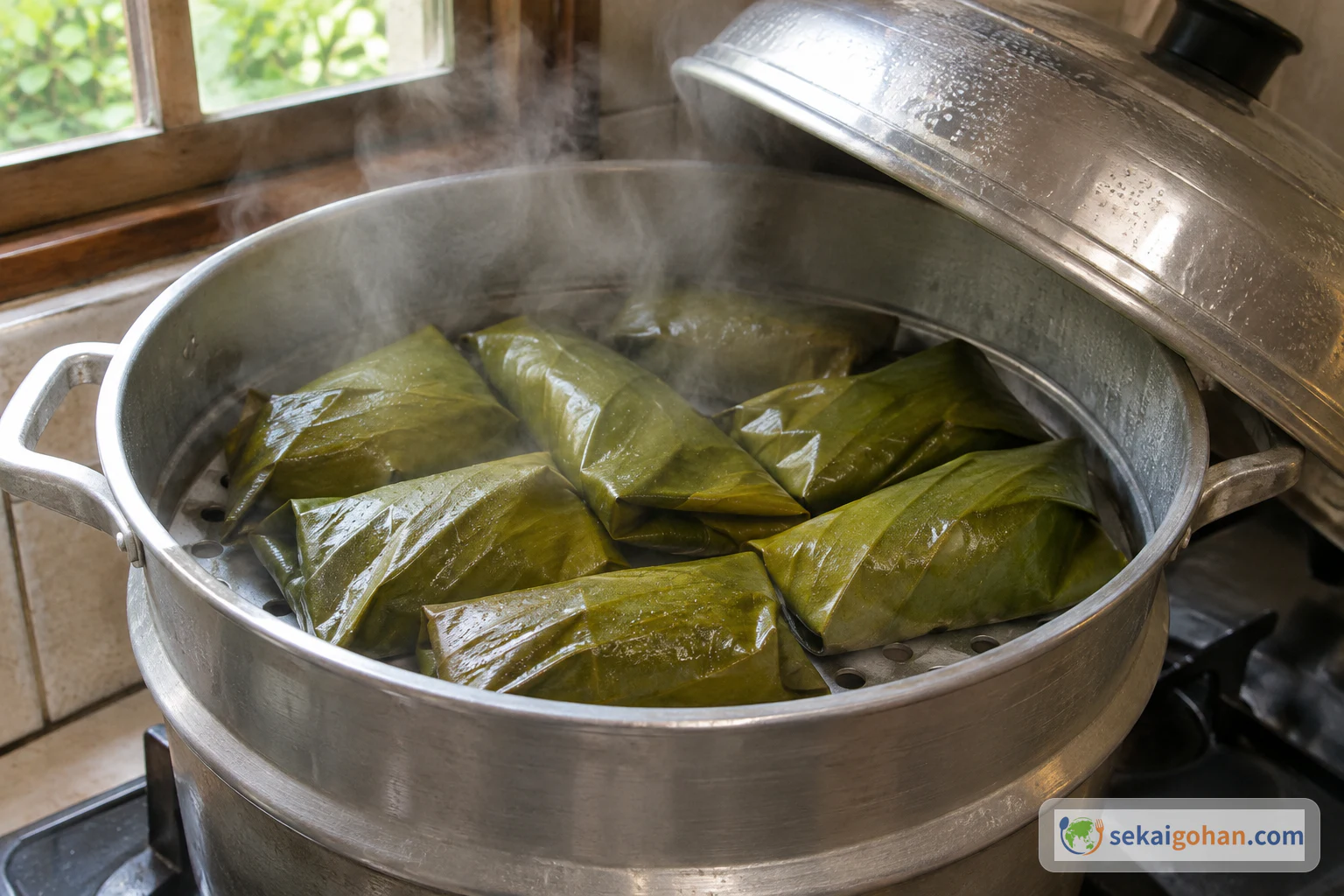
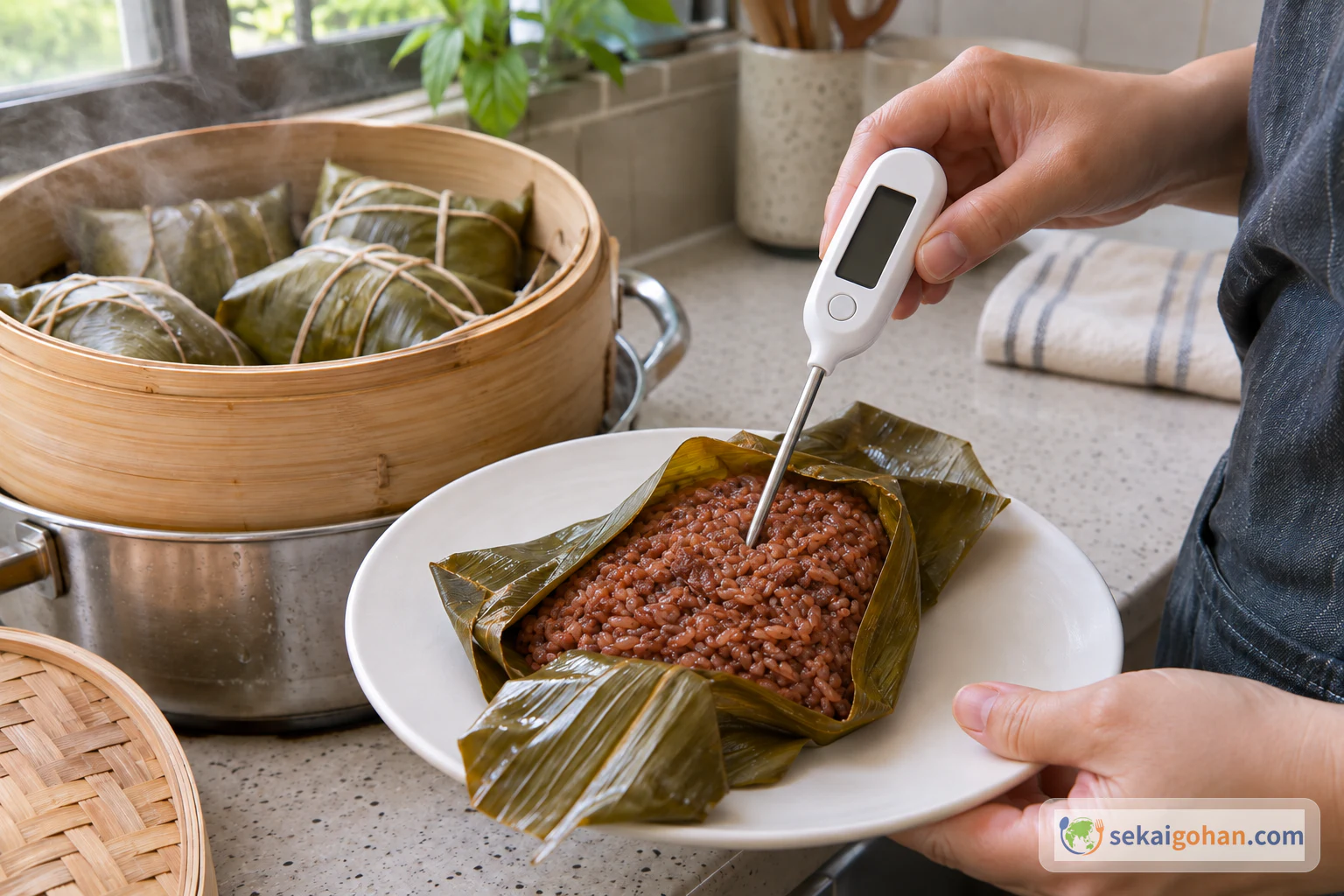
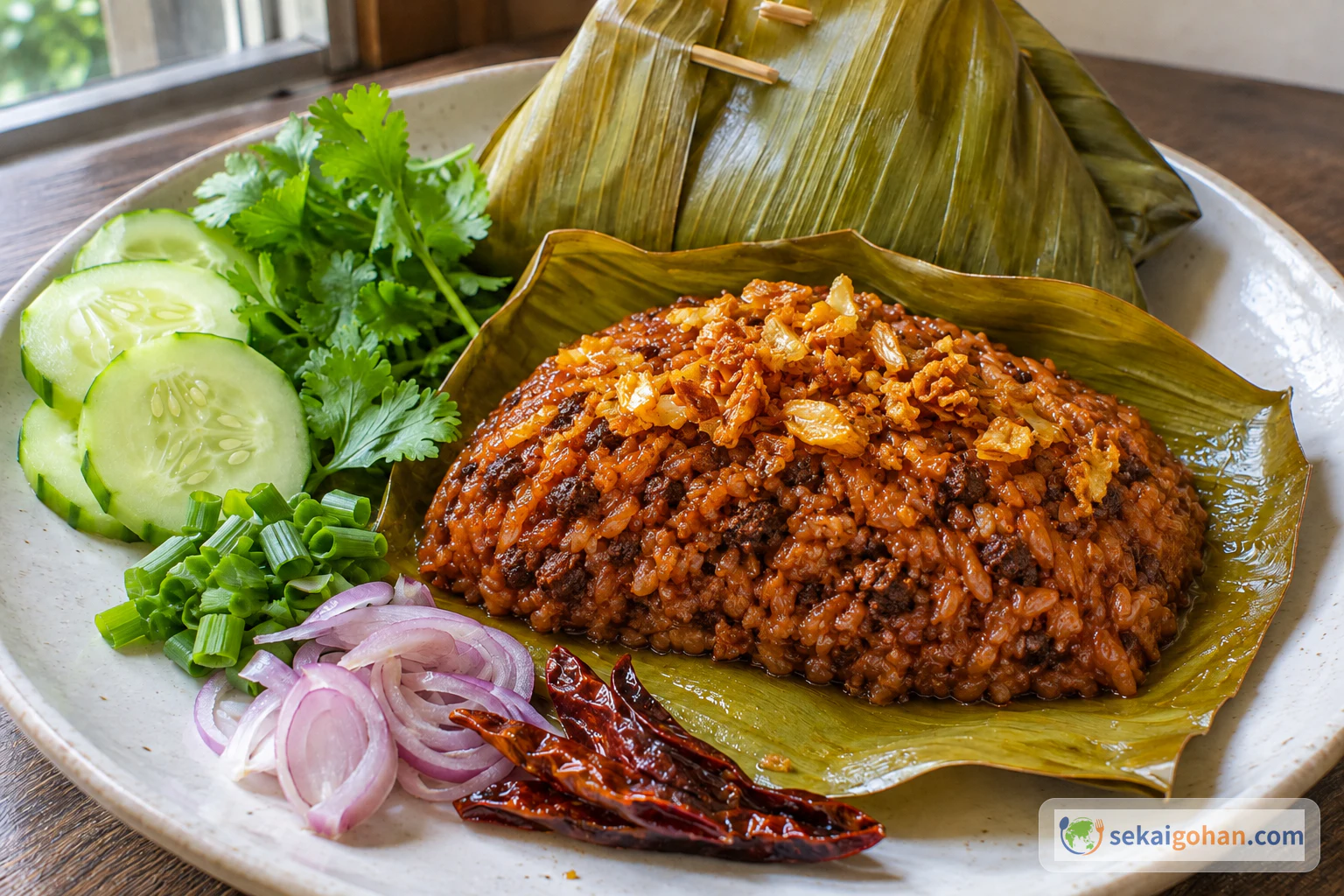
In Chiang Rai, khao kan chin is sometimes sold alongside khanom jeen nam ngiao, each portion wrapped in leaf. Unfold one and you'll find cooked rice mixed with minced pork and pork blood that has been handled with lemongrass, all steamed together in the parcel. Fish sauce, a little sugar and salt do the seasoning, and fried garlic, chili and fresh vegetables come to the table alongside. "Rice with pork blood" can sound daunting, but the work is orderly: strain the blood, season the rice and pork, add the blood a little at a time so the grains stay separate, then wrap and steam. Find more dishes from the country on our Thailand page.
About Khao Kan Chin
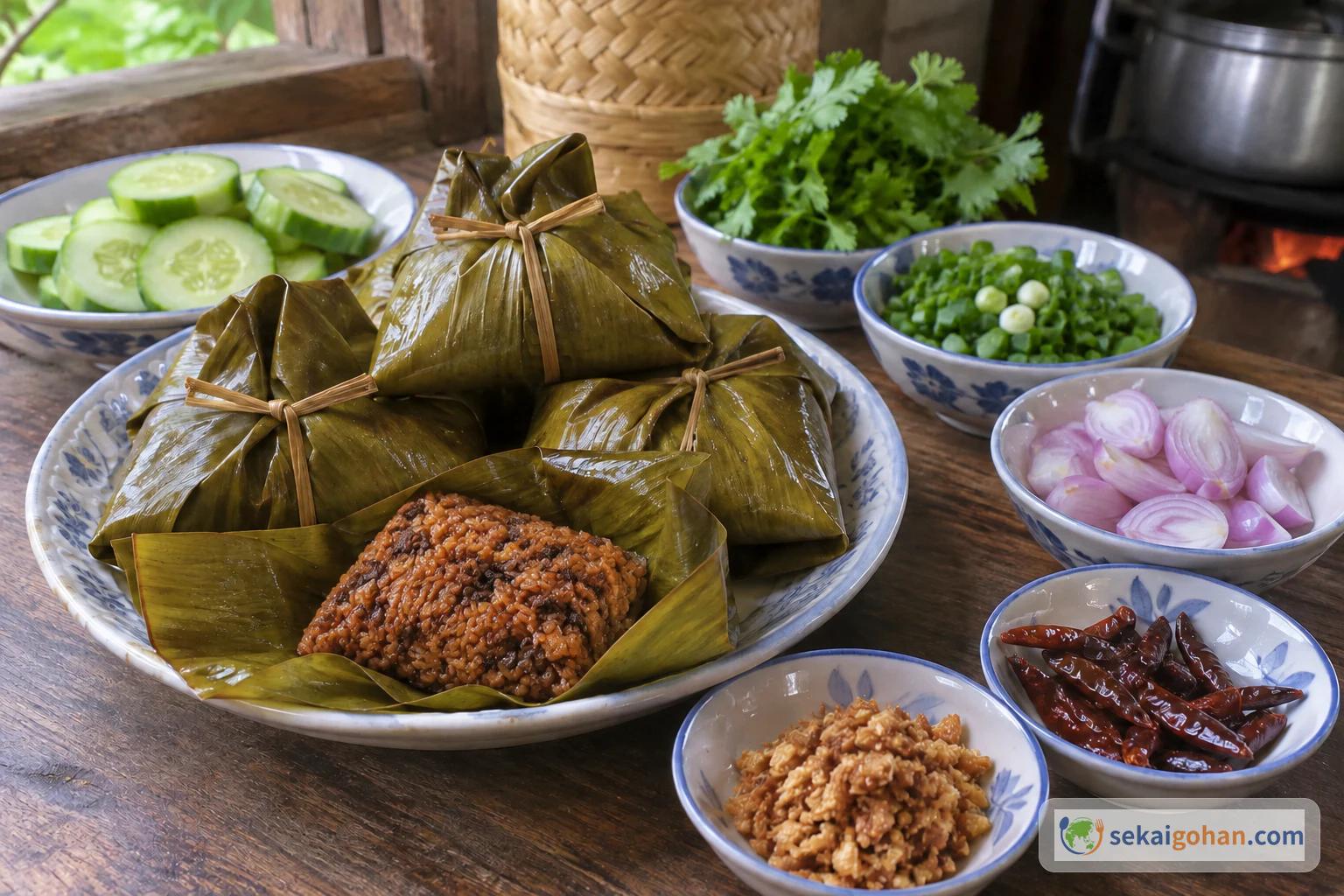
Khao kan chin is a northern Thai home dish influenced by the Tai Yai (Shan). It is also called ข้าวเงี้ยว and is known as เนื้อส้มอุ่น (ข้าวกันจิ้น); you will also see the spelling ข้าวกั้นจิ้น. The dish is made from cooked rice, pork blood treated with lemongrass and minced pork, mixed with salt and steamed in leaf.
The rice is ordinary cooked rice with the grains still visible, rather than blood-dyed glutinous rice stuffed into a casing. At the table it comes with fried garlic, fried dried chili, shallot, cilantro, scallion and cucumber.
If you enjoy Thai rice dishes, compare it with khao man gai or khao kluk kapi, which also pairs rice with separate accompaniments. For another route into northern Thai food, try gaeng hung lay.
Ingredients
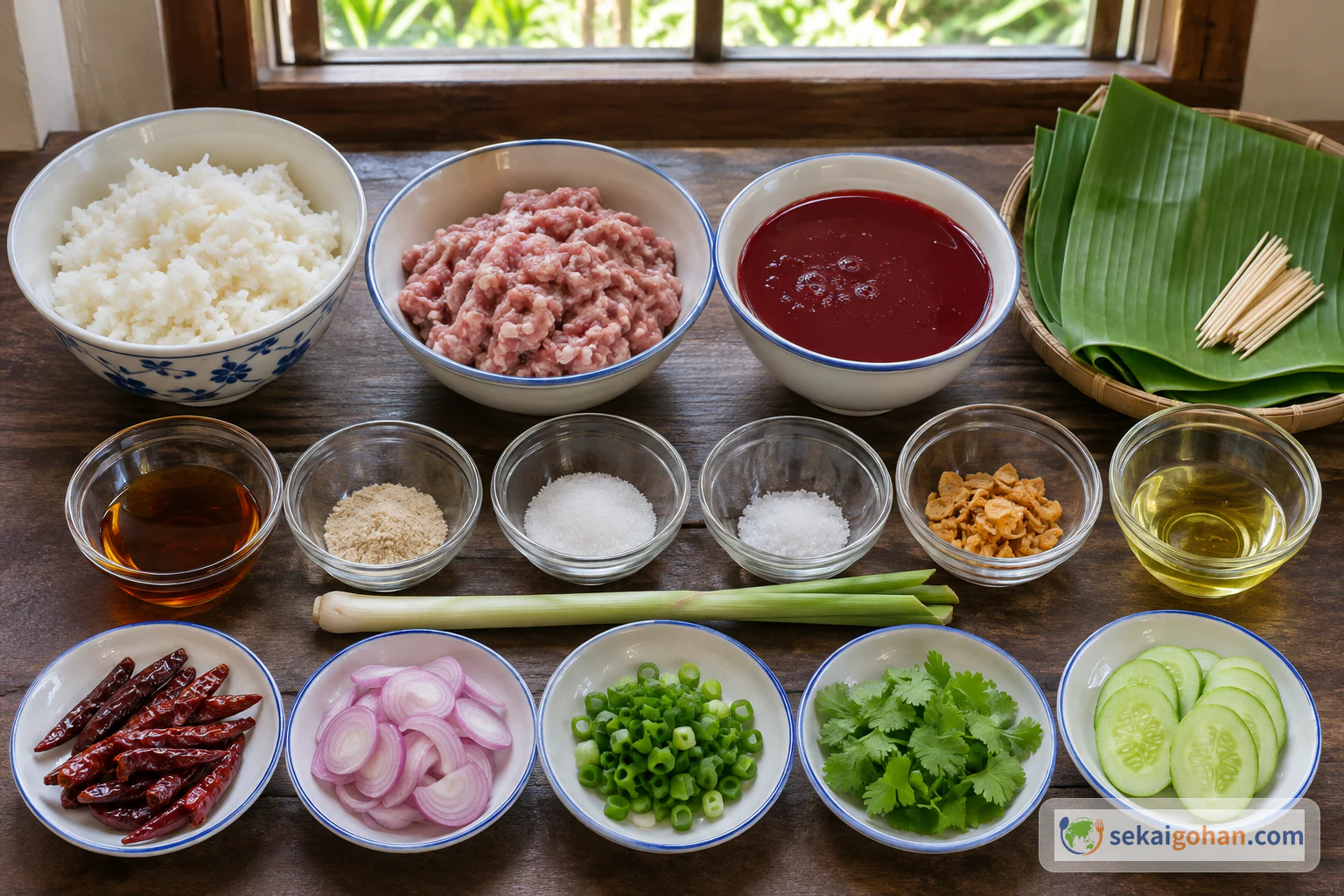
Equipment
- Steamer
- Food thermometer with a probe that can reach the center of a parcel
- Fine sieve
- Separate bowls for the blood and the rice mixture
- Something to pound the lemongrass
- Gloves
- Separate utensils, boards and chopsticks for raw and cooked food
- Short wooden picks
Choosing Ingredients for Khao Kan Chin
Pork blood
Use only blood sold as food from a trusted supplier. Look for it at butcher shops and Asian grocery stores. In 2017, Japan's national rules required blood collected for food to be chilled to 39°F (4°C) or below immediately, with knives washed for each animal. Meat centers in Okinawa shipped pork blood as food, and later that year one center resumed shipments after adding dedicated storage and refrigeration.
Follow the same 39°F (4°C)-or-below principle at home: refrigerate the blood as soon as you buy it and use it right away. If you can't get food-grade pork blood, skip this dish. Blood from another animal, blood of unknown origin and blood collected at home or through acquaintances are not safe substitutes, and drained meat or cooked blood curd won't work as stand-ins either.
Rice, seasonings and leaves
Use jasmine or another long-grain rice; short-grain Japanese rice will change the texture. Pork seasoning powder varies in salt from brand to brand, and fish sauce should stay fish sauce rather than soy sauce. If you have dietary restrictions, read the labels on both. For wrapping, choose banana leaves sold for food or cooking.
Fried garlic and oil
The ingredient list has 3.5 oz (100g) of fried garlic and 3.5 oz (100g) of vegetable oil, but only 3–4 tbsp of the fried garlic and oil goes into the rice. Keep the remainder for the table as a finishing garnish.
If you avoid pork
Pork and pork blood are the heart of this dish. Without them, you're making a different dish.
Cooking Khao Kan Chin Through and Troubleshooting
Heating the parcels
Divide the mixture into parcels that suit your steamer, then steam over medium heat for about 30 minutes, or until cooked through. Pork and pork blood must be thoroughly heated above 158°F (70°C) for at least 10 minutes, and in Japan the general household guideline is 167°F (75°C) at the center for 1 minute.
Meet both at the center of the thickest parcel: at least 160°F (71°C) held for at least 10 minutes, and at least 167°F (75°C) for at least 1 minute. If the parcel hasn't met both, keep steaming. Trust the thermometer over the clock, since 30 minutes is only a rough guide.
- Raw pork and pork blood carry risks including Streptococcus suis (the illness known in Thai as หูดับ), so thorough cooking is essential.
- Never taste raw pork, raw blood or the uncooked mixture. Season by measure only.
- Lemongrass and lime do not make blood or pork safe.
- Cover any cuts, handle raw blood and pork with gloves or utensils, and wash your hands after contact.
- Keep separate utensils, boards and chopsticks for raw and cooked food.
- If you are pregnant, or are cooking for infants, older adults or anyone with a weakened immune system, be especially sure of the cooking, or choose not to eat this dish.
Common problems
| What you see | Likely cause | What to do |
|---|---|---|
| Rice clumps as you add the blood | Too much blood went in at once | Add the rest in smaller amounts and fold after each addition |
| Rice turns mashed and sticky | Rice was still hot, or was mixed too hard | Next time cool the rice first and fold gently instead of stirring |
| The leaf splits while wrapping | The leaf was stiff, or the parcel was overfilled | Warm the leaf until it softens and use less filling |
| Red liquid in a steamed parcel | Not cooked through | Do not eat it. Close it and keep steaming |
| The center temperature falls short | Parcel is thick, or the steam is weak | Keep steaming until both temperature conditions are met, whatever the clock says |
| Parcels feel dry or steam doesn't reach the middle | The wrap is stiff or overfilled | Next time soften the leaves first and avoid overfilling |
Serving, Storage and Variations
Khao kan chin is best eaten right after steaming. Serve the fried chilies separately so each person can control the spice, and keep the herbs and cucumber apart from the parcels so fresh vegetables never touch anything raw during preparation. If any is left over, refrigerate it quickly and reheat it thoroughly before eating.
Proportions vary. One northern version uses 2 cups of cooked rice, 100g of pork blood, 300g of lean minced pork, 1/2 tsp of salt and 1/4 tsp of sugar. That's much more pork and less blood than this recipe, so treat it as a comparison and don't mix its amounts into the method above.
Frequently Asked Questions
Is khao kan chin made with sticky rice?
No. This recipe uses 1 lb (500g) of cooked rice (ข้าวสวย), not glutinous rice.
Is the pork blood raw when it's mixed in?
Yes. The blood and pork are raw at the mixing stage and cook through inside the parcels, so don't taste anything before cooking.
Does rubbing the blood with lemongrass make it safe?
No. Neither lemongrass nor lime makes pork or blood safe. Safety depends on trusted supply, clean handling and thorough heating.