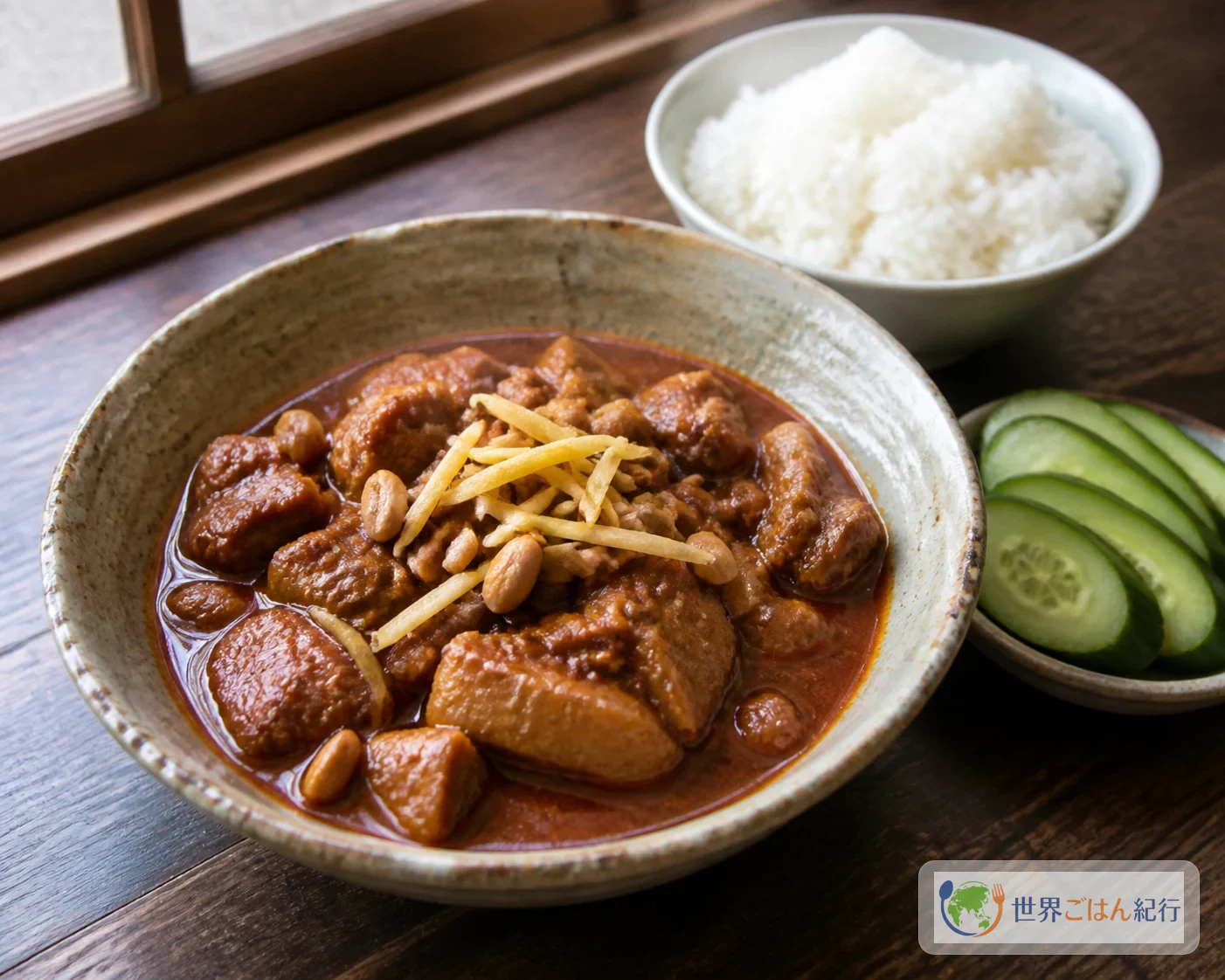
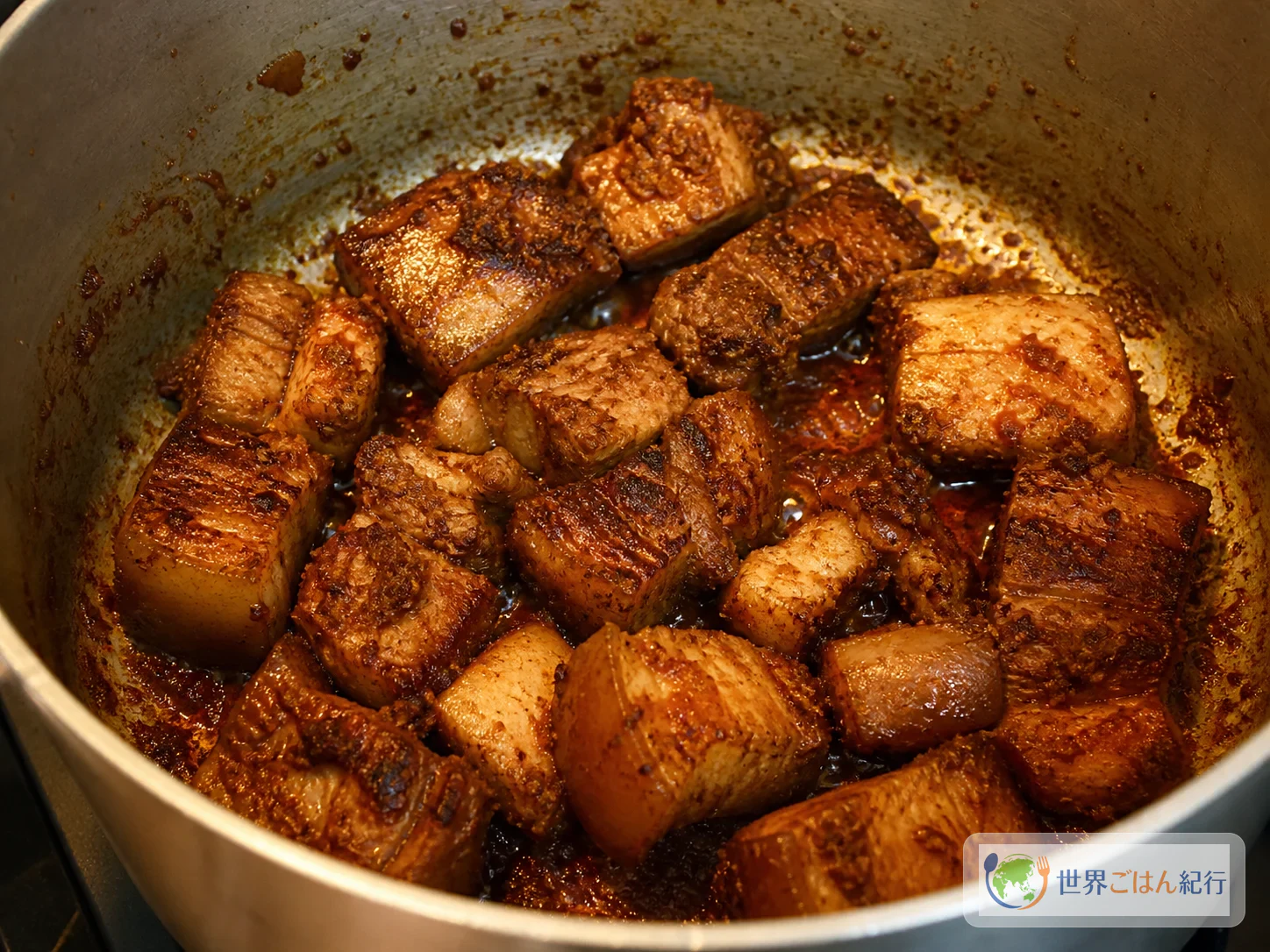
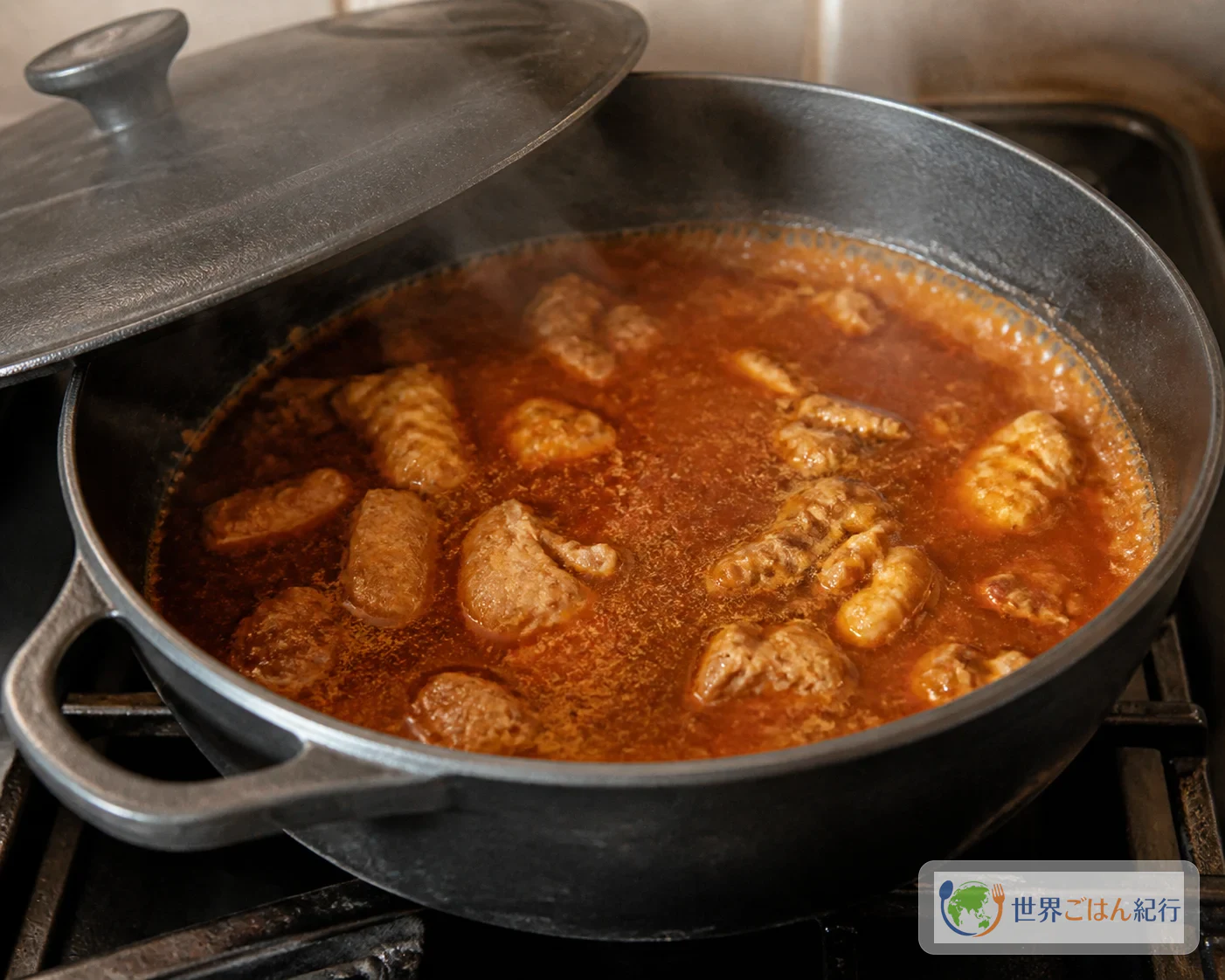
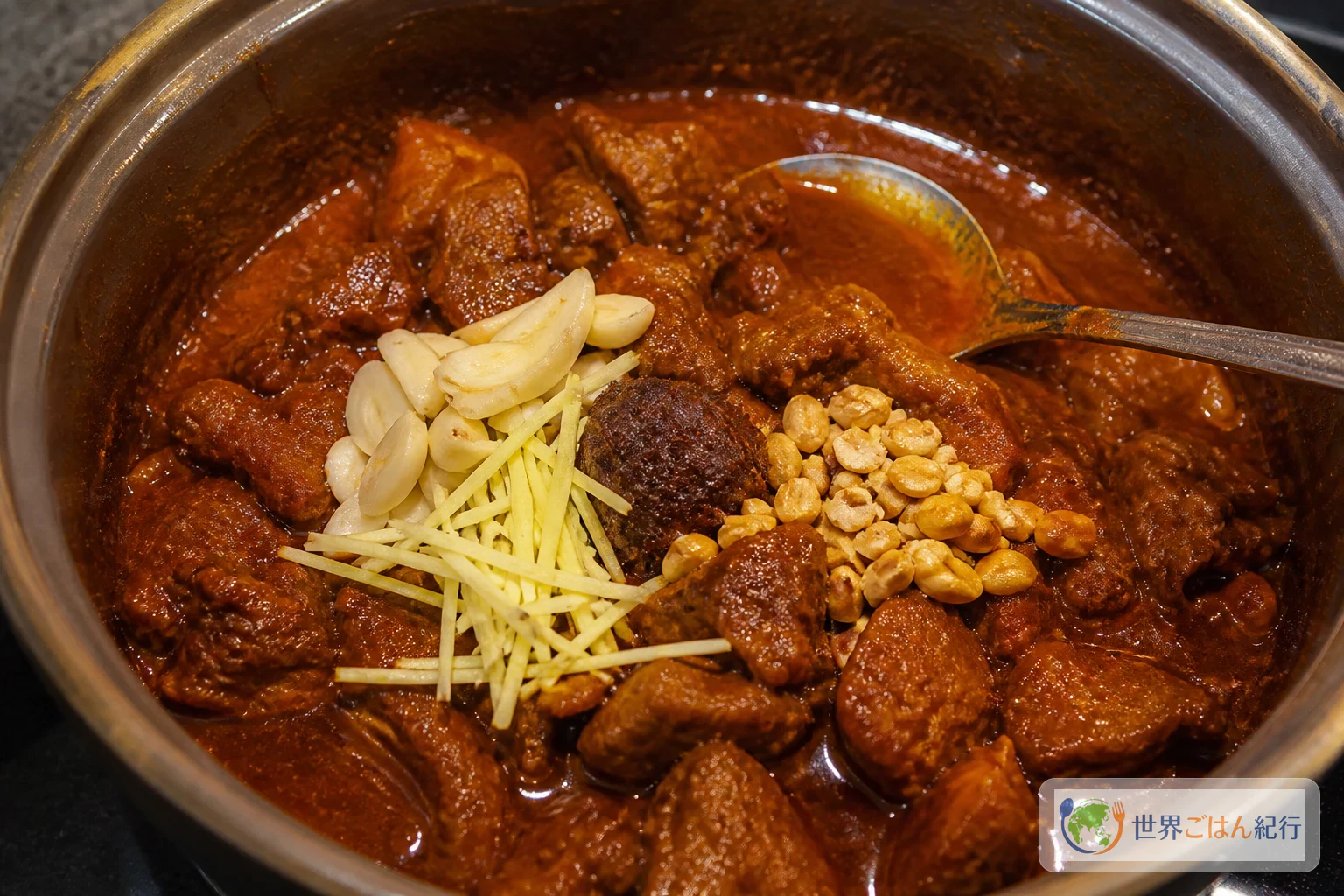
At the bottom of the pot, pork fat slowly melts and the aroma of dry-toasted cumin and cinnamon rises. Layer on shredded ginger, sweet-and-sour pickled garlic, and the dark sourness of tamarind, and the sauce, red oil floating on top, gradually takes on a gloss. Gaeng hang le (แกงฮังเล, gaeng hang le) is a pork stew long loved in northern Thailand, and it wins you over with depth rather than heat: pork fat, toasted spices, ginger, fermented shrimp paste, sweetness, and sourness all loosen and meld in a single pot. Because it uses no coconut milk, it sits lighter in the mouth than southern Thai curries, and its aroma lingers in a different way.
Gaeng Hang Le in Northern Thailand
The name and where it came from
You'll see the name written several ways: Gaeng Hang Le, Gaeng Hang Lay, Hang Le, as well as Hang Le Mon and Hang Le Chiang Saen. In Burma there is a related dish called "hin le" or "han le." The spelling wanders because the dish itself traveled across the regions where northern Thai, Myanmar, and Shan peoples have lived.
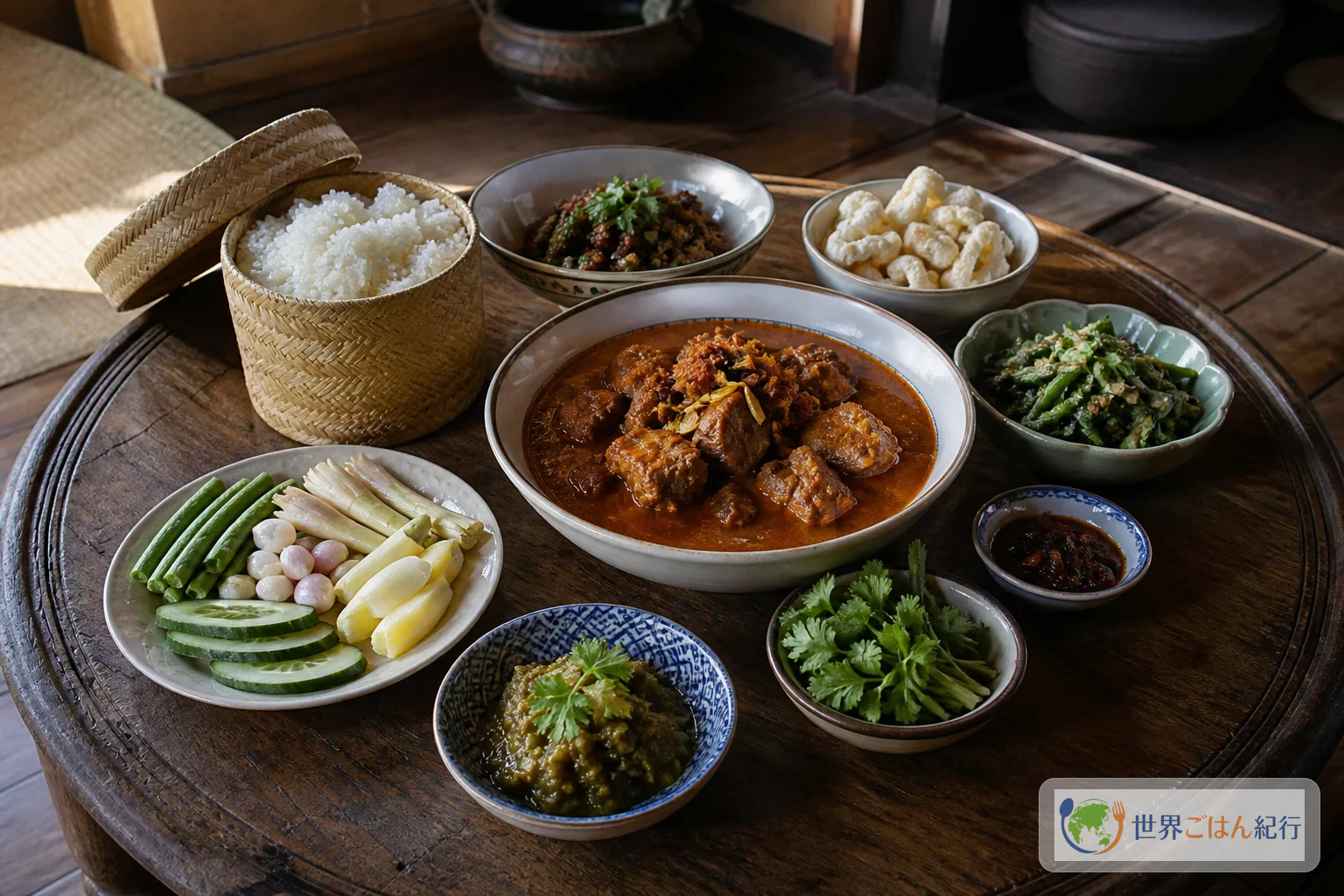
It took its present form where the spice cooking of Burma and the Shan met the Lanna table around Chiang Mai. Shrimp paste, soy sauce, and chili vary from cook to cook, so there is no single "real" version. What holds steady is the core: pork simmered until tender, ginger and sourness brought forward, and no coconut milk.
How it is eaten
At the northern Thai table, gaeng hang le is a rich stew served among sticky rice and several other dishes rather than a curry plate on its own. Feasts use a low table called a khantoke, and everyone eats with sticky rice: a bite of curry with rice, then cucumber or pickles to reset the palate. The pot is seasoned with that in mind, and the meal comes together through what surrounds it.
Where khao soi changes texture within a single bowl with fried noodles and pickles, gaeng hang le gets its flavor from time in the pot. The dry spices are toasted first, the sourness goes in late, and the pork fat stays in the sauce. Both dishes leave room to adjust the strength at the table.
Chiang Mai and Chiang Saen styles
Around Chiang Mai and in Chiang Saen, the same name can mean different ingredients. The Chiang Saen style adds yardlong beans, eggplant, green chilies, fermented bamboo shoots, and toasted white sesame, and the sweetness, sourness, and handling of the vegetables shift from region to region.
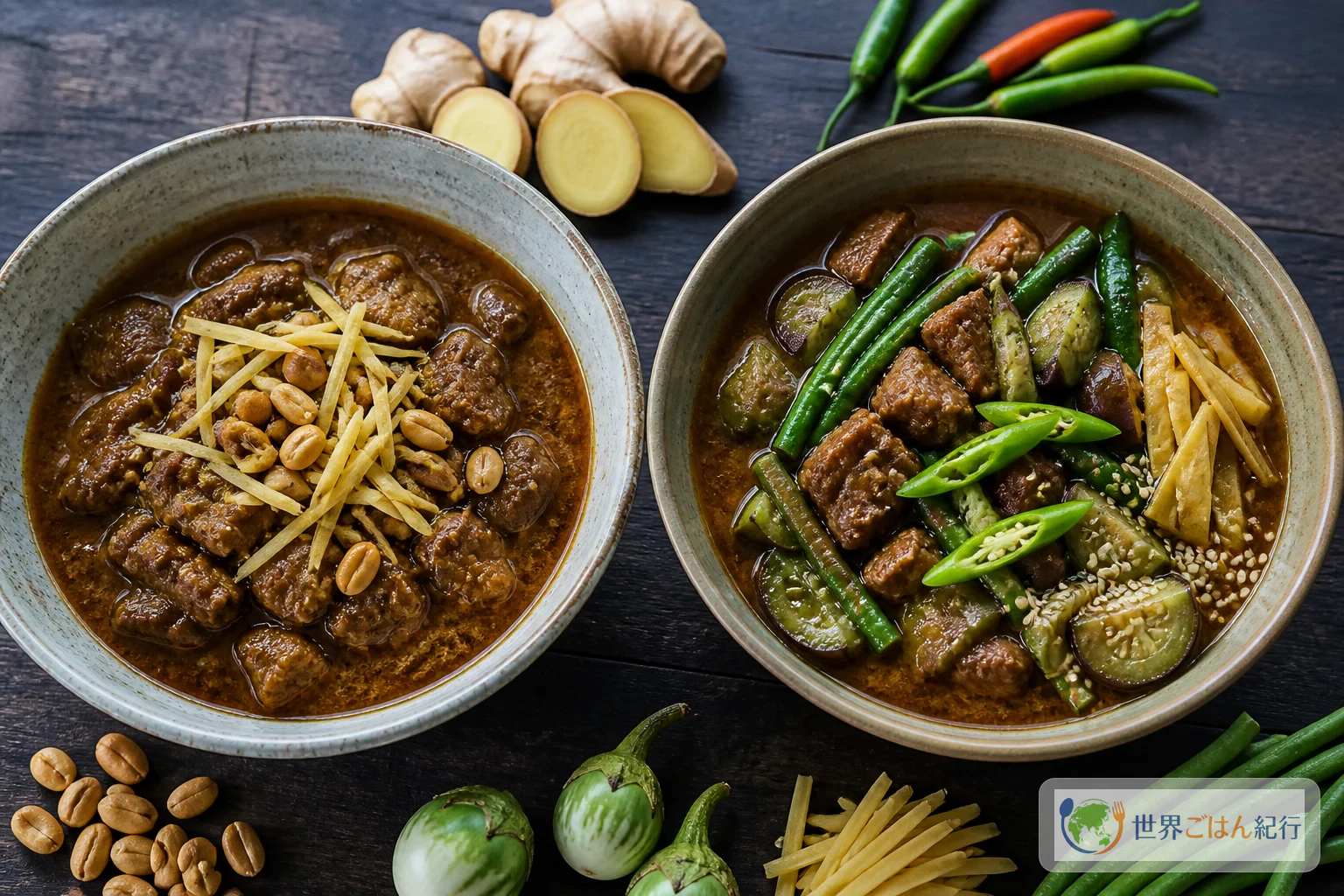
| Style | What is added | Flavor and texture | How to adopt it at home |
|---|---|---|---|
| Basic Chiang Mai-area style | Pork, ginger, pickled garlic, tamarind, peanuts | A thick sauce, centered on pork fat and sourness | Make the recipe below as written |
| Chiang Saen style | Yardlong beans, eggplant, green chili, pickled bamboo shoots, toasted sesame | Adds the bite of vegetables and the sourness of pickles | Add the vegetables for the last 15 minutes of simmering |
| Household and restaurant variations | Soy sauce, pineapple, santol, and so on | Changes sweetness, saltiness, and fruit acidity | Add just one thing you can get, and taste |
At home, the order of aroma matters more than a perfect match of ingredients. Coconut milk makes the sauce thicker in the mouth but pulls it away from a dish built on pork fat and spices. Make the sauce with water, add tamarind, ginger, and pickled garlic after the meat is tender, and the light northern sourness stays.
The depth comes from the fat released by the pork, the cooling quality of ginger, and the sourness of tamarind. Holding back the sourness until the end, and adjusting sweetness and saltiness together at the finish, is the shortcut to keeping the dish's outline.
Ingredients (serves 4)
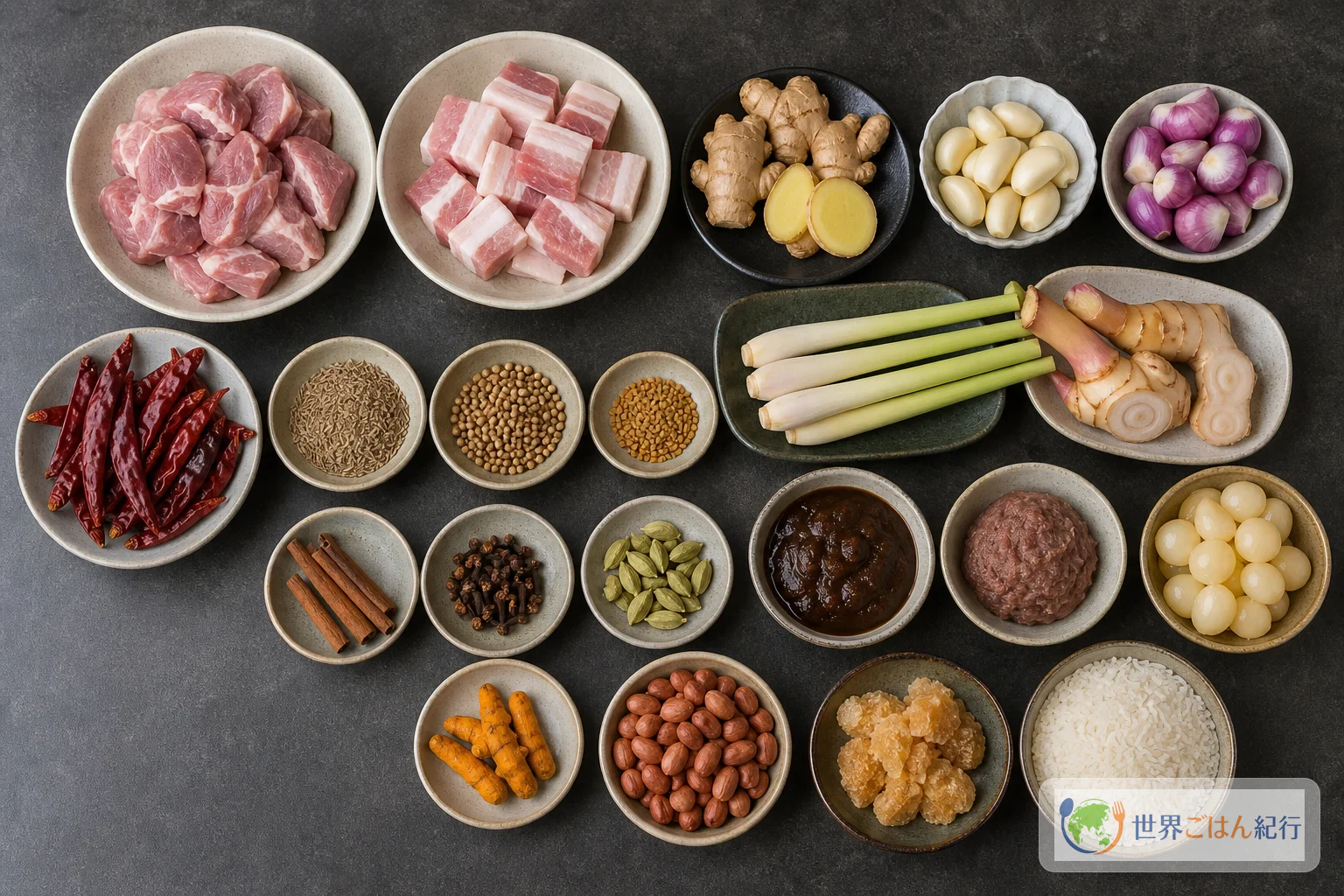
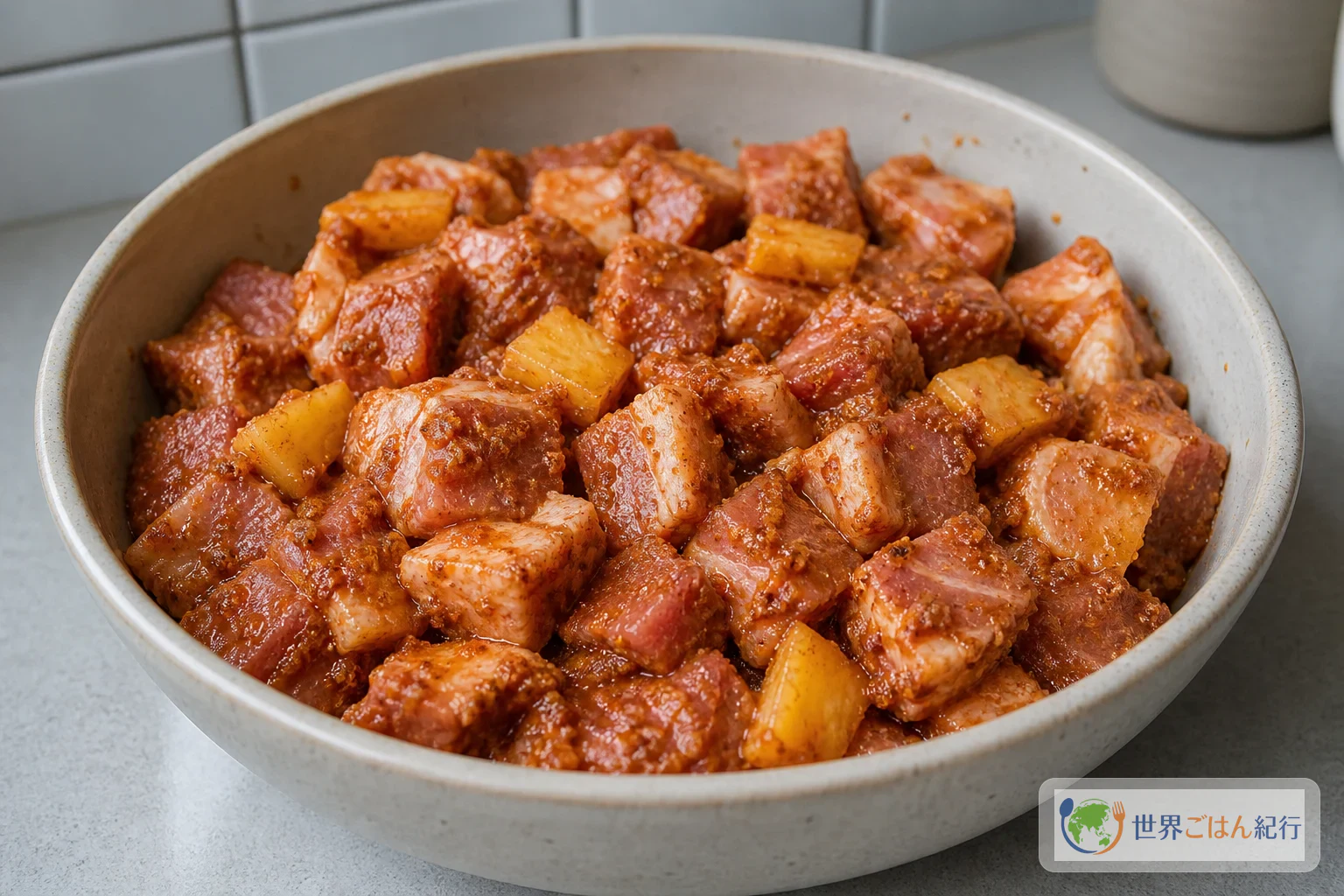
Pork shoulder alone works, but mixing in some pork belly gives the sauce body over a long simmer. If you don't like fat, replace the belly with shoulder and use just 1 tsp rice bran oil at the start. Cut the total 2 lb (900 g) into even 1 inches (3 cm) cubes to keep the difference between tough and crumbling parts small.
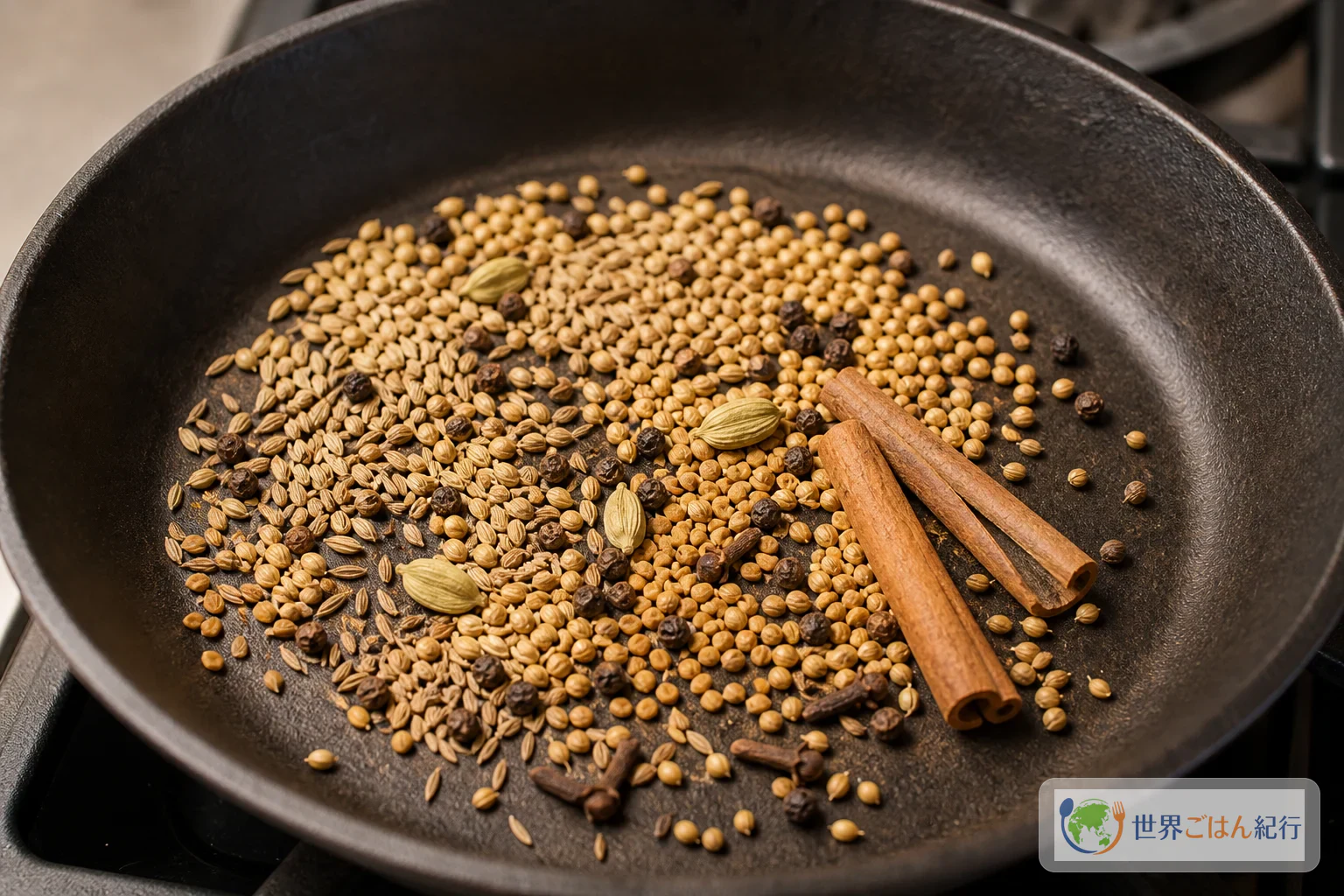
For the spices, dry-toast cumin, coriander, fenugreek, black pepper, cinnamon, cloves, and cardamom together, then crush them. This basic blend stands in for the dedicated powder, and it does not increase the bitterness of the fenugreek. If you use a store-bought hang le powder, check how much salt and turmeric it contains, and start with half the spices in the ingredient list instead of all of them.
Choosing Ingredients for Gaeng Hang Le
Tamarind
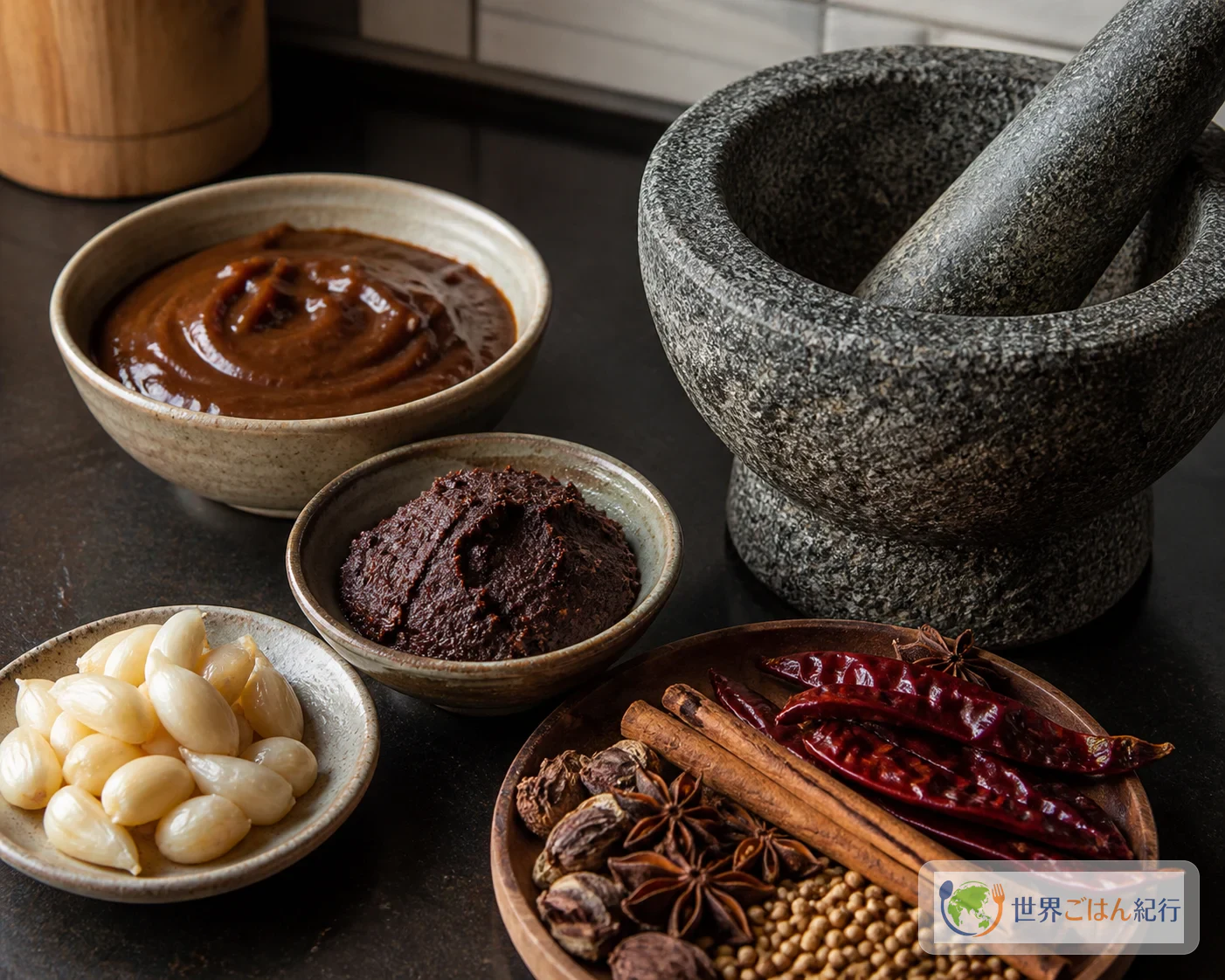
Tamarind can't simply be swapped for lemon juice. Lemon is bright and sharp, while tamarind carries a depth like brown sugar inside its fruit acidity, and in this pot that acidity slowly tightens the sweet pork and toasted spices. Pastes vary in concentration and added sugar, so check the label. One pot takes 1.5 oz (45 g) from a package of about 7 oz (200 g); keep the rest for pad thai or massaman.
Because products differ, don't add the full amount the first time. Dissolve 1 oz (30 g) in water, taste, and add the rest 5 g at a time. Umeboshi plum paste mixed with vinegar works as a substitute, though the round fruit acidity will be weaker. Whatever you substitute, place the sourness late.
Kapi
Even a small amount of kapi adds fermented seafood aroma and saltiness. If you dislike the smell of shrimp or avoid shellfish, use mixed miso from the start. When you buy kapi, confirm the ingredient list includes shrimp and read how to store it after opening.
Kapi contains shrimp, and the dish also has peanuts. Skip them if anyone has a shellfish or peanut allergy. If only the kapi is the problem, use mixed miso. If only the peanuts are, use roasted sunflower seeds; the fermented aroma and richness will differ. Tell your family about the change in taste before you serve.
Galangal and pickled garlic
Galangal is woodier than ginger, with a citrus-like scent. Without fresh galangal, use about 10 g more ginger and 1 g more black pepper; that combination holds its aroma through a long simmer. For the pickled garlic, look for fermented garlic at an import grocer, or use sweet-and-sour pickled garlic, or Japanese sweet-pickled rakkyo with a little rice vinegar. Whichever you choose, let some of its sweet-sour pickling liquid go into the sauce.
A stone mortar
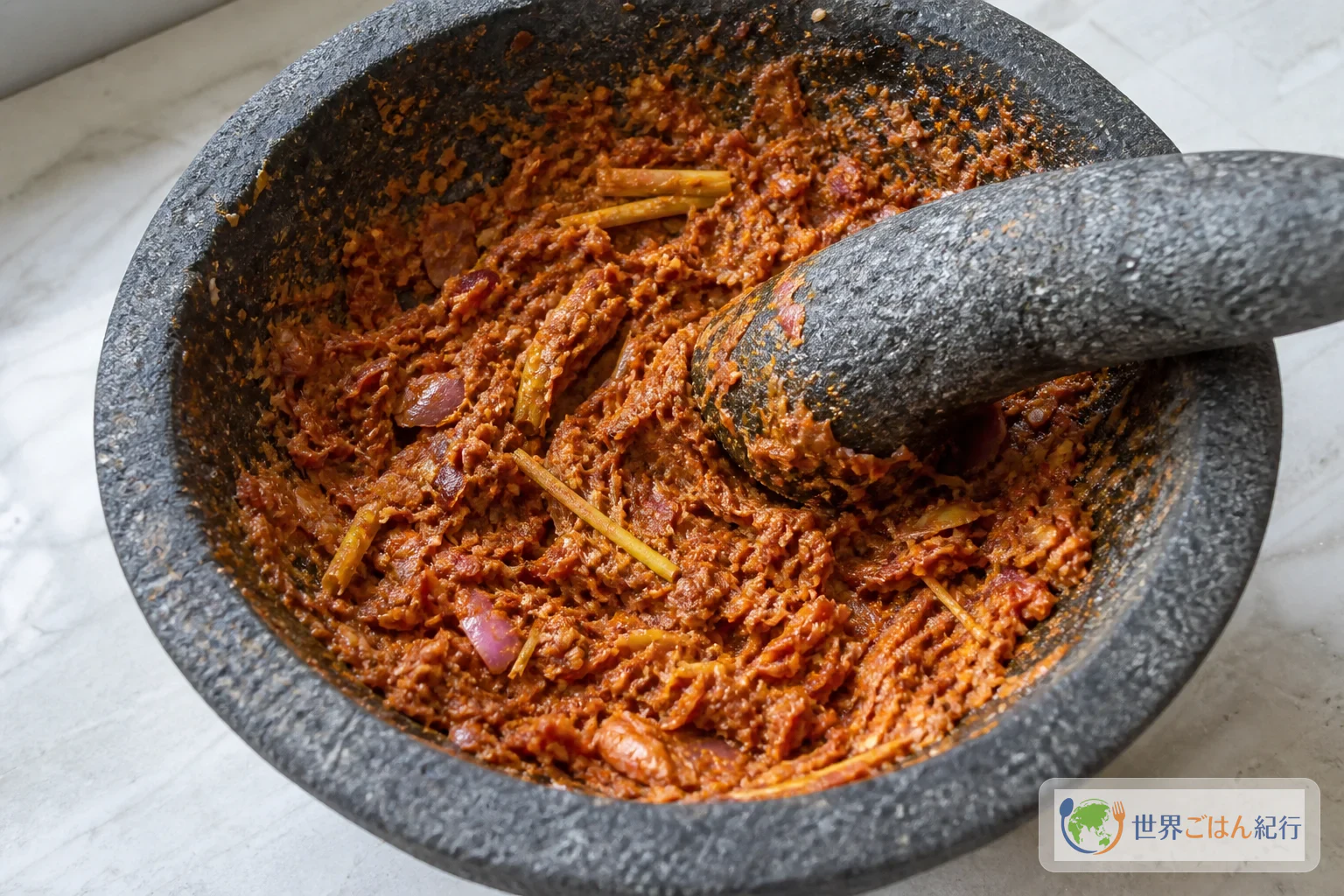
A stone mortar crushes the aromatics and chilies together while leaving some fiber. A food processor is fine for a one-off batch, but if you also make som tam or nam prik kapi, a granite mortar with a pestle will earn its place in your kitchen.
Method (serves 4)
Toast the spices, crush the paste, rest the meat, brown it in its own fat, simmer in water, and finish with sourness. Keep this order, and the core of the flavor holds even when you substitute some ingredients.
Common Gaeng Hang Le Problems and Fixes
Heat and tough pork
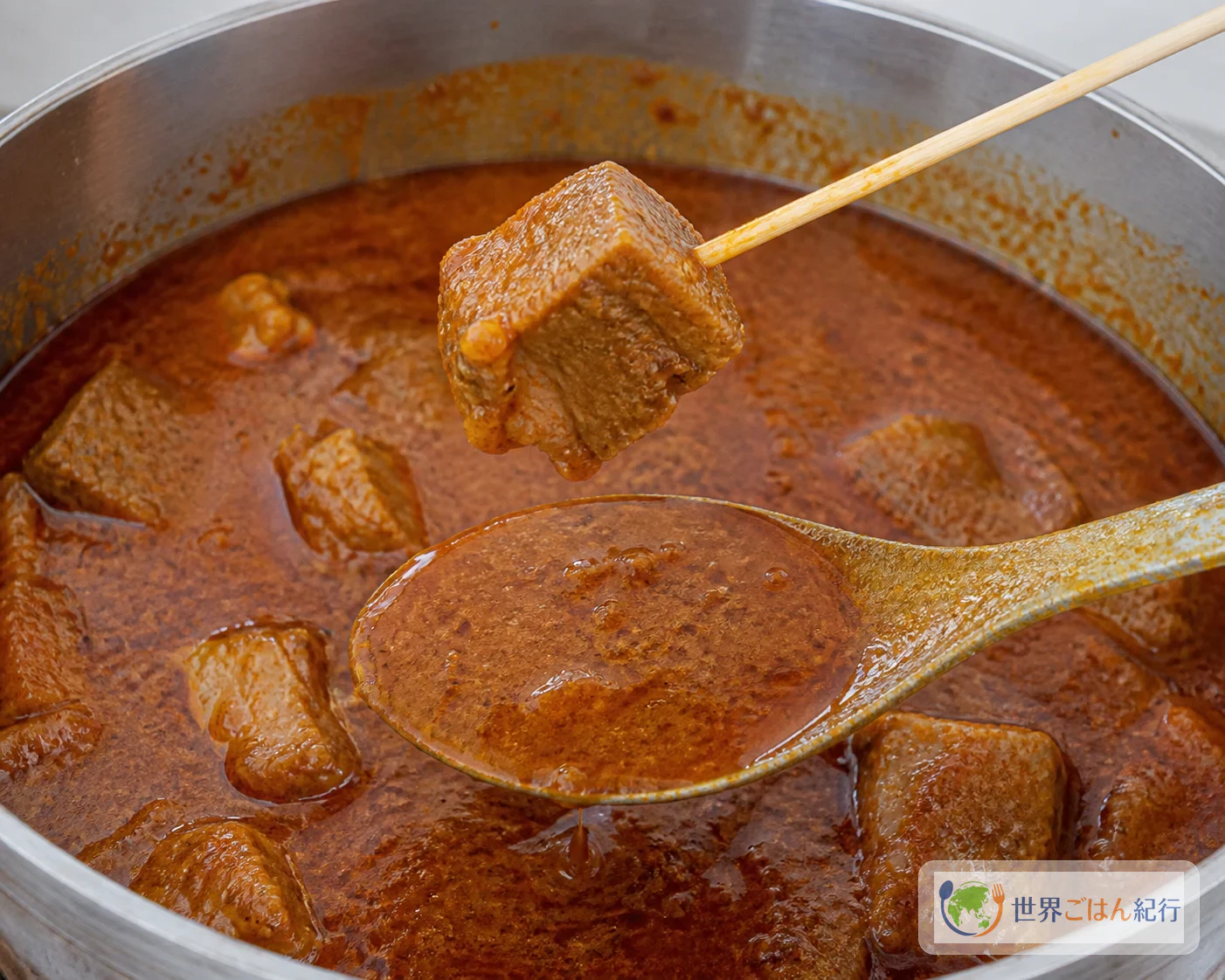
Over strong heat the pork tightens and the paste burns at the bottom of the pot. Keep the heat low enough that small bubbles line the edge, never a hard boil. If the liquid has reduced while the meat is still tough, add 3.5 tbsp (50 ml) boiling water, put the lid back on (slightly ajar is fine), and simmer over low heat 15–20 minutes at a time. If the water thins the flavor, add 1 g salt and 5 g tamarind separately at the end.
Hold off on the sourness until a skewer goes all the way to the center, even if the surface of the meat has tightened. Tenderness is much harder to restore once the tamarind is in.
When to add the sourness
Timing the tamarind is the trickiest part the first time. Added at the start, it loses its edge over the long simmer; added all at once at the end, it's the only thing you taste. Dissolve it in small amounts once the pork is tender, simmer 2 minutes, and taste, until the sauce coats the back of a spoon in a thin layer and the ginger sits just behind the sweetness and saltiness.
The aromatics that go into the paste become the base of the sauce, while the 0.125 inch (2 mm) ginger added at the finish leaves an aroma that rises through the nose. If all the ginger is simmered from the start, the meat is still delicious, but the northern Thai freshness weakens.
The red oil carries the aroma of the spices, so leave it in when the dish is finished. If it seems too fatty, refrigerate the pot and the next day lift off only as much of the solidified fat as you need, leaving a thin film so the sauce keeps its aroma.
Cooking the pork through
If you use a thermometer, measure the center of the thickest piece. Pork steaks, roasts, and chops should reach 63°C (145°F), then rest for 3 minutes. For 3 cm cubes after a long simmer, check the temperature, and also check that a bamboo skewer slides in without resistance and no red remains inside. Use the safe minimum internal temperatures for pork as your guide, adjusting for your pot and how you cut the meat.
Gaeng Hang Le Variations
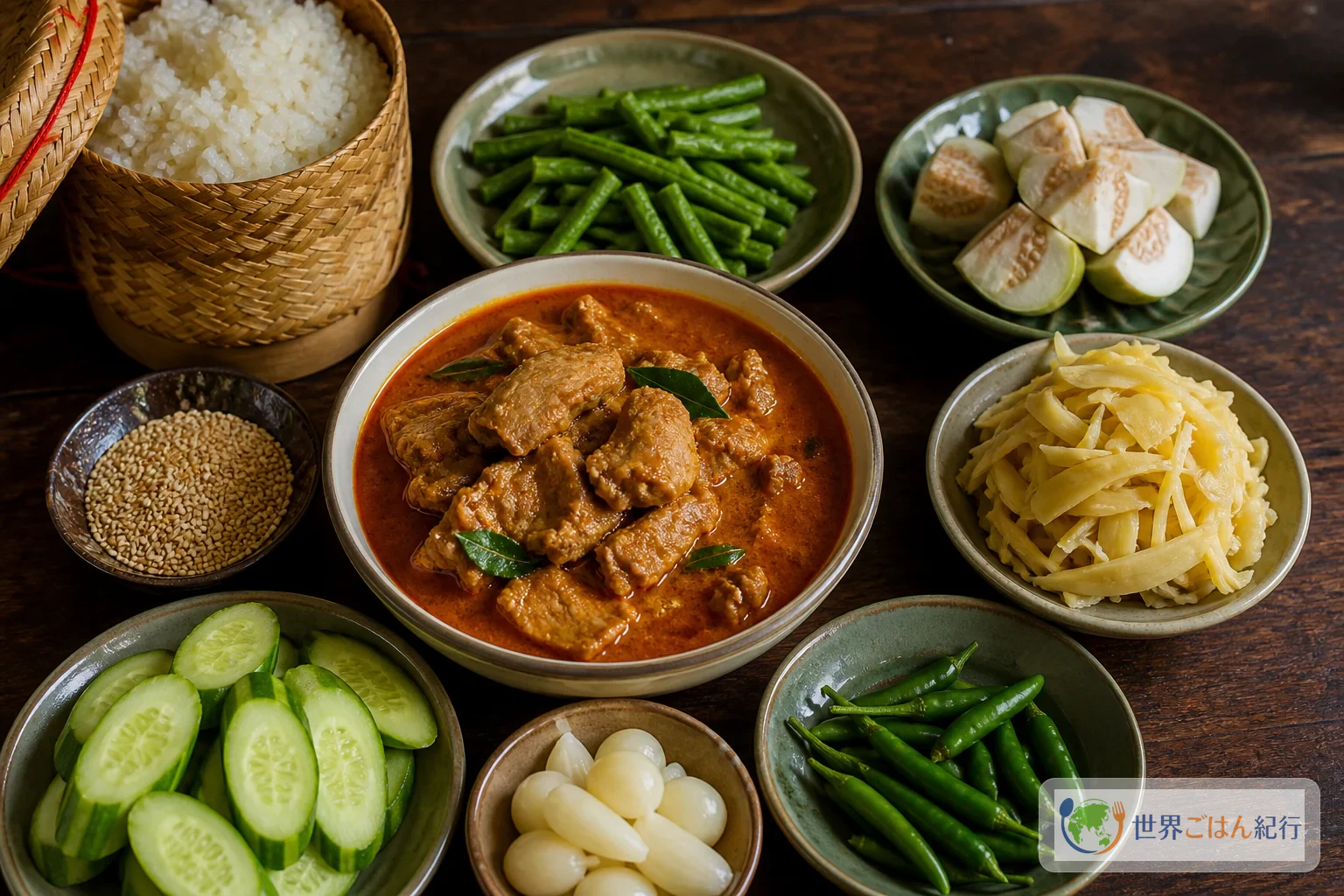
Change one thing at a time, picking a single ingredient that shifts the flavor or texture. Vegetables go in after the pork is done simmering so the sauce keeps its thickness.
Chiang Saen style
Cut 2.75 oz (80 g) yardlong beans into 2.5 inches (6 cm) lengths, 4 oz (120 g) eggplant into 1 inches (2 cm) cubes, and shred 1.75 oz (50 g) pickled bamboo shoots. Add them once the pork is tender and simmer over low heat for 10–15 minutes. Finish with 1 green chili and 5 g toasted white sesame for greenness and a toasty aroma, and stop when the eggplant has drunk up the sauce and the beans still have some bite.
Without pineapple
The pineapple adds sweetness to the meat. For a leaner, less sweet pot, omit it and start with 1.25 oz (35 g) tamarind. Instead of reaching for vinegar, reduce the sauce a little and add tamarind 5 g at a time; the aroma holds up better.
With chicken
Use 1.5 lb (700 g) chicken thighs in place of the pork shoulder and belly, brown them in 1 tbsp (15 ml) rice bran oil, and shorten the simmer to 35–45 minutes after boiling. Chicken gives off less fat, so the sauce is lighter, but the ginger and tamarind come through just as clearly. If the skin sticks, lower the heat and add 2 tbsp (30 ml) water.
With beef
Cut 1.5 lb (700 g) beef shank or shoulder into 1 inches (3 cm) cubes and season with the same paste. Extend the low simmer to about 2 hours 30 minutes, adding boiling water and another 20 minutes if the meat is still tough. Beef fat changes the aroma, so start the final tamarind at 1 oz (30 g) rather than the full 1.5 oz (45 g), and taste.
Plant-based, without shrimp
Cut 10.5 oz (300 g) thick fried tofu, 7 oz (200 g) mushrooms, and 5.5 oz (150 g) jackfruit into bite-size pieces, and replace the kapi with 10 g mixed miso. With no meat fat, fry the paste in 1 tbsp (15 ml) rice bran oil and start with 2½ cups (600 ml) water. Simmer for 25 minutes, until the tofu has absorbed the sauce and the mushrooms are cooked. It borrows the aroma of gaeng hang le, with less richness than the pork version.
Kaeng ho the next day
Combine 10.5 oz (300 g) leftover curry with 5.5 oz (150 g) cabbage, 1.75 oz (50 g) glass noodles, and 1.75 oz (50 g) green beans. Stir-fry the vegetables in a skillet over medium heat for 4–5 minutes, add the glass noodles and curry, and stir-fry over medium-low heat for 6–8 minutes until almost no liquid remains. Taste a bite before adding any more sourness.
FAQ
Can I add coconut milk?
Coconut milk moves the dish toward a different curry, since gaeng hang le builds its sauce from water, pork fat, toasted spices, and tamarind. For more mellowness, use mostly shoulder and slowly reduce the sauce over low heat.
What if I can't find hang le powder?
Dry-toast and crush the whole spices in the ingredient list (cumin, coriander, fenugreek, black pepper, cinnamon, and the rest). If you use garam masala instead, start with 5 g and add cinnamon and turmeric; brands differ in salt, chili, and cardamom, so don't swap by equal weight. Even with a dedicated powder, mix in only half the ingredient-list spices at first and check the aroma.
The tamarind is too sour. Can I fix it?
Mix 2 tbsp (30 ml) water, 5 g palm sugar, and 1 g salt in a separate bowl and add it to the pot little by little. Sweetness alone makes the sauce heavy, so dilute first, then bring the sourness and saltiness into line. If it's still too sour, serve more warm rice or sticky rice alongside.
How do I store and reheat it?
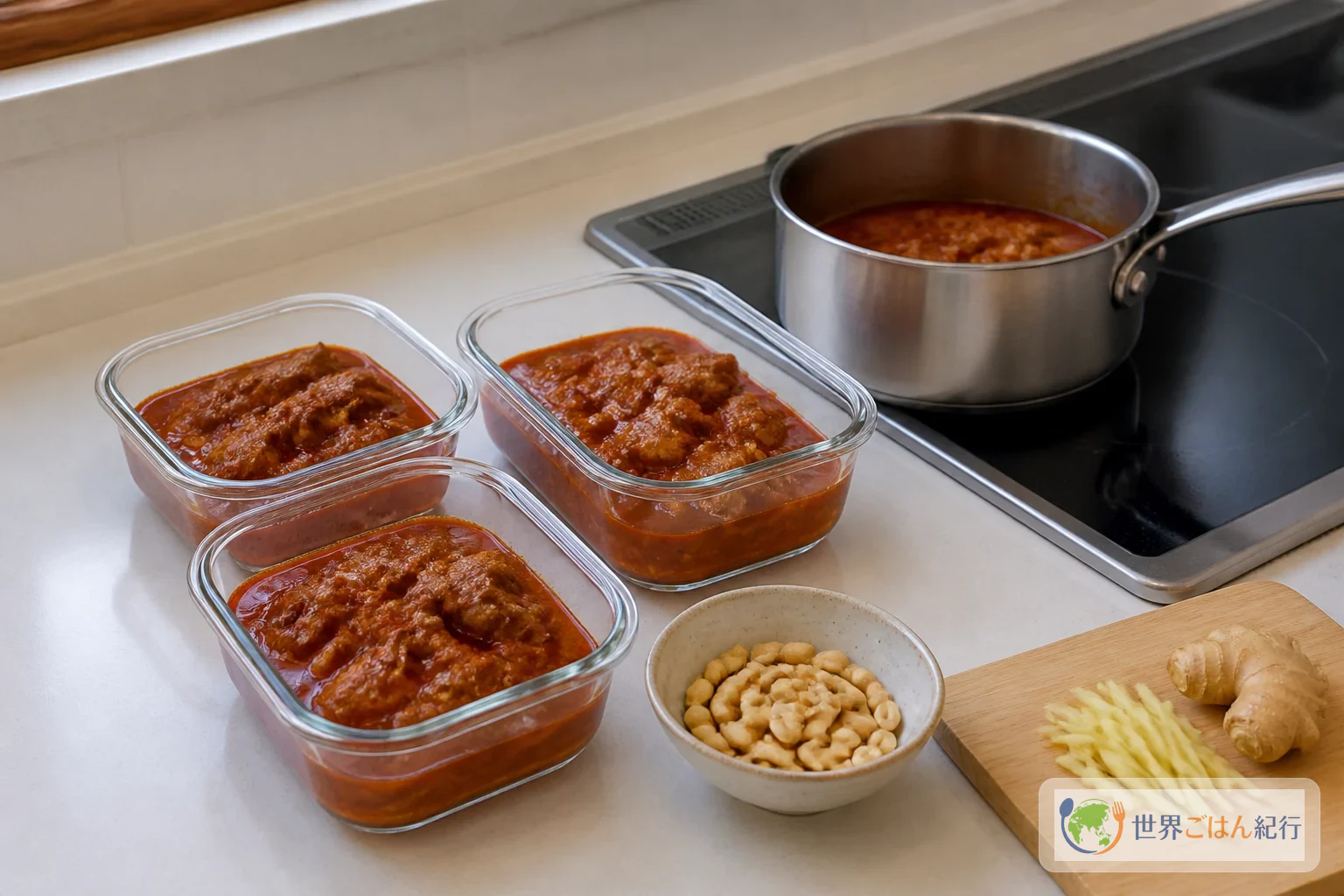
Once it has cooled slightly, portion it into shallow containers and eat within 3–4 days in the refrigerator; see the cold food storage chart. To freeze, keep the peanuts aside to add later, seal one serving at a time, and use within about 1 month. Making it a day ahead pays off, since the spices and sourness meld overnight. Reheat in a pot over low heat until it steams throughout, bringing leftovers to 165°F (74°C) per the safe minimum internal temperatures for reheating leftovers.
What if I can't use kapi or peanuts?
Replace the kapi with 10 g mixed miso and the peanuts with 1 oz (30 g) sunflower seeds. The fermented shrimp aroma and peanut richness will be weaker, so resist adding soy sauce just to match the saltiness. If anyone in the family has an allergy, use separate utensils for the paste and check the allergen labels on every product.
To keep cooking northern Thai food, try khao soi with its fried noodles and pickles, gapao rice, where the aromatics are adjusted at the table, or khao kluk kapi, for more ways to use shrimp paste.