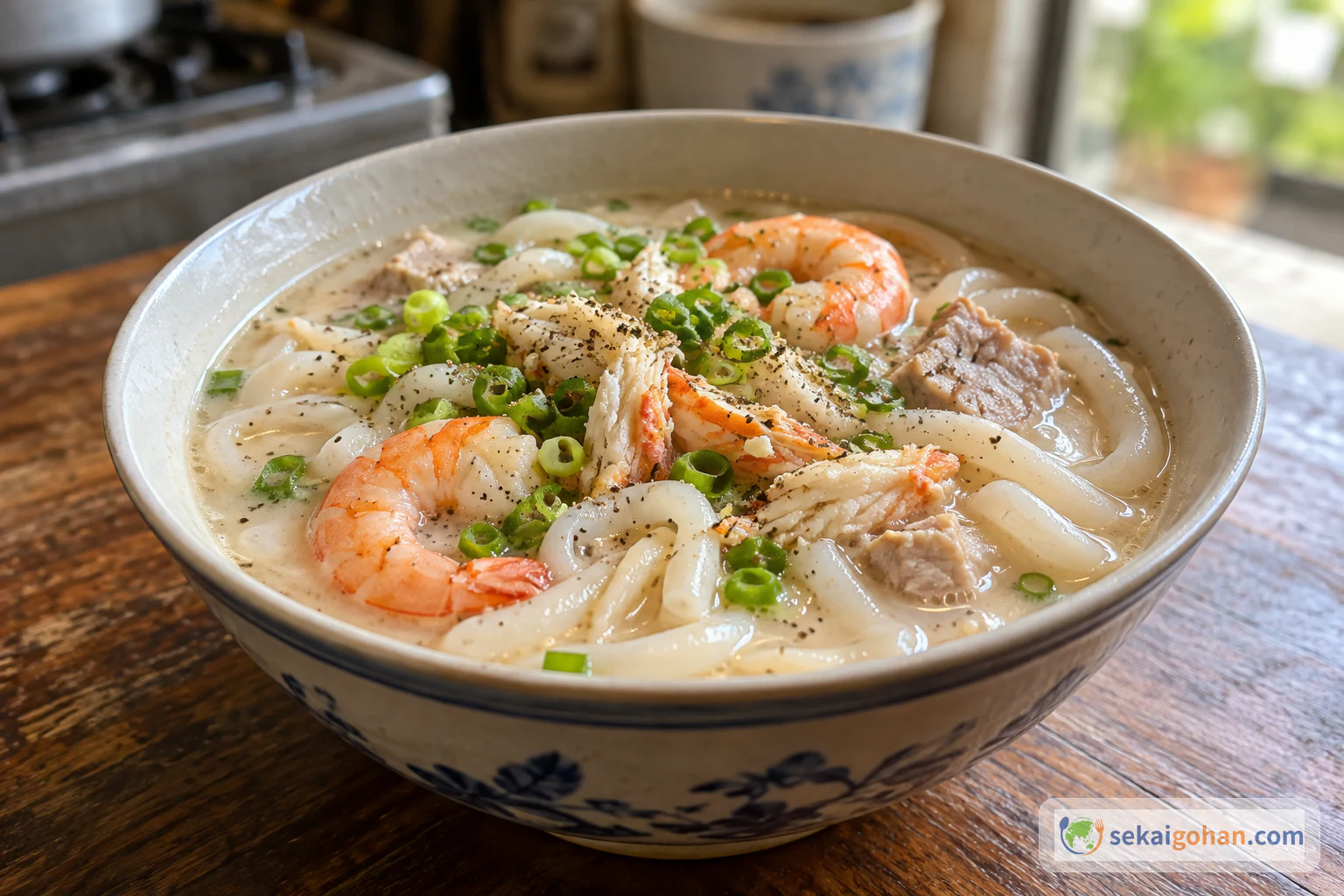
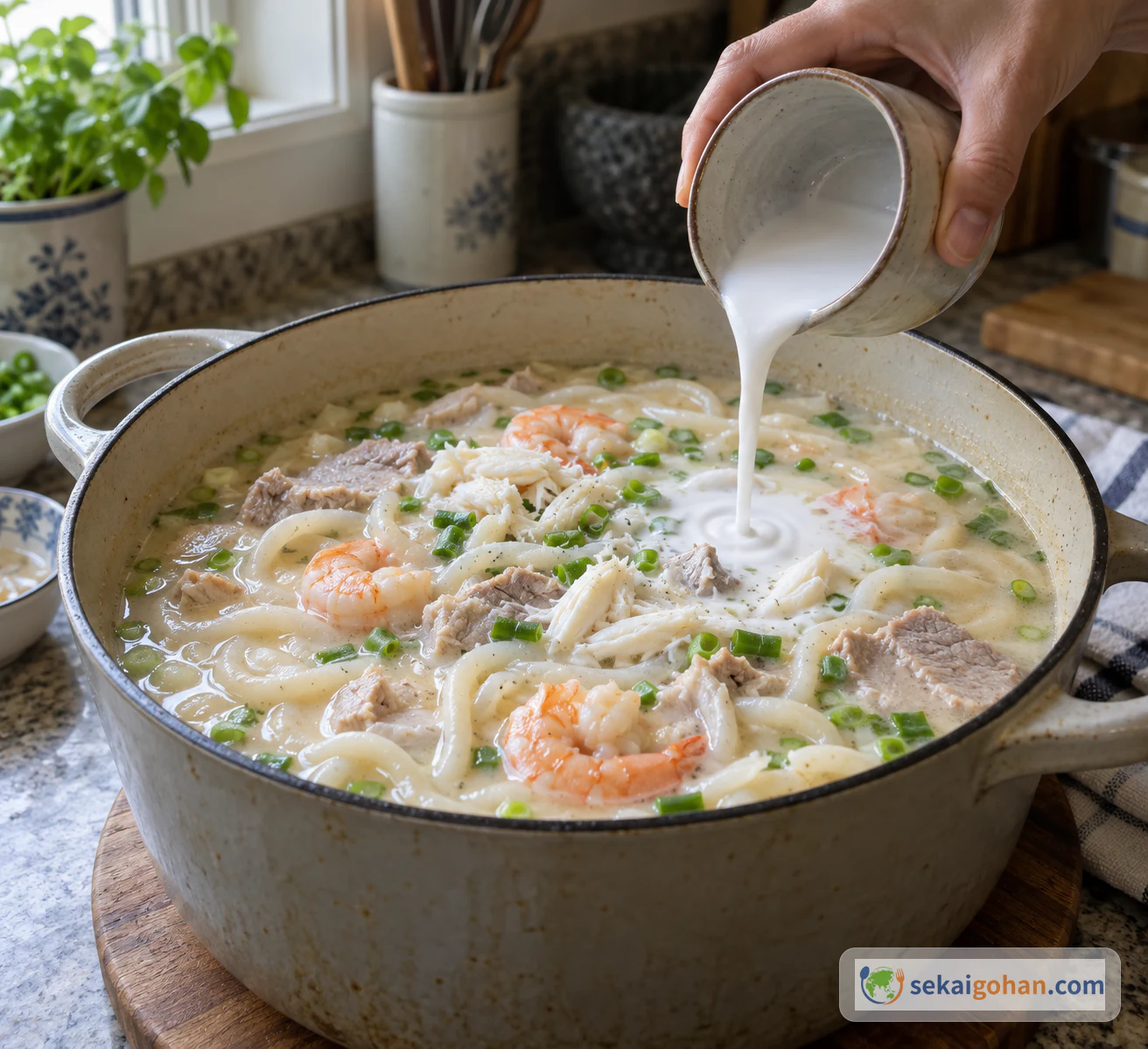
When the soup is ready, the bowl is pale and milky from coconut milk, with bright green scallions on top and black pepper scattered over it. Underneath are short, thick, chewy noodles, sweet shrimp, pork and soft pieces of crab. Bánh canh tôm cua is a tapioca noodle soup from the Mekong Delta, where rice paddies sit right next to ponds of farmed shrimp and crab. It's especially linked to Cà Mau province, and families make it for reunions and celebrations.
About Bánh Canh Tôm Cua
Bánh canh is a whole family of thick-noodle soups, and the broth and toppings change from place to place. The noodles are thick and chewy, made from tapioca flour alone or mixed with rice flour, and people eat them at breakfast, lunch and dinner. One common version is built on a pork-bone broth with optional toppings.
The regional versions go in different directions. In Ho Chi Minh City, bánh canh cua means thick noodles with crab in a thick broth, often with extra toppings, served hot with pepper, chili and lime. In Trảng Bàng, in Tây Ninh province, the broth is clear and made from pork, with rice-flour noodles, pork and herbs.
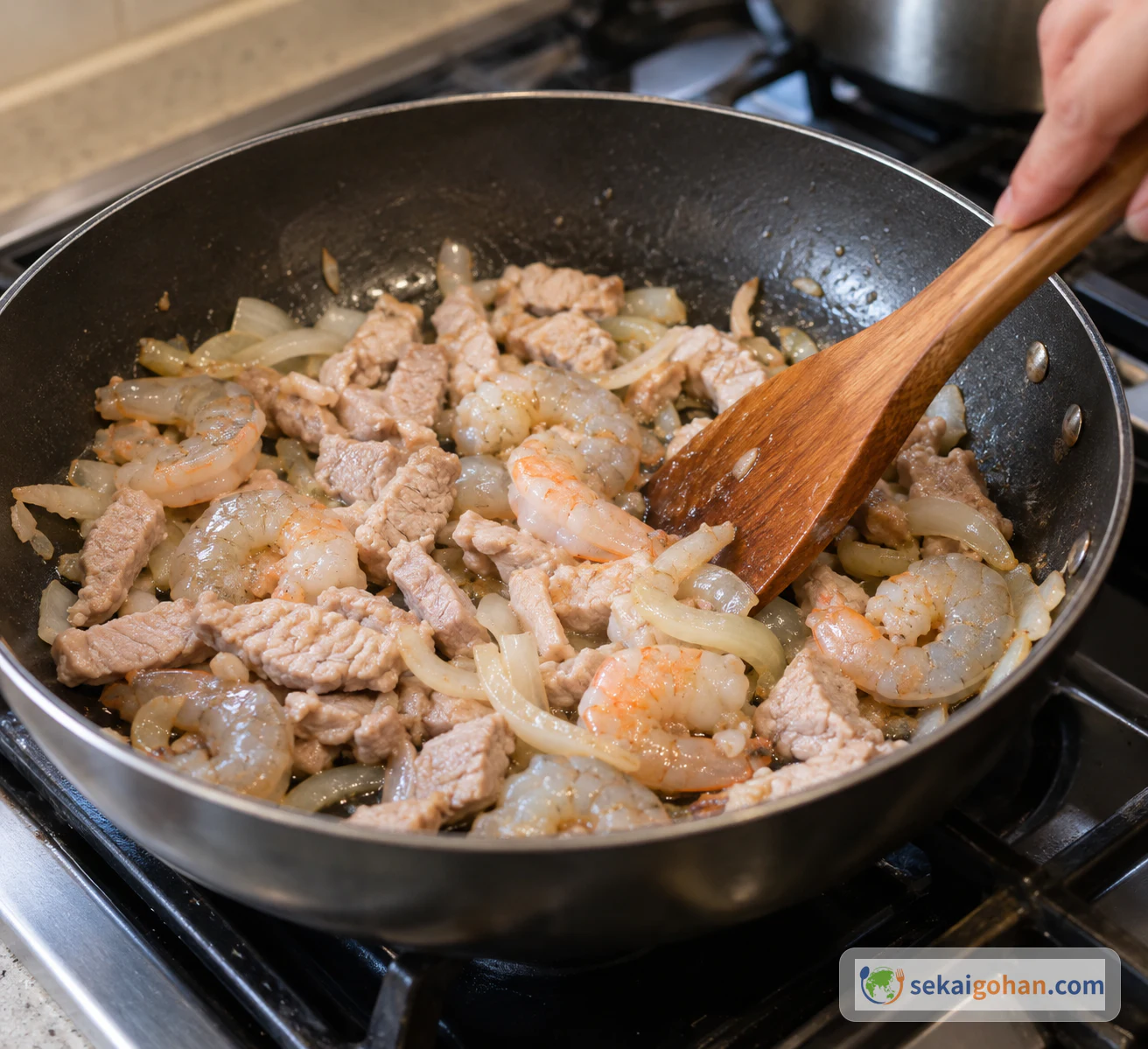
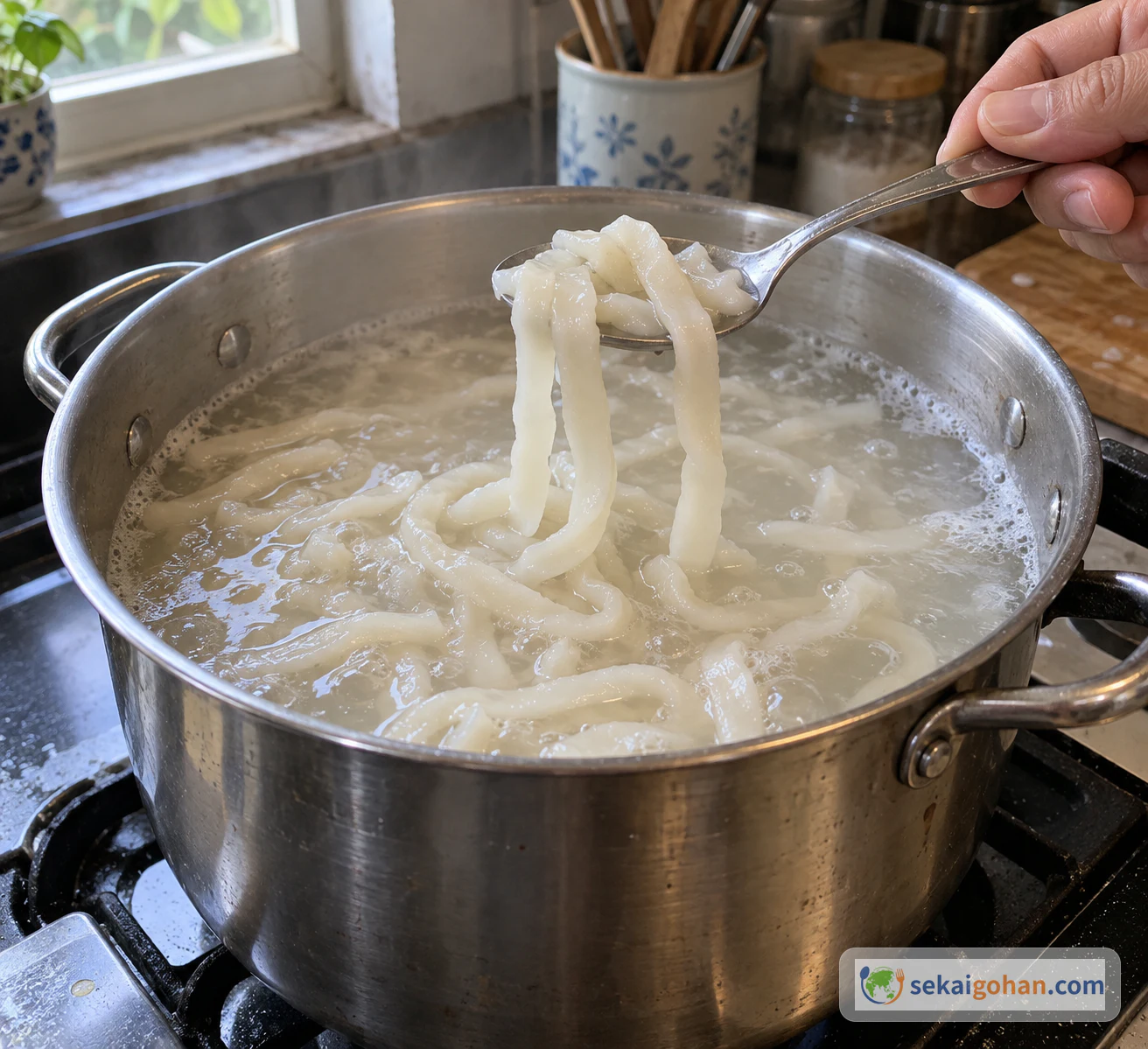
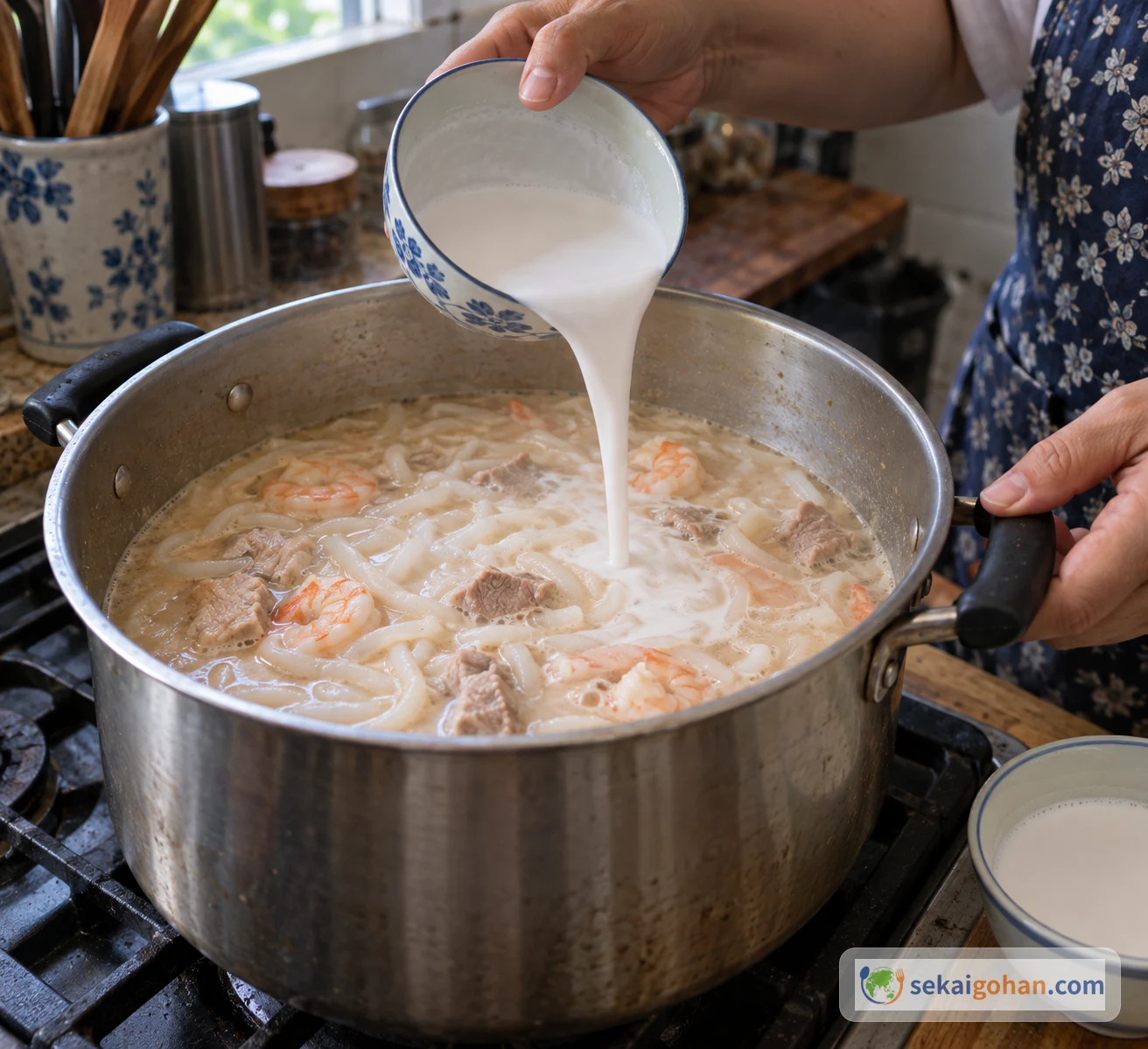
This Cà Mau-style bowl is different from both. You make the noodles by hand from rice flour and tapioca starch and cook them right in the soup pot, so their starch softens and thickens the broth. Pork and shrimp go in partway through. The crab, the scallions and the last of the coconut milk go in after the heat is off. For more dishes from the same country, see Vietnam.
The recipe also gives no number of servings or total cooking time.
Ingredients: Noodle Dough, Seafood and Coconut Milk
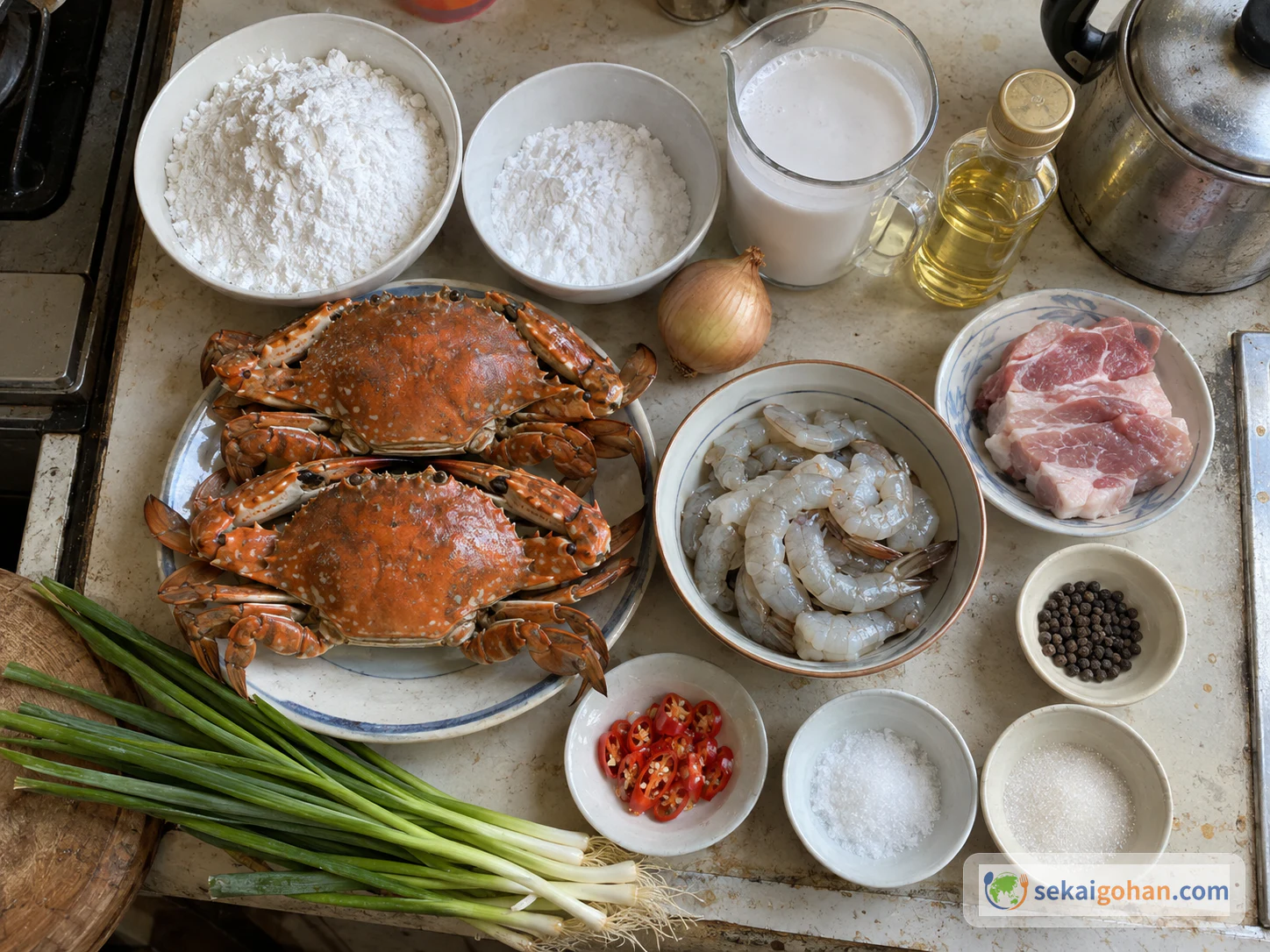
Choosing Ingredients for Bánh Canh
Tapioca starch is what the noodles are built on. Potato starch and cornstarch give a different texture. Look for packages labeled tapioca starch, tapioca flour or bột năng at Asian grocers.
Rice flour varies. Rice flours sold for different purposes absorb water differently, so stick to the amounts in the list.
Crab and shrimp. Buy crab and shrimp sold for cooking, and cook them thoroughly. Get two large crabs, since the amount of meat varies from crab to crab. Crab, shrimp and pork each add their own flavor to the broth.
Pork. Small pieces that cook quickly in a pan work best for the sauté.
Store-bought noodles. Asian food shops sell bánh canh noodles. If you use them, skip steps 1 and 2 and follow the package directions. Their texture is different from handmade noodles, and so is the way they thicken the broth.
Equipment
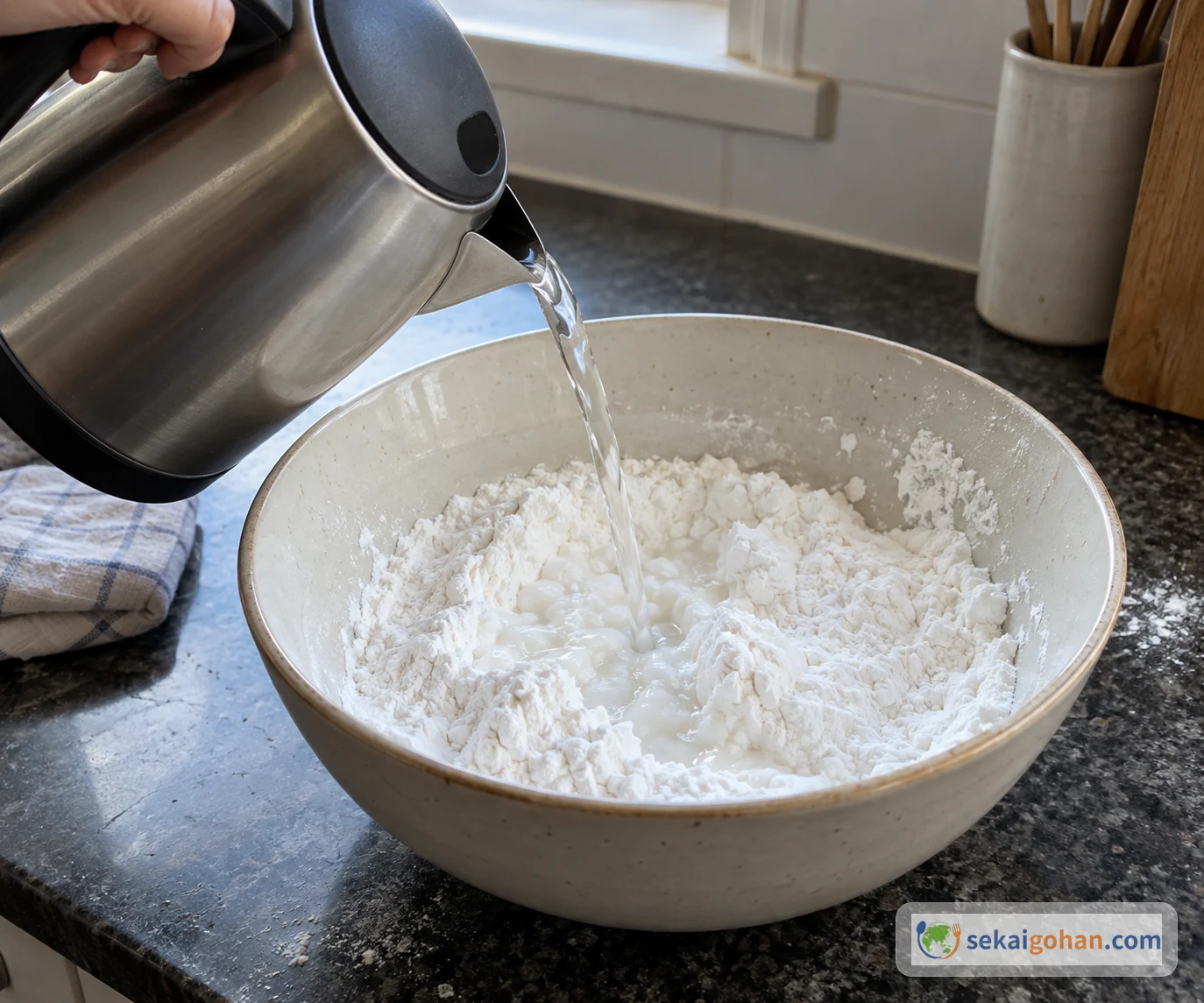
- Heatproof bowl
- Chopsticks or a spatula for the first mixing
- Rolling pin and board
- Knife
- Pot for boiling the crabs
- Frying pan and wooden spatula
- Large pot that holds 1.5 quarts (1.5L) of water with room for the noodles
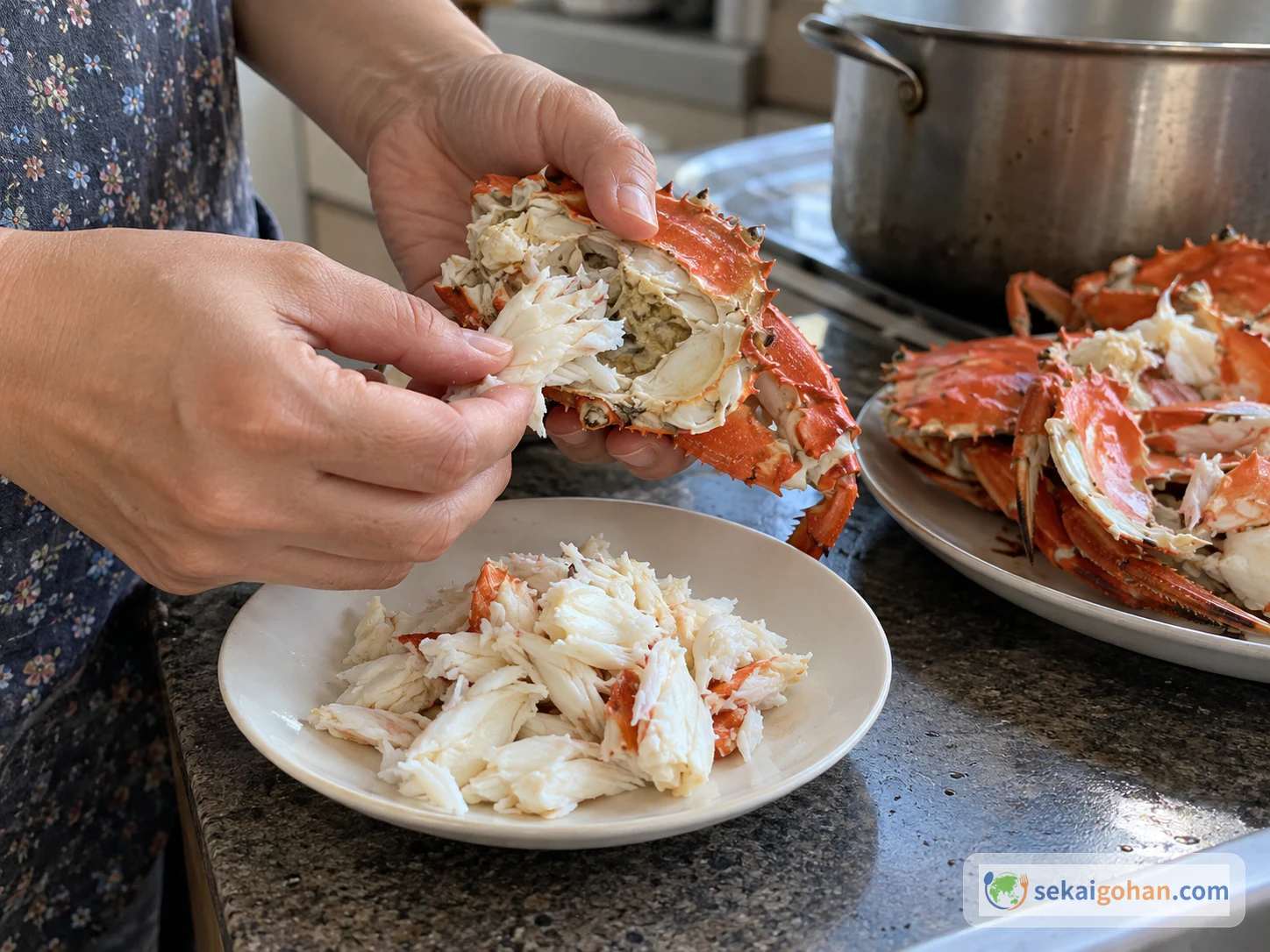
- Kitchen shears or a crab pick (optional, for removing crab meat)
Method: From Dough to Bowl in One Soup Pot
The noodles cook in the water that becomes the soup; don't drain them. Pork and shrimp go into that same pot with the first coconut milk, and the crab, scallions and last coconut milk go in only after the heat is off.
Troubleshooting Bánh Canh
| Problem | What to consider |
|---|---|
| The dough is sticky | Dust the board lightly, and see whether resting has helped before you change anything else. |
| The dough won't come together | The ¼ cup (70ml) of water is for 1 lb (500g) of flour and starch. If you add more, write down how much so you can repeat or correct it next time. |
| The broth is thicker or cloudier than expected | The noodles cook in the soup pot, so their starch goes into the broth. That's how this soup is meant to be. Cooking the noodles in a separate pot gives a clearer broth. |
| The shrimp or pork is tough | Both are sautéed and then simmered again, so cut the pork small and keep the sauté short. |
| The crab meat breaks up | Add it only after the heat is off, and stir gently. |
This dish contains crustaceans (crab and shrimp). Buy crab and shrimp sold for cooking and cook them thoroughly. Check labels on coconut milk, flours and any store-bought noodles for allergens.
Serving Bánh Canh Tôm Cua
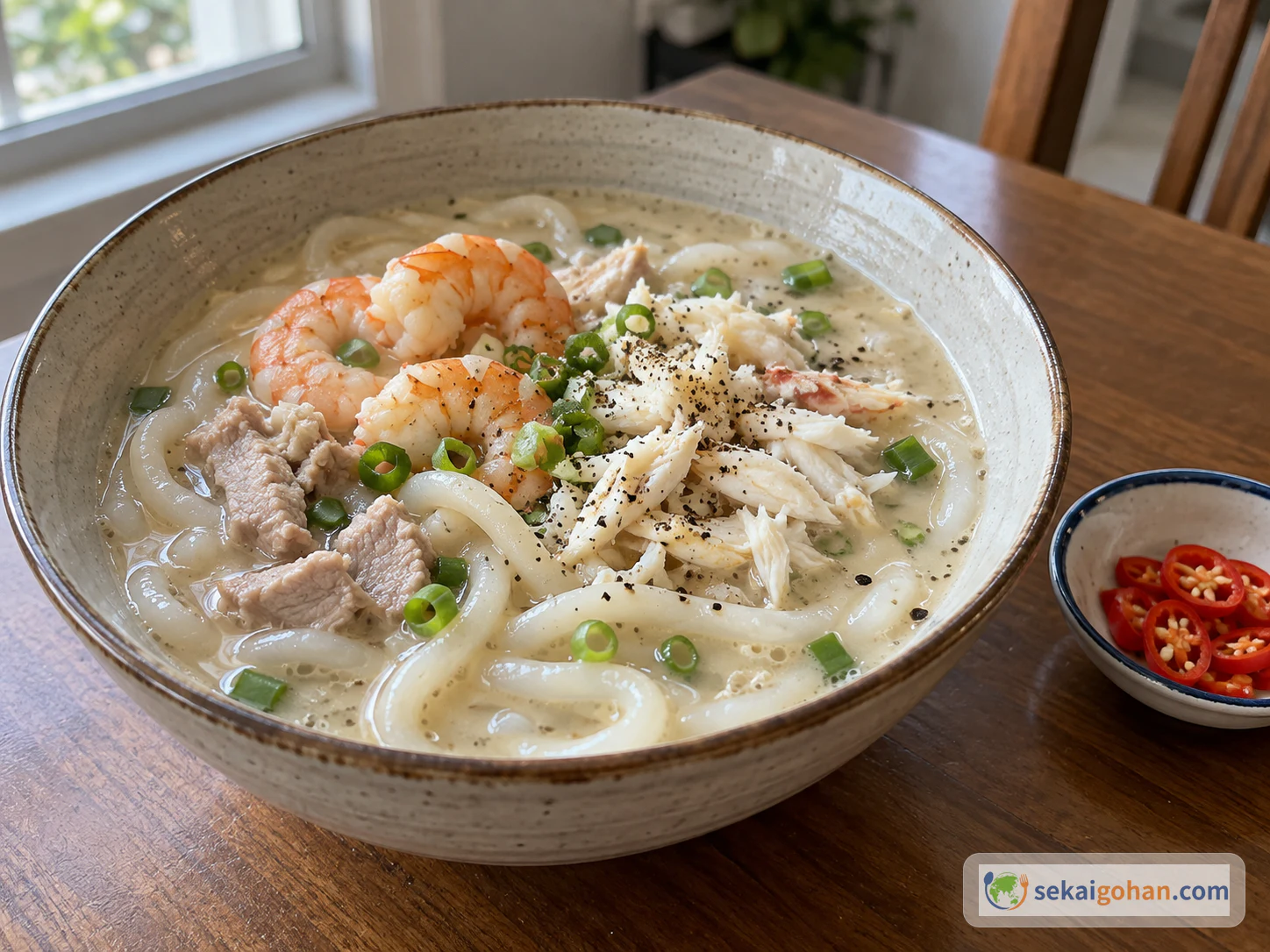
Serve the soup hot, with plenty of black pepper on top. Chili is optional, so put it on the table and let everyone add their own. MSG can be left out too. If you skip it, taste the broth and adjust the salt yourself.
Frequently Asked Questions
How much onion and oil should I use?
The recipe doesn't give amounts. Use a modest amount of oil, just enough to sauté the onion until it smells fragrant.
Is 600–800g the weight of each crab or both?
The recipe lists 2 large crabs at 600–800g. Buy two large crabs and weigh them to check.
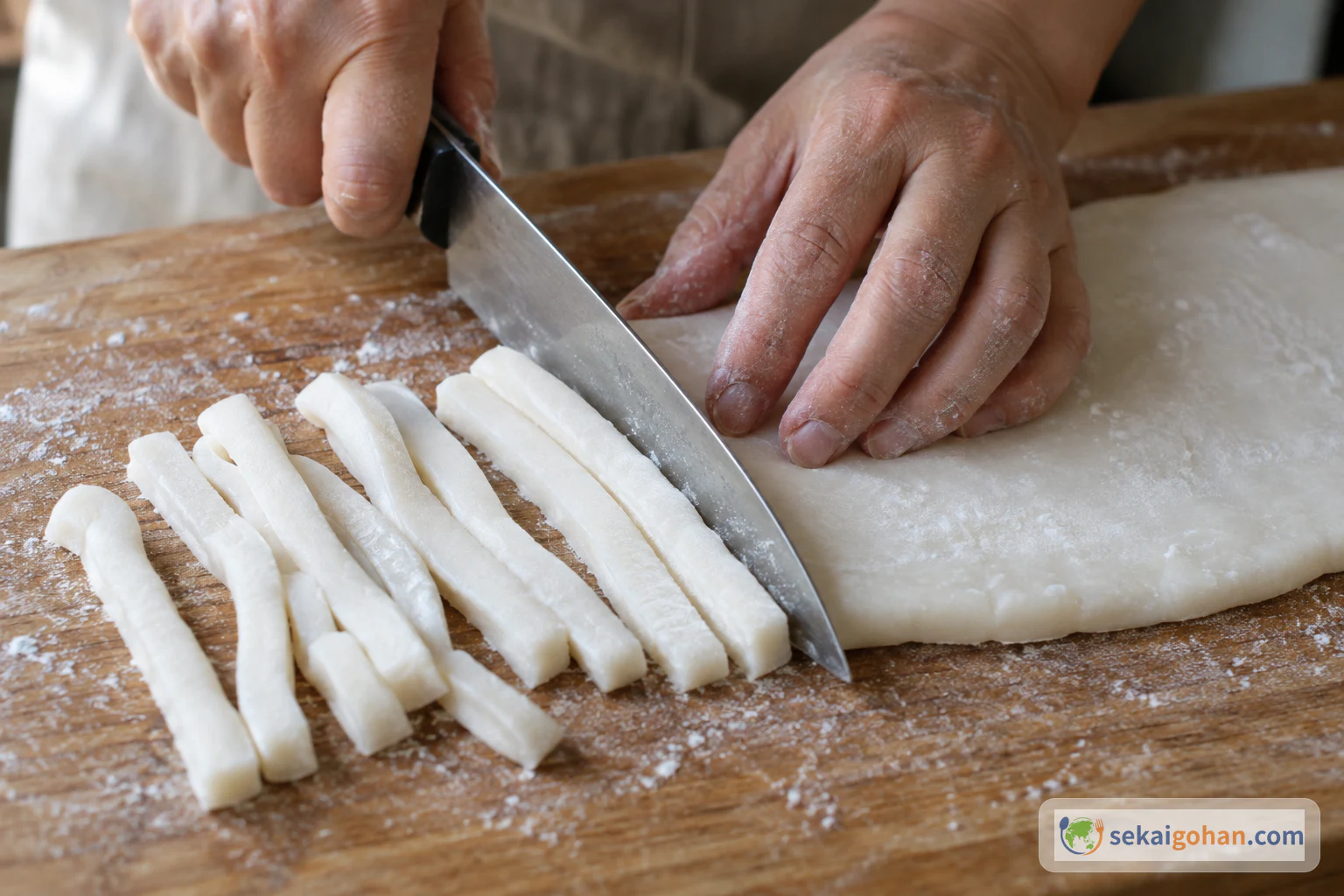
Is the 3 inches (7cm) the width or the length of the noodles?
It's the length. Roll the dough to about 0 inches (0.4cm) thick and cut it into 3 inches (7cm) strips. Bánh canh noodles are short and thick, and the photo in step 2 shows the shape.